
LEAD ANALYST
Utkarsh Khirodkar is a Lead Market Research Analyst at MetaStat Insight, specializing in market intelligence, technology sector assessments, and competitive strategy.

Green Ammonia Market Size, Share, By Production Technology (Alkaline Water Electrolysis-Based Green Ammonia, Proton Exchange Membrane Electrolysis-Based Green Ammonia, Solid Oxide Electrolysis-Based Green Ammonia, Anion Exchange Membrane and Emerging Electrolysis-Based Green Ammonia, and Others), By End-use Application (Fertilizers and Agricultural Inputs, Marine Fuel and Bunkering, Power Generation and Ammonia Co-firing, Hydrogen Carrier, Storage and Cracking, and Others), By Project Development Stage (Operational and Commissioning Projects, Under-Construction and Final Investment Decision-Reached Projects, FEED and Advanced Development Projects, Pre-FEED, Feasibility and Announced Projects, and Others), By Commercialization Model (Captive and Vertically Integrated Consumption, Direct Producer-to-End-User Offtake, Trader and Aggregator-Mediated Offtake, Merchant and Spot Market Sales, and Others), Industry Analysis, Growth, Trends, and Forecast, 2026-2033
Report ID
MSI-4411
Published
November, 2025
Updated
Pages
311 Pages
Format
Report Details
Choose Your License
Green Ammonia Market
The global green ammonia market was born from the idea of the scientists who were looking for cleaner alternatives to conventional ammonia production, which was heavily reliant on natural gas and resulted in the emission of large amounts of carbon. In the early 2000s, small research groups were investigating the possibility of using renewable electricity for the splitting of water into hydrogen and then converting that hydrogen into ammonia. The concept at that time seemed like a laboratory experiment and far from commercialization as renewable energy was still costly and inefficient.
Global Green Ammonia market size is valued at USD 1028.8 million in 2025 and projected to grow at a CAGR of 40.9% during the forecast period, reaching USD 14783 million by 2033.
Alkaline Water Electrolysis is anticipated to take the lion’s share of the market nearly 45.1% and encourages innovation and the development of new applications through intensive research.
The main drivers of the market are: Increased demand for eco-friendly fertilizers and green hydrogen as a carrier.
The future of the green ammonia market seems to be bright as far as the use of the product in maritime transport is concerned.
The main point is: The market will experience a drastic increase in value during the coming ten years, thus presenting huge growth potentials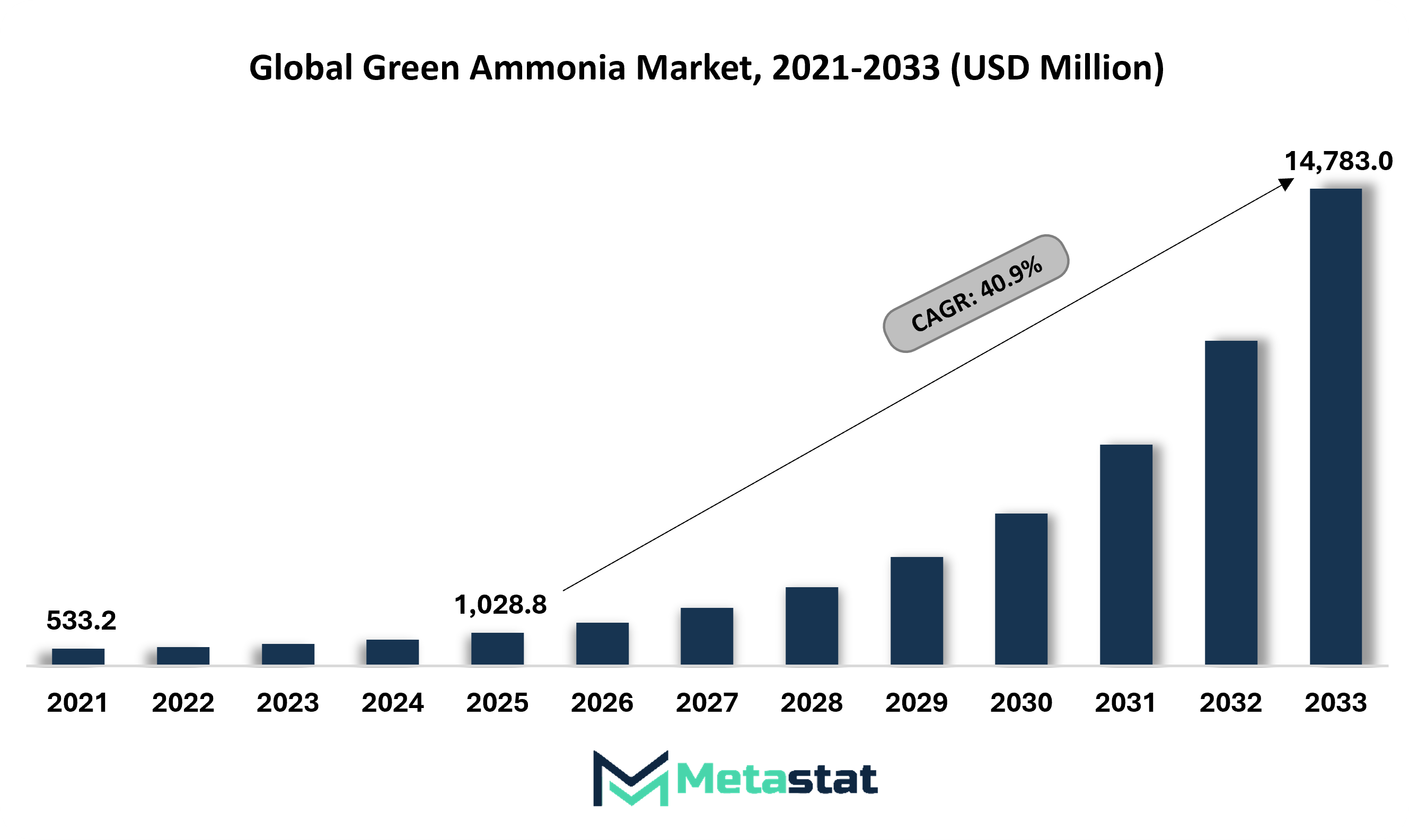
The cost of wind and solar electricity had long been the bane of their adoption when turning point came. To regions with large renewable resources, such as parts of Europe and the Australian coasts, ammonia produced from clean electric power would sooner or later become a way of using electricity for shipping, storing, and fertilizing without adding carbon to the atmosphere. Slowly but surely, governments also noticed, and they opened up funding programs and even constructed pilot plants. The dawn of these milestones allowed energy giants to view the idea not only as a scientific curiosity but also as a future profit-making venture.
As climate commitments tightened in the mid-2010s, various industries began looking for ways to reduce emissions along their entire supply chain. Shipping companies were among the first to look at ammonia as a possible fuel because of its easy handling, storage, and transportation as compared to hydrogen gas. Farmers and agricultural buyers, who had previously considered only the price of fertilizers, started gradually demanding eco-friendly options alongside affordable ones. This quiet yet consistent buyer expectation change compelled the investors to look into the new production technologies.
The last few years have seen the combination of automation, digital monitoring, and high-efficiency electrolyzers create a rapid progress. The research teams that were focusing on reducing production energy were working alongside the engineering firms that were making safety systems and storage methods better. Regulatory authorities were taking clean-fuel mandates and giving low-carbon manufacturing incentives, thus, creating a more predictable business environment. The supply of the commercial path was strengthened by the cooperation of renewable energy producers, fertilizer manufacturers, and shipping fuel suppliers.
Today, the global green ammonia market is transitioning from experimental demonstration sites to large-scale facilities that will operate on offshore wind farms or solar-rich deserts. The journey from scientific idea to emerging industrial reality shows how shifting consumer expectations, supportive regulations, and continuous innovations will shape its direction in the years ahead.
As heavy industries accelerate their decarbonization roadmaps, low-carbon ammonia-encompassing renewable green ammonia and carbon-captured blue ammonia-has emerged as a foundational driver of the global green ammonia market. Traditionally reliant on emissions-intensive, fossil-based Haber-Bosch synthesis, the fertilizer industry is rapidly adopting low-carbon feedstocks to produce climate-smart nitrates and urea. This agricultural shift drastically lowers Scope 1 and Scope 3 emissions across global food supply chains while safeguarding manufacturers against tightening regulatory frameworks such as the EU's Carbon Border Adjustment Mechanism (CBAM).
Beyond sustainable agriculture, the utility of green ammonia is expanding rapidly across diverse industrial applications, serving as a zero-carbon chemical feedstock, an efficient energy vector for hydrogen storage and transport, and a next-generation clean fuel for maritime shipping and power generation. Driven by rising clean energy investments and net-zero industrial mandates, low-carbon ammonia is shifting from an alternative niche to a cornerstone of resilient, emission-compliant manufacturing ecosystems worldwide.
The rapid transition toward low-carbon fuels has unlocked unprecedented capital allocation, positioning the green ammonia market as a multi-billion-dollar centerpiece of global clean energy investment. High-profile mega-projects are transitioning from final investment decisions (FIDs) into commercial execution, dominated by regions boasting ultra-low-cost renewable power and export infrastructure.
Middle East & North Africa (MENA): Frontrunners like the NEOM Green Hydrogen Project in Saudi Arabia and Oman's Salala H2 are establishing massive export corridors. As the primary utility and renewable power developer behind the NEOM Green Hydrogen Project, ACWA Power is building unprecedented multi-gigawatt solar and wind generation assets to supply clean export corridors.
North America & Europe: Driven by production tax credits and decarbonization subsidies, joint ventures involving industry giants such as Yara International, CF Industries, and Uniper are advancing both greenfield electrolysis plants and large-scale industrial retrofits. Clean energy giant Ørsted has systematically expanded beyond offshore wind development into green fuels, forging cross-sector industrial partnerships to supply zero-emission hydrogen feedstocks for maritime transport and fertilizer synthesis.
Asia-Pacific: Bolstered by national hydrogen missions, projects such as AM Green’s multi-billion-dollar Kakinada facility in India and massive green hydrogen-to-chemical complexes in China are setting global benchmarks for large-scale domestic decarbonization and merchant supply.
While the dominant pathway for zero-emission synthesis pairs renewable water electrolysis with traditional synthesis reactors, next-generation technologies are advancing to bypass high temperatures, intense pressures, and massive capital costs:
Direct Electrochemical Synthesis: Eliminating the intermediate hydrogen production step, electrochemical nitrogen reduction reactions (eNRR) convert atmospheric nitrogen, water, and renewable electricity straight into ammonia at ambient temperatures and low pressures.
Chemical Looping Ammonia Synthesis (CLAS): Operating via cyclic redox reactions using metal nitrides as intermediate nitrogen carriers, chemical looping decouples the nitrogen-splitting and hydrogenation steps, enabling significantly lower synthesis temperatures and intermittent operation tailored to fluctuating solar and wind profiles.
Methane Pyrolysis (Turquoise Pathway): Using thermal or plasma catalytic reactors, methane is cracked directly into clean hydrogen and solid carbon black rather than gaseous carbon dioxide.
Non-Thermal Plasma-Catalytic Synthesis: Plasma technology activates inert nitrogen gas molecules at ambient conditions using electric discharges rather than bulk thermal energy, catering directly to distributed, on-farm fertilizer production.
Government policy and carbon accountability mechanisms are the primary catalysts transforming the green ammonia market from voluntary ESG initiatives into compliance-driven commercial scale:
EU CBAM & RFNBO Standards: The phased implementation of the Carbon Border Adjustment Mechanism levies a carbon tariff on high-carbon imports into Europe, eliminating cost advantages for fossil-based producers abroad. Early compliance frameworks laid down by the European Union's Renewable Energy Directive (RED II) paved the way for rigorous Renewable Fuels of Non-Biological Origin (RFNBO) standards, governing emissions additionality and temporal correlation for green chemical imports.
Supply-Side Incentives & Tax Credits: Financial mechanisms such as the United States Inflation Reduction Act (IRA Section 45V clean hydrogen tax credits) and the European Hydrogen Bank's competitive auction schemes provide critical CAPEX and OPEX relief to close the green premium gap against conventional fossil synthesis.
Maritime Decarbonization Mandates: The shipping sector is accelerating ammonia bunkering trials and dual-fuel vessel orders to meet aggressive International Maritime Organization (IMO) 2050 targets for net-zero greenhouse gas emissions across international fleets.
Global Alignment & Safety Protocols: Global advocacy groups like the Ammonia Energy Association play a central role in aligning international stakeholders, advancing standardized safety guidelines, and establishing verified certification protocols across emerging fuel corridors.
The green ammonia value chain links upstream power generation, midstream chemical synthesis, and downstream global delivery. Upstream, utility-scale renewable generation delivers low-cost green electricity, which accounts for 60% to 80% of total synthesis operating expenses. As an anchor pillar of global Power-to-X (PtX) technology, renewable ammonia transforms intermittent green electrons into a storable, transportable liquid chemical for cross-border export.
In the midstream, this clean power feeds water electrolysis stacks paired with high-purity nitrogen extracted via cryogenic air separation units (ASU). By coupling clean electrolytic hydrogen with nitrogen from air separation units, developers are retrofitting the century-old Haber-Bosch process into dynamic, flexible synthesis loops that eliminate fossil methane feedstocks. Downstream operations leverage existing chemical corridors: specialized refrigerated gas carriers (–33.4°C), pipeline systems, and port terminals deliver the chemical to agricultural off-takers, chemical manufacturers, deep-sea bunkering hubs, or cracking facilities that reconvert ammonia into high-purity hydrogen.
Capital deployment in the green ammonia market is transitioning from venture-backed pilots to institutional infrastructure equity, export credit agency (ECA) financing, and sovereign wealth allocations. The long-term pace of ammonia decarbonization is fundamentally dictated by the rate at which utilities, electrolyzer OEMs, and developers scale global green hydrogen production capacity.
Project bankability and access to import premiums are determined by strict carbon intensity metrics, which calculate lifecycle Well-to-Gate emissions across upstream electricity generation, synthesis, and maritime delivery. Blended finance vehicles, European Hydrogen Bank auctions, and government-backed contracts for difference (CfDs) are serving as catalytic gap-funding mechanisms to cover the green premium, supported by 10- to 15-year take-or-pay offtake commitments.
Scaling the global green ammonia market from niche volumes to tens of millions of tons requires resolving structural supply chain constraints across the manufacturing and shipping ecosystems:
Electrolyzer Manufacturing Backlogs: Gigawatt-scale demand faces multi-year lead times for high-capacity alkaline and PEM electrolyzers, constrained by global supply chains for rare noble catalysts (iridium, platinum) and specialized membrane separators.
Specialized Maritime Fleet Shortages: Long-distance seaborne transport requires Very Large Gas Carriers (VLGCs) and specialized ammonia-ready dual-fuel vessels. Existing chemical gas carrier fleets are insufficient to manage projected export volumes from MENA and Australia to Europe and Asia.
Port Storage and Terminal Infrastructure: Deep-water ports require massive investments in cryogenic, refrigerated containment tanks (atmospheric –33.4°C), high-throughput loading arms, and leak-detection safety infrastructure before functioning as global bunkering hubs.
Water Sourcing and Desalination: In arid production hubs, sustainable freshwater availability presents an operational bottleneck, requiring integrated seawater reverse osmosis (SWRO) desalination systems that add capital expenditure and environmental discharge challenges.
The commercial technology roadmap for green ammonia centers on reducing specific energy consumption, improving stack durability, and decoupling synthesis from steady baseload power across three primary electrolysis vectors:
Alkaline Water Electrolysis (AWE): Commercial megawatt- and gigawatt-scale projects frequently rely on Alkaline Water Electrolysis (AWE) to lower upfront capital expenditure, utilizing its mature supply chain and catalyst durability to achieve bankable plant economics.
Proton Exchange Membrane (PEM): Integrating Proton Exchange Membrane (PEM) electrolyzers enables rapid dynamic ramping and high-pressure output, making them an optimal choice for coupling directly with volatile solar and wind generation profiles.
Solid Oxide Electrolysis Cells (SOEC): High-temperature Solid Oxide Electrolysis Cells (SOEC) are gaining traction because they can integrate waste heat from downstream synthesis loops, reducing the total electricity demand per metric ton of ammonia synthesized.
Concurrently, dynamic Haber-Bosch loops equipped with advanced ruthenium- and cobalt-promoted catalysts are replacing rigid iron-based catalysts, allowing plants to ramp output safely alongside intermittent generation.
New entrants and transitioning industrial players must balance early-mover advantages with exposure to unproven technologies and changing policy mandates:
Brownfield Co-Location and Retrofitting: Chemical and fertilizer incumbents can avoid significant infrastructure CAPEX by co-locating modular electrolyzers with existing gray ammonia synthesis loops. Progressively blending 5% to 20% green hydrogen into traditional loops lowers immediate capital outlays while building operational familiarity with dynamic feedstocks.
Consortium-Based Equity Alliances: Independent renewable developers can derisk greenfield facilities by forming cross-sector consortiums: partnering upstream with utility developers, midstream with certified technology OEMs, and downstream with creditworthy offtakers (such as maritime shipping operators or fertilizer distributors).
Targeting High-Willingness-to-Pay Regulatory Niches: Rather than competing immediately on price against gray ammonia in bulk commodity markets, early entrants should prioritize compliance-driven markets-such as European RFNBO-mandated chemical processors, maritime green corridors, or CBAM-exposed exporters-where regulatory carbon premiums justify higher entry costs.
Executing large-scale green ammonia initiatives requires mitigating interconnected technical, commercial, and regulatory risks:
Intermittent Load Risk: Disconnects between fluctuating solar/wind generation and rigid, steady-state Haber-Bosch reactors can damage catalysts and lower plant utilization. Mitigation: Integrate battery energy storage systems (BESS), buffer hydrogen storage (compressed gas or salt caverns), and utilize dynamic catalyst formulations designed for ramping.
Offtake and Volume Risk: A mismatch between high green production costs and market-clearing spot prices can leave projects with uncontracted, unbankable output. Mitigation: Secure long-term (10- to 15-year) take-or-pay offtake agreements or index pricing to fossil baselines supplemented by government Contracts for Difference (CfDs).
Toxicity, Dispersion, and Safety Permitting: Anhydrous ammonia is a corrosive, toxic chemical requiring strict containment. Public opposition and lengthy municipal permitting can delay port and storage development. Mitigation: Implement automated double-containment atmospheric tanks, remote optical sensor leak-detection networks, and early engagement with local regulatory authorities using standardized chemical handling codes.
Regulatory Divergence Risk: Conflicting low-carbon certification standards across jurisdictions (e.g., EU RED III strict additionality vs. US 45V lifecycle rules) can strand assets intended for cross-border export. Mitigation: Design upstream power procurement architectures to comply with the strictest global standard (e.g., hourly matching and geographical correlation) to maintain global market fungibility.
The global green ammonia market is mainly classified based on Production Technology, End-use Application, Project Development Stage, and Commercialization Model .
Alkaline Water Electrolysis: Alkaline Water Electrolysis-Based Green Ammonia segment is valued at USD 701.8 million in 2026 and is projected to reach USD 6667.1 million by 2033, at a CAGR of 37.9% during the forecast period. Alkaline Water Electrolysis tries to produce clean ammonia with the help of renewable electricity and water. This process first divides water and then hydrogen is reacted with nitrogen to produce ammonia. Researchers' and companies' strong interest leads to the gradual adoption of the method. A lot of research work demonstrates the contribution of this method to the decrease of emissions and hence the growth of the global green ammonia market.
Proton Exchange Membrane: The Proton Exchange Membrane makes use of a solid electrolyte and renewable power to produce hydrogen with a very fast response to power fluctuations. This production method is seen as flexible and is thus particularly beneficial for areas where renewable energy is variable. The steady advances in equipment design are paving the way for more widespread use and supporting ammonia projects in achieving lower carbon production targets.
Solid Oxide Electrolysis: Solid Oxide Electrolysis is dependent on high temperatures and ceramic materials to generate hydrogen at a very high efficiency. The process is highly compatible with the industrial zones where the waste heat is available. The higher temperature range helps in cutting down the power consumption during hydrogen production, which in turn, allows better energy management for the ammonia makers focusing on the cleaner production methods.
Fertilizers and Agricultural Inputs: Fertilizers and Agricultural Inputs segment is projected to reach USD 8145.4 million by 2033, at a CAGR of 36.4% during the forecast period. Fertilizer production remains a major use of ammonia due to strong nutrient value for crops. Cleaner ammonia supports farming systems seeking lower emissions. Many agricultural groups explore renewable ammonia to meet future sustainability rules. Growing interest from farmers encourages steady demand for ammonia produced with cleaner methods.
Marine Fuel and Bunkering: Marine Fuel and Bunkering segment is projected to reach USD 2660.9 million by 2033, at a CAGR of 54.2% during the forecast period.
Based on geography, the global green ammonia market is divided into North America, Europe, Asia-Pacific, South America, and the Middle East & Africa.
North America is further divided into the U.S., Canada, and Mexico, whereas Europe consists of the UK, Germany, France, Italy, and the Rest of Europe.
Asia-Pacific is segmented into India, China, Japan, South Korea, and the Rest of Asia-Pacific.
The South America region includes Brazil, Argentina, and the Rest of South America, while the Middle East & Africa is categorized into GCC Countries, Egypt, South Africa, and the Rest of the Middle East & Africa.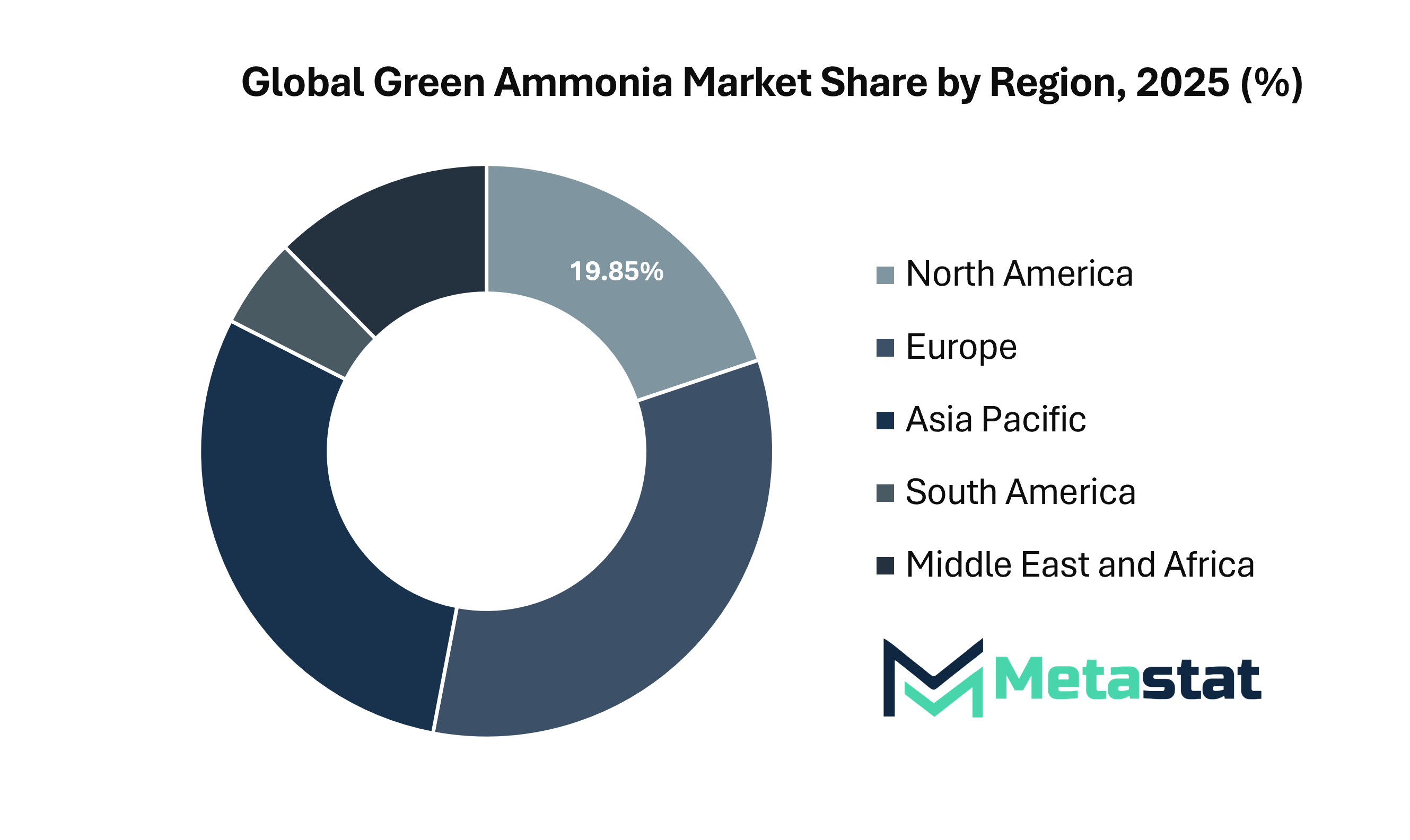
Rapid Decarbonization Initiatives Across Industrial and Energy Sectors:
Growing pressure to cut carbon emissions encourages industrial and energy sectors to shift toward cleaner production. Many countries set strict carbon reduction targets, supporting investment in green ammonia production. The global green ammonia market gains support as industries search for alternatives reducing pollution and meeting climate goals and new regulatory demands.
Growing Demand for Sustainable Fertilizers and Green Hydrogen Carrier:
Agriculture needs fertilizers that lower environmental harm. Green ammonia offers a route toward clean fertilizer because production avoids fossil fuels and reduces harmful emissions. Green ammonia also functions as a carrier for hydrogen, allowing safer transport and storage for future clean energy use. Strong demand from farming boosts market interest.
High Production and Infrastructure Costs:
Development of green ammonia requires large financial investment. Production demands advanced equipment, renewable power, and strict safety systems. Many companies hesitate due to slow return on investment. High cost reduces large-scale adoption and slows growth of green ammonia projects across many regions, creating financial barriers for expansion and progress plans.
Limited Availability of Renewable Energy Sources:
Green ammonia production needs strong access to renewable power. Many regions still lack stable solar or wind capacity, creating unpredictable output and limiting consistent production. Shortage of clean energy slows progress and prevents steady supply for wider adoption across industrial or agricultural sectors around the world and future growth potential.
Expansion of Green Ammonia as a Fuel for Maritime Transport:
Shipping companies and port operators explore green ammonia as a cleaner fuel option. Green ammonia offers strong energy content without carbon emissions during use. Growing interest encourages investment in safe storage systems and fueling stations, supporting wider acceptance within global transport routes, leading to new commercial opportunities and economic momentum.
Growing interest in sustainable energy solutions has opened new opportunities across the global green ammonia market. Demand for cleaner production methods has encouraged major corporations and regional ventures to invest in advanced technologies and large-scale infrastructure. The industry combines established multinational organizations with ambitious regional groups that seek a stronger presence. Each participant pursues efficiency, cost control, and environmental responsibility.
Several companies hold strong positions. CF Industries Holdings, Inc focuses on expanding low-carbon production by upgrading facilities and forming strategic partnerships. BASF SE uses strong research experience and strong capital to support innovation. Yara International ASA promotes cleaner agricultural practices through improved synthesis methods. Maire Tecnimont S.p.A. and ACME Group support major construction projects that accelerate new plant development. Fertiglobe plc and NEL Hydrogen concentrate on hydrogen production and distribution, forming a foundation for ammonia production using renewable energy. ThyssenKrupp AG, ENGIE, and Holder Topsoe push technical progress through engineering expertise. Iberdrola and Siemens AG contribute energy generation solutions, while Greenfield Nitrogen LLC and KAPSOM plc add new ideas through flexible project models.
Strong competition encourages lower costs and encourages better technology. Continuous improvement supports energy independence as more regions aim to reduce reliance on fossil fuels. Supportive policies and financial incentives from governments further motivate investment in modern plants and research. Collaboration among energy suppliers, technology developers, and industrial users shortens development time and reduces risk. The market benefits from shared knowledge and demand from sectors such as power, transportation, and farming.
Market size is forecast to rise from USD 693.9 million in 2025 to over USD 24107.1 million by 2032. Green Ammonia will maintain dominance but face growing competition from emerging formats.
Future progress will depend on reliable energy sources, adequate funding, and ongoing education. As production scales, equipment upgrades and improved logistics will guide supply growth. Cleaner practices support long-term economic gains while strengthening global efforts to reduce emissions. With committed investment and structured planning, the global green ammonia market will support a more sustainable future and prosperity.
This research report categorizes the global green ammonia market based on various segments and regions, forecasts revenue growth, and analyzes trends in each submarket. The report analyses the key growth drivers, opportunities, and challenges influencing the global green ammonia market. Recent market developments and competitive strategies such as expansion, type launch, development, partnership, merger, and acquisition have been included to draw the competitive landscape in the market. The report strategically identifies and profiles the key market players and analyses their core competencies in each sub-segment of the global green ammonia market.
Find answers to common questions about this report
The Metastat Insights study reveals that the Green Ammonia market size was valued at USD 1028.8 million in 2025.
The Green Ammonia market is projected to grow at a CAGR of 40.9% during the forecast period from 2026 to 2033.
According to Metastat Insights analysis, the North America Green Ammonia market size is estimated to reach USD 2513.1 million by 2033.
Top players operating in the Green Ammonia industry includes CF Industries Holdings, Inc, BASF SE, Yara International ASA, Maire Tecnimont S.p.A., ACM
Low-carbon fertilizers offer the highest immediate volume ROI, allowing producers to capture early green premiums under EU CBAM rules. Deep-sea maritime shipping delivers the highest long-term margin ROI due to tightening IMO decarbonization mandates and a lack of scalable, zero-carbon alternative marine fuels.
Conventional ammonia relies on fossil fuels via steam methane reforming, emitting substantial carbon dioxide. The green ammonia value chain replaces fossil inputs with water and dedicated renewable electricity to generate green hydrogen via electrolysis, pairing it with atmospheric nitrogen in dynamic Haber-Bosch synthesis loops to achieve near-zero emissions.
The EU prioritizes maritime import terminals, bunkering networks, and open-access pipelines. North America leverages existing Gulf Coast pipeline networks and storage caverns to retrofit legacy plants for export. In Asia-Pacific, Japan and South Korea fund receiving and co-firing terminals, while India and China build massive domestic production hubs.
Alkaline Water Electrolysis (AWE) is the most commercially viable for gigawatt-scale projects today due to low CAPEX and mature supply chains. Proton Exchange Membrane (PEM) electrolyzers excel at handling variable renewable loads, while Solid Oxide Electrolysis Cells (SOEC) offer superior efficiency through industrial waste-heat integration.
The EU’s Carbon Border Adjustment Mechanism (CBAM) and RED III drive European import demand through strict carbon penalties and quotas. The US Inflation Reduction Act (IRA Section 45V) provides clean hydrogen tax credits, while Japan and South Korea incentivize adoption via clean fuel standards and co-firing power tenders.
A commercial-scale plant producing 1.0 to 1.2 million metric tons annually requires $4.5 billion to $8.5 billion in CAPEX. Dedicated upstream renewable power accounts for 50% to 60% of costs, electrolyzer islands take 20% to 30%, and the remaining capital funds synthesis loops and cryogenic storage.
Primary bottlenecks include long manufacturing lead times for multi-gigawatt electrolyzers, scarce noble catalyst minerals like iridium, renewable power grid connection delays, and a severe global shortage of specialized, refrigerated Very Large Gas Carriers (VLGCs) and cryogenic port terminal infrastructure.
Green ammonia currently costs roughly $700 to $900 per metric ton, compared to $350 to $550 for fossil-based gray ammonia. Scaling electrolyzer manufacturing, declining renewable power tariffs, and carbon penalties are projected to push green ammonia costs toward $380 to $480 per ton by 2033.
The analysts below cover Energy and Power research at Metastat Insights.
LEAD ANALYST
Utkarsh Khirodkar is a Lead Market Research Analyst at MetaStat Insight, specializing in market intelligence, technology sector assessments, and competitive strategy.

PRINCIPAL CONSULTANT - ENTERPRISE AI & EMERGING TECHNOLOGIES
Banking & Finance · Electronics and Semiconductor · Energy and Power · Healthcare IT · Information & Technology · Professional Services
Vijay Gunti is a Principal Consultant at MetaStat Insight, bringing over two decades of experience across enterprise digital transformation, technology strategy, and intelligent systems.

ENERGY & INFRASTRUCTURE INDUSTRY CONSULTANT
Automotive and Transportation · Electronics and Semiconductor · Energy and Power · Machinery & Equipment
Saurabh Vasant Ganvir consults for Energy & Infrastructure Industry at MetaStat Insight, specializing in renewable energy, solar EPC, and electric vehicle (EV) infrastructure markets.
Last Updated: August, 2026
Integrating zero-trust access controls across legacy electronic health record systems involves complex compliance overhead. Team produced an analysis that clearly separated identity governance and administration tools from privileged access management platforms. Their evaluation of HIPAA and GDPR compliance features across cloud native solutions gave our architecture group clear baseline criteria. The custom data request regarding biometric authentication adoption in hospital networks was returned promptly with clear documentation.
Evaluating calorific value requirements and air permit compliance across municipal waste facilities requires localized data. Metastat Insight structured their analysis around operational throughput capacity and feedstock composition variations in Latin America and Eastern Europe. Their competitive mapping of sorting equipment vendors helped clarify technology differences between optical separators and heavy media systems. The study provided an objective baseline during our capital expenditure reviews.
Decarbonizing industrial thermal processes hinges on refrigerant regulations and compressor efficiency limits. Metastat Insights delivered a thorough market analysis that evaluated natural refrigerants like CO2 and hydrocarbons against synthetic low-GWP alternatives. The breakdown of utility incentives and grid capacity constraints across key European manufacturing hubs offered valuable perspective. The follow-up conversation with their sector analysts addressed our specific questions on mechanical vapor recompression systems efficiently.
Explore related market intelligence reports worth reading alongside this one.