
LEAD ANALYST
Utkarsh Khirodkar is a Lead Market Research Analyst at MetaStat Insight, specializing in market intelligence, technology sector assessments, and competitive strategy.

Global Bio-LNG Market Size, Share, By Feedstock Source (Source-separated Municipal Biowaste, Livestock Manure, Agricultural Crop Residues, Food and Beverage Processing Waste, Landfill Gas, Sewage Sludge and Others), By Application (Heavy-Duty Road Transport, Marine Transport, Industrial Heating, Power Generation and Others), By Product Composition (Unblended Bio-LNG and Bio-LNG Blends), By Chain of Custody Model (Physical Segregation and Certified Mass Balance), Industry Analysis, Growth, Trends, and Forecast, 2026-2033
Report ID
MSI-5535
Published
October, 2026
Pages
280 Pages
Format
Historical
Base year
Forecast
Forecast period
Report Details
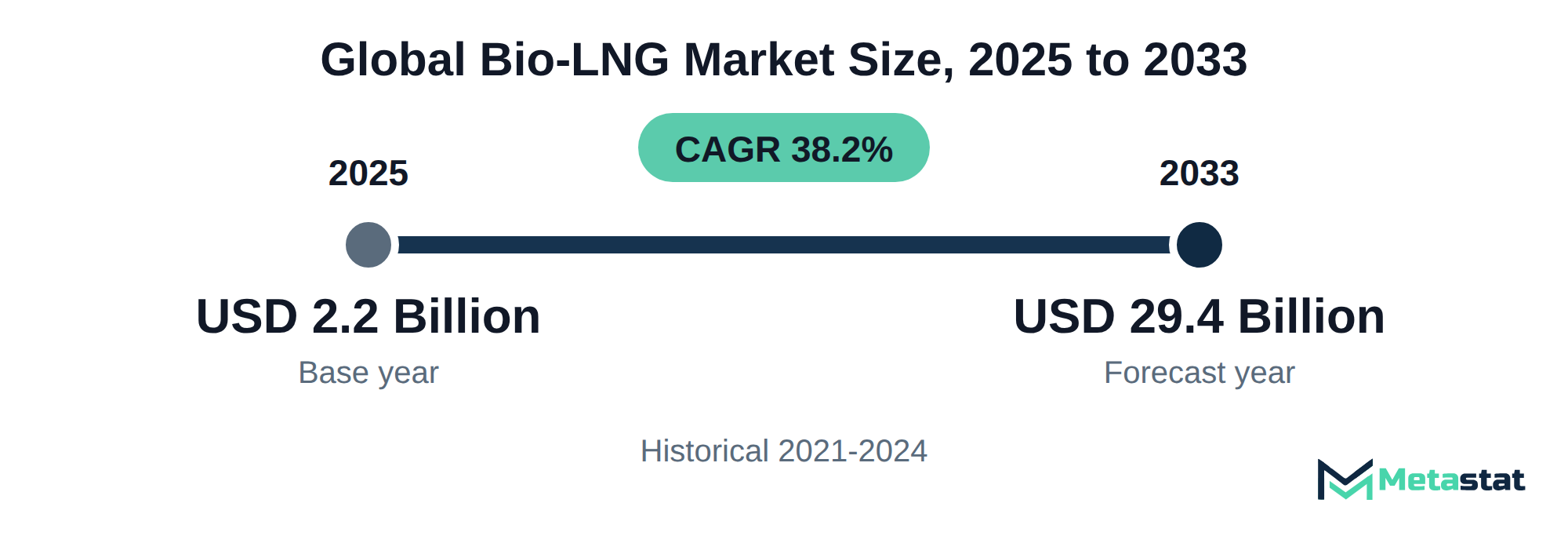
Market Valuation: Valued at $2.2 Billion in 2025, projected to reach $29.4 Billion by 2033 at a 38.2% CAGR.
Dominant Segment: Source-separated Municipal Biowaste leads the Bio-LNG market, significantly driving overall market expansion due to its dual role in energy production and waste management.
Geographic Lead: Europe dominates the Bio-LNG market with a 61.3% share, fueled by strong investments in renewable technologies and stringent environmental regulations.
What's Inside: This report provides a comprehensive analysis of the Bio-LNG market, including competitive coverage, detailed segmentations by feedstock source and application, and forecasts through 2033.
Marine Transport Growth: The marine transport application of Bio-LNG is projected to grow at a CAGR of 44.3%, driven by the shipping industry's urgent need for cleaner fuel alternatives.
Livestock Manure Potential: The livestock manure segment is expected to achieve a CAGR of 42.7%, reflecting a growing interest in sustainable energy solutions from agricultural byproducts.
Choose Your License
Global Bio-LNG Market
The global Bio-LNG market was valued at USD 2.2 billion in 2025 and is projected to reach USD 29.4 billion by 2033, growing at a CAGR of 38.2% over the forecast period.
The Bio-LNG market encompasses the production and distribution of liquefied biomethane derived from organic materials. This alternative fuel source attracts buyers due to its potential to reduce greenhouse gas emissions and reliance on fossil fuels. Industries focusing on sustainability, including transportation and power generation, invest in Bio-LNG to meet regulatory requirements and corporate sustainability goals. Growth in this market aligns with increasing environmental awareness and the transition towards cleaner energy solutions.
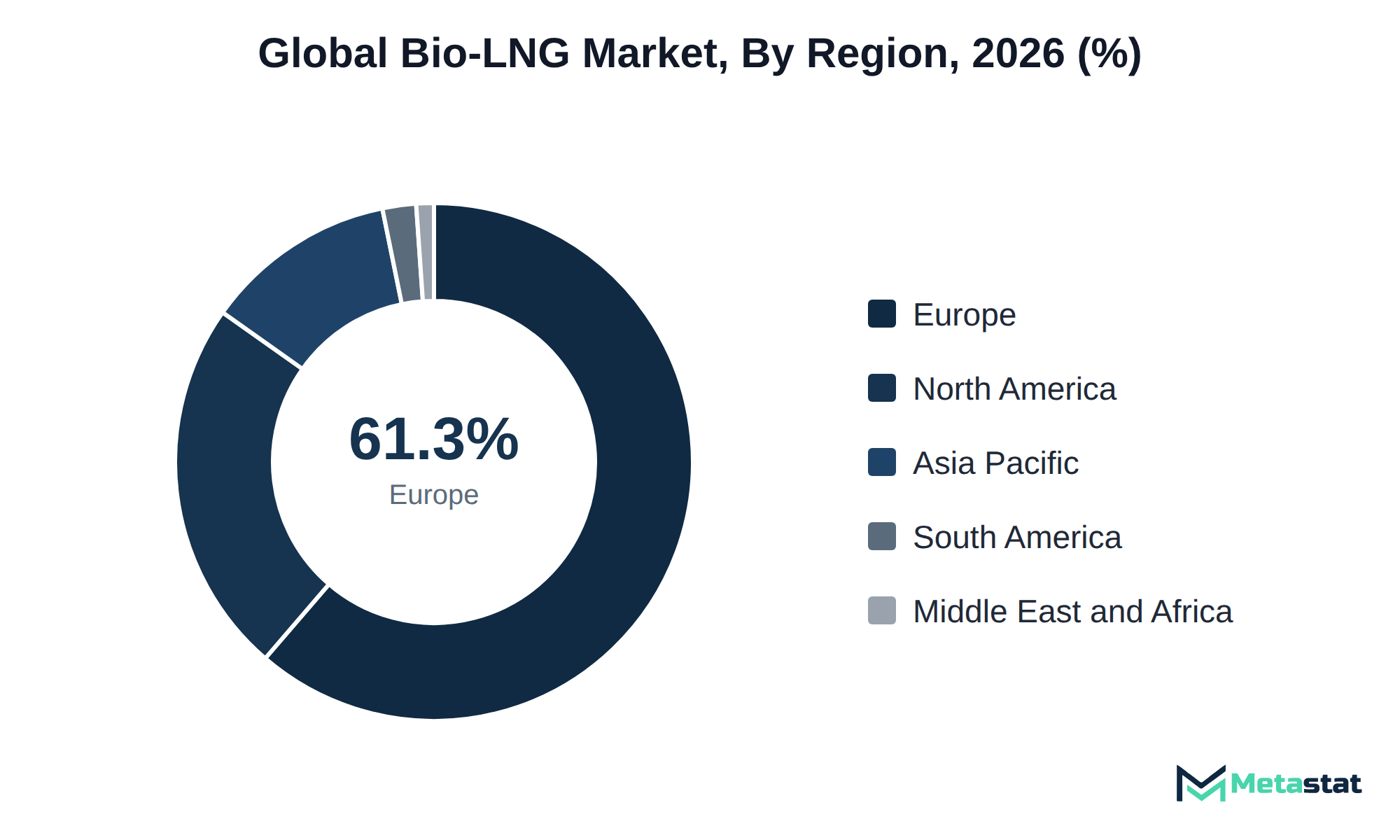
Growth in the Bio-LNG market is driven primarily by rising demand for renewable energy sources. Among the various segments, Source-separated Municipal Biowaste represents the largest share of value, contributing significantly to overall market expansion. Europe holds the largest market share at 61.3%, reflecting strong investments in renewable technologies and infrastructure. North America accounts for 23.5% of the market in 2025, with the US leading in 2026.
Another significant factor contributing to market growth involves advances in production technologies, which enhance efficiency and reduce costs. These technological improvements enable wider adoption across different sectors, including heavy-duty road transport and marine transport. The demand for cleaner alternatives intensifies, and Bio-LNG positions itself as a viable solution in the global energy landscape.
The Bio-LNG market addresses the increasing demand for sustainable energy solutions by transforming organic waste into a renewable energy source. Buyers invest in this market to reduce greenhouse gas emissions, enhance energy security, and transition to cleaner fuel alternatives. The rising adoption of Bio-LNG aligns with global initiatives aimed at combating climate change and promoting circular economies.
Growth in this market is propelled by the need for sustainable fuel options across various sectors. The segment with the most value stems from Source-separated Municipal Biowaste, which drives overall market expansion. Europe, commanding a substantial 61.3% share, demonstrates a strong preference for Bio-LNG, supported by stringent environmental regulations and incentives for renewable energy adoption.
Investment in technology advancements and infrastructure development significantly influences market dynamics. The marine transport application stands out among others, with a compound annual growth rate of 44.3%. This growth reflects the increasing emphasis on decarbonizing shipping operations and the broader acceptance of Bio-LNG as a viable alternative fuel source.
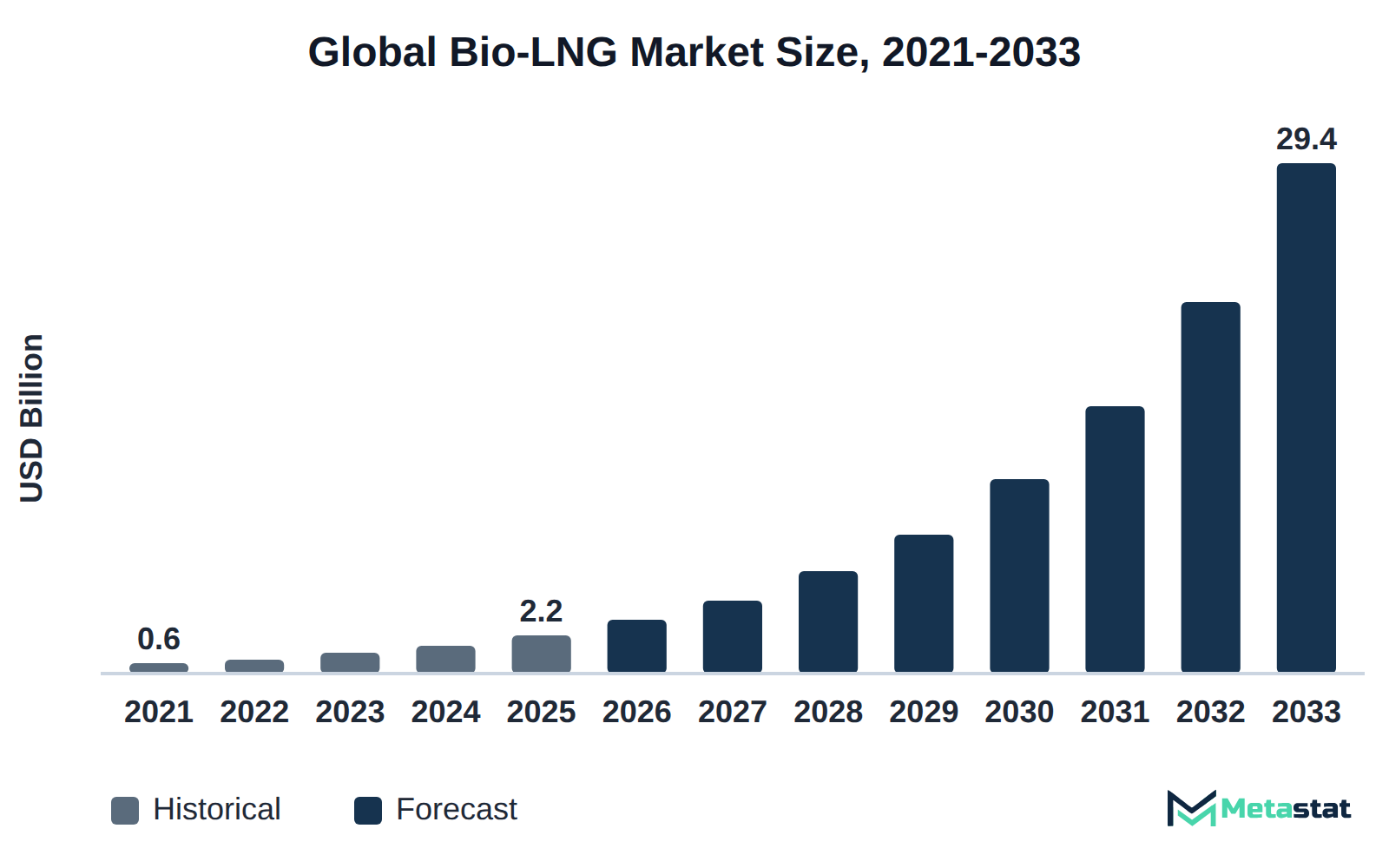
The FuelEU Maritime initiative establishes a framework that aims to promote the use of sustainable fuels, including Bio-LNG, in the maritime sector. This approach provides a pathway for the bio-LNG market to gain traction within the shipping industry, which faces increasing regulatory pressure to reduce greenhouse gas emissions. The anticipated growth of Bio-LNG bunkering aligns with the maritime transport sector's commitment to sustainability and emissions reduction strategies.
By 2033, the marine transport application of Bio-LNG is projected to reach a value of USD 14.1 billion, reflecting a compound annual growth rate (CAGR) of 44.3%. This significant growth is driven by the shipping industry's transition toward cleaner fuel alternatives that enhance operational efficiency while adhering to stringent emission regulations. While demand for Bio-LNG in marine applications accelerates, stakeholders across the supply chain, including producers and bunkering operators, benefit from increased revenue opportunities.
Using livestock manure for Bio-LNG production presents substantial economic benefits, particularly in reducing lifecycle carbon intensity. The Bio-LNG market demonstrates a projected compound annual growth rate (CAGR) of 42.7% for livestock manure, indicating a rapidly expanding opportunity for buyers focused on sustainable energy solutions. This growth reflects increasing regulatory pressures aimed at lowering greenhouse gas emissions from agricultural activities.
Buyers in this market engage in long-term contracts to secure stable pricing and supply of Bio-LNG derived from manure. Such contracts typically include provisions for price adjustments based on market fluctuations, ensuring that both buyers and suppliers manage risks associated with volatile energy prices. The integration of manure feedstocks enhances the sustainability of Bio-LNG production and aligns with corporate sustainability goals, positioning companies favorably in an increasingly environmentally conscious landscape.
The shift towards using manure in Bio-LNG production contributes to a reduction in carbon emissions while helping buyers meet their sustainability targets. The combination of stable supply contracts and the carbon-reducing benefits of manure feedstocks strengthens the value proposition for Bio-LNG in a competitive energy market.
A growing emphasis on sustainability drives buyers in the Bio-LNG market to seek reliable mass balance certification. This certification ensures that the volume of Bio-LNG produced from renewable sources aligns with the amount claimed to be supplied. The Certified Mass Balance segment is projected to reach USD 20.8 billion by 2033, reflecting a compound annual growth rate of 41.2%. This significant growth highlights the increasing importance of transparency in supply chains to meet regulatory requirements and consumer expectations.
Terminal access is essential for the effective distribution of Bio-LNG. Buyers require efficient logistics and infrastructure to ensure timely delivery and minimize operational costs. The market's expansion will benefit from investments in terminal facilities that facilitate the handling of Bio-LNG. Prioritizing terminal access alongside mass balance certification enhances competitive positioning within the market and responds effectively to the rising demand for sustainable energy solutions.
The delivered cost of Bio-LNG for heavy-duty fleets hinges on various factors, with feedstock source emerging as a significant influence. In particular, Source-separated Municipal Biowaste is projected to grow from USD 1.2 billion in 2026 to USD 10.1 billion by 2033, reflecting a compound annual growth rate (CAGR) of 35.8%. This growth illustrates the increasing reliance on sustainable and readily available feedstocks, which directly impacts production costs.
The application of Bio-LNG in heavy-duty road transport shows substantial potential, with growth anticipated from USD 1.3 billion in 2026 to USD 10.1 billion by 2033. This increase reflects the rising demand for cleaner fuel alternatives in the transportation sector, driving operational efficiencies and reducing emissions.
Investments in efficient supply chains and processing technologies are essential for managing costs effectively. By optimizing these areas, companies operating in the Bio-LNG market enhance their competitive positions while meeting the growing demand for sustainable fuels in heavy-duty fleets.
Investment in heavy-duty road transport emerges as a key driver for growth in the Bio-LNG market. Fleets transitioning to sustainable fuels seek alternatives to traditional diesel, influenced by environmental regulations and corporate sustainability goals. This shift results in increased demand for Bio-LNG, particularly while fleet operators aim to reduce greenhouse gas emissions and improve fuel efficiency. The anticipated growth in this application segment, with a compound annual growth rate (CAGR) of 34.5%, reinforces the urgency for operators to adopt cleaner technologies. Several transportation companies are prioritizing Bio-LNG to meet emissions targets while capitalizing on incentives associated with lower carbon fuel utilization. With the market expanding rapidly, the heavy-duty transport sector plays a crucial role in driving adoption and shaping future demand trends.
In response to the growing demand for sustainable solutions, investments in Bio-LNG production facilities increase, encouraging further capacity expansion. This dynamic creates opportunities for innovation and competition among suppliers, enhancing the overall value proposition of the market. The emphasis on cleaner fuels contributes to a broader movement towards decarbonization within the transportation industry.
The rising efficiency of biogas production processes significantly influences growth in the Bio-LNG market. Technological advancements, including improved anaerobic digestion methods and the integration of advanced biocatalysts, enhance the conversion rates of organic materials into biogas. These innovations lead to higher yields and reduce production costs. Agricultural stakeholders, particularly those involved in livestock and crop residues, benefit from these improved processes, resulting in greater profitability and a more sustainable operation. Enhanced biogas production aligns with goals of reducing greenhouse gas emissions while maximizing energy recovery from waste. Continuous optimization of production methods drives suppliers to invest in state-of-the-art technology, further supporting market expansion. Increased efficiency positions the market favorably against conventional fossil fuels, attracting interest from environmentally conscious consumers and businesses. The Bio-LNG market is projected to expand rapidly through 2033, driven by these technological advancements and the resultant cost-effectiveness in biogas production.
Price fluctuations in feedstock sources create significant constraints within the market, particularly affecting producers reliant on agricultural residues and biowaste. High feedstock costs lead to decreased profit margins, hindering the competitive positioning of Bio-LNG against traditional fossil fuels. Buyers in the heavy-duty road transport and marine transport sectors experience slower uptake due to concerns regarding the overall cost structure. Stable and affordable pricing remains crucial for attracting investments and securing long-term contracts. Increased prices persist, leading to smaller orders and delayed adoption, presenting challenges for growth within the Bio-LNG market. Addressing these price volatility issues will become essential for enhancing market adoption and ensuring a more sustainable energy future.
The Bio-LNG market faces significant challenges related to rising input costs, particularly for feedstocks vital to production. Suppliers experience higher expenses stemming from fluctuating prices of agricultural residues and biowaste, essential for creating bio-LNG. This situation impacts profit margins and forces producers to reassess operational strategies to maintain competitiveness. In response, several suppliers are diversifying their feedstock sources, integrating alternative materials like livestock manure and food processing waste into their production processes. This shift not only helps mitigate cost pressures but aligns with sustainability goals. Enhanced efficiency in converting diverse feedstocks into bio-LNG drives down overall costs in the long run. These strategies reflect a proactive approach to navigating financial constraints while supporting growth and development within the market.
The marine transport sector shows significant potential for growth within the Bio-LNG market, propelled by a projected compound annual growth rate (CAGR) of 44.3% through 2033. This segment benefits from increasing pressure to reduce emissions and enhance sustainability in shipping operations. The shift towards cleaner fuel options is crucial, driven by the industry's commitment to meeting international environmental standards. Bio-LNG provides an effective alternative to traditional marine fuels, offering reduced greenhouse gas emissions and improved energy efficiency. Investments in biofuel infrastructure and technology advancements facilitate this transition, enabling ports and shipping companies to adopt Bio-LNG solutions more effectively. The focus on marine transport aligns with global sustainability objectives, positioning Bio-LNG as a key player in the decarbonization of the maritime industry. This dynamic creates robust opportunities for stakeholders to capitalize on the rising demand for cleaner marine fuel solutions.
The Global Bio-LNG market is segmented based on Feedstock Source, Application, Product Composition, and Chain of Custody Model.
This feedstock is primarily used for producing renewable energy from organic waste, a process increasingly adopted by municipalities and waste management companies. The rising emphasis on sustainability drives demand for this segment, with waste reduction becoming a critical component of environmental policies. Compared to other feedstock sources, this segment exhibits a higher growth rate due to its ability to address both energy needs and waste management challenges. In contrast, segments like Agricultural Crop Residues show slower growth, reflecting differences in resource availability and processing technologies. Shifts in regulatory frameworks further enhance the attractiveness of source-separated municipal biowaste for energy applications, aligning with broader trends in the Bio-LNG market.
Livestock manure is estimated to reach USD 7.2 billion by 2033, at a CAGR of 42.7% during the forecast period. This feedstock source primarily serves agricultural sectors, wherein operators process waste from animal farming to produce Bio-LNG. The increasing emphasis on waste management solutions and sustainability drives its adoption among farmers and energy producers. A key force propelling growth in this segment involves rising energy costs, prompting producers to seek efficient and cost-effective alternatives. Compared to other feedstock sources, livestock manure shows a faster growth trajectory, reflecting a growing interest in using agricultural byproducts. The projected CAGR for this segment outpaces that of agricultural crop residues, which typically face more significant competition and regulatory challenges. This differentiation highlights the importance of livestock manure in supporting an environmentally friendly energy transition.
Agricultural Crop Residues segment is expected to reach USD 3.6 billion by 2033. This segment involves the conversion of agricultural byproducts into a renewable energy source, primarily serving energy producers and industrial applications seeking sustainable alternatives. A significant driver for this segment originates from the increasing efficiency of biogas production processes, which enhances the conversion rate of residues into Bio-LNG. Compared to other feedstock sources, Agricultural Crop Residues exhibit a slower growth trajectory, influenced by factors including lower market awareness among farmers and competition from other feedstocks like livestock manure, which is projected to achieve a compound annual growth rate (CAGR) of 42.7%. The distinct characteristics of this segment, including its specific buyer base and pricing dynamics, position it uniquely within the broader market.
Food and Beverage Processing Waste segment is projected to grow at a CAGR of 37.8% during the forecast period. This segment derives biogas from waste generated during food and beverage production, serving industries focused on sustainability and renewable energy. The integration of this feedstock into Bio-LNG production aligns with increasing regulatory pressures aimed at reducing waste and promoting cleaner energy solutions. Waste management companies and food processors drive the demand for this feedstock, facilitating the transformation of waste into valuable energy. Compared to others in the feedstock source category, this segment exhibits significant growth, largely due to rising awareness of environmental impacts and efficiency in waste management. The potential for converting food and beverage processing waste distinguishes it from other sources, enabling higher-value applications in energy sectors seeking to lower carbon footprints and enhance sustainability.
Landfill gas consists of methane produced from the decomposition of organic waste in landfills. This feedstock serves primarily for energy generation, particularly in power plants and heating applications. Several factors influence the growth of this segment, including regulatory support for reducing greenhouse gas emissions and increasing waste management efficiency. Landfill gas offers a unique advantage over other feedstocks due to its abundant availability in existing waste management infrastructure, positioning it as a sustainable energy source. Compared to other sub-segments, landfill gas experiences moderate growth rates, driven by established waste management practices and the necessity for renewable energy alternatives. Investment in facilities to capture and convert landfill gas into Bio-LNG provides opportunities for energy producers, particularly in regions aiming to enhance sustainability measures. This segment serves as a critical contributor to the overall Bio-LNG market, supporting efforts to transition toward cleaner energy sources.
Sewage sludge consists of the residual slurry generated from wastewater treatment processes. This feedstock supports various applications, particularly in biogas production facilities that aim to convert waste into renewable energy. The growing focus on waste-to-energy strategies drives demand among municipalities and industries seeking to reduce environmental impact while generating bioenergy. Regulatory frameworks promoting sustainable waste management practices support increased adoption of sewage sludge as a feedstock. Unlike other feedstocks, sewage sludge often presents lower procurement costs, making it an attractive option for producers aiming to enhance profitability. This segment experiences steady growth, benefiting from enhanced processing technologies that improve conversion efficiency and overall yield.
Energy crops and woody biomass serve alternative feedstocks for Bio-LNG production. These materials are primarily used in bioenergy applications, appealing to agricultural producers and energy companies seeking sustainable fuel sources. A notable driver for this segment includes the increasing focus on renewable energy targets, compelling companies to explore diverse feedstock options. Compared to other feedstock sources, energy crops and woody biomass provide unique advantages, particularly in regions with abundant agricultural land. The segment's growth trajectory is expected to be slower than that of livestock manure and source-separated municipal biowaste, which benefit from more established supply chains and processing efficiencies. The distinct characteristics of energy crops and woody biomass lead to varying pricing structures, further differentiating this segment from its counterparts in the market.
This segment primarily serves logistics companies and freight transport operators, focusing on reducing emissions and improving fuel efficiency. Increasing regulations aimed at lowering greenhouse gas emissions significantly drive demand, pushing operators to seek cleaner alternatives. The competitive landscape features a variety of buyers, each with distinct operational requirements and sustainability goals. Compared to other applications, this segment shows a faster growth trajectory due to heightened regulations and evolving consumer preferences, which support the transition towards Bio-LNG as a reliable fuel source for heavy-duty vehicles. Rising investment in infrastructure and technology supporting Bio-LNG refueling stations further enhances market potential.
This segment caters to the maritime industry, focusing on reducing emissions and enhancing sustainability in shipping operations. Increasing regulatory pressures to lower greenhouse gas emissions drive demand for cleaner alternatives, influencing shipping companies to adopt Bio-LNG. Compared to other applications, Marine Transport experiences faster growth due to the urgent need for greener solutions. Rising costs of conventional fuels heighten interest in alternative fuels, making Bio-LNG a compelling option for marine operators. This segment stands out with its potential for significant reductions in carbon emissions, setting it apart from other applications including Heavy-Duty Road Transport.
Industrial Heating segment is expected to reach USD 3.6 billion by 2033. This segment primarily serves industries that require high-temperature heat for various processes, including manufacturing, food processing, and chemical production. Factors including the increasing demand for energy-efficient heating solutions drive growth in this segment, reflecting a wider trend toward sustainability across multiple sectors. Unlike other applications, Industrial Heating experiences a comparatively lower growth rate, influenced by the slow transition from traditional heating methods to Bio-LNG, which offers a cleaner alternative. Producers face challenges in adopting new technologies that facilitate the efficient use of Bio-LNG, affecting the overall adoption rate in this segment. The emphasis on reducing carbon emissions further increases demand for Bio-LNG, enhancing its position as a viable substitute for conventional heating fuels. In conjunction, the market experiences a significant shift with industries prioritizing sustainable energy sources.
Power Generation segment is projected to grow at a CAGR of 33.8% during the forecast period. This segment serves a critical source of energy for various industries, including utilities and commercial enterprises, focusing on enhancing sustainability and reducing carbon emissions. Growing regulatory pressures for cleaner energy production drive demand for biofuels, particularly in power generation applications. Compared to other segments, including Heavy-Duty Road Transport, this segment experiences moderate growth due to slower infrastructure development for biofuels in energy sectors. The increasing adoption of renewable energy and the potential for bio-LNG to replace traditional fossil fuels position this segment favorably within the market.
This segment encompasses applications in rail, non-road machinery, and commercial heating. These sectors use Bio-LNG for cleaner energy alternatives, contributing to reduced emissions compared to traditional fuels. Demand for Bio-LNG in these applications often stems from regulatory pressure to lower carbon footprints and increase sustainability in operations. This segment differentiates itself from others by attracting a diverse range of buyers seeking innovative solutions to meet environmental standards, which influences purchasing decisions. Regulatory compliance drives investments in this area, encouraging companies to transition to cleaner energy sources. While the heavy-duty road transport and marine transport segments experience rapid growth, this segment progresses at a steadier pace, focusing on niche applications where Bio-LNG provides distinct environmental benefits. The Bio-LNG market aligns with broader trends in energy efficiency and sustainability while evolving to meet the specific needs of these industries.
Unblended Bio-LNG segment is valued at USD 1.6 billion in 2026 and is projected to reach USD 12.9 billion by 2033, at a CAGR of 34.8% during the forecast period. This form of Bio-LNG finds applications primarily in heavy-duty transportation and industrial heating, serving companies seeking sustainable energy solutions. The sector experiences significant growth driven by increasing regulations related to emissions and a shift toward cleaner fuels. Compared to Bio-LNG blends, unblended Bio-LNG exhibits a higher growth rate, establishing itself as a preferred choice for operators seeking unadulterated fuel options. The market shows robust demand from industries focused on reducing carbon footprints, creating opportunities for further investment and innovation.
Bio-LNG Blends segment is estimated to reach USD 16.5 billion by 2033, at a CAGR of 41.4% during the forecast period. This segment finds applications in various industries, including transportation and power generation, where blending bio-LNG with conventional fuels occurs. The substantial growth in this segment is driven by increasing regulatory support aimed at reducing greenhouse gas emissions and promoting cleaner fuels. Compared to Unblended Bio-LNG, which is anticipated to grow at a CAGR of 34.8%, Bio-LNG Blends demonstrate a faster growth trajectory, attracting buyers seeking flexible fuel options that meet sustainability targets while maintaining performance. The need for innovative solutions to comply with stringent environmental regulations drives demand for Bio-LNG Blends, cementing their role within the broader Bio-LNG market.
Physical Segregation segment is valued at USD 1.2 billion in 2026 and is projected to reach USD 8.6 billion by 2033, at a CAGR of 32.6% during the forecast period. This approach maintains the integrity of Bio-LNG during production and distribution, appealing to customers seeking sustainable energy alternatives. The segment benefits from increasing regulatory support and environmental awareness driving demand for clean energy options in various industries. Compared to Certified Mass Balance, Physical Segregation demonstrates a relatively slower growth trajectory, yet it caters to specific buyers focused on traceability and sustainability. This differentiation is critical, allowing for clearer and more direct monitoring of Bio-LNG sources, satisfying stringent certification requirements. The market's evolution reflects a shift towards environmentally responsible energy solutions that align with global sustainability goals.
This model tracks Bio-LNG throughout its lifecycle, ensuring that the volume produced aligns with sustainability claims. Companies in sectors like transportation and energy, which prioritize sustainability, adopt this model to demonstrate transparency in their operations. Demand for Certified Mass Balance stems from increasing regulatory pressures and consumer expectations for eco-friendly products. Compared to Physical Segregation, which is projected to grow at a CAGR of 32.6%, this segment exhibits a faster growth trajectory driven by a heightened focus on sustainability in the market.
Based on geography, the Global Bio-LNG market is divided into North America, Europe, Asia-Pacific, South America, Middle East, and Africa.
Demand for the Bio-LNG market in North America is driven by increasing investments in sustainable energy solutions and stringent environmental regulations. The United States, Canada, and Mexico emphasize the adoption of alternative fuels to meet climate goals, which supports growth in the market. Infrastructure development in bioenergy facilities supports the expansion of production capabilities, catering to sectors including transportation and industrial applications. The market is projected to reach USD 6.4 billion by the end of 2033, reflecting a strong growth trajectory. This commitment aligns with broader efforts to transition to cleaner energy sources and reduce greenhouse gas emissions.
Strong demand for the Bio-LNG market in Europe arises from industries including transportation and energy production, driven by a transition towards cleaner fuel alternatives. Countries like Germany and France lead initiatives to reduce greenhouse gas emissions, promoting the adoption of biofuels, including Bio-LNG. The market in this region is further supported by established infrastructure and a robust regulatory framework that incentivizes the use of renewable energy sources. With a market share of 61.3% in 2025, Europe captures significant investment opportunities within the sector. The growing interest in marine transport applications, in particular, highlights the market's potential for rapid growth as companies seek sustainable options.
Demand within the Bio-LNG market in Asia-Pacific is driven by heavy-duty road transport and marine transport sectors. The region's increasing focus on sustainability and environmental regulations promotes the adoption of cleaner fuel alternatives. In China and India, the push for reducing reliance on fossil fuels supports market growth. Australia and Japan are notable for their investment in bioenergy infrastructure, enhancing the availability and accessibility of Bio-LNG. The market share in Asia-Pacific is projected at 12.0% in 2025, reflecting the region's potential for expansion. Southeast Asia, with its growing economies, stands out as a significant contributor to the overall demand for Bio-LNG, influenced by government policies aimed at lowering carbon emissions. The commitment to renewable energy initiatives provides a favorable environment for market participants in this region.
Brazil and Argentina play important roles in driving the Bio-LNG market within South America. The agricultural sector significantly influences demand, with livestock manure serving as a primary feedstock for Bio-LNG production. Infrastructure development focused on biogas plants is underway, enhancing production capabilities. The region's share of the global market reached 2.1% in 2025, highlighting its growth potential. Regional initiatives aim to strengthen the adoption of sustainable fuels, aligning with global trends toward cleaner energy sources. Increasing awareness of environmental issues positions the market for further expansion, particularly in Brazil, where government policies are expected to support growth in renewable energy sectors.
The Bio-LNG market in the Middle East and Africa demonstrates a unique positioning due to the focus on energy-intensive industries and the growing demand for sustainable energy sources. Key countries including Saudi Arabia and the UAE are investing in renewable energy initiatives, aligning with the global shift toward cleaner fuel alternatives. The market benefits from government incentives that encourage the adoption of Bio-LNG technologies within the heavy-duty transport and industrial heating sectors. South Africa's commitment to reducing greenhouse gas emissions further strengthens demand for Bio-LNG applications. The region holds a share of 1.1% of the global market in 2025, indicating a niche yet emerging potential for growth in this sector.
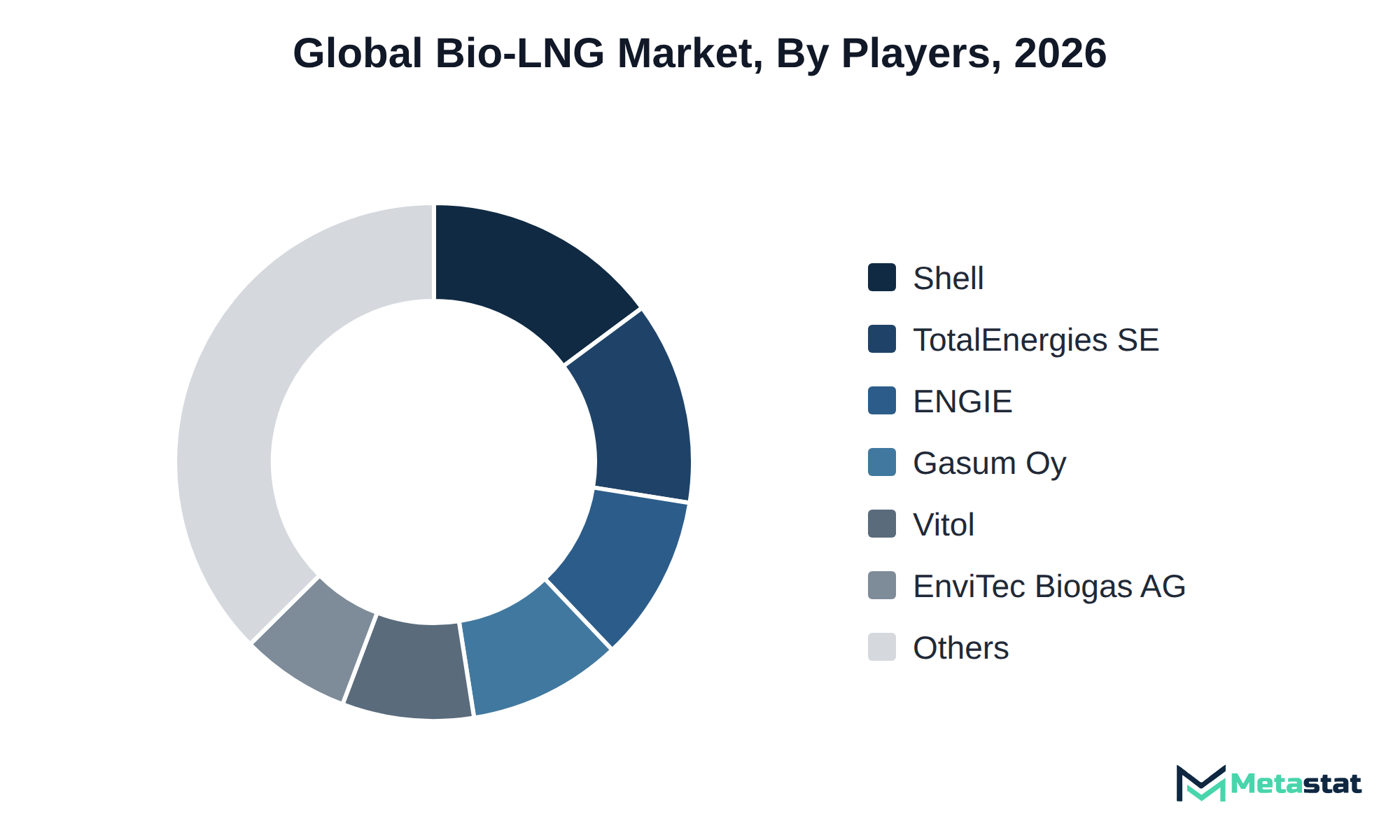
Companies in the Bio-LNG market differentiate themselves through various strategies, including feedstock sourcing, application focus, and product composition. A prominent division exists between those specializing in specific feedstock sources, including source-separated municipal biowaste and livestock manure, and those emphasizing innovative applications, including marine transport and heavy-duty road transport.
Buyers evaluate options based on price, certification, and customization. Shell plc focuses on developing a wide range of applications, emphasizing industrial heating and power generation. Vitol Group leverages its expertise in bio-LNG blends, aiming for significant market share in the growing segment of marine transport. TotalEnergies SE prioritizes certification and sustainability in its offerings, catering to an increasingly eco-conscious clientele.
Growth relies on significant developments in feedstock sources and applications. The increase in source-separated municipal biowaste production is crucial, with an expected rise from USD 1.2 billion in 2026 to USD 10.1 billion by 2033, driven by expanding waste management practices. Marine transport emerges as another vital application, with projections indicating growth to USD 14.1 billion by 2033. The market benefits from investments in bio-LNG infrastructure and technologies to support the transition from fossil fuels. Risks exist that could impede progress. Market volatility, regulatory changes, and technological barriers could slow adoption. Supply chain disruptions arise in regions with less developed infrastructure, particularly in South America and the Middle East and Africa, where market shares remain low. Balancing these developments and risks dictates the trajectory of the Bio-LNG market, influencing overall demand and competitiveness across different applications and regions.
By Feedstock Source: Source-separated Municipal Biowaste, Livestock Manure, Agricultural Crop Residues, Food and Beverage Processing Waste, Landfill Gas, Sewage Sludge, Others (Energy Crops, Woody Biomass)
By Application: Heavy-Duty Road Transport, Marine Transport, Industrial Heating, Power Generation, Others (Rail, Non-Road Machinery, Commercial Heating)
By Product Composition: Unblended Bio-LNG, Bio-LNG Blends
By Chain of Custody Model: Physical Segregation, Certified Mass Balance
The report strategically identifies and profiles the key market players and analyses their core competencies in each sub-segment of the Bio-LNG market.
Report Attributes | Details |
Study Period | 2021-2033 |
Base Year | 2025 |
Estimated Year | 2026 |
Forecast Period | 2026-2033 |
Historical Period | 2021-2025 |
Growth Rate | CAGR 38.2% from 2026 to 2033 |
Revenue Unit | USD billion |
Segmentation | By Feedstock Source, Application, Product Composition, Chain of Custody Model, and Region |
By Region | North America (By Feedstock Source, Application, Product Composition, Chain of Custody Model, and Country)
|
Europe (By Feedstock Source, Application, Product Composition, Chain of Custody Model, and Country)
| |
Asia Pacific (By Feedstock Source, Application, Product Composition, Chain of Custody Model, and Country)
| |
South America (By Feedstock Source, Application, Product Composition, Chain of Custody Model, and Country)
| |
Middle East and Africa (By Feedstock Source, Application, Product Composition, Chain of Custody Model, and Country)
|
Find answers to common questions about this report
The Bio-LNG market size was valued at USD 2.2 billion in 2025.
The market is projected to grow at a CAGR of 38.2% during the forecast period from 2026 to 2033.
The North America Bio-LNG market size is estimated to reach USD 6.4 billion by 2033.
Source-separated Municipal Biowaste leads the Bio-LNG market with a projected value of USD 10.1 billion by 2033, reflecting the highest growth rate among feedstock sources.
Investment in heavy-duty road transport drives growth as fleets transition to sustainable fuels, influenced by environmental regulations and corporate sustainability goals. Technological advancements in biogas production processes enhance conversion rates, leading to higher yields and reduced production costs, benefiting agricultural stakeholders.
Europe holds the dominant share of the Bio-LNG market, accounting for 61.3% in 2025. This significant share reflects Europe's strong commitment to renewable energy sources and sustainable practices.
Price fluctuations in feedstock sources create significant constraints, particularly affecting producers reliant on agricultural residues and biowaste. Rising input costs impact profit margins, forcing producers to reassess operational strategies to maintain competitiveness.
Investment in Bio-LNG production facilities increases due to rising demand for sustainable solutions in heavy-duty and marine transport sectors. Technological advancements enhance efficiency and cost-effectiveness, supporting Bio-LNG adoption and aligning with broader decarbonization efforts.
The Bio-LNG market is estimated to reach a valuation of USD 29.4 billion by 2033.
Key players operating in the Bio-LNG market include Shell plc, Gasum Oy, St1 Biokraft AB, EnviTec Biogas AG, TotalEnergies SE, ENGIE SA, Air Liquide S.A., and BoxLNG Private Limited.
The analysts below cover Energy and Power research at Metastat Insights.
LEAD ANALYST
Utkarsh Khirodkar is a Lead Market Research Analyst at MetaStat Insight, specializing in market intelligence, technology sector assessments, and competitive strategy.

PRINCIPAL CONSULTANT - ENTERPRISE AI & EMERGING TECHNOLOGIES
Banking & Finance · Electronics and Semiconductor · Energy and Power · Healthcare IT · Information & Technology · Professional Services
Vijay Gunti is a Principal Consultant at MetaStat Insight, bringing over two decades of experience across enterprise digital transformation, technology strategy, and intelligent systems.

ENERGY & INFRASTRUCTURE INDUSTRY CONSULTANT
Automotive and Transportation · Electronics and Semiconductor · Energy and Power · Machinery & Equipment
Saurabh Vasant Ganvir consults for Energy & Infrastructure Industry at MetaStat Insight, specializing in renewable energy, solar EPC, and electric vehicle (EV) infrastructure markets.
Ambulatory surgical centers have very different purchasing cycles for robotic-assisted surgery platforms than major hospital networks. The MetaStat Insight study focused squarely on capital expenditure depreciation, procedural reimbursement pathways, and surgeon training overhead. That operational clarity made it much simpler to validate multi-year procedure growth forecasts against actual ambulatory center adoption patterns.
When planning edge sensor rollouts across refinery environments, generic IoT reports typically miss the harsh-environment certification bottlenecks. MetaStat Insight gave an objective evaluation of ATEX and Class 1 Division 2 hardware availability, along with realistic five-year maintenance cycle cost projections. The comparison of wireless mesh versus private cellular backhaul helped our team pressure-test network reliability models for remote processing facilities.
In the biological seed treatment space, registration timelines vary drastically between the European Union, Brazil, and North America. The MetaStat Insight research handled these cross-border regulatory barriers with genuine nuance, mapping commercialization pathways alongside historical field adoption rates. The segmentation between microbial strains and biochemical active ingredients was particularly well structured.
Explore related market intelligence reports worth reading alongside this one.