
LEAD ANALYST
Utkarsh Khirodkar is a Lead Market Research Analyst at MetaStat Insight, specializing in market intelligence, technology sector assessments, and competitive strategy.

Global Water and Sewage Utility Services Market Size, Share, By Service Type (Water Supply and Distribution, Sewage Collection and Treatment, Recycled Water Supply), By Operator Ownership (Publicly Owned, Privately Owned, Mixed Public-Private Ownership), By End User (Residential, Commercial, Industrial, Agriculture and Public), By Service Delivery Model (Direct Utility Operations, Concessions and Leases, Outsourced Operations and Maintenance), Industry Analysis, Growth, Trends, and Forecast, 2026-2033
Report ID
MSI-5685
Published
November, 2026
Pages
301 Pages
Format
Historical
Base year
Forecast
Forecast period
Report Details
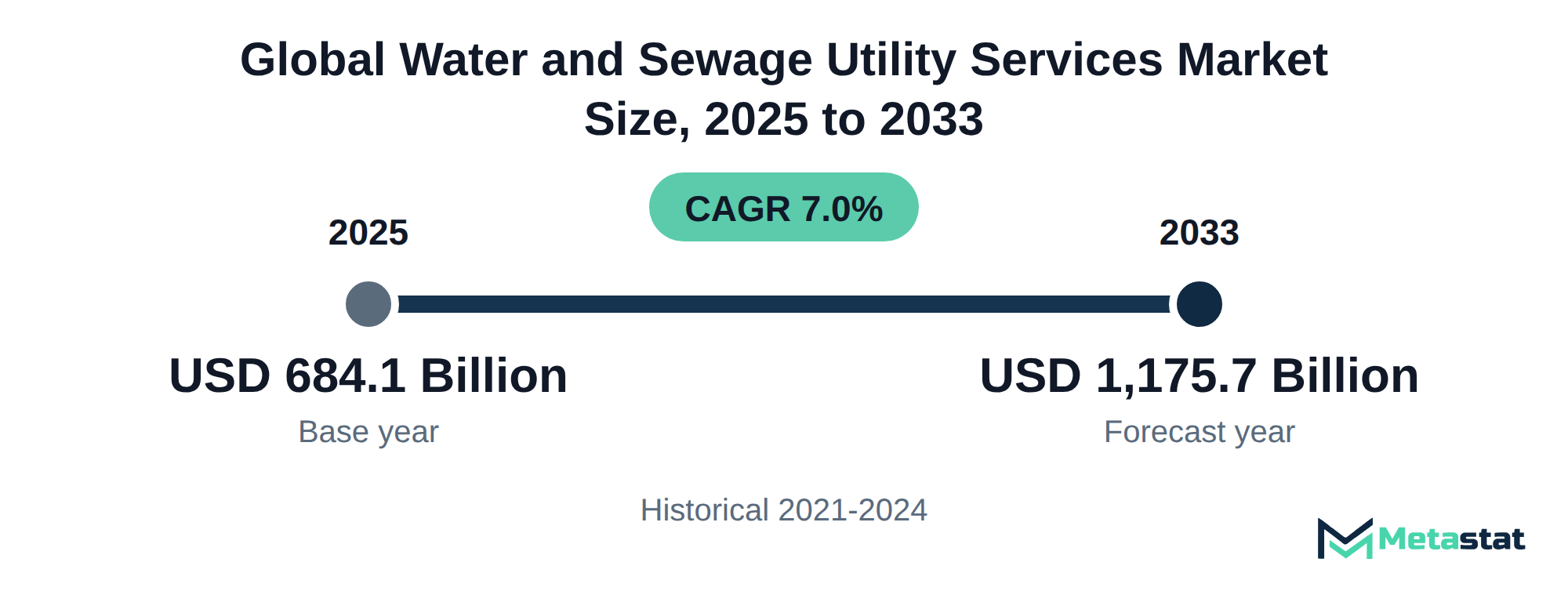
Market Valuation: Valued at $684.1 Billion in 2025, projected to reach $1,175.7 Billion by 2033 at a 7.0% CAGR.
Dominant Segment: The water supply and distribution segment leads the market, driven by rising infrastructure investments and innovations in water management technologies.
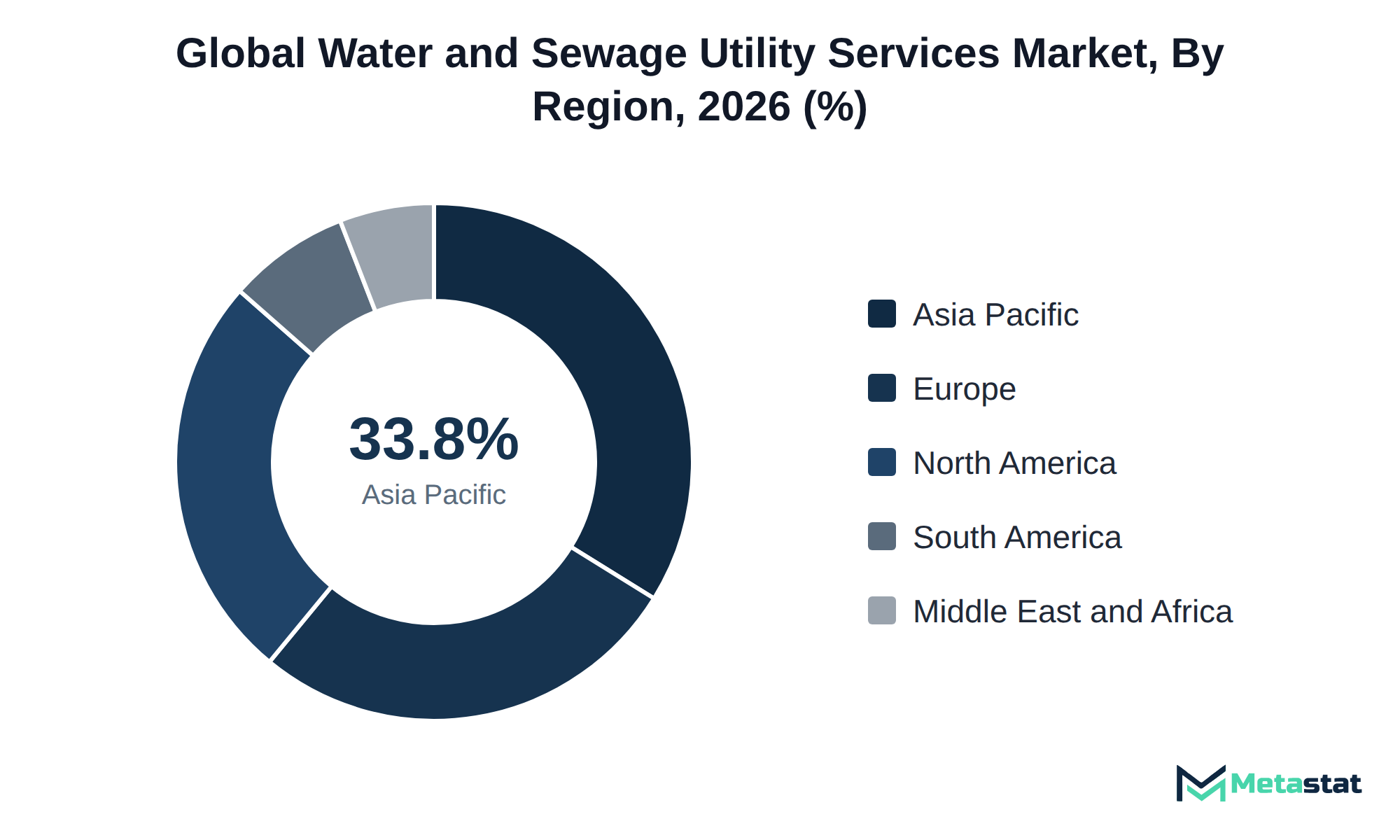
Geographic Lead: Asia Pacific holds the largest market share at 33.8%, fueled by substantial investments in infrastructure to meet the demands of its growing population.
What's Inside: The report provides a comprehensive analysis of market dynamics, competitive landscape, and forecasts from 2026 to 2033, covering various service types and operator ownership models.
Emerging Demand for Recycled Water: The recycled water supply segment is projected to reach USD 45.5 billion by 2033, highlighting a growing emphasis on sustainable practices in industrial and agricultural sectors.
Investment in Advanced Treatment Technol: Investment in advanced treatment technologies is crucial for enhancing operational efficiency and meeting stricter environmental regulations in wastewater management.
Choose Your License
Global Water and Sewage Utility Services Market
The global Water and Sewage Utility Services market was valued at USD 684.1 billion in 2025 and is projected to reach USD 1,175.7 billion by 2033, growing at a CAGR of 7.0% over the forecast period.
The Water and Sewage Utility Services market encompasses the provision and management of essential water supply, sewage treatment, and wastewater management services. Buyers invest in this market to ensure reliable access to clean water and effective waste disposal, which are critical for public health and environmental sustainability. Efficient and sustainable water management solutions drive significant spending by residential, commercial, and industrial consumers.
Growth within the market is propelled by increasing urbanization and population growth, leading to heightened demand for efficient water supply and sewage systems. The segment of water supply and distribution holds the largest share, supported by rising infrastructure investments and innovations in water management technologies. Geographically, Asia Pacific dominates with a 33.8% share, driven by substantial investments in infrastructure and technology to meet the demands of its growing population. North America holds 25.5% of the market in 2025, with the US leading in 2026.
Technological advancements in water treatment and distribution systems contribute to improved efficiency and cost-effectiveness, further stimulating market expansion. Enhanced focus on sustainable practices and regulatory compliance encourages investments in recycled water supply and sewage treatment solutions. Continued growth is expected as societal and environmental priorities centered on water sustainability and conservation.
The Water and Sewage Utility Services market involves various segments, including water supply, sewage collection, and treatment. Buyers invest in these services to ensure reliable access to clean water and effective wastewater management, which is crucial for public health and environmental protection. Increasing urbanization and population growth drive demand for enhanced utility services, prompting investments from residential, commercial, and industrial users seeking sustainable solutions.
Growth in the market is primarily driven by the rising focus on infrastructure development and modernization. Among the segments, water supply and distribution holds the largest share, reflecting the critical need for efficient and reliable water delivery systems. The US is expected to lead the North America market in 2026, contributing significantly to overall market expansion. This region's investments in updating aging infrastructure and improving service delivery models are crucial for enhancing operational efficiency.
Technological advancements, including smart water management systems, play a vital role in enhancing operational efficiency and reducing costs. The market's growth outlook is positive, supported by a growing emphasis on sustainability and environmental responsibility. Continued investment in upgrading services and expanding access helps the Water and Sewage Utility Services market meet the needs of diverse user groups.
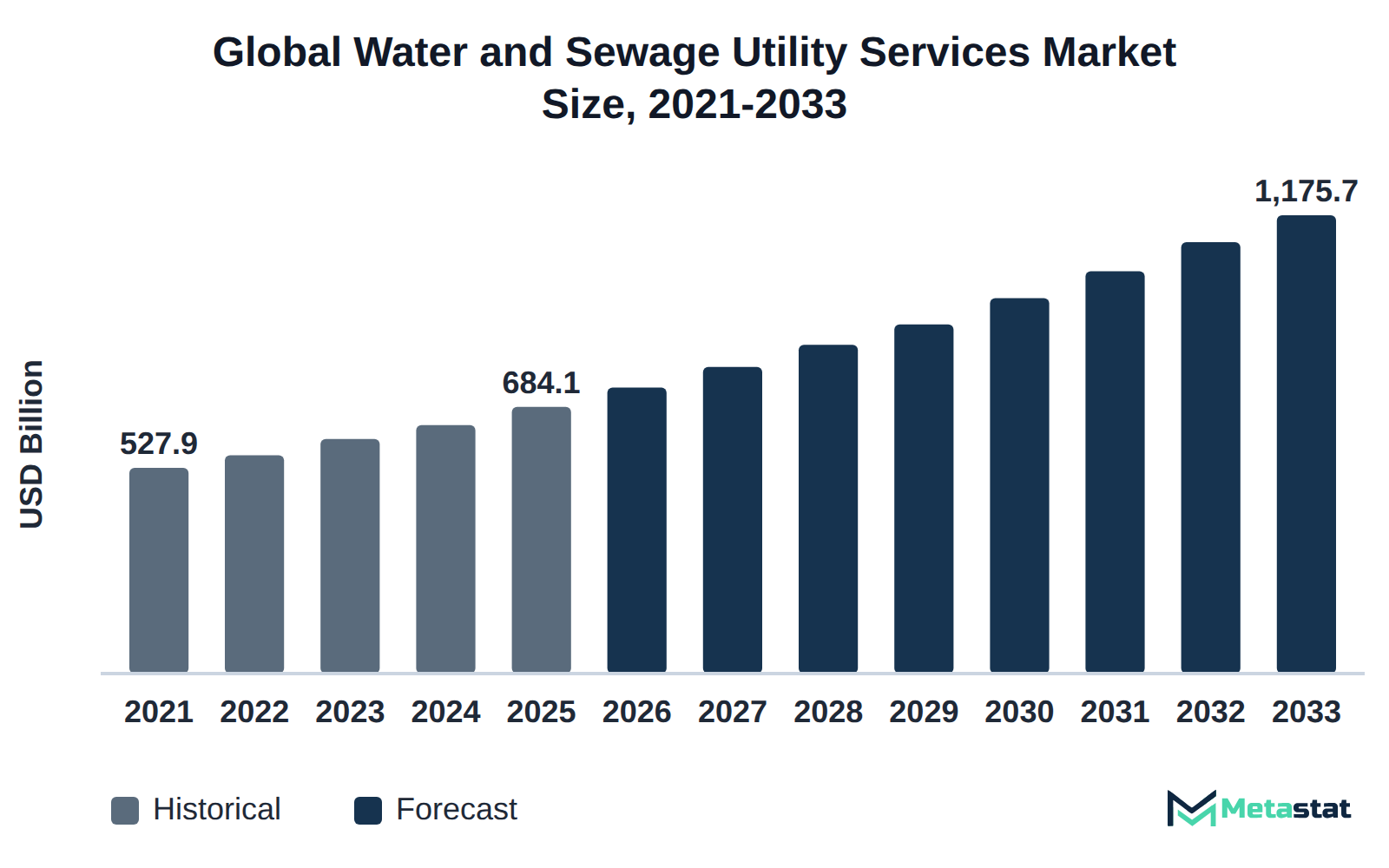
The expansion of recycled water supply for industrial and agricultural customers signifies a significant shift within the Water and Sewage Utility Services market. This segment is projected to reach USD 45.5 billion by 2033, emphasizing the growing importance of water recycling technologies in meeting the demands of these sectors. Increased adoption stems from the need for sustainable water practices, driven by rising concerns regarding water scarcity and environmental regulations.
Industries including agriculture and manufacturing face heightened scrutiny regarding water usage and wastewater management. The integration of recycled water not only reduces reliance on traditional water sources but provides a cost-effective solution for fulfilling operational needs. For agricultural customers, recycled water offers access to a reliable water supply for irrigation, positively impacting crop yields while minimizing the environmental footprint. In industrial applications, the use of recycled water in processes including cooling and cleaning enhances efficiency and helps companies comply with regulatory standards.
This shift towards recycled water supply aligns with the broader objectives of resource efficiency and sustainability in the Water and Sewage Utility Services market. Technologies evolve and infrastructure improves, increasing the potential for investment in this area. Companies that embrace recycled water initiatives position themselves favorably within the market, tapping into new revenue streams while contributing to long-term environmental goals.
Investment in smart metering technologies significantly enhances efficiency in drinking water networks, driving effective leakage reduction strategies. Precise monitoring of water usage through smart meters allows utility companies to identify leaks and inefficiencies promptly. In the Water and Sewage Utility Services market, this technology supports utilities in maintaining optimal operations while minimizing water loss. The sector is projected to experience a compound annual growth rate (CAGR) of 7% through 2033, reaching USD 1,175.7 billion by 2033, reflecting growing demand for innovative solutions.
Contract models regarding smart metering vary across different utility providers, influencing buyer engagement strategies. Several utilities adopt performance-based contracts, where payments correlate with successful leakage reduction and efficiency gains. This model incentivizes providers to prioritize infrastructure investment and maintenance to achieve measurable outcomes. Smart metering supports sustainability and resource conservation, helping utilities manage water resources amid rising demand and environmental challenges.
Adopting these systems enhances customer relationships through improved service delivery and transparency regarding water consumption. Integrating smart metering technologies in the Water and Sewage Utility Services market offers operational benefits and encourages accountability among users, which supports water conservation.
The demand for concession and operations contracts for sewage treatment capacity in the Water and Sewage Utility Services market is increasing significantly. Publicly owned utilities represent a substantial segment of the market and are projected to grow from USD 512.2 billion in 2026 to USD 792.2 billion by 2033, driven by the need for efficient and sustainable sewage management solutions. This growth reflects a shift towards privatization and public-private partnerships, enhancing operational efficiency and service delivery.
Municipalities and regional authorities require reliable partners that manage sewage treatment processes effectively, optimize costs, and ensure compliance with environmental regulations. The growing emphasis on sustainable practices in sewage treatment creates opportunities for private companies to engage in long-term contracts with public entities. Suppliers that excel in treatment technology and operations management gain an edge in winning these contracts.
Investment in concession contracts allows public entities to access advanced technologies and expertise, ultimately leading to improved service quality and reduced operational risks. This trend points to strategic collaborations in the Water and Sewage Utility Services market that support better resource allocation, public health outcomes, and environmental sustainability.
Increasing the reuse of water resources enhances sustainability within the Water and Sewage Utility Services market. The segment focused on recycled water supply is projected to reach USD 45.5 billion by 2033, reflecting a growing emphasis on resource efficiency. This shift results from rising demand for sustainable water management practices among various industries, particularly in water-scarce regions.
Water utilities expand reuse initiatives by investing in advanced treatment technologies that enhance the quality of recycled water. These investments often lead to cost savings in the long term, as treated recycled water reduces reliance on traditional sources. For example, industrial users benefit significantly from adopting recycled water solutions, which improve operational efficiency while lowering overall water costs.
Ultimately, enhancing water reuse initiatives within the market contributes to broader environmental goals, including reducing the carbon footprint of water supply operations. Water utilities prioritize these strategies to meet regulatory requirements while positioning themselves as leaders in sustainable practices, attracting environmentally conscious consumers and investors.
Significant demand growth stems from a shift towards sustainable solutions in water management, particularly among residential and industrial consumers. Customers increasingly prioritize environmentally friendly practices and efficient resource utilization, driving higher spending on water and sewage services. This shift aligns with broader trends in sustainability and regulatory pressures aimed at reducing environmental impact. The transition to sustainable practices enhances operational efficiency, resulting in an increase in service volume and overall market value. Such growth indicates strong demand for sustainable service options and technologies that promote water conservation and recycling.
Investment in advanced treatment technologies significantly enhances operational efficiency within the Water and Sewage Utility Services market. These technologies, including membrane bioreactors and advanced oxidation processes, improve the capability to treat wastewater and recycle water effectively. Rising urbanization and population growth drive demand for these solutions, particularly in densely populated regions. Enhanced treatment capacities allow utilities to meet stricter environmental regulations while addressing the increasing volume of wastewater generated.
Publicly owned utilities, in particular, leverage these technologies to reduce operational costs and improve service reliability. The shift towards integrated water management systems supports the adoption of advanced technologies, leading to better resource recovery and sustainability. Growth in this sector is expected to accelerate as utilities keep working to improve water quality and use resources efficiently, which supports market expansion.
Rising costs associated with modernizing water infrastructure limit investment in advanced technologies within the Water and Sewage Utility Services market. Publicly owned utilities, particularly in regions with stringent budget constraints, face challenges in allocating funds for upgrades and enhancements. This situation results in delayed implementation of efficient systems and technologies that could improve service delivery and environmental outcomes. Industrial end-users experience slower uptake of high-capacity treatment solutions, impacting their operational efficiency and sustainability objectives. The necessity for significant upfront capital investment further compounds these challenges, leading to smaller orders and cautious spending. Consequently, the market experiences slower growth, with stakeholders prioritizing immediate operational needs over long-term technological advancements. This environment calls for new financing models and public-private partnerships that improve infrastructure while keeping services affordable.
Increasing operational costs exert significant margin pressure within the Water and Sewage Utility Services market. Factors including rising energy prices, labor costs, and expenses associated with regulatory compliance negatively influence supplier profitability. Many suppliers face challenges in passing these costs onto consumers due to competitive pricing pressures. In response, suppliers implement cost control measures, streamline operations, and invest in automation technologies to enhance efficiency. This approach allows for better resource management and reduced operational expenditures. Partnerships and collaborations within the supply chain are becoming more prevalent, enabling cost-sharing strategies that alleviate financial burdens. Improved operational efficiency helps suppliers maintain profitability and supports service delivery in challenging market conditions.
The segment focusing on recycled water supply presents notable growth potential within the Water and Sewage Utility Services market. A growing emphasis on sustainable practices in various sectors drives increased interest in this area. Industries including agriculture and manufacturing stand to benefit significantly from recycled water, reflecting a trend toward resource conservation and efficient water use. With a projected value of USD 45.5 billion by 2033, this segment highlights an opportunity for utility providers to expand their service offerings. The market's transition toward recycled water solutions aligns with the broader objective of reducing freshwater consumption while meeting rising demand across customer segments. This shift toward recycled water supply addresses water scarcity and supports operational sustainability and long-term growth within the market.
The Global Water and Sewage Utility Services market is segmented based on Service Type, Operator Ownership, End User, and Service Delivery Model.
Water Supply and Distribution segment is valued at USD 409 billion in 2026 and is projected to reach USD 631.6 billion by 2033, at a CAGR of 6.4% during the forecast period. This segment primarily addresses the delivery of potable water to residential, commercial, and industrial users, fulfilling the fundamental requirement for clean water. The increasing emphasis on sustainability drives demand for efficient water supply systems, enhancing infrastructure investments. The average annual growth rate of this segment surpasses that of Sewage Collection and Treatment, which has a CAGR of 7.2%. This difference indicates a higher growth potential for sewage services, reflecting a shift in investment priorities towards improving sewage management and treatment capabilities in the market. Regulatory pressures and technological advancements further drive this segment's evolution, ensuring more effective distribution systems to meet the growing needs of consumers.
Sewage Collection and Treatment segment is estimated to reach USD 498.6 billion by 2033, at a CAGR of 7.2% during the forecast period. This segment primarily involves the collection, treatment, and disposal of wastewater, serving residential, commercial, and industrial end users. Growing urban populations drive demand for effective sewage management solutions, leading to increased investment in treatment facilities. The segment distinguishes itself from others, including Water Supply and Distribution, due to its higher growth rate, reflecting heightened regulatory requirements and environmental sustainability concerns. Adoption of advanced treatment technologies enhances efficiency, contributing to significant growth. The need for compliance with stringent health and environmental regulations drives investment in this sector, ensuring safe and reliable sewage services. The focus on sustainable practices in sewage treatment creates a supportive environment for market expansion.
This segment provides treated wastewater for agricultural, industrial, and landscape irrigation applications, promoting water conservation and sustainability. The primary drivers of growth stem from increasing water scarcity and the rising emphasis on sustainable practices among various sectors. Unlike other segments, Recycled Water Supply experiences a unique demand profile that appeals to industries facing significant water usage restrictions. With a compound annual growth rate (CAGR) of 6.1%, this segment demonstrates slower growth compared to other segments, including Sewage Collection and Treatment, which features a CAGR of 7.2%. This difference highlights the distinct market dynamics influencing the recycled water supply compared to traditional water supply services, emphasizing the specific needs of end users focused on sustainability.
This segment primarily serves municipalities and governmental bodies that manage local water and sewage systems. The increasing focus on sustainable water management practices drives investment in publicly owned services, reflecting societal demand for reliable and affordable water supply. This segment experiences slower growth compared to privately owned counterparts, with the latter benefiting from rapid technological advancements and operational efficiencies. The transition towards digital solutions in water management significantly influences publicly owned operations, presenting challenges related to funding and infrastructure upgrades. Regulatory frameworks further shape this segment, ensuring compliance with environmental standards while striving for operational efficiency. These factors reinforce the distinctive characteristics of the publicly owned segment within the broader market.
Privately Owned segment is estimated to reach USD 278.8 billion by 2033, at a CAGR of 7.8% during the forecast period. This segment primarily encompasses water and sewage utility services operated by private entities, which cater to residential, commercial, and industrial customers. Growth in this segment stems from rising investment in infrastructure and efficiency improvements, driven by increasing demand for reliable water services. Compared to publicly owned operations, which are projected to reach USD 792.2 billion at a CAGR of 6.4%, privately owned services are expanding at a faster rate, reflecting a shift toward privatization in various regions. Regulatory frameworks supporting private sector participation enhance service delivery and affordability, positioning privately owned operations as a vital component of the evolving water and sewage utility services market.
Mixed Public-Private Ownership segment is expected to reach USD 104.8 billion by 2033. This segment combines the strengths of public and private entities in the delivery of water and sewage services. Municipalities seeking enhanced operational efficiency typically employ this model, allowing for greater investment in infrastructure while maintaining public accountability. The projected growth rate of 7.8% highlights robust demand driven by the necessity for improved service delivery and the management of aging infrastructure. Compared to other operator ownership models, this segment benefits from a balanced approach, integrating public oversight with private sector innovation, resulting in higher overall service efficiency. Maintaining service standards while optimizing costs positions this segment favorably against more traditional publicly owned systems.
The residential segment is valued at USD 258.1 billion in 2026 and is projected to reach USD 406.4 billion by 2033, at a CAGR of 6.7% during the forecast period. This segment primarily serves households, supplying essential water and sewage services for daily living, sanitation, and hygiene. Key drivers include a growing urban population, which pushes demand for reliable water and sewage services. The residential segment differs from commercial and industrial segments, showing a slower growth rate compared to industrial services, which reflect a CAGR of 6.7%. Residential customers generally prioritize affordability, impacting pricing strategies across different service models. Investment in infrastructure upgrades remains critical to maintaining service quality and meeting rising demand, making this segment vital for long-term market sustainability.
The commercial segment is estimated to reach USD 196.1 billion by 2033, at a CAGR of 7.2% during the forecast period. This segment primarily serves businesses and institutions requiring reliable water supply and sewage services for operational efficiency. Growth in this area is driven by increased construction and development activities, which heighten demand for water and sewage utility services. The commercial segment experiences faster growth compared to the residential segment, reflecting a greater emphasis on sustainable practices in business operations. Investment in water conservation technologies and infrastructure improvements supports market expansion. Regulations promoting environmentally friendly practices strengthen the need for robust water management solutions. In contrast to other end-user segments, the commercial segment often demands higher quality water due to industrial applications, positioning it as a distinct sector within the broader market.
The Industrial segment is expected to reach USD 362.6 billion by 2033. This segment serves various industries that rely on water for manufacturing processes, cooling systems, and other operational needs. Key factors influencing this segment include increasing demand for clean water and the adoption of sustainable practices within manufacturing operations. The growth rate for the Industrial segment reflects a CAGR of 7.2%, which positions it favorably compared to other end-user segments. Industrial consumers often invest heavily in water treatment technologies to ensure compliance with environmental regulations, driving further demand. Compared to residential and commercial segments, the Industrial segment experiences a faster growth trajectory due to higher usage volumes and the pressing need for water efficiency innovations to support production processes, enhancing overall operational performance in the market.
Agriculture segment is projected to grow at a CAGR of 6.1% during the forecast period. This segment serves a critical function in supplying water for irrigation and livestock, catering primarily to farmers and agricultural enterprises. Demand growth within agriculture is driven by the increasing need for efficient water usage to enhance crop yield and quality, particularly in regions facing water scarcity. The focus on sustainable practices and technologies further influences this segment. Compared to other segments, agriculture typically experiences slower growth due to the capital-intensive nature of water management systems and the dependency on seasonal precipitation patterns. The overall market reflects a strong emphasis on adopting innovative solutions that improve water efficiency in agricultural applications, enhancing productivity while mitigating environmental impacts.
Public and Institutional users encompass entities including government agencies, schools, and public facilities that require consistent water supply and sewage services. Demand for reliable utilities in these sectors remains critical, driven by regulations mandating hygiene standards and environmental protections. In this segment, public funding influences investments and service delivery approaches. Factors impacting this sub-segment include regulatory changes imposing stricter compliance requirements and the ongoing emphasis on sustainable practices. Compared to other end user segments, the Public and Institutional sub-segment faces distinct challenges, including budget constraints and the need for long-term planning. This segment typically experiences slower growth relative to the Residential user type, which benefits from more dynamic adoption patterns within the market.
Direct Utility Operations segment is valued at USD 526.1 billion in 2026 and is projected to reach USD 810.3 billion by 2033, at a CAGR of 6.4% during the forecast period. This segment focuses on the direct management of water distribution and sewage treatment, serving municipalities and private entities involved in urban infrastructure. The increasing emphasis on efficient water management fuels demand, particularly in densely populated areas where reliable service is essential. The segment benefits from regulatory support aimed at improving service delivery standards. Compared to other service delivery models, including concessions and leases, which experience a CAGR of 8.3%, Direct Utility Operations shows a steadier growth trajectory due to established frameworks and ongoing investments in infrastructure, leading to predictable revenue streams for operators within the market.
Concessions and Leases segment is estimated to reach USD 264.2 billion by 2033, at a CAGR of 8.3% during the forecast period. This segment facilitates agreements for managing water and sewage services, enabling public and private entities to collaborate on infrastructure development and service delivery. Municipalities often engage in these contracts to leverage private expertise and efficiencies while ensuring compliance with regulatory standards. The growth in this segment is primarily driven by increasing demand for efficient service delivery models in urban areas. Compared to Direct Utility Operations, which has a projected CAGR of 6.4%, Concessions and Leases exhibit a faster growth rate, appealing to investors seeking opportunities in public-private partnerships. Such arrangements frequently result in enhanced service reliability and infrastructure improvements, positioning this segment favorably within the broader Water and Sewage Utility Services market.
Outsourced Operations and Maintenance segment is expected to reach USD 101.2 billion by 2033. This segment serves utility companies looking to optimize operational efficiency and reduce costs through external partnerships. Demand is driven by increasing pressure on utilities to enhance service delivery while managing expenses. Privately owned operators favor this model due to the flexibility it offers in managing resources. The segment demonstrates a growth trajectory distinct from others in the Service Delivery Model, indicating faster expansion compared to Direct Utility Operations and Concessions and Leases, which are projected to reach USD 810.3 billion and USD 264.2 billion, respectively. The anticipated CAGR for this segment highlights its rising importance within the market, reflecting a shift toward specialized external services that facilitate better management of water and sewage utility systems.
Based on geography, the Global Water and Sewage Utility Services market is divided into North America, Europe, Asia-Pacific, South America, Middle East, and Africa.
Demand for water and sewage utility services in North America sees significant contributions from the residential, industrial, and agricultural sectors. A growing focus on sustainability and efficient water management creates opportunities for innovative solutions within these industries. The need for effective infrastructure enhancements supports the market, driven by aging systems in cities across the United States, Canada, and Mexico. North America accounted for a 25.5% share of the global market in 2025, reflecting its established operation and investment in utility services. By the end of 2033, North America is projected to reach USD 307.1 billion, indicating strong growth driven by increasing urbanization and regulatory measures aimed at improving water quality and accessibility. These factors collectively reinforce the expansion of the water and sewage utility services market in the region.
Demand for the Water and Sewage Utility Services market in Europe experiences a significant boost from public health initiatives and environmental regulations aimed at improving water quality and sewage management. Countries like Germany and France prioritize investments in infrastructure, emphasizing the modernization of water supply systems. The market benefits from substantial public funding for projects designed to enhance sustainability and efficiency. In Spain and Italy, urbanization and population growth drive the necessity for expanded water services, while Russia focuses on addressing aging infrastructure. Europe holds a 27.1% share of the global market in 2025, reflecting robust activity and continuous development. The diverse utility ownership models, ranging from publicly owned entities to mixed private arrangements, contribute to a competitive landscape, encouraging innovation and responsiveness to regional needs.
The Asia-Pacific region holds a 33.8% share of the global market in 2025. This region benefits from rapid urbanization, which drives demand for water and sewage services, particularly in densely populated countries like China and India. The focus on sustainable practices influences investments in recycled water supply initiatives, enhancing resource management. Infrastructure improvements, supported by government initiatives, further improve service delivery across urban and rural areas. Countries including Japan and South Korea prioritize advanced technologies for efficient water distribution and sewage treatment. Emerging economies in Southeast Asia increasingly recognize the importance of reliable water supply and sewage systems, driving growth in the market. Overall, the unique challenges and opportunities within this region shape its trajectory in the water and sewage utility services market.
Growth in the Water and Sewage Utility Services market within South America is driven by several key factors, including urbanization and population growth. Brazil and Argentina represent the largest markets in the region, with increasing investments in infrastructure aimed at improving water supply and sewage systems. Regulatory frameworks focused on enhancing service efficiency and sustainability further contribute to market expansion. The market share for South America is projected to account for 7.6% of the global market in 2025. Challenges persist, including underinvestment in aging infrastructure and the need for improved water quality, which impact operational costs and service delivery. Stakeholders in the region, including public utilities and private operators, actively explore innovative solutions to address these challenges and enhance service provision in the Water and Sewage Utility Services market.
Demand for the Water and Sewage Utility Services market within the Middle East and Africa sector reflects unique regional challenges and requirements. Saudi Arabia and the UAE invest significantly in infrastructure to enhance water supply and treatment capabilities, driven by rapid urbanization and population growth. South Africa experiences similar pressures due to its need for improved water management, resulting in ongoing investments in technology and sustainable practices. The region's share of the global market reached 5.9% in 2025, highlighting its importance in the overall landscape. Regulatory measures, particularly in Saudi Arabia, focus on efficient resource management to ensure long-term sustainability and service delivery. Overall, the market experiences growth opportunities fueled by increasing demand from both residential and industrial users.
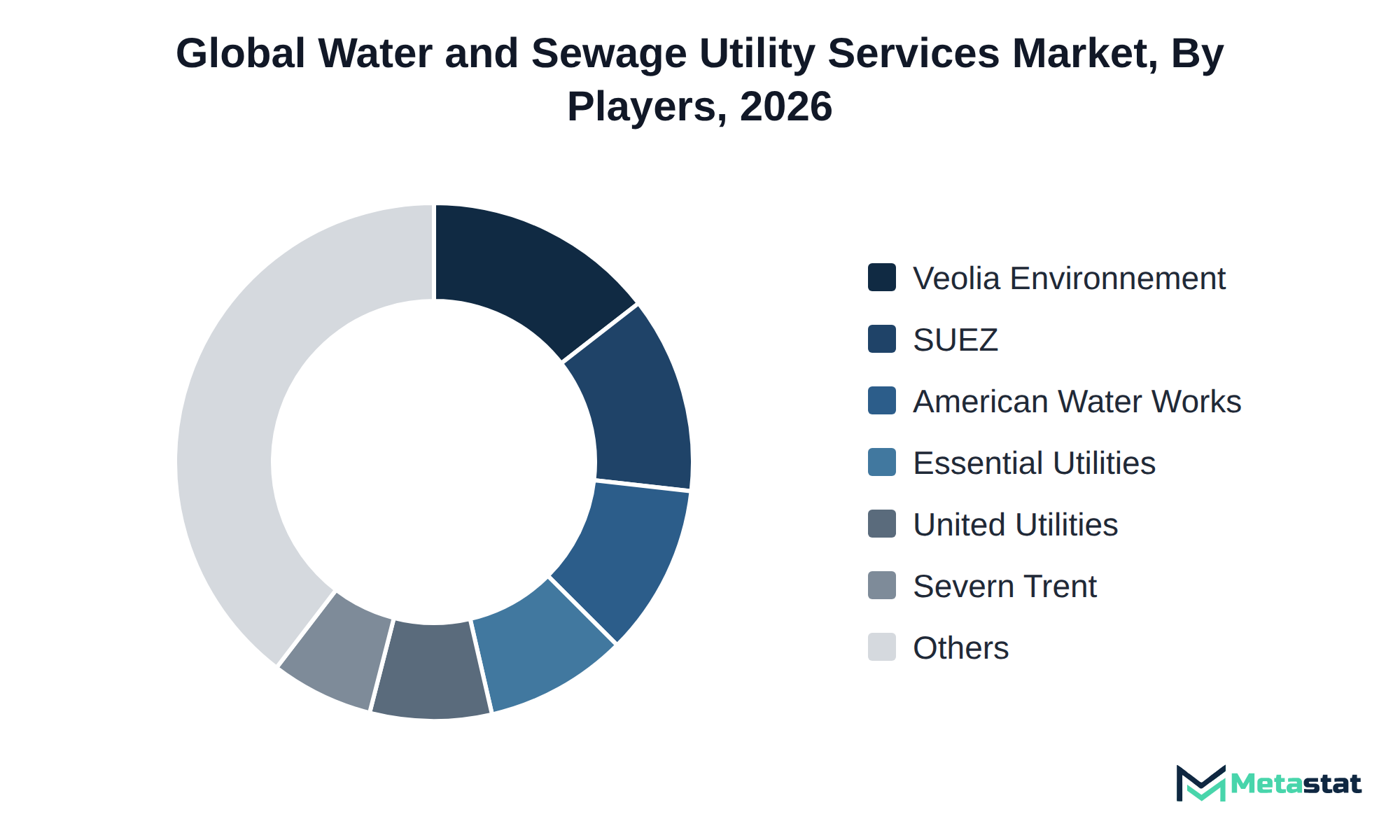
Competition within the Water and Sewage Utility Services market involves various strategies employed by leading companies. Key factors influencing buyer decisions include pricing, certification, service quality, and customization options. Companies differentiate themselves based on these elements, shaping their competitive positioning in the market.
Companies like Veolia Environnement S.A. and SUEZ focus on water supply and distribution, sewage collection, and treatment. Publicly owned entities, including American Water Works Company, Inc. and Essential Utilities, Inc., emphasize reliability and compliance with regulations, while privately owned companies, including H2O America and California Water Service Group, prioritize innovation and customer service. Mixed public-private ownership structures frequently combine the strengths of both models to address regional needs effectively.
In the market, companies including Companhia de Saneamento Básico do Estado de São Paulo - SABESP and Companhia de Saneamento de Minas Gerais - COPASA MG concentrate on specific geographic regions, tailoring their services to local demands. The focus on service delivery models varies, with companies like Thames Water Utilities Limited implementing direct utility operations, while others, including FCC Aqualia, S.A., employ concessions and leases to optimize service efficiency and build long-term relationships with communities.
For the Water and Sewage Utility Services market to achieve this target, several key developments are essential. First, significant investment in infrastructure improvements across North America and Asia Pacific will drive demand for water supply and distribution services, which is projected to grow at a CAGR of 6.4%, reaching USD 631.6 billion by 2033. Second, increased focus on sewage collection and treatment, especially in densely populated urban areas, is expected to enhance the market's growth trajectory. Third, the rise in recycled water supply adoption presents an opportunity for innovation and sustainability in the sector. However, potential risks, including regulatory challenges and budget constraints, could hinder growth. These factors particularly impact publicly owned operators, which dominate the market and account for USD 792.2 billion by 2033, reflecting a CAGR of 6.4%. Addressing these risks while encouraging investment and innovation will be essential to realize market potential.
By Service Type: Water Supply and Distribution, Sewage Collection and Treatment, Recycled Water Supply
By Operator Ownership: Publicly Owned, Privately Owned, Mixed Public-Private Ownership
By End User: Residential, Commercial, Industrial, Agriculture, Public and Institutional
By Service Delivery Model: Direct Utility Operations, Concessions and Leases, Outsourced Operations and Maintenance
The report strategically identifies and profiles the key market players and analyses their core competencies in each sub-segment of the Water and Sewage Utility Services market.
Report Attributes | Details |
Study Period | 2021-2033 |
Base Year | 2025 |
Estimated Year | 2026 |
Forecast Period | 2026-2033 |
Historical Period | 2021-2025 |
Growth Rate | CAGR 7.0% from 2026 to 2033 |
Revenue Unit | USD billion |
Segmentation | By Service Type, Operator Ownership, End User, Service Delivery Model, and Region |
By Region | North America (By Service Type, Operator Ownership, End User, Service Delivery Model, and Country)
|
Europe (By Service Type, Operator Ownership, End User, Service Delivery Model, and Country)
| |
Asia Pacific (By Service Type, Operator Ownership, End User, Service Delivery Model, and Country)
| |
South America (By Service Type, Operator Ownership, End User, Service Delivery Model, and Country)
| |
Middle East and Africa (By Service Type, Operator Ownership, End User, Service Delivery Model, and Country)
|
Find answers to common questions about this report
The Water and Sewage Utility Services market size was valued at USD 684.1 billion in 2025.
The market is projected to grow at a CAGR of 7.0% during the forecast period from 2026 to 2033.
The North America Water and Sewage Utility Services market size is estimated to reach USD 307.1 billion by 2033.
Water Supply and Distribution leads the market with a projected value of USD 631.6 billion by 2033, based on its growth trajectory compared to other segments.
Significant demand growth stems from a shift towards sustainable solutions in water management, particularly among residential and industrial consumers. Investment in advanced treatment technologies significantly enhances operational efficiency within the market.
Rising costs associated with modernizing water infrastructure limit investment in advanced technologies. Publicly owned utilities face challenges in allocating funds for upgrades, resulting in delayed implementation of efficient systems that could improve service delivery and environmental outcomes.
Significant factors favoring adoption in the Water and Sewage Utility Services market include a shift towards sustainable practices and the demand for innovative technologies, particularly in recycled water supply. This transition enhances operational sustainability and supports resource conservation, presenting growth potential for utility providers.
The Water and Sewage Utility Services market is estimated to reach a valuation of USD 1,175.7 billion by 2033.
Key players operating in the Water and Sewage Utility Services market include Veolia Environnement S.A., SUEZ, American Water Works Company, Inc., Essential Utilities, Inc., California Water Service Group, United Utilities Group PLC, and VA Tech Wabag Limited.
The recycled water supply segment is expected to reach USD 45.5 billion by 2033, reflecting significant growth potential driven by the emphasis on sustainable practices.
The analysts below cover Energy and Power research at Metastat Insights.
LEAD ANALYST
Utkarsh Khirodkar is a Lead Market Research Analyst at MetaStat Insight, specializing in market intelligence, technology sector assessments, and competitive strategy.

PRINCIPAL CONSULTANT - ENTERPRISE AI & EMERGING TECHNOLOGIES
Banking & Finance · Electronics and Semiconductor · Energy and Power · Healthcare IT · Information & Technology · Professional Services
Vijay Gunti is a Principal Consultant at MetaStat Insight, bringing over two decades of experience across enterprise digital transformation, technology strategy, and intelligent systems.

ENERGY & INFRASTRUCTURE INDUSTRY CONSULTANT
Automotive and Transportation · Electronics and Semiconductor · Energy and Power · Machinery & Equipment
Saurabh Vasant Ganvir consults for Energy & Infrastructure Industry at MetaStat Insight, specializing in renewable energy, solar EPC, and electric vehicle (EV) infrastructure markets.
Tracking capacity expansion in single-use bioprocessing requires dependable data on raw material availability and cleanroom-grade polymer supply chains. The competitive landscape chapter gave a grounded evaluation of secondary component suppliers across North America and Asia-Pacific rather than simply reprinting press releases. Having that level of supplier benchmarking helped clarify dual-sourcing considerations for our clinical pipeline planning.
When evaluating distributed energy resource management systems, standard research summaries tend to gloss over the operational differences between front-of-the-meter utility deployments and behind-the-meter industrial sites. The MetaStat Insight report addressed those distinctions directly, especially regarding software interoperability standards and grid interconnection backlogs. The five-year market sizing across regional transmission organizations provided actionable context for our grid modernization strategy.
Most industry reports on warehouse automation bundle autonomous mobile robots and fixed conveyor installations into the same top-level numbers, which complicates advisory work. This study split the market cleanly by payload tiers, navigation technology, and fleet management software layers. The regional forecast for Western Europe gave our team defensible adoption benchmarks when evaluating capital allocation for logistics clients, saving us days of secondary data scrubbing.
Explore related market intelligence reports worth reading alongside this one.
Starting from
$2950