
LEAD ANALYST
Utkarsh Khirodkar is a Lead Market Research Analyst at MetaStat Insight, specializing in market intelligence, technology sector assessments, and competitive strategy.

Global Digital Water Market Size, Share, By Offering (Hardware, Software, Services), By Application (Metering and Customer Management, Water Distribution and Leakage Management, Wastewater Collection and Sewer Management, Treatment Process Optimization, Asset Performance and Maintenance, Water Reuse and Allocation, Stormwater and Flood Management), By Deployment Model (Cloud, On-Premises, Hybrid), By End-Use Industry (Municipal Water and Wastewater Utilities, Manufacturing, Energy and Power, Commercial and Institutional, Agriculture, Mining), Industry Analysis, Growth, Trends, and Forecast, 2026-2033
Report ID
MSI-5646
Published
October, 2026
Pages
260 Pages
Format
Historical
Base year
Forecast
Forecast period
Report Details
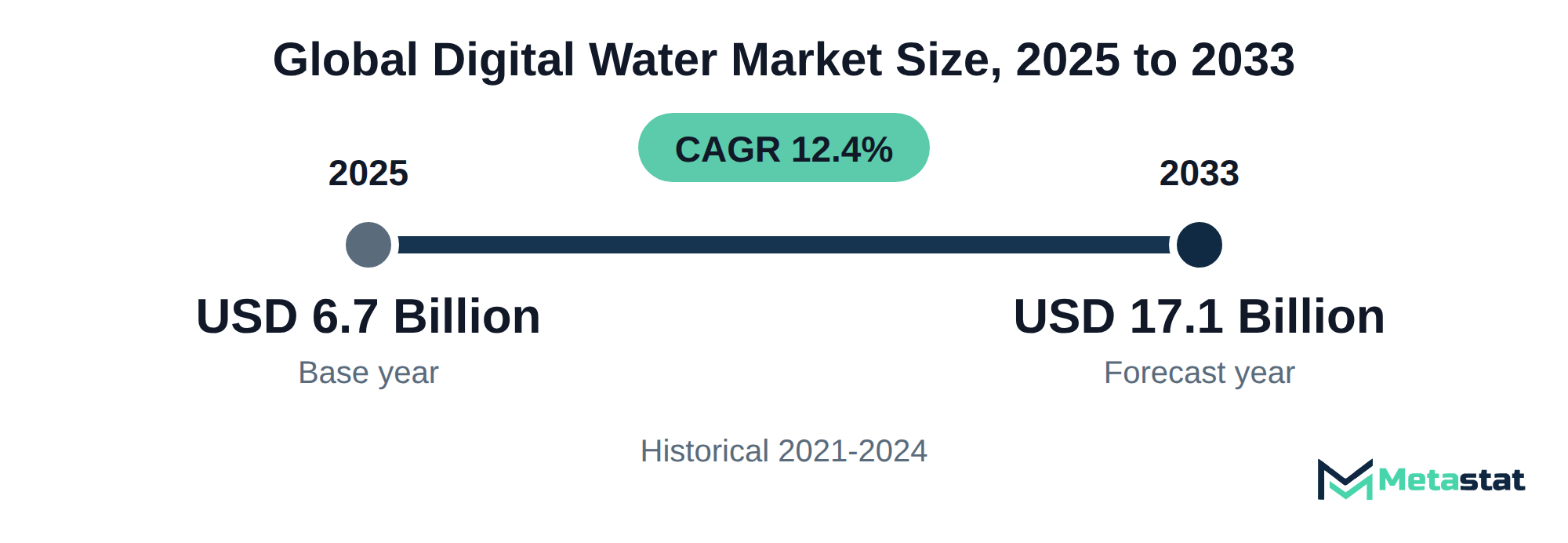
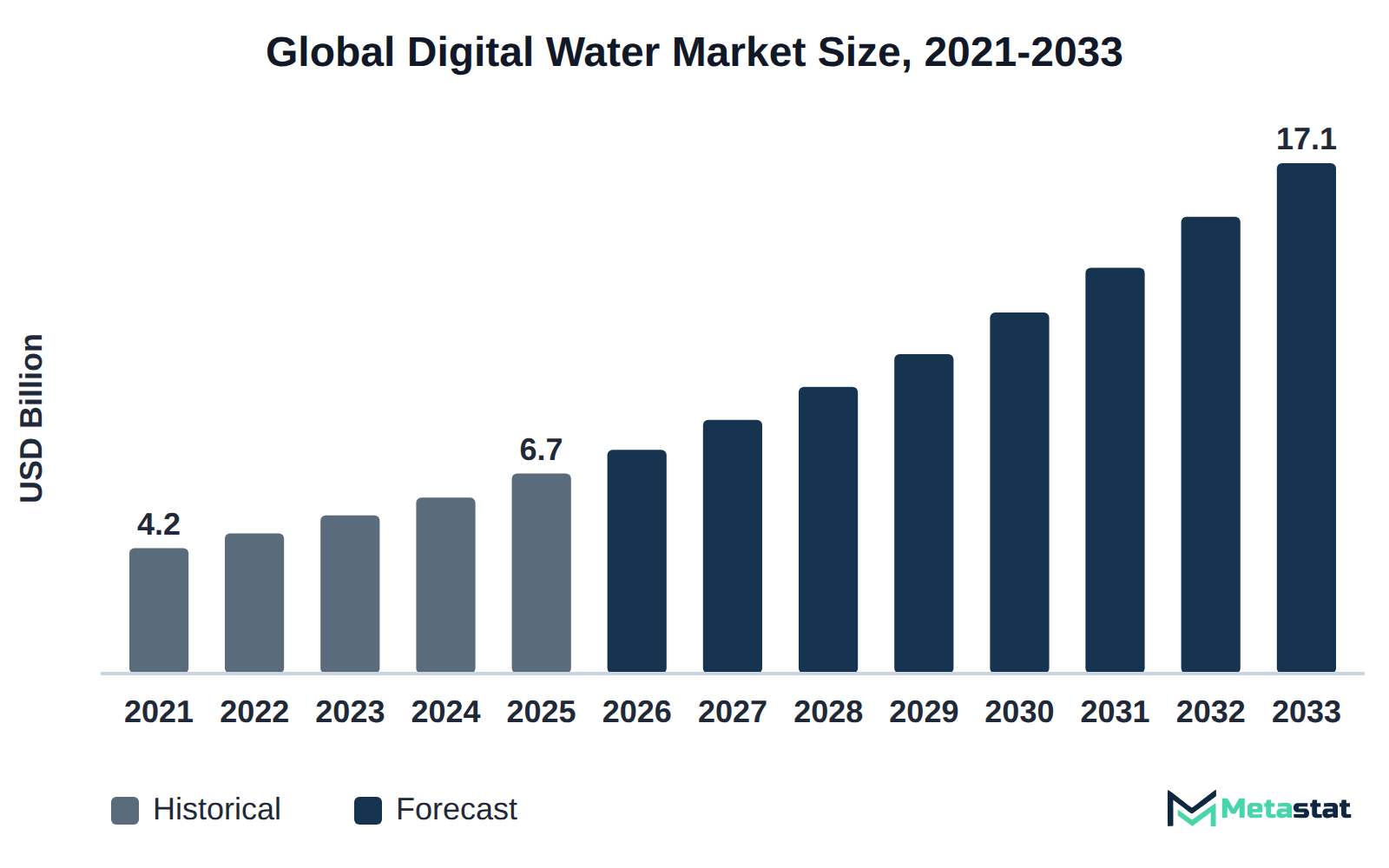
Market Valuation: Valued at $6.7 Billion in 2025, projected to reach $17.1 Billion by 2033 at a 12.4% CAGR.
Dominant Segment: Software solutions lead the Digital Water market, driven by increasing demand for data analytics and real-time monitoring capabilities. This segment is projected to reach USD 7.2 billion by 2033, reflecting a strong shift towards digitalization in water management.
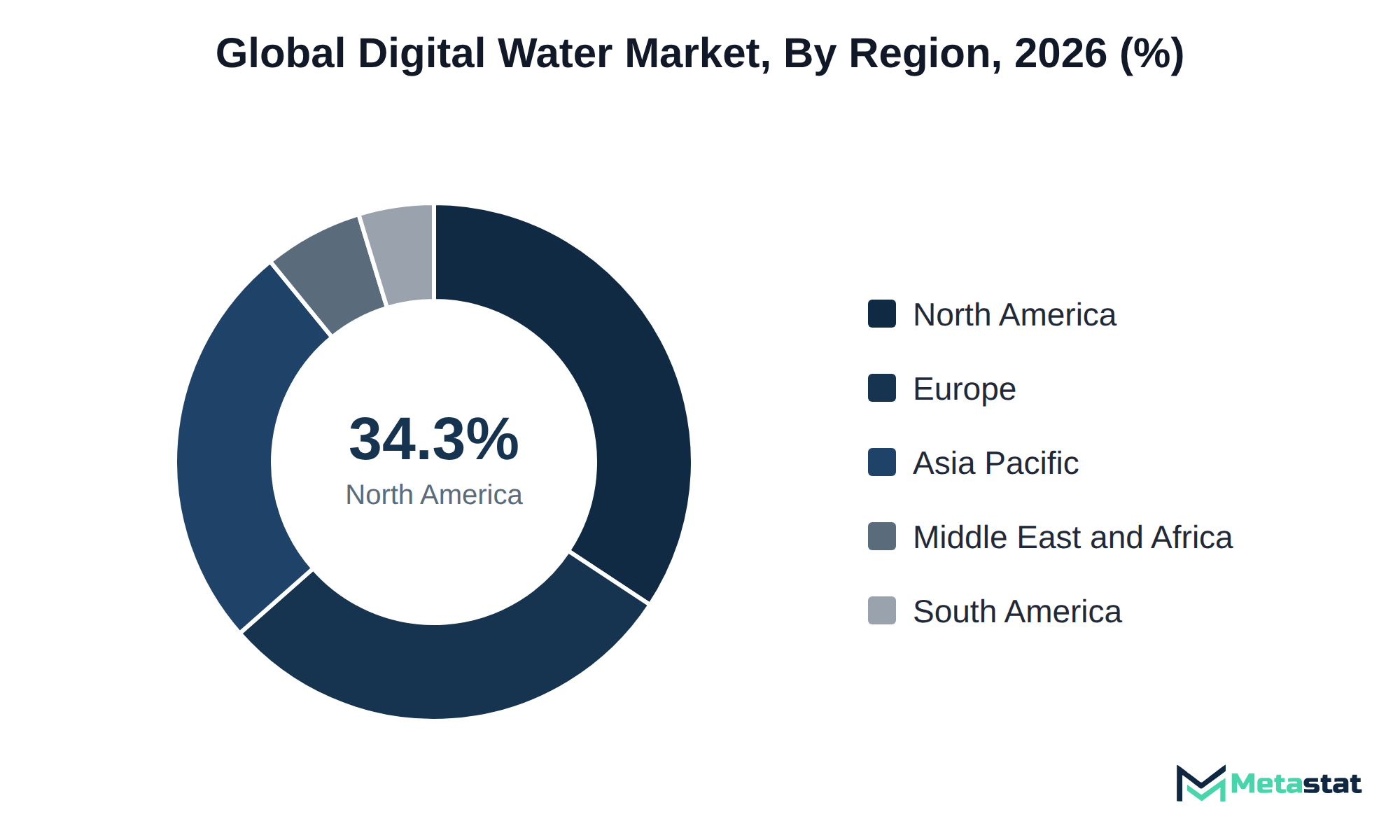
Geographic Lead: North America is the leading region in the Digital Water market, holding 34.3% of the market share in 2025. The United States benefits from advanced infrastructure and significant investment in digital water solutions, enhancing operational efficiency.
What's Inside: The report provides a comprehensive analysis of the Digital Water market, covering competitive landscapes, segment breakdowns by offering, application, deployment model, and end-use industry, along with detailed forecasts through 2033.
Market Dynamics: The increasing focus on sustainability among municipal water utilities is driving demand for innovative digital water solutions. Regulatory pressures and the need for efficient resource management are key factors influencing market growth.
Cloud Deployment Growth: The cloud deployment model is projected to grow significantly, reaching USD 9 billion by 2033 at a CAGR of 15.7%. This growth is fueled by the demand for real-time data management and enhanced operational efficiency.
Choose Your License
Global Digital Water Market
The global Digital Water market was valued at USD 6.7 billion in 2025 and is projected to reach USD 17.1 billion by 2033, growing at a CAGR of 12.4% over the forecast period.
The Digital Water market encompasses technologies and solutions that enhance the management and distribution of water resources. Buyers invest in this market to improve operational efficiency, reduce water loss, and ensure regulatory compliance. Increasing emphasis on sustainable water management practices drives demand for innovative solutions that facilitate better monitoring and optimization of water systems.
Rising awareness of water scarcity and the need for effective water management across industries are fueling growth in the Digital Water market. Among the segments, software solutions represent the most significant value, reflecting the growing demand for data analytics and real-time monitoring capabilities. North America holds 34.3% of the market in 2025, with the US leading in 2026, benefiting from advanced infrastructure and technological adoption.
Investment in digital solutions is a primary driver, allowing utilities and businesses to enhance their water management strategies. The focus on metering and customer management applications demonstrates a clear trend toward improving customer engagement and operational transparency. This shift supports the overall growth trajectory of the market, positioning it for substantial expansion.
The Digital Water market addresses the growing demand for efficient water management solutions across various sectors. Buyers invest in these technologies to optimize resource allocation, enhance operational efficiency, and ensure compliance with regulatory standards. The increasing focus on sustainability and environmental conservation drives spending, with organizations seeking to reduce their ecological footprint while maintaining service quality.
Growth in the market is propelled by advancements in software solutions, which offer significant enhancements in data analytics and operational insights. The software segment holds the most value within the market, reflecting a shift toward digitalization in water management practices. This region's strong investment in infrastructure and technology adoption creates a competitive environment that supports further growth.
Continued investment in smart water technologies and the integration of IoT devices significantly impacts market expansion. Municipal water and wastewater utilities remain the largest end-use industry, highlighting the essential role of these solutions in urban settings. The combined effects of regulatory pressures and the need for improved efficiency create favorable conditions for the Digital Water market.
Advanced technologies including AI leak detection and digital twins are transforming utility operations within the Digital Water market. These innovations enhance the ability of water utilities to monitor, analyze, and manage their infrastructure in real-time. The adoption of AI-driven water leak detection systems significantly improves response times and reduces water loss, which is critical given the substantial annual loss in the United States alone due to leaks in water distribution systems.
Digital twins provide a virtual representation of physical assets, allowing operators to simulate various scenarios and optimize maintenance schedules. This technology is projected to enhance operational efficiency and extend asset life. The market for software within the Digital Water market is expected to reach USD 7.2 billion by 2033, reflecting a compound annual growth rate of 15% driven by increasing demand for smart technologies in managing water resources.
The integration of these technologies delivers substantial cost savings and operational benefits for water utilities. With improved leak detection capabilities, utilities minimize water loss, enhance service reliability, and increase customer satisfaction. This shift toward digital solutions positions utility companies to address challenges related to aging water and wastewater infrastructure and to water scarcity, driving long-term growth within the market.
Pricing strategies for cloud-based digital water solutions significantly influence buyer decisions. The shift towards cloud water platforms enables organizations to leverage real-time data from water meters, facilitating accurate operational decisions. This development arises from increasing demand for improved efficiency and cost savings in water management.
Many vendors adopt subscription-based pricing models, allowing organizations to pay for services in line with their consumption needs. Software solutions in the Digital Water market reflect growing interest in cloud deployments and associated services. This growth indicates heightened willingness among organizations to invest in advanced solutions that enhance operational capabilities.
Tiered pricing models offer flexibility, enabling organizations to select plans based on their operational scale and requirements. This structured approach to pricing supports broader adoption by accommodating diverse budget constraints across different buyer groups. Organizations experience enhanced access to the latest technologies without incurring substantial upfront costs, driving overall market growth.
Digital water reuse platforms connect industrial supply and demand, addressing the growing need for sustainable water management solutions. One significant buyer group consists of municipal water and wastewater utilities, which increasingly adopt digital solutions to optimize water resource utilization. In 2026, this segment's market value is projected to reach USD 4.6 billion, reflecting a commitment to enhancing operational efficiency.
The need for innovation in water reuse processes stems from stringent regulatory requirements and the necessity for cost-effective solutions. Digital water platforms facilitate real-time monitoring, data analytics, and process automation, which help utilities minimize waste and improve compliance. Integration of these technologies results in reduced operational costs and enhances the overall effectiveness of water management practices.
Municipalities invest in digital water solutions, leading to improved service delivery and increased customer satisfaction. Growing emphasis on sustainability in the digital water market makes these platforms central to the transition towards efficient resource management and environmental protection.
Digital water platforms enhance the commercial viability of residual-water exchange by optimizing efficiency and lowering operational costs. These platforms use advanced data analytics and real-time monitoring to track residual-water quantities and assess their quality, so users can identify suitable exchange opportunities. For instance, revenue in the municipal water and wastewater utilities sector is projected to rise from USD 4.6 billion in 2026 to USD 9.8 billion by 2033, a compound annual growth rate of 11.5%. This sector's expansion signifies rising demand for efficient water management solutions.
By integrating digital water technologies, industries better manage water resources, reduce waste, and generate revenue from treated residual water. The market's focus on sustainable practices aligns with increasing regulatory pressures and consumer expectations for environmental responsibility. Consequently, adopting digital water platforms supports compliance with environmental regulations and facilitates new revenue streams through the commercialization of treated residual water. Continuous development in the digital water market helps industries enhance sustainability and operational efficiency.
The demand for digital water solutions has intensified due to a significant shift toward sustainability among municipal water utilities. This transition arises from heightened awareness of environmental issues and regulatory pressures to reduce water waste and enhance resource efficiency. Utilities are prioritizing technologies that optimize water management and minimize operational costs. This growth indicates that buyers increasingly invest in systems that provide better metering, leakage management, and treatment process optimization. The shift toward sustainable practices improves service delivery and directly affects the volume of advanced digital water solutions required in the market. While demand expands, the competitive landscape becomes more dynamic, prompting suppliers to innovate and enhance their offerings.
Increased focus on sustainability further drives demand within the digital water market.
The adoption of the cloud deployment model drives significant growth in the Digital Water market. This model offers improved data accessibility for utilities and municipalities, enabling real-time monitoring and data analysis. Enhanced data sharing among various stakeholders streamlines operations, promoting efficient resource management. Accessing data remotely supports decision-making processes, allowing for rapid responses to issues including leaks or operational inefficiencies.
Utilities experience cost reductions through cloud-based solutions, which eliminate the need for extensive on-premises infrastructure. This shift attracts investments in digital water technologies, with growth anticipated in the cloud segment. By 2033, revenue from cloud-based solutions is projected to reach USD 9 billion, reflecting a compound annual growth rate of 15.7%. The market's trajectory highlights the value of cloud deployment in enhancing operational efficiency and driving the adoption of advanced technologies.
The rising costs of digital water solutions present a significant restraint within the market. Municipal water and wastewater utilities, which represent a key buyer group, experience slower uptake of these solutions due to budget constraints and limited financial resources. Higher initial investment requirements deter these utilities from making timely upgrades or replacements of aging infrastructure. This situation results in delayed implementation of modern digital solutions, impacting operational efficiency and service delivery. Ongoing maintenance and training associated with advanced technologies add to the financial burden, further restricting immediate adoption. The overall effect of these rising costs restricts investment in necessary infrastructure improvements, leading to prolonged reliance on traditional, less efficient systems. A sustained increase in costs ultimately hampers the growth potential of the digital water market, affecting the ability of utilities to transition to more effective water management practices.
Profitability within the Digital Water market faces challenges due to rising operational costs and competitive pricing pressures. Suppliers encounter increasing expenses related to technology, materials, and skilled labor, significantly impacting margins. This financial strain leads to heightened competition, compelling suppliers to reduce prices to maintain market share.
In response, companies focus on optimizing operations through automation and enhanced data analytics to lower costs and improve efficiencies. Adoption of innovative technologies, including advanced software solutions, streamlines processes, allowing suppliers to deliver services more effectively while managing expenses. Collaboration between industry players emerges as a strategy to share resources and mitigate costs.
The market evolves, and suppliers prioritize investments in research and development to create cost-effective solutions that meet customer demands while maintaining profitability. Such strategic responses are vital for sustaining growth in an increasingly competitive environment.
The cloud deployment model stands out due to its significant growth potential within the Digital Water market. The ability to enhance data accessibility, streamline operations, and reduce infrastructure costs drives this growth. Municipal water and wastewater utilities increasingly adopt cloud-based solutions for real-time monitoring and management, leveraging advanced analytics and IoT capabilities. These solutions enable utilities to optimize resource allocation, improve service delivery, and mitigate operational risks effectively. The trend toward cloud adoption supports further investment and innovation, in line with the market's broader drive toward digital transformation in water management.
The Global Digital Water market is segmented based on Offering, Application, Deployment Model, and End-Use Industry.
Hardware in this context is valued at USD 3.2 billion in 2026 and is projected to reach USD 6 billion by 2033, at a CAGR of 9.6% during the forecast period. This segment encompasses physical devices and equipment essential for water management systems, including sensors, meters, and control systems. Such hardware is commonly used by municipal water utilities and industrial applications to monitor, control, and optimize water supply and quality. Demand for this segment is driven by increasing regulatory requirements for water quality and efficiency. In contrast to the software segment, which experiences a higher CAGR of 15%, hardware growth reflects steady adoption, indicating a focus on upgrading existing infrastructure rather than relying solely on new technological solutions. This hardware segment supports integral operations, contributing to overall system efficiency and data accuracy within the broader market.
In the Digital Water market, this segment primarily involves software applications that support water utility management, including metering, customer management, and treatment process optimization. Municipal water utilities represent key buyers, driven by the ongoing need for efficient resource management and regulatory compliance. Competitive pricing pressures influence decision-making in this segment, presenting challenges for software providers. Software's growth outpaces hardware, which is projected to reach USD 6.0 billion by 2033 at a CAGR of 9.6%. Rapid technological advancements within the software segment drive increased adoption rates among customers seeking innovative water management solutions. Software solutions enable utilities to enhance operational efficiencies, reflecting a significant trend toward digital transformation across the market.
Services is expected to reach USD 3.8 billion by 2033. This segment includes various support and consulting services that enhance the implementation and effectiveness of digital water solutions. Municipal water utilities primarily benefit from these services, which improve operational efficiency and compliance with regulatory standards. The increasing emphasis on digital transformation in water management drives growth in this segment by raising service demand. Compared to hardware and software, which experience higher growth rates of 9.6% and 15% respectively, the services segment presents a more stable growth trajectory due to its essential support role in optimizing existing systems. The focus on integration and maintenance services ensures that operators avoid disruptions while maximizing system capabilities, influencing long-term operational performance in the market.
Metering and Customer Management is valued at USD 1.9 billion in 2026 and is projected to reach USD 3.7 billion by 2033, at a CAGR of 10.3% during the forecast period. This segment ensures accurate billing and efficient water usage for utilities and consumers. Municipal water utilities primarily drive demand due to the need for enhanced customer engagement and operational efficiency. The segment stands out within its group due to its growth trajectory, supported by advancements in smart metering technologies. Factors including regulatory pressures for improving service delivery and increasing competition among water service providers contribute to this growth. Compared to other segments, Metering and Customer Management is expected to experience a higher growth rate, indicating strong investment potential in the Digital Water market.
Water Distribution and Leakage Management segment is estimated to reach USD 3.6 billion by 2033, at a CAGR of 11.7% during the forecast period. This segment focuses on optimizing water distribution systems and minimizing leakage, benefiting utilities and municipalities tasked with efficient water management. The increasing emphasis on sustainability and resource conservation drives investment in technologies and solutions that enhance operational performance in this area. This segment experiences stronger growth compared to the broader Services segment, which targets a variety of applications. Utilities prioritize investments in leak detection and management systems to enhance service reliability and reduce operational costs, establishing a distinct market trajectory that reflects the critical need for efficient water distribution practices.
Wastewater Collection and Sewer Management segment is expected to reach USD 2.4 billion by 2033. This segment focuses on the efficient management and collection of wastewater, primarily by municipal utilities and infrastructure operators. Increasing regulatory pressures for environmental compliance drive demand for advanced solutions in this area. With a CAGR of 11.7%, growth in this segment is primarily influenced by the need for improved infrastructure and technology integration in outdated systems, contrasting with the broader market's trends. While other applications experience faster growth due to digitization, the emphasis on compliance and maintenance in wastewater management creates a stable demand environment, leading to sustained investments and technological advancements necessary to meet stringent regulations.
Treatment Process Optimization segment is projected to grow at a CAGR of 13.3% during the forecast period. This segment focuses on enhancing the efficiency of water and wastewater treatment processes through advanced technologies, primarily employed by municipal water and wastewater utilities. Increasing regulatory pressure for improved water quality and the drive towards sustainable practices significantly influence this segment. The segment distinguishes itself from others by emphasizing technology-driven solutions, often resulting in higher value compared to more traditional applications. Compared to Metering and Customer Management, which is expected to grow at a CAGR of 10.3%, Treatment Process Optimization shows a stronger growth trajectory, highlighting the urgency for utilities to upgrade their systems in response to stringent environmental standards. Investment in innovative solutions within this segment enhances operational efficiency, ultimately contributing to improved service delivery in the digital water market.
Asset Performance and Maintenance focuses on optimizing the performance and reliability of water assets, including treatment plants and distribution systems, through advanced monitoring and analytics. This segment finds application among municipal water utilities and industrial operators aiming to enhance operational efficiency and minimize downtime. Strong demand drivers include the increasing emphasis on proactive maintenance strategies such as predictive maintenance, which reduce costs associated with equipment failure and service interruptions. Rising regulatory pressures surrounding water quality and infrastructure reliability influence investment in performance management solutions. Compared to other segments, Asset Performance and Maintenance exhibits different adoption rates, reflecting varying priorities among industry players, particularly in contrasting growth dynamics seen in Metering and Customer Management and Water Distribution and Leakage Management. This segment addresses critical operational challenges within the Digital Water market.
Water Reuse and Allocation involves the processes and technologies used to reclaim and redistribute water for various applications, contributing to efficient water management practices. Municipal water utilities, industrial sectors, and agricultural operations apply these technologies to optimize water usage and support sustainability goals. Demand for this sub-segment is driven by heightened awareness of water scarcity and the need for efficient resource management.
This sub-segment differs from others within the Application category, focusing on creating value through innovative reuse strategies. It experiences significant momentum due to increasing regulatory pressure for water conservation and rising costs associated with freshwater sourcing. Unlike areas including Metering and Customer Management, which cater to direct billing and customer engagement, Water Reuse and Allocation emphasizes environmental impact and resource efficiency.
Stormwater and Flood Management encompasses strategies and technologies aimed at controlling and mitigating the impacts of stormwater runoff and flooding events. Municipalities and local authorities adopt these solutions to enhance urban resilience and protect infrastructure from water-related damages. Increased urbanization and climate change intensify the risk of flooding, driving demand for innovative management solutions in this sector. Unlike other applications, this segment prioritizes immediate environmental response and infrastructure protection, reflecting a different urgency compared to segments focused on routine operations including Metering and Customer Management. The growing emphasis on sustainable urban development further influences investment in stormwater management solutions, differentiating it within the broader Digital Water market.
This sub-segment deals with water resource planning and compliance reporting, focusing on the effective management of water resources and adherence to regulatory requirements. Utilities and organizations employ these solutions to optimize water distribution and ensure compliance with local and international regulations. Increasing regulatory pressures drive demand for enhanced reporting and resource management tools, contributing to the growth of this sub-segment. Organizations across various sectors, including municipal water utilities, seek effective water management strategies to avoid penalties and enhance operational efficiency. Compared to other applications, this sub-segment presents slower growth dynamics than areas like Water Distribution and Leakage Management, but it addresses critical operational needs related to resource conservation and regulatory compliance. The emphasis on sustainable practices supports the ongoing development of innovative solutions to meet these challenges, ultimately influencing demand within the broader Digital Water market.
Cloud deployment within the Digital Water market is valued at USD 3.2 billion in 2026 and is projected to reach USD 9 billion by 2033, at a CAGR of 15.7% during the forecast period. This model supports various water management applications, primarily used by municipal utilities and industrial operators. The driving force behind this segment includes increasing demand for real-time data management and analytics, enhancing operational efficiency and decision-making capabilities. Compared to other deployment models, cloud solutions exhibit higher growth due to their flexibility and lower upfront costs. In contrast, on-premises solutions generally involve greater capital expenditure and longer implementation times, making cloud deployment a more attractive option for several buyers. The anticipated growth of this segment points to the rising role of cloud deployment in water management.
On-Premises segment is estimated to reach USD 4.5 billion by 2033, at a CAGR of 6.7% during the forecast period. This deployment model primarily serves municipal water and wastewater utilities, providing essential infrastructure for local operations. Adoption of on-premises solutions stems from regulatory requirements and the need for enhanced data security, driving utility companies to maintain control over their systems. Compared to the cloud model, which experiences a higher growth rate of 15.7%, the on-premises deployment exhibits slower expansion. Despite this, the segment remains crucial for organizations prioritizing data sovereignty and local data management strategies. Market dynamics, influenced by technological advancements and evolving customer preferences, highlight the ongoing relevance of on-premises solutions in a competitive environment.
Hybrid deployment is expected to reach USD 3.6 billion by 2033. This model combines on-premises and cloud solutions, allowing utilities to gain the benefits of both environments. Municipal water and wastewater utilities primarily adopt hybrid systems to enhance operational efficiency while maintaining control over critical data. The growth of this segment is driven by increasing demand for scalable solutions that accommodate diverse regulatory and operational requirements. Organizations seek to improve service delivery and data management, and hybrid systems provide the flexibility necessary to adapt to evolving needs. Compared to cloud solutions, which are projected to grow at a CAGR of 15.7%, hybrid models exhibit moderate growth, holding a stable market position due to their unique ability to bridge traditional and modern technologies, thus appealing to a broader range of buyers.
This segment focuses on delivering essential water and wastewater services to urban and rural populations, ensuring water quality and compliance with regulations. Driven by growing concerns over water scarcity and the need for efficient infrastructure, municipalities increasingly invest in digital solutions. The increasing focus on sustainability and regulatory compliance significantly influences this segment's growth. Compared to other segments, this one exhibits a stronger growth trajectory, supported by a higher CAGR of 11.5%, surpassing many other applications in the market. Investments in technology to enhance operational efficiency and service reliability further distinguish this segment within the broader Digital Water market.
Manufacturing is estimated to reach USD 2.8 billion by 2033, at a CAGR of 14% during the forecast period. This segment addresses the requirements of industrial facilities for efficient water management, including processes related to production and wastewater treatment. The increasing focus on sustainability drives demand for innovative water solutions in manufacturing, fostering adoption of advanced technologies. Compared to other segments, the manufacturing segment exhibits a faster growth rate, supported by the need for improved operational efficiency and reduced environmental impact. This segment distinguishes itself with a significant emphasis on integrated solutions that enhance resource utilization and ensure compliance with environmental regulations, further aligning with broader trends in the digital water market.
The Energy and Power segment is expected to reach USD 1.3 billion by 2033. This segment serves various utilities and companies involved in energy production and distribution, focusing on optimizing water usage in power generation processes. Increasing regulations regarding water efficiency and sustainability drive demand for advanced monitoring and management systems. In comparison to other segments, including Municipal Water and Wastewater Utilities, which is projected to reach USD 9.8 billion by 2033, the Energy and Power segment experiences slightly slower growth with a CAGR of 14%. The segment's distinct focus on the energy sector emphasizes specialized solutions tailored to enhance operational efficiency and compliance with environmental standards. Overall, the Energy and Power segment reflects a critical area within the Digital Water market, highlighting the intersection of water management and energy production.
Commercial and Institutional segment is projected to grow at a CAGR of 14% during the forecast period. This segment encompasses the adoption of digital water solutions in commercial enterprises and institutional settings, including hotels, schools, and office buildings. These solutions facilitate efficient water management, cost reduction, and improved sustainability practices. The increasing awareness of water conservation and rising operational costs drive demand within this segment. Unlike Municipal Water and Wastewater Utilities, which focus on large-scale infrastructure, the Commercial and Institutional segment prioritizes tailored solutions that address specific operational challenges. With a growing emphasis on regulatory compliance and environmental responsibilities, investment in digital water technologies is expected to rise among commercial and institutional buyers.
Agriculture is essential in managing water resources effectively, focusing on irrigation and crop management. Farmers and agricultural enterprises apply digital water technologies to optimize water usage, ensuring sustainable practices while enhancing crop yield. Increasing pressure to improve water efficiency drives adoption within this segment. Environmental regulations and water scarcity prompt the need for innovative solutions that support sustainable agriculture. Compared to other segments, including Municipal Water and Wastewater Utilities, agriculture experiences distinct challenges related to fluctuating demand and seasonal variations. These factors differentiate its growth trajectory, influencing investment and technology adoption strategies in the digital water market.
Mining requires effective water management systems to optimize resource extraction while minimizing environmental impact. This segment involves technologies and processes that manage water use in mining operations, focusing on water sourcing, treatment, and discharge. Mining companies apply these solutions to enhance operational efficiency and comply with strict environmental regulations. Key drivers for this segment include increasing regulatory pressure to reduce water usage and improve sustainability practices. Compared to other segments in the market, mining operates under distinct challenges, facing higher stakes in environmental compliance and operational costs. The demand for water management in mining differs due to the industry's unique operational requirements and regulatory landscape, influencing technology adoption and investment strategies.
This sub-segment focuses on Construction and Transport Infrastructure applications, emphasizing the integration of digital water solutions in projects that require efficient water management. Companies involved in construction and infrastructure apply these solutions to optimize water usage, monitor supply, and maintain compliance with regulatory standards. Demand in this segment is driven by increasing urbanization and the need for sustainable infrastructure development. Unlike other segments, which emphasize immediate operational efficiencies, this sector places significant attention on long-term planning and sustainability. The emphasis on smart technology and data analytics in construction and transport infrastructure creates a unique niche, distinct from other applications including Municipal Water and Wastewater Utilities. The market's progression in this area aligns with broader trends in environmental responsibility and infrastructure resilience.
Based on geography, the Global Digital Water market is divided into North America, Europe, Asia-Pacific, South America, Middle East, and Africa.
Strong investment from the municipal water and wastewater utilities industry drives demand in North America. Growing infrastructure initiatives in the United States, Canada, and Mexico enhance the adoption of digital water solutions. North America holds 34.3% of the global market in 2025, projected to reach USD 5.3 billion by the end of 2033. The region's focus on optimizing water distribution and waste management processes significantly influences the evolution of the digital water market. Regulatory efforts aimed at improving water quality and sustainability further stimulate market growth. Industries in this region increasingly prioritize technology integration to enhance operational efficiency and address environmental concerns.
Demand within the Digital Water market in Europe exhibits significant strength, driven primarily by municipal water and wastewater utilities. Countries including Germany, France, and the UK prioritize infrastructure upgrades to enhance efficiency and sustainability. Regulations promoting water conservation and environmental protection further support the adoption of digital solutions. The European market, accounting for 29.2% of the global landscape in 2025, highlights the importance of advanced technologies in mitigating water scarcity and optimizing resource management. Efforts to improve metering and customer management systems reflect the region's commitment to using data for better decision-making and operational efficiency. These factors position Europe as a key player, encouraging innovation and investment in the Digital Water market.
The Asia-Pacific region represents a significant portion of the Digital Water market, driven by rapid urbanization and industrial growth. Countries including China and India lead in implementing smart water management systems to optimize resource allocation and minimize wastage. The region's expanding population increases demand for efficient water distribution and treatment processes. Regulatory initiatives focused on improving water quality and accessibility push utilities to invest in digital solutions. In South Korea and Japan, advanced technologies enhance metering and customer management applications, ensuring better service delivery. Asia-Pacific's share of the global market reflects strong market growth opportunities in this dynamic environment. The rising demand for innovative solutions in water management drives significant investments in infrastructure and technology advancements.
Growing demand for advanced water management systems in Brazil and Argentina significantly influences the Digital Water market. Key drivers include population growth and urbanization, prompting municipalities to adopt digital solutions for effective water resource management. Infrastructure challenges persist, particularly in rural areas, where outdated systems hinder efficiency. Investments in modernizing infrastructure are crucial for improving service delivery. The market in South America accounts for a share of 4.7% in 2025, indicating developing potential. Initiatives focused on enhancing water distribution and leakage management enable targeted growth opportunities in the region. Increased focus on sustainable practices further strengthens market adoption. The Digital Water market is positioned as vital for addressing the evolving needs of water utilities and other stakeholders across South America.
Demand for the Digital Water market within the Middle East and Africa emerges from key sectors, particularly municipal water and wastewater utilities. Countries including Saudi Arabia and the UAE invest heavily in infrastructure modernization to enhance water management capabilities, addressing challenges associated with water scarcity. South Africa's focus on improving water quality and distribution systems further drives the market, emphasizing the importance of effective resource allocation. The region holds a market share of 6.2% in 2025, reflecting a growing commitment to adopting advanced digital solutions. Regulatory frameworks supporting sustainability initiatives contribute to the increasing adoption of technology in water management, aligning with global trends of efficiency and accountability.
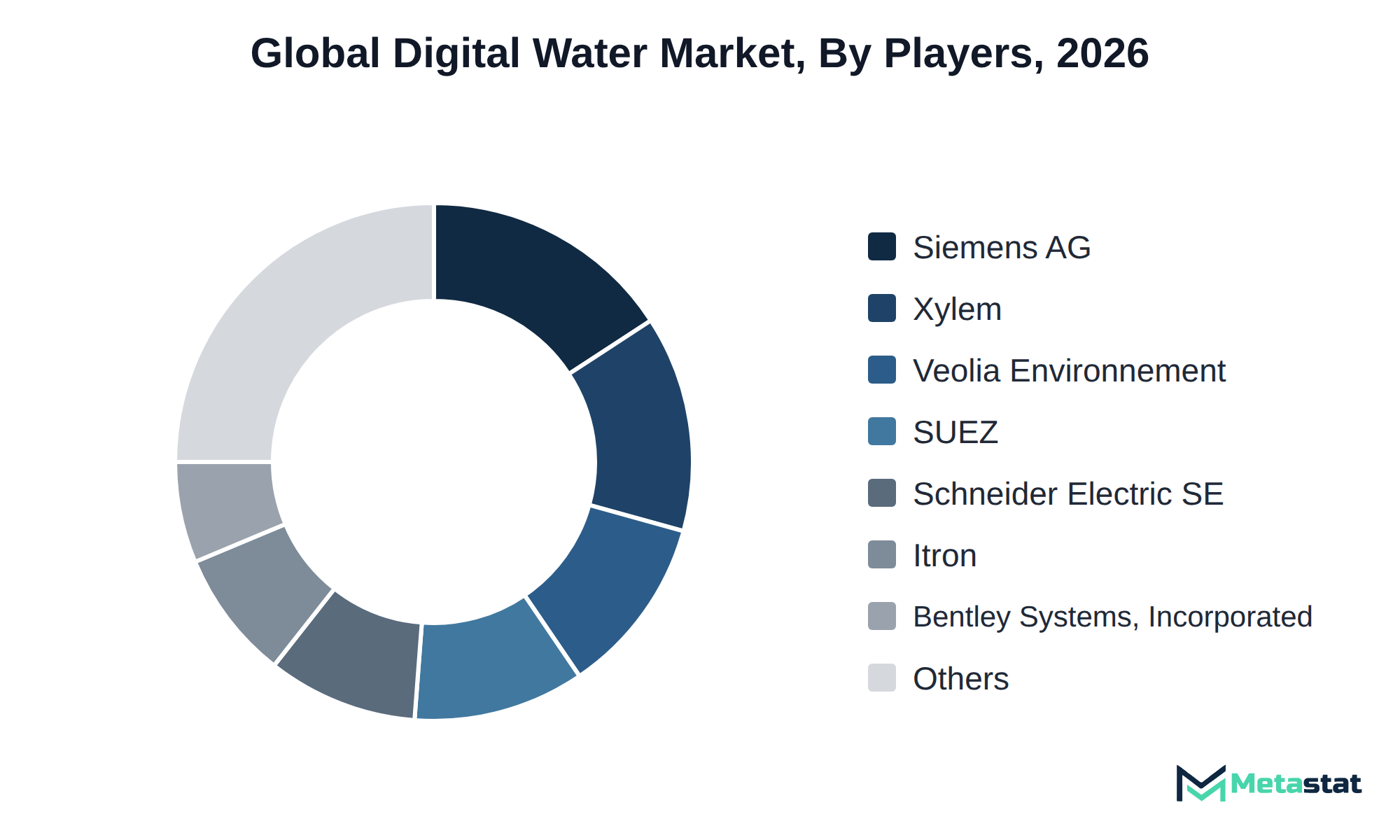
Companies in the Digital Water market compete across various dimensions, including offerings that span hardware, software, and services. Price, certification, customization, service quality, and ecosystem compatibility influence buyer decisions, shaping preferences and demand. Strategic priorities differ among players, particularly in technology and service provision.
Xylem Inc. emphasizes water technology solutions, integrating hardware with advanced software for efficient utility management. Siemens AG combines automation and digitalization, enhancing water management systems through smart technologies. Schneider Electric SE targets energy efficiency, providing solutions that optimize water operations and reduce environmental impact.
Veolia Environnement SA focuses on sustainable water services, offering waste management and recycling alongside water treatment. Bentley Systems, Incorporated provides software solutions that enhance asset performance and maintenance for water infrastructure. Itron, Inc. delivers metering solutions that improve customer management and operational efficiency.
Projected growth in the Digital Water market relies on several key developments. Enhanced adoption of software solutions, projected to reach USD 7.2 billion by 2033, will support operational efficiency and data management for utilities. Municipal Water and Wastewater Utilities will particularly benefit, with growth driven by increasing regulatory demands and the need for improved service delivery. Cloud deployment models are anticipated to grow from USD 3.2 billion in 2026 to USD 9 billion by 2033. This shift will facilitate scalability and real-time monitoring across different regions, especially in North America, which holds a significant market share. However, risks including budget constraints faced by municipalities hinder investment in new technologies, affecting overall market growth. Balancing these supportive trends against potential financial limitations will shape the market's trajectory toward the forecasted figures.
By Offering: Hardware, Software, Services
By Application: Metering and Customer Management, Water Distribution and Leakage Management, Wastewater Collection and Sewer Management, Treatment Process Optimization, Asset Performance and Maintenance, Water Reuse and Allocation, Stormwater and Flood Management, Others (Water Resource Planning, Compliance Reporting)
By Deployment Model: Cloud, On-Premises, Hybrid
By End-Use Industry: Municipal Water and Wastewater Utilities, Manufacturing, Energy and Power, Commercial and Institutional, Agriculture, Mining, Others (Construction, Transport Infrastructure)
The report strategically identifies and profiles the key market players and analyses their core competencies in each sub-segment of the Digital Water market.
Report Attributes | Details |
Study Period | 2021-2033 |
Base Year | 2025 |
Estimated Year | 2026 |
Forecast Period | 2026-2033 |
Historical Period | 2021-2025 |
Growth Rate | CAGR 12.4% from 2026 to 2033 |
Revenue Unit | USD billion |
Segmentation | By Offering, Application, Deployment Model, End-Use Industry, and Region |
By Region | North America (By Offering, Application, Deployment Model, End-Use Industry, and Country)
|
Europe (By Offering, Application, Deployment Model, End-Use Industry, and Country)
| |
Asia Pacific (By Offering, Application, Deployment Model, End-Use Industry, and Country)
| |
South America (By Offering, Application, Deployment Model, End-Use Industry, and Country)
| |
Middle East and Africa (By Offering, Application, Deployment Model, End-Use Industry, and Country)
|
Find answers to common questions about this report
The Digital Water market size was valued at USD 6.7 billion in 2025.
The market is projected to grow at a CAGR of 12.4% during the forecast period from 2026 to 2033.
The North America Digital Water market size is estimated to reach USD 5.3 billion by 2033.
Software leads the Digital Water market with a projected value of USD 7.2 billion by 2033, reflecting the highest growth potential among the segments.
The demand for digital water solutions is driven by a significant shift toward sustainability among municipal water utilities, prompted by heightened awareness of environmental issues and regulatory pressures. the adoption of cloud deployment models enhances data accessibility and operational efficiency, further fueling market growth.
North America holds the dominant share of the Digital Water market, with a projected value of USD 5.3 billion in 2033, representing 34.3 percent of the total market.
Rising costs of digital water solutions present a significant restraint within the market, as municipal water and wastewater utilities face budget constraints that hinder timely upgrades or replacements of aging infrastructure. Profitability encounters challenges due to increasing operational costs and competitive pricing pressures, compelling suppliers to reduce prices to maintain market share.
The shift toward sustainability among municipal water utilities drives adoption of digital water solutions, fueled by regulatory pressures to enhance resource efficiency. The cloud deployment model further supports this trend by improving data accessibility and enabling real-time monitoring, which enhances operational efficiency and decision-making.
The Digital Water market is estimated to reach a valuation of USD 17.1 billion by 2033.
Key players operating in the Digital Water market include Xylem Inc., Siemens AG, Schneider Electric SE, SUEZ, Veolia Environnement SA, and Itron, Inc.
The analysts below cover Energy and Power research at Metastat Insights.
LEAD ANALYST
Utkarsh Khirodkar is a Lead Market Research Analyst at MetaStat Insight, specializing in market intelligence, technology sector assessments, and competitive strategy.

PRINCIPAL CONSULTANT - ENTERPRISE AI & EMERGING TECHNOLOGIES
Banking & Finance · Electronics and Semiconductor · Energy and Power · Healthcare IT · Information & Technology · Professional Services
Vijay Gunti is a Principal Consultant at MetaStat Insight, bringing over two decades of experience across enterprise digital transformation, technology strategy, and intelligent systems.

ENERGY & INFRASTRUCTURE INDUSTRY CONSULTANT
Automotive and Transportation · Electronics and Semiconductor · Energy and Power · Machinery & Equipment
Saurabh Vasant Ganvir consults for Energy & Infrastructure Industry at MetaStat Insight, specializing in renewable energy, solar EPC, and electric vehicle (EV) infrastructure markets.
In the biological seed treatment space, registration timelines vary drastically between the European Union, Brazil, and North America. The MetaStat Insight research handled these cross-border regulatory barriers with genuine nuance, mapping commercialization pathways alongside historical field adoption rates. The segmentation between microbial strains and biochemical active ingredients was particularly well structured.
Our team was tracking whether regional recycling infrastructure could realistically absorb the growing volume of lithium iron phosphate batteries over the next decade. The report did a solid job separating announced hydrometallurgical plant capacity from active, permitted operational throughput. That distinction made the feedstock availability projections and regional recovery rate models far more credible than standard commercial overviews.
Tracking capacity expansion in single-use bioprocessing requires dependable data on raw material availability and cleanroom-grade polymer supply chains. The competitive landscape chapter gave a grounded evaluation of secondary component suppliers across North America and Asia-Pacific rather than simply reprinting press releases. Having that level of supplier benchmarking helped clarify dual-sourcing considerations for our clinical pipeline planning.
Explore related market intelligence reports worth reading alongside this one.