
LEAD ANALYST
Utkarsh Khirodkar is a Lead Market Research Analyst at MetaStat Insight, specializing in market intelligence, technology sector assessments, and competitive strategy.

Global Flywheel Energy Storage Market Size, Share, By Rotor Material (Steel and Metal Alloys, Fiber-Reinforced Composites), By Bearing Technology (Magnetic Bearings, Mechanical Bearings), By Application (UPS and Power Quality, Grid Frequency Regulation and Inertia Support, Renewable Energy Smoothing and Time Shifting, Regenerative Energy Recovery, Peak Power Buffering), By End-Use Industry (Utilities and Power Generation, Data Centers, Industrial Manufacturing, Transportation and EV Charging, Healthcare), Industry Analysis, Growth, Trends, and Forecast, 2026-2033
Report ID
MSI-2423
Published
November, 2026
Pages
275 Pages
Format
Historical
Base year
Forecast
Forecast period
Report Details
Market Valuation: Valued at $369.6 Million in 2025, projected to reach $659.3 Million by 2033 at a 7.5% CAGR.
Dominant Segment: The Steel and Metal Alloys segment leads the market, driven by its widespread application in flywheel construction, particularly for utilities and industrial manufacturing.
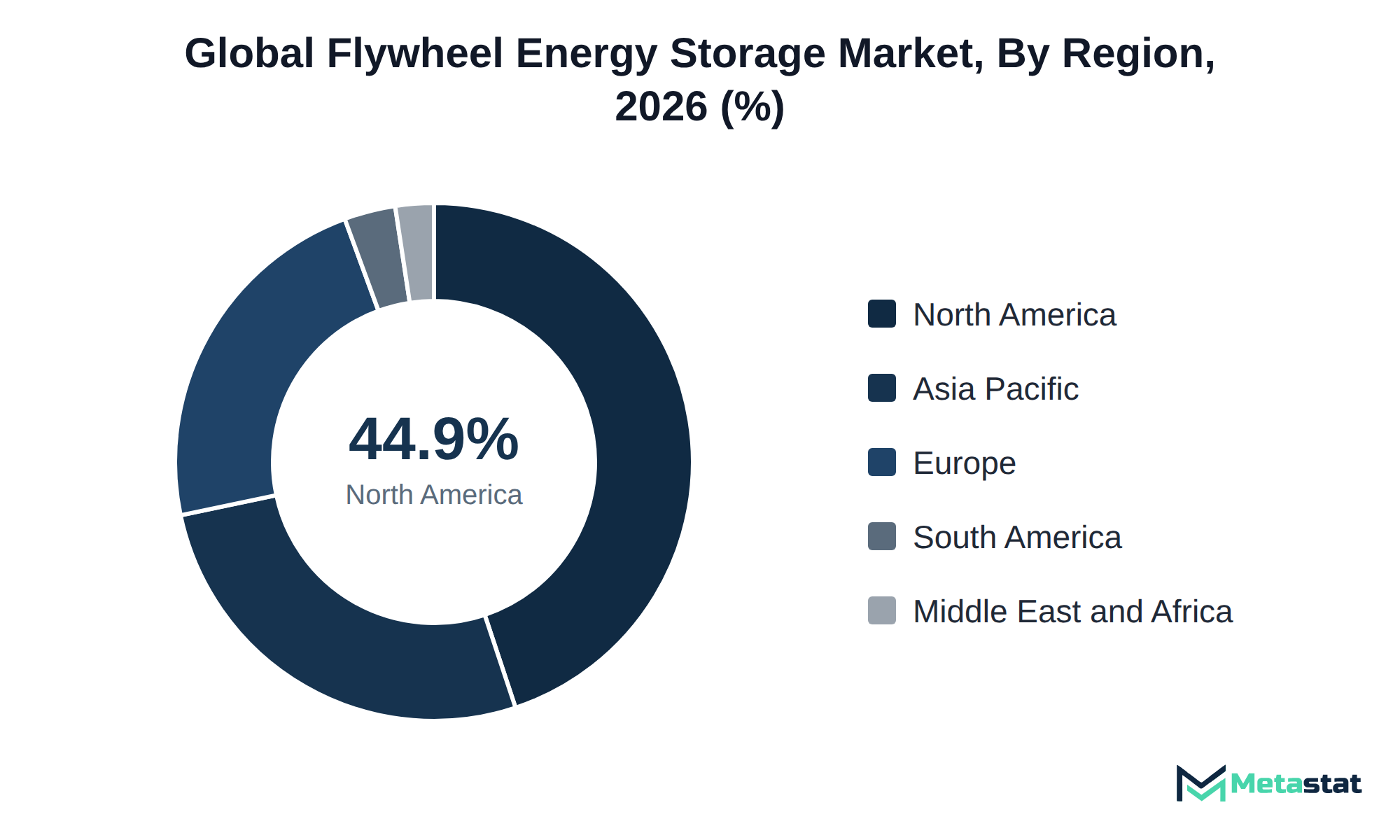
Geographic Lead: North America holds the largest market share at 44.9% in 2025, with the US expected to maintain its leadership due to strong investments in energy infrastructure.
What's Inside: This report provides a comprehensive analysis of the competitive landscape, detailed segmentation by rotor material and bearing technology, and forecasts covering the period from 2026 to 2033.
Technological Advancements: Innovations in rotor materials, such as fiber-reinforced composites, are enhancing energy storage efficiency and operational capabilities, appealing to buyers focused on sustainability.
Market Dynamics: The report highlights the increasing demand for energy storage solutions driven by the integration of renewable energy sources and the need for grid stability.
Choose Your License
Global Flywheel Energy Storage Market
The global Flywheel Energy Storage market was valued at USD 369.6 million in 2025 and is projected to reach USD 659.3 million by 2033, growing at a CAGR of 7.5% over the forecast period.
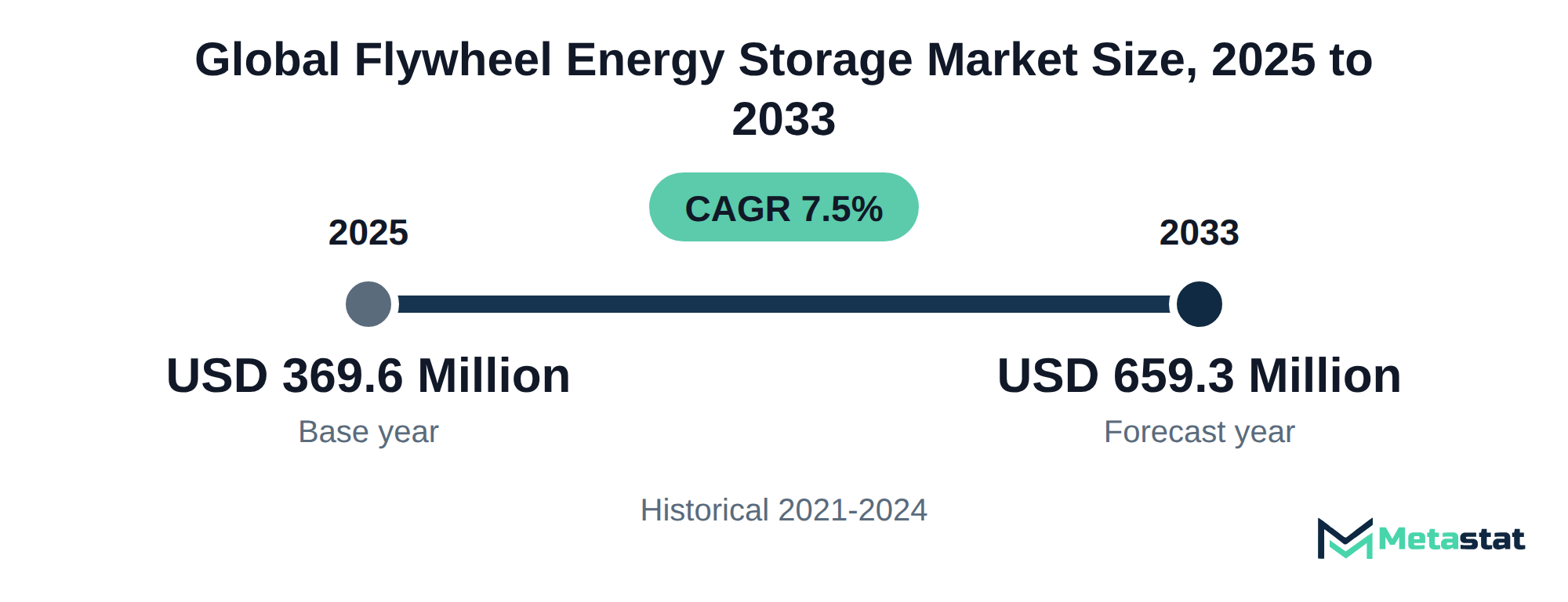
The Flywheel Energy Storage market encompasses systems designed to store and release energy efficiently, primarily targeting applications in power quality management and frequency regulation. Buyers invest in these systems to enhance energy reliability and support renewable energy integration, driven by rising demand for sustainable energy solutions. The technology provides advantages including rapid response times and long operational lifespans, making it a preferred choice among various sectors including utilities and industrial manufacturing.
Growth within the market is propelled by the rising need for energy storage solutions that facilitate renewable energy utilization and grid stability. The Steel and Metal Alloys segment demonstrates the most value, driven by its widespread application in flywheel construction. North America holds 44.9% of the market in 2025, with the US leading in 2026, reflecting strong investments in energy infrastructure and increasing adoption rates in this region.
Regulatory incentives and advancements in technology enhance the appeal of flywheel systems. The increasing focus on energy efficiency and sustainability among industries contributes to a favorable growth environment. Continuous innovation in bearing technology and rotor materials supports the development of more efficient systems, thereby influencing market dynamics and driving investment opportunities.
The Flywheel Energy Storage market serves various applications, including uninterruptible power supply systems and frequency regulation. Buyers invest in these systems to enhance energy efficiency, reduce operational costs, and ensure a reliable power supply. The increasing demand for renewable energy integration and the need for energy storage solutions drive spending in this sector.
Growth in the market is primarily supported by the rising adoption of advanced energy storage technologies. In particular, the segment featuring Steel and Metal Alloys exhibits the highest value, reflecting its significant role in system efficiency and durability. This dominance arises from substantial investments in renewable energy infrastructure and regulatory support, enhancing market penetration.
Organizations prioritize sustainability and energy resilience, driving demand for flywheel systems. The market's expansion aligns with increasing energy consumption and the transition towards smart grid technologies. Key players focus on innovations and partnerships to capture emerging opportunities and address evolving consumer requirements.
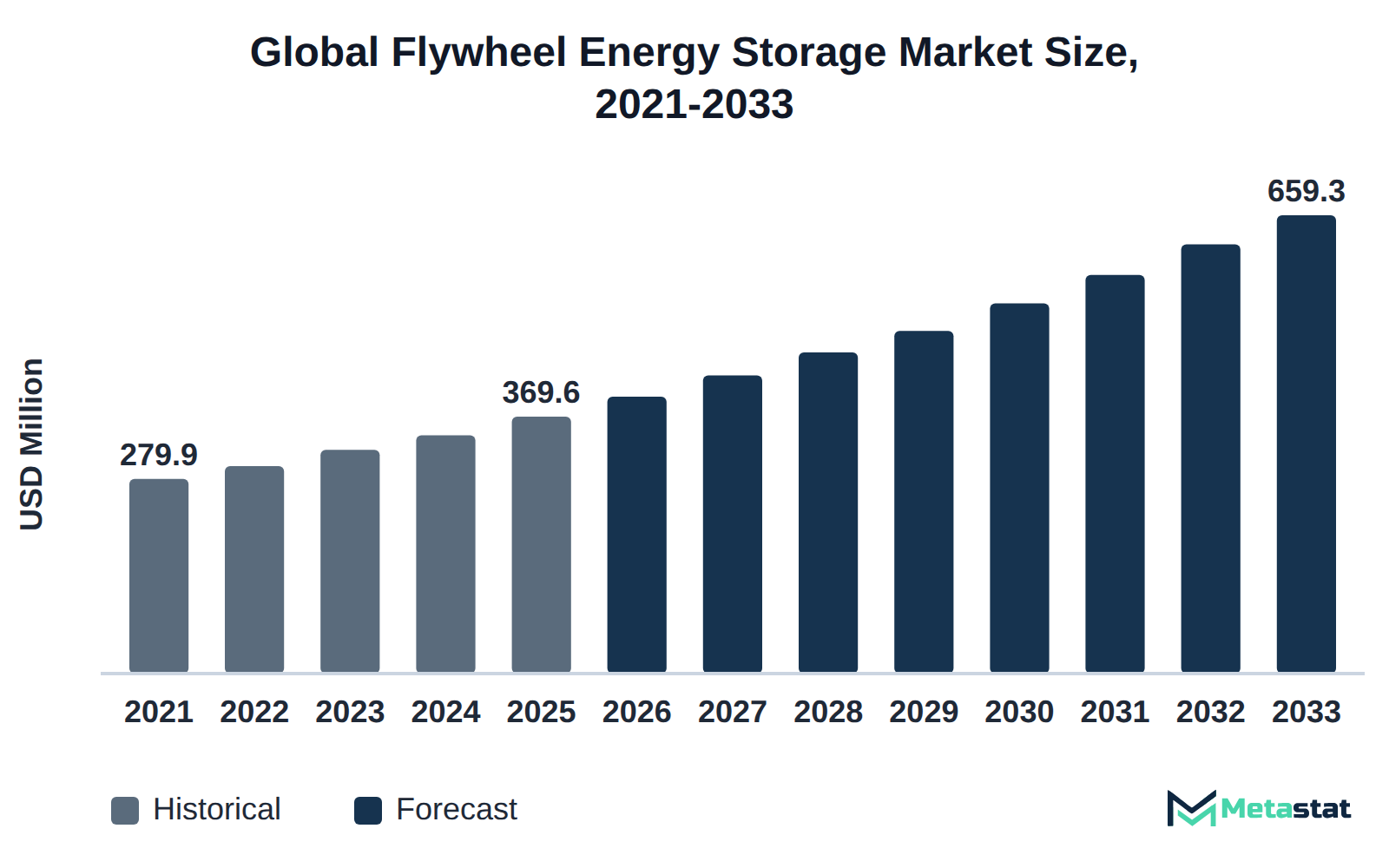
Flywheel Energy Storage systems provide significant advantages for grid inertia and fast frequency response. These systems enhance stability and reliability in electrical grids by quickly responding to fluctuations in energy supply and demand. The market is projected to reach USD 659.3 million by 2033, reflecting the increasing emphasis on grid stability.
The application of Flywheel Energy Storage technology in grid frequency regulation supports renewable energy integration, addressing the intermittent nature of solar and wind energy sources. For instance, the segment focused on grid frequency regulation and inertia support is expected to reach USD 201.6 million by 2033, demonstrating the growing demand for solutions that enhance grid resilience. This trend arises from the need for efficient energy management systems that respond swiftly to changes in grid conditions.
Investments in Flywheel Energy Storage systems drive operational efficiency for utilities and power generation companies, allowing for improved service delivery and reduced operational risks. Adoption of advanced energy storage solutions aligns with the industry's shift toward sustainable energy practices and supports long-term market growth.
The Flywheel Energy Storage market is characterized by diverse pricing and contract structures that influence buyer decisions. Contracts typically range from fixed-price agreements to performance-based models, which tie payments to specific energy delivery benchmarks. This flexibility in pricing attracts buyers in sectors including data centers and utilities, where performance reliability and cost control are crucial.
For instance, in the segment focused on UPS and Power Quality applications, the market anticipates growth from USD 188 million in 2026 to USD 284.8 million by 2033, reflecting a 6.1% CAGR. This growth signals heightened interest in energy storage solutions that support operational continuity during power disturbances. Buyers increasingly prefer contracts that emphasize maintenance and service guarantees, enhancing overall reliability and operational efficiency.
Upfront costs for flywheel systems are substantial, but leasing and financing arrangements reduce the initial capital outlay. This approach promotes wider adoption among organizations wary of significant upfront investments. Contract structures evolve, leading suppliers to offer more tailored solutions that address specific buyer requirements and enhance market penetration.
Research indicates that the integration of composite rotors and magnetic bearings significantly enhances the performance of flywheel energy storage systems. The demand for composite rotors, particularly fiber-reinforced composites, is projected to reach USD 281.9 million by 2033, reflecting a compound annual growth rate (CAGR) of 8.4%. These lightweight materials allow for higher rotational speeds, improving energy density and efficiency while reducing wear and maintenance costs. Consequently, buyers prioritizing high-performance solutions, including those in utilities and power generation, benefit from enhanced operational efficiency and lower long-term expenses.
Magnetic bearings maintain system stability and efficiency. With an expected value of USD 430.5 million by 2033, this technology reflects a CAGR of 8.7%. Buyers focused on data centers and industrial manufacturing experience improved system reliability and reduced energy losses, leading to a more sustainable operation. Together, composite rotors and magnetic bearings improve overall system performance, making them valuable investments for buyers seeking advanced energy storage solutions in a competitive market.
Flywheel energy storage systems effectively reduce peak demand at electric vehicle (EV) charging sites by providing rapid energy discharge and efficient energy management. These systems store energy during off-peak hours and release it during peak demand times, mitigating the strain on the electrical grid. Flywheel use in UPS and power quality systems, projected to grow from USD 188 million in 2026 to USD 284.8 million by 2033, shows its growing role in managing energy loads.
Applying flywheel technology allows charging stations to enhance operational efficiency and reduce electricity costs associated with peak demand charges. This reduction translates into significant savings for operators, promoting greater adoption of EV infrastructure. Consequently, charging station developers and energy providers show heightened interest in flywheel energy storage as they aim to optimize performance and minimize operational expenses.
Utilities and power generation companies exhibit a strong shift towards Flywheel Energy Storage solutions driven by the need for efficient energy management and reliability in electricity supply. This trend arises from the increasing integration of renewable energy sources, which necessitates enhanced grid stability and frequency regulation. Growing concerns regarding energy reliability result in a surge in demand for technologies that provide rapid response times to fluctuations in supply and demand. Such growth reflects the commitment of utilities to adopt innovative solutions for maintaining grid reliability while enhancing the overall efficiency of electricity transmission and distribution.
Innovations in rotor materials enhance energy storage efficiency and operational capabilities. Steel and metal alloys, along with fiber-reinforced composites, provide significant advantages in energy density and durability. These advancements allow systems to operate under varying conditions while maintaining performance integrity. Buyers in industries including utilities and power generation benefit from these improvements, which translate into reduced maintenance costs and increased reliability. The Flywheel Energy Storage market experiences heightened interest from consumers seeking sustainable energy solutions, driving demand for advanced rotor materials. The market's growth trajectory is fueled by ongoing research and development, which encourages suppliers to adopt novel materials that outperform traditional options. Improved rotor performance builds confidence in energy storage applications, particularly in grid frequency regulation and uninterruptible power supply systems. Companies investing in these materials gain a competitive edge as the market expands.
High costs associated with Flywheel Energy Storage systems significantly limit adoption among utility companies. The initial investment required for installation and deployment remains a significant barrier, leading to slower uptake of these systems relative to alternative energy storage solutions such as utility-scale battery energy storage systems. Many utilities prioritize cost-effective solutions for energy management, resulting in smaller orders of flywheel systems, which impacts overall market growth. The competitive landscape features numerous alternatives that offer lower upfront expenses, making them more attractive for budget-conscious buyers. Without supportive financing options or clearer long-term cost benefits, the potential for wider acceptance and integration into existing infrastructure diminishes. Overall, high capital costs remain a crucial factor determining the pace of growth in the market.
Rising raw material costs pose significant challenges for suppliers in the Flywheel Energy Storage market. Fluctuations in prices of essential components, including steel and metal alloys, increase overall production expenses, impacting profit margins. Suppliers respond to these challenges by exploring alternative materials, including fiber-reinforced composites, which offer potential for cost reductions and improved performance. Investment in research and development focuses on optimizing manufacturing processes to enhance efficiency and mitigate material costs. Concurrently, suppliers implement strategic partnerships to secure stable supply chains, ensuring availability and minimizing price volatility. These efforts aim to maintain competitiveness within the market while navigating the constraints imposed by rising input costs. Addressing these challenges effectively proves crucial for sustaining growth and meeting the anticipated demand for flywheel energy storage systems.
The segment of magnetic bearings in the Flywheel Energy Storage market demonstrates significant growth potential, with a projected CAGR of 8.7% from 2026 to 2033. This growth arises from increasing demand for efficient and reliable energy storage solutions, particularly in applications requiring high-speed rotation and minimal maintenance. Industries including utilities and power generation, and data centers serve major buyers, prioritizing the enhanced performance and longevity provided by magnetic bearing technology. The anticipated market value for magnetic bearings is expected to reach USD 430.5 million by 2033, highlighting the segment's attractiveness for both manufacturers and investors. This growth reflects broader trends toward energy efficiency and sustainability.
The Global Flywheel Energy Storage market is segmented based on Rotor Material, Bearing Technology, Application, and End-Use Industry.
Steel and Metal Alloys segment is valued at USD 233 million in 2026 and is projected to reach USD 363.5 million by 2033, at a CAGR of 6.6% during the forecast period. This segment is significant in applications including uninterruptible power supplies and grid frequency regulation, primarily used by utilities and industrial manufacturers seeking reliable energy storage solutions. Growth in this segment is influenced by increasing demand for efficient energy management systems and a shift towards sustainable energy practices. Fiber-Reinforced Composites have a higher projected CAGR of 8.4%. Steel and Metal Alloys show a more stable growth trajectory because of established manufacturing processes and cost-effectiveness, which attracts a different buyer demographic focused on durability and performance. Investments in advanced manufacturing techniques are expected to enhance the segment's competitiveness in the market.
This material finds significant use in applications requiring lightweight and high-strength components, appealing to industries including utilities and data centers. Demand for fiber-reinforced composites is driven by the pursuit of improved energy density and efficiency in energy storage solutions. With a higher growth rate compared to Steel and Metal Alloys, which has a CAGR of 6.6%, this segment attracts several buyers focused on innovative and efficiency-driven solutions. The distinct advantages of fiber-reinforced composites enable them to serve specific applications including renewable energy smoothing and regenerative energy recovery, setting them apart from other rotor materials in the market.
The Others (Concrete, Hybrid Materials) segment is anticipated to reach USD 13.9 million by 2033. This segment primarily serves specialized applications that require unique material properties, including enhanced durability and energy absorption. Industries including construction and specialized manufacturing find utility in these materials. The growth of this segment is propelled by rising demand for advanced materials that offer better performance compared to traditional materials. Unlike Steel and Metal Alloys, which has a CAGR of 6.6%, the Others (Concrete, Hybrid Materials) segment does not exhibit a defined growth trajectory due to its niche applications. Competition with alternative materials and the need for ongoing innovation in production processes influence market dynamics within this segment. The expected performance indicates a slower growth rate compared to other rotor material segments, emphasizing its specialized and limited market appeal.
Magnetic Bearings segment is valued at USD 239.3 million in 2026 and is projected to reach USD 430.5 million by 2033, at a CAGR of 8.7% during the forecast period. This technology plays a critical role in applications requiring precise rotation and low friction, including uninterruptible power supplies and renewable energy systems. Demand for magnetic bearings is driven by advancements in energy efficiency and reliability across various industries. Compared to Mechanical Bearings, which have a projected CAGR of 4.7%, this segment experiences faster growth due to increasing adoption of high-performance materials and designs. The higher initial investment associated with magnetic bearings is offset by lower operational costs and increased longevity, making them attractive to sectors including utilities and industrial manufacturing. This differentiation positions the magnetic bearings segment favorably within the broader context of the market.
Mechanical Bearings segment is estimated to reach USD 134.4 million by 2033, at a CAGR of 4.7% during the forecast period. This segment serves critical functions in energy storage systems, particularly for applications requiring reliability and durability. Industries including utilities and power generation rely on mechanical bearings for efficient energy management and operational stability. An increasing focus on enhancing energy efficiency drives growth in this segment, although it evolves at a slower pace compared to magnetic bearings, which exhibit a CAGR of 8.7%. The distinct characteristics of mechanical bearings, including their cost-effectiveness and reliability, attract various buyers, while the higher performance offered by magnetic bearings poses competition. The emphasis on optimizing performance and reducing costs influences adoption rates across the board. In this context, mechanical bearings represent a vital but evolving component within the broader scope of the Flywheel Energy Storage market.
Hybrid Bearing Systems segment is expected to reach USD 94.5 million by 2033. This technology integrates both magnetic and mechanical elements to provide enhanced performance in energy storage applications. Industries including utilities and data centers adopt hybrid bearing systems for their ability to support high-speed operations and reduce maintenance costs. Demand for these systems grows due to increasing energy efficiency regulations and the push for improved power quality management. With a projected CAGR of 8.7%, growth in this segment outpaces that of mechanical bearings, which has a CAGR of 4.7%. This distinction reflects the preference of buyers for more efficient and lower-maintenance solutions, driving investment in hybrid technologies. The market recognizes this preference, aligning product development with hybrid solutions that meet evolving industry standards.
This segment serves critical functions for data centers and industrial facilities, ensuring stability in power supply and maintaining operational continuity during outages. Demand for uninterrupted power supply systems drives growth, particularly in environments sensitive to power fluctuations. Compared to other applications, including Grid Frequency Regulation, this segment experiences slower growth due to higher implementation costs and more complex regulatory requirements. While the UPS and Power Quality segment faces challenges, its unique role in safeguarding operations leads to consistent investment, reinforcing its importance in the Flywheel Energy Storage market.
Grid Frequency Regulation and Inertia Support segment is estimated to reach USD 201.6 million by 2033, at a CAGR of 8.8% during the forecast period. This segment is essential for maintaining system stability, helping utilities manage fluctuations in grid demand and supply. Primarily used by energy providers and grid operators, it enhances the reliability of power systems. The increasing integration of renewable energy sources drives demand for solutions that stabilize the grid, positioning this segment for significant growth. Compared to other applications, this segment exhibits a higher growth rate due to the pressing need for advanced frequency regulation capabilities. The shift towards more decentralized energy production necessitates innovative technologies to uphold grid integrity, making this segment distinct within the broader context of the market.
The Renewable Energy Smoothing and Time Shifting segment is expected to reach USD 91.5 million by 2033. This segment focuses on balancing the intermittent nature of renewable energy sources, allowing for a more reliable power supply. Utilities, renewable energy operators, and grid managers apply this technology to enhance grid stability and manage energy distribution effectively. The increasing demand for renewable energy integration drives growth in this segment, supported by advancements in flywheel technology. With a projected CAGR of 8.8%, this segment experiences faster growth compared to other applications. Unique challenges, including specific technical requirements for integrating flywheel systems with existing infrastructure, hinder adoption. However, the growing emphasis on renewable energy solutions positions this segment favorably within the market, making it critical for energy providers and end-users seeking to optimize their energy management strategies.
Regenerative Energy Recovery is projected to grow at a CAGR of 7% during the forecast period. This segment focuses on recovering energy from various processes to enhance overall efficiency. Industries including manufacturing and transportation apply this technology to improve energy efficiency and reduce operational costs. Increased emphasis on energy efficiency and sustainability has heightened demand for effective energy recovery solutions. Compared to other applications, the regenerative energy recovery segment experiences moderate growth. Adoption is driven by the need for improved energy management and the rise of energy recovery regulations. This segment distinguishes itself through its focus on specific applications where energy recovery is vital, contrasting with broader applications including UPS and Power Quality, which target different energy management needs. The market for regenerative energy recovery solutions continues to evolve, presenting opportunities for growth and technological advancements.
Peak power buffering is a critical application of energy storage systems that focuses on providing short bursts of power to manage demand spikes. This application is essential for industries including utilities and data centers, where maintaining consistent power supply is vital for operational integrity. Demand for peak power buffering arises from increasing reliance on renewable energy sources, which produce variable output. This segment experiences distinct dynamics compared to others, primarily driven by the growing need for energy resiliency and efficiency. The fast growth of the grid frequency regulation sector reflects a broader push for reliable energy management, positioning peak power buffering as a solution to address fluctuating energy demands. In comparison to other applications, peak power buffering attracts specific buyers focused on immediate energy needs rather than long-term storage solutions.
Utilities and power generation sectors employ Flywheel Energy Storage systems primarily for efficient energy management and grid stability. The increasing demand for renewable energy integration drives the segment's growth, creating a strong need for reliable energy storage solutions. This segment distinguishes itself from others due to its higher growth rate, reflecting the urgent need for technologies that support grid frequency regulation and inertia. The growing emphasis on decarbonization and sustainability in the energy sector fuels this momentum and supports the transition to a more resilient energy infrastructure. The market's focus on enhancing energy efficiency positions this segment favorably for future investments.
Data Centers segment is estimated to reach USD 174.3 million by 2033, at a CAGR of 8.8% during the forecast period. This segment primarily serves organizations requiring reliable data center power and backup systems for their IT infrastructure, supporting continuous operations and data integrity. The demand for energy-efficient solutions drives growth, with data centers increasingly prioritizing sustainability while striving to lower operational costs. Compared to other segments, the Data Centers segment experiences faster growth due to increasing data consumption and the proliferation of cloud services, which heightens the need for efficient energy storage solutions. The anticipated transition towards more renewable energy sources further reinforces this trend, aligning with corporate sustainability goals while enhancing energy reliability. The Flywheel Energy Storage market fulfills the energy demands of data centers, making it a critical area for technological advancement and investment.
Industrial Manufacturing segment is expected to reach USD 110.4 million by 2033. This segment primarily serves industries requiring energy storage solutions to enhance efficiency and reliability during production processes. Increased adoption of automation and the need for consistent power supply drive investment in energy storage technology. Industrial manufacturers prioritize systems that ensure stable operations and minimize downtime, differentiating this segment from others, including Data Centers, which are experiencing growth rates of 8.8%. The market for Industrial Manufacturing features a unique focus on scaling production capabilities while managing energy costs. This strategic approach enhances operational efficiency, ultimately supporting growth potential for suppliers of flywheel energy storage solutions.
Transportation and EV Charging segment is projected to grow at a CAGR of 7.9% during the forecast period. This segment serves various applications, including electric vehicle charging infrastructure and transportation systems, catering primarily to electric utilities, transportation companies, and charging station operators. The increasing demand for electric vehicles drives the adoption of energy storage solutions that enhance stability and efficiency in charging networks. Unlike other segments, this segment experiences a unique dynamic, where the proliferation of electric vehicles stimulates growth in associated infrastructure. The forecast indicates rising demand for energy storage solutions, with this segment expected to reach USD 110.4 million by 2033, reflecting strong investment in energy management technologies. Such advancements contribute to operational effectiveness while meeting regulatory standards aimed at reducing carbon emissions, supporting further growth in the market.
This segment covers healthcare applications, where flywheel energy storage systems maintain power quality and reliability. Hospitals, medical labs, and other healthcare facilities frequently employ flywheel energy storage to ensure uninterrupted power supply, which is crucial for sensitive equipment and patient care. The increasing reliance on advanced medical technologies drives demand for reliable backup power sources in this segment. Compared to other end-use industries, the healthcare segment experiences unique challenges, including stringent regulatory requirements and higher standards for performance and reliability. These factors contribute to its differentiated pricing structure and adoption pace. Flywheel energy storage systems support healthcare providers in maintaining operational continuity, meeting critical power demands, and enhancing overall service delivery.
This sub-segment encompasses applications within telecommunications, commercial buildings, and defense. Flywheel energy storage systems provide reliable backup power and enhance energy efficiency for critical infrastructure and operations. Demand for robust power solutions drives adoption among industries requiring uninterrupted service, including telecommunications and defense operations. This sub-segment experiences slower growth due to specific regulatory hurdles and higher initial investment costs. The ongoing evolution of energy management technology supports shifts toward more sustainable energy practices. While the market focuses on traditional energy applications, the unique requirements of telecommunications and defense sectors differentiate this sub-segment from others, which adopt different strategies to meet their energy needs.
Based on geography, the Global Flywheel Energy Storage market is divided into North America, Europe, Asia-Pacific, South America, Middle East, and Africa.
Strong growth in the region drives the Flywheel Energy Storage market, supported by increasing investments in renewable energy and power reliability. Industries including utilities and power generation play a crucial role in driving demand, with significant investments dedicated to enhancing grid stability and integrating renewable sources. The United States, Canada, and Mexico are actively pursuing initiatives that emphasize energy efficiency and sustainability, leading to increased adoption of flywheel energy storage systems. North America is projected to reach USD 272.8 million by the end of 2033, reflecting its dominant share of 44.9% of the global market in 2025. The growing focus on energy resilience and grid modernization further supports market expansion, positioning the region as a leader in advanced energy storage solutions.
Demand for energy storage solutions in Europe primarily originates from the utilities and power generation sector, driven by stringent regulations and initiatives promoting renewable energy integration and grid stability. Countries including Germany and the UK lead the push for innovative storage technologies, focusing on enhancing energy resilience and reliability. The region's infrastructure supports widespread adoption, with investments in advanced energy management systems and smart grid technologies. Significant growth in the flywheel energy storage market is anticipated, fueled by rising demand for uninterruptible power supply (UPS) systems and grid frequency regulation. The European market accounts for 22.7% of global share in 2025, reflecting the commitment to sustainable energy solutions and technological advancements in the field.
Asia-Pacific accounts for 26.8% of the Flywheel Energy Storage market in 2025. Countries like China and India drive demand through rapid industrial growth and increasing energy reliability needs. The expanding renewable energy sector in Australia enhances the appeal of flywheel systems for energy storage, while South Korea focuses on integrating these technologies within its smart grid initiatives. Incentives for cleaner energy solutions further support market adoption across Southeast Asia. The focus on grid frequency regulation highlights opportunities for growth in this region, demonstrating a commitment to sustainable energy practices and enhanced system resilience.
Brazil and Argentina emerge as key players in the Flywheel Energy Storage market, with demand driven by the growing need for reliable energy solutions. The focus on renewable energy sources in these countries fuels interest in energy storage systems that enhance grid stability and support energy transition efforts. Regulatory frameworks and incentives promoting green technologies in South America contribute positively to market growth. The region reflects the early stages of adoption but holds significant potential for expansion. Infrastructure improvements, particularly in urban centers, support the integration of flywheel energy storage systems across various applications.
Saudi Arabia, the UAE, and South Africa drive the Flywheel Energy Storage market through growing demand for advanced energy solutions. The market attracts attention due to increasing investments in renewable energy projects. In these countries, energy reliability and efficiency are critical, reflecting a heightened focus on sustainable practices. The regional market share stands at 2.4% in 2025, indicating developing interest in energy storage technologies. Efforts to enhance grid stability and support renewable integration contribute to market expansion. Infrastructure improvements, along with government initiatives, promote investments in energy storage solutions. The ongoing transition towards cleaner energy systems establishes the foundation for future growth in the market.
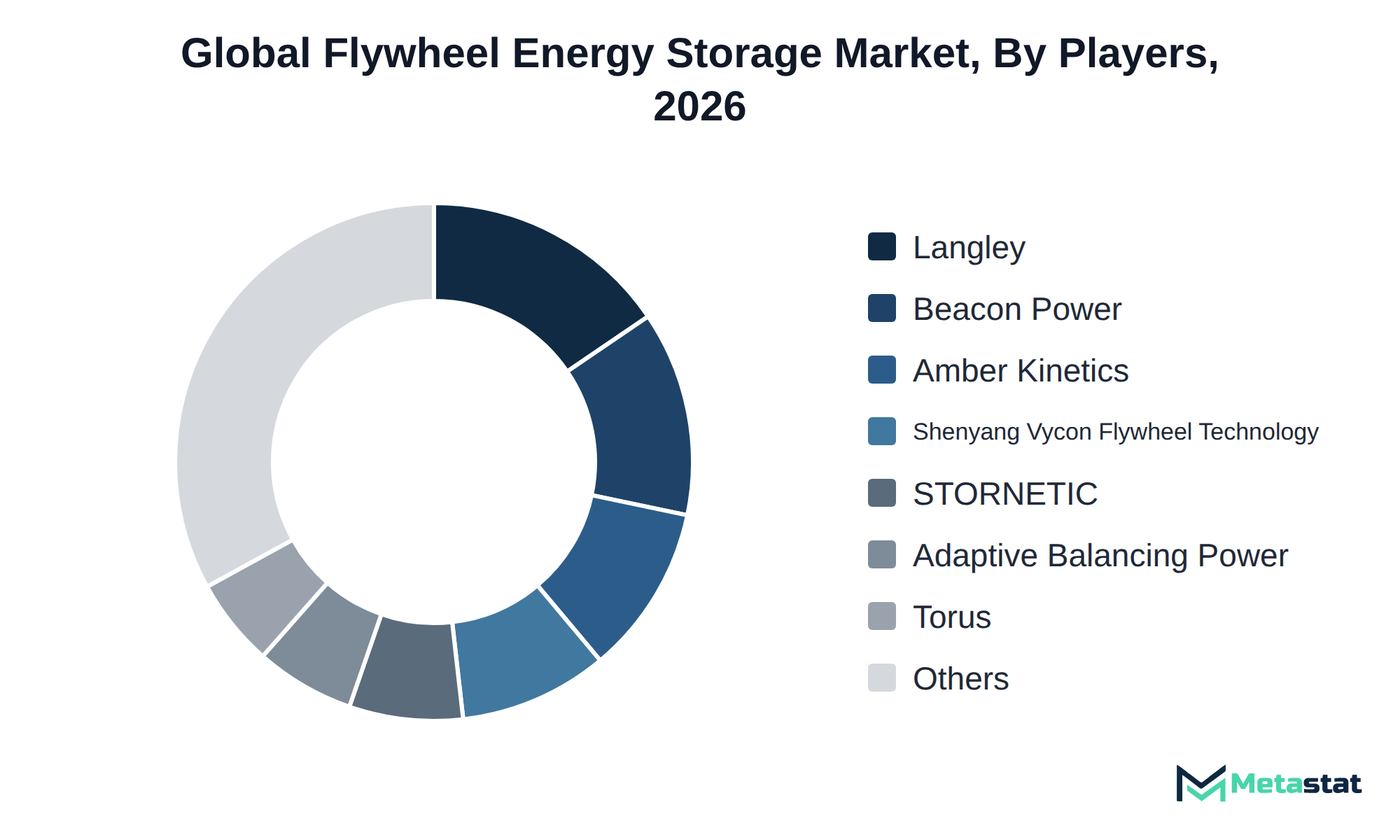
Companies in the Flywheel Energy Storage market compete through various strategies, including product differentiation and pricing models. Key factors influencing buyer choices include customization, certification, service offerings, and overall ecosystem compatibility. These elements define how companies position themselves within the market.
Langley Holdings plc focuses on developing high-quality energy storage solutions for utilities and power generation, capitalizing on its established reputation. Amber Kinetics, Inc. emphasizes innovative designs and performance enhancements, targeting data centers and industrial manufacturing sectors. Power LLC provides comprehensive support services, enhancing its offerings for UPS and power quality applications.
Flywheel energy storage growth relies on key developments, including advancements in magnetic bearing technology, which is projected to enhance system efficiency and performance. The magnetic bearings segment is expected to achieve a compound annual growth rate of 8.7% through 2033, significantly contributing to market expansion. Increasing demand for utilities and power generation applications, expected to grow from USD 129.6 million in 2026 to USD 232.6 million by 2033, will drive further adoption of flywheel energy storage solutions. Conversely, a primary risk to achieving the forecasted growth involves potential supply chain disruptions affecting material availability, particularly for rotor materials like steel and metal alloys. Major challenges in sourcing these materials could impede production timelines and impact pricing strategies across the market. Fluctuations in regulatory support for renewable energy initiatives influence adoption rates, particularly in regions like North America, which holds a significant market share of 44.9% in the flywheel energy storage market.
By Rotor Material: Steel and Metal Alloys, Fiber-Reinforced Composites, Others (Concrete, Hybrid Materials)
By Bearing Technology: Magnetic Bearings, Mechanical Bearings, Hybrid Bearing Systems
By Application: UPS and Power Quality, Grid Frequency Regulation and Inertia Support, Renewable Energy Smoothing and Time Shifting, Regenerative Energy Recovery, Peak Power Buffering
By End-Use Industry: Utilities and Power Generation, Data Centers, Industrial Manufacturing, Transportation and EV Charging, Healthcare, Others (Telecommunications, Commercial Buildings, Defense)
The report strategically identifies and profiles the key market players and analyses their core competencies in each sub-segment of the Flywheel Energy Storage market.
|
Report Attributes |
Details |
|
Study Period |
2021-2033 |
|
Base Year |
2025 |
|
Estimated Year |
2026 |
|
Forecast Period |
2026-2033 |
|
Historical Period |
2021-2025 |
|
Growth Rate |
CAGR 7.5% from 2026 to 2033 |
|
Revenue Unit |
USD million |
|
Segmentation |
By Rotor Material, Bearing Technology, Application, End-Use Industry, and Region |
|
By Region |
North America (By Rotor Material, Bearing Technology, Application, End-Use Industry, and Country)
|
|
Europe (By Rotor Material, Bearing Technology, Application, End-Use Industry, and Country)
|
|
|
Asia Pacific (By Rotor Material, Bearing Technology, Application, End-Use Industry, and Country)
|
|
|
South America (By Rotor Material, Bearing Technology, Application, End-Use Industry, and Country)
|
|
|
Middle East and Africa (By Rotor Material, Bearing Technology, Application, End-Use Industry, and Country)
|
Find answers to common questions about this report
The Flywheel Energy Storage market size was valued at USD 369.6 million in 2025.
The market is projected to grow at a CAGR of 7.5% during the forecast period from 2026 to 2033.
The North America Flywheel Energy Storage market size is estimated to reach USD 272.8 million by 2033.
The leading segment in the Flywheel Energy Storage market is Steel and Metal Alloys, with a projected value of USD 363.5 million by 2033. This segment outpaces others in terms of revenue growth and market share.
Utilities and power generation companies are increasingly adopting Flywheel Energy Storage solutions to enhance grid reliability and manage energy efficiently, driven by the integration of renewable energy sources. Innovations in rotor materials improve energy storage efficiency, attracting buyers seeking sustainable energy solutions.
North America holds the dominant share of the Flywheel Energy Storage market, with a projected value of USD 272.8 million in 2033, representing 44.9 percent of the total market. This region significantly outpaces Europe and Asia Pacific in market share.
High costs associated with Flywheel Energy Storage systems significantly limit adoption among utility companies. Rising raw material costs pose challenges for suppliers, increasing overall production expenses and impacting profit margins.
Several factors favor adoption in the Flywheel Energy Storage industry. Increased demand for efficient energy management and reliability in electricity supply drives interest from utilities and power generation companies. Innovations in rotor materials and bearing technologies enhance performance, while ongoing research supports the development of advanced solutions, creating significant opportunities for market growth.
The Flywheel Energy Storage market is estimated to reach a valuation of USD 659.3 million by 2033.
Key players operating in the Flywheel Energy Storage market include Langley Holdings plc, Amber Kinetics, Inc., Beacon Power, LLC, Shenyang Vycon Flywheel Technology Co., Ltd., Adaptive Balancing Power GmbH, STORNETIC GmbH, and Rolls-Royce Holdings plc.
The analysts below cover Energy and Power research at Metastat Insights.
LEAD ANALYST
Utkarsh Khirodkar is a Lead Market Research Analyst at MetaStat Insight, specializing in market intelligence, technology sector assessments, and competitive strategy.

PRINCIPAL CONSULTANT - ENTERPRISE AI & EMERGING TECHNOLOGIES
Banking & Finance · Electronics and Semiconductor · Energy and Power · Healthcare IT · Information & Technology · Professional Services
Vijay Gunti is a Principal Consultant at MetaStat Insight, bringing over two decades of experience across enterprise digital transformation, technology strategy, and intelligent systems.

ENERGY & INFRASTRUCTURE INDUSTRY CONSULTANT
Automotive and Transportation · Electronics and Semiconductor · Energy and Power · Machinery & Equipment
Saurabh Vasant Ganvir consults for Energy & Infrastructure Industry at MetaStat Insight, specializing in renewable energy, solar EPC, and electric vehicle (EV) infrastructure markets.
Decarbonizing industrial thermal processes hinges on refrigerant regulations and compressor efficiency limits. Metastat Insights delivered a thorough market analysis that evaluated natural refrigerants like CO2 and hydrocarbons against synthetic low-GWP alternatives. The breakdown of utility incentives and grid capacity constraints across key European manufacturing hubs offered valuable perspective. The follow-up conversation with their sector analysts addressed our specific questions on mechanical vapor recompression systems efficiently.
Assessing 200mm wafer transition schedules and substrate supply bottlenecks requires precise technical intelligence. MetaStat Insight supplied an actionable breakdown comparing planar and trench MOSFET architectures across automotive and industrial drive markets. The regional capacity estimates for Asia-Pacific foundries helped clarify lead-time uncertainties during our strategic planning session. When we needed additional clarification on high-purity raw material sourcing, their analyst team responded with helpful context within twenty-four hours.
Tracking maintenance cycle demand for secondary flight display units and terrain collision avoidance systems across regional jet fleets involves complex aftermarket dynamics. MetaStat Insight provided practical analysis separating airline retrofit programs from OEM forward-fit production schedules in North America and Southeast Asia. The supplier matrix highlighted component obsolescence timelines without resorting to vague generalizations. The dataset served as a dependable reference during our annual program review meetings.
Explore related market intelligence reports worth reading alongside this one.
Starting from
$2950