
LEAD ANALYST
Utkarsh Khirodkar is a Lead Market Research Analyst at MetaStat Insight, specializing in market intelligence, technology sector assessments, and competitive strategy.

Global Telecommunication Market Size, Share, By Type (Telecommunication Services, Communications Hardware, Satellite and Telecom Resellers), By Connectivity (Wired and Wireless), By Application (Commercial and Residential), By End User Industry (Retail and E-commerce, IT and ITES, Aerospace, Healthcare and Pharmaceutical, Media and Entertainment, Hospitality, Automotive and Manufacturing, Transportation and Logistics, Others), Industry Analysis, Growth, Trends, and Forecast, 2026-2033
Report ID
MSI-5080
Published
August, 2026
Pages
308 Pages
Format
Historical
Base year
Forecast
Forecast period
Report Details
Choose Your License
Global Telecommunication Market
The global Telecommunication market was valued at USD 3,245.8 billion in 2025 and is projected to reach USD 5,157.5 billion by 2033, growing at a CAGR of 5.9% over the forecast period.
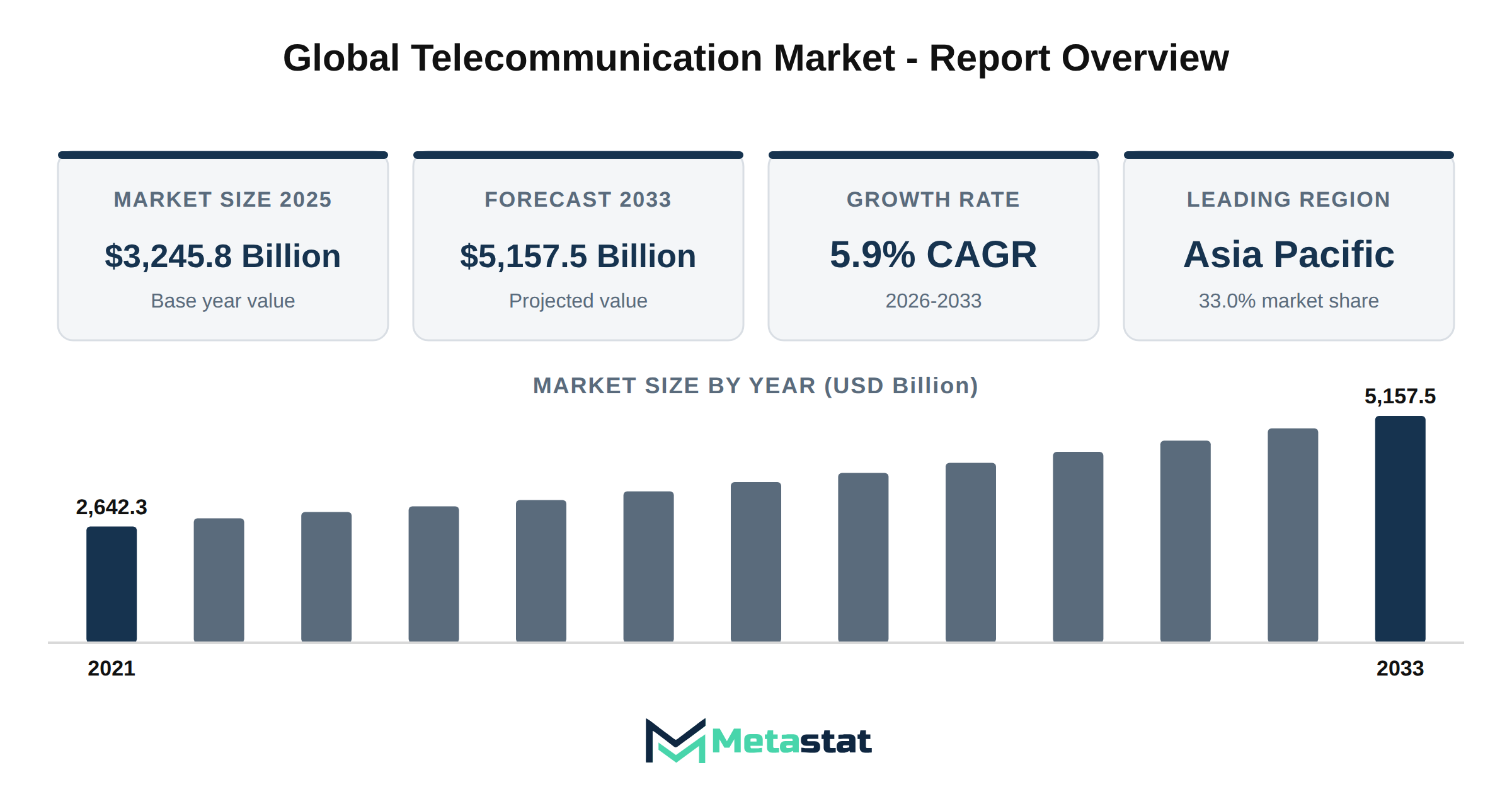
The telecommunication market reached a valuation of USD 3,245.8 billion in 2025, reflecting significant growth since USD 2,642.3 billion in 2021. The market is projected to expand to USD 5,157.5 billion by 2033, with a compound annual growth rate (CAGR) of 5.9% during the forecast period from 2026 to 2033. This growth trajectory demonstrates increasing demand for telecommunication services and infrastructure across various sectors.
Key segments within the telecommunication market include telecommunication services, communications hardware, and satellite and telecom resellers. Telecommunication services are expected to grow from USD 2,224.4 billion in 2026 to USD 3,305.4 billion in 2033, with a CAGR of 5.8%. Communications hardware is anticipated to reach USD 1,254.9 billion by 2033, driven by advancements in technology and rising consumer demand. Satellite and telecom resellers will contribute to market dynamics, with growth projected in alignment with increased connectivity needs.
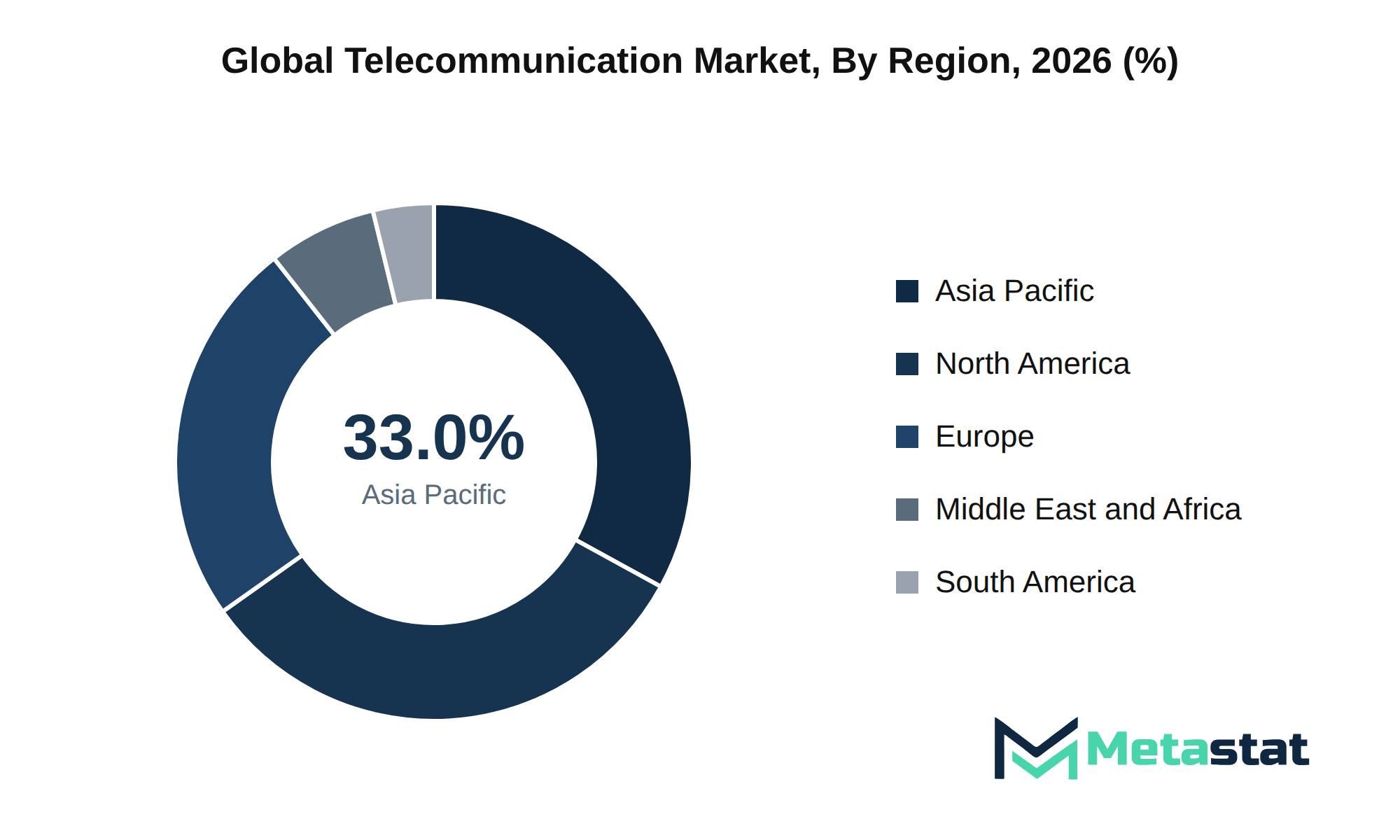
Regional analysis indicates varying contributions to the market's overall performance. North America holds a substantial market share of 32.2%, followed closely by Asia Pacific at 33%. Europe contributes 24.2%, while South America and the Middle East and Africa represent smaller shares of 3.8% and 6.8%, respectively. The diverse landscape across these regions presents opportunities for targeted investments and strategic growth initiatives.
The telecommunication market faces significant dynamics due to evolving regulatory frameworks and compliance requirements. Regulatory compliance involves navigating a complex environment that varies by region, impacting operational processes and market entry strategies. Companies align their offerings with these regulations to ensure market access and competitive positioning.
Disruption continues to reshape the market, driven by technological advancements and changing consumer preferences. The rise of next-generation innovation, including 5G and IoT, fuels demand for enhanced connectivity solutions. This transformation creates opportunities for companies to expand their service offerings and improve customer experiences.
Research and development trajectories focus on addressing emerging technologies and consumer demands, emphasizing the importance of innovation in sustaining market growth. Investments in R&D enable companies to stay ahead of competitors and meet the evolving needs of their clients.
Sustainable transformation remains a critical focus area, with companies adopting decarbonization strategies and circular economy dynamics. These initiatives align with global sustainability goals and enhance brand reputation and customer loyalty.
The market experiences fragmentation, with numerous players operating across various segments. This fragmentation leads to diverse market strategies and competitive tactics, influencing procurement and customer journey dynamics. Companies prioritize capital allocation toward infrastructure investments to strengthen their market presence and operational capabilities.
Future strategic outlooks involve adapting to evolving market conditions and consumer expectations. Corporate imperatives emphasize flexibility and responsiveness, ensuring companies remain competitive in an increasingly complex environment. High-value recommendations for stakeholders include leveraging technological advancements and prioritizing customer-centric strategies to enhance market positioning.
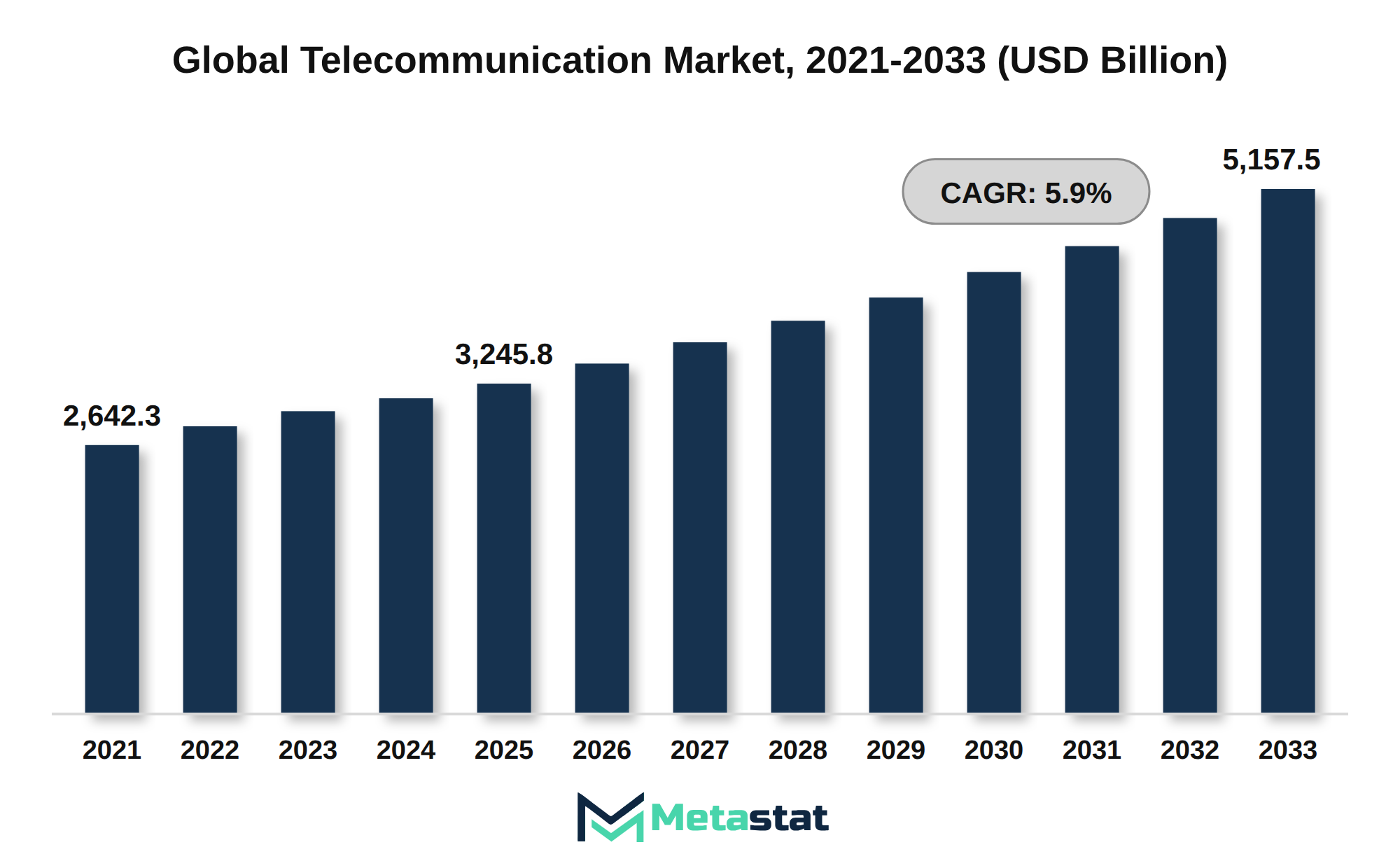
The telecommunication market benefits significantly from ongoing infrastructure development and asset modernization. Investment in digital and physical network capabilities enhances service delivery and customer experience across various segments. Upgrades in network infrastructure facilitate the deployment of advanced technologies, including 5G, which boosts connectivity and expands bandwidth capabilities.
Increasing demand for high-speed internet, particularly in urban areas, drives capital investment into upgrading existing facilities and implementing new technologies. This transformation aligns with rising consumer expectations for reliable communication and data services. The growing focus on digital transformation among businesses across sectors influences the market by increasing the need for robust telecommunication solutions.
Investment in infrastructure enhances operational efficiency and supports economic growth in multiple end-user industries, including retail, healthcare, and media. The integration of emerging technologies, including artificial intelligence and automation, improves processes, reduces costs, and enhances overall productivity within the telecommunication sector.
While the market continues to evolve, the sustained emphasis on infrastructure development and modernization positions it for significant growth through 2033. The projected compound annual growth rate of 5.9 percent reflects substantial opportunities linked to advancements in technology and consumer demand for improved connectivity.
The telecommunication market experiences significant growth driven by technological integration, which enhances operational efficiency and service delivery. Automation, artificial intelligence, and software adoption facilitate streamlined processes, allowing companies to optimize network management and customer interactions. This integration creates a competitive edge for telecommunications providers seeking to differentiate their offerings in an increasingly saturated environment.
Investment in these technologies leads to improved customer experiences and drives demand for advanced services across various sectors, including healthcare, retail, and media. Enterprises aiming for digital transformation increasingly rely on telecommunications services to support their initiatives, contributing to market expansion. The projected increase in revenue from technological advancements reflects a robust compound annual growth rate of 5.9 percent, positioning the telecommunication market for growth through 2033.
Overall, the adoption of automated solutions and advanced technologies contributes to cost efficiency and enhances service capabilities, reshaping the competitive environment. Providers that leverage these innovations effectively capture new revenue streams, encouraging ongoing investment in the sector.
Several challenges hinder growth potential within the telecommunication market, including regulatory tightening and compliance hurdles. Increasing legal mandates impose significant operational pressures on service providers, requiring substantial investments to meet standards. Businesses face escalating operating costs due to rising inflation and supply chain disruptions, which lead to reduced profitability and constrained market activity.
Infrastructure gaps and connectivity deficits further complicate expansion efforts. Inadequate investment in legacy systems results in deployment bottlenecks, limiting service availability in certain regions. Companies struggle to recruit skilled labor, creating talent gaps that impair operational effectiveness and innovation. These factors collectively weigh on competitive positioning and dampen market dynamics, posing challenges for sustained growth.
The telecommunication market confronts various challenges that complicate its growth trajectory. Geopolitical fragmentation and trade deficits introduce tariff friction that affects international operations and supply chain stability. Technological disruptions necessitate complex research and development integrations, impacting time-to-market for new services and products.
Tightening global regulatory standards and compliance overhead increase operational complexities. Providers face pressure from rising input costs and pricing compression, which strain margins and inhibit investment in innovation. Cybersecurity risks and data vulnerabilities further complicate the environment, demanding continuous investment in protective measures and infrastructure. These challenges contribute to market saturation, increasing the urgency for providers to innovate and adapt to evolving demands.
The telecommunication market experiences substantial growth opportunities driven by emerging regional demands. Rapid urbanization and an increasing population significantly influence the need for upgraded connectivity solutions, particularly in developing economies. The expansion of internet services in rural areas enhances access to information and education, stimulating demand across various sectors including retail, healthcare, and e-commerce. This ongoing transformation leads to greater investment in telecommunication infrastructure, creating avenues for business expansion and increasing overall market value.
Infrastructure modernization plays an important role in addressing the evolving needs of consumers and businesses alike. Major investments in 5G technology and fiber-optic networks enable faster data transmission and improved connectivity, which forms the foundation for future innovations. The shift towards digital transformation further increases the demand for robust telecommunication services, compelling operators to integrate advanced solutions that cater to both commercial and residential applications.
Technological disruptions continue to reshape the market, prompting companies in the telecommunication sector to diversify their offerings. The rise of next-generation innovations including Internet of Things (IoT) applications and artificial intelligence drives new revenue streams and encourages cross-industry collaborations. These developments create enhanced customer experiences, operational efficiencies, and competitive advantages in an increasingly crowded marketplace.
Sustainability imperatives gain traction across the market, driven by stakeholders prioritizing environmentally friendly practices. Companies increasingly adopt eco-friendly initiatives, aligning their operations with global sustainability goals. This realignment not only meets regulatory expectations but attracts environmentally conscious consumers, enhancing brand loyalty and increasing market presence.
The telecommunication market stands poised for significant growth, fueled by evolving buying behaviors and a shift towards digital procurement strategies. Businesses increasingly seek integrated solutions that streamline operations and improve service delivery. By embracing these trends, market players enhance their value propositions and secure a competitive edge in a dynamic market.
The telecommunications market faces significant financial headwinds driven by astronomical capital expenditure requirements. Deploying next-generation connectivity, particularly standalone 5G networks, fiber-to-the-home infrastructure, and initial 6G research, requires massive investments in dense small-cell arrays, base stations, and backhaul fiber optics. These capital burdens are further amplified in rural and underdeveloped regions, where low population density yields a prolonged return on investment. As a result, network operators frequently manage heavy debt loads, creating a critical bottleneck that slows down large-scale infrastructure modernization and limits liquidity for parallel innovations.
Monetization challenges continue to restrain profitability across the global telecom sector. Over-the-top communication platforms and cloud-native applications have largely decoupled voice, messaging, and content services from traditional carriers, directly eroding core revenue streams. Despite unprecedented surges in consumer and enterprise data consumption, operators struggle to raise average revenue per user due to saturated markets and intense price competition. This mismatch-where network bandwidth demands escalate exponentially while subscription pricing remains flat or commoditized-severely compresses operating margins across Tier-1 and regional service providers.
Stringent regulatory frameworks create significant operational barriers and strategic uncertainties for telecom operators. Governments enforce rigid compliance mandates around spectrum auctions, net neutrality, data sovereignty, and environmental zoning for tower installations. High spectrum acquisition costs, combined with bureaucratic delays in securing rights-of-way for fiber deployment, repeatedly stall rollout timelines. Additionally, cross-border compliance demands and anti-monopoly scrutiny restrict strategic mergers and acquisitions, preventing operators from achieving the economies of scale needed to navigate volatile macroeconomic conditions.
As telecommunications architectures shift toward software-defined networking, Open RAN, and cloud-native edge computing, the attack surface expands dramatically. Telecom networks serve as critical national infrastructure, making them prime targets for sophisticated state-sponsored cyber espionage, distributed denial-of-service attacks, and ransomware. Operators face substantial financial and reputational liabilities if consumer data or critical communication links are compromised. Mitigating these threats requires continuous, expensive investments in zero-trust security frameworks, continuous threat monitoring, and advanced encryption, which diverts resources away from core commercial expansions.
Many established telecom providers operate on complex, fragmented legacy architectures that resist seamless digital transformation. Modernizing these disparate platforms to support real-time network slicing, artificial intelligence operations, and automated billing requires extensive operational overhaul and downtime risk. Compounding this challenge are geopolitical tensions and trade restrictions that disrupt global equipment supply chains. Sanctions and bans on key network hardware vendors force operators to rip and replace existing equipment at substantial expense, creating supply shortages and delaying critical project deliverables worldwide.
The Global Telecommunication market is segmented based on Type, Connectivity, Application, and End User Industry.
Valued at USD 2,224.4 billion in 2026, the Telecommunication Services segment is projected to reach USD 3,305.4 billion by 2033, at a CAGR of 5.8% during the forecast period. Primary demand drivers include the increasing need for connectivity across various sectors, alongside the rapid adoption of digital technologies. Segment expansion benefits from advancements in network infrastructure, particularly the rollout of 5G technology and fiber-optic systems, enhancing service delivery and user experience.
Technological maturation influences the evolution of service offerings, with service providers integrating next-gen upgrades that support increased data capacity and faster speeds. This evolution aligns with consumer preferences, shifting toward more comprehensive and flexible telecommunication solutions. End-user dynamics in sectors including retail, healthcare, and IT drive demand for customized services, supporting growth within the Telecommunication Services segment.
Regulatory compliance standards and certifications impact operational strategies, compelling service providers to enhance service quality and reliability. Cost structures reflect the need for substantial capital investment in infrastructure, while pricing volatility arises from competitive pressures and fluctuating operational costs. The market faces challenges related to supply chain resilience, particularly in sourcing critical components for network equipment.
Strategic opportunity windows lie in addressing evolving consumer expectations for reliable connectivity and robust service offerings. Ongoing investments in technological advancements and infrastructure position the Telecommunication market for sustained growth, driven by the increasing demand for comprehensive telecommunication services across diverse industries.
Growth in the Communications Hardware segment is driven by rising demand for advanced connectivity solutions, particularly in commercial applications. The increasing integration of IoT devices across various industries fuels the need for strong hardware infrastructure, enhancing communication capabilities. With the global shift towards digital transformation, enterprises seek to upgrade their hardware systems, ensuring compatibility with next-generation technologies.
Technological maturation significantly influences market dynamics, with advancements in hardware design and manufacturing processes leading to improved performance and cost efficiencies. The introduction of 5G technology accelerates hardware upgrades, prompting service providers to invest in state-of-the-art equipment that supports higher data speeds and enhanced connectivity. This trend results in expanded opportunities for players involved in Communications Hardware, driving potential revenue growth.
Adoption of cloud-based solutions impacts the segment positively, driven by organizations increasingly relying on scalable hardware options that facilitate remote working and digital collaboration. The demand for reliable and resilient hardware systems becomes critical in various end-user industries, including IT & ITES, healthcare, and media. Each of these sectors requires specialized hardware to optimize operations and meet evolving consumer expectations.
Communications Hardware segment is estimated to reach USD 1,254.9 billion by 2033, at a CAGR of 6.2% during the forecast period. The capital investment outlook remains strong, with companies focusing on R&D to enhance their product offerings and maintain competitive advantage. Strategic opportunity windows arise from the need for hardware that supports emerging technologies, including AI and machine learning, which are becoming increasingly integral across different industries.
The Communications Hardware segment represents a critical component of the telecommunication market, characterized by significant growth driven by technological advancements and evolving consumer demands. The ongoing shift towards more advanced and efficient communication solutions highlights the segment's importance within the broader market framework.
Growth in the Satellite & Telecom Resellers segment is projected to reach USD 597.2 billion by 2033. This expansion relates to increasing demand for advanced communication solutions across various industries, including retail and e-commerce, healthcare, and media and entertainment. The shift towards remote work and digital transformation accelerates the need for reliable connectivity and efficient telecommunications solutions.
Technological advancements and the introduction of next-generation upgrades drive this segment's growth. Enhanced bandwidth and improved service quality attract businesses and consumers seeking superior communication capabilities. The ongoing evolution of mobile and satellite technologies supports demand for innovative services and products within the segment, driving further expansion.
Regulatory compliance standards shape the competitive landscape of the Satellite & Telecom Resellers market. Service providers face an array of compliance challenges, particularly concerning data security and privacy regulations. Adhering to these standards influences operational costs, impacting pricing strategies and profit margins.
Investment in the Satellite & Telecom Resellers segment remains robust, with players seeking to expand their service offerings and geographic reach. Competitive pressures prompt firms to innovate and improve service delivery, ultimately benefiting end-users through enhanced service options. The market's growth trajectory indicates substantial opportunities for new entrants and established players.
Rapid advancements in technology drive significant changes in the wired segment of the telecommunication market. Increased demand for high-speed internet and reliable connectivity fuels investments in infrastructure upgrades. Customers from various sectors, including retail, healthcare, and media, prioritize robust wired connectivity for enhanced operational efficiency. This strong preference leads to a focus on expanding fiber-optic networks and improving existing cable systems.
Adoption of new technologies, including 5G and fiber-to-the-home (FTTH), transforms consumer expectations and creates opportunities for service providers to enhance their offerings. Regulatory compliance standards encourage investment in high-quality infrastructure, which supports healthy competition among providers. Enhanced service delivery significantly impacts customer satisfaction and retention rates.
Cost structures in the wired segment often reflect high initial capital investments in infrastructure, although long-term operational efficiencies lead to improved margins. Pricing volatility arises from fluctuating demand and competitive pressures, necessitating strategic pricing models. The market continues to evolve due to players seeking innovative solutions to retain and grow their customer bases.
Investment in next-gen upgrades remains critical for maintaining competitive advantages in the telecommunication market. Companies focusing on strategic opportunity windows for product evolution capitalize on emerging consumer needs. Overall, the wired segment serves because a foundational element in the broader telecommunication market, positioning itself to meet growing connectivity demands.
Increasing demand for mobile internet connectivity drives significant growth in the Wireless segment within the Telecommunication market. Factors contributing to this demand include a surge in smartphone usage and the proliferation of Internet of Things (IoT) devices, which require reliable wireless connections. The expanding capabilities of 5G technology enhance data transfer speeds and network reliability, encouraging both individual consumers and businesses to adopt these advanced wireless solutions.
Technological maturation within the wireless infrastructure facilitates the delivery of superior services. Providers continually invest in next-generation upgrades, which support enhanced user experiences and lower latency. This evolution enables various downstream applications across industries, including healthcare, automotive, and smart cities, where reliable connectivity is essential for operational efficiency and service delivery.
Shifts in consumption patterns, driven by remote work trends and increased reliance on digital services, further increase the demand for robust wireless connectivity. Regulatory compliance and policy developments influence the strategic direction of service providers, prompting investments to meet evolving standards. These dynamics shape the competitive environment, allowing companies to strengthen their market positions through innovative offerings and improved service delivery.
Cost structures in the wireless segment reflect the complexities of maintaining and upgrading infrastructure. Pricing volatility resulting from competitive pressures and technology adoption impacts profit margins, compelling service providers to optimize their operations. Strategic opportunity windows arise owing to the market navigating these challenges and seeking to leverage advancements in wireless technology for growth.
Commercial applications in the telecommunication market exhibit strong demand driven by the increasing reliance on digital connectivity for business operations. Organizations across various sectors emphasize the need for reliable communication infrastructure to support remote work, customer engagement, and real-time data exchange. This reliance creates a robust market environment where technological advancements, particularly in 5G and IoT, significantly enhance service offerings and operational efficiency.
Adoption of next-generation technologies accelerates segment expansion. The growing prevalence of cloud-based solutions and mobile applications drives demand for higher bandwidth and lower latency, compelling service providers to upgrade their infrastructures. Businesses recognize the value of such enhancements in improving customer experiences and operational workflows, resulting in increased investments in telecommunication services.
End-use dynamics reflect a shift towards integrated communication solutions. Industries including healthcare, retail, and manufacturing leverage telecommunication services to enhance their operational capabilities. The increasing need for reliable connectivity in these sectors positions the commercial segment for sustained growth. Enterprises prioritize communication efficiency to maintain competitiveness.
Regulatory compliance standards influence operational strategies within the market. Organizations approach telecommunications with a focus on adhering to data protection regulations, shaping service offerings to ensure compliance while delivering value. This alignment supports growth in the market. Companies seek providers that facilitate regulatory adherence without sacrificing performance.
Investment in technological maturation highlights strategic opportunity windows for players in the market. Firms focusing on innovative solutions and enhanced service delivery strategies secure a competitive edge. The evolving landscape presents significant opportunities for companies willing to adapt and invest in advanced communication technologies that address emerging business needs.
Residential applications in the telecommunication market experience significant demand owing to increasing reliance on high-speed internet and smart home technologies. The surge in remote working and online education creates a robust need for reliable connectivity among households. Technological advancements in broadband, wireless communication, and fiber optics enhance the quality and speed of residential services, facilitating a more connected lifestyle.
Product evolution within the residential segment focuses on offering bundled services, combining internet, voice, and television into single packages. This approach attracts consumers seeking comprehensive solutions, leading to higher adoption rates. Next-gen upgrades, including the transition to 5G networks, significantly influence consumer preferences by providing faster data speeds and lower latency.
End-use dynamics reflect changing consumption patterns, with households increasingly prioritizing high-bandwidth applications for streaming, gaming, and telecommuting. These shifts drive demand for scalable and reliable residential telecommunication services. Regulatory compliance standards push providers to enhance service quality and expand broadband access, particularly in underserved areas, promoting inclusivity in the market.
Pricing volatility and margin pressures challenge service providers, requiring innovative approaches to maintain competitive pricing while investing in infrastructure upgrades. Strategic opportunity windows emerge because companies align their offerings with evolving consumer needs, exploring partnerships and technology enhancements to deliver superior residential experiences. Supply chain resilience becomes crucial in navigating disruptions, ensuring timely delivery of telecommunication products and services.
Rapid growth in the Retail and E-commerce sector drives significant demand within the telecommunication market. Factors including the increasing adoption of online shopping platforms and the surge in digital payment solutions enhance connectivity requirements. Retailers and e-commerce platforms require reliable communication services to ensure smooth operations and customer satisfaction, strengthening long-term demand for telecommunication services.
Technological advancements support the evolution of services tailored for retail and e-commerce. Innovations in mobile and internet technologies enable businesses to reach wider audiences while enhancing customer engagement through personalized marketing strategies. This shift towards digital platforms reflects broader consumption trends, where consumers expect efficient online experiences, expanding the addressable base for telecommunication providers.
Regulatory compliance continues to shape market dynamics. Stricter data protection and privacy regulations compel businesses to invest in secure communication infrastructure. Compliance with these standards mitigates risks and builds trust among consumers, encouraging further investment in telecommunication services and reinforcing the segment's position in the market.
Cost structures present both challenges and opportunities for operators within this segment. While investments in advanced technologies are substantial, the potential for increased revenue from enhanced connectivity and service offerings offsets these costs. Strategic partnerships between telecommunication providers and e-commerce platforms drive innovation, ensuring better service delivery and customer satisfaction, increasing investment across the value chain.
Demand for telecommunication services within the IT & ITES sector derives from the relentless pursuit of enhanced connectivity and data management solutions. Increasing reliance on cloud computing, big data analytics, and artificial intelligence contributes to the growing need for robust telecommunications infrastructure. These technologies require effective communication channels, which drive investment in telecommunication solutions by businesses focused on optimizing operations and enhancing customer experiences.
Expansion of digital services in various industries drives adoption of telecommunication solutions tailored specifically for IT & ITES. The ongoing shift towards remote work and digital collaboration has intensified the demand for reliable broadband and mobile networks, enabling companies to maintain productivity and connectivity. Consequently, telecommunications providers increasingly develop innovative services to cater to the unique requirements of this segment, further promoting growth within the market.
Technological maturation within the telecommunication market supports the integration of next-generation upgrades, creating an environment conducive to innovation. Investments in 5G technology enhance service offerings, allowing companies to implement advanced applications including Internet of Things (IoT) solutions and smart automation. These advancements not only improve operational efficiency but create new revenue streams for telecommunications providers catering to the IT & ITES sector.
Shifts in consumption patterns indicate a growing preference for scalable and flexible telecommunication solutions. The emphasis on regulatory compliance standards drives businesses to seek reliable partners capable of delivering secure and efficient services. This evolving environment presents opportunities for telecommunications firms to differentiate themselves through enhanced customer support and service customization, further strengthening their position within the competitive environment.
Cost structures and pricing volatility impact telecommunications providers predominantly focused on serving the IT & ITES sector. Margin pressures necessitate the development of cost-effective solutions without compromising service quality. By embracing technological advancements, firms enhance operational efficiency, allowing them to offer competitive pricing while maintaining profitability. Strategic opportunity windows arise owing to businesses pursuing partnerships to leverage shared resources, ultimately benefiting from enhanced service delivery and market positioning.
Demand for telecommunication services within the Aerospace sector stems from various advancements in communication technologies and their increasing integration into aerospace operations. Innovations in satellite communications and real-time data processing enhance operational efficiency and safety in aviation. The growing reliance on advanced communication systems for navigation, air traffic control, and in-flight connectivity significantly influences adoption rates within this end-user industry.
Technological maturation plays a critical role in expanding the Aerospace segment, with the introduction of next-generation communication systems. These systems offer enhanced reliability, lower latency, and improved bandwidth, meeting the demands of modern aerospace applications. Investment in next-gen upgrades facilitates integration of telecommunication technologies into aircraft systems, contributing to substantial improvements in overall performance.
Product evolution in aerospace telecommunication solutions focuses on providing tailored services and equipment suited to specific aviation needs. Manufacturers supply robust hardware and software capable of supporting demanding aerospace applications, including real-time analytics, enhanced passenger connectivity, and secure communication channels. This evolution aligns with regulatory compliance standards, ensuring that products meet stringent industry requirements.
End-use dynamics in the Aerospace sector reflect a shift towards higher consumption of advanced telecommunication technologies. Airlines and aerospace manufacturers increasingly prioritize investments in communication systems to maintain competitive advantages and ensure operational excellence. This trend reflects a strategic opportunity window for companies operating within this space.
Capital investment outlook for the Aerospace segment remains positive, with numerous players identifying potential growth areas in telecommunication services. Strategic partnerships between telecommunication providers and aerospace companies enhance supply chain resilience and support the development of innovative solutions. This collaboration creates an environment where disruptive alternatives are explored, ensuring continued advancement in aerospace telecommunication technologies.
Growth within the Healthcare and Pharmaceutical sector drives substantial demand for telecommunications solutions. The need for enhanced connectivity supports telemedicine, facilitating remote consultations and patient monitoring, ultimately improving healthcare delivery. Increased adoption of digital health technologies prompts providers to improve data sharing and management systems, ensuring effective communication between healthcare professionals and patients.
Technological advancements in telecommunications, including 5G and Internet of Things (IoT) innovations, enhance the capabilities of healthcare applications. These technologies support real-time data transmission, enabling healthcare providers to make timely decisions and improve patient outcomes. The ongoing evolution of health-related applications creates a robust ecosystem, encouraging investment in telecommunication infrastructure.
Regulatory compliance standards heavily influence market dynamics, with stringent requirements for data security and privacy shaping telecommunications strategies in the healthcare sector. Providers adhere to these regulations while maintaining competitive pricing and service quality, challenging existing cost structures. Strategic opportunities exist for telecommunications firms that invest in compliance solutions, enhancing market positioning and profitability.
Supply chain resilience ensures uninterrupted service delivery to healthcare clients. Disruptive alternatives in technology pose risks, requiring companies to adapt quickly to maintain service reliability. Continuous investment in next-generation upgrades and product evolution remains crucial for firms aiming to capture expanding market opportunities.
Growth in the Media and Entertainment sub-segment stems from rising consumer demand for high-quality content and smooth streaming experiences. Enhanced internet connectivity and the proliferation of smart devices fuel significant shifts in content consumption patterns, with audiences increasingly favoring on-demand services over traditional broadcast options. The growing trend toward mobile viewing further supports this shift, prompting telecommunication providers to invest in robust infrastructure capable of handling increased data traffic.
Segment expansion catalysts include advancements in network technologies, particularly 5G, which enable faster data transmission and lower latency. These improvements allow for richer media experiences, including 4K and virtual reality content, appealing to both consumers and content creators. The next generation of upgrades focuses on enhancing user engagement through interactive and immersive experiences, thereby increasing subscriber bases for telecommunication services. This evolution in the market landscape drives demand for innovative solutions.
Regulatory compliance plays a critical role in shaping the landscape of the Media and Entertainment sector. Adhering to content licensing agreements, data protection regulations, and broadcasting standards remains essential for service providers in the market. Compliance not only ensures legal operations but builds consumer trust, leading to higher adoption rates among users.
Pricing volatility has emerged because a significant concern within the sector, driven by fluctuating content acquisition costs and competition among service providers. Strategic investment in original content and exclusive partnerships with creators helps mitigate these pressures, allowing firms to differentiate their offerings and retain customer loyalty. Businesses in this segment remain vigilant regarding disruptive alternatives, including free streaming platforms that threaten traditional revenue models.
Given the dynamic nature of consumer preferences, the Media and Entertainment sector requires continuous innovation and adaptation. Telecommunication service providers explore strategic opportunity windows that arise from evolving consumption shifts and technological advancements, ensuring sustained growth and competitive positioning in the market.
In the hospitality sector, demand for advanced telecommunication solutions thrives due to the increasing need for reliable connectivity and enhanced guest experiences. High-speed internet access, reliable communication systems, and integrated technology solutions play crucial roles in attracting guests and improving operational efficiency.
Adoption of next-generation telecommunication technologies accelerates within hotels and restaurants, enabling businesses to implement smart technologies that enhance customer engagement and streamline services. Mobile applications for booking, check-in, and room service create a personalized experience that aligns with evolving consumer preferences.
Cost structures within the hospitality segment reflect significant investments in telecommunication infrastructure. Businesses allocate resources toward upgrading systems and ensuring compliance with regulatory standards while navigating pricing volatility associated with technology procurement.
Digital transformation in the hospitality sector presents strategic opportunities. Emphasis on data-driven insights allows for targeted marketing and service customization. Consequently, participants in the telecommunication market position themselves to cater to the unique needs of hospitality clients, ensuring resilience in supply chains and enhancing service delivery.
Innovation in connectivity solutions, including IoT applications and cloud services, supports operational excellence. Enhanced connectivity improves real-time communication between staff and guests, increasing service quality and customer satisfaction, which contributes to sustained growth in the telecommunication market.
Technological advancements within the automotive and manufacturing sectors enhance connectivity, enabling effective communication and data exchange. Adoption of telecommunication solutions aligns with the increasing need for real-time data analytics, driving efficiency and productivity in production processes. The market experiences strong demand for IoT integration, facilitating smart manufacturing initiatives that optimize supply chain operations and enhance operational agility.
Investment in 5G technology offers significant benefits, providing high-speed connectivity that supports automated systems and smart infrastructure. This transition is critical in transforming traditional manufacturing into smart factories, where devices communicate and collaborate autonomously. Enhanced connectivity options enable manufacturers to implement advanced robotics and AI-driven solutions, ultimately improving production capabilities.
End-use dynamics within the automotive sector reflect a strong push towards connected vehicles, leveraging telecommunication services to enhance safety, navigation, and user experience. Integration of telematics systems supports fleet management and vehicle diagnostics, presenting opportunities for manufacturers to enhance their offerings. The emphasis on regulatory compliance standards related to safety and emissions fuels demand for innovative telecommunication solutions that support data collection and reporting.
Cost structures in the automotive and manufacturing industries respond to evolving technological landscapes. Investment in new telecommunication infrastructure presents initial financial burdens; however, long-term operational efficiencies offer compelling returns. The shift towards digitization and connectivity aligns with strategic opportunity windows that telecommunication providers leverage to deliver tailored solutions that meet consumer demands.
Disruptive alternatives from emerging technologies prompt ongoing evaluation of existing telecommunication solutions. Manufacturers prioritize supply chain resilience, necessitating robust telecommunications frameworks to mitigate vulnerabilities and ensure uninterrupted operations. The focus on technological maturation drives continuous improvements in product evolution, ensuring that offerings in the telecommunication market remain competitive and aligned with industry trends.
Significant demand drivers in the Transportation and Logistics sector stem from the increasing reliance on efficient communication systems for real-time tracking and management of goods. Enhanced connectivity solutions facilitate streamlined operations, enabling firms to optimize supply chain processes and improve customer service levels. The expansion of e-commerce activities contributes to growing expectations for rapid delivery times, further driving the need for robust telecommunication solutions.
Technological maturation plays a critical role in enhancing connectivity capabilities within this sector. Innovations in wireless technologies, including 5G, offer faster data transfer speeds and lower latency, supporting the demands of advanced logistics operations. These advancements enable the integration of Internet of Things (IoT) devices for better asset tracking and improved coordination among various stakeholders in the supply chain.
Investment in next-generation upgrades is expected to reshape the operational landscape for the Transportation and Logistics sector. Firms increasingly adopt solutions that leverage cloud computing, enhancing data sharing and collaboration among partners. This adoption leads to improved visibility across the supply chain, facilitating more informed decision-making and reducing operational risks.
End-use dynamics indicate that companies prioritize telecommunication services that enhance operational efficiency and cost-effectiveness. Firms observe a shift in consumption patterns, gravitating towards integrated solutions that combine telecommunication services with data analytics for insights. This trend emphasizes the strategic importance of telecommunication in driving competitive advantage within the market.
Regulatory compliance standards contribute to shaping the operational framework for companies in this sector. Adherence to data protection regulations and safety standards influences technology adoption, with firms investing in secure telecommunication solutions to mitigate risks associated with data breaches. These considerations play a vital role in maintaining consumer trust and ensuring operational continuity.
Strategic opportunity windows arise from the ongoing evolution of telecommunication technologies, with firms evaluating new partnerships and collaborations to access innovative solutions. The market presents avenues for investment in technologies that enhance logistics capabilities, from automated systems to AI-driven analytics. This strategic focus on technological advancements positions companies to meet future challenges and capitalize on growth opportunities.
Overall, the integration of innovative telecommunication services within the Transportation and Logistics sector yields significant benefits, enabling firms to adapt to evolving market demands while maintaining operational resilience. The critical role of telecommunication continues to expand, highlighting its importance in driving efficiency and responsiveness in the market.
Telecommunication solutions in the "Others" segment address diverse applications across various industries. Emerging technologies and their integration into different sectors create significant demand for tailored communication services. Businesses increasingly rely on digital connectivity, raising the need for efficient telecommunication solutions in unconventional markets.
Key factors influencing growth in this segment include the increasing adoption of IoT devices and heightened demand for secure communications. Enhanced data processing capabilities support innovation, driving businesses to seek advanced telecommunication systems. Regulatory compliance and evolving certifications necessitate upgrades, compelling companies to invest in systems that align with current standards.
Sector-specific dynamics shape demand in the telecommunication market. Businesses operating in niche markets require specialized solutions, which often leads to customized offerings. These tailored services enhance operational efficiencies and meet specific industry requirements, contributing to market expansion.
Shifts in consumption patterns, driven by technological advancements, influence the adoption of new telecommunication solutions. Organizations exploring disruptive technologies actively seek alternatives that offer better performance and cost-effectiveness. This trend opens strategic opportunities for industry players, enabling them to capture emerging market needs.
Based on geography, the Global Telecommunication market is divided into North America, Europe, Asia-Pacific, South America, Middle East, and Africa.
Growth in the North American Telecommunication market aligns with advancements in digital infrastructure and increasing consumer demand for connectivity solutions. Expanding mobile internet usage and the integration of next-generation technologies contribute significantly to this development. The presence of robust market players in the United States, Canada, and Mexico creates a competitive business environment, leading to enhanced service offerings and improved customer experience.
The North America Telecommunication Market is projected to expand at a CAGR of 5.9% during the forecast period, reaching a market size (TAM) of USD 5,157.5 billion by the end of 2033. This region benefits from established telecommunications infrastructure and regulatory frameworks that support innovation and investment.
Emerging trends including localized procurement dynamics and high-value replacement cycles drive further growth within the sector. Companies increasingly explore nearshoring initiatives to enhance supply chain resilience and capitalize on regional resource availability. This localized approach improves operational efficiency while aligning with the growing emphasis on energy grid resiliency and infrastructure readiness.
Cross-border trade corridors and geopolitical factors influence market strategies and supplier relationships, encouraging companies to adapt to evolving consumer preferences and regulatory requirements. The competitive environment in the market reflects the presence of key players who continuously invest in technology and infrastructure, ensuring comprehensive service delivery across various segments and enhancing overall market performance.
In Europe, the telecommunication market exhibits diverse dynamics influenced by various factors, including technological advancements and regulatory frameworks. Countries including Germany, France, the UK, Italy, Spain, and Russia contribute significantly to the market's overall landscape. These nations actively invest in infrastructure modernization, supporting the adoption of advanced telecommunication technologies.
The region experiences strong demand in several sectors, particularly in IT & ITES and Media and Entertainment. Increasing consumer expectations lead to a focus on high-quality services. Firms enhance their offerings through innovation and competitiveness. The presence of major players facilitates market growth, driving competition and investment across the segment.
European market dynamics reflect a mature environment with established players collaborating and consolidating to address diverse consumer needs. Increased foreign direct investment (FDI) flows into localized manufacturing and procurement initiatives strengthen regional supply chains, enhancing resilience in the market. Overall, the telecommunication market in Europe is projected to experience steady growth, driven by ongoing advancements and strategic investments.
The Asia-Pacific region represents a significant portion of the global telecommunication market, with a market share of 33.0% in 2025. Factors driving this growth include the region's rapid urbanization and the increasing penetration of mobile and internet services. Countries including China, Japan, India, and South Korea lead in adopting advanced technologies, enhancing market expansion.
Investment in infrastructure modernization plays a critical role in accommodating rising demand for high-speed connectivity. The growth of digital services in Southeast Asia and Australia contributes to a robust environment for telecommunication solutions. Emerging technologies, including 5G, are prominent in strengthening service capabilities. This trend increases competition among regional providers.
The presence of domestic market participants, including China Mobile Ltd. and SoftBank Group Corp., creates a competitive landscape that stimulates innovation and service delivery. Local procurement dynamics and cultural nuances influence B2B buying behaviors, often resulting in tailored solutions that meet specific regional needs.
Infrastructure readiness, particularly in urban centers, supports the growth of telecommunication services. High-value replacement cycles create opportunities for suppliers to introduce new technologies. Strategic entry barriers and foreign direct investment flows contribute to a favorable business environment for both established players and new entrants in the market.
The telecommunication market in South America exhibits unique characteristics shaped by regional dynamics and emerging trends. Brazil and Argentina represent the primary markets within this region, contributing significantly to the overall demand. Infrastructure modernization efforts drive growth, particularly in urban areas where connectivity remains a priority. Investment in local telecommunications infrastructure enhances service availability and quality, appealing to both residential and commercial users.
High-value replacement cycles for aging equipment and technology drive ongoing investments in telecommunications solutions. Providers focus on enhancing service quality and expanding coverage, leading to increased competition among domestic players. Localized procurement dynamics influence purchasing behaviors, prompting vendors to tailor offerings to meet the specific needs of regional customers.
The telecommunication market in South America faces challenges, including regulatory compliance and regional trade considerations. Regulatory compliance and trade considerations influence investment decisions and lead to varying growth rates across different countries. Emerging market front-runners are expected to enhance their competitive positions through strategic collaborations and increased foreign direct investment flows.
The telecommunication market in the Middle East and Africa is characterized by a growing demand for advanced connectivity solutions. This expansion is particularly noticeable in countries including Saudi Arabia, UAE, and South Africa, where significant investments in infrastructure modernization initiatives are underway. The increased focus on enhancing telecommunications infrastructure aligns with the regional objective to improve digital connectivity and support economic growth.
Emerging market front-runners in this region drive demand through substantial foreign direct investment (FDI) flows, which enhance overall market competitiveness. Local compliance mandates and trade policy shifts create a regulatory framework that encourages investment in telecommunication services. In addition, localized procurement dynamics reflect a shift towards regional supply chains, facilitating quicker access to essential telecommunications technology and services.
Cultural nuances and regional B2B buying behaviors significantly influence telecommunication market dynamics. Businesses in various sectors increasingly prioritize effective communication solutions to improve operational efficiency and customer engagement. The market benefits from high-value replacement cycles, where businesses seek to upgrade outdated systems and adopt new technologies to maintain competitiveness. This ongoing transformation fosters a dynamic market environment.
Geographic regulatory frameworks play a crucial role in shaping the market. By addressing compliance and regulatory challenges, telecommunications providers better navigate the complexities of local markets. The presence of domestic market participants further enhances the competitive environment, encouraging innovation and collaboration among service providers.
Incremental growth vectors, including rising mobile penetration and the increasing adoption of digital services, contribute to the overall expansion of the telecommunication market in the Middle East and Africa. Strategic entry barriers for new players ensure that established companies retain their market share while adapting to evolving customer needs and preferences. The outlook for the telecommunication sector remains positive, driven by advancements in technology and sustained investment in infrastructure.
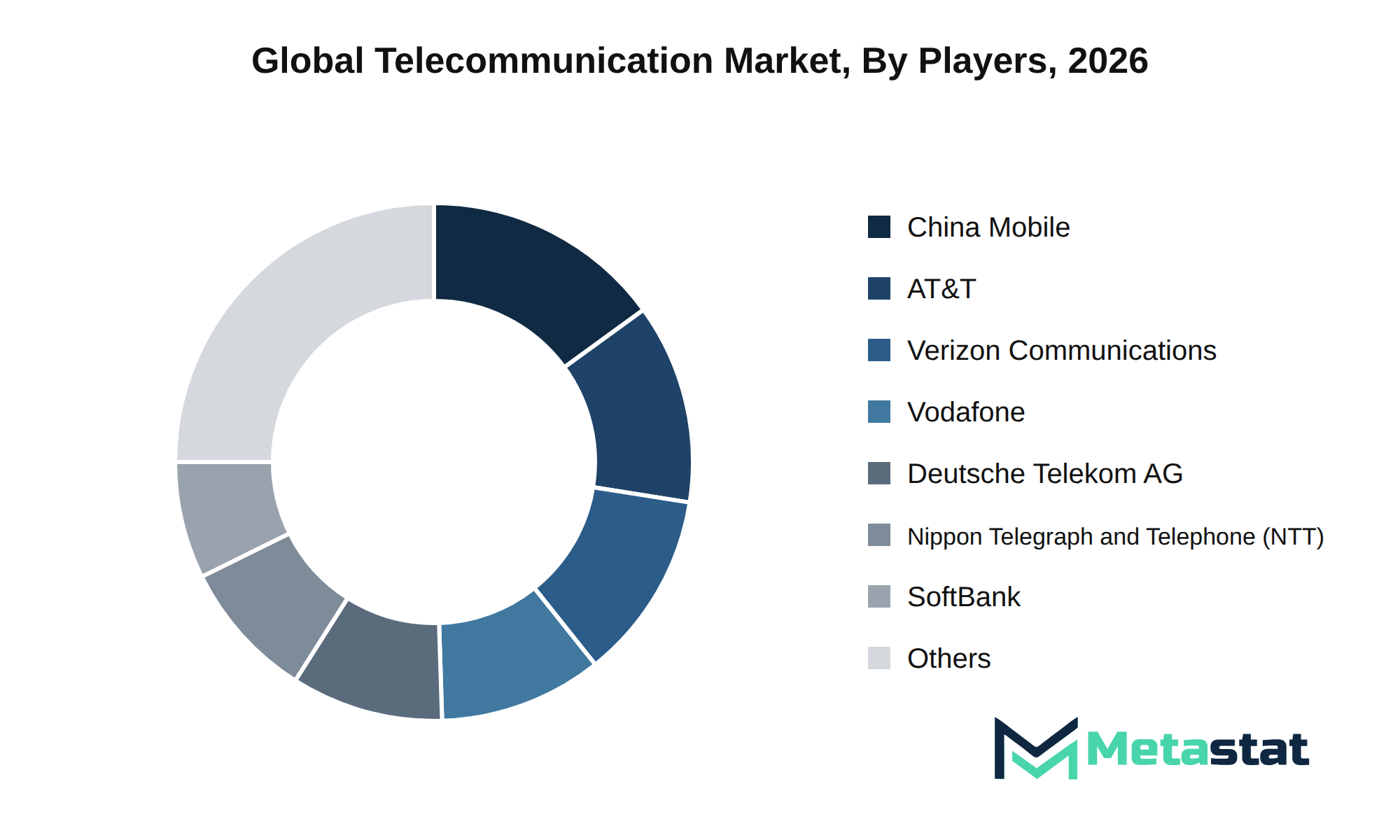
The competitive landscape in the telecommunication market reflects a dynamic environment shaped by various strategic behaviors. Leading players including AT&T Inc., Verizon Communications Inc., and China Mobile Ltd. engage in strategic consolidation and mergers to enhance market positioning and expand service offerings. This consolidation enables firms to capitalize on economies of scale and improve competitive leverage against emerging entrants, resulting in strengthened market positions and increased operational efficiency.
Strategic alliances and partnerships are critical for growth within the market. Companies like Vodafone Group Plc and Nippon Telegraph and Telephone Corporation (NTT) leverage joint ventures to enhance their technological capabilities and expand their geographic reach. Customer retention strategies focus on building brand equity through innovative service offerings and competitive pricing architectures, enabling firms to differentiate themselves in a crowded marketplace and increasing customer loyalty.
Market size is forecast to rise from USD 3,245.8 billion in 2025 to over USD 5,157.5 billion by 2033. The base case reflects growth at a compound annual growth rate (CAGR) of 5.9%. Under bullish conditions, factors including accelerated adoption of next-generation technologies and increased investment in infrastructure could drive the market significantly higher. Conversely, bearish scenarios could arise from geopolitical tensions, regulatory challenges, and economic downturns that inhibit growth.
Downstream demand shifts, driven by evolving consumer preferences and emerging technologies, will shape the telecommunication market's trajectory. Industries including healthcare and e-commerce are likely to experience heightened demand for advanced connectivity solutions. The maturation of core segments, including telecommunication services and communications hardware, creates opportunities for innovative service offerings that align with changing market dynamics.
Investment in research and development (R&D) will play a vital role in timeline projections for product commercialization and lifecycle management. Companies will focus on integrating advanced technologies, including 5G and IoT, which enhance service delivery and operational efficiencies. Regulatory evolution, including imminent compliance milestones, will require strategic planning and agile responses from market participants to maintain competitive advantages.
Geopolitical realignments and global supply chain shifts represent critical factors influencing market strategies and capital allocation directives. Organizations will prioritize infrastructure commitments and capital expenditure (CapEx) investments to ensure resilience and adaptability in an unpredictable environment. Emerging white-space opportunities exist for companies to address unmet enterprise needs, particularly in sectors seeking reliable connectivity solutions.
Executive-level strategic imperatives will center on developing defensibility roadmaps that align with long-term growth recommendations. Navigating the complexities of the current economic climate and technological advancements is essential for stakeholders aiming to capitalize on high-growth pockets within the market. Effective adaptation to these trends ensures sustained growth and positions market players favorably within the evolving telecommunication sector.
The report strategically identifies and profiles the key market players and analyses their core competencies in each sub-segment of the Telecommunication market.
|
Report Attributes |
Details |
|
Study Period |
2021-2033 |
|
Base Year |
2025 |
|
Estimated Year |
2026 |
|
Forecast Period |
2026-2033 |
|
Historical Period |
2021-2025 |
|
Growth Rate |
CAGR 5.9% from 2026 to 2033 |
|
Revenue Unit |
USD billion |
|
Segmentation |
By Type, Connectivity, Application, End User Industry, and Region |
|
By Region |
North America (By Type, Connectivity, Application, End User Industry, and Country)
|
|
Europe (By Type, Connectivity, Application, End User Industry, and Country)
|
|
|
Asia Pacific (By Type, Connectivity, Application, End User Industry, and Country)
|
|
|
South America (By Type, Connectivity, Application, End User Industry, and Country)
|
|
|
Middle East and Africa (By Type, Connectivity, Application, End User Industry, and Country)
|
Find answers to common questions about this report
5G deployment enhances connectivity and expands bandwidth capabilities within the telecommunication market. Major investments in 5G technology facilitate faster data transmission and improve service delivery, aligning with rising consumer expectations for efficient communication, driving overall market growth.
What are the major challenges facing telecom operators
Increasing legal mandates impose significant operational pressures on service providers, requiring substantial investments to meet regulatory standards. Tightening global regulatory standards and compliance overhead increase operational complexities, which impact market dynamics and growth potential.
Telecom companies are enhancing their infrastructure through significant investments in digital and physical network capabilities. Upgrades facilitate the deployment of advanced technologies, including 5G, which boosts connectivity and expands bandwidth capabilities to meet the rising demand for high-speed internet. This transformation aligns with consumer expectations for improved communication and data services.
The Telecommunication market size was valued at USD 3,245.8 billion in 2025, according to the Metastat Insights study.
The Telecommunication market is projected to grow at a CAGR of 5.9% during the forecast period from 2026 to 2033.
The North America Telecommunication market size is estimated to reach USD 5,157.5 billion by 2033.
The Telecommunication Services segment leads the market with a projected value of USD 3,305.4 billion in 2033, compared to Communications Hardware and Satellite & Telecom Resellers segments.
Key drivers for the telecommunication market include ongoing infrastructure development and asset modernization, which enhance service delivery and customer experience. The rising demand for high-speed internet, particularly in urban areas, along with the growing focus on digital transformation across various sectors, fuels investment in robust telecommunication solutions.
Several challenges hinder growth within the telecommunication market, including regulatory tightening, compliance hurdles, and rising operational costs due to inflation and supply chain disruptions. infrastructure gaps and talent shortages impair operational effectiveness, while geopolitical fragmentation and cybersecurity risks further complicate market dynamics. These factors collectively dampen competitive positioning and limit market expansion.
Investment in infrastructure modernization and the integration of advanced technologies, including artificial intelligence and automation, significantly favor product adoption in the telecommunication industry. These developments enhance service delivery, operational efficiency, and customer experiences, driving demand for robust telecommunication solutions across various sectors.
The Telecommunication market is estimated to reach a valuation of USD 5,157.5 billion by 2033.
Key players in the Telecommunication market include AT&T Inc., Verizon Communications Inc., China Mobile Ltd., Vodafone Group Plc, Nippon Telegraph and Telephone Corporation (NTT), and Deutsche Telekom AG.
The analysts below cover Information & Technology research at Metastat Insights.
LEAD ANALYST
Utkarsh Khirodkar is a Lead Market Research Analyst at MetaStat Insight, specializing in market intelligence, technology sector assessments, and competitive strategy.

PRINCIPAL CONSULTANT - ENTERPRISE AI & EMERGING TECHNOLOGIES
Banking & Finance · Electronics and Semiconductor · Energy and Power · Healthcare IT · Information & Technology · Professional Services
Vijay Gunti is a Principal Consultant at MetaStat Insight, bringing over two decades of experience across enterprise digital transformation, technology strategy, and intelligent systems.

LEAD CONSULTANT - COMMUNICATION, TELECOM, AND IT
Electronics and Semiconductor · Information & Technology · Machinery & Equipment · Professional Services
Ravindra Sathe Consultants for Communication, Telecom, and IT at MetaStat Insight. He leads the firm's industry research initiatives across telecommunications infrastructure, digital connectivity, enterprise networking, and emerging information technology domains.
Evaluating secondary resin quality across post-consumer packaging streams requires reliable technical segmentation. MetaStat Insight delivered an objective assessment that distinguished between extrusion-grade flake pricing and optical sorting throughput limitations across Western Europe. The competitive positioning breakdown for licensed depolymerization technology providers answered several questions during our feedstock feasibility audit. Their team clarified regional trade restrictions on mixed plastic scrap quickly when our team submitted follow-up requests.
Evaluating sovereign cloud deployments for core banking platforms demands a clear view of data residency regulations and migration exit strategies. MetaStat Insight delivered an exhaustive review of regional latency tolerances, mainframe decommission milestones, and third-party vendor concentration risk. The regulatory compliance mapping across European and Asian financial jurisdictions gave our team a dependable baseline for multi-cloud infrastructure discussions.
Replacing petrochemical surfactants with bio-based alternatives requires realistic timelines on industrial precision fermentation scaling. The market research broke down commercialization timelines, feedstock sugar price sensitivities, and regional cosmetic ingredient regulatory approvals in Europe and East Asia. That supplier readiness mapping gave our formulations team reliable context when comparing renewable chemical sourcing roadmaps.
Explore related market intelligence reports worth reading alongside this one.
Starting from
$2950