
LEAD ANALYST
Utkarsh Khirodkar is a Lead Market Research Analyst at MetaStat Insight, specializing in market intelligence, technology sector assessments, and competitive strategy.

Global Fleet Management Market Size, Share, By Offering Type (Fleet Management Software Platforms, Telematics Hardware and Connected Devices, Professional and Integration Services, Managed Fleet Administration and Lifecycle Services), By Function (Vehicle Tracking and Telematics, Route Planning, Dispatch and Workflow Management, Vehicle Maintenance and Diagnostics, Fuel and Energy Management, Driver Safety and Performance Management, Compliance and Risk Management, Vehicle Lifecycle and Asset Management, Fleet Analytics and Reporting, EV Fleet and Charging Management, Others (Toll, Parking and Expense Administration)), By Vehicle Type (Passenger Cars, Light Commercial Vehicles, Medium and Heavy Commercial Vehicles, Buses and Coaches, Special-Purpose Commercial Vehicles, Others (Two-Wheelers and Off-Highway Fleet Vehicles)), By End-Use Industry (Transportation and Logistics, Retail and E-commerce, Construction and Infrastructure, Utilities and Telecommunications, Manufacturing and Industrial, Government and Public Sector, Passenger Transportation, Vehicle Rental and Leasing, Oil, Gas and Mining, Others (Healthcare, Agriculture and Waste Management)), Industry Analysis, Growth, Trends, and Forecast, 2026-2033
Report ID
MSI-5078
Published
August, 2026
Pages
305 Pages
Format
Historical
Base year
Forecast
Forecast period
Report Details
Choose Your License
Global Fleet Management Market
The global Fleet Management market was valued at USD 44.7 million in 2025 and is projected to reach USD 130.4 million by 2033, growing at a CAGR of 14.3% over the forecast period.
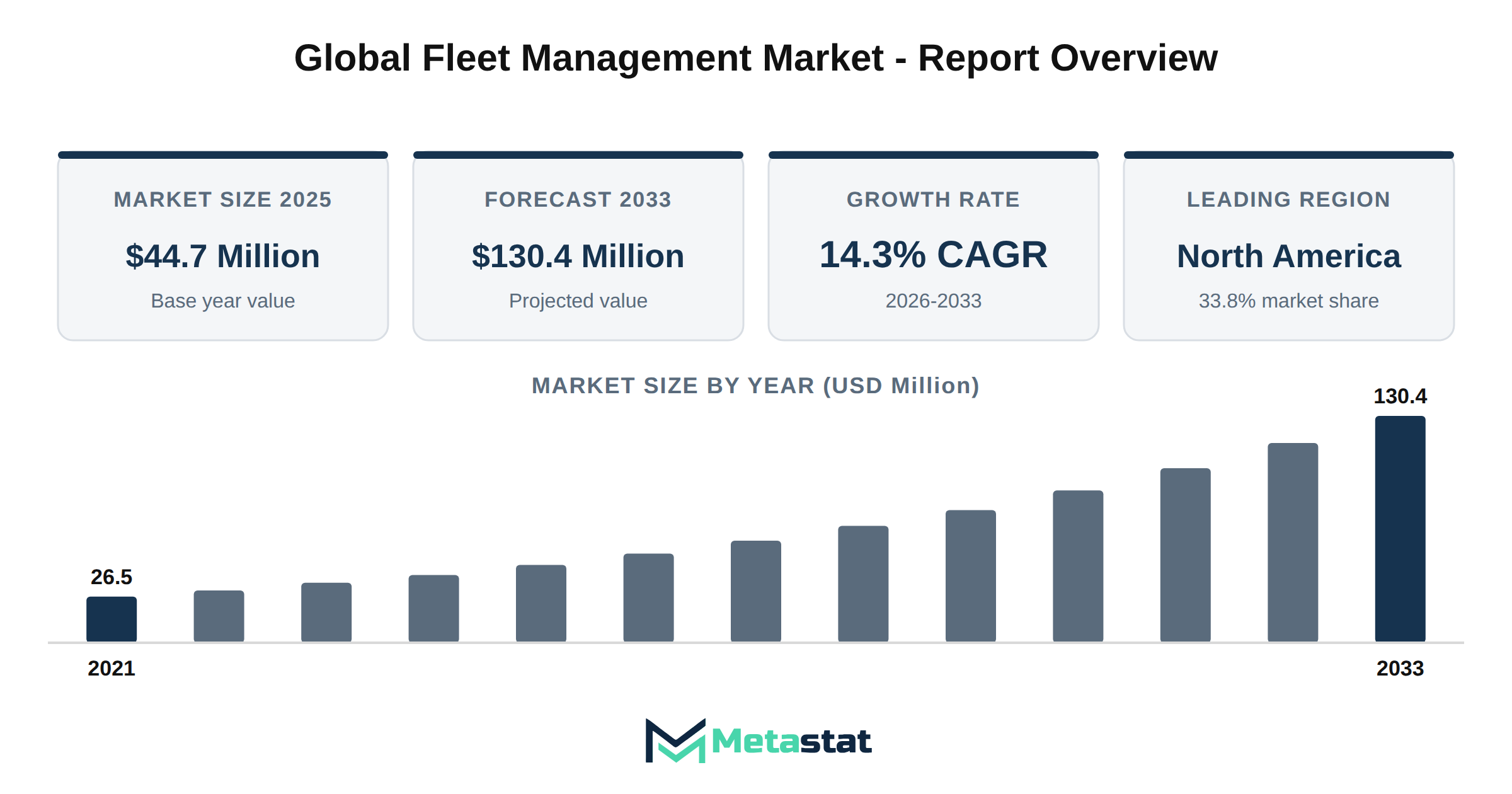
The Fleet Management market reached a value of USD 44.7 million in 2025, reflecting a significant increase from USD 26.5 million in 2021. This upward trend demonstrates strong growth, with the market projected to achieve USD 130.4 million by 2033, representing a compound annual growth rate (CAGR) of 14.3 percent. The anticipated growth is attributed to various factors, including advancements in technology and increasing demand for efficient fleet operations.
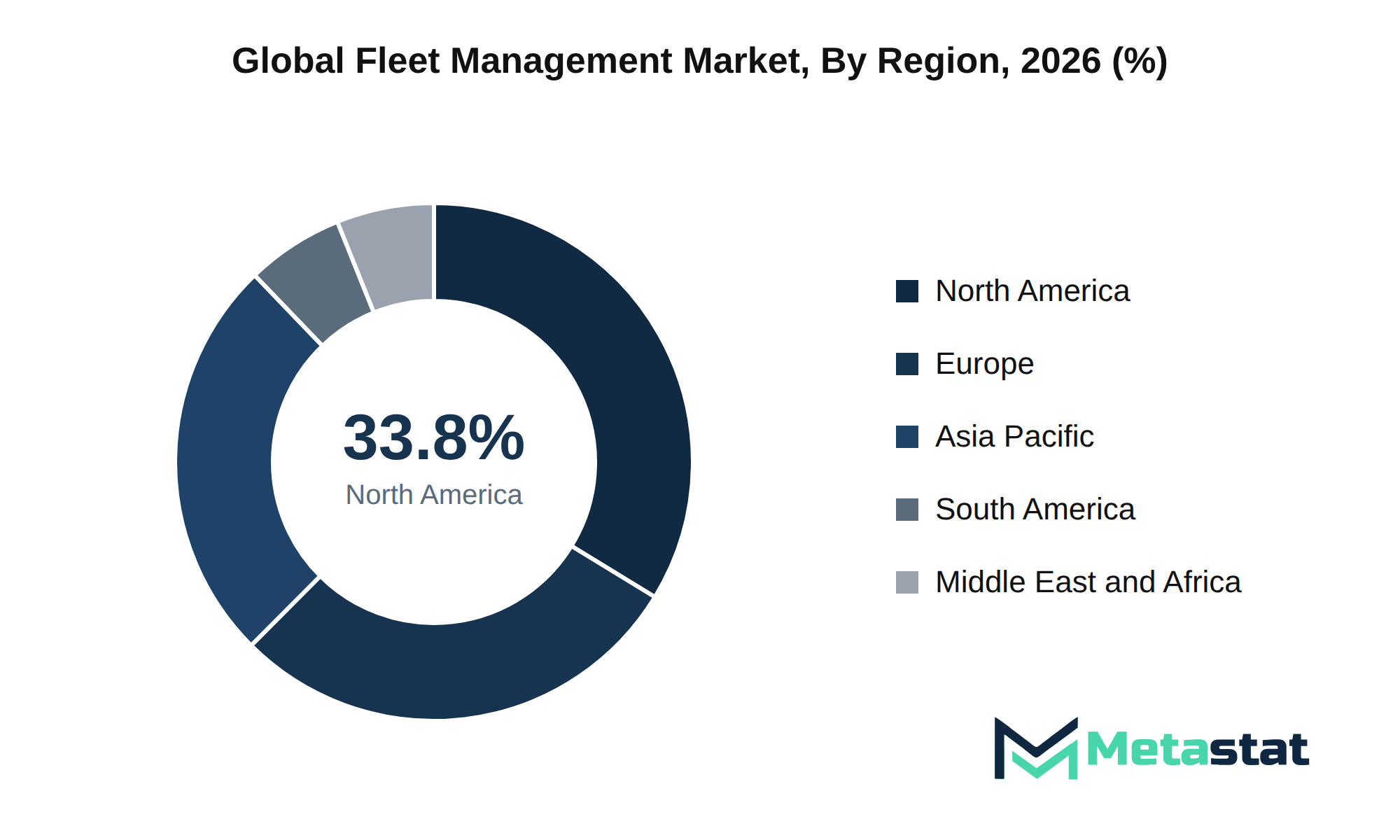
Regional distribution of the market shows North America holding the largest share at 33.8 percent, followed by Europe at 28.8 percent and Asia Pacific at 25.4 percent. This geographic segmentation highlights the varying levels of adoption and investment in fleet management solutions across different regions. The need for enhanced operational efficiency and effective resource management drives this demand, particularly in North America, where the market is expected to reach USD 41.1 million by 2033, maintaining a CAGR of 14.3 percent.
Within the Fleet Management market, various segments contribute to its overall value. Fleet Management Software Platforms represent a significant portion, with a projected increase from USD 22 million in 2026 to USD 60 million by 2033, achieving a CAGR of 15.4 percent. Telematics Hardware and Connected Devices are essential, with a forecasted value of USD 28.7 million by 2033, indicating the growing importance of technology in fleet operations. The expansion of these segments reflects the ongoing evolution of fleet management solutions.
In terms of function, Vehicle Tracking and Telematics contribute substantially, starting at USD 11 million in 2026 and expected to grow to USD 24.1 million by 2033, reflecting a CAGR of 11.9 percent. Route Planning, Dispatch and Workflow Management follow closely, with a forecasted value of USD 17.6 million by 2033 and a CAGR of 14.7 percent. These functional areas highlight the critical aspects of fleet management that enhance operational efficiency and reduce costs.
The Fleet Management market experiences significant transformation driven by evolving regulatory compliance and standards, influencing operational frameworks across various regions. Companies adapt to stringent regulations to enhance fleet efficiency and ensure safety, impacting procurement strategies and operational costs.
Investment in research and development (R&D) plays a crucial role in the market's advancement, enabling next-generation innovations that enhance telematics and fleet management software platforms. This technological progress supports companies in optimizing fleet performance and streamlining operations, contributing to overall market growth.
Sustainable transformation initiatives are reshaping the fleet management landscape, with a focus on decarbonization and circular economy dynamics. Organizations increasingly adopt eco-friendly practices, impacting customer preferences and driving demand for electric vehicles and energy-efficient solutions within the market. This shift enhances corporate responsibility and aligns with broader environmental goals.
The supply chain landscape remains a critical factor, driven by logistics architecture and sourcing strategies evolving to meet changing market demands. Companies prioritize agility and resilience in their supply chains, ensuring timely delivery and resource optimization, which ultimately influences the market's competitive dynamics.
Market fragmentation presents both challenges and opportunities, with numerous players competing in various segments. M&A dynamics continue to reshape the competitive environment, allowing companies to enhance their service offerings and expand market reach. Strategic partnerships and collaborations emerge because firms seek to leverage complementary strengths and improve customer service.
Investment in infrastructure forms a fundamental part of future strategic outlooks, with capital allocation focused on enhancing fleet capabilities and integrating advanced technologies. This focus on infrastructure supports the development of smart fleets and contributes to overall market scalability, addressing the growing demand for efficient fleet management solutions.
High-value recommendations for stakeholders in the Fleet Management market emphasize the importance of aligning corporate imperatives with market trends. By prioritizing customer journey dynamics and adapting to evolving market conditions, companies position themselves for sustainable growth and success in the competitive landscape.
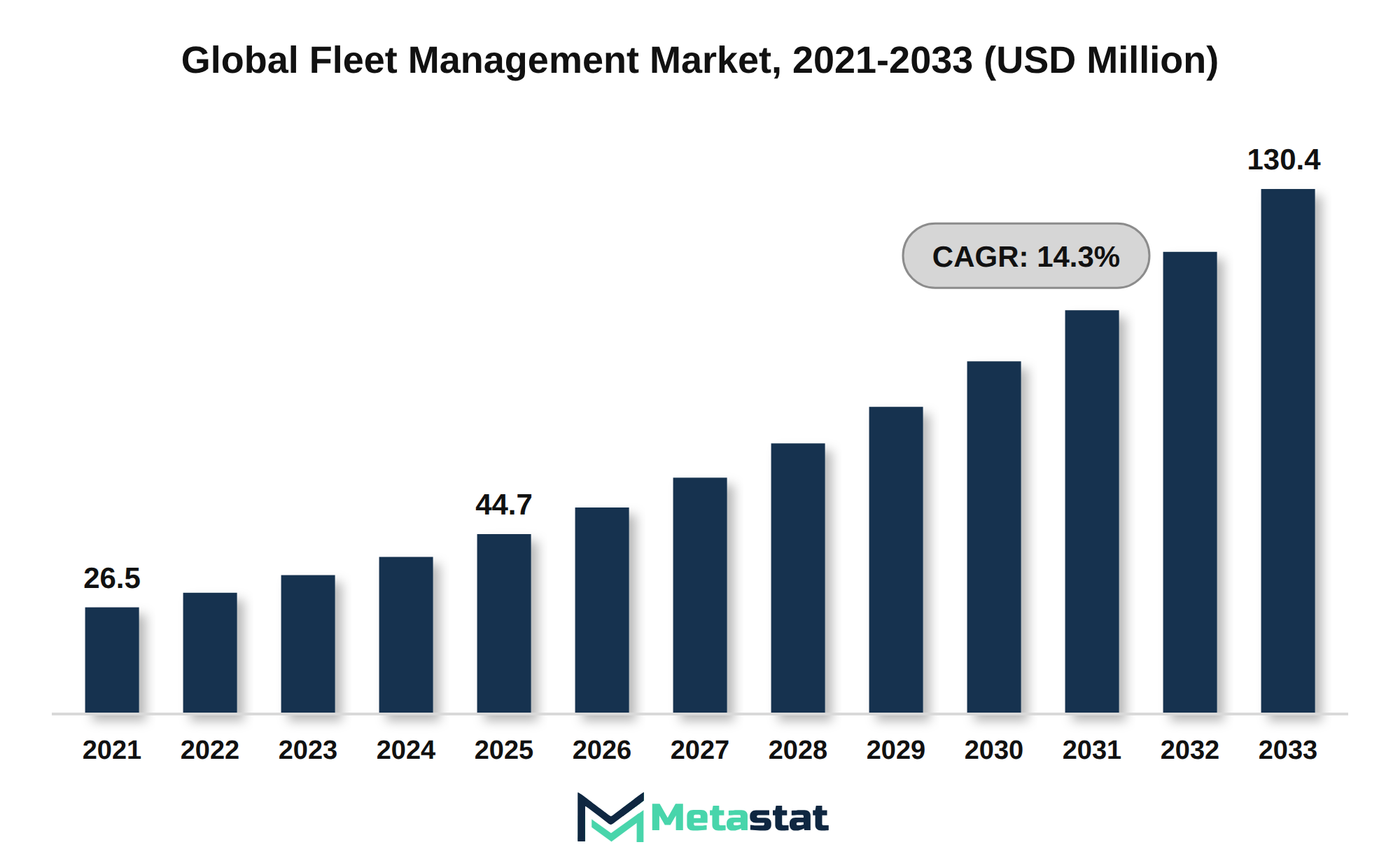
The Fleet Management market experiences accelerated growth owing to increased investment in digital transformation initiatives. Organizations recognize the importance of adopting advanced technologies to streamline operations and enhance efficiency. This trend stems from a combination of factors, including rising consumer expectations for real-time data access and improved decision-making capabilities.
Capital investment environments, characterized by favorable interest rates and GDP growth, support enterprises seeking to upgrade their fleet management systems. The drive towards automation, artificial intelligence, and integration of sophisticated software solutions enables companies to digitize legacy processes effectively. Operational productivity improves, increasing competition within the market and attracting new entrants focused on technology-driven solutions.
Industry participants benefit from enhanced insights into vehicle performance, maintenance needs, and fuel consumption patterns through the implementation of telemetry and analytics. The shift towards data-driven fleet management ultimately leads to improved cost-efficiency initiatives, allowing organizations to optimize labor and reduce overhead expenses. The Fleet Management market is expected to grow significantly owing to businesses prioritizing technological advancements and operational excellence.
Investment in infrastructure development plays a critical role in the growth of the Fleet Management market. Upgrading physical and digital capacities, including facilities and network capabilities, creates opportunities for improved efficiency and productivity. The increasing emphasis on asset modernization reflects a broader trend in the transportation and logistics sectors, encouraging stakeholders to adopt advanced fleet management solutions.
The demand for modernized infrastructure stems from the streamline operations and enhance service delivery across various end-use industries. Transportation and logistics companies focus on optimizing their capabilities to meet evolving consumer behaviors and shifting demographic patterns. By investing in upgraded systems, these companies gain the ability to respond effectively to market demands while achieving cost-efficiency initiatives.
Infrastructure investment creates a more resilient supply chain, minimizing disruption risks and improving overall fleet performance. Through modernization efforts, organizations within the Fleet Management market enhance their operational capabilities. These advancements facilitate automation and technological integration, leading to reduced operational costs and improved service reliability.
Ultimately, the focus on infrastructure development supports sustained growth in the Fleet Management market, equipping businesses with the tools to adapt to changes in market conditions and consumer expectations. While companies prioritize modernization, the market is projected to expand further, driven by a strong foundation of enhanced operational productivity and effective resource management.
Regulatory tightening poses significant challenges for the Fleet Management market. Compliance hurdles stem from evolving legal mandates, requiring substantial resources for adherence. This situation creates a burden for companies, particularly smaller players, inhibiting their ability to compete effectively. High capital investment requirements exacerbate these challenges, resulting in slowed adoption rates among potential market entrants.
Macroeconomic headwinds, including inflationary pressures and supply chain disruptions, impact operational costs and overall profitability. Companies face escalating operating expenses, which affect their investment decisions in fleet management solutions. Geopolitical instability introduces uncertainty, making firms hesitant to commit to long-term investments in new technologies or fleet expansions.
Infrastructure gaps and connectivity deficits complicate implementation efforts. Insufficient network infrastructure restricts the deployment of advanced telematics and connected devices crucial for efficient fleet management. This lack of readiness delays the market's progression toward digital solutions.
Skilled labor deficiencies and rising workforce overhead present ongoing challenges. The demand for qualified personnel to manage fleet operations outstrips supply, resulting in increased operational difficulties. Data security vulnerabilities and privacy concerns surrounding fleet management systems introduce additional risks, deterring investment and innovation in the market.
Overall, these factors contribute to market fragmentation and cultural barriers, limiting the growth potential of the Fleet Management market. Firms navigate a complex environment of regulatory and operational challenges, impacting their strategic decisions and long-term planning. The confluence of these factors signals a cautious approach among market players, hindering the sector's overall expansion and adoption rates.
Geopolitical fragmentation presents significant challenges for the Fleet Management market by disrupting supply chains and creating trade deficits. This fragmentation results in tariff friction, which increases the cost of imported components and materials essential for fleet management systems. Suppliers face pressures to adapt to varying regulations across regions, complicating compliance and increasing operational costs.
Technological disruptions in various global markets further exacerbate these challenges by necessitating complex research and development integrations. Companies investing in new technologies encounter interoperability friction, resulting from systems from different manufacturers struggling to communicate effectively. This issue hampers the implementation of comprehensive fleet management solutions, affecting customer satisfaction and overall market growth.
Logistics disruptions caused by geopolitical tensions lead to supply chain instability, impacting the availability of critical components. Rising input costs create margin pressures, compelling fleet management providers to balance pricing strategies with profitability. Financial strains force companies to adopt cost-saving measures, potentially sacrificing quality and innovation in a highly competitive market.
Workforce skill gaps remain a pressing concern, particularly in areas related to advanced fleet management technologies. The need for skilled professionals to handle complex systems remains unmet, leading to delays in implementation and reduced efficiency. Companies struggle with talent retention, complicating efforts to maintain a skilled workforce capable of evolving alongside technological advancements.
Environmental lifecycle footprints and decarbonization mandates drive sustainability demands across the industry. Companies face pressure to implement greener practices and solutions, which requires investment in new technologies and retrofitting existing fleets. These factors contribute to implementation bottlenecks, creating additional challenges for organizations seeking to enhance their Fleet Management capabilities.
Intellectual property protection deficits leave companies vulnerable to cybersecurity risks and data vulnerabilities. Increased reliance on connected devices raises the stakes for data breaches, impacting customer trust and compliance with evolving legal liabilities. The intersection of these challenges creates a complex environment for the Fleet Management market, requiring strategic navigation to ensure sustained growth and competitiveness.
Increased regional demands significantly drive growth within the Fleet Management market. Emerging economies exhibit a heightened focus on fleet optimization, presenting new opportunities for service providers. Countries in Asia Pacific and South America, with rapidly expanding logistics and transportation sectors, present strong prospects for fleet management solutions. Investments in infrastructure modernization further enhance operational capabilities and enable integration of advanced technologies.
Technological disruptions, including the integration of telematics and software platforms, facilitate enhanced vehicle tracking and efficiency. Digital transformation initiatives support the adoption of innovative solutions, allowing businesses to optimize fleet performance and reduce operational costs. This technological evolution aligns with sustainability imperatives, driven by companies adopting eco-friendly practices and complying with evolving environmental standards.
The strategic consolidation of market players leads to enhanced service offerings and expands product integration across various industries. Cross-industry mergers and acquisitions strengthen market presence, enabling providers to meet diverse customer needs. Evolving buying behaviors, influenced by digital procurement shifts, encourage businesses to seek integrated fleet management solutions that streamline operations and maximize return on investment.
Asset life-cycle extensions and maintenance upgrades contribute to the enhancement of fleet longevity and performance. Value-chain optimization through advanced analytics and process automation drives operational yield maximization, reinforcing the competitive position of stakeholders within the market. Continued growth in niche applications, including electric vehicle fleet management and telematics for specialized services, positions the Fleet Management market for robust expansion through 2033.
The Global Fleet Management market is segmented based on Offering Type, Function, Vehicle Type, and End-Use Industry.
Valued at USD 22 million in 2026, the Fleet Management Software Platforms segment is projected to reach USD 60 million by 2033, reflecting a CAGR of 15.4% during the forecast period. Increased adoption of digital solutions for fleet management has emerged because a primary demand driver. Organizations prioritize efficiency and cost reduction in fleet operations, creating a strong market incentive for software solutions that streamline management tasks.
The expansion of this segment is driven by advancements in technology, including cloud computing and data analytics, enabling more robust software offerings. Such evolution enhances fleet visibility and control, driving uptake among enterprises across various sectors. End-use industries including transportation and logistics experience significant benefits from improved route planning and real-time tracking capabilities, resulting in operational efficiencies and reduced costs.
Regulatory compliance standards continue to influence the market, with fleet operators increasingly seeking solutions that facilitate adherence to safety and environmental regulations. The integration of next-gen upgrades positions software platforms to adapt to evolving compliance demands, thus strengthening their market proposition. Pricing volatility remains a consideration; however, the competitive landscape supports innovative pricing models that enhance accessibility for a broader range of operators in the fleet management market.
Capital investment outlook appears positive, reflecting growing confidence in the software segment's potential. Strategic opportunity windows arise from integrating new functionalities, driving continuous product evolution. While fleet operations increasingly rely on digital technologies, the demand for comprehensive software solutions will persist, positioning the segment for sustained growth through 2033.
Investment in telematics hardware and connected devices significantly influences the growth trajectory of the Fleet Management market. This segment is projected to reach USD 28.7 million by 2033, at a CAGR of 12.2% during the forecast period. The increasing need for enhanced vehicle tracking and monitoring capabilities drives demand among fleet operators, leading to the adoption of advanced telematics solutions. Integration of real-time data analytics into fleet management systems strengthens operational efficiency, which is important for resource optimization and cost reduction.
Technological advancements in wireless communication and sensor technologies facilitate the development of sophisticated telematics devices. The evolution from basic GPS tracking to comprehensive fleet management solutions enhances vehicle performance and supports compliance with regulatory standards. End-use industries, particularly transportation and logistics, benefit from improved fleet visibility and management, resulting in heightened demand for telematics hardware and connected solutions.
Regulatory compliance standards regarding emissions, safety, and operational efficiency fuel investments in telematics systems. Fleet operators prioritize solutions that support adherence to these regulations while optimizing fuel consumption and reducing carbon footprints. The ongoing trends toward electrification and sustainability within the Fleet Management market further highlight the importance of telematics hardware, driven by operators seeking to manage both conventional and electric fleets effectively.
Pricing volatility related to telematics hardware components adds a layer of complexity to market dynamics. Fluctuations in raw material costs influence overall pricing strategies, impacting margins for manufacturers and suppliers. However, sustained capital investment in research and development positions companies favorably to innovate and address emerging consumer needs, ensuring resilience in a competitive landscape.
Demand for Professional & Integration Services within the Fleet Management market expands significantly, driven by the increasing complexity of fleet operations and the need for advanced integration of technologies. Organizations prioritize interoperability among various systems, enhancing operational efficiency and reducing costs. The adoption of cloud-based solutions and advanced analytics supports the growth of this segment by providing real-time insights and improving decision-making capabilities.
Technological maturation is essential to the segment's evolution. Integration of artificial intelligence and machine learning enables predictive maintenance and optimizes fleet utilization. Such advancements enhance service offerings, attracting investments and expanding customer bases across multiple industries, including transportation and logistics, retail, and utilities. This strategic opportunity aligns with the market's aim to innovate and adapt to changing consumer demands.
The Professional & Integration Services segment is projected to reach USD 17 million by 2033. The evolving regulatory landscape further influences the segment, compelling businesses to comply with stringent standards while enhancing overall operational resilience. Increased focus on sustainability and efficiency encourages organizations to pursue integrated services that reduce their carbon footprint while maintaining compliance.
Pricing volatility and margin pressures necessitate cost-effective solutions, prompting fleet operators to seek comprehensive service packages that offer better value. The competitive environment encourages innovation, driving providers to develop unique offerings that differentiate their services. Continuous investment in technological advancements and service enhancements remains vital for gaining a competitive edge within the market.
Valued at USD 17 million in 2033, the Managed Fleet Administration & Lifecycle Services segment is projected to grow at a CAGR of 15% during the forecast period. Increasing complexity in fleet operations drives demand for such services, facilitating efficient management of vehicle lifecycles and administrative tasks. Industries including transportation and logistics increasingly adopt these solutions to enhance operational efficiency and reduce costs associated with fleet management. The integration of advanced technologies, including artificial intelligence and data analytics, supports the evolution of these services, providing real-time insights into fleet performance and maintenance needs.
Regulatory compliance standards exert pressure on fleet operators to maintain rigorous documentation and reporting practices. Managed Fleet Administration & Lifecycle Services contribute to meeting these standards while optimizing operational workflows. The shift towards electric vehicles introduces new lifecycle management considerations, creating opportunities for service providers to offer tailored solutions that address the unique challenges posed by electric fleet integration.
The market's growth trajectory reflects a broader trend towards digital transformation and the adoption of next-generation upgrades in fleet management. The increasing emphasis on sustainability enhances the strategic importance of lifecycle services in helping companies transition to eco-friendly practices while ensuring compliance with evolving regulations. Collaboration with technology providers and investment in innovative service offerings will remain crucial for players in the market, driven by the capitalize on emerging opportunities within this dynamic segment.
Valued at USD 11 million in 2026, the Vehicle Tracking & Telematics segment is projected to reach USD 24.1 million by 2033, at a CAGR of 11.9% during the forecast period. Primary demand drivers include the increasing need for real-time tracking of vehicles, which enhances operational efficiency and reduces costs for businesses. Adoption stems from various end-use industries, particularly transportation and logistics, which rely heavily on vehicle monitoring to streamline operations and improve service delivery.
Technological maturation plays a significant role in segment expansion, with advancements in GPS technology and telematics driving innovative solutions. Next-gen upgrades, including integration with artificial intelligence and machine learning, facilitate predictive maintenance and enhance data analytics capabilities. This evolution leads to improved decision-making processes within organizations, further promoting demand for these solutions.
Regulatory compliance standards increasingly influence market dynamics, driven by firms aiming to adhere to safety and environmental regulations. Compliance not only mitigates risks but enhances operational credibility. In addition, consumption shifts towards more sustainable practices prompt companies to seek telematics solutions that optimize fuel efficiency and reduce emissions.
Cost structures remain a crucial aspect, with pricing volatility for hardware and software impacting overall expenditure. Strategic opportunity windows arise from the need for fleet optimization solutions, encouraging investments in telematics. With rising competition, businesses continuously evaluate their telematics offerings to maintain market relevance.
Growing demand for efficient logistic solutions drives the Route Planning, Dispatch & Workflow Management segment, which is estimated to reach USD 17.6 million by 2033, at a CAGR of 14.7% during the forecast period. Optimization of routes significantly enhances operational efficiency, reducing fuel consumption and delivery times. Increasing reliance on real-time data analytics enables better decision-making, allowing companies to adapt quickly to dynamic market conditions. Adoption of advanced technologies, including artificial intelligence and machine learning, supports the evolution of these systems by automating and streamlining workflows.
In the transportation and logistics sector, integration of these management solutions directly correlates with improved service levels and customer satisfaction. Companies prioritize investments in technologies that ensure compliance with regulatory standards, resulting in safer and more environmentally friendly operations. Ongoing innovation in the Fleet Management market emphasizes the importance of data-driven insights, reinforcing sustained growth in this segment.
Increased emphasis on vehicle upkeep enhances the relevance of the Vehicle Maintenance & Diagnostics segment within the Fleet Management market. Growing awareness regarding the importance of preventive maintenance drives adoption among fleet operators. Organizations recognize that effective management of their vehicles leads to reduced downtime and improved operational efficiency. This segment is projected to reach USD 15 million by 2033, reflecting a significant growth trajectory driven by continuous investment in technology and services aimed at enhancing vehicle performance.
The integration of advanced diagnostic tools enhances the capability to identify vehicle issues before they escalate into costly repairs. This proactive approach contributes to lower maintenance costs and extends the lifespan of fleet vehicles. The competitive nature of the market encourages companies to invest in next-generation solutions, which further stimulates demand for this segment. Enhanced regulatory compliance standards surrounding vehicle emissions and safety influence fleet operators to adopt comprehensive maintenance and diagnostics solutions, ensuring adherence and minimizing risks associated with non-compliance.
Technological maturation plays a critical role in segment growth, with innovations including IoT devices and predictive analytics transforming maintenance practices. Fleet operators leverage data-driven insights to optimize maintenance schedules, reducing operational costs and enhancing service levels. These developments indicate a robust investment outlook for the Vehicle Maintenance & Diagnostics segment, reinforcing its position within the broader Fleet Management market.
Investment in energy efficiency and sustainable practices drives growth in the Fuel & Energy Management segment of the Fleet Management market. Rising fuel prices and environmental regulations increase demand for solutions that optimize fuel consumption and reduce emissions. This segment is projected to grow at a CAGR of 12.4% during the forecast period. Companies increasingly adopt advanced analytics and telematics to monitor fuel use and implement effective strategies for energy management.
Technological maturation has led to the development of next-generation upgrades that enhance energy efficiency. The evolution of software platforms and connected devices introduces innovative features that provide real-time insights into fuel consumption patterns and vehicle performance. These advancements support fleet operators in making informed decisions, improving overall operational efficiency within the market.
Downstream applications in sectors including transportation and logistics rely on effective fuel and energy management practices. Fleet operators focus on incorporating these solutions to maintain compliance with regulatory standards and minimize operational costs. The overall end-use dynamics emphasize the importance of transitioning to cleaner and more efficient energy sources, aligning with global sustainability goals.
Ongoing consumption shifts towards electric and alternative fuel vehicles influence the market. The rising interest in sustainable fleet options encourages investment in infrastructure to support charging and maintenance for these vehicles. Strategic opportunity windows arise for suppliers focusing on innovative solutions that address the evolving energy landscape.
With growing emphasis on cost structures and pricing volatility, fleet operators seek to enhance supply chain resilience and mitigate risks associated with fuel price fluctuations. Understanding the dynamics of cost pressures within the Fuel & Energy Management segment encourages firms to adopt flexible pricing strategies that contribute to improved margins and sustainable growth.
Improving driver safety and performance management enhances the Fleet Management market. Increasing awareness of safety regulations and the need for risk mitigation drives demand for sophisticated technologies that track driver behavior and optimize performance. Adoption of telematics solutions enables fleet operators to monitor vehicle usage, assess driver performance, and implement corrective measures to enhance safety. This segment aligns closely with rising insurance costs, where improved driver performance leads to reduced premiums.
Technological advancements contribute to the evolution of this segment, with next-generation upgrades incorporating artificial intelligence and machine learning to analyze data patterns and predict potential risks. Enhanced data analytics provide insights that support strategic decision-making, enabling fleet operators to implement tailored training programs for drivers. Regulatory compliance standards further influence the segment, requiring organizations to invest in advanced monitoring systems to ensure adherence to safety protocols.
Cost structures associated with implementing driver safety and performance management solutions reflect the shift towards integrated platforms that combine multiple functionalities, including vehicle tracking and performance analytics. These integrated systems drive efficiency, resulting in improved operational margins for fleet operators. Strategic opportunities emerge for companies that develop innovative solutions, addressing both current and future needs within the market.
Competition intensifies, and firms focus on enhancing their offerings through continuous innovation. The emphasis on driver safety and performance management aligns with broader consumption shifts towards sustainability and responsibility in fleet operations. Investments in this area reflect corporate social responsibility goals and position companies favorably in the eyes of customers prioritizing safety and efficiency.
Compliance and risk management increasingly influences operational efficiency within the Fleet Management market. Regulatory compliance standards demand adherence to safety protocols and reporting requirements, driving adoption among fleet operators seeking to mitigate legal risks. The ongoing evolution of regulatory frameworks compels businesses to invest in advanced compliance solutions, resulting in increased demand for integrated management systems.
Technological maturation enhances the capabilities of compliance and risk management solutions. Innovations including real-time data tracking and automated reporting improve the accuracy and efficiency of compliance processes. Fleet operators leverage these technologies to streamline risk assessments and enhance decision-making, ultimately reducing exposure to potential liabilities.
End-use dynamics shape the need for robust compliance frameworks across industries. Transportation and logistics operators prioritize these solutions to navigate complex regulations affecting safety, emissions, and operational standards. Companies within these sectors recognize that adopting comprehensive compliance measures boosts reputation and operational reliability, leading to heightened customer trust.
Strategic opportunities arise owing to businesses seeking to enhance their compliance processes amid evolving regulatory landscapes. Investment in next-generation compliance technologies supports organizations in adapting swiftly to new regulations, ensuring sustained competitiveness in the market. This adaptability strengthens resilience against regulatory pressures, allowing firms to focus on core operations while effectively managing compliance obligations.
Cost structures and pricing volatility associated with compliance solutions require careful consideration. Organizations face pressures related to technology investments and ongoing operational costs tied to compliance initiatives. Strategic planning and investment in scalable compliance solutions enable fleet operators to stabilize costs while maintaining a strong compliance posture.
Focus on vehicle lifecycle and asset management remains critical within the Fleet Management market. This sub-segment emphasizes optimizing vehicle usage, reducing costs, and extending asset longevity. Organizations increasingly recognize the importance of comprehensive strategies that address maintenance, regulatory compliance, and lifecycle planning.
Technological maturation influences growth in this area, with advanced analytics and telematics tools providing real-time insights into vehicle performance and operational efficiency. While companies adopt next-gen upgrades, the integration of Internet of Things (IoT) devices enhances monitoring capabilities, allowing for proactive maintenance and improved asset utilization.
End-use dynamics have shifted, with sectors including transportation and logistics driving demand for sophisticated lifecycle management solutions. Companies operating within these industries strive for efficient fleet operations, minimizing downtime and maximizing productivity through better asset management practices.
Consumption shifts towards more sustainable practices enhance the relevance of vehicle lifecycle and asset management. Companies seek to align their operations with environmental standards while optimizing fuel consumption and reducing emissions. This trend creates investment opportunities in innovative technologies that support sustainable fleet operations.
Regulatory compliance standards impact strategies for vehicle lifecycle management, necessitating adherence to emissions regulations and safety protocols that dictate operational frameworks. Adapting to these requirements requires continuous investment in technology and training, shaping the competitive landscape within the market.
The focus on cost structures and pricing volatility remains essential for organizations. Effective management of operating expenses through lifecycle strategies ensures profitability even during market fluctuations. Companies actively pursue methods to streamline costs while enhancing asset value, positioning themselves favorably in a competitive market.
Strategic opportunity windows emerge for stakeholders who align their offerings with evolving market demands. Organizations that prioritize vehicle lifecycle and asset management differentiate their services, capturing market share and enhancing their competitive advantage.
Demand for advanced analytics and reporting tools significantly influences the Fleet Analytics & Reporting segment within the Fleet Management market. The growing complexity of fleet operations necessitates comprehensive data analysis, enabling better decision-making and operational efficiency. Various end-use sectors, including transportation and logistics, require robust analytics to optimize route planning, reduce operational costs, and enhance service delivery. Technological maturation drives the adoption of next-generation analytics solutions, facilitating the transition from basic reporting functions to sophisticated predictive analytics. Integration of artificial intelligence and machine learning capabilities enhances data interpretation, allowing fleet managers to identify trends, predict maintenance needs, and improve overall fleet performance. Regulatory compliance standards require companies to maintain accurate and detailed records, further emphasizing the importance of analytics and reporting in the market. Adherence to safety regulations and environmental guidelines simplifies compliance through effective data analysis, reducing the risk of penalties and improving operational sustainability. Investment in analytics software is essential for organizations aiming to enhance fleet visibility and performance. Increased focus on data-driven decision-making opens strategic opportunity windows for technology providers specializing in fleet analytics solutions. This shift towards data-centric operations positions the market for continued growth, aligning with the broader trend of digital transformation across industries.
Growing emphasis on electric vehicle (EV) adoption drives interest in EV Fleet & Charging Management within the Fleet Management market. A transition towards sustainability and decreased carbon emissions encourages organizations to invest in electric fleets. This shift aligns with global regulatory frameworks prioritizing environmental responsibility, prompting fleet operators to consider innovative solutions for charging infrastructure and fleet management.
Technological maturation plays a significant role in accelerating adoption. Advancements in battery technology and charging solutions enhance the efficiency and convenience of managing electric fleets. Integration of smart charging solutions enables fleet managers to optimize energy consumption and reduce operational costs, creating a more sustainable fleet management strategy.
Downstream applications significantly influence this segment. Industries including transportation and logistics increasingly recognize the benefits of electric fleets, including cost savings on fuel and maintenance. Adoption of electric vehicles leads to improved operational efficiency and aligns businesses with contemporary consumer preferences for environmentally friendly practices.
Regulatory compliance standards impose requirements on fleet operators, promoting the adoption of electric vehicles. Incentives from governments for electric vehicle purchases contribute to the growth of the EV Fleet & Charging Management segment. Capital investment outlook remains optimistic, attracting stakeholders to explore opportunities within the evolving fleet management environment.
Expanding capabilities in toll, parking, and expense administration drive significant interest within the Fleet Management market. Companies increasingly recognize the value of integrating these functionalities, enhancing operational efficiency and reducing administrative burdens. The proliferation of smart technologies and mobile applications contributes to user-friendly solutions that enable real-time tracking of expenses related to tolls and parking. This shift reflects growing consumer expectations for transparency and control over operational costs.
Conformance to regulatory compliance standards remains a critical factor in adoption. Increasingly stringent regulations necessitate that businesses implement robust systems for managing expenses and ensuring accurate reporting. The competitive landscape encourages firms to invest in advanced technologies that streamline processes and minimize errors. This trend aligns with broader consumption shifts toward digitization and automated solutions across various sectors, further reinforcing the relevance of efficient toll, parking, and expense management.
Technological maturation influences the availability of innovative solutions that address specific needs within this segment. The emergence of next-generation upgrades, including cloud-based platforms and data analytics, enables businesses to adapt quickly and efficiently to changing market conditions. While firms seek to optimize costs and improve productivity, integrating these advanced tools becomes increasingly integral to strategic planning. The Fleet Management market continues to evolve, presenting opportunities for stakeholders to capitalize on emerging trends and invest in solutions that promote long-term growth.
Continued innovation within the Passenger Cars segment significantly shapes the Fleet Management market. Valued at USD 12.5 million in 2026, this segment is projected to reach USD 33.4 million by 2033, at a CAGR of 15.1% during the forecast period. The increasing adoption of advanced telematics technologies, alongside the growing need for enhanced vehicle tracking and management solutions, drives this growth. Enhanced consumer awareness regarding vehicle maintenance and performance optimization further boosts demand.
Integrating next-generation upgrades and product evolution into fleet management strategies plays a decisive role in this segment. The focus on regulatory compliance standards and certifications ensures that fleet operators maintain operational efficiency while adhering to safety and environmental regulations. Cost structures, along with pricing volatility, influence market dynamics, affecting the development and offering of fleet management solutions.
Strategic opportunity windows exist for stakeholders pursuing innovations in connected vehicle technologies and data analytics. In particular, alignment with evolving consumer preferences and technological advancements allows suppliers to capture greater market share. The Passenger Cars segment stands positioned to leverage these trends, driving overall growth within the Fleet Management market.
Increasing investment in the logistics sector enhances demand for Fleet Management market solutions within the Light Commercial Vehicles segment. This segment is projected to reach USD 37.8 million by 2033, at a CAGR of 14.7% during the forecast period. Adoption of advanced telematics and fleet management software platforms drives efficiency and productivity in operations, resulting in operational cost reductions for businesses. Key end-use industries including transportation and logistics leverage these technologies to optimize fleet performance, reduce fuel consumption, and improve route planning.
Regulatory compliance standards significantly shape the segment, driven by businesses striving to meet emissions regulations and safety requirements. Innovations in electric vehicle technology and sustainable practices influence fleet composition, with a transition towards greener alternatives. The evolving market encourages fleet operators to adopt next-gen upgrades, enhancing their capabilities while navigating increasing competition. Continuous technological maturation supports the segment's expansion, enabling better data integration and real-time analytics for decision-making.
Growth in the Medium & Heavy Commercial Vehicles segment stems from rising demand for efficient transportation solutions across various industries. This segment is projected to reach USD 35.9 million by 2033, driven by the increased focus on optimizing fleet operations and lowering operational costs. The ongoing transition towards advanced telematics and connected devices enhances the effectiveness of fleet management systems, enabling companies to track vehicle performance and improve maintenance schedules.
Regulatory compliance regarding emissions and safety standards pushes operators to invest in modern fleet management solutions. Enhanced data analytics capabilities provide valuable insights into vehicle usage and fuel consumption, supporting cost reduction efforts. The adoption of next-generation upgrades and technologies, including automation and artificial intelligence, facilitates improved route planning and dispatching, further enhancing the operational efficiency of fleets.
Strategic investments in this segment correlate with the overall growth of the Fleet Management market, reflecting a shift toward more sustainable practices and better resource utilization. Companies leveraging these advancements enjoy competitive advantages, positioning themselves favorably in the evolving environment of fleet management. The emphasis on continuous improvement and technological maturation remains essential for stakeholders in the Medium & Heavy Commercial Vehicles segment.
Investment in public transportation systems drives growth in the Buses & Coaches segment of the Fleet Management market. Increasing urbanization and population density lead to higher demand for efficient mass transit solutions, prompting governments and private operators to enhance their bus and coach fleets. Fleet operators prioritize management systems that streamline operations, optimize routes, and improve service reliability.
The push towards sustainability influences fleet operators to integrate advanced technologies for fuel efficiency and emissions reduction. Adoption of next-generation telematics and connected devices significantly enhances operational data collection, enabling better decision-making for maintenance and route optimization. This strategic focus on technological maturation facilitates cost reductions and enhances overall fleet performance.
Investments in this segment yield substantial returns, with the Buses & Coaches segment projected to grow at a CAGR of 14.1% during the forecast period. Enhanced regulatory compliance standards compel fleet operators to adopt modern management solutions, ensuring adherence to safety and environmental regulations. The shift towards electric buses further accelerates the need for sophisticated fleet management, creating strategic opportunities for technology providers within the market.
Demand for Special-Purpose Commercial Vehicles stems from various industries requiring tailored solutions for specific applications, including construction, mining, and specialized transportation. These vehicles perform essential functions that standard models cannot accommodate, driving growth within the Fleet Management market. Adoption of advanced technologies enhances operational efficiency by offering real-time data analytics and telematics, contributing to improved asset utilization and maintenance planning.
Regulatory compliance standards in various regions push businesses to invest in specialized vehicles that meet safety and environmental requirements. Adherence to these regulations influences fleet composition and deployment strategies, reinforcing the importance of this sub-segment. The evolving market favors manufacturers that innovate in vehicle design and functionality, ensuring the availability of advanced features that respond to market demands.
Investment in next-generation upgrades encourages fleet operators to integrate new technologies, driving expansion within the market. Special-Purpose Commercial Vehicles benefit from advancements in telematics, which provide enhanced visibility into vehicle performance and driver behavior. This data-driven approach allows operators to optimize routes, reduce downtime, and improve driver safety.
Consumer preferences shift toward environmentally friendly options, prompting manufacturers to explore alternative fuels and electric models within the special-purpose category. This evolution aligns with broader trends in sustainability and corporate responsibility, influencing purchasing decisions among fleet operators. Strategic opportunity windows emerge for suppliers that address these shifting demands while ensuring cost-effectiveness and operational resilience.
Growth in the sub-segment of Others (Two-Wheelers and Off-Highway Fleet Vehicles) derives from various factors influencing market dynamics. The rising popularity of two-wheelers for personal and commercial use contributes significantly to demand within the Fleet Management market. Enhanced urban mobility solutions drive interest in connected two-wheeler technology, allowing for improved vehicle tracking and fleet optimization.
Adoption of advanced telematics and vehicle tracking systems enhances operational efficiency for businesses operating two-wheelers. Off-highway vehicles, including those used in agriculture and construction, benefit from specialized management systems that streamline operations and maintenance. These systems enable better resource allocation and asset management, creating opportunities for businesses to optimize their fleets.
Technological advancements in connectivity and data analytics support the evolution of management solutions tailored for this sub-segment. Integration of next-generation upgrades and product evolution improves vehicle performance and safety features, appealing to fleet operators seeking to reduce operational costs. Regulatory compliance standards increasingly require fleet operators to manage their vehicles more effectively, driving further investment in these management solutions.
While demand continues to shift towards sustainable transport solutions, the market sees an influx of innovative technologies designed to improve efficiency and reduce emissions. Investment in electric two-wheelers and hybrid technologies aligns with broader environmental goals, further propelling the segment's growth. Overall, the Others (Two-Wheelers and Off-Highway Fleet Vehicles) segment represents a strategic opportunity window, attracting significant interest from fleet operators aiming to enhance their competitiveness in the evolving Fleet Management market.
Valued at USD 14 million in 2026, the Transportation & Logistics segment is projected to reach USD 32.6 million by 2033, with a CAGR of 12.8% during the forecast period. Rising demand for efficient supply chain and logistics solutions drives a significant need for advanced fleet management systems. Increased investment in technology enhances operational efficiency and real-time tracking capabilities, providing competitive advantages in the transportation sector. Emphasis on regulatory compliance and risk management strengthens the necessity for robust fleet management solutions to ensure adherence to evolving standards.
Growing challenges related to logistics vulnerabilities and rising fuel prices prompt companies to seek innovative fleet management strategies, supporting market expansion. Adoption of next-generation upgrades, including telematics and analytics platforms, improves decision-making processes and enhances overall fleet performance. Strategic opportunities arise from the continuous evolution of products tailored to meet the dynamic needs of the transportation industry. Increasing complexity of logistics operations necessitates a comprehensive approach to fleet management, ultimately contributing to overall market growth.
Growth in the Retail & E-commerce sector influences the demand for fleet management solutions. Increasing online shopping activities drive the necessity for efficient logistics and delivery services. Enhanced customer expectations for timely deliveries compel companies to adopt advanced fleet management systems to streamline operations and optimize resource allocation. This segment is projected to reach USD 15.6 million by 2033, at a CAGR of 16.6% during the forecast period.
Investment in technology, particularly in fleet management software platforms, supports the evolution of service offerings tailored to the unique needs of the retail and e-commerce sectors. Companies pursue innovations in route planning, dispatch, and workflow management, ensuring efficient delivery processes. The shift towards digitization and data analytics enables retailers to gain insights into their logistics operations, enhancing decision-making and responsiveness.
Regulatory compliance standards regarding emissions and safety regulations necessitate fleet operators to adopt sustainable practices. The market integrates electric vehicles and alternative fuel options into their fleets, aligning with environmental mandates. This transition presents challenges and opportunities, driving innovation and investment in cleaner technologies.
Competition intensifies, leading fleet management solutions to become essential for retail and e-commerce businesses to differentiate their services. The need for advanced tracking and telematics devices rises, allowing companies to monitor vehicle performance, improve driver safety, and reduce operational costs. Strategic partnerships with technology providers, alongside investment in next-gen upgrades, position companies to enhance their fleet capabilities and meet evolving consumer expectations.
Investment in construction projects drives demand for effective fleet management solutions, particularly within the Construction & Infrastructure segment. The need for efficiency and reduced operational costs pushes firms to adopt advanced fleet management technologies, including telematics and vehicle tracking systems. These technologies enhance project management by optimizing resource allocation, improving safety compliance, and minimizing downtime.
While construction activities become more complex, the requirement for integration of fleet management with project workflows gains importance. This integration supports real-time data sharing, enabling better decision-making and strategic planning. The Construction & Infrastructure segment is projected to reach USD 13.7 million by 2033, reflecting the growing reliance on technology to drive productivity and efficiency in the market.
The ongoing focus on regulatory compliance and sustainability influences investment strategies within the construction sector. Companies prioritize solutions that ensure adherence to safety standards while minimizing environmental impact. This trend compels fleet management providers to innovate and deliver solutions that comply with evolving regulations. Firms gain a competitive edge through enhanced operational efficiency and reduced risk exposure.
Continued advancements in technology, including automated fleet management systems and predictive analytics, further support the growth of the Construction & Infrastructure segment. These innovations enable firms to anticipate maintenance needs, thereby extending vehicle life cycles and reducing total cost of ownership. Overall, the increasing integration of fleet management into broader operational strategies positions this segment for strengthening long-term demand within the Fleet Management market.
Investment in digital transformation spurs growth in the Utilities & Telecommunications segment of the Fleet Management market. Demand for enhanced visibility and control over fleet operations drives organizations to adopt advanced technologies like telematics and data analytics. The increasing need for operational efficiency and reduced costs influences utilities and telecommunications companies to implement innovative fleet management solutions. Regulatory compliance standards related to emissions and safety further necessitate the integration of sophisticated fleet management tools.
The Utilities & Telecommunications segment is projected to grow at a CAGR of 15% during the forecast period. Continuous advancements in next-gen upgrades and product evolution enhance fleet performance, allowing companies to optimize routes, monitor vehicle health, and manage fuel usage effectively. These factors contribute to improved service delivery and customer satisfaction in an industry where timely response and reliability are critical.
While the market expands, strategic opportunity windows appear for vendors providing tailored solutions to meet the specific needs of utilities and telecommunications companies. Embracing fleet analytics and reporting supports better decision-making, ensuring organizations remain competitive in a changing environment. Overall, the Utilities & Telecommunications segment influences the future of the Fleet Management market.
Investment in the Manufacturing & Industrial sector drives demand for advanced fleet management solutions, focusing on efficiency and productivity. Organizations prioritize optimizing operations and reducing costs through enhanced vehicle tracking, maintenance, and fuel management. Integration of telematics into fleet management systems allows for real-time monitoring of vehicle performance, improving operational efficiency and minimizing downtime. Industries increasingly adopt automation and digital solutions, while fleet management evolves toward incorporating next-generation upgrades that leverage Internet of Things (IoT) technologies and data analytics. Emerging technologies support significant enhancements in vehicle maintenance and diagnostics, leading to proactive management strategies that reduce costs and improve service delivery. Regulatory compliance remains a critical factor, with stringent standards influencing fleet operations across various jurisdictions. Fleets in the Manufacturing & Industrial segment face cost pressures due to fluctuating fuel prices and maintenance expenses. Strategic investments in fleet management technology mitigate these challenges, providing a competitive edge through improved cost structures and service efficiencies. Supply chain resilience enhances the need for robust fleet management systems, ensuring efficient logistics and timely delivery of goods. While the demand for efficient operations continues to rise, the Fleet Management market sees increased opportunities for growth and innovation tailored specifically for the Manufacturing & Industrial segment.
Increased focus on efficiency and accountability in government operations drives adoption of fleet management solutions within the Government and Public Sector segment. Compliance with regulatory standards necessitates the integration of advanced fleet management systems, ensuring vehicle tracking, maintenance, and reporting capabilities align with governmental requirements. The shift towards transparency in public service operations incentivizes the incorporation of technology to improve vehicle utilization and reduce operational costs, strengthening long-term demand for fleet management solutions.
Strategic investments in smart city initiatives fuel demand for innovative fleet management technologies. These technologies enhance the effectiveness of public transportation and emergency services, contributing to improved community engagement and service delivery. The ongoing push for sustainability within the public sector encourages the adoption of electric and hybrid vehicles, which is projected to further support growth in the fleet management market.
Challenges including budget constraints and fluctuating funding levels impact investment decisions in the Government and Public Sector segment. Navigating these financial pressures requires careful prioritization of fleet management initiatives, with stakeholders focusing on high-impact solutions that demonstrate clear return on investment. The need for robust supply chain resilience highlights the importance of integrating flexible and scalable fleet management systems to adapt to changing demands and operational challenges, limiting adoption among price-sensitive buyers.
Regulatory compliance, particularly concerning emissions standards, poses another driving force behind the evolution of fleet management solutions. Government agencies increasingly prioritize environmentally responsible practices, prompting the development of next-generation fleet technologies that support compliance and enhance operational efficiency. Collectively, these factors highlight the segment's significant role in shaping the overall trajectory of the fleet management market.
Investment in passenger transportation systems increasingly influences the Fleet Management market. The rise in urbanization and the growing need for efficient transportation solutions are driving demand for vehicle tracking and maintenance services within this segment. Regulatory compliance standards, particularly regarding emissions and safety, are prompting fleet operators to adopt advanced management systems that enhance operational efficiency and reduce costs. The shift towards sustainable transportation solutions generates interest in electric and hybrid vehicle integration, prompting fleet managers to seek innovative technologies that align with modern environmental standards.
Consumption shifts towards more reliable and effective transportation solutions in urban areas emphasize the importance of real-time data analytics and telematics. These technologies enable fleet managers to optimize routes, monitor vehicle performance, and enhance driver safety. The market presents significant opportunities for companies focusing on next-generation upgrades, including incorporating artificial intelligence and machine learning into fleet management software. The emphasis on enhancing user experience and customer satisfaction creates a competitive environment where strategic partnerships and investment in technology are critical for success.
Strategic opportunity windows arise from the growing demand for ride-sharing and mobility services, creating a need for flexible and scalable fleet management solutions. Supply chain resilience in passenger transportation relies on the ability to manage fleets effectively, ensuring timely service delivery amid fluctuating market conditions. Companies investing in advanced fleet management platforms position themselves favorably in a landscape characterized by rapid technological advancements and changing consumer preferences, aligning their offerings with the evolving demands of the Fleet Management market.
Growing consumer preferences for flexibility in transportation solutions drive demand for vehicle rental and leasing services within the Fleet Management market. The rise of urbanization coupled with fluctuating transportation needs results in increased reliance on rental vehicles for both personal and commercial use.
Regulatory compliance standards, including emissions regulations, influence fleet operators to adopt rental vehicles, which often come equipped with advanced technology and lower emissions. This shift enhances the appeal of rental options, aligning with sustainability goals while allowing companies to mitigate capital expenditures associated with fleet ownership.
Technological advancements, including telematics and connected vehicle systems, enable rental and leasing companies to offer enhanced services that improve customer experience. These innovations support effective vehicle tracking, maintenance management, and compliance monitoring, leading to more efficient fleet operations within the market.
The vehicle rental and leasing segment significantly benefits from the ongoing transition to electric vehicles (EVs). Demand for EV rentals is expected to surge owing to consumers and businesses increasingly prioritizing sustainable transportation solutions, creating strategic opportunity windows for rental companies willing to invest in EV infrastructure.
Overall, the vehicle rental and leasing segment is essential to the evolving dynamics of the Fleet Management market, reflecting broader trends in consumer behavior, technological progress, and regulatory frameworks.
Investment in the oil, gas, and mining sectors drives demand for advanced fleet management solutions. These industries require real-time tracking, maintenance scheduling, and regulatory compliance, which fleet management systems provide. Improved asset utilization and reduced downtime enhance productivity and profitability. Managing diverse vehicle fleets in remote and challenging environments necessitates robust telematics and vehicle maintenance functionalities, resulting in increased operational efficiency and reduced costs.
Technological maturation in fleet management software and connected devices presents strategic opportunities for industry players. Innovations in data analytics and artificial intelligence enable proactive maintenance and enhanced route optimization while reducing operational costs. This evolution supports the transition towards sustainable practices and contributes to environmental compliance and corporate responsibility initiatives, fostering long-term growth in the Fleet Management market.
Logistics vulnerabilities in remote areas necessitate resilient supply chain strategies. Companies in the oil, gas, and mining sectors face challenges related to sourcing and transporting raw materials, emphasizing the importance of effective fleet management solutions. Investment in next-gen upgrades enhances fleet agility and responsiveness, benefiting the overall Fleet Management market by improving service delivery and reducing operational delays.
Regulatory compliance standards play a critical role in shaping fleet management strategies. Companies adhere to various safety and environmental regulations, creating demand for services that ensure compliance. The emphasis on sustainability and emissions reduction influences operational practices, pushing companies to adopt advanced fleet management technologies that align with these goals, ultimately strengthening their competitive position in the market.
Growing awareness regarding the importance of environmental sustainability drives demand within the Others (Healthcare, Agriculture and Waste Management) segment. Organizations increasingly seek fleet management solutions that enhance operational efficiency while ensuring compliance with environmental regulations. This trend aligns with heightened expectations from consumers and regulators for sustainable practices across industries, resulting in a stronger emphasis on eco-friendly fleet operations.
Technological advancements play a significant role in segment evolution, particularly through the integration of IoT and data analytics. These technologies enable organizations to optimize resource allocation, improve route planning, and enhance overall fleet utilization. Consequently, firms within the healthcare and waste management sectors experience improved operational visibility and reduced costs, which strengthens their competitive position in the market.
In healthcare, the focus on improving patient care and minimizing response times influences fleet management requirements. Efficient management of medical transport vehicles enhances service delivery while ensuring compliance with stringent regulatory standards. The agriculture sector emphasizes the need for timely delivery of goods, further boosting the demand for advanced fleet management solutions, which support operational effectiveness and customer satisfaction.
In the waste management industry, growing urbanization and population density lead to increased pressure on waste collection and disposal services. Enhanced fleet management solutions improve operational efficiency, allowing companies to respond promptly to rising service demands. The broader Fleet Management market benefits from these dynamics, driving increased innovation and investment across various technological platforms, which reinforces long-term growth potential.
Based on geography, the Global Fleet Management market is divided into North America, Europe, Asia-Pacific, South America, Middle East, and Africa.
Growth in the North America Fleet Management market results from increasing investment in technological advancements and improved operational efficiencies. The region's share of the global market reflects robust interest in fleet management solutions across various sectors.
The presence of major players including Alphabet International GmbH, AT&T Inc., and IBM Corporation strengthens competitive dynamics. These companies leverage innovations in telematics and fleet management software platforms to enhance service offerings and capture market opportunities.
Infrastructure modernization and the adoption of electric vehicles contribute to growth in the market. Transportation and logistics remain key end-use industries, driving demand for advanced fleet management systems. Increasing emphasis on sustainability and cost efficiency among businesses drives investment in managed fleet administration and lifecycle services.
The North America Fleet Management market is projected to expand at a CAGR of 14.3% within the forecast period, reaching a market size (TAM) of USD 41.1 million by the end of 2033. Local compliance mandates and regulations play a significant role in shaping market activities, influencing procurement strategies and vendor selection.
The Fleet Management market in Europe is evolving rapidly, driven by a combination of technological advancements and a growing awareness of efficiency in fleet operations. Countries including Germany, France, the UK, Italy, Spain, and Russia contribute significantly to this market, with their focus on modernizing infrastructure and enhancing operational capabilities. Investments in telematics and connected devices facilitate improved vehicle tracking, contributing to heightened demand across various sectors.
Increased adoption rates in the retail and e-commerce industries elevate the demand for fleet management solutions, resulting in a projected compound annual growth rate of 14.3 percent through 2033. The robust infrastructure present in these countries supports market growth, while localized manufacturing densities and regional compliance mandates continue to shape vendor strategies and procurement dynamics.
Competitive dynamics in Europe comprise a mix of domestic and international players, with significant emphasis on collaboration and innovation. The presence of established companies, alongside emerging market participants, creates a dynamic environment for growth. Geopolitical factors and trade policy shifts influence market trajectories, requiring stakeholders to adapt their strategies accordingly.
Cross-border trade corridors enhance regional connectivity, facilitating the efficient movement of goods and services. This interconnectedness drives the need for effective fleet management solutions, reinforcing the importance of strategic entry barriers and foreign direct investment flows. Overall, the Fleet Management market in Europe exhibits strong potential for sustained growth, supported by a combination of technological advancements and favorable economic conditions.
The Asia-Pacific region represents a significant opportunity within the Fleet Management market, accounting for 25.4% of the global market share in 2025. Rapid urbanization and increasing demand for efficient logistics solutions drive the expansion of fleet management technologies across countries including China, Japan, and India. Infrastructure modernization efforts in these nations contribute to the adoption of advanced fleet management systems, enabling businesses to optimize operations and reduce costs.
Countries like South Korea and Australia exhibit strong market dynamics due to high-value replacement cycles in commercial vehicles. The presence of numerous logistics and transportation companies in Southeast Asia further enhances regional growth potential. Local compliance mandates and regulatory frameworks stimulate the need for effective fleet management solutions, driven by businesses seeking to meet evolving standards.
Domestic market participants in Asia-Pacific continue to innovate and consolidate, creating a competitive landscape that encourages the uptake of advanced technologies. Increased foreign direct investment flows into the region facilitate the development of localized manufacturing densities, further supporting the market. The ongoing trend of supply chain regionalization and nearshoring initiatives drives demand for fleet management systems that enhance operational efficiency.
The Asia-Pacific region demonstrates strong growth prospects within the Fleet Management market. With strategic entry barriers diminishing and regional procurement dynamics evolving, the stage is set for significant advancements in fleet management solutions across the region.
The Fleet Management market in South America demonstrates significant potential for growth, driven primarily by increasing demand for efficient transportation and logistics solutions. Brazil and Argentina represent key players in this landscape, with Brazil accounting for a substantial portion of the regional market share. Ongoing urbanization and economic development in these countries enhance the need for advanced fleet management strategies, particularly in the transportation and logistics sectors. Infrastructure modernization efforts further support this demand; investments in roads, ports, and connectivity improve operational efficiency.
Emerging market front-runners in South America benefit from localized procurement dynamics and the unique cultural nuances of the region's B2B buying behaviors. Companies prioritize solutions that align with local compliance mandates and regulatory frameworks, ensuring that fleet operations meet specific regional requirements. The market demonstrates potential for incremental growth, with high-value replacement cycles influencing decision-making among fleet operators.
Cross-border trade corridors facilitate regional connectivity, enhancing the prospects for fleet management solutions. Geopolitical fragmentation and various economic factors drive the need for companies to adapt their fleet management strategies. The competitive landscape features several domestic market participants, each vying for a position in the growing market. The Fleet Management market continues to evolve, driven by local players consolidating their positions and exploring opportunities for geographic expansion.
In the Middle East and Africa, the Fleet Management market shows significant potential for growth. Economic diversification initiatives in Saudi Arabia and the UAE drive investments in advanced fleet management solutions. These countries prioritize modernization of infrastructure to support growing industries, enhancing efficiency and reducing operational costs. Increased demand for telematics and connected devices aligns with regional goals for improving transportation logistics and safety standards.
South Africa's focus on improving public transportation and logistics networks contributes to market expansion, promoting adoption of fleet management technologies. The presence of key players in the region facilitates competition and innovation, while localized manufacturing trends and procurement dynamics enhance market accessibility. Strategic investments and regional development priorities position the Fleet Management market for sustained growth through 2033.
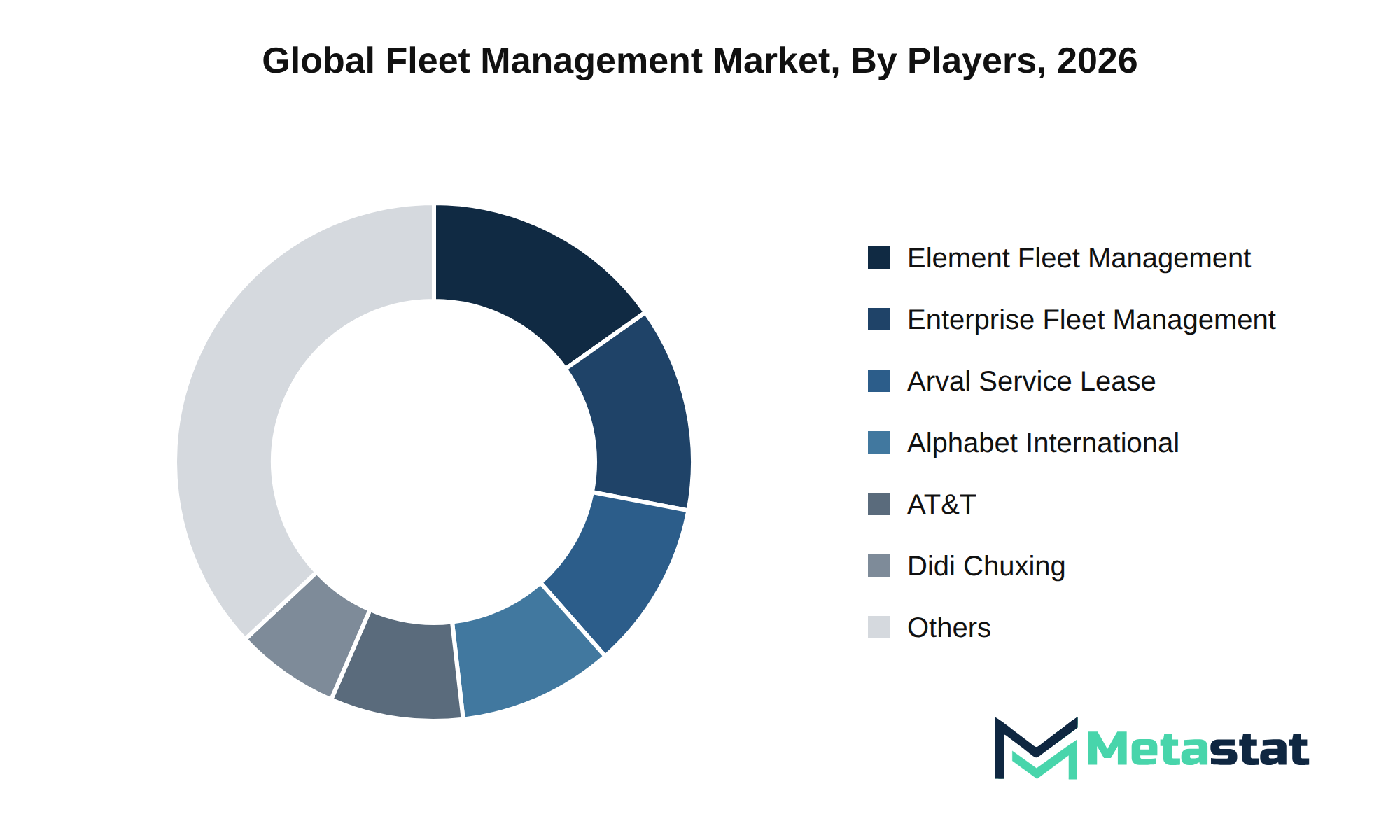
The Fleet Management market features a diverse competitive environment shaped by strategic alliances, mergers and acquisitions, and product differentiation. Key players engage in collaborations to enhance technological capabilities and improve service offerings. Companies including AT&T Inc. and Cisco Systems leverage their strong technological bases to develop integrated solutions that address the growing demand for fleet management software platforms.
Strategic consolidation remains prevalent, with firms pursuing mergers to strengthen their market positions. Element Fleet Management Corp. and Enterprise Fleet Management exemplify this trend, focusing on broadening their service portfolios and enhancing customer retention strategies. Evolving pricing architectures reflect firms adapting their commercial models to offer competitive pricing while maintaining profitability.
Innovation drives competitive advantage. Firms invest in research and development to create proprietary technology moats. Major players including IBM Corporation and Geotab Inc. emphasize technological defensibility through robust intellectual property portfolios. These companies seek to differentiate their products, creating barriers to entry for new entrants and startups attempting to disrupt the market.
The future competitive outlook for the Fleet Management market suggests ongoing growth, supported by strategic growth vectors and an emphasis on value chain integration. Companies that effectively balance customer relationships, switching costs, and brand equity dynamics will achieve sustained market presence.
Market size is forecast to rise from USD 44.7 million in 2025 to over USD 130.4 million by 2033. The base case indicates a compound annual growth rate (CAGR) of 14.3%, driven by several factors influencing the Fleet Management market.
Downstream demand shifts reflect an increased focus on operational efficiency and cost reduction across various industries, particularly in transportation and logistics. These sectors increasingly adopt advanced fleet management solutions to enhance productivity and comply with evolving regulatory standards.
Next-generation technology integration shapes the market. Innovations in telematics and connected devices transform fleet operations, allowing real-time vehicle tracking, maintenance management, and fuel optimization. This trend aligns with strategic capital allocation directives from enterprises seeking to leverage technology for competitive advantage.
Regulatory evolution introduces compliance milestones that drive investment in fleet management solutions. Companies adapt to stricter emissions standards and safety regulations, motivating investments in modern fleet technologies. The focus on compliance enhances demand for sophisticated fleet management systems that streamline regulatory reporting and operational oversight.
Geopolitical realignments and evolving trade corridors impact global supply chains. Companies re-evaluate their logistics strategies, prompting increased investment in fleet management to optimize routes and reduce delivery times. This trend opens opportunities for growth within the Fleet Management market.
Emerging white-space opportunities highlight unmet enterprise needs for customized fleet solutions tailored to specific industries. Tailored offerings in sectors including retail, e-commerce, and construction drive substantial growth, addressing unique operational challenges and enhancing fleet performance.
With robust market dynamics and evolving consumer demands, the outlook for the Fleet Management market remains strong. Strategic imperatives focused on enhancing operational resilience and leveraging technology dictate future growth trajectories.
The report strategically identifies and profiles the key market players and analyses their core competencies in each sub-segment of the Fleet Management market.
Report Attributes | Details |
Study Period | 2021-2033 |
Base Year | 2025 |
Estimated Year | 2026 |
Forecast Period | 2026-2033 |
Historical Period | 2021-2025 |
Growth Rate | CAGR 14.3% from 2026 to 2033 |
Revenue Unit | USD million |
Segmentation | By Offering Type, Function, Vehicle Type, End-Use Industry, and Region |
By Region | North America (By Offering Type, Function, Vehicle Type, End-Use Industry, and Country)
|
Europe (By Offering Type, Function, Vehicle Type, End-Use Industry, and Country)
| |
Asia Pacific (By Offering Type, Function, Vehicle Type, End-Use Industry, and Country)
| |
South America (By Offering Type, Function, Vehicle Type, End-Use Industry, and Country)
| |
Middle East and Africa (By Offering Type, Function, Vehicle Type, End-Use Industry, and Country)
|
Find answers to common questions about this report
The Fleet Management market size was valued at USD 44.7 million in 2025.
The Fleet Management market is projected to grow at a CAGR of 14.3% during the forecast period from 2026 to 2033.
The North America Fleet Management market size is estimated to reach USD 41.1 million by 2033.
The segment leading the Fleet Management market is Fleet Management Software Platforms, with a projected value of USD 60 million by 2033. This segment demonstrates the highest growth potential compared to other segments in the market.
Key drivers for the Fleet Management market include increased investment in digital transformation initiatives and the push for automation and advanced technologies. The focus on infrastructure development and asset modernization enhances operational efficiency, while rising consumer expectations for real-time data access further fuels demand for innovative fleet management solutions.
North America holds the dominant share of the Fleet Management market, with a projected value of USD 41.1 million in 2033, representing 33.8 percent of the total market.
Regulatory tightening and compliance hurdles create significant challenges for the Fleet Management market, particularly for smaller companies. High capital investment requirements and macroeconomic headwinds, including inflation and supply chain disruptions, further inhibit adoption rates and overall profitability, leading to a cautious approach among market players.
Increased investment in digital transformation initiatives and the adoption of advanced technologies drive product adoption in the Fleet Management market. Organizations prioritize operational efficiency and real-time data access, supported by favorable capital investment environments, which enhances competitiveness and attracts new entrants focused on technology-driven solutions.
The Fleet Management market is estimated to reach a valuation of USD 130.4 million by 2033.
Top players operating in the Fleet Management market include Alphabet International GmbH, Arval Service Lease, AT&T Inc., Cisco Systems, Element Fleet Management Corp., Geotab Inc., IBM Corporation, and Lytx, Inc.
The analysts below cover Automotive and Transportation research at Metastat Insights.
LEAD ANALYST
Utkarsh Khirodkar is a Lead Market Research Analyst at MetaStat Insight, specializing in market intelligence, technology sector assessments, and competitive strategy.

ENERGY & INFRASTRUCTURE INDUSTRY CONSULTANT
Automotive and Transportation · Electronics and Semiconductor · Energy and Power · Machinery & Equipment
Saurabh Vasant Ganvir consults for Energy & Infrastructure Industry at MetaStat Insight, specializing in renewable energy, solar EPC, and electric vehicle (EV) infrastructure markets.
Transitioning ultra-class mining haul trucks to alternative power requires concrete data on remote hydrogen refueling infrastructure economics. The report evaluated megawatt-scale electrolyzer installation expenses, onsite storage safety mandates, and heavy-duty fuel cell stack degradation under continuous duty cycles. That technical rigor helped our engineers benchmark realistic total operating cost horizons for off-highway fleet decarbonization.
Enterprise zero-trust network rollouts are often slowed down by multi-cloud transit latency and proprietary hardware retirement schedules. This study provided realistic total cost of ownership models comparing cloud-delivered security edge solutions against traditional hardware refreshes. The analysis of contract renewal lengths and software maintenance fees gave us clear visibility into enterprise replacement cycles over the next three to five years.
Scaling antibody-drug conjugate manufacturing hinges on contract manufacturing availability for high-potency active ingredients. The MetaStat Insight analysis looked closely at global cleanroom slot constraints, bioconjugation batch failure rates, and supply chain redundancies between the US, Europe, and India. The supplier capability matrix proved genuinely useful for our team when mapping secondary source options across our clinical pipeline.
Explore related market intelligence reports worth reading alongside this one.