
LEAD ANALYST
Utkarsh Khirodkar is a Lead Market Research Analyst at MetaStat Insight, specializing in market intelligence, technology sector assessments, and competitive strategy.

Global Fleet Management Software Market Size, Share, By Vehicle Type (Light Commercial Vehicles, Heavy Trucks, Passenger Cars, Buses and Coaches, Off-Highway Vehicles and Mobile Equipment, Trailers and Semi-Trailers, Two- and Three-Wheelers), By Deployment Model (Cloud-Based and On-Premises), By Fleet Size (Small Fleets (1-50 Vehicles), Medium Fleets (51-500 Vehicles), Large Fleets (More Than 500 Vehicles)), By End-Use Industry (Freight Transportation and Logistics, Passenger Transportation, Construction, Government and Municipal Services, Utilities and Telecommunications, Retail and Wholesale, Manufacturing, Mining and Oil and Gas, Vehicle Rental and Leasing), Industry Analysis, Growth, Trends, and Forecast, 2026-2033
Report ID
MSI-3704
Published
October, 2026
Pages
251 Pages
Format
Historical
Base year
Forecast
Forecast period
Report Details
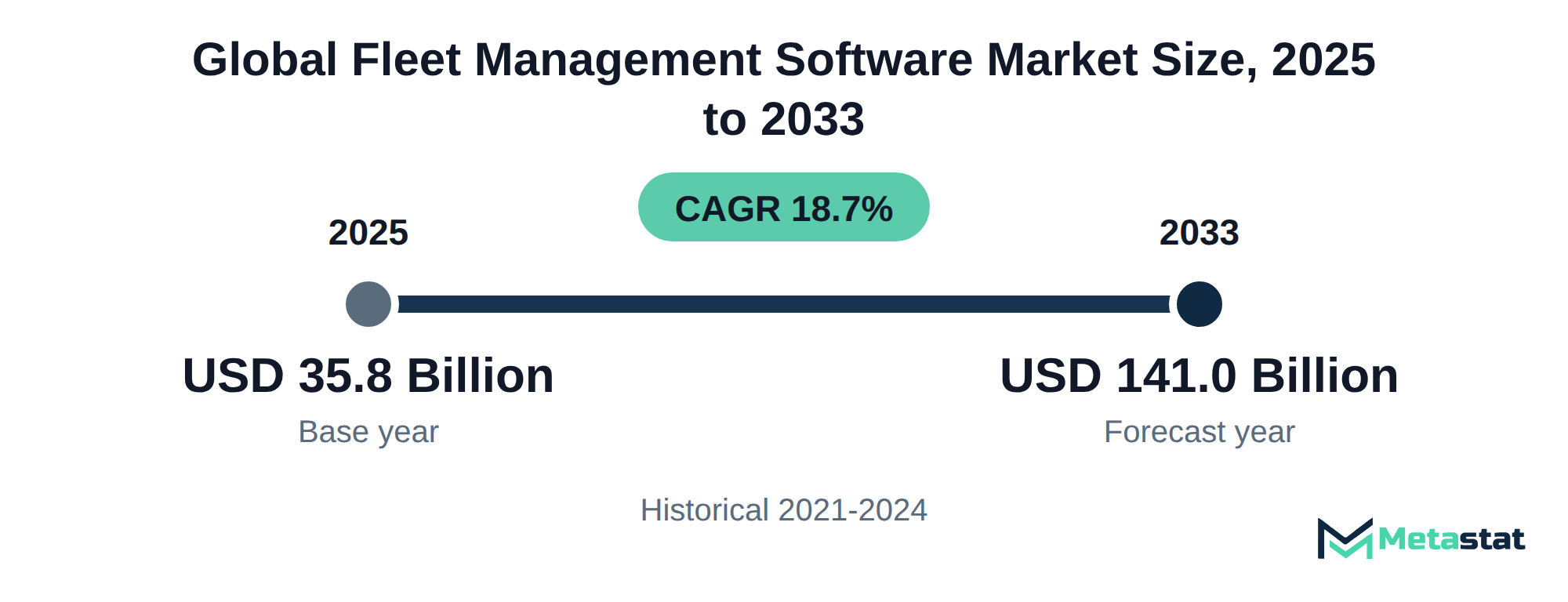
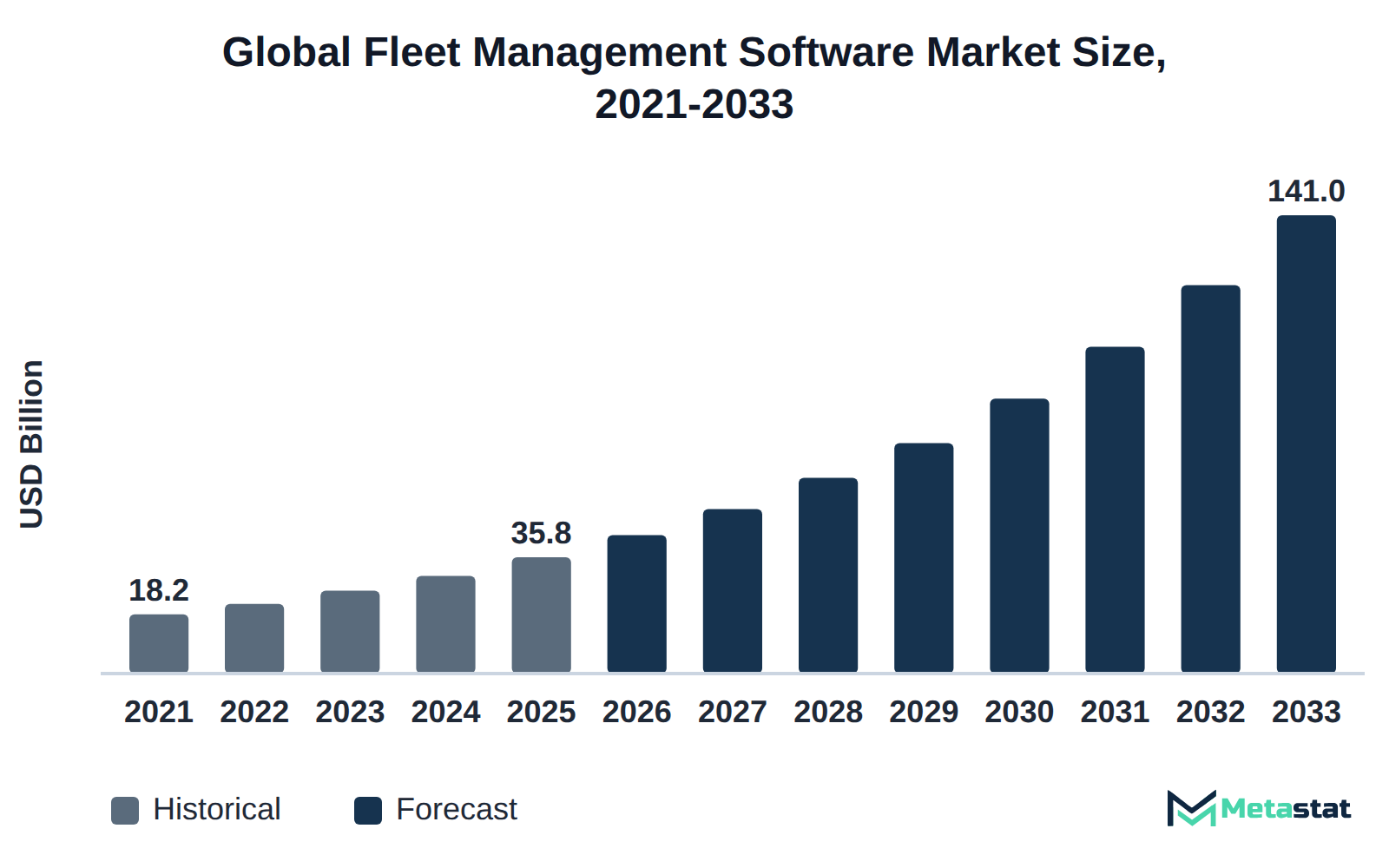
Market Valuation: Valued at $35.8 Billion in 2025, projected to reach $141 Billion by 2033 at a 18.7% CAGR.
Dominant Segment: Light Commercial Vehicles lead the market, driven by demand for efficient management solutions tailored to logistics and transportation needs.
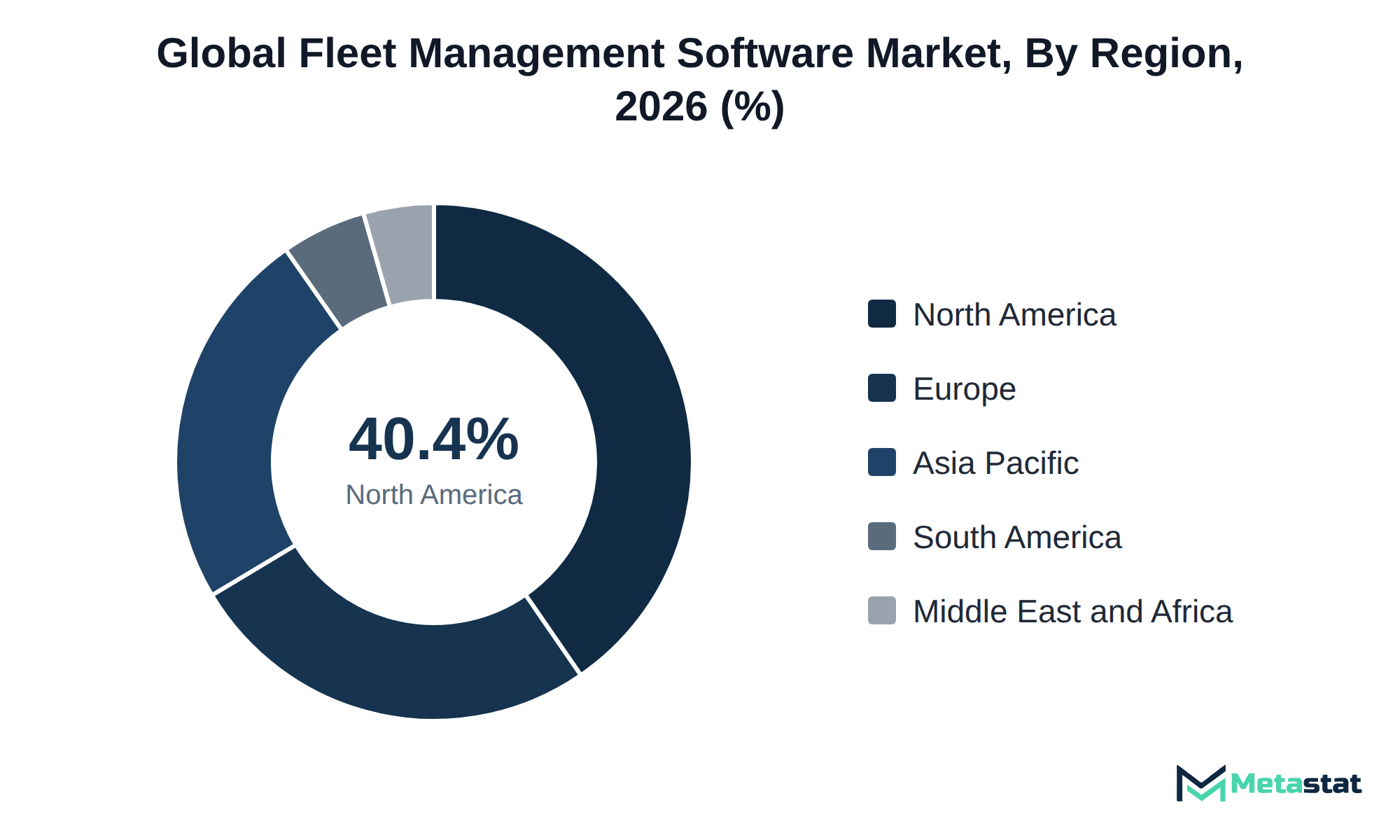
Geographic Lead: North America is the leading region, holding 40.4% of the market in 2025, supported by advanced technological infrastructure and high adoption rates.
What's Inside: The report provides a comprehensive analysis of market segmentation by vehicle type, deployment model, fleet size, and end-use industry, along with competitive insights and growth forecasts.
Growth of Small Fleets: The small fleets segment (1-50 vehicles) is projected to grow at a CAGR of 20.2% from 2026 to 2033, highlighting increased adoption of cloud-based solutions among smaller operators.
Cloud-Based Solutions: The cloud-based deployment model is expected to grow significantly, reflecting a shift towards scalable and cost-effective fleet management options.
Choose Your License
Global Fleet Management Software Market
The global Fleet Management Software market was valued at USD 35.8 billion in 2025 and is projected to reach USD 141 billion by 2033, growing at a CAGR of 18.7% over the forecast period.
The Fleet Management Software market encompasses solutions designed to optimize fleet operations, enhance efficiency, and improve service delivery. Investments in this market stem from the increasing need for organizations to monitor their vehicles, reduce operational costs, and ensure compliance with regulatory standards. Businesses across various industries, including transportation, logistics, and construction, prioritize these software solutions to streamline operations and improve overall productivity.
Rising adoption of cloud-based platforms is one of several growth drivers in the Fleet Management Software market. This segment has gained significant traction due to its ability to provide real-time data access, enabling fleet operators to make informed decisions quickly. Among the different segments, Light Commercial Vehicles constitute the largest share, reflecting demand for efficient management solutions tailored to this vehicle type.
North America holds 40.4% of the market in 2025, with the US leading in 2026. The region's advanced technological infrastructure and high adoption rates contribute to its dominance. In comparison, Europe and Asia Pacific follow with shares of 26% and 23.9%, respectively. The growing focus on sustainability and cost efficiency in these regions enhances market prospects for fleet management solutions.
The Fleet Management Software market addresses the increasing complexity of managing diverse vehicle fleets across various industries. Buyers invest in these solutions to enhance operational efficiency and reduce costs associated with fleet management. The growth in e-commerce and logistics highlights the importance of real-time tracking and data analytics, which drive spending in this sector. Companies use these technologies to streamline processes, improve compliance, and serve customers better.
The region's strong adoption of advanced technologies and high investments in digital infrastructure significantly contribute to its market share. The segment comprising Light Commercial Vehicles represents the highest value within the market, reflecting the critical role these vehicles play in logistics and transportation. Growth is anticipated to accelerate due to increasing demand for cloud-based solutions that offer scalability and flexibility.
Technological advancements continue to influence the competitive landscape, pushing companies to innovate and improve their offerings. The market experiences growth driven by the need for enhanced tracking and management capabilities. This trend is evident in various sectors, including freight transportation and logistics, where firms prioritize optimizing their operations and resource allocation to remain competitive.
AI video telematics has emerged as a significant innovation within the Fleet Management Software market, reshaping how fleets monitor driver behavior and manage risk. This technology uses AI algorithms to analyze video footage from in-vehicle cameras, giving fleets real-time insights into driver performance. By identifying risky behaviors including harsh braking, speeding, and distracted driving, fleets implement targeted driver safety training and coaching initiatives. The deployment of AI video telematics enhances safety measures and reduces incident rates across fleet operations.
The adoption of this technology aligns with the growing focus on driver risk scoring, which allows fleet managers to quantify and assess driver performance systematically. The Freight Transportation and Logistics segment is expected to grow from USD 14.9 billion in 2026 to USD 50.2 billion by 2033, reflecting an increasing investment in tools that enhance operational safety and efficiency. This trend highlights the commercial significance of integrating AI video telematics into fleet management strategies, as companies strive to minimize costs associated with accidents and insurance premiums while improving overall fleet safety and compliance.
The transition to electric vehicles (EVs) significantly influences purchasing dynamics within the Fleet Management Software market. Cost structures associated with EV charging infrastructure and battery optimization create unique financial considerations for fleet operators. These buyers encounter varied pricing models, including subscription-based services and pay-per-use options, which align with their operational needs and charging frequencies.
For instance, the market reflects a notable shift towards cloud-based deployment models, projected to grow from USD 31.7 billion in 2026 to USD 117.4 billion by 2033, demonstrating a compound annual growth rate of 20.5%. This growth highlights a trend among buyers towards flexible, scalable solutions that adapt to fluctuating fleet requirements and charging demands. Such adaptability in pricing structures enhances cash flow management and reduces upfront capital expenditures.
Adopting optimized charging solutions, such as EV charging management software, through these innovative pricing models enables fleet operators to maximize vehicle uptime and ensure operational efficiency. Consequently, this trend enhances competitiveness within the market, positioning companies to capitalize on the growing demand for integrated fleet solutions that prioritize sustainability and cost-effectiveness.
Integration of Fleet Management Software with Enterprise Resource Planning (ERP) platforms, including cloud ERP, and dispatch systems enhances operational efficiency. This integration allows organizations to synchronize data across various functions, leading to improved decision-making. Enhanced visibility into fleet operations enables businesses to optimize routes, reduce idle times, and improve overall service delivery.
Organizations operating within this segment benefit from real-time data exchange, which streamlines processes and minimizes errors associated with manual data entry. The ability to respond swiftly to changes in demand or operational challenges strengthens competitiveness within the market. By using integrated systems, firms in the Freight Transportation and Logistics sector achieve cost savings and operational excellence. This trend aligns with the broader growth trajectory of the Fleet Management Software market, which is projected to reach USD 141 billion by 2033, emphasizing the need for advanced solutions that cater to specific industry requirements.
The cost of Fleet Management Software per vehicle varies significantly depending on multiple factors, particularly the deployment model chosen. This rapid increase demonstrates strong commercial value associated with cloud-based solutions, driven by scalability and ease of integration.
On the other hand, on-premises solutions are anticipated to reach USD 23.6 billion by 2033, with a slower growth rate of 11.8% annually. This disparity highlights the growing preference for cloud-based systems among fleet operators, who seek enhanced efficiency and reduced operational overhead. The cost dynamics within the Fleet Management Software market indicate that businesses investing in cloud solutions expect significant returns due to lower upfront costs and increased operational flexibility.
Cloud-based models dominate, and organizations deploying Fleet Management Software benefit from improved functionalities, real-time data access, and greater adaptability to market changes. This trend toward cloud-based solutions helps fleet operators stay competitive by keeping their investments aligned with the latest technology.
Recent shifts among buyers toward cloud-based deployment models significantly drive spending within the market. Companies increasingly recognize the advantages of cloud solutions, including scalability, reduced IT costs, and enhanced accessibility. These factors prompt organizations to transition from on-premises systems to cloud-based Fleet Management Software, resulting in increased demand for these solutions. In response, software suppliers are expanding their offerings, tailoring features to meet the needs of clients in various industries, including logistics and transportation. The growing preference for cloud-based solutions highlights the importance of digital transformation strategies, which facilitate smoother operations and improved fleet efficiency.
The integration of advanced telematics and data analytics significantly influences growth within the Fleet Management Software market. Enhanced telematics systems provide real-time data regarding vehicle performance, driver behavior, and environmental conditions. This technology gives fleet operators the insights they need to make informed decisions. Increased data accuracy enables better route planning, fuel efficiency, and maintenance scheduling, translating into operational cost reductions.
The surge in demand for data-driven solutions results from the competitive advantage gained from improved operational efficiency. Fleet operators in sectors including freight transportation and logistics respond positively to technologies that streamline processes and enhance productivity. Investment in sophisticated analytics platforms supports predictive maintenance and proactive risk management, further driving market growth. Consequently, the Fleet Management Software market is expected to expand as organizations increasingly adopt innovative telematics solutions to optimize their fleet operations.
High costs associated with Fleet Management Software impede widespread adoption among small and medium-sized businesses. Many potential customers face budget constraints, limiting their ability to invest in comprehensive fleet solutions. This financial barrier often results in delayed purchasing decisions, which subsequently impacts overall market growth. Smaller fleet operators frequently opt for basic solutions or manual processes instead of investing in more advanced software, which significantly enhances operational efficiency. Such choices limit their ability to fully realize the benefits of fleet management technologies. The resulting slower uptake from these buyer segments creates a ripple effect, affecting overall market dynamics and dampening the potential for rapid revenue growth. The competitive landscape reflects these challenges, with firms focusing on cost-effective solutions to attract these segments while navigating ongoing pricing pressures in the market.
Suppliers in the Fleet Management Software market face challenges related to margin pressure, stemming from rising operational costs and increased competition. The demand for advanced features and continuous software enhancements drives costs upward, creating difficulties in maintaining profit margins. This pressure forces suppliers to balance investments in innovation with competitive pricing strategies, leading to reduced profitability.
In response, many suppliers prioritize cost-effective development methods and seek partnerships that streamline operations. Collaborating with technology providers allows for shared resources, reducing the financial burden of research and development. Suppliers increasingly adopt subscription-based pricing models to enhance revenue predictability and improve customer retention, further supporting financial stability in a competitive landscape.
Increasing adoption of fleet management software among small fleets presents a significant opportunity within the market. Small fleets, defined as those with 1 to 50 vehicles, are projected to experience a compound annual growth rate (CAGR) of 20.2% from 2026 to 2033. This growth is driven by the shift toward digital solutions that enhance operational efficiency and reduce costs. The lower entry barriers associated with cloud-based deployment models facilitate accessibility for smaller operators. This segment attracts buyers such as local delivery services and tradespeople, who prioritize cost-effective and streamlined fleet operations. Addressing this demand for small fleets results in improved penetration in an underserved market, leading to increased revenue opportunities for software providers. The focus on meeting the specific requirements of small fleet operators drives innovation and differentiated offerings in fleet management solutions.
The Global Fleet Management Software market is segmented based on Vehicle Type, Deployment Model, Fleet Size, and End-Use Industry.
Light Commercial Vehicles segment is valued at USD 13.6 billion in 2026 and is projected to reach USD 46.3 billion by 2033, at a CAGR of 19.2% during the forecast period. This segment primarily serves businesses involved in logistics, delivery services, and small-scale transportation. Increasing demand for efficient fleet management solutions drives adoption in this segment, particularly among companies seeking to enhance operational efficiency and minimize costs. Light Commercial Vehicles differentiate themselves from other vehicle types due to their lower initial investment and operational costs, appealing to small and medium-sized enterprises. The segment's growth rate exceeds that of Heavy Trucks, which stands at a CAGR of 17.6%. Enhanced telematics and real-time data analytics support the transition to more connected and efficient fleets.
Heavy Trucks segment is estimated to reach USD 34.8 billion by 2033, at a CAGR of 17.6% during the forecast period. This segment serves industries reliant on the transport of heavy goods, including construction, logistics, and freight transportation. Increasing demand for efficient and reliable transportation solutions drives growth. Fleet operators prioritize advanced telematics, real-time tracking, and maintenance management to optimize operations. Compared to other vehicle types, including light commercial vehicles, this segment experiences slower growth due to higher initial investment costs and regulatory compliance challenges. However, the continued expansion of e-commerce and rising freight volumes will support demand for heavy trucks, enhancing the potential for fleet management software applications in managing these vehicles effectively. This segment has unique requirements and operational complexities that call for tailored solutions.
The Passenger Cars segment is expected to reach USD 22.5 billion by 2033. This segment caters to individual consumers and businesses that use cars for personal or commercial transportation. Increased interest in connectivity, automation, and eco-friendly vehicles drives demand in this segment. The shift towards electric and hybrid passenger vehicles significantly influences purchasing decisions, aligning with broader trends in sustainability and environmental responsibility. Compared to other vehicle types, the growth rate for passenger cars is anticipated to be moderate, reflecting a CAGR of 17.8%, slower than the 19.2% projected for light commercial vehicles. Passenger cars typically involve different buyer characteristics, focusing on personal ownership and small fleet operations, which diverge from the larger-scale operations seen in heavy trucks and logistics vehicles. This segment's growth reflects changing consumer preferences and technological advancements within the market.
Buses and Coaches segment is projected to grow at a CAGR of 18% during the forecast period. This segment caters to public transportation systems and private operators looking to manage their fleets efficiently. With increasing emphasis on safety, compliance, and operational efficiency, fleet management software provides essential functionalities for optimizing routes, tracking vehicle performance, and managing maintenance schedules. Regulatory pressures regarding emissions and safety standards significantly drive this segment. Compared to other vehicle types, the Buses and Coaches segment experiences robust demand growth, supported by the need for improved passenger services and sustainable transport solutions. This segment shows a more accelerated growth trajectory than Heavy Trucks, highlighting its unique position in the market.
Off-Highway Vehicles and Mobile Equipment encompass a variety of non-road vehicles employed in sectors including construction, mining, and agriculture. These vehicles are integral for operations that require robust functionality in challenging environments, serving industries that rely on heavy machinery to complete essential tasks. Adoption of fleet management software for this segment is driven by increasing demand for operational efficiency and safety enhancements. The complexity of managing off-highway assets, alongside regulatory pressures for safety and environmental compliance, compels companies to invest in advanced fleet management solutions. This segment's growth trajectory is slower compared to Light Commercial Vehicles and Heavy Trucks, which benefit from a more extensive market presence and faster integration of technology. These vehicles cater to a niche market, influencing pricing and buyer preferences distinctly from other vehicle types.
Trailers and semi-trailers serve an essential role in the transportation sector, facilitating the movement of goods across various distances. These vehicles find extensive use in freight transportation and logistics, enabling businesses to transport larger loads efficiently. Demand for trailers and semi-trailers is influenced by the growth of e-commerce and the need for rapid delivery solutions. This segment exhibits a different dynamic compared to others, including light commercial vehicles, which experience faster growth driven by urban delivery trends. The trailers and semi-trailers segment is characterized by its diverse applications in sectors including manufacturing, construction, and agriculture, where larger freight capacity is critical. Adoption faces challenges due to initial investment costs; however, ongoing advancements in telematics enhance operational efficiency. The Fleet Management Software market supports this segment by providing solutions that improve tracking, maintenance management, and compliance with regulations.
Two- and Three-Wheelers encompass a segment of vehicles critical for urban transportation and delivery services. Fleet management software optimizes routes, manages maintenance schedules, and ensures compliance with regulations for operators in this segment. Increasing urbanization and the corresponding rise in demand for efficient transportation solutions drive adoption among operators in logistics and ride-sharing services. Compared to other vehicle types, this segment features different operational dynamics, requiring specialized software capabilities tailored to smaller fleet sizes and varying regulatory requirements. The market for Fleet Management Software addresses these distinct needs while evolving to incorporate advancements in telematics and data analytics.
Cloud-based Fleet Management Software is primarily employed by businesses seeking scalable solutions to manage fleet operations efficiently, allowing access to real-time data and analytics regardless of location. Growth in the Cloud-Based segment stems from increasing demand for flexible, cost-effective solutions that reduce the need for extensive on-premises infrastructure. Compared to On-Premises models, which reach USD 23.6 billion by 2033, Cloud-Based solutions offer superior adaptability and lower upfront costs. Rapid advancement of technology continues to drive interest in cloud solutions, enhancing operational efficiency across various sectors. Fleet Management Software market players targeting this segment focus on delivering innovative features, including advanced analytics and integration capabilities, to meet evolving customer needs.
On-Premises segment is estimated to reach USD 23.6 billion by 2033, at a CAGR of 11.8% during the forecast period. This deployment model typically caters to organizations that prefer managing their Fleet Management Software on their own infrastructure, offering enhanced control over data and security. Industries including construction and government services adopt this model for its reliability and customization capabilities. A notable factor driving demand in this segment is the increasing emphasis on data security and regulatory compliance, particularly among larger enterprises. Compared to cloud-based solutions, which exhibit a higher growth rate of 20.5%, the On-Premises model maintains a steadier pace, appealing to buyers who prioritize control over flexibility. This segment remains crucial for sectors that rely on extensive customization and integration with existing systems, distinguishing it from the other segments in this group.
Small Fleets (1-50 Vehicles) segment is valued at USD 11.6 billion in 2026 and is projected to reach USD 42.1 billion by 2033, at a CAGR of 20.2% during the forecast period. This segment serves businesses with limited vehicle requirements, including local delivery services, small construction firms, and service providers. Increased focus on cost efficiency and operational effectiveness drives demand for fleet management software in this segment. Compared to larger fleets, small fleets typically face unique challenges related to budget constraints and scalability. The rapid adoption of cloud-based solutions further supports growth, driven by lower initial investments compared to on-premises systems. While the medium fleet segment experiences a CAGR of 19.4%, the small fleet segment demonstrates an even stronger growth trajectory, highlighting significant opportunities for software providers within this demographic.
Medium Fleets (51-500 Vehicles) segment is estimated to reach USD 57.4 billion by 2033, at a CAGR of 19.4% during the forecast period. This segment typically serves logistics companies and transportation providers that require effective fleet oversight and optimization. A growing emphasis on operational efficiency and cost reduction drives demand for advanced fleet management solutions. Compared to small fleets, this segment experiences higher growth rates, driven by the management of larger vehicle counts and enhanced analytical capabilities. In particular, the integration of real-time data tracking and maintenance scheduling increases appeal among medium fleet operators. These factors differentiate Medium Fleets from small fleets, which generally exhibit slower growth due to limited budgets and fewer vehicles requiring management. The Fleet Management Software market continues to evolve, creating opportunities for both established players and new entrants targeting the specific needs of this segment.
The Large Fleets (More Than 500 Vehicles) segment is expected to reach USD 41.5 billion by 2033. This segment primarily serves large enterprises that manage extensive vehicle operations across various industries, including logistics, construction, and government services. Growing demand for efficiency and cost optimization drives investments in fleet management software, allowing organizations to monitor and manage their assets seamlessly. Large fleets experience a faster growth trajectory compared to medium and small fleets, with a CAGR of 19.4%. The need for enhanced data analytics to optimize fleet performance remains crucial in this segment. While large fleets benefit from economies of scale, challenges related to the integration of advanced technologies into legacy systems hinder several implementations. This segment's significant market share reflects strong investment and its importance in the overall fleet management software market.
This segment serves companies involved in the movement of goods, including shipping and delivery services such as courier, express, and parcel operations. The rapid growth in e-commerce drives demand for efficient freight solutions, prompting logistics firms to adopt fleet management software for enhanced route optimization and real-time tracking. This segment displays faster growth than others in the group, highlighting increasing investments in technology to streamline operations. In comparison, Passenger Transportation, projected at a CAGR of 17.8%, reflects slower growth, resulting from differing consumer behavior and market dynamics. The demand for innovative solutions in freight logistics emphasizes the ongoing transition toward more automated and data-driven approaches, which are critical in the competitive landscape of the Fleet Management Software market.
Passenger Transportation segment is estimated to reach USD 15.7 billion by 2033, at a CAGR of 17.8% during the forecast period. This segment encompasses various modes of transportation used to carry passengers, including buses, taxis, and shuttles. The growing demand for efficient passenger transport solutions drives investments from public and private sectors. Increasing urbanization leads to higher passenger volumes, reinforcing the need for optimized fleet management software in this segment. Growth in Passenger Transportation is strong due to heightened consumer expectations for service quality and reliability. This segment shows faster growth than others, supported by the rise in ride-sharing services and an emphasis on reducing operational costs through technology integration.
Construction segment is expected to reach USD 16.5 billion by 2033. This segment caters to firms involved in construction activities, applying fleet management software to enhance operational efficiency, minimize costs, and ensure compliance with regulatory requirements. Demand for such software is driven by the increasing need for effective asset management and real-time tracking of construction vehicles and equipment, which are central tasks in construction equipment fleet management. The construction segment experiences a significant growth rate, with a CAGR of 17.5%, differentiating it from other segments by its focus on optimizing resources in project-based operations. Compared to the freight transportation segment, which has a CAGR of 19%, construction faces unique challenges related to project timelines and budget constraints. Its demand remains strong due to ongoing infrastructure development and urbanization trends in various regions. Within the broader context, the market recognizes construction as a vital industry demanding tailored solutions.
The Government and Municipal Services segment is projected to grow at a CAGR of 17.5% during the forecast period. This segment serves various public entities that depend on effective fleet operations to deliver essential services. Increasing demands for transparency and accountability in government operations drive the adoption of fleet management software, which optimizes resource allocation and enhances operational efficiency. The segment experiences distinct growth dynamics compared to others, driven by budget constraints that influence purchasing decisions. This segment focuses on compliance with regulations and performance metrics, which differ from industries driven primarily by profit motives. Fleet Management Software supports these entities in meeting their operational goals while adhering to public sector standards.
This sub-segment serves Utilities and Telecommunications sectors, focusing on optimizing fleet operations and improving service efficiency. Organizations within these industries require effective management of their vehicle fleets to ensure timely service delivery and regulatory compliance. Key drivers of growth in this segment include the increasing demand for reliable connectivity and the push for enhanced service efficiency. Investment in advanced fleet management technology enables companies to reduce operational costs and improve resource allocation. Compared to other segments, Utilities and Telecommunications often experience slower growth, influenced by the regulatory environment and the capital-intensive nature of their operations. In contrast, sectors including Freight Transportation and Logistics experience more rapid expansion due to higher demand for logistics and supply chain optimization. This dynamic reflects the varied challenges and opportunities across different industries in the Fleet Management Software market.
Retail and Wholesale encompass a vital segment catering to businesses involved in the sale of goods directly to consumers or other businesses. Companies operating within this segment apply fleet management software to enhance supply chain efficiency, track inventory, and optimize delivery routes. Demand for fleet management solutions in this segment is driven by the increasing focus on improving operational efficiency and reducing transportation costs. This segment exhibits variations compared to others, particularly in its emphasis on just-in-time delivery and inventory management, reflecting a unique operational approach. Retail and Wholesale face challenges in adapting to evolving consumer preferences and technological advancements, which require ongoing investment in fleet management capabilities. The market experiences a strong push toward integrating advanced technologies, including artificial intelligence and data analytics, to meet these demands effectively.
Manufacturing encompasses a vital segment focused on production efficiency and equipment management. This segment serves industries engaged in creating goods, employing fleet management software to monitor vehicle performance, maintenance schedules, and safety compliance. Key drivers for growth include the increasing emphasis on operational efficiency and the adoption of advanced technologies, including IoT and AI, to optimize processes. Compared to other segments, the Manufacturing sector experiences a distinct demand for tailored solutions that address the specific needs of production environments. The fleet management software market provides manufacturers with valuable insights to enhance productivity and reduce operational costs, positioning this sector as a significant contributor within the broader market.
Mining and Oil and Gas focus on the extraction and production of vital resources, employing a fleet of specialized vehicles and equipment to facilitate operations in challenging environments. Companies operating in this sector apply fleet management software to ensure efficient vehicle tracking, maintenance scheduling, and compliance with safety regulations. The sector experiences significant demand driven by the increasing need for resource extraction, which leads to expanded fleet operations. Regulatory pressures regarding environmental impact and safety standards influence the adoption of fleet management solutions. This segment typically experiences slower growth compared to Freight Transportation and Logistics, which benefits from higher demand due to e-commerce trends. Investment in technology that improves operational efficiency enhances competitiveness and reduces costs in Mining and Oil and Gas, contributing to the overall growth of the fleet management software market.
Vehicle rental and leasing, including car rental, involves the provision of vehicles for temporary use, catering to businesses and individual consumers requiring flexible transportation solutions. This segment serves various sectors, including tourism and corporate travel, facilitating mobility for customers without the long-term commitment of ownership. The increasing popularity of shared mobility services drives demand in this area, owing to businesses seeking cost-effective transportation alternatives to enhance operational efficiency. Unlike other segments, this category focuses on short-term usage and flexibility, positioning itself differently in the market. With an emphasis on cloud-based solutions, fleet management software tailored for vehicle rental and leasing enhances tracking, maintenance, and customer service, optimizing fleet utilization and improving overall management. The market experiences a distinct trajectory, influenced by trends in consumer behavior and the shift toward temporary vehicle solutions.
This sub-segment covers industries such as agriculture, healthcare, and hospitality. Each of these sectors employs fleet management software to optimize vehicle operations, enhance service delivery, and improve overall efficiency. The agriculture industry, for example, relies on effective fleet management to ensure timely deliveries of produce, while healthcare providers use it to manage ambulances and medical transport vehicles effectively. Demand drivers including the increasing focus on operational efficiency and compliance with regulations drive growth in this segment. This sub-segment experiences slower growth compared to freight transportation and logistics, which benefits from higher market dynamics and larger investments. In contrast, emerging technologies and integration of advanced analytics in agriculture, healthcare, and hospitality present opportunities for enhancing fleet management capabilities. The Fleet Management Software market continues to evolve, with these industries adopting solutions tailored to their specific operational needs.
Based on geography, the Global Fleet Management Software market is divided into North America, Europe, Asia-Pacific, South America, Middle East, and Africa.
Demand for the Fleet Management Software market in North America stems from the region's significant focus on freight transportation and logistics. This sector is projected to reach USD 50.2 billion by the end of 2033, driven by increasing efficiency requirements and a need for real-time tracking capabilities. The United States, Canada, and Mexico lead in adopting advanced technologies that optimize fleet operations. The region benefits from robust infrastructure investments, enhancing connectivity and accessibility for fleets. North America is projected to reach USD 53.1 billion by the end of 2033, reflecting growing reliance on software solutions to manage and streamline operations. Regulatory initiatives promoting emissions reductions further stimulate investment in modern fleet management solutions, ensuring market growth.
The European market demonstrates significant demand for Fleet Management Software, driven primarily by industries including freight transportation and logistics, construction, and passenger transportation. Key players in countries including Germany, France, the UK, Italy, and Spain invest heavily in advanced fleet management solutions to enhance operational efficiency and reduce costs. The regulatory environment across Europe emphasizes sustainability, influencing companies to adopt software that optimizes fuel usage and lowers emissions. With a market share of 26.0% in 2025, the region reflects a strong growth trajectory, supporting further investment in technology and innovation within the Fleet Management Software market. Competition among regional providers drives advancements in software capabilities, catering to the specific needs of diverse sectors.
Growth in the Asia-Pacific region reflects increasing adoption of fleet management software solutions among various industries, particularly in China, India, and Japan. Demand primarily stems from the freight transportation and logistics sector, driven by an expanding e-commerce landscape and the need for enhanced operational efficiencies. Infrastructure development initiatives across Southeast Asia further enhance the adoption of such software, linking advanced tracking and management capabilities to rising expectations for service delivery. Cost optimization and vehicle utilization significantly influence procurement decisions. With a market share of 23.9% in 2025, the Asia-Pacific region shows strong potential for future investments, contributing to an overall upward trajectory in the global fleet management software landscape.
Latin America presents unique opportunities within the Fleet Management Software market, particularly in Brazil and Argentina, where growing investments in transportation infrastructure drive demand. The logistics and transportation sectors, crucial for the region's economies, increasingly adopt advanced fleet solutions to enhance efficiency and reduce operational costs. Key challenges include varying regulatory environments and infrastructure limitations, which influence how companies integrate software solutions. The market share in South America is projected at 5.3% in 2025, indicating significant growth potential. Rapid urbanization and the increasing need for efficient public transportation systems create additional drivers for software adoption. The focus on improving fleet management capabilities aligns with broader regional economic goals.
In the Middle East and Africa, the market experiences unique dynamics influenced by growing demand from industries including freight transportation and logistics. Countries like Saudi Arabia and the UAE show significant investment in infrastructure development, enhancing logistics efficiency and operational capabilities. South Africa plays an important role in the region, with an increasing focus on fleet optimization solutions to improve service delivery. The market is projected to represent 4.4% of the global share in 2025, reflecting rising adoption rates across various sectors. Government initiatives aimed at improving transportation infrastructure further increase demand for Fleet Management Software solutions, leading to enhanced operational performance and cost efficiency.
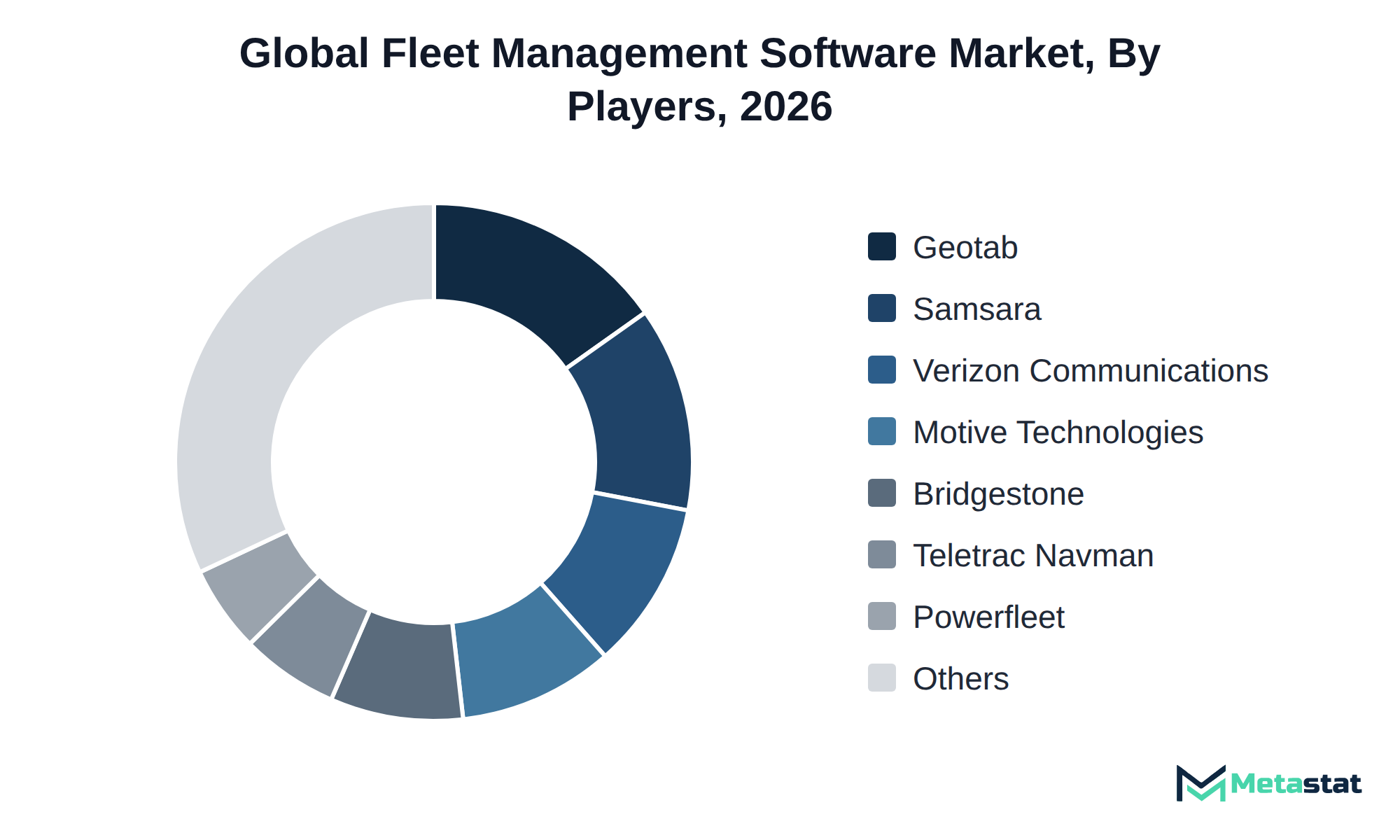
Companies in the Fleet Management Software market differentiate themselves primarily through their deployment models, service offerings, and pricing strategies. Cloud-based solutions dominate the market, with several companies focusing on enhancing features and scalability to meet diverse customer needs. The demand for on-premises solutions remains significant, particularly among organizations with strict data security policies.
Buyers prioritize factors including customization, service quality, and ecosystem compatibility when selecting fleet management software. For instance, Samsara Inc. specializes in IoT solutions for real-time fleet tracking, while Geotab Inc. emphasizes data analytics and integration capabilities. Powerfleet, Inc. focuses on providing comprehensive safety and compliance features, appealing to sectors with stringent regulatory requirements. Each company's strategy reflects a commitment to addressing specific market demands and operational challenges.
For the Fleet Management Software market to achieve this significant growth, several key developments are essential. First, the shift towards cloud-based deployment models significantly influences demand in that segment, with expectations for substantial growth contributing to an overall CAGR of 20.5%. Second, the expansion of light commercial vehicles within the fleet size category will drive further adoption, supported by an anticipated CAGR of 19.2%. Third, increased investment in freight transportation and logistics is likely to enhance operational efficiencies, positioning this end-use industry for a CAGR of 19%. Conversely, potential economic downturns or supply chain disruptions could pose risks to achieving these forecasts. Challenges in global trade or regulatory changes within key regions, including North America, could hinder growth in this highly competitive market. Thus, while the Fleet Management Software market is on a strong upward trajectory, stakeholders should remain vigilant to external variables that influence their operational strategies.
By Vehicle Type: Light Commercial Vehicles, Heavy Trucks, Passenger Cars, Buses and Coaches, Off-Highway Vehicles and Mobile Equipment, Trailers and Semi-Trailers, Two- and Three-Wheelers
By Deployment Model: Cloud-Based, On-Premises
By End-Use Industry: Freight Transportation and Logistics, Passenger Transportation, Construction, Government and Municipal Services, Utilities and Telecommunications, Retail and Wholesale, Manufacturing, Mining and Oil and Gas, Vehicle Rental and Leasing, Others (Agriculture, Healthcare, Hospitality)
The report strategically identifies and profiles the key market players and analyses their core competencies in each sub-segment of the Fleet Management Software market.
|
Report Attributes |
Details |
|
Study Period |
2021-2033 |
|
Base Year |
2025 |
|
Estimated Year |
2026 |
|
Forecast Period |
2026-2033 |
|
Historical Period |
2021-2025 |
|
Growth Rate |
CAGR 18.7% from 2026 to 2033 |
|
Revenue Unit |
USD billion |
|
Segmentation |
By Vehicle Type, Deployment Model, Fleet Size, End-Use Industry, and Region |
|
By Region |
North America (By Vehicle Type, Deployment Model, Fleet Size, End-Use Industry, and Country)
|
|
Europe (By Vehicle Type, Deployment Model, Fleet Size, End-Use Industry, and Country)
|
|
|
Asia Pacific (By Vehicle Type, Deployment Model, Fleet Size, End-Use Industry, and Country)
|
|
|
South America (By Vehicle Type, Deployment Model, Fleet Size, End-Use Industry, and Country)
|
|
|
Middle East and Africa (By Vehicle Type, Deployment Model, Fleet Size, End-Use Industry, and Country)
|
Find answers to common questions about this report
The Fleet Management Software market size was valued at USD 35.8 billion in 2025.
The market is projected to grow at a CAGR of 18.7% during the forecast period from 2026 to 2033.
The North America Fleet Management Software market size is estimated to reach USD 53.1 billion by 2033.
Light Commercial Vehicles lead the Fleet Management Software market with a projected value of USD 46.3 billion by 2033. This segment outpaces others in growth, driven by a compound annual growth rate of 19.2%.
Recent shifts toward cloud-based deployment models significantly drive spending within the market. The increasing adoption of fleet management software among small fleets presents a substantial opportunity for growth.
North America holds the dominant share of the Fleet Management Software market, with a value of USD 53.1 billion projected for 2033, representing 40.4 percent of the total market.
High costs associated with Fleet Management Software impede widespread adoption among small and medium-sized businesses. Budget constraints limit potential customers' ability to invest in comprehensive fleet solutions, resulting in delayed purchasing decisions and impacting overall market growth.
Increasing adoption of fleet management software among small fleets presents a significant opportunity for growth. The shift towards digital solutions enhances operational efficiency and reduces costs, attracting a diverse range of buyers who prioritize cost-effective and streamlined fleet operations.
The Fleet Management Software market is estimated to reach a valuation of USD 141 billion by 2033.
Key players operating in the Fleet Management Software market include Samsara Inc., Geotab Inc., Motive Technologies, Inc., Verizon Communications Inc., Powerfleet, Inc., Trimble Inc., and Onfleet, Inc.
The analysts below cover Automotive and Transportation research at Metastat Insights.
LEAD ANALYST
Utkarsh Khirodkar is a Lead Market Research Analyst at MetaStat Insight, specializing in market intelligence, technology sector assessments, and competitive strategy.

ENERGY & INFRASTRUCTURE INDUSTRY CONSULTANT
Automotive and Transportation · Electronics and Semiconductor · Energy and Power · Machinery & Equipment
Saurabh Vasant Ganvir consults for Energy & Infrastructure Industry at MetaStat Insight, specializing in renewable energy, solar EPC, and electric vehicle (EV) infrastructure markets.
Evaluating sovereign cloud deployments for core banking platforms demands a clear view of data residency regulations and migration exit strategies. MetaStat Insight delivered an exhaustive review of regional latency tolerances, mainframe decommission milestones, and third-party vendor concentration risk. The regulatory compliance mapping across European and Asian financial jurisdictions gave our team a dependable baseline for multi-cloud infrastructure discussions.
Replacing petrochemical surfactants with bio-based alternatives requires realistic timelines on industrial precision fermentation scaling. The market research broke down commercialization timelines, feedstock sugar price sensitivities, and regional cosmetic ingredient regulatory approvals in Europe and East Asia. That supplier readiness mapping gave our formulations team reliable context when comparing renewable chemical sourcing roadmaps.
Tracking ceramic matrix composite adoption in high-bypass aero engines requires strict attention to material qualification cycles and FAA airworthiness testing milestones. The MetaStat Insight team provided a detailed timeline of silicon carbide fiber manufacturing capacity and commercial foundry lead times. Having clear visibility into upstream thermal barrier coating supply helped us stress-test our long-term component procurement strategy.
Explore related market intelligence reports worth reading alongside this one.