
LEAD ANALYST
Utkarsh Khirodkar is a Lead Market Research Analyst at MetaStat Insight, specializing in market intelligence, technology sector assessments, and competitive strategy.

Canada Courier, Express and Parcel (CEP) Market Size, Share, By Service Type (Courier Services, Express Services, Parcel Services), By Mode of Transport (Roadways, Airways, Railways, Waterways), By Destination (International, Domestic), By End Use (E-commerce, Healthcare, Manufacturing, Wholesale & Retail, Banking, Financial Services and Insurance (BFSI), Others (Education, Automotive, Government and Personal Shipments)), Industry Analysis, Growth, Trends, and Forecast, 2026-2033
Report ID
MSI-5778
Published
November, 2026
Pages
294 Pages
Format
Historical
Base year
Forecast
Forecast period
Report Details
Market Valuation: Valued at $15.3 Billion in 2025, projected to reach $28.8 Billion by 2033 at a 8.2% CAGR.
Dominant Segment: Parcel services lead the Canada Courier, Express and Parcel market, driven by the ongoing shift towards online retail and consumer expectations for reliable delivery solutions.
Geographic Lead: North America holds the largest market share, supported by its robust logistics infrastructure and high consumer spending on delivery services.
What's Inside: The report provides comprehensive competitive coverage, detailed analyses of market dynamics, and forecasts through 2033, offering insights into service types, modes of transport, and end-use segments.
E-commerce Growth Impact: The rapid expansion of e-commerce significantly influences market demand, particularly for parcel and express services, as consumers increasingly prefer fast and efficient delivery options.
Technological Advancements: Investments in automation and advanced tracking systems are enhancing operational efficiencies, driving growth across the Canada Courier, Express and Parcel market.
Choose Your License
Canada Courier, Express and Parcel (CEP) Market
The Canada Courier, Express and Parcel (CEP) market was valued at USD 15.3 billion in 2025 and is projected to reach USD 28.8 billion by 2033, growing at a CAGR of 8.2% over the forecast period.
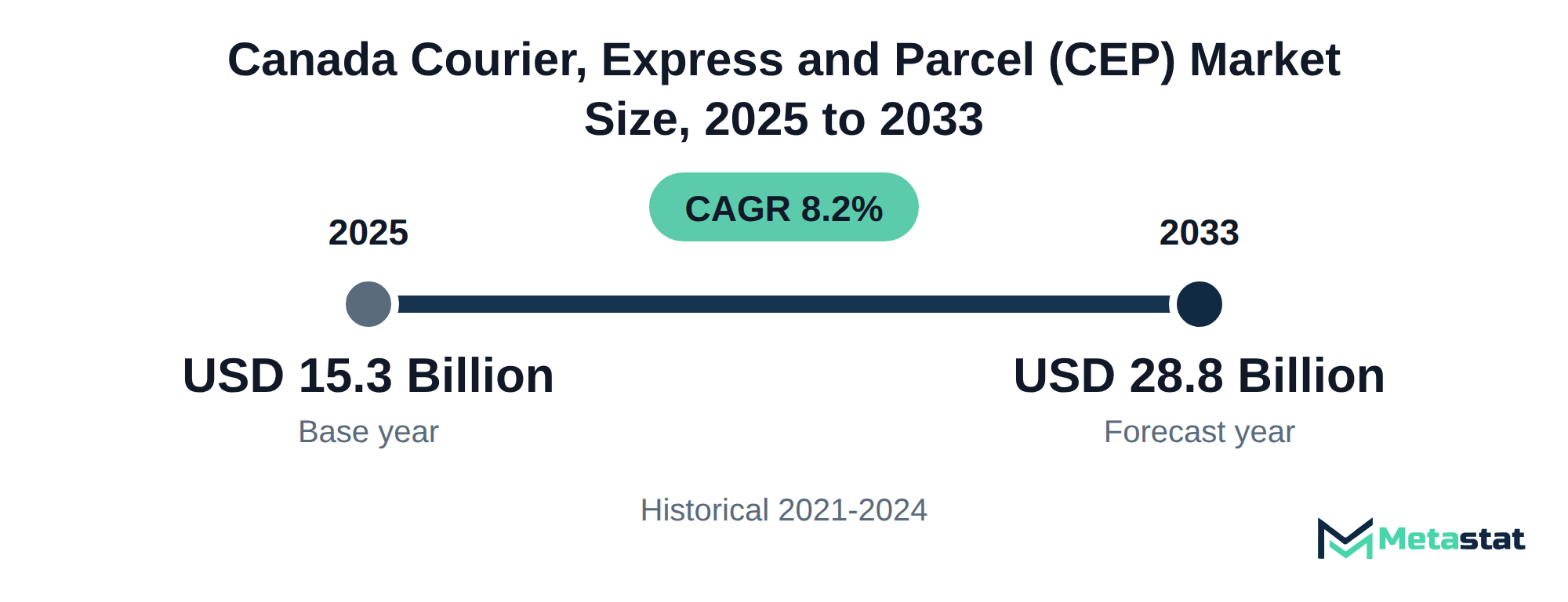
The Canada Courier, Express and Parcel (CEP) market encompasses various services that facilitate the timely delivery of goods across domestic and international borders. Buyers invest in these services to ensure efficient order fulfillment, driven by increasing demand for e-commerce. The growth of online shopping has led to a heightened need for reliable delivery solutions, prompting consumers to seek effective courier, express, and parcel options.
Market expansion is propelled by significant developments in e-commerce, with the segment of parcel services generating the most revenue. This segment benefits from the ongoing shift towards online retail, which reshapes consumer behavior and expectations. North America holds the largest share of the market, reflecting its well-developed logistics infrastructure and high consumer spending on delivery services.
One primary growth driver stems from the increasing adoption of technology in logistics, enhancing operational efficiency and customer experience. The integration of advanced package tracking systems, automation, and data analytics allows service providers to streamline operations and improve service quality. This technological evolution contributes to overall demand within the Canada Courier, Express and Parcel (CEP) market.
Various service types within the Canada Courier, Express and Parcel (CEP) market cater to different customer needs, including courier services, express services, and parcel services. Buyers invest in these services to ensure quick and reliable delivery of goods, particularly in sectors including e-commerce, healthcare, and retail. The increasing reliance on online shopping drives significant demand for parcel services, which have become essential for businesses looking to meet customer expectations for fast delivery.
The growth trajectory of the market benefits from several factors, including advancements in technology and infrastructure improvements. Among the service types, parcel services represent the most substantial share of revenue, reflecting a shift in consumer behavior toward online purchases. North America holds the largest regional share, driven by an extensive logistics network and high purchasing power, supporting the expansion of delivery services across various industries.
One primary growth driver stems from the rapid expansion of e-commerce, with consumers opting for online shopping experiences. This trend necessitates efficient delivery solutions, prompting businesses to invest in courier and parcel services to maintain competitive advantage. The Canada Courier, Express and Parcel (CEP) market is positioned for continued growth, driven by evolving consumer demands and business requirements alike.
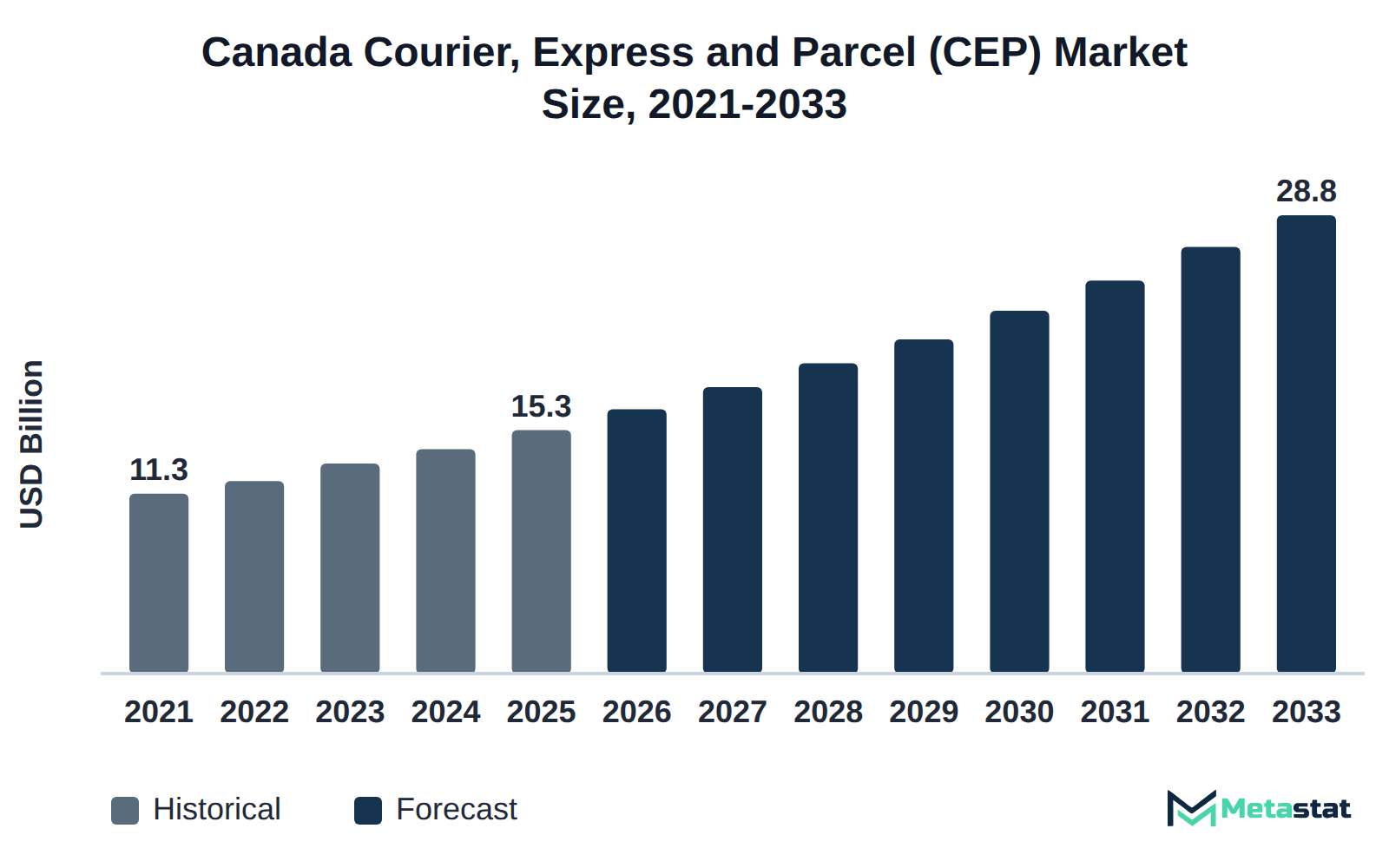
The rise of e-commerce has significantly transformed parcel delivery and last-mile logistics within the Canada Courier, Express and Parcel (CEP) market. Increased demand for rapid delivery services has driven the development of innovative last-mile solutions, particularly in urban areas where consumers expect swift access to their purchases. The e-commerce segment is projected to grow from USD 5.8 billion in 2026 to USD 10.9 billion by 2033, reflecting a compound annual growth rate (CAGR) of 9.3%. This surge in demand stimulates providers to enhance their operational efficiencies and adopt advanced technologies.
Technologies focusing on route optimization, real-time tracking, and commercial drone services for delivery are becoming integral to last-mile logistics strategies. Implementing these solutions enables logistics companies to reduce delivery times and improve customer satisfaction, thereby maintaining competitive advantage. The adoption of electric vehicles for last-mile delivery aligns with sustainability goals, appealing to environmentally conscious consumers.
Investment in these technologies creates growth opportunities within the market, positioning companies to address evolving customer demands effectively. Enhanced last-mile logistics capabilities streamline operations and contribute to increased profitability in the highly competitive Canada Courier, Express and Parcel (CEP) market.
Express shipping demand in the Canada Courier, Express and Parcel (CEP) market grows significantly, driven by the increasing need for rapid deliveries in the e-commerce sector. This demand for express shipping necessitates an efficient delivery network, compelling service providers to enhance their logistics capabilities.
Pricing models for express services vary widely, with factors including distance, weight, and delivery speed influencing costs. Incentives, including volume discounts and loyalty programs, help attract and retain customers. Companies that offer flexible pricing and contract models cater effectively to diverse buyer needs, further stimulating market growth.
In response to rising demand for cross-border e-commerce parcel flows, service providers invest heavily in their international logistics infrastructure. Investments enable faster and more reliable shipping options, which significantly enhance customer satisfaction. Stronger international delivery capabilities add to the growing revenue potential within the Canada Courier, Express and Parcel (CEP) market and reflect broader globalization trends and rising consumer expectations.
Automation and sustainable fleet adoption significantly impact the Canada Courier, Express and Parcel (CEP) market, particularly in response to evolving consumer expectations. The shift towards e-commerce generates heightened demand for efficient delivery solutions, prompting companies to integrate advanced technologies. This growth drives courier services to implement innovations including automated sorting systems and route optimization algorithms, enhancing delivery speed and operational efficiency.
Incorporating sustainable fleet strategies aligns with environmental goals and operational cost reductions. Several companies in the market invest in commercial electric vehicles and alternative fuel technologies to minimize their carbon footprint. Transitioning to a sustainable fleet increases long-term profitability, especially with regulatory pressures intensifying. The combination of automation and sustainable practices positions companies favorably, enabling them to meet customer demands while building a reputation for environmental responsibility. Industry players that adopt these strategies strengthen their competitive edge and capture a larger share of the Canada Courier, Express and Parcel (CEP) market.
E-commerce significantly influences the Canada Courier, Express and Parcel (CEP) market, driving demand for faster and more efficient delivery services. This growth stems from increasing online shopping adoption and consumer expectations for rapid delivery times.
Retailers and logistics providers adapt to changing consumer preferences by enhancing their delivery networks. E-commerce platforms prioritize reliable, speedy service, leading to a surge in demand for parcel and express services. The need for innovative solutions, including last-mile delivery technologies and automated logistics systems, has become essential for companies aiming to remain competitive in the Canada Courier, Express and Parcel (CEP) market.
As e-commerce evolves, companies that streamline their operations and integrate advanced technologies will likely experience increased market share and profitability. The intersection of e-commerce growth and logistics strategies will shape the future of the delivery industry, providing opportunities for businesses to capitalize on emerging consumer trends.
Retailers and consumers increasingly prefer online shopping, resulting in higher volumes of small parcel shipments. This shift in consumer behavior raises spending on delivery services, reflecting changing purchasing habits. This growth trajectory emphasizes the importance of reliable shipping options for e-commerce operations, compelling logistics providers to adapt their offerings to meet customer expectations. Increased parcel volumes necessitate enhanced delivery speed and reliability, influencing pricing structures and operational efficiencies across the supply chain.
Technological advancements in logistics significantly drive the Canada Courier, Express and Parcel (CEP) market. The integration of artificial intelligence and data analytics enables companies to optimize routes, reduce delivery times, and manage inventory more efficiently. This shift attracts businesses aiming to enhance operational efficiency and customer satisfaction. The development of advanced tracking systems allows consumers to obtain real-time updates on shipments, increasing confidence in service reliability.
Investment in infrastructure, including automated sorting facilities and improved transportation networks, further strengthens delivery capabilities. Enhanced logistics capabilities improve service speed and reduce operational costs over time. The ability to track deliveries accurately contributes to a competitive edge in the market, appealing to various end users, including the expanding e-commerce sector. These improvements support sustained growth in the market as demand for quick and reliable delivery solutions increases.
High shipping costs present a significant barrier to adoption among buyers in the Canada Courier, Express and Parcel (CEP) market, particularly for small and medium-sized enterprises (SMEs). These businesses frequently face constrained budgets, which limit their ability to invest in premium delivery services. Consequently, the high price of express and courier options results in slower uptake and smaller order volumes. In a competitive environment where cost-efficiency is critical, SMEs often opt for less expensive alternatives, ultimately delaying their integration of more efficient logistics solutions. This price sensitivity restricts growth potential within the market, with businesses prioritizing budget-friendly options over premium services that provide faster delivery times and enhanced reliability. Over time, this behavior stifles overall market development, impacting revenue generation and industry innovation.
Growing competition within the Canada Courier, Express and Parcel (CEP) market intensifies margin pressure on suppliers. Rising operational costs, including labor and fuel, directly affect profit margins, prompting suppliers to reassess their pricing strategies. Increased demand for faster delivery times further complicates cost management, compelling companies to balance service quality with cost efficiency.
In response, suppliers adopt various strategies to enhance operational efficiency. Investments in technology, including route optimization software, enable companies to streamline operations and reduce delivery times while minimizing costs. Exploring alternative transportation modes, including rail and waterways, facilitates cost-effective solutions that address the growing demand for sustainable practices. These adjustments are essential for maintaining competitiveness and profitability in a dynamic market.
Significant opportunities arise within the express services segment of the Canada Courier, Express and Parcel (CEP) market, driven by the rapid growth of e-commerce. This segment is projected to reach USD 9.2 billion by 2033, reflecting a compound annual growth rate of 8.5%. The increasing reliance on quick and reliable shipping options by retailers and consumers creates strong demand for express delivery solutions. Key players in the market focus on enhancing their offerings to cater to evolving buyer behavior.
Express services attract businesses seeking efficient logistics to meet customer expectations for timely deliveries. The segment's expansion aligns with broader trends of digital commerce, where consumers prioritize fast shipping. This environment creates room for investment in advanced technologies and improved operational capabilities, which help firms optimize their networks and enhance service reliability.
The Canada Courier, Express and Parcel (CEP) market is segmented based on Service Type, Mode of Transport, Destination, and End Use.
Courier Services segment is valued at USD 4.7 billion in 2026 and is projected to reach USD 7.8 billion by 2033, at a CAGR of 7.6% during the forecast period. This segment primarily fulfills the urgent delivery requirements of businesses and consumers, addressing time-sensitive shipments. E-commerce firms and retailers heavily rely on these services to ensure rapid delivery, contributing to significant growth. The increasing shift towards online shopping drives demand for courier services, with consumers expecting prompt and reliable delivery solutions. Compared to the Express Services segment, which has a higher CAGR of 8.5%, courier services experience slightly slower growth. The pricing strategy for courier services tends to be more competitive, appealing to a broader range of customers, including small businesses that prioritize cost efficiency while still requiring timely deliveries. This distinction in growth rates and target demographics highlights the unique position of courier services within the Canada Courier, Express and Parcel (CEP) market.
Express Services segment is estimated to reach USD 9.2 billion by 2033, at a CAGR of 8.5% during the forecast period. This segment is primarily used by businesses and individuals requiring fast and reliable delivery options for urgent shipments. E-commerce companies, healthcare providers, and manufacturers frequently rely on express services to meet time-sensitive demands. Rising consumer expectations for rapid delivery drive growth in this segment. Express Services differs from Courier and Parcel Services through its focus on speed and efficiency, resulting in higher pricing structures and quicker turnaround times. While the overall market has a CAGR of 8.2%, Express Services outpaces Courier Services, which has a CAGR of 7.6%. The growth in express services reflects an ongoing trend towards fulfilling the needs of customers who prioritize immediate receipt of their orders.
Parcel Services segment is expected to reach USD 11.8 billion by 2033. This segment primarily caters to businesses and consumers seeking reliable delivery of goods, particularly in the evolving e-commerce sector. Demand for parcel services is primarily driven by the increasing shift towards online shopping, with consumers and retailers requiring efficient logistics solutions. The Compound Annual Growth Rate (CAGR) in this segment stands at 8.5%, positioning it for strong growth while retailers use parcel delivery to enhance customer satisfaction. Compared to Courier Services and Express Services, Parcel Services typically involve lower shipping costs, appealing to a broader range of buyers. While Express Services cater to urgent shipments, Parcel Services provide a more economical option for standard delivery, driven by the growing e-commerce landscape.
Roadways segment is valued at USD 12 billion in 2026 and is projected to reach USD 20.4 billion by 2033, at a CAGR of 7.9% during the forecast period. This segment primarily facilitates the transportation of goods via trucks and other vehicles, used extensively by businesses across sectors including e-commerce, manufacturing, and retail. Increasing demand for timely deliveries heavily influences this segment, driven by the growth of online shopping and consumer expectations for rapid service. Roadways services experience a higher growth rate compared to railways, which remain limited in capacity and reach. While the airways segment offers faster delivery options, it typically incurs higher costs, making roadways a more economical choice for several customers seeking reliable logistics solutions.
Airways segment is estimated to reach USD 7.5 billion by 2033, at a CAGR of 9.1% during the forecast period. This segment facilitates the transport of goods over long distances, primarily serving e-commerce businesses, healthcare providers, and industries requiring urgent deliveries of products. The increasing demand for rapid delivery services fuels the growth of this segment, driven by rising e-commerce activity and consumer expectations for shorter shipping times. Compared to other modes of transport, airways offer a distinct advantage in speed, despite typically higher costs. While roadways and railways provide more cost-effective options for bulk shipments, air transport excels in time-sensitive deliveries, ensuring critical shipments reach their destinations without delay. This positioning highlights the segment's importance in the broader Canada Courier, Express and Parcel (CEP) market.
Railways segment is expected to reach USD 0.6 billion by 2033. This segment primarily serves industries requiring bulk transportation over longer distances, including manufacturing and wholesale. Demand for rail transportation is driven by its cost-effectiveness compared to road transport, especially for heavy shipments. While other modes, including roadways, exhibit higher growth rates with a CAGR of 7.9%, railways maintain stability due to established infrastructure. Railways offer competitive pricing but face limitations in flexibility and speed compared to express and courier services. The market is expected to experience ongoing developments, particularly in optimizing rail networks for improved efficiency and service delivery.
Waterways segment is projected to grow at a CAGR of 5% during the forecast period. This segment facilitates the transportation of goods through navigable waters, catering to businesses requiring bulk shipping solutions, particularly in sectors including manufacturing and retail. Demand arises from the cost-effectiveness of transporting large volumes over long distances, making it attractive for companies seeking to optimize shipping expenses. Compared to other modes of transport, the waterways segment experiences slower growth, focusing on specific shipping routes and limited accessibility to certain destinations, which distinguishes it from the more rapidly expanding roadways and airways segments. Suppliers operating in this segment often face challenges related to infrastructure and seasonal fluctuations, impacting operational efficiency and delivery timelines. The evolving framework of environmental regulations influences operational practices, pushing for greener shipping strategies within the market.
International shipping is essential in the global logistics landscape, valued at USD 4.2 billion in 2026 and projected to reach USD 7.8 billion by 2033, at a CAGR of 9.4% during the forecast period. This segment caters primarily to businesses engaged in cross-border trade, facilitating the movement of goods between countries. Rising demand for international shipping stems from the expansion of e-commerce, where retailers seek to reach global customers. Unlike domestic shipping, international services experience higher growth due to increasing globalization and trade liberalization, which encourages companies to expand their market presence. The international segment grows faster than the domestic counterpart, which is projected to reach USD 21 billion by 2033 at a CAGR of 7.7%. Complexity of customs regulations and international shipping costs influences pricing strategies, posing both challenges and opportunities for suppliers in this dynamic segment. Customs brokerage services help shippers manage these regulatory requirements.
This segment primarily serves businesses and consumers requiring reliable delivery of goods within Canada. The rise of e-commerce significantly drives demand for domestic shipping services, with online retailers and local businesses relying on these services to meet customer expectations for fast and efficient delivery. Compared to international shipping, domestic services tend to have lower costs and shorter transit times, leading to a more favorable pricing structure. The domestic segment experiences substantial growth, propelled by increased online shopping habits, while the international segment shows a higher CAGR of 9.4%. This divergence highlights the distinct operational dynamics in the Canada Courier, Express and Parcel (CEP) market. Domestic shipping remains a fundamental service for sectors including retail and healthcare.
This segment serves retailers and consumers who rely on online shopping for a wide range of goods. The increasing demand for fast and reliable delivery solutions drives growth in this segment, with businesses striving to meet consumer expectations for quick turnaround times. Compared to other sub-segments, e-commerce exhibits a higher growth rate, reflecting the ongoing shift toward digital purchasing behavior. The rapid expansion of online platforms creates a significant opportunity for logistics providers to enhance their service offerings, catering to the evolving needs of e-commerce businesses and consumers. Investment in technology and infrastructure is crucial for suppliers aiming to capture the growing demand in this dynamic segment of the Canada Courier, Express and Parcel (CEP) market.
The healthcare segment is estimated to reach USD 2.5 billion by 2033, at a CAGR of 8.7% during the forecast period. This segment primarily serves hospitals, medical facilities, and healthcare providers that require timely delivery of medical supplies, equipment, and pharmaceuticals. Increasing demand for expedited healthcare services and the growth of telemedicine significantly drive this segment. The healthcare segment exhibits faster growth compared to other end-use segments, including manufacturing and wholesale & retail. With a CAGR of 8.7%, it reflects the urgent need for reliable and swift delivery in the healthcare sector. Operational challenges, including regulatory compliance and the handling of sensitive products, distinguish this segment, necessitating specialized services such as pharmaceutical logistics that cater to stringent healthcare regulations. These factors collectively position the healthcare segment as a vital component of the Canada Courier, Express and Parcel (CEP) market.
Manufacturing segment is expected to reach USD 3.7 billion by 2033. This segment primarily serves manufacturing companies requiring reliable logistics for raw materials and finished goods. Growing demand for just-in-time delivery significantly influences this segment, driven by manufacturers seeking to optimize their supply chains. Advancements in technology enable streamlined operations, enhancing efficiency and reducing lead times. Compared to other segments, the manufacturing segment exhibits slower growth, with a CAGR of 8.7%, contrasting with the e-commerce segment's faster growth rate of 9.3%. This difference arises from the unique requirements of manufacturing logistics, including bulk transport and specialized handling, which necessitate distinct strategies and cost structures. The Canada Courier, Express and Parcel (CEP) market reflects significant activity within this segment, highlighting the essential role it plays in supporting manufacturing operations.
Wholesale & Retail segment is projected to grow at a CAGR of 8.5% during the forecast period. This segment primarily serves businesses involved in retail operations, including online and physical stores that rely on timely deliveries to meet consumer demand. The significant rise in e-commerce activity drives this segment, with consumers increasingly expecting rapid delivery of goods. In contrast to other segments, this area experiences higher growth due to the ongoing expansion of online shopping platforms. The market benefits from technological advancements, including order management software, that streamline order fulfillment and improve delivery efficiency. Integration of data analytics into supply chain management enhances inventory control and reduces operational costs, further supporting growth in the Wholesale & Retail segment.
Banking, Financial Services and Insurance (BFSI) involves the delivery of critical documents, financial statements, and sensitive materials essential for transactions and compliance. Institutions within this sector depend on courier services for timely and secure handling of confidential materials. Factors driving this segment include the increasing emphasis on regulatory compliance and the growing demand for expedited services that cater to time-sensitive financial transactions. This sector differentiates itself from others in the market, experiencing slower growth compared to segments like E-commerce, driven by rapid technological advancements and shifting consumer behaviors. The BFSI segment faces unique challenges related to security and regulatory requirements, necessitating tailored solutions that address the specific needs of financial institutions.
This sub-segment encompasses shipments related to education, automotive, government, and personal shipments. Institutions and individuals use these services for delivering educational materials, automotive parts, government documents, and personal packages. A primary driver of growth within this segment stems from increasing demand for efficient delivery solutions across diverse sectors, reflecting a broader trend in the Canada Courier, Express and Parcel (CEP) market. Businesses and individuals prioritizing timely and reliable delivery options enhance overall productivity and satisfaction. Compared to other segments, this sub-segment typically experiences slower growth due to varying shipment volumes and less frequent shipment patterns. In contrast to segments like E-commerce, which experience rapid growth due to a consistent flow of orders, the Others segment relies on more irregular demand, impacting its performance differently in the competitive environment.
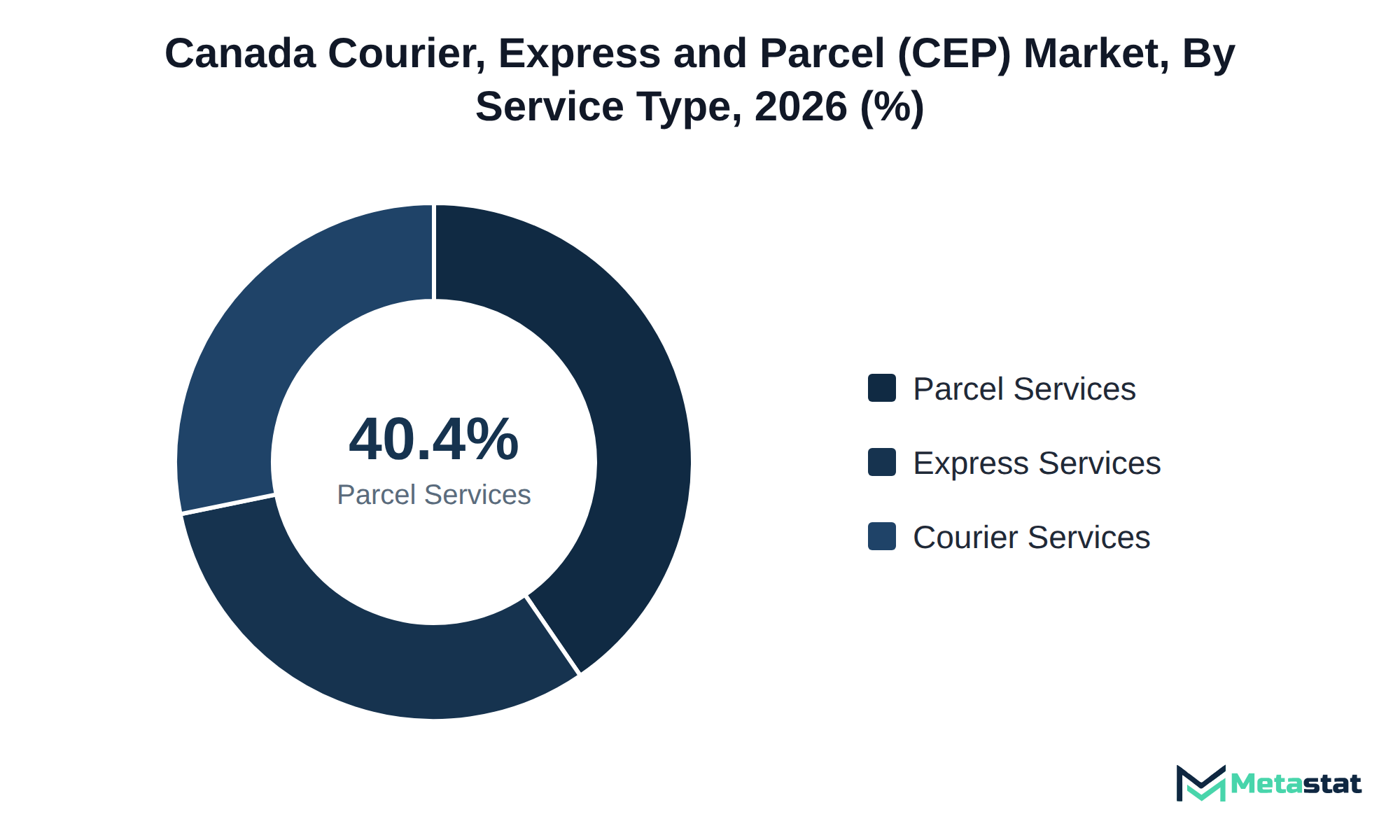
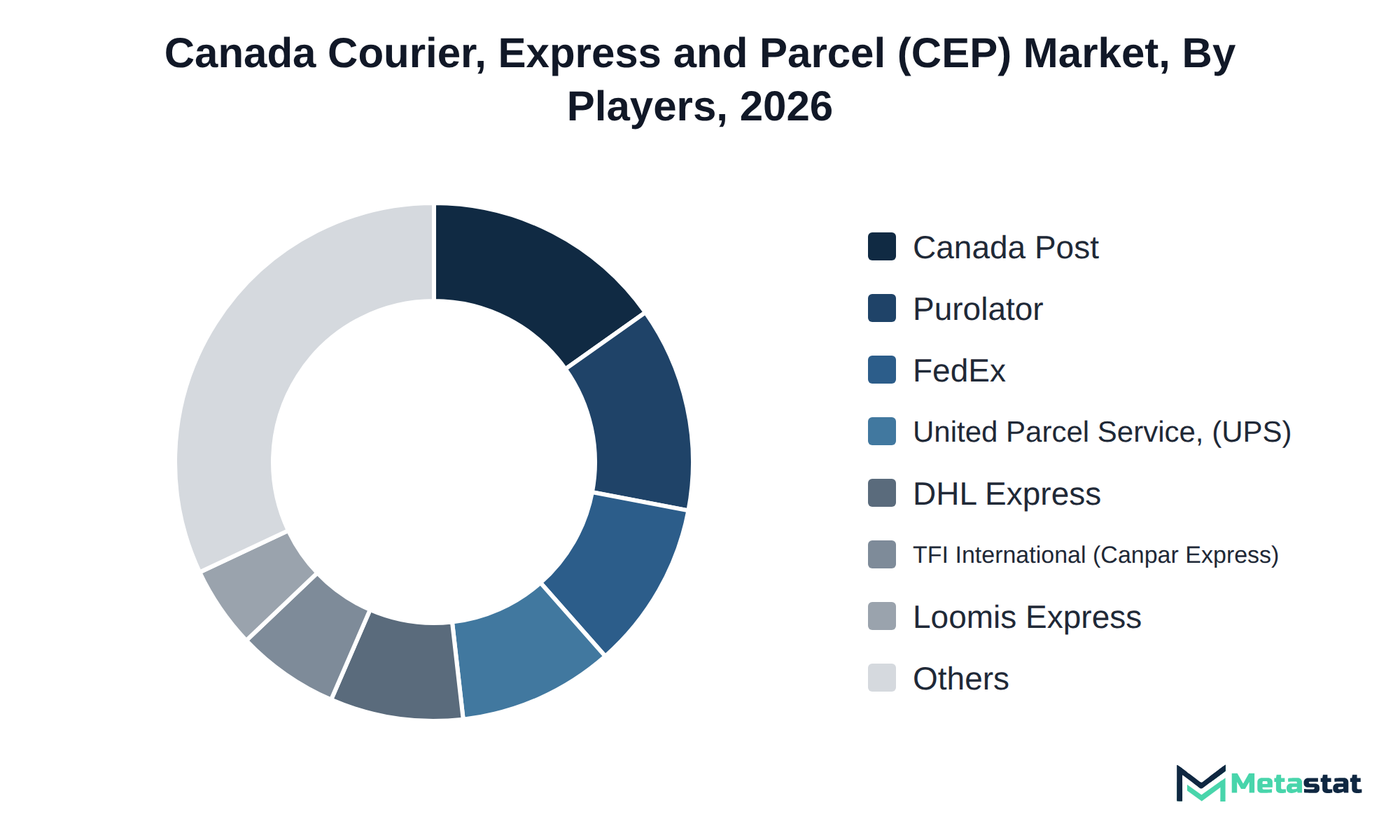
The Canada Courier, Express and Parcel (CEP) market features a diverse set of companies competing across various service types, including courier services, express services, and parcel services. Price, service quality, and delivery speed influence buyer choices significantly. Customers prioritize efficient and reliable options. Companies enhance their offerings to capture market share.
Canada Post Corporation, a prominent player in postal services, emphasizes a broad range of services tailored to meet the needs of domestic and international customers. FedEx Corporation and UPS focus on express services, offering time-sensitive deliveries, while Purolator Inc. specializes in logistics solutions that integrate with e-commerce platforms. These competitive strategies reflect a market driven by evolving consumer expectations and the increasing demand for expedited delivery options.
Innovation in logistics technology continues to reshape competition within the market. Companies like DHL Express use advanced tracking systems and real-time updates to enhance customer satisfaction. Regional players, including TFI International Inc. and Dragonfly, provide local expertise, offering customized solutions that appeal to specific community needs. This emphasis on tailored services positions these companies to effectively address the unique requirements of various buyer segments.
Investment in sustainable practices is increasingly relevant, with firms adapting to shifting consumer preferences for environmentally friendly options. Companies including GLS Canada and Intelcom Courrier Canada Inc. actively pursue eco-friendly delivery methods, aligning their strategies with market demand for sustainability. This trend attracts environmentally conscious consumers and supports long-term growth in the market.
Achieving this growth relies on several key developments within the Canada Courier, Express and Parcel (CEP) market. First, significant expansion in e-commerce activities will drive demand for courier and parcel services, particularly in the domestic segment, where revenue is projected to reach USD 21 billion by 2033. Second, advancements in smart logistics technology and automation will enhance operational efficiency, allowing companies to optimize delivery processes, thereby supporting the growth of express services, which is expected to reach USD 9.2 billion by 2033. Third, increased international trade and shipping needs will contribute to higher demand for international shipping solutions, with that segment anticipated to grow at a CAGR of 9.4%. Potential risks exist that could hinder this growth trajectory. Economic fluctuations impact consumer spending and business investments, especially in sectors reliant on timely deliveries. These factors could lead to reduced demand for services, particularly in the healthcare and manufacturing end-use markets. Maintaining a focus on efficiency and adaptability within the market will be essential to mitigate these risks and achieve forecasted growth.
By Mode of Transport: Roadways, Airways, Railways, Waterways
By Destination: International, Domestic
By End Use: E-commerce, Healthcare, Manufacturing, Wholesale & Retail, Banking, Financial Services and Insurance (BFSI), Others (Education, Automotive, Government and Personal Shipments)
The report strategically identifies and profiles the key market players and analyses their core competencies in each sub-segment of the Courier, Express and Parcel (CEP) market.
Report Attributes | Details |
Study Period | 2021-2033 |
Base Year | 2025 |
Estimated Year | 2026 |
Forecast Period | 2026-2033 |
Historical Period | 2021-2025 |
Growth Rate | CAGR 8.2% from 2026 to 2033 |
Revenue Unit | USD billion |
Segmentation | By Service Type, Mode of Transport, Destination, End Use, and Region |
Find answers to common questions about this report
The Courier, Express and Parcel (CEP) market size was valued at USD 15.3 billion in 2025.
The market is projected to grow at a CAGR of 8.2% during the forecast period from 2026 to 2033.
Parcel Services leads the Courier, Express and Parcel market with a projected value of USD 11.8 billion by 2033. This segment surpasses others in terms of revenue generation.
The surge in e-commerce significantly influences parcel demand, driving higher volumes of small shipments and increased spending on delivery services. Technological advancements in logistics, including the integration of artificial intelligence and data analytics, enable companies to optimize operations and enhance customer satisfaction.
High shipping costs restrain growth in the Courier, Express and Parcel (CEP) market, particularly for small and medium-sized enterprises, limiting investment in premium delivery services. Growing competition intensifies margin pressure on suppliers, prompting reassessment of pricing strategies while balancing service quality with cost efficiency.
Key factors favoring adoption in the Canada Courier, Express and Parcel (CEP) market include the rapid growth of e-commerce, which drives demand for quick and reliable shipping options. Investments in advanced technologies and improved operational capabilities enable firms to optimize their networks, enhancing service reliability and efficiency.
The Courier, Express and Parcel (CEP) market is estimated to reach a valuation of USD 28.8 billion by 2033.
Key players operating in the Courier, Express and Parcel (CEP) industry include Canada Post Corporation, Purolator Inc., FedEx Corporation, United Parcel Service, Inc. (UPS), DHL Express, TFI International Inc. (Canpar Express), and Day & Ross.
The express services segment is projected to reach USD 9.2 billion by 2033, reflecting a compound annual growth rate of 8.5 percent.
The surge in e-commerce significantly influences parcel demand, with the e-commerce segment expected to grow from USD 5.8 billion in 2026 to USD 10.9 billion by 2033.
The analysts below cover Automotive and Transportation research at Metastat Insights.
LEAD ANALYST
Utkarsh Khirodkar is a Lead Market Research Analyst at MetaStat Insight, specializing in market intelligence, technology sector assessments, and competitive strategy.

ENERGY & INFRASTRUCTURE INDUSTRY CONSULTANT
Automotive and Transportation · Electronics and Semiconductor · Energy and Power · Machinery & Equipment
Saurabh Vasant Ganvir consults for Energy & Infrastructure Industry at MetaStat Insight, specializing in renewable energy, solar EPC, and electric vehicle (EV) infrastructure markets.
Integrating zero-trust access controls across legacy electronic health record systems involves complex compliance overhead. Team produced an analysis that clearly separated identity governance and administration tools from privileged access management platforms. Their evaluation of HIPAA and GDPR compliance features across cloud native solutions gave our architecture group clear baseline criteria. The custom data request regarding biometric authentication adoption in hospital networks was returned promptly with clear documentation.
Evaluating calorific value requirements and air permit compliance across municipal waste facilities requires localized data. Metastat Insight structured their analysis around operational throughput capacity and feedstock composition variations in Latin America and Eastern Europe. Their competitive mapping of sorting equipment vendors helped clarify technology differences between optical separators and heavy media systems. The study provided an objective baseline during our capital expenditure reviews.
Decarbonizing industrial thermal processes hinges on refrigerant regulations and compressor efficiency limits. Metastat Insights delivered a thorough market analysis that evaluated natural refrigerants like CO2 and hydrocarbons against synthetic low-GWP alternatives. The breakdown of utility incentives and grid capacity constraints across key European manufacturing hubs offered valuable perspective. The follow-up conversation with their sector analysts addressed our specific questions on mechanical vapor recompression systems efficiently.
Explore related market intelligence reports worth reading alongside this one.
Starting from
$2950