
LEAD ANALYST
Utkarsh Khirodkar is a Lead Market Research Analyst at MetaStat Insight, specializing in market intelligence, technology sector assessments, and competitive strategy.

Global Automotive Digital Cockpit Market Size, Share, By Component (Digital Instrument Clusters, Infotainment and Center Display Systems, Cockpit Domain Controllers, Head-up Displays, Driver and Occupant Monitoring Systems), By Vehicle Type (Passenger Cars, Light Commercial Vehicles, Heavy Commercial Vehicles), By Propulsion Type (Internal Combustion Engine Vehicles, Battery Electric Vehicles, Hybrid Electric Vehicles, Plug-in Hybrid Electric Vehicles), By Sales Channel (OEM-Fitted Systems and Aftermarket Systems), Industry Analysis, Growth, Trends, and Forecast, 2026-2033
Report ID
MSI-5756
Published
November, 2026
Pages
289 Pages
Format
Historical
Base year
Forecast
Forecast period
Report Details
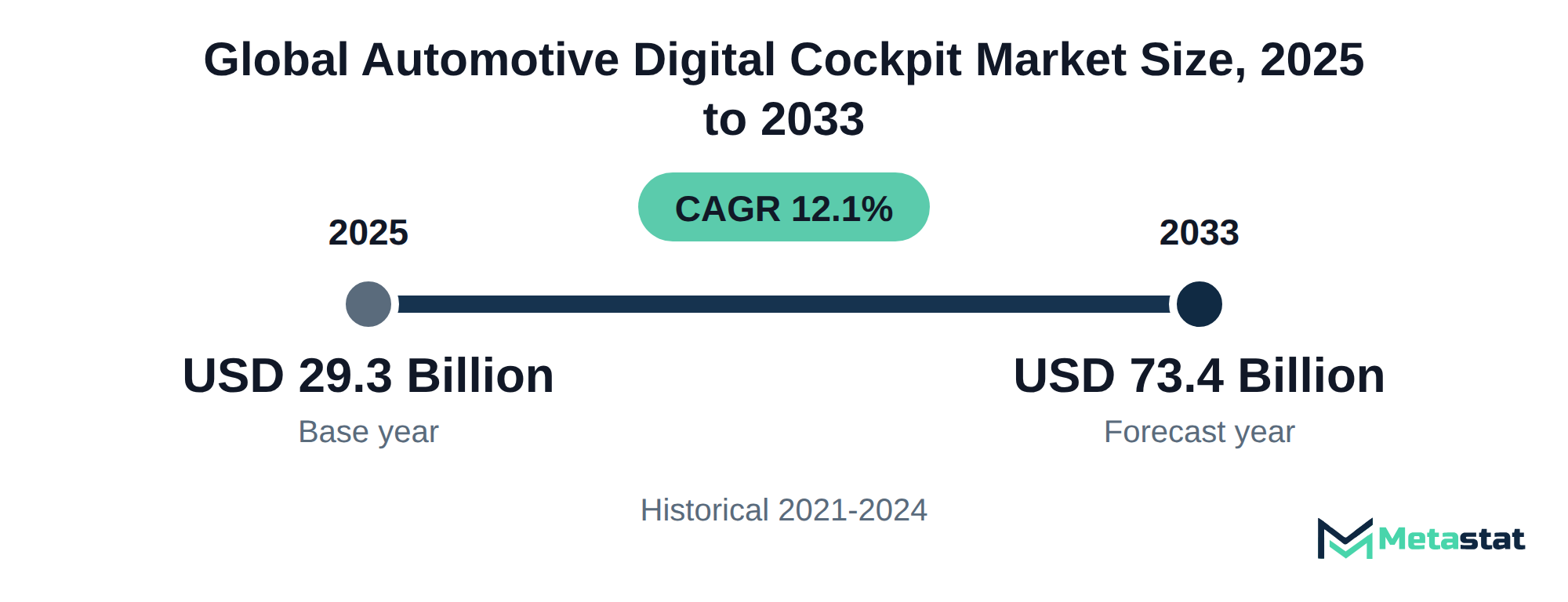
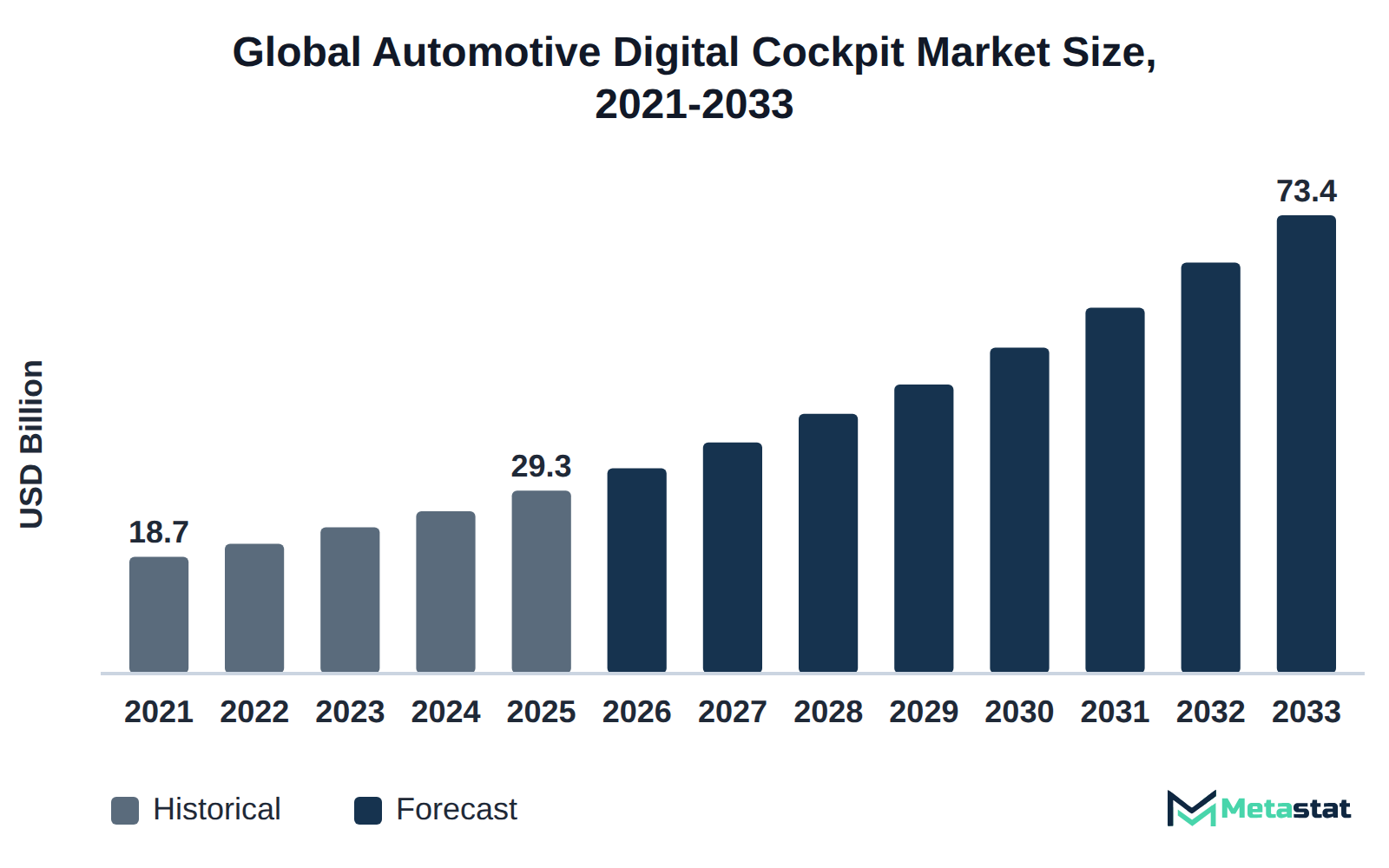
Market Valuation: Valued at $29.3 Billion in 2025, projected to reach $73.4 Billion by 2033 at a 12.1% CAGR.
Dominant Segment: The Infotainment and Center Display Systems segment leads the market, driven by rising consumer demand for advanced multimedia capabilities and connectivity options in vehicles.
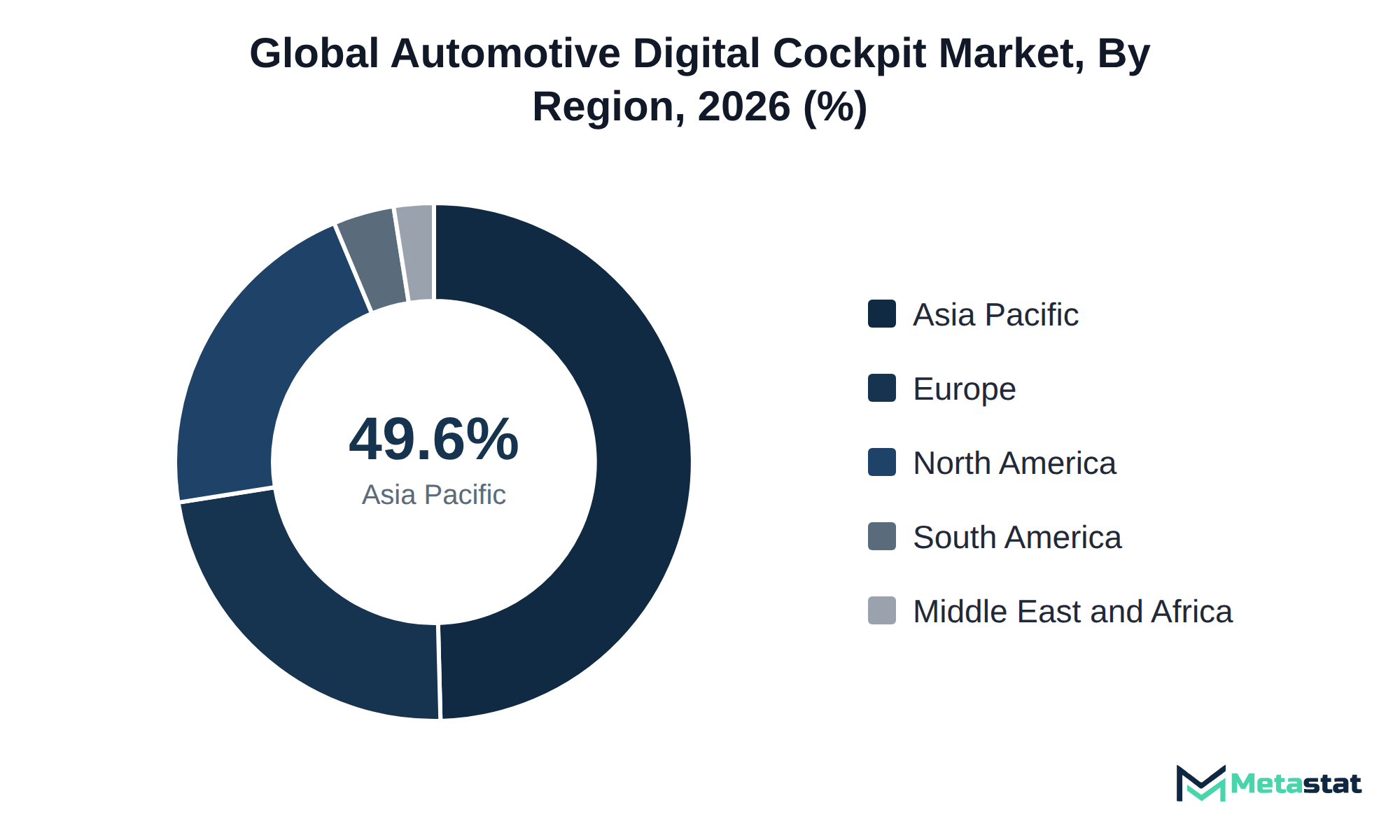
Geographic Lead: Asia Pacific dominates the market, accounting for 49.6% of the total share in 2025, fueled by robust automotive production and a growing middle-class population prioritizing advanced vehicle features.
What's Inside: The report provides a comprehensive analysis of market dynamics, competitive landscape, and detailed forecasts from 2026 to 2033, covering various components and vehicle types.
Emerging Trends: The market is witnessing a significant shift towards driver and occupant monitoring systems, projected to reach USD 14.1 billion by 2033, reflecting heightened safety and personalization demands.
Growth Drivers: The increasing adoption of Battery Electric Vehicles is a key growth driver, with a projected market value of USD 26.1 billion by 2033, highlighting the shift towards sustainable and technologically integrated solutions.
Choose Your License
Global Automotive Digital Cockpit Market
The global Automotive Digital Cockpit market was valued at USD 29.3 billion in 2025 and is projected to reach USD 73.4 billion by 2033, growing at a CAGR of 12.1% over the forecast period.
The Automotive Digital Cockpit market encompasses advanced display systems, infotainment solutions, and cockpit domain controllers designed to enhance driver and passenger experiences in modern vehicles. Buyers invest in these technologies to improve vehicle connectivity, safety, and user interaction, which are critical in a competitive automotive landscape. The demand for infotainment and center display systems represents the segment with the greatest value, reflecting a substantial shift towards integrated digital solutions.
Growth within the market is driven by the increasing adoption of connected cars and electric vehicles, which require sophisticated digital interfaces to manage their advanced functionalities. Asia Pacific leads in market share, accounting for 49.6% of the total in 2025, while North America holds 21.2% of the market in 2025, with the US leading in 2026. The demand for innovative driver-assistance features significantly influences this expansion, as consumers seek enhanced safety and convenience.
Investment in research and development by key industry players supports the ongoing evolution of digital cockpit technologies. Companies focus on creating user-friendly interfaces and integrating advanced features that cater to the preferences of tech-savvy consumers. Competition in the market encourages rapid advances, so manufacturers stay responsive to changing consumer expectations and new technology.
The Automotive Digital Cockpit market addresses the increasing demand for integrated vehicle technologies that enhance user experience through advanced in-vehicle infotainment, connectivity, and safety features. Buyers invest in these systems to improve driver engagement and facilitate interaction between passengers and technology. The market supports the transition towards more intuitive interfaces, offering solutions that integrate entertainment, navigation, and vehicle diagnostics into a single platform.
Growth in the market is fueled by rising consumer expectations for high-quality user experiences and the industry's shift towards digital transformation. Among the various segments, Infotainment and Center Display Systems represent the largest share, reflecting consumer preference for sophisticated multimedia interfaces. Asia Pacific leads in market share with 49.6%, driven by strong automotive production and a growing middle-class population that prioritizes advanced vehicle features.
A key factor influencing market expansion is the increasing adoption of Battery Electric Vehicles, which incorporate innovative digital cockpit solutions to meet evolving consumer demands for sustainability and technology integration. The combination of regulatory support and technological advancements drives investment and development in this sector.
Domain controller consolidation improves the functionality and efficiency of Automotive Digital Cockpit architectures. This consolidation involves integrating multiple control functions into a single unit rather than spreading them across separate automotive ECUs, which simplifies the overall system design. The value attributed to cockpit domain controllers is expected to reach USD 14.1 billion by 2033. This growth reflects a shift towards reducing hardware complexity and improving vehicle performance.
The trend towards domain controller consolidation is driven by increasing demand for advanced features in vehicles, including infotainment systems and instrument clusters. By merging these functions, automotive manufacturers optimize resources, reduce weight, and lower production costs. The focus on enhancing user experience further supports this trend, as consolidated systems integrate various functionalities.
This consolidation strategy holds significant commercial implications for the market, increasing competitiveness among manufacturers. Companies investing in this technology are likely to enhance their market positions by delivering sophisticated digital cockpit solutions that cater to evolving consumer preferences.
Pricing strategies for panoramic displays and augmented reality (AR) head-up displays (HUD) in the Automotive Digital Cockpit market reflect a growing trend toward bundled offerings. Many automotive manufacturers implement a tiered pricing structure that aligns with vehicle models and features. This model allows buyers to select integrated systems that include both digital instrumentation and AR HUD, optimizing the user experience while simplifying the purchasing process.
In this context, the pricing for infotainment and center display systems is projected to reach USD 23.1 billion by 2033, demonstrating a significant factor in buyers' decisions. Bundling products enhances perceived value and streamlines supplier contracts, strengthening long-term relationships between manufacturers and technology providers. This approach supports manufacturers’ ability to adapt to evolving consumer preferences and technological advancements.
Consequently, the adoption of panoramic displays and AR HUD in vehicles leads to improved customer satisfaction and retention. Buyers benefit from a more cohesive digital cockpit experience, while manufacturers enhance their competitive position in the market. Aligning pricing strategies with product offerings can increase revenue and market penetration.
Driver monitoring and personalized Human-Machine Interface (HMI) systems in automotive digital cockpits enhance safety and user experience. Data indicate that the driver and occupant monitoring systems segment is growing rapidly, reflecting a shift in focus towards ensuring driver alertness and engagement. With an expected value of USD 14.1 billion by 2033, this component is essential in modern vehicle design.
Automakers recognize the critical need for systems that monitor driver behavior, fatigue, and attention levels. This heightened emphasis stems from increasing regulatory requirements for safety and the demand for advanced functionalities that improve the overall driving experience. By integrating intelligent monitoring solutions, manufacturers address the distinct needs of technology-savvy consumers seeking enhanced safety features.
Personalized HMI systems create immersive experiences tailored to individual preferences. Such customization boosts user satisfaction and strengthens brand loyalty among consumers in the automotive digital cockpit market. Driver monitoring and HMI technologies are essential for meeting contemporary consumer and regulatory demands, so companies investing in them position themselves competitively.
Content within automotive digital cockpits varies significantly between electric vehicles (EVs) and internal combustion engine (ICE) vehicles. This differentiation arises from distinct operational requirements and user experiences associated with each vehicle type. For instance, the market shows a projected value for battery electric vehicles reaching USD 26.1 billion by 2033, reflecting a notable shift in consumer preferences and technological advancements.
In electric vehicles, cockpit content emphasizes efficiency, connectivity, and real-time data display regarding battery usage and range management. Advanced driver assistance systems (ADAS) and enhanced infotainment tailored for EV functionality are key features in this segment. In contrast, internal combustion engine vehicles prioritize traditional metrics, including engine performance, fuel economy, and navigation systems.
This divergence in content impacts the overall user experience and influences purchasing decisions. Buyers of electric vehicles are increasingly attracted to innovative cockpit designs that enhance sustainability and performance, while consumers of ICE vehicles seek reliability and familiarity. Understanding these differences equips manufacturers to align product development with evolving consumer expectations within the automotive digital cockpit market.
Growing adoption of advanced infotainment systems drives demand in the Automotive Digital Cockpit market, particularly among consumers seeking enhanced connectivity and entertainment options. Passenger car buyers increasingly prioritize high-tech features, influencing manufacturers to equip vehicles with comprehensive digital solutions. This shift reflects a broader trend toward integrating smart technologies into everyday transportation. The expansion of digital instrument clusters, projected to grow from USD 10.3 billion in 2026 to USD 20.3 billion by 2033, highlights this transformation.
Competition intensifies, prompting automakers to focus on differentiating their offerings through innovative cockpit technologies. Buyers expect modern vehicles to deliver safety, efficiency, and immersive experiences that fit their digital lifestyles. This evolution supports growth in the market, with higher investments directed toward developing advanced solutions that meet consumer expectations.
Technological advancements in driver and occupant monitoring systems significantly influence the Automotive Digital Cockpit market. These systems use sophisticated sensors and artificial intelligence to enhance vehicle safety and user experience by continuously monitoring driver alertness and passenger interactions. Manufacturers focus on integrating such capabilities to meet heightened consumer expectations surrounding safety and personalization in vehicles.
Enhanced monitoring systems serve a dual purpose: improving safety measures while offering personalization features. They provide real-time data on driver behavior, allowing for immediate feedback and adjustments to the cockpit environment. The pursuit of enhanced safety measures, driven by regulatory requirements and consumer expectations, accelerates market growth.
By adopting these technologies, suppliers position themselves competitively within the market. This integration creates a smooth user experience, driving demand for advanced cockpit solutions. The overall market is expected to expand substantially as attention shifts toward personalized and safe driving environments enabled by innovative technologies.
High costs associated with advanced technologies in the Automotive Digital Cockpit market hinder adoption among price-sensitive consumer segments, particularly in regions with limited purchasing power. These expenses often result in smaller order volumes and delayed integration of digital cockpit solutions in vehicles. Hesitance to invest translates into slower market uptake, particularly among manufacturers of light commercial and heavy commercial vehicles, where budgets are typically tighter. Buyers in these segments weigh the benefits of sophisticated cockpit systems against financial constraints, leading to a cautious approach in procurement. This scenario impacts growth projections, with potential customers remaining reluctant to transition from traditional cockpit setups to advanced digital alternatives. Cost barriers significantly influence decision-making, creating a challenging environment for market expansion in various regions.
Profitability in the market faces pressure due to increasing costs of key components, particularly semiconductors and automotive display systems. Manufacturers encounter rising expenses associated with sourcing high-quality materials essential for advanced digital cockpit systems. This situation creates a challenge for suppliers aiming to maintain competitive pricing while ensuring product quality. The automotive industry's shift toward digital integration increases the demand for specialized components, further driving costs upward.
Suppliers implement strategies to mitigate these challenges, including forming strategic partnerships with component manufacturers to secure favorable pricing and ensure consistent quality. Several companies invest in vertical integration to control the supply chain more effectively, reducing dependency on external suppliers and stabilizing costs. The combined effect of these strategies supports efforts to maintain margins within the Automotive Digital Cockpit market amid fluctuating material prices.
The passenger car segment represents a significant growth opportunity within the Automotive Digital Cockpit market, driven by the increasing integration of advanced digital systems in personal vehicles. This segment is projected to expand from USD 25 billion in 2026 to USD 54.4 billion by 2033, reflecting a compound annual growth rate of 11.7%. The push for enhanced user experiences, connectivity, and safety features in passenger vehicles fuels investment in digital cockpit technologies. These developments cater to consumer preferences for effective infotainment and superior driving experiences, making passenger cars a focal point for manufacturers and suppliers. Companies actively targeting this segment will likely see improved market penetration and customer loyalty, which could translate to enhanced revenue streams. The overall trend in the market points to a strong shift toward sophisticated digital cockpit solutions, positioning the passenger car segment as a primary driver of future growth.
The Global Automotive Digital Cockpit market is segmented based on Component, Vehicle Type, Propulsion Type, and Sales Channel.
Digital instrument clusters primarily serve drivers and passengers seeking critical vehicle information through advanced graphical displays. Increasing consumer demand for enhanced user experiences and real-time data visualization increases the significance of digital instrument clusters in modern vehicles. This segment experiences faster growth compared to other components, driven by the rising integration of digital technologies in vehicles. Enhanced safety features and infotainment systems further fuel this adoption. Unlike cockpit domain controllers, which support multiple functionalities, digital instrument clusters focus on delivering precise, real-time information essential for driving operations. The Automotive Digital Cockpit market continues to evolve, spurred by innovations that enhance both aesthetic appeal and functionality.
Infotainment and Center Display Systems segment is estimated to reach USD 23.1 billion by 2033, at a CAGR of 11.1% during the forecast period. This segment provides critical features for enhancing in-vehicle entertainment, navigation, and connectivity, catering to tech-savvy consumers who prioritize advanced multimedia capabilities. Drivers of growth include rising demand for connectivity options in vehicles and emergence of new infotainment technologies. Compared to other components, this segment experiences a strong growth trajectory due to its appeal to passenger car manufacturers keen on integrating the latest digital experiences. It stands out with a higher anticipated growth rate than several alternatives including cockpit domain controllers, which face more stable growth patterns. Increasing integration of smartphones and other personal devices into vehicle systems further drives the expansion of infotainment and center display systems, reflecting a significant shift in consumer preferences within the Automotive Digital Cockpit market.
Cockpit domain controllers integrate multiple functionalities into a single platform, enhancing the overall efficiency of vehicle systems. Manufacturers apply cockpit domain controllers to streamline various electronic functions, including infotainment, climate control, and driver assistance systems. Rapid advancements in software and hardware technologies drive strong demand within the segment, particularly from automakers focused on delivering sophisticated user experiences. Compared to other components, cockpit domain controllers exhibit slower growth, with a CAGR of 10.1% highlighting the more gradual adoption of integrated systems relative to infotainment and center display systems, which achieve a CAGR of 11.1%. This divergence illustrates the distinct market dynamics and investment strategies among automakers targeting these technology segments.
Head-up Displays segment is projected to grow at a CAGR of 14.4% during the forecast period. These displays project vital information onto the windshield, allowing drivers to access navigation, speed, and safety alerts without diverting attention from the road. This technology appeals to various user groups, including manufacturers of passenger vehicles and luxury cars seeking to enhance driver safety and experience. Factors driving growth include increasing demand for augmented safety features and advancements in display technologies. Compared to other components, this segment experiences faster growth, reflecting broader market trends toward digitalization in vehicles. The segment differentiates itself from others, including Infotainment and Center Display Systems, which hold a lower growth rate of 11.1%, and positions itself as a premium offering in the Automotive Digital Cockpit market.
Driver and Occupant Monitoring Systems enhance vehicle safety and user experience by analyzing driver attention and passenger conditions. These systems cater primarily to vehicle manufacturers seeking to integrate advanced safety protocols and improve the overall driving experience. The rising emphasis on safety features, particularly in regions with stringent regulations, drives demand for these systems. Growing demand for enhanced safety and compliance with regulations results in a rising market for Driver and Occupant Monitoring Systems, distinguishing it from other components including infotainment systems and digital instrument clusters. Compared to infotainment systems, which focus on entertainment and connectivity, monitoring systems prioritize safety and user engagement. This segment is characterized by higher growth potential, aligning with increasing consumer expectations for vehicle safety technologies.
This segment includes Rear-Seat Displays and Dedicated HMI Control Modules, integrating specialized functionalities that enhance passenger entertainment and control within vehicles. These components frequently find usage in premium and luxury vehicles, offering high-resolution displays and advanced interface capabilities. The push for in-vehicle entertainment and connectivity drives demand, particularly among consumers prioritizing enhanced travel experiences. This segment distinguishes itself through its focus on passenger-oriented features, differing from primary driver-centric components that dominate the market. Adoption of advanced driver assistance systems (ADAS) and infotainment systems contributes to the growth of this segment, reflecting a shift towards comprehensive user engagement in the automotive digital cockpit. The market is expected to evolve, integrating advanced technologies that cater to both driver and passenger needs.
This segment serves consumers looking for advanced features in their vehicles, including improved safety and infotainment systems. Increasing consumer demand for connected and high-tech vehicles drives growth in this area. The segment experiences stronger growth compared to Light Commercial Vehicles and Heavy Commercial Vehicles, which have lower CAGRs of 13.7% and a static forecast value, respectively. Within this context, innovations in infotainment systems and driver monitoring technologies significantly impact the segment, enhancing user experience and vehicle safety. Consequently, the passenger car segment significantly influences the overall dynamics of the market.
Light Commercial Vehicles segment is estimated to reach USD 12.7 billion by 2033, at a CAGR of 13.7% during the forecast period. This segment serves businesses in logistics, transportation, and delivery services, providing essential features like navigation, vehicle diagnostics, and communication systems that improve operational efficiency. Demand in this segment is driven by the growing emphasis on fleet management solutions, which enhance productivity for companies relying on these vehicles. Compared to other vehicle types, the Light Commercial Vehicles segment exhibits a faster growth rate, reflecting an increasing shift toward modernizing commercial fleets with advanced digital cockpit technologies. The market's focus on improving connectivity and safety in commercial applications positions this segment for robust expansion in the coming years.
Heavy Commercial Vehicles segment is expected to reach USD 6.2 billion by 2033. This segment primarily serves fleet operators and logistics companies that require robust and efficient vehicle systems for transportation and delivery services. A significant driver for this segment involves the increasing demand for advanced safety features and connectivity solutions, driven by regulatory pressures for enhanced vehicle safety and efficiency. Growth in this sector is slower compared to passenger cars, highlighted by a CAGR of 6.2%, while operators face budget constraints in upgrading existing fleets. This situation leads to a more conservative adoption rate of new technologies, contrasting with the rapid advancements seen in other vehicle types, including passenger vehicles, which experience higher consumer-driven demand. The strategic integration of digital cockpit technologies is expected to improve operational efficiency and driver engagement in heavy commercial vehicles.
Internal Combustion Engine Vehicles segment is valued at USD 18.8 billion in 2026 and is projected to reach USD 31 billion by 2033, at a CAGR of 7.4% during the forecast period. This segment serves consumers who prioritize traditional vehicle options while incorporating digital cockpit technologies. The increase in fuel efficiency regulations influences this segment, driving manufacturers to integrate advanced digital solutions that enhance vehicle performance and user experience. Compared to Battery Electric Vehicles, which exhibit a higher growth rate of 18%, Internal Combustion Engine Vehicles show a slower growth trajectory, reflecting ongoing consumer preferences for established technologies and price-sensitive markets. These vehicles appeal to buyers seeking familiarity in driving while gradually transitioning to digital enhancements.
Battery Electric Vehicles segment is estimated to reach USD 26.1 billion by 2033, at a CAGR of 18% during the forecast period. This segment focuses on vehicles powered exclusively by electric energy stored in batteries, catering primarily to environmentally conscious consumers and fleet operators seeking sustainable transportation solutions. Increasing regulatory support for electric vehicles acts as a strong driver, promoting the adoption of digital cockpit technologies that enhance user experience and connectivity. Compared to other propulsion types, this segment experiences the fastest growth trajectory, reflecting a shift towards electrification in the automotive industry. With a higher CAGR than Internal Combustion Engine Vehicles, Battery Electric Vehicles attract significant investment aimed at advanced infotainment and control systems, which are critical for modern driving experiences. The ongoing push from manufacturers for innovative digital solutions strengthens the segment's role in shaping the future of the market.
Hybrid Electric Vehicles segment is expected to reach USD 9.1 billion by 2033. This segment is primarily present in hybrid vehicles that combine traditional internal combustion engines with electric propulsion systems, catering to consumers seeking improved fuel efficiency and reduced emissions. Demand for this segment is driven by increasing environmental regulations and consumer preferences for more sustainable transportation options. Compared to other propulsion types, Hybrid Electric Vehicles exhibit a slower growth rate, with a projected CAGR of 16.4%, although their adoption is supported by incentives for green technologies. This segment differs from Battery Electric Vehicles, which experience a higher growth trajectory due to advances in battery technology and infrastructure development. The distinct characteristics of Hybrid Electric Vehicles make them appealing to buyers who prioritize both electric and gasoline capabilities, thus enhancing their market relevance within the Automotive Digital Cockpit market.
Plug-in Hybrid Electric Vehicles segment is projected to grow at a CAGR of 16.4% during the forecast period. This segment features vehicles combining internal combustion engines with battery-powered systems, appealing to environmentally conscious consumers seeking flexibility in fuel options. Demand for Plug-in Hybrid Electric Vehicles increases due to rising fuel prices and environmental regulations. The segment caters to buyers who desire lower emissions without fully committing to electric vehicles. Growth outpaces other propulsion types, including Internal Combustion Engine Vehicles with a CAGR of 7.4%, driven by rapid development of hybrid technologies and charging infrastructure. The market for these vehicles benefits from supportive government policies, enhancing adoption rates.
Fuel Cell Electric Vehicles represent an emerging segment within the propulsion types. This category focuses on hydrogen-powered vehicles, converting hydrogen into electricity through fuel cells, thereby supporting zero-emission transportation. These vehicles primarily appeal to environmentally conscious consumers and fleets aiming for sustainability. Growth in this segment is propelled by increasing governmental initiatives worldwide promoting clean energy and reducing carbon footprints. Differences from other propulsion types include a niche market presence, characterized by higher manufacturing costs and an evolving infrastructure for hydrogen refueling. While battery electric vehicles dominate in volume, the fuel cell segment demonstrates unique advantages in terms of range and refueling speed, appealing to specific use cases in commercial transportation. The Automotive Digital Cockpit market benefits from integrating advanced cockpit technologies tailored for this innovative propulsion type.
OEM-Fitted Systems segment is valued at USD 30.6 billion in 2026 and is projected to reach USD 69.1 billion by 2033, at a CAGR of 12.4% during the forecast period. This segment primarily serves original equipment manufacturers (OEMs) who integrate advanced digital cockpit technologies into vehicles at the point of production. A significant factor driving growth within this segment involves increasing consumer demand for enhanced infotainment and connectivity features in vehicles. OEM-Fitted Systems exhibit a faster growth trajectory compared to aftermarket systems, which are projected to reach USD 4.3 billion by 2033. Investment in smart vehicle technologies and rising expectations for effective user experiences in new vehicles contribute to the expansion of the segment. The Automotive Digital Cockpit market continues to evolve rapidly, reflecting consumer preferences for highly integrated digital experiences and sophisticated in-car technologies.
Aftermarket Systems segment is estimated to reach USD 4.3 billion by 2033, at a CAGR of 8.8% during the forecast period. This automotive aftermarket segment provides consumers with opportunities to upgrade or replace existing systems in vehicles, enhancing features including entertainment, navigation, and connectivity. Demand is driven by consumer preferences for personalized in-car experiences, particularly among owners of older vehicles who seek modern functionalities. Compared to OEM-Fitted Systems, which experience a higher growth rate due to direct integration in new models, Aftermarket Systems allow for incremental upgrades, appealing to a different buyer segment. Enhanced functionalities and user interface improvements contribute to increasing adoption rates, ensuring sustained growth in the market.
Based on geography, the Global Automotive Digital Cockpit market is divided into North America, Europe, Asia-Pacific, South America, Middle East, and Africa.
Demand for advanced technologies in the Automotive Digital Cockpit market drives significant growth in North America. The region benefits from a robust automotive industry, particularly in the United States, where innovative features enhance user experience and safety. Increased consumer preference for infotainment systems and digital instrument clusters contributes to this growth. By 2033, North America is projected to reach USD 14.3 billion. The market share in 2025 reflects a strong foothold in the global context. Ongoing investments in electric vehicle technology and smart cockpit solutions position the region for continued expansion during the forecast period. Canada and Mexico contribute to the regional dynamics through their automotive manufacturing and assembly capabilities. Regulatory support for electric vehicles and sustainability initiatives enhances the market's potential.
Demand for the Automotive Digital Cockpit market in Europe stems from a robust automotive industry characterized by a strong emphasis on technological innovation and enhanced user experience. Countries including Germany and France drive this demand through significant investments in vehicle electrification and advanced driver assistance systems. The regulatory environment, particularly the European Union's stringent safety and emissions standards, influences manufacturers to adopt digital cockpit technologies to comply with evolving requirements. In 2025, Europe holds a market share of 22.9%, reflecting the increasing integration of sophisticated infotainment and connectivity features across vehicles. This trend positions the European market as a critical player in the global automotive digital cockpit landscape, strengthening long-term demand for advanced digital solutions.
The Asia-Pacific region holds 49.6% of the Automotive Digital Cockpit market projected for 2025. Rapid urbanization and economic growth in countries like China, India, and Japan drive demand for advanced automotive technologies. Consumer preference for integrated infotainment systems and digital displays spurs innovation among manufacturers. Strong investments in electric vehicle infrastructure further enhance the market landscape, particularly in China and India. Enhanced connectivity features and driver assistance solutions are vital for capturing the interest of tech-savvy consumers. The region's diverse automotive industry, coupled with increased production of light and heavy commercial vehicles, strengthens the overall demand for advanced cockpit solutions. By 2033, the market is poised for considerable growth, reflecting the region's commitment to technological advancement and vehicle modernization.
The Automotive Digital Cockpit market in South America experiences unique dynamics, driven predominantly by the automotive sector's growth in Brazil and Argentina. A rising demand for advanced infotainment systems and digital interfaces influences automakers to adopt these technologies. Investment in infrastructure improvements in the region further supports market expansion, facilitating access to innovative solutions. Cost considerations, including the sourcing of materials and components, impact manufacturers and affect pricing strategies for end customers. By 2025, South America is projected to hold a 3.8% share of the global market, reflecting its developing automotive landscape and increasing consumer expectations for enhanced vehicle technology. The market is expected to evolve, encouraging local manufacturers to innovate and compete more effectively.
Saudi Arabia, UAE, and South Africa contribute to the distinctive dynamics of the Automotive Digital Cockpit market within the Middle East and Africa. Rapid advancements in vehicle technology and increased consumer interest in connected vehicles significantly drive market demand. Investments in smart infrastructure and digital innovation initiatives support this growth. The market share for this region is projected at 2.5% in 2025. Regulatory support for electric vehicle adoption enhances opportunities for advanced cockpit technologies. Emerging automotive manufacturers in these countries present both competition and collaboration prospects, creating a diverse environment for innovation. Strategic partnerships among local and international players aim to enhance technological capabilities, influencing market expansion.
Competition within the Automotive Digital Cockpit market divides primarily by component type, vehicle type, propulsion type, and sales channel. Key components include digital instrument clusters, infotainment and center display systems, cockpit domain controllers, and head-up displays. Buyers select products based on factors including price, certification, customization, and ecosystem compatibility. Demand for enhanced vehicle connectivity and user experience drives choices among buyers.
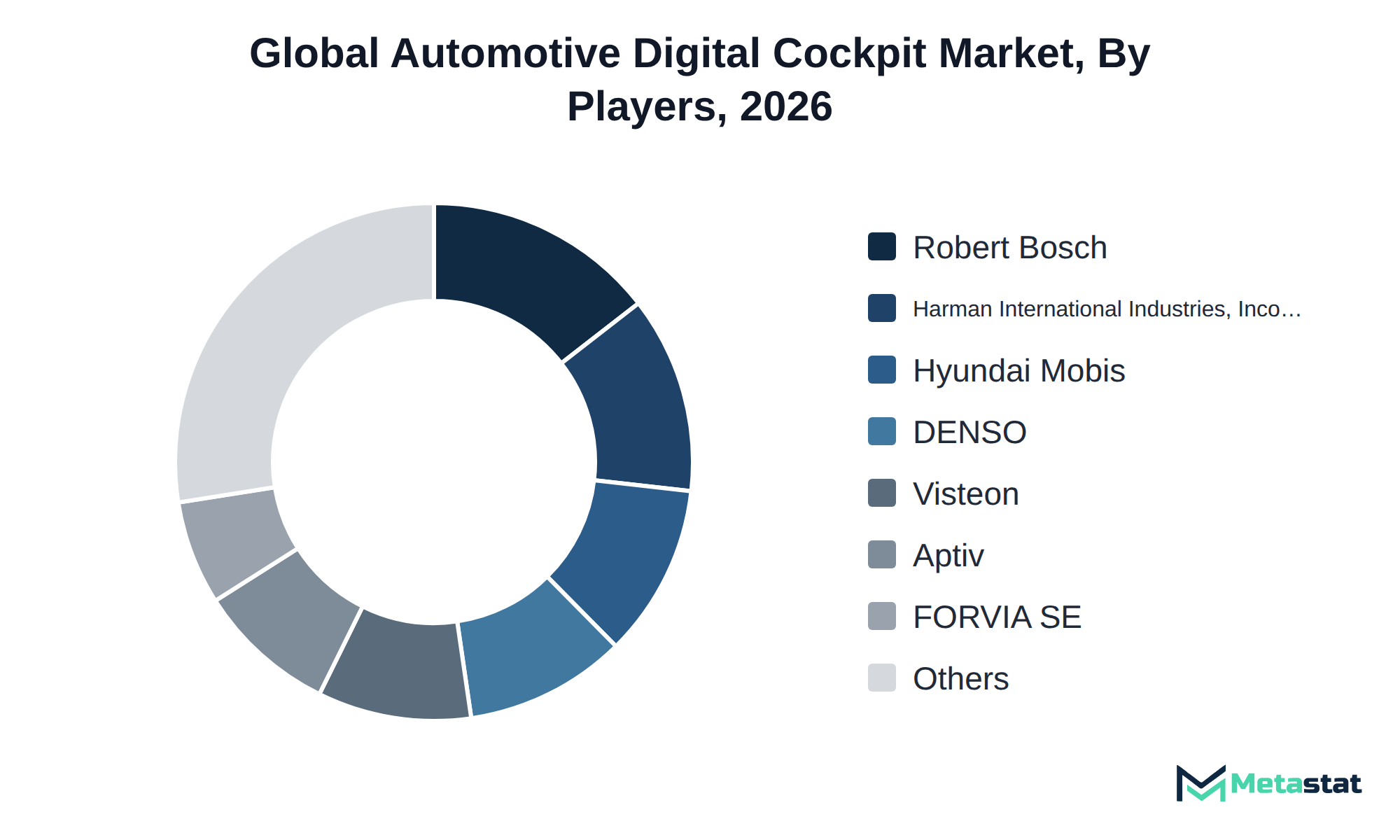
Robert Bosch GmbH emphasizes integrated solutions for digital cockpit systems, enhancing user experience and vehicle functionality. Harman International Industries, Incorporated specializes in infotainment systems and connected vehicle technologies, aiming to improve driver engagement. Visteon Corporation focuses on digital instrument clusters and cockpit domain controllers, addressing the growing demand for sophisticated information displays and control systems in modern vehicles.
Achieving this growth requires several key developments across various segments. A significant increase in the adoption of Battery Electric Vehicles (BEVs) will drive demand, with BEVs projected to reach USD 26.1 billion by 2033, supported by a strong CAGR of 18%. This transition to electrification enhances the appeal of advanced Automotive Digital Cockpit solutions, as consumers seek integrated features that improve driving experiences.
Investments in Infotainment and Center Display Systems will play a crucial role, with expectations for the segment to reach USD 23.1 billion by 2033, reflecting an 11.1% growth rate. This influx of investment aligns with the growing consumer preference for connectivity and enhanced multimedia experiences in vehicles. North America's projected market value of USD 14.3 billion by 2033 highlights the region's importance in driving innovation and consumer acceptance of advanced cockpit features.
However, the market faces risks, primarily from supply chain disruptions that could hinder component availability. Such challenges create delays in production timelines, impacting overall market growth. Addressing these issues effectively is essential for the market to reach its full potential.
By Component: Digital Instrument Clusters, Infotainment and Center Display Systems, Cockpit Domain Controllers, Head-up Displays, Driver and Occupant Monitoring Systems, Others (Rear-Seat Displays, Dedicated HMI Control Modules)
By Vehicle Type: Passenger Cars, Light Commercial Vehicles, Heavy Commercial Vehicles
By Propulsion Type: Internal Combustion Engine Vehicles, Battery Electric Vehicles, Hybrid Electric Vehicles, Plug-in Hybrid Electric Vehicles, Others (Fuel Cell Electric Vehicles)
By Sales Channel: OEM-Fitted Systems, Aftermarket Systems
The report strategically identifies and profiles the key market players and analyses their core competencies in each sub-segment of the Automotive Digital Cockpit market.
Report Attributes | Details |
Study Period | 2021-2033 |
Base Year | 2025 |
Estimated Year | 2026 |
Forecast Period | 2026-2033 |
Historical Period | 2021-2025 |
Growth Rate | CAGR 12.1% from 2026 to 2033 |
Revenue Unit | USD billion |
Segmentation | By Component, Vehicle Type, Propulsion Type, Sales Channel, and Region |
By Region | North America (By Component, Vehicle Type, Propulsion Type, Sales Channel, and Country)
|
Europe (By Component, Vehicle Type, Propulsion Type, Sales Channel, and Country)
| |
Asia Pacific (By Component, Vehicle Type, Propulsion Type, Sales Channel, and Country)
| |
South America (By Component, Vehicle Type, Propulsion Type, Sales Channel, and Country)
| |
Middle East and Africa (By Component, Vehicle Type, Propulsion Type, Sales Channel, and Country)
|
Find answers to common questions about this report
The Automotive Digital Cockpit market size was valued at USD 29.3 billion in 2025.
The market is projected to grow at a CAGR of 12.1% during the forecast period from 2026 to 2033.
The North America Automotive Digital Cockpit market size is estimated to reach USD 14.3 billion by 2033.
Infotainment and Center Display Systems lead the Automotive Digital Cockpit market, with a projected value of USD 23.1 billion by 2033. This segment surpasses others in terms of revenue potential.
Key drivers for the Automotive Digital Cockpit market include the increasing adoption of advanced infotainment systems, which enhances connectivity and entertainment for consumers. the integration of digital instrument clusters and driver monitoring systems supports demand for innovative cockpit solutions, reflecting consumer preferences for safety and personalization in vehicles.
Asia Pacific holds the dominant share of the Automotive Digital Cockpit market, accounting for USD 29.3 billion in 2025. This region's significant share reflects its leading position compared to North America and Europe.
The increasing integration of advanced digital systems in passenger vehicles significantly drives adoption within the Automotive Digital Cockpit market. Enhanced user experiences, connectivity, and safety features cater to consumer preferences, positioning this segment as a key opportunity for manufacturers and suppliers.
The Automotive Digital Cockpit market is estimated to reach a valuation of USD 73.4 billion by 2033.
Key players operating in the Automotive Digital Cockpit market include Robert Bosch GmbH, Harman International Industries, Incorporated, Visteon Corporation, FORVIA SE, DENSO Corporation, Hyundai Mobis Co., Ltd., Panasonic Automotive Systems Co., Ltd., and Aptiv PLC.
The Head-up Displays segment is projected to grow at a compound annual growth rate of 14.4 percent, driven by increased integration of advanced driver assistance systems and augmented reality technologies.
The analysts below cover Automotive and Transportation research at Metastat Insights.
LEAD ANALYST
Utkarsh Khirodkar is a Lead Market Research Analyst at MetaStat Insight, specializing in market intelligence, technology sector assessments, and competitive strategy.

ENERGY & INFRASTRUCTURE INDUSTRY CONSULTANT
Automotive and Transportation · Electronics and Semiconductor · Energy and Power · Machinery & Equipment
Saurabh Vasant Ganvir consults for Energy & Infrastructure Industry at MetaStat Insight, specializing in renewable energy, solar EPC, and electric vehicle (EV) infrastructure markets.
When planning edge sensor rollouts across refinery environments, generic IoT reports typically miss the harsh-environment certification bottlenecks. MetaStat Insight gave an objective evaluation of ATEX and Class 1 Division 2 hardware availability, along with realistic five-year maintenance cycle cost projections. The comparison of wireless mesh versus private cellular backhaul helped our team pressure-test network reliability models for remote processing facilities.
In the biological seed treatment space, registration timelines vary drastically between the European Union, Brazil, and North America. The MetaStat Insight research handled these cross-border regulatory barriers with genuine nuance, mapping commercialization pathways alongside historical field adoption rates. The segmentation between microbial strains and biochemical active ingredients was particularly well structured.
Our team was tracking whether regional recycling infrastructure could realistically absorb the growing volume of lithium iron phosphate batteries over the next decade. The report did a solid job separating announced hydrometallurgical plant capacity from active, permitted operational throughput. That distinction made the feedstock availability projections and regional recovery rate models far more credible than standard commercial overviews.
Explore related market intelligence reports worth reading alongside this one.
Starting from
$2950