
LEAD ANALYST
Utkarsh Khirodkar is a Lead Market Research Analyst at MetaStat Insight, specializing in market intelligence, technology sector assessments, and competitive strategy.

Global Connected In-Vehicle Infotainment (IVI) Market Size, Share, By Connectivity Architecture (Embedded/Built-In IVI, Smartphone-Projected IVI and Hybrid Embedded + Projected IVI), By Function (Audio, Radio & Podcasts, Video & Streaming Entertainment, Navigation & Location-Based Services, Voice Assistant & Conversational AI, Gaming & Interactive Entertainment, Communication & Messaging, App Ecosystem & Digital Services, Vehicle Information & Connected Services and Others (In-Vehicle Commerce & Productivity)), By Vehicle Type (Passenger Cars, Light Commercial Vehicles, Medium & Heavy Commercial Vehicles, Buses & Coaches and Two-Wheelers), By Fitment Type (OEM-Installed and Aftermarket), Industry Analysis, Growth, Trends, and Forecast, 2026-2033
Report ID
MSI-5197
Published
September, 2026
Pages
258 Pages
Format
Historical
Base year
Forecast
Forecast period
Report Details
Choose Your License
Global Connected In-Vehicle Infotainment (IVI) Market
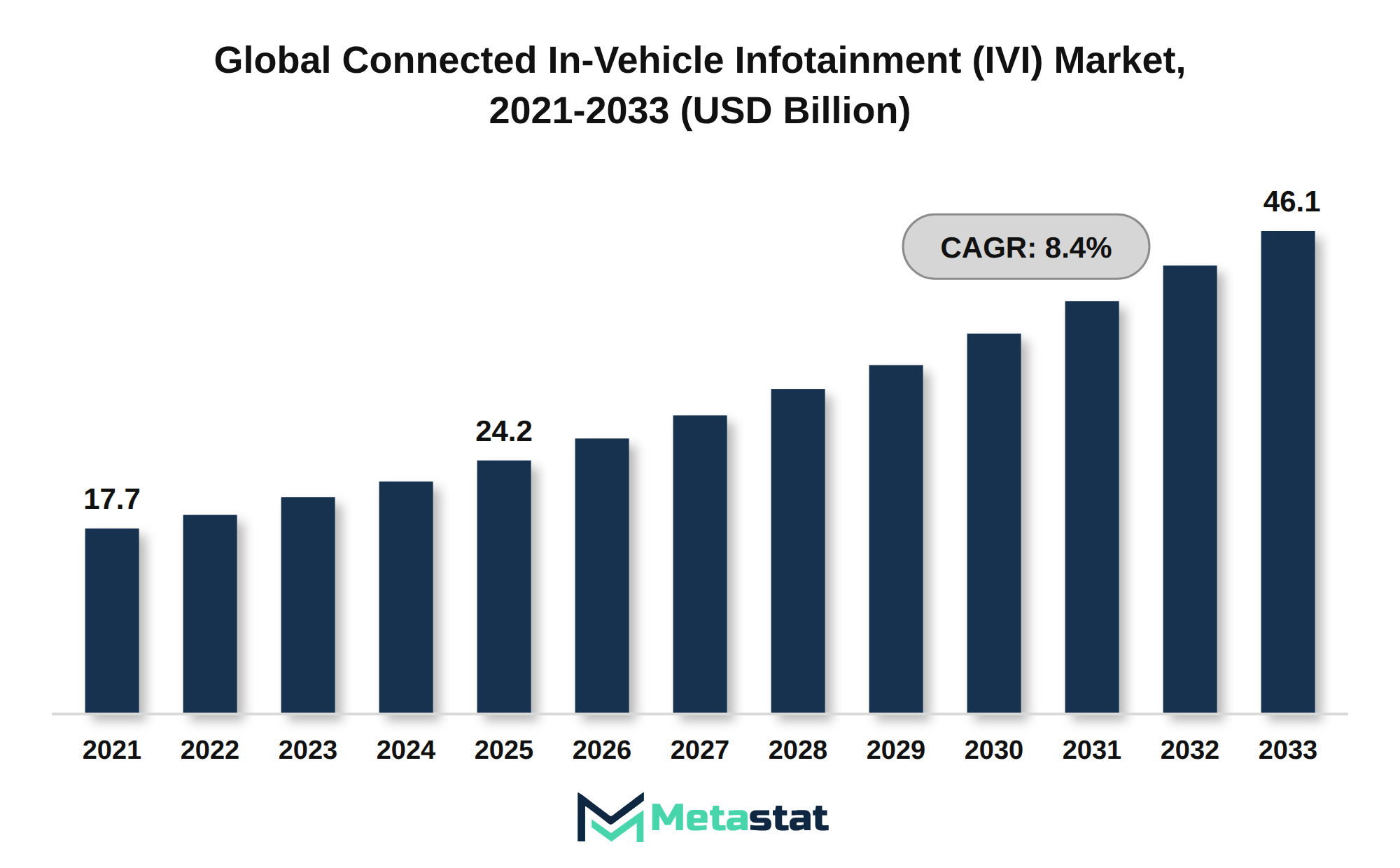
The global Connected In-Vehicle Infotainment (IVI) market was valued at USD 24.2 billion in 2025 and is projected to reach USD 46.1 billion by 2033, growing at a CAGR of 8.4% over the forecast period.
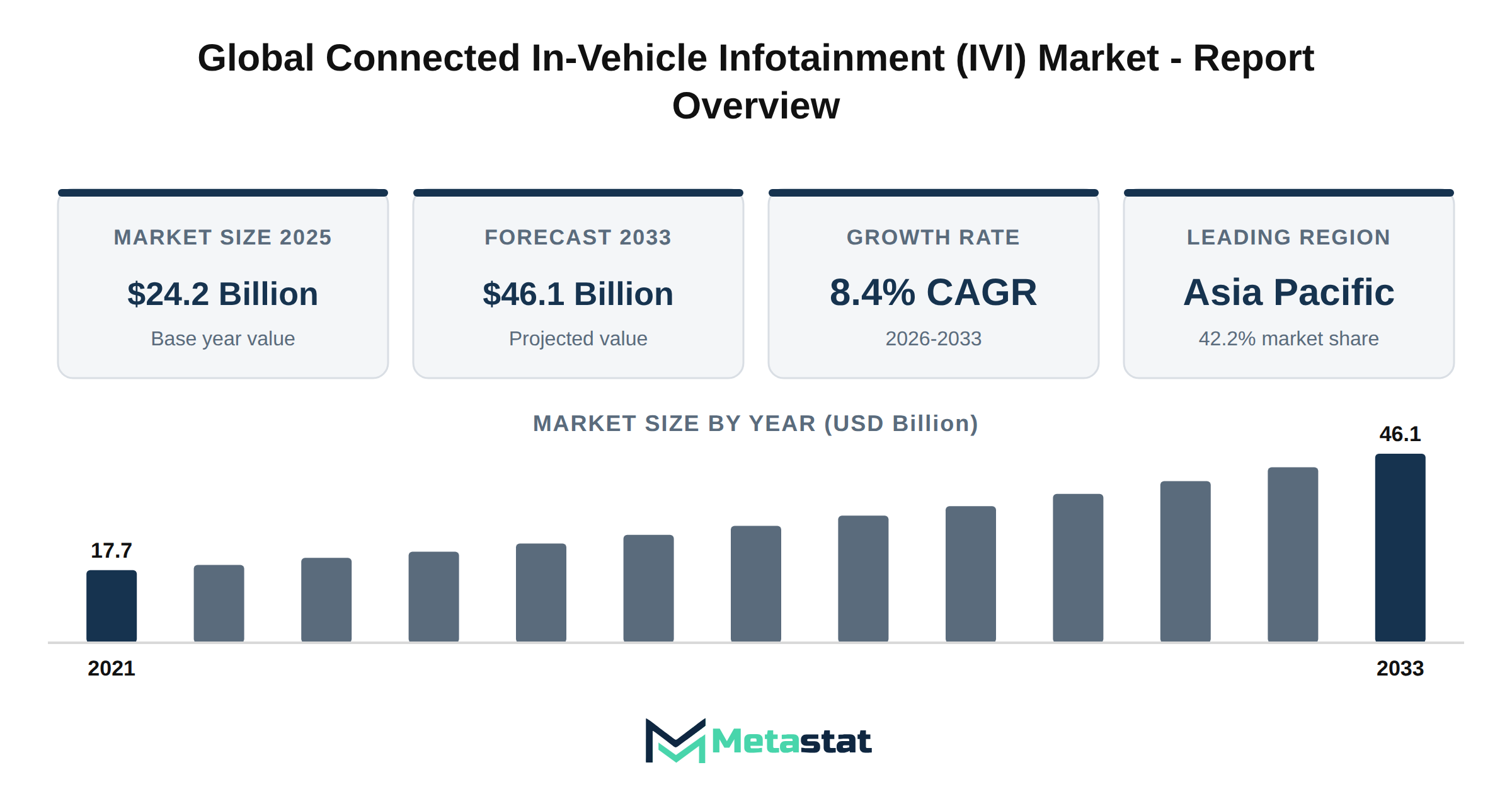
The Connected In-Vehicle Infotainment (IVI) market is positioned for substantial growth, projected to expand from USD 24.2 billion in 2025 to USD 46.1 billion by 2033, reflecting a compound annual growth rate (CAGR) of 8.4%. Historical data indicates a steady progression, with values increasing from USD 17.7 billion in 2021 to USD 22.2 billion in 2024, establishing a solid foundation for future advancements.
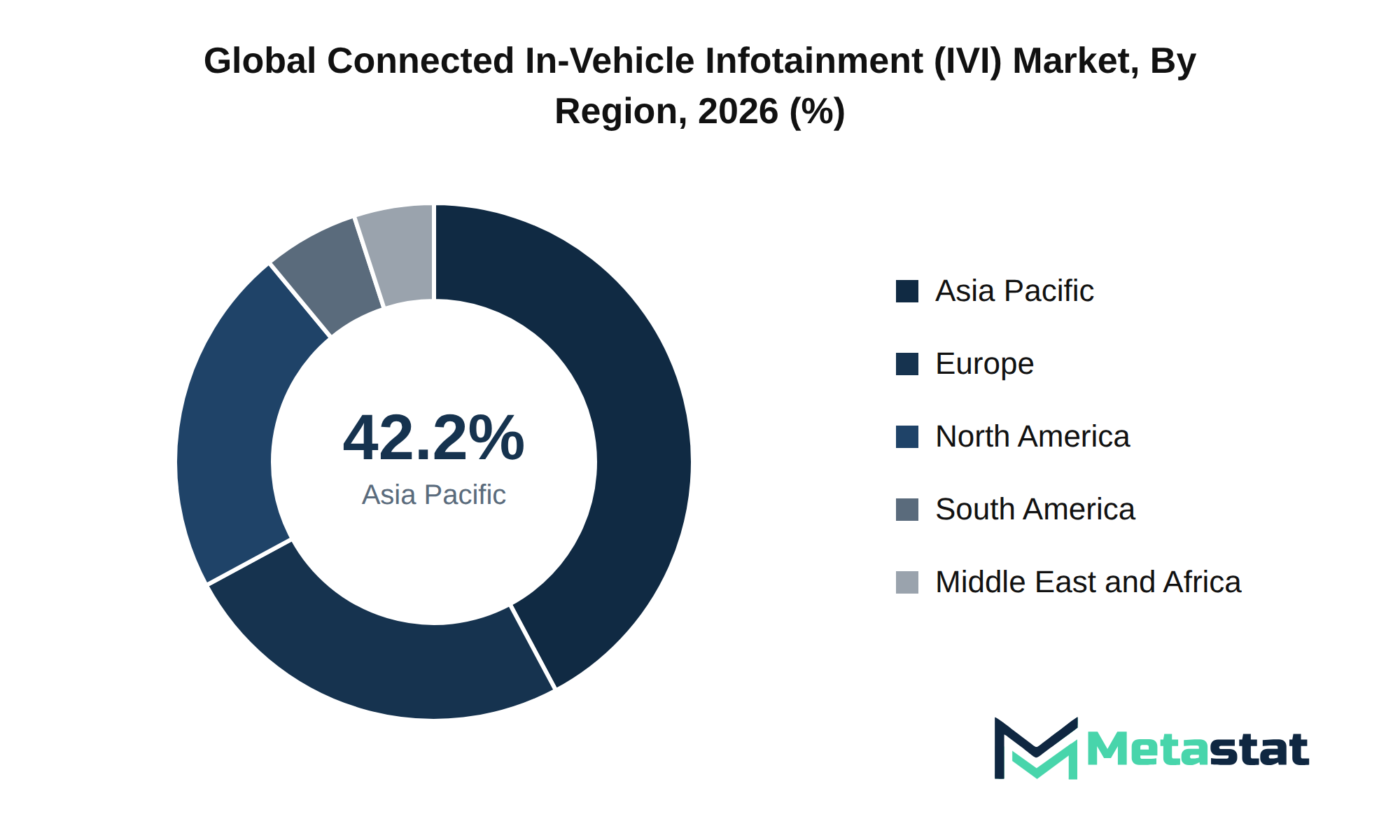
North America represents a significant portion of the market, contributing 21.9% of the total share. Europe follows closely with a share of 24.9%, while the Asia Pacific region commands the largest segment at 42.2%. This geographical distribution highlights varying adoption rates influenced by regional consumer preferences and technological advancements.
Key drivers of the Connected In-Vehicle Infotainment (IVI) market include increasing demand for enhanced driver experiences and integration of advanced technologies including generative AI personalization. Content licensing and aggregation strategies are evolving, enabling companies to offer diverse infotainment options. The market witnesses a shift towards monetization models that capitalize on in-vehicle advertising and subscription services, creating new revenue streams.
Over-the-air (OTA) feature upgrade economics present a significant opportunity for manufacturers, allowing for continuous improvement of vehicle software and features post-sale. Partnerships within the automotive app ecosystem facilitate the development of innovative applications that enhance user engagement and experience. Compliance with driver-distraction and user experience regulatory standards remains critical, ensuring safety while embracing technological advancements.
The Connected In-Vehicle Infotainment (IVI) market experiences a transformation driven by the integration of generative AI technologies. Personalization roadmaps leverage artificial intelligence to enhance user experiences, creating tailored infotainment options that align with individual preferences. This trend promotes customer engagement and satisfaction, ultimately influencing market growth.
Content licensing and aggregation strategies play a crucial role in expanding the range of available infotainment content. Partnerships with content providers enable automakers to offer diverse media options, enhancing the value proposition for consumers. Successful content strategies align with consumer interests, providing opportunities for monetization within the market.
Monetization models for infotainment systems evolve rapidly. Subscription-based services, in-app purchases, and advertising revenue streams develop owing to automakers seeking innovative ways to generate income from infotainment platforms. Understanding consumer behavior and preferences becomes critical for optimizing these models, leading to improved financial performance.
Over-the-air (OTA) feature upgrades present a cost-effective approach for automakers to enhance vehicle capabilities post-purchase. This model reduces the need for physical visits to dealerships, streamlining the upgrade process. The economic benefits of OTA updates include improved customer satisfaction and increased vehicle longevity, impacting the overall market positively.
An active automotive app ecosystem encourages collaboration among developers, automakers, and service providers. Strategic partnerships allow for the integration of third-party applications, enhancing infotainment functionality and driving user engagement. A rich app ecosystem serves because a competitive differentiator in the Connected In-Vehicle Infotainment (IVI) market.
Driver-distraction and user experience compliance remain critical considerations for automakers. Regulatory frameworks evolve to address safety concerns, ensuring that infotainment systems do not compromise driver attention. Adhering to these standards enhances brand reputation and customer trust in the market.
Research and development trajectories focus on next-generation innovations that prioritize sustainability. The shift towards decarbonization and circular economy dynamics influences product design and supply chain strategies. Automotive manufacturers increasingly invest in sustainable technologies, aligning with regulatory requirements and consumer expectations.
The supply chain landscape undergoes significant changes, driven by logistical challenges and sourcing considerations. Effective management of supply chain dynamics is essential for maintaining operational efficiency. Addressing these complexities supports the strategic outlook of companies operating within the market.
Market fragmentation presents both challenges and opportunities. Consolidation trends, including mergers and acquisitions, shape competitive dynamics. Capital allocation towards strategic investments in infrastructure and technology development becomes essential for companies aiming to enhance their market position.
The Connected In-Vehicle Infotainment (IVI) market evolves through technological advancements, strategic partnerships, and regulatory compliance. Companies that prioritize innovation and sustainability position themselves for long-term success in this dynamic environment.
The surge in digital transformation significantly influences the Connected In-Vehicle Infotainment (IVI) market, enhancing the integration of advanced technologies into vehicles. This movement is driven by the increasing demand for automation, artificial intelligence, and software adoption in automotive systems. The automotive industry increasingly invests in digitizing legacy processes, leading to improved user experiences and operational efficiencies.
While consumers embrace digital solutions, vehicle manufacturers focus on incorporating features including voice assistants and connected services, creating a more interactive driving environment. The infusion of AI and machine learning technologies into infotainment systems facilitates personalized experiences, attracting tech-savvy buyers. Higher demand for innovative IVI solutions results from this trend, driving market growth.
Investments in infrastructure development and asset modernization further enhance the Connected In-Vehicle Infotainment (IVI) market. Companies prioritize upgrading their digital capabilities to meet evolving consumer expectations and competitive pressures. This shift results in a more dynamic industry landscape, creating a competitive environment that stimulates innovation and expands potential revenue streams.
The Connected In-Vehicle Infotainment (IVI) market expands significantly due to ongoing investment in technological integration. Increasing adoption of automation, artificial intelligence, and advanced software solutions enhances functionalities within vehicles, improving user experience and operational efficiency. Digitization of legacy processes streamlines the development and deployment of IVI systems, enabling manufacturers to respond more rapidly to changing consumer preferences and competitive pressures.
Investment in research and development (R&D) allows companies to create innovative features, including voice assistants and navigation systems, which cater to evolving buyer behaviors. This innovation-led focus addresses the demand for enhanced connectivity and entertainment options within vehicles. Consequently, companies are positioned to differentiate their offerings, leading to increased market share and revenue growth in the Connected In-Vehicle Infotainment (IVI) market.
The rising efficiency of production processes, coupled with the integration of new technologies, reduces operational costs and enhances profit margins. Enhanced operational productivity enables firms to allocate resources more effectively, contributing to the overall growth trajectory of the market. While technological advancements continue to transform the automotive sector, stakeholders across the value chain recognize the need for continuous investment in advanced IVI systems to meet consumer expectations and maintain competitiveness.
The Connected In-Vehicle Infotainment (IVI) market encounters significant limitations due to regulatory and operational challenges that affect adoption and growth. Regulatory tightening often imposes stringent compliance hurdles, particularly around data security and privacy, leading to increased costs for manufacturers. This regulatory environment delays product development and market entry, affecting the overall pace of innovation.
Macroeconomic headwinds, including inflationary pressures and rising operating costs, hinder investment in new technologies essential for advancing IVI systems. High capital investment requirements for infrastructure upgrades further restrict smaller players from entering the market, limiting competition and innovation. Supply chain disruptions and geopolitical instability exacerbate these issues, impacting the availability of critical components and creating uncertainty in production timelines.
Technological obsolescence poses a risk, driven by rapid advancements in technology that render existing systems outdated. This scenario drives the necessity for continuous investment in research and development, placing financial strain on companies. The presence of alternative offerings in the market, including in-car smartphone applications, diverts attention and resources away from dedicated IVI systems.
Infrastructure gaps and connectivity deficits in various regions create deployment bottlenecks, hindering widespread adoption of connected systems. Skilled labor deficiencies and rising workforce overhead add to the operational complexities that companies face in implementing and maintaining advanced IVI solutions. Market fragmentation and cultural barriers in consumer preferences create challenges in delivering standardized solutions across diverse markets.
The Connected In-Vehicle Infotainment (IVI) market faces numerous challenges that impede growth and adoption. Addressing these factors requires strategic focus and investment, ensuring that firms navigate the complexities of regulatory compliance, operational costs, and market dynamics effectively.
The Connected In-Vehicle Infotainment (IVI) market faces challenges stemming from geopolitical fragmentation, which disrupts global supply chains and creates uncertainty in trade relationships. Ongoing tensions between major economies lead to tariff friction, complicating the import and export of necessary components. This situation results in trade deficits that strain financial resources available for investment in new technologies and infrastructure within the market.
Technological disruptions further exacerbate these challenges, driven by rapid advancements in technology that require continuous investment in research and development. The need for complex integrations of emerging technologies increases operational costs while heightening the risk of interoperability friction. Consequently, manufacturers encounter difficulties in aligning disparate systems, leading to delays and increased expenditure.
Pricing compression impacts profit margins, influenced by competitive pressures that force suppliers to lower prices. Rising input costs contribute to an unfavorable economic environment, compelling businesses to reassess their operational strategies. This dynamic creates a cycle of margin pressures that hinders companies from allocating sufficient resources to enhance their products and services.
Workforce skill gaps pose another hurdle, attributed to the rapid evolution of technology that necessitates a talent pool with advanced technical expertise. The difficulty in recruiting and retaining skilled workers creates operational bottlenecks, which stymie innovation and growth within the market. The evolution of cybersecurity risks adds complexity, resulting from companies addressing data vulnerabilities while ensuring compliance with tightening global regulatory standards.
The Connected In-Vehicle Infotainment (IVI) market navigates these multifaceted challenges, focusing on sustainable practices and effective talent management strategies to remain competitive. Companies that adapt to these pressures through innovation and strategic partnerships position themselves for success despite the prevailing obstacles.
The Connected In-Vehicle Infotainment (IVI) market experiences substantial opportunities driven by emerging regional demands across different geographies. Regions including Asia Pacific lead in market share, accounting for 42.2 percent, reflecting significant demand from rapidly developing economies like China and India. This regional focus encourages investments in infrastructure modernization, enhancing connectivity and accessibility for consumers, which supports higher adoption rates.
Technological disruptions contribute to the emergence of next-generation innovations within the market. The increasing integration of advanced connectivity architectures, including Embedded/Built-In IVI and Hybrid Embedded + Projected IVI, improves user experience and functionality. This integration aligns with shifting consumer preferences for reliable connectivity between devices, creating avenues for product diversification and new applications in the connected vehicle space.
Digital procurement shifts play a crucial role in adapting to evolving buying behaviors. Stakeholders increasingly leverage data-driven insights to inform purchasing decisions, optimizing the value chain and operational efficiencies. This trend enhances competitiveness among suppliers, encouraging strategic consolidation and cross-industry mergers that drive innovation and expand service offerings.
Sustainability imperatives, particularly eco-friendly compliances and ESG-driven alignments, shape future market dynamics. Growing consumer awareness regarding environmental impacts increases demand for green transformations within the IVI landscape. Companies prioritizing sustainable practices and product innovations are well-positioned to capture market share and enhance brand loyalty among environmentally conscious consumers.
The Connected In-Vehicle Infotainment (IVI) market stands poised for significant growth with these evolving trends, with continuous advancements reinforcing its trajectory. Opportunities for asset life-cycle extensions, maintenance upgrades, and retrofitting dynamics emerge through key strategies for maximizing operational yields and enhancing competitiveness in this rapidly changing environment.
The Global Connected In-Vehicle Infotainment (IVI) market is segmented based on Connectivity Architecture, Function, Vehicle Type, and Fitment Type.
Valued at USD 11.9 billion in 2026, the Embedded/Built-In IVI segment is projected to reach USD 19.3 billion by 2033, at a CAGR of 7.2% during the forecast period. This growth results from increasing consumer demand for integrated infotainment systems that offer effective connectivity and advanced functionalities. Automakers prioritize the incorporation of these systems to enhance user experience and maintain competitive advantages in the evolving automotive landscape.
Technological maturation significantly influences this segment's expansion, with advancements in software and hardware capabilities enabling more sophisticated offerings. Next-generation upgrades, including enhanced voice recognition and integration with smart devices, drive the adoption of Embedded/Built-In IVI solutions across various vehicle types. The push for better user interfaces and improved multimedia experiences supports the popularity of these systems, particularly in passenger cars.
Regulatory compliance standards regarding vehicle safety and connectivity further influence the market. Governments worldwide emphasize the adoption of connected technologies that improve road safety and environmental sustainability, thus encouraging automakers to invest in high-quality infotainment systems. The shift in consumer preferences towards vehicles equipped with advanced infotainment features fuels demand, prompting manufacturers to prioritize investments in this area.
Cost structures associated with Embedded/Built-In IVI systems reflect the complexity of integrating advanced functionalities into vehicles. Pricing volatility linked to technological advancements and raw material sourcing impacts the overall cost of production. Consequently, manufacturers navigate these challenges while ensuring competitive pricing to attract consumers. Supply chain resilience remains essential to maintain the flow of necessary components without significant disruptions.
Strategic opportunity windows arise from automakers exploring the potential of Embedded/Built-In IVI systems in enhancing vehicle functionality. The emphasis on providing consumers with interactive features, including navigation, streaming services, and in-car commerce, positions the segment for significant growth. Overall, the Embedded/Built-In IVI segment within the Connected In-Vehicle Infotainment (IVI) market demonstrates promise, driven by technological advancements and changing consumer expectations.
Significant advancements in mobile technology and increasing consumer demand for reliable connectivity drive the growth of the Smartphone-Projected IVI segment. The integration of smartphones into vehicular systems enhances the user experience by enabling access to applications, navigation, and entertainment features directly from the vehicle's interface. With an estimated value of USD 9.2 billion by 2033, this segment presents a compound annual growth rate (CAGR) of 6.2% during the forecast period.
Technological maturation significantly influences segment expansion, with next-generation upgrades in operating systems and application interoperability improving functionality. Enhanced features, including real-time updates and personalized user interfaces, raise consumer expectations. The convergence of infotainment systems with smartphone technology increases the overall attractiveness of vehicles equipped with these systems, influencing purchasing decisions among consumers.
End-use dynamics reflect a shift towards greater adoption of connected services within the automotive ecosystem. While consumers increasingly favor smartphone connectivity, the demand for Smartphone-Projected IVI solutions intensifies. Regulatory compliance standards focusing on safety and data privacy further encourage manufacturers to enhance integration capabilities while maintaining consumer trust. These factors contribute to the overall expansion of the Connected In-Vehicle Infotainment (IVI) market, presenting strategic opportunity windows for key participants.
With an eye on cost structures, manufacturers face pressures related to pricing volatility and raw material sourcing. The competitive landscape necessitates innovation without compromising affordability. Strategic investments in research and development improve product offerings, positioning companies to capture market share effectively. The Smartphone-Projected IVI segment demonstrates resilience against disruptive alternatives, maintaining its relevance in the evolving Connected In-Vehicle Infotainment (IVI) market.
Growth in the Hybrid Embedded + Projected IVI segment is propelled by the increasing demand for in-car connectivity and enhanced user experiences. Various consumers, especially tech-savvy individuals, prioritize features including smartphone integration and advanced navigation systems. This growing preference is evident in the automotive market's shift towards integrating these capabilities into vehicles, driving significant investments in infotainment technology.
Technological maturation enables the integration of embedded systems and smartphone connectivity, creating a more versatile in-vehicle infotainment experience. The evolution of user interfaces and the integration of artificial intelligence further enhance functionality and user engagement. Companies strive to innovate continuously, introducing features like voice assistants and real-time traffic updates, which improve the overall driving experience.
By 2033, the Hybrid Embedded + Projected IVI segment is expected to reach USD 17.5 billion, reflecting a strong growth trajectory. The anticipated expansion highlights significant market opportunities for manufacturers focusing on next-generation upgrades and smart vehicle applications. End-use dynamics indicate a shift in consumer preferences towards high-quality audio, video streaming, and navigation services, influencing product development strategies in the sector.
Regulatory compliance standards contribute to shaping the competitive landscape, driven by manufacturers adapting to evolving consumer safety expectations and environmental regulations. This adaptation requires ongoing investment in research and development to maintain compliance while delivering innovative solutions. The costs associated with implementing these technologies, alongside pricing volatility, impact market margins, necessitating a strategic approach to resource allocation.
Raw material sourcing and supply chain resilience remain critical for sustaining growth in the Hybrid Embedded + Projected IVI segment. Manufacturers navigate potential disruptions in supply chains while exploring alternative materials and components that support the evolving technological landscape. Strategic opportunity windows arise for new entrants and established players alike, presenting avenues for collaboration and innovation within the Connected In-Vehicle Infotainment (IVI) market.
Valued at USD 5.6 billion in 2026, the Audio, Radio & Podcasts segment is projected to reach USD 8.3 billion by 2033, at a CAGR of 5.8% during the forecast period. Demand for audio content continues to rise, driven by an increasing preference for personalized and on-demand entertainment options among consumers. This shift towards digital audio consumption, including streaming services and podcasts, significantly influences the growth dynamics within the Connected In-Vehicle Infotainment (IVI) market.
Technological maturation enhances the expansion of this segment, driven by advancements in voice recognition and integration with smart devices that improve the user experience. Next-generation upgrades focus on incorporating artificial intelligence and machine learning capabilities, enabling more intuitive interaction with infotainment systems. These developments increase adoption rates among consumers seeking connectivity and improved audio experiences while driving.
Changes in consumption patterns, particularly the growing popularity of podcasting and streaming platforms, contribute to the transformation of in-vehicle audio systems. This evolving landscape creates strategic opportunity windows for industry players, encouraging investments in innovative solutions. Regulatory compliance standards regarding safety and distraction-free driving further push manufacturers towards integrating advanced audio functionalities without compromising road safety.
The Audio, Radio & Podcasts segment of the Connected In-Vehicle Infotainment (IVI) market is set for substantial growth, driven by demand for personalized content, technological advancements, and evolving consumer preferences. The commitment to enhancing audio experiences aligns with broader trends in digital consumption, positioning this segment for continued expansion in the coming years.
Rapid growth in the Video & Streaming Entertainment segment reflects increasing consumer preference for digital content consumption during travel. Advancements in mobile internet connectivity and the proliferation of streaming services drive this demand, enabling passengers to access high-quality entertainment on the go. This evolution of the Connected In-Vehicle Infotainment (IVI) market aligns with the broader trend toward enhanced in-car experiences, leading to upgrades in vehicle capabilities.
The segment is projected to reach USD 4.6 billion by 2033, at a CAGR of 9.7% during the forecast period. Technological maturation in connectivity options allows integration of smartphones and other devices into vehicle systems. These upgrades enhance user experience and attract a wider audience, contributing to market expansion.
Next-gen upgrades, including improved audio-visual capabilities and interactive features, support the growing demand for Video & Streaming Entertainment. This focus on product evolution positions the segment favorably within the market, catering to consumers seeking innovative in-car entertainment solutions. These factors collectively form a strong framework for growth within the overall Connected In-Vehicle Infotainment (IVI) market.
Expansion of the Navigation & Location-Based Services segment is fueled by rising consumer demand for advanced navigation solutions that enhance driving experiences. Integration of real-time traffic updates, route optimization, and location-based services supports the growth trajectory of this segment. Increased smartphone penetration and the proliferation of mobile applications further contribute to robust adoption rates. The convergence of automotive technology with internet connectivity enables effective integration of navigation systems, driving demand among consumers seeking enhanced functionality.
This segment is projected to reach USD 7.2 billion by 2033. Innovations in artificial intelligence and machine learning drive the development of more sophisticated navigation systems, increasing competition within the Connected In-Vehicle Infotainment (IVI) market. Strategic partnerships among technology providers and automotive manufacturers facilitate next-generation upgrades, ensuring services remain relevant and user-friendly.
Growing regulatory compliance standards related to safety and emissions drive manufacturers to incorporate advanced navigation systems into their vehicles, further boosting the segment. Cost structures associated with developing and implementing these technologies exhibit variability, influencing pricing strategies and margin pressures. Navigating these factors effectively positions stakeholders to capitalize on emerging opportunities within the segment.
Growing consumer expectations for innovative in-vehicle experiences drive demand for solutions in the Connected In-Vehicle Infotainment (IVI) market. Voice assistants and conversational AI technologies enhance user interaction, enabling hands-free control and providing valuable information. This shift aligns with a broader trend toward increasing vehicle connectivity and automation.
Technological advancements in natural language processing and machine learning facilitate the development of sophisticated voice recognition systems. Enhanced accuracy in understanding user commands leads to a more intuitive user experience. These improvements attract attention from automotive manufacturers and consumers, propelling market growth.
The Voice Assistant & Conversational AI segment is projected to grow at a CAGR of 12.5% during the forecast period. This growth reflects increasing adoption across various vehicle types, particularly passenger cars, where enhanced user experiences are critical for competitive differentiation.
Integration of voice assistants into infotainment systems supports multiple applications, including navigation, entertainment, and communication. This multifaceted functionality aligns with consumer preferences for convenience and safety, influencing purchasing decisions. While the market matures, ongoing investments in research and development strengthen the capabilities of voice assistants, ensuring they meet evolving consumer needs.
Market dynamics indicate that effective regulatory compliance and certification standards will contribute to the segment's growth. Established frameworks encourage the adoption of voice assistant technologies, driving innovation while ensuring user safety. Overall, the combination of technological advancements and regulatory support positions the Voice Assistant & Conversational AI segment favorably within the Connected In-Vehicle Infotainment (IVI) market.
In-vehicle entertainment systems increasingly integrate gaming and interactive experiences, enhancing user engagement during travel. This trend arises from the growing consumer preference for immersive entertainment options, particularly among younger demographics who prioritize interactive content. The proliferation of high-speed internet connectivity within vehicles further supports real-time gaming experiences, allowing passengers to play online games seamlessly while on the road.
Technological advancements in graphics processing and user interface design significantly contribute to the evolution of gaming content in vehicles. Manufacturers invest in next-generation upgrades that facilitate improved graphics and sound quality, driving consumer interest. This segment's expansion is spurred by partnerships between automotive and gaming companies, enabling the development of exclusive in-car gaming titles tailored for the unique environment of vehicles.
Shifts in consumer behavior, particularly the desire for entertainment during commutes or long journeys, drive the growth of gaming and interactive entertainment within the Connected In-Vehicle Infotainment (IVI) market. Increasing acceptance of in-car entertainment systems among consumers, coupled with the growing trend of ride-sharing services, creates additional opportunities for this segment. The potential to monetize gaming experiences through in-app purchases and subscriptions presents a lucrative revenue stream for manufacturers and developers.
Regulatory compliance and safety standards influence the development of gaming in vehicles, with companies focusing on ensuring that interactive entertainment does not distract drivers. This compliance builds trust among consumers, encouraging further adoption of gaming systems. While automotive technology evolves, the integration of gaming and interactive entertainment is expected to become a standard feature in future vehicle designs, establishing its place in the Connected In-Vehicle Infotainment (IVI) market.
Growing connectivity demands drive significant advancements in the Communication & Messaging sub-segment of the Connected In-Vehicle Infotainment (IVI) market. The integration of advanced messaging platforms enhances user experience within vehicles, enabling efficient communication while driving. This technological evolution aligns with consumer preferences for enhanced connectivity and real-time interaction.
Consumer adoption of smart devices continues to influence the demand for integrated communication solutions. Increasing expectations for hands-free interactions and voice recognition systems contribute to the growth of this segment. Innovations in voice assistant technologies facilitate safe communication options, further appealing to consumers seeking convenience and safety.
Technological maturation in mobile communication standards, including 5G, creates new opportunities for embedded communication systems in vehicles. These advancements support greater data transmission speeds and improved connectivity, enabling applications that enhance the driving experience, including live streaming and real-time updates.
Strategic investments by automotive manufacturers in communication technology establish a competitive edge in the market. Collaborations with tech companies to enhance messaging capabilities ensure that vehicles remain connected, addressing consumer demands for integrated services. Such partnerships strengthen market positioning and create avenues for product evolution, focusing on user-friendly interfaces and enhanced functionality.
The emergence of regulatory compliance standards promotes the integration of communication systems in vehicles. Adherence to safety regulations drives investments in advanced communication technologies, ensuring that manufacturers meet consumer expectations for safety during vehicle operation. This shift towards compliance provides a strategic opportunity for growth within the segment.
Continued innovation in messaging and communication technologies positions the market for sustained expansion. The focus on user experience and technological advancements cultivates a favorable environment for the Communication & Messaging sub-segment. Consumer preferences evolve, and the market anticipates dynamic shifts, shaping the future of connected vehicles.
Technological advancements in the Connected In-Vehicle Infotainment (IVI) market significantly enhance the App Ecosystem & Digital Services segment. The proliferation of mobile applications and the increasing integration of digital services within vehicles contribute to robust demand for this segment. Consumers increasingly seek personalized and connected experiences, driving manufacturers to innovate and expand their offerings. Connectivity between vehicles and smartphones accelerates consumer adoption, creating a favorable environment for growth.
Competitive pressures within the market stimulate investment in next-generation upgrades. Manufacturers focus on providing integrated solutions that encompass various functions, including navigation, entertainment, and communication. This trend reflects a strategic shift toward creating comprehensive in-vehicle experiences that cater to changing consumer needs. Regulatory compliance standards regarding data privacy and cybersecurity shape product development strategies, compelling companies to enhance their offerings while ensuring consumer safety.
End-user dynamics continuously shift toward more interactive and engaging in-vehicle experiences. The growing prevalence of voice assistants and conversational AI within the App Ecosystem & Digital Services segment highlights this trend, enabling hands-free controls and personalized interactions. This shift enhances user convenience, driving further engagement with in-vehicle digital services. Investment in new technologies and features supports the expansion of this segment, creating a competitive landscape that encourages continuous innovation.
Supply chain resilience influences the segment's success. Manufacturers prioritize raw material sourcing and logistics management to mitigate disruptions and ensure timely delivery of products. Strategic opportunity windows emerge for companies that effectively navigate the complexities of the supply chain. The increasing focus on sustainability and eco-friendly practices within the market influences sourcing strategies, prompting manufacturers to explore alternative materials and production methods.
Adoption of Vehicle Information & Connected Services receives strong momentum from the increasing integration of digital solutions within vehicles. Manufacturers prioritize the enhancement of user experiences through real-time information and connected functionalities. Access to navigation, vehicle diagnostics, and infotainment services becomes crucial for consumers, influencing purchasing decisions. The demand for these capabilities aligns with evolving consumer preferences for enhanced connectivity and convenience.
Technological maturation plays a significant role in the growth of the segment. Advancements in cloud computing, IoT, and data analytics enable richer vehicle information offerings. Manufacturers leverage these technologies to develop innovative applications that enhance the in-car experience, driving consumer interest and engagement. Continuous evolution of software solutions supports next-gen upgrades, ensuring vehicles remain competitive in the market.
Demand dynamics reflect shifts towards more sophisticated infotainment systems, leading to increased investment in research and development. These systems increasingly incorporate AI-driven functionalities, allowing for personalized user experiences. Regulatory compliance standards push manufacturers to prioritize safety and data security, shaping product development strategies. Evolving standards create new opportunities for innovation and differentiation within the segment.
Cost structures impact the pricing strategies of manufacturers, who face pressures from increasing raw material costs and competition in the market. Strategic positioning through value-driven pricing models becomes essential for maintaining profit margins. Companies actively seek to optimize production processes and supply chain resilience to mitigate these challenges while enhancing service offerings.
Investments in infrastructure and technology create strategic opportunity windows for further growth. The segment benefits from rising demand for connected services, pushing manufacturers to explore new partnerships and collaborations. Competition intensifies, and firms prioritizing product evolution and customer engagement are likely to secure a position of strength in the Connected In-Vehicle Infotainment (IVI) market.
Growth in the Others (In-Vehicle Commerce & Productivity) segment results from the increasing integration of digital services within vehicle systems. Consumers increasingly seek improved in-vehicle experiences, driving demand for solutions that merge commerce and productivity applications. This evolving consumer expectation leads manufacturers to invest in next-generation technologies that expand in-vehicle capabilities.
Technological maturation significantly contributes to the segment's expansion, with advancements in cloud computing and artificial intelligence enabling more sophisticated applications. These technologies facilitate transactions and productivity tools, enhancing the overall user experience. Enhanced connectivity within vehicles supports the integration of various applications that allow users to manage tasks without leaving the vehicle.
End-use dynamics reflect a shift in consumer behavior, with increased reliance on technology for daily tasks. While vehicles become more connected, the demand for applications that facilitate commerce while prioritizing user productivity continues to grow. This shift influences market participants to explore partnerships and innovations that improve the in-vehicle experience.
Regulatory compliance standards impact the segment, with manufacturers focusing on ensuring that in-vehicle commerce applications adhere to safety and privacy regulations. This focus affects the development timeline and investment strategies, driven by compliance requirements that necessitate rigorous testing and certification processes.
Strategic opportunity windows for market participants lie in the expansion of product offerings that cater to both commerce and productivity within vehicles. Capital investments are expected to facilitate the development of solutions that enhance user engagement while ensuring data security and compliance with evolving regulations. This approach positions participants to respond to emerging market trends effectively.
Valued at USD 18.8 billion in 2026, the Passenger Cars segment is projected to reach USD 32.5 billion by 2033, at a CAGR of 8.1% during the forecast period. Increasing consumer preference for advanced infotainment features, including reliable connectivity and enhanced multimedia capabilities, drives adoption within this segment. The trend towards smart and connected vehicles necessitates sophisticated in-vehicle systems that integrate navigation, entertainment, and communication functions, significantly influencing demand dynamics.
Technological maturation in the Connected In-Vehicle Infotainment (IVI) market supports the integration of next-generation upgrades, including voice assistance and artificial intelligence, creating a competitive advantage for manufacturers. This evolution enhances the user experience by enabling hands-free operation and personalized content delivery, appealing to a tech-savvy consumer base. The rise of over-the-air updates further enhances these advancements, enabling continuous improvement of features and security measures.
Regulatory compliance and safety standards influence product development in passenger vehicles, with manufacturers prioritizing systems that meet these requirements. This focus not only safeguards users but promotes brand loyalty and customer retention. The expansion of infrastructure supporting electric vehicles and autonomous technology drives investment in infotainment capabilities, creating a robust ecosystem for in-vehicle solutions.
Pricing volatility in raw materials affects cost structures, with manufacturers working to balance competitive pricing while maintaining quality. Strategic opportunity windows emerge due to companies aiming to innovate and differentiate their offerings in the crowded market. Developing strong supply chain resilience becomes crucial to mitigate potential disruptions and guarantee timely delivery of infotainment systems.
The Passenger Cars segment stands to benefit from ongoing advancements in digital services and connectivity features, driving further growth in the Connected In-Vehicle Infotainment (IVI) market. Capital investment in this segment encourages innovation and expansion, supporting the development of new functionalities that enhance the overall driving experience. Continuous evolution in consumer preferences for integrated technology will further stimulate demand, positioning the segment for sustained growth through 2033.
Demand for Connected In-Vehicle Infotainment (IVI) systems in Light Commercial Vehicles is driven by increasing integration of advanced technological features aimed at enhancing driver and passenger experiences. This segment is estimated to reach USD 5.3 billion by 2033, at a CAGR of 8.9% during the forecast period. The rise in e-commerce and delivery services necessitates efficient logistics solutions, leading to heightened adoption of IVI systems that support navigation, communication, and real-time data access. Regulatory compliance standards focusing on safety and emissions influence the incorporation of connected technologies in vehicles, because manufacturers strive to meet stringent guidelines.
The expansion of this segment aligns with broader trends in the market, where the demand for connectivity and digital services is significant. Light Commercial Vehicles increasingly feature systems that integrate voice assistance, navigation, and entertainment functions, fulfilling the evolving expectations of users. Investments in next-generation upgrades and product evolution play a significant role in this growth trajectory, because manufacturers seek to differentiate their offerings in a competitive landscape.
Technological maturation continues to enhance the functionality of IVI systems, leading to improved user interfaces and overall performance. The growth potential within this sub-segment reflects ongoing shifts in consumption patterns, whereby businesses seek smarter and more efficient vehicles to optimize operations. These dynamics position the Light Commercial Vehicles segment because a vital component of the Connected In-Vehicle Infotainment (IVI) market, with substantial opportunities for future development and revenue generation.
Demand for Connected In-Vehicle Infotainment (IVI) solutions in Medium & Heavy Commercial Vehicles responds to the increasing emphasis on fleet management and operational efficiency. This segment benefits from technological maturation in telematics and real-time data analytics, enabling enhanced vehicle tracking and maintenance. The expansion of these technologies aligns with growing demand for data-driven decision-making in logistics and transportation sectors.
Regulatory compliance standards, particularly around emissions and safety, push manufacturers to integrate advanced infotainment systems that monitor vehicle performance and ensure adherence to guidelines. This compliance drives investments in next-generation infotainment technologies, further enhancing the segment's growth potential. The market reaches USD 3.1 billion by 2033, reflecting robust adoption among fleet operators seeking competitive advantages through innovative vehicle technologies.
Increased consumer expectations for connectivity and entertainment options in commercial vehicles lead to significant advancements in infotainment features. Improvements in user interfaces, connectivity options, and multimedia capabilities cater to end-user dynamics, enhancing the overall driving experience. Evolving product offerings continuously ensure manufacturers meet changing preferences of operators and drivers.
Cost structures within the segment are influenced by the need for high-quality hardware and software integration, affecting pricing strategies and profit margins. The potential for long-term savings through improved efficiency and reduced downtime positions this investment favorably for operators. The segment's growth trajectory reflects an opportunity window for key players in the Connected In-Vehicle Infotainment (IVI) market to capitalize on emerging technologies and customer demands.
Significant growth in the Buses & Coaches segment aligns with increased demand for efficient public transportation solutions. This sector is projected to grow at a CAGR of 9.1% during the forecast period. Rising urbanization and a focus on reducing traffic congestion drive municipalities and transport agencies to adopt advanced infotainment systems that enhance passenger experiences. Integration of real-time information systems, entertainment features, and connectivity options within buses improves user satisfaction, attracting more riders.
Technological maturation remains a crucial factor influencing the Connected In-Vehicle Infotainment (IVI) market. Enhanced systems provide connectivity, allowing passengers to access entertainment and information during their commute. This trend encourages further investment in next-generation upgrades, ensuring that bus operators remain competitive and meet evolving passenger expectations.
Regulatory compliance standards, particularly those emphasizing safety and environmental sustainability, impact the adoption of advanced infotainment solutions. Agencies increasingly require systems that support compliance with these standards while offering innovative features. The strategic opportunity window for suppliers involves developing customized infotainment solutions to meet specific regulatory requirements, positioning them favorably in the market.
Cost structures and pricing volatility present challenges for operators in the Buses & Coaches segment. Implementing advanced infotainment systems entails substantial initial investments, along with ongoing maintenance costs. However, the long-term benefits of improved passenger satisfaction and operational efficiency often offset these expenses, resulting in a valuable return on investment.
Overall, the Buses & Coaches segment plays an important role in the Connected In-Vehicle Infotainment (IVI) market. Technological advances, regulatory pressures, and consumer preferences shape its trajectory, indicating strong growth and significant opportunities for stakeholders in the coming years.
Rising interest in two-wheelers for personal and commercial use drives demand for advanced infotainment systems. This segment benefits from increasing consumer preference for connectivity and digital services, prompting manufacturers to enhance the integration of in-vehicle technology. Features including navigation, audio streaming, and connectivity with mobile devices significantly enhance the user experience.
Rapid technological advancements contribute to the evolution of infotainment systems, with next-gen upgrades incorporating smart capabilities and artificial intelligence. These enhancements enable features like voice assistance and conversational AI, aligning with consumer expectations for intuitive and interactive interfaces. The growing trend of urbanization and the need for efficient transportation solutions further drive the adoption of connected in-vehicle infotainment systems in two-wheelers.
Regulatory compliance standards emphasizing safety and environmental concerns influence product development within the market. Manufacturers invest in innovative technologies that meet these regulations while enhancing user engagement. Companies explore collaborations and partnerships to integrate advanced infotainment solutions across their two-wheeler offerings, creating strategic opportunities for growth.
Investment in research and development remains crucial for addressing cost structures and pricing volatility. Companies focus on long-term value creation by optimizing supply chain resilience and raw material sourcing. Evolving consumer preferences and advancements in connected technology for two-wheelers drive further market expansion.
In the Connected In-Vehicle Infotainment (IVI) market, the Others (Recreational & Specialty Vehicles) segment experiences growth driven by increasing consumer interest in customized and versatile vehicle applications. This segment benefits from the rise in leisure activities and adventure tourism, which fuel demand for vehicles equipped with advanced infotainment features tailored for recreational use. Technological maturation in infotainment systems enhances user experiences, integrating features including navigation, connectivity, and entertainment into vehicles designed for specialized functions.
Adoption of next-generation upgrades in recreational vehicles supports segment expansion, driven by manufacturers investing in incorporating smart technologies that deliver enhanced functionality. Product evolution in infotainment systems contributes significantly to improving user engagement, providing straightforward accessibility to a variety of services that cater to recreational needs. The market anticipates consumption shifts toward more integrated solutions that combine entertainment, navigation, and communication functionalities in vehicles.
Regulatory compliance standards related to safety and connectivity greatly influence the development of infotainment systems within recreational vehicles. Certifications for software and hardware integration play a crucial role in enabling manufacturers to offer reliable solutions while maintaining safety protocols. These standards create a framework within which companies strategize to meet both consumer expectations and regulatory requirements, ultimately impacting market dynamics.
Cost structures and pricing volatility present challenges within the segment, particularly concerning the sourcing of advanced materials and components necessary for advanced infotainment systems. Price fluctuations in electronic components exert pressure on profit margins, necessitating strategic sourcing and efficient production processes. Despite these pressures, opportunities for strategic investments in innovative technologies remain, allowing companies to capitalize on the growing demand for enhanced in-vehicle experiences in the recreational vehicle market.
Overall, the Others (Recreational & Specialty Vehicles) segment within the Connected In-Vehicle Infotainment (IVI) market stands at the crossroads of innovation and consumer demand, indicating a robust potential for future growth driven by evolving consumer preferences and technological advancements.
Valued at USD 21.9 billion in 2026, the OEM-Installed segment is projected to reach USD 39.1 billion by 2033, at a CAGR of 8.6% during the forecast period. Factors driving this segment include increasing consumer expectations for integrated technologies and enhanced user experiences in vehicles. Automakers invest heavily in connected technologies to remain competitive, leading to rapid advancements in product offerings. Significant growth in electric vehicles and autonomous driving technologies drives demand for sophisticated infotainment systems.
Technological maturation plays a critical role in the expansion of this segment. Continuous innovations in hardware and software enable OEMs to offer advanced features, including voice assistants and real-time navigation systems. The integration of artificial intelligence and machine learning enhances user experiences, pushing manufacturers to adopt next-generation upgrades. Regulatory compliance standards regarding safety and emissions further influence OEM strategies, ensuring that products align with market requirements.
Cost structures in the OEM-Installed segment reflect the investment needed to integrate advanced technologies into vehicles. Pricing volatility poses challenges, requiring manufacturers to balance quality and affordability. Competition among suppliers results in margin pressures, compelling companies to optimize operations and supply chains. New technologies emerge, enabling OEMs to capitalize on untapped markets within the Connected In-Vehicle Infotainment (IVI) market.
Supply chain resilience remains essential, particularly in sourcing raw materials for advanced infotainment systems. Manufacturers increasingly focus on securing reliable suppliers to mitigate logistics vulnerabilities. Substitution risks arise from alternative technologies, pushing OEMs to differentiate their offerings. Tactical investments in research and development drive product evolution, aligning with the market's growing demand for innovative and user-friendly infotainment solutions.
Demand for aftermarket connected in-vehicle infotainment solutions reflects a trend toward enhanced personalization and user control. Consumers increasingly seek systems that allow them to upgrade their vehicle’s technology without waiting for OEM-installed solutions. This shift toward consumer-driven enhancements drives growth and is expected to lead to an estimated value of USD 6.9 billion by 2033, at a CAGR of 6.9% during the forecast period.
Technological maturation drives the evolution of aftermarket devices, enabling compatibility with various vehicle types and ensuring integration with existing systems. The emergence of advanced features, including voice assistance and connectivity to mobile devices, enhances the attractiveness of aftermarket products. Strong competition among suppliers to offer innovative features further accelerates market growth within the connected in-vehicle infotainment (IVI) market.
Regulatory compliance standards play a vital role in shaping the aftermarket environment. Increasingly stringent guidelines for safety, data privacy, and connectivity impact the development of aftermarket products. Consequently, manufacturers invest in compliance to enhance product appeal and broaden their market reach. This focus on regulatory adherence strengthens consumer confidence and supports ongoing adoption of aftermarket infotainment solutions.
Cost structures in the aftermarket segment vary significantly due to pricing volatility in raw materials and components. Suppliers face margin pressures driven by fluctuating costs, requiring strategic pricing models to maintain profitability. Effective cost management and supply chain resilience become essential for competitors striving to succeed in this fast-evolving market.
Overall, the aftermarket segment represents a compelling opportunity within the connected in-vehicle infotainment (IVI) market. Increasing consumer demand for upgraded features, combined with technological advancements and regulatory compliance, presents avenues for growth. Strategic investments in product development and marketing yield significant benefits for players operating in this evolving environment.
Based on geography, the Global Connected In-Vehicle Infotainment (IVI) market is divided into North America, Europe, Asia-Pacific, South America, Middle East, and Africa.
North America holds a substantial position in the Connected In-Vehicle Infotainment (IVI) market, with a projected market size of USD 9.6 billion by the end of 2033, reflecting a CAGR of 8.4% during the forecast period. The region accounted for 21.9% of the global market share in 2025.
Strong demand for advanced infotainment solutions in the United States, Canada, and Mexico drives investment in technological innovations. Consumer preferences for connectivity and immersive media experiences continuously influence manufacturers to enhance their offerings. This trend promotes growth within the market, particularly in segments including Audio, Radio & Podcasts, and Video & Streaming Entertainment.
The ongoing modernization of infrastructure supports the deployment of connected systems in North American vehicles. Enhanced network capabilities, including 5G implementation, enable increased data transmission speeds and lower latency. This environment facilitates the development of applications that rely on real-time information and interaction, ultimately improving the user experience.
Emerging technologies including voice assistants and conversational AI play a crucial role in shaping market dynamics. Consumers increasingly favor systems that offer intuitive interfaces and personalized features. This trend encourages manufacturers to invest in R&D to enhance functionalities, thereby maintaining competitive advantages in the market.
Local compliance mandates and safety regulations significantly impact the adoption of in-vehicle infotainment solutions. Manufacturers adapt their products to meet regulatory requirements, ensuring that they provide secure and reliable systems. Such compliance enhances consumer confidence and promotes market penetration.
Strategic entry barriers, including high R&D costs and established competitor presence, challenge new entrants in the North American market. Nevertheless, foreign direct investment flows into the region drive innovation and collaboration among industry players. This collaboration enhances product offerings and strengthens the overall market position.
North America presents a unique environment for the Connected In-Vehicle Infotainment (IVI) market, marked by a combination of consumer demand, infrastructure readiness, and regulatory frameworks. These factors collectively contribute to the region's growth trajectory, positioning it because a key player in the global market.
Europe represents a significant component of the Connected In-Vehicle Infotainment (IVI) market, accounting for 24.9% of the global market share in 2025. Countries including Germany, France, the UK, Italy, and Spain contribute to this robust market landscape, driven by high consumer demand for advanced vehicle technologies and infotainment systems.
Germany stands out because a leader in automotive innovation, with manufacturers heavily investing in next-generation IVI solutions that enhance connectivity and user experience. The UK's focus on integration of infotainment features into electric vehicles significantly influences market dynamics. France, Italy, and Spain contribute with their growing adoption rates, driven by consumer preferences for effective entertainment and navigation services.
Emerging technologies in voice assistance and streaming entertainment stimulate further segment expansion, with an increasing number of vehicles equipped with sophisticated infotainment systems. The market's growth trajectory is supported by infrastructure modernization initiatives, facilitating the integration of connected services across the region.
Localized manufacturing densities strengthen supply chains, reducing lead times and enhancing competitiveness among domestic players. The presence of established automotive companies creates a collaborative environment for innovation, while geopolitical factors impact cross-border trade and regional compliance mandates.
High-value replacement cycles drive incremental growth opportunities, particularly in established markets. Vendors focus on enhancing user experience through continuous updates and feature enhancements, addressing the evolving needs of consumers within the Connected In-Vehicle Infotainment (IVI) market.
The Asia-Pacific region represents a substantial portion of the Connected In-Vehicle Infotainment (IVI) market, accounting for 42.2% of the global share in 2025. Urbanization and increasing disposable incomes in countries including China, India, and South Korea drive significant demand for advanced infotainment systems. These markets experience robust competition, with multiple domestic players focusing on innovation and technology integration to enhance user experience.
Infrastructure modernization initiatives across these countries contribute to the growth of the market. Investments in smart city projects and the proliferation of high-speed internet create a favorable environment for connected vehicle technologies. The region's automotive manufacturers actively incorporate advanced infotainment features to meet consumer expectations for connectivity and entertainment.
Emerging markets in Southeast Asia and Australia display a rising trend in connected vehicle adoption, driven by younger demographics that prioritize technology in their driving experience. Local compliance mandates and regulatory frameworks encourage the integration of infotainment systems in new vehicle models, ensuring adherence to safety and environmental standards.
In the context of supply chain dynamics, regionalization and nearshoring efforts facilitate quicker access to components and technologies necessary for developing sophisticated infotainment solutions. Domestic market participants, including Xperi Inc. and HARMAN International, consolidate their positions through strategic partnerships and localized manufacturing, enhancing their market competitiveness.
The competitive landscape in Asia-Pacific features a mix of established global players and regional innovators, creating a dynamic environment for growth. Localized procurement dynamics and cultural nuances influence B2B buying behaviors, shaping the marketing strategies of vendors aiming to capture market share effectively. Understanding these regional characteristics remains essential for stakeholders navigating the evolving Connected In-Vehicle Infotainment (IVI) market successfully.
The Connected In-Vehicle Infotainment (IVI) market in South America is characterized by a growing adoption of advanced automotive technologies, particularly in Brazil and Argentina. This trend results from increasing consumer demand for enhanced connectivity features within vehicles, driven by a rise in smartphone penetration and digital services. While automotive manufacturers seek to meet evolving consumer preferences, investments in localized manufacturing and infrastructure modernization have become key drivers for market expansion.
Brazil stands out because a significant player in the region, with a substantial share of the market. The country benefits from its large automotive industry and a growing middle class, which drives demand for modern vehicle technologies. Argentina contributes to the market through a combination of rising consumer awareness and a shift towards connected car functionalities. The Rest of South America, while smaller in share, reflects an underpenetrated territory with potential for future growth because infrastructure improves and vehicle connectivity becomes increasingly prioritized.
Strategic entry barriers, including regulatory frameworks and local compliance mandates, influence market dynamics in South America. Regional players focus on understanding cultural nuances and regional B2B buying behaviors to enhance their competitive positioning. Foreign direct investment flows into the automotive sector further support the market, enabling collaboration between local manufacturers and global suppliers to address the specific needs of the South American customer base. The Connected In-Vehicle Infotainment (IVI) market thus presents opportunities for growth driven by innovation and localized strategies.
In the Connected In-Vehicle Infotainment (IVI) market, the Middle East and Africa region exhibits unique potential for growth driven by emerging consumer demands and regional economic development. Saudi Arabia and the UAE show increasing adoption rates for advanced in-vehicle technologies, fueled by investments in digital infrastructure and a push towards modernizing automotive standards. The region's market share is 5.00% in 2025, indicating a developing landscape for IVI solutions.
South Africa presents further opportunities within the market, particularly through a growing middle class and enhanced connectivity. Increased smartphone penetration and internet access promote demand for smartphone-projected IVI systems and other connected functionalities. Investment in infrastructure modernization significantly influences this growth, positioning the region because a competitive player in the global IVI landscape.
Localized manufacturing and supply chain regionalization are critical factors affecting market dynamics. Partnerships with domestic firms and initiatives supporting foreign direct investment (FDI) enhance the availability of IVI technologies tailored to regional preferences. Cultural nuances and specific B2B buying behaviors shape procurement practices, influencing how vendors approach market entry and expansion.
The Connected In-Vehicle Infotainment (IVI) market benefits from strategic entry barriers being lowered through favorable trade policies and compliance frameworks. By addressing the unique needs of consumers in the Middle East and Africa, suppliers effectively capitalize on this evolving market environment. Continued investment in local infrastructure readiness and energy grid resiliency supports the sustained growth of IVI technologies in the region.
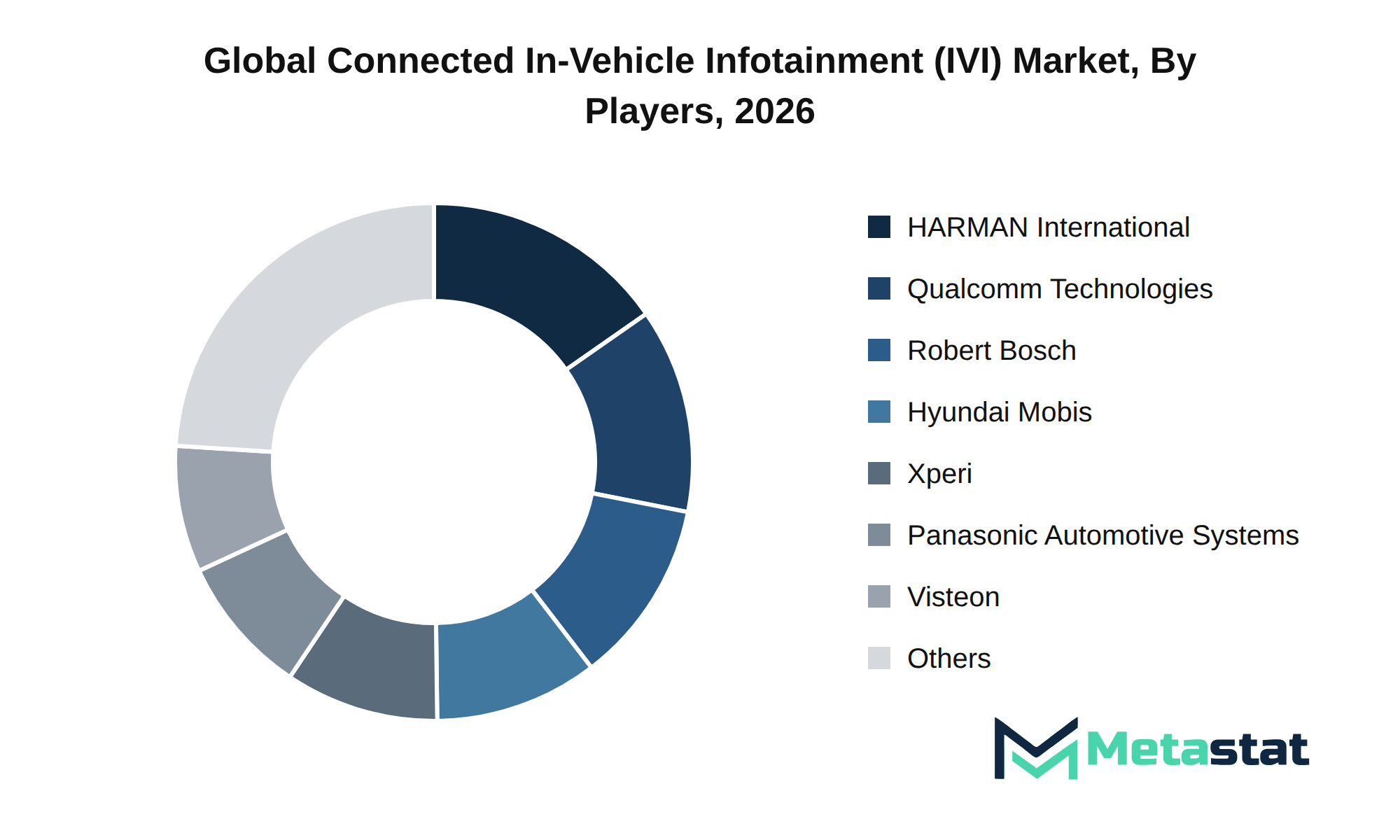
The Connected In-Vehicle Infotainment (IVI) market exhibits a dynamic competitive environment, driven by strategic consolidations and partnerships. Companies like Xperi Inc., HARMAN International, and Qualcomm Technologies, Inc. leverage mergers and acquisitions to enhance product offerings and expand market reach. This trend promotes innovation and strengthens their positions within the market.
Product differentiation holds significant importance in this landscape, with companies investing heavily in R&D pipelines to develop proprietary technologies. Firms including Panasonic Automotive Systems, Robert Bosch GmbH, and Hyundai Mobis Co., Ltd. prioritize unique features to capture customer interest and improve brand equity. Advancements in voice assistant and conversational AI functionalities intensify the competition.
Strategic alliances and joint ventures represent a key approach for several players, allowing them to integrate value chains effectively and enhance supply chain dominance. Collaborations among companies like LG Electronics Inc., TomTom International BV, and Denso Corporation create a robust ecosystem that supports innovation and maintains customer retention.
The threat of new entrants remains a critical factor in shaping the market. Established players including Google LLC and Apple Inc. maintain significant barriers to entry through extensive intellectual property portfolios and innovative product offerings. These companies ensure technological defensibility, contributing to their competitive advantage in the Connected In-Vehicle Infotainment (IVI) market.
The market continues to evolve with a focus on strategic growth vectors, intellectual property, and competitive positioning. Companies that effectively navigate these dynamics are well-positioned to capitalize on future opportunities and drive market expansion.
Market size is forecast to rise from USD 24.2 billion in 2025 to over USD 46.1 billion by 2033. The projected growth stems from multiple factors affecting the Connected In-Vehicle Infotainment (IVI) market, including rapid technological advancements, heightened consumer expectations for connectivity, and regulatory influences that prioritize safety and user experience.
The base case estimates a compound annual growth rate (CAGR) of 8.4% during this period, implying steady market maturation and integration of next-generation technologies. Bull scenarios envision faster adoption rates driven by significant technological breakthroughs and expanded infrastructure commitments. In contrast, bear scenarios predict slower growth due to potential regulatory challenges, geopolitical tensions, and supply chain disruptions impacting production and innovation timelines.
Economic cycles will influence downstream demand shifts, particularly because consumer preferences evolve toward integrated solutions that enhance mobility and connectivity. Strategic capital allocation remains crucial for players in the market, guiding investments toward emerging white-space opportunities and addressing unmet enterprise needs. The focus on enhancing product life-cycles through R&D commercialization will likely drive competition among key participants.
Regulatory evolution shapes market dynamics, with imminent compliance milestones necessitating swift adaptation among industry players. Geopolitical realignments and evolving trade corridors further necessitate robust supply chain strategies to mitigate risks and ensure operational efficiency. The future outlook for the Connected In-Vehicle Infotainment (IVI) market hinges on these factors, creating new growth vectors and competitive strategies.
The report strategically identifies and profiles the key market players and analyses their core competencies in each sub-segment of the Connected In-Vehicle Infotainment (IVI) market.
Report Attributes | Details |
Study Period | 2021-2033 |
Base Year | 2025 |
Estimated Year | 2026 |
Forecast Period | 2026-2033 |
Historical Period | 2021-2025 |
Growth Rate | CAGR 8.4% from 2026 to 2033 |
Revenue Unit | USD billion |
Segmentation | By Connectivity Architecture, Function, Vehicle Type, Fitment Type, and Region |
By Region | North America (By Connectivity Architecture, Function, Vehicle Type, Fitment Type, and Country)
|
Europe (By Connectivity Architecture, Function, Vehicle Type, Fitment Type, and Country)
| |
Asia Pacific (By Connectivity Architecture, Function, Vehicle Type, Fitment Type, and Country)
| |
South America (By Connectivity Architecture, Function, Vehicle Type, Fitment Type, and Country)
| |
Middle East and Africa (By Connectivity Architecture, Function, Vehicle Type, Fitment Type, and Country)
|
Find answers to common questions about this report
The Connected In-Vehicle Infotainment (IVI) market size was valued at USD 24.2 billion in 2025, according to the Metastat Insights study.
The Connected In-Vehicle Infotainment (IVI) market is projected to grow at a CAGR of 8.4% during the forecast period from 2026 to 2033.
The North America Connected In-Vehicle Infotainment (IVI) market size is estimated to reach USD 9.6 billion by 2033.
The segment "Passenger Cars" leads the Connected In-Vehicle Infotainment (IVI) market with a projected value of USD 32.5 billion by 2033. This segment's growth reflects a compound annual growth rate (CAGR) of 8.1% from 2026 to 2033.
The Connected In-Vehicle Infotainment (IVI) market experiences growth driven by digital transformation, increasing automation, and the adoption of artificial intelligence. Investments in advanced technologies enhance user experiences and operational efficiencies, while the integration of innovative features attracts tech-savvy consumers. This trend supports higher demand for IVI solutions, ultimately driving market expansion.
The Connected In-Vehicle Infotainment (IVI) market growth faces significant restraints from regulatory challenges, high capital investment requirements, and macroeconomic pressures. Regulatory tightening increases compliance costs, while inflation and rising operational costs hinder investment in new technologies. supply chain disruptions and geopolitical instability create uncertainty, further complicating market dynamics.
The Connected In-Vehicle Infotainment (IVI) market experiences favorable conditions for product adoption due to rising demand for automation, artificial intelligence, and advanced software solutions. Investments in infrastructure development and digitization of legacy processes enhance user experiences and operational efficiencies, creating a competitive environment that drives innovation and expands revenue potential.
The Connected In-Vehicle Infotainment (IVI) market is estimated to reach a valuation of USD 46.1 billion by 2033.
Key players in the Connected In-Vehicle Infotainment (IVI) market include HARMAN International, Qualcomm Technologies, Inc., Panasonic Automotive Systems, Robert Bosch GmbH, Hyundai Mobis Co., Ltd., and Denso Corporation.
The Connected In-Vehicle Infotainment (IVI) market is projected to grow at a Compound Annual Growth Rate (CAGR) of 8.4% from 2026 to 2033.
The analysts below cover Automotive and Transportation research at Metastat Insights.
LEAD ANALYST
Utkarsh Khirodkar is a Lead Market Research Analyst at MetaStat Insight, specializing in market intelligence, technology sector assessments, and competitive strategy.

ENERGY & INFRASTRUCTURE INDUSTRY CONSULTANT
Automotive and Transportation · Electronics and Semiconductor · Energy and Power · Machinery & Equipment
Saurabh Vasant Ganvir consults for Energy & Infrastructure Industry at MetaStat Insight, specializing in renewable energy, solar EPC, and electric vehicle (EV) infrastructure markets.
In the biological seed treatment space, registration timelines vary drastically between the European Union, Brazil, and North America. The MetaStat Insight research handled these cross-border regulatory barriers with genuine nuance, mapping commercialization pathways alongside historical field adoption rates. The segmentation between microbial strains and biochemical active ingredients was particularly well structured.
Our team was tracking whether regional recycling infrastructure could realistically absorb the growing volume of lithium iron phosphate batteries over the next decade. The report did a solid job separating announced hydrometallurgical plant capacity from active, permitted operational throughput. That distinction made the feedstock availability projections and regional recovery rate models far more credible than standard commercial overviews.
Tracking capacity expansion in single-use bioprocessing requires dependable data on raw material availability and cleanroom-grade polymer supply chains. The competitive landscape chapter gave a grounded evaluation of secondary component suppliers across North America and Asia-Pacific rather than simply reprinting press releases. Having that level of supplier benchmarking helped clarify dual-sourcing considerations for our clinical pipeline planning.
Explore related market intelligence reports worth reading alongside this one.
Starting from
$2950