
LEAD ANALYST
Utkarsh Khirodkar is a Lead Market Research Analyst at MetaStat Insight, specializing in market intelligence, technology sector assessments, and competitive strategy.

Global Connected Car Market Size, Share, By Connectivity Technology (Embedded Connectivity, Tethered Connectivity and Integrated Connectivity), By Network Type (3G, 4G, 5G and Satellite), By Application (Mobility Management, Telematics, Infotainment, Driver Assistance and Others), By Sales Channel (Original Equipment Manufacturer (OEM) and Aftermarket), Industry Analysis, Growth, Trends, and Forecast, 2026-2033
Report ID
MSI-4829
Published
July, 2026
Updated
Pages
254 Pages
Format
Historical
Base year
Forecast
Forecast period
Report Details
Choose Your License
Global Connected Car Market
The global Connected Car market was valued at USD 119.7 billion in 2025 and is projected to grow at a CAGR of 19.0% during the forecast period, reaching USD 481.4 billion by 2033.
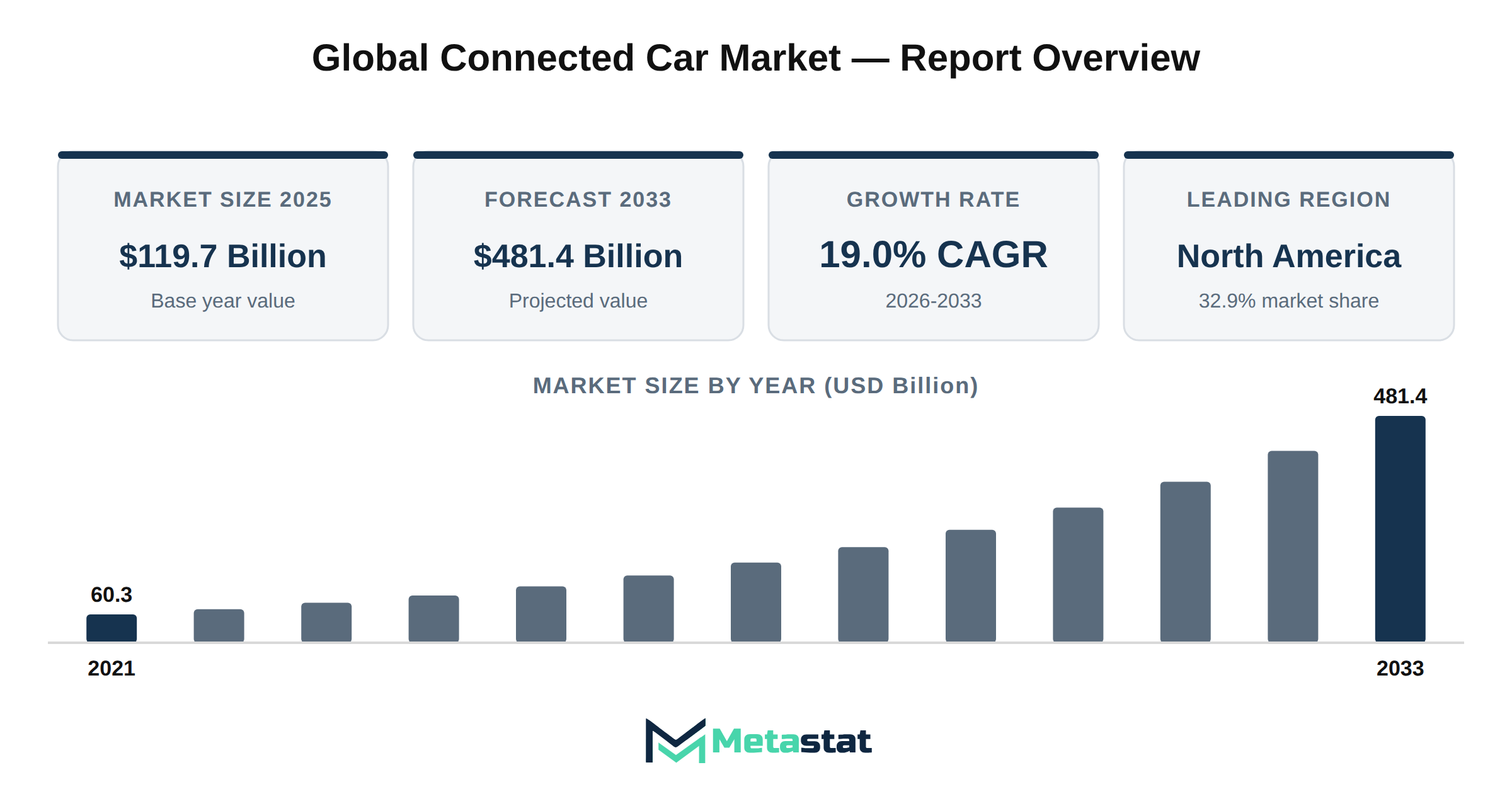
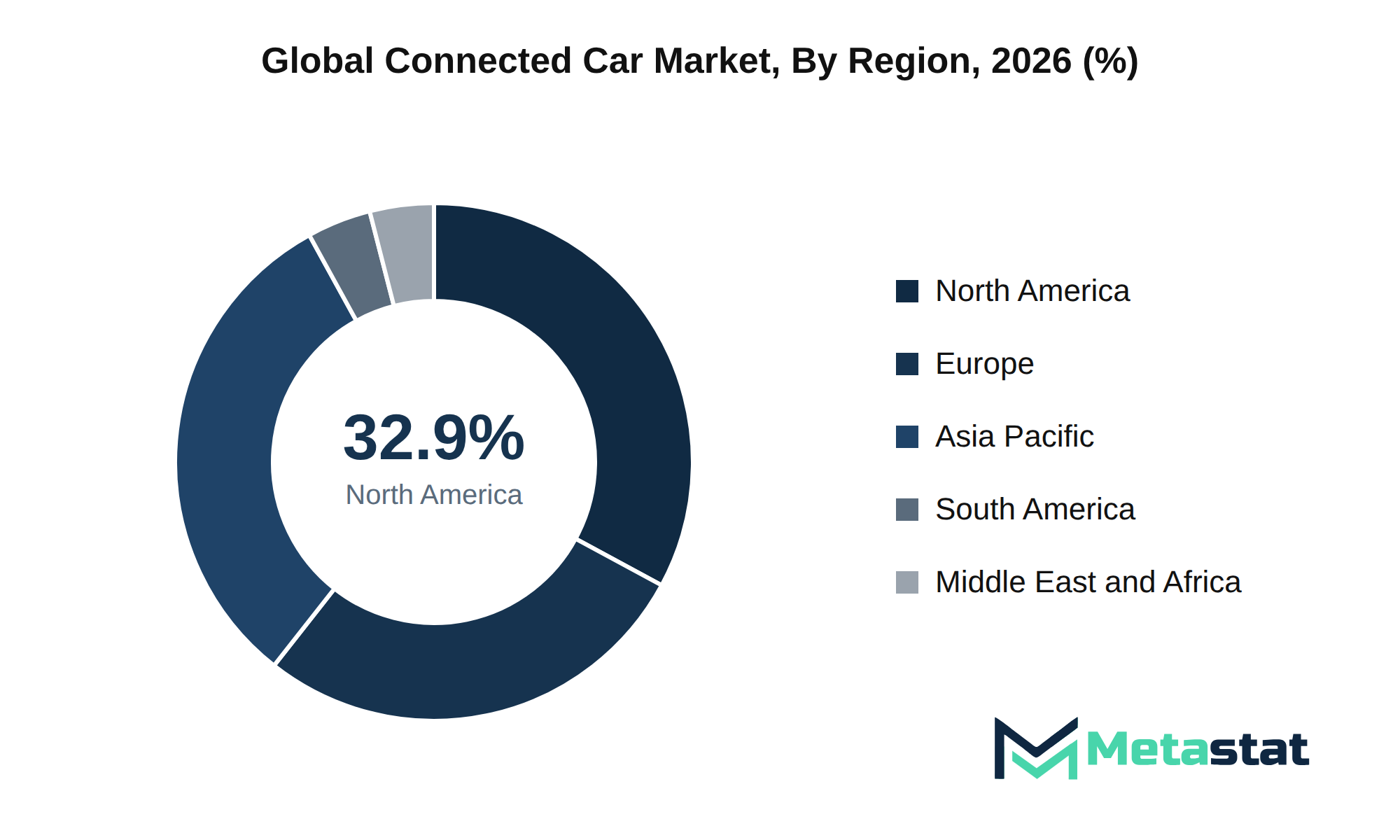
The Connected Car market is experiencing significant growth, with a base value of USD 119.7 billion in 2025. The market is projected to reach USD 481.4 billion by 2033, reflecting a compound annual growth rate (CAGR) of 19%. North America holds a substantial share of the market, accounting for 32.9% in 2025, with the United States leading in market share in 2026. The regional distribution of the market illustrates the competitive dynamics across various segments, including Europe at 27.7% and Asia Pacific at 31.4%. South America and the Middle East and Africa each contribute 4% to the overall market share.
The growth trajectory of the Connected Car market is influenced by factors such as technological advancements and evolving consumer preferences. Embedded connectivity is a key segment, projected to increase from USD 66.3 billion in 2026 to USD 228.7 billion by 2033, reflecting a CAGR of 19.3%. This growth highlights the increasing integration of connectivity in vehicles, enhancing both functionality and user experience.
Tethered connectivity is expected to reach USD 121 billion by 2033, growing at a CAGR of 16.6%. This segment represents vehicles that connect to external devices, facilitating various applications such as navigation and entertainment. Integrated connectivity, which consolidates multiple connectivity technologies, is anticipated to further enrich the user experience and connectivity options within vehicles.
The landscape of the Connected Car market is characterized by a diverse range of players, including established automotive manufacturers and technology firms. Key industry participants include Xperi Inc., Robert Bosch GmbH, Continental AG, and Harman International. These companies are actively investing in research and development to innovate and enhance connected vehicle technologies. Strategic partnerships and collaborations are commonplace as companies seek to fortify their positions within the market.
Investment in research and development is essential for driving next-generation innovations in connectivity, safety, and user experience. Companies are focusing on sustainable transformation and decarbonization initiatives, aligning their strategies with global environmental goals. Such initiatives contribute to the long-term viability of the Connected Car market, addressing both regulatory compliance and consumer demand for eco-friendly solutions.
The supply chain landscape is evolving, with increasing emphasis on logistics architecture and sourcing dynamics. Companies are re-evaluating their procurement strategies to adapt to changing market conditions and capitalize on emerging opportunities in the Connected Car space. The relationship between technological advancement and consumer expectations will shape the future direction of the market, influencing capital allocation and infrastructure investments.
Macroeconomic headwinds, such as inflationary pressures and currency volatility, could impact market growth. Industry stakeholders navigating these operational hurdles consistently prioritize strategic imperatives driving robust value creation and competitive advantage. Ongoing market evolution remains profoundly dictated by broader macroeconomic variables coupled with targeted internal corporate frameworks designed for elevated operational efficiency and maximized customer satisfaction.
The Connected Car market operates under a complex framework of regulatory compliance and standards that vary across regions. Governments are increasingly focused on safety, cybersecurity, and emissions regulations for connected vehicles. Compliance with these regulations is essential for manufacturers to ensure market access. For instance, North America and Europe have stringent requirements concerning data privacy and vehicle safety standards, which influence the design and functionality of connected car technologies. These regulations drive innovation, compelling manufacturers to invest in R&D to meet compliance requirements while enhancing their product offerings.
The Connected Car market supply chain constitutes a multifaceted ecosystem encompassing critical stakeholders, including Original Equipment Manufacturers (OEMs), technology infrastructure providers, and regulatory oversight bodies. Modern logistics architecture dictates the seamless integration of diverse connectivity frameworks, specifically embedded, tethered, and integrated solutions. Procuring hardware across a globally distributed supplier network introduces distinct operational vulnerabilities, primarily regarding vendor relationship management alongside stringent quality assurance protocols. Global supply network disruptions stemming from geopolitical friction or environmental anomalies significantly impact production schedules and delivery timelines, fundamentally altering broader connected vehicle market dynamics.
The competitive landscape in the Connected Car market features a mix of established automotive players and technology firms. Key players include Audi, Ford Motors, General Motors Company, and Tesla, alongside technology providers like Qualcomm Technologies Inc., Harman International, and Robert Bosch GmbH. This fragmentation creates a dynamic environment, with companies vying for market share through innovation and strategic partnerships. Collaboration among automotive and technology firms has become a prevalent strategy to enhance connectivity features and improve the overall user experience in connected vehicles.
Macroeconomic factors, including inflationary pressures and currency volatility, pose challenges for the Connected Car market. Rising material costs can impact manufacturing expenses, leading to increased prices for consumers. Fluctuations in currency exchange rates can affect the profitability of international transactions, particularly for companies that rely on global supply chains. These economic factors necessitate careful capital allocation strategies to maintain competitive pricing while investing in innovation and compliance with evolving regulations.
Investments in infrastructure are crucial for the growth of the Connected Car market. Strong connectivity infrastructure, including 5G networks, supports the deployment of advanced connected vehicle technologies. Capital allocation towards enhancing network capabilities is essential for ensuring effective communication between vehicles and infrastructure. Leading manufacturers consistently optimize the balance between infrastructure investments and robust R&D expenditures, driving continuous innovation while preserving stringent operational efficiency. Maintaining this dual emphasis on physical infrastructure and advanced technology development remains vital for sustaining long-term market growth and competitive positioning.
Strategic imperatives for companies in the Connected Car market include a focus on sustainable transformation and decarbonization. As environmental concerns continue to rise, manufacturers are under pressure to develop eco-friendly technologies and reduce carbon footprints. This shift towards sustainability is not only a regulatory requirement but also a consumer preference. Companies that prioritize sustainable practices in their operations and product offerings are likely to enhance their competitive advantage in the evolving market. The ability to adapt to changing consumer demands while navigating regulatory challenges will define success in the Connected Car market.
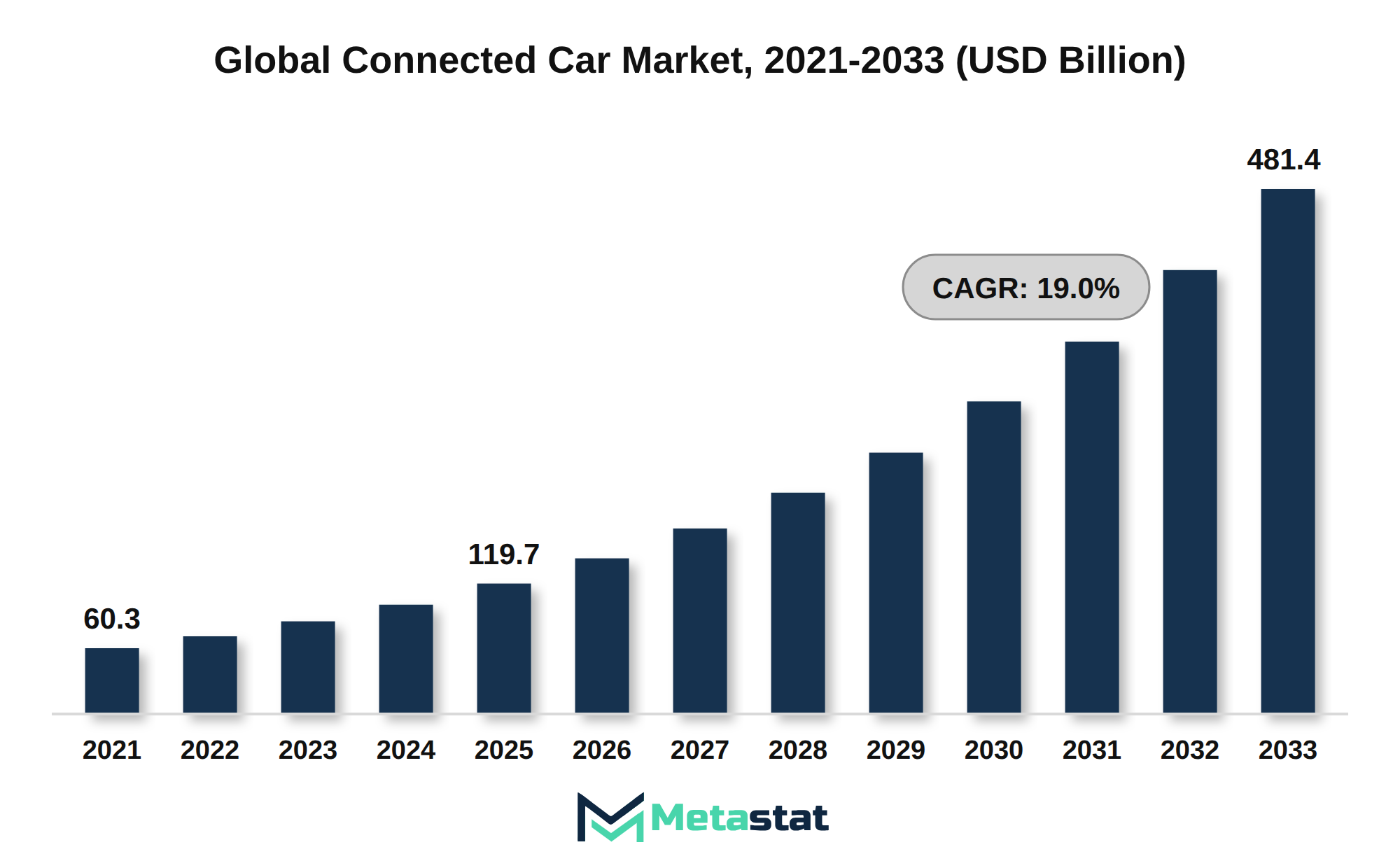
Investment in digital transformation initiatives has surged across various sectors, significantly influencing the Connected Car market. Automakers and technology firms are adopting advanced technologies such as artificial intelligence (AI), automation, and software integration to enhance vehicle connectivity and improve user experience. This shift is driven by the need to streamline operations, enhance safety features, and provide innovative services. The integration of digital technologies not only improves vehicle performance but also meets evolving consumer expectations for connectivity and convenience.
The impact of this transformation is most pronounced in regions with significant automotive sectors, particularly North America and Europe. North America holds a substantial market share and is expected to experience considerable growth by 2033, with a strong compound annual growth rate (CAGR). The rapid adoption of 5G technology in these regions further accelerates the deployment of connected car features, which enhances real-time data sharing and improves overall vehicle functionality. European countries, with their robust regulatory frameworks and consumer demand for enhanced safety and efficiency, also experience strong growth in connected car adoption.
Within the Connected Car ecosystem, ongoing digital transformation presents distinct operational challenges alongside lucrative market opportunities for global suppliers. Industry participants adapting to rapid technological advancements heavily prioritize robust research and development investments to maintain sustained market competitiveness. Strategic alliances uniting traditional automakers with specialized technology firms play an increasingly critical role, enabling the direct delivery of innovative, consumer-centric connected solutions. Consequently, component and software providers offering scalable, highly adaptable technologies consistently secure a definitive competitive edge within this rapidly evolving automotive market.
Sustainability and environmental, social, and governance (ESG) considerations are increasingly influencing consumer preferences and purchasing decisions in the Connected Car market. As awareness of climate change and social responsibility grows, consumers prioritize vehicles that reflect their values, driving demand for connected car technologies that enhance fuel efficiency, reduce emissions, and promote sustainable practices. Automakers are responding by integrating advanced connectivity features that enable better energy management and eco-friendly driving behaviors, thus appealing to a market segment keen on minimizing their carbon footprint.
The impact of sustainability considerations varies by region, with North America and Europe at the forefront in adopting connected vehicles that meet stringent environmental standards. In these regions, consumers exhibit a strong inclination toward electric vehicles (EVs) equipped with connectivity technologies that optimize resource usage and track emissions. For instance, in Europe, where regulatory frameworks heavily emphasize sustainability, demand for connected car solutions is projected to rise sharply. This region is expected to represent 27.7% of the market share by 2033, driven by a robust influx of eco-conscious consumers.
Suppliers operating within the connected car ecosystem proactively adapt to this dynamic environmental shift. Continuous innovation in connected vehicle technologies aligning directly with global sustainability goals presents a lucrative avenue for prominent market players. Capitalizing on this trend demands substantial investment in research and development to engineer proprietary technologies optimizing operational efficiencies and championing environmental stewardship. Strategic collaborations uniting traditional automakers with specialized technology firms facilitate the rapid development of advanced solutions fulfilling modern consumer expectations while strictly complying with increasingly stringent global sustainability mandates, thereby ensuring definitive competitiveness within the rapidly evolving automotive landscape.
The Connected Car market faces significant restraint due to high capital investment requirements and escalating operating costs. The technology necessary for developing connected vehicle features, such as advanced connectivity and data analytics, demands substantial upfront investments. Additionally, ongoing expenses related to compliance with evolving regulatory standards and maintaining advanced technology contribute to a financial burden for manufacturers and service providers. Companies need to allocate resources for infrastructure upgrades, cybersecurity measures, and employee training to ensure operational efficiency.
North America and Europe are particularly affected by these financial constraints, where the market experiences a slower growth trajectory due to the high costs associated with innovation and infrastructure. For instance, in 2025, the market is projected to be valued at USD 119.7 billion, with a forecast growth rate of 19% CAGR extending through 2033. However, regions like Asia Pacific, while also experiencing growth, contend with similar challenges as domestic players face pressure from international competitors. High capital expenses hinder smaller firms from entering the market or scaling operations, ultimately affecting competition.
To circumvent these constraints, industry players are pursuing strategic partnerships and collaborations to share costs associated with research and development. Joint ventures allow companies to pool resources and expertise, potentially reducing individual investment risks. Nevertheless, these workarounds do not fully mitigate the issue, as the need for continuous investment in technology and infrastructure remains critical. As the Connected Car market evolves, the sustained demand for significant financial commitments poses challenges that limit agility and rapid innovation across the sector.
Firms operating in the Connected Car market face significant challenges stemming from geopolitical fragmentation and trade deficits. These factors create operational difficulties, particularly in managing supply chains and sourcing materials. Trade restrictions and tariffs can lead to increased costs for imported components, complicating the procurement process and straining relationships with suppliers. The resulting uncertainty can hinder decision-making and delay project timelines, impacting overall market competitiveness.
Regions with the most severe challenges include Europe and North America, where trade policies and political dynamics can shift rapidly. In these regions, manufacturers experience difficulty in securing consistent access to critical technology and components required for vehicle connectivity and integration. The market experiences heightened vulnerability in segments reliant on advanced technologies, such as embedded connectivity, where sourcing specialized components from abroad is essential for maintaining product quality and innovation.
To address these challenges, firms in the Connected Car market are implementing strategies to enhance local sourcing and diversify their supply chains, which often incurs substantial costs. Some companies invest in developing in-house capabilities or establishing partnerships with local suppliers, which can lead to higher upfront expenditure. These adaptations are necessary to mitigate risks associated with geopolitical instability but can compress profit margins in the short term. Ultimately, navigating these complexities requires continuous investment and proactive management strategies to sustain growth and maintain competitive positioning in the evolving market landscape.
The connected car market has developed significant opportunities due to emerging technological innovations. The advancements in connectivity technology, particularly in embedded connectivity, are creating a demand for more integrated and efficient vehicle communication systems. As vehicles evolve into connected platforms, the integration of advanced telematics, mobility management, and driver assistance features becomes critical. The expected market size is projected to grow from USD 0.1197 billion in 2025 to USD 0.4814 billion by 2033, reflecting a compound annual growth rate (CAGR) of 19%. Such growth is driven by the rising consumer expectation for enhanced safety, convenience, and entertainment features in vehicles.
Key players positioned to capitalize on this opportunity include major automotive manufacturers and technology firms, such as Tesla, Ford Motors, and Qualcomm Technologies Inc. Companies entering the market need robust capabilities in software engineering, data analytics, and hardware integration to develop sophisticated connected car solutions. Success in this market requires an understanding of consumer behavior trends, such as the increasing preference for smart and autonomous driving experiences.
The timing for entering the connected car market is critical. With the market's rapid expansion, companies that delay investment in innovative technologies risk missing the peak opportunity. By 2033, North America is expected to account for approximately 32.9% of the global market share, highlighting the necessity for timely strategic investments. Delays in adapting to emerging technologies or regulatory shifts could close the window of opportunity for capturing market share in this competitive environment.
The Global Connected Car market is segmented based on Connectivity Technology, Network Type, Application, and Sales Channel.
Embedded Connectivity is valued at USD 66.3 billion in 2026 and is projected to reach USD 228.7 billion by 2033, at a CAGR of 19.3% during the forecast period. This growth is driven by the increasing demand for connectivity in vehicles, allowing for enhanced safety, entertainment, and navigation. The integration of advanced technologies such as 5G is a significant catalyst for market expansion, providing higher data transmission speeds and lower latency, which are crucial for applications like real-time traffic updates and autonomous driving systems.
Technological maturation is important in the evolution of embedded connectivity. Manufacturers are continuously enhancing vehicle systems with next-gen upgrades that support advanced driver-assistance systems (ADAS) and infotainment solutions. This creates opportunities for greater interoperability between devices, improving user experience significantly. Regulatory compliance standards regarding safety and emissions are prompting automotive manufacturers to invest in embedded connectivity solutions, aligning with global initiatives for smarter, more connected transportation.
Consumption shifts towards electric and connected vehicles further impact the market dynamics. As consumers prioritize connectivity features in their purchasing decisions, automotive companies are adapting their product offerings to meet these expectations. This trend highlights the necessity for manufacturers to innovate and invest strategically in embedded connectivity solutions to maintain competitive positioning in the connected car market.
The Tethered Connectivity segment is projected to achieve a value of USD 121 billion by 2033, growing at a compound annual growth rate (CAGR) of 16.6% during the forecast period. This growth trajectory is primarily driven by the increasing demand for real-time data exchange, which enhances various car functionalities and user experiences. As consumers become more reliant on advanced telematics and infotainment systems, the need for efficient tethered connection solutions continues to rise.
Segment expansion is further supported by the integration of next-generation network types, such as 5G, which allows for faster and more reliable connectivity. This technological maturation enables vehicles to process larger volumes of data, ultimately improving safety features and driver assistance systems. The adoption of tethered connectivity solutions supports the broader Connected Car market by facilitating effective communication between vehicles and external devices.
End-use dynamics indicate a shift in consumer preferences toward vehicles equipped with advanced connectivity features, creating a competitive landscape among automotive manufacturers. Companies are increasingly prioritizing the development of innovative tethered connectivity solutions that not only meet regulatory compliance standards but also align with consumer expectations for enhanced driving experiences. This strategic focus positions major players to capture significant market share as the demand for connected vehicles continues to escalate.
The Integrated Connectivity segment is projected to reach USD 131.7 billion by 2033, indicating strong growth within the Connected Car market. This surge is primarily driven by advancements in technology that enhance vehicle-to-everything (V2X) communication, improving safety and operational efficiency. Adoption of integrated connectivity solutions enables smooth interaction between vehicles, infrastructure, and external systems, creating a more interconnected driving experience.
Consumer demand for enhanced in-car experiences is contributing significantly to market expansion. Features such as real-time navigation, infotainment services, and cabin personalization are increasingly being integrated into vehicle systems, appealing to a tech-savvy consumer base. The growing emphasis on vehicle safety and autonomous driving capabilities is pushing manufacturers towards adopting more sophisticated connectivity solutions.
Technological maturation in cloud computing and Internet of Things (IoT) applications further supports the segment's growth. As the cost of technology decreases, more manufacturers are investing in integrated connectivity, allowing for new product evolution and next-gen upgrades. Regulatory compliance regarding safety standards necessitates the implementation of advanced connectivity solutions, adding another layer of demand.
The Integrated Connectivity segment is poised for significant growth, driven by technological advancements, consumer behavior changes, and regulatory requirements within the Connected Car market.
Demand for 3G connectivity in the Connected Car market arises from its established presence in vehicle telematics and infotainment systems. As automotive manufacturers continue enhancing vehicle capabilities, 3G technology acts as a reliable backbone for basic vehicle communication and data services. It supports essential features such as remote diagnostics, navigation assistance, and basic infotainment, making it a crucial component in many existing models.
Adoption of 3G technology benefits from the extensive infrastructure that supports its implementation globally. This widespread availability allows manufacturers to integrate 3G systems into a variety of vehicles without significant additional investment, facilitating communication between vehicles and external networks. While newer technologies like 4G and 5G are emerging, the transition remains gradual, ensuring that 3G continues to play a role alongside advancing connectivity methods.
Segment expansion catalysts include ongoing developments in connected services and vehicle automation, which drive demand for reliable communication networks. Even with advancements in technology, the potential for retrofitting existing vehicles with 3G systems sustains interest in this segment. As smart city initiatives and connected infrastructure proliferate, 3G technology will support various application scenarios, enhancing its relevance in the evolving Connected Car market.
Challenges associated with 3G technology lie in its eventual obsolescence as newer alternatives become more prevalent. However, ongoing investment in 3G infrastructure and services ensures that it remains a viable option for many applications, particularly in regions where newer technologies have yet to be fully deployed. The continued support for 3G will help maintain its presence in the market for the foreseeable future.
Demand for 4G connectivity in the Connected Car market stems from the increasing need for high-speed data transfer and improved user experience. Enhanced mobile broadband capabilities support various applications, including navigation, telematics, and infotainment systems, driving consumer preference for 4G-enabled vehicles. The segment benefits from widespread urbanization and smartphone penetration, as consumers expect reliable connectivity similar to their mobile devices.
Technological maturation in 4G networks has laid a foundation for a robust ecosystem of applications and services tailored for connected vehicles. Enhancements in network reliability and coverage expand the possibilities for real-time data exchange, promoting adoption among automakers and consumers alike. Major industry players are investing heavily in next-gen upgrades, such as the transition to 5G, but 4G remains a reliable choice for many manufacturers due to its established infrastructure and cost-effectiveness.
Consumption shifts indicate a growing preference for features like over-the-air updates and vehicle-to-everything (V2X) communication, which leverage 4G connectivity to enhance vehicle performance and safety. Regulatory compliance and positive policy frameworks promote integration of advanced technologies in vehicles, encouraging manufacturers to adopt 4G connectivity as a standard feature. This strategic opportunity window highlights the importance of 4G in the transitional phase toward more advanced network types.
Advancements in 5G technology significantly enhance connectivity in the Connected Car market. The primary demand drivers include the necessity for faster data transfer rates and lower latency, which are crucial for real-time applications such as autonomous driving and vehicle-to-everything (V2X) communication. This shift towards 5G not only promotes more efficient mobility management but also improves the user experience through enhanced infotainment systems.
Adoption of 5G is being driven by the growing prevalence of smart cities and infrastructure developments that incorporate connected vehicle technologies. Enhanced network capabilities enable integration of vehicles into urban environments, providing numerous benefits such as reduced traffic congestion and improved safety measures. The maturation of 5G technology contributes to its wider acceptance among automakers and service providers, encouraging investments in next-generation upgrades.
The evolution of products leveraging 5G technology is evident in the increasing sophistication of telematics and driver assistance applications. End-use dynamics reflect a shift towards greater reliance on connected solutions, driving demand for 5G-enabled features in new vehicle models. Consequently, the market is poised for further growth as manufacturers continue to innovate and enhance their offerings.
Adoption of satellite connectivity in the Connected Car market is primarily driven by the need for global coverage and reliable communication in remote areas. Satellite technology offers advantages in regions where terrestrial networks are limited or unavailable, making it essential for applications such as emergency services and fleet management. Advancements in satellite systems and miniaturized hardware enhance the feasibility of integrating satellite connectivity into vehicles, encouraging manufacturers to explore these solutions.
Technological maturation plays a critical role in expanding the satellite segment. The development of low Earth orbit (LEO) satellite constellations enables improved latency and bandwidth, providing a more efficient alternative to traditional geostationary satellites. This evolution supports more sophisticated applications, including real-time data analytics and enhanced in-car services, which are increasingly appealing to consumers.
End-use dynamics indicate a growing demand for satellite connectivity as part of a comprehensive telematics solution. Increasing vehicle autonomy and the need for continuous data exchange necessitate robust connectivity options. Consequently, the integration of satellite services into infotainment and navigation systems has become a key focus area for manufacturers aiming to differentiate their offerings in a competitive market.
Regulatory compliance standards are becoming more stringent, particularly concerning safety and communication protocols. This trend influences manufacturers to incorporate satellite technology to secure compliance and enhance the safety features of connected vehicles. As the market evolves, strategic investment in satellite connectivity will likely provide a competitive advantage, positioning companies to meet future challenges effectively.
Mobility management is essential in optimizing transportation efficiency, reducing congestion, and enhancing user experience in the Connected Car market. The increasing focus on smart city initiatives and demand for integrated transportation solutions drives the adoption of mobility management systems. These systems facilitate real-time data sharing among vehicles, infrastructure, and service providers, enabling better traffic management and improved fleet performance.
Technological maturation significantly impacts the evolution of mobility management applications. The integration of advanced analytics, artificial intelligence, and machine learning into these systems enhances decision-making and operational efficiency. With the emergence of next-gen upgrades, mobility management systems are evolving to support a wider array of services, including ride-sharing, carpooling, and multimodal transport options, thereby catering to diverse consumer demands.
End-use dynamics reflect shifting consumer preferences towards more sustainable and efficient mobility solutions. As users increasingly seek flexible transportation options, the demand for innovative mobility management solutions continues to grow. Regulatory compliance standards further encourage the development and adoption of these systems, promoting a more cohesive approach to urban mobility challenges.
Overall, the mobility management segment of the Connected Car market is characterized by a strategic focus on enhancing user experience, optimizing operations, and meeting regulatory standards, thereby laying the groundwork for a more connected and efficient transportation ecosystem.
Telematics represents a key application within the Connected Car market, driven by the need for real-time data and communication between vehicles and the cloud. Enhanced safety, vehicle tracking, and efficient fleet management significantly contribute to its adoption. The technology provides critical insights into vehicle performance and driver behavior, thus providing consumers and businesses with useful data.
Key expansion catalysts include advancements in cellular networks, particularly the adoption of 5G technology, which enhances the speed and reliability of data transmission. Next-generation upgrades in telematics systems promote features such as predictive maintenance, which lowers operational costs and prolongs vehicle lifespan. As vehicles become increasingly connected, the demand for integrated telematics solutions continues to rise.
End-use dynamics reflect a growing focus on sustainability and efficiency within the automotive sector. Fleet operators are increasingly adopting telematics solutions to optimize routes, reduce fuel consumption, and minimize carbon emissions. Regulatory compliance standards also play a significant role in shaping the telematics environment, as governments implement mandates for vehicle tracking and safety systems.
Integration of infotainment systems in vehicles enhances the user experience by providing an intuitive interface for entertainment, navigation, and connectivity. Primary demand drivers include the increasing preference for connected features that deliver real-time information and entertainment options. Advancements in smartphone integration and the rise of in-car apps facilitate a growing consumer appetite for infotainment systems that offer personalized content and services. Adoption is driven by consumer expectations for an engaging driving experience, which influences manufacturers to prioritize infotainment capabilities in their offerings.
Technological maturation plays a critical role in enabling more sophisticated infotainment solutions. Hardware and software innovations, combined with higher bandwidth connectivity options, support features such as voice recognition, advanced navigation, and streaming services. These upgrades are vital for creating an immersive in-car environment that aligns with consumer lifestyles. End-use dynamics reflect a shift towards multifunctional systems that not only provide entertainment but also enhance safety through integrated driver assistance technologies.
In the market, regulatory compliance standards and certifications are increasingly relevant as automakers seek to meet safety and user experience requirements. This regulatory landscape encourages competition and rapid product evolution. Strategic opportunity windows arise as companies invest in R&D to develop innovative infotainment solutions, ensuring they remain ahead of technological obsolescence and meet evolving consumer demands in the Connected Car market.
Growing concerns about road safety and increased government focus on regulations surrounding vehicle safety are significant factors driving demand for driver assistance technologies. These systems, designed to enhance vehicle safety and mitigate accidents, have gained traction among consumers and manufacturers alike, reflecting a broader trend towards autonomous driving. Technological maturation is evident as innovations in sensors, cameras, and artificial intelligence enable more reliable and efficient systems.
The connected car market benefits from continuous upgrades that enhance existing driver assistance features. These upgrades improve functionality and ensure compliance with evolving safety standards and regulations, which increasingly mandate advanced safety measures. As consumers become more accustomed to these technologies, their willingness to adopt vehicles equipped with enhanced driver assistance features is expected to rise.
End-use dynamics show a shift towards vehicles that incorporate advanced safety technologies, influencing purchasing decisions among consumers. Manufacturers are focusing on integrating these systems into a broader vehicle ecosystem, enhancing user experience through connectivity to mobile devices and cloud services. This integration supports the overall growth of the connected car market, as it aligns with consumer preferences for technology-rich vehicles that prioritize safety and convenience.
This sub-segment aggregates various applications within the Connected Car market that do not fall into the primary categories such as mobility management, telematics, infotainment, and driver assistance. It remains residual due to the diverse and niche nature of its components, which can include specialized use cases and emerging technologies that have not yet gained widespread adoption. Product evolution in this area reflects ongoing advancements in automotive technology and consumer preferences, allowing for unique solutions that cater to specific needs. As the market matures, further technological maturation will drive expansion and increase the relevance of these applications.
Significant drivers influence the Original Equipment Manufacturer (OEM) segment within the Connected Car market. Enhanced safety protocols and increasing consumer demand for advanced vehicle features influence OEMs to integrate sophisticated technologies into their offerings. Additionally, a focus on connectivity solutions, such as integrated infotainment systems and telematics, aligns with evolving consumer preferences for an integrated driving experience.
Technological maturation is essential for segment expansion. OEMs continually upgrade their offerings to incorporate next-generation technologies, including 5G connectivity and artificial intelligence-driven applications. This shift towards innovation ensures that vehicles meet both regulatory compliance standards and consumer expectations for enhanced functionality.
Cost structures and pricing volatility present challenges within the OEM segment. Rising raw material costs and supply chain pressures can affect production expenses, compelling OEMs to adapt their pricing strategies. In response, manufacturers often seek to optimize production processes and leverage economies of scale to maintain competitive pricing.
Strategic opportunity windows emerge as OEMs explore collaborations with technology firms to enhance their product evolution. By partnering with companies specializing in connectivity and software development, OEMs can remain competitive in an increasingly complex marketplace. This proactive approach supports growth and builds resilience against potential market disruptions.
Growing demand for enhanced vehicle functionality drives the aftermarket segment within the Connected Car market. Consumers increasingly seek customization options that improve performance, safety, and convenience, leading to a rise in aftermarket solutions. Technological maturation in areas like telematics and infotainment systems further stimulates adoption, as consumers become more knowledgeable about available upgrades and enhancements.
Product evolution is significant in this segment, with manufacturers developing innovative solutions that cater to changing consumer preferences. Next-generation upgrades, including advanced driver assistance systems and improved infotainment features, are becoming popular choices among car owners looking to enhance their driving experience. Such trends lead to increased competition among key players, which stimulates market growth.
In addition, consumption shifts toward smart technologies highlight the significance of connectivity. Consumers are more inclined to invest in aftermarket products that offer integrated solutions, blending functionality with digital capabilities. Regulatory compliance and standards also impact the segment, as higher safety and environmental regulations encourage the adoption of compliant aftermarket products.
Overall, the aftermarket segment represents a dynamic area within the Connected Car market, driven by evolving consumer needs, technological advancements, and regulatory influences.
Based on geography, the Global Connected Car market is divided into North America, Europe, Asia-Pacific, South America, Middle East, and Africa.
The North America Connected Car market is expected to expand at a CAGR of 19.0% within the forecast period, reaching a market size (TAM) of USD 151.3 billion by the end of 2033. The region holds a significant share of the global market, accounting for 32.9% in 2025. This strong position results from various primary demand drivers, including increasing consumer preference for advanced vehicle functionalities and enhanced connectivity options.
The United States leads the market, driven by advancements in automotive technology and robust infrastructure. High-value replacement cycles contribute to incremental growth, as consumers increasingly seek vehicles equipped with the latest connected technologies. Canada and Mexico follow, emerging as market front-runners that capitalize on evolving consumer expectations and the demand for integrated connectivity solutions.
Infrastructure modernization is crucial in the region's market dynamics. The ongoing development of 5G networks enhances connectivity potential, thereby supporting the growth of telematics and infotainment applications. The United States has made significant investments in building a reliable energy grid, which further supports the scalability of connected systems in vehicles.
Regional competitive landscapes indicate a healthy mix of domestic market leaders and international vendors. Key players such as Tesla, Ford Motors, and General Motors Company are positioned to capitalize on emerging segments and regional growth potential. Their investment in innovation and partnerships with technology companies demonstrates a commitment to advancing the connected car ecosystem.
Localized procurement dynamics reflect cultural nuances that influence B2B buying behaviors. The North American consumer market favors brands that prioritize connectivity and safety technologies, further driving the demand for connected vehicles. As the market evolves, strategic entry barriers and foreign direct investment (FDI) flows will shape the competitive environment, enabling companies to adapt to changing consumer preferences and regulatory frameworks.
In Europe, the Connected Car market is poised for significant growth, driven by the increasing demand for advanced vehicle connectivity features across several key countries. Germany, France, the UK, Italy, Spain, and Russia play critical roles in shaping the regional market landscape. Germany, as a major automotive hub, continues to lead in innovation and adoption of connected technologies, while countries like France and the UK show strong growth potential fueled by government initiatives aimed at enhancing vehicle safety and efficiency.
Adoption rates in Europe benefit from robust infrastructure modernization efforts, allowing smooth integration of connectivity solutions into the automotive ecosystem. Countries such as Italy and Spain are rapidly expanding their connected car initiatives, focusing on enhancing user experience and enabling advanced telematics. The Rest of Europe also shows promise, with emerging markets identifying opportunities to implement connected car technologies in their transportation systems.
The region's mature market dynamics facilitate high-value replacement cycles, as consumers increasingly seek vehicles equipped with advanced connectivity features. Incremental growth vectors emerge from advancements in connectivity technologies, including embedded, tethered, and integrated connectivity solutions that cater to diverse consumer needs. This diverse array of options supports a comprehensive market environment that encourages competition among leading players.
Geopolitical factors, including regulatory frameworks and compliance mandates, also shape the market landscape. European lawmakers prioritize safety and environmental standards, influencing manufacturers to innovate and adapt their offerings. Key domestic market leaders consistently introduce new products that align with these evolving regulations, ensuring that they maintain a competitive edge in the market.
The Connected Car market in Europe stands at a crucial juncture, with a significant share of 27.7% of the global market in 2025. The combination of technology, regulatory policies, and consumer demand shapes the trajectory of growth, making Europe a focal point for industry stakeholders.
The Asia-Pacific region is a significant player in the Connected Car market, with countries such as China and Japan leading in production and adoption, supported by investments in advanced technologies and infrastructure modernization. The rapid expansion of electric vehicles and smart mobility solutions contributes to the increasing demand for connected features in vehicles.
India exhibits a rising adoption rate, driven by a growing middle class and increasing urbanization. The government’s focus on enhancing road safety and vehicle regulations supports the market's growth. In South Korea, the integration of advanced connectivity technologies is prominent, with a strong emphasis on 5G deployment that enhances real-time data transmission and vehicle-to-everything (V2X) communication.
Australia's market dynamics are influenced by consumer preferences for connected features, including infotainment systems and advanced driver assistance systems. Southeast Asia is experiencing incremental growth due to increasing smartphone penetration and an expanding automotive ecosystem, making it an underpenetrated territory with significant potential for market development.
Localized manufacturing and supply chain regionalization efforts in the region aim to enhance production efficiency and meet increasing demand. This focus on domestic production allows for better compliance with local regulations and faster response times to market changes. The competitive landscape in Asia-Pacific features domestic market leaders and foreign entrants collaborating to leverage regional strengths in innovation and technology.
Brazil and Argentina lead the Connected Car market in South America, contributing significantly to the region's 4.00% share of the global market in 2025. The strong demand for connected technologies in these countries is driven by the increasing penetration of smartphones and internet connectivity, which support various connected applications within vehicles.
Adoption rates in Brazil are particularly strong, fueled by a growing middle class that values enhanced vehicle functionality. This demographic shift aligns with the increasing availability of affordable connected car models, making these technologies more accessible to consumers. In Argentina, the market is evolving, albeit at a slower pace, as economic challenges impact consumer purchasing power and the adoption of advanced automotive technologies.
Infrastructure modernization plays a crucial role in the growth of the market. Urban areas in Brazil, such as São Paulo and Rio de Janeiro, are witnessing significant improvements in transportation infrastructure, enabling the integration of connected car technologies with smart city initiatives. This evolution supports reliable connectivity for vehicles, enhancing mobility management and traffic monitoring capabilities.
The Rest of South America, while less prominent, presents emerging opportunities for connected car adoption. Countries such as Chile and Colombia are investing in digital infrastructure and automotive technologies, which will lead to increased market participation in the coming years. This underpenetrated territory offers prospects for growth as manufacturers and service providers seek to expand their presence.
Overall, the Connected Car market in South America is influenced by both local demand drivers and broader global trends. As the region continues to develop its infrastructure and address economic challenges, the potential for growth remains significant, with Brazil and Argentina positioned as key players in this evolving market.
Growth in the Connected Car market across the Middle East and Africa is driven by increasing investments in infrastructure modernization and technological advancements. Countries such as Saudi Arabia and the UAE are leading in adopting connected vehicle technologies, significantly enhancing road safety and traffic management systems. Advanced connectivity solutions, including embedded and integrated connectivity, are becoming increasingly prevalent in these markets.
Saudi Arabia's focus on diversifying its economy under Vision 2030 has led to substantial investments in smart transportation solutions. The UAE's commitment to becoming a leader in smart mobility further accelerates the adoption of connected car technologies. In South Africa, market growth is supported by initiatives aimed at improving road safety and developing smart city projects that integrate connected vehicle systems.
The regional market accounts for approximately 4.00% of the global share in 2025, reflecting a growing interest in connected vehicle solutions. While the overall penetration remains lower compared to more mature markets, emerging segments present significant growth opportunities. The Rest of the Middle East and Africa shows potential as local companies increasingly seek partnerships with global players to enhance technological capabilities and drive regional innovation.
Notable trends indicate a rising demand for mobility management and telematics solutions, which are crucial for efficient fleet management and enhanced user experience. The presence of major automotive players and technology firms in the region will continue to drive competitive dynamics, ensuring that the connected car market evolves in line with global advancements. Strategic entry barriers, such as regulatory frameworks and local compliance mandates, play a critical role in shaping market dynamics and influence the decision-making processes of industry stakeholders.
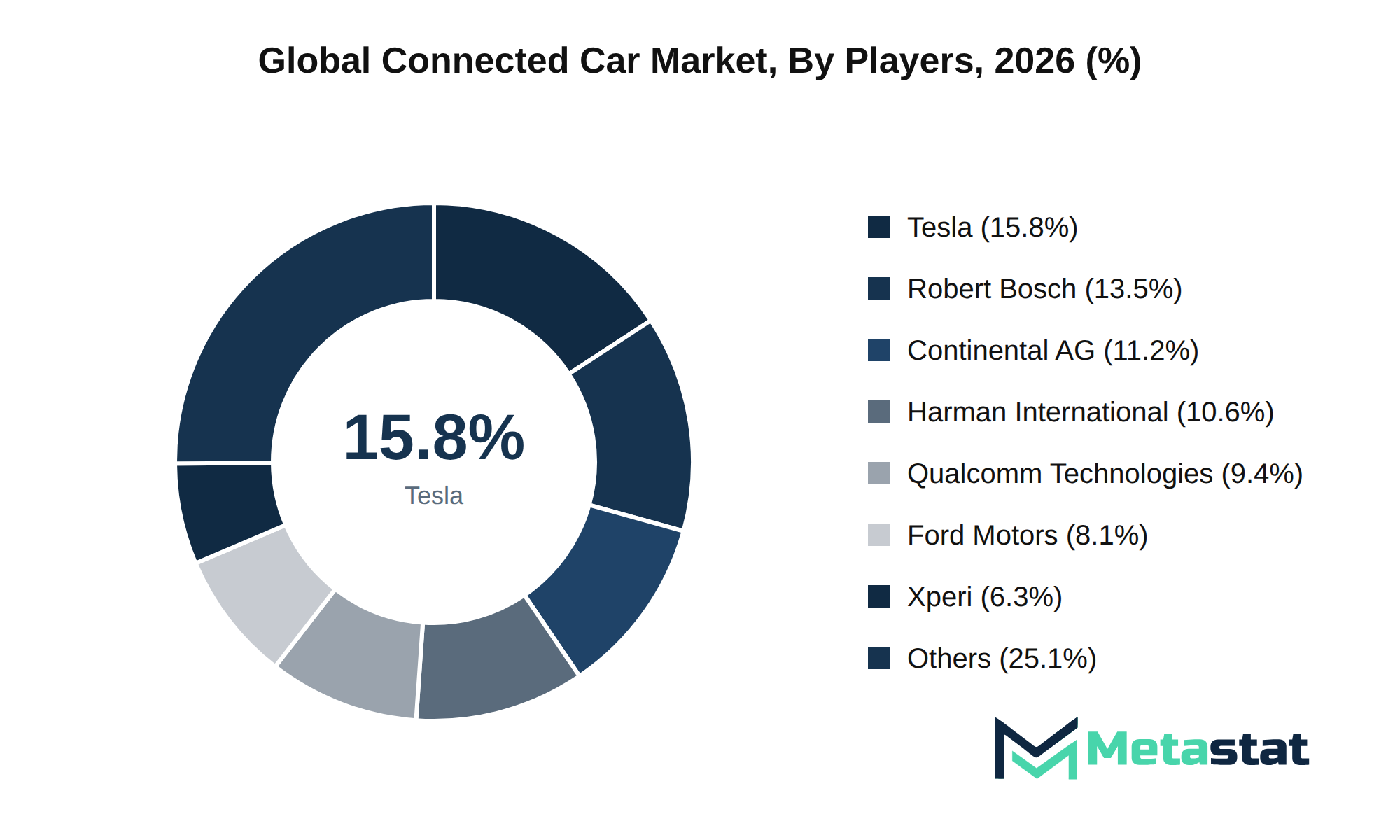
The Connected Car market exhibits a dynamic competitive environment, characterized by significant consolidation patterns, strategic alliances, and diverse go-to-market strategies. Key players, such as Robert Bosch GmbH, Continental AG, and Harman International, adopt comprehensive product differentiation strategies to capture various segments, including embedded and integrated connectivity technologies. The market experiences ongoing mergers and acquisitions, shaping the competitive dynamics while enabling companies to enhance their technological capabilities and market presence.
Pricing architectures within the market reflect a blend of premium and value-centric models tailored to specific consumer segments. Companies like Ford Motors and Tesla leverage their brand equity to command higher price points, while others focus on cost-effective solutions. This diversity in pricing strategies caters to various customer needs and preferences, ensuring a broad market reach.
Product differentiation remains essential, with firms investing in research and development to create proprietary technology moats. Qualcomm Technologies Inc. and NXP Semiconductors emphasize advanced semiconductor solutions that enhance vehicle connectivity and performance. These innovations strengthen their competitive position and contribute to the overall advancement of the Connected Car ecosystem.
Strategic alliances and cross-industry partnerships play a crucial role in this market landscape. Companies such as AT&T and Verizon collaborate with automotive manufacturers to integrate connectivity solutions into vehicles, enhancing user experiences. This collaborative approach allows players to share resources and expertise, significantly impacting market growth and innovation.
Barriers to entry in the Connected Car market include high capital requirements, complex technologies, and established brand loyalty among consumers. New entrants face challenges in overcoming these obstacles, particularly when competing against major automotive players like Toyota Motor Sales and Volkswagen AG, which possess substantial market share and customer trust. The threat of new entrants remains moderated, ensuring established players maintain a strong competitive edge.
Switching costs are another critical factor influencing customer retention strategies. Firms invest in building brand loyalty through enhanced features and services, making it challenging for consumers to switch to alternative providers. Companies like General Motors Company and Mercedes-Benz Group AG focus on delivering integrated experiences that encompass various applications, from mobility management to infotainment, to maintain customer allegiance.
The intellectual property landscape in the Connected Car market demonstrates a rich patent portfolio among leading companies. This positioning enhances technological defensibility, allowing firms to safeguard their innovations while advancing connectivity and automation. Players such as DENSO Corp. and Infineon Technologies AG actively secure patents to protect their proprietary technologies, contributing to their long-term competitive positioning.
Looking forward, the competitive outlook for the Connected Car market remains strong. The industry anticipates substantial growth, with a projected market value of USD 481.4 billion by 2033, reflecting a compound annual growth rate (CAGR) of 19%. Strategic growth vectors, including enhanced connectivity capabilities and autonomous driving technologies, will continue to shape the competitive landscape. Industry players will need to adapt to evolving consumer preferences and technological advancements to maintain their market positions and drive future success.
The Connected Car market is poised for significant growth, with the market size forecast to rise from USD 119.7 billion in 2025 to over USD 481.4 billion by 2033, reflecting a compound annual growth rate (CAGR) of 19.0%. This growth trajectory indicates a strong demand for connected vehicle technologies and highlights the increasing integration of advanced connectivity solutions within the automotive industry.
Strategic capital allocation will play a crucial role in the future of the Connected Car market. Investment in research and development will be vital for firms aiming to stay ahead of the curve. Companies should focus on qualifying alternative suppliers to mitigate risks associated with supply chain disruptions. In addition, organizations should prioritize partnerships with technology providers to leverage innovative solutions and expedite the commercialization of next-generation technologies.
Infrastructure commitments will also determine the market's trajectory. Stakeholders need to align their strategies with evolving regulatory frameworks and compliance milestones while remaining agile to geopolitical shifts that will influence trade corridors and supply chain dynamics. Staying abreast of these changes will enhance firms' competitiveness and allow them to seize emerging white-space opportunities within the market.
The Connected Car market will benefit from addressing unmet enterprise needs and focusing on high-growth pockets identified through comprehensive market analysis. By understanding evolving consumer preferences, companies can tailor product offerings and enhance customer experiences, leading to increased market share.
Future growth recommendations include developing defensibility roadmaps that highlight core competencies while exploring new market segments. Firms should conduct thorough assessments of niche industry developments to identify potential areas for expansion. Key players should also evaluate their unique selling propositions to differentiate themselves in a crowded marketplace.
The report strategically identifies and profiles the key market players and analyses their core competencies in each sub-segment of the Connected Car market.
|
Report Attributes |
Details |
|
Study Period |
2021-2033 |
|
Base Year |
2025 |
|
Estimated Year |
2026 |
|
Forecast Period |
2026-2033 |
|
Historical Period |
2021-2025 |
|
Growth Rate |
CAGR 19.0% from 2026 to 2033 |
|
Revenue Unit |
USD billion |
|
Segmentation |
By Connectivity Technology, Network Type, Application, Sales Channel, and Region |
|
By Region |
North America (By Connectivity Technology, Network Type, Application, Sales Channel, and Country)
|
|
Europe (By Connectivity Technology, Network Type, Application, Sales Channel, and Country)
|
|
|
Asia Pacific (By Connectivity Technology, Network Type, Application, Sales Channel, and Country)
|
|
|
South America (By Connectivity Technology, Network Type, Application, Sales Channel, and Country)
|
|
|
Middle East and Africa (By Connectivity Technology, Network Type, Application, Sales Channel, and Country)
|
Find answers to common questions about this report
The Metastat Insights study indicates that the Connected Car market size was valued at USD 119.7 billion in 2025.
The Connected Car market is projected to grow at a CAGR of 19.0% during the forecast period from 2026 to 2033.
According to Metastat Insights analysis, the North America Connected Car market size is projected to reach USD 151.3 billion by 2033.
Embedded Connectivity leads the Connected Car market with a value of USD 66.3 billion in 2026, showing significant growth potential compared to Tethered Connectivity and Integrated Connectivity.
Investment in digital transformation initiatives and the adoption of advanced technologies such as artificial intelligence and automation are key drivers for the Connected Car market. The growing demand for enhanced vehicle connectivity, improved safety features, and sustainability considerations significantly influences market growth projections.
North America holds the dominant share of the Connected Car market, with a regional share of 32.9% in 2025.
The Connected Car market growth is restrained by high capital investment requirements and escalating operating costs. These financial burdens arise from the need for advanced technology development, compliance with regulatory standards, and ongoing infrastructure upgrades, particularly affecting manufacturers in North America and Europe.
Investment in digital transformation initiatives, the rapid adoption of 5G technology, and increasing consumer demand for sustainability are driving product adoption in the Connected Car market. These factors enhance vehicle connectivity, improve user experience, and align with evolving consumer preferences for eco-friendly technologies.
The Connected Car market is estimated to reach a valuation of USD 481.4 billion by 2033.
Key players in the Connected Car market include Xperi Inc., Robert Bosch GmbH, Continental AG, Harman International, Tesla, Ford Motors, Audi, and Qualcomm Technologies Inc.
The analysts below cover Automotive and Transportation research at Metastat Insights.
LEAD ANALYST
Utkarsh Khirodkar is a Lead Market Research Analyst at MetaStat Insight, specializing in market intelligence, technology sector assessments, and competitive strategy.

ENERGY & INFRASTRUCTURE INDUSTRY CONSULTANT
Automotive and Transportation · Electronics and Semiconductor · Energy and Power · Machinery & Equipment
Saurabh Vasant Ganvir consults for Energy & Infrastructure Industry at MetaStat Insight, specializing in renewable energy, solar EPC, and electric vehicle (EV) infrastructure markets.
Last Updated: August, 2026
Replacing petrochemical surfactants with bio-based alternatives requires realistic timelines on industrial precision fermentation scaling. The market research broke down commercialization timelines, feedstock sugar price sensitivities, and regional cosmetic ingredient regulatory approvals in Europe and East Asia. That supplier readiness mapping gave our formulations team reliable context when comparing renewable chemical sourcing roadmaps.
Tracking ceramic matrix composite adoption in high-bypass aero engines requires strict attention to material qualification cycles and FAA airworthiness testing milestones. The MetaStat Insight team provided a detailed timeline of silicon carbide fiber manufacturing capacity and commercial foundry lead times. Having clear visibility into upstream thermal barrier coating supply helped us stress-test our long-term component procurement strategy.
Transitioning ultra-class mining haul trucks to alternative power requires concrete data on remote hydrogen refueling infrastructure economics. The report evaluated megawatt-scale electrolyzer installation expenses, onsite storage safety mandates, and heavy-duty fuel cell stack degradation under continuous duty cycles. That technical rigor helped our engineers benchmark realistic total operating cost horizons for off-highway fleet decarbonization.
Explore related market intelligence reports worth reading alongside this one.
Starting from
$2950
Starting from
$2950