
LEAD ANALYST
Utkarsh Khirodkar is a Lead Market Research Analyst at MetaStat Insight, specializing in market intelligence, technology sector assessments, and competitive strategy.

DC Fast Charging Market Size, Share, By Type (Level 2 Chargers, DC Fast Chargers, and Ultra-Fast Chargers), By End Use (Commercial, Residential, and Government), By Connector Type (CHAdeMO, CCS, Tesla Supercharger, and Type 2), By Charging Infrastructure Type (Public Charging Stations, Private Charging Stations, Workplace Charging, and Fleet Charging Stations), Industry Analysis, Growth, Trends, and Forecast, 2026-2033
Report ID
MSI-4664
Published
April, 2026
Pages
315 Pages
Format
Report Details
Choose Your License
DC Fast Charging Market
The Global DC Fast Charging market size was valued at USD 7.2 billion in 2025 and projected to grow at a CAGR of 26.5% during the forecast period, reaching USD 47.0 billion by 2033.
North America holds 18.7% of the market in 2025, with the U.S. leading the regional market share.
Level 2 Chargers segment accounts for a market share of 33.5% in 2025.
Key trends driving growth: Rapid electric vehicle penetration across passenger and commercial segments is increasing demand for high-power public charging networks, while government incentives, emission mandates, and zero-emission mobility targets are stimulating investment in fast-charging corridors and urban hubs.
Opportunities include integration of renewable energy, battery storage, and smart load management enhances network efficiency and cost optimization.
Key insight: Accelerated EV adoption and infrastructure modernization intensify competitive dynamics in the Global DC Fast Charging Market.
The Global DC Fast Charging market within the electric vehicle charging infrastructure industry is moving beyond its conventional role of delivering rapid charging to passenger vehicles and is becoming a critical enabler of broader transport electrification. As vehicle platforms adopt higher-voltage architectures and larger battery capacities, charging networks are shifting toward ultra-fast systems exceeding 350 kW to support commercial fleets, intercity logistics corridors, and heavy-duty vehicles. This transition requires advanced load management software, liquid-cooled cable systems, and modular power cabinets to enable scalable deployment across dense urban centers and remote transit routes.
Public charging hubs are increasingly integrating on-site battery energy storage and renewable power assets, allowing operators to stabilize grid loads and participate in ancillary service markets. Utilities are expected to collaborate with charge point operators to implement dynamic pricing frameworks and demand response strategies to manage peak power consumption. Hardware design is also evolving to support bidirectional capability, preparing charging infrastructure for vehicle-to-grid applications that can transform parked fleets into distributed energy resources.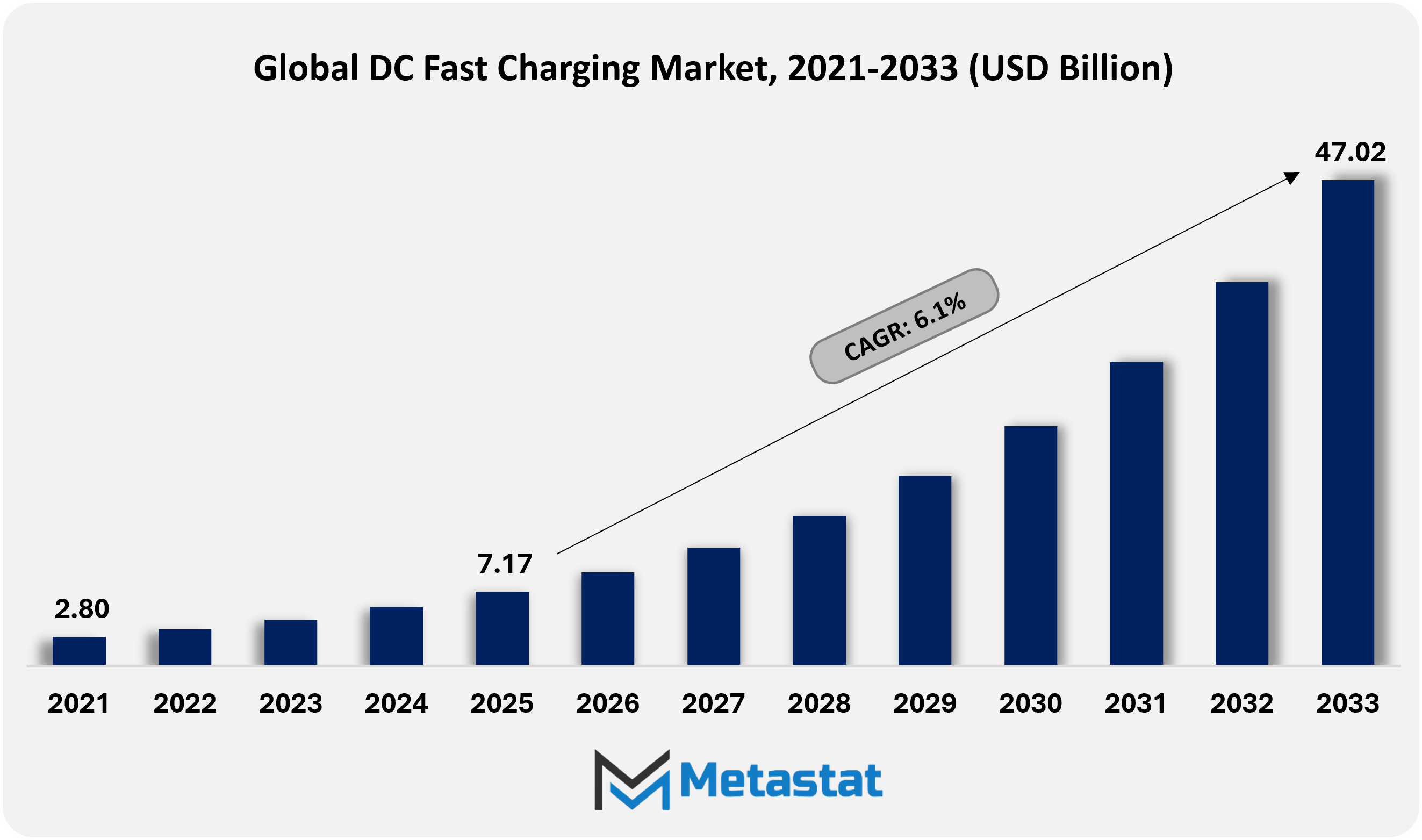
Accelerating adoption of electric passenger vehicles, buses, and delivery fleets is strengthening the expansion of high-capacity charging corridors across highways and urban centers. Growing fleet electrification programs are supporting the deployment of 150 kW to 350 kW charging systems that significantly reduce charging duration. The Global DC Fast Charging market is benefiting from sustained EV sales momentum across developed and emerging economies.
National transport policies promoting carbon neutrality are increasing funding allocation toward large-scale charging infrastructure. Financial subsidies, tax credits, and regulatory mandates are encouraging private operators to expand high-speed charging clusters across metropolitan regions. Public-private partnerships are improving deployment visibility and positioning the Global DC Fast Charging market within long-term mobility transition strategies.
Installation of ultra-fast charging systems requires substantial expenditure on transformer upgrades, land acquisition, civil works, and advanced power electronics. High upfront costs extend payback timelines, particularly in low-utilization locations. Financial feasibility in the Global DC Fast Charging market increasingly depends on optimized site selection and utilization forecasting to reduce investment risk.
Urban power networks often lack sufficient load-bearing capacity to support multiple high-output chargers operating simultaneously. Peak demand charges increase operating expenditure and affect pricing competitiveness. Infrastructure planning in the Global DC Fast Charging market increasingly requires coordinated grid modernization initiatives to maintain scalability without disrupting local distribution networks.
Advanced energy management systems that combine solar generation, battery storage, and dynamic load balancing are creating cost-efficient charging ecosystems. Intelligent software platforms can forecast demand patterns and optimize power distribution across charging stations. Strategic development of these hybrid models is strengthening long-term resilience and sustainability across the Global DC Fast Charging market.
The Global DC Fast Charging market is classified based on Type, End Use, Connector Type, and Charging Infrastructure Type.
Level 2 Chargers segment is estimated at USD 2.9 billion in 2026 and is projected to reach USD 8.5 billion by 2033, at a CAGR of 16.6% during the forecast period.
Level 2 Chargers will remain relevant for urban charging hubs, commercial parking locations, and semi-public environments. Improvements in energy efficiency, grid integration, and smart monitoring systems will enhance operational stability. Broader compatibility across EV platforms will support adoption in retail sites, mixed-use developments, and destination charging networks.
DC Fast Chargers segment is estimated at USD 4.1 billion in 2026 and is projected to reach USD 22.1 billion by 2033, at a CAGR of 27.1% during the forecast period.
DC Fast Chargers are expected to gain strong traction owing to their ability to deliver rapid charging across highways and high-traffic corridors. Advanced power electronics, thermal management systems, and digital payment integration will support seamless user experience. Deployment across retail zones, fuel stations, and transit hubs will contribute to higher vehicle turnover and reduced waiting times.
Ultra-Fast Chargers segment is estimated at USD 2.1 billion in 2026 and is projected to reach USD 16.5 billion by 2033, at a CAGR of 34.6% during the forecast period.
Ultra-Fast Chargers are set to redefine high-capacity charging through superior power output and reduced charging duration. Integration with renewable energy sources and battery storage systems will improve sustainability performance. Expansion across expressways, logistics corridors, and metropolitan clusters will position ultra-fast charging as a core component of long-distance electric mobility networks.
Commercial segment is projected to reach USD 38.7 billion by 2033, at a CAGR of 27.2% during the forecast period.
Commercial adoption inside the Global DC Fast Charging market will amplify throughout shopping facilities, hospitality venues, and mixed-use developments. Strategic charger placement will enhance patron stay time and emblem positioning. Revenue generation through dynamic pricing models and cost-added services will inspire non-public region funding in scalable charging infrastructure.
Residential segment is projected to reach USD 2.8 billion by 2033, at a CAGR of 19.5% during the forecast period.
Residential participation within the Global DC Fast Charging market will grow through the integration of compact, green charging gadgets inside housing societies and gated groups. Smart home connectivity and cargo management structures will guide solid power distribution. Demand for handiness in a single-day charging will influence residential infrastructure planning and real estate improvement techniques.
Government segment is projected to reach USD 5.5 billion by 2033, at a CAGR of 26% during the forecast period.
Government involvement in the Global DC Fast Charging market is expected to strengthen through policy mandates, subsidies, and infrastructure funding programs. Public sector investment in transit electrification and municipal fleets will accelerate charger deployment. Regulatory frameworks focused on emission reduction targets will shape long-term infrastructure expansion and standardization initiatives.
CHAdeMO segment is projected to reach USD 0.9 billion by 2033.
CHAdeMO era in the Global DC Fast Charging marketplace will keep serving legacy electric-powered vehicle fleets and selected local markets. Upgrades in bidirectional charging functionality will guide automobile-to-grid packages. Ongoing compatibility improvements will preserve operational relevance in regions in which hooked-up infrastructure aligns with current vehicle standards.
CCS segment is projected to reach USD 28.2 billion by 2033.
CCS connectors inside the Global DC Fast Charging marketplace will witness broader recognition due to multi-manufacturer aid and high-energy capability. Standardization throughout car brands will streamline infrastructure investment decisions. Continued technical refinement in communication protocols and protection structures will reinforce reliability across public charging environments.
Tesla Supercharger segment is projected to reach USD 16.5 billion by 2033.
Tesla Supercharger systems within the Global DC Fast Charging marketplace will enlarge interoperability beyond proprietary automobile networks. Opening community access to additional electric car brands will influence aggressive positioning. Enhanced electricity output and software program-driven station management will optimize user throughput across densely populated charging corridors.
Type 2 segment is projected to reach USD 1.4 billion by 2033.
Type 2 connectors underneath the Global DC Fast Charging marketplace will maintain importance across European and selected international markets. Compatibility with alternating present-day charging frameworks will aid hybrid infrastructure fashions. Gradual version for higher-ability integration will enable bendy deployment throughout semi-public and institutional centers.
Public Charging Stations segment is projected to grow at a CAGR of 25% during the forecast period.
Public Charging Stations within the Global DC Fast Charging market will shape the spine of city and highway electrification. Integration with virtual mapping systems and reservation systems will enhance accessibility. Strategic placement close to industrial districts and transport nodes will guide big-scale electric powered car adoption and local mobility making plans.
Private Charging Stations segment is projected to grow at a CAGR of 18.5% during the forecast period.
Private Charging Stations within the Global DC Fast Charging market will extend throughout corporate campuses, residential towers, and one-of-a-kind centers. Secure get admission to control and usage analytics will optimize operational efficiency. Investment in devoted infrastructure will support steady charging availability for defined consumer agencies and institutional fleets.
Workplace Charging segment is projected to grow at a CAGR of 21.6% during the forecast period.
Workplace Charging answers within the Global DC Fast Charging market will make stronger worker mobility applications and corporate sustainability dreams. Smart scheduling capabilities and power load balancing will lessen stress on grid systems. Long-period parking cycles throughout operating hours will create green possibilities for dependent charging routines.
Fleet Charging Stations segment is projected to grow at a CAGR of 34.6% during the forecast period.
Fleet Charging Stations under the Global DC Fast Charging marketplace will help logistics companies, ride-hailing services, and public delivery operators. High-ability charging arrays and predictive renovation gear will beautify operational uptime. Integration with fleet management software program will allow information-driven optimization of course planning and energy intake patterns.
Based on geography, the Global DC Fast Charging market is divided into North America, Europe, Asia-Pacific, South America, Middle East, and Africa.
In North America, aggressive federal and state investment applications boost up the installation of high-energy public charging corridors throughout highways and concrete centers.
In North America, rising electric automobile adoption, supported by robust OEM presence and patron incentives, drives the call for reliable DC rapid charging networks.
In the Asia Pacific, fast urbanization and increasing EV manufacturing hubs create large-scale opportunities for superior DC fast charging deployment.
In the Asia Pacific, government mandates promoting zero-emission mobility open new investment avenues for ultra-fast charging infrastructure enlargement.
Across the Middle East, Africa, and South America, sluggish EV penetration supported with the aid of infrastructure modernization initiatives is shaping a regular call for an increase in DC rapid charging solutions.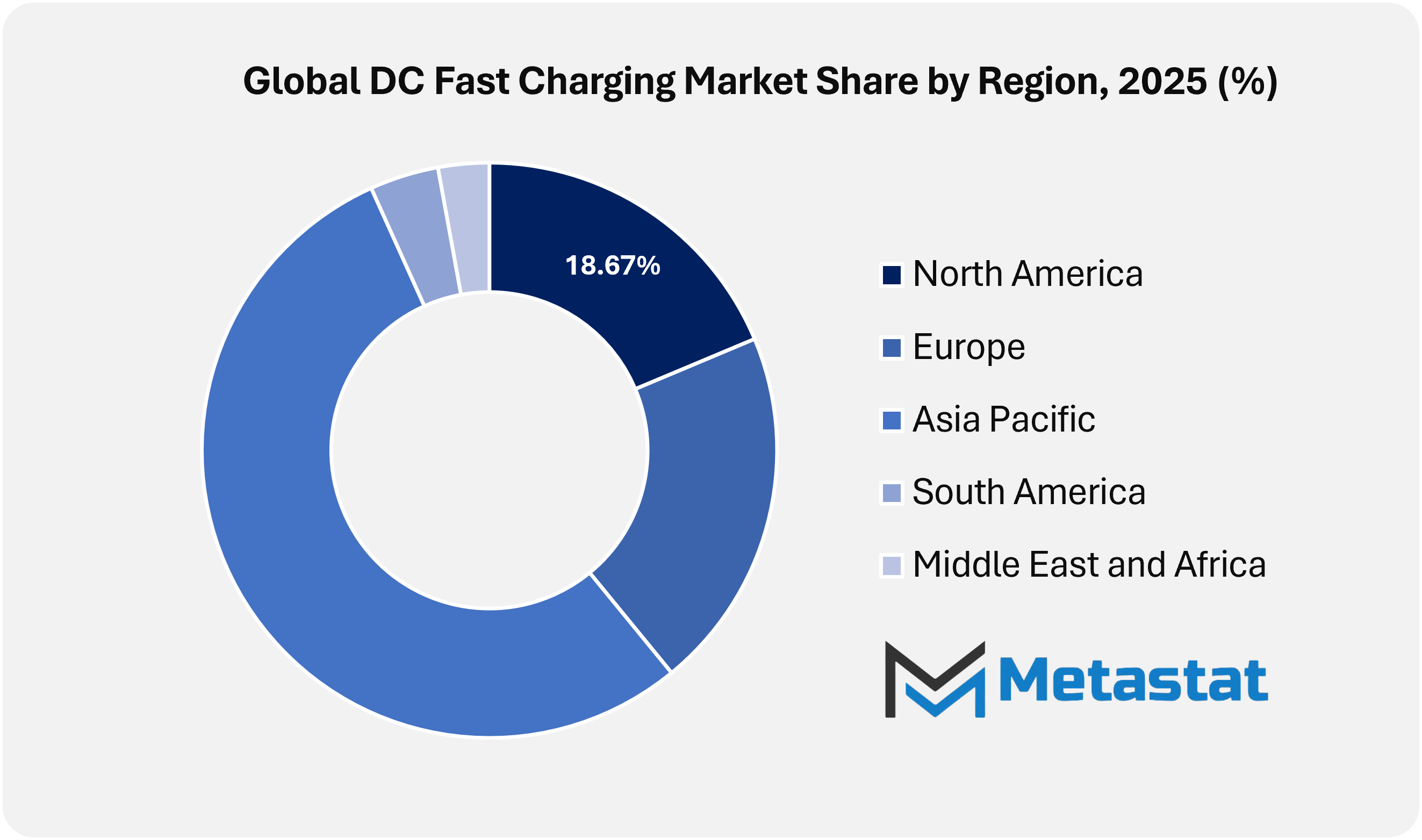
The international DC fast charging marketplace is growing at a constant pace as electric cars grow to be extra commonplace on roads internationally. Governments are setting sturdy targets to reduce emissions, and this could boost the call for dependable and brief charging solutions. Unlike trendy chargers, DC fast chargers can power a car battery in a far shorter time, making them suitable for highways, commercial fleets, and concrete charging hubs. As extra customers shift closer to electric mobility, charging velocity and community availability will play a primary role in buying choices. This shift will push each public and private sector to make investments in fast charging infrastructure.
Rapid urbanization and supportive guidelines are driving the market boom. Many international locations are imparting incentives for electric vehicle adoption, and this could naturally increase the need for high-capacity charging stations. Businesses that include shopping facilities, office complexes, and gas station operators are putting in DC fast chargers to draw customers and demonstrate their commitment to their customers. At the same time, fleet operators are electrifying buses, shipping vans, and taxis, with the purpose of requiring reliable and high-capacity charging structures. As the battery era improves, charging systems may even want enhancements to address better voltage and faster turnaround instances.
Competition in this marketplace is robust, with international and regional players striving to expand their presence. Key Global DC Fast Charging Industry Players encompass ABB E-mobility, ADS-TEC Energy, Alpitronic, Autel Energy, Blink Charging, BTC Power, ChargePoint, Circontrol, Delta Electronics, Eaton, Efacec, EVBox, EVgo, Exicom, Fortum, FreeWire Technologies, GreenWay Infrastructure, Heliox, Huawei Digital Power, Ingeteam, Kempower, Leviton Manufacturing, Nidec Conversion, Power Electronics, Qingdao TGOOD Electric, Schneider Electric, Siemens, Sinexcel, SK Signet, StarCharge, Starvo Global Energi, Sungrow Charging, Tesla, Tritium, Vestel, Volta, Wallbox, and XCharge. These groups are focusing on product innovation, software integration, and network growth. Many are forming partnerships with automakers, utilities, and infrastructure companies to bolster their marketplace position.
Technology will stay a key aspect shaping the future of this enterprise. Companies are operating on ultra-fast chargers, smart strength management systems, and solutions that integrate renewable electricity and battery garage. Interoperability and user-friendly fee structures may also become critical as charging networks expand across borders. While high setup prices and grid obstacles may also create short-term challenges, ongoing investments and supportive rules will assist the marketplace grow progressively. In the coming years, the DC rapid charging sector will play an important position in assisting the global transition closer to cleanser transportation.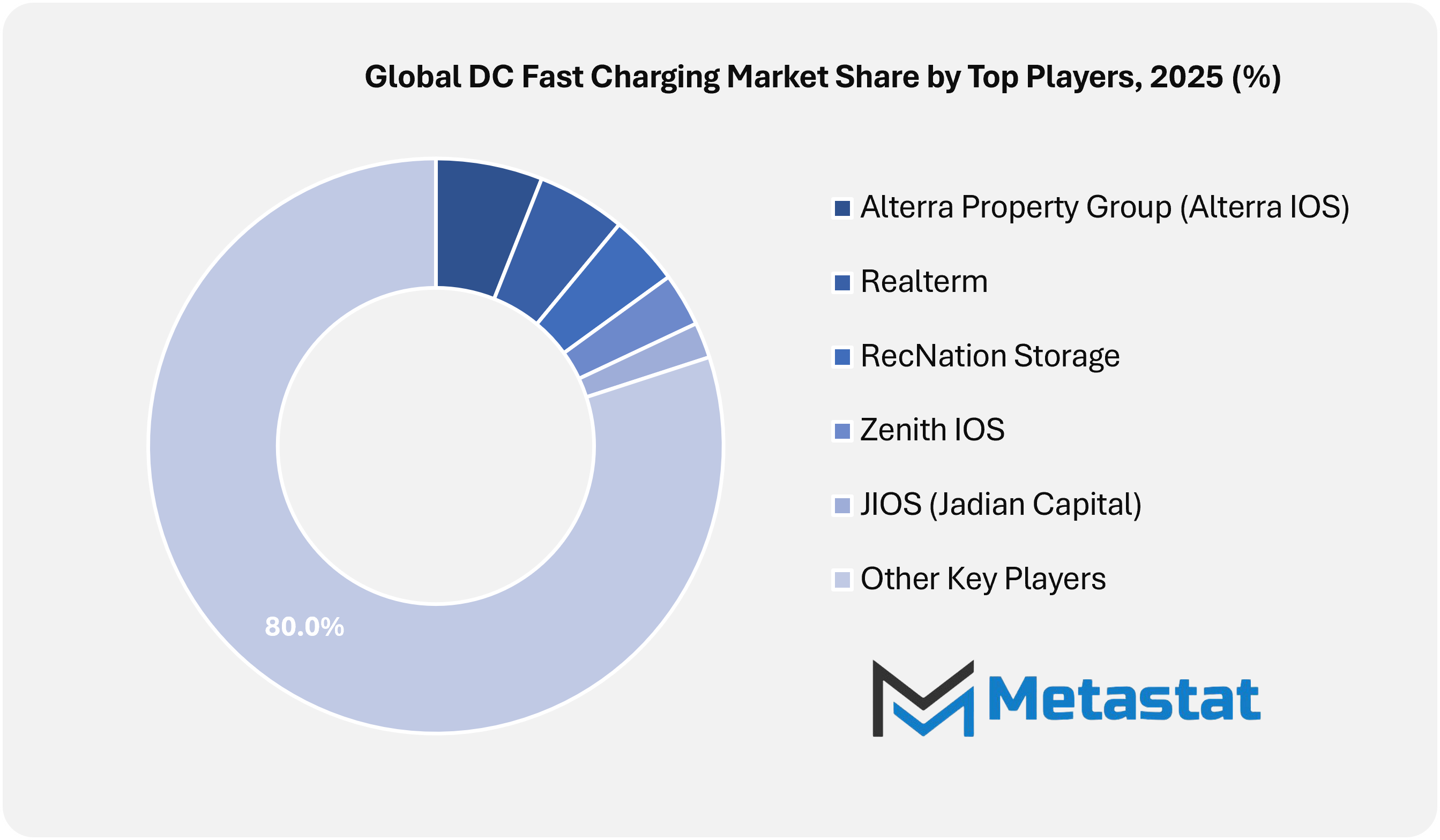
Market size is forecast to rise from USD 7.2 billion in 2025 to over USD 47.0 billion by 2033.
Beyond roadside installations, high-capacity charging structures will amplify into maritime ports, mining operations, and airport floor support gadget, broadening the industrial footprint of fast-charging era. Interoperability requirements and open charge architectures will become critical to pass-border mobility, especially as multinational automakers align connector formats and verbal exchange protocols. Data analytics platforms will display station usage, predictive renovation cycles, and strength throughput, strengthen operational reliability and go back on capital. Through these structural shifts, rapid-charging infrastructure will function itself as a strategic asset within national electrification roadmaps rather than a standalone convenience characteristic for electric powered vehicle drivers.
This research report categorizes the DC Fast Charging market based on key segments and regions, forecasts revenue growth, and analyses trends in each submarket. The report analyses the key growth drivers, opportunities, and challenges influencing the DC Fast Charging market. Recent market developments and competitive strategies such as expansion, product launch, partnership, merger, and acquisition have been included to draw the competitive landscape in the market.
The report strategically identifies and profiles the key market players and analyses their core competencies in each sub-segment of the DC Fast Charging market.
|
Report Attributes |
Details |
|
Study Period |
2021-2033 |
|
Base Year |
2025 |
|
Estimated Year |
2026 |
|
Forecast Period |
2026-2033 |
|
Historical Period |
2021-2025 |
|
Growth Rate |
CAGR 26.5% from 2026 to 2033 |
|
Revenue Unit |
USD billion |
|
Sales Volume Unit |
Kilowatt-hours (kWh) |
|
Segmentation |
By Type, End Use, Connector Type, Charging Infrastructure Type, and Region |
|
By Region |
North America (By Type, End Use, Connector Type, Charging Infrastructure Type, and Country)
|
|
Europe (By Type, End Use, Connector Type, Charging Infrastructure Type, and Country)
|
|
|
Asia Pacific (By Type, End Use, Connector Type, Charging Infrastructure Type, and Country)
|
|
|
South America (By Type, End Use, Connector Type, Charging Infrastructure Type, and Country)
|
|
|
Middle East and Africa (By Type, End Use, Connector Type, Charging Infrastructure Type, and Country)
|
Find answers to common questions about this report
Top players operating in the DC Fast Charging industry include ABB E-mobility, ADS-TEC Energy, Alpitronic, Autel Energy, Blink Charging, and BTC Power.
Global DC Fast Charging market is estimated to reach USD 47.0 billion by 2033.
Asia Pacific region dominates the market.
Rapid electric vehicle penetration across passenger and commercial segments increases demand for high-power public charging networks and Government incentives, emission mandates, and zero-emission mobility targets stimulate investment in fast-charging corridors and urban hubs are key driving factors, boosting the market.
The Level 2 Chargers is the leading type segment in the Global market.
The Metastat Insights analysis shows that the North America DC Fast Charging market size is estimated to be USD 10.8 billion by 2033.
The Metastat Insights study shows that the Global DC Fast Charging market size was USD 7.2 billion in 2025.
The Global DC Fast Charging market is expected to grow at a CAGR of 26.5% over the forecast period (2026-2033).
The analysts below cover Automotive and Transportation research at Metastat Insights.
LEAD ANALYST
Utkarsh Khirodkar is a Lead Market Research Analyst at MetaStat Insight, specializing in market intelligence, technology sector assessments, and competitive strategy.

ENERGY & INFRASTRUCTURE INDUSTRY CONSULTANT
Automotive and Transportation · Electronics and Semiconductor · Energy and Power · Machinery & Equipment
Saurabh Vasant Ganvir consults for Energy & Infrastructure Industry at MetaStat Insight, specializing in renewable energy, solar EPC, and electric vehicle (EV) infrastructure markets.
When planning edge sensor rollouts across refinery environments, generic IoT reports typically miss the harsh-environment certification bottlenecks. MetaStat Insight gave an objective evaluation of ATEX and Class 1 Division 2 hardware availability, along with realistic five-year maintenance cycle cost projections. The comparison of wireless mesh versus private cellular backhaul helped our team pressure-test network reliability models for remote processing facilities.
In the biological seed treatment space, registration timelines vary drastically between the European Union, Brazil, and North America. The MetaStat Insight research handled these cross-border regulatory barriers with genuine nuance, mapping commercialization pathways alongside historical field adoption rates. The segmentation between microbial strains and biochemical active ingredients was particularly well structured.
Our team was tracking whether regional recycling infrastructure could realistically absorb the growing volume of lithium iron phosphate batteries over the next decade. The report did a solid job separating announced hydrometallurgical plant capacity from active, permitted operational throughput. That distinction made the feedstock availability projections and regional recovery rate models far more credible than standard commercial overviews.
Explore related market intelligence reports worth reading alongside this one.
Starting from
$2950