
LEAD ANALYST
Utkarsh Khirodkar is a Lead Market Research Analyst at MetaStat Insight, specializing in market intelligence, technology sector assessments, and competitive strategy.

Global Truck Trailer Market Size, Share, By Trailer Type (Dry Van Trailers, Flatbed Trailers, Refrigerated Trailers, Tanker Trailers, Lowboy Trailers and Others), By Material (Steel, Aluminum and Composite Materials), By Tonnage Capacity (Below 25 Tons, 25 to 50 Tons, 51 to 100 Tons and Above 100 Tons), By End-Use Industry (Food and Beverage, Construction, Oil and Gas, Agriculture, Retail and E-Commerce, Chemicals and Others), Industry Analysis, Growth, Trends, and Forecast, 2026-2033
Report ID
MSI-5730
Published
November, 2026
Pages
263 Pages
Format
Historical
Base year
Forecast
Forecast period
Report Details
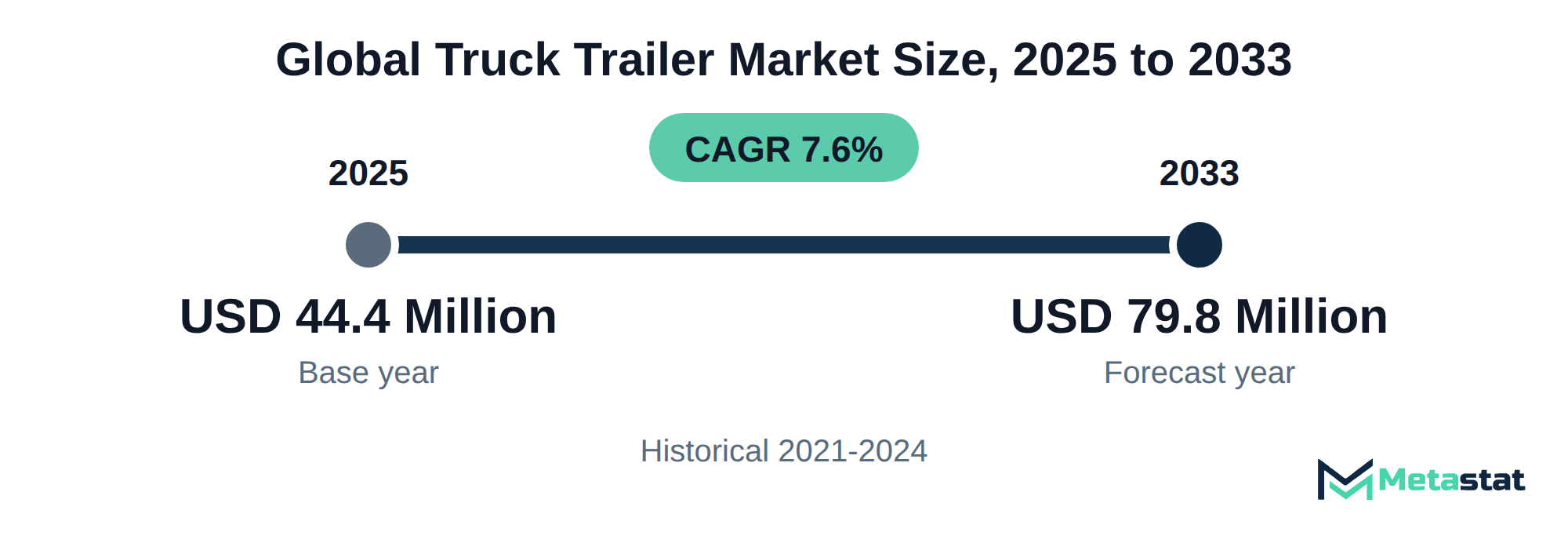
Market Valuation: Valued at $44.4 Million in 2025, projected to reach $79.8 Million by 2033 at a 7.6% CAGR.
Dominant Segment: Dry van trailers lead the market, driven by their versatility and cost-effectiveness for transporting a wide range of goods, particularly in the retail and e-commerce sectors.
Geographic Lead: Asia Pacific dominates the market with a 37.3% share in 2023, fueled by significant investments in manufacturing and logistics infrastructure to support rising transportation needs.
What's Inside: The report provides a comprehensive analysis of market dynamics, competitive landscape, and detailed forecasts from 2026 to 2033, covering various trailer types, materials, and end-use industries.
Growth in Aluminum Trailer Adoption: Aluminum trailers are projected to grow at a CAGR of 8.3%, reflecting a strong trend towards lightweight and fuel-efficient solutions in logistics and construction.
Increasing Demand for Refrigerated Trail: The refrigerated trailer segment is expected to reach USD 11.6 million by 2033, driven by the growing need for efficient cold chain logistics in the food and beverage industry.
Choose Your License
Global Truck Trailer Market
The global Truck Trailer market was valued at USD 44.4 million in 2025 and is projected to reach USD 79.8 million by 2033, growing at a CAGR of 7.6% over the forecast period.
The Truck Trailer market encompasses a range of vehicle types designed for transporting goods, including dry van, flatbed, refrigerated, and tanker trailers. Buyers invest in these vehicles primarily to enhance logistics capabilities, meet regulatory requirements, and improve operational efficiency. Reliable transportation solutions drive demand across multiple industries, including food and beverage, construction, and agriculture.
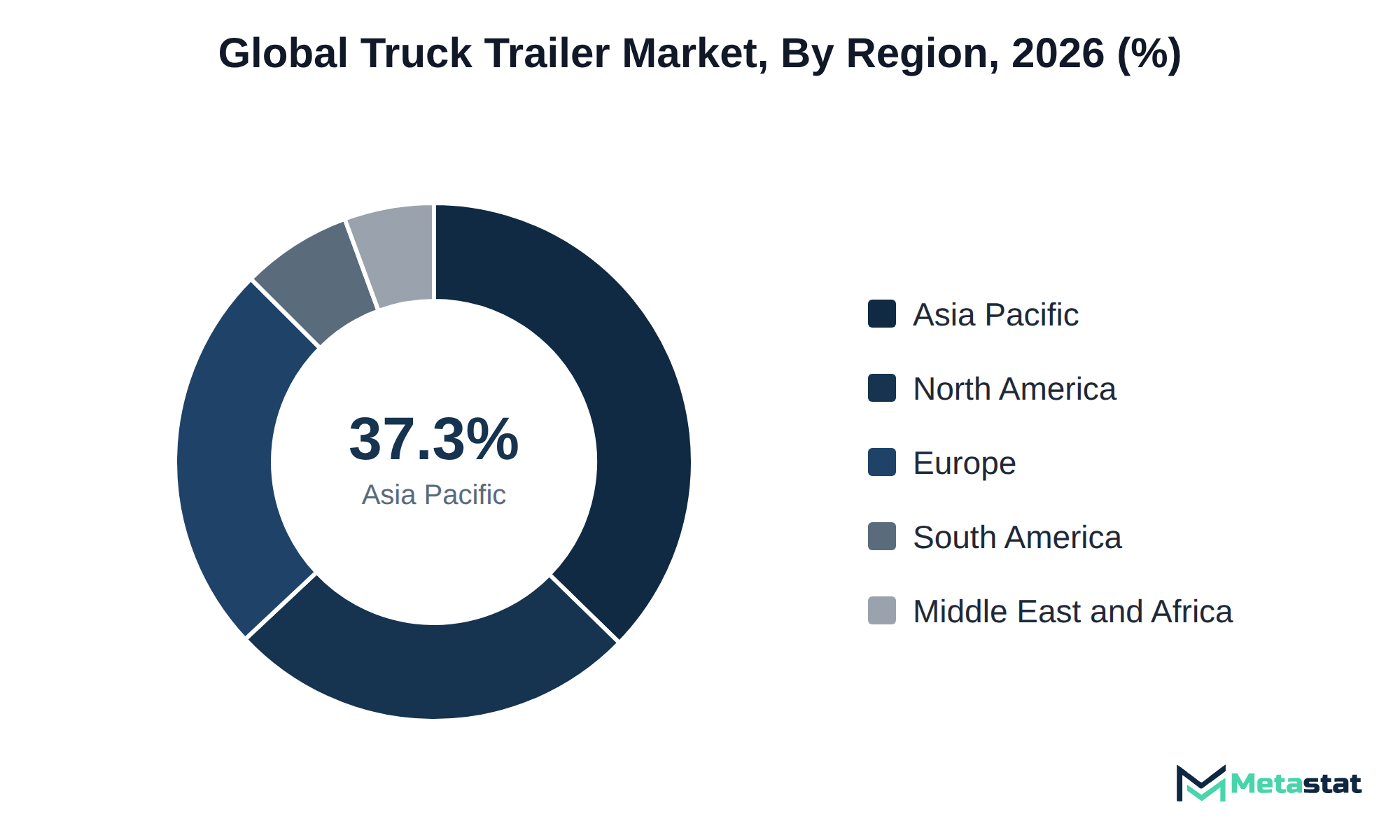
Growth in the market is supported by increasing demand for transportation solutions, particularly in emerging economies. Among the various segments, dry van trailers represent the highest value, accounting for a significant portion of market revenue. In terms of regional share, Asia Pacific leads with 37.3%, followed closely by North America, which holds 25.7% of the market in 2025, with the US leading in 2026.
One of the primary growth drivers is the rising focus on e-commerce and online retail, which necessitates efficient logistics and distribution systems. Businesses invest in advanced trailer technologies to enhance operational capabilities and adapt to changing market needs. Operators are optimizing supply chains to ensure timely delivery of goods.
The Truck Trailer market serves various sectors by providing essential transportation solutions for goods. Buyers invest in trailers to enhance logistics efficiency, reduce operational costs, and ensure the safe delivery of products. The diverse applications of these trailers across industries including food and beverage, construction, and oil and gas drive consumer spending in this sector.
Rising demand for efficient transportation solutions propels growth, particularly in the Asia Pacific region, which holds a share of 37.3%. Among the trailer types, dry van trailers represent the most substantial value segment, reflecting a strong preference for their versatility and reliability.
Urbanization and industrialization are expanding, and rising infrastructure investment is further boosting demand. The transition to more durable and lightweight materials, including aluminum, supports the development of advanced trailer designs. This shift improves trailer performance and durability.
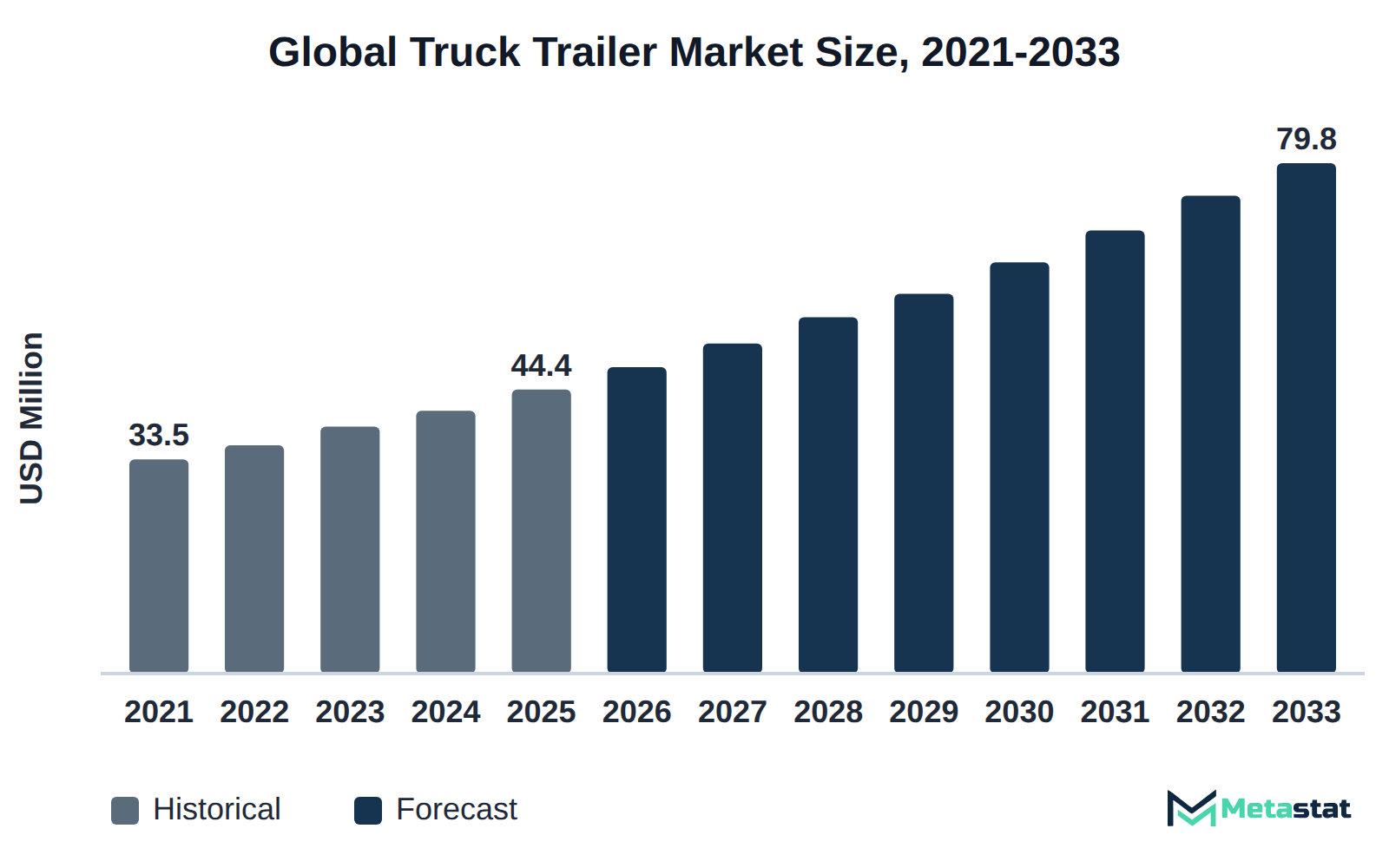
Demand for dry van and refrigerated trailers continues to rise within modern freight networks, driven by the increasing need for efficient temperature-controlled transportation. The refrigerated trailer segment is expected to achieve a value of USD 11.6 million by 2033, reflecting a growing preference for these trailers among logistics companies serving industries including food and beverage, pharmaceuticals, and perishable goods.
Technological advancements in temperature management systems enhance the operational efficiency of refrigerated trailers. Features including advanced insulation materials and precision temperature controls contribute to reduced energy consumption and increased cargo safety. As companies prioritize sustainability and energy efficiency, adopting these technologies gives them a competitive advantage in the truck trailer market.
Dry van trailers meet diverse freight transportation needs, with projected growth to USD 27.9 million by 2033. Their versatility and ability to accommodate various cargo types drive demand across different sectors, including e-commerce and automotive. The combined growth of these trailer types supports the overall expansion of the market, creating opportunities for manufacturers and suppliers to innovate and invest in product development.
The adoption of lightweight trailer materials significantly influences purchasing decisions within the Truck Trailer market. Buyers prioritize cost savings associated with weight reduction, leading to improved fuel efficiency and lower operational expenses. The market anticipates a growing preference for aluminum trailers, projected to reach USD 19.2 million by 2033, reflecting an annual growth rate of 8.3%. This shift demonstrates a transition towards materials that enhance payload capacity while reducing the overall weight of the fleet.
Pricing structures for lightweight trailers typically rely on contract models that address both initial purchase costs and long-term operational savings. Buyers often engage in negotiations that focus on the total cost of ownership, which encompasses maintenance, fuel efficiency, and resale value. The emphasis on lightweight materials significantly influences these discussions, with buyers seeking to maximize their investment and ensure long-term profitability within the competitive landscape of the Truck Trailer market.
Aerodynamic designs in truck trailers contribute to enhanced fuel efficiency, further influencing buyer behavior. The market reflects a growing recognition of how these designs reduce air resistance, leading to significant savings on fuel costs. Buyers increasingly analyze the aerodynamic features of trailers, often requiring detailed specifications during the procurement process. This trend prompts manufacturers to focus heavily on design innovations that align with buyers' demands for efficiency and sustainability.
Buyers approach contracts with a keen interest in performance metrics tied to aerodynamic efficiency. This focus leads to pricing models that reward manufacturers for delivering trailers that meet specified aerodynamic standards, ultimately driving competitive pricing within the market. Pricing strategies tied to performance outcomes shape purchasing, and both material and design choices affect long-term value and operational efficiency.
Rapid growth in the Asia Pacific region's manufacturing and logistics sectors significantly influences demand for new trailers. Investment in infrastructure and logistics capabilities is essential in meeting the rising needs of industries, particularly those focused on transportation and distribution. In 2023, the region accounted for 37.3% of the global Truck Trailer market share, reflecting the strong emphasis on enhancing supply chain efficiency.
Among the buyer groups, logistics providers exhibit distinct requirements for trailers, focusing on durability and capacity. The rising trend toward e-commerce and the need for reliable delivery systems increase the demand for specialized trailers, including flatbed and refrigerated types. Logistics companies prioritize features that ensure product safety and optimize loading and unloading processes. This trend aligns with the expected growth of flatbed trailers, which is anticipated to reach USD 17.3 million by 2033, driven by demands for adaptability in cargo transport.
Investment in trailer technology, including advancements in materials and design, enhances operational efficiency for logistics firms. While the Truck Trailer market evolves, manufacturers that prioritize innovation and cater to the specific needs of logistics operators position themselves for substantial market opportunities. Growth in this sector points to a strong trajectory for new trailer sales and shows how Asia Pacific investment shapes future market dynamics.
Smart trailer systems enhance fleet utilization and cargo security through advanced technologies including GPS tracking and telematics. These systems enable real-time monitoring of trailer locations and conditions, ensuring that fleet operators maintain optimal usage while minimizing downtime. For instance, as the Truck Trailer market grows, dry van trailers are expected to increase from USD 17.1 million in 2026 to USD 27.9 million by 2033, a compound annual growth rate of 7.2%. This rise indicates strong demand for trailers equipped with smart systems.
The implementation of smart trailer technologies allows operators to track temperature and humidity levels for sensitive cargo, significantly enhancing security. Fleet managers receive alerts for any deviations, enabling swift action to mitigate risks. This capability protects cargo and builds client trust, which can lead to more business opportunities. Overall, the integration of smart trailer systems transforms fleet management, driving efficiency and security within the market.
Recent shifts in consumer behavior have intensified the need for efficient transportation solutions within the food and beverage sector. Increasing demand for online grocery shopping and home delivery services drives logistics companies to expand their fleets, emphasizing the need for high-capacity trailers. The food and beverage industry, a primary buyer group, prioritizes timely and safe delivery of temperature-sensitive goods, prompting investment in refrigerated trailers. This sector contributes significantly, with refrigerated trailer demand projected to reach USD 11.6 million by 2033. The transformation in consumer purchasing patterns results in heightened volume requirements, putting pressure on suppliers to enhance delivery capabilities. The truck trailer market experiences a direct impact from this, with operational efficiencies and expanded capacity becoming essential for meeting evolving customer expectations.
Replacement cycles for aging trailers further stimulate market growth. Many logistics companies replace older trailers with newer, more efficient models to comply with increasing regulatory standards and optimize operations. The adoption of advanced technologies within newer models enhances performance and reduces maintenance costs, positioning the market for sustained growth.
Innovative trailer designs drive enhanced efficiency and performance in the Truck Trailer market. The integration of advanced materials and aerodynamic features improves fuel efficiency, attracting investment from logistics companies. Enhanced trailer designs allow for optimized cargo capacity and reduced operational costs, appealing to several end-use industries.
The trend toward incorporating smart technologies, including telematics systems, enables real-time tracking and monitoring of trailers. This capacity improves asset utilization while minimizing downtime, presenting a competitive advantage for fleet operators. With the growing focus on sustainability, manufacturers increasingly emphasize the development of energy-efficient trailers, aligning with environmental objectives and regulatory demands.
These technological shifts encourage investments in research and development, enhancing market competitiveness. As innovative solutions emerge, adoption rates rise and the market follows a strong growth trajectory. Enhanced trailer designs ultimately support demand across various sectors, including construction and agriculture, contributing to the market's overall expansion.
The cost of truck trailers imposes a significant restraint on purchasing decisions among potential buyers. High upfront costs associated with various trailer types, particularly refrigerated and specialized variants, result in slower uptake within the market. This hesitation primarily affects small to medium-sized logistics firms that lack sufficient capital to invest in new equipment. Consequently, these buyers often opt for delayed replacement cycles, prolonging the use of older equipment that does not meet modern efficiency standards. The financial implications of high prices lead to smaller orders, which in turn affect overall market growth. In addition, increased competition from alternative transport solutions further intensifies the pressure on buyers, leading to a cautious approach in their acquisition strategies. Ultimately, these dynamics shape the operational capabilities of affected companies while restricting the market expansion potential during the forecast period.
Rising input costs challenge suppliers in the Truck Trailer market, impacting profitability across various segments. Increased prices for raw materials, including steel and aluminum, exert significant pressure on manufacturers, resulting in higher production expenses. Suppliers respond by seeking alternative materials and optimizing production processes to maintain competitive pricing. Innovations in materials, including the adoption of composite materials, emerge as a strategic focus to reduce weight and enhance fuel efficiency, ultimately providing a cost-effective solution for end-users. These shifts not only address rising costs but align with the market's demand for advanced and sustainable trailer designs. Increased competition among suppliers further intensifies the need for effective cost management strategies, ensuring they remain attractive to buyers while sustaining operational margins. These challenges influence investment decisions and push suppliers to improve efficiency and innovate in product offerings to secure their position in the market.
Aluminum trailers represent a significant growth opportunity within the Truck Trailer market. The projected CAGR for aluminum trailers stands at 8.3% through 2033, highlighting a strong trend toward lightweight and corrosion-resistant materials. This shift aligns with the increasing demand for fuel-efficient transportation solutions across various industries, particularly logistics and construction. Buyers prioritize durability and weight savings, which directly influence their purchasing decisions. The anticipated market value for aluminum trailers reaches USD 19.2 million by 2033, reflecting the growing preference for materials that enhance fuel efficiency and reduce operational costs. The market benefits from advancements in aluminum manufacturing processes, enabling suppliers to meet rising demand effectively. Investments in lightweight trailer technologies enhance competitiveness, further expanding market penetration. Enhanced performance characteristics of aluminum trailers provide a compelling case for adoption among transportation companies aiming to optimize fleet operations.
The Global Truck Trailer market is segmented based on Trailer Type, Material, Tonnage Capacity, and End-Use Industry.
Used primarily for transporting non-perishable goods, dry van trailers play a critical role for businesses in sectors including retail and e-commerce. Growth is driven by rising demand for efficient transportation solutions, particularly in urbanized regions experiencing increased online shopping. Compared to refrigerated trailers, dry van trailers maintain a lower price point and are more cost-effective for transporting a wide range of products. This segment's projected growth rate is slightly slower than that of flatbed trailers, which enjoy a CAGR of 7.8%. The focus on optimizing logistics and supply chain operations significantly influences purchasing decisions for dry van trailers, making them a preferred choice for many logistics companies.
Flatbed Trailers segment is estimated to reach USD 17.3 million by 2033, at a CAGR of 7.8% during the forecast period. These trailers serve various sectors, including construction and agriculture, by providing an effective solution for transporting heavy and oversized loads. The robust demand for flatbed trailers stems from the increasing need for logistics in the construction industry, where equipment and materials require reliable transportation. This segment differentiates itself with faster growth compared to other trailer types, driven by a shift towards modular and flexible transportation solutions. In contrast to refrigerated and dry van trailers, which cater to specific temperature-sensitive goods, flatbed trailers offer versatility, accommodating diverse cargo shapes and sizes, thus appealing to a broader range of buyers. Such attributes enhance their market position, contributing significantly to the overall growth trajectory of the market.
Refrigerated trailers are crucial for transporting temperature-sensitive goods, including perishable food items and pharmaceuticals, primarily for companies in the food and beverage industry. The demand for refrigerated trailers is driven by the increasing need for efficient cold chain logistics, reflecting consumer preferences for fresh products. Compared to other trailer types, refrigerated trailers exhibit a higher growth rate, with a CAGR of 8.1%, driven by firms prioritizing food safety and quality. This focus on maintaining optimal temperatures during transport differentiates refrigerated trailers from dry van and flatbed alternatives, which do not require the same level of temperature control. The sector's growth reflects broader expansion trends in the Truck Trailer market, emphasizing the importance of reliable transportation solutions for sensitive cargo.
Tanker Trailers segment is projected to grow at a CAGR of 7.2% during the forecast period. This segment focuses on transporting liquids, gases, and other bulk materials, primarily serving industries including oil and gas, chemicals, and food and beverage. Demand for tanker trailers arises from the increasing need for safe and efficient transportation of hazardous and non-hazardous materials. Rising regulations related to safety and environmental standards drive investments in modern tanker designs. Compared to other trailer types, tanker trailers experience slower growth due to higher manufacturing costs and stringent compliance requirements. However, their specialization in transporting liquids provides a unique value proposition, differentiating them from segments including flatbed and dry van trailers, which cater to more general freight. This specialized function positions the segment for steady demand while navigating specific operational challenges that restrict faster growth.
Lowboy trailers serve primarily in the transportation of heavy and oversized equipment, facilitating safe and efficient loading and unloading due to their unique design. Industries including construction and heavy machinery frequently use lowboy trailers for transporting equipment like bulldozers and cranes. Demand for these trailers is driven by growth in construction activities and infrastructure projects globally. Compared to other trailer types, lowboy trailers involve distinct regulations pertaining to height and weight, influencing their operation and pricing strategies. Their specialized functionality differentiates them from standard flatbed and dry van trailers, aligning them with a niche market that requires specific features, including adjustable ramps for easy access, catering to the needs of heavy haul transportation.
Extendable, dump, and container chassis trailers serve specialized purposes in transporting oversized or unique cargo. These trailers provide flexibility in loading and unloading, accommodating various material types across industries. The construction sector frequently employs these trailers for transporting heavy machinery and materials, while the agricultural industry employs them for moving equipment and produce. Demand for this sub-segment faces upward pressure from increasing construction activities and infrastructure projects that require versatile transportation solutions. This segment differs from others in the market due to its focus on niche applications, which influences pricing and buyer characteristics. Buyers prioritize functionality and load capacity over lower costs, distinguishing this segment from standard flatbed or dry van trailers that cater to more general transport needs. Growing industrial requirements continue to increase interest in extendable, dump, and container chassis trailers.
Steel segment is valued at USD 30 million in 2026 and is projected to reach USD 48.5 million by 2033, at a CAGR of 7.1% during the forecast period. This material is widely used in constructing trailers, particularly for heavy-duty applications in various industries, including transportation and logistics. Demand arises from the need for durable and robust solutions, especially in sectors including construction and agriculture, where trailers face significant wear and tear. The strength and longevity of steel trailers appeal to buyers prioritizing performance and reliability. Compared to aluminum, which experiences a higher growth rate with a CAGR of 8.3%, the steel segment offers a cost-effective alternative, appealing to budget-conscious buyers. While aluminum is favored for its lightweight properties, steel's resilience and lower initial cost drive steady demand, ensuring its relevance in the evolving truck trailer market.
Aluminum is widely used to manufacture lightweight trailers for industries including food and beverage, construction, and agriculture. The increasing focus on reducing vehicle weight for improved fuel efficiency drives demand for aluminum trailers, particularly in sectors emphasizing sustainability. Compared to other materials like steel, aluminum offers a lighter weight and better corrosion resistance, which enhances lifespan and reduces long-term maintenance costs. This segment's growth outpaces that of steel, reflecting a shift towards more efficient transportation solutions. Buyers in the logistics and transportation sectors prioritize the durability and lightweight characteristics of aluminum trailers, translating to lower fuel consumption and operational costs. The market's evolution significantly influences purchasing decisions and shapes the competitive environment within the Truck Trailer market.
Composite materials are projected to reach USD 12.1 million by 2033. This segment focuses on manufacturing trailers that use advanced composite materials, which offer weight savings and enhanced durability compared to traditional materials. Industries including agriculture and construction commonly use trailers made from composites, benefiting from lower operational costs and improved fuel efficiency. The rising demand for lightweight solutions in transportation drives growth in this segment, contrasting with the slower expansion of steel trailers, which are projected to grow at a CAGR of 7.1%. The shift toward composites aligns with sustainability initiatives within the market, highlighting the sector's adaptability to changing regulations and consumer preferences. Enhanced performance characteristics of composite trailers attract buyers seeking innovative solutions to optimize logistics and reduce environmental impact.
Valued at USD 13 million in 2026, the Below 25 Tons segment is projected to reach USD 22.4 million by 2033, at a CAGR of 8.1% during the forecast period. This segment primarily serves industries that require efficient, lightweight transportation solutions, including food and beverage delivery and construction materials logistics. Increasing demand for smaller, versatile trailers drives growth in this segment, particularly among small to medium enterprises. Compared to other segments, including those with higher tonnage capacities, this category experiences a faster growth trajectory due to its adaptability and lower operating costs. The Below 25 Tons segment positions itself favorably for buyers seeking affordability and efficiency in transport operations, distinguishing itself from heavier segments that incur higher expenses and regulatory requirements. Evolving consumer preferences for quick and reliable deliveries present substantial opportunities for expansion within this segment.
The 25 to 50 Tons segment is estimated to reach USD 32.4 million by 2033, at a CAGR of 7.4% during the forecast period. This segment is essential in transporting medium-weight cargo, commonly used by industries including construction and retail. Demand for trailers in this category is driven by the increasing complexity of supply chains, requiring efficient solutions for moving goods. A significant differentiator from other tonnage segments lies in its competitive pricing, appealing to cost-sensitive buyers who prioritize affordability without compromising on quality. In contrast to lighter segments, this category exhibits a strong growth trajectory, reflecting the expanding needs of businesses requiring moderate capacity transport solutions. The market sees consistent demand for these trailers due to their versatility and reliability in various applications.
The 51 to 100 Tons segment is expected to reach USD 15.7 million by 2033. This segment primarily serves the transportation needs of industries requiring heavy freight solutions, including construction and agriculture. Demand for this segment is driven by the increasing need for transporting heavier loads efficiently, aligning with growth in sectors including construction and manufacturing. Compared to other tonnage capacities, this segment exhibits a moderate growth rate, supported by a CAGR of 7.2%. Its higher price point differentiates it from lighter capacity segments, reflecting the specialized requirements and robust construction standards needed for trailers in this range. The focus on safety and durability in design further enhances its appeal among industrial buyers, pushing manufacturers to innovate and adapt their offerings to meet specific client demands.
The Above 100 Tons segment is projected to grow at a CAGR of 7.2% during the forecast period. This segment primarily serves heavy goods transportation, appealing to sectors including construction and oil and gas where substantial tonnage requirements exist. The demand for high-capacity trailers stems from increased industrial activities and infrastructure development, fueling investments in logistics capabilities. Compared to other segments, including those below 100 tons, the Above 100 Tons segment differentiates itself through higher operational costs and specialized buyer requirements, which generally focus on heavy-load logistics. This segment demands advanced engineering and robust materials, reflecting the rigorous standards necessary for safety and durability. The market increasingly prioritizes efficiency in transporting heavy loads, resulting in a growing preference for this higher-capacity segment.
Valued at USD 8.6 million in 2026, the Food and Beverage segment is projected to reach USD 14.9 million by 2033, at a CAGR of 8.1% during the forecast period. This segment serves the food and beverage industry, providing essential transportation solutions for perishable goods, raw materials, and finished products. Key drivers of growth include increasing consumer demand for fresh and processed food items, alongside the rising popularity of online grocery shopping. The Food and Beverage segment experiences a higher growth rate compared to the Construction segment, which has a CAGR of 7.4%. The specific requirements for temperature-controlled logistics and timely delivery of products further differentiate this segment, ensuring it maintains a competitive edge in the market.
Construction segment is estimated to reach USD 14.4 million by 2033, at a CAGR of 7.4% during the forecast period. This segment primarily supports the needs of companies engaged in building and infrastructure development, including contractors and construction firms. Demand drivers in this segment include increased investments in infrastructure projects and urban development. Growth in construction activities directly influences the need for specialized trailers used for transporting heavy construction equipment and materials. Compared to other segments, the construction segment experiences significant growth due to higher demand, with a CAGR of 7.4%, distinguishing it from segments including food and beverage, which has a similar growth trajectory but operates under different market dynamics. Unique requirements of construction applications necessitate a focus on durability and load capacity, further shaping this sub-segment's characteristics in the Truck Trailer market.
The Oil and Gas segment is expected to reach USD 6.6 million by 2033. This segment primarily serves companies involved in the extraction, refining, and transportation of oil and gas, employing specialized trailers for safe and efficient movement of equipment and materials. Increasing energy demand drives the need for effective transportation solutions, influencing growth in this sector. The segment demonstrates a slower growth trajectory compared to others, with a CAGR of 7.1%, reflecting distinct characteristics in buyer behavior and pricing dynamics. Trailers in this sub-segment often command higher prices due to specialized features that meet regulatory standards, differentiating them from segments including Food and Beverage, which display a higher growth rate. The market's response to technological advancements and regulatory changes significantly impacts investment decisions in this area.
Agriculture segment is projected to grow at a CAGR of 7.1% during the forecast period. This segment is essential for transporting agricultural products, including crops and livestock, which are critical for food supply chains. Farmers and agricultural businesses rely on trailers specifically designed to accommodate diverse cargo types and sizes. Demand drivers for this segment include the increasing need for efficient logistics solutions and the expansion of agricultural production. Compared to other segments, growth in Agriculture occurs at a more moderate pace, with specific requirements influencing the choice of trailers, including durability and adaptability to different terrains. Buyers prioritize functionality and cost-effectiveness, leading to distinct purchasing behavior when contrasted with segments including Construction or Food and Beverage, which exhibit different growth patterns and pricing dynamics. The market shows promising prospects, driven by advancements in trailer technology tailored for agricultural needs.
Retail and E-Commerce involves the transportation of goods sold through retail channels and online platforms. This sub-segment serves logistics providers and retailers, facilitating the movement of products from manufacturers to end consumers. Growth in e-commerce and a shift towards online shopping drive demand for efficient transportation solutions, emphasizing the need for specialized trailers that accommodate various cargo types. Increased consumer expectations for fast delivery times influence this segment's operational requirements, necessitating advanced logistics strategies. Compared to other segments including Food and Beverage, the Retail and E-Commerce segment experiences rapid growth, reflecting the broader trend of digitalization in shopping habits. Companies involved in this space adapt to these fast-evolving market dynamics, ensuring their offerings align with the changing landscape. The Truck Trailer market supports this sub-segment's evolving needs by providing the necessary infrastructure for efficient deliveries.
Chemicals encompass a vital use for transporting hazardous and non-hazardous materials in the market. Industries including pharmaceuticals, petrochemicals, and specialty chemicals rely on trailers tailored for safe and compliant transport. The increasing demand for chemical products, driven by industrial growth and consumer needs, enhances the segment's relevance. Regulatory compliance, particularly concerning safety standards, significantly influences this segment by necessitating specific design features in trailers. Hazardous cargo handling also falls within the wider dangerous goods logistics industry. Unlike segments including Agriculture or Food and Beverage, the Chemicals segment experiences slower growth due to stringent regulations and higher safety standards. The costs associated with compliance and specialized materials affect pricing dynamics, differentiating this segment from others in the market.
Others (Automotive, Mining, and Public Services) encompasses a variety of specialized trailers tailored for transporting equipment and materials across diverse industries. This segment serves sectors requiring robust and flexible solutions, including automotive transport and public service logistics. Demand in this category is driven by ongoing infrastructure projects and increased investments in public services, creating a steady need for reliable transportation options. Unlike other segments, including Food and Beverage or Construction, this sub-segment faces unique regulatory challenges and fluctuating material costs that affect pricing. Consequently, the market experiences distinct growth patterns compared to segments with more stable demand drivers. Specific requirements for durability and customization further differentiate this segment, positioning it uniquely within the broader Truck Trailer market.
Based on geography, the Global Truck Trailer market is divided into North America, Europe, Asia-Pacific, South America, Middle East, and Africa.
In North America, the market benefits significantly from a strong demand driven by the construction and food and beverage industries. Enhanced infrastructure investments contribute to this growth, facilitating the movement of goods across vast distances. The United States, Canada, and Mexico represent the key countries fueling this demand, with a projected market value of USD 19.9 million by the end of 2033. The region accounts for 25.7% of the global market in 2025. Notable advancements in trailer technology and materials further support the market's expansion, allowing for greater efficiency and lower operational costs. The Truck Trailer market in North America anticipates steady growth, influenced by increasing freight demands and evolving logistics practices.
Demand in Europe for the Truck Trailer market derives from various industries, particularly construction and food and beverage. These sectors require efficient and reliable transportation solutions for goods and materials. Key countries in this region include Germany, France, the UK, Italy, and Spain, which contribute significantly to overall market share. Rising infrastructure investment and advancements in transportation technology drive growth in these markets. The European market holds a share of 24.5% of the global market in 2025, indicating a strong position in the industry. Environmental regulations enhancing sustainability practices influence trailer design and usage in Europe, leading to a focus on reducing emissions and increasing fuel efficiency.
Strong demand in the Asia-Pacific region arises from industries including construction, agriculture, and food and beverage. Economic growth in countries like China, India, and Japan contributes to increased logistics and transportation needs, driving the market forward. Infrastructure expansions, including the development of highways and transportation networks, support the efficient movement of goods. The region's share of the global market reached 37.3% in 2025, with projections indicating continued growth. Enhanced investments in technology and sustainability initiatives among manufacturers further stimulate market dynamics. The Truck Trailer market in Southeast Asia shows significant potential, reflecting rising trade activities and urbanization trends. In South Korea, government policies encouraging the adoption of environmentally friendly transport solutions enhance market opportunities. Overall, the Asia-Pacific region is projected to experience growth through the forecast period, driven by emerging trends and evolving industry demands.
In South America, demand for the Truck Trailer market arises primarily from the construction and agriculture industries. Both Brazil and Argentina represent critical markets within the region, driven by ongoing infrastructure projects and a strong agricultural sector. The current share of the global market in 2025 stands at 6.9%, reflecting the importance of these industries. Infrastructure development in Brazil enhances logistical capabilities, facilitating the movement of goods across long distances. Equipment specifications often differ to accommodate specific regional needs, impacting purchasing decisions among buyers. The market is projected to benefit from further investments in both countries, contributing to steady growth in trailer demand through 2033.
In the Middle East and Africa region, demand for the Truck Trailer market is driven by the construction and oil and gas industries. Infrastructure development, particularly in Saudi Arabia and the UAE, contributes significantly to this demand, with ongoing investments in large-scale projects. South Africa's transportation sector supports growth, emphasizing the need for robust trailer solutions to facilitate logistics across various industries. The region's share of the global market stands at 5.6% in 2025, highlighting its emerging role in the overall Truck Trailer market. Enhanced connectivity among countries and advancements in local manufacturing capabilities further create opportunities for suppliers, strengthening the market's prospects in the coming years.
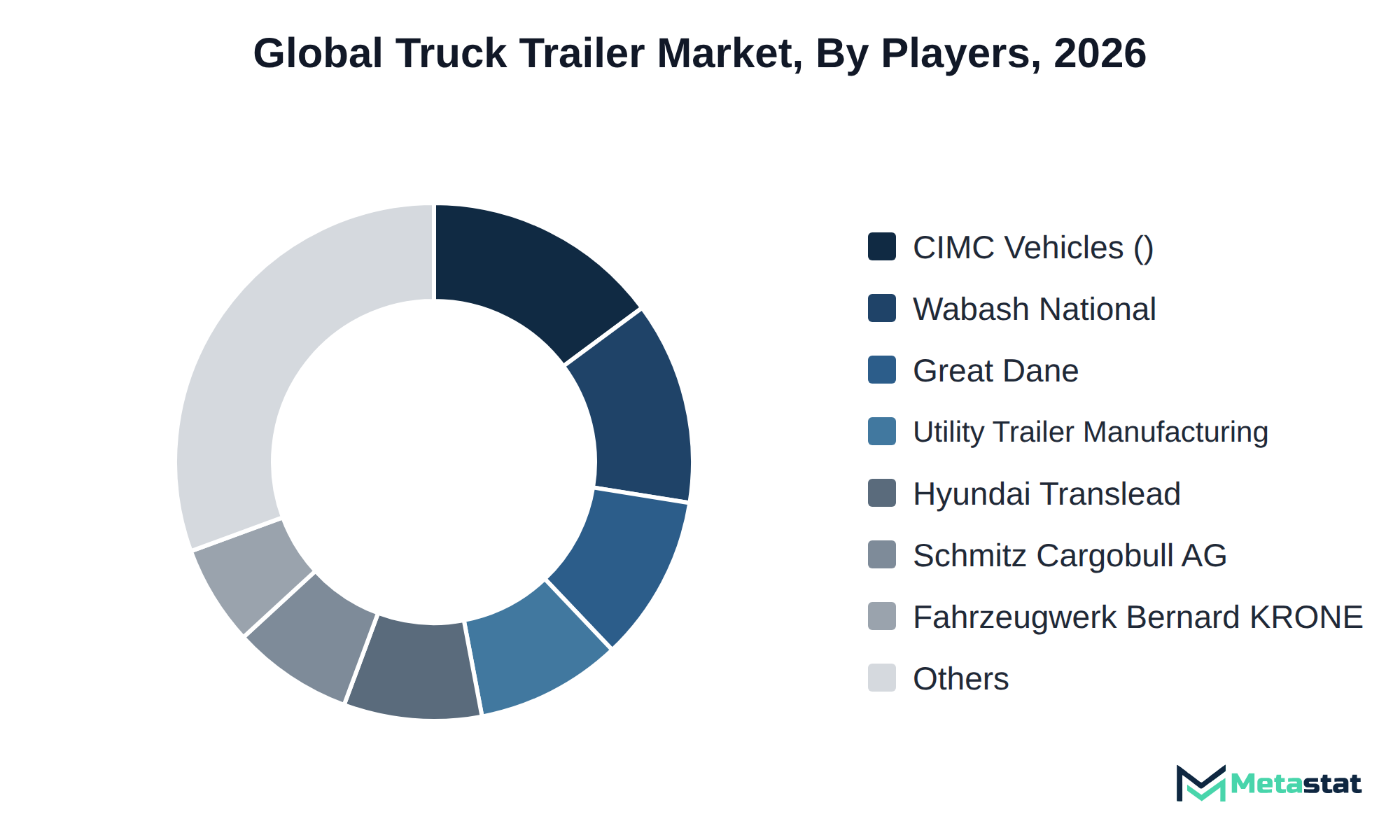
Competition in the Truck Trailer market reflects various strategies employed by manufacturers, highlighting diverse specializations and capabilities. Companies focus on product differentiation through trailer types including dry van, flatbed, and refrigerated trailers, with each segment appealing to distinct end-use industries, including food and beverage, construction, and agriculture.
Buyers prioritize factors including price, customization, and service when selecting suppliers in the market. For instance, CIMC Vehicles (Group) Co., Ltd. emphasizes a wide range of trailer types, while Wabash National Corporation focuses on innovative designs and materials. Schmitz Cargobull AG highlights robust manufacturing practices that enhance reliability and performance, catering to the evolving needs of various industries.
This growth depends on multiple developments within the Truck Trailer market. Second, the shift towards lighter materials including Aluminum, which achieves a CAGR of 8.3%, enhances efficiency and lowers operational costs. This shift contributes to the market's overall growth potential. However, the market faces risks, particularly from economic downturns that could lead to reduced investment in trailer fleets. Any slowdown in key regions, including North America or Asia Pacific, where significant market shares reside, hinders progress towards the forecasted figure. Addressing these challenges while maximizing growth opportunities in segments including Food and Beverage ensures the market remains on track to reach the anticipated USD 79.8 million by 2033.
By Trailer Type: Dry Van Trailers, Flatbed Trailers, Refrigerated Trailers, Tanker Trailers, Lowboy Trailers, Others (Extendable, Dump, and Container Chassis)
By Material: Steel, Aluminum, Composite Materials
By Tonnage Capacity: Below 25 Tons, 25 to 50 Tons, 51 to 100 Tons, Above 100 Tons
By End-Use Industry: Food and Beverage, Construction, Oil and Gas, Agriculture, Retail and E-Commerce, Chemicals, Others (Automotive, Mining, and Public Services)
The report strategically identifies and profiles the key market players and analyses their core competencies in each sub-segment of the Truck Trailer market.
Report Attributes | Details |
Study Period | 2021-2033 |
Base Year | 2025 |
Estimated Year | 2026 |
Forecast Period | 2026-2033 |
Historical Period | 2021-2025 |
Growth Rate | CAGR 7.6% from 2026 to 2033 |
Revenue Unit | USD million |
Segmentation | By Trailer Type, Material, Tonnage Capacity, End-Use Industry, and Region |
By Region | North America (By Trailer Type, Material, Tonnage Capacity, End-Use Industry, and Country)
|
Europe (By Trailer Type, Material, Tonnage Capacity, End-Use Industry, and Country)
| |
Asia Pacific (By Trailer Type, Material, Tonnage Capacity, End-Use Industry, and Country)
| |
South America (By Trailer Type, Material, Tonnage Capacity, End-Use Industry, and Country)
| |
Middle East and Africa (By Trailer Type, Material, Tonnage Capacity, End-Use Industry, and Country)
|
Find answers to common questions about this report
The Truck Trailer market size was valued at USD 44.4 million in 2025.
The market is projected to grow at a CAGR of 7.6% during the forecast period from 2026 to 2033.
The North America Truck Trailer market size is estimated to reach USD 19.9 million by 2033.
Dry Van Trailers lead the Truck Trailer market with a projected value of USD 27.9 million in 2033, based on the highest growth rate among the trailer types.
Increasing demand for online grocery shopping and home delivery services drives logistics companies to expand their fleets, emphasizing the need for high-capacity trailers. The anticipated market value for aluminum trailers reflects a growing preference for lightweight materials that enhance fuel efficiency and reduce operational costs.
Asia Pacific holds the dominant share of the Truck Trailer market, accounting for 37.3% of the total market in 2025. This region's significant share reflects robust demand and production capabilities compared to North America and Europe.
The cost of truck trailers imposes a significant restraint on purchasing decisions, particularly affecting small to medium-sized logistics firms that lack sufficient capital. Rising input costs challenge suppliers, impacting profitability across various segments and leading to higher production expenses.
Growing demand for aluminum trailers, driven by their lightweight and corrosion-resistant properties, supports adoption in the Truck Trailer market. The projected CAGR of 8.3% through 2033 reflects a shift towards fuel-efficient solutions, enhancing operational efficiency for logistics and construction sectors.
The Truck Trailer market is estimated to reach a valuation of USD 79.8 million by 2033.
Key players operating in the Truck Trailer market include CIMC Vehicles (Group) Co., Ltd., Wabash National Corporation, Great Dane LLC, Utility Trailer Manufacturing Company, Hyundai Translead, and Schmitz Cargobull AG.
The analysts below cover Automotive and Transportation research at Metastat Insights.
LEAD ANALYST
Utkarsh Khirodkar is a Lead Market Research Analyst at MetaStat Insight, specializing in market intelligence, technology sector assessments, and competitive strategy.

ENERGY & INFRASTRUCTURE INDUSTRY CONSULTANT
Automotive and Transportation · Electronics and Semiconductor · Energy and Power · Machinery & Equipment
Saurabh Vasant Ganvir consults for Energy & Infrastructure Industry at MetaStat Insight, specializing in renewable energy, solar EPC, and electric vehicle (EV) infrastructure markets.
Integrating zero-trust access controls across legacy electronic health record systems involves complex compliance overhead. Team produced an analysis that clearly separated identity governance and administration tools from privileged access management platforms. Their evaluation of HIPAA and GDPR compliance features across cloud native solutions gave our architecture group clear baseline criteria. The custom data request regarding biometric authentication adoption in hospital networks was returned promptly with clear documentation.
Evaluating calorific value requirements and air permit compliance across municipal waste facilities requires localized data. Metastat Insight structured their analysis around operational throughput capacity and feedstock composition variations in Latin America and Eastern Europe. Their competitive mapping of sorting equipment vendors helped clarify technology differences between optical separators and heavy media systems. The study provided an objective baseline during our capital expenditure reviews.
Decarbonizing industrial thermal processes hinges on refrigerant regulations and compressor efficiency limits. Metastat Insights delivered a thorough market analysis that evaluated natural refrigerants like CO2 and hydrocarbons against synthetic low-GWP alternatives. The breakdown of utility incentives and grid capacity constraints across key European manufacturing hubs offered valuable perspective. The follow-up conversation with their sector analysts addressed our specific questions on mechanical vapor recompression systems efficiently.
Explore related market intelligence reports worth reading alongside this one.