
LEAD ANALYST
Utkarsh Khirodkar is a Lead Market Research Analyst at MetaStat Insight, specializing in market intelligence, technology sector assessments, and competitive strategy.

Africa Vehicle Tracking System Market Size, Share, By Component (Hardware and Software), By Vehicle Type (Passenger Vehicles, Light Commercial Vehicles and Heavy Commercial Vehicles), By Technology (GPS/GNSS and Cellular-Based Tracking, Radio Frequency (RF)-Based Tracking, GPS/GNSS and Satellite-Based Tracking and Hybrid GPS/RF/Cellular Tracking), By Region (South Africa, Nigeria, Egypt, Kenya, Morocco and Rest of Africa), Industry Analysis, Growth, Trends, and Forecast, 2026-2033
Report ID
MSI-5777
Published
November, 2026
Pages
301 Pages
Format
Historical
Base year
Forecast
Forecast period
Report Details
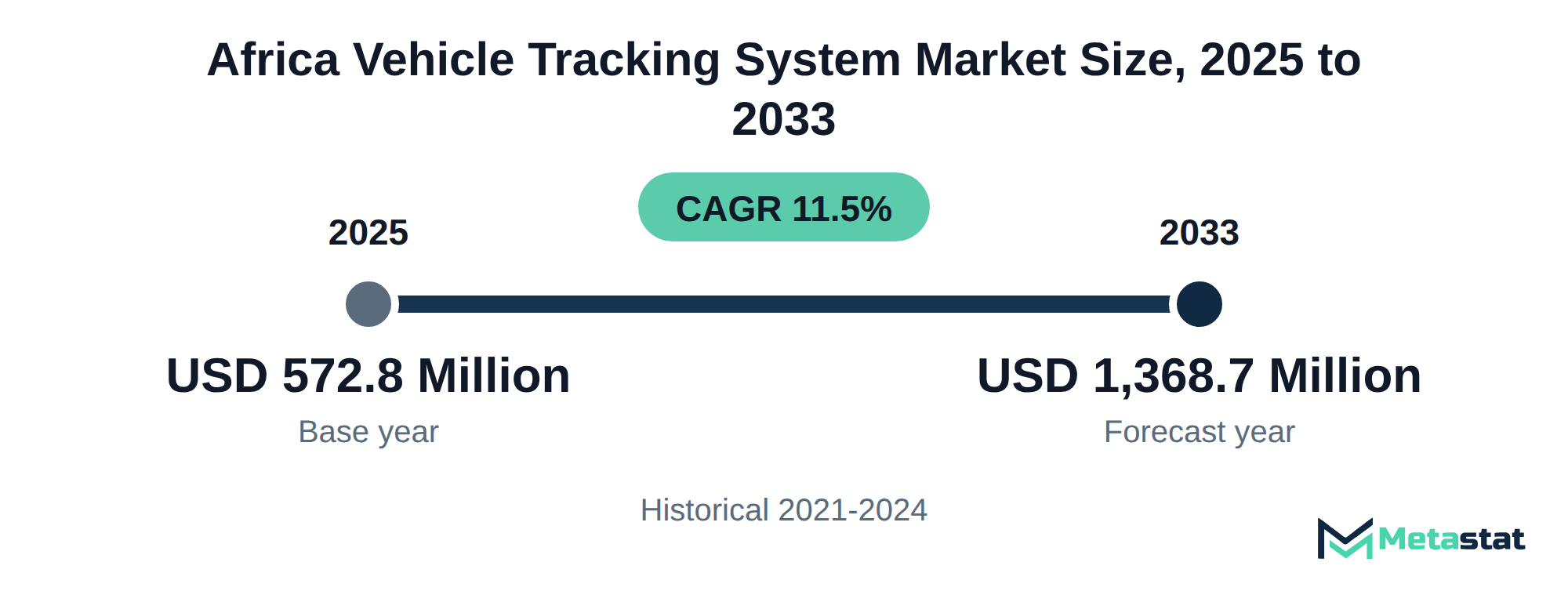
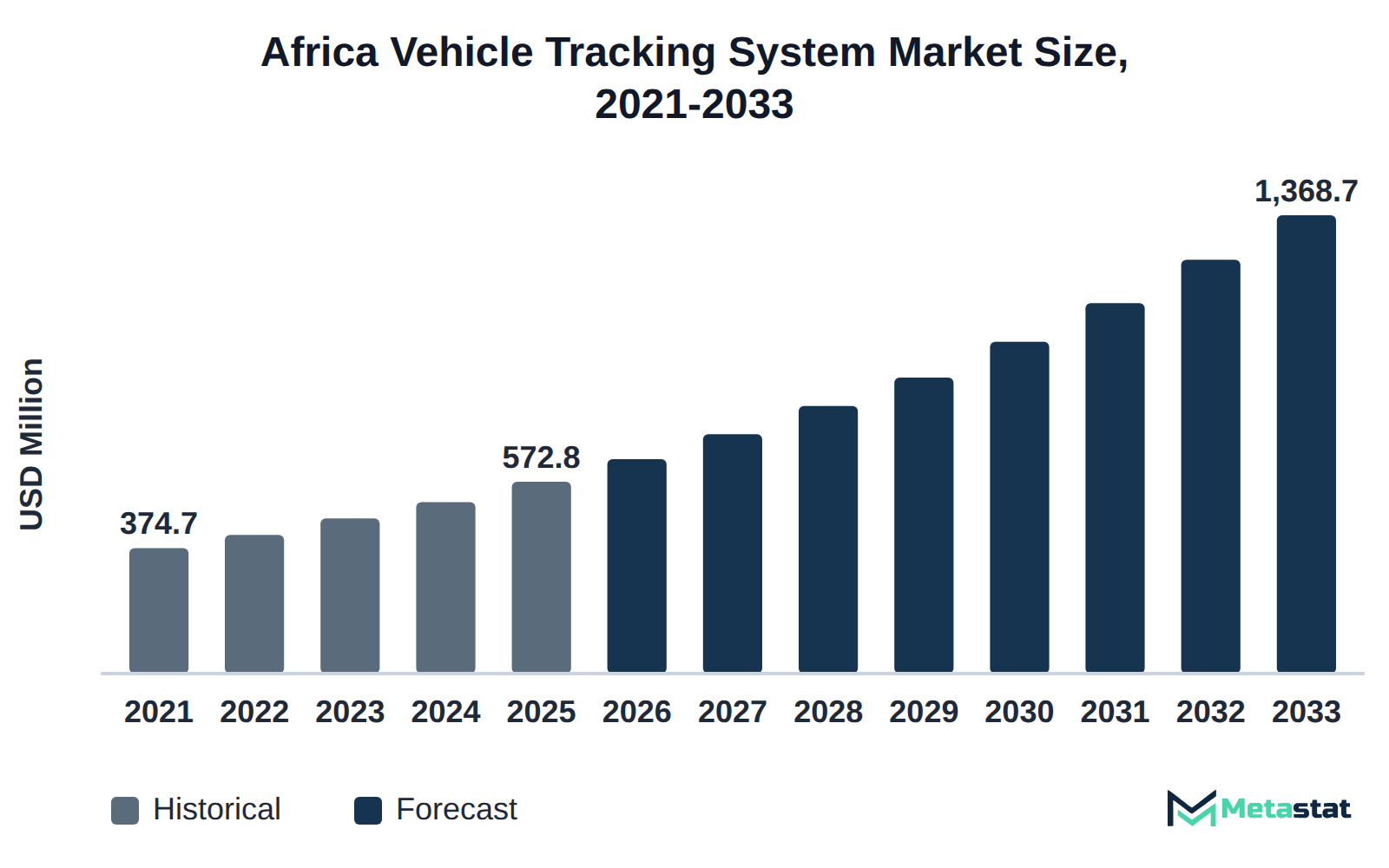
Market Valuation: Valued at $572.8 Million in 2025, projected to reach $1,368.7 Million by 2033 at a 11.5% CAGR.
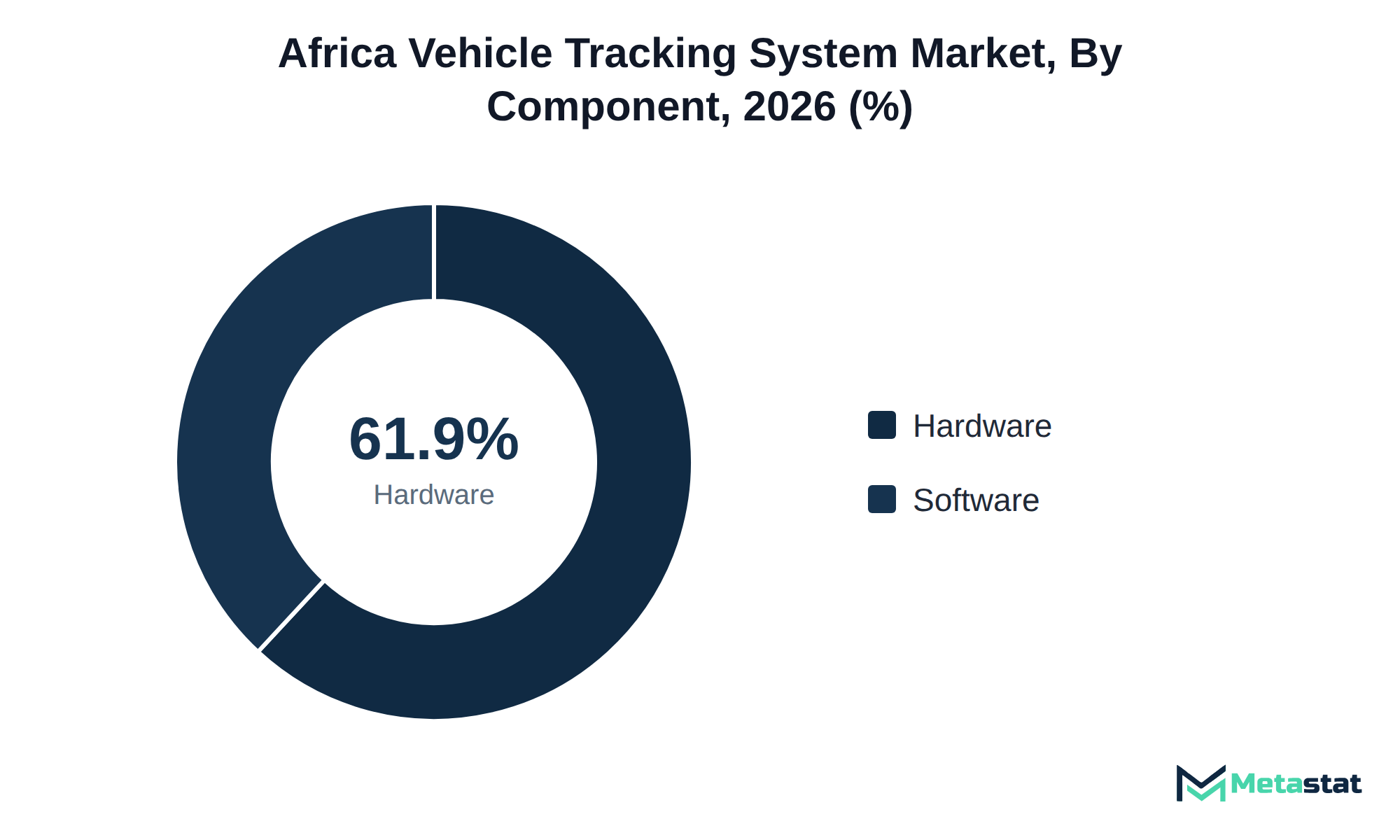
Dominant Segment: The hardware segment leads the Africa Vehicle Tracking System market, driven by the essential role of physical devices in enhancing vehicle tracking and security.
Geographic Lead: South Africa captures the largest market share, benefiting from well-developed infrastructure and high adoption rates of vehicle tracking solutions.
What's Inside: The report includes a comprehensive analysis of market dynamics, competitive landscape, and detailed forecasts for various segments and regions, covering the period from 2026 to 2033.
Emerging Trends: The adoption of AI video telematics and driver behavior analytics is on the rise, with hardware expenditures projected to grow significantly, indicating a shift towards integrated tracking solutions.
Growth Drivers: Increasing demand for fleet management solutions and heightened concerns over vehicle theft are key factors driving the growth of the Africa Vehicle Tracking System market.
Choose Your License
Africa Vehicle Tracking System Market
The Africa Vehicle Tracking System market was valued at USD 572.8 million in 2025 and is projected to reach USD 1,368.7 million by 2033, growing at a CAGR of 11.5% over the forecast period.
The Africa Vehicle Tracking System market encompasses a variety of technologies and components that enhance vehicle management and security. Buyers invest in these systems primarily to improve operational efficiency and safety, driven by increasing concerns over vehicle theft and the need for real-time tracking. The market offers solutions that integrate hardware, software, and advanced tracking technologies, appealing to diverse sectors including transportation, logistics, and personal vehicle owners.
Growth in the market is primarily fueled by rising demand for fleet management solutions, particularly in regions with significant logistical challenges. Among the segments, hardware holds the largest share, reflecting the importance of tangible components in vehicle tracking systems. South Africa captures the largest market share, supported by well-developed infrastructure and high adoption rates of vehicle tracking solutions compared to other regions in Africa.
Technological advancements, particularly in GPS/GNSS and Cellular-Based Tracking, contribute significantly to market expansion. These technologies enhance tracking accuracy and reliability, attracting a broader customer base. Ongoing advancements in software solutions further support the market’s growth by enabling integration with existing systems and improving user experience.
The Africa Vehicle Tracking System market includes hardware and software solutions designed to enhance security and operational efficiency for various vehicle types. Buyers invest in these systems primarily to improve asset management, reduce theft, and optimize fleet performance. The market serves multiple sectors, including transportation, logistics, and personal vehicle owners, driven by the need for enhanced monitoring and real-time data access.
Growth in this market is fueled by increasing awareness of vehicle security and demand for advanced tracking solutions. Among the segments, hardware holds the largest value, reflecting significant investments in physical devices that support tracking functions. South Africa leads in regional market share, benefiting from a well-established infrastructure and strong adoption rates in both commercial and private sectors.
Technological advancements drive market expansion, with innovations in GPS and cellular tracking improving service offerings. These developments enable more accurate positioning and improved reliability, significantly influencing buyer decisions. The Africa Vehicle Tracking System market is expected to continue its upward trajectory, supported by rising consumer expectations and the ongoing evolution of tracking technologies.
GPS and GNSS tracking technologies significantly enhance fleet visibility across the Africa Vehicle Tracking System market. These technologies use satellite signals to provide precise location information, facilitating real-time tracking of vehicles. GNSS correction services can refine positioning accuracy further. In 2026, the segment for GPS/GNSS and Cellular-Based Tracking is projected to reach USD 432.7 million, reflecting the growing reliance on these systems among fleet operators. The efficiency of these technologies ensures improved logistical management, reduces operational costs, and enhances security through consistent monitoring.
The increasing penetration of smartphones and cellular networks supports the adoption of GPS and GNSS tracking solutions. Fleet operators benefit from features including geofencing, route optimization, and emergency alerts, all of which contribute to operational efficiency. The market for this technology is expected to expand further, driven by rising demand for improved safety standards and regulatory compliance across various industries. Investment in GPS and GNSS technologies enhances fleet visibility, enabling companies to respond swiftly to incidents and optimize resource allocation. As a result, fleet operators gain a competitive advantage.
In the Africa Vehicle Tracking System market, buyers increasingly prioritize flexible pricing and contract models to accommodate varying operational needs. A significant trend involves subscription-based models that enhance affordability and accessibility for commercial fleets. This approach allows businesses to manage cash flow effectively while benefiting from the latest technology without a steep upfront investment. For instance, hardware expenditures in the market are expected to rise from USD 393.2 million in 2026 to USD 791.5 million by 2033. This reflects growing demand for integrated solutions that include AI video telematics and driver behavior analytics.
Tiered pricing structures based on fleet size and service level are gaining traction. Larger fleets often negotiate customized contracts that provide scalability options and additional features including fuel monitoring through fuel management systems. Such models ensure that businesses receive value aligned with their operational complexity, leading to enhanced efficiency and safety across their fleets. The anticipated growth in software solutions, projected to reach USD 577.2 million by 2033, signifies a strong shift towards analytics-driven insights that support strategic decision-making in fleet management.
Logistics and transportation companies increasingly adopt vehicle tracking solutions to enhance operational efficiency and ensure timely deliveries. In the Africa Vehicle Tracking System market, the passenger vehicles segment shows significant growth potential. It is projected to rise from USD 285.6 million in 2026 to USD 577.5 million by 2033, a compound annual growth rate (CAGR) of 10.6%. This growth reflects the rising demand for effective fleet management solutions and real-time tracking capabilities.
Several factors contribute to this trend, including heightened competition among logistics providers and the necessity for improved supply chain visibility. Companies prioritize these tracking systems to enhance customer satisfaction through reliable service delivery. The integration of advanced technologies, including GPS/GNSS and cellular-based tracking, further supports this demand. The related segment is expected to expand from USD 432.7 million in 2026 to USD 880 million by 2033, achieving a CAGR of 10.7%.
Investing in vehicle tracking solutions yields substantial commercial benefits, enabling businesses to optimize routes, reduce operational costs, and minimize vehicle downtime. This strategic focus on vehicle tracking reflects a broader industry shift toward technology-driven solutions, driving sustained growth in the Africa Vehicle Tracking System market.
Increased focus on fleet management efficiency drives vehicle tracking system adoption across African countries. The demand for effective fleet management solutions highlights the necessity for real-time vehicle monitoring, which improves logistics and reduces operational costs. With the market valued at USD 572.8 million in 2025, the adoption of vehicle tracking systems represents a strategic investment for businesses aiming to enhance operational efficiency.
Technology significantly influences the adoption of vehicle tracking systems in the Africa Vehicle Tracking System market. Advanced tracking technologies, including GPS/GNSS and Cellular-Based Tracking, contribute to the growing demand for reliable real-time location services. This segment is projected to reach USD 880 million by 2033, reflecting how much businesses seeking improved fleet performance and security depend on it.
Incorporating these technologies allows companies to monitor vehicle usage patterns, optimize routes, and reduce fuel consumption. Operational benefits translate into cost savings and increased productivity, making vehicle tracking systems an attractive solution for businesses across diverse sectors. Heightened awareness of these advantages supports the market's growth trajectory across the continent.
Logistics and transportation companies prioritize vehicle tracking systems to enhance operational efficiency and improve asset management. The shift towards more efficient fleet management practices has prompted these companies to invest in advanced tracking solutions. This growth indicates strong demand for effective tracking technologies that enable real-time monitoring and operational improvements. The emphasis on optimizing fleet performance results in increased spending on tracking systems among logistics providers, supporting higher volumes in the market.
Emerging technologies improve tracking solutions within the market. Innovations in GPS, GNSS, and hybrid tracking systems facilitate accurate vehicle monitoring and management. These advancements attract various industries, particularly logistics and transportation, where precise tracking enhances operational performance and asset security. The integration of real-time data analytics enables businesses to make informed decisions, optimizing route planning and resource allocation. The introduction of features including geofencing and alerts strengthens security measures, addressing concerns over vehicle theft and unauthorized use. Companies experience reduced operational costs and improved efficiency, driving consistent growth within the Africa Vehicle Tracking System market. The continuous evolution of these technologies is expected to lead to broader adoption across different sectors, supporting the demand for advanced tracking systems.
Price sensitivity among potential buyers represents a significant constraint on the expansion of the Africa Vehicle Tracking System market. High costs associated with hardware and software solutions deter many small to medium-sized enterprises from pursuing these systems. Smaller fleet operators face challenges in justifying the investment, resulting in slower uptake and reduced market penetration. This constraint affects companies primarily in the logistics and transportation sectors, where budgets remain tight and competition drives a focus on cost efficiency. Consequently, hesitance to invest in vehicle tracking technologies impacts overall demand growth and encourages operators to delay replacing existing systems with more advanced solutions. While larger companies absorb costs more effectively, the financial barrier prevents broader adoption across various buyer segments, limiting the market's potential. Ongoing challenges related to pricing and perceived return on investment hinder the transformation of fleet management practices in emerging markets.
Suppliers in the Africa Vehicle Tracking System market face significant margin pressure due to rising costs associated with technology development and material procurement. Increasing competition forces providers to maintain competitive pricing while delivering advanced solutions. This situation results in tighter margins for existing players, especially those relying on legacy systems with high operational costs. To mitigate these challenges, suppliers invest in innovative technologies and streamline operations to enhance efficiency. Many explore partnerships with technology firms to access advanced capabilities and reduce development costs. Several suppliers focus on offering bundled services that enhance value propositions and improve overall profitability. The ongoing emphasis on cost management shapes strategic decisions and helps suppliers sustain their operations.
The passenger vehicles segment demonstrates significant growth potential within the Africa Vehicle Tracking System market. The rising number of passenger vehicles and the growing emphasis on vehicle safety and security drive this demand. Owners prioritize tracking systems to enhance vehicle security and monitor usage patterns, highlighting an evolving consumer focus on protection and accountability. Technology continues to improve, and the integration of tracking systems into passenger vehicles promises expanded functionalities and user-friendliness, further encouraging adoption. This segment's growth aligns with broader trends in automotive technology, including connected car adoption, emphasizing the necessity of advanced tracking solutions across the continent. With sustained investments in vehicle tracking capabilities, the market is expected to expand through rising consumer awareness and technological advancements.
The Africa Vehicle Tracking System market is segmented based on Component, Vehicle Type, Technology, and Region.
Hardware segment is valued at USD 393.2 million in 2026 and is projected to reach USD 791.5 million by 2033, at a CAGR of 10.5% during the forecast period. This segment includes the physical devices that facilitate vehicle tracking, including GPS tracking devices and other tracking hardware used by fleet operators, logistics companies, and individual vehicle owners. The growing emphasis on fleet management and security drives demand for hardware solutions, particularly in the logistics and transportation sectors. Compared to software, which demonstrates a higher CAGR of 12.9%, hardware expansion occurs at a more moderate pace. This slower growth reflects the longer replacement cycles of physical equipment and the need for integration with existing systems. Consequently, hardware investments focus on enhancing operational efficiency and ensuring the security of assets. Market dynamics point to technology advances that make hardware components more effective.
The software segment is estimated to reach USD 577.2 million by 2033, at a CAGR of 12.9% during the forecast period. This segment primarily provides fleet management software for tracking vehicles, allowing businesses to monitor transport logistics effectively. Industries including logistics, transportation, and fleet management employ these software solutions to enhance operational efficiency and security. The driving force behind the growth of this segment stems from increasing demand for data analytics and real-time tracking capabilities. Compared to hardware, the software segment experiences faster growth due to its adaptability to evolving technological advancements and consumer needs. The software provides significant advantages by offering enhanced functionality and user-friendly interfaces, distinguishing it from hardware solutions that lack flexibility and scalability.
This segment finds applications among private vehicle owners and ride-sharing and ride-hailing services seeking enhanced safety and tracking capabilities. Growing concerns over vehicle theft and the need for efficient fleet management drive demand in this segment. Compared to other vehicle types, the passenger vehicles segment exhibits a relatively higher growth rate, influenced by advancements in integrated GPS and telematics technologies. While demand for real-time tracking and security features increases, vehicle manufacturers and software developers invest in innovative solutions to differentiate their offerings, thereby expanding opportunities within the Africa Vehicle Tracking System market. The passenger vehicles segment stands out due to its unique blend of consumer-focused applications and technological advancements, setting it apart from both light and heavy commercial vehicles.
Light Commercial Vehicles segment is estimated to reach USD 403.4 million by 2033, at a CAGR of 11.9% during the forecast period. This segment serves various industries including delivery services, construction, and logistics, where efficient fleet management holds significant value. The surge in e-commerce and the need for timely deliveries, including courier, express and parcel services, drive demand in this category. Compared to passenger vehicles, which have a projected CAGR of 10.6%, the Light Commercial Vehicles segment experiences stronger growth, indicating strong demand for tracking solutions tailored to commercial use. The emphasis on enhanced operational efficiency and reduced theft risks further influences adoption rates among businesses operating these vehicles. Advanced tracking technologies enable companies to optimize routes and monitor driver behavior, enhancing overall fleet productivity. This segment remains distinct with its specific focus on commercial applications, contrasting with the broader passenger vehicle segment that caters primarily to individual consumers.
Heavy Commercial Vehicles segment is expected to reach USD 387.9 million by 2033. This segment primarily serves logistics and transportation companies requiring enhanced tracking solutions for fleet management. Demand is propelled by the ongoing need for efficiency in logistics operations and improved asset security. The projected compound annual growth rate (CAGR) for this segment is lower than that of Light Commercial Vehicles, indicating a more stable growth trajectory at a CAGR of 11.9%. Fleet operators increasingly adopt advanced tracking systems to monitor vehicle performance and ensure compliance with regulatory standards, leading to reduced operational risks. Heavy Commercial Vehicles differ from other segments due to the specific requirements of commercial fleets, which involve larger investments in tracking technology and a focus on robust data analytics for route optimization and predictive maintenance scheduling.
This technology delivers precise real-time tracking for fleet management, appealing primarily to logistics, transportation, and delivery companies. Its demand continues to rise due to increasing concerns over vehicle security and asset management efficiency. The segment experiences significant growth driven by advancements in cellular technology, enhancing real-time monitoring capabilities. Compared to other segments, this segment exhibits a moderate CAGR, with the software segment growing faster at 12.9%. The increasing reliance on GPS/GNSS and Cellular-Based Tracking highlights its distinct position in the Africa Vehicle Tracking System market, supporting various industries in optimizing fleet operations and ensuring safety.
Radio Frequency (RF)-Based Tracking segment is estimated to reach USD 111.8 million by 2033, at a CAGR of 9.9% during the forecast period. This technology is used primarily for tracking vehicles and assets through radio signals, appealing to various industries, including logistics and fleet management. Companies use RF-based tracking for improved asset visibility and management. Demand for this segment is driven by the increasing need for cost-effective solutions that enhance operational efficiency without the complexities often associated with GPS technology. Compared to other tracking technologies, RF-based tracking offers a lower price point and is particularly advantageous for businesses seeking simpler installations and maintenance. The slower growth rate of this segment reflects saturation in adoption among certain buyer groups, while other segments including GPS/GNSS experience a more rapid increase in demand.
GPS/GNSS and Satellite-Based Tracking segment is expected to reach USD 196.6 million by 2033. This tracking solution offers precise location data and real-time monitoring, benefiting industries including logistics, transportation, and fleet management. Increased demand for enhanced visibility over assets and reduced operational risks drives growth in this segment. Unlike the GPS/GNSS and Cellular-Based Tracking segment, which shows a CAGR of 10.7%, this segment's growth potential remains strong, focusing on reliability and accuracy. The higher price point for satellite-based systems deters budget-conscious buyers, impacting adoption rates. Companies prioritizing advanced tracking technology invest in GPS/GNSS and Satellite-Based Tracking to improve service delivery and asset protection, contributing to the overall advancement of the Africa Vehicle Tracking System market.
Hybrid GPS/RF/Cellular Tracking segment is projected to grow at a CAGR of 14.7% during the forecast period. This technology integrates GPS, radio frequency, and cellular communication methods, providing enhanced tracking capabilities for various vehicle types. Organizations involved in logistics, transportation, and fleet management apply this segment to improve asset tracking and security. The increasing demand for real-time tracking and enhanced functionality drives growth in this segment, especially in regions where traditional GPS solutions face challenges, including urban canyons or rural areas with limited cellular coverage. Compared to other segments, Hybrid GPS/RF/Cellular Tracking experiences faster growth due to its versatility and ability to operate in diverse environments, making it attractive for emerging markets. The segment attracts a range of buyers, including small fleet operators and large logistics companies, all aiming to optimize transportation operations and enhance safety measures.
South Africa segment is valued at USD 172.4 million in 2026 and is projected to reach USD 344.6 million by 2033, at a CAGR of 10.4% during the forecast period. This segment serves various sectors, including freight and logistics, transportation, and personal vehicle owners, who benefit from enhanced security and efficiency through effective tracking solutions. Increasing concerns over vehicle theft and the demand for improved fleet management drive growth in this segment. Compared to other regions, South Africa experiences moderate growth, influenced by its more developed infrastructure and technology adoption. The projected CAGR of 10.4% indicates stable demand among local businesses and consumers, placing it between the higher growth of emerging markets and the slower growth found in more mature segments. This positioning reflects a unique balance of opportunity and competitive dynamics in the Africa Vehicle Tracking System market.
Nigeria segment is estimated to reach USD 307.6 million by 2033, at a CAGR of 12.1% during the forecast period. This segment finds application among various stakeholders, including logistics firms, fleet operators, and private vehicle owners, who employ tracking systems for real-time location monitoring, theft prevention, and fleet management. The increasing demand for enhanced security measures and operational efficiency influences growth in this segment. With a higher CAGR compared to the Heavy Commercial Vehicles segment, Nigeria’s growth reflects a strong push towards technological adoption in tracking solutions. Regulatory initiatives aimed at improving transportation safety and security further drive investment in vehicle tracking technologies in Nigeria. This distinct growth trajectory positions the segment favorably within the market, indicating significant potential for expansion in the coming years.
Egypt segment is expected to reach USD 217.1 million by 2033. This segment serves a range of industries, particularly logistics, transportation, and fleet management companies that require enhanced tracking capabilities to optimize operations. The growth of this segment is influenced by increasing demand for real-time monitoring and asset protection, driven by rising concerns over theft and vehicle safety. Compared to other segments, the Egypt segment exhibits a moderate growth trajectory, focusing on specific buyers who prioritize cost efficiency and operational effectiveness. The segment's characteristics differ from those of passenger and commercial vehicle segments, which experience varying growth rates and technological adoption levels, reflecting the unique market dynamics in Egypt. Regulatory advancements aimed at improving transportation safety contribute to shaping the market landscape.
Kenya is projected to grow at a CAGR of 12.7% during the forecast period. This segment attracts interest from various sectors, including transportation, logistics, and fleet management, which rely on vehicle tracking systems for real-time monitoring and operational efficiency. Rising demand for enhanced security features and improved fleet management capabilities drives growth in this region. Compared to other segments, Kenya demonstrates a stronger growth trajectory, particularly in light commercial and passenger vehicles, reflecting a growing urban population and increasing vehicle ownership. The emphasis on technology advancements, including integration of GPS/GNSS tracking, further differentiates this segment, supporting enhanced user experience and operational transparency.
The Morocco segment represents a growing area within the Africa Vehicle Tracking System market. This segment primarily serves businesses seeking to enhance security and efficiency in transportation and logistics. Increased concerns over vehicle theft and the need for improved fleet management drive demand for tracking systems. Compared to other regional segments, Morocco experiences slower growth due to varying levels of regulatory support and market maturity in vehicle tracking technologies. Unlike South Africa and Nigeria, where advancements in technology create faster adoption rates, Morocco's market dynamics reflect unique challenges and opportunities. Regulatory frameworks supporting vehicle tracking solutions influence growth trajectories within this segment, impacting technology adoption and pricing strategies.
Rest of Africa encompasses a diverse range of countries with varying demands for vehicle tracking systems. This segment is primarily used by logistics providers, fleet operators, and individuals seeking enhanced security for their vehicles. A significant demand driver in this area stems from increasing concerns about vehicle theft and the need for efficient fleet management solutions. Compared to other segments like Nigeria and South Africa, this segment experiences slower growth due to differing levels of infrastructure development and market maturity. The lack of standardized regulations further complicates adoption rates, causing potential users to hesitate. Technological advancements drive the availability and effectiveness of tracking systems. Overall, the unique characteristics of the Rest of Africa segment contribute to its distinct positioning within the Africa Vehicle Tracking System market.
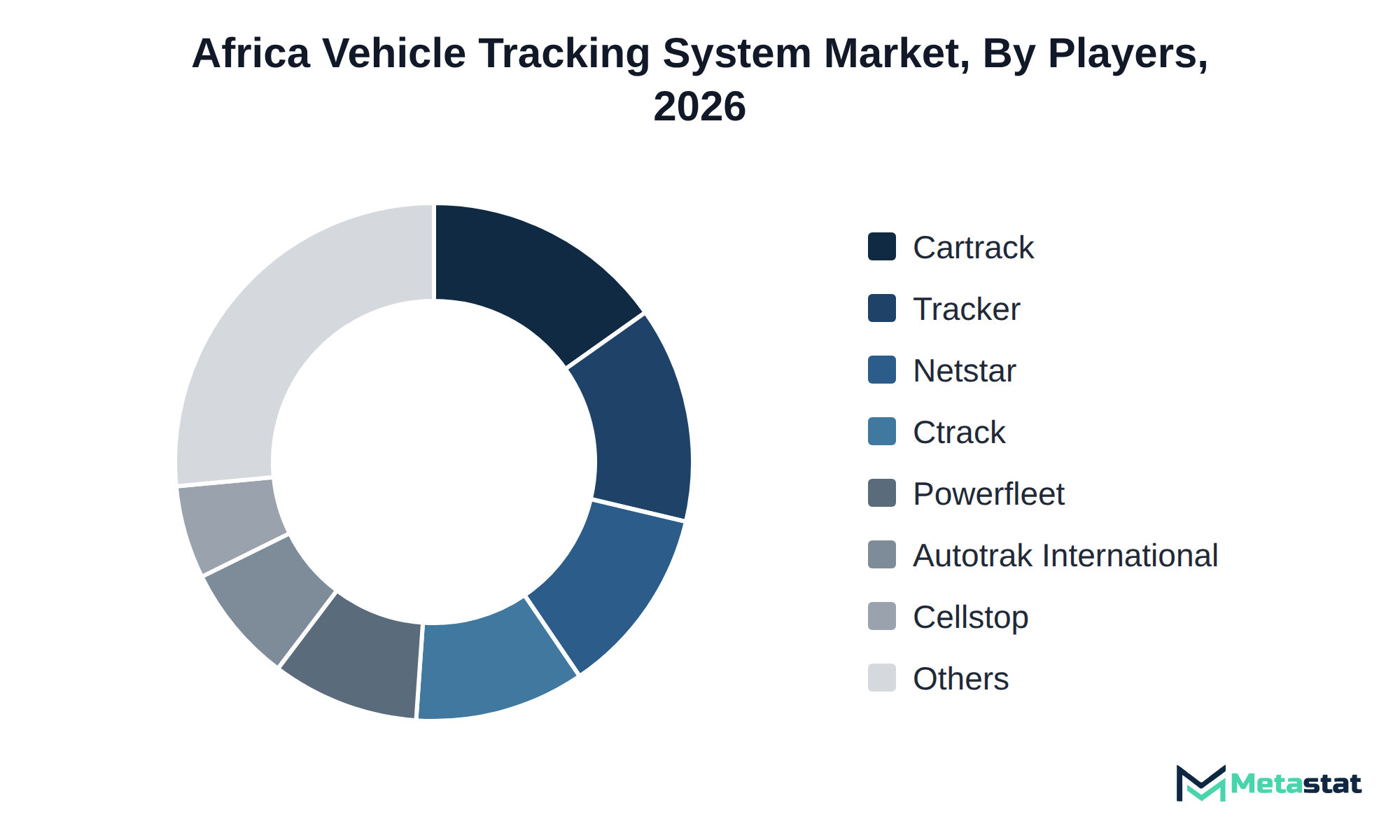
The Africa Vehicle Tracking System market features a diverse set of companies competing through various business models and service offerings. Key differentiators for buyers include price, certification, customization, service quality, and the overall ecosystem provided by the suppliers.
Cartrack emphasizes comprehensive tracking solutions and a strong customer support network, catering to both individual and fleet customers. Tracker positions itself with a focus on advanced technology integration and reliable service delivery. Powerfleet specializes in providing tailored solutions for fleet management, enhancing operational efficiency for large commercial clients.
Achieving this growth relies on several key developments in the Africa Vehicle Tracking System market. Increasing adoption of hardware solutions, projected to expand from USD 393.2 million in 2026 to USD 791.5 million by 2033, significantly influences this trajectory. The hardware component supports various applications across sectors, including logistics and personal vehicle management. In tandem, the software segment is anticipated to drive growth, with a forecast value reaching USD 577.2 million by 2033, enhancing operational efficiency and user experience. Regional dynamics influence the forecast. In particular, Nigeria stands out with an expected revenue of USD 307.6 million by 2033, driven by rising demand for fleet management solutions. However, potential risks to growth include economic fluctuations and regulatory challenges, which could hinder investment and adoption rates across regions. Addressing these challenges will be essential for the market to realize its full potential by 2033.
By Component: Hardware, Software
By Vehicle Type: Passenger Vehicles, Light Commercial Vehicles, Heavy Commercial Vehicles
By Technology: GPS/GNSS and Cellular-Based Tracking, Radio Frequency (RF)-Based Tracking, GPS/GNSS and Satellite-Based Tracking, Hybrid GPS/RF/Cellular Tracking
By Region: South Africa, Nigeria, Egypt, Kenya, Morocco, Rest of Africa
The report strategically identifies and profiles the key market players and analyses their core competencies in each sub-segment of the Vehicle Tracking System market.
Report Attributes | Details |
Study Period | 2021-2033 |
Base Year | 2025 |
Estimated Year | 2026 |
Forecast Period | 2026-2033 |
Historical Period | 2021-2025 |
Growth Rate | CAGR 11.5% from 2026 to 2033 |
Revenue Unit | USD million |
Segmentation | By Component, Vehicle Type, Technology, Region, and Region |
Find answers to common questions about this report
The Vehicle Tracking System market size was valued at USD 572.8 million in 2025.
The market is projected to grow at a CAGR of 11.5% during the forecast period from 2026 to 2033.
The leading segment in the Vehicle Tracking System market is Hardware, with a projected value of USD 791.5 million by 2033. This segment surpasses Software, which is expected to reach USD 577.2 million in the same year.
The shift towards more efficient fleet management practices drives demand for advanced tracking solutions. The emphasis on optimizing fleet performance results in increased spending on tracking systems among logistics providers.
Price sensitivity among potential buyers acts as a significant constraint on market expansion. High costs associated with hardware and software solutions deter many small to medium-sized enterprises from pursuing these systems, which affects overall demand growth.
The growing emphasis on vehicle safety and security drives demand for tracking systems among passenger vehicle owners. Enhanced functionalities and user-friendliness of advanced tracking solutions further encourage adoption across the Africa Vehicle Tracking System market.
The Vehicle Tracking System market is estimated to reach a valuation of USD 1,368.7 million by 2033.
Key players operating in the Vehicle Tracking System market include Cartrack, Tracker, Netstar, Powerfleet, Ctrack, Autotrak International, and Cellstop.
The passenger vehicles segment is projected to increase from USD 285.6 million in 2026 to USD 577.5 million by 2033, reflecting a compound annual growth rate of 10.6 percent.
Nigeria is anticipated to show significant growth, with a projected compound annual growth rate of 12.1 percent by 2033.
The analysts below cover Automotive and Transportation research at Metastat Insights.
LEAD ANALYST
Utkarsh Khirodkar is a Lead Market Research Analyst at MetaStat Insight, specializing in market intelligence, technology sector assessments, and competitive strategy.

ENERGY & INFRASTRUCTURE INDUSTRY CONSULTANT
Automotive and Transportation · Electronics and Semiconductor · Energy and Power · Machinery & Equipment
Saurabh Vasant Ganvir consults for Energy & Infrastructure Industry at MetaStat Insight, specializing in renewable energy, solar EPC, and electric vehicle (EV) infrastructure markets.
Analyzing the transition from natural gas to green hydrogen in iron ore reduction requires realistic infrastructure timelines. Meta stat insight supplied a detailed regional assessment of DRI plant conversion costs and scrap metal availability in North America and Western Europe. Their report carefully examined pellet quality specs and electrical grid access constraints without making oversimplified market assumptions. The research material served as a practical reference during internal technology roadmap discussions.
Integrating zero-trust access controls across legacy electronic health record systems involves complex compliance overhead. Team produced an analysis that clearly separated identity governance and administration tools from privileged access management platforms. Their evaluation of HIPAA and GDPR compliance features across cloud native solutions gave our architecture group clear baseline criteria. The custom data request regarding biometric authentication adoption in hospital networks was returned promptly with clear documentation.
Evaluating calorific value requirements and air permit compliance across municipal waste facilities requires localized data. Metastat Insight structured their analysis around operational throughput capacity and feedstock composition variations in Latin America and Eastern Europe. Their competitive mapping of sorting equipment vendors helped clarify technology differences between optical separators and heavy media systems. The study provided an objective baseline during our capital expenditure reviews.
Explore related market intelligence reports worth reading alongside this one.
Starting from
$2950
Starting from
$2950