
LEAD ANALYST
Utkarsh Khirodkar is a Lead Market Research Analyst at MetaStat Insight, specializing in market intelligence, technology sector assessments, and competitive strategy.

Global Automotive Combination Switch Market Size, Share, By Product Type (Multifunction Combination Switches, Lighting Switches, Wiper and Washer Switches, Hazard Warning Switches, Ignition Switches), By Technology (Mechanical Switches, Electronic Switches, Hybrid Switches), By Vehicle Type (Passenger Vehicles, Commercial Vehicles, Off-Highway Vehicles), By Sales Channel (Original Equipment Manufacturer (OEM), Aftermarket), Industry Analysis, Growth, Trends, and Forecast, 2026-2033
Report ID
MSI-5780
Published
November, 2026
Pages
288 Pages
Format
Historical
Base year
Forecast
Forecast period
Report Details
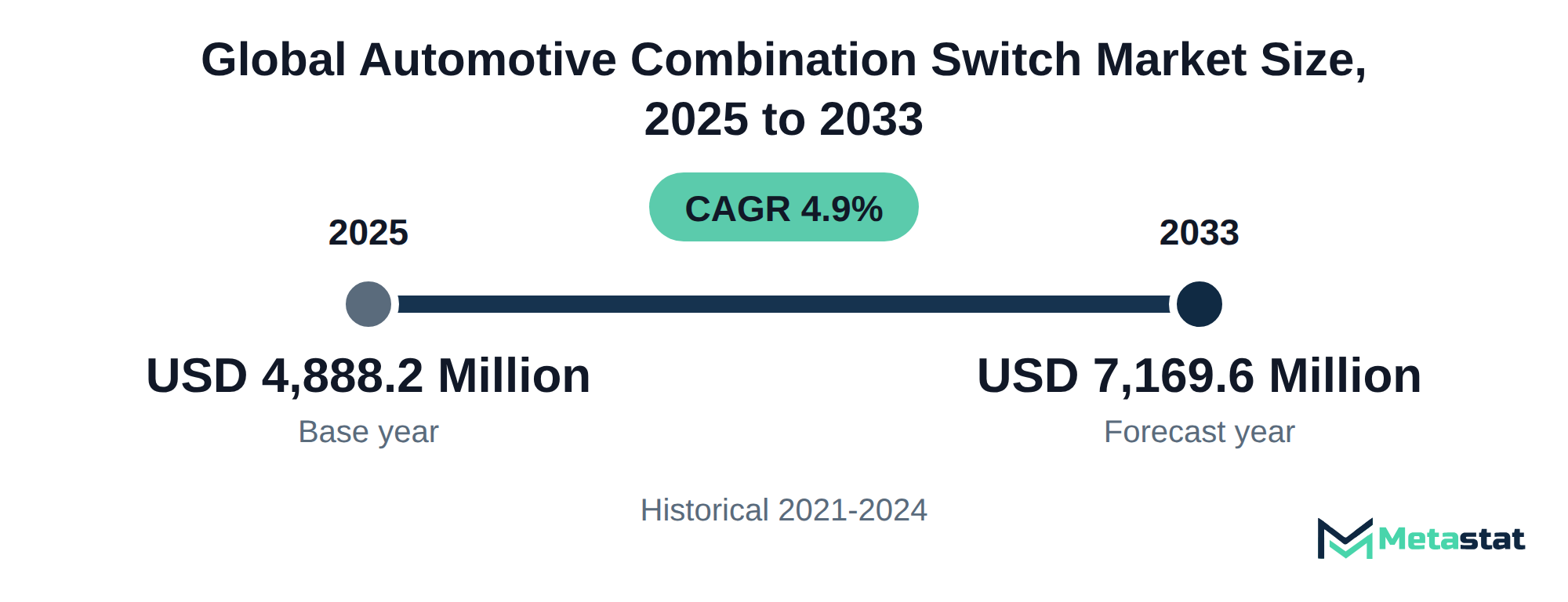
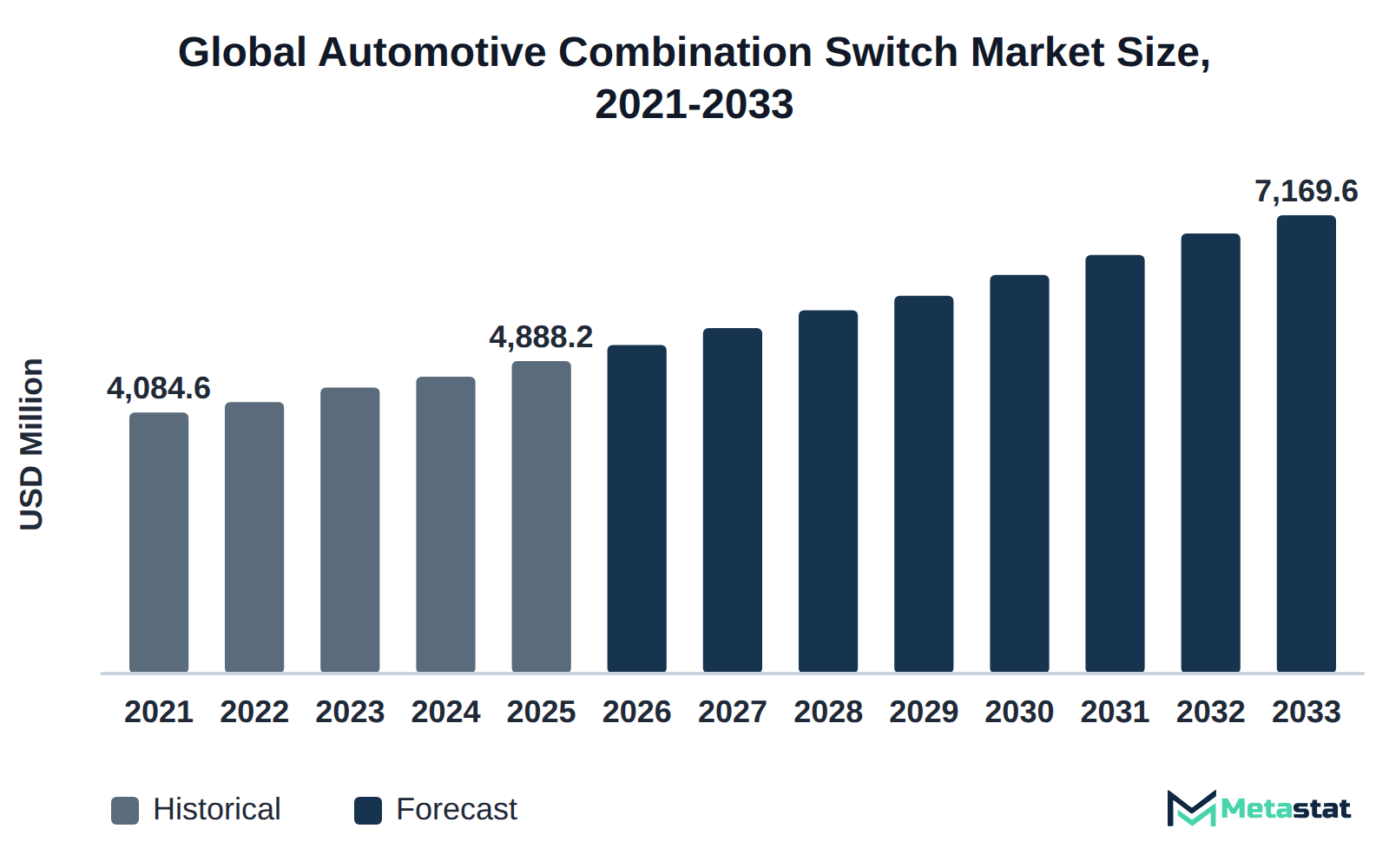
Market Valuation: Valued at $4,888.2 Million in 2025, projected to reach $7,169.6 Million by 2033 at a 4.9% CAGR.
Dominant Segment: Multifunction combination switches lead the market, driven by their critical role in modern vehicle design and increasing consumer demand for integrated control systems.
Geographic Lead: North America holds 28.0% of the market in 2025, with the US projected to lead in 2026, benefiting from a robust automotive industry and significant technological investments.
What's Inside: The report provides a comprehensive analysis of the competitive landscape, market dynamics, and detailed forecasts from 2026 to 2033, covering various product types, technologies, and vehicle segments.
Choose Your License
Global Automotive Combination Switch Market
The global Automotive Combination Switch market was valued at USD 4,888.2 million in 2025 and is projected to reach USD 7,169.6 million by 2033, growing at a CAGR of 4.9% over the forecast period.
The Automotive Combination Switch market encompasses various products integral to vehicle operation, including multifunction combination switches, lighting switches, and wiper and washer switches. These products form part of the wider electrical switches category. Buyers invest in these components to enhance vehicle safety, improve functionality, and meet regulatory standards. The shift towards advanced vehicle technologies further drives spending in this sector, with manufacturers seeking to integrate more sophisticated control systems into their designs.
Growth in the market is propelled by increasing vehicle production and the rising demand for advanced safety features. Among the product types, multifunction combination switches hold the most substantial value, reflecting their critical role in modern vehicle design. North America holds 28.0% of the market in 2025, with the US leading in 2026. This region benefits from a strong automotive industry and significant investment in technological advancements.
The continuous evolution of automotive technology, particularly the transition to electric and hybrid vehicles, influences market dynamics. Manufacturers focus on incorporating electronic switches, which are expected to experience significant growth due to their efficiency and reliability. This trend aligns with the broader industry shift towards sustainable practices and innovative vehicle solutions.
The Automotive Combination Switch market covers essential components that enhance vehicle functionality and safety, driving significant expenditure from manufacturers and consumers. Factors influencing purchasing decisions include the need for advanced functionalities, regulatory compliance, and the integration of innovative technologies in new vehicle models. These components ensure optimal vehicle performance while meeting consumer expectations for safety and convenience.
Growth in the market is driven by increasing demand for multifunction combination switches, which provide users with streamlined control over various vehicle functions. This region's strong automotive industry and consumer preference for advanced safety features contribute significantly to market expansion.
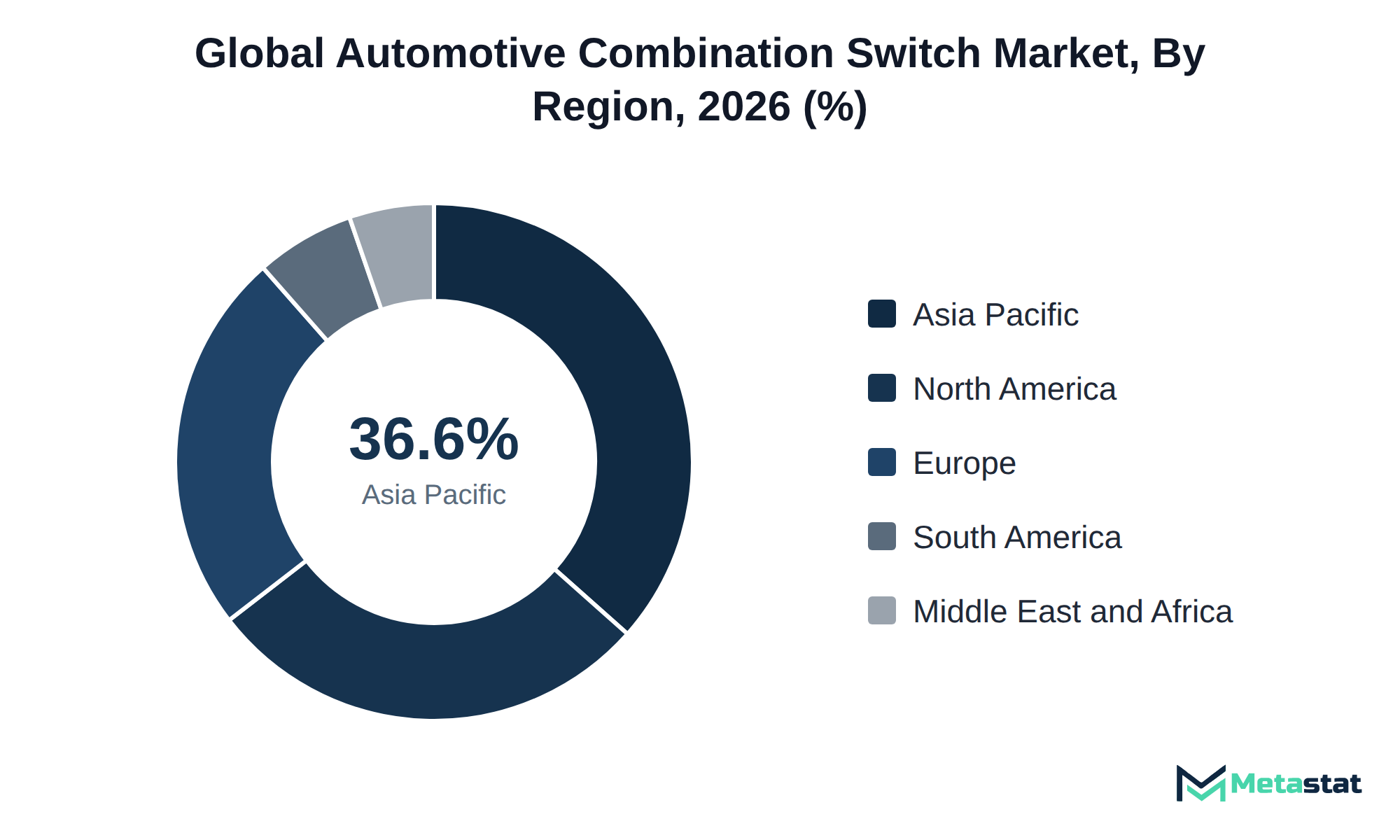
Emerging technologies, particularly electronic switches, shape market dynamics. The Asia Pacific region exhibits the highest share at 36.6%, driven by rapid industrialization and the growing automotive sector in countries like China and India. Investments in electric and hybrid vehicle technologies further increase demand for sophisticated automotive combination switches.
The integration of steering, lighting, and wiper controls into multifunction automotive switches represents a significant shift in the Automotive Combination Switch market. Multifunction combination switches streamline vehicle control systems by combining multiple functionalities into a single unit. This integration enhances user experience, reducing the complexity of vehicle operation while improving safety and ergonomics.
The segment of multifunction combination switches is expected to grow from USD 1,990.2 million in 2025 to USD 2,880.8 million by 2033, reflecting a compound annual growth rate of 5.4%. This growth demonstrates a strong consumer preference for consolidated control systems, driven by the demand for more intuitive and efficient vehicle interfaces.
This shift impacts manufacturers and suppliers who adapt their product offerings to meet evolving consumer expectations. The focus on multifunctionality enhances product value and supports manufacturers in differentiating themselves within a competitive environment. Investment in multifunction combination switches is expected to yield substantial returns, positioning companies favorably for future growth.
The Automotive Combination Switch market experiences a significant shift toward electronic and steering-mounted combination switch technologies. This transition reflects the growing demand for advanced vehicle functionalities and innovative features. Electronic switches offer enhanced performance and integration capabilities compared to traditional mechanical options.
Contract models and pricing strategies shape how buyers engage with suppliers. Original Equipment Manufacturers (OEMs) typically favor long-term contracts, ensuring stable pricing and supply continuity, thus reducing operational risks. In contrast, the aftermarket segment adopts a more flexible approach, allowing for dynamic pricing adjustments that accommodate market fluctuations. This duality in purchasing approaches highlights the diverse needs across customer segments, influencing how products are marketed and sold.
With the increasing adoption of electronic technologies, suppliers within the Automotive Combination Switch market align their pricing strategies to remain competitive. A shift toward electronic technologies offers opportunities for increased margins, driven by the higher value and functionality these products provide. Buyers benefit from enhanced features that improve vehicle safety and user experience, which makes strategic pricing models central to sales growth.
The automotive combination switch market has seen increasing demand for compact, ergonomic, and customizable driver control systems. Original Equipment Manufacturers (OEMs) prioritize these features to enhance user experience and vehicle functionality. Vehicles evolve, and consumers expect more intuitive controls that fit smoothly into the driving environment. In 2026, multifunction combination switches are projected to reach a value of USD 1,990.2 million, highlighting the significant investment in this segment.
Many OEMs focus on developing systems that meet the specific requirements of various vehicle types. For instance, passenger vehicles require controls that maximize space while providing comfort and ease of use. In contrast, commercial vehicles often demand more robust systems capable of withstanding rigorous usage. The adaptation of ergonomic designs in combination switches allows manufacturers to cater to diverse consumer preferences, driving growth within the market. The anticipated rise in multifunction combination switches extends beyond mere functionality. It represents a strategic move towards higher consumer satisfaction and brand loyalty.
Customization options further enhance the appeal of these driver control systems. OEMs increasingly integrate technology that allows for personalized settings, aligning with consumer expectations for tailored driving experiences. This trend drives the expansion of the automotive combination switch market, with manufacturers recognizing the value of investing in innovative designs that meet the evolving demands of consumers.
Advanced driver assistance systems (ADAS) significantly influence the design of automotive combination switches. These systems require enhanced functionality and reliability in switch operations, leading manufacturers to innovate designs that integrate multiple controls into a single unit. The growth rate of 5.4% reflects increasing demand for integrated controls that facilitate various ADAS features.
Vehicles adopting more sophisticated safety and convenience technologies drive a shift in design priorities within the automotive combination switch market. Manufacturers prioritize the development of electronic switches, which are expected to achieve a value of USD 2,765.3 million by 2033, facilitating more responsive and reliable control mechanisms. Enhanced designs support the operational demands of ADAS, thereby improving user experience and vehicle safety. Consequently, automotive manufacturers implementing these advanced systems experience improved competitiveness, attracting consumers who prioritize innovative technology and safety features.
Increased consumer preference for advanced features and convenience drives the growth of multifunction combination switches. These switches allow drivers to control multiple vehicle functions, including lighting and windshield wipers, without taking their hands off the steering wheel. This trend primarily attracts buyers in the passenger vehicle segment, where a strong push for enhanced driver experience and vehicle safety exists. The shift toward multifunction switches aligns with the growing emphasis on integrating technology and safety features in modern vehicles, resulting in increased sales volume and revenue for manufacturers.
Rising demand for vehicle customization further supports this trend, with consumers increasingly seeking personalized driving experiences. The market expands with the introduction of new functionalities within these switches, enhancing their appeal among automotive manufacturers and consumers alike.
The transition to electronic switches enhances functionality and user experience in vehicles. This technology offers improved reliability, precision, and integration capabilities compared to mechanical counterparts. The expanding presence of advanced driver assistance systems (ADAS) increases demand for these electronic solutions, facilitating integration with sophisticated vehicle electronics. Consumers prefer vehicles equipped with modern features, prompting manufacturers to invest in electronic switch development. This growing demand for electronic switches positively impacts the Automotive Combination Switch market, creating opportunities for innovation and product differentiation.
Supplier investment in electronic switch technologies drives competition within the market. Companies focusing on electronics enhance their product offerings to meet evolving consumer preferences and regulatory standards. This trend reflects an overall shift towards smarter, more connected vehicles. The Automotive Combination Switch market experiences significant growth as suppliers innovate to address this demand. The increased complexity of automotive electrical systems supports the transition to electronic switches, reinforcing their role in shaping the future of vehicle control systems. Electronic switches connect to these systems through the automotive wiring harness.
Rising prices for automotive combination switches restrict adoption among vehicle manufacturers. Increased production costs, driven by supply chain challenges and raw material price fluctuations, lead to higher prices for end products. This constraint affects original equipment manufacturers (OEMs), resulting in smaller order sizes and delayed replacement cycles for aging components. Consequently, manufacturers reconsider their purchasing strategies, opting for lower-cost alternatives or extending the life of existing switches. In the automotive combination switch market, this restraint creates a cautious environment where investments in new technologies or models occur at a slower rate.
The market's growth trajectory encounters additional limitations due to a lack of awareness regarding the benefits of advanced switch technologies. Many smaller automotive manufacturers and aftermarket suppliers remain unaware of the latest innovations, leading to underinvestment in modern solutions. This awareness gap contributes to stagnation in order volumes, with entities hesitant to explore new offerings missing opportunities to enhance functionality and improve user experience.
Suppliers face significant challenges associated with rising input costs for automotive combination switches. Increasing prices for raw materials, including metals and automotive plastics, pressure profit margins in the market. This situation compels many suppliers to seek cost-effective sourcing strategies and enhance operational efficiencies to maintain competitiveness. For example, several firms focus on optimizing their supply chains, exploring alternative materials, or investing in technologies that reduce manufacturing costs.
The pressure from fluctuating input prices and the necessity for cost containment impact pricing strategies for end products. Suppliers balance cost increases with market expectations for affordability, influencing their pricing models and ultimately affecting their market share. In this competitive environment, suppliers actively pursue innovation and technology upgrades to offer more value without significantly raising prices. This strategic approach supports resilience and helps suppliers manage a challenging economic climate.
The segment of multifunction combination switches exhibits the highest growth potential within the Automotive Combination Switch market. Rising integration of various vehicle functions into a single control unit enhances convenience and user experience, appealing significantly to vehicle manufacturers targeting advanced features. Buyers prioritize multifunction switches due to their ability to streamline operations and improve overall vehicle ergonomics. Demand for multifunction combination switches is projected to contribute substantially to market expansion, reflecting a shift toward more complex automotive systems. Investment in this segment will likely result in increased market competition, prompting suppliers to innovate and enhance product offerings. Successful companies focus on building on this growth potential to strengthen their market positioning.
The Global Automotive Combination Switch market is segmented based on Product Type, Technology, Vehicle Type, and Sales Channel.
Multifunction combination switches integrate various vehicle functions into a single control unit, enhancing convenience and user experience for drivers. Original Equipment Manufacturers (OEMs) and automotive suppliers prioritize multifunction combination switches to meet consumer demand for advanced functionality and streamlined design. The growth of this segment is primarily driven by the increasing demand for electronic switches, which offer improved reliability and performance. Compared to other product types, multifunction combination switches experience faster growth due to their versatility and essential role in modern vehicle design, making them a focal point for investment and innovation in the Automotive Combination Switch market.
Lighting Switches segment is estimated to reach USD 1,539.3 million by 2033, at a CAGR of 4.5% during the forecast period. This segment plays a critical role in vehicle visibility and safety, allowing drivers to operate headlights, taillights, and indicators effectively. Primarily used by passenger and commercial vehicle manufacturers, the segment experiences growth driven by increasing regulatory requirements for safety and enhanced vehicle lighting technology. One area where vehicle lighting technology continues to develop is automotive LED lighting. The segment differentiates itself from others, including multifunction combination switches, which exhibit a higher growth rate of 5.4% CAGR during the same period. This slower growth reflects the established nature of lighting technology, contrasting with the rapid advancements observed in multifunction designs. The market benefits from a growing consumer focus on energy-efficient lighting solutions, driving investments in innovative technologies.
The Wiper and Washer Switches segment is expected to reach USD 1,656.9 million by 2033. This segment is significant for vehicle safety and functionality, allowing drivers to control wipers and washers efficiently under various weather conditions. These switches operate alongside the automotive washer system. Demand for these switches is primarily driven by the increasing focus on vehicle safety and the growing adoption of advanced driver assistance systems. A notable characteristic of this segment is its steady growth rate of 4.5% CAGR, which positions it as a reliable choice compared to other product types. In contrast, Multifunction Combination Switches are projected to grow at a faster rate of 5.4% CAGR. This differentiation highlights a distinct market dynamic where wiper and washer switches, while essential, experience slower growth compared to multifunction options, catering to a more stable demand base among automotive manufacturers.
Hazard Warning Switches segment is projected to grow at a CAGR of 4.7% during the forecast period. This component supports vehicle safety by allowing drivers to signal their presence to other road users during emergencies. Primarily used by passenger vehicles, the segment experiences growth driven by regulatory requirements emphasizing safety features. Compared to other sub-segments including Multifunction Combination Switches, which hold a higher growth rate of 5.4%, Hazard Warning Switches offer a more stable growth trajectory with a lower price point. The focus on enhancing vehicle safety through these switches aligns with broader industry trends, highlighting their relevance in the Automotive Combination Switch market.
Ignition switches start vehicle engines and ensure that electrical systems function correctly. This product typically finds application in passenger vehicles, commercial vehicles, and off-highway vehicles. A significant driver for ignition switches relates to the increasing preference for advanced vehicle features that enhance security and convenience for users. Competitive pricing strategies among suppliers influence market dynamics, reflecting a demand for cost-effective solutions. Compared to multifunction combination switches, which experience a higher growth rate, ignition switches maintain a stable position but do not exhibit the same rapid expansion. The market benefits from a diverse range of suppliers, each focusing on delivering reliable ignition solutions tailored to specific vehicle types, thereby supporting overall demand for automotive combination switches.
Mechanical Switches segment is valued at USD 2,417.2 million in 2026 and is projected to reach USD 3,024.1 million by 2033, at a CAGR of 3.3% during the forecast period. This segment primarily serves passenger and commercial vehicles, enabling essential functions including lighting, wiper control, and other electrical systems. The automotive market's shift towards enhanced vehicle safety and functionality drives demand for mechanical switches. Compared to electronic switches, mechanical switches maintain a lower price point, appealing to budget-conscious manufacturers. Suppliers experience pressure from rising input costs but benefit from steady demand in the commercial vehicle sector, where reliability and durability are critical. The growth trajectory of this segment, while steady, remains slower compared to segments with electronic technology, which has a CAGR of 6.9%. The market adapts, with automotive manufacturers increasingly focusing on integrating sophisticated technologies.
Electronic Switches segment is estimated to reach USD 2,765.3 million by 2033, at a CAGR of 6.9% during the forecast period. These switches serve critical functions, enabling various electronic systems within vehicles, including lighting, wipers, and other controls. Demand arises primarily from Original Equipment Manufacturers (OEMs) focused on enhancing vehicle functionality and driver convenience. The segment experiences growth driven by technological advancements that promote integration and reliability. Compared to other technologies, electronic switches exhibit a higher growth rate, reflecting an increasing preference for digital solutions in automotive design. Their adoption supports the transition towards more sophisticated vehicle features, aligning with consumer expectations for modern vehicles. The market demonstrates a clear inclination towards electronic solutions, influencing investment strategies among key players in the Automotive Combination Switch market.
Hybrid Switches segment is expected to reach USD 1,380.2 million by 2033. This segment includes switches that combine mechanical and electronic technologies, catering to manufacturers seeking enhanced functionality and flexibility. Vehicle manufacturers employ hybrid switches to optimize control mechanisms, reflecting the trend toward advanced user interfaces in modern vehicles. The growth of this segment is driven by increasing demand for innovative features that enhance user experience, supported by a CAGR of 6.9% through 2033. Unlike the Mechanical Switches segment, which is projected to grow at a CAGR of 3.3%, hybrid switches attract buyers interested in integrating advanced technology. Rising emphasis on energy efficiency and reduced electronic component costs contributes to the segment's appeal, distinguishing it from other technologies in the market.
Passenger Vehicles segment is valued at USD 3,701 million in 2026 and is projected to reach USD 5,051.7 million by 2033, at a CAGR of 4.5% during the forecast period. These vehicles serve personal transportation needs, appealing to individual consumers who prioritize performance, comfort, and advanced features. Demand for passenger vehicles is driven by increasing consumer preferences for innovative technologies and enhanced safety features. Compared to other segments, including Commercial Vehicles, this segment experiences a slower growth trajectory, reflected in its CAGR of 4.5%, while the Commercial Vehicles segment shows a CAGR of 5.2%. The market for Automotive Combination Switches within passenger vehicles focuses on multifunction devices that integrate various controls, offering convenience and improving the driving experience.
The Commercial Vehicles segment is estimated to reach USD 1,590.2 million by 2033, at a CAGR of 5.2% during the forecast period. This segment involves various vehicle types used for transporting goods and passengers. Demand for commercial vehicles experiences significant influence from economic growth, which drives the need for freight and logistics solutions. Businesses involved in transportation and logistics primarily use these vehicles for operational purposes. Compared to the Passenger Vehicles segment, which is projected to grow at a CAGR of 4.5%, the Commercial Vehicles segment exhibits faster growth potential due to increasing investments in infrastructure and urban development projects. Evolving regulations focused on emissions control further motivate the adoption of advanced combination switches, enhancing functionality and safety in these vehicles. Overall, the segment's unique drivers and applications distinguish it within the Automotive Combination Switch market.
Off-Highway Vehicles segment is expected to reach USD 527.7 million by 2033. This segment primarily serves industries including construction, agriculture, and mining, where vehicles operate in rugged environments, requiring reliable and durable combination switches. Typical examples of these vehicles include construction equipment. Demand for off-highway vehicles is driven by increased activity in infrastructure projects and agricultural development, pushing manufacturers to enhance vehicle capabilities. This segment experiences a CAGR of 3.3%, slower than the growth rate of passenger vehicles at 4.5%. Differentiation in pricing exists, with off-highway vehicles often commanding higher prices due to their specialized functionalities and robust design requirements. Advancements in switch technologies facilitate improved performance in harsh conditions, influencing purchasing decisions among manufacturers. The Automotive Combination Switch market continues to evolve, driven by these dynamics shaping the off-highway vehicles segment.
Original Equipment Manufacturer (OEM) segment is valued at USD 3,706.9 million in 2026 and is projected to reach USD 5,080.4 million by 2033, at a CAGR of 4.6% during the forecast period. This segment serves automotive manufacturers that require high-quality combination switches integrated into new vehicles. Demand for OEM products is driven by increasing vehicle production and the need for advanced safety and convenience features. In contrast to the aftermarket segment, which focuses on cost-effective solutions, the OEM segment prioritizes quality and reliability, reflecting higher price points. Growth in passenger vehicles contributes to increased investments in OEM components, ensuring that manufacturers remain competitive by adopting innovative technologies. This segment supplies essential components that enhance vehicle performance and functionality in the Automotive Combination Switch market.
The aftermarket segment is estimated to reach USD 2,089.2 million by 2033, at a CAGR of 5.5% during the forecast period. This segment primarily serves vehicle owners seeking replacement or upgraded components for their vehicles. It forms part of the broader automotive aftermarket. Demand is driven by the increasing age of vehicles on the road, leading to higher maintenance and replacement requirements. Comparatively, the aftermarket segment exhibits a stronger growth rate than the Original Equipment Manufacturer (OEM) segment, projected to grow at a CAGR of 4.6%. This difference reflects the growing consumer preference for cost-effective solutions when maintaining vehicle functionality. Advancements in technology in automotive components, including combination switches, enhance the appeal of aftermarket products, with consumers opting for high-quality parts that improve performance and reliability.
Based on geography, the Global Automotive Combination Switch market is divided into North America, Europe, Asia-Pacific, South America, Middle East, and Africa.
Demand in North America for the Automotive Combination Switch market is driven primarily by the automotive sector's focus on enhancing vehicle functionality and safety. The region's strong manufacturing base, particularly in the United States, supports the production and adoption of multifunction combination switches, which are critical for modern vehicles. The automotive supply chain benefits from investments in smart transportation technologies, prompting manufacturers to integrate advanced combination switches into their designs. North America is projected to reach USD 1,869.8 million by the end of 2033, representing 28.0% of the global market share in 2025. Infrastructure development and increasing consumer preferences for safety features further stimulate growth in the market, contributing to a favorable environment for innovation and investment.
Demand in the European Automotive Combination Switch market stems from the growing automotive sector, particularly in passenger vehicles. Countries including Germany and France drive this demand with their advanced automotive manufacturing capabilities and the presence of numerous OEMs. Emerging trends toward electrification and smart automotive technologies further influence buyer preferences, stimulating the adoption of innovative switch technologies. The region's commitment to enhancing vehicle safety through stringent regulations contributes to increased investments in advanced combination switches. By 2025, Europe is anticipated to hold a 24.00% share of the global market, reflecting its significance in the automotive supply chain. This share reflects strong manufacturing output and demand for both original equipment and aftermarket solutions within the automotive sector.
Asia Pacific represents a significant portion of the Automotive Combination Switch market, holding a share of 36.6% in 2025. Growth in this sector is driven by high demand for passenger vehicles and rapid urbanization in countries including China, India, and Japan. India's automotive electronics industry is one example of this regional growth. The automotive industry in this region benefits from advancements in electronic switches, which enhance functionality and efficiency. Increased vehicle production and a growing focus on safety standards drive the adoption of multifunction and lighting switches, essential for modern vehicles. The region's diverse market, featuring economies at varying development stages, requires tailored strategies to address unique consumer preferences and regulatory conditions. Investment in infrastructure and technological upgrades supports the market's anticipated growth, with the market expected to reach USD 7,169.6 million by 2033.
In South America, the Automotive Combination Switch market experiences unique dynamics driven by increasing automotive production in key countries like Brazil and Argentina. Growth in vehicle manufacturing in these nations stimulates demand for multifunction combination switches and lighting switches. Government initiatives supporting the automotive sector significantly influence infrastructure development, enhancing the supply chain for automotive components. Ongoing investments in vehicle safety and functionality enhancements contribute to the market's growth. The emphasis on both original equipment manufacturers and aftermarket sales channels is evident, with an expanding market catering to diverse consumer needs across passenger and commercial vehicles. The market is expected to experience steady growth, supported by rising consumer preferences for advanced vehicle features and increased vehicle registrations.
The market in the Middle East and Africa presents unique characteristics, with demand arising from a combination of growing automotive industries and increasing vehicle ownership. Saudi Arabia and the UAE demonstrate significant investment in automotive infrastructure and technology adoption, enhancing the need for advanced components like combination switches. In South Africa, a focus on improving vehicle safety standards drives demand for innovative solutions within the automotive segment. The region represents 5.3% of the global market in 2025. Investment in the automotive sector reflects a broader trend toward modernization and efficiency, contributing to growth in the Automotive Combination Switch market.
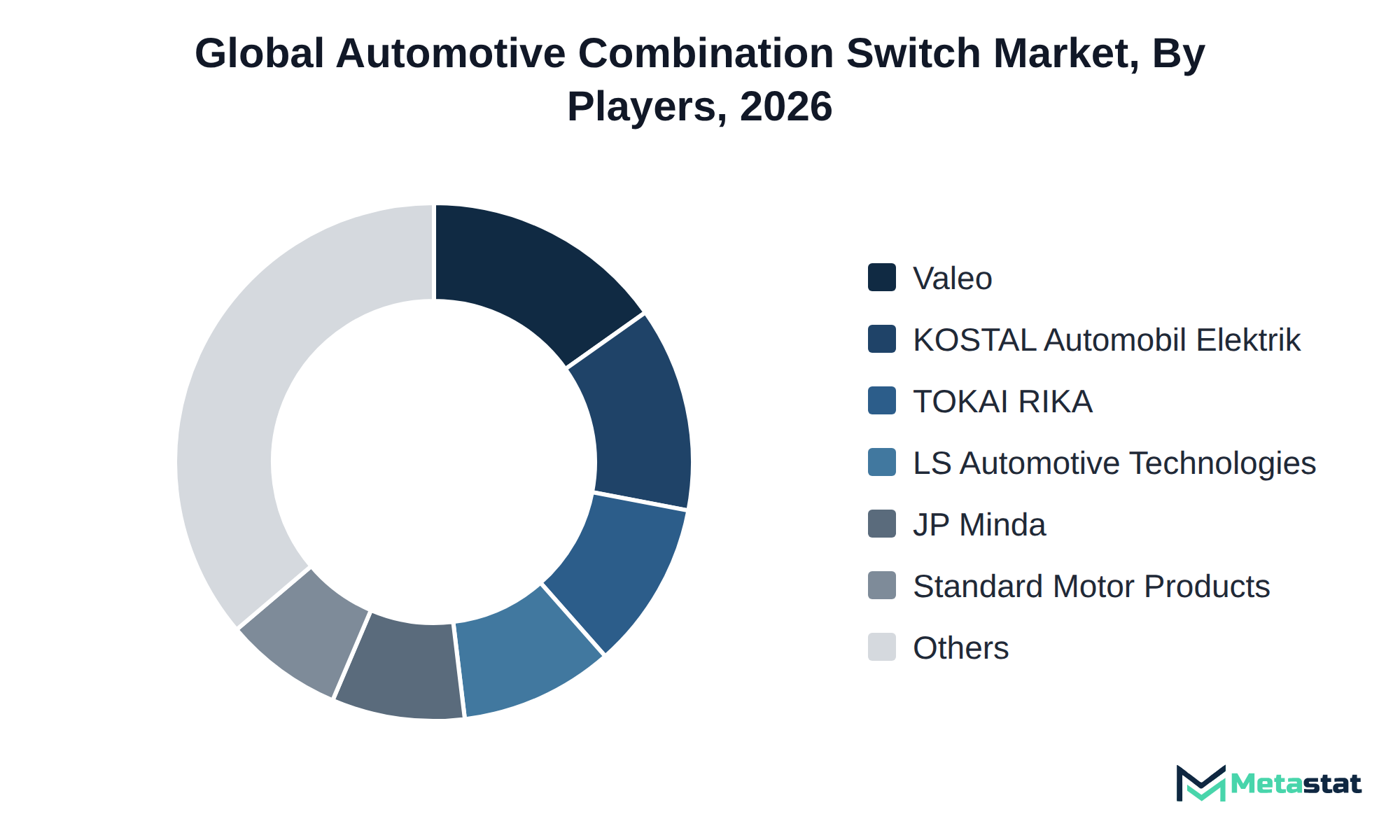
Companies in the Automotive Combination Switch market compete on various fronts, including product innovation, pricing strategies, and customer service. The market includes numerous players, each positioning itself to cater to specific buyer preferences.
Buyers select products based on factors including price, certification, and customization options. Valeo prioritizes advanced technology in multifunction combination switches, while KOSTAL Automobil Elektrik emphasizes quality in mechanical switches. TOKAI RIKA Co., Ltd. stands out with a strong focus on electronic switch offerings, catering to the growing demand for innovative automotive solutions.
Achieving this growth relies on several key developments. First, the expansion of multifunction combination switches, projected to grow from USD 1,990.2 million in 2026 to USD 2,880.8 million by 2033, will drive demand significantly, fueled by increasing consumer preferences for integrated vehicle controls. Second, advancements in electronic switch technology, with a forecast value of USD 2,765.3 million by 2033, will enhance functionality and efficiency, appealing to both manufacturers and consumers. Third, growth in the passenger vehicles segment, which anticipates a rise from USD 3,701 million in 2026 to USD 5,051.7 million by 2033, will further support overall market expansion. However, risks including supply chain disruptions and regulatory challenges in major regions, particularly in North America and Europe, could hinder progress. The automotive combination switch market remains sensitive to these factors, which affect production capabilities and ultimately impact revenue growth.
By Product Type: Multifunction Combination Switches, Lighting Switches, Wiper and Washer Switches, Hazard Warning Switches, Ignition Switches
By Technology: Mechanical Switches, Electronic Switches, Hybrid Switches
By Vehicle Type: Passenger Vehicles, Commercial Vehicles, Off-Highway Vehicles
By Sales Channel: Original Equipment Manufacturer (OEM), Aftermarket
The report strategically identifies and profiles the key market players and analyses their core competencies in each sub-segment of the Automotive Combination Switch market.
Report Attributes | Details |
Study Period | 2021-2033 |
Base Year | 2025 |
Estimated Year | 2026 |
Forecast Period | 2026-2033 |
Historical Period | 2021-2025 |
Growth Rate | CAGR 4.9% from 2026 to 2033 |
Revenue Unit | USD million |
Segmentation | By Product Type, Technology, Vehicle Type, Sales Channel, and Region |
By Region | North America (By Product Type, Technology, Vehicle Type, Sales Channel, and Country)
|
Europe (By Product Type, Technology, Vehicle Type, Sales Channel, and Country)
| |
Asia Pacific (By Product Type, Technology, Vehicle Type, Sales Channel, and Country)
| |
South America (By Product Type, Technology, Vehicle Type, Sales Channel, and Country)
| |
Middle East and Africa (By Product Type, Technology, Vehicle Type, Sales Channel, and Country)
|
Find answers to common questions about this report
The Automotive Combination Switch market size was valued at USD 4,888.2 million in 2025.
The market is projected to grow at a CAGR of 4.9% during the forecast period from 2026 to 2033.
The North America Automotive Combination Switch market size is estimated to reach USD 1,869.8 million by 2033.
Multifunction Combination Switches lead the Automotive Combination Switch market with a projected value of USD 2,880.8 million by 2033, reflecting the highest growth compared to other product types.
Increased consumer preference for advanced features and convenience drives the growth of multifunction combination switches. The transition to electronic switches enhances functionality and user experience in vehicles, supported by rising demand for vehicle customization and advanced driver assistance systems.
Rising prices for automotive combination switches restrict adoption among vehicle manufacturers. Increased production costs, driven by supply chain challenges and raw material price fluctuations, lead to higher prices for end products, affecting original equipment manufacturers and resulting in smaller order sizes.
Several factors favor adoption in the Automotive Combination Switch industry. The increasing demand for multifunction combination switches enhances user experience and convenience. the rise of advanced driver assistance systems (ADAS) drives the need for electronic switches, creating opportunities for suppliers to innovate and meet evolving consumer preferences.
The Automotive Combination Switch market is estimated to reach a valuation of USD 7,169.6 million by 2033.
Key players operating in the Automotive Combination Switch market include Valeo, KOSTAL Automobil Elektrik, TOKAI RIKA Co., Ltd., LS Automotive Technologies, JP Minda Group, and Standard Motor Products, Inc.
The multifunction combination switches segment is projected to grow from USD 1,990.2 million in 2026 to USD 2,880.8 million by 2033, reflecting a compound annual growth rate of 5.4%.
The analysts below cover Automotive and Transportation research at Metastat Insights.
LEAD ANALYST
Utkarsh Khirodkar is a Lead Market Research Analyst at MetaStat Insight, specializing in market intelligence, technology sector assessments, and competitive strategy.

ENERGY & INFRASTRUCTURE INDUSTRY CONSULTANT
Automotive and Transportation · Electronics and Semiconductor · Energy and Power · Machinery & Equipment
Saurabh Vasant Ganvir consults for Energy & Infrastructure Industry at MetaStat Insight, specializing in renewable energy, solar EPC, and electric vehicle (EV) infrastructure markets.
Decarbonizing industrial thermal processes hinges on refrigerant regulations and compressor efficiency limits. Metastat Insights delivered a thorough market analysis that evaluated natural refrigerants like CO2 and hydrocarbons against synthetic low-GWP alternatives. The breakdown of utility incentives and grid capacity constraints across key European manufacturing hubs offered valuable perspective. The follow-up conversation with their sector analysts addressed our specific questions on mechanical vapor recompression systems efficiently.
Assessing 200mm wafer transition schedules and substrate supply bottlenecks requires precise technical intelligence. MetaStat Insight supplied an actionable breakdown comparing planar and trench MOSFET architectures across automotive and industrial drive markets. The regional capacity estimates for Asia-Pacific foundries helped clarify lead-time uncertainties during our strategic planning session. When we needed additional clarification on high-purity raw material sourcing, their analyst team responded with helpful context within twenty-four hours.
Tracking maintenance cycle demand for secondary flight display units and terrain collision avoidance systems across regional jet fleets involves complex aftermarket dynamics. MetaStat Insight provided practical analysis separating airline retrofit programs from OEM forward-fit production schedules in North America and Southeast Asia. The supplier matrix highlighted component obsolescence timelines without resorting to vague generalizations. The dataset served as a dependable reference during our annual program review meetings.
Explore related market intelligence reports worth reading alongside this one.
Starting from
$2950