
LEAD ANALYST
Utkarsh Khirodkar is a Lead Market Research Analyst at MetaStat Insight, specializing in market intelligence, technology sector assessments, and competitive strategy.

Automotive Washer System Market By Type (Windshield Washer System and Headlamp Washer System), By Vehicle Type (Passenger Cars, Light Commercial Vehicles, and Heavy Commercial Vehicles), Industry Analysis, Size, Share, Growth, Trends, and Forecast, 2024-2031
Report ID
MSI-2689
Published
February, 2026
Pages
255 Pages
Format
Report Details
Choose Your License
Automotive Washer System Market
The Global Automotive Washer System market is estimated to reach $387.45 Million by 2031; growing at a CAGR of 3.63% from 2024 to 2031.
The Global Automotive Washer System market stands as a dynamic sector within the automotive industry, characterized by its integral role in ensuring vehicle safety and functionality. This market encapsulates a diverse array of products and solutions designed to maintain visibility and cleanliness for vehicles across various terrains and weather conditions. From windshield washer fluid to advanced automated systems, the Global Automotive Washer System market caters to the fundamental need for clear vision, enhancing driving safety and comfort for motorists worldwide.
The Automotive Washer System industry revolves around the development, manufacturing, and distribution of components and systems that facilitate the cleaning and maintenance of automotive glass surfaces. These components include windshield washer pumps, reservoirs, hoses, nozzles, and wiper blades, among others. Additionally, the market encompasses a spectrum of technologies, ranging from traditional manual systems to sophisticated sensor-based automatic systems, reflecting the continual evolution and innovation within the sector.
One of the primary drivers of demand within the Automotive Washer System market is the ever-growing global automotive fleet. With the expansion of urbanization and increasing disposable income levels in emerging economies, there is a rising ownership of passenger vehicles, leading to a heightened requirement for washer systems. Moreover, stringent safety regulations imposed by regulatory bodies mandate the integration of washer systems in vehicles, further propelling market growth.
The Automotive Washer System market caters to a broad customer base, including original equipment manufacturers (OEMs) and aftermarket suppliers. OEMs represent a significant portion of the market, as washer systems are integrated into vehicles during the manufacturing process. These systems are not only essential for compliance with safety standards but also serve as value-added features that enhance the overall appeal of vehicles. Conversely, aftermarket suppliers offer replacement parts and upgrades, catering to vehicle owners seeking to maintain or improve the performance of their washer systems.
Geographically, the Automotive Washer System market exhibits a global presence, with demand distributed across regions experiencing varying climatic conditions. While regions with temperate climates may necessitate washer systems primarily for removing dust and debris, areas prone to snow and ice require more robust solutions capable of combating freezing temperatures. As such, market players adapt their offerings to meet the specific needs and preferences of diverse markets, contributing to the industry's resilience and adaptability.
The Global Automotive Washer System market embodies a vital component of the automotive industry, addressing the fundamental requirement for visibility and safety on the road. With a diverse range of products and technologies catering to different customer segments and geographic regions, the market continues to evolve in response to changing consumer preferences and regulatory standards. As vehicles become increasingly sophisticated, the demand for innovative washer system solutions is expected to persist, driving further advancements and opportunities within the industry.
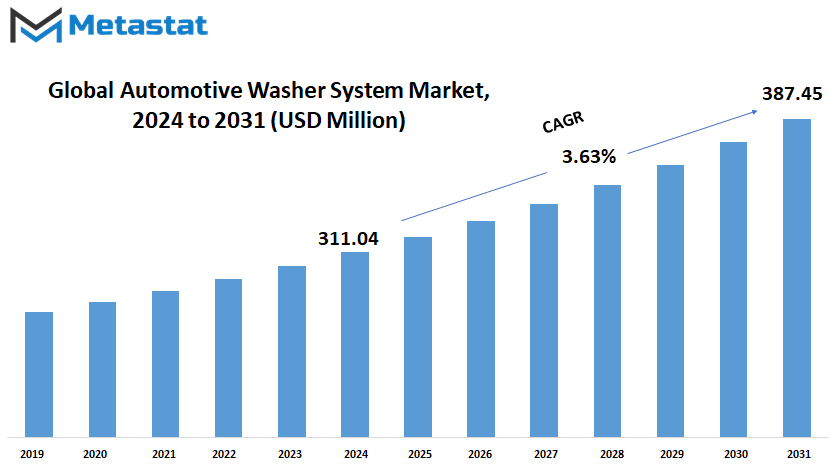
The Global Automotive Washer System market is witnessing significant growth due to several key factors. One of the primary drivers is the increasing emphasis on safety regulations, which require clear visibility for drivers. This heightened focus on safety has led to a surge in demand for efficient washer systems in vehicles, ensuring that windshields and other windows remain clean for optimal visibility.
Additionally, there is a growing trend among consumers towards vehicles equipped with convenience and comfort features. As a result, there is a rising adoption of advanced washer technologies that offer enhanced performance and user experience. Consumers are increasingly seeking vehicles that provide not only reliable transportation but also additional amenities that contribute to overall comfort and convenience.
Despite these favorable market conditions, there are certain challenges that may impede the growth of the automotive washer system market. One such challenge is the cost constraints faced by manufacturers in integrating sophisticated washer systems into vehicles. The development and implementation of advanced technologies often come with higher production costs, which can limit their adoption, particularly in price-sensitive market segments.
Furthermore, environmental concerns surrounding the use of water and cleaning chemicals in automotive washer systems present another hurdle. As awareness of environmental issues continues to grow, there is a growing demand for eco-friendly solutions that minimize the environmental impact of vehicle operations. This includes reducing water consumption and using alternative cleaning agents that are less harmful to the environment.
However, despite these challenges, there are promising opportunities on the horizon for the automotive washer system market. The development of eco-friendly washer solutions that utilize recycled water or alternative cleaning agents presents a significant opportunity for market growth. These solutions not only align with sustainability trends but also comply with increasingly stringent environmental regulations.
The Global Automotive Washer System market is driven by factors such as safety regulations and consumer preferences for convenience and comfort features. While challenges such as cost constraints and environmental concerns may pose obstacles to market growth, the development of eco-friendly solutions offers promising opportunities for the future. By addressing these challenges and capitalizing on emerging trends, the automotive washer system market is poised for continued growth in the coming years.
The Global Automotive Washer System market is divided into different types, with Windshield Washer System and Headlamp Washer System being two significant segments. In 2017, the Windshield Washer System had an output of 141.51 million units, accounting for a market share of 71.51%. Similarly, the Headlamp Washer System produced 56.39 million units during the same period.
The Global Automotive Washer System market encompasses various types, including the Windshield Washer System and the Headlamp Washer System. In 2017, the Windshield Washer System produced 141.51 million units, representing a market share of 71.51%. Additionally, the Headlamp Washer System generated 56.39 million units in the same year.
The Global Automotive Washer System market consists of different types, notably the Windshield Washer System and the Headlamp Washer System. In 2017, the Windshield Washer System recorded an output of 141.51 million units, capturing a market share of 71.51%. Similarly, the Headlamp Washer System achieved a production of 56.39 million units in the same year.
The Global Automotive Washer System market is comprised of various types, including the Windshield Washer System and the Headlamp Washer System. In 2017, the Windshield Washer System outputted 141.51 million units, representing a market share of 71.51%. Likewise, the Headlamp Washer System had an output of 56.39 million units during the same period.
The Global Automotive Washer System market can be analyzed based on different vehicle types, primarily Passenger Cars, Light Commercial Vehicles, and Heavy Commercial Vehicles. In 2017, the consumption of Auto Washer Systems in Passenger Cars amounted to 150.68 million units, while in Light Commercial Vehicles, it was 30.95 million units, and for Heavy Commercial Vehicles, the figure is yet to be provided.
Passenger Cars, which include sedans, hatchbacks, and SUVs among others, have shown a significant demand for Auto Washer Systems. This demand is primarily driven by the sheer volume of passenger cars on the roads globally. With an increasing number of people opting for personal transportation, especially in urban areas, the need for efficient washer systems in these vehicles becomes imperative. The convenience of maintaining visibility during adverse weather conditions contributes to the popularity of such systems among car owners.
Light Commercial Vehicles, such as vans and pickup trucks, also exhibit a notable consumption of Auto Washer Systems. While the demand might not be as high as that of Passenger Cars, it is still substantial. Light Commercial Vehicles are often used for business purposes, including transportation and delivery services. Ensuring clear visibility for drivers operating these vehicles is crucial for safety and operational efficiency, hence the need for reliable washer systems.
However, data about the consumption of Auto Washer Systems in Heavy Commercial Vehicles is not provided in the excerpt. However, it can be inferred that these vehicles, which include trucks and buses, also rely on washer systems for optimal visibility. Given the long hours spent on the road and the varying weather conditions encountered during transportation, having effective washer systems is indispensable for drivers of Heavy Commercial Vehicles.
Overall, the Global Automotive Washer System market reflects a diverse demand across different vehicle types. While Passenger Cars dominate the consumption figures, Light Commercial Vehicles also contribute significantly to the market. The importance of clear visibility for drivers cannot be overstated, driving the demand for efficient washer systems across the automotive sector. As the automotive industry continues to evolve, innovations in washer system technology are expected to further enhance safety and convenience for vehicle operators worldwide.

The global Automotive Washer System market can be analyzed based on different regions. These regions mainly include North America, Europe, Asia Pacific, Latin America, and the Middle East & Africa. Each of these regions has its own unique characteristics and factors that influence the Automotive Washer System market within it.
Starting with North America, it's one of the leading regions in terms of market share for Automotive Washer Systems. The presence of key automotive manufacturers and technological advancements contribute significantly to the market growth in this region. Additionally, strict regulations regarding vehicle safety and maintenance further drive the demand for Automotive Washer Systems.
Moving on to Europe, it's another prominent market for Automotive Washer Systems. The region boasts a strong automotive industry with major players like Germany, France, and the UK leading the way. Similar to North America, stringent regulations pertaining to vehicle safety and environmental standards push the market growth. Moreover, the adoption of advanced technologies such as headlamp cleaning systems and rain-sensing wipers fuels the demand for Automotive Washer Systems in Europe.
Meanwhile, the Asia Pacific region is witnessing rapid growth in the Automotive Washer System market. Countries like China, Japan, and India are key contributors to this growth. Factors such as the expanding automotive industry, rising disposable income, and increasing awareness about vehicle safety drive the market in this region. Furthermore, the growing trend of electric vehicles (EVs) and the integration of advanced features in vehicles propel the demand for Automotive Washer Systems.
In Latin America, although the market is relatively smaller compared to other regions, there is still notable growth. Countries like Brazil and Mexico are emerging as key markets due to the growing automotive industry and increasing consumer preference for safety features in vehicles.
The Middle East & Africa region also shows potential for growth in the Automotive Washer System market. Despite facing challenges like economic instability and political unrest in some areas, countries such as the United Arab Emirates and South Africa are witnessing steady growth. The increasing focus on road safety and infrastructure development contribute to the market expansion in this region.
The global Automotive Washer System market exhibits varying degrees of growth and opportunities across different regions. Factors like technological advancements, regulatory standards, and consumer preferences play significant roles in shaping the market dynamics in each region. Understanding these regional nuances is essential for businesses to devise effective strategies and capitalize on emerging opportunities in the Automotive Washer System market.
The global market for automotive washer systems boasts a diverse array of competitive players. These companies play a pivotal role in driving innovation, meeting consumer demands, and shaping the overall dynamics of the industry.
Among the prominent participants in the Automotive Washer System market are Bowles Fluidics, Chaodun, Continental AG, Denso Corporation, Doga, Exo-s Inc., Hella, Kautex, Mergon Group, Mitsuba Corporation, Riying, Robert Bosch GmbH, Trico Products Corporation, Valeo SA, Zhenqi, 3M, ACDelco, Japan Chemical Industries, Prestone Products Corporation, Qwix Mix, Recochem Inc., Soft99 Corporation, Sonax GmbH, and TOTAL TOOLS.
These players operate across various segments of the market, including manufacturing of windshield wipers, washer pumps, reservoirs, nozzles, hoses, and other components crucial for efficient washer systems in vehicles.
Each company brings its own unique strengths, whether it's technological expertise, extensive market reach, or a focus on sustainability. For instance, some companies like Denso Corporation and Robert Bosch GmbH are renowned for their advanced technological solutions and commitment to research and development. On the other hand, companies like Chaodun and Riying may excel in offering cost-effective solutions suitable for a wide range of vehicles.
In addition to technological advancements, factors such as brand reputation, distribution network, after-sales service, and pricing strategies also contribute to the competitive landscape of the Automotive Washer System market. Companies often engage in strategic partnerships, mergers, and acquisitions to expand their market presence and gain a competitive edge.
Moreover, the competitive nature of the market fosters continuous innovation as companies strive to differentiate themselves and meet evolving consumer preferences. This could lead to the development of more efficient washer systems, integration of smart technologies for automated cleaning, and environmentally-friendly solutions to align with sustainability goals.
However, along with opportunities, the competitive nature of the Automotive Washer System market also poses challenges for players. Intense competition can exert pressure on profit margins, necessitating efficient cost management and strategic pricing decisions. Furthermore, companies must stay abreast of regulatory changes and industry standards to ensure compliance and mitigate risks.
The Automotive Washer System market is characterized by a diverse array of competitive players, each contributing to the industry's growth and development in their own unique way. By leveraging their strengths, embracing innovation, and adapting to market dynamics, these companies strive to maintain their competitive positions and drive the industry forward.
Find answers to common questions about this report
Global Automotive Washer System market is valued at $ 311.04 million in 2024.
Global Automotive Washer System market is estimated to grow with a CAGR of 3.63% from 2024 to 2031.
Global Automotive Washer System market is estimated to reach $387.45 million by 2031.
Top players operating in the Automotive Washer System industry includes Bowles Fluidics, Chaodun, Continental AG, Denso Corporation, Doga, Exo-s, Inc., and Others.
The analysts below cover Automotive and Transportation research at Metastat Insights.
LEAD ANALYST
Utkarsh Khirodkar is a Lead Market Research Analyst at MetaStat Insight, specializing in market intelligence, technology sector assessments, and competitive strategy.

ENERGY & INFRASTRUCTURE INDUSTRY CONSULTANT
Automotive and Transportation · Electronics and Semiconductor · Energy and Power · Machinery & Equipment
Saurabh Vasant Ganvir consults for Energy & Infrastructure Industry at MetaStat Insight, specializing in renewable energy, solar EPC, and electric vehicle (EV) infrastructure markets.
In the biological seed treatment space, registration timelines vary drastically between the European Union, Brazil, and North America. The MetaStat Insight research handled these cross-border regulatory barriers with genuine nuance, mapping commercialization pathways alongside historical field adoption rates. The segmentation between microbial strains and biochemical active ingredients was particularly well structured.
Our team was tracking whether regional recycling infrastructure could realistically absorb the growing volume of lithium iron phosphate batteries over the next decade. The report did a solid job separating announced hydrometallurgical plant capacity from active, permitted operational throughput. That distinction made the feedstock availability projections and regional recovery rate models far more credible than standard commercial overviews.
Tracking capacity expansion in single-use bioprocessing requires dependable data on raw material availability and cleanroom-grade polymer supply chains. The competitive landscape chapter gave a grounded evaluation of secondary component suppliers across North America and Asia-Pacific rather than simply reprinting press releases. Having that level of supplier benchmarking helped clarify dual-sourcing considerations for our clinical pipeline planning.
Explore related market intelligence reports worth reading alongside this one.
Starting from
$2950