
LEAD ANALYST
Utkarsh Khirodkar is a Lead Market Research Analyst at MetaStat Insight, specializing in market intelligence, technology sector assessments, and competitive strategy.

Global Light Duty Truck Market Size, Share, By Vehicle Type (Pickup Trucks, Cargo Vans, Mini Trucks, Chassis Cabs and Cutaways, Step Vans), By Powertrain (Internal Combustion Engine, Battery-Electric, Hybrid, Fuel Cell Electric), By Application (Delivery Services, Construction and Landscaping, Utility and Maintenance, Small Business Operations, Emergency Services, Waste Management), By End-Use Industry (Fleet Operators, Small and Medium-Sized Enterprises, Construction and Utility Contractors, Government and Municipal Agencies, Rental and Leasing Providers), Industry Analysis, Growth, Trends, and Forecast, 2026-2033
Report ID
MSI-5718
Published
November, 2026
Pages
262 Pages
Format
Historical
Base year
Forecast
Forecast period
Report Details
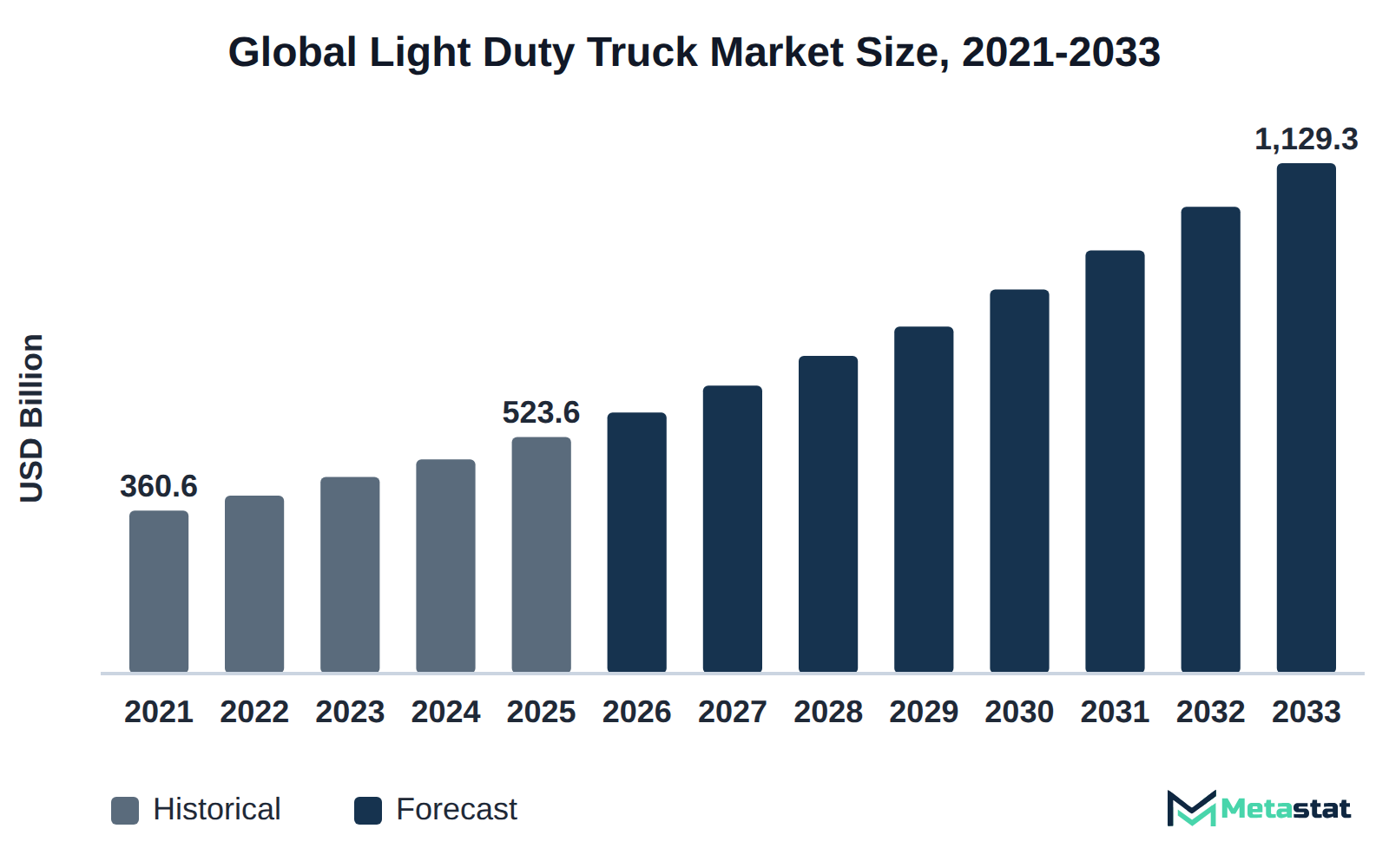
Market Valuation: Valued at $523.6 Billion in 2025, projected to reach $1,129.3 Billion by 2033 at a 10.0% CAGR.
Dominant Segment: Pickup trucks lead the Light Duty Truck market, driven by their versatility and high demand from fleet operators and small businesses for delivery services.
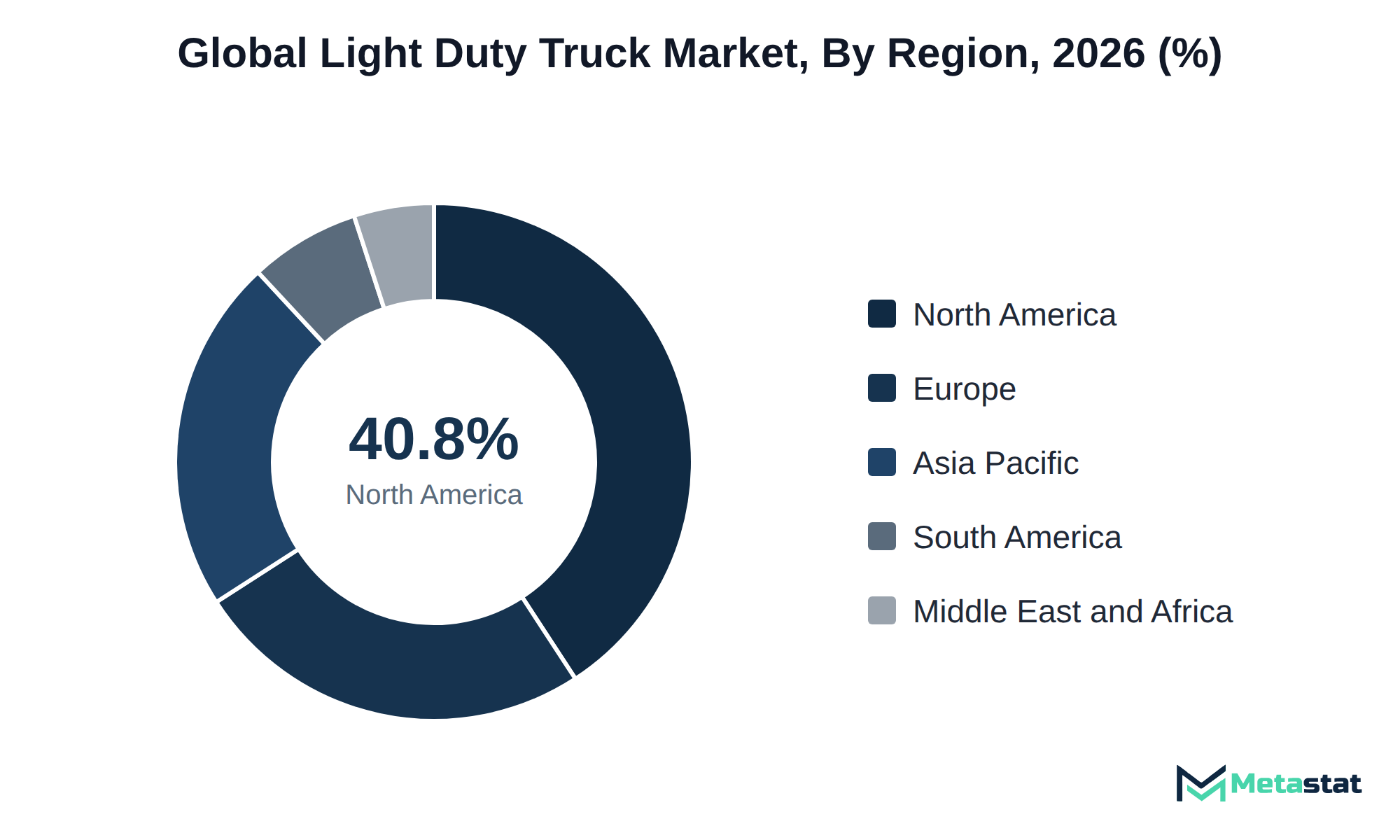
Geographic Lead: North America is the dominant region, holding 40.8% of the market in 2025, with the US expected to maintain its lead due to robust infrastructure and consumer preference.
What's Inside: The report provides comprehensive competitive coverage, detailed analyses of market dynamics, and forecasts for the period 2026-2033, focusing on various vehicle types, powertrains, and applications.
Growing Demand for Cargo Vans: The cargo vans segment is projected to grow significantly, reaching USD 359.3 billion by 2033, driven by the rise in e-commerce and urban logistics needs.
Battery-Electric Adoption: The battery-electric segment is set to reach USD 312.4 billion by 2033, reflecting a robust CAGR of 20.2%, as fleet operators increasingly prioritize sustainable transportation solutions.
Choose Your License
Global Light Duty Truck Market
The global Light Duty Truck market was valued at USD 523.6 billion in 2025 and is projected to reach USD 1,129.3 billion by 2033, growing at a CAGR of 10.0% over the forecast period.

The Light Duty Truck market covers vehicles built for varied applications, with spending driven by fleet operators, small and medium-sized enterprises, and construction and utility contractors. The demand for these vehicles stems from their versatility and efficiency, which support diverse operational needs across industries. Buyers invest in this market to enhance productivity, reduce operational costs, and meet evolving regulatory standards regarding emissions and fuel efficiency.
Growth in the market is propelled by the increasing demand for delivery services, particularly in urban areas where logistics complexities require efficient transportation solutions. Among the vehicle types, pickup trucks represent the largest segment, valuing USD 242.2 billion in 2026 and projected to reach USD 453.5 billion by 2033. North America holds 40.8% of the market in 2025, with the US leading in 2026, reflecting the region's robust infrastructure and consumer preference for light-duty vehicles.
Investments in battery-electric powertrains significantly influence market dynamics, reflecting a shift towards sustainable transportation options. This transition aligns with a broader global trend towards electrification, driving innovation in vehicle design and technology. The market shows strong growth potential, supported by advances in battery technology and an expanding charging infrastructure.
The Light Duty Truck market includes various vehicle types including pickup trucks, cargo vans, and mini trucks, catering to diverse applications. Buyers invest in these vehicles for their operational efficiency, reliability, and adaptability across industries. Fleet operators, small and medium-sized enterprises, and construction contractors prioritize these vehicles due to their essential role in logistics, delivery services, and utility maintenance.
Growth in the market is driven by rising demand for efficient delivery services and the expansion of e-commerce, which increases the need for reliable transportation solutions. Among the segments, pickup trucks hold the largest value share, reflecting their versatility and popularity among consumers and businesses. The region's robust infrastructure and high purchasing power further enhance demand for light duty trucks.
Technological advancements in powertrains, particularly the shift towards battery-electric vehicles, significantly impact market growth. This transition aligns with global sustainability goals, encouraging manufacturers to innovate and enhance fuel efficiency. The focus on reducing emissions and improving energy efficiency strengthens the competitive landscape, attracting investments and increasing market penetration.
The emergence of specialized pickup trucks and cargo vans significantly transforms last-mile fleet procurement in the Light Duty Truck market. This shift responds to the rising demand for efficient urban logistics solutions. Recent data indicates that the cargo van segment is projected to reach USD 359.3 billion by 2033, reflecting a compound annual growth rate (CAGR) of 11%. Fleet operators increasingly prioritize vehicles that offer versatility and maneuverability, enabling them to navigate congested urban environments and deliver goods swiftly.
With the growing emphasis on sustainability, the transition to battery-electric powertrains in these vehicle segments enhances operational efficiency. The battery-electric segment is projected to reach USD 312.4 billion by 2033, highlighting a robust CAGR of 20.2%. This trend aligns with the market's shift towards sustainable alternatives, influencing fleet operators to reconsider their procurement strategies. The integration of advanced technologies in pickup trucks and cargo vans, including telematics and connectivity features, further supports fleet management efficiency, reducing downtime and enhancing route optimization.
Consequently, the market presents new opportunities for manufacturers and suppliers to innovate and meet changing customer preferences. The focus on efficiency, sustainability, and technology-driven solutions positions these vehicles as essential assets for fleet operators aiming to improve their operational capabilities and reduce overall costs in the last-mile delivery sector.
Battery-electric light duty trucks experience increasing adoption within urban delivery fleets due to their operational advantages and favorable pricing models. These vehicles offer lower operational costs compared to traditional internal combustion engine trucks, driving interest from fleet operators focused on sustainability and efficiency. In the Light Duty Truck market, the battery-electric segment is projected to reach USD 312.4 billion by 2033, reflecting a compound annual growth rate of 20.2%. This substantial growth signals a significant shift in purchasing preferences among buyers, particularly in metropolitan areas where regulatory pressures and environmental concerns dominate decision-making.
Buyers increasingly opt for flexible contract models that emphasize total cost of ownership rather than upfront pricing. Leasing agreements and subscription services provide fleet operators with the financial agility to integrate battery-electric trucks without incurring substantial capital expenditures. These models enable operators to allocate resources more effectively while adapting to rapidly changing market conditions. The focus on battery-electric vehicles within the market is expected to attract investments and partnerships aimed at expanding charging infrastructure, further enhancing the appeal of these trucks for urban applications. This shift makes battery-electric light duty trucks a practical choice for urban logistics.
Fleet telematics and upfitting have become critical factors in the decision-making processes of buyers in the Light Duty Truck market, especially among fleet operators. The integration of telematics systems allows businesses to monitor vehicle performance, optimize routes, and enhance overall fleet efficiency. In 2025, fleet operators in the market are projected to reach a value of USD 198.9 billion, growing to USD 421 billion by 2033. This significant growth indicates strong reliance on advanced technologies in vehicle management.
Upfitting, which involves customizing vehicles to meet specific operational needs, further influences purchasing decisions. Companies increasingly seek vehicles tailored for particular applications, including delivery services and utility maintenance. For instance, the application segment for delivery services expects growth from USD 234.1 billion in 2026 to USD 488.3 billion by 2033, demonstrating the importance of tailored solutions in driving demand. Fleet operators prioritize efficiency and functionality, and the adoption of telematics and specialized upfitting solutions enhances operational capabilities.
This trend signifies a shift in the market, where traditional buying criteria evolve to include technological advancements and customization options. Fleet operators leveraging these innovations are likely to gain a competitive edge in the evolving environment of the Light Duty Truck market.
Pickup trucks and cargo vans emerge as the most effective light duty truck types for urban delivery and field operations. Pickup trucks account for USD 453.5 billion by 2033, reflecting a compound annual growth rate of 9.4%. Their versatility and robust performance make them ideal for various delivery tasks in urban settings, where maneuverability and cargo capacity are essential.
Cargo vans demonstrate strong potential in this sector, with an anticipated value of USD 359.3 billion by 2033 and a compound annual growth rate of 11%. These vehicles provide ample space for packages and equipment while offering the agility required to navigate congested city streets. The growing trend toward e-commerce and last-mile delivery services drives demand for these truck types, highlighting their importance in meeting the logistical challenges of urban environments.
Focusing on the right types of light duty trucks enhances operational efficiency and improves service delivery for businesses in urban areas. The light duty truck market continues to adapt to the evolving needs of delivery services, establishing pickup trucks and cargo vans as key assets for companies engaged in urban logistics.
Delivery services have undergone significant growth, driving increased demand for light duty trucks. The rise in e-commerce and the need for rapid logistics solutions have led to a surge in purchases from fleet operators and small businesses focused on efficient delivery models. These buyers prioritize vehicles that enhance their operational capabilities and reduce turnaround times. Revenue from delivery services is expected to reach USD 488.3 billion by 2033, reflecting a compound annual growth rate of 11.1% from 2026. This trend signifies a shift in the market, indicating that light duty trucks are essential assets in meeting evolving customer expectations and expanding service offerings.
The growing use in delivery services continues to influence purchasing decisions, with service providers seeking reliable and versatile vehicles to streamline operations. The ongoing transition towards a more delivery-centric economy highlights the importance of adapting fleets to meet changing demands.
Battery-electric technology for light duty trucks attracts significant interest among fleet operators, driven by advancements in charging infrastructure and energy efficiency. This growing infrastructure facilitates faster charging times and broader availability, enhancing the operational feasibility of electric vehicles for various applications. Fleet operators, particularly in urban delivery and logistics, increasingly recognize the cost savings associated with lower fuel and maintenance expenses over the vehicle's lifecycle. Competitive pressures within the market encourage manufacturers to expand their offerings, targeting diverse consumer needs and preferences. The increasing focus on sustainability and reducing carbon emissions strengthens the demand for battery-electric models. Consequently, the market is expected to experience accelerated growth in battery-electric light duty trucks, with a projected compound annual growth rate (CAGR) of 20.2% through 2033. This trend reflects a broader shift toward environmentally friendly transport solutions that align with evolving consumer expectations and regulatory frameworks. The continued expansion of battery-electric trucks will support significant market growth and shift operational paradigms across various sectors.
Price sensitivity among fleet operators and small businesses significantly influences adoption rates within the Light Duty Truck market. High upfront costs associated with purchasing new vehicles, particularly battery-electric models, lead to slower uptake, resulting in smaller orders and delayed replacements. Budget constraints compel these buyers to evaluate total cost of ownership, including maintenance and fuel efficiency, before committing to new purchases. Consequently, reluctance to invest in pricier but potentially more efficient alternatives limits market growth potential. This financial hesitance affects decisions across various segments, including delivery services and construction sectors, where operational expenses align with financial strategies. The cumulative effect of such constraints creates a cautious approach to upgrading fleets, which ultimately influences overall market demand.
Profitability challenges arise within the market due to increasing input costs, impacting suppliers' ability to maintain margins. Rising prices for raw materials and components strain budgets, compelling manufacturers to reassess pricing strategies. Fleet operators face pressure to balance operational expenses while ensuring vehicle quality and performance. In response, suppliers explore various strategies, including optimizing supply chain efficiencies and renegotiating contracts with raw material providers. Many companies invest in technology to enhance production processes, thereby reducing waste and improving yield. Partnerships with local suppliers emerge, facilitating more stable pricing arrangements. Suppliers increasingly emphasize value-added services to differentiate their offerings, attracting customers willing to pay a premium for enhanced reliability and performance. The competitive environment in the Light Duty Truck market intensifies as suppliers seek innovative solutions to mitigate the impact of rising costs while meeting growing demand.
The cargo vans segment within the market presents notable growth opportunities, driven by an increase in e-commerce and urban logistics. This growth directly correlates with rising demand from delivery services and small businesses engaging in last-mile logistics. The robust design and versatility of cargo vans meet the requirements of these applications, allowing efficient transport and distribution of goods.
The shift toward online shopping significantly boosts the need for efficient delivery solutions, prompting businesses to invest in cargo vans. Fleet operators recognize the advantages of cargo vans, which provide ample storage space while maintaining maneuverability in urban environments. Expanding adoption of this vehicle type aligns with evolving logistics, positioning it as a preferred choice for businesses looking to enhance operational efficiency.
The Global Light Duty Truck market is segmented based on Vehicle Type, Powertrain, Application, and End-Use Industry.
These vehicles primarily serve fleet operators and individual consumers who require reliable transportation for both personal and commercial use. The growing demand for delivery services significantly drives this segment, reflecting a shift towards timely logistics solutions. Compared to other vehicle types in the market, pickup trucks exhibit a strong growth rate, influenced by their versatility in various applications. Their price point typically remains higher than mini trucks but lower than specialized cargo vans, catering to a broad customer base focused on utility and performance. With increasing popularity of e-commerce, the role of pickup trucks in last-mile delivery continues to expand, enhancing their market position.
This segment primarily serves businesses involved in delivery services, logistics, and retail operations, providing suitable transportation for goods in urban environments. The increasing demand for efficient last-mile delivery solutions drives growth in this category, along with the expansion of e-commerce. Cargo vans differentiate themselves from other vehicle types through their design, which offers spacious interiors optimized for transporting cargo. In contrast to pickup trucks, which have a CAGR of 9.4%, cargo vans experience a faster growth rate, reflecting their rising utility among fleet operators. The rising focus on urban logistics and sustainability initiatives supports further adoption of cargo vans, enhancing their competitiveness in the market.
Mini Trucks segment is expected to reach USD 143.6 billion by 2033. These vehicles serve varied applications, particularly in urban settings where compact size and maneuverability offer advantages. Small businesses and urban delivery services frequently choose mini trucks due to their ability to navigate congested environments efficiently. Growth in e-commerce fuels demand for these vehicles, with an increasing number of operators seeking agile solutions for last-mile delivery. The sub-segment exhibits a compound annual growth rate (CAGR) that aligns with the overall market trend, differing from larger vehicle types in price and utility. Compared to other vehicle types, mini trucks stand out due to their suitability in densely populated areas, driving their adoption among businesses focused on urban logistics.
Chassis Cabs and Cutaways segment is projected to grow at a CAGR of 9.2% during the forecast period. This segment serves various applications, particularly in the construction and utilities industries, where vehicles are customized for specific tasks. Fleet operators and utility contractors rely on chassis cabs and cutaways for their versatility and ability to accommodate specialized equipment. Increased focus on urban infrastructure development drives demand for these vehicles, which provide essential support for construction and maintenance activities. Compared to other segments, the chassis cabs and cutaways segment demonstrates stable growth, mainly due to its adaptability for diverse applications. The rise of hybrid and battery-electric alternatives influences the segment, encouraging fleet operators to adopt more environmentally friendly options, further enhancing the market's growth potential.
Step Vans serve specific delivery and logistics functions, catering primarily to urban environments where space constraints and maneuverability are critical. These vehicles, popular among small business operators and local delivery services, provide efficient solutions for transporting goods in crowded areas. Demand for Step Vans is closely tied to the growth of e-commerce and last-mile delivery services, which require vehicles adept at navigating tight spaces while offering ample cargo capacity. Compared to other vehicle types within the market, Step Vans exhibit unique advantages, including lower operational costs and heightened fuel efficiency, appealing to businesses focused on reducing overhead. The segment distinguishes itself through its emphasis on practicality and functionality, positioning it as a favorable choice for fleet operators prioritizing efficient urban logistics.
Others (Crew Vans) encompass a type of light duty vehicle designed for various operational tasks, often used for transporting goods and services in urban environments. Organizations across delivery services and small business operations frequently select crew vans due to their versatility and capacity to accommodate multiple passengers alongside cargo. Growth within this sub-segment is influenced by rising demand for efficient delivery solutions, particularly in e-commerce. Compared to other vehicle types, crew vans attract a unique buyer profile, focusing on urban logistics and service-oriented applications, which distinguishes them from pickup trucks and cargo vans that serve different sectors. The shift toward electric and hybrid propulsion systems across the market has begun to connect with buyers, indicating a gradual transition in preferences for sustainable transportation options.
Internal Combustion Engine segment is valued at USD 430.1 billion in 2026 and is projected to reach USD 693 billion by 2033, at a CAGR of 7.1% during the forecast period. This segment caters to a diverse range of applications, serving fleet operators, construction businesses, and utility contractors, who rely on these vehicles for their operational needs. Growth in this segment is fueled by the demand for traditional combustion engine vehicles, which provide a balance of power and efficiency, appealing to buyers concerned with initial costs. Compared to the battery-electric segment, which features a CAGR of 20.2%, the Internal Combustion Engine segment experiences slower growth due to rising regulatory pressures and the shift toward electrification. Nevertheless, its established infrastructure and widespread acceptance among users in various industries enable continued relevance in the evolving market landscape.
This segment serves various applications, particularly in urban delivery and logistics, leveraging its zero-emission capabilities. Fleet operators and environmentally conscious businesses increasingly adopt battery-electric trucks to enhance sustainability and reduce operational costs. The growing availability of charging infrastructure and supportive government policies drive this trend. Compared to other segments, the battery-electric segment demonstrates faster growth, reflecting a significant shift towards electrification in the automotive industry. The 20.2% CAGR highlights its strong positioning against traditional internal combustion engine options, which experience a lower growth rate of 7.1%. The transition to battery-electric technology aligns with efforts to meet stricter environmental regulations, creating a competitive edge for businesses that prioritize sustainability initiatives.
Hybrid powertrains are projected to reach USD 81.6 billion by 2033. These vehicles serve various applications, particularly in urban environments where fuel efficiency and emissions regulations are significant considerations. Fleet operators and small businesses favor hybrids due to their operational efficiency and reduced environmental impact. Increasing regulatory pressure to lower emissions supports hybrid adoption, unlike traditional internal combustion engines, which face stricter scrutiny. With a CAGR of 14.4%, the hybrid segment demonstrates faster growth than its counterparts in the powertrain category. This growth highlights a shift towards more sustainable transport solutions, responding to market demands for cleaner technologies while maintaining operational performance.
Fuel Cell Electric segment is projected to grow at a CAGR of 14.4% during the forecast period. This segment focuses on using hydrogen fuel cells to power light duty trucks, appealing primarily to fleet operators and organizations aiming for cleaner energy solutions. Increasing regulatory pressures for reduced emissions drive stronger adoption, aligning with sustainability goals. Fuel cell technology distinguishes itself from other powertrains by offering longer ranges and quicker refueling times compared to battery-electric options. This segment's growth contrasts with the Internal Combustion Engine segment, which experiences slower advancement due to heightened environmental concerns and market shifts toward more sustainable alternatives. The market reflects a broader trend toward decarbonization in the transportation sector, enhancing demand for fuel cell electric vehicles.
Others (CNG and LPG) include light duty trucks equipped with alternative fuel systems that employ compressed natural gas or liquefied petroleum gas. These vehicles cater primarily to organizations focused on reducing emissions and lowering fuel costs. The growing emphasis on sustainability and regulatory pressure to mitigate environmental impact drives adoption rates for this segment. Fleet operators, including government agencies and private companies, seek these vehicles to enhance their green credentials. Compared to other powertrain segments, this sub-segment experiences slower growth due to limited refueling infrastructure and higher upfront costs associated with CNG and LPG vehicles. The market benefits from ongoing advancements in alternative fuel technology, which increases its appeal over time.
This segment primarily serves e-commerce companies, logistics firms, and delivery businesses that require efficient transport solutions for goods. The significant growth in online shopping and the demand for quick delivery options drive expansion within this segment. Unlike other vehicle types, Delivery Services prioritizes speed and reliability, which influences fleet composition and purchasing decisions. The increasing focus on last-mile delivery logistics enhances the urgency for innovative and specialized light duty vehicles. Combined with rising urbanization, this segment differentiates itself through tailored solutions for specific delivery needs, reflecting a more pronounced growth trajectory compared to other applications in the market.
Construction and Landscaping segment is estimated to reach USD 199.1 billion by 2033, at a CAGR of 8.8% during the forecast period. This segment services enterprises focused on construction, landscaping, and outdoor maintenance. Key drivers include ongoing growth in infrastructure development and increased demand for landscaping services. The segment experiences strong demand from fleet operators and small to medium-sized enterprises, which rely on reliable transport for equipment and materials. While the segment displays stable growth, it faces more moderate expansion compared to others including Delivery Services, which grows at a CAGR of 11.1%. The emphasis on efficiency and productivity in construction operations increases the importance of suitable light duty trucks, impacting choices made by buyers in the market.
Utility and Maintenance segment is expected to reach USD 144.9 billion by 2033. This segment serves various functions, including maintenance and repair services for municipal and utility operations. Fleet managers and service providers predominantly use utility and maintenance vehicles due to their reliability in performing essential tasks. Increased investments in infrastructure development and maintenance drive growth in this segment, with robust demand from government and municipal agencies. The projected CAGR of 9.1% for this segment reflects steady growth, though it contrasts with higher growth rates seen in other applications like Delivery Services, projected at 11.1%. Utility and Maintenance vehicles differ from Delivery Services by focusing on operational functions rather than logistics and goods transport. The market adapts to evolving technologies, enhancing the capabilities of utility and maintenance vehicles to meet demanding service requirements.
Small Business Operations segment is projected to grow at a CAGR of 9.1% during the forecast period. This segment serves small enterprises requiring light duty trucks for various operational tasks, including deliveries and utility services. The increasing emphasis on e-commerce and local delivery services drives demand, particularly among small and medium-sized enterprises. Unlike other segments, this category focuses on affordability and versatility, catering to budget-conscious buyers. This segment offers lower price points compared to larger fleet operators, contributing to its unique market position. With significant growth anticipated, small business operators increasingly recognize the advantages of light duty trucks for efficient transportation solutions, enhancing operational effectiveness across diverse industries.
Emergency Services involves light duty trucks used for critical response tasks, including fire-fighting, medical assistance, and disaster relief operations. These vehicles are essential for public safety and are employed by government agencies and emergency service providers. Demand for this segment is driven by the increasing focus on public safety and the need for rapid response capabilities in emergencies. While this segment experiences steady growth, it differs from others, including Delivery Services, due to specialized requirements and regulations that govern emergency response vehicles. Regulatory standards for safety and accessibility often result in higher costs associated with equipping these trucks. The market is showing a shift toward integrating advanced technologies, enhancing operational efficiency and responsiveness for emergency services.
Waste Management involves the collection, transportation, processing, and disposal of waste materials. This application segment is essential for municipalities and private waste management companies, which rely on light duty trucks to ensure efficient waste collection and transport services. Increasing environmental regulations drive demand for modern, eco-friendly waste management practices, pushing operators to adopt newer vehicles with lower emissions. Compared to other applications, this segment experiences steady growth, characterized by a focus on compliance with sustainability standards. The need for efficient waste management is critical in urban areas, where waste volumes continue to rise, creating an environment conducive to innovation in vehicle technology. The market anticipates advancements, especially in fuel efficiency and alternative powertrains, which enhance operational capabilities in waste management.
Others (Recreation and Personal Utility) focuses on light duty trucks designed for leisure activities and personal transportation. This segment appeals to individual consumers and small businesses engaging in recreational activities including camping, boating, and outdoor sports. Increasing interest in outdoor pursuits drives demand in this segment, with consumers seeking versatile vehicles capable of accommodating various equipment. Compared to other application segments, this sub-segment experiences slower growth due to its niche market appeal and competition from traditional passenger vehicles. Pricing dynamics in this sector affect buyer decisions, especially among cost-conscious consumers prioritizing functionality and affordability. Unlike commercial-focused applications, the buyer profile emphasizes lifestyle and personal utility, reflecting the distinct usage patterns associated with recreational activities.
This segment primarily serves businesses that rely on light duty trucks for transportation, logistics, and service operations. Key drivers include the increasing demand for efficient last-mile delivery solutions and the expansion of e-commerce, significantly impacting purchasing decisions among fleet operators. Compared to other segments, the Fleet Operators segment experiences faster growth, driven by the growing emphasis on logistics efficiency. The segment's rapid expansion contrasts with sectors including Small Business Operations, which has a CAGR of 9.1%, illustrating the differentiated demand dynamics within the Light Duty Truck market. Investments in advanced fleet management technologies further support this growth, enhancing operational efficiency and reducing costs.
Small and Medium-Sized Enterprises segment is estimated to reach USD 286.4 billion by 2033, at a CAGR of 9.2% during the forecast period. This segment primarily serves businesses engaged in various operations where light duty trucks provide essential transportation for goods and services. The growth in e-commerce and demand for quick delivery services significantly drives this segment, enhancing the need for reliable transportation solutions. Compared to other segments including Fleet Operators, which is projected to grow at a CAGR of 11.3%, the Small and Medium-Sized Enterprises segment experiences a slower growth rate, indicating a more stable but less aggressive market expansion. This segment's unique positioning reflects the reliance of smaller businesses on cost-effective and adaptable vehicles, distinguishing it from larger fleet operations that pursue extensive automation and advanced technologies within the Light Duty Truck market.
The Construction and Utility Contractors segment is expected to reach USD 161.1 billion by 2033. This segment caters to businesses involved in construction projects and utility services, using light duty trucks for transporting materials and equipment. A strong demand for infrastructure development drives growth in this segment, with contractors seeking reliable vehicles to support their operations. Compared to other segments, the Construction and Utility Contractors segment exhibits a moderate growth trajectory, attributed to a compound annual growth rate (CAGR) of 9.2%, which is lower than the growth rate of Delivery Services, projected at 11.1%. The need for efficient and versatile vehicles remains critical, influencing the choice of light duty trucks in this sector. The market adapts to evolving construction methods and utility requirements, emphasizing the importance of durable and capable trucks.
Government and Municipal Agencies segment is projected to grow at a CAGR of 9.2% during the forecast period. This segment serves various public entities, including local and state governments, which use light duty trucks for activities including maintenance, utility services, and infrastructure development. Increasing investments in public infrastructure and urban development drive demand in this segment. Compared to other sub-segments, Government and Municipal Agencies exhibit a moderate growth trajectory. Unlike Delivery Services, which grows rapidly due to e-commerce trends, this segment's growth reflects stable, predictable funding from public budgets, resulting in consistent demand for light duty trucks. The market supports municipalities in effectively managing resources and delivering essential services to citizens.
Rental and Leasing Providers employ light-duty trucks for short-term and long-term vehicle needs, catering primarily to businesses and individuals seeking flexibility without committing to ownership. This segment serves a diverse clientele, including small and medium-sized enterprises that require vehicles for various operational purposes. Increasing demand for rental options stems from rising urbanization and the growing trend toward service-based business models. This segment experiences slower growth compared to others due to the competitive pricing landscape and the capital-intensive nature of fleet management. Price sensitivity among consumers and businesses influences purchasing decisions, differentiating this segment from those with higher growth rates, including delivery services. The rental and leasing model enables businesses to manage cash flow more efficiently, contributing to a shift in how users approach vehicle utilization in the market.
This segment caters to independent owner-operators who use light duty trucks for personal or business-related transportation needs. Owner-operators often engage in local delivery services, moving goods or equipment for various industries. Rising demand for flexible logistics options influences this segment, driven by the growth of e-commerce and the need for timely deliveries. Unlike larger fleet operators, independent owner-operators typically invest in versatile and cost-effective light duty trucks, focusing on affordability and efficiency rather than high capacity. This approach results in different purchasing decisions compared to other segments, which prioritize capacity or advanced technology. The segment stands out due to its unique buyer profile, emphasizing individual preferences and operational flexibility, which differentiates it from the larger segments of the market.
Based on geography, the Global Light Duty Truck market is divided into North America, Europe, Asia-Pacific, South America, Middle East, and Africa.
The demand for light duty trucks in North America is driven primarily by fleet operators, small and medium-sized enterprises, and the construction industry. The region's significant focus on delivery services further enhances this demand, with expected growth attributed to rising e-commerce activities. North America is projected to reach USD 435.7 billion by the end of 2033, supported by a robust infrastructure and favorable financing options for businesses. The market benefits from a strong presence of manufacturers and suppliers, which facilitates a competitive environment. Increased investments in electric vehicles and sustainability initiatives within the trucking industry contribute to shifting trends. The expansion reflects growing adoption of advanced technologies and changing consumer preferences.
Strong demand for light duty trucks in Europe arises from diverse applications, particularly in delivery services and construction sectors. The region's focus on sustainability drives interest in battery-electric variants, contributing to a projected increase in sales. Countries including Germany and France invest in eco-friendly regulations, influencing manufacturers to enhance their offerings in electric and hybrid segments. The market benefits from a robust infrastructure that supports logistics and transportation, facilitating efficient distribution channels. By 2025, Europe's share of the global market stands at 25.1%, reflecting significant growth potential in the coming years. Factors unique to this region, including consumer preferences and regulatory frameworks, shape the trajectory of the light duty truck market.
The Asia-Pacific region accounts for 22.2% of the global Light Duty Truck market in 2025. The market experiences robust demand driven by industries including delivery services and construction. The rapid growth of e-commerce in countries like China and India results in heightened demand for delivery vehicles. Increased urbanization and infrastructure development in Southeast Asia further increase the need for light duty trucks in construction-related applications. Advancements in battery-electric powertrains stimulate market growth, aligning with regional sustainability efforts. Countries in this region are focusing on improving logistics and transportation infrastructure, enhancing the operational efficiency of light duty trucks. With projected expansion, the market is expected to reach USD 1,129.3 billion by 2033.
In South America, the light duty truck market demonstrates significant potential, particularly in Brazil and Argentina. Growing sectors including delivery services and construction drive demand for these vehicles. Infrastructure investments in urban areas enhance distribution capabilities, leading to increased operational efficiency for businesses. The region benefits from a rising number of small and medium-sized enterprises that rely on light duty trucks for their transportation needs. The market share in this region is projected at 6.9% in 2025, reflecting the competitive dynamics at play. Local manufacturers expand their offerings, and improved pricing strategies attract a broader customer base. The light duty truck market is expected to evolve, presenting opportunities for innovation and growth in various applications.
Demand for light duty trucks in the Middle East and Africa is influenced by the construction and delivery services industries, with significant activity observed in Saudi Arabia, the UAE, and South Africa. Infrastructure development initiatives drive the acquisition of these vehicles, particularly for urban projects and logistics operations. The region's distinct regulatory environment, focusing on environmental standards, encourages the adoption of battery-electric powertrains. The market share for this region is projected at 5.00% in 2025, reflecting ongoing investments in infrastructure and commercial vehicle fleets. Growth in the light duty truck market stems from increasing urbanization and the need for efficient transportation solutions.
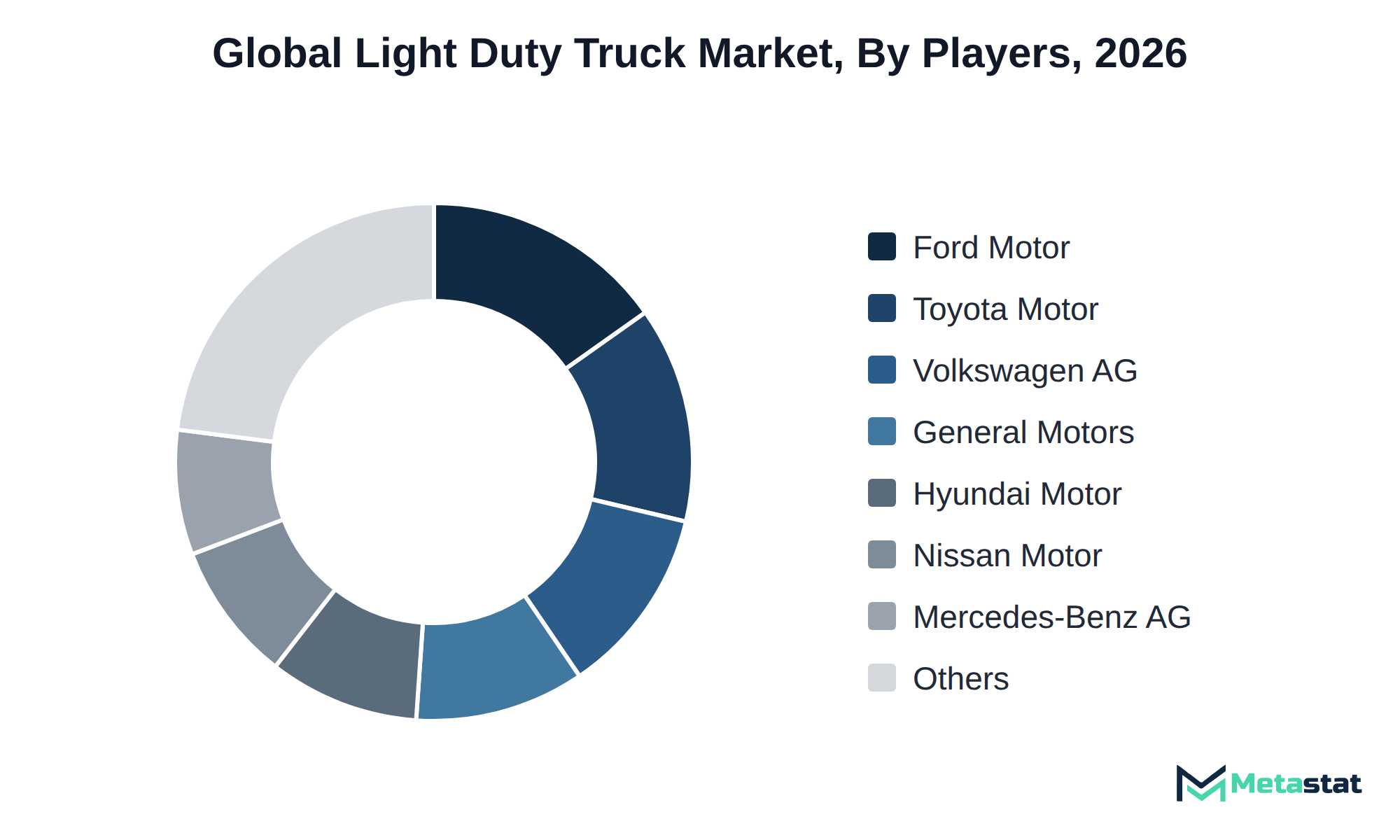
The Light Duty Truck market includes a diverse range of manufacturers competing across various segments including vehicle type, powertrain, application, and end-use industry. Companies like Ford Motor Company and General Motors Company emphasize a strong focus on internal combustion engines, reflecting buyer preferences for established performance and reliability.
In the powertrain segment, manufacturers including BYD Company Limited and Toyota Motor Corporation actively develop battery-electric vehicles, catering to the increasing demand for sustainable transport solutions. Buyers select vehicles based on factors including fuel efficiency, operational costs, and environmental impact, influencing competitive dynamics.
Volkswagen AG and Mercedes-Benz Group AG prioritize innovation in technology and premium features, aiming to capture customers interested in advanced functionalities and enhanced driving experiences. Companies like Nissan Motor Co., Ltd. and Tata Motors Limited offer customized solutions tailored to the specific needs of fleet operators and small businesses, creating opportunities for greater penetration within these buyer groups.
The competition in the market drives continuous improvement and diversification of products, with companies exploring emerging technologies and alternative fuel options to meet evolving consumer expectations.
Achieving this growth relies on key developments in the Light Duty Truck market, particularly the expansion of the battery-electric powertrain segment and a rise in demand from delivery services. The battery-electric segment is projected to experience significant adoption, driven by increasing environmental regulations and consumer preference for sustainable options. The delivery services application expects strong growth, fueled by the surge in e-commerce and the need for efficient logistics solutions.
However, supply chain disruptions and fluctuating raw material costs present risks that could slow market progress. The North American region, accounting for over 40% of the market share, addresses these supply chain issues effectively to maintain its growth trajectory. The interaction of these factors will ultimately shape the market landscape through 2033, determining the pace of expansion in various segments and regions.
By Vehicle Type: Pickup Trucks, Cargo Vans, Mini Trucks, Chassis Cabs and Cutaways, Step Vans, Others (Crew Vans)
By Powertrain: Internal Combustion Engine, Battery-Electric, Hybrid, Fuel Cell Electric, Others (CNG and LPG)
By Application: Delivery Services, Construction and Landscaping, Utility and Maintenance, Small Business Operations, Emergency Services, Waste Management, Others (Recreation and Personal Utility)
By End-Use Industry: Fleet Operators, Small and Medium-Sized Enterprises, Construction and Utility Contractors, Government and Municipal Agencies, Rental and Leasing Providers, Others (Independent Owner-Operators)
The report strategically identifies and profiles the key market players and analyses their core competencies in each sub-segment of the Light Duty Truck market.
Report Attributes | Details |
Study Period | 2021-2033 |
Base Year | 2025 |
Estimated Year | 2026 |
Forecast Period | 2026-2033 |
Historical Period | 2021-2025 |
Growth Rate | CAGR 10.0% from 2026 to 2033 |
Revenue Unit | USD billion |
Segmentation | By Vehicle Type, Powertrain, Application, End-Use Industry, and Region |
By Region | North America (By Vehicle Type, Powertrain, Application, End-Use Industry, and Country)
|
Europe (By Vehicle Type, Powertrain, Application, End-Use Industry, and Country)
| |
Asia Pacific (By Vehicle Type, Powertrain, Application, End-Use Industry, and Country)
| |
South America (By Vehicle Type, Powertrain, Application, End-Use Industry, and Country)
| |
Middle East and Africa (By Vehicle Type, Powertrain, Application, End-Use Industry, and Country)
|
Find answers to common questions about this report
The Light Duty Truck market size was valued at USD 523.6 billion in 2025.
The market is projected to grow at a CAGR of 10.0% during the forecast period from 2026 to 2033.
The North America Light Duty Truck market size is estimated to reach USD 435.7 billion by 2033.
Pickup Trucks lead the Light Duty Truck market with a projected value of USD 453.5 billion in 2033, based on the highest forecasted figure among the vehicle type segments.
Delivery services drive increased demand for light duty trucks, fueled by the rise in e-commerce and the need for rapid logistics solutions. The growing focus on sustainability and reducing carbon emissions strengthens the demand for battery-electric models, reflecting a broader shift toward environmentally friendly transport solutions.
North America holds the dominant share of the Light Duty Truck market, with a projected value of USD 435.7 billion in 2033, representing 40.8 percent of the total market.
Price sensitivity among fleet operators and small businesses restrains Light Duty Truck market growth. High upfront costs, particularly for battery-electric models, result in slower uptake and delayed replacements. increasing input costs challenge profitability, compelling manufacturers to reassess pricing strategies while balancing operational expenses.
The ongoing rise in e-commerce and demand for rapid logistics solutions favor adoption within the light duty truck industry. Fleet operators and small businesses seek reliable vehicles that enhance operational efficiency and support the transition toward a delivery-centric economy.
The Light Duty Truck market is estimated to reach a valuation of USD 1,129.3 billion by 2033.
Key players operating in the Light Duty Truck market include Ford Motor Company, General Motors Company, Toyota Motor Corporation, Volkswagen AG, Hyundai Motor Company, Nissan Motor Co., Ltd., Stellantis N.V., and Mercedes-Benz Group AG.
The analysts below cover Automotive and Transportation research at Metastat Insights.
LEAD ANALYST
Utkarsh Khirodkar is a Lead Market Research Analyst at MetaStat Insight, specializing in market intelligence, technology sector assessments, and competitive strategy.

ENERGY & INFRASTRUCTURE INDUSTRY CONSULTANT
Automotive and Transportation · Electronics and Semiconductor · Energy and Power · Machinery & Equipment
Saurabh Vasant Ganvir consults for Energy & Infrastructure Industry at MetaStat Insight, specializing in renewable energy, solar EPC, and electric vehicle (EV) infrastructure markets.
Evaluating calorific value requirements and air permit compliance across municipal waste facilities requires localized data. Metastat Insight structured their analysis around operational throughput capacity and feedstock composition variations in Latin America and Eastern Europe. Their competitive mapping of sorting equipment vendors helped clarify technology differences between optical separators and heavy media systems. The study provided an objective baseline during our capital expenditure reviews.
Decarbonizing industrial thermal processes hinges on refrigerant regulations and compressor efficiency limits. Metastat Insights delivered a thorough market analysis that evaluated natural refrigerants like CO2 and hydrocarbons against synthetic low-GWP alternatives. The breakdown of utility incentives and grid capacity constraints across key European manufacturing hubs offered valuable perspective. The follow-up conversation with their sector analysts addressed our specific questions on mechanical vapor recompression systems efficiently.
Assessing 200mm wafer transition schedules and substrate supply bottlenecks requires precise technical intelligence. MetaStat Insight supplied an actionable breakdown comparing planar and trench MOSFET architectures across automotive and industrial drive markets. The regional capacity estimates for Asia-Pacific foundries helped clarify lead-time uncertainties during our strategic planning session. When we needed additional clarification on high-purity raw material sourcing, their analyst team responded with helpful context within twenty-four hours.
Explore related market intelligence reports worth reading alongside this one.
Starting from
$2950