
LEAD ANALYST
Utkarsh Khirodkar is a Lead Market Research Analyst at MetaStat Insight, specializing in market intelligence, technology sector assessments, and competitive strategy.

Hydrogen Fuel Cells Market Size, Share, By Technology (Proton Exchange Membrane Fuel Cells (PEMFC), Phosphoric Acid Fuel Cells (PAFC), Solid Oxide Fuel Cells (SOFC), Direct Methanol Fuel Cells (DMFC), Molten Carbonate Fuel Cells (MCFC), Others), By Application (Stationary, Transportation, Portable), By End-Users (Automotive, Utilities, Military & Defense, Marine), Industry Analysis, Growth, Trends, and Forecast, 2026-2033
Report ID
MSI-2278
Published
February, 2026
Pages
311 Pages
Format
Report Details
Choose Your License
Hydrogen Fuel Cells Market
Hydrogen fuel cells are a type of clean energy technology that converts hydrogen gas into electricity through a chemical reaction. They are often used as an alternative to traditional batteries, especially in applications where a high amount of power is required, such as in electric vehicles. Hydrogen fuel cells have several advantages over traditional fossil fuels. They produce electricity with high efficiency, do not emit harmful greenhouse gases or pollutants, and can be used to store renewable energy from sources such as wind or solar power. They are also relatively lightweight and can be used in a variety of applications, including transportation, stationary power generation, and portable electronics.
The increasing demand for clean energy sources and government incentives and funding for hydrogen fuel cell research and development are key driving factors of the market. As concerns regarding the negative impact of fossil fuel combustion continue to remain at the forefront of public discussions and government policymaking initiatives, the emergence and recognition of benefits facilitated through the use of hydrogen fuel cells would continue to generate adequate product interest and uplift market growth prospects during the forecast period. However, limited infrastructure for hydrogen storage and distribution and high cost of fuel cells and lack of economies of scale might hamper the market growth. The requirements of high capital investments at the initial phases for procurement and integration of hydrogen fuel cells might further deter potential clients from comitting to final product purchases. The growing demand for fuel cell electric vehicles (FCEVs) would provide lucrative opportunities for the market in coming years. The concrete steps undertaken by public and private enterprises to phase out IC engine-based vehicles in a gradual manner for a beneficial shift towards eco-friendly fuel sources for automobiles would provide new possibilities of product interest and procurement scope in the upcoming years.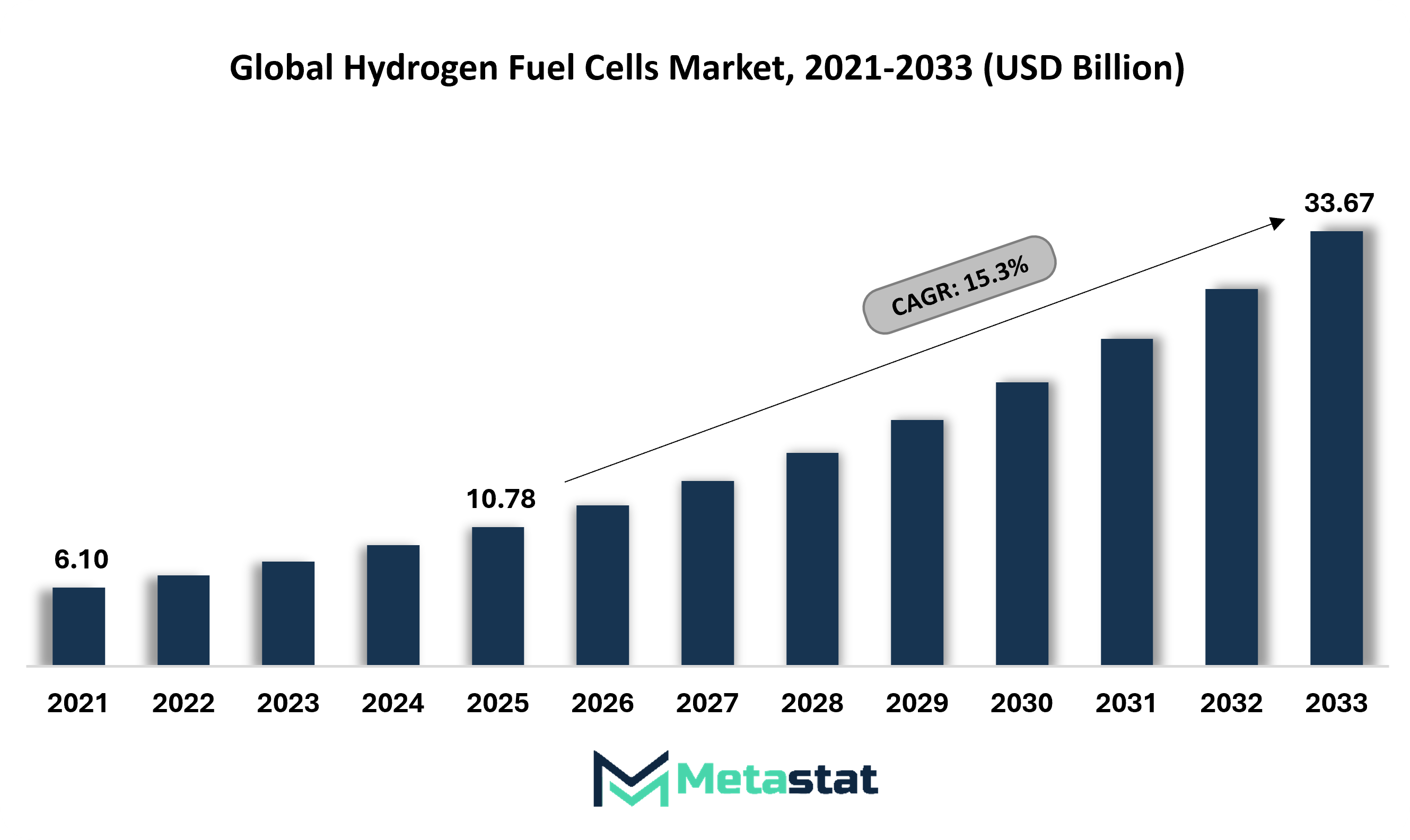
The global Hydrogen Fuel Cells market is mainly classified based on Technology, Application, and End-Users.
Technology is further segmented into Proton Exchange Membrane Fuel Cells (PEMFC), Phosphoric Acid Fuel Cells (PAFC), Solid Oxide Fuel Cells (SOFC), Direct Methanol Fuel Cells (DMFC), Molten Carbonate Fuel Cells (MCFC), and Others.
Proton Exchange Membrane Fuel Cells (PEMFC) segment is valued at USD 7.9 billion in 2026 and is projected to reach USD 20.8 billion by 2033, at a CAGR of 14.8% during the forecast period.
By Application the market is divided into Stationary, Transportation, and Portable.
Stationary segment is projected to reach USD 12.1 billion by 2033, at a CAGR of 16.8% during the forecast period.
By End-Users the market is further divided into Automotive, Utilities, Military & Defense, and Marine.
Automotive segment is projected to reach USD 19.5 billion by 2033.
Based on geography, the global Hydrogen Fuel Cells market is divided into North America, Europe, Asia-Pacific, South America, and Middle East & Africa. North America is further divided in the U.S., Canada, and Mexico, whereas Europe consists of the UK, Germany, France, Italy, and Rest of Europe. Asia-Pacific is segmented into India, China, Japan, South Korea, and Rest of Asia-Pacific. The South America region includes Brazil, Argentina, and the Rest of South America, while the Middle East & Africa is categorized into GCC Countries, Egypt, South Africa, and Rest of Middle East & Africa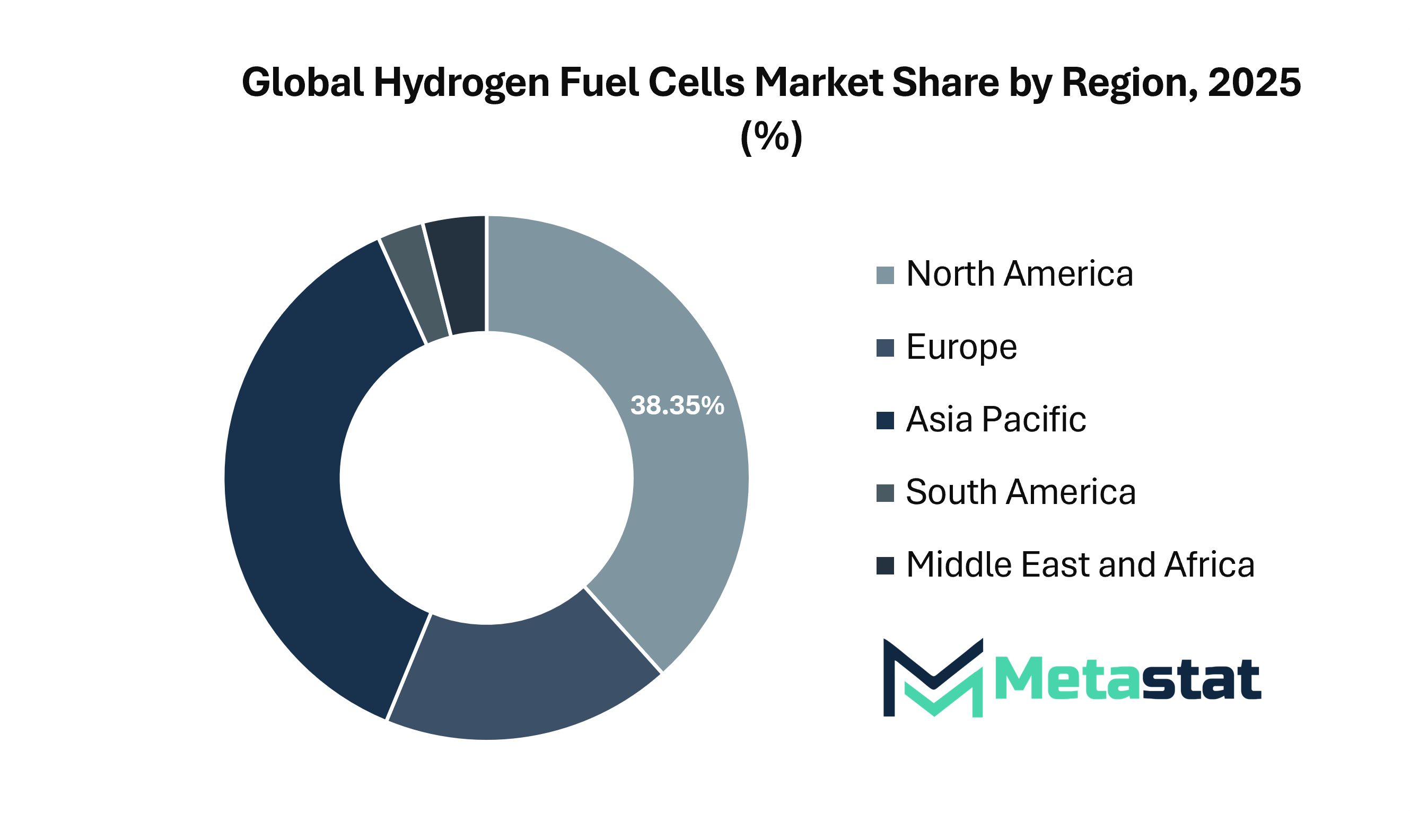
Key players operating in the Hydrogen Fuel Cells industry include Plug Power, Toshiba ESS, Bloom Energy, Panasonic, Honda, Hyundai Motor, Ballard Power, Cummins, Toyota, ElringKlinger, PowerCell Group, Symbio, Pearl Hydrogen, Sunrise Power, Hyster, Advent Technologies, and GenCell.
Find answers to common questions about this report
Top players operating in the Hydrogen Fuel Cells industry includes Plug Power, Toshiba ESS, Bloom Energy, Panasonic, Honda, Hyundai Motor, Ballard Power, Cummins, Toyota, ElringKlinger, PowerCell Group, Symbio, Pearl Hydrogen, Sunrise Power, Hyster, Advent Technologies, GenCell.
The Hydrogen Fuel Cells market is estimated to reach a valuation of USD 33.7 billion by 2033.
According to Metastat Insights analysis, the North America Hydrogen Fuel Cells market size is estimated to reach USD 19.9 billion by 2033.
The Hydrogen Fuel Cells market is projected to grow at a CAGR of 15.3% during the forecast period from 2026 to 2033.
The Metastat Insights study reveals that the Hydrogen Fuel Cells market size was valued at USD 10.8 billion in 2025.
The analysts below cover Energy and Power research at Metastat Insights.
LEAD ANALYST
Utkarsh Khirodkar is a Lead Market Research Analyst at MetaStat Insight, specializing in market intelligence, technology sector assessments, and competitive strategy.

PRINCIPAL CONSULTANT - ENTERPRISE AI & EMERGING TECHNOLOGIES
Banking & Finance · Electronics and Semiconductor · Energy and Power · Healthcare IT · Information & Technology · Professional Services
Vijay Gunti is a Principal Consultant at MetaStat Insight, bringing over two decades of experience across enterprise digital transformation, technology strategy, and intelligent systems.

ENERGY & INFRASTRUCTURE INDUSTRY CONSULTANT
Automotive and Transportation · Electronics and Semiconductor · Energy and Power · Machinery & Equipment
Saurabh Vasant Ganvir consults for Energy & Infrastructure Industry at MetaStat Insight, specializing in renewable energy, solar EPC, and electric vehicle (EV) infrastructure markets.
Evaluating calorific value requirements and air permit compliance across municipal waste facilities requires localized data. Metastat Insight structured their analysis around operational throughput capacity and feedstock composition variations in Latin America and Eastern Europe. Their competitive mapping of sorting equipment vendors helped clarify technology differences between optical separators and heavy media systems. The study provided an objective baseline during our capital expenditure reviews.
Decarbonizing industrial thermal processes hinges on refrigerant regulations and compressor efficiency limits. Metastat Insights delivered a thorough market analysis that evaluated natural refrigerants like CO2 and hydrocarbons against synthetic low-GWP alternatives. The breakdown of utility incentives and grid capacity constraints across key European manufacturing hubs offered valuable perspective. The follow-up conversation with their sector analysts addressed our specific questions on mechanical vapor recompression systems efficiently.
Assessing 200mm wafer transition schedules and substrate supply bottlenecks requires precise technical intelligence. MetaStat Insight supplied an actionable breakdown comparing planar and trench MOSFET architectures across automotive and industrial drive markets. The regional capacity estimates for Asia-Pacific foundries helped clarify lead-time uncertainties during our strategic planning session. When we needed additional clarification on high-purity raw material sourcing, their analyst team responded with helpful context within twenty-four hours.
Explore related market intelligence reports worth reading alongside this one.