
LEAD ANALYST
Utkarsh Khirodkar is a Lead Market Research Analyst at MetaStat Insight, specializing in market intelligence, technology sector assessments, and competitive strategy.

Global Onshore and Offshore Drilling Rigs Market Size, Share, By Deployment (Onshore and Offshore), By Rig Type (Land Rigs, Jack-up Rigs, Semi-Submersible Rigs, Drillships, Platform Rigs and Others), By Power System (Mechanical and SCR, AC Electric, Hybrid and Dual-Fuel, Grid-Connected Electric and Others), By Well Purpose (Development Drilling, Exploration Drilling, Appraisal Drilling, Production and Workover and Geothermal), Industry Analysis, Growth, Trends, and Forecast, 2026-2033
Report ID
MSI-5741
Published
November, 2026
Pages
275 Pages
Format
Historical
Base year
Forecast
Forecast period
Report Details
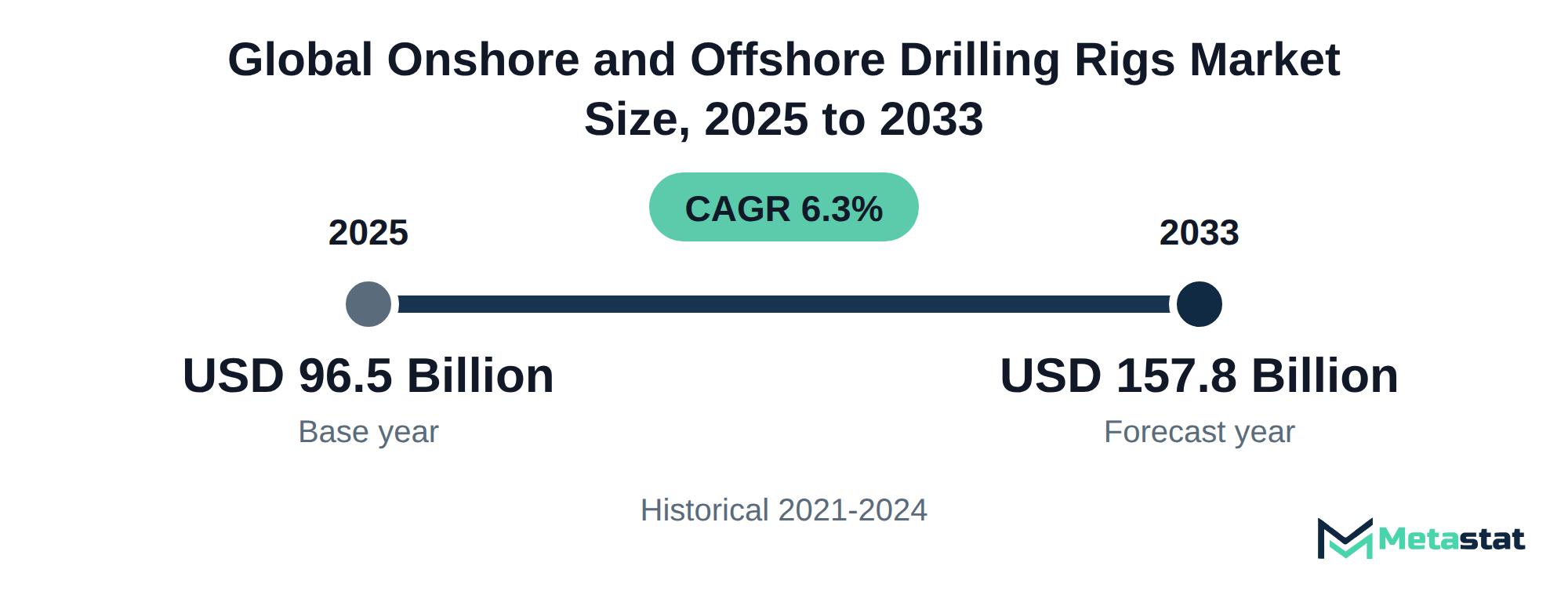
Market Valuation: Valued at $96.5 Billion in 2025, projected to reach $157.8 Billion by 2033 at a 6.3% CAGR.
Dominant Segment: The Onshore segment leads the market, driven by strong demand for land-based operations and established infrastructure, reflecting a preference for cost-effective solutions.
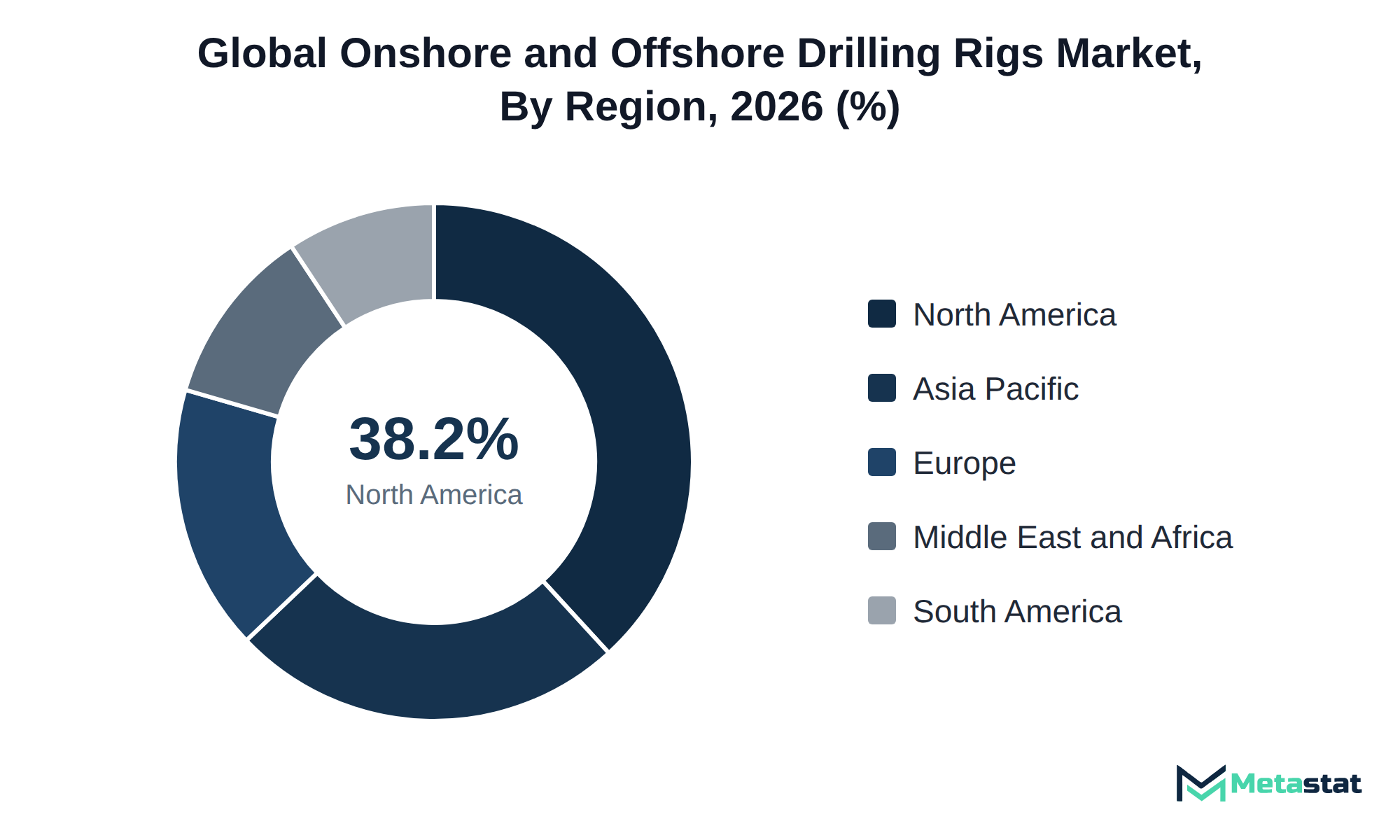
Geographic Lead: North America is the leading region, projected to hold a 38.2% market share in 2025, with the US anticipated to maintain its dominance due to advanced technology and significant exploration investments.
What's Inside: The report provides a comprehensive analysis of the Onshore and Offshore Drilling Rigs market, covering competitive landscape, segment performance, and a detailed forecast from 2026 to 2033.
Emerging Opportunities: The market is witnessing significant growth in hybrid power systems, projected to reach USD 37.2 billion by 2033, driven by sustainability initiatives and regulatory pressures.
Technological Advancements: Innovations in automated and high-specification rigs are reshaping operational efficiency, with the offshore segment expected to grow at a CAGR of 6.9% through 2033.
Choose Your License
Global Onshore and Offshore Drilling Rigs Market
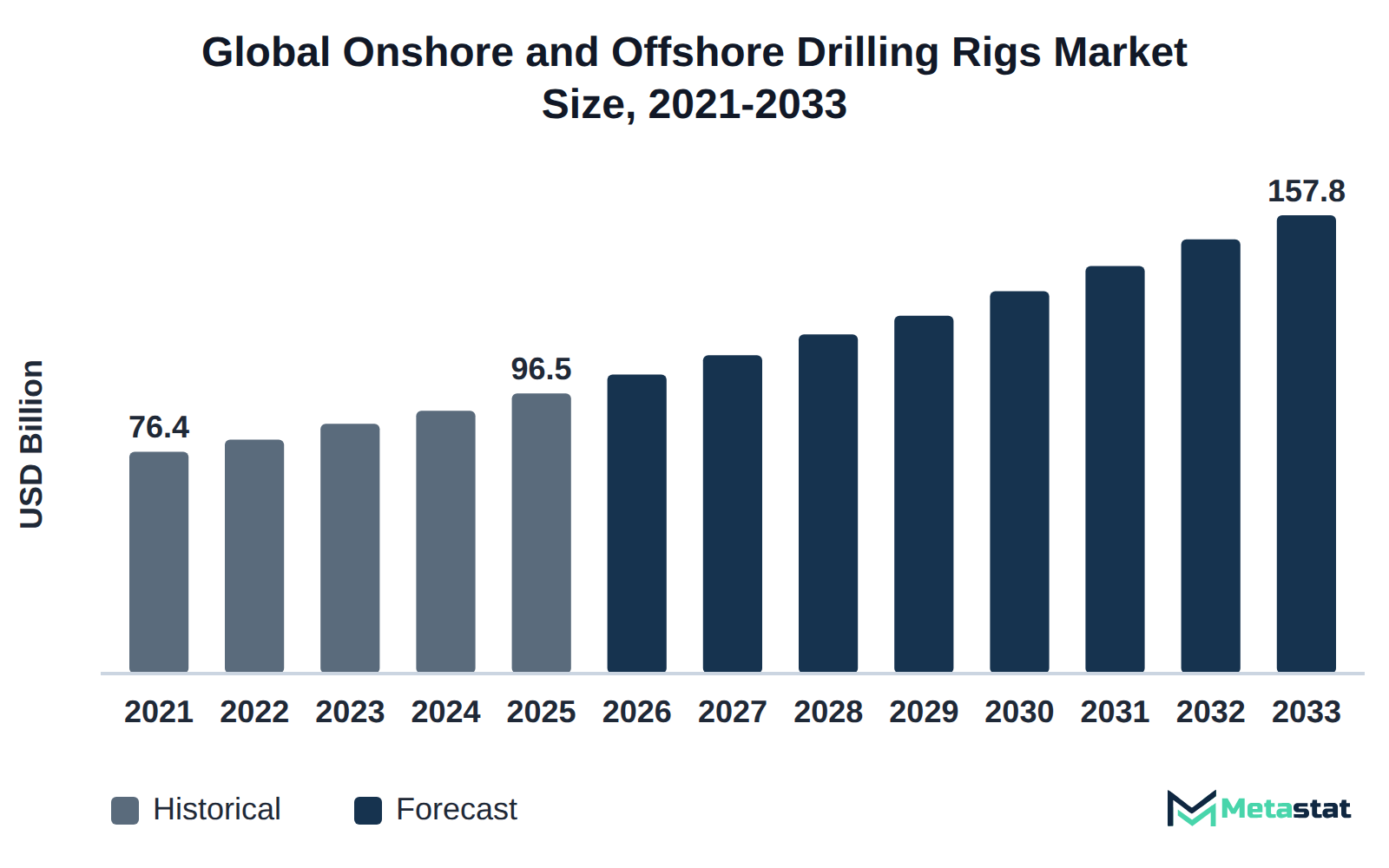
The global Onshore and Offshore Drilling Rigs market was valued at USD 96.5 billion in 2025 and is projected to reach USD 157.8 billion by 2033, growing at a CAGR of 6.3% over the forecast period.
The Onshore and Offshore Drilling Rigs market encompasses various technologies and equipment essential for extracting oil and gas resources from both land and marine environments. Buyers invest in this market due to increasing global energy demands and the necessity for efficient and reliable drilling solutions. Key buyers include energy companies, governmental agencies, and independent contractors, all seeking advanced rigs that enhance operational efficiency and reduce exploration risks.
Several factors propel growth in the drilling rigs market, with technological advancements as a primary driver. Innovations in drilling techniques, such as directional drilling, and in equipment significantly enhance productivity and safety, leading to greater investment. Among the segments, Onshore deployment represents the most substantial value, reflecting the preference for land-based operations. North America holds a 38.2% share of the market in 2025, with the US leading in 2026.
Regional dynamics further influence the market, with Asia Pacific showing significant growth potential, fueled by rising energy consumption and increased exploration activities. The region's share in the market highlights its importance as a key player in future developments. Overall, the market is set for steady expansion, driven by strong demand for energy resources and technological progress.
The Onshore and Offshore Drilling Rigs market includes equipment and technologies used to extract hydrocarbons by several methods. Investment in this market arises from the necessity to secure reliable energy sources and meet the growing global energy demand. Companies across sectors prioritize these rigs for their efficiency and their ability to access both conventional and unconventional reserves.
Growth within the market is driven by several factors, including the increasing focus on energy security and the rising demand for oil and gas. The Onshore segment holds the most substantial value due to its widespread application and established infrastructure. North America is projected to account for 38.2% of the market in 2025, with the United States maintaining a significant presence in 2026. This region's advanced technological framework and investment in exploration activities significantly contribute to its market dominance.
The transition towards more sustainable drilling practices is another factor influencing market growth. Companies are adopting hybrid and dual-fuel power systems to enhance efficiency while reducing environmental impact. This shift aligns with global sustainability goals and creates opportunities for innovation in drilling technologies, giving companies a competitive edge in the market.
High-specification rigs are transforming deepwater drilling investment, enhancing operational efficiency and maximizing resource extraction. This shift towards technologically advanced rigs reflects the industry's commitment to meeting rising energy demands while minimizing environmental impact. In the Onshore and Offshore Drilling Rigs market, investment in high-specification offshore rigs is projected to reach USD 54.4 billion by 2033, driven by advancements in drilling technology and an increased focus on sustainable practices.
The enhanced capabilities of high-specification rigs facilitate operations in challenging offshore environments, allowing drilling companies to explore previously inaccessible reserves. These rigs are equipped with advanced power systems, including AC electric and hybrid solutions, which improve energy efficiency and reduce operational costs. With a compound annual growth rate (CAGR) of 6.9%, this segment demonstrates strong potential for growth, attracting significant capital investment from major players in the market.
This technological shift changes the competitive landscape and encourages innovation within the industry. Companies that invest in high-specification rigs position themselves strategically to capture emerging opportunities in deepwater drilling. As the market evolves, high-specification rigs will shape future offshore drilling investment, driving growth and profitability in the sector.
The shift towards automated land rigs significantly enhances operational efficiency for multi-well pad drilling. These advanced rigs streamline the drilling process by reducing manual intervention, resulting in faster setup times and increased productivity. In 2026, the segment for land rigs is anticipated to reach USD 68.8 billion, with a projected growth to USD 103.2 billion by 2033, reflecting a compound annual growth rate (CAGR) of 6%. This growth indicates rising adoption among operators seeking to optimize drilling costs and improve overall project economics.
Contract models for automated land rigs often incorporate performance-based pricing. Buyers negotiate terms that link payment structures to the efficiency and effectiveness of the rig operations, aligning the interests of both operators and service providers. Such agreements motivate suppliers to ensure maximum uptime and operational performance, thereby enhancing value for customers. The competitive nature of the Onshore and Offshore Drilling Rigs market compels suppliers to innovate and offer attractive contract terms, driving greater investment in automated technologies.
These developments lead to a notable transformation in how buyers approach project financing and budgeting. With improved multi-well pad economics, operators allocate resources more effectively, supporting increased investment in new projects. The rising adoption of automated solutions reflects the financial benefits recognized by companies upgrading their operations.
Modernization of the jack-up rig fleet significantly impacts shallow-water contract demand, with operators seeking advanced technologies to improve efficiency and reduce operational costs. The shift toward modern jack-up rigs aligns with anticipated growth in shallow-water drilling activities, driven by increasing investments in offshore projects. In 2033, the jack-up rig segment is projected to reach a total value of USD 21.5 billion, emphasizing rising interest among buyers in deploying updated equipment for enhanced performance.
Operators in the offshore oil and gas sector prioritize reliability and efficiency, making the modernization of jack-up fleets a strategic focus. The emphasis on upgrading capabilities allows firms to meet specific demands of shallow-water drilling while ensuring compliance with environmental standards. Investment in advanced jack-up rigs, featuring state-of-the-art technologies, leads to improved operational effectiveness, ultimately translating into cost savings and increased production rates.
With the ongoing modernization trend in the jack-up fleet, the Onshore and Offshore Drilling Rigs market is positioned for substantial growth. Enhanced rig capabilities will create greater contract opportunities in shallow-water environments, establishing a competitive edge for operators committed to modernization. This investment strategy enhances overall market stability and contributes to the long-term profitability of drilling operations.
The integration of automated operations into the Onshore and Offshore Drilling Rigs market transforms efficiency and operational safety. A significant advancement in this area includes the shift towards automated drilling systems, which enhance precision and reduce human error. Rotary steerable systems are a related example of precision-focused drilling technology. In the Offshore segment, the adoption of automated systems has led to a projected compound annual growth rate (CAGR) of 6.9% through 2033, indicating strong market interest in this technology.
Automation allows for real-time data collection and analysis, streamlining decision-making processes in drilling operations. By applying advanced sensors and machine learning algorithms, operators optimize drilling parameters, reducing downtime and operational costs. This technological shift results in improved productivity and the ability to operate in challenging environments with limited human intervention.
The ongoing transition towards hybrid and dual-fuel power systems supports this automation trend. Companies investing in automated drilling technologies position themselves strategically within the competitive landscape of the Onshore and Offshore Drilling Rigs market. The benefits of automation, including enhanced efficiency and reduced costs, contribute to a more sustainable and profitable operational model, ultimately driving market growth.
Investment in oil and gas exploration activities by energy companies drives demand for drilling rigs. Rising global energy consumption pushes operators to seek new sources of hydrocarbons, resulting in increased spending on drilling services. This shift towards exploration has led to higher volumes of work for drilling rig suppliers, consequently driving up prices. The Onshore and Offshore Drilling Rigs market benefits from this growing exploration demand, which reflects a broader industry trend towards securing energy resources in both established and emerging markets. In 2026, demand for onshore drilling is expected to reach USD 68.7 billion, increasing to USD 103.4 billion by 2033, indicating significant growth potential due to heightened exploration activities.
Innovations in drilling rig technology enhance operational efficiency across various segments of the Onshore and Offshore Drilling Rigs market. The integration of advanced technologies, including automated systems and real-time data analytics, streamlines drilling operations while reducing downtime. This shift attracts oil and gas companies seeking to optimize resource extraction and lower operational costs. Demand for high-performance rigs, equipped with state-of-the-art technology, supports this trend. Rig manufacturers increasingly focus on developing equipment that meets these advanced specifications, reflecting the industry's growing emphasis on efficiency and productivity. The adoption of these technologies allows operators to complete drilling projects more rapidly and economically, reinforcing the competitive edge in a challenging market environment. Enhanced rig performance enables companies to respond to fluctuations in demand, contributing to a more resilient market landscape. Increased operational efficiency positions the market for sustained growth, with stakeholders seeking innovative solutions to address evolving energy requirements.
Increasing costs of materials and labor pose significant challenges for buyers in the Onshore and Offshore Drilling Rigs market. Energy companies face budget constraints, resulting in slower uptake of new drilling rigs and technologies. Limited capital investment leads to smaller orders and delayed replacement of aging assets. Rising costs impact both onshore and offshore segments, causing operators to prioritize cost-effective solutions. Consequently, the market experiences a constrained growth trajectory, with firms seeking to optimize expenditures while maintaining operational efficiency. The focus on capital preservation restricts the adoption of advanced technologies, which could otherwise enhance productivity and resource extraction. Under these pressures, stakeholders manage financial constraints to sustain their operations and meet demand effectively.
Suppliers in the Onshore and Offshore Drilling Rigs market face significant margin pressure stemming from fluctuating operational costs, particularly related to labor and equipment maintenance. Rising energy prices and increased competition further exacerbate these challenges, leading to tighter profit margins. Energy companies frequently seek cost-cutting measures, including streamlining operations and optimizing resource allocation, to maintain profitability during these pressures. In response, suppliers invest in advanced technologies and innovative solutions that enhance efficiency and reduce costs, including automated drilling systems and predictive maintenance tools. Such advancements allow for improved performance and reduced downtime, facilitating a more competitive position in the market. By adopting these strategies, suppliers can handle market fluctuations, sustain profitability, and support continued investment in drilling infrastructure and technology development.
The Onshore and Offshore Drilling Rigs market presents significant growth potential in hybrid power systems, reflecting an industry shift towards sustainability and efficiency. Hybrid and dual-fuel systems offer a solution to rising operational costs and increasing environmental regulations, appealing to operators seeking to enhance energy efficiency while reducing emissions. With a projected value of USD 37.2 billion by 2033, this segment is growing at a compound annual growth rate of 6.5%. The growing demand for cleaner energy sources drives operators to adopt these advanced power systems, particularly in regions with stringent environmental standards. This trend addresses operational challenges within the market and positions companies strategically to capture emerging opportunities in the changing energy environment. Investment in hybrid power systems is expected to yield competitive advantages, enabling firms to meet customer expectations and drive market growth.
The Global Onshore and Offshore Drilling Rigs market is segmented based on Deployment, Rig Type, Power System, and Well Purpose.
The onshore segment is valued at USD 68.7 billion in 2026 and is projected to reach USD 103.4 billion by 2033, at a CAGR of 6% during the forecast period. This segment primarily serves oil and gas companies focused on resource extraction from land-based operations. Strong demand for onshore drilling stems from increasing exploration and production activities in various regions, particularly in North America. Operators seek technologies that enhance efficiency and reduce operational costs. In contrast, the offshore segment experiences a higher growth rate of 6.9%, driven by different market dynamics and investment strategies. The onshore segment typically features lower capital and operational costs compared to offshore counterparts, making it appealing for operators looking to optimize expenditure while maximizing output. This varied cost structure influences purchasing decisions of buyers across the segments, reflecting different priorities and operational frameworks.
Offshore drilling is projected to reach USD 54.4 billion by 2033, at a CAGR of 6.9% during the forecast period. This segment focuses on the extraction of hydrocarbons from beneath the seabed, employing specialized rigs that operate in various marine environments. Offshore drilling is primarily used by oil and gas companies seeking to access untapped resources in deeper waters. Rising global energy demand, along with technological advancements, drives investment in offshore operations. Compared to onshore deployment, this segment exhibits higher capital expenditure due to extensive infrastructure requirements and operational complexities. Offshore support vessels are one element of that infrastructure. The offshore segment differentiates itself from onshore drilling through its growth rate, with a faster CAGR of 6.9%, reflecting the industry's shift towards more challenging extraction environments, coupled with the need for advanced technological solutions.
Land rigs support onshore drilling operations and serve energy companies focused on oil and gas extraction in terrestrial environments. The increasing demand for efficient drilling solutions drives investments in this segment. In particular, the shift towards multi-well pad drilling enhances operational efficiencies, boosting demand for land rigs. This segment exhibits a stable growth trajectory compared to offshore alternatives, which experience a CAGR of 6.9%. Significant cost considerations associated with land rig operations differ from those of offshore drilling, impacting investment decisions among buyers. The market anticipates continued advancements in technology, contributing to lower operational costs and improved productivity for land rigs.
Jack-up Rigs segment is estimated to reach USD 21.5 billion by 2033, at a CAGR of 6% during the forecast period. Jack-up rigs serve primarily in shallow-water drilling operations, used by major oil and gas companies for exploration and production activities. Growth in this segment is driven by increasing demand for effective and efficient drilling solutions in offshore environments. Compared to the other rig types, including semi-submersible rigs and drillships, jack-up rigs offer a unique advantage in cost-effectiveness and ease of deployment. The segment's projected growth aligns with the overall positive trajectory of the market, reflecting a shift toward advanced technologies that enhance drilling operations.
The Semi-Submersible Rigs segment is expected to reach USD 12.1 billion by 2033. These rigs serve primarily for offshore drilling, utilized by companies engaged in deepwater exploration and production activities. The increased focus on oil and gas extraction from deeper reservoirs drives demand, reflected in the anticipated growth rate of 8.5% CAGR. This segment distinguishes itself from others in the Rig Type category due to its specialized design, enabling operations in challenging marine environments. Technological advancements in semi-submersible rigs enhance stability and operational efficiency, attracting energy companies seeking to optimize drilling outcomes. Compared to jack-up rigs and land rigs, semi-submersible rigs command higher operational costs but provide the necessary capabilities for accessing untapped resources in deeper waters, presenting a unique value proposition for operators in the market.
Drillships segment is projected to grow at a CAGR of 8.5% during the forecast period. These specialized vessels serve in deepwater drilling operations, providing significant versatility and operational efficiency. Energy companies employ drillships for exploration and development drilling in deep offshore locations, necessitating advanced technology and robust design. The increasing demand for hydrocarbons, particularly from offshore fields, drives growth in this segment. Drillships generally command higher prices compared to other rig types due to their specialized capabilities. In contrast to Land Rigs, which are projected to grow at a CAGR of 6%, the drillship segment's faster growth reflects strong interest from operators seeking to capitalize on untapped offshore resources. The market for drillships is expected to expand significantly as energy firms enhance exploratory efforts to meet global energy demands.
Platform Rigs function as versatile offshore drilling solutions, suitable for a variety of applications in the oil and gas industry. Predominantly used for exploratory and development drilling, these rigs serve major oil companies and independent operators aiming to maximize resource extraction efficiently. Key drivers for this segment include increasing global energy demand and advancements in drilling technology, which enhance the operational capabilities and safety of Platform Rigs. Compared to other rig types, including Jack-up Rigs and Semi-Submersible Rigs, Platform Rigs exhibit distinct advantages in stability and adaptability during challenging marine conditions, appealing to operators focused on high-performance drilling operations. The growth trajectory of this segment aligns with broader trends in the Onshore and Offshore Drilling Rigs market, emphasizing the importance of efficient resource recovery and technological integration.
Submersible rigs and tender rigs serve specialized functions in offshore drilling, addressing unique operational challenges. The use of these rigs appeals primarily to companies engaged in deepwater exploration and production, where traditional rigs face limitations. A growing demand for deeper and more complex drilling operations drives the adoption of these rig types, providing enhanced stability and the ability to work in extreme maritime conditions. This segment faces distinct challenges compared to other rig types, particularly regarding operational costs and technological advancements. While the market sees shifts toward electric and hybrid power systems, these rigs often rely on conventional power methods, impacting their operational efficiency and cost-effectiveness. In contrast to other rig types, which experience more uniform growth, submersible and tender rigs cater to niche markets, illustrating an evolving demand landscape within the broader Onshore and Offshore Drilling Rigs market.
Mechanical and SCR segment is valued at USD 24.5 billion in 2026 and is projected to reach USD 29 billion by 2033, at a CAGR of 2.4% during the forecast period. This segment primarily serves operators focused on land drilling operations, using mechanical and SCR (Silicon Controlled Rectifier) systems for power generation and distribution. Demand for this segment sees upward momentum driven by the need for reliable and efficient drilling operations. While growth at a CAGR of 2.4% indicates a slower pace compared to other power systems like AC Electric, which is expected to grow at a CAGR of 6.5%, Mechanical and SCR systems remain crucial due to their established presence in various projects. Buyers prefer these systems for their cost-effectiveness and operational familiarity, differentiating them from newer technologies within the market.
AC Electric segment is estimated to reach USD 78 billion by 2033, at a CAGR of 6.5% during the forecast period. This segment primarily powers drilling operations for both onshore and offshore applications, widely used by energy companies seeking efficient and reliable power sources. The increasing focus on energy efficiency and reduced emissions drives strong demand for AC Electric systems. Compared to other power systems, including Mechanical and SCR, which are projected to grow at a slower CAGR of 2.4%, the AC Electric segment demonstrates a stronger growth trajectory. Its adoption among operators aligns with ongoing technological advancements, leading to enhanced operational efficiency and lower long-term costs. The AC Electric segment stands out due to its capacity to support the growing requirements for sustainable energy solutions in the market.
Hybrid and Dual-Fuel segment is expected to reach USD 37.2 billion by 2033. This segment represents an innovative solution for drilling operations, primarily used by offshore and onshore drilling companies seeking to enhance fuel efficiency and reduce emissions. The transition towards hybrid power systems reflects a broader industry trend towards sustainability, driven by stricter environmental regulations and rising operational costs. This segment exhibits higher growth potential compared to traditional power systems, with its adoption projected to accelerate due to increasing investments in cleaner technologies. The CAGR for Hybrid and Dual-Fuel is significant, positioning it favorably within the market. While other power system segments experience steady growth, the shift towards more sustainable options, including hybrid systems, positions this segment uniquely, appealing to environmentally conscious operators aiming for enhanced operational efficiency.
Grid-Connected Electric segment is projected to grow at a CAGR of 7.2% during the forecast period. This power system configuration enhances the efficiency of drilling operations by providing a stable and reliable energy source, particularly for offshore rigs. Operators focusing on sustainability adopt this technology to reduce environmental impact while maintaining performance. The increasing emphasis on regulatory compliance regarding emissions drives interest in grid-connected systems, positioning them favorably among environmentally conscious energy companies. Unlike the Mechanical and SCR segment, which is expected to achieve a CAGR of 2.4%, the Grid-Connected Electric segment exhibits a stronger growth trajectory, reflecting heightened demand for cleaner energy solutions. The market shift towards electrification indicates a competitive advantage for operators applying this technology in their drilling operations, ensuring alignment with industry standards and consumer expectations.
Battery-Assisted Systems represent an innovative approach in drilling operations, focusing on integrating battery technology with traditional power systems. Battery energy management systems coordinate how stored power is used alongside primary generation. This segment finds application primarily in enhancing efficiency and reducing emissions for drilling contractors in the oil and gas sector. Rapid technological advancements drive the adoption of these systems, particularly among environmentally conscious firms seeking to minimize their carbon footprints. This sub-segment differs from conventional power systems by offering potential cost savings in fuel consumption and operational flexibility. The competitive landscape in the market pushes for ongoing development and integration of battery-assisted solutions, making it an attractive choice for companies aiming to modernize their drilling capabilities while adhering to stringent regulatory standards and sustainability goals.
Development Drilling segment is valued at USD 43.1 billion in 2026 and is projected to reach USD 64.1 billion by 2033, at a CAGR of 5.8% during the forecast period. This segment supports the oil and gas sector by facilitating the extraction of hydrocarbons from wells after their initial completion. Major players in the market include oil companies and drilling contractors engaged in resource development. Key drivers for this segment include increasing energy demand and ongoing investments in exploration and production activities. Compared to Exploration Drilling, which has a projected CAGR of 7.3%, Development Drilling exhibits slower growth yet commands a substantial share of investment, reflecting its essential role in sustaining production levels. The market's dynamics are influenced by technological advancements and cost efficiencies, which enhance operational productivity.
Exploration Drilling segment is estimated to reach USD 45.2 billion by 2033, at a CAGR of 7.3% during the forecast period. This segment focuses on locating new oil and gas reserves, primarily used by exploration and production companies seeking to discover untapped resources. Increasing global energy demand drives investment in exploration activities, pushing companies to expand their drilling efforts. Investment in advanced technologies, including seismic imaging and data analytics, enhances the efficiency and accuracy of exploration drilling, further supporting growth. Geophysical services support the seismic work behind this investment. Compared to other sub-segments, Exploration Drilling exhibits a higher CAGR, reflecting the urgency in resource acquisition and the desire for sustainable energy development. The market dynamics encourage significant financial commitments, particularly in regions rich in oil and gas deposits, underpinning the segment's growth trajectory.
Appraisal Drilling segment is expected to reach USD 18.1 billion by 2033. This segment serves the purpose of evaluating the potential of oil and gas reserves through exploratory drilling activities. Major players in this area include oil and gas companies focused on developing resource sites and optimizing production strategies. A significant demand driver for Appraisal Drilling involves the increasing need for accurate assessments of hydrocarbon reservoirs, driven by rising energy demands across various industries. Compared to other sub-segments, Appraisal Drilling experiences a growth rate of 7.3%, which is relatively high compared to other drilling purposes. This segment typically enjoys higher pricing due to the specialized nature of appraisal activities, which require advanced technology and skilled personnel for effective execution. Such factors position it distinctly within the Onshore and Offshore Drilling Rigs market.
Production and Workover segment is projected to grow at a CAGR of 6.4% during the forecast period. This segment addresses the requirements for maintaining and enhancing the productivity of existing wells and encompasses drilling activities focused on resource extraction. Well stimulation is one method used to raise output from existing wells. Primarily used by oil and gas operators, this segment is essential for sustaining output levels, particularly in mature fields. The increasing emphasis on optimizing production efficiency drives demand for advanced technologies, resulting in an expected rise in investments. Compared to other segments, including Exploration Drilling, the Production and Workover segment shows steadier growth patterns, reflecting the ongoing operational focus on established wells rather than new site development. In contrast, Exploration Drilling experiences a higher CAGR of 7.3%, highlighting the differing investment priorities across the Onshore and Offshore Drilling Rigs market. The consistent operational nature of Production and Workover provides stability in revenue generation amid fluctuating market conditions.
Geothermal and Carbon Storage encompasses drilling operations focused on the extraction of geothermal energy and the storage of carbon dioxide. This segment attracts investment from energy companies and environmental organizations aiming to enhance sustainable energy solutions and combat climate change. The adoption of these technologies is influenced by increasing global emphasis on reducing carbon emissions. Regulatory frameworks and incentives supporting renewable energy development drive interest in geothermal applications, while concerns regarding carbon footprint encourage investment in carbon storage initiatives. Compared to other well purpose segments, this segment experiences unique demand dynamics, appealing to environmentally conscious buyers who prioritize sustainability over traditional oil and gas extraction methods. The focus on renewable energy and carbon management distinguishes this segment within the Onshore and Offshore Drilling Rigs market.
Based on geography, the Global Onshore and Offshore Drilling Rigs market is divided into North America, Europe, Asia-Pacific, South America, Middle East, and Africa.
The market in North America benefits from a strong demand driven primarily by the oil and gas sectors in the United States, Canada, and Mexico. Regulatory frameworks supporting energy independence and sustainable practices enhance the attractiveness of investments in drilling technologies. Infrastructure improvements in areas including pipeline transportation and processing facilities facilitate the efficient movement of resources. By the end of 2033, North America is projected to reach USD 56.6 billion, reflecting ongoing investment in both onshore and offshore capabilities. The competitive landscape features key players focused on innovative solutions tailored to regional needs. Continuous advancements in drilling technologies will likely influence operational efficiency and productivity in the coming years.
Germany, France, the UK, Italy, Spain, and Russia actively contribute to the growth of the Onshore and Offshore Drilling Rigs market, driven by increased investments in energy exploration and production. The region's focus on transitioning to more sustainable energy sources enhances demand for advanced drilling technologies. Infrastructure developments, particularly in offshore wind and oil reserves, emphasize the necessity for modern drilling rigs. Regulations surrounding emissions and environmental impact, particularly in the North Sea, influence operational practices and technology adoption. By 2025, Europe is projected to hold a 16.6% share of the global market, reflecting substantial engagement in both onshore and offshore projects. The market is expected to thrive due to strategic initiatives aimed at improving energy security and efficiency across these nations.
Asia-Pacific holds a 24.7% share of the Onshore and Offshore Drilling Rigs market in 2025. The demand for drilling rigs in this region primarily stems from the oil and gas industry, driven by ongoing exploration and production activities. Key players in this market include China, Japan, and India, where investments in energy infrastructure and technological advancements play a critical role. The presence of large offshore reserves in countries like China and Japan leads to increased drilling operations. Governmental initiatives aimed at boosting energy self-sufficiency enhance demand for drilling rigs, especially in India and Southeast Asia. The region's focus on sustainable practices and modernization of drilling technologies supports future growth prospects in the market.
In South America, the Onshore and Offshore Drilling Rigs market shows potential, primarily driven by Brazil and Argentina's ongoing investments in oil and gas exploration. These countries focus on enhancing their production capacities and infrastructure, aiming to increase output in response to rising global energy demands. The market benefits from several government initiatives and regulatory frameworks designed to support energy independence and investment. The region holds a 9.3% share of the global market in 2025, with prospects for growth in the coming years. Infrastructure improvements in transportation and logistics facilitate access to remote drilling sites, further enhancing operational efficiency. The market's evolution aligns with broader trends in sustainable energy practices and the demand for advanced drilling technologies.
The Middle East and Africa region plays a critical role in the Onshore and Offshore Drilling Rigs market, driven by significant oil and gas activities in countries including Saudi Arabia and the UAE. Investments in advanced drilling technologies and infrastructure improvements enhance operational efficiency and attract major players within the sector. In South Africa, facilitating regulations and growing exploration initiatives further support market growth. By 2025, this region accounts for 11.2% of the global market share, reflecting its importance in the overall market. The competitive environment features both local and international companies, each contributing to the development of innovative solutions and services tailored to meet regional demands. The market outlook is positive, with an increasing focus on sustainable practices and adaptation to changing energy needs.
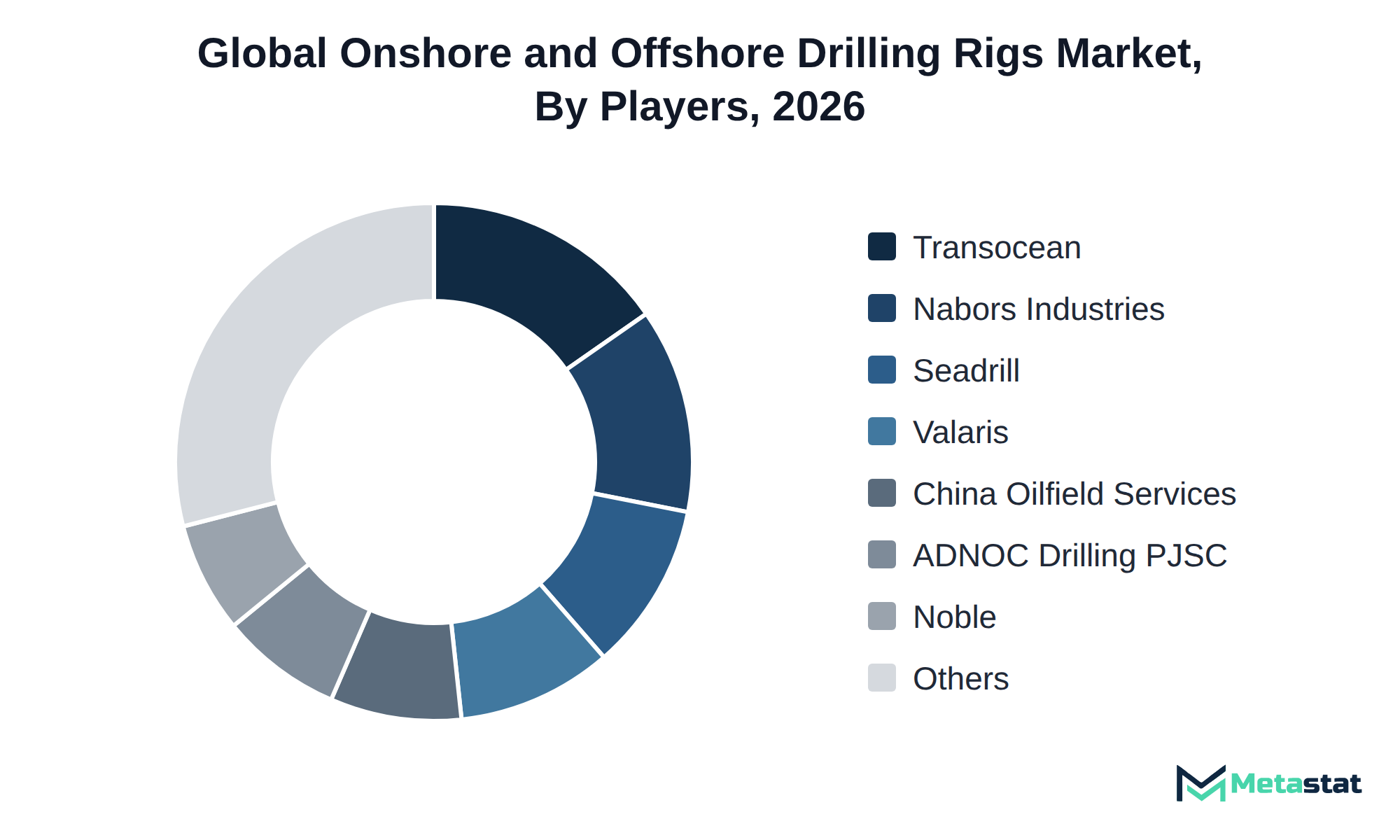
The Onshore and Offshore Drilling Rigs market features a diverse competitive landscape. Companies differentiate themselves through various strategies, including pricing, service quality, certification, and customization to meet specific buyer requirements. Buyers prioritize cost-effectiveness, reliability, and support services when selecting suppliers.
Nabors Industries Ltd. and Transocean Ltd. focus on innovation and advanced drilling technologies, enhancing operational efficiency and reducing downtime. Saipem S.p.A. and Seadrill Limited emphasize extensive service offerings, providing robust solutions tailored to complex drilling projects.
Valaris Limited and Noble Corporation plc concentrate on maintaining a competitive price structure while ensuring high safety standards and compliance with industry regulations. China Oilfield Services Limited and ADNOC Drilling Company PJSC use their regional expertise and local market knowledge to secure contracts and build long-term relationships with buyers.
Achieving this growth relies on several developments within the Onshore and Offshore Drilling Rigs market. First, the increase in demand for onshore rigs, projected to grow from USD 68.7 billion in 2026 to USD 103.4 billion by 2033, significantly drives overall market expansion. This growth is attributed to rising energy needs and the resurgence of oil exploration activities, particularly in North America and Asia Pacific.
Advancements in AC electric power systems are expected to contribute significantly, with a forecasted value of USD 78 billion by 2033. The shift towards more efficient and environmentally friendly drilling technologies aligns with regulatory pressures and industry trends focusing on sustainability. However, potential slowdowns could arise from geopolitical tensions impacting energy prices and investment, particularly in regions like the Middle East and Africa, where operational risks are prevalent. An unfavorable economic environment could hinder growth, reducing overall market confidence in the coming years.
By Deployment: Onshore, Offshore
By Rig Type: Land Rigs, Jack-up Rigs, Semi-Submersible Rigs, Drillships, Platform Rigs, Others (Tender Rigs, Submersible Rigs)
By Power System: Mechanical and SCR, AC Electric, Hybrid and Dual-Fuel, Grid-Connected Electric, Others (Battery-Assisted Systems)
By Well Purpose: Development Drilling, Exploration Drilling, Appraisal Drilling, Production and Workover, Geothermal and Carbon Storage
The report strategically identifies and profiles the key market players and analyses their core competencies in each sub-segment of the Onshore and Offshore Drilling Rigs market.
Report Attributes | Details |
Study Period | 2021-2033 |
Base Year | 2025 |
Estimated Year | 2026 |
Forecast Period | 2026-2033 |
Historical Period | 2021-2025 |
Growth Rate | CAGR 6.3% from 2026 to 2033 |
Revenue Unit | USD billion |
Segmentation | By Deployment, Rig Type, Power System, Well Purpose, and Region |
By Region | North America (By Deployment, Rig Type, Power System, Well Purpose, and Country)
|
Europe (By Deployment, Rig Type, Power System, Well Purpose, and Country)
| |
Asia Pacific (By Deployment, Rig Type, Power System, Well Purpose, and Country)
| |
South America (By Deployment, Rig Type, Power System, Well Purpose, and Country)
| |
Middle East and Africa (By Deployment, Rig Type, Power System, Well Purpose, and Country)
|
Find answers to common questions about this report
The Onshore and Offshore Drilling Rigs market size was valued at USD 96.5 billion in 2025.
The market is projected to grow at a CAGR of 6.3% during the forecast period from 2026 to 2033.
The North America Onshore and Offshore Drilling Rigs market size is estimated to reach USD 56.6 billion by 2033.
Onshore drilling rigs lead the market with a projected value of USD 103.4 billion in 2033, compared to offshore drilling rigs, which are expected to reach USD 54.4 billion in the same year.
Investment in exploration activities by energy companies drives demand for drilling rigs. Innovations in drilling rig technology enhance operational efficiency across various segments of the market.
North America holds the dominant share of the Onshore and Offshore Drilling Rigs market, with a projected value of USD 56.6 billion in 2033, representing 38.2 percent of the total market.
Increasing costs of materials and labor pose significant challenges for buyers, leading to slower uptake of new drilling rigs and technologies. Budget constraints result in smaller orders and delayed replacement of aging assets, impacting growth trajectories in the market.
Factors favoring adoption in the Onshore and Offshore Drilling Rigs market include rising demand for hybrid power systems driven by sustainability and efficiency trends. This segment is projected to reach USD 37.2 billion by 2033, reflecting a compound annual growth rate of 6.5 percent, as operators seek to enhance energy efficiency and reduce emissions.
The Onshore and Offshore Drilling Rigs market is estimated to reach a valuation of USD 157.8 billion by 2033.
Key players operating in the Onshore and Offshore Drilling Rigs market include Nabors Industries Ltd., Transocean Ltd., Saipem S.p.A., Seadrill Limited, Valaris Limited, Noble Corporation plc, and China Oilfield Services Limited.
The analysts below cover Energy and Power research at Metastat Insights.
LEAD ANALYST
Utkarsh Khirodkar is a Lead Market Research Analyst at MetaStat Insight, specializing in market intelligence, technology sector assessments, and competitive strategy.

PRINCIPAL CONSULTANT - ENTERPRISE AI & EMERGING TECHNOLOGIES
Banking & Finance · Electronics and Semiconductor · Energy and Power · Healthcare IT · Information & Technology · Professional Services
Vijay Gunti is a Principal Consultant at MetaStat Insight, bringing over two decades of experience across enterprise digital transformation, technology strategy, and intelligent systems.

ENERGY & INFRASTRUCTURE INDUSTRY CONSULTANT
Automotive and Transportation · Electronics and Semiconductor · Energy and Power · Machinery & Equipment
Saurabh Vasant Ganvir consults for Energy & Infrastructure Industry at MetaStat Insight, specializing in renewable energy, solar EPC, and electric vehicle (EV) infrastructure markets.
Floating offshore wind feasibility relies heavily on specialized installation vessel availability and port crane limits, which most broad renewable energy forecasts ignore. The report delivered a thorough analysis of dry dock capacity, mooring chain supply constraints, and raw material pricing trends for deepwater anchor installations. It served as a solid independent sanity check for our offshore project capital expenditure assumptions.
Assessing commercial microgrid software adoption requires looking past top-level installation numbers and examining utility interconnection queues. The research provided verifiable data on average permitting timelines, tariff structures, and battery storage integration costs across regional utility territories. That grounded perspective was valuable for our team when building five-year demand projections for industrial microgrid controllers.
Ambulatory surgical centers have very different purchasing cycles for robotic-assisted surgery platforms than major hospital networks. The MetaStat Insight study focused squarely on capital expenditure depreciation, procedural reimbursement pathways, and surgeon training overhead. That operational clarity made it much simpler to validate multi-year procedure growth forecasts against actual ambulatory center adoption patterns.
Explore related market intelligence reports worth reading alongside this one.
Starting from
$2950
Starting from
$2950