
LEAD ANALYST
Utkarsh Khirodkar is a Lead Market Research Analyst at MetaStat Insight, specializing in market intelligence, technology sector assessments, and competitive strategy.

Global Oil and Gas Exploration and Production Market Size, Share, By E&P Lifecycle Stage (Exploration, Appraisal & Resource Evaluation, Field Development, Production Operations), By Operating Environment (Onshore, Shallow-Water Offshore, Deepwater Offshore, Ultra-Deepwater Offshore), By Operator Type (National Oil Companies, International Oil Companies, Independent E&P Companies and Integrated Oil and Gas Companies), Industry Analysis, Growth, Trends, and Forecast, 2026-2033
Report ID
MSI-5107
Published
August, 2026
Updated
Pages
281 Pages
Format
Historical
Base year
Forecast
Forecast period
Report Details
Choose Your License
Global Oil and Gas Exploration and Production Market
The global Oil and Gas Exploration and Production market was valued at USD 4,842.2 billion in 2025 and is projected to reach USD 7,662.1 billion by 2033, growing at a CAGR of 5.9% over the forecast period.
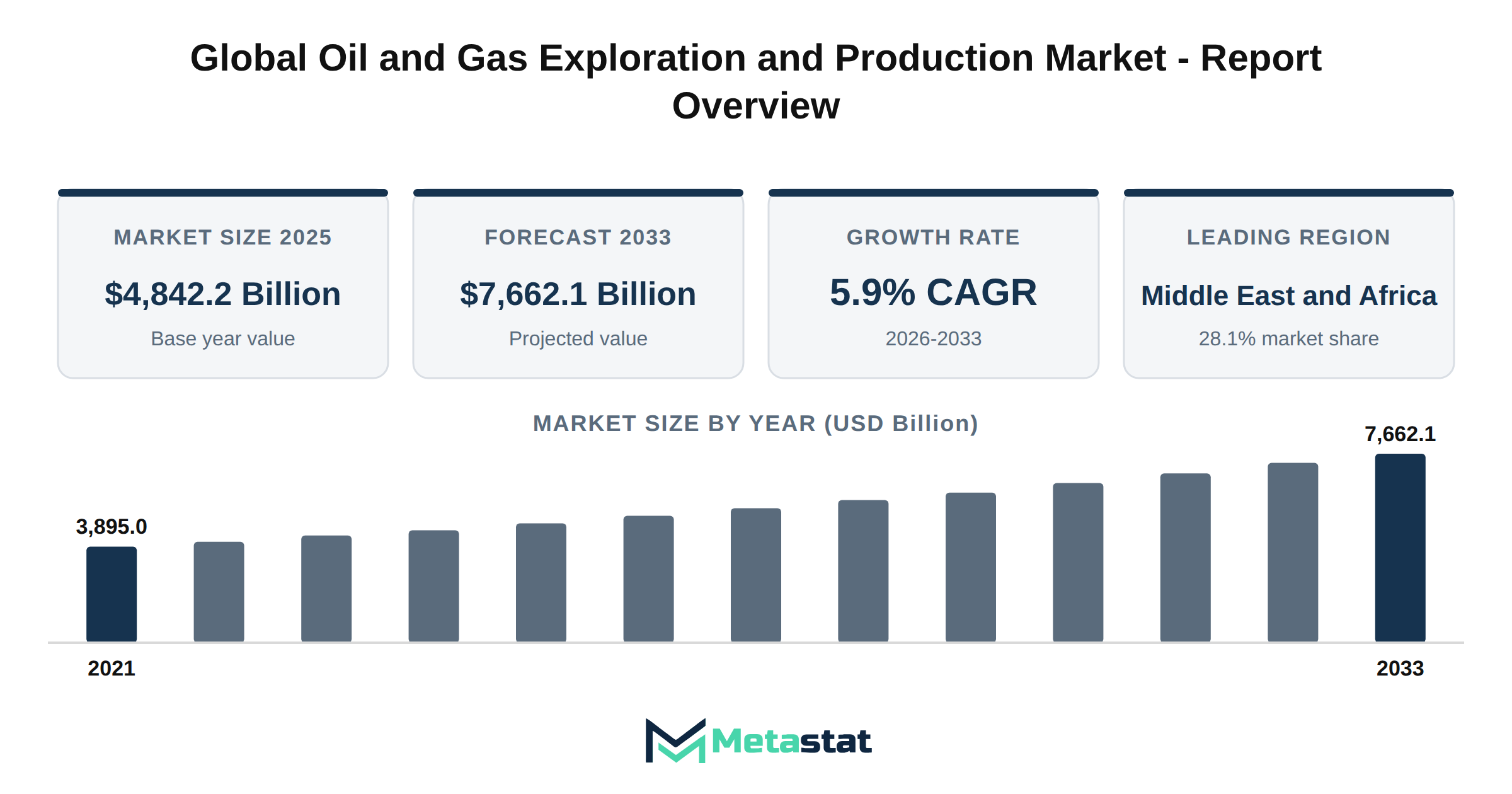
The Oil and Gas Exploration and Production market, valued at USD 4,842.2 billion in 2025, is projected to experience substantial growth, reaching USD 7,662.1 billion by 2033. This growth represents a compound annual growth rate (CAGR) of 5.9%, reflecting increasing global energy demands and advancements in extraction technologies. Historical data indicates a steady rise in market value, with figures starting from USD 3,895 billion in 2021 and gradually increasing to USD 4,556.5 billion in 2024.
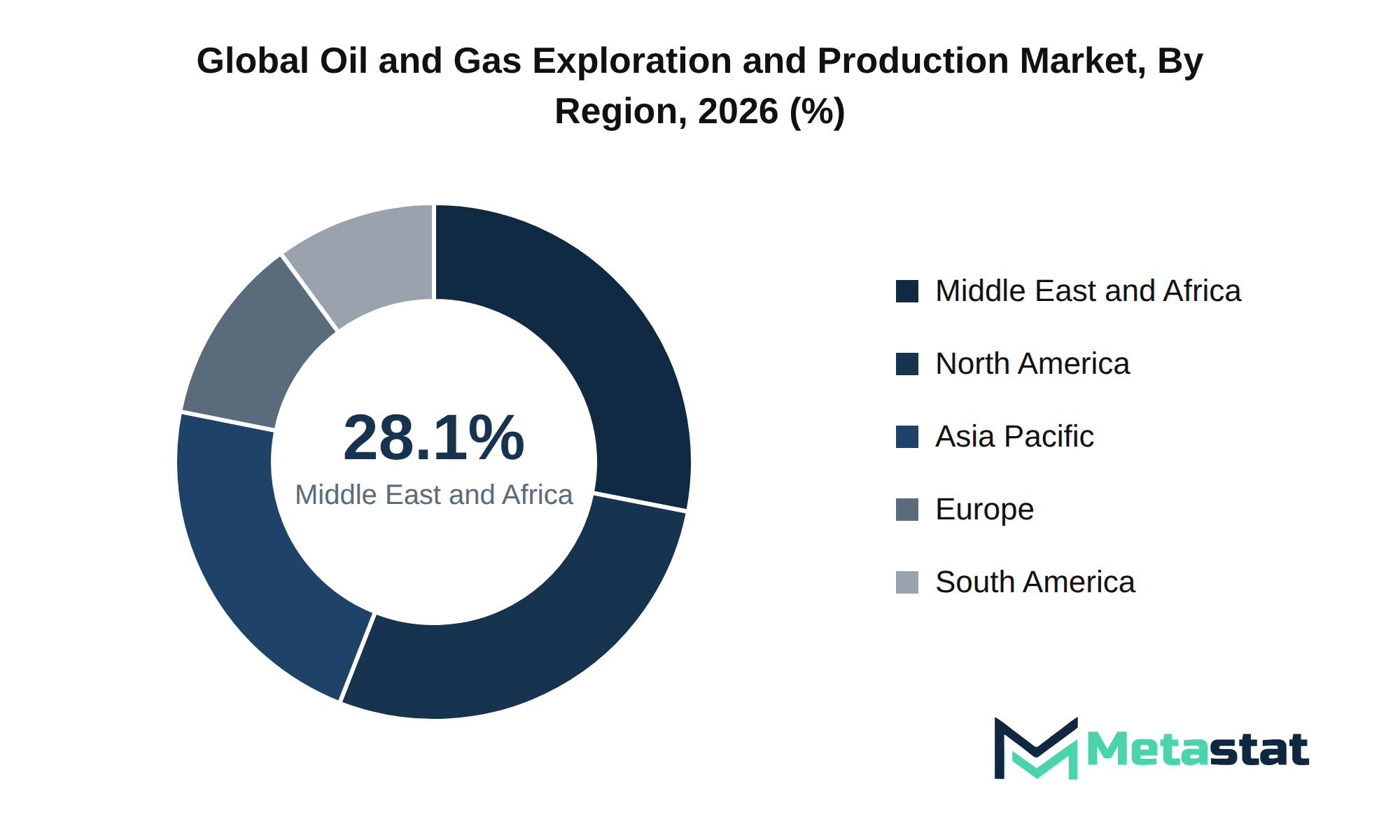
Regional distribution shows North America contributing 27.9% to the market share, followed by Asia Pacific at 22.2%, and the Middle East and Africa at 28.1%. Growth in these regions is driven by the expanding energy sector and significant investments in infrastructure development. North America is projected to reach a market value of USD 2,055.7 billion by 2033, with a CAGR of 5.9% during the forecast period.
Segment analysis highlights various stages within the exploration and production lifecycle. Exploration, valued at USD 833.1 billion in 2026, is anticipated to grow to USD 1,291.8 billion by 2033, achieving a CAGR of 6.5%. Appraisal and Resource Evaluation is projected to reach USD 796.9 billion, while Field Development expects a value of USD 2,199.8 billion by 2033. Production Operations is expected to sustain growth, reflecting continuous operational optimization within the market.
The operating environment further divides into Onshore, Shallow-Water Offshore, Deepwater Offshore, and Ultra-Deepwater Offshore segments. Onshore activities will expand from USD 3,214 billion in 2026 to USD 4,647.8 billion by 2033, marking a CAGR of 5.4%. The Shallow-Water Offshore segment is projected to reach USD 1,068.1 billion, with a CAGR of 5.8% throughout the forecast period.
The Oil and Gas Exploration and Production market is influenced by several critical factors that shape its growth and operational dynamics. Regulatory compliance and standards play a significant role in determining operational frameworks, particularly in regions with stringent environmental regulations. Companies increasingly adopt sustainable practices to align with these regulations, impacting capital allocation and investment strategies.
Disruption within the market arises from technological advancements and shifting consumer preferences. Research and development trajectories focus on next-generation innovations that enhance efficiency and reduce environmental impacts. These innovations contribute to the sector's sustainable transformation, addressing decarbonization targets and promoting circular economy dynamics.
The supply chain landscape remains complex, requiring companies to navigate logistics architecture and sourcing strategies effectively. Market fragmentation presents challenges and opportunities, with mergers and acquisitions reshaping competitive landscapes. Companies seek to strengthen their value chains through strategic partnerships, enhancing procurement processes to meet evolving customer journey dynamics.
Capital allocation strategies reflect a growing emphasis on infrastructure investments, positioning firms to capitalize on emerging opportunities. The future strategic outlook for the Oil and Gas Exploration and Production market indicates a focus on innovation and sustainability, driving high-value recommendations for corporate imperatives. These developments signal a dynamic environment where adaptability and forward-thinking strategies are essential for success.
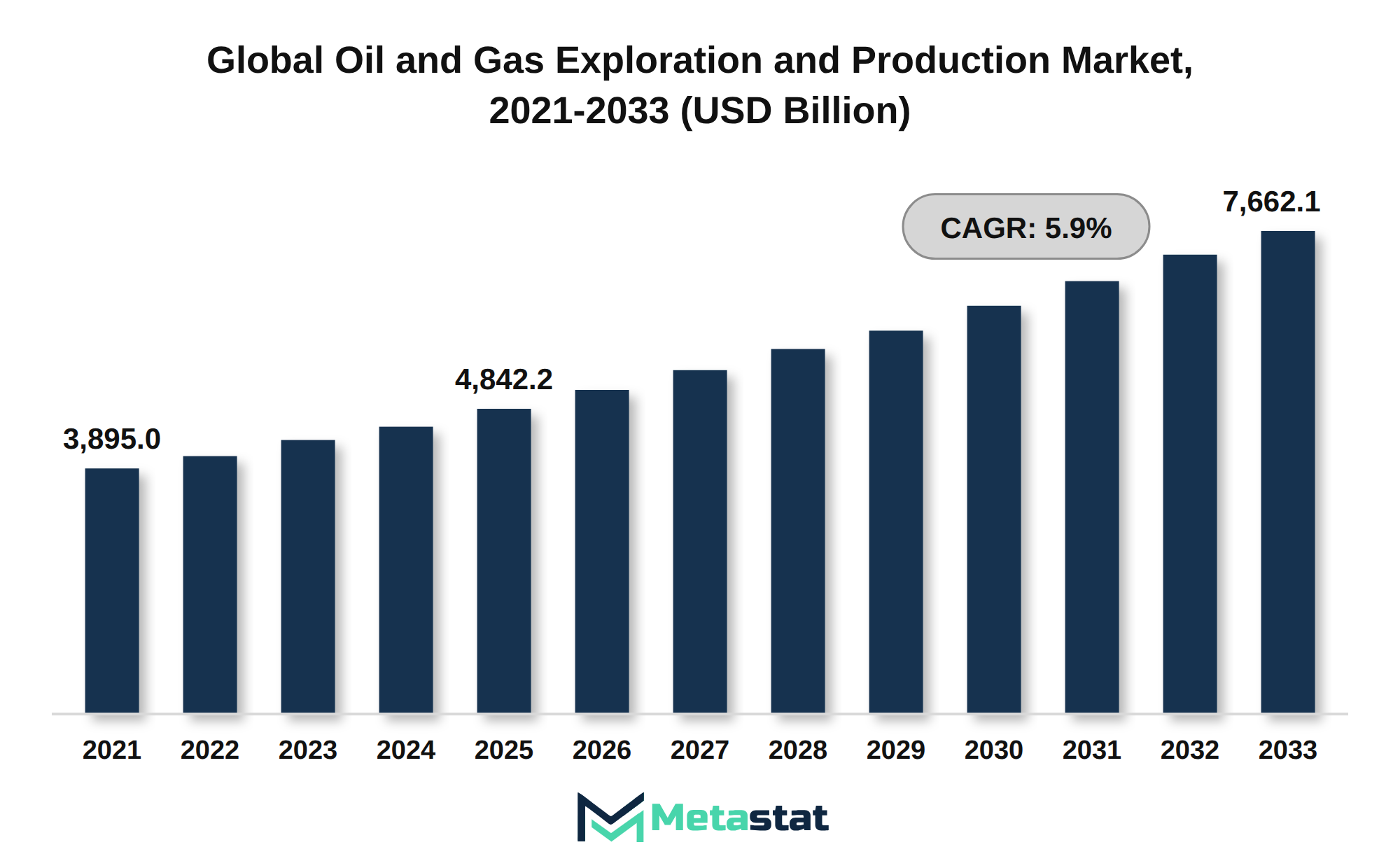
Capital investment environments significantly influence the Oil and Gas Exploration and Production market. Factors including interest rates, GDP growth, and public-private spending power create a conducive atmosphere for investment. Increased venture funding facilitates exploration and production activities, directly impacting market expansion.
Growth in GDP correlates with heightened energy demand, prompting operators to seek new projects and enhance production capabilities. A favorable interest rate environment encourages borrowing, allowing companies to finance new ventures and technological upgrades. Investors focus on the energy sector, considering it a vital area for long-term returns.
The market experiences heightened activity in regions rich in resources, driven by nations prioritizing energy independence and sustainability. This commitment leads to investment in infrastructure development and asset modernization, further enhancing operational capacities. Adoption of advanced technologies improves efficiency and productivity, enabling companies to optimize processes in line with market demands.
The evolving landscape presents opportunities for growth in the Oil and Gas Exploration and Production market. Companies embracing innovation and sustainability initiatives attract investments, streamline operations, and respond effectively to changing consumer behaviors and demographic patterns.
The Oil and Gas Exploration and Production market experiences a significant shift toward sustainability, where companies prioritize operational efficiency alongside environmental, social, and governance (ESG) considerations. This emphasis stems from changing consumer behaviors and heightened awareness regarding climate change, compelling operators to adopt practices that minimize their carbon footprint while enhancing productivity. The integration of sustainability in business strategies results in not only reduced operational costs but improved public perception and compliance with emerging regulations.
Investment in advanced technologies facilitates the transition toward sustainable practices. Automation, artificial intelligence, and software adoption streamline processes, leading to increased efficiency and minimized waste. These technological advancements enable organizations to optimize labor, enhance safety measures, and reduce overhead costs while meeting stakeholder expectations. The Oil and Gas Exploration and Production market anticipates steady growth driven by firms increasingly aligning their operations with sustainability goals.
The focus on sustainability encourages innovation-led product and service diversification. Companies invest in research and development to create cleaner energy solutions and improve resource management. By embracing these initiatives, firms position themselves favorably in a competitive landscape, catering to a broader range of customer needs while driving revenue growth. The growing emphasis on sustainability will shape the future trajectory of the market, enhancing resilience and long-term viability.
Regulatory hurdles present significant challenges for the Oil and Gas Exploration and Production market, particularly in the context of compliance with environmental standards and safety mandates. Stricter regulations often necessitate substantial investments in technology and processes to ensure adherence, which burdens operators financially and operationally. These compliance hurdles create delays in project timelines, affecting overall productivity and increasing costs associated with legal consultations, modifications to operations, and potential fines for non-compliance.
Macroeconomic headwinds, characterized by inflationary pressures and supply chain disruptions, complicate the landscape for operators. Escalating prices for materials and services hinder profitability, while geopolitical instability disrupts supply chains, making it difficult to source essential components. Resource scarcity, particularly for key inputs, adds another layer of complexity, driving up costs and affecting project viability. This combination of factors leads to decreased investor confidence, impacting new capital inflow into the market.
High capital investment requirements continue to pose barriers for both established players and new entrants within the Oil and Gas Exploration and Production market. Companies often encounter difficulties in securing funding, leading to project delays or cancellations. Technological obsolescence and competition from alternative energy sources pressure traditional oil and gas operators to innovate continuously, often stretching their financial capabilities even further. This ongoing challenge affects the overall growth potential of the market.
On the operational front, talent gaps and skilled labor deficiencies restrict the market's ability to adapt to new technologies and processes. A shortage of qualified personnel complicates the execution of complex projects and limits operational efficiency. Rising workforce overhead, driven by both labor shortages and wage inflation, exacerbates the challenges faced by operators, affecting their overall competitiveness in the market.
Geopolitical fragmentation significantly impacts the Oil and Gas Exploration and Production market by creating uncertainty in investment decisions and operational feasibility. Political tensions across major oil-producing regions influence supply chains, leading to increased tariffs and trade deficits that raise costs for operators. The fragmented political landscape complicates regulatory compliance, demanding heightened legal and operational oversight that burdens companies both financially and strategically.
Technological disruptions challenge the market's growth trajectory, driven by companies grappling with integrating advanced technologies within existing frameworks. The complexity of research and development efforts, combined with interoperability issues among new and legacy systems, strains resources and delays project timelines. These challenges restrict firms from fully capitalizing on innovations that could enhance operational efficiency and reduce costs.
Logistics disruptions, stemming from geopolitical tensions and supply chain instability, result in unpredictable lead times and volatile input costs. Such fluctuations create margin pressures that force operators to re-evaluate pricing strategies, affecting competitiveness in the market. The cumulative effect of these factors necessitates a strategic approach to talent retention and workforce skill development, ensuring companies maintain operational capabilities during ongoing industry challenges.
Environmental lifecycle footprints and decarbonization mandates add layers of complexity to operational strategies. Companies face increasing pressure to align with sustainability demands while managing costs associated with retrofitting existing infrastructure to meet tightening global regulatory standards. These compliance overheads divert resources away from core operational activities, limiting growth potential in the Oil and Gas Exploration and Production market.
Increasing regional demands for energy drive investments in the Oil and Gas Exploration and Production market. Rapid urbanization and population growth in developing regions, particularly in Asia Pacific and the Middle East, contribute to heightened energy requirements. These regions prioritize infrastructure modernization to support their expanding economies, creating opportunities for operators to establish and enhance exploration and production capabilities.
Technological disruptions, including advancements in drilling techniques and resource extraction methods, enhance operational efficiency. Digital transformation initiatives facilitate improved data analytics, predictive maintenance, and real-time monitoring, allowing firms to optimize resource utilization and reduce operational costs. The adoption of next-generation innovations, including automation and artificial intelligence, influences productivity and operational effectiveness.
Environmental, social, and governance considerations increasingly shape investment strategies in the market. Firms align with sustainability imperatives by pursuing eco-friendly practices and green transformations. This alignment attracts new investments while addressing regulatory shift adaptations that focus on environmental compliance. Growing consumer preferences for sustainable energy sources compel companies to diversify their product offerings and explore niche applications that align with evolving market demands.
Strategic consolidation through cross-industry mergers and acquisitions enhances market competitiveness. By combining resources and expertise, firms strengthen their market presence while pursuing downstream market diversification. This trend results in expanded portfolios and the integration of complementary technologies, facilitating comprehensive solutions for energy production and distribution.
Shifts in buying behaviors, driven by digital procurement and evolving commercial models, create a more competitive landscape. Firms adapt to these changes by enhancing their value propositions and optimizing supply chain localization strategies. This approach supports strategic buffering and import substitution frameworks, reducing reliance on traditional supply chains and increasing operational resilience.
Asset life-cycle extensions, maintenance upgrades, and retrofitting dynamics present additional growth opportunities. Investment in existing infrastructure enhances efficiency and maximizes operational yield. Value-chain optimization initiatives streamline processes and reduce costs. These strategies collectively position the Oil and Gas Exploration and Production market for sustained growth in the coming years.
The Global Oil and Gas Exploration and Production market is segmented based on E&P Lifecycle Stage, Operating Environment, and Operator Type.
Valued at USD 833.1 billion in 2026, the Exploration segment is projected to reach USD 1,291.8 billion by 2033, recording a CAGR of 6.5% during the forecast period. Several factors drive the growth of this segment, including increasing global energy demands, which compel companies to invest in new exploration activities. Enhanced technological advancements play a crucial role, enabling more efficient and cost-effective exploration methods. These developments attract significant capital investments, further stimulating the market.
Strategic opportunities emerge from shifts in end-use dynamics, where a growing focus on sustainable energy sources influences exploration activities. Operators, particularly National Oil Companies and Independent E&P Companies, actively invest in exploration to diversify their portfolios and reduce reliance on traditional fossil fuels. Evolving regulatory compliance standards push companies toward adopting innovative exploration techniques that minimize environmental impacts while maximizing output.
Supply chain resilience remains essential during fluctuating demand patterns and geopolitical uncertainties. Companies face pressures related to pricing volatility, necessitating effective risk management strategies to maintain margins. Overall, the Exploration segment within the Oil and Gas Exploration and Production market exhibits strong growth potential, driven by technological maturation, strategic investments, and evolving market dynamics.
Significant growth in the Appraisal & Resource Evaluation segment reflects the ongoing emphasis on resource validation and risk mitigation within the Oil and Gas Exploration and Production market. This focus emerges from heightened demands for accurate geological assessments and optimized resource allocation. Increased investment in advanced technologies, including seismic imaging and data analytics, supports the growth of this segment, enhancing exploration success rates and minimizing operational risks.
The Appraisal & Resource Evaluation segment is projected to reach USD 796.9 billion by 2033, growing at a CAGR of 6.3% during the forecast period. Stricter regulatory compliance standards and environmental considerations further drive the need for thorough resource evaluation, influencing the operational strategies of companies involved in exploration and production. By investing in innovative technologies, firms enhance their ability to assess reserves, which subsequently boosts overall market confidence and promotes further investment.
The resulting demand for precise appraisal enhances downstream applications across various industry sectors, increasing the overall efficiency of extraction processes. While the market evolves, strategic collaborations between firms and technology providers will play a crucial role in advancing appraisal methodologies and ensuring compliance with regulatory frameworks.
Investment in the Field Development segment of the Oil and Gas Exploration and Production market reflects significant growth potential. This segment is expected to reach USD 2,199.8 billion by 2033, driven by the increasing demand for efficient resource extraction methods. The push for advanced technologies in drilling and production processes enhances operational efficiencies, reducing time and costs associated with new projects.
Market dynamics indicate that national oil companies and integrated oil and gas companies prioritize field development initiatives to capitalize on existing reserves while exploring new opportunities. The growing emphasis on sustainability and regulatory compliance standards in several regions further drives investments in innovative technologies that streamline operations and minimize environmental impact. This trend contributes to a competitive environment where firms continuously upgrade their capabilities to maintain market relevance.
Several factors, including geopolitical stability and fluctuating energy prices, influence capital investment decisions within the segment. The relationship between supply chain resilience and raw material sourcing remains critical, because companies navigate potential disruptions while ensuring the availability of essential resources. Strategic opportunity windows arise from the necessity to adapt to changing market conditions, enabling firms to enhance their market share by leveraging next-generation upgrades and product evolution.
The Field Development segment within the Oil and Gas Exploration and Production market anticipates sustained growth, driven by technological advancements and the need for efficient resource management. Operators focusing on enhancing their field development strategies will likely see improved operational efficiency and increased competitiveness in the evolving market.
Investment in production operations continues to reflect a robust trajectory influenced by several demand drivers, including increasing global energy consumption and the need for enhanced production efficiency. The evolving technological landscape promotes the adoption of advanced methodologies and equipment, increasing productivity within this segment of the Oil and Gas Exploration and Production market. Companies focus on sustainable practices and reducing their carbon footprint, aligning with global environmental standards and regulations.
The Production Operations segment is projected to grow at a CAGR of 5.3% during the forecast period. This forecast stems from the commitment to extensive capital investments aimed at optimizing existing infrastructure and implementing next-generation technologies. Enhanced operational efficiencies derived from innovative production technologies lead to cost reductions and improved margins, positively impacting overall financial performance in the market.
Shifts in end-use dynamics, particularly within emerging economies, drive significant demand for oil and gas, further stimulating growth in production operations. The necessity for reliable energy sources compels operators to increase production capacities, ensuring alignment with rapidly changing consumption patterns. This strategic focus on maximizing output without compromising environmental or operational standards contributes to the evolution and expansion of the Oil and Gas Exploration and Production market.
Valued at USD 3,214 billion in 2026, the Onshore segment is projected to reach USD 4,647.8 billion by 2033, at a CAGR of 5.4% during the forecast period. Growth in the Onshore segment is driven by increasing domestic production, technological advancements in extraction techniques, and the optimization of existing resources. Strong demand for oil and gas persists across various industries, particularly in regions with significant onshore reserves, including North America and the Middle East.
Technological maturation enhances efficiency and reduces operational costs within the Onshore sector. Innovations in drilling techniques, including horizontal drilling and hydraulic fracturing, lead to improved recovery rates and expanded access to previously untapped reserves. These advancements contribute to the overall growth trajectory of the Oil and Gas Exploration and Production market.
End-use dynamics reflect a shift towards sustainable practices, with many operators prioritizing environmental compliance and efficiency. Regulatory compliance standards increasingly dictate operational practices, influencing investment decisions and driving the adoption of advanced technologies. The capital investment outlook remains positive, with ongoing projects and initiatives aimed at boosting production capabilities and meeting rising energy demands.
Supply chain resilience becomes a focal point in managing risks associated with raw material sourcing and logistics. The Onshore segment faces challenges related to pricing volatility and margin pressures. Companies explore strategic opportunity windows for cost optimization and enhanced competitiveness. With a strong emphasis on innovation and sustainability, the Onshore sector presents significant prospects for growth within the broader Oil and Gas Exploration and Production market.
Growth in the Shallow-Water Offshore segment relies on steady demand for hydrocarbons, driven by recovering global economies and rising energy needs. This segment is estimated to reach USD 1,068.1 billion by 2033, at a CAGR of 5.8% during the forecast period. Factors including technological advancements in drilling techniques and production efficiencies contribute significantly to segment expansion. Adoption of digital technologies and automation enhances operational efficiency while minimizing costs, appealing to operators focused on maximizing margins.
Regulatory compliance standards play a vital role in shaping operational practices within the segment. Strict environmental regulations influence investment decisions and operational methodologies adopted by companies. Consequently, firms prioritize sustainable practices, aligning with global energy transition goals. The move towards more environmentally friendly operations stimulates further innovation and development in the industry.
Logistics vulnerabilities and supply chain resilience remain critical aspects. Disruptions in logistics lead to increased costs, impacting overall profitability. Continuous investment in infrastructure and technology supports suppliers in mitigating these risks, ensuring reliable production and delivery. The strategic opportunity windows for investments in the segment appear robust, driven by companies seeking to enhance their capabilities in response to evolving market demands.
Technological maturation facilitates the development of more efficient extraction and production processes, positioning the Shallow-Water Offshore segment favorably within the Oil and Gas Exploration and Production market. Increased focus on next-generation upgrades and product evolution reflects the industry's adaptability and responsiveness to global energy dynamics.
Investment in the Deepwater Offshore segment aligns with ongoing advancements in drilling and extraction technologies. Enhanced capabilities enable operators to tap into previously inaccessible resources, driving exploration efforts in deeper waters. The strategic focus on expanding production in this segment arises from increasing global energy demands and the necessity for diversified supply sources. Operators face complex challenges in mitigating risks associated with deepwater operations, including harsh environmental conditions and high operational costs. Ongoing technological maturation equips firms with tools to improve efficiency and reduce costs associated with drilling and production activities.
The Deepwater Offshore segment is projected to reach USD 1,323.2 billion by 2033. This growth reflects sustained capital investment committed to exploiting deepwater resources, supported by international collaborations that enhance operational capacity. Demand for energy continues to rise, prompting companies to pursue innovative solutions that address the unique challenges of deepwater exploration. While investment flows into the market, the segment's expansion contributes significantly to overall market growth, aligning with the evolving landscape of the Oil and Gas Exploration and Production market.
Growth in the Ultra-Deepwater Offshore segment reflects strong demand for energy resources located in challenging environments. Operators seek to explore and develop resources in deeper waters, driven by advancements in drilling technologies and the need for energy security. Investment in this segment aligns with increasing global energy consumption patterns and the transition towards cleaner energy sources, which emphasizes natural gas production from deepwater reserves.
The Ultra-Deepwater Offshore segment is projected to grow at a CAGR of 7.6% during the forecast period. The increasing focus on enhancing extraction technologies allows for more efficient and sustainable operations, further attracting investments in this segment. The financial implications for companies operating in this area include significant capital expenditure, which translates into higher operational costs but the potential for greater output and profit margins in the long term.
Market dynamics show a shift towards deeper and more complex offshore projects to meet rising energy demands. The regulatory framework continues to evolve, emphasizing environmental compliance and safety standards, impacting operational practices and investment strategies. Companies that adapt to these regulations while maximizing operational efficiency are positioned to thrive in the competitive landscape of the Oil and Gas Exploration and Production market.
National Oil Companies play a significant role in the Oil and Gas Exploration and Production market, influencing overall market dynamics. Valued at USD 1,801.4 billion in 2026, this segment is projected to reach USD 2,688.6 billion by 2033, growing at a CAGR of 5.9% during the forecast period. The sector's growth is driven by increasing global energy demands, particularly in emerging markets, necessitating substantial investments in exploration and production capabilities.
Adoption of advanced technologies remains a crucial factor in the evolution of National Oil Companies. The integration of next-generation exploration techniques enhances operational efficiency and reduces costs, thereby driving profitability. Regulatory compliance standards and environmental policies influence operational strategies, pushing companies towards sustainable practices while optimizing resource utilization.
Market expansion catalysts include enhanced collaboration between National Oil Companies and international counterparts, facilitating knowledge transfer and technological advancements. Strategic opportunities arise from shifting consumption patterns and the growing emphasis on energy security. The market environment presents challenges including pricing volatility and margin pressures that require continuous adaptation.
Investments in technological maturation and product evolution are essential to maintain competitiveness. Raw material sourcing strategies and supply chain resilience become increasingly important to mitigate potential disruptions. The outlook for National Oil Companies within the Oil and Gas Exploration and Production market highlights significant opportunities for growth and innovation in the coming years.
Investment from International Oil Companies aligns with increasing global energy demands and a shift towards sustainable practices. The segment is projected to reach USD 1,481.1 billion by 2033, growing at a CAGR of 5.5% during the forecast period. A combination of technological advancements and evolving regulatory frameworks enhances operational efficiency, enabling these companies to optimize production strategies and reduce environmental impacts. Positive market sentiment surrounding energy diversification promotes capital investments aimed at transitioning towards cleaner energy sources while maintaining traditional oil and gas operations. This balance between conventional extraction methods and innovative energy solutions positions the segment to capture significant market share within the Oil and Gas Exploration and Production market.
Independent E&P Companies represent a vital segment in the Oil and Gas Exploration and Production market, driven by the increasing focus on oil and gas reserves and the need for efficient extraction technologies. The segment is valued at USD 1,478 billion by 2033, reflecting a significant growth trajectory. Primary demand drivers include the rising global energy consumption and the push for energy security among nations, which creates opportunities for independent players to expand their operations.
Adoption of innovative drilling techniques and advanced technologies enhances the efficiency of exploration and production processes, enabling Independent E&P Companies to optimize their operations while reducing costs. Segment expansion catalysts include potential partnerships and collaborations with technology firms, which help access advanced solutions for resource evaluation and extraction.
Technological maturation influences the market dynamics, allowing smaller players to compete with larger firms by leveraging next-gen upgrades. Product evolution aligns with the increasing trend of sustainability, where independent companies adopt greener technologies to meet regulatory compliance standards. This shift not only addresses environmental concerns but enhances the market's appeal to investors prioritizing corporate responsibility.
End-use dynamics are evolving, driven by changes in consumption patterns and increasing demand for oil and gas in emerging economies. Regulatory compliance standards impose additional costs, but adherence ensures long-term viability and market acceptance. Independent E&P Companies navigate these challenges by refining their cost structures, addressing pricing volatility, and managing margin pressures effectively.
Strategic opportunity windows arise from the increasing accessibility of previously untapped resources, allowing independent operators to position themselves favorably in the market. The capital investment outlook remains positive, driven by growing market confidence and technological advancements that attract investment toward Independent E&P Companies, further enhancing their role in the Oil and Gas Exploration and Production market.
Growth in the Integrated Oil and Gas Companies segment is projected to occur at a CAGR of 5.5% during the forecast period. Significant investments in technology and operational efficiency drive this expansion, driven by these companies pursuing next-generation upgrades to enhance productivity and reduce operational costs. Key players focus on digital transformation and automation, allowing for improved decision-making and resource management.
Technological maturation in exploration and production methods contributes to this segment's growth. The adoption of advanced technologies including artificial intelligence and machine learning facilitates enhanced data analysis and predictive maintenance. These improvements optimize resource allocation and minimize downtime, thus supporting profitability within the market.
Integrated Oil and Gas Companies are increasingly aware of regulatory compliance standards that govern environmental impacts and operational safety. Adhering to these standards not only mitigates risks associated with penalties but aligns these companies with global sustainability goals, which enhances their market reputation. This compliance is essential for maintaining competitive positioning in the Oil and Gas Exploration and Production market.
Market dynamics indicate a shift in consumption patterns, with an increasing emphasis on cleaner energy sources influencing strategic planning. Integrated companies are diversifying their portfolios to include renewable energy projects, aligning with global trends toward sustainability. This transition indicates robust market adaptability and an eye toward long-term growth opportunities.
Cost structures within this segment remain under pressure from fluctuating oil prices and geopolitical tensions. Despite these challenges, Integrated Oil and Gas Companies continue to leverage economies of scale and operational efficiencies to sustain margins. This flexibility positions them to navigate a volatile market while capitalizing on emerging opportunities.
Investment outlooks for Integrated Oil and Gas Companies remain positive, with a focus on expanding exploration capabilities and enhancing production efficiency. The overall market is expected to benefit from these developments, reinforcing the critical role that this segment plays within the broader Oil and Gas Exploration and Production market.
Valued at USD 5,142.2 billion in 2026, this segment is projected to reach USD 7,662.1 billion by 2033, at a CAGR of 5.9% during the forecast period. Growth in this segment is driven by increasing demand for oil and gas alongside advancements in extraction technologies. Companies operating in the Oil and Gas Exploration and Production market focus on enhancing operational efficiencies and reducing costs, ensuring competitiveness in a fluctuating market environment. Technological maturation and next-generation upgrades significantly influence the segment, with firms investing in innovative solutions to optimize production processes. The ongoing pursuit of sustainable practices shapes investment strategies and operational priorities, aligning with global environmental standards and regulations. Demand dynamics reflect shifts in consumption patterns, emphasizing cleaner energy solutions alongside traditional oil and gas operations. This evolving landscape presents strategic opportunity windows for sector players, particularly those capable of adapting to the regulatory landscape and enhancing supply chain resilience.
Based on geography, the Global Oil and Gas Exploration and Production market is divided into North America, Europe, Asia-Pacific, South America, Middle East, and Africa.
North America exhibits a robust market environment for the Oil and Gas Exploration and Production market. The projected market size reaches USD 2,055.7 billion by the end of 2033, with a CAGR of 5.9% during the forecast period. Significant players including National Oil Companies fuel growth through substantial investments in exploration and production activities.
The share of the North American market in 2025 stands at 27.9%, reflecting the region's critical role in the global oil and gas landscape. The United States, Canada, and Mexico contribute significantly to this share, driven by advancements in technology and infrastructure modernization. Localized procurement dynamics enhance competitive advantages for domestic market participants.
Cultural nuances and regional B2B buying behaviors influence market strategies, allowing participants to tailor offerings effectively. Resource availability and the resilience of the energy grid support operational efficiency and enhance production capabilities. Strategic entry barriers and foreign direct investment flows shape the market's evolution in North America.
Europe's share of the global Oil and Gas Exploration and Production market indicates a significant presence within the sector. Countries including Germany, France, the UK, Italy, Spain, and Russia contribute to this regional market through varying demand dynamics influenced by energy policies and regulatory frameworks. The mature market in Europe exhibits high-value replacement cycles, particularly in aging infrastructure, necessitating upgrades and modernization initiatives that drive incremental growth vectors.
Localized procurement dynamics and cultural nuances shape the purchasing behaviors of companies in the region. The presence of established domestic market leaders facilitates vendor consolidation trends, enhancing competitive landscapes. Regulatory compliance and trade policy shifts impact investment flows and operational strategies, influencing the market's overall trajectory.
Infrastructure readiness and energy grid resiliency become critical factors in determining regional performance. Investments in modernization aim to improve efficiency and reliability, positioning Europe because a key player in the evolving energy sector. The Oil and Gas Exploration and Production market in Europe exhibits growth potential, driven by these strategic elements and the ongoing demand for sustainable energy solutions.
The Asia-Pacific region contributes 22.2% to the global Oil and Gas Exploration and Production market in 2025. Rapid industrialization in countries like China and India increases demand for energy resources, encouraging investments across various segments. Geopolitical factors and regulatory frameworks influence market dynamics, with countries pursuing energy independence and sustainability targets driving local exploration and production initiatives. Infrastructure modernization efforts enhance operational efficiency, while localized manufacturing capabilities support supply chain resilience.
Emerging market front-runners, particularly in Southeast Asia and India, exhibit strong growth potential, supported by foreign direct investment flows and favorable trade policies. These nations prioritize energy security and strive to develop domestic oil and gas reserves, which contributes to the overall market expansion. The increasing focus on renewable energy sources does not detract from the continued significance of oil and gas, because they remain critical components of the regional energy mix.
Competition within the Asia-Pacific market features a combination of national oil companies and independent E&P firms, each adapting to the unique challenges and opportunities presented by their respective environments. Cultural nuances and regional B2B buying behaviors further shape procurement dynamics, allowing local players to compete effectively. The ongoing transformation of energy grids and resilience-building measures position the market for incremental growth, reinforcing its critical role in meeting both current and future energy demands.
In South America, the Oil and Gas Exploration and Production market exhibits a promising trajectory, driven by significant resource availability and growing production capabilities. Brazil and Argentina lead the region, demonstrating robust investments in infrastructure modernization and increasing exploration activities. These factors position South America because a key player within the global market, representing a share of 10.1% in 2025.
Brazil's extensive reserves, combined with ongoing technological advancements, create an environment conducive to exploration and production activities. The country benefits from a diverse energy portfolio, focusing on both conventional and renewable sources, which enhances its energy security and attractiveness for foreign direct investment. Argentina's potential, particularly in unconventional resources like shale oil and gas, contributes to its appeal for international players seeking growth opportunities in the market.
Localized procurement dynamics and B2B buying behaviors in this region emphasize the importance of understanding the cultural nuances influencing decision-making processes. Domestic market leaders actively engage in strategic partnerships, enabling them to navigate the regional competitive environment effectively. The presence of established operators enhances the overall market, encouraging collaboration and innovation.
Efforts to enhance energy grid resiliency and local infrastructure readiness support market growth, providing a solid foundation for future expansion. Strategic entry barriers, including regulatory frameworks and compliance mandates, require careful navigation by foreign investors looking to capitalize on opportunities in South America. The market's potential for incremental growth remains significant, driven by increasing demand for energy and evolving consumer preferences.
Saudi Arabia, with its vast reserves, contributes significantly to the Oil and Gas Exploration and Production market. The UAE's strategic initiatives enhance exploration and production activities, driving demand in the region. South Africa presents an emerging landscape with increasing investments in energy sectors, focusing on both exploration and production. The Rest of Middle East and Africa continues to attract foreign direct investment due to its untapped resources and potential for market expansion.
The region's market share represented 28.1% of the global total in 2025, illustrating its importance in the overall dynamics of the oil and gas industry. Infrastructure modernization efforts, particularly in Saudi Arabia and the UAE, facilitate enhanced operational efficiency and output. Local compliance mandates and regulatory frameworks support market stability while ensuring alignment with global standards.
Geopolitical factors heavily influence regional dynamics, with cross-border trade corridors shaping supply chain strategies. Domestic market participants, including national oil companies, play a crucial role in driving growth, while vendor consolidation trends impact competitive landscapes. The Oil and Gas Exploration and Production market in this region benefits from localized procurement dynamics, influencing purchasing decisions among companies and government entities.
Resource availability and energy grid resiliency are essential in determining operational capabilities. Investment in infrastructure readiness supports growth trajectories, allowing companies to capitalize on emerging opportunities. Incremental growth vectors, fueled by high-value replacement cycles, highlight the region's potential within the global market.
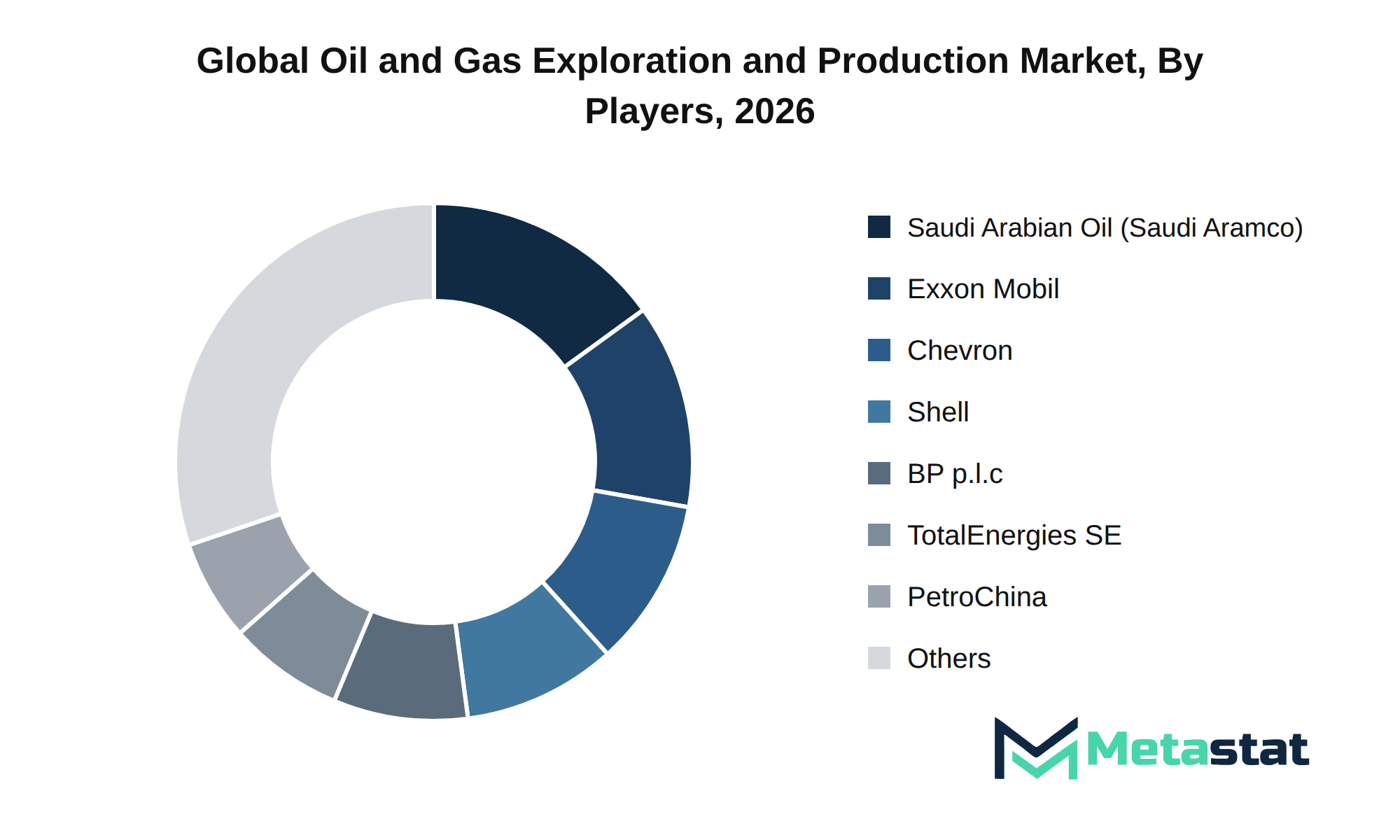
The competitive landscape of the Oil and Gas Exploration and Production market features significant activity among key players, focusing on strategic consolidation, technological advancements, and partnerships. Companies including Saudi Arabian Oil Company (Saudi Aramco), Exxon Mobil Corporation, and Chevron Corporation engage in mergers and acquisitions to enhance their market presence and operational efficiency, positioning themselves for sustainable growth.
Participants employ go-to-market strategies that emphasize product differentiation and innovation, with a focus on research and development. The integration of supply chains and procurement leverage plays a critical role in maintaining competitive advantage. Strategic alliances and joint ventures facilitate resource sharing and access to new markets, enhancing the competitive outlook for companies in this market.
Barriers to entry exist due to high capital requirements and technological expertise, limiting new entrants in the Oil and Gas Exploration and Production market. Current players leverage established brand equity and customer retention strategies to reinforce their market positions while anticipating future competitive vectors that reshape industry dynamics.
Market size is forecast to rise from USD 4,842.2 billion in 2025 to over USD 7,662.1 billion by 2033. The base case indicates a growth trajectory characterized by a 5.9% CAGR during this period. Factors influencing this forecast encompass macroeconomic conditions, evolving regulatory frameworks, and technological advancements. Bull cases depict accelerated demand driven by rapid technological integration and favorable regulatory environments. Conversely, bear cases suggest potential headwinds from geopolitical tensions and macroeconomic uncertainties that could temper growth rates.
Key drivers for growth in the Oil and Gas Exploration and Production market include strategic capital allocation directives, infrastructure commitments, and capital expenditure (CapEx) investment vectors. These elements create a conducive environment for operational expansion and technological innovation. Downstream demand dynamics exhibit fluctuations based on global economic cycles and structural consumption shifts, prompting operators to adapt business models accordingly.
The industry is experiencing maturation influenced by core market demands and new regulatory compliance milestones. The convergence of next-generation technology integration and research and development commercialization timelines fuels ongoing transformation within the market. Emerging white-space opportunities identified in various segments present avenues for profitability and market penetration.
While geopolitical realignments reshape trade corridors, the global supply chain experiences significant shifts. Players in the market navigate these changes strategically while maintaining focus on executive-level imperatives that promote resilient growth. The combination of these factors contributes to a comprehensive environment poised for continued evolution in the coming years.
The report strategically identifies and profiles the key market players and analyses their core competencies in each sub-segment of the Oil and Gas Exploration and Production market.
Report Attributes | Details |
Study Period | 2021-2033 |
Base Year | 2025 |
Estimated Year | 2026 |
Forecast Period | 2026-2033 |
Historical Period | 2021-2025 |
Growth Rate | CAGR 5.9% from 2026 to 2033 |
Revenue Unit | USD billion |
Segmentation | By E&P Lifecycle Stage, Operating Environment, Operator Type, and Region |
By Region | North America (By E&P Lifecycle Stage, Operating Environment, Operator Type, and Country)
|
Europe (By E&P Lifecycle Stage, Operating Environment, Operator Type, and Country)
| |
Asia Pacific (By E&P Lifecycle Stage, Operating Environment, Operator Type, and Country)
| |
South America (By E&P Lifecycle Stage, Operating Environment, Operator Type, and Country)
| |
Middle East and Africa (By E&P Lifecycle Stage, Operating Environment, Operator Type, and Country)
|
Find answers to common questions about this report
The Oil and Gas Exploration and Production market size was valued at USD 4,842.2 billion in 2025.
The Oil and Gas Exploration and Production market is projected to grow at a CAGR of 5.9% during the forecast period from 2026 to 2033.
The North America Oil and Gas Exploration and Production market size is estimated to reach USD 2,055.7 billion by 2033.
The segment leading the Oil and Gas Exploration and Production market is Field Development, with a projected value of USD 2,199.8 billion by 2033. This segment surpasses others in terms of revenue potential within the market.
Key drivers for the Oil and Gas Exploration and Production market include favorable capital investment environments influenced by interest rates and GDP growth, which enhance exploration and production activities. Increased focus on sustainability and advanced technologies drives operational efficiency, enabling companies to meet evolving consumer demands while optimizing costs.
North America holds the dominant share of the Oil and Gas Exploration and Production market, with a value of USD 2,055.7 billion in 2033, representing 27.9 percent of the total market.
Regulatory hurdles and compliance with evolving environmental standards significantly restrain the Oil and Gas Exploration and Production market growth. Stricter regulations necessitate substantial investments, leading to financial and operational burdens for operators. macroeconomic headwinds, including inflation and supply chain disruptions, further complicate the landscape, decreasing investor confidence and impacting capital inflow.
Investment in advanced technologies, coupled with a growing emphasis on sustainability, significantly favors product adoption in the Oil and Gas Exploration and Production market. Companies that prioritize operational efficiency and innovation are better positioned to attract investments and meet evolving consumer demands. This shift enhances productivity while minimizing environmental impact, driving market growth.
The Oil and Gas Exploration and Production market is estimated to reach a valuation of USD 7,662.1 billion by 2033.
Key players in the Oil and Gas Exploration and Production market include Saudi Arabian Oil Company (Saudi Aramco), Exxon Mobil Corporation, Chevron Corporation, Shell plc, BP p.l.c., TotalEnergies SE, and PetroChina Company Limited.
The analysts below cover Energy and Power research at Metastat Insights.
LEAD ANALYST
Utkarsh Khirodkar is a Lead Market Research Analyst at MetaStat Insight, specializing in market intelligence, technology sector assessments, and competitive strategy.

PRINCIPAL CONSULTANT - ENTERPRISE AI & EMERGING TECHNOLOGIES
Banking & Finance · Electronics and Semiconductor · Energy and Power · Healthcare IT · Information & Technology · Professional Services
Vijay Gunti is a Principal Consultant at MetaStat Insight, bringing over two decades of experience across enterprise digital transformation, technology strategy, and intelligent systems.

ENERGY & INFRASTRUCTURE INDUSTRY CONSULTANT
Automotive and Transportation · Electronics and Semiconductor · Energy and Power · Machinery & Equipment
Saurabh Vasant Ganvir consults for Energy & Infrastructure Industry at MetaStat Insight, specializing in renewable energy, solar EPC, and electric vehicle (EV) infrastructure markets.
Last Updated: September, 2026
Scaling antibody-drug conjugate manufacturing hinges on contract manufacturing availability for high-potency active ingredients. The MetaStat Insight analysis looked closely at global cleanroom slot constraints, bioconjugation batch failure rates, and supply chain redundancies between the US, Europe, and India. The supplier capability matrix proved genuinely useful for our team when mapping secondary source options across our clinical pipeline.
Floating offshore wind feasibility relies heavily on specialized installation vessel availability and port crane limits, which most broad renewable energy forecasts ignore. The report delivered a thorough analysis of dry dock capacity, mooring chain supply constraints, and raw material pricing trends for deepwater anchor installations. It served as a solid independent sanity check for our offshore project capital expenditure assumptions.
Assessing commercial microgrid software adoption requires looking past top-level installation numbers and examining utility interconnection queues. The research provided verifiable data on average permitting timelines, tariff structures, and battery storage integration costs across regional utility territories. That grounded perspective was valuable for our team when building five-year demand projections for industrial microgrid controllers.
Explore related market intelligence reports worth reading alongside this one.
Starting from
$2950