
LEAD ANALYST
Utkarsh Khirodkar is a Lead Market Research Analyst at MetaStat Insight, specializing in market intelligence, technology sector assessments, and competitive strategy.

Global Rotary Steerable Systems Market Size, Share, By Steering Mechanism (Push-the-Bit, Point-the-Bit and Hybrid), By Drilling Location (Onshore and Offshore), By Well Profile (Horizontal Wells, Deviated Wells and Vertical Wells), By End-Use Industry (Oil and Gas, Geothermal Energy and Others), Industry Analysis, Growth, Trends, and Forecast, 2026-2033
Report ID
MSI-5698
Published
November, 2026
Pages
255 Pages
Format
Historical
Base year
Forecast
Forecast period
Report Details
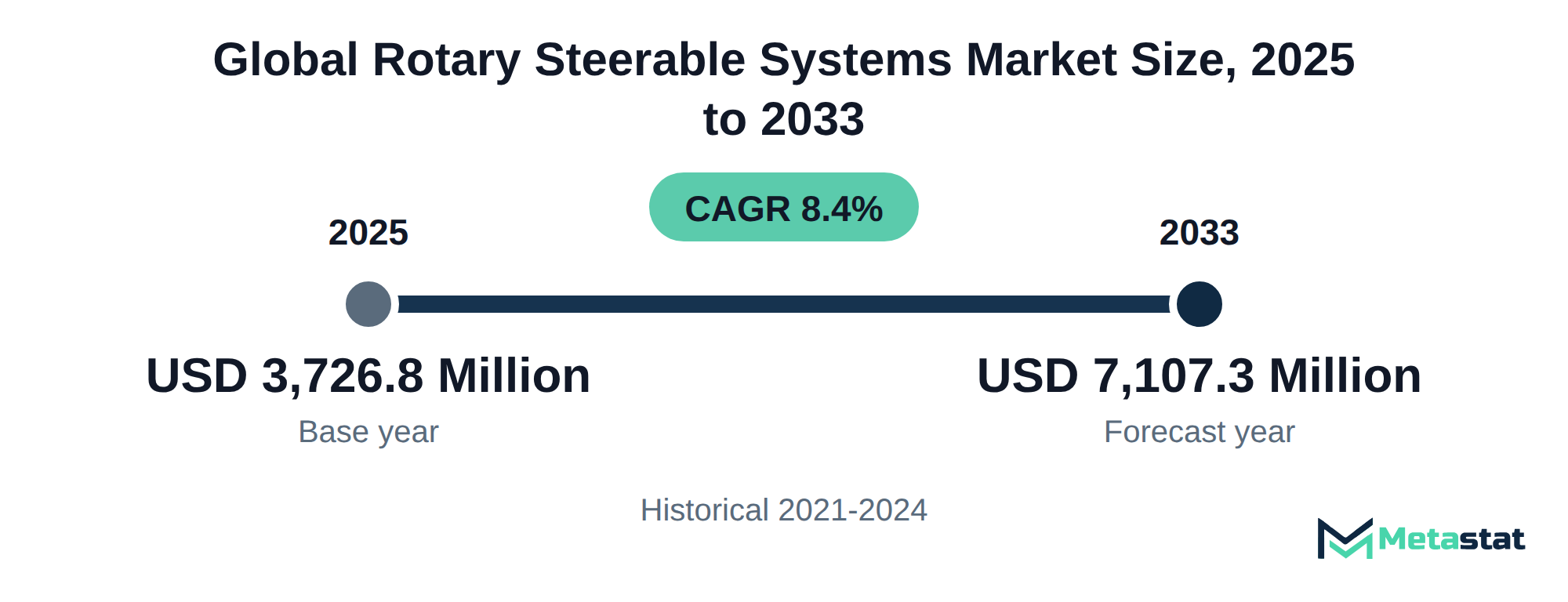
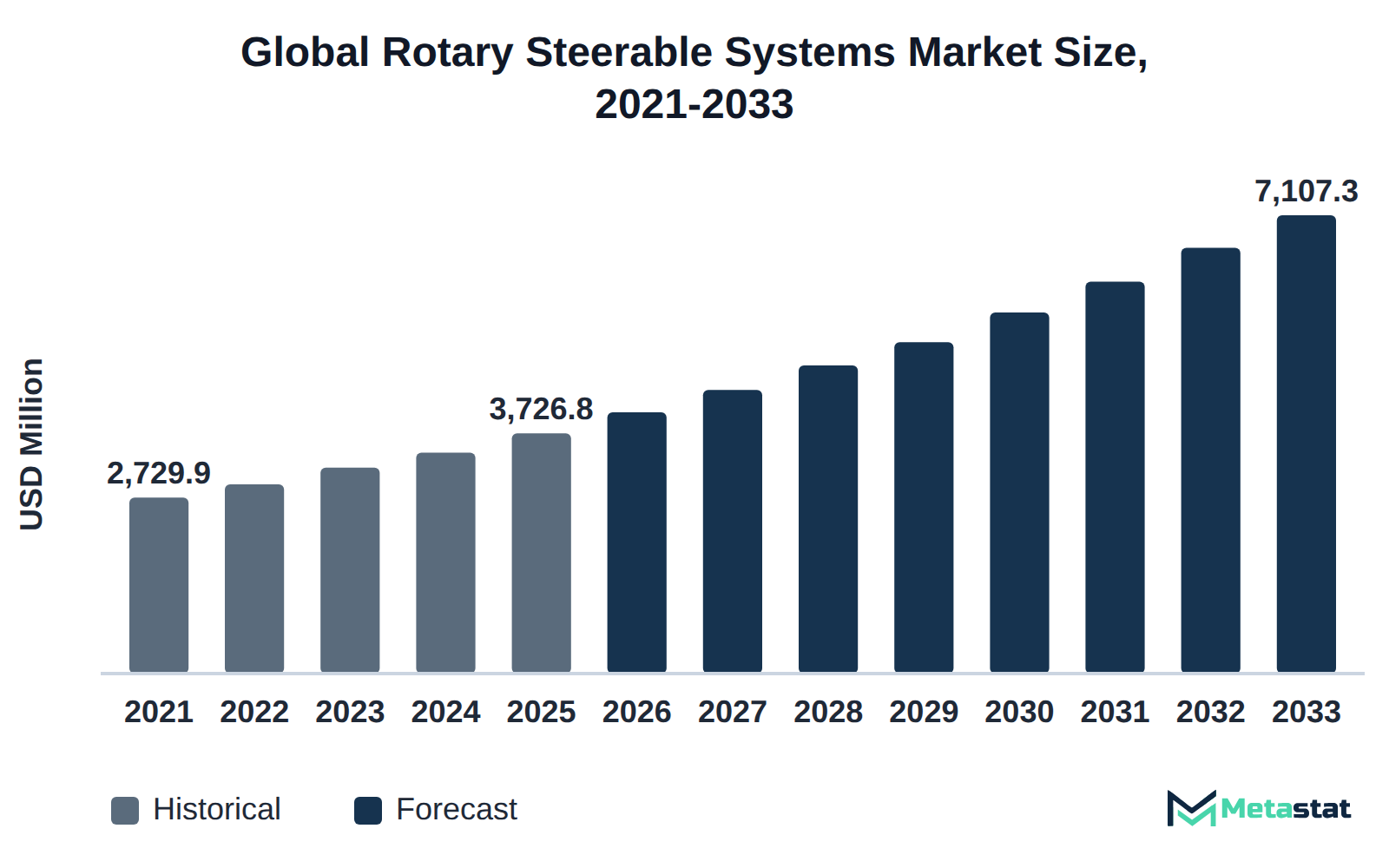
Market Valuation: Valued at $3,726.8 Million in 2025, projected to reach $7,107.3 Million by 2033 at a 8.4% CAGR.
Dominant Segment: The Push-the-Bit steering mechanisms segment leads the market, driven by its widespread adoption in various drilling applications that enhance efficiency and reduce operational costs.
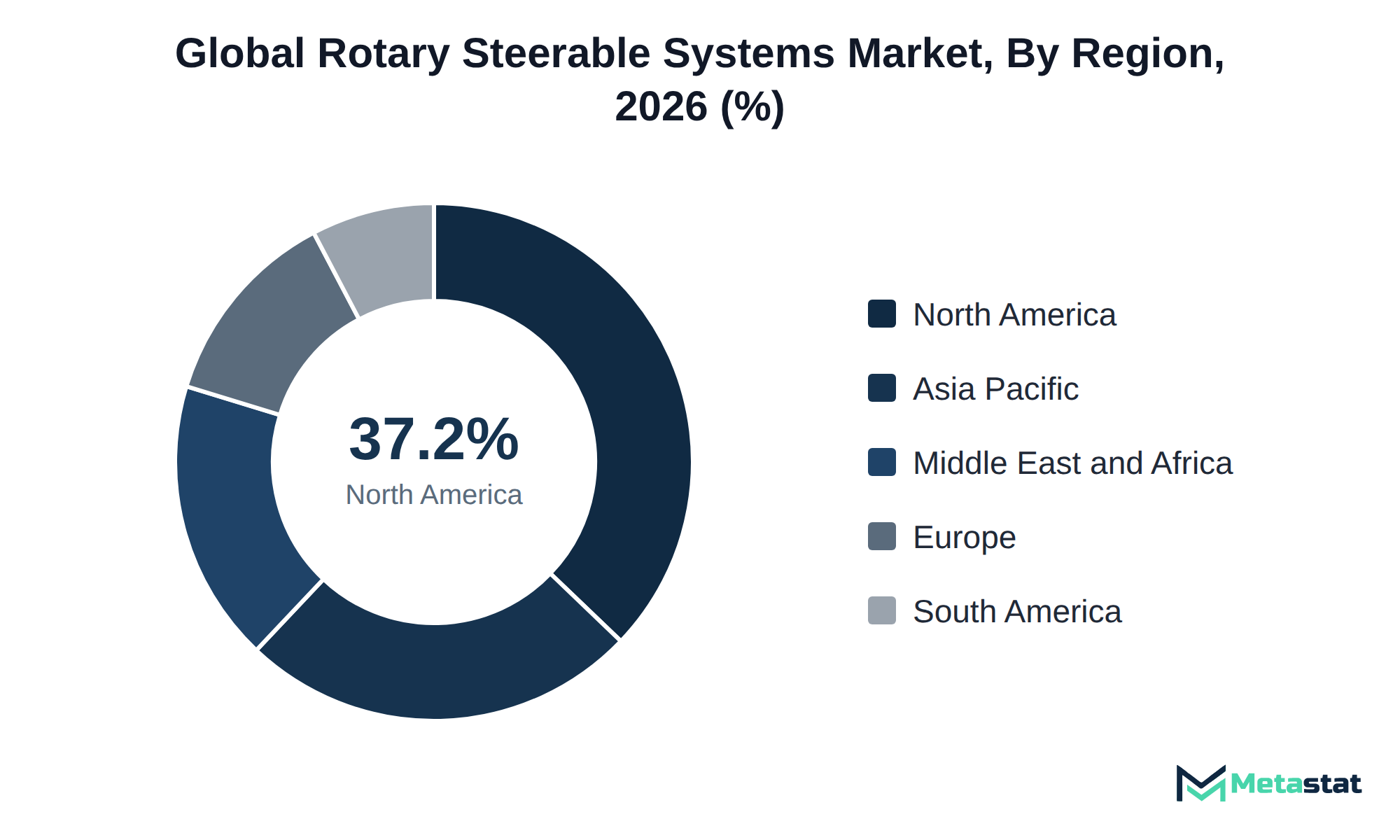
Geographic Lead: North America is the leading region, projected to hold 37.2% of the market share in 2025, primarily due to its extensive shale oil and gas reserves and technological advancements.
What's Inside: The report provides a comprehensive analysis of the competitive landscape, market dynamics, and detailed forecasts from 2026 to 2033, covering various segments including steering mechanisms and drilling locations.
Emerging Trends: The market is witnessing a significant shift towards rental models, particularly in the oil and gas sector, allowing operators to minimize capital expenditure and enhance resource allocation.
Technological Innovations: Advancements in modular maintenance and automated steering technologies are crucial for reducing operational costs and improving drilling efficiency across the industry.
Choose Your License
Global Rotary Steerable Systems Market
The global Rotary Steerable Systems market was valued at USD 3,726.8 million in 2025 and is projected to reach USD 7,107.3 million by 2033, growing at a CAGR of 8.4% over the forecast period.
The Rotary Steerable Systems market encompasses advanced drilling technologies that enhance directional drilling capabilities. Buyers invest in these systems to improve efficiency, reduce operational costs, and achieve precise well placement. Demand for these solutions comes from industries including oil and gas, geothermal energy, and mining, driven by the need for better productivity and safety in drilling operations.
Growth within the market is propelled by increasing exploration and production activities, particularly in the oil and gas sector. The Push-the-Bit steering mechanisms segment represents the largest share in terms of market value, reflecting its widespread adoption across various drilling applications. North America holds 37.2% of the market in 2025, with the US leading in 2026. This region's extensive shale oil and gas reserves, along with technological advancements, favor the deployment of rotary steerable systems.
Technological innovations shape the market by helping operators improve drilling performance and reduce downtime. The Asia Pacific region, accounting for 24.9% of the market, presents substantial growth potential due to increasing investments in energy infrastructure and exploration activities. Regions including South America and the Middle East and Africa present opportunities for market expansion, driven by evolving energy demands and emerging drilling projects.
The Rotary Steerable Systems market addresses the demand for precise drilling solutions in various industries, particularly oil and gas. Buyers invest in these systems to enhance drilling accuracy, reduce operational costs, and improve overall efficiency. The technology's ability to navigate complex geological formations helps drive its adoption among key industry players.
Growth in the market is driven by the increasing demand for efficient drilling technologies, particularly in the oil and gas sector. Among the segments, the Oil and Gas category holds the largest share, reflecting its central role in energy production. This region's robust infrastructure and advanced technological capabilities create a conducive environment for market expansion.
The market's expansion is supported by the rising focus on sustainable energy sources, which drives the need for innovative drilling techniques. Companies are increasingly investing in advanced rotary steerable systems to meet the evolving demands of exploration and production activities. Integrating these systems improves operational efficiency and supports continued growth in the coming years.
The shift towards rental models in the Rotary Steerable Systems market significantly impacts ownership economics for independent fleets. Currently, the market observes a growing preference for rental services over outright ownership, driven by the need for flexibility and reduced capital expenditure. Operators in the oil and gas sector increasingly favor renting rotary steerable systems, allowing them to allocate resources more efficiently while minimizing financial risk.
In 2026, the revenue generated from the oil and gas end-use industry is projected to reach USD 3,932.3 million, rising to USD 6,669.5 million by 2033. This substantial growth highlights the importance of flexible solutions in meeting drilling demands. For independent fleet operators, integrating rental options enhances utilization rates and aligns their offerings with evolving customer needs.
Rental strategies therefore improve operational efficiency and competitiveness in a fast-changing market. Independent fleets adopting this approach position themselves to capture an increasing share of demand, ultimately enhancing financial performance.
Modular maintenance and compatibility with Measurement While Drilling (MWD) systems significantly reduce operating costs for buyers in the Rotary Steerable Systems market. The adoption of modular components allows for easier upgrades and repairs, minimizing downtime during drilling operations. This approach enables quick replacements of individual parts without requiring a total system overhaul, which enhances efficiency and lowers operational expenses.
The Onshore drilling location segment is projected to grow from USD 2,748.4 million in 2026 to USD 4,670.9 million by 2033, reflecting a compound annual growth rate (CAGR) of 7.9%. This growth highlights the demand for cost-effective solutions, emphasizing the importance of modular maintenance in addressing operational challenges. The compatibility of rotary steerable systems with MWD technologies allows for integration, enabling drilling operators to optimize their workflows and enhance data collection.
Investing in systems that support modular maintenance and MWD compatibility positions buyers for long-term success in a competitive landscape. The ability to adapt quickly to new technologies while maintaining cost efficiency provides a significant advantage, influencing purchasing decisions in the market. Enhanced uptime and reduced maintenance costs ultimately contribute to increased profitability for operators in the rotary steerable systems sector.
Extended runs of Rotary Steerable Systems (RSS) significantly enhance drilling efficiency, leading to reduced costs per metre. The shift towards longer runs is driven by technological advancements that facilitate automated steering, allowing operators to maintain precise control and optimize drilling trajectories. This efficiency is particularly crucial in the oil and gas industry, where demand for cost-effective solutions is critical.
The market for rotary steerable systems shows a notable trend toward automated steering, especially in the rising adoption of Push-the-Bit mechanisms. These mechanisms are projected to reach USD 4,206.1 million by 2033, growing at a CAGR of 7.9% from 2026. This growth indicates a clear demand for systems that provide longer operational runs while improving drilling accuracy and reducing rig time.
The commercial consequence of these advancements in the Rotary Steerable Systems market results in substantial cost savings and improved operational margins for drilling companies. By leveraging longer RSS runs and automated steering technologies, operators enhance competitiveness and efficiency in an increasingly challenging market environment, positioning themselves for sustainable growth.
Improvements in Rotary Steerable Systems (RSS) technology significantly reduce operational costs for independent directional drillers. Enhanced steering mechanisms, particularly the Push-the-Bit technology, yield notable efficiency in drilling processes. This advancement allows drillers to achieve more precise trajectories and minimize drilling time, ultimately lowering overall costs.
The growing adoption of advanced RSS mechanisms generates substantial economic benefits for operators. By applying improved technologies, independent directional drillers enhance wellbore placement accuracy and reduce the frequency of costly equipment failures and maintenance. Improved RSS designs lead to lower operational downtime, which translates to increased profitability for companies operating in competitive environments. These enhancements help drillers operate efficiently and stay cost competitive across various drilling projects.
Increased adoption of Push-the-Bit systems significantly drives demand within the Rotary Steerable Systems market. Oil and gas operators prioritize these systems due to their ability to enhance drilling efficiency and precision. Recent trends indicate a shift towards more efficient drilling solutions, impacting overall drilling performance and operational costs. The ability to reduce non-productive time while maintaining optimal drilling conditions attracts operators aiming to optimize resource extraction. This growth results from a combination of technological advancements and rising demand for high-performance drilling solutions, which further strengthens the competitive landscape.
Demand for Point-the-Bit systems continues to expand due to their advanced capabilities, with a market value of USD 2,107.3 million by 2033. The efficiency and effectiveness of these systems contribute to their rising popularity among drilling operators. In parallel, the Hybrid segment demonstrates potential with anticipated market performance by 2033, aligning with broader trends in the industry.
The adoption of Point-the-Bit systems enhances precision and control during the drilling process, significantly improving operational efficiency. This mechanism addresses the increasing demand for accuracy in directional drilling, particularly in challenging geological formations. Industries focused on oil and gas exploration benefit from this technology, reducing non-productive time and optimizing resource utilization. The high-performance capabilities of Point-the-Bit systems contribute to lower drilling costs while enhancing the safety of operations. Exploration activities expand in both onshore and offshore locations, leading to accelerated growth driven by the operational advantages provided by this steering mechanism. Market participants investing in technological advancements for Point-the-Bit systems are likely to gain a competitive edge, further increasing market penetration and revenue streams. Overall, the integration of Point-the-Bit systems positions companies favorably within the Rotary Steerable Systems market, aligning with evolving industry demands.
The hybrid steering mechanism experiences slower adoption among buyers primarily due to higher costs associated with implementation and maintenance. Oil and gas operators and geothermal energy producers exhibit cautious behavior when evaluating this technology, leading to smaller orders and delayed investments. The complexity of integrating hybrid systems into existing drilling operations frequently raises concerns regarding compatibility and performance. This situation often results in hesitation among potential users, causing a ripple effect that hinders broader market growth. Limited awareness of the benefits and capabilities of hybrid systems contributes to the restrained demand, particularly in regions with less established infrastructure. Overall, these factors lead to a gradual uptake of hybrid steering mechanisms, impacting the overall performance of the market. Demand for Rotary Steerable Systems relies heavily on the willingness of buyers to invest in advanced technologies promising enhanced efficiency and precision in drilling operations.
Increased competition within the market is leading to significant margin pressure for suppliers of push-the-bit systems. Escalating input costs, particularly for materials and components, challenge profitability. Suppliers frequently experience rising costs for raw materials, including steel and advanced electronics, impacting overall project costs. This situation compels many suppliers to seek efficiencies in production and supply chain management to offset these pressures.
To address these challenges, suppliers are investing in manufacturing techniques that cut production costs while maintaining quality standards. Strategic partnerships with material suppliers and logistics providers enhance cost management efforts. Suppliers are exploring automation and digital solutions to streamline operations. These measures support the sustainability of push-the-bit systems in a competitive environment, ensuring that suppliers maintain their market position while navigating financial constraints.
The hybrid segment of Rotary Steerable Systems presents significant growth potential, driven by its application in diverse drilling environments. This mechanism combines advantages from both push-the-bit and point-the-bit systems, enhancing operational flexibility and efficiency. The highest growth rate within the hybrid category, projected at a CAGR of 8.1%, reflects increasing interest from buyers seeking adaptable solutions for various drilling challenges. Adoption primarily stems from operators in the oil and gas industry, where precise control is essential for optimizing drilling performance. While the market evolves, innovations in hybrid technology are expected to expand capabilities, addressing the specific needs of customers in both onshore and offshore locations. Enhanced performance metrics and compatibility with existing systems will position hybrid mechanisms as a preferred choice for several operators, driving further penetration into the market.
The Global Rotary Steerable Systems market is segmented based on Steering Mechanism, Drilling Location, Well Profile, and End-Use Industry.
This segment serves a vital role in directional drilling, primarily for oil and gas companies seeking enhanced efficiency and cost savings. The growing emphasis on operational efficiency drives demand for Push-the-Bit systems, which allow for improved penetration rates and reduced drilling time. This segment distinguishes itself from others by demonstrating a competitive growth rate compared to the Point-the-Bit segment, which has a CAGR of 8.1%. Adoption challenges arise from the costs associated with technology integration and training. Nevertheless, the anticipated growth of the market provides a favorable environment for Push-the-Bit systems to flourish through improved technologies and strategies that enhance drilling performance.
Point-the-Bit segment is estimated to reach USD 2,107.3 million by 2033, at a CAGR of 8.1% during the forecast period. This segment achieves precise directional control in drilling operations, particularly favored by oil and gas companies. Its growing adoption aligns with increasing demand for higher drilling efficiency and accuracy in complex formations. The precision offered by Point-the-Bit systems differentiates it from Push-the-Bit systems, which experience a CAGR of 7.9%. The Point-the-Bit systems cater to specific buyer needs, focusing on advanced drilling techniques, while hybrid systems face slower uptake due to cost considerations. This targeted approach drives growth within the segment, with operators seeking to optimize performance and minimize drilling time.
Hybrid steering mechanisms are projected to reach USD 793.9 million by 2033. This technology improves drilling efficiency and accuracy, particularly in complex geological formations. Operators in the oil and gas industry employ hybrid systems to achieve better wellbore placement and reduce drilling time. Growth in this segment is propelled by increasing demand for technologies that enhance drilling performance. The hybrid category exhibits a compound annual growth rate (CAGR) of 8.1%, offering a competitive alternative to both Push-the-Bit and Point-the-Bit systems, which have CAGRs of 7.9% and 8.1% respectively. Typically priced higher due to advanced features, the hybrid segment distinguishes itself through its adaptability and efficiency, making it appealing for challenging drilling environments. This differentiation contributes to its anticipated growth trajectory in the Rotary Steerable Systems market.
This segment primarily serves the oil and gas industry, where precise drilling capabilities are essential for resource extraction. Increasing exploration and production activities, particularly in regions including North America and the Middle East, drive demand for onshore drilling solutions. The onshore segment experiences a higher growth rate compared to offshore drilling, highlighting its importance in the global energy landscape. Lower operational costs associated with onshore projects contribute to its attractiveness for buyers. Overall, the onshore segment stands out within the market due to its significant growth potential and ongoing demand for efficient drilling technologies.
The offshore segment is estimated to reach USD 2,436.4 million by 2033, at a CAGR of 9.4% during the forecast period. This segment primarily focuses on drilling operations in marine environments, catering to companies engaged in oil and gas extraction. Demand for offshore drilling solutions is driven by the need for energy resources located beneath the ocean floor, prompting investment in sophisticated drilling technologies. Offshore operations often incur higher costs due to equipment and logistical challenges compared to onshore drilling. However, the segment experiences faster growth than onshore drilling, reflecting increasing exploration activities in untapped offshore reserves.
Horizontal Wells segment is valued at USD 2,997.4 million in 2026 and is projected to reach USD 5,430.7 million by 2033, at a CAGR of 8.9% during the forecast period. This segment caters to the oil and gas industry, particularly in the extraction of resources from subterranean formations. Horizontal drilling enables operators to access reserves that are challenging to reach using traditional vertical drilling techniques. Increased demand for energy efficiency and improved resource recovery drives growth within this segment. Compared to deviated and vertical wells, horizontal wells provide better production rates, leading to more significant financial returns for operators. Consequently, the segment displays a stronger growth trajectory than the other segments in this group. Driven by advancements in drilling technologies, operators increasingly adopt horizontal well strategies to optimize investment and operational outcomes.
Deviated Wells segment is estimated to reach USD 1,287.8 million by 2033, at a CAGR of 7% during the forecast period. This segment primarily serves the oil and gas industry, enabling efficient drilling in complex geological formations. The demand for deviated wells is driven by the increasing need for resource extraction from unconventional reserves, which require advanced drilling techniques. High precision and control in drilling operations are critical factors for exploration and production companies. Deviated Wells exhibit slower growth compared to Horizontal Wells, which are projected to achieve a CAGR of 8.9%. This difference in growth rates highlights the distinct applications and demand drivers that each segment faces, reflecting the unique challenges and opportunities present in the market.
The Vertical Wells segment is expected to reach USD 388.8 million by 2033. This segment primarily serves the oil and gas industry, where drilling to various depths is essential for resource extraction. Demand for Vertical Wells is driven by increasing investments in exploration and production activities aimed at tapping into unconventional oil and gas reserves. Compared to Horizontal Wells, which achieve a CAGR of 8.9%, Vertical Wells experience lower growth due to their application in specific geological conditions requiring precise drilling techniques. The focus on cost efficiency and operational effectiveness shapes buyer preferences, with Vertical Wells offering a distinct value proposition in terms of simpler drilling processes and lower operational complexity. These factors create a competitive landscape that influences investment strategies within the Rotary Steerable Systems market.
This segment serves the extraction of hydrocarbons, primarily by large multinational corporations and regional operators focused on oil and natural gas production. Demand for rotary steerable systems in this sector is driven by the need for increased efficiency and precision in drilling operations. Adoption of advanced drilling technologies enhances performance and productivity, facilitating deeper and more complex wellbore access. Compared to the geothermal energy segment, which is valued at USD 380.9 million with a higher growth rate of 21.3%, the Oil and Gas segment experiences more gradual growth while maintaining a considerably larger market size. The substantial investments made by companies in exploration and production reflect a commitment to enhancing drilling operations and sustaining competitive advantage in the market.
Geothermal Energy segment is estimated to reach USD 380.9 million by 2033, at a CAGR of 21.3% during the forecast period. This segment primarily serves the energy sector, focusing on utilizing heat from the earth for power generation and direct use applications. Increasing investments in renewable energy initiatives significantly drive growth in this segment, with companies seeking sustainable and cost-effective energy sources. Compared to other segments, Geothermal Energy exhibits a higher growth rate, reflecting urgent demand for cleaner energy solutions. The emphasis on reducing carbon emissions and enhancing energy efficiency further supports the adoption of rotary steerable systems tailored for geothermal applications. This segment follows its own growth path, serving buyers who prioritize sustainability and innovation.
Others (Mining and Scientific Drilling) segment is expected to reach USD 56.9 million by 2033. This segment primarily serves the mining and scientific drilling sectors, where precision and reliability are essential for successful operations. Demand within this segment is driven by an increasing focus on efficient resource extraction and innovative geological exploration techniques. Compared to other segments, this category experiences slower growth, reflecting a more niche market with specific applications. The CAGR for this segment aligns with the overall market growth trend while highlighting distinct buyer profiles that prioritize specialized solutions over volume. By emphasizing tailored technologies, this segment significantly advances mining operations and scientific research, contributing to broader advancements in the Rotary Steerable Systems market.
Based on geography, the Global Rotary Steerable Systems market is divided into North America, Europe, Asia-Pacific, South America, Middle East, and Africa.
High demand for rotary steerable systems in North America stems from extensive oil and gas activity, particularly in the United States, Canada, and Mexico. The emphasis on enhancing drilling efficiency and operational effectiveness drives investments in advanced technologies. Regional infrastructure supports extensive drilling operations, with an increasing focus on sustainable practices and operational optimization. North America is projected to reach USD 2,506 million by the end of 2033, holding a 37.2% share of the global market in 2025. The market experiences various dynamics, including competitive pressures and technological advancements, influencing purchasing decisions among operators and service companies. These factors contribute to the growth trajectory anticipated in the market throughout the forecast period.
Demand for Rotary Steerable Systems in Europe is driven primarily by the oil and gas industry, with countries like Germany, France, and the UK investing significantly in advanced drilling technologies. Rising energy prices prompt increased exploration and production activities, creating a strong requirement for efficient drilling solutions. The European market focuses on both onshore and offshore drilling, with regulations encouraging technological innovation to enhance operational efficiency and reduce environmental impact. Infrastructure developments in subsea and deepwater drilling projects support growth potential. By 2025, Europe holds a 12.6% share of the global market, with anticipated continued investments in rotary steerable systems to optimize drilling operations and reduce costs.
The Rotary Steerable Systems market in Asia-Pacific holds a share of the global market in 2025. Demand in this region is driven primarily by the oil and gas industry, particularly in countries like China, India, and Australia. Rapid industrialization and urbanization in these nations necessitate advanced drilling technologies to improve efficiency and reduce costs. Key investments in infrastructure development further stimulate demand for rotary steerable systems. In addition, the increasing focus on renewable energy sources, particularly geothermal energy, enhances market prospects in the region. South Korea and Southeast Asia exhibit growing interests in employing rotary steerable systems for various drilling applications, reflecting a shift towards more innovative drilling techniques to meet evolving energy needs.
In South America, the Rotary Steerable Systems market exhibits significant demand, primarily driven by oil and gas activities in Brazil and Argentina. Demand for these systems arises from increasing exploration and production activities within the region’s oil sector, influenced by the ongoing need for technological advancements. Infrastructure developments and investments in drilling capabilities enhance market growth. The oil and gas industry's focus on efficiency and cost reduction supports the uptake of rotary steerable systems. This demand trajectory indicates a positive outlook for the market within South America.
Growth in the Rotary Steerable Systems market within the Middle East and Africa is driven by significant investments in oil and gas exploration and production. Countries including Saudi Arabia and the UAE prioritize advanced drilling technologies to enhance efficiency and optimize resource extraction. The region's oil reserves and ongoing offshore and onshore drilling projects create strong demand for rotary steerable systems. South Africa's focus on expanding its energy sector further contributes to market dynamics. By 2025, the region is expected to account for 17.7% of the global market, reflecting strong potential for expansion in the coming years. This growth trajectory is underpinned by a combination of technological advancement and rising energy needs across various sectors.
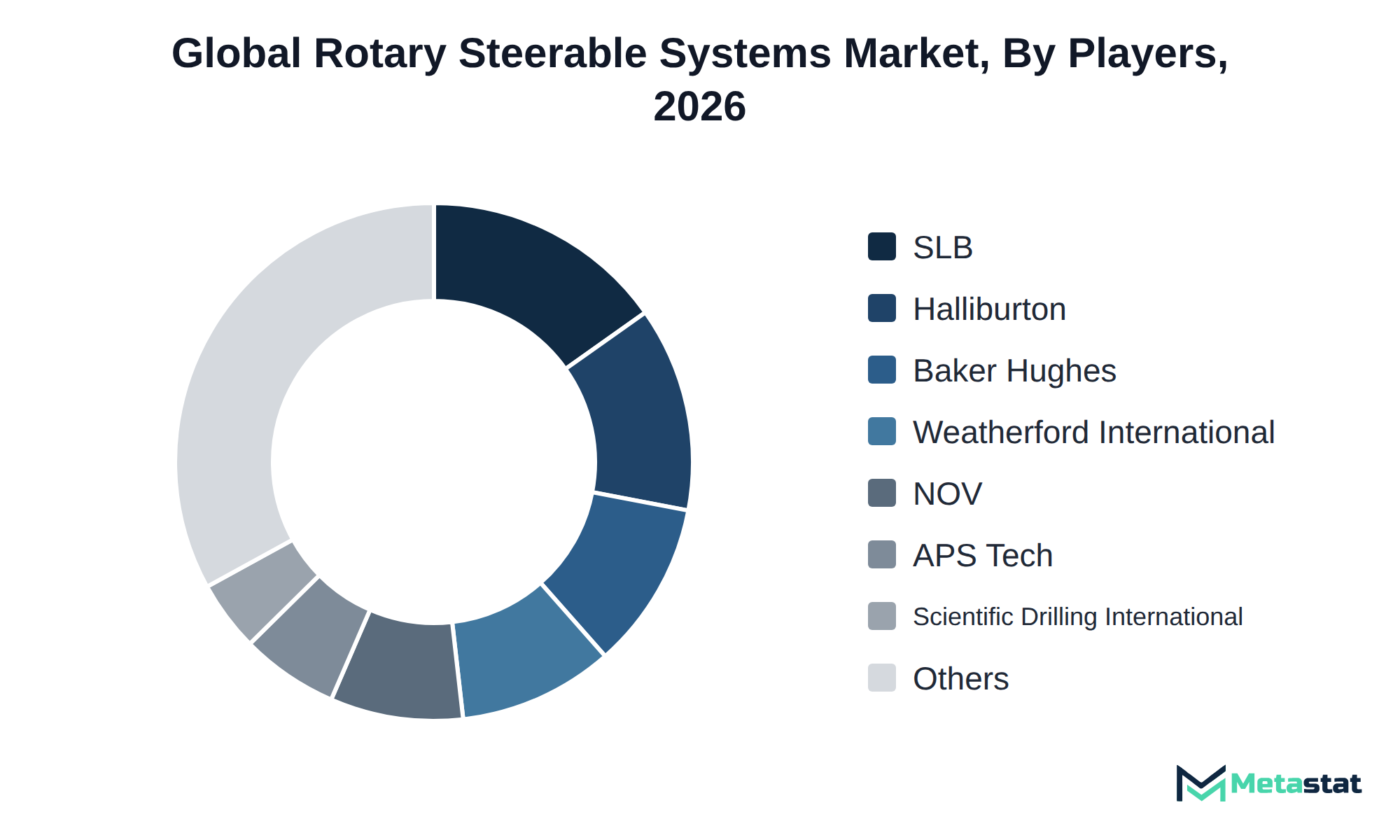
Competition within the Rotary Steerable Systems market is influenced by various strategic behaviors of key players. Companies operate across distinct segments, with differentiation based on steering mechanisms, drilling location, well profile, and end-use industry. Buyers prioritize factors including price, certification, customization, and service offerings when selecting suppliers.
SLB, Halliburton Company, and Baker Hughes Company focus on providing advanced technologies and customized solutions to meet diverse customer needs. Weatherford International plc and NOV Inc. emphasize strong service capabilities and broad operational support. The competitive environment includes specialized firms like APS Tech LLC and Scientific Drilling International, which concentrate on niche applications and tailored service models.
Companies like D-Tech Rotary Steerable and Turbo Drill Industries, Inc. position themselves by offering innovative technologies that enhance drilling efficiency. Kinetic Upstream Technologies and Intrepid Directional Drilling Specialists leverage a strong customer service orientation to build long-term relationships. This competition shapes market dynamics and influences growth trajectories across various segments.
This growth relies on several key developments within the market. The first is the increasing demand for onshore drilling solutions, particularly within the oil and gas sector. This trend is expected to drive revenue, with onshore systems projected to expand significantly to USD 4,670.9 million by 2033. Another critical factor involves advancements in steering mechanisms, specifically the push-the-bit technology, which is anticipated to reach USD 4,206.1 million during the same period. Risks exist that could hinder growth. A principal concern includes fluctuations in crude oil prices, which impact investment in drilling activities. In regions like North America, where the market holds a 37.2% share, any downturn in oil prices leads to reduced project budgets and delayed operational expansions. Therefore, the market's trajectory toward USD 7,107.3 million relies on sustained demand for innovative drilling solutions and the overall stability of oil prices in the coming years.
By Steering Mechanism: Push-the-Bit, Point-the-Bit, Hybrid
By Drilling Location: Onshore, Offshore
By Well Profile: Horizontal Wells, Deviated Wells, Vertical Wells
By End-Use Industry: Oil and Gas, Geothermal Energy, Others (Mining and Scientific Drilling)
The report strategically identifies and profiles the key market players and analyses their core competencies in each sub-segment of the Rotary Steerable Systems market.
Report Attributes | Details |
Study Period | 2021-2033 |
Base Year | 2025 |
Estimated Year | 2026 |
Forecast Period | 2026-2033 |
Historical Period | 2021-2025 |
Growth Rate | CAGR 8.4% from 2026 to 2033 |
Revenue Unit | USD million |
Segmentation | By Steering Mechanism, Drilling Location, Well Profile, End-Use Industry, and Region |
By Region | North America (By Steering Mechanism, Drilling Location, Well Profile, End-Use Industry, and Country)
|
Europe (By Steering Mechanism, Drilling Location, Well Profile, End-Use Industry, and Country)
| |
Asia Pacific (By Steering Mechanism, Drilling Location, Well Profile, End-Use Industry, and Country)
| |
South America (By Steering Mechanism, Drilling Location, Well Profile, End-Use Industry, and Country)
| |
Middle East and Africa (By Steering Mechanism, Drilling Location, Well Profile, End-Use Industry, and Country)
|
Find answers to common questions about this report
The Rotary Steerable Systems market size was valued at USD 3,726.8 million in 2025.
The market is projected to grow at a CAGR of 8.4% during the forecast period from 2026 to 2033.
The North America Rotary Steerable Systems market size is estimated to reach USD 2,506 million by 2033.
The leading segment in the Rotary Steerable Systems market is Push-the-Bit, with a projected value of USD 4,206.1 million by 2033. This segment surpasses others in terms of revenue growth during the forecast period.
Increased adoption of Push-the-Bit systems drives demand due to enhanced drilling efficiency and precision. Rising interest in Point-the-Bit systems further supports market growth as they improve operational efficiency and reduce non-productive time.
North America holds the dominant share of the Rotary Steerable Systems market, with a value of USD 2,506 million projected for 2033, representing 37.2 percent of the total market. This region surpasses all others in market share.
The hybrid segment experiences slower adoption due to higher implementation and maintenance costs. Limited awareness of the benefits and capabilities of hybrid systems contributes to restrained demand, particularly in regions with less established infrastructure.
Increased adoption of Push-the-Bit systems drives demand due to their ability to enhance drilling efficiency and precision while reducing non-productive time. The rising interest in advanced technologies, particularly Point-the-Bit systems, reflects the industry's shift towards high-performance drilling solutions that optimize resource extraction.
The Rotary Steerable Systems market is estimated to reach a valuation of USD 7,107.3 million by 2033.
Key players operating in the Rotary Steerable Systems market include SLB, Halliburton Company, Baker Hughes Company, Weatherford International plc, NOV Inc., and China National Petroleum Corporation.
The analysts below cover Automotive and Transportation research at Metastat Insights.
LEAD ANALYST
Utkarsh Khirodkar is a Lead Market Research Analyst at MetaStat Insight, specializing in market intelligence, technology sector assessments, and competitive strategy.

ENERGY & INFRASTRUCTURE INDUSTRY CONSULTANT
Automotive and Transportation · Electronics and Semiconductor · Energy and Power · Machinery & Equipment
Saurabh Vasant Ganvir consults for Energy & Infrastructure Industry at MetaStat Insight, specializing in renewable energy, solar EPC, and electric vehicle (EV) infrastructure markets.
Evaluating sovereign cloud deployments for core banking platforms demands a clear view of data residency regulations and migration exit strategies. MetaStat Insight delivered an exhaustive review of regional latency tolerances, mainframe decommission milestones, and third-party vendor concentration risk. The regulatory compliance mapping across European and Asian financial jurisdictions gave our team a dependable baseline for multi-cloud infrastructure discussions.
Replacing petrochemical surfactants with bio-based alternatives requires realistic timelines on industrial precision fermentation scaling. The market research broke down commercialization timelines, feedstock sugar price sensitivities, and regional cosmetic ingredient regulatory approvals in Europe and East Asia. That supplier readiness mapping gave our formulations team reliable context when comparing renewable chemical sourcing roadmaps.
Tracking ceramic matrix composite adoption in high-bypass aero engines requires strict attention to material qualification cycles and FAA airworthiness testing milestones. The MetaStat Insight team provided a detailed timeline of silicon carbide fiber manufacturing capacity and commercial foundry lead times. Having clear visibility into upstream thermal barrier coating supply helped us stress-test our long-term component procurement strategy.
Explore related market intelligence reports worth reading alongside this one.
Starting from
$2950