
LEAD ANALYST
Utkarsh Khirodkar is a Lead Market Research Analyst at MetaStat Insight, specializing in market intelligence, technology sector assessments, and competitive strategy.

Global Geophysical Services Market Size, Share, By Service Type (Data Acquisition, Data Processing and Imaging, Data Interpretation and Modeling, Multi-Client Data Licensing), By Technology (Seismic, Electromagnetic, Magnetic, Gravity and Gradiometry, Electrical Resistivity and Induced Polarization, Ground-Penetrating Radar), By Survey Platform (Land-Based, Marine-Based, Airborne), By Application (Oil and Gas, Mineral Exploration and Mining, Civil Engineering and Infrastructure, Environmental Site Investigation, Groundwater Exploration, Offshore Renewable Energy Site Assessment, Geothermal Exploration, Carbon Storage Characterization and Monitoring), Industry Analysis, Growth, Trends, and Forecast, 2026-2033
Report ID
MSI-5631
Published
October, 2026
Pages
294 Pages
Format
Historical
Base year
Forecast
Forecast period
Report Details
Market Valuation: Valued at $15 Billion in 2025, projected to reach $20.9 Billion by 2033 at a 4.2% CAGR.
Dominant Segment: Data Acquisition leads the Geophysical Services market, driven by its critical role in obtaining precise measurements essential for resource management across various industries.
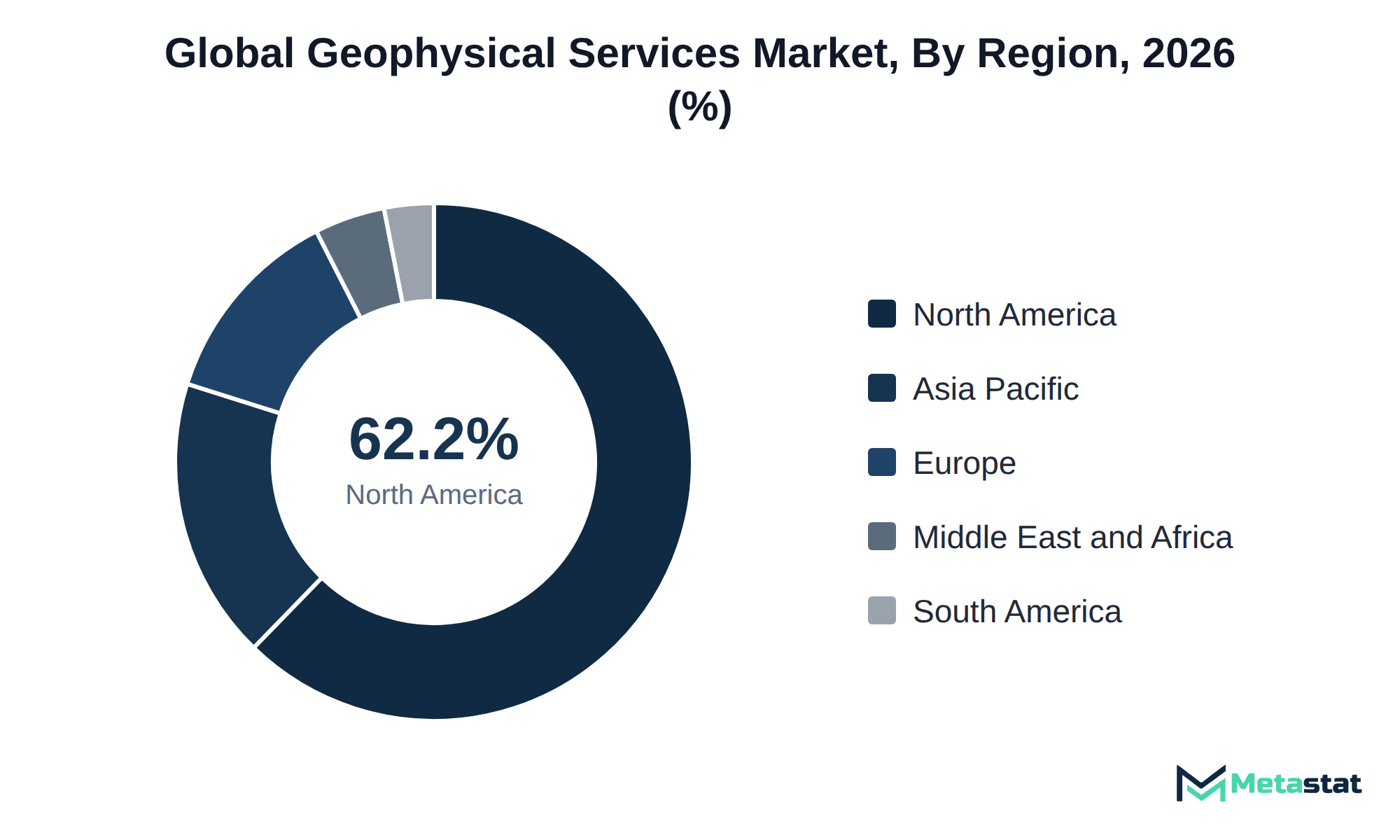
Geographic Lead: North America dominates the market, accounting for 62.2% in 2025, with the U.S. leading due to significant investments in energy and mineral exploration.
What's Inside: The report provides comprehensive coverage of the Geophysical Services market, including detailed analyses of service types, technologies, survey platforms, and applications, alongside growth forecasts through 2033.
Emerging Opportunities: Data Interpretation and Modeling is poised for growth, projected to reach USD 2.4 billion by 2033, driven by increasing demand for accurate subsurface analyses across multiple sectors.
Technological Advancements: Innovations like Full-waveform inversion and airborne electromagnetic mapping enhance data accuracy and efficiency, reflecting the industry's shift towards advanced geophysical methodologies.
Choose Your License
Global Geophysical Services Market
The global Geophysical Services market was valued at USD 15 billion in 2025 and is projected to reach USD 20.9 billion by 2033, growing at a CAGR of 4.2% over the forecast period.
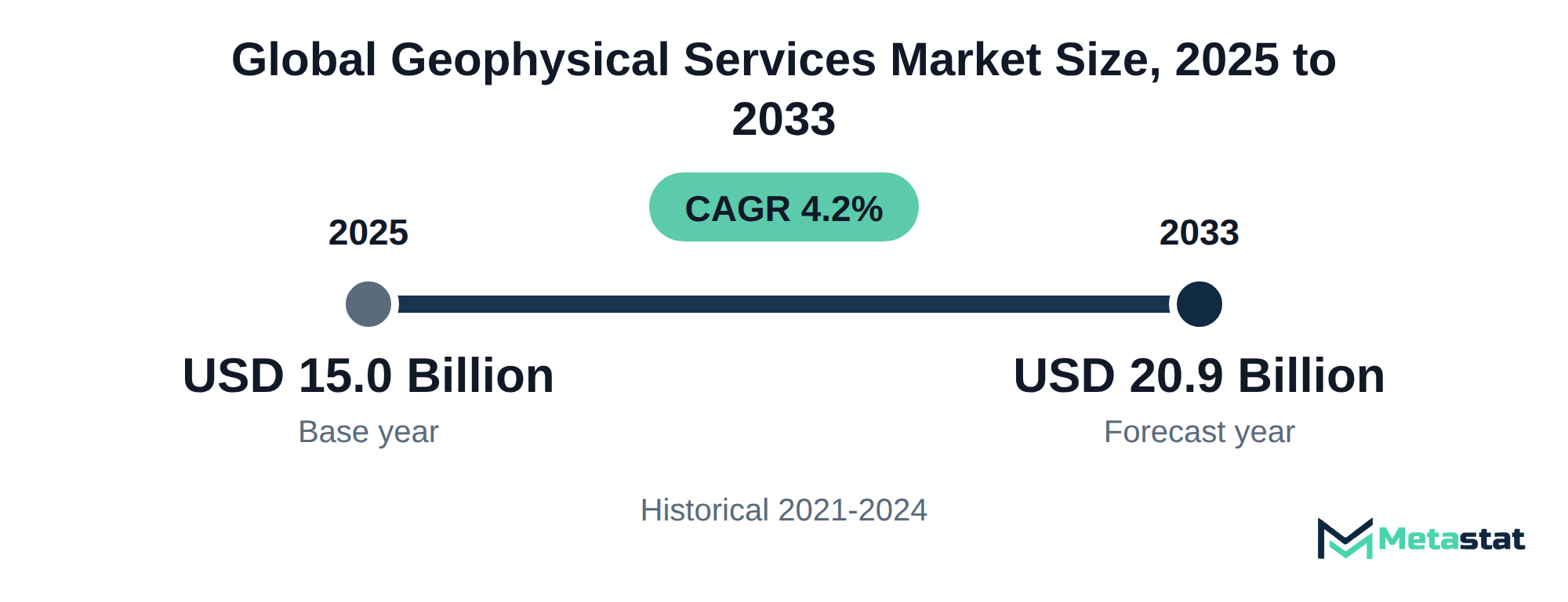
The Geophysical Services market encompasses a range of services, including data acquisition, processing, interpretation, and licensing. Buyers invest in these services to enhance their exploration and development efforts across various industries, particularly in oil and gas, mining, and environmental assessments. The need for accurate and reliable geophysical data drives spending, with organizations seeking to optimize resource extraction and minimize risks associated with subsurface activities.
Growth in the market is fueled by increasing demand for advanced geophysical methods that improve operational efficiency and reduce costs. The segment contributing the most value is data acquisition, essential for obtaining precise measurements and insights. North America holds 62.2% of the market in 2025, with the US leading in 2026. This dominance reflects strong investment in energy and mineral exploration activities within the region.
Technological advancements significantly influence the market, enabling enhanced data collection and analysis capabilities. These developments attract investments from various sectors, particularly those focused on sustainable practices and efficient resource management. The shift toward more automated and integrated geophysical solutions supports further growth and ongoing expansion in the coming years.
The Geophysical Services market serves various sectors by providing essential insights into subsurface conditions, aiding in exploration and resource management. Buyers invest in these services to enhance decision-making, reduce exploration risks, and improve operational efficiency. The demand for accurate geophysical data has intensified, particularly in resource-intensive industries like oil and gas, where understanding geological formations directly impacts profitability and project success.
Growth in the market is driven by advancements in technology and increasing investments in resource exploration. Among the segments, Data Acquisition holds the highest value, reflecting its critical role in gathering the foundational data required for further analysis and interpretation. This region's dominance results from extensive oil and gas operations and a well-established infrastructure supporting geophysical services.
Emerging applications in mineral exploration and environmental assessments present significant opportunities for market expansion. The rise in renewable energy projects, including offshore wind and geothermal initiatives, further fuels demand for geophysical services. These developments show how the market adapts to changing industry needs and to a growing focus on sustainable practices and resource management.
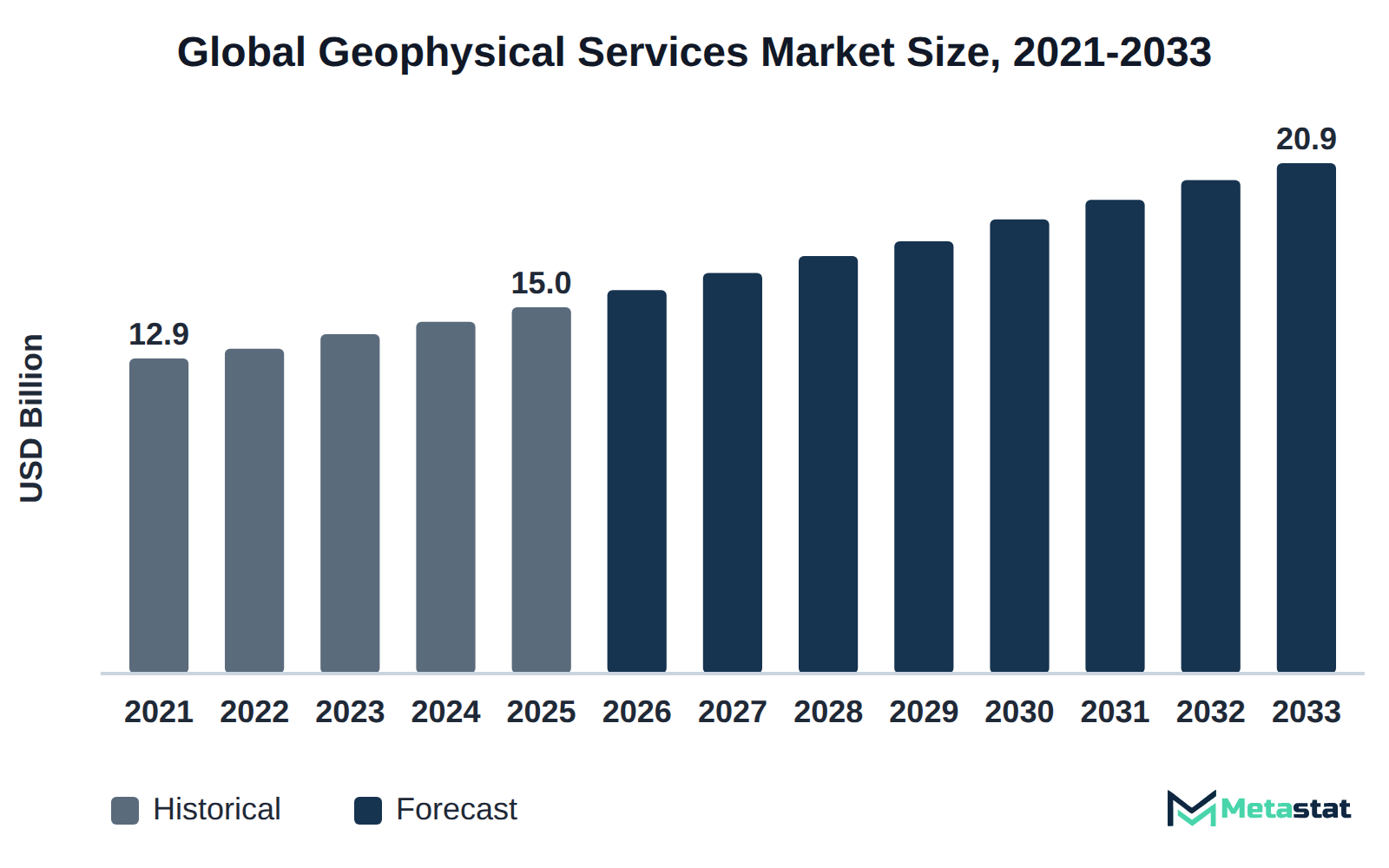
Full-waveform inversion (FWI) and ocean-bottom node (OBN) reimaging represent significant advancements in the Geophysical Services market, enhancing the value of existing seismic data. These technologies allow for more precise subsurface imaging, resulting in improved resource identification and recovery strategies. The migration from traditional seismic methods to FWI and OBN reflects a growing demand for higher resolution data in the oil and gas application, with the segment projected to reach USD 11.4 billion by 2033.
The FWI process employs the entire seismic wavefield rather than just the conventional reflection data, leading to enhanced model accuracy. Similarly, OBN technology captures data from nodes placed directly on the seabed, circumventing surface noise interference and providing clearer insights into subsurface structures. These innovations directly contribute to operational efficiencies, reducing exploration costs and enhancing decision-making processes for companies. Implementing FWI and OBN gives companies a competitive edge and supports greater production and profitability in resource extraction.
Airborne electromagnetic mapping has emerged as a vital tool to enhance the efficiency of critical-mineral exploration while simultaneously addressing groundwater procurement needs. This technology allows for the rapid assessment of subsurface conditions, facilitating the identification of mineral deposits and potential groundwater sources. The integration of airborne mapping into geophysical services aids organizations in optimizing exploration efforts.
In the Geophysical Services market, the increasing complexity of mineral exploration drives companies to seek advanced solutions. The market for airborne technologies, particularly electromagnetic mapping, is projected to experience significant growth, reflecting a compounded annual growth rate (CAGR) of 4.7% within the marine-based survey platform segment. This growth highlights the rising adoption of innovative methodologies among industry players aiming to streamline operations and minimize costs.
Contract models for airborne electromagnetic mapping services typically involve project-based agreements, where clients pay based on the specific tasks outlined. Pricing structures vary according to project scope, survey complexity, and geographic considerations. Flexible pricing options enable service providers to attract a wider range of clients, enhancing competitiveness in the market. Airborne electromagnetic mapping increases exploration efficiency and reduces operational costs, which strengthens companies' position in the geophysical services market.
Investment in offshore wind site surveys and carbon storage monitoring increasingly shapes the Geophysical Services market. The transition to renewable energy sources drives demand for detailed geophysical data to assess potential offshore wind sites. This sector is expected to grow, with data acquisition for offshore platforms reporting a compound annual growth rate of 3.6% from 2026 to 2033, reflecting an evolving focus on sustainable energy.
Carbon storage monitoring is critical as industries work to meet carbon reduction targets. The requirement for detailed geological assessments to ensure safe and effective carbon storage drives demand for geophysical services that support environmental initiatives. Companies engaged in these sectors, including those specializing in marine-based surveys, stand to enhance their service offerings to capture this significant market opportunity. By investing in innovative geophysical techniques, businesses align with regulatory frameworks and stakeholder expectations, ultimately contributing to long-term sustainability and growth in the market.
Operators in the Geophysical Services market face critical decisions regarding whether to license multi-client seismic data or commission proprietary surveys. Licensing multi-client data presents a strategic advantage, particularly when immediate access to existing datasets aligns with project timelines. For example, the multi-client data licensing segment demonstrates a compound annual growth rate (CAGR) of 4.8%, reflecting strong demand in the industry.
This growth indicates a rising preference among operators to leverage existing seismic data rather than invest in new proprietary surveys, which involve longer lead times and higher costs. The operational efficiency gained through licensing multi-client data enhances project execution and mitigates financial risks associated with custom survey commissioning. By opting for licensed data, companies optimize budget allocations while accessing high-quality information swiftly.
Consequently, the choice between licensing and commissioning directly impacts competitive positioning within the market, influencing both market share and revenue potential. Operators that use multi-client seismic data gain a significant edge in geophysical exploration.
Investment in oil and gas exploration and production drives spending in the Geophysical Services market. Companies focused on energy extraction increasingly allocate resources to enhance exploration effectiveness and optimize well placement. This trend results from rising crude oil prices and growing energy demand, prompting operators to seek advanced geophysical solutions. The oil and gas sector accounted for USD 9.1 billion in spending in 2026, projected to reach USD 11.4 billion by 2033, reflecting a compound annual growth rate of 3.3%. Enhanced exploration capabilities support companies in identifying reserves more accurately, thereby improving operational efficiency. The market benefits from this shift as firms prioritize advanced geophysical technologies to maintain a competitive edge in a changing industry.
Advancements in data processing and imaging technologies significantly influence the Geophysical Services market. Enhanced algorithms and computing power improve the accuracy and efficiency of data interpretation, leading to more precise subsurface modeling. The integration of artificial intelligence and machine learning facilitates faster data analysis, allowing geophysical service providers to deliver insights with reduced turnaround times. Demand from critical sectors including oil and gas, mineral exploration, and civil engineering increases, where timely data is crucial for informed decision-making.
The growing complexity of geological formations necessitates sophisticated imaging techniques, resulting in increased adoption rates among industry players. This environment increases competition, pushing firms to innovate and enhance their service offerings. The continuous evolution of data processing technologies positions companies to capture a larger market share and respond effectively to client requirements. Projections indicate that the segment of data processing and imaging will experience significant growth, reflecting the ongoing demand for high-quality geophysical insights.
Pricing pressure in the Geophysical Services market poses a challenge for several buyer groups, particularly in the oil and gas sector. High costs associated with advanced geophysical technologies deter potential clients from engaging with service providers, resulting in slower uptake of necessary surveys and analyses. With limited budgets, operators prioritize essential services while postponing non-critical projects, which reduces overall market demand. Several smaller exploration firms experience heightened difficulties in justifying investments in comprehensive geophysical studies. The resulting trend leads to smaller orders for geophysical services, ultimately impacting the revenue potential for service providers. This constraint affects growth trajectories and market expansion efforts, necessitating strategic adjustments to attract budget-conscious clients.
Profitability in the Geophysical Services market faces significant challenges due to rising talent costs. Competitive pressures drive firms to secure highly skilled professionals, resulting in increased wage demands and talent retention expenses. Suppliers absorb these costs, straining operational budgets and narrowing profit margins. Companies respond by enhancing recruitment and staffing strategies and investing in employee training programs to boost productivity and efficiency. This approach cultivates a skilled workforce that maintains service quality while managing costs effectively. Suppliers also use technological advancements, including automation and data analytics, to optimize operations and reduce dependency on human resources. These strategies help suppliers in the market stay competitive and sustain growth as costs rise.
Data interpretation and modeling represents a significant growth opportunity within the Geophysical Services market, projected to reach USD 2.4 billion by 2033. This segment experiences a compound annual growth rate (CAGR) of 4.6%, driven by increasing demand for accurate subsurface analyses. Industries including mineral exploration and civil engineering increasingly rely on advanced modeling techniques to inform their decision-making processes. Enhanced data interpretation capabilities support improved project outcomes and efficient resource allocation.
Investments in technology that improve data interpretation create competitive advantages for service providers. By offering more precise insights and predictive analyses, companies better serve emerging buyer groups, particularly in the mineral exploration and infrastructure sectors. The anticipated growth in this segment contributes positively to overall market expansion, aligning with increasing industry requirements for comprehensive geological understanding.
The Global Geophysical Services market is segmented based on Service Type, Technology, Survey Platform, and Application.
Data Acquisition segment is valued at USD 8 billion in 2026 and is projected to reach USD 10.2 billion by 2033, at a CAGR of 3.6% during the forecast period. This segment is essential for identifying and quantifying subsurface resources in industries like oil and gas, mineral exploration, and civil engineering. Demand for data acquisition is driven by increasing exploration activities across these sectors, reflecting a strong focus on resource management. Compared to other service types, Data Acquisition has a moderate growth rate; for instance, Data Processing and Imaging is anticipated to grow at a higher CAGR of 5%. This differentiation highlights competition and investment strategies among companies within the market, reflecting evolving demands for accurate and timely geophysical data.
Data Processing and Imaging segment is estimated to reach USD 5.3 billion by 2033, at a CAGR of 5% during the forecast period. This segment involves the analysis and enhancement of geophysical data to produce clear images that inform decision-making in various industries. Primarily employed by oil and gas companies, mining firms, and environmental consultants, the segment supports critical processes including resource exploration and environmental monitoring. Demand for advanced imaging techniques drives growth, reflecting the industry's shift toward more precise and detailed data interpretation. Compared to other service types, Data Processing and Imaging exhibits faster growth, driven by ongoing technological advancements and the increasing complexity of subsurface environments. This evolution necessitates higher-quality data, differentiating this segment from others in the market.
Data Interpretation and Modeling segment is expected to reach USD 2.4 billion by 2033. This segment focuses on analyzing geophysical data and generating models that assist in decision-making for exploration and resource management. Various industries, including oil and gas, mineral exploration, and civil engineering, leverage these services to gain insights into subsurface conditions and optimize project outcomes. Demand for advanced analytical techniques, driven by the increasing complexity of geological formations, enhances growth in this segment. Compared to other service types, Data Interpretation and Modeling exhibits a slower growth rate, attributed to the specialized expertise required for effective execution. In addition, the competitive landscape features a diverse range of providers, each offering unique modeling approaches, impacting pricing structures and service differentiation in the market.
Multi-Client Data Licensing segment is projected to grow at a CAGR of 4.8% during the forecast period. This segment involves the licensing of geophysical data collected from multiple clients, serving primarily oil and gas companies, mining firms, and environmental agencies. By using previously acquired data, these buyers reduce costs associated with individual survey commissioning, enhancing operational efficiency. The increasing demand for shared data resources drives growth in this segment, distinguishing it from others including Data Acquisition, which focuses on newly collected data. Multi-Client Data Licensing offers a cost-effective solution for buyers seeking timely insights into subsurface conditions, thereby supporting informed decision-making in exploration and resource management. The segment's growth trajectory reflects evolving data accessibility and collaboration among stakeholders in the geophysical services market.
Survey Design and Independent Quality Control play critical roles in ensuring the reliability and accuracy of geophysical data. These services cater to clients requiring precise methodologies and validation processes for their geophysical projects. Industries including oil and gas, mining, and civil engineering leverage these services to enhance project outcomes and mitigate risks. Demand for this segment is driven by increasing regulatory requirements for data integrity and quality assurance. Unlike other service segments, this sub-segment experiences steady demand, with clients prioritizing quality over cost, resulting in higher service pricing. This focus on quality differentiates it from faster-growing segments, including Data Processing and Imaging, which benefit from technological advancements and automation. In the Geophysical Services market, the emphasis on rigorous survey design and quality control reflects broader trends toward accountability and transparency in project delivery.
Seismic technology is valued at USD 9 billion in 2026 and is projected to reach USD 11.7 billion by 2033, at a CAGR of 3.9% during the forecast period. This technology finds extensive application in the oil and gas sector, where it aids in identifying potential reserves and assessing subsurface structures. Key drivers include rising investments in oil and gas exploration, enhancing demand for seismic services. Compared to other segments, seismic technology experiences moderate growth, supported by its established role in subsurface analysis and higher pricing relative to newer technologies within the market. Enhanced data acquisition techniques and improved processing methods further drive efficiency in seismic data interpretation, making it a critical focus area for companies seeking competitive advantages in resource exploration.
The electromagnetic segment is estimated to reach USD 3.1 billion by 2033, at a CAGR of 4.6% during the forecast period. This segment is primarily for mineral exploration, environmental assessments, and infrastructure development by various industries, including oil and gas, mining, and civil engineering. Demand in the electromagnetic segment rises due to the increasing need for accurate subsurface imaging and monitoring. The technology offers distinct advantages over traditional methods, including enhanced data resolution and reduced operational costs. Growth in this segment is supported by projects focused on mineral exploration and the development of renewable energy sources, setting it apart from other technologies that experience slower growth rates. For example, while seismic technology is projected to grow at a CAGR of 3.9%, the electromagnetic segment demonstrates a more significant growth trajectory, appealing to a diverse range of buyers requiring advanced geophysical insights.
Magnetic technology is expected to reach USD 1.8 billion by 2033. This approach finds applications in mineral exploration, environmental assessments, and archaeological investigations, serving industries including oil and gas, mining, and civil engineering. Demand for magnetic services is influenced by the growing need for precise subsurface mapping and the identification of resources, supported by advancements in technology. Compared to other technology segments, magnetic services exhibit slower growth, with a projected CAGR of 0% during the forecast period. Clients often face challenges related to the availability of skilled personnel and the integration of magnetic data with other geophysical methods. The overall efficiency and cost-effectiveness of projects impact strategies within the market.
Gravity and Gradiometry segment is projected to grow at a CAGR of 4.3% during the forecast period. This technology is significant in subsurface exploration, particularly for mineral exploration and assessing geological structures. Industries including mining and oil and gas rely on gravity and gradiometry methods to identify potential drilling sites, enabling more efficient resource extraction. The increasing demand for accurate geological data drives growth in this segment, especially in regions where mineral deposits are becoming harder to access. Compared to other technologies, Gravity and Gradiometry offers a lower cost solution, attracting several firms and niche players in the industry. This segment’s growth trajectory is steadier than that of Seismic technology, which faces more rapid advancements and higher investment levels, evidenced by its projected growth to USD 1.8 billion by 2033.
Electrical Resistivity and Induced Polarization technology focuses on measuring subsurface resistivity variations, which serves multiple applications including groundwater exploration and environmental assessments. This technology attracts interest from industries including mining and civil engineering, where understanding subsurface conditions is critical for project success. Demand for this technology is driven by the increasing emphasis on resource management and environmental protection, influencing investment decisions in these sectors. Compared to other technologies within the group, it typically experiences slower growth due to the specialized equipment and expertise required for effective implementation. This segment emphasizes efficiency in data acquisition and processing. Advancements in geophysical methodologies that enhance survey accuracy and reduce overall costs support its adoption.
Ground-Penetrating Radar focuses on subsurface exploration and analysis through high-frequency electromagnetic waves. This technology finds applications in various fields, including environmental site investigations, archaeological studies, and civil engineering projects. Professionals including geologists, environmental scientists, and civil engineers apply this technology to obtain detailed insights into subsurface structures and conditions. Demand for Ground-Penetrating Radar is driven by the increasing need for accurate subsurface information in construction and environmental assessments. Compared to other technologies like seismic or electromagnetic methods, Ground-Penetrating Radar typically offers quicker, non-invasive results, appealing to clients who prioritize efficiency and safety in their projects. The growing emphasis on sustainable practices in construction further enhances the relevance of this technology, making it an important tool within the geophysical services market.
Radiometric, Self-Potential, and Thermal technologies encompass a range of geophysical measurement techniques used to understand subsurface characteristics. These methods appeal to industries engaged in mineral exploration, groundwater assessment, and environmental studies. Adoption of these technologies is driven by an increasing emphasis on sustainable practices and efficient resource management. Environmental site investigations and groundwater explorations leverage these technologies for accurate data collection, supporting regulatory compliance and risk mitigation. Compared to other technology segments, this category does not experience the same rapid growth; however, it provides unique insights that complement seismic and electromagnetic methods. This diversification of geophysical techniques enhances overall market resilience and responds to evolving customer needs.
Land-Based segment is valued at USD 8.9 billion in 2026 and is projected to reach USD 11.5 billion by 2033, at a CAGR of 3.6% during the forecast period. This segment primarily serves the oil and gas industry, civil engineering, and environmental site investigations, providing essential data for exploration and monitoring activities. Demand for land-based geophysical services is driven by the need for accurate subsurface information to support energy production and infrastructure projects. Compared to marine-based and airborne platforms, the land-based segment experiences a slower growth rate, attributed to differences in application scope and investment levels by clients. Market dynamics highlight a strong reliance on technological advancements to enhance survey accuracy and reduce operational costs, ensuring the segment's competitiveness in meeting evolving customer requirements.
Marine-Based segment is estimated to reach USD 7.6 billion by 2033, at a CAGR of 4.7% during the forecast period. This segment primarily supports offshore exploration activities, including oil and gas extraction, environmental assessments, and underwater geological surveys. Companies operating in marine geophysical services employ advanced technologies to acquire, process, and interpret data from marine environments. Demand for this segment is driven by the ongoing exploration of underwater resources and the rising emphasis on sustainable practices in offshore activities. Compared to land-based services, marine-based offerings demand specialized equipment and expertise, leading to higher operational costs. The expected growth rate of this segment outpaces that of land-based services, reflecting the increasing importance of marine exploration in the overall Geophysical Services market.
The airborne segment is expected to reach USD 1.9 billion by 2033. This segment primarily focuses on remote sensing techniques that use aircraft or drones to gather geophysical data, serving industries including oil and gas, mineral exploration, and environmental assessments. Demand for airborne surveys has been driven by the growing need for efficient and effective exploration methods that minimize ground disturbance. Compared to land-based methods, airborne surveys offer faster data collection and broader coverage, which appeals to resource-intensive industries. The annual growth of this segment aligns with advancements in drone technology and remote sensing capabilities, contributing to its projected CAGR of 4.3%. These factors position the airborne segment uniquely within the Geophysical Services market, supporting its significant value in the overall sector.
This segment serves oil and gas exploration and production companies, focusing on the identification and evaluation of hydrocarbon reserves. Demand for geophysical services in this segment is driven by the increasing need for energy resources and the global push for sustainable energy solutions, which heightens reliance on advanced exploration techniques. Compared to other segments, including Mineral Exploration and Mining, which anticipates a higher growth rate of 4.7%, the Oil and Gas segment experiences relatively slower growth. Growth within the Oil and Gas segment remains essential for maintaining energy supply while adapting to evolving environmental regulations and technological advancements in exploration methods.
Mineral Exploration and Mining segment is estimated to reach USD 3.9 billion by 2033, at a CAGR of 4.7% during the forecast period. This segment primarily serves mining companies and resource exploration firms, focusing on identifying and quantifying mineral deposits. Growing demand for natural resources drives investments in this segment, particularly from sectors engaged in metal mining and processing. Advancements in geophysical technologies enhance the efficiency and accuracy of exploration processes. Compared to other segments, this segment exhibits a moderate growth rate, influenced by fluctuations in commodity prices and investment patterns. With a CAGR of 4.7%, it grows slower than the Data Processing and Imaging segment, which has a CAGR of 5%. The need for precise exploration data remains crucial, ensuring that companies optimize operations while minimizing risks associated with mineral exploration. This segment is critical to the broader geophysical services market and supports sustainable resource management.
Civil Engineering and Infrastructure segment is expected to reach USD 1.6 billion by 2033. This segment serves various applications including construction projects, road building, and urban development, involving stakeholders including civil engineers, construction firms, and government agencies. Demand is driven by increasing investments in infrastructure development and urbanization, which boost the requirement for geophysical assessments to ensure project feasibility and safety. With a CAGR of 4.6% projected during this period, this segment experiences slower growth compared to others within the application category. In comparison, the Oil and Gas segment has a CAGR of 3.3%, highlighting a different growth trajectory influenced by market dynamics and investment levels. Challenges including regulatory approvals and environmental impact assessments delay project timelines, reflecting on the segment's performance within the broader Geophysical Services market.
Environmental Site Investigation segment is projected to grow at a CAGR of 4.6% during the forecast period. This segment serves to assess and mitigate environmental risks at various sites, attracting clients from sectors including construction, real estate, and government agencies. Increasing regulatory requirements for environmental safety drive demand for this service, owing to organizations seeking to ensure compliance with environmental standards. Environmental testing serves the same compliance needs for organizations that must demonstrate adherence to those standards. Compared to other applications, this segment experiences slower growth, influenced by factors including project-specific requirements and budget constraints. Different buyer profiles, including public agencies and private firms, favor this segment for its focus on sustainability and regulatory adherence, distinguishing it from high-growth sectors including Oil and Gas and Mineral Exploration. The market's expansion aligns with heightened awareness of environmental issues globally.
Groundwater Exploration involves the assessment and monitoring of subsurface water resources. This segment serves various industries, including agriculture, environmental management, and civil engineering, where the identification of groundwater sources is essential for sustainable development. Demand for groundwater exploration is driven by increasing awareness of water scarcity and the need for effective water management strategies. Regulatory pressures aimed at sustainable water use further influence this segment. Compared to other applications, Groundwater Exploration experiences moderate growth rates, reflecting its specialized nature and the long-term investment required for proper implementation and analysis. This segment requires distinct methodologies and technologies tailored to assess water quality and quantity, differentiating it from broader geophysical applications. The Geophysical Services market recognizes the importance of groundwater exploration in addressing global water challenges.
Offshore Renewable Energy Site Assessment involves evaluating potential sites for offshore renewable energy projects, ensuring they meet environmental, technical, and regulatory standards. This segment primarily serves energy companies and project developers focusing on wind energy as well as wave and tidal energy. Demand in this segment is driven by the increasing global emphasis on sustainable energy solutions and the transition from fossil fuels to renewable sources. Regulatory frameworks and government incentives supporting offshore renewable projects enhance investment in this area. Compared to other applications, Offshore Renewable Energy Site Assessment experiences unique challenges related to environmental impact assessments and marine spatial planning. This segment is characterized by its specialized nature, distinguishing it from broader applications including Oil and Gas and Civil Engineering, which cover a wider range of projects.
Geothermal Exploration focuses on evaluating and utilizing geothermal energy resources, primarily for electricity generation and direct heating applications. This segment finds significant utility among energy companies and utility providers seeking sustainable energy solutions. Demand for geothermal energy is driven by the global shift toward renewable energy sources and the need for reduced greenhouse gas emissions. Investments in renewable energy technology, including geothermal projects, contribute to the segment's growth. Compared to other applications, Geothermal Exploration experiences distinct market dynamics, including specialized geological assessments and varying regional resource availability. Unlike more established segments including Oil and Gas, the geothermal sector attracts different types of investors due to its renewable nature and potential for long-term energy cost savings. The Geophysical Services market supports this initiative through advanced geophysical techniques tailored for subsurface thermal resource evaluation.
Carbon Storage Characterization and Monitoring focuses on assessing and managing carbon storage sites, ensuring effective monitoring of captured carbon dioxide. This application primarily serves energy companies and environmental agencies aiming to mitigate climate change effects through carbon sequestration. Demand for this service is driven by increasing regulatory pressures and corporate sustainability goals, compelling industries to explore effective carbon management systems and strategies. Unlike other applications, this segment emphasizes long-term environmental impact, distinguishing it from more profit-driven areas including Oil and Gas. While other segments are projected to grow rapidly, the Carbon Storage Characterization and Monitoring application represents a crucial aspect of environmental stewardship, contributing to broader sustainability initiatives within the market.
Geophysical Services encompass a wide range of applications, including agricultural soil mapping and archaeological investigations. These techniques serve agricultural experts and archaeologists, offering insights into subsurface conditions and historical site preservation. Demand within this segment is driven by the increasing focus on sustainable agricultural practices and heritage conservation efforts. The market experiences a distinct difference compared to traditional segments like Oil and Gas, focusing on specialized methodologies tailored for specific needs rather than broad commercial applications. Consequently, growth patterns vary, with pressure stemming from the need for precise, cost-effective solutions in niche areas, differentiating this segment from others with more extensive industrial applications.
Based on geography, the Global Geophysical Services market is divided into North America, Europe, Asia-Pacific, South America, Middle East, and Africa.
In North America, demand for the Geophysical Services market derives significantly from the oil and gas sector, which remains a primary driver due to ongoing exploration and production activities. The United States, Canada, and Mexico each contribute to this trend, supported by substantial investments in energy infrastructure. The region's regulatory framework incentivizes technological advancements, particularly in seismic and electromagnetic methods, enhancing efficiency in resource extraction. North America is projected to reach USD 12.4 billion by the end of 2033. The market's growth reflects increasing needs for advanced geophysical techniques in mineral exploration and civil engineering. Given its strong position, North America stands out as a key region in the global geophysical services market.
Demand in the European Geophysical Services market derives primarily from sectors including oil and gas, mineral exploration, and civil engineering. Countries like Germany, France, and the UK contribute significantly to this demand through ongoing infrastructure projects and energy transitions. The European market exhibits a strong emphasis on environmentally sustainable practices, driven by regulations aimed at reducing carbon emissions. Geophysical services are increasingly employed in environmental site investigations and groundwater explorations. The region is expected to experience steady growth, supported by advancements in seismic and electromagnetic technologies. Investment in these areas enhances operational efficiency and meets the rising standards for environmental compliance in the region.
The Asia-Pacific region accounts for 17.6% of the global Geophysical Services market in 2025. Rapid industrialization in countries including China and India drives demand for geophysical services, particularly in oil and gas exploration and mineral mapping. Governments in the region emphasize investments in infrastructure, enhancing the operational landscape for service providers. Emerging technologies, including seismic and electromagnetic methods, support the growing needs of various industries across the region. Australia’s focus on environmental assessments and sustainable practices contributes to the demand within the market. Advanced technological capabilities in South Korea and Japan promote innovation and integration of geophysical services, supporting the market's projected growth. The combination of infrastructural development and a strong emphasis on environmental regulations enhances opportunities within the sector.
Brazil and Argentina drive demand in the Geophysical Services market, particularly in the oil and gas sector. These countries have invested in infrastructure projects, enhancing exploration and extraction activities. The market benefits from initiatives that support mineral exploration, which plays a significant role in Argentina's economic landscape. The share of the market in South America is 3.10% in 2025, reflecting the region's growing importance in global geophysical activities. Future developments in regulatory frameworks are expected to streamline operations, encouraging further investment and participation from local and international firms in the market.
The Middle East and Africa region represents a distinct segment of the Geophysical Services market, with a share of 4.4% in 2025. Key demand arises from the oil and gas sector, particularly in Saudi Arabia and the UAE, where substantial investments drive exploration and production activities. South Africa engages actively in mineral exploration, enhancing demand for geophysical services tailored to mining applications. Infrastructure development efforts promote the need for precise surveying and site assessments, particularly in urban areas. Emerging technologies and methodologies within the sector support efficiency and accuracy in data acquisition and processing. Investment in training and infrastructure further enables regional providers to enhance service delivery and meet client expectations.
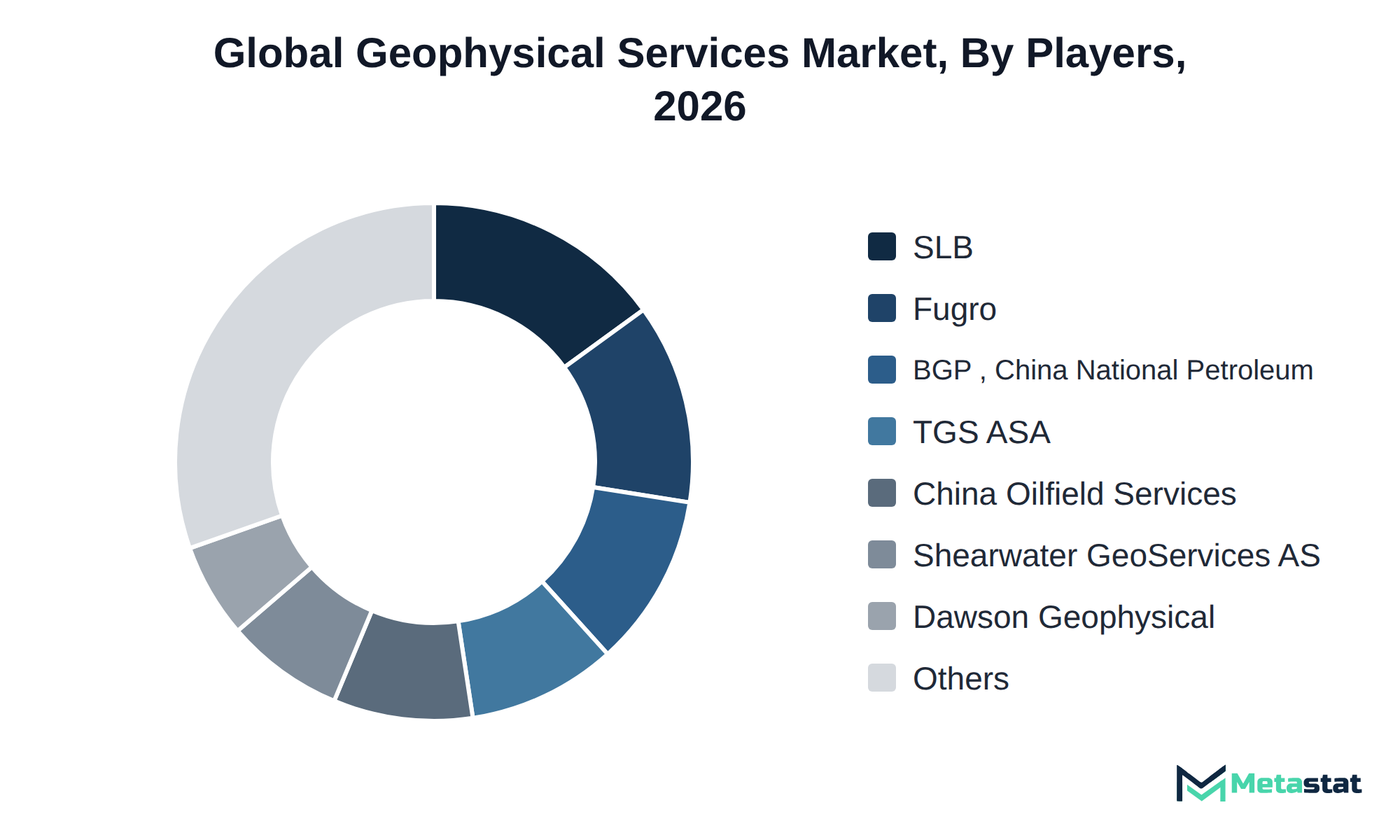
Competition within the Geophysical Services market is defined by various service types and technological capabilities. Companies differentiate themselves based on factors including pricing, certification, and the ability to customize services to meet specific project requirements. Buyers prioritize these elements when selecting providers, influencing overall market dynamics.
Viridien S.A. emphasizes advanced data acquisition techniques, ensuring high-quality results for clients. TGS ASA focuses on multi-client data licensing, catering to organizations seeking cost-effective solutions without compromising data quality. SLB uses its extensive technology portfolio, particularly in seismic services, to attract varied buyers in the oil and gas sector.
This growth relies on several key developments within the Geophysical Services market. First, advancements in Data Processing and Imaging technology, anticipated to increase its contribution to USD 5.3 billion by 2033, will enhance operational efficiencies and data accuracy, driving demand across various sectors. Second, the Seismic technology segment, projected to grow from USD 9 billion in 2026 to USD 11.7 billion in 2033, reflects strong demand in regions like North America, where activity in oil and gas exploration remains significant. Third, the rising focus on environmental site investigation applications, with a compound annual growth rate of 4.6%, signifies an expanding role for Geophysical Services in sustainability initiatives.
While optimistic growth is expected, challenges persist. Economic fluctuations, geopolitical tensions, and regulatory changes could hinder market expansion. Such risks particularly impact investment levels in regions with complex regulatory environments, slowing down the projected growth rate. Overall, reaching USD 20.9 billion depends on how well the Geophysical Services market handles these developments and risks.
By Service Type: Data Acquisition, Data Processing and Imaging, Data Interpretation and Modeling, Multi-Client Data Licensing, Others (Survey Design, Independent Quality Control)
By Technology: Seismic, Electromagnetic, Magnetic, Gravity and Gradiometry, Electrical Resistivity and Induced Polarization, Ground-Penetrating Radar, Others (Radiometric, Self-Potential, Thermal)
By Survey Platform: Land-Based, Marine-Based, Airborne
By Application: Oil and Gas, Mineral Exploration and Mining, Civil Engineering and Infrastructure, Environmental Site Investigation, Groundwater Exploration, Offshore Renewable Energy Site Assessment, Geothermal Exploration, Carbon Storage Characterization and Monitoring, Others (Agricultural Soil Mapping, Archaeological Investigation)
The report strategically identifies and profiles the key market players and analyses their core competencies in each sub-segment of the Geophysical Services market.
Report Attributes | Details |
Study Period | 2021-2033 |
Base Year | 2025 |
Estimated Year | 2026 |
Forecast Period | 2026-2033 |
Historical Period | 2021-2025 |
Growth Rate | CAGR 4.2% from 2026 to 2033 |
Revenue Unit | USD billion |
Segmentation | By Service Type, Technology, Survey Platform, Application, and Region |
By Region | North America (By Service Type, Technology, Survey Platform, Application, and Country)
|
Europe (By Service Type, Technology, Survey Platform, Application, and Country)
| |
Asia Pacific (By Service Type, Technology, Survey Platform, Application, and Country)
| |
South America (By Service Type, Technology, Survey Platform, Application, and Country)
| |
Middle East and Africa (By Service Type, Technology, Survey Platform, Application, and Country)
|
Find answers to common questions about this report
The Geophysical Services market size was valued at USD 15 billion in 2025.
The market is projected to grow at a CAGR of 4.2% during the forecast period from 2026 to 2033.
The North America Geophysical Services market size is estimated to reach USD 12.4 billion by 2033.
Data Acquisition leads the Geophysical Services market with a projected value of USD 10.2 billion by 2033. This segment surpasses others in terms of revenue generation.
Investment in oil and gas exploration drives spending in the Geophysical Services market. Companies allocate resources to enhance exploration effectiveness, while advancements in data processing and imaging technologies improve data interpretation accuracy. These factors contribute to increased demand from critical sectors, including oil and gas, mineral exploration, and civil engineering.
North America holds the dominant share of the Geophysical Services market, accounting for USD 12.4 billion in 2033, which represents 62.2 percent of the total market.
Pricing pressure in the market poses a challenge for several buyer groups, particularly in the oil and gas sector, leading to slower uptake of necessary surveys and analyses. Rising talent costs significantly impact profitability, straining operational budgets and narrowing profit margins for service providers.
Factors favoring adoption in the Geophysical Services industry include rising demand for accurate subsurface analyses and advancements in data interpretation technologies. Industries including mineral exploration and civil engineering prioritize these capabilities to enhance project outcomes and improve resource allocation efficiency.
The Geophysical Services market is estimated to reach a valuation of USD 20.9 billion by 2033.
Key players operating in the Geophysical Services market include Viridien S.A., TGS ASA, SLB, BGP Inc., China National Petroleum Corporation, and Fugro N.V. Other notable companies are Shearwater GeoServices Holding AS, China Oilfield Services Limited, SAExploration Holdings, Inc., and Dawson Geophysical Company. Additional participants in the market include PXGEO, DMT GmbH & Co. KG, Xcalibur Smart Mapping, Getech Group plc, Halliburton Company, Weatherford International plc, EGS Survey Group, Gardline Limited, Abitibi Geophysics, Ramboll Group A/S, Spectrum Geophysics, SeaBird Exploration, Geotech Ltd., SkyTEM Surveys ApS, Sander Geophysics Limited, Spectrem Air Limited, Bell Geospace Limited, Asian Energy Services Limited, Sinopec Oilfield Service Corporation, PARSAN Overseas Private Limited, and Atlas Geophysics Pty Ltd.
The analysts below cover Professional Services research at Metastat Insights.
LEAD ANALYST
Utkarsh Khirodkar is a Lead Market Research Analyst at MetaStat Insight, specializing in market intelligence, technology sector assessments, and competitive strategy.

PRINCIPAL CONSULTANT - ENTERPRISE AI & EMERGING TECHNOLOGIES
Banking & Finance · Electronics and Semiconductor · Energy and Power · Healthcare IT · Information & Technology · Professional Services
Vijay Gunti is a Principal Consultant at MetaStat Insight, bringing over two decades of experience across enterprise digital transformation, technology strategy, and intelligent systems.

PRINCIPAL CONSULTANT - QUALITY SYSTEMS & COMPLIANCE
Electronics and Semiconductor · Machinery & Equipment · Professional Services
Omkar Phadtare is an Industry Consultant at MetaStat Insight, specializing in quality systems, regulatory compliance, and standards benchmarking to drive data-driven market intelligence and strategic industry research.

LEAD CONSULTANT - COMMUNICATION, TELECOM, AND IT
Electronics and Semiconductor · Information & Technology · Machinery & Equipment · Professional Services
Ravindra Sathe Consultants for Communication, Telecom, and IT at MetaStat Insight. He leads the firm's industry research initiatives across telecommunications infrastructure, digital connectivity, enterprise networking, and emerging information technology domains.
Integrating zero-trust access controls across legacy electronic health record systems involves complex compliance overhead. Team produced an analysis that clearly separated identity governance and administration tools from privileged access management platforms. Their evaluation of HIPAA and GDPR compliance features across cloud native solutions gave our architecture group clear baseline criteria. The custom data request regarding biometric authentication adoption in hospital networks was returned promptly with clear documentation.
Evaluating calorific value requirements and air permit compliance across municipal waste facilities requires localized data. Metastat Insight structured their analysis around operational throughput capacity and feedstock composition variations in Latin America and Eastern Europe. Their competitive mapping of sorting equipment vendors helped clarify technology differences between optical separators and heavy media systems. The study provided an objective baseline during our capital expenditure reviews.
Decarbonizing industrial thermal processes hinges on refrigerant regulations and compressor efficiency limits. Metastat Insights delivered a thorough market analysis that evaluated natural refrigerants like CO2 and hydrocarbons against synthetic low-GWP alternatives. The breakdown of utility incentives and grid capacity constraints across key European manufacturing hubs offered valuable perspective. The follow-up conversation with their sector analysts addressed our specific questions on mechanical vapor recompression systems efficiently.
Explore related market intelligence reports worth reading alongside this one.
Starting from
$2950
Starting from
$2950