
LEAD ANALYST
Utkarsh Khirodkar is a Lead Market Research Analyst at MetaStat Insight, specializing in market intelligence, technology sector assessments, and competitive strategy.

Global Contingent Workforce Management Market Size, Share, By Organization Size (Small and Medium Enterprises (SMEs) and Large Enterprises), By Type (Permanent Staffing and Flexible Staffing), By End-user Industry (Information Technology (IT) and Telecom, BFSI (Banking, Financial Services, and Insurance), Healthcare and Life Sciences, Manufacturing, Retail and E-commerce), Industry Analysis, Growth, Trends, and Forecast, 2026-2033
Report ID
MSI-4001
Published
November, 2026
Pages
303 Pages
Format
Historical
Base year
Forecast
Forecast period
Report Details
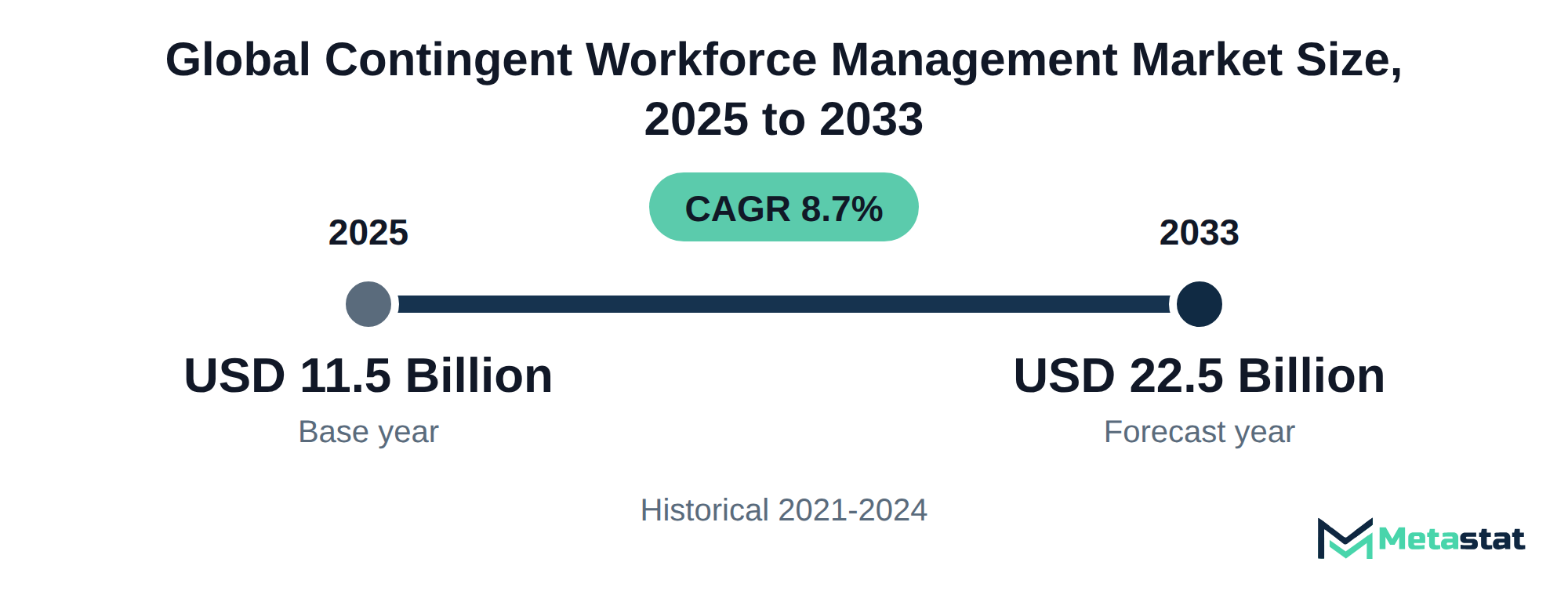
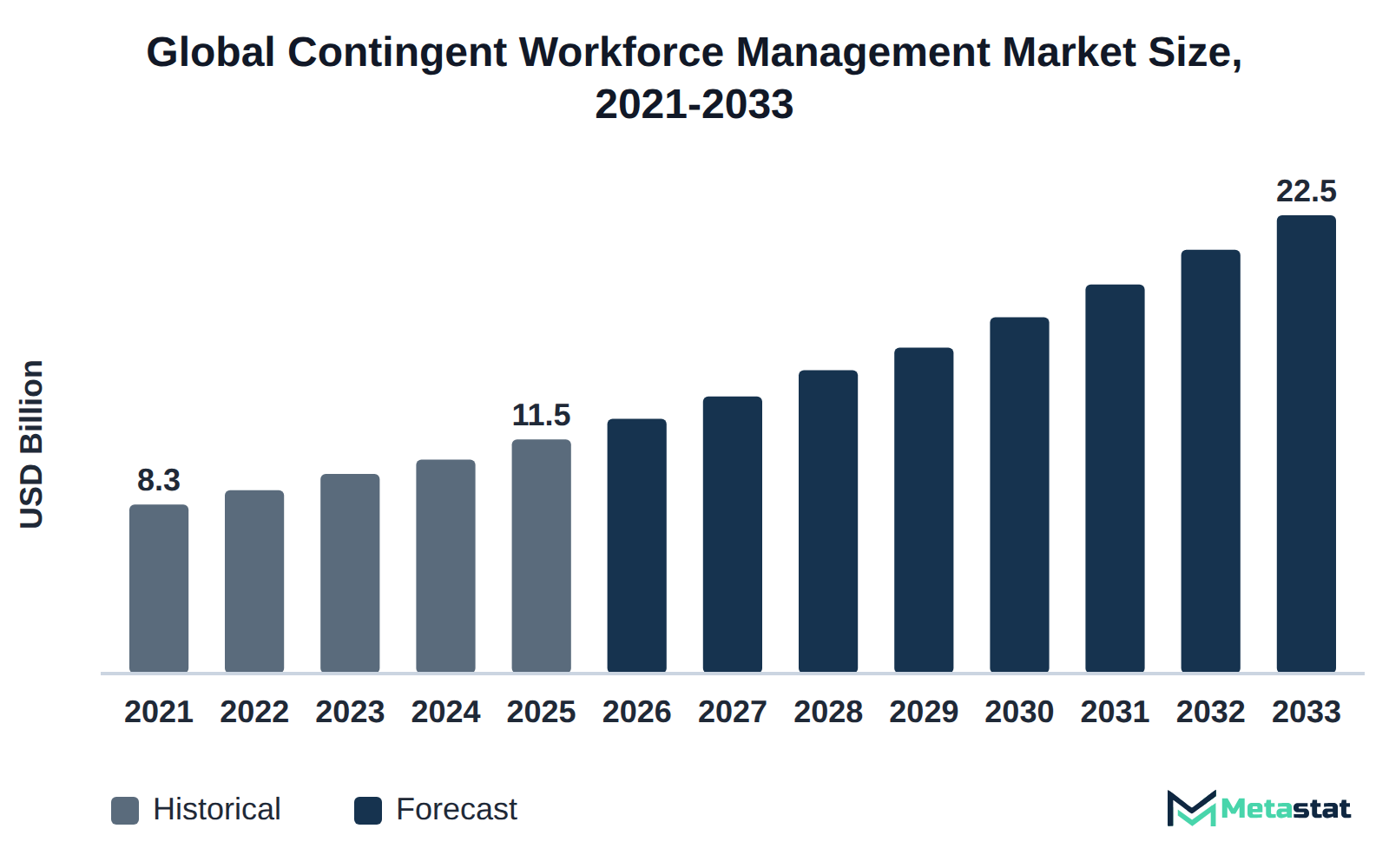
Market Valuation: Valued at $11.5 Billion in 2025, projected to reach $22.5 Billion by 2033 at a 8.7% CAGR.
Dominant Segment: Flexible Staffing leads the market, driven by a shift towards adaptable workforce strategies that allow organizations to respond quickly to changing demands.
Geographic Lead: North America is the leading region, holding 37.0% of the market in 2025, primarily due to strong demand from the IT and manufacturing sectors.
What's Inside: The report provides comprehensive insights into market segmentation by organization size, type, and end-user industry, along with competitive analysis and forecasts through 2033.
Growth Opportunities: The small and medium enterprises (SMEs) segment is anticipated to grow significantly, reflecting increasing recognition of the benefits of contingent workforce management solutions.
Market Dynamics: Key drivers include the rising emphasis on workforce flexibility and the integration of advanced technologies, which enhance operational efficiency and strategic decision-making.
Choose Your License
Global Contingent Workforce Management Market
The global Contingent Workforce Management market was valued at USD 11.5 billion in 2025 and is projected to reach USD 22.5 billion by 2033, growing at a CAGR of 8.7% over the forecast period.
The Contingent Workforce Management market covers services and solutions for managing temporary and contract workers. Organizations invest in these services to enhance workforce flexibility, reduce operational costs, and access specialized skills. The increasing reliance on contingent labor across various industries, particularly in response to dynamic market demands, drives significant spending in this sector.
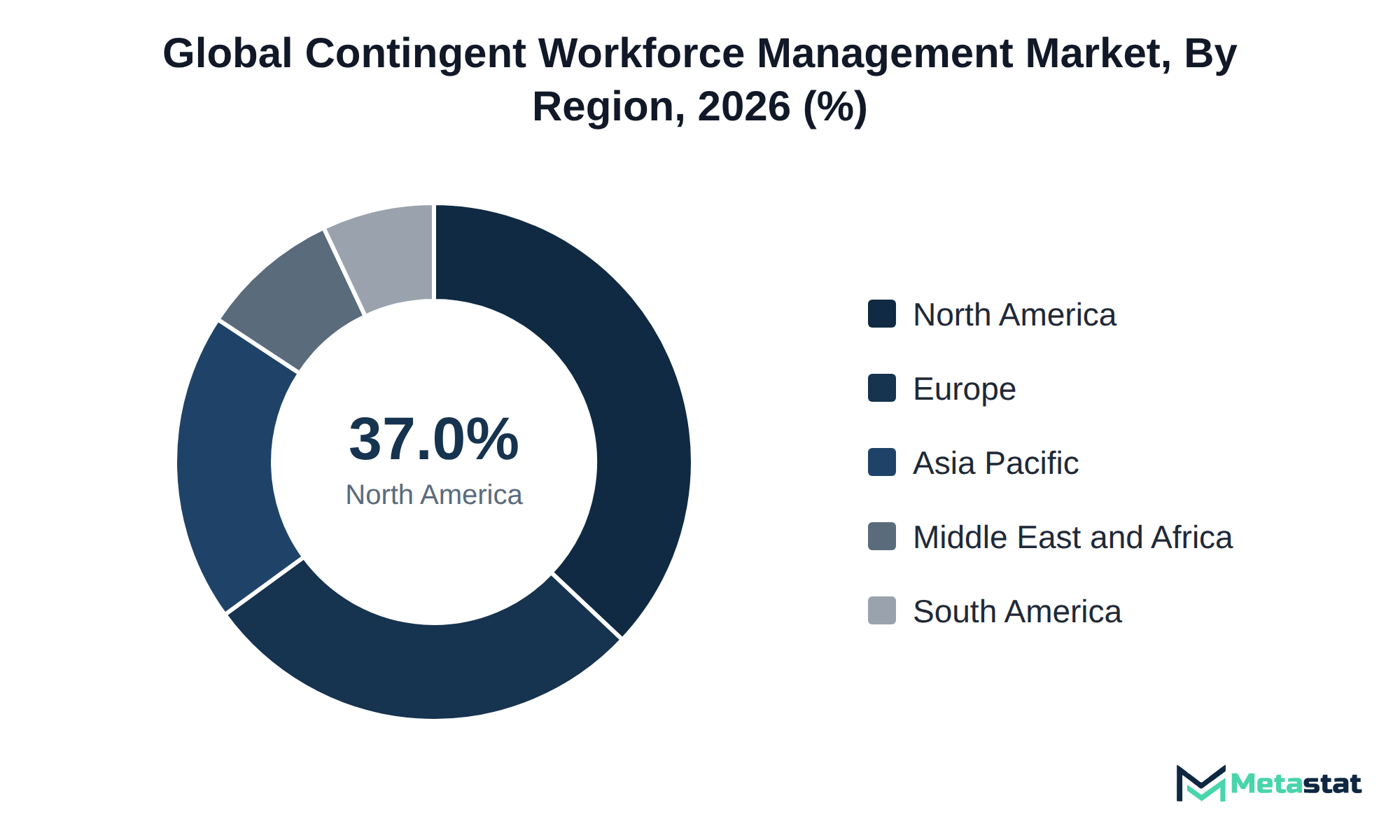
Growth in the market is propelled by several factors, including ongoing digital transformation and the need for organizations to adapt to fluctuating labor demands. Among the segments, Flexible Staffing holds the largest value, reflecting a shift towards adaptable workforce strategies. North America holds 37.0% of the market in 2025, with the US leading in 2026. This region's dominance highlights strong demand for contingent workforce solutions.
While companies navigate changing economic landscapes, the focus on workforce agility and efficiency becomes critical. The expansion of Small and Medium Enterprises (SMEs) in the market emphasizes growing recognition of the benefits associated with contingent workforce management. This segment is anticipated to experience significant growth, contributing substantially to overall market trajectory.
The market encompasses solutions and services that streamline the management of contingent workers, enabling organizations to optimize their workforce strategies. Businesses invest in this market to enhance flexibility, reduce overhead costs, and access specialized skills on demand. The increasing need for agility in workforce management drives significant spending, with companies seeking to adapt to changing market conditions and operational demands.
Growth in this market is propelled by the rising adoption of flexible staffing solutions, particularly within small and medium enterprises. The segment of flexible staffing holds the largest value, reflecting a strong demand for adaptable labor solutions. Other regions, including Europe and Asia Pacific, exhibit substantial potential for growth, driven by varying workforce dynamics and economic conditions.
The increasing complexity of labor regulations and the need for compliance further stimulate investment in contingent workforce management solutions. Organizations use technology to strengthen their management capabilities and stay competitive as the labor market changes. This trend highlights the importance of efficient workforce management in driving business success.
The integration of Agentic AI and spend analytics into Contingent Workforce Management platforms significantly enhances operational efficiency and strategic decision-making. Companies increasingly adopt these technologies to optimize their contingent workforce, enabling data-driven insights that improve budget management and resource allocation. The incorporation of spend analytics identifies patterns in contingent labor spending, allowing organizations to find cost-saving opportunities and streamline procurement processes.
In 2026, the market for Small and Medium Enterprises (SMEs) is expected to reach USD 4.9 billion, with an anticipated growth to USD 9.7 billion by 2033, reflecting a compound annual growth rate of 10.2%. This growth highlights the rising value placed on intelligent workforce management solutions among SMEs. By employing Agentic AI, firms enhance their ability to forecast labor needs, assess skill gaps, and refine recruitment strategies. These advancements lead to improved workforce agility and reduced operational costs.
Integrating these technologies within Contingent Workforce Management systems drives efficiency and positions organizations to respond proactively to market changes. The current trajectory highlights a significant shift in workforce management, where insights derived from analytics enable businesses to gain a competitive edge. The commercial implications are profound, driving both revenue growth and strategic alignment across various sectors.
Global worker classification directives increasingly influence the design of automated compliance workflows in the Contingent Workforce Management market. These directives shape how organizations classify their workforce, impacting contract models and pricing strategies. Compliance with these regulations requires precise documentation and reporting capabilities, which automated systems effectively provide.
The segment of Permanent Staffing, projected to grow from USD 5.1 billion in 2026 to USD 8 billion by 2033, illustrates the importance of adhering to these directives. Organizations adopting automated compliance workflows streamline the classification process, ensuring timely and accurate reporting, which mitigates legal risks and regulatory penalties. Consequently, the adoption of such workflows enhances operational efficiency while building trust with regulatory bodies.
The financial burden of non-compliance is significant, making automated solutions an attractive investment. With the market evolving and growing, organizations increasingly recognize the necessity of integrating compliant processes into their contingent workforce strategies. The incorporation of automated compliance workflows is expected to drive demand within the market, supporting revenue growth and improving competitive positioning.
Organizations increasingly seek to optimize their statement of work (SoW) expenditures through unified external talent orchestration. This approach enables firms to effectively manage both permanent and flexible staffing needs while ensuring compliance and efficiency. In the Contingent Workforce Management market, buyers from large enterprises particularly benefit from this strategy, which requires a diverse pool of talent to meet dynamic project demands.
The projected value for large enterprises in the market is expected to reach USD 12.8 billion by 2033. This significant growth highlights the rising focus on streamlining procurement processes and gaining better visibility into spending on contingent labor. Effective orchestration of external talent allows organizations to align strategic goals with operational needs, reducing overhead costs while enhancing the agility needed to respond to market changes.
Unified talent orchestration solutions facilitate real-time insights into workforce composition, driving informed decision-making. This capability supports organizations in identifying skill gaps and optimizing resource allocation, ultimately enhancing project outcomes. By rationalizing SoW spend, organizations achieve better financial performance while ensuring that projects are staffed with the right talent at the right time.
Enterprise procurement teams actively consolidate fragmented Contingent Workforce Management systems to enhance efficiency and streamline operations. This consolidation trend arises from reduced operational complexity and improved supplier relationships, allowing organizations to better adapt to dynamic market conditions.
Fragmented systems often lead to redundancies and inefficiencies, hindering strategic decision-making. Procurement teams recognize that integrating various systems into a unified platform enables better data visibility and analytics. This approach improves compliance and risk management, essential for navigating the increasingly complex regulatory landscape. The Contingent Workforce Management market responds to this demand by offering advanced solutions that facilitate the consolidation process.
Successful consolidation strategies lead to significant cost savings and enhanced productivity for organizations. With a cohesive system, procurement teams manage their contingent workforce more effectively, optimizing resource allocation while driving overall business performance. This strategic move positions enterprises to capitalize on growth opportunities in the evolving market.
Organizations increasingly prioritize flexibility in their workforce strategies, leading to a shift in procurement practices. Buyers from sectors including Information Technology and Healthcare enhance their reliance on contingent workers to respond to fluctuating demand and skill shortages. This trend results in increased spending on Contingent Workforce Management solutions, driving market growth. Organizations capitalizing on this flexibility optimize staffing levels and reduce costs associated with permanent hires. This demand for adaptable workforce solutions influences competition within the market, with providers striving to enhance their offerings to meet diverse client needs.
Another key driver includes the growing need for governance, risk and compliance solutions in workforce engagement strategies. Businesses face increasing pressure to follow labor laws and regulations, which prompts investment in management systems that ensure compliance. This heightened focus on compliance results in greater market spending, as companies seek to mitigate risks associated with workforce misclassification and ensure adherence to local regulations.
Rapid advancements in technology significantly enhance the efficiency of contingent workforce management. Automation tools and software platforms facilitate streamlined processes, optimizing tasks including recruitment, onboarding, and performance tracking. The adoption of cloud-based services provides organizations with the flexibility to manage their contingent workforce remotely, ensuring accessibility and real-time updates. Enhanced analytics capabilities enable organizations to gather insights into workforce performance and spending patterns, supporting data-driven decision-making.
In the IT and telecom sectors, the implementation of these technologies influences procurement strategies, leading to increased demand for innovative contingent workforce solutions. The market benefits from ongoing investments in technological infrastructure, creating a competitive environment where organizations adopt advanced tools to improve operations. Consequently, these technological developments contribute to the market's projected growth, highlighting the importance of innovation in shaping contingent workforce management strategies.
Complex regulatory compliance requirements restrict adoption among organizations, particularly small and medium enterprises (SMEs). The intricacies of navigating labor laws and contractual obligations result in slower uptake of contingent workforce management solutions. SMEs frequently face challenges in understanding compliance implications, leading to hesitation in implementing new systems. This situation results in smaller order sizes, with organizations opting for minimal adjustments to their existing workforce strategies to avoid potential legal pitfalls. The burden of ensuring compliance with diverse regulations across different jurisdictions adds to operational difficulties and delays the transition to stronger contingent workforce management practices. Such barriers significantly impact demand within the contingent workforce management market, causing several SMEs to postpone investments that enhance their operational efficiency.
Rising talent acquisition costs challenge suppliers within the Contingent Workforce Management market, impacting profitability and operational efficiency. Organizations face increased competition for skilled workers, driving up wages and recruitment expenditures. This trend particularly affects sectors including Information Technology and Healthcare, where specialized skills are in high demand. Suppliers respond by enhancing their recruitment strategies and investing in technology that improves talent sourcing and retention. Many companies prioritize building strong relationships with potential candidates, focusing on employer branding and streamlined onboarding processes. These approaches aim to attract the right talent while managing increasing costs. Suppliers leverage data analytics to identify market trends and adjust their strategies accordingly, ensuring they remain competitive amid escalating costs. This situation highlights the importance of strategic workforce planning and collaboration between organizations and staffing providers to navigate financial pressures effectively.
The small and medium enterprises (SMEs) segment presents a significant growth opportunity within the Contingent Workforce Management market. This rapid expansion results from increasing flexibility demands among SMEs, driving the adoption of contingent workforce solutions to enhance operational agility. SMEs seek efficient staffing solutions to compete effectively in dynamic markets. The market's offerings, tailored for smaller organizations, address these evolving requirements and facilitate streamlined recruitment processes. By focusing on this underserved segment, providers enhance their reach and capture a greater share of the market. This trend indicates a promising trajectory for growth, driven by the unique needs and challenges faced by SMEs in workforce management.
The Global Contingent Workforce Management market is segmented based on Organization Size, Type, and End-user Industry.
This segment primarily serves SMEs seeking flexible workforce solutions to adapt to fluctuating demand. A significant driver of growth in this segment stems from increasing demand for agile staffing solutions that enable SMEs to maintain operational efficiency while managing costs. The rapid pace of technological advancements further supports this shift, allowing SMEs to use new tools for workforce management. Compared to larger enterprises, SMEs exhibit a higher growth rate due to their ongoing need for adaptable staffing solutions. The market reflects this trend, with SMEs adopting contingent workforce management strategies more quickly than larger counterparts, facilitating the ability to respond swiftly to market changes.
Large Enterprises segment is estimated to reach USD 12.8 billion by 2033, at a CAGR of 7.7% during the forecast period. This segment serves organizations that require a robust workforce to manage large-scale projects and specialized tasks. Large enterprises use contingent workforce solutions to improve operational efficiency, support various projects, and keep staffing flexible. The increasing complexity of projects in sectors including Information Technology (IT) and Telecom drives demand for skilled contract workers. This segment expands at a slower rate compared to Small and Medium Enterprises (SMEs), which are projected to grow at a CAGR of 10.2%. The adoption of advanced technology solutions and strategic partnerships with staffing providers differentiates large enterprises from SMEs, highlighting their need for comprehensive management strategies in the market.
This segment focuses on the recruitment of employees for long-term roles, enabling organizations to build a stable workforce. Industries including Information Technology, Finance, and Healthcare actively engage permanent staffing solutions to ensure they attract talent necessary for their operations. A key driver for this segment involves the ongoing demand for skilled professionals, reflecting the competitive nature of the labor market. In contrast to Flexible Staffing, which is projected to grow at a CAGR of 10%, Permanent Staffing experiences slower growth, indicating a more stable but less dynamic recruitment landscape. Consequently, organizations prioritize investments in permanent staffing to secure essential talent while managing costs effectively.
Flexible Staffing segment is estimated to reach USD 14.5 billion by 2033, at a CAGR of 10% during the forecast period. This segment covers temporary and contract staffing solutions that organizations adopt to meet fluctuating labor demands. Companies in sectors including Information Technology (IT) and Telecom use flexible staffing to quickly scale their workforce in response to project needs. The segment thrives due to ongoing shifts towards agile workforce models, driven by increasing demand for specialized skills. Compared to Permanent Staffing, which is projected to reach USD 8 billion by 2033 at a CAGR of 6.6%, Flexible Staffing exhibits more significant growth potential. This accelerated growth reflects organizations' priorities for adaptability and efficiency in workforce management, which are essential in a dynamic business environment.
Information Technology (IT) and Telecom segment is valued at USD 3.5 billion in 2026 and is projected to reach USD 6 billion by 2033, at a CAGR of 8% during the forecast period. This segment serves various industries seeking temporary talent to manage projects and meet fluctuating demands efficiently. The rise in digital transformation initiatives across organizations drives the growth of this segment, with technology companies increasingly relying on contingent workforce solutions to adapt to rapid changes. Compared to other segments, IT and Telecom demonstrates a relatively faster growth trajectory, influenced by higher demand for specialized skills in areas including software development and cybersecurity. The ongoing evolution of technology necessitates a flexible workforce, further enhancing the appeal of contingent employment for businesses in this sector.
BFSI (Banking, Financial Services, and Insurance) segment is estimated to reach USD 3.9 billion by 2033, at a CAGR of 8.4% during the forecast period. This segment provides essential support for financial institutions, ensuring effective management of contingent workers in various roles, including compliance, risk management, and customer service. Demand for flexible workforce solutions intensifies within this sector, driven by rapid adaptation to changing regulatory environments and market conditions. Compared to segments like Information Technology (IT) and Telecom, which exhibit a CAGR of 8%, the BFSI segment experiences slightly higher growth, reflecting increased investment in staffing solutions that enhance efficiency and compliance. Financial institutions increasingly rely on contingent workforce management strategies to mitigate operational risks and maintain customer satisfaction, contributing to strong demand and investment in this sector.
The Healthcare and Life Sciences segment is expected to reach USD 3.7 billion by 2033. This segment focuses on providing specialized workforce solutions tailored for healthcare providers, pharmaceutical companies, and other life sciences organizations. Demand for skilled professionals in this field increases due to advancements in medical technologies and the growing emphasis on personalized healthcare solutions. Flexible healthcare staffing also helps providers respond to skill shortages and fluctuating demand. The segment's growth of 8.4% CAGR outpaces several others, driven by a continuous need for quality care and regulatory compliance. In contrast to segments like Information Technology, which focuses on broader technological advancements, Healthcare and Life Sciences faces unique challenges related to stringent regulatory requirements and the critical need for specialized expertise. The market dynamics reflect the overlap between healthcare needs and workforce management, which positions this segment for significant growth.
Manufacturing segment is projected to grow at a CAGR of 7.6% during the forecast period. This segment predominantly involves companies that require skilled labor to operate machinery, assemble products, and ensure quality control. The drive for efficiency and productivity influences demand for contingent workforce solutions in manufacturing, with organizations striving to optimize operations. Rapid technological advancements in automation and smart manufacturing increasingly shape this sector, allowing businesses to integrate contingent workers seamlessly into their production processes. Unlike other segments, manufacturing relies heavily on flexible staffing to manage fluctuations in production demand, making it distinct in its approach to workforce management. The manufacturing sector's reliance on skilled labor and its commitment to maintaining operational continuity influence adoption rates, making it an important area within the market.
Retail and e-commerce represent critical sectors within the contingent workforce landscape. Organizations in this space employ flexible staffing solutions to manage sales spikes during peak seasons and adapt to changing consumer demands. The ongoing shift toward online shopping enhances the need for agile workforce strategies, with retailers increasingly relying on contingent workers to fill temporary roles. Demand for talent in this sector is driven by the rapid growth of e-commerce platforms and changing shopping behaviors. This segment differs from others due to its higher reliance on flexible staffing models, resulting in faster growth compared to traditional permanent staffing solutions. The contingent workforce management market is expected to evolve, reflecting the dynamic nature of retail and e-commerce.
This segment encompasses various industries that do not fit into the primary categories of Information Technology, BFSI, Healthcare, and Manufacturing. Organizations leverage this segment for specialized needs, often turning to alternative contingent workforce solutions to fill unique roles or address niche markets. The demand for such services is driven by the increasing complexity of workforce requirements, prompting organizations to seek tailored solutions that traditional segments do not fulfill. This sub-segment typically experiences slower growth compared to Flexible Staffing, which benefits from more widespread adoption across numerous sectors. Organizations focusing on specialized needs prioritize quality and expertise over cost, reflecting a distinct positioning in the market.
Based on geography, the Global Contingent Workforce Management market is divided into North America, Europe, Asia-Pacific, South America, Middle East, and Africa.
The North American market exhibits a strong demand for contingent workforce management, projected to reach USD 7.2 billion by the end of 2033. Key industries driving this demand include information technology and manufacturing, where companies increasingly rely on flexible staffing solutions to address shifting project requirements and talent shortages. The growth of remote work and the gig economy increases acceptance of contingent workers, particularly in the United States and Canada. Strong investment in technology infrastructure enhances operational efficiency, supporting the market's expansion. With a 37% share of the global contingent workforce management market in 2025, North America shapes trends and practices and influences global strategies and competitive dynamics.
Europe represents a significant segment within the Contingent Workforce Management market, accounting for 27.9% of global share in 2025. The region's demand is driven by robust industries including Information Technology, BFSI (Banking, Financial Services, and Insurance), and Healthcare and Life Sciences. Workforce flexibility remains essential for organizations seeking agility in operations, particularly in response to fluctuating market demands. Countries including Germany, France, the UK, Italy, Spain, and Russia exhibit strong engagement with contingent workforce solutions, influenced by innovative technology integration and evolving workplace dynamics. The market is expected to grow, supported by rising investments in digital infrastructure and an increasing focus on talent management strategies. Economic stability in these nations creates a conducive environment for market expansion, enhancing competitive positioning within Europe.
Asia-Pacific represents a crucial market for contingent workforce management, accounting for 19.3% of the global share in 2025. The region experiences robust demand driven by the expanding Information Technology (IT) and Telecom sectors, particularly in countries like India and China. Large-scale projects in these industries require flexible talent solutions, pushing companies to adopt contingent workforce strategies. Australia and Japan demonstrate increasing investment in digital infrastructure, facilitating market growth. Regulatory environments in countries including South Korea support the use of flexible staffing models, enhancing operational agility for enterprises. The contingent workforce management market in Asia-Pacific is projected to experience significant growth, supported by ongoing trends in remote work and gig economies.
Demand for contingent workforce management in South America is influenced by specific industries including healthcare and manufacturing. Brazil and Argentina stand out, being the primary markets, exhibiting a growing reliance on flexible staffing solutions to meet varying labor demands. The region's share of the global market is projected at 7.0% in 2025, reflecting its increasing importance in the overall landscape. Labor regulations and economic conditions in South America create distinct challenges and opportunities for local businesses seeking to optimize workforce strategies. Growth in the market is driven by advancements in technology and evolving employment trends, facilitating better workforce management.
The contingent workforce management market in the Middle East and Africa is influenced by a growing demand for flexible staffing solutions. Industries including healthcare, manufacturing, and technology drive this demand. Countries like Saudi Arabia and the UAE invest significantly in digital transformation initiatives, enhancing the appeal of contingent workforce solutions. South Africa shows increasing interest in adopting such services to address skills shortages and improve operational efficiencies. This regional market represents 8.7% of the global share in 2025. Effective workforce management strategies in emerging markets continue to shape the trajectory of growth in the region. By 2033, the market is projected to reflect significant advancements in contingent workforce management practices.
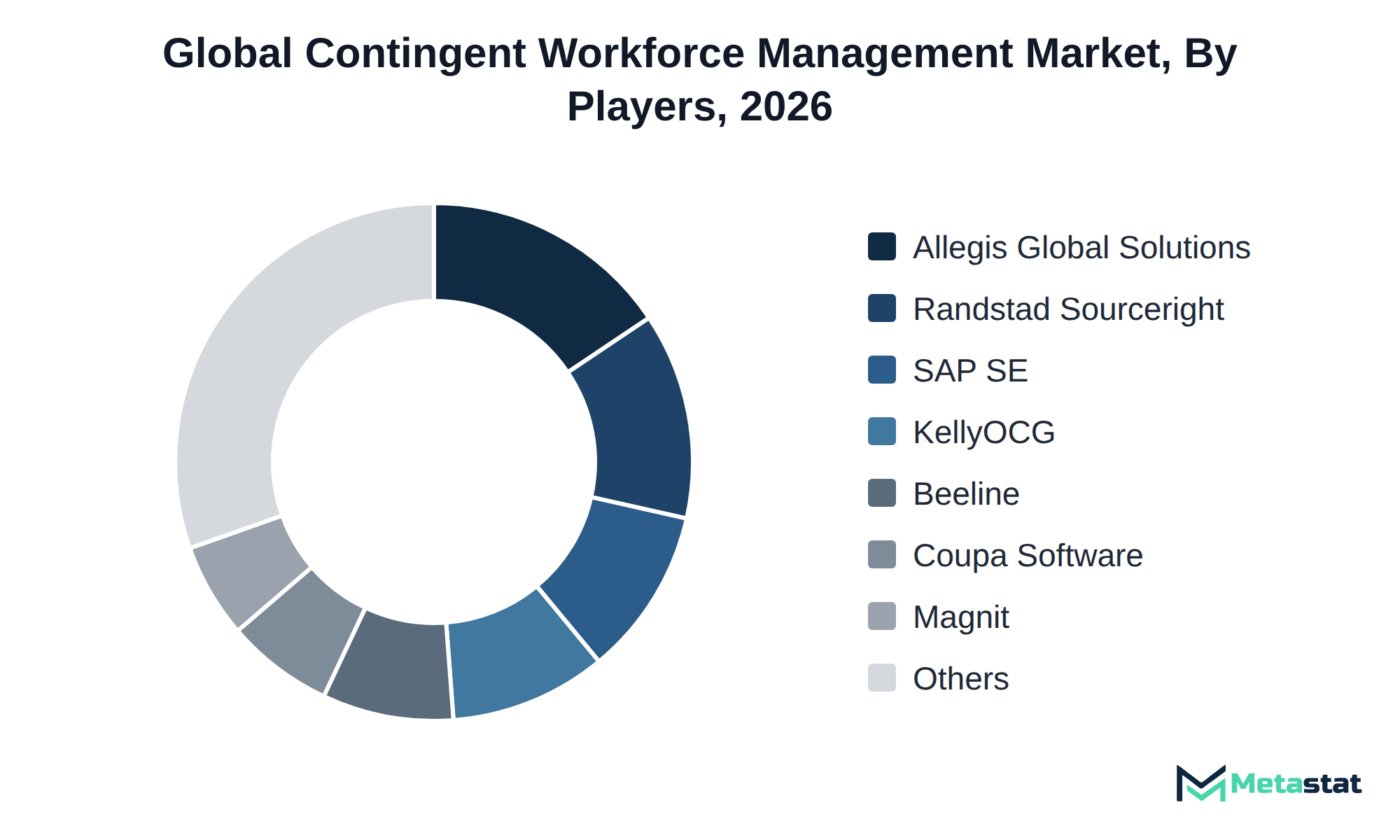
The Contingent Workforce Management market experiences significant competition among various players, primarily divided by service type and business model. Companies focus on different aspects including pricing, certification, customization, and service offerings to attract buyers. For instance, SAP SE emphasizes a software ecosystem that integrates contingent workforce management solutions with existing enterprise systems, appealing to large enterprises seeking effective integration.
Other companies, like Upwork, focus on flexible staffing solutions tailored for SMEs, highlighting competitive pricing and a diverse pool of talent. Allegis Global Solutions offers workforce solutions that cater to the specific needs of the BFSI sector, which require stringent compliance and specialized staffing capabilities. This diversity among competitors allows buyers to select solutions that align closely with their operational requirements and strategic objectives.
Achieving this growth requires several key developments. First, the expansion of small and medium enterprises (SMEs) in contingent workforce management will drive demand, with this segment projected to grow at a CAGR of 10.2%, from USD 4.9 billion in 2026 to USD 9.7 billion by 2033. Second, the increasing adoption of flexible staffing solutions will enhance market dynamics, with this segment expected to reach USD 14.5 billion by 2033, growing at a CAGR of 10%. Conversely, potential risks exist that could impede this growth trajectory. Economic fluctuations, particularly in North America, could affect investment in contingent workforce solutions, slowing market expansion. Maintaining a focus on innovation and adapting to market demands will remain crucial for the contingent workforce management market to realize its full potential by 2033.
By Organization Size: Small and Medium Enterprises (SMEs), Large Enterprises
By Type: Permanent Staffing, Flexible Staffing
By End-user Industry: Information Technology (IT) and Telecom, BFSI (Banking, Financial Services, and Insurance), Healthcare and Life Sciences, Manufacturing, Retail and E-commerce, Others
The report strategically identifies and profiles the key market players and analyses their core competencies in each sub-segment of the Contingent Workforce Management market.
|
Report Attributes |
Details |
|
Study Period |
2021-2033 |
|
Base Year |
2025 |
|
Estimated Year |
2026 |
|
Forecast Period |
2026-2033 |
|
Historical Period |
2021-2025 |
|
Growth Rate |
CAGR 8.7% from 2026 to 2033 |
|
Revenue Unit |
USD billion |
|
Segmentation |
By Organization Size, Type, End-user Industry, and Region |
|
By Region |
North America (By Organization Size, Type, End-user Industry, and Country)
|
|
Europe (By Organization Size, Type, End-user Industry, and Country)
|
|
|
Asia Pacific (By Organization Size, Type, End-user Industry, and Country)
|
|
|
South America (By Organization Size, Type, End-user Industry, and Country)
|
|
|
Middle East and Africa (By Organization Size, Type, End-user Industry, and Country)
|
Find answers to common questions about this report
The Contingent Workforce Management market size was valued at USD 11.5 billion in 2025.
The market is projected to grow at a CAGR of 8.7% during the forecast period from 2026 to 2033.
The North America Contingent Workforce Management market size is estimated to reach USD 7.2 billion by 2033.
Flexible Staffing leads the Contingent Workforce Management market with a projected value of USD 14.5 billion by 2033, surpassing Permanent Staffing, which is expected to reach USD 8 billion in the same year.
Organizations increasingly prioritize flexibility in workforce strategies, leading to heightened spending on management solutions. The growing need for compliance and risk management in workforce engagement strategies further drives market growth.
North America holds the dominant share of the Contingent Workforce Management market, with a value of USD 7.2 billion in 2033, representing 37 percent of the total market.
Complex regulatory compliance requirements restrict adoption among organizations, particularly small and medium enterprises. The intricacies of navigating labor laws and contractual obligations often result in slower uptake of management solutions.
The small and medium enterprises (SMEs) segment presents a significant growth opportunity, driven by increasing flexibility demands that encourage the adoption of contingent workforce solutions. Tailored offerings for smaller organizations enhance operational agility and streamline recruitment processes, enabling SMEs to compete effectively in dynamic markets.
The Contingent Workforce Management market is estimated to reach a valuation of USD 22.5 billion by 2033.
Key players operating in the Contingent Workforce Management market include SAP SE, Magnit, Coupa Software Inc, KellyOCG, Randstad Sourceright, Beeline, and Allegis Global Solutions.
The analysts below cover Professional Services research at Metastat Insights.
LEAD ANALYST
Utkarsh Khirodkar is a Lead Market Research Analyst at MetaStat Insight, specializing in market intelligence, technology sector assessments, and competitive strategy.

PRINCIPAL CONSULTANT - ENTERPRISE AI & EMERGING TECHNOLOGIES
Banking & Finance · Electronics and Semiconductor · Energy and Power · Healthcare IT · Information & Technology · Professional Services
Vijay Gunti is a Principal Consultant at MetaStat Insight, bringing over two decades of experience across enterprise digital transformation, technology strategy, and intelligent systems.

PRINCIPAL CONSULTANT - QUALITY SYSTEMS & COMPLIANCE
Electronics and Semiconductor · Machinery & Equipment · Professional Services
Omkar Phadtare is an Industry Consultant at MetaStat Insight, specializing in quality systems, regulatory compliance, and standards benchmarking to drive data-driven market intelligence and strategic industry research.

LEAD CONSULTANT - COMMUNICATION, TELECOM, AND IT
Electronics and Semiconductor · Information & Technology · Machinery & Equipment · Professional Services
Ravindra Sathe Consultants for Communication, Telecom, and IT at MetaStat Insight. He leads the firm's industry research initiatives across telecommunications infrastructure, digital connectivity, enterprise networking, and emerging information technology domains.
In the biological seed treatment space, registration timelines vary drastically between the European Union, Brazil, and North America. The MetaStat Insight research handled these cross-border regulatory barriers with genuine nuance, mapping commercialization pathways alongside historical field adoption rates. The segmentation between microbial strains and biochemical active ingredients was particularly well structured.
Our team was tracking whether regional recycling infrastructure could realistically absorb the growing volume of lithium iron phosphate batteries over the next decade. The report did a solid job separating announced hydrometallurgical plant capacity from active, permitted operational throughput. That distinction made the feedstock availability projections and regional recovery rate models far more credible than standard commercial overviews.
Tracking capacity expansion in single-use bioprocessing requires dependable data on raw material availability and cleanroom-grade polymer supply chains. The competitive landscape chapter gave a grounded evaluation of secondary component suppliers across North America and Asia-Pacific rather than simply reprinting press releases. Having that level of supplier benchmarking helped clarify dual-sourcing considerations for our clinical pipeline planning.
Explore related market intelligence reports worth reading alongside this one.
Starting from
$2950