
LEAD ANALYST
Utkarsh Khirodkar is a Lead Market Research Analyst at MetaStat Insight, specializing in market intelligence, technology sector assessments, and competitive strategy.

Global Workforce Management Market Size, Share, By Solution (Time and Attendance Management, Workforce Scheduling and Rostering, Absence and Leave Management, Workforce Analytics and Forecasting, Others), By Deployment Model (Cloud, On-Premises, Hybrid), By Organization Size (Large Enterprises and Small and Medium-Sized Enterprises), By End-Use Industry (Retail and E-Commerce, Healthcare and Life Sciences, Manufacturing, Banking, Financial Services and Insurance, IT and Telecommunications, Transportation and Logistics, Hospitality, Government and Public Sector, Energy and Utilities, Others), Industry Analysis, Growth, Trends, and Forecast, 2026-2033
Report ID
MSI-5665
Published
November, 2026
Pages
306 Pages
Format
Historical
Base year
Forecast
Forecast period
Report Details
Market Valuation: Valued at $10.5 Million in 2025, projected to reach $25.5 Million by 2033 at a 11.7% CAGR.
Dominant Segment: Workforce Scheduling and Rostering leads the market, driven by the critical need for organizations to efficiently allocate resources and respond to demand fluctuations.
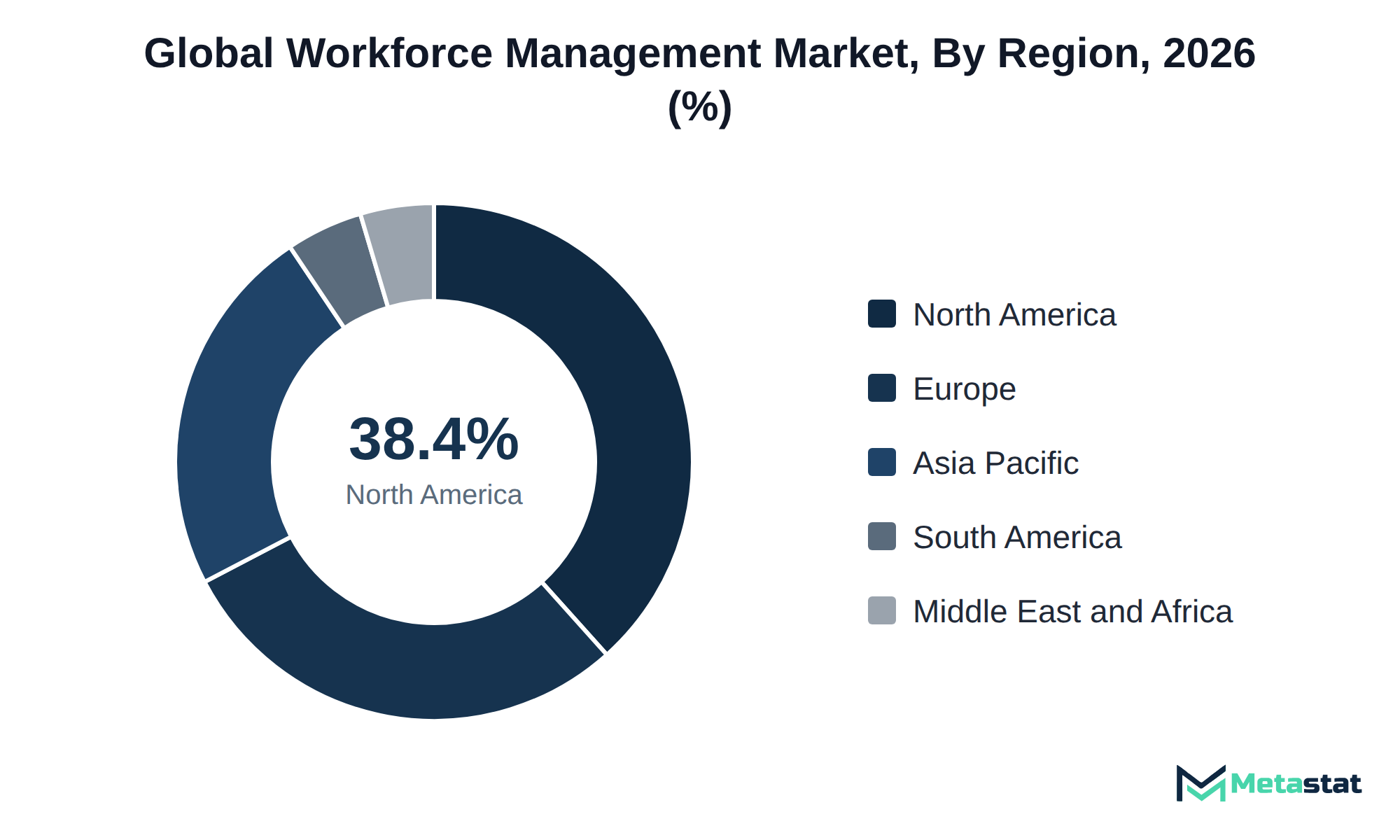
Geographic Lead: North America dominates the market, accounting for 38.4% in 2025, supported by a mature technological infrastructure and a strong focus on workforce optimization.
What's Inside: The report provides comprehensive analyses of market dynamics, competitive coverage, and forecasts from 2026 to 2033, detailing various segments and deployment models.
High Growth in Workforce Analytics: The Workforce Analytics and Forecasting segment exhibits a CAGR of 15.3%, reflecting the increasing demand for data-driven insights to enhance decision-making and operational efficiency.
Cost Efficiency Drives Cloud Adoption: The shift towards cloud-based solutions is fueled by the need for cost efficiency, with organizations seeking to reduce operational expenses while enhancing functionality.
Choose Your License
Global Workforce Management Market
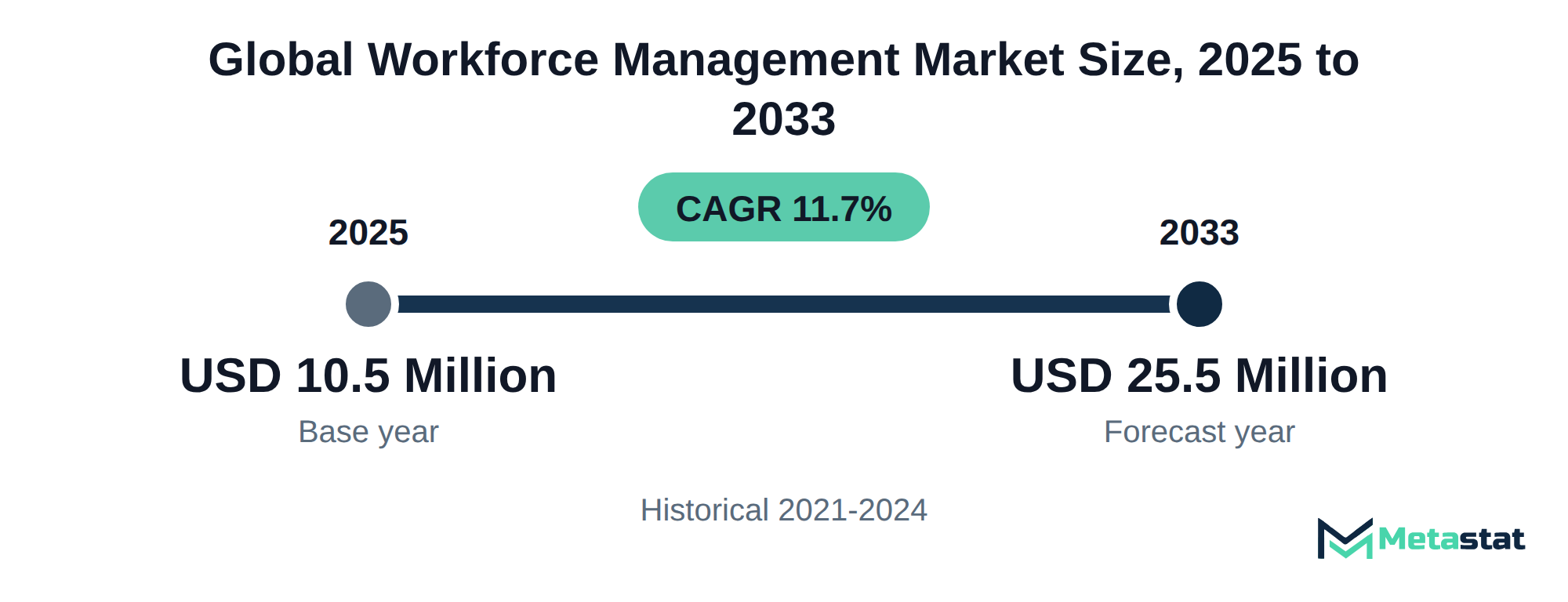
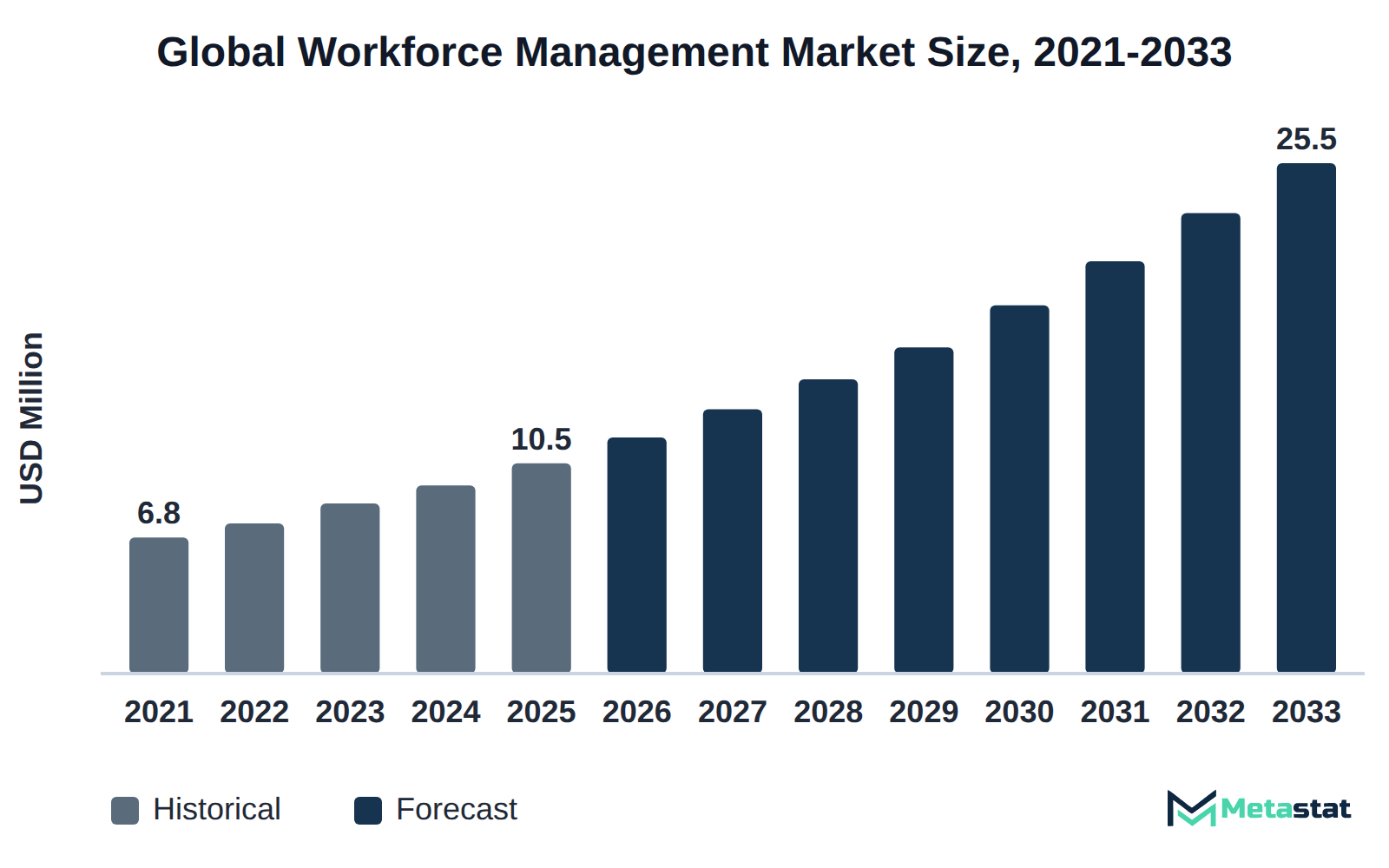
The global Workforce Management market was valued at USD 10.5 million in 2025 and is projected to reach USD 25.5 million by 2033, growing at a CAGR of 11.7% over the forecast period.
The Workforce Management market encompasses a range of solutions designed to optimize workforce productivity, including time and attendance management, workforce scheduling, and analytics. Buyers invest in these solutions to enhance operational efficiency, ensure compliance, and improve employee engagement. Growing awareness of the importance of effective workforce management drives demand, particularly among large enterprises seeking to streamline processes and reduce labor costs.
Rapid growth in the market is influenced by the increasing adoption of cloud-based solutions, which provide scalability and flexibility. Workforce scheduling and rostering stand out in the segment with the highest value, reflecting the critical need for organizations to efficiently allocate their resources. North America holds 38.4% of the market in 2025, with the US leading in 2026. This region benefits from a mature technological infrastructure and a strong emphasis on workforce optimization across various industries.
Factors driving market expansion include a heightened focus on data-driven decision-making and the need for real-time insights into workforce performance. Organizations across sectors, including retail and healthcare, prioritize these capabilities to enhance service delivery and operational effectiveness. Continued investment in advanced analytics and enterprise AI technologies supports the growth trajectory of the Workforce Management market, positioning it as a vital component of modern business strategy.
Investments in the Workforce Management market stem from the increasing emphasis on operational efficiency and employee productivity. Organizations recognize the importance of effective workforce management solutions to streamline processes, reduce labor costs, and enhance overall performance. Companies across various sectors, including retail, healthcare, and manufacturing, prioritize these solutions to address challenges related to employee scheduling, attendance tracking, and compliance with labor regulations.
The market experiences substantial growth driven by the rapid adoption of cloud-based solutions. This segment, particularly Workforce Scheduling and Rostering, reflects significant value and continues to expand due to its ability to provide real-time data and flexibility. This regional advantage stems from advanced technological infrastructure and the presence of major market players, which collectively drive innovation and development.
Forecasts indicate a strong compound annual growth rate, reinforcing demand for workforce management solutions. The increasing complexity of workforce management needs, combined with the growing trend towards remote work and flexible employment arrangements, highlights the necessity of effective management tools. Organizations that rely on non-permanent labor also have a distinct need for contingent workforce management. Organizations increasingly seek specialized solutions to manage these complexities, which further drives market expansion.
AI scheduling technologies are transforming the Workforce Management market by optimizing labor allocation based on real-time demand and employee skill sets. This advancement lets organizations manage scheduling during peak demand periods, which significantly improves operational efficiency. In 2025, the market for Time and Attendance Management is projected to reach USD 4.1 million, demonstrating the rising emphasis on efficient labor management solutions.
The integration of AI scheduling tools facilitates proactive workforce planning, enabling companies to align available talent with specific shift requirements. Industries including retail and healthcare use these technologies to keep staff levels in line with fluctuating service demands while maintaining compliance with labor regulations. This capability reduces operational costs and improves employee satisfaction by minimizing scheduling conflicts and ensuring a better work-life balance.
Growing adoption of AI-driven scheduling applications in the Workforce Management market helps businesses respond more dynamically to changing market conditions, which supports growth and competitive advantage. With a compound annual growth rate (CAGR) of 9.8% expected for Time and Attendance Management, organizations investing in these advanced solutions gain substantial returns while labor efficiency becomes a critical component of operational success.
Buyers of cloud workforce platforms increasingly prioritize integration between time capture, payroll, and compliance functionalities. The connection among these elements contributes to enhanced operational efficiency and accuracy in managing workforce data. Significant growth in the Workforce Management market is driven by the expected increase in demand for integrated solutions.
Time and Attendance Management, a vital segment within the market, demonstrates a projected growth from USD 4.1 million in 2026 to USD 7.8 million by 2033, reflecting a compound annual growth rate of 9.8%. This trend highlights the increasing emphasis on automating time and attendance systems, which significantly reduce manual errors and time theft.
Buyers benefit from various pricing models, including subscription-based enterprise SaaS contracts, which provide flexibility and scalability for organizations of different sizes. These models enable businesses to align their workforce management solutions with specific operational needs while controlling costs. The integration of payroll and compliance features into workforce platforms further streamlines processes, reduces administrative burdens, and enhances compliance with labor regulations.
While the market evolves, the ability to link time capture with payroll and compliance functionalities stands out as a critical factor for organizations seeking to optimize workforce management. This integration offers significant commercial benefits, including reduced operational costs and improved accuracy in payroll processing.
Field workforce optimization improves service reliability in the utility and telecom sectors. Effective management of field teams directly influences operational efficiency and customer satisfaction. In 2023, the Workforce Management market for utility and telecom services is projected to experience notable growth, driven by increasing demand for streamlined operations and improved service delivery.
Utility companies often face challenges related to workforce scheduling, resource allocation, and compliance with regulatory requirements. Implementing workforce management solutions significantly mitigates these challenges. For instance, the Workforce Scheduling and Rostering segment is expected to reach USD 8.3 million by 2033, reflecting a compound annual growth rate of 12.2%. This growth highlights the increasing investment in technologies that support better scheduling and resource management.
Telecom providers similarly benefit from optimized workforce strategies, ensuring that service technicians are promptly dispatched to address outages or repairs. Prompt dispatch also supports the service quality goals that telecom service assurance addresses. Enhanced field management reduces downtime and strengthens customer trust in utility and telecom services. Firms that invest in advanced workforce management solutions gain a competitive position by improving service reliability and operational effectiveness.
Workforce management software significantly reduces overtime and unfilled shifts by optimizing staffing and scheduling processes. The effective use of workforce scheduling and rostering solutions leads to a value of USD 8.3 million by 2033, highlighting the growing demand for tools that improve operational efficiency. By accurately forecasting staffing needs, organizations align employee availability with peak operational hours, minimizing reliance on overtime and ensuring shifts are filled with qualified personnel.
In the retail and e-commerce sector, workforce management software streamlines scheduling, allowing retailers to respond quickly to fluctuations in customer demand. Implementing these solutions drives substantial savings, as organizations avoid the extra costs associated with unplanned overtime. The increasing need for agile workforce management tools demonstrates their importance in maintaining competitive advantage within the market. This enhancement boosts profitability by reducing labor costs while improving employee satisfaction through better work-life balance.
Growing emphasis on employee productivity drives investments in the Workforce Management market. Companies across various sectors, including retail and healthcare, prioritize solutions that enhance workforce efficiency and reduce costs. Improved technologies that facilitate streamlined scheduling and real-time analytics encourage organizations to optimize staff allocation and monitor performance. This trend reflects a significant shift toward managing labor resources more effectively, resulting in an expected market value increase from USD 10.5 million in 2025 to USD 25.5 million by 2033, at a compound annual growth rate of 11.7%. Organizations investing in these solutions see better operational efficiency and lower labor-related expenses, which shows how workforce management technologies support business success.
Enhanced data analytics drives informed decision-making
Advancements in data analytics fuel demand for sophisticated workforce management solutions. Organizations increasingly rely on data-driven insights to enhance workforce planning and improve operational efficiency. The capability to analyze employee performance metrics, attendance patterns, and productivity rates enables management to make informed hiring and scheduling decisions. This trend is particularly evident in sectors like healthcare and retail, where organizations seek to optimize labor costs while maintaining high service standards. Consequently, the market experiences growth, with workforce analytics and forecasting projected to expand significantly, contributing to the overall increase in market demand.
Investments in advanced cloud-based solutions significantly increase as businesses seek to enhance cost efficiency. Adopting cloud workforce management solutions enables organizations to reduce operational costs related to on-premises infrastructure and maintenance. This shift appeals particularly to small and medium-sized enterprises looking to optimize budgets without sacrificing functionality. The flexibility of cloud deployments allows for scalable solutions that adapt to varying workloads, further contributing to cost savings. The rapid adoption of these technologies improves accessibility to real-time data, enabling informed decision-making across various levels of management.
Industries including retail, healthcare, and logistics experience heightened demand for cloud workforce management solutions, driven by the necessity to streamline operations and enhance service delivery. This trend creates a competitive edge for organizations that use these tools effectively. The Workforce Management market is projected to benefit from this growing focus on cost efficiency, reflecting an expected increase in market value over the forecast period. Embracing cloud solutions supports immediate financial objectives and positions companies for sustained growth as competition increases.
Price sensitivity among small and medium-sized enterprises significantly limits adoption in the market. Higher costs associated with workforce management solutions deter these buyers, leading to slower uptake and smaller order sizes. Many small businesses prioritize cost control, impacting their willingness to invest in comprehensive workforce management systems. This cautious approach results in delayed replacements of outdated systems, hindering operational efficiency and productivity. The market experiences reduced growth potential due to these pricing constraints, creating barriers for suppliers looking to expand their customer base. Enhanced pricing structures or flexible payment options could increase adoption rates among this segment, enabling broader reach within the market.
Suppliers in the Workforce Management market face rising input costs, which significantly impact profit margins. Factors including inflation in technology components and increased competition for skilled labor contribute to this challenge. Suppliers struggle to maintain competitive pricing while ensuring quality, often leading to margin pressure. In response, many organizations are investing in automation technologies to enhance operational efficiency and reduce reliance on manual processes. This shift allows for more precise resource allocation and cost management, ultimately supporting profitability. Strategic partnerships among suppliers aim to share resources and reduce costs associated with research and development. Such collaborations enhance innovation while mitigating the financial strain of escalating input costs. These adaptations help suppliers cope with the challenging environment while delivering value within the market.
Rapid expansion within the Workforce Management market is evident in the workforce analytics and forecasting segment, which demonstrates a compound annual growth rate (CAGR) of 15.3%. This growth stems from increasing demand for data-driven insights into employee performance and operational efficiency. Organizations seek advanced analytics tools to enhance decision-making processes, improve workforce planning, and optimize resource allocation. Buyers from various sectors, including healthcare and retail, prioritize these tools to gain competitive advantages and achieve better employee engagement. The increased reliance on data analytics in human resources contributes to a stronger competitive position among firms. By investing in workforce analytics solutions, organizations realize significant operational improvements and drive growth in the market.
The Global Workforce Management market is segmented based on Solution, Deployment Model, Organization Size, and End-Use Industry.
This segment facilitates tracking employee hours, attendance, and leave management, serving industries including retail, healthcare, and manufacturing. The rising need for accurate labor tracking and compliance with labor regulations drives demand. Advancements in cloud technologies enhance adoption among various organization sizes. Compared to other segments, Time and Attendance Management experiences solid growth, albeit slower than Workforce Analytics and Forecasting, which achieves a CAGR of 15.3%. The distinct focus on attendance tracking differentiates this segment from Workforce Scheduling and Rostering, which supports labor optimization through shift management, reflecting its unique role within the Workforce Management market.
This segment focuses on optimizing employee shifts and schedules across various industries, enabling organizations to respond to demand fluctuations and ensure adequate staffing levels. Primarily used by retail, healthcare, and manufacturing sectors, effective scheduling and rostering solutions enhance operational efficiency and improve employee satisfaction. The increasing need for flexible work arrangements and efficient resource allocation drives growth in this segment. Compared to other segments, Workforce Scheduling and Rostering exhibits a faster growth rate, distinguishing itself with a higher CAGR of 12.2%, reflecting its critical role in adapting to rapid changes in workforce dynamics. In contrast, Time and Attendance Management and Absence and Leave Management segments show lower growth rates, making Workforce Scheduling and Rostering a focal point for investments in the market.
Absence and Leave Management segment is expected to reach USD 3.1 million by 2033. This segment focuses on managing employee absences and leaves, allowing organizations to track employee time off, maintain compliance with regulations, and ensure adequate staffing levels. Primarily used by human resources departments across various industries, this segment experiences growth driven by the increasing need for effective workforce management solutions. Organizations recognize the importance of maintaining employee engagement and operational efficiency through robust absence and leave policies. Compared to other sub-segments, including Workforce Scheduling and Rostering, which has a higher CAGR of 12.2%, Absence and Leave Management exhibits relatively slower growth dynamics. Stakeholders in this segment face challenges related to varying regulations across regions, prompting the need for adaptable solutions that address compliance requirements.
Workforce Analytics and Forecasting segment is projected to grow at a CAGR of 15.3% during the forecast period. This segment focuses on data analysis to predict workforce needs, optimize resource allocation, and improve operational efficiency. Organizations across various industries, including healthcare and financial services, leverage this segment to enhance decision-making processes through data-driven insights. The increasing demand for predictive analytics drives significant growth, owing to businesses recognizing the value of understanding workforce trends and performance metrics. Compared to other segments, including Time and Attendance Management, which is projected to grow at a CAGR of 9.8%, this segment experiences faster growth due to the rising emphasis on insights and analytics capabilities. Investment in advanced technologies further differentiates this segment, attracting larger enterprises that seek to enhance their strategic workforce planning.
Task and Fatigue Management focuses on optimizing employee performance through effective workload distribution and monitoring fatigue levels. Organizations engage this segment to enhance productivity and ensure a healthier work environment. Demand for this solution grows due to increased awareness of the impact of fatigue on employee efficiency and safety, influencing industries including healthcare, manufacturing, and transportation. Unlike more established segments, Task and Fatigue Management faces unique challenges, including the integration of technology into existing operational processes. The need for real-time data and analytics significantly influences this segment, differentiating it from other solutions including Scheduling and Attendance Management. The Workforce Management market seeks innovative approaches to support employee well-being while ensuring optimal task completion.
Cloud deployment in workforce management is valued at USD 7.4 million in 2026 and is projected to reach USD 18 million by 2033, at a CAGR of 13.5% during the forecast period. This deployment model offers flexibility and scalability, allowing access to workforce management tools for organizations of various sizes. Businesses in sectors including retail, healthcare, and manufacturing increasingly adopt cloud solutions for efficient time tracking, scheduling, and analytics. The rapidly growing demand for integration with existing software systems drives this segment, distinguishing it from on-premises and hybrid models, which exhibit slower growth rates. Organizations adopting cloud solutions benefit from reduced infrastructure costs and enhanced data accessibility, aligning well with evolving operational needs in the market. This interest in cloud deployment highlights the transformation in workforce management strategies, enabling organizations to leverage technology for improved workforce efficiency.
The On-Premises segment is estimated to reach USD 4.3 million by 2033, at a CAGR of 5% during the forecast period. This deployment model is used primarily by large enterprises that prioritize control over their workforce management systems and require tailored solutions. Organizations in sectors including manufacturing and healthcare often favor on-premises solutions due to strict data security and compliance requirements. The slower growth rate of this segment compared to cloud deployment, which is projected to grow at a CAGR of 13.5%, reflects a shift toward more flexible, scalable solutions. Price points for on-premises systems typically remain higher due to initial setup and maintenance costs, influencing the purchasing decisions of smaller organizations that prefer more cost-effective cloud-based alternatives. The dynamic nature of workforce demands places pressure on on-premises solutions to adapt and compete with increasingly popular cloud models in the market.
Hybrid deployment in workforce management is expected to reach USD 3.2 million by 2033. This model appeals to organizations seeking flexibility in managing their workforce solutions, combining the benefits of both cloud and on-premises systems. Large enterprises and small to medium-sized businesses adopt this segment to balance control and scalability. Rapid advancements in technology drive demand for hybrid solutions, allowing companies to tailor their workforce management strategies to specific operational needs. Compared to alternatives, hybrid deployment experiences slower growth, with a compound annual growth rate (CAGR) of 5%, contrasting with the more robust 13.5% CAGR projected for cloud solutions. Demand for hybrid models emerges from the need for organizations to enhance data security while maintaining accessibility and operational efficiency. Organizations transitioning to this model navigate challenges related to integration and compatibility with existing systems.
Large Enterprises segment is valued at USD 7.1 million in 2026 and is projected to reach USD 14.2 million by 2033, at a CAGR of 10.5% during the forecast period. This segment serves large organizations that require comprehensive workforce management solutions to streamline operations and enhance productivity. High demand for cloud-based technologies drives growth in this segment, with large enterprises increasingly adopting solutions that facilitate workforce scheduling, time tracking, and analytics. Compared to smaller organizations, large enterprises often have more complex needs due to their workforce size and operational diversity. This complexity supports a higher growth rate in the Large Enterprises segment compared to the Small and Medium-Sized Enterprises segment, which is projected to reach USD 11.3 million by 2033 at a CAGR of 13.4%. The market continues to evolve while larger organizations prioritize advanced analytics and integration capabilities to optimize workforce performance.
This segment focuses on providing workforce management solutions tailored for smaller organizations, enabling them to optimize employee scheduling, attendance tracking, and overall workforce efficiency. A notable demand driver includes the increasing necessity for operational efficiency in competitive markets, prompting these enterprises to adopt advanced technologies. Compared to larger enterprises, small and medium-sized enterprises typically face budget constraints that influence their purchasing decisions and the types of solutions they prioritize. The growth in this segment outpaces that of larger enterprises, reflecting a distinct need for scalable and cost-effective workforce solutions in the market. This trend highlights the growing recognition of workforce management as essential for driving productivity in smaller businesses.
The Retail and E-Commerce segment is valued at USD 2.4 million in 2026 and is projected to reach USD 4.9 million by 2033, at a CAGR of 10.8% during the forecast period. This segment focuses on managing workforce operations for retailers and e-commerce businesses, ensuring optimal staffing levels and productivity. Growing online shopping trends and customer expectations for rapid service fuel demand for effective workforce management solutions in this sector. Unlike other segments, Retail and E-Commerce experiences faster growth due to increasing reliance on technology to streamline operations. The integration of advanced analytics and forecasting tools enhances decision-making capabilities, further driving investments. Retailers and e-commerce companies prioritize these solutions to maintain a competitive advantage, significantly influencing market dynamics.
The Healthcare and Life Sciences segment is estimated to reach USD 4.7 million by 2033, at a CAGR of 14.1% during the forecast period. This segment focuses on improving workforce efficiency across hospitals, clinics, and pharmaceutical companies. Increased regulatory requirements and the demand for optimized patient care drive investments in workforce management solutions tailored for this industry. Unlike other segments, the Healthcare and Life Sciences segment experiences faster growth due to a heightened focus on employee training and compliance. The need for real-time data analytics to enhance healthcare staffing significantly impacts operational efficiency. With ongoing advancements in technology, healthcare organizations prioritize solutions that provide effective integration of workforce management and patient care systems. This alignment improves outcomes and drives growth within the market.
Manufacturing segment is expected to reach USD 3.2 million by 2033. This segment primarily serves businesses involved in the production of goods, where efficient workforce management is crucial to maintain productivity and cost-effectiveness. Key factors driving growth include the increasing adoption of automation technologies and the need for streamlined operations. Unlike segments including retail and healthcare, which exhibit higher growth rates, manufacturing faces a compound annual growth rate (CAGR) of 10.5%. The demand for advanced scheduling and attendance systems remains strong, ensuring that manufacturing organizations optimize labor resources while maintaining compliance with regulations. The Workforce Management market evolves, driven by technological advancements tailored to the unique challenges of the manufacturing sector.
Banking, Financial Services and Insurance segment is projected to grow at a CAGR of 10.5% during the forecast period. This segment includes financial institutions, insurance companies, and investment firms, using workforce management solutions to enhance operational efficiency and ensure compliance with regulatory standards. A significant driver for growth in this sector is the increasing focus on data security and regulatory adherence, prompting organizations to invest in advanced workforce management systems. Compared to other segments, including Retail and E-Commerce, which experiences a CAGR of 10.8%, the Banking, Financial Services and Insurance segment demonstrates a more stable growth trajectory due to its critical nature in the economy. The unique regulatory landscape faced by this segment necessitates tailored solutions to address specific compliance requirements, differentiating it from other segments that prioritize flexibility and responsiveness to market trends.
IT and Telecommunications focuses on delivering integrated solutions to manage workforce tasks, ensuring efficiency and compliance within organizations. This segment serves various companies seeking to optimize their human resources, enhance productivity, and improve operational workflows. Demand for innovative technologies, including artificial intelligence and machine learning, drives growth in this segment, enabling businesses to make data-driven workforce decisions. Organizations in this sector face unique challenges, including balancing operational costs while implementing advanced workforce management systems. Compared to other segments, IT and Telecommunications experiences a faster adoption rate due to the increasing reliance on technology and data analytics for decision-making. The market benefits from technological advancements that streamline processes, offering firms enhanced visibility into workforce performance and resource allocation.
Transportation and Logistics encompasses the management of the flow of goods and services from origin to destination. This segment serves a diverse range of clients, including freight carriers, shipping companies, and logistics service providers. Demand within this segment arises from the escalating importance of supply chain efficiency and the desire for real-time tracking and analytics. Unlike other segments, Transportation and Logistics emphasizes the integration of advanced technologies, including GPS and IoT, to optimize smart logistics operations and enhance visibility. This aspect drives accelerated adoption among organizations that prioritize operational efficiency. By focusing on technology advancements and the necessity for improved supply chain management, companies operating in this segment differentiate themselves from others, leading to unique competitive advantages and opportunities for growth.
Hospitality involves managing workforce operations in hotels, restaurants, and other service-oriented establishments. This segment serves various professionals including human resource managers, operations supervisors, and business owners, ensuring effective employee scheduling and attendance tracking. The increasing demand for personalized customer experiences and efficient service delivery drives growth in this segment, emphasizing the importance of accurate workforce management. Unlike other segments, the hospitality sector often experiences fluctuating staffing needs driven by seasonal trends and peak business hours, which necessitates flexible scheduling solutions. This dynamic environment influences investment in advanced workforce management technologies to optimize labor costs and improve service quality. The workforce management market supports this sector by enabling better decision-making through data-driven insights and analytics.
Government and Public Sector encompasses various government entities and organizations that require effective workforce management solutions for optimal resource allocation and productivity. This segment serves public institutions, local government bodies, and non-profit organizations, focusing on ensuring compliance with regulations and efficient service delivery. Key drivers include the necessity for enhanced efficiency in public services and the growing demand for data-driven decision-making processes. Compared to other segments, this area often experiences slower growth due to bureaucratic challenges and budget constraints relative to the more dynamic sectors including retail and healthcare. The market faces pressures related to regulatory changes and funding limitations, which impact the adoption of advanced workforce management solutions.
Energy and Utilities focuses on managing workforce operations within the utility sector, including electricity, water, and gas services. Companies in this segment employ workforce management solutions to optimize resource allocation, enhance operational efficiency, and ensure compliance with regulations. The demand for advanced analytics and forecasting tools drives growth, allowing organizations to predict workforce needs based on fluctuating energy demand. This sub-segment experiences slower growth due to the requirement for specialized solutions tailored to regulatory compliance and safety standards. Organizations in Energy and Utilities prioritize reliability and compliance, leading to higher investment levels in tailored workforce management solutions. This sub-segment significantly impacts the market by ensuring that utility providers maintain service quality and operational efficiency.
This sub-segment includes Education, Construction, and Professional Services, which apply tailored workforce management solutions to address sector-specific challenges. Educational institutions, construction companies, and professional service firms leverage these tools to schedule staff, manage attendance, and optimize resource allocation. The growing demand for efficiency drives adoption in these sectors, particularly in Education and Construction, where project timelines and regulatory compliance are critical. Compared to other segments, this sub-segment faces unique challenges related to workforce variability and fluctuating project demands. Consequently, the market demonstrates distinct dynamics, influenced by the need for specialized solutions that cater to the diverse operational requirements found in these industries. Workforce management solutions tailored for these sectors often emphasize compliance and labor cost management, differentiating them from other segments that prioritize broader organizational integration.
Based on geography, the Global Workforce Management market is divided into North America, Europe, Asia-Pacific, South America, Middle East, and Africa.
Demand for solutions in the Workforce Management market in North America derives primarily from large enterprises and sectors including healthcare and retail. The region's advanced technological infrastructure supports rapid adoption of cloud-based solutions, enhancing operational efficiency and workforce productivity. By 2033, North America is projected to reach USD 9 million, reflecting the increasing trend toward digital transformation across industries. The United States, Canada, and Mexico contribute significantly to this growth, driven by a focus on optimizing labor resources amid rising operational costs. The market benefits from the need for compliance with labor regulations, further influencing demand for comprehensive workforce management solutions.
Demand in the European workforce management market reflects strong growth, driven by sectors including healthcare and retail, which increasingly rely on effective workforce solutions to enhance productivity and compliance. Countries like Germany and the UK show significant investment in digital infrastructure, promoting the adoption of cloud-based solutions. France and Spain prioritize HR analytics to optimize employee scheduling and performance. The market captures 29.0% of the global share in 2025, highlighting its importance in the regional economic landscape. Regulatory frameworks promoting labor rights and data protection further influence the need for advanced workforce management strategies. The combination of these factors positions Europe as a key player in the evolution of workforce management solutions.
Asia-Pacific represents a significant portion of the global Workforce Management market, holding a share of 23.3% in 2025. The region features a diverse set of industries driving demand, including retail, healthcare, and manufacturing. Rapid urbanization in countries like China and India fuels the adoption of advanced workforce solutions, enhancing operational efficiency. The increasing focus on labor compliance and regulatory standards further drives market growth. Countries including Japan and South Korea exhibit strong demand for analytics and forecasting solutions, reflecting the shift toward data-driven decision-making. The region's distinct economic dynamics highlight opportunities for innovative service providers to cater to the evolving needs of businesses across various sectors, ensuring sustained demand within the market.
In South America, the Workforce Management market experiences growth driven by sectors including retail and healthcare. Brazil and Argentina serve the primary markets, with organizations increasingly adopting solutions to enhance operational efficiency and workforce productivity. The region's overall share of the global market is estimated at 4.8% in 2025. Infrastructure development and a growing focus on regulatory compliance contribute to increased demand for workforce management solutions. Investments in technology and digital transformation shape the competitive landscape, encouraging companies to implement advanced systems for managing workforce needs effectively. The market's trajectory reflects a broader trend toward automation and analytics, enabling organizations in the region to leverage data for improved decision-making.
In the Middle East and Africa, the workforce management market exhibits growth driven by sectors including healthcare and retail, which increasingly require efficient management of personnel and resources. Countries like Saudi Arabia and the UAE focus on improving workforce efficiency through digital transformation and technology adoption. South Africa shows a rising demand for innovative solutions that enhance operational productivity across various industries. The market in this region holds a share of 4.6% in 2025, reflecting emerging potential. Organizations seek to implement advanced workforce management technologies to better align human resources with business objectives, facilitating improved service delivery and operational effectiveness.
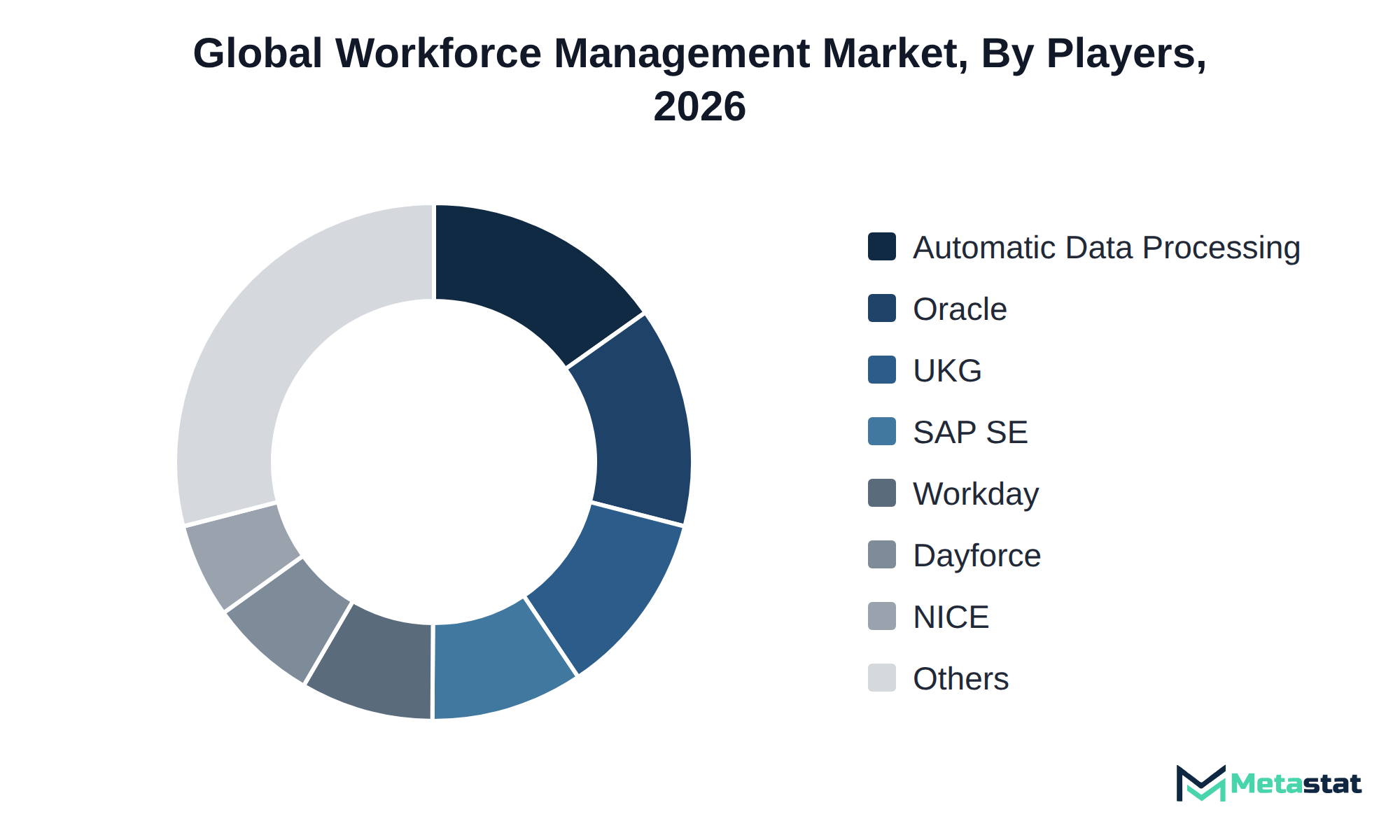
The Workforce Management market features a diverse array of companies competing through various strategies. Key players focus on distinct solutions, deployment models, and organizational sizes to capture different segments of demand. Companies emphasize various factors including pricing, customization, service quality, and integration within larger ecosystems.
UKG Inc. and Automatic Data Processing, Inc. concentrate on comprehensive solutions that include time and attendance management, workforce scheduling, and analytics. Their offerings address the needs of large enterprises, providing scalability and a strong feature set. In contrast, smaller firms like 7shifts Employee Scheduling Software Inc. focus on niche solutions tailored for specific industries including retail and hospitality, providing specialized functionalities that enhance user experience.
Oracle Corporation and SAP SE leverage their established software platforms to provide extensive customization options, appealing to enterprises with unique operational requirements. Their capabilities allow for integration with existing systems, which enhances overall efficiency and attractiveness to potential buyers. Another notable player, Workday, Inc., emphasizes a cloud-based deployment model, offering flexibility and ease of access, which aligns with the growing preference for cloud solutions among organizations of all sizes.
Achieving this growth relies on several key developments within the Workforce Management market. Firstly, the shift towards cloud-based solutions drives adoption, with organizations seeking scalability and flexibility. This transition significantly enhances the deployment model segment, with projections indicating a rise from USD 7.4 million in 2026 to USD 18 million by 2033 at a CAGR of 13.5%. Secondly, increased demand for workforce analytics and forecasting plays a crucial role, with this segment anticipated to exhibit a CAGR of 15.3%, enabling businesses to optimize their workforce strategies effectively. However, potential economic downturns or increased competition in the market pose risks to this growth trajectory, particularly affecting investment in new technologies and hindering adoption rates. Sustaining the forecasted momentum depends on embracing cloud solutions and advanced analytics while managing external economic challenges.
By Solution: Time and Attendance Management, Workforce Scheduling and Rostering, Absence and Leave Management, Workforce Analytics and Forecasting, Others (Task and Fatigue Management)
By Deployment Model: Cloud, On-Premises, Hybrid
By Organization Size: Large Enterprises, Small and Medium-Sized Enterprises
By End-Use Industry: Retail and E-Commerce, Healthcare and Life Sciences, Manufacturing, Banking, Financial Services and Insurance, IT and Telecommunications, Transportation and Logistics, Hospitality, Government and Public Sector, Energy and Utilities, Others (Education, Construction and Professional Services)
The report strategically identifies and profiles the key market players and analyses their core competencies in each sub-segment of the Workforce Management market.
Report Attributes | Details |
Study Period | 2021-2033 |
Base Year | 2025 |
Estimated Year | 2026 |
Forecast Period | 2026-2033 |
Historical Period | 2021-2025 |
Growth Rate | CAGR 11.7% from 2026 to 2033 |
Revenue Unit | USD million |
Segmentation | By Solution, Deployment Model, Organization Size, End-Use Industry, and Region |
By Region | North America (By Solution, Deployment Model, Organization Size, End-Use Industry, and Country)
|
Europe (By Solution, Deployment Model, Organization Size, End-Use Industry, and Country)
| |
Asia Pacific (By Solution, Deployment Model, Organization Size, End-Use Industry, and Country)
| |
South America (By Solution, Deployment Model, Organization Size, End-Use Industry, and Country)
| |
Middle East and Africa (By Solution, Deployment Model, Organization Size, End-Use Industry, and Country)
|
Find answers to common questions about this report
The Workforce Management market size was valued at USD 10.5 million in 2025.
The market is projected to grow at a CAGR of 11.7% during the forecast period from 2026 to 2033.
The North America Workforce Management market size is estimated to reach USD 9 million by 2033.
Workforce Analytics and Forecasting leads the market, with a compound annual growth rate of 15.3%. This segment's growth reflects increasing demand for data-driven decision-making in workforce management.
Growing emphasis on employee productivity drives investments in the market. Enhanced data analytics fuels demand for sophisticated workforce management solutions, allowing organizations to optimize workforce planning and improve operational efficiency.
North America holds the dominant share of the Workforce Management market, with a value of USD 9 million projected for 2033, representing 38.4 percent of the total market. This figure surpasses the shares of other regions, including Europe at 29 percent and Asia Pacific at 23.3 percent.
Price sensitivity among small and medium-sized enterprises significantly limits adoption in the market. Higher costs associated with workforce management solutions deter these buyers, resulting in slower uptake and smaller order sizes.
Growing demand for advanced data analytics and cloud-based solutions drives adoption in the Workforce Management market. Organizations seek to enhance operational efficiency and reduce costs, particularly in sectors like healthcare and retail, where effective workforce planning is critical.
The Workforce Management market is estimated to reach a valuation of USD 25.5 million by 2033.
Key players operating in the Workforce Management market include UKG Inc., Automatic Data Processing, Inc., Oracle Corporation, SAP SE, Workday, Inc., and International Business Machines Corporation.
The analysts below cover Information & Technology research at Metastat Insights.
LEAD ANALYST
Utkarsh Khirodkar is a Lead Market Research Analyst at MetaStat Insight, specializing in market intelligence, technology sector assessments, and competitive strategy.

PRINCIPAL CONSULTANT - ENTERPRISE AI & EMERGING TECHNOLOGIES
Banking & Finance · Electronics and Semiconductor · Energy and Power · Healthcare IT · Information & Technology · Professional Services
Vijay Gunti is a Principal Consultant at MetaStat Insight, bringing over two decades of experience across enterprise digital transformation, technology strategy, and intelligent systems.

LEAD CONSULTANT - COMMUNICATION, TELECOM, AND IT
Electronics and Semiconductor · Information & Technology · Machinery & Equipment · Professional Services
Ravindra Sathe Consultants for Communication, Telecom, and IT at MetaStat Insight. He leads the firm's industry research initiatives across telecommunications infrastructure, digital connectivity, enterprise networking, and emerging information technology domains.
In the biological seed treatment space, registration timelines vary drastically between the European Union, Brazil, and North America. The MetaStat Insight research handled these cross-border regulatory barriers with genuine nuance, mapping commercialization pathways alongside historical field adoption rates. The segmentation between microbial strains and biochemical active ingredients was particularly well structured.
Our team was tracking whether regional recycling infrastructure could realistically absorb the growing volume of lithium iron phosphate batteries over the next decade. The report did a solid job separating announced hydrometallurgical plant capacity from active, permitted operational throughput. That distinction made the feedstock availability projections and regional recovery rate models far more credible than standard commercial overviews.
Tracking capacity expansion in single-use bioprocessing requires dependable data on raw material availability and cleanroom-grade polymer supply chains. The competitive landscape chapter gave a grounded evaluation of secondary component suppliers across North America and Asia-Pacific rather than simply reprinting press releases. Having that level of supplier benchmarking helped clarify dual-sourcing considerations for our clinical pipeline planning.
Explore related market intelligence reports worth reading alongside this one.
Starting from
$2950