
LEAD ANALYST
Utkarsh Khirodkar is a Lead Market Research Analyst at MetaStat Insight, specializing in market intelligence, technology sector assessments, and competitive strategy.

India Mobile Value-Added Services (MVAS) Market Size, Share, By Solution (Short Messaging Service (SMS), Multimedia Messaging Service (MMS), Location-Based Services (LBS), Mobile Email and Instant Messaging, Mobile Advertising Services, Mobile Content and Entertainment Services, Mobile Payment and Billing Services, Others (Mobile Infotainment, Mobile Information Services)), By Platform Type (Digital Content Aggregation Platform, Direct Carrier Billing Platform, Subscription Management Platform, Mobile Content Storefront, Mobile Engagement and Messaging Platform, Mobile Content Subscription Platform, Mobile Content Monetisation Platform, Others (Mobile Content Delivery and Management Platforms)), By Application (Consumer Entertainment, Mobile Marketing and Advertising, Mobile Banking and Payments, Enterprise Mobility and Productivity, Public Sector and Government Services, Healthcare and Telemedicine, Education and Mobile Learning, Retail and Loyalty Programs, Others (Travel and Location-Based Services)), By Vertical (Media and Entertainment, BFSI, Healthcare, Education, Retail and E-commerce, Government and Public Sector, Telecom and IT, Others (Travel and Hospitality, Transportation and Logistics)), Industry Analysis, Growth, Trends, and Forecast, 2026-2033
Report ID
MSI-5798
Published
November, 2026
Pages
262 Pages
Format
Historical
Base year
Forecast
Forecast period
Report Details
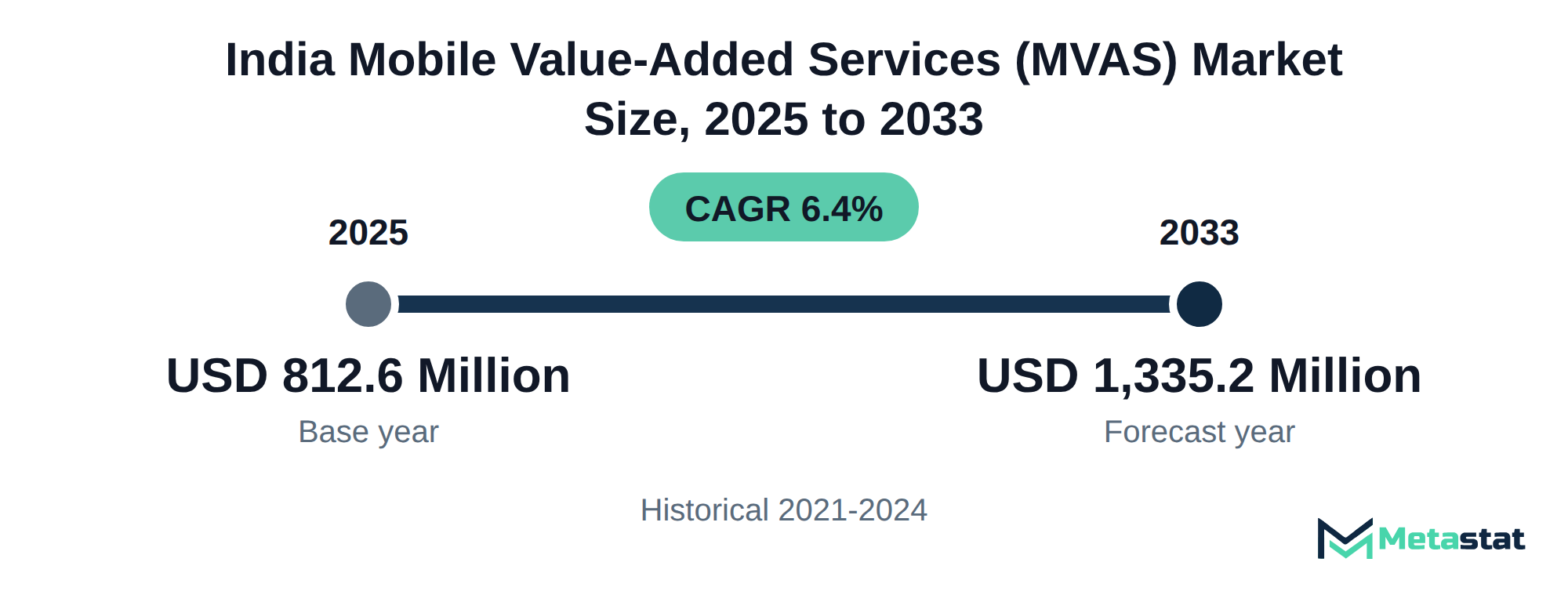
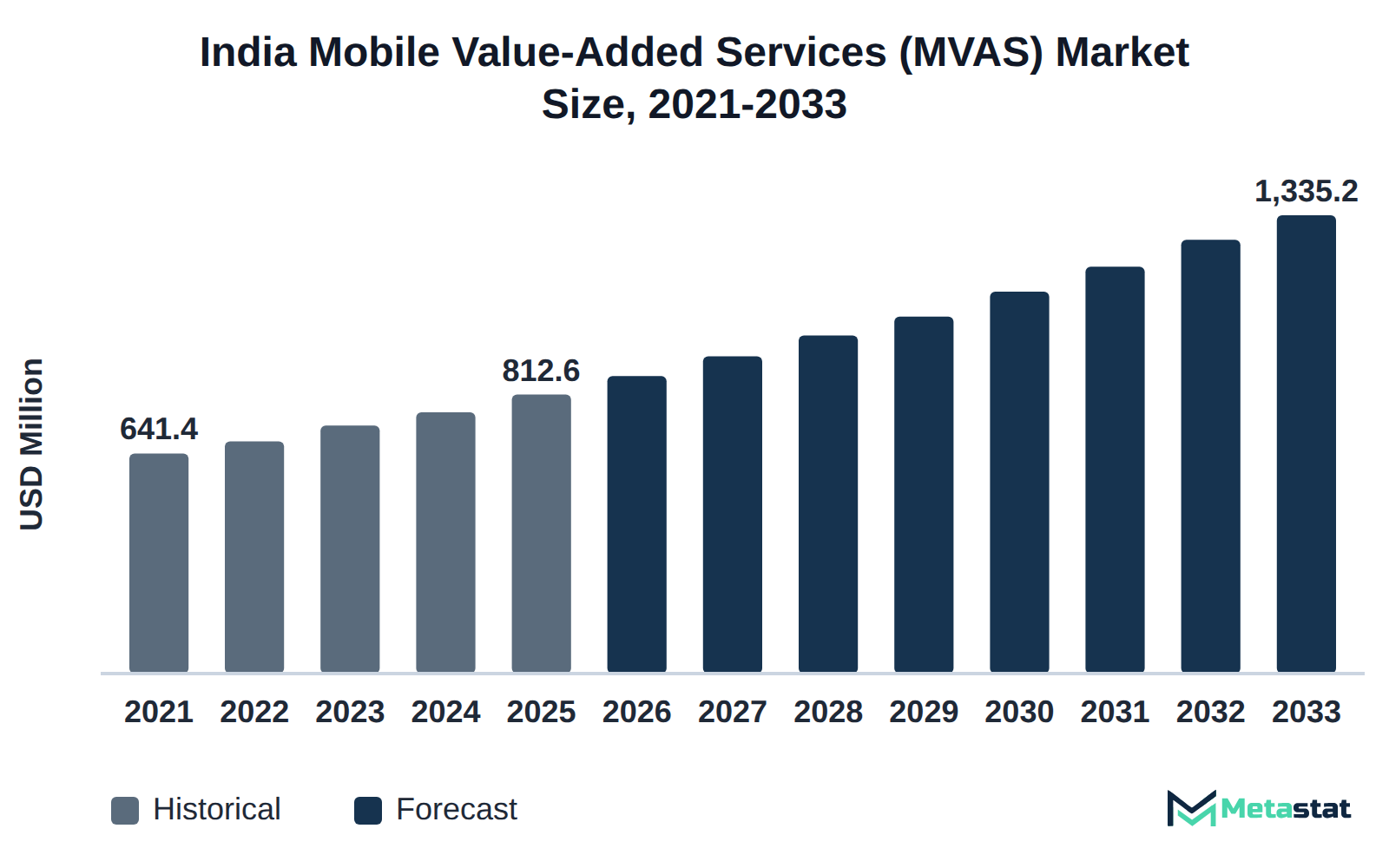
Market Valuation: Valued at $812.6 Million in 2025, projected to reach $1,335.2 Million by 2033 at a 6.4% CAGR.
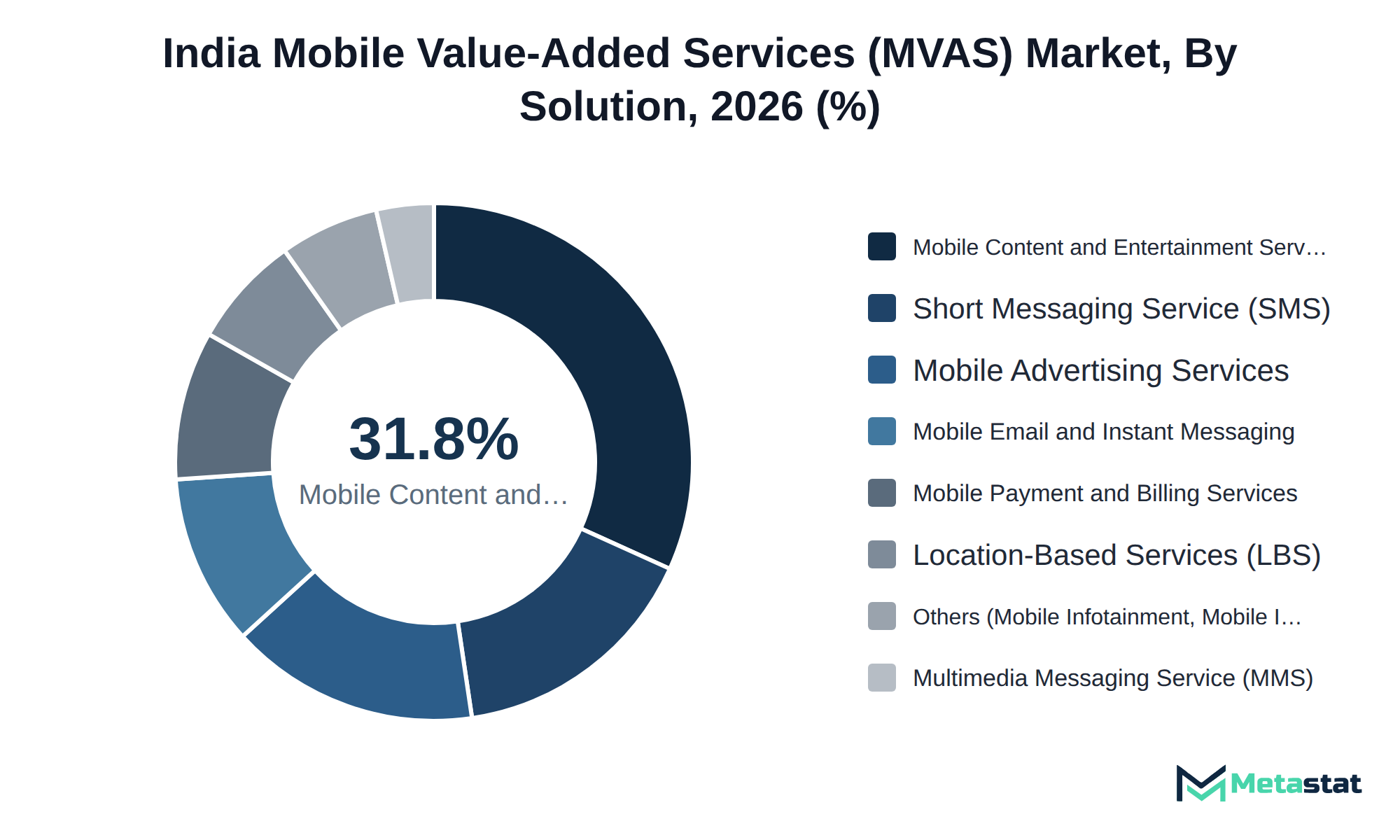
Dominant Segment: The mobile advertising services segment leads the market, driven by increased smartphone penetration and a shift towards digital marketing strategies that enhance customer engagement.
Geographic Lead: India is the fastest growing region, propelled by a young population that embraces mobile technology and services, creating robust demand for innovative mobile solutions.
What's Inside: The report provides comprehensive coverage of the competitive landscape, detailed analyses of market dynamics, and forecasts extending to 2033, ensuring buyers have a clear understanding of future trends.
Consumer Trends: Increased engagement with mobile entertainment content significantly drives consumer spending, particularly in video streaming and gaming, reflecting a shift towards personalized content access.
Payment Models: Flexible payment structures, including subscription-based models, encourage broader adoption of mobile value-added services, catering to diverse consumer preferences and enhancing satisfaction.
Choose Your License
India Mobile Value-Added Services (MVAS) Market
The India Mobile Value-Added Services (MVAS) market was valued at USD 812.6 million in 2025 and is projected to reach USD 1,335.2 million by 2033, growing at a CAGR of 6.4% over the forecast period.
The India Mobile Value-Added Services (MVAS) market encompasses various solutions that enhance mobile communication and user engagement. This sector includes services like messaging, mobile advertising, and digital content platforms. Buyers invest in these services to drive customer interaction, enhance brand visibility, and streamline payment processes. The diverse applications appeal to multiple industries, including media, banking, and healthcare, which use mobile services to improve their operational efficiency and customer experience.
Growth in this market is propelled by increasing smartphone penetration and rising internet usage across the country. The mobile advertising segment holds the most significant value, reflecting the shift in marketing strategies towards digital platforms. Among various regions, India stands out with a substantial share, driven by a young population that embraces mobile technology and services. This demographic trend creates strong demand for innovative mobile solutions.
One key growth driver involves the rising adoption of mobile banking and payment services, facilitating secure transactions and financial inclusion. Consumers increasingly seek convenient and efficient methods for managing their finances. Mobile value-added services gain traction. This dynamic contributes to the overall expansion of the market, supporting a promising outlook for the upcoming years.
The India Mobile Value-Added Services (MVAS) market includes offerings designed to augment mobile user experiences and enable effective communication. Buyers invest in these services primarily to enhance customer engagement, streamline operations, and apply innovative digital marketing strategies. This market attracts significant expenditure from sectors including media and entertainment, banking, financial services, and insurance (BFSI), which use MVAS for targeted advertising and consumer interaction.
Growth in the market is largely driven by increasing adoption of mobile internet and smartphones across various demographics. The segment generating the highest revenue is consumer entertainment, reflecting strong demand for content delivery and interactive services. The Asia-Pacific region commands the largest market share, supported by a growing population with rising disposable incomes, driving robust demand for mobile value-added services.
Investment in mobile marketing and advertising emerges as a key factor influencing market expansion. Companies focus on personalized marketing strategies to effectively reach consumers, thereby enhancing their return on investment. The ongoing evolution in mobile technology continues to shape user behavior and preferences, further propelling growth within the India Mobile Value-Added Services (MVAS) market.
Direct Carrier Billing (DCB) and subscription management platforms significantly influence revenue generation in the India Mobile Value-Added Services (MVAS) market. DCB enables straightforward transactions for digital content, allowing consumers to pay for services directly through their mobile phone bills. This technology simplifies the payment process for users, enhancing consumer engagement with mobile content and applications.
By 2033, the Direct Carrier Billing Platform is projected to reach USD 206.6 million, reflecting a compound annual growth rate (CAGR) of 8.2%. This growth results from increasing acceptance of mobile payments among consumers and rising demand for convenient purchase options within apps. The subscription management platform, expected to achieve a value of USD 196.1 million by 2033, benefits from integration of user-friendly billing solutions that improve user retention and revenue consistency.
The rise of these platforms significantly enhances monetization potential for mobile service providers and content creators. By streamlining revenue collection processes, DCB and subscription models enable providers to capitalize on growing demand for digital services, ultimately driving revenue growth within the MVAS sector.
In the India Mobile Value-Added Services (MVAS) market, purchasing behavior significantly influences how consumers engage with mobile entertainment, payments, and messaging services. Buyers encounter various pricing structures, including subscription-based models and pay-per-use options. This flexibility in payment models encourages broader adoption among consumers, catering to different preferences and spending capacities.
For instance, the Digital Content Aggregation Platform segment is projected to grow from USD 169.8 million in 2026 to USD 243.4 million by 2033, reflecting a compound annual growth rate (CAGR) of 5.3%. This growth is attributed to the increasing popularity of subscription services, which offer consumers access to varied content for a fixed monthly fee. The convenience of these models enhances consumer satisfaction and loyalty, driving long-term engagement with service providers.
In addition, Direct Carrier Billing Platforms, with a projected value of USD 206.6 million by 2033, enable transactions for mobile services directly charged to users' mobile accounts. This creates a streamlined purchasing experience, eliminating the need for credit cards or external payment methods, thus expanding the potential user base. Overall, innovative payment structures in the MVAS market create opportunities for service providers to enhance customer acquisition and retention, ultimately leading to increased revenue growth.
The Telecom Regulatory Authority of India (TRAI) implements strict consent rules that govern recurring subscription monetisation models within the India Mobile Value-Added Services (MVAS) market. These regulations require service providers to obtain explicit consent from customers before initiating recurring charges. Such consent is vital for ensuring transparency and compliance while addressing consumer protection concerns. The need for clear consent is particularly significant for services like Mobile Banking and Payments, which face scrutiny over security and data privacy issues. In the market, Mobile Banking and Payments are projected to generate USD 245.9 million by 2033, indicating strong demand for secure financial transactions.
Compliance with TRAI's consent rules encourages service providers to enhance customer engagement strategies, building trust and loyalty. This approach aligns with the growing consumer base that values privacy and security in mobile transactions. By prioritising adherence to these regulations, companies strengthen their market position and attract a more extensive customer base. Effective management of consent and subscription models contributes to the sustainable growth of the India Mobile Value-Added Services (MVAS) market, ensuring that providers capitalise on emerging opportunities while maintaining a strong relationship with customers.
Mobile Value-Added Services (MVAS) expand digital content access across India, particularly through platforms that aggregate digital content. This significant increase indicates rising consumer demand for diverse digital content offerings.
While the appetite for digital content grows, consumers gravitate towards platforms that provide easy access to a variety of media, including music, videos, and games. The MVAS ecosystem supports numerous industry players, including telecom operators and content providers, in meeting these evolving consumer preferences. Investing in digital content aggregation enhances competitive positioning and contributes to overall market growth.
The India Mobile Value-Added Services (MVAS) market serves as a critical facilitator of digital content access. With the ongoing expansion of mobile internet penetration and user engagement, the market presents opportunities for content providers to deliver tailored experiences that connect with consumers. This trend highlights the importance of MVAS in driving digital content innovation and accessibility in the Indian marketplace.
Increased engagement with mobile entertainment content significantly drives consumer spending in the market. Users demonstrate a growing affinity for video streaming, digital music, and gaming, which encourages service expansion among providers. A notable shift in consumer behavior toward on-demand entertainment solutions has emerged, reflecting changing preferences for personalized content access. Higher volumes of subscriptions and content purchases ultimately contribute to revenue growth.
For example, spending in the Consumer Entertainment segment is projected to increase from USD 251.4 million in 2026 to USD 338.9 million by 2033, indicating a compound annual growth rate of 4.4%. Growth in this segment illustrates the strong demand for mobile entertainment services, driving competition among providers to innovate and expand their offerings.
The demand for diverse entertainment options in the India Mobile Value-Added Services (MVAS) market creates additional opportunities for providers to enhance their service portfolios, further driving market growth.
Demographic shifts, particularly among younger consumers who prioritize mobile entertainment, reinforce this trend, influencing economic dynamics within the market.
Emerging digital content aggregation platforms significantly influence the India Mobile Value-Added Services (MVAS) market by improving access to various digital media. These platforms facilitate the distribution of diverse content types, including music, videos, and applications, directly to consumers through mobile devices. Increased smartphone penetration and the growing demand for convenient content access drive the development of these platforms, enhancing user experiences.
The shift towards digital consumption patterns drives businesses to adopt innovative content delivery methods. Cost-effective infrastructure and advanced technological solutions enable service providers to deliver high-quality content efficiently. This rise in consumer engagement and subscription rates contributes to overall market growth. The competitive landscape compels companies to invest in enhancing their content libraries and improving user interfaces, ensuring attractive offerings for consumers.
This dynamic environment encourages collaboration among content creators, providers, and technology firms, leading to a strong ecosystem. By focusing on user-centric innovations, digital content aggregation platforms are expected to influence how the market develops.
The lack of widespread mobile infrastructure poses significant challenges for the India Mobile Value-Added Services (MVAS) market. Urban areas experience better connectivity and access to advanced mobile services, while rural regions face substantial gaps in network quality and availability. This disparity results in slower adoption rates among consumers in underserved regions, leading to smaller order sizes and delayed integration of new MVAS solutions.
Businesses targeting rural customers encounter increased costs associated with reaching audiences in these areas, which affects their pricing strategies and overall profitability. Companies focusing on mobile banking and payments struggle to penetrate these markets due to insufficient digital infrastructure. This situation restricts market growth and prevents full realisation of the potential benefits MVAS offer across diverse demographics.
Suppliers in the India Mobile Value-Added Services (MVAS) market face significant margin pressure due to increasing operational costs and competitive pricing strategies. Rising talent costs, particularly in technical and creative roles, have escalated the overall expenses associated with service delivery. This financial strain forces suppliers to reassess their pricing models and service offerings to maintain profitability while remaining attractive to consumers.
To counter these challenges, many suppliers invest in technology and automation to enhance operational efficiency. Streamlining processes and using data analytics enable better resource allocation and more effective cost management. Companies explore partnerships to share resources and reduce costs, particularly in content development and distribution. These adaptations contribute to sustaining service quality while addressing financial pressures arising in a competitive market environment.
Mobile marketing and advertising is projected to experience significant expansion within the India Mobile Value-Added Services (MVAS) market. This growth results from increased smartphone penetration and the surge in digital advertising spending, particularly among businesses aiming to reach a larger audience. The adoption of targeted marketing strategies enhances customer engagement, enabling businesses to maximize their marketing effectiveness. Mobile advertising services, with a CAGR of 8%, demonstrate the potential for higher returns on investment, attracting companies in various sectors including retail and entertainment. The demand for innovative advertising solutions emphasizes the necessity for platforms that enable integration of marketing campaigns. This trend makes mobile advertising a major driver of revenue growth in the market. Enhanced analytics and customer insights further support the expansion of this segment, ensuring businesses tailor their approaches to meet evolving consumer preferences.
The India Mobile Value-Added Services (MVAS) market is segmented based on Solution, Platform Type, Application, and Vertical.
Short Messaging Service (SMS) segment is valued at USD 133.6 million in 2026 and is projected to reach USD 144.6 million by 2033, at a CAGR of 1.1% during the forecast period. SMS is used mainly for personal communication and business notifications, making it important for industries including retail, healthcare, and finance. Demand for SMS remains steady, driven by the ongoing need for real-time communication, particularly in customer service and marketing initiatives. SMS firewall solutions are a related security product for operators that carry this messaging traffic. This segment's growth contrasts with other services, including Mobile Marketing and Advertising, which is projected to grow at a CAGR of 8%, indicating a higher demand for interactive advertising solutions. SMS typically offers lower pricing compared to more advanced messaging solutions, appealing to businesses seeking cost-effective communication methods. This steady demand helps maintain SMS relevance in the evolving environment of the India Mobile Value-Added Services (MVAS) market.
Multimedia Messaging Service (MMS) segment is estimated to reach USD 26.2 million by 2033, at a CAGR of -1.3% during the forecast period. This segment provides a platform for users to send multimedia content, including images, audio, and video, enhancing communication beyond traditional text messaging. Businesses primarily use MMS for marketing campaigns and customer engagement, which supports richer interactions with consumers. Demand for MMS is influenced by the increasing importance of visual content in marketing strategies, with businesses seeking effective tools to capture audience attention. In contrast to other segments, MMS experiences slower growth, reflecting shifts toward alternative messaging applications and social media platforms. The market dynamics illustrate a transition, with consumers increasingly favoring more interactive and integrated communication channels.
Location-Based Services (LBS) segment is expected to reach USD 104.7 million by 2033. LBS solutions provide users with location-specific information and services, used extensively in navigation, advertising, and local promotions. Consumers engage with these services for enhanced convenience and tailored content, driving demand across various sectors. The rapid adoption of smartphones and GPS-enabled devices is driving growth in this segment, making it more dynamic than other MVAS segments. The anticipated compound annual growth rate for LBS emphasizes its accelerating adoption, distinguishing it from segments like Short Messaging Service (SMS), which shows slower growth with a CAGR of 1.1%. LBS solutions rely heavily on technological advancements and data analytics, enabling businesses to offer personalized experiences that connect with users, resulting in sustained market interest and investment. These services draw on location analytics to turn positioning data into business insight.
Mobile Email and Instant Messaging segment is projected to grow at a CAGR of 7.1% during the forecast period. This segment facilitates real-time communication, appealing to businesses and individual users who prioritize quick information exchange. Growth is driven by increasing reliance on mobile applications for communication, with enterprises adopting these solutions to enhance productivity and customer engagement. Compared to other segments, Mobile Email and Instant Messaging demonstrates a more dynamic growth trajectory, appealing primarily to younger demographics and tech-savvy consumers. The segment's ability to integrate with various platforms distinguishes it from alternatives like Short Messaging Service, which grows at a slower rate of 1.1% CAGR.
Mobile Advertising Services focus on promoting products and services through mobile channels, targeting consumers via mobile devices. Businesses engage with this segment to enhance brand visibility and engagement with potential customers. Major forces in this area include growing smartphone penetration in India, leading to increased mobile internet usage, which drives advertising investments from various industries. Compared to other segments, Mobile Advertising Services exhibit faster growth patterns, supported by innovative formats and interactive campaigns. This segment appeals to diverse buyer groups, including brands seeking to leverage mobile platforms for targeted marketing, which sets it apart from traditional advertising models that rely on broader channels. The integration of advanced analytics further improves campaign effectiveness, allowing advertisers to measure engagement and optimize strategies effectively.
Mobile Content and Entertainment Services focus on delivering engaging multimedia content to users on mobile platforms. This segment caters to consumers seeking entertainment through various applications, including streaming services, gaming, and interactive content. Increasing smartphone penetration and improved internet access drive demand for mobile content, particularly among younger demographics who prioritize mobile entertainment. Unlike other segments, including Mobile Advertising Services, which target businesses, this segment targets individual users seeking diverse entertainment options. The India Mobile Value-Added Services (MVAS) market has experienced a notable rise in competition among content providers, emphasizing user engagement and retention strategies. This segment requires continuous innovation to meet consumer expectations and adapt to changing trends in the entertainment landscape.
Mobile Payment and Billing Services facilitate transactions for consumers by enabling payments through mobile devices. This segment primarily serves retail, service sectors, and consumer-facing businesses that require efficient mobile payment processing solutions. Increased smartphone penetration and digital payment adoption drive demand, reflecting a shift in consumer behavior towards more convenient payment options. Unlike other segments, this area experiences higher transaction volumes but often lower margins due to competitive pricing pressures. While demand for efficient payment solutions grows, various industries, particularly retail and e-commerce, increasingly rely on mobile payment platforms to enhance customer experience. Integration of advanced technologies and security features will remain crucial for maintaining consumer trust and driving future growth in the market.
Mobile infotainment and information services encompass a variety of content designed to engage users on their mobile devices. This segment primarily caters to consumers seeking entertainment, news updates, and information on the go. Demand for mobile infotainment is driven by increasing smartphone penetration and growing appetite for diverse content formats, including video, music, and interactive media. This segment differs from other solutions in the market, particularly in terms of pricing strategies and the nature of consumer engagement. The focus on user experience enhances content value, setting it apart from segments including mobile banking and payments, which prioritize functionality and security. Innovations in mobile technology continue to enhance the delivery of infotainment content, positioning this segment for sustained interest among various consumer demographics.
This platform serves media companies and content creators by providing a centralized means to distribute digital content across various channels. The growing demand for streamlined access to diverse media types drives its expansion. Increasing reliance on subscription-based models among consumers influences this segment, differentiating it from others in the platform type category. Compared to the Mobile Content Storefront segment, which focuses on individual transactions, Digital Content Aggregation Platforms emphasize recurring access and broader content libraries. This model appeals to a wider audience, enabling consistent user engagement and revenue growth in the MVAS market.
This platform enables consumers to purchase digital content and services directly through their mobile phone bills, eliminating the need for a credit card or separate payment methods. Digital content providers and mobile network operators benefit from the straightforward transaction process it offers, enhancing user experience and driving sales. Rapid adoption of mobile payments and increasing demand for digital content services drive this segment forward, distinguishing it from other platforms including Subscription Management and Digital Content Aggregation, which exhibit lower growth rates. The Direct Carrier Billing Platform’s growth momentum stems from its ability to cater to markets with limited banking access, making digital transactions more accessible for a broader audience. This accessibility in the India Mobile Value-Added Services (MVAS) market supports its expansion potential.
Subscription Management Platform segment is expected to reach USD 196.1 million by 2033. This segment is essential for enabling service providers to manage customer subscriptions effectively, ensuring effective billing and retention strategies for various digital services. Several industries, including media and entertainment, use these platforms to facilitate subscription-based revenue models. The increasing trend of consumers opting for subscription services drives demand for these solutions. A notable force affecting this segment involves the rapid growth of mobile content consumption, with expectations of higher engagement rates. Compared to other platform types, including Direct Carrier Billing Platform, which is projected to grow at a CAGR of 8.2%, the Subscription Management Platform experiences slower growth, reflecting a conservative market response to evolving consumer preferences. These dynamics are expected to lead to increased investment in subscription management technologies, ultimately shaping the India Mobile Value-Added Services (MVAS) market.
Mobile Content Storefront segment is projected to grow at a CAGR of 4.4% during the forecast period. This segment primarily facilitates the distribution and sales of mobile applications, games, and digital content to consumers. Developers and content creators engage mobile content storefronts to reach a broader audience, significantly benefiting from increasing smartphone penetration and digital content consumption. Rising demand for mobile applications drives growth, supported by consumers seeking diverse entertainment and productivity options. Compared to other platform types, this segment experiences slower growth due to the presence of more specialized platforms like Direct Carrier Billing, which is expected to achieve higher growth at a CAGR of 8.2%. Distinct pricing strategies adopted within the segment cater to various consumer segments, further differentiating it from others in the market.
Mobile Engagement and Messaging Platform enhances user interactions and engagement through various messaging solutions. This platform is used by businesses seeking to improve customer communication, streamline marketing efforts, and drive user engagement across mobile channels. One primary driver of growth in this segment arises from the increasing adoption of mobile-first strategies among enterprises, pushing them to use effective communication tools for customer engagement. Differentiating this platform from others in the group is its focus on personalized messaging and user interaction, which leads to higher customer satisfaction and retention rates. In contrast to segments including Direct Carrier Billing, which focuses on payment facilitation, the Mobile Engagement and Messaging Platform emphasizes engagement and interaction, appealing to marketers and customer relationship managers seeking innovative ways to connect with their audiences.
Mobile Content Subscription Platforms are integral to the distribution of digital content, allowing users to access various media through subscription models. These platforms cater to consumers seeking entertainment, including music, video, and other digital services. Demand for such platforms is driven by increasing consumer preference for on-demand content, with users valuing accessibility and convenience. In comparison to other segments, Mobile Content Subscription Platforms experience higher engagement rates, reflecting a growing trend toward subscription-based services. This segment tends to command higher pricing due to exclusive content offerings and enhanced user experiences. Differentiation from other platforms is evident in its focus on user retention through ongoing content delivery and tailored experiences. The India Mobile Value-Added Services (MVAS) market benefits from this strong interest, fueling significant investments in content creation and platform development, which positions it for long-term growth.
Mobile Content Monetisation Platform provides mechanisms for content creators and distributors to monetize their offerings effectively. This segment primarily serves media companies, app developers, and content providers looking to generate revenue from digital content through subscriptions, ads, or pay-per-view models. The increasing demand for quality content fuels the growth of this segment, driven by user engagement and the desire for diverse content experiences. Compared to other platforms, this segment experiences unique pricing strategies, reflecting varying content values and consumer willingness to pay. The competitive landscape intensifies with the emergence of new monetization technologies, reshaping revenue models and impacting how businesses operate. The India Mobile Value-Added Services (MVAS) market relies on these platforms to create sustainable revenue streams for content producers while adapting to shifting consumer preferences and market dynamics.
Others (Mobile Content Delivery and Management Platforms) encompass various solutions that enable the efficient transfer and administration of mobile content. Businesses in media and entertainment employ these platforms for streamlined content distribution and management, ensuring customers receive timely and relevant updates. The increasing demand for mobile content drives growth in this segment, driven by consumers' expectations for instant access to information and entertainment. Unlike other platforms, this segment faces unique challenges related to content delivery speeds and data management efficiency. Compared to Digital Content Aggregation Platforms, which offer a more comprehensive content library, the focus remains on optimizing delivery mechanisms. The India Mobile Value-Added Services (MVAS) market reflects these dynamics, with companies seeking to enhance user experiences through effective content management solutions.
This segment caters to users seeking leisure and entertainment content through mobile platforms, including streaming services, gaming, and interactive applications. Growth in this segment is driven by increasing smartphone penetration and rising demand for on-the-go entertainment. Compared to other applications, Consumer Entertainment exhibits stable growth, reflecting a broader consumer trend toward mobile engagement. The market distinguishes this segment through its emphasis on user experience, enhancing loyalty among subscribers and advertisers alike. Increasing adoption of subscription-based models further enhances revenue potential, differentiating it from other segments with varied pricing structures.
Mobile Marketing and Advertising segment is estimated to reach USD 249.3 million by 2033, at a CAGR of 8% during the forecast period. This segment serves businesses looking to promote products and services through targeted mobile campaigns aimed at consumers. Increased smartphone penetration and the growing use of mobile internet drive demand for this segment, with businesses using mobile marketing to engage users more effectively. Compared to other segments, Mobile Marketing and Advertising stands out due to its faster growth trajectory. Its CAGR of 8% exceeds the growth rates of segments including Mobile Banking and Payments, which sees a more stable demand. The strategic use of data analytics for personalized marketing enhances the effectiveness of campaigns, making this segment essential for brands aiming to improve customer engagement and conversion rates. This approach is closely related to audience analytics, which measures who engages with campaigns. In the India Mobile Value-Added Services (MVAS) market, this segment shapes marketing strategies.
Mobile Banking and Payments segment is expected to reach USD 245.9 million by 2033. This segment facilitates financial transactions for consumers through mobile devices, allowing users to conduct e-banking activities, make payments, and transfer funds. Demand within this segment is driven by an increasing preference for digital financial services among consumers and businesses, reflecting a shift toward cashless transactions. The growing adoption of mobile wallets and payment applications significantly enhances user convenience and accessibility. Compared to other segments, including Mobile Marketing and Advertising, which shows a CAGR of 8%, Mobile Banking and Payments exhibits a more stable growth trajectory. The competitive landscape features multiple players offering services tailored to varied consumer needs.
Enterprise Mobility and Productivity segment is projected to grow at a CAGR of 5.6% during the forecast period. This segment enhances workforce efficiency by providing mobile solutions that enable employees to access data and applications remotely. Organizations, especially in sectors including media, finance, and healthcare, use these services to improve collaboration and productivity among teams. Increasing demand for mobile work environments drives this segment’s growth, with businesses seeking to adopt flexible work practices. Compared to other applications, this segment experiences moderate growth, influenced by the need for secure data access and management solutions. Unlike Consumer Entertainment, which is valued at USD 251.4 million, the Enterprise Mobility and Productivity segment focuses on enhancing operational efficiency rather than user engagement. This focus sets it apart from other segments in the India Mobile Value-Added Services (MVAS) market.
Public Sector and Government Services encompass various applications designed to enhance communication and service delivery in governmental processes. These services serve primarily public institutions and governmental agencies, facilitating efficient interactions with citizens. Demand for this segment accelerates due to increasing digitalization efforts within government operations, wherein efficient communication systems enhance public engagement. The need for improved service delivery drives the adoption of mobile platforms, enabling citizens to access services conveniently. Compared to other segments, including Consumer Entertainment, this application focuses more on utility and efficiency rather than entertainment value, reflecting a unique characteristic of the India Mobile Value-Added Services (MVAS) market. The regulatory push for transparent and accessible public services drives growth, highlighting the importance of this segment within the overall market.
Healthcare and Telemedicine applications provide accessible medical services and information through mobile devices. These services enable patients to connect with healthcare providers, access medical advice, and receive diagnoses remotely, enhancing the overall efficiency of healthcare delivery. Growth in this segment is driven by increasing smartphone penetration and rising demand for remote consultations, especially in rural areas where healthcare resources are limited. Compared to other application segments, Healthcare and Telemedicine applications experience different dynamics. For instance, they involve higher pricing models due to the specialized nature of services provided. This sub-segment attracts various stakeholders, including healthcare providers, insurance companies, and technology firms, differentiating itself within the India Mobile Value-Added Services (MVAS) market by focusing on user-centric solutions that address specific health-related needs. The market shows substantial opportunities for innovation in telemedicine technologies and regulatory support to enhance service delivery.
Education and Mobile Learning facilitate access to educational resources and interactive learning experiences through mobile devices. This segment serves students, educators, and institutions by enabling remote learning and skill development. A significant driving force includes the increasing adoption of smartphones and internet connectivity, enhancing accessibility to educational content. Compared to other segments, Education and Mobile Learning experiences different growth dynamics, influenced by the specific needs of the education sector. The demand for flexible learning solutions drives adoption among various buyer groups, including students seeking supplementary resources and institutions aiming to expand their digital education offerings. Continuous technological advancements, including improved mobile applications and platforms, enhance user engagement and learning outcomes. The market shows a distinct trajectory due to its integration into traditional education systems, reshaping how learning takes place across various demographics.
Retail and Loyalty Programs focus on enhancing customer engagement through personalized offers and rewards. Retailers apply this segment to build customer loyalty and drive repeat purchases. The growing trend of personalized marketing significantly influences this segment, with businesses seeking to use consumer data to offer tailored promotions. This approach enhances customer retention and encourages spending, especially in competitive retail environments. Compared to other application segments, Retail and Loyalty Programs experience slower growth due to market saturation and increased competition among service providers. The India Mobile Value-Added Services (MVAS) market reflects this situation, with businesses exploring innovative ways to differentiate their offerings and improve customer experiences.
Travel and Location-Based Services encompass various applications that provide users with navigation, location tracking, and travel information through mobile platforms. This segment serves travelers and businesses by enhancing the overall experience of journey planning and real-time location updates. Demand for these services is driven by the increasing penetration of smartphones and growing consumer expectations for convenience in travel. The rising interest in tourism and leisure activities drives adoption among users seeking personalized travel experiences. Compared to other segments in the Application category, this sub-segment experiences slower growth rates due to established competition from more mainstream applications including Consumer Entertainment and Mobile Marketing and Advertising. While these applications succeed in offering immediate engagement, Travel and Location-Based Services focus on a unique niche that combines travel logistics with user convenience.
Media and Entertainment segment is valued at USD 263.5 million in 2026 and is projected to reach USD 362.6 million by 2033, at a CAGR of 4.7% during the forecast period. This segment serves various stakeholders, including content creators, streaming platforms, and telecommunication providers, by facilitating the delivery of multimedia content and entertainment services. The growth of mobile streaming services and increased consumption of digital media significantly drive demand in this segment. Unlike the Mobile Marketing and Advertising segment, which exhibits a higher CAGR of 8%, the Media and Entertainment segment experiences steadier growth due to its established market presence and diverse offerings. Innovations in content delivery, including enhanced streaming technologies and personalized recommendations, further influence consumer engagement, reinforcing its position in the market.
BFSI segment is estimated to reach USD 300.3 million by 2033, at a CAGR of 8.8% during the forecast period. This segment serves various financial institutions including banks, insurance companies, and investment firms, focusing on enhancing customer experience and operational efficiency through mobile services. The increasing demand for mobile banking solutions drives growth in this segment, reflecting a shift toward digital financial services. Compared to other verticals, BFSI experiences higher growth rates, fueled by the need for secure and convenient financial transactions. The integration of advanced technologies including mobile wallets and payment gateways further supports this dynamic. In the BFSI segment, emphasis on compliance with regulatory standards distinguishes it from consumer-focused segments that prioritize entertainment and marketing solutions.
Healthcare segment is expected to reach USD 137.3 million by 2033. This segment encompasses mobile applications and services that facilitate access to healthcare information, telemedicine, and patient engagement. Healthcare providers and patients use these services to enhance communication and improve health management. Increasing demand for remote healthcare solutions drives growth in this segment, owing to the rising need for efficient medical services. The growth rate for Healthcare is anticipated to differ from other segments, influenced by the unique regulatory environment and technological advancements in mobile health applications. While segments like BFSI maintain a CAGR of 8.8%, Healthcare's growth trajectory is distinct, reflecting the shifting focus towards digital health solutions. The India Mobile Value-Added Services (MVAS) market will see a significant transformation driven by these healthcare innovations.
Education is projected to grow at a CAGR of 8.2% during the forecast period. This segment focuses on delivering educational content and resources through mobile platforms, serving students, educators, and educational institutions. Increasing adoption of mobile technologies in the education sector drives demand, supported by the need for accessible learning solutions. Compared to other segments, the education vertical exhibits faster growth, reflecting evolving educational paradigms that favor digital engagement. The segment's emphasis on mobile learning tools differentiates it from traditional educational methods, enabling interactive and personalized learning experiences. Innovative applications in this vertical enhance learning outcomes, positioning it as a significant contributor to the India Mobile Value-Added Services (MVAS) market.
Retail and E-commerce focus on facilitating transactions through mobile platforms, enhancing the customer shopping experience. This segment serves retailers and e-commerce businesses aiming to engage customers through targeted mobile marketing, promotions, and convenient purchasing options. Rapid adoption of smartphones and increased internet penetration drive growth in this area, enabling businesses to reach wider audiences. Compared to other segments like Mobile Banking and Payments, which cater to financial transactions, Retail and E-commerce emphasizes customer engagement and brand loyalty through personalized offers. The India Mobile Value-Added Services (MVAS) market experiences significant investment in technology enhancements to improve user experience and streamline payment processes, attracting new entrants and established players seeking to expand their digital footprint.
Government and Public Sector services involve various mobile applications aimed at optimizing communication and enhancing service delivery in governmental processes. These applications support functions including citizen engagement, information dissemination, and administrative efficiency. Demand for these services is driven by the increasing emphasis on digital transformation in government operations, reflecting the broader trend of adopting technology to improve public services. In contrast to other segments, this sub-segment experiences slower growth rates, primarily due to regulatory complexities and the need for secure data handling in public sector applications. While sectors like Mobile Marketing and Advertising exhibit faster expansion, the Government and Public Sector segment focuses on meeting essential needs through reliable and secure communication channels. Stakeholders include government agencies, public institutions, and organizations involved in public service delivery, all aiming to apply mobile technology to enhance operational effectiveness.
The Telecom and IT segment addresses the critical needs of communication and information technology services, facilitating mobile solutions for businesses and consumers. Enterprises use these services to enhance operational efficiency, streamline communications, and improve customer engagement. Strong demand arises from the increasing reliance on mobile technologies for real-time communication and information access. The segment distinguishes itself through higher pricing dynamics compared to others, attracting buyers who prioritize quality and functionality in their mobile services. Growth drivers include the rapid adoption of cloud-based solutions and the continuous evolution of mobile applications, reflecting the increasing integration of technology in daily business operations. This segment's unique positioning within the India Mobile Value-Added Services (MVAS) market highlights its importance in supporting businesses adapting to the digital landscape.
This sub-segment encompasses various services related to travel, hospitality, transportation, and logistics, providing value-added experiences to customers in these industries. Travel and hospitality firms use mobile platforms to offer booking services, real-time updates, and personalized travel experiences. Transportation and logistics companies leverage mobile applications for tracking shipments, managing fleets, and enhancing customer communication. Demand for these services grows due to increasing smartphone adoption and the shift towards mobile-first strategies among businesses. Compared to other segments, this sub-segment exhibits variability in growth rates driven by economic conditions and the pace of digital transformation in the travel and logistics industries. The India Mobile Value-Added Services (MVAS) market reflects a significant shift towards mobile solutions, enabling companies to improve operational efficiency and customer engagement in these sectors.
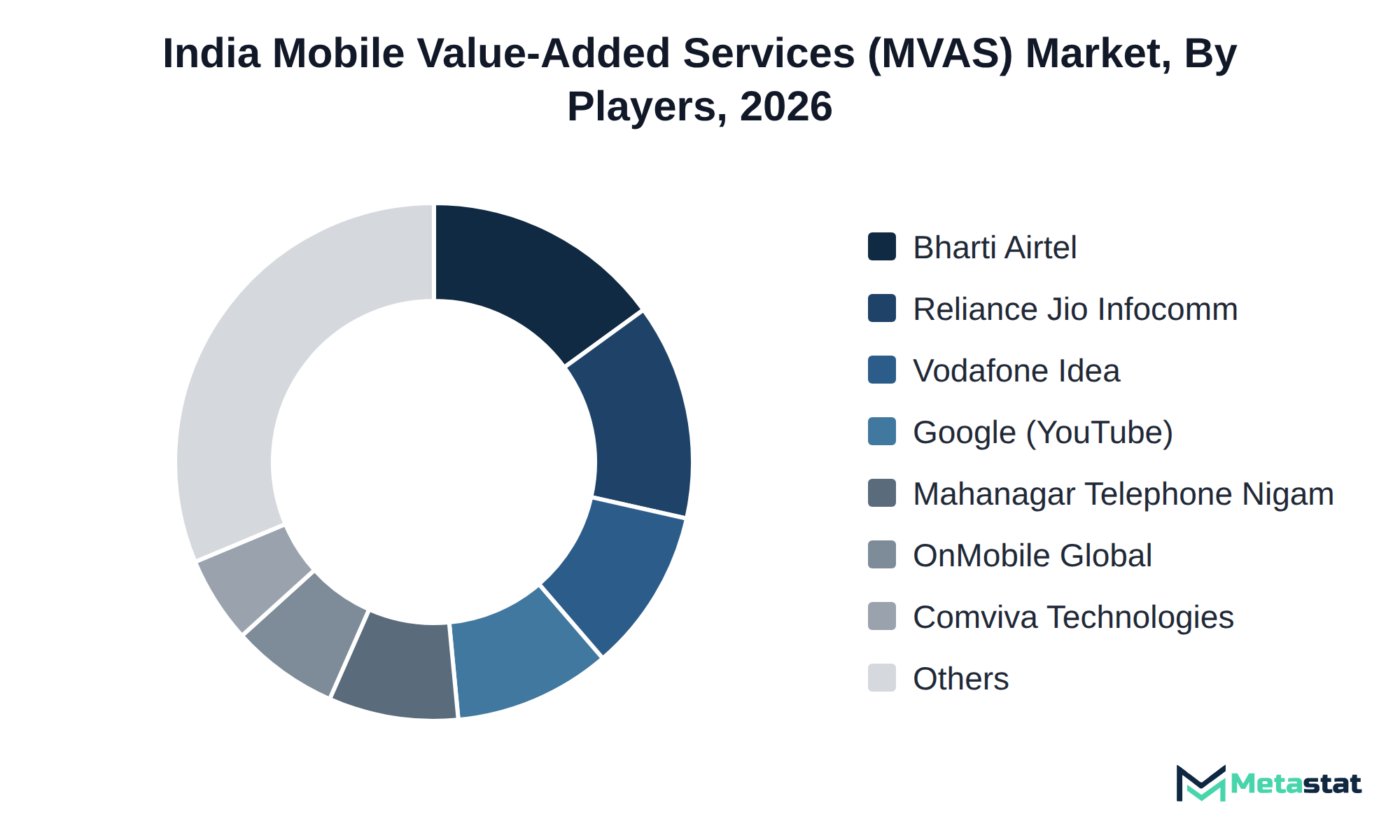
Companies operating in the India Mobile Value-Added Services (MVAS) market employ various strategies to differentiate their offerings. Service providers focus on diverse segments, including messaging services, digital content platforms, and entertainment applications. For instance, Bharti Airtel Limited emphasizes extensive digital content aggregation platforms, while Reliance Jio Infocomm Limited prioritizes mobile marketing and advertising services. Vodafone Idea Limited targets mobile banking and payment applications, reflecting the competitive landscape's fragmentation by service type.
Buyers in the market prioritize factors including pricing, customization, and ecosystem compatibility. Providers like Google LLC (YouTube) and Spotify AB enhance user experiences through content variety and flexible subscription models. Mahanagar Telephone Nigam Limited and OnMobile Global Limited focus on competitive pricing and service reliability to attract customers, ensuring their positioning aligns with market demand.
This growth depends on several key developments within the India Mobile Value-Added Services (MVAS) market. First, increasing adoption of Mobile Banking and Payments will significantly contribute to revenue growth. Second, the rise of Mobile Marketing and Advertising reflects a growing demand for targeted consumer engagement.
However, risks including regulatory challenges impede growth. Compliance with evolving data protection regulations could slow down adoption rates, particularly within the Mobile Banking and Payments segment. Cautious consumer behavior towards sharing personal data hinders the potential of Mobile Marketing and Advertising. Overall, maintaining momentum in the India Mobile Value-Added Services (MVAS) market requires ongoing innovation and responsiveness to regulatory challenges.
By Solution: Short Messaging Service (SMS), Multimedia Messaging Service (MMS), Location-Based Services (LBS), Mobile Email and Instant Messaging, Mobile Advertising Services, Mobile Content and Entertainment Services, Mobile Payment and Billing Services, Others (Mobile Infotainment, Mobile Information Services)
By Platform Type: Digital Content Aggregation Platform, Direct Carrier Billing Platform, Subscription Management Platform, Mobile Content Storefront, Mobile Engagement and Messaging Platform, Mobile Content Subscription Platform, Mobile Content Monetisation Platform, Others (Mobile Content Delivery and Management Platforms)
By Application: Consumer Entertainment, Mobile Marketing and Advertising, Mobile Banking and Payments, Enterprise Mobility and Productivity, Public Sector and Government Services, Healthcare and Telemedicine, Education and Mobile Learning, Retail and Loyalty Programs, Others (Travel and Location-Based Services)
By Vertical: Media and Entertainment, BFSI, Healthcare, Education, Retail and E-commerce, Government and Public Sector, Telecom and IT, Others (Travel and Hospitality, Transportation and Logistics)
The report strategically identifies and profiles the key market players and analyses their core competencies in each sub-segment of the Mobile Value-Added Services (MVAS) market.
Report Attributes | Details |
Study Period | 2021-2033 |
Base Year | 2025 |
Estimated Year | 2026 |
Forecast Period | 2026-2033 |
Historical Period | 2021-2025 |
Growth Rate | CAGR 6.4% from 2026 to 2033 |
Revenue Unit | USD million |
Segmentation | By Solution, Platform Type, Application, Vertical, and Region |
Find answers to common questions about this report
The Mobile Value-Added Services (MVAS) market size was valued at USD 812.6 million in 2025.
The market is projected to grow at a CAGR of 6.4% during the forecast period from 2026 to 2033.
Consumer Entertainment leads the Mobile Value-Added Services market with a projected value of USD 338.9 million by 2033. This segment's growth reflects a compound annual growth rate of 4.4 percent from its value of USD 251.4 million in 2026.
Increased engagement with mobile entertainment content significantly drives consumer spending, particularly among younger consumers prioritizing mobile entertainment. The expansion of mobile marketing and advertising, fueled by smartphone penetration and digital ad spending, enhances customer engagement and revenue growth.
The lack of comprehensive mobile infrastructure poses significant challenges, particularly in rural regions where network quality and availability are inadequate. This disparity leads to slower adoption rates and increased costs for businesses targeting underserved audiences, ultimately restricting market growth.
Increased engagement with mobile entertainment content drives adoption, particularly among younger consumers who prioritize personalized access to video streaming, digital music, and gaming. emerging digital content aggregation platforms enhance user experiences by streamlining access to diverse media, further supporting market growth.
The Mobile Value-Added Services (MVAS) market is estimated to reach a valuation of USD 1,335.2 million by 2033.
Key players operating in the Mobile Value-Added Services (MVAS) industry include Bharti Airtel Limited, Reliance Jio Infocomm Limited, Vodafone Idea Limited, Google LLC (YouTube), Mahanagar Telephone Nigam Limited, OnMobile Global Limited, and Comviva Technologies Limited.
The Consumer Entertainment segment is projected to reach USD 251.4 million in 2026, reflecting strong demand for mobile entertainment services.
Mobile Banking and Payments is projected to reach USD 245.9 million by 2033, indicating substantial demand for mobile financial services.
The analysts below cover Information & Technology research at Metastat Insights.
LEAD ANALYST
Utkarsh Khirodkar is a Lead Market Research Analyst at MetaStat Insight, specializing in market intelligence, technology sector assessments, and competitive strategy.

PRINCIPAL CONSULTANT - ENTERPRISE AI & EMERGING TECHNOLOGIES
Banking & Finance · Electronics and Semiconductor · Energy and Power · Healthcare IT · Information & Technology · Professional Services
Vijay Gunti is a Principal Consultant at MetaStat Insight, bringing over two decades of experience across enterprise digital transformation, technology strategy, and intelligent systems.

LEAD CONSULTANT - COMMUNICATION, TELECOM, AND IT
Electronics and Semiconductor · Information & Technology · Machinery & Equipment · Professional Services
Ravindra Sathe Consultants for Communication, Telecom, and IT at MetaStat Insight. He leads the firm's industry research initiatives across telecommunications infrastructure, digital connectivity, enterprise networking, and emerging information technology domains.
Most industry reports on warehouse automation bundle autonomous mobile robots and fixed conveyor installations into the same top-level numbers, which complicates advisory work. This study split the market cleanly by payload tiers, navigation technology, and fleet management software layers. The regional forecast for Western Europe gave our team defensible adoption benchmarks when evaluating capital allocation for logistics clients, saving us days of secondary data scrubbing.
Standard industry briefs frequently blur the operational distinctions between isobaric pressure exchangers and centrifugal turbines. In this study, MetaStat Insight categorized mega-scale desalination tenders across the GCC and Mediterranean basins by membrane replacement frequencies and salinity tolerances. Their primary research helped us evaluate local content requirements in Saudi Arabia and the UAE without relying on marketing literature. We found the segment-level equipment replacement estimates grounded and well-reasoned throughout.
The technical breakdown of ISO 20022 migration readiness across correspondent banking corridors was remarkably thorough. Rather than treating cross-border corporate payments as a single block, the report drew a useful distinction between multilateral netting platforms and domestic instant payment rails across ASEAN economies. MetaStat Insight highlighted regulatory constraints on foreign exchange liquidity management that many publications gloss over. The research material offered practical clarity for our platform development roadmap.
Explore related market intelligence reports worth reading alongside this one.
Starting from
$2950
Starting from
$2950