
LEAD ANALYST
Utkarsh Khirodkar is a Lead Market Research Analyst at MetaStat Insight, specializing in market intelligence, technology sector assessments, and competitive strategy.

Global Gaming Market Size, Share, By Platform (Online and Offline), By Device Type (Mobile Gaming, Console Gaming, and PC Gaming), By Business Model (Paid Games, Free-to-Play, Subscription-Based, Advertising-Supported, In-Game Purchases, and Game-as-a-Service), By Game Genre (Action and Adventure, Role-Playing Games (RPG), Sports and Racing, Strategy, Shooter, Simulation, Puzzle and Casual, Fighting, and Battle Royale and Multiplayer Online Battle Arena (MOBA)), Industry Analysis, Growth, Trends, and Forecast, 2026-2033
Report ID
MSI-5095
Published
August, 2026
Pages
271 Pages
Format
Historical
Base year
Forecast
Forecast period
Report Details
Choose Your License
Global Gaming Market
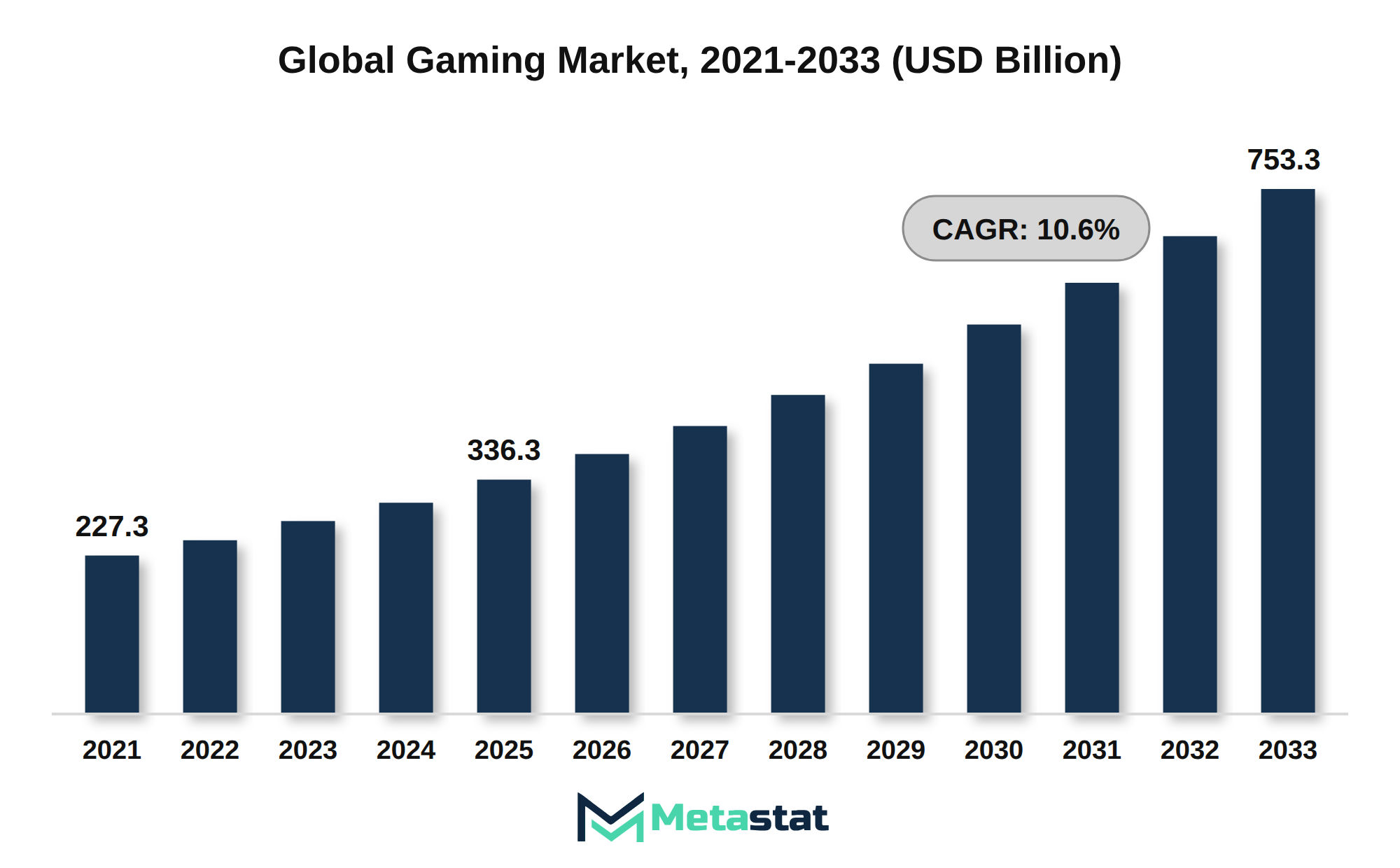
The global Gaming market was valued at USD 336.3 billion in 2025 and is projected to reach USD 753.3 billion by 2033, growing at a CAGR of 10.6% over the forecast period.
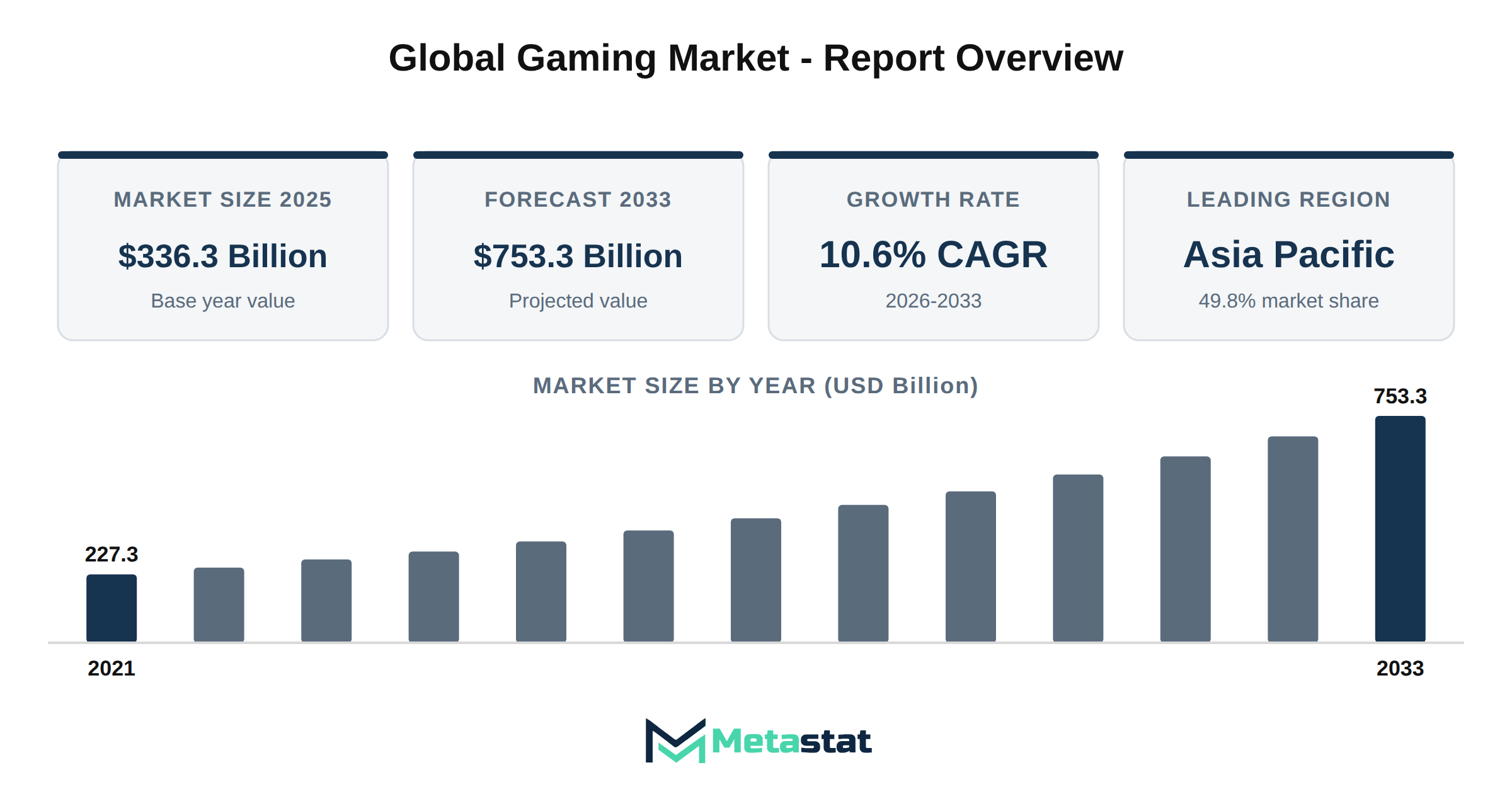
The global Gaming market reached a valuation of USD 336.3 billion in 2025, reflecting a strong growth trajectory from USD 227.3 billion in 2021. This expansion highlights the increasing engagement among players and the continuous innovation in game development.
With an anticipated growth to USD 753.3 billion by 2033, the market is projected to exhibit a compound annual growth rate (CAGR) of 10.6%. This growth is driven by the rising adoption of online platforms and mobile gaming, alongside advancements in technology and game design.
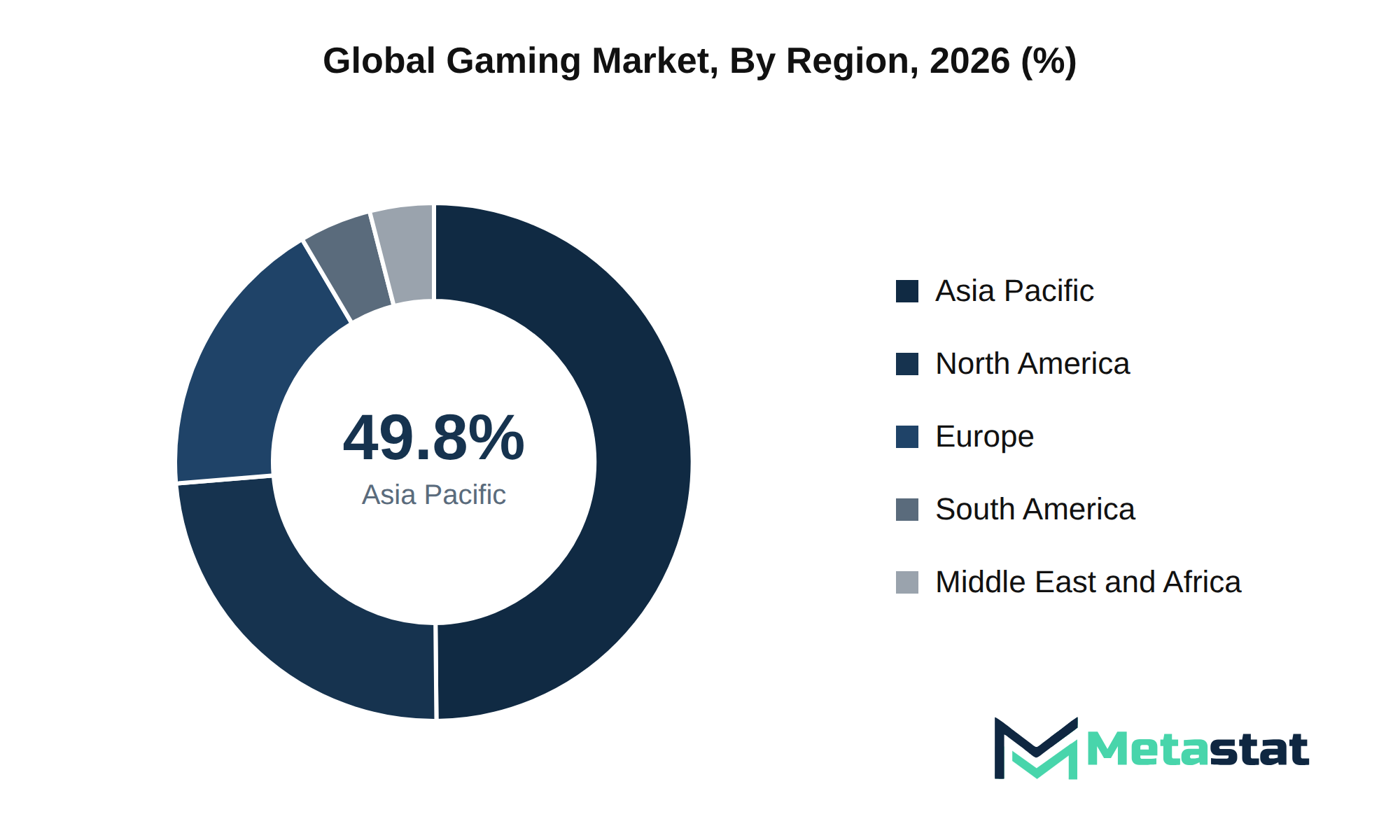
North America holds a share of the market at 23.8%, while Asia Pacific leads with a share of 49.8%. The regional dynamics reflect varying consumer preferences and technological infrastructure, influencing market strategies and investments.
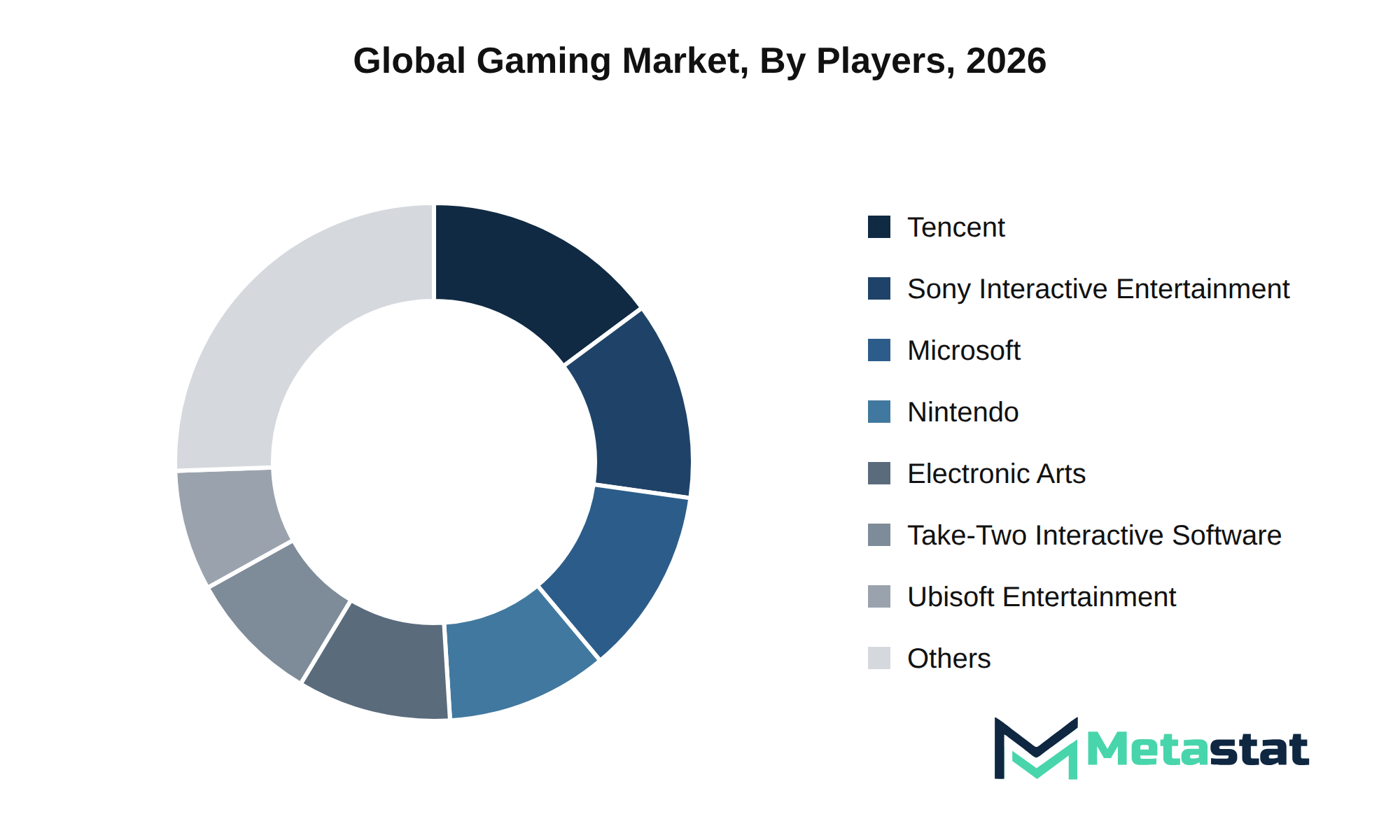
Key players including Tencent Holdings Ltd., Sony Interactive Entertainment LLC, and Microsoft Corporation operate in the competitive landscape, driving innovation and expanding their portfolios to capture emerging trends. This competitive environment encourages collaboration and strategic partnerships, enhancing product offerings and market reach.
Investments in research and development are essential for sustaining growth in the Gaming market. Companies focus on next-generation innovations, including augmented reality and virtual reality experiences, which attract a broader audience and enhance user engagement. This commitment to innovation supports long-term market expansion.
The gaming market experiences ongoing transformation driven by technological advancements and changing consumer preferences. Companies invest heavily in research and development, focusing on next-generation innovations including virtual reality and augmented reality gaming experiences. These technologies enhance user engagement and expand the potential customer base, particularly among younger demographics seeking immersive entertainment options.
Sustainability initiatives increasingly influence corporate strategies within the market. Many companies prioritize decarbonization and circular economy dynamics, implementing practices that reduce environmental impact while maintaining profitability. This shift aligns with growing consumer demand for environmentally responsible products and services, prompting firms to integrate sustainability into their business models.
The supply chain landscape in the gaming market faces challenges due to global disruptions and logistical complexities. Companies adapt their logistics architecture and sourcing strategies to address these issues, ensuring efficiency and resilience. This adaptation often includes diversifying suppliers and leveraging technology to optimize inventory management.
Market fragmentation presents both challenges and opportunities for participants. A diverse array of platforms and devices leads to increased competition, requiring firms to differentiate their offerings through innovative gameplay and unique experiences. Mergers and acquisitions significantly shape the competitive landscape, allowing companies to consolidate resources and expand their market presence.
The value chain within the market is evolving, with rising importance placed on customer journey dynamics. Understanding consumer behavior and preferences enables companies to tailor their marketing strategies and enhance customer engagement. Capital allocation toward targeted advertising and personalized gaming experiences strengthens loyalty and drives revenue growth.
Infrastructure investments remain a critical focus for the market, particularly in the development of high-speed internet and cloud gaming technologies. These advancements facilitate effective gaming experiences and broaden access to a wider audience. Looking ahead, the strategic outlook suggests continued growth driven by innovation, sustainability efforts, and an emphasis on customer-centric approaches.
The gaming market benefits from rapid technological integration, characterized by advancements in automation, artificial intelligence, and enhanced software solutions. This integration leads to the digitization of legacy processes, driving operational efficiency and improving user experiences. Businesses within the market invest significantly in technology, enabling the development of innovative gaming platforms and immersive experiences that attract diverse consumer demographics.
Increased participation in the market arises from a growing preference for online gaming platforms, which leverage sophisticated algorithms and data analytics to enhance gameplay and user engagement. The influx of venture funding into gaming technology firms supports this trend, enabling the creation of unique, high-quality gaming content. This funding environment strengthens competition and encourages continuous innovation.
The market's growth trajectory aligns with favorable macro-economic factors, including GDP growth and increased public and private spending power. These conditions create an environment conducive to technological advancements, further propelling the gaming market's expansion. Investment in technology enhances gaming experiences and enables companies to capture a larger share of the market, ultimately contributing to sustained revenue growth.
Growing capital investments significantly impact the gaming market, leading to enhanced product development and innovation. Increased venture funding and public-private spending power stimulate new gaming technologies, contributing to a robust pipeline of creative content and gaming experiences. This influx of capital improves operational productivity, allowing companies to streamline processes and expand their offerings, thereby attracting a wider audience.
Continuous GDP growth in various regions fuels consumer spending on entertainment, including gaming. This trend encourages companies to invest in advanced technologies, including automation and artificial intelligence, providing a competitive edge. The rise of digital transformation initiatives accelerates the adoption of online platforms, which further enhances the gaming experience for users.
Shifting demographic patterns, including urbanization and changing consumer behaviors, create new market segments for gaming. Increased interest in interactive and social gaming experiences prompts companies to diversify their offerings and target different age groups. This diversification allows the market to expand its reach and cater to evolving buying preferences, ultimately driving long-term growth.
The Gaming market faces several regulatory and economic constraints that impact growth potential. Regulatory tightening presents compliance hurdles for developers and publishers, resulting in increased operational costs that affect profitability. Macroeconomic headwinds, including inflationary pressures and capital stagnation, challenge investment in new projects and slow market expansion.
Supply chain disruptions and geopolitical instability create further obstacles, leading to increased costs for materials and delays in game development and distribution. High capital investment requirements discourage new entrants and limit the innovation capacity of existing players. Consequently, escalating operating costs hinder the market's ability to scale efficiently and respond to consumer demand.
Technological obsolescence and substitution risks introduce additional challenges. Companies consistently adapt to changing consumer preferences and emerging technologies. Failing to do so results in lost market share to alternative offerings that better meet player expectations.
Infrastructure gaps and connectivity deficits restrict access to gaming experiences in underserved regions, undermining growth in key markets. Deployment bottlenecks further exacerbate these issues, delaying the introduction of new products and services. Skilled labor deficiencies and talent gaps prevalent in the industry complicate recruitment efforts and inhibit the development of innovative gaming solutions.
Concerns surrounding data security, privacy, and intellectual property theft add layers of complexity to market operations. Fragmentation within the industry creates varied regulatory environments, leading to cultural barriers that impact regional adoption rates. Slowing downstream demand and market saturation signal potential maturation within the industry cycle, challenging sustained growth in the Gaming market.
Geopolitical fragmentation significantly impacts the gaming market, creating uncertainties in international trade. Trade deficits emerge due to countries focusing on domestic production, leading to increased tariff friction that raises operational costs for suppliers and limits market access.
Technological disruptions contribute to challenges within the market. Rapid advancements require continuous adaptation by industry players. Complex research and development integrations often strain resources, hindering innovation and delaying product launches.
Interoperability friction poses significant challenges, particularly for companies aiming to create cross-platform experiences. The inability of different systems to communicate effectively diminishes user experience and competitive edge.
Logistics disruptions and supply chain instability create additional pressures on the market. Volatility in feedstock and component availability complicates production schedules, resulting in increased costs and potential delays in delivering products to consumers.
Several factors contribute to pricing compression and margin pressures within the gaming market. Rising input costs, along with evolving consumer demands, force companies to reassess pricing strategies while maintaining profitability.
The market faces skill gaps in the workforce, prompting challenges in talent retention. Automation displacements further complicate the workforce landscape, necessitating efforts to enhance employee skills and adapt to changing technological demands.
Environmental lifecycle footprints and decarbonization mandates introduce sustainability demands that companies address. Infrastructure gaps and retrofitting barriers hinder the implementation of sustainable practices, limiting overall progress.
Intellectual property protection deficits expose the market to increased risks of piracy and infringement, complicating the competitive environment. Cybersecurity risks and data vulnerabilities create additional concerns, because companies strive to protect user information and maintain trust.
Changing downstream demands and market saturation add pressure on companies to innovate and differentiate their offerings. Substitution vector pressures challenge traditional products, requiring continual adaptation to maintain market relevance.
The Gaming market experiences significant opportunities through emerging regional demands and infrastructure modernization. Strong growth in the Asia Pacific region accounts for 49.8 percent of the total market share, driven by increasing disposable income and a young, tech-savvy population. This demographic shift supports rapid adoption of gaming platforms, particularly in mobile and online segments.
Technological disruptions reshape the competitive environment, with innovations in cloud gaming and virtual reality enhancing user experiences. These advancements create pathways for deeper engagement and new revenue streams, aligning with evolving consumer preferences for immersive gaming experiences. Companies investing in next-generation technologies position themselves favorably for market expansion.
Digital transformation initiatives contribute to a shift in buying behaviors. The rise of digital procurement streams reflects a transition from traditional to online purchasing methods. This shift enhances accessibility and convenience for consumers, driving growth in the gaming market. Businesses adapting to these changes secure a competitive edge.
Sustainability imperatives influence market dynamics, encouraging gaming companies to pursue green transformations and environmentally responsible practices. Adopting eco-friendly compliance measures aligns with increasingly conscious consumers, presenting opportunities for brands prioritizing sustainable development. This alignment with Environmental, Social, and Governance (ESG) standards attracts investment while building brand loyalty.
Future market growth hinges on strategic consolidation and cross-industry mergers. Collaborations between gaming developers and tech firms enhance innovative capabilities, promoting the creation of integrated gaming solutions. These alliances facilitate market responsiveness while enabling companies to capitalize on niche application growth within diverse gaming genres.
Supply chain localization enhances operational resilience and reduces dependency on global supply networks. This strategy allows companies to respond more effectively to regional market demands while mitigating risks associated with geopolitical instability. By focusing on local sourcing and production, the market positions itself for sustained growth and adaptability.
Overall, the convergence of these factors positions the Gaming market for growth through 2033. Companies leveraging emerging trends, technological advancements, and sustainability initiatives will likely capture significant shares in this evolving landscape.
The Global Gaming market is segmented based on Platform, Device Type, Business Model, and Game Genre.
Valued at USD 286.2 billion in 2026, the online segment is projected to reach USD 595.6 billion by 2033, reflecting a CAGR of 11% during the forecast period. This growth stems from primary demand drivers including the increasing popularity of mobile gaming, which attracts a wider audience and enhances engagement. Technological maturation plays a critical role, with advancements in internet connectivity and streaming technology enabling smooth gameplay experiences across various devices.
Adoption of next-generation upgrades, including virtual reality and augmented reality, drives interest in immersive gaming experiences. Product evolution within the segment focuses on enhancing user engagement through innovative game mechanics and social interaction features. Consumption shifts towards online platforms, particularly among younger demographics who favor digital access over traditional gaming methods.
Regulatory compliance standards continue to shape the market, influencing the development and distribution of online games. Pricing volatility impacts consumer behavior, yet competitive pricing strategies ensure sustained demand. Strategic opportunity windows arise from emerging markets, where growth potential remains significant due to the expansion of internet access and mobile device usage.
The online segment's dynamics in the gaming market highlight the importance of continuous innovation and responsiveness to shifting consumer preferences, reinforcing its position because a key growth driver within the broader market.
Demand for offline gaming experiences remains strong, driven by a growing preference for immersive, in-person interactions among players. This segment benefits from gaming events, local tournaments, and the social aspects of gaming, which enhance user engagement. Players seek unique experiences that offline gaming offers, influencing demand dynamics across various regions.
Offline segment is estimated to reach USD 157.7 billion by 2033, at a CAGR of 8.9% during the forecast period. This growth results from the evolution of game titles and genres, alongside the introduction of enhanced gaming experiences, attracting new players. Notable investments in game development and marketing strategies contribute to expanding the audience base.
Technological advancements in offline gaming provide opportunities for new product launches and upgrades. Enhanced graphics and augmented reality features facilitate deeper immersion, fundamentally changing player interactions. The evolution of gaming hardware, including consoles and PCs, supports these innovations, promoting consumer interest and driving market growth.
Downstream applications across various sectors, including entertainment, education, and fitness, widen the scope of offline gaming. Businesses leverage game mechanics to engage customers, further integrating gaming elements into daily life. This trend enhances the market's appeal, increasing broader acceptance of offline gaming across demographics.
Regulatory compliance and standards significantly impact the offline segment, with various regions implementing regulations to ensure fair play and consumer protection. Adhering to these standards influences market entry strategies and operational costs. Companies adapting to these regulations position themselves favorably in the competitive landscape.
Pricing volatility and margin pressures emerge owing to significant challenges within the offline gaming sector. Economic fluctuations and changing consumer preferences necessitate strategic price adjustments to maintain competitiveness. Companies focusing on cost efficiency and innovative pricing models enhance their market positioning and capture greater share in the gaming market.
Mobile gaming experiences strong growth driven by increasing smartphone penetration, which enhances accessibility for a broader audience. Advances in mobile technology, including improved graphics and processing capabilities, support immersive gaming experiences. The segment attracts diverse demographics, with younger generations, particularly Gen Z and millennials, showing strong engagement owing to the convenience of on-the-go gaming.
Significant expansion catalysts include the rise of mobile internet connectivity and the proliferation of affordable data plans, which enable smooth gameplay. Increasing adoption of free-to-play models encourages higher participation rates, allowing users to engage without financial commitment. In-app purchases and advertising models further monetize the segment, enabling developers to generate revenue while maintaining a large user base.
Technological maturation in mobile devices leads to enhanced gameplay experiences, with innovations in augmented reality (AR) and virtual reality (VR) creating new opportunities for content creators. The expansion of cloud gaming services enables users to access high-quality gaming experiences without the need for expensive hardware. This shift influences consumption patterns, driven by players increasingly opting for portable solutions without sacrificing quality.
Regulatory compliance and data privacy standards impact the landscape, compelling developers to adopt stringent practices in user data management and security. This adherence builds consumer trust and supports sustained growth in the market. Strategic investment in innovative technologies and partnerships with telecom operators and device manufacturers ensures a competitive edge while addressing challenges related to pricing volatility and margin pressures.
Overall, the mobile gaming segment presents significant opportunities for growth within the broader gaming market, driven by evolving user preferences and technological advancements. The segment supports diverse revenue streams while establishing a solid foundation for future expansion.
Console gaming stands because a key component within the broader gaming market. Primary demand drivers for this segment include the growing interest in immersive gaming experiences and advancements in graphics and processing capabilities. Technological maturation enhances the overall quality and performance of console systems, attracting a diverse demographic of gamers.
Next-gen upgrades play a critical role in sustaining interest among consumers, with continuous enhancements in hardware and exclusive game titles driving sales. Product evolution reflects shifts toward more integrated gaming experiences, incorporating online multiplayer functionalities and cross-platform play, thereby broadening the appeal to various user groups.
End-use dynamics indicate a notable shift toward digital distribution, where consumers increasingly prefer downloading games directly versus purchasing physical copies. This transition aligns with consumption shifts observed across the market, highlighting a demand for convenience and immediate access to gaming content.
Regulatory compliance standards continue to influence the market, particularly concerning data protection and age ratings, ensuring that developers adhere to specific guidelines when producing games. Cost structures within the console gaming segment face pressures due to fluctuating component prices and the need for innovative technologies, which impact profit margins.
Strategic opportunity windows emerge because console manufacturers explore partnerships with game developers, enhancing their game libraries and exclusive titles. This collaboration creates a competitive edge within the market, attracting new players and retaining existing customers. The console gaming segment reflects a strong commitment to evolving consumer preferences, making it a crucial area for growth within the gaming market.
Innovations in gaming technology significantly enhance the appeal of PC gaming, attracting a diverse user base interested in immersive experiences. Enhanced graphics, advanced processing capabilities, and improved user interfaces contribute to a growing demand for high-performance gaming systems. Competitive gaming, or esports, further drives the market, creating a community of dedicated gamers who seek advanced equipment and peripherals to optimize their gameplay. This demand for advanced technology creates opportunities for manufacturers to introduce new products and improve existing offerings, strengthening long-term demand.
Developments in online gaming platforms facilitate accessibility and engagement, expanding the audience for PC gaming. Gamers increasingly expect reliable connectivity, real-time updates, and interactive experiences, leading to innovations in multiplayer environments. Developers focus on creating engaging content and dynamic systems that captivate players, resulting in improved user retention and community building. This influx of players supports revenue growth and drives investment across the gaming ecosystem, reinforcing the segment's position.
Pricing volatility affects consumer purchasing patterns, with gamers weighing the cost of high-end components against performance benefits. While budget constraints influence purchasing decisions, the demand for premium gaming experiences continues to thrive. Technological obsolescence poses challenges for manufacturers, compelling them to innovate continually to remain competitive. Strategic opportunity windows exist for companies that identify emerging trends and adapt to changing consumer preferences, potentially increasing compliance costs for participants.
Supply chain resilience is essential for maintaining product availability and competitive pricing. Companies invest in robust supply chains to mitigate risks associated with component shortages and logistical challenges. While gaming hardware and software continue to evolve, adaptability remains vital for stakeholders in the gaming market, ensuring they remain responsive to consumer demands and technological advancements, thereby enhancing their competitive position.
Increasing interest in immersive experiences drives demand within the paid games sub-segment of the Gaming market. Players seek engaging narratives, high-quality graphics, and unique gameplay mechanics, prompting developers to invest significantly in product evolution. The transition towards next-generation gaming consoles and enhanced PC capabilities facilitates the introduction of visually stunning and complex titles. These technological advancements improve user experiences and support higher price points for premium game titles.
Adoption of paid games correlates with broader shifts in consumption patterns, where players prioritize quality over quantity. Players increasingly prefer paying upfront for games that offer significant replay value and ongoing content updates. This trend incentivizes developers to create extensive downloadable content, expansion packs, and seasonal updates that enhance player engagement and extend gameplay longevity.
Pricing volatility and margin pressures present challenges within the paid games segment, particularly due to rising development costs and competitive pricing strategies. Developers emphasize robust marketing strategies to differentiate their offerings in a crowded marketplace. Strategic opportunity windows arise from the integration of innovative business models, including premium pricing for exclusive titles and engaging in collaborations that expand audience reach.
Raw material sourcing and supply chain resilience significantly influence the segment. Disruptions in production or distribution impact the timely release of games, affecting overall sales performance. Adapting to these challenges involves diversifying supply sources and enhancing logistical operations to minimize risks associated with production delays.
The paid games sub-segment represents a vital component of the Gaming market, characterized by continuous innovation and demand for high-quality entertainment. Ongoing investment in next-gen upgrades and product evolution will determine the segment's competitive landscape and growth trajectory.
Free-to-Play gaming experiences significant traction in the market, driven by the widespread adoption of mobile devices and changing consumer preferences. This model attracts a broad audience by offering low barriers to entry, enabling players to access games without initial costs. The strategic integration of in-game purchases enhances revenue streams while maintaining player engagement.
Technological advancements facilitate immersive experiences and innovative gameplay mechanics, contributing to the expansion of the Free-to-Play segment. Developers continuously refine their offerings to enhance user experience, integrating community-driven features that encourage player retention and create engaging gaming ecosystems. Demand for regular content updates and seasonal events supports ongoing engagement, driving revenue through microtransactions.
The competitive nature of the gaming market incentivizes developers to adopt the Free-to-Play model, allowing them to reach wider demographics and generate substantial player bases. Challenges including pricing volatility and margin pressures necessitate agile strategies to maintain profitability while ensuring value for players. Overall, the Free-to-Play segment significantly influences the dynamics of the gaming market.
Increasing consumer preference for subscription-based models significantly influences the Gaming market's evolution. This model offers players access to a wide range of games for a fixed fee, enhancing user engagement and retention. Players benefit from the convenience of accessing multiple titles without the upfront costs associated with traditional purchases, driving a shift in consumption patterns.
Technological advancements underpin the growth of subscription-based gaming. High-speed internet connectivity and cloud gaming technologies facilitate access to games, enabling immersive experiences. Integration of next-gen upgrades further enhances graphics and gameplay, attracting a broader audience.
The segment benefits from evolving product offerings, with developers continually introducing exclusive content and features for subscribers. This strategy drives subscription renewals, strengthening customer loyalty and encouraging referrals. Competitive pricing strategies further stimulate market expansion, driven by companies positioning their offerings to attract diverse demographics.
Downstream applications within the subscription-based segment include partnerships with hardware manufacturers and cross-platform capabilities, allowing players to enjoy gaming across devices. This accessibility broadens the user base and reinforces the segment's market presence. Regulatory compliance remains a consideration, with evolving standards shaping content delivery and user data protection.
Pricing volatility poses challenges, influencing profit margins within the segment. Companies address these pressures through strategic capital investments aimed at enhancing service offerings and technological infrastructure. Subscription-based models create strategic opportunity windows, enabling firms to capture market share by meeting evolving consumer demands in the Gaming market.
Increasing demand for the Advertising-Supported segment within the Gaming market stems from shifting consumer preferences towards free-to-play gaming experiences. Players gravitate towards platforms offering accessible content, allowing monetization through advertisements, a model that appeals to a broader audience. This trend correlates with the rising acceptance of in-game advertising, which enhances user engagement and provides brands effective promotional opportunities.
Technological maturation plays a critical role in segment expansion. Advancements in data analytics improve targeting and optimize ad placements. Enhanced user experience drives player retention, ultimately contributing to revenue growth for developers and advertisers. The evolution of privacy regulations influences how data is collected and managed, prompting the need for compliance while maintaining effective advertising strategies.
Investment in innovative ad formats, including interactive and immersive advertisements, significantly influences consumer engagement. These developments align with the overall evolution of gaming experiences, catering to diverse player preferences. The market experiences a shift towards integrating advertisements seamlessly within gameplay, providing entertainment while generating revenue.
Competitive pressures within the Gaming market push developers to explore diverse monetization strategies, including advertising-supported models. This creates strategic opportunity windows, enabling companies to capture market share while enhancing user experiences. Continuous evolution in gaming content and advertising approaches will further define the segment's trajectory.
In-Game Purchases have gained prominence within the Gaming market, acting because a key factor in revenue generation for game developers and publishers. This sub-segment thrives on player engagement, incentivizing consumers to spend on virtual goods, upgrades, and exclusive content. The trend towards in-game monetization aligns with evolving consumer behaviors, where players seek personalized experiences and enhanced gameplay. Growing adoption of free-to-play models has further propelled the importance of In-Game Purchases. Players often engage more deeply when presented with options to enhance their gaming experience through additional purchases. This dynamic encourages ongoing interaction, transforming casual players into dedicated users willing to invest in their experience. Technological advancements contribute significantly to the evolution of in-game monetization strategies. Enhanced game design and immersive technologies, including augmented reality and virtual reality, create richer environments that encourage spending. Developers employ data analytics to refine pricing strategies, tailoring offerings to individual player preferences, which increases conversion rates and overall revenue. Shifting consumer preferences toward digital content consumption drive the momentum in this sub-segment. The emergence of microtransactions allows players to spend at their discretion, promoting a steady revenue stream for developers. This consumption shift reflects broader trends in entertainment, where on-demand access to content has changed the way consumers engage with their favorite games. Regulatory considerations around in-game purchases introduce challenges, particularly concerning transparency and consumer protection. Ensuring compliance with evolving standards requires developers to adopt clear communication strategies regarding purchase options. Transparency in pricing and the nature of in-game purchases builds trust and loyalty among players, leading to sustained engagement and revenue growth for the market.
In the Gaming market, the Game-as-a-Service business model experiences rising adoption, driven by the growing preference for ongoing content and engagement among users. This model enables developers to continuously update games with new features, content, and improvements, thereby enhancing player retention and monetization opportunities. The ability to offer ongoing experiences encourages players to invest time and money, creating a loyal community around titles.
Technological maturation significantly impacts this segment, with advancements in internet connectivity and cloud gaming enabling efficient updates and multiplayer experiences. These improvements facilitate real-time interactions and ensure that players receive new content without the need for complete reinstalls. This dynamic environment positions the market for sustained growth, resulting from developers expanding their portfolios to include more service-oriented games.
Shifts in consumption patterns highlight a trend towards digital purchasing and subscription models, aligning with the Game-as-a-Service approach. Players increasingly prefer to access a range of games through subscription services rather than purchasing individual titles. This preference not only broadens the audience for developers but stabilizes revenue streams through consistent monthly subscriptions.
Strategic opportunity windows arise from the need for innovative gameplay mechanics and engaging narratives that keep players returning. Developers focusing on creating compelling experiences that evolve over time capture greater market share, driving revenue and engagement. The Game-as-a-Service model provides a foundation for building long-term relationships with players, which aligns with broader trends in the Gaming market.
Action and adventure games remain a significant genre within the gaming market, attracting audiences through their engaging narratives and dynamic gameplay. Demand for this genre increases due to players seeking immersive storytelling and character development, which enhance their gaming experiences. The evolution of technology fuels this segment, with advancements in graphics, artificial intelligence, and virtual reality providing richer environments and more interactive gameplay mechanics.
Next-generation upgrades play a crucial role, allowing developers to deliver higher-quality content that meets rising consumer expectations. Players increasingly gravitate toward games that offer expansive worlds and complex storylines, leading to sustained interest and engagement in action and adventure titles. The shift towards digital distribution channels has streamlined access to new releases, creating a culture of immediate engagement with the latest offerings.
Consumer preferences continuously evolve, with many gamers embracing innovative gameplay mechanics and multiplayer functionalities that enrich the action and adventure experience. The rise of streaming platforms has further expanded the audience for this genre, enabling players to share their experiences and engage with a wider community. This dynamic environment creates abundant opportunities for developers to experiment with new concepts and improve user experiences.
Regulatory compliance and standards remain essential for game developers, influencing content creation and distribution methods. Adherence to these standards ensures that games reach their intended audiences while mitigating potential backlash over content appropriateness. The relationship between regulatory frameworks and creative freedom shapes the future trajectory of the action and adventure segment within the broader gaming market.
Role-Playing Games (RPG) represent a dynamic segment within the gaming market, characterized by deep storytelling and character development that engage players on emotional and intellectual levels. This genre attracts a dedicated fanbase, drawn by complex narratives and immersive worlds that allow for exploration and personal growth. Technological advancements enhance the experience, with developments in graphics and artificial intelligence creating richer environments and more interactive gameplay elements.
The expansion of RPGs benefits significantly from community-driven content, where user-generated mods and storylines extend the life of existing titles, creating a loyal player community. Increasing interest in multiplayer online RPGs introduces collaborative gameplay, allowing players to interact and create social connections within expansive game worlds. This social element enhances player engagement, encouraging ongoing participation and investment in the genre.
Consumer trends indicate a shift toward live-service RPGs, with ongoing updates and content releases sustaining interest over time. This model encourages players to return regularly, contributing to long-term revenue streams for developers. The introduction of cross-platform functionality further promotes inclusivity, allowing players to connect across multiple devices, thereby broadening the audience for RPG titles.
While regulatory standards evolve, developers adapt to ensure compliance, particularly around content appropriateness and data privacy. This adaptability builds consumer trust while maintaining robust sales channels. Strategic opportunities arise from partnerships with streaming platforms, where gameplay experiences translate into viewership and community growth, reinforcing the genre's position in the market.
Engagement within the Sports and Racing genre demonstrates strong traction among consumers, largely driven by the popularity of competitive sports and racing events. Gamers increasingly seek realistic gameplay experiences that mirror real-world sports dynamics, leading to greater investment in high-fidelity graphics and advanced simulation technologies. This segment benefits from partnerships with major sports organizations, allowing for authentic branding and player representation, which enhances user engagement and loyalty.
The adoption of esports has further driven growth in the Sports and Racing segment, with tournaments and competitions drawing large audiences both online and offline. Increased viewer engagement translates into higher participation rates, compelling developers to innovate continuously. The demand for next-gen upgrades in gaming consoles and PCs enhances the realism and interactivity of these gaming experiences, attracting new players and retaining existing ones.
Technological advancements contribute to the evolution of gameplay mechanics, focusing on user experience and engagement. Integration of augmented reality (AR) and virtual reality (VR) technologies within this segment provides gamers with immersive experiences, further enhancing the market's appeal. While consumers exhibit a shift toward interactive and social gaming experiences, developers prioritize features that promote multiplayer capabilities and social connectivity.
Regulatory compliance surrounding gaming content, particularly with respect to sponsorships and advertising, influences market dynamics. Developers navigate legal frameworks to align with policy standards while maximizing revenue opportunities. This careful balance sustains the segment's growth amid evolving consumer preferences and regulatory trends.
Overall, the Sports and Racing segment within the Gaming market reflects a dynamic relationship of technology, consumer behavior, and market trends, driving expansion and innovation opportunities. The industry's focus on delivering high-quality, engaging experiences positions it well for sustained growth in the coming years.
Increasing interest in strategy games within the gaming market results from a combination of evolving consumer preferences and technological advancements. Gamers seek complex narratives and tactical challenges, which strategy games provide, enhancing engagement and replayability. The emergence of next-gen upgrades, including improved graphics and artificial intelligence, improves the gaming experience, attracting a broader audience.
Adoption of strategy games continues to gain momentum among diverse demographics, including casual and hardcore gamers. Online platforms facilitate access to these games, allowing players to connect globally, thereby expanding the market. In addition, the rise of esports has created competitive environments for strategy games, further driving interest and participation.
Cost structures impact the pricing strategies for strategy games within the market. Developers face challenges related to production and marketing costs, influencing game pricing and sales strategies. Effective monetization models, including in-game purchases, enhance revenue streams while offering players varied experiences without initial high costs.
Technological obsolescence remains a concern within the strategy genre, requiring continuous innovation. Developers invest in new technologies and game mechanics to maintain consumer interest and competitiveness. Strategic opportunity windows arise from shifting market dynamics, prompting developers to explore new themes, gameplay mechanics, and cross-platform compatibility. This exploration fosters a competitive environment that encourages growth.
Overall, the strategy sub-segment contributes significantly to the gaming market, benefiting from favorable trends in consumer engagement and technological enhancements. Ongoing investment in product evolution ensures the segment remains relevant and appealing to gamers worldwide.
Demand for shooter games thrives due to the increasing popularity of competitive gaming and esports. This segment attracts dedicated player communities, contributing to its growth. Advancements in graphics and gameplay mechanics, alongside engaging narratives, enhance player retention and satisfaction.
Technological maturation enhances the quality of shooter titles. Enhanced processing power, improved graphics engines, and more sophisticated artificial intelligence create immersive environments, drawing in substantial player interest. The integration of virtual reality and augmented reality technologies further increases engagement within the segment.
Product evolution reflects the industry's adaptability to player preferences. Regular updates, downloadable content, and expansions maintain interest in existing titles, while innovative gameplay features keep the market dynamic. Transitioning to next-generation consoles and cloud gaming solutions allows for broader accessibility and improves player experiences.
Consumption shifts within the market demonstrate a trend towards more collaborative and social gameplay. Multiplayer modes, co-op missions, and competitive formats enhance community engagement. Evolving policy frameworks continue to shape game design and distribution, ensuring adherence to standards that prioritize user experience and safety.
Strategic opportunity windows emerge with the introduction of new technologies and platforms. While player demographics diversify, targeting different audiences through tailored content becomes increasingly important. The segment's resilience against disruptions, coupled with a robust supply chain, supports sustained growth amid evolving market dynamics.
Interest in simulation games increases owing to their unique ability to replicate real-world scenarios, attracting players looking for immersive and educational experiences. Technological advancements enhance the appeal of this genre, enabling the integration of realistic graphics and artificial intelligence, which enrich gameplay and user engagement. Growing demand for educational content drives adoption among various demographics, including younger audiences and professionals seeking skill enhancement through virtual environments.
Segment expansion experiences significant catalysts from the rise of virtual reality and augmented reality technologies, which enhance the simulation experience by providing more interactive and engaging gameplay. These next-generation upgrades encourage developers to innovate continuously, leading to an evolving product landscape that attracts new players and retains existing ones. The market benefits from strong community support, where players actively participate in content creation, enhancing engagement.
Adoption within the gaming market shifts in consumer preferences, with players increasingly seeking games that offer both entertainment and educational value. Regulatory compliance standards and certifications for educational content further promote the legitimacy of simulation games, attracting partnerships with educational institutions. This collaboration opens avenues for new applications in training and development, expanding market reach.
Cost structures within the simulation genre vary significantly based on development complexity and technology integration. Pricing volatility remains influenced by consumer trends and competition, necessitating strategic pricing models that align with market expectations. Successful titles demonstrate strong profit margins, driven by the ability to monetize through expansions, downloadable content, and in-game purchases, allowing developers to invest in future innovations.
Strategic opportunity windows present themselves because the gaming market evolves, with players increasingly seeking unique and engaging experiences that simulation games provide. Capital investment in this genre appears promising, with stakeholders recognizing the long-term growth potential associated with immersive gaming experiences. Supply chain resilience and raw material sourcing remain critical, ensuring that developers deliver high-quality content consistently while mitigating disruptions in production.
Consumer interest in casual and puzzle games drives engagement across various demographics, primarily attributed to their accessibility and straightforward gameplay mechanics. These games attract a broad audience, including casual gamers who seek quick entertainment experiences, thereby expanding the overall player base. The proliferation of mobile gaming platforms further enhances accessibility, enabling users to enjoy these games on-the-go, which significantly increases time spent on gaming applications.
Technological advancements play a crucial role in the evolution of casual and puzzle games, with next-gen upgrades facilitating improved graphics and user interfaces. The integration of social features enhances multiplayer experiences, enabling players to connect and compete with friends, which builds community engagement. Innovations in augmented reality (AR) and virtual reality (VR) create new opportunities for immersive puzzle-solving experiences, attracting tech-savvy consumers to explore novel gameplay dynamics.
Pricing strategies in the casual gaming segment vary widely, with free-to-play models gaining traction due to minimal entry barriers for users. In-game purchases often supplement revenue, allowing developers to monetize without discouraging initial engagement. Strategic pricing adjustments directly impact player retention rates and overall market profitability, ensuring a competitive edge among developers.
The increasing prevalence of subscription models offers a steady revenue stream, providing players with access to a wider range of content and exclusive features. This model aligns with shifting consumer preferences towards valuing convenience and variety, further enhancing player loyalty and engagement. Regulatory compliance standards surrounding data protection and consumer rights necessitate careful consideration by developers in this segment, since adherence to these guidelines builds trust and reinforces brand reputation.
Supply chain resilience becomes essential for developers, driven by the navigate potential disruptions in raw material sourcing and logistics. Ensuring a flexible approach to game development and distribution mitigates risks associated with global supply chain vulnerabilities. Strategic partnerships and collaborations within the gaming ecosystem enhance resource availability, promoting innovation and reducing time to market for new titles.
Overall, the Puzzle and Casual segment of the Gaming market presents numerous strategic opportunities, driven by shifts in consumer behavior and technological advancements. Capital investment in this segment encourages growth potential, motivating developers to explore innovative gameplay experiences that align with evolving consumer demands. Maintaining a focus on user-centric design and engagement strategies ensures sustained interest and participation in the gaming landscape.
Fighting games attract a dedicated player base, driven by their competitive nature and unique gameplay mechanics. This genre creates a strong sense of community through tournaments and online matchmaking, enhancing player engagement and loyalty. The rise of esports has significantly contributed to the popularity of fighting games, with major events highlighting top talent and attracting large audiences.
Technological advancements facilitate the evolution of fighting games, enabling improved graphics, realistic animations, and innovative gameplay features. Next-generation consoles provide developers with enhanced capabilities, allowing for more immersive experiences. The integration of virtual reality and augmented reality technologies offers new dimensions to gameplay, expanding the appeal of this genre.
Consumer preferences shift towards titles that emphasize character customization and diverse gameplay styles, creating opportunities for developers to innovate. Cross-platform compatibility enhances accessibility, allowing players on different devices to compete against one another, thereby broadening the audience. The market continues to see an influx of indie developers, who introduce fresh ideas and unique approaches to fighting games, further enriching the genre.
Cost structures in the fighting genre reflect the balance between development expenses and potential revenue from sales and in-game purchases. Pricing volatility remains a consideration, especially with the introduction of free-to-play models that incorporate microtransactions. Strategic marketing initiatives targeting esports and online communities play a crucial role in boosting visibility and driving sales.
Regulatory compliance standards impact game content, particularly concerning violence and age ratings. Developers navigate these frameworks while creating engaging experiences that appeal to a broad demographic. The market benefits from a resilient supply chain, ensuring that game releases align with consumer expectations and demand.
Popularity for Battle Royale and Multiplayer Online Battle Arena (MOBA) titles continues to surge, driven by innovative gameplay mechanics, competitive elements, and engaging social interactions. The rise of streaming platforms and esports has accelerated interest, allowing players to share experiences and strategies, creating a strong community around the genre. High-profile tournaments and events create substantial visibility, attracting both players and sponsors, improving the segment's commercial viability.
The adoption of next-gen gaming consoles and advancements in online connectivity support the segment's growth. Enhanced graphics and smoother gameplay create immersive experiences, enticing gamers to engage with these titles. The integration of cross-platform play facilitates wider participation, allowing players from different systems to compete against one another, further expanding the audience. This inclusivity strengthens the segment within the broader gaming market.
Product evolution significantly shapes consumer preferences. Developers consistently introduce new content, updates, and seasonal events that keep the gaming experience fresh and engaging. This approach generates recurring revenue through in-game purchases, ensuring sustained interest and participation in the segment. Continuous innovation in game design and mechanics positions the segment favorably within the competitive landscape.
Understanding consumption shifts is vital in addressing the needs of diverse player demographics. Games in this segment attract both casual and hardcore gamers, reflecting varied preferences in gameplay styles and commitment levels. This broad appeal enables the segment to capitalize on emerging trends, drawing in a larger audience and enhancing its market share.
Regulatory compliance standards and policies governing online gaming influence development strategies and market dynamics. Adherence to these regulations builds trust among consumers, enabling sustainable growth. Maintaining compliance while innovating in game design presents a strategic opportunity for developers, allowing them to balance creativity with regulatory considerations.
Capital investment in technological advancements, including cloud gaming and augmented reality, positions the segment for future expansion. These innovations promise to enhance player experiences while attracting new entrants to the market. Strategic partnerships with technology firms further strengthen the segment, leveraging expertise to push boundaries and improve gameplay experiences.
Growing diversity in gaming genres fuels interest in the Others segment, which encompasses unique and unconventional game styles that do not fit into mainstream categories. Innovation by developers leads to the exploration of niche game designs, attracting players seeking fresh experiences. The segment benefits from technological maturation, enabling the development of more immersive and engaging gameplay experiences through advancements in graphics and interactivity.
Product evolution within the gaming market contributes to opportunities for indie developers to introduce unconventional games, further diversifying the market. Increased accessibility of game development tools and platforms facilitates this trend, allowing creators to explore diverse themes and mechanics. End-use dynamics reflect changing consumer preferences, with players open to experimenting with unique game narratives and formats.
Shifts in consumption patterns indicate a growing appetite for games that offer innovative gameplay and storytelling. Regulatory compliance standards impact the segment, driven by developers navigating varying policies in different regions to ensure market access. The segment's strategic opportunity windows arise from the ongoing evolution of gaming technology and changing gamer demographics, highlighting potential for future growth and engagement.
Based on geography, the Global Gaming market is divided into North America, Europe, Asia-Pacific, South America, Middle East, and Africa.
North America represents a significant player in the Gaming market, holding a 23.8% share of the global market in 2025. The region is set to expand at a CAGR of 10.6% within the forecast period, reaching a market size (TAM) of USD 168.3 billion by the end of 2033. Strong demand for gaming experiences in the United States, Canada, and Mexico drives growth in various gaming segments.
Technological advancements in gaming platforms enhance user engagement and performance, facilitating growth across both online and offline segments. Increasing penetration of high-speed internet and mobile connectivity fuels the popularity of online gaming experiences. Local compliance mandates and regulations support the rapid adoption of cloud-based gaming technologies.
Cultural nuances and regional preferences shape consumer behavior in the market, leading to tailored offerings from domestic market participants. A diverse array of gaming genres appeals to various demographics, while strategic entry barriers remain manageable for new players seeking to establish a foothold. Expanding local manufacturing densities and the implementation of nearshoring initiatives contribute to supply chain resilience.
Investment in localized procurement dynamics strengthens the market landscape, encouraging regional vendor consolidation trends. The overall growth trajectory in North America reflects a combination of strategic foreign direct investment flows and the readiness of local infrastructure to accommodate increasing consumer demands. Emerging market participants in this region are positioned to benefit from incremental growth vectors, driving the Gaming market forward through 2033.
Europe holds a market share of 17.8% of the global gaming market in 2025. Key countries including Germany, France, the UK, Italy, Spain, and Russia contribute to this robust market position, driven by growing demand for diverse gaming experiences.
The region experiences a strong inclination towards online gaming, supported by advanced internet infrastructure and high penetration of mobile devices. This trend facilitates rapid adoption of various platforms, including mobile, console, and PC gaming, while subscription-based and free-to-play models attract a broader audience.
Localized content and cultural nuances play a vital role in engaging consumers across Europe. Companies that tailor their offerings to meet regional preferences enhance their competitive advantage. Strategic partnerships with local developers promote innovation and drive growth within the market.
Infrastructure modernization has positioned Europe well for incremental growth, enabling effective distribution and accessibility of gaming products. Emerging technologies including cloud gaming offer new avenues for engagement, promising to reshape user experiences within the market.
Despite its maturity, the region remains ripe for expansion, particularly in underpenetrated territories. Increased foreign direct investment (FDI) flows into gaming startups and initiatives highlight the attractiveness of the European market, further enhancing its future potential.
The competitive landscape features several domestic market participants, including prominent firms that adapt to evolving consumer behaviors and preferences. Ongoing vendor consolidation trends contribute to a dynamic environment, creating opportunities for collaboration and innovation within the gaming sector.
While the gaming market continues to evolve, addressing localized procurement dynamics will enhance operational efficiencies and ensure a more responsive approach to market demands. Cultural factors and regional buying behaviors shape strategic entry barriers, influencing how companies position themselves across Europe.
The Asia-Pacific region holds a significant share of the global Gaming market, accounting for 49.8% in 2025. This extensive market presence results from various factors including the rapid adoption of online gaming platforms, driven by increasing internet penetration and smartphone usage. Countries including China, Japan, and India experience growth in mobile gaming, which reflects changing consumer preferences towards on-the-go entertainment options.
Investment in local gaming studios and infrastructure modernization contributes to the region's dynamic market environment. High-value replacement cycles emerge because consumers frequently upgrade their gaming devices, supported by technological advancements and the introduction of new gaming titles. This cyclical demand creates a competitive landscape characterized by both established players and emerging market front-runners.
The region benefits from localized manufacturing densities, facilitating efficient supply chains and reducing operational costs. Cultural nuances significantly influence game development, with localized content appealing to diverse consumer segments across China, Japan, South Korea, and Australia. This tailored approach enhances user engagement and drives higher adoption rates, reinforcing the Asia-Pacific region's position because a key player in the global gaming market.
Strategic entry barriers exist for new entrants, highlighting the importance of understanding local compliance mandates and consumer preferences. Foreign Direct Investment (FDI) flows into this region support growth initiatives, particularly in underpenetrated territories including Southeast Asia and the Rest of Asia Pacific. The accumulated factors position the Asia-Pacific region for continued expansion within the Gaming market, with growth prospects anticipated through 2033.
South America represents a unique market within the global gaming landscape, driven by an increasing interest in gaming experiences across demographics. Brazil and Argentina emerge because key contributors to market growth, fueled by rising disposable incomes and a growing youth population eager to engage in various gaming formats. An expanding internet infrastructure enhances accessibility, enabling more consumers to participate in online gaming activities.
Localized preferences play a significant role in shaping game genres that appeal to South American audiences. Action and adventure games, alongside sports titles, attract substantial player bases, reflecting cultural interests and engagement levels. The popularity of mobile gaming contributes to the region's overall gaming market, with mobile devices providing a convenient platform for gaming experiences, particularly in Brazil.
Market dynamics indicate a competitive landscape characterized by the presence of both domestic and international players. Local game developers increasingly gain traction, introducing titles tailored to regional tastes, which heightens competition within the market. The emergence of these developers creates an environment that encourages innovation and creativity, enhancing the gaming experience for consumers.
With a share of 4.5% of the global gaming market in 2025, South America presents significant growth potential. Continuous investment in digital infrastructure aligns with the rising demand for gaming, contributing to incremental growth vectors and reinforcing the region's position within the broader gaming ecosystem.
The Gaming market in the Middle East and Africa faces unique challenges and opportunities shaped by regional dynamics. Saudi Arabia and the UAE emerge because front-runners, demonstrating high adoption rates and a rapidly expanding gaming ecosystem, driven by rising disposable incomes and a young, tech-savvy population. South Africa, while not dominant, shows a growing interest in mobile gaming, supported by increasing internet penetration and smartphone accessibility.
Infrastructure modernization enhances market potential. Investments in internet connectivity and digital infrastructure facilitate online gaming experiences, which is vital for the market's growth. The region experiences underpenetrated territories, suggesting opportunities for further expansion among local and international developers.
Local compliance mandates and trade policy shifts influence market conditions. Adherence to regulations and cultural nuances affects the development and marketing of gaming products. Domestic market participants adapt their strategies to align with regulatory frameworks, ensuring relevance in a competitive environment. Vendor consolidation trends characterize the market, leading to strategic partnerships that enhance service offerings and expand market reach.
Significant foreign direct investment (FDI) flows into the gaming sector reflect confidence in the region's growth potential. Geographic expansion windows open for companies looking to capitalize on the emerging demand for interactive entertainment. The overall outlook for the Gaming market in the Middle East and Africa remains positive, driven by innovation, investment, and adaptability to regional characteristics.
The Gaming market features a dynamic competitive environment where major players engage in various strategic behaviors to strengthen their market position. Mergers and acquisitions have become prominent due to companies seeking to consolidate resources and enhance their portfolios. These activities enable firms to leverage intellectual property and encourage innovation across gaming platforms and genres.
Strategic alliances and partnerships emerge because critical elements drive collaboration and expand market reach. Companies like Tencent Holdings Ltd. and Microsoft Corporation actively pursue joint ventures to enhance their offerings and access new customer segments. Product differentiation is important, with firms emphasizing unique gaming experiences and proprietary technologies to attract and retain users.
Pricing architectures and commercial models reflect the competitive nature of the market. Subscription-based and free-to-play models gain traction, allowing companies to adapt to shifting consumer preferences. The presence of established players like Sony Interactive Entertainment LLC and Electronic Arts Inc. creates substantial barriers to entry for new entrants, heightening the competitive environment further.
While the market evolves, the focus shifts towards customer retention strategies and brand equity dynamics. Firms invest in creating engaging content and enhancing user experiences to maintain a loyal customer base. These factors shape the future competitive outlook within the Gaming market, driving growth and innovation across the sector.
Market size is forecast to rise from USD 336.3 billion in 2025 to over USD 753.3 billion by 2033. This growth trajectory reflects a robust 10.6% CAGR, indicating strong underlying demand and market maturation. The base case predicts steady expansion, driven by increased consumer engagement and technological advancements in the gaming market.
In a bull case scenario, enhanced economic conditions, coupled with increased disposable income and emerging markets, could accelerate growth rates, further propelling the market. Conversely, a bear case scenario could emerge from economic downturns, resulting in reduced consumer spending and potential regulatory challenges that impact growth. These external factors will influence the overall performance of the market.
Next-generation technology integration shapes gaming experiences, with innovations in artificial intelligence, virtual reality, and cloud gaming setting new benchmarks for user engagement. R&D commercialization timelines are crucial, driven by companies striving to bring innovative products to market that meet evolving consumer needs.
Regulatory evolution will impact operational practices within the gaming market, with compliance milestones influencing market dynamics. Geopolitical realignments and shifts in global supply chains create both opportunities and challenges, leading to strategic capital allocation that focuses on infrastructure development and CapEx investment vectors.
Emerging white-space opportunities in the gaming market signal unmet enterprise needs, especially in mobile gaming and cross-platform technologies. Addressing these requirements represents a key strategic imperative for companies aiming to capture high-growth pockets within the evolving market.
The report strategically identifies and profiles the key market players and analyses their core competencies in each sub-segment of the Gaming market.
Report Attributes | Details |
Study Period | 2021-2033 |
Base Year | 2025 |
Estimated Year | 2026 |
Forecast Period | 2026-2033 |
Historical Period | 2021-2025 |
Growth Rate | CAGR 10.6% from 2026 to 2033 |
Revenue Unit | USD billion |
Segmentation | By Platform, Device Type, Business Model, Game Genre, and Region |
By Region | North America (By Platform, Device Type, Business Model, Game Genre, and Country)
|
Europe (By Platform, Device Type, Business Model, Game Genre, and Country)
| |
Asia Pacific (By Platform, Device Type, Business Model, Game Genre, and Country)
| |
South America (By Platform, Device Type, Business Model, Game Genre, and Country)
| |
Middle East and Africa (By Platform, Device Type, Business Model, Game Genre, and Country)
|
Find answers to common questions about this report
The Gaming market size was valued at USD 336.3 billion in 2025.
The Gaming market is projected to grow at a CAGR of 10.6% during the forecast period from 2026 to 2033.
The North America Gaming market size is estimated to reach USD 168.3 billion by 2033.
The Online segment leads the Gaming market, with a projected value of USD 595.6 billion in 2033, compared to the Offline segment, which is expected to reach USD 157.7 billion in the same year.
Key drivers for the Gaming market include rapid technological integration, which enhances operational efficiency and user experiences. Increased venture funding supports innovation in gaming technology, while favorable macroeconomic conditions, including GDP growth and rising consumer spending, further stimulate market expansion.
Increased participation in the gaming market arises from a growing preference for online platforms that leverage sophisticated algorithms and data analytics to enhance gameplay and user engagement. favorable macroeconomic factors, including GDP growth and rising public and private spending power, create an environment conducive to technological advancements, further propelling product adoption.
The Gaming market is estimated to reach a valuation of USD 753.3 billion by 2033.
Key players operating in the Gaming market include Tencent Holdings Ltd., Sony Interactive Entertainment LLC, Microsoft Corporation, Nintendo Co., Ltd., Electronic Arts Inc., Take-Two Interactive Software, Inc., and Activision Blizzard, Inc.
The online gaming segment is projected to grow at a compound annual growth rate (CAGR) of 11% from 2026 to 2033.
The offline gaming segment is expected to reach a value of USD 157.7 billion by 2033.
The analysts below cover Information & Technology research at Metastat Insights.
LEAD ANALYST
Utkarsh Khirodkar is a Lead Market Research Analyst at MetaStat Insight, specializing in market intelligence, technology sector assessments, and competitive strategy.

PRINCIPAL CONSULTANT - ENTERPRISE AI & EMERGING TECHNOLOGIES
Banking & Finance · Electronics and Semiconductor · Energy and Power · Healthcare IT · Information & Technology · Professional Services
Vijay Gunti is a Principal Consultant at MetaStat Insight, bringing over two decades of experience across enterprise digital transformation, technology strategy, and intelligent systems.

LEAD CONSULTANT - COMMUNICATION, TELECOM, AND IT
Electronics and Semiconductor · Information & Technology · Machinery & Equipment · Professional Services
Ravindra Sathe Consultants for Communication, Telecom, and IT at MetaStat Insight. He leads the firm's industry research initiatives across telecommunications infrastructure, digital connectivity, enterprise networking, and emerging information technology domains.
Most industry reports on warehouse automation bundle autonomous mobile robots and fixed conveyor installations into the same top-level numbers, which complicates advisory work. This study split the market cleanly by payload tiers, navigation technology, and fleet management software layers. The regional forecast for Western Europe gave our team defensible adoption benchmarks when evaluating capital allocation for logistics clients, saving us days of secondary data scrubbing.
Analyzing the transition from natural gas to green hydrogen in iron ore reduction requires realistic infrastructure timelines. Meta stat insight supplied a detailed regional assessment of DRI plant conversion costs and scrap metal availability in North America and Western Europe. Their report carefully examined pellet quality specs and electrical grid access constraints without making oversimplified market assumptions. The research material served as a practical reference during internal technology roadmap discussions.
Integrating zero-trust access controls across legacy electronic health record systems involves complex compliance overhead. Team produced an analysis that clearly separated identity governance and administration tools from privileged access management platforms. Their evaluation of HIPAA and GDPR compliance features across cloud native solutions gave our architecture group clear baseline criteria. The custom data request regarding biometric authentication adoption in hospital networks was returned promptly with clear documentation.
Explore related market intelligence reports worth reading alongside this one.
Starting from
$2950
Starting from
$2950