
LEAD ANALYST
Utkarsh Khirodkar is a Lead Market Research Analyst at MetaStat Insight, specializing in market intelligence, technology sector assessments, and competitive strategy.

Global Cloud Gaming Services Market Size, Share, By Service Type (Professional Services, Support and Maintenance, Video Streaming, File Streaming and Others), By Device Type (Smartphones, PCs and Laptops, Gaming Consoles, Smart TVs, Tablets and Others), By Gamer Type (Casual Gamers, Avid Gamers and Lifestyle Gamers), By Business Model (Subscription-Based, Pay-as-You-Play, Free-to-Play and Ad-Supported), Industry Analysis, Growth, Trends, and Forecast, 2026-2033
Report ID
MSI-2437
Published
November, 2026
Pages
264 Pages
Format
Historical
Base year
Forecast
Forecast period
Report Details
Market Valuation: Valued at $2.9 Million in 2025, projected to reach $55.9 Million by 2033 at a 44.6% CAGR.
Dominant Segment: Video streaming services lead the Cloud Gaming Services market, driven by the increasing popularity of flexible subscription models that cater to casual and avid gamers.
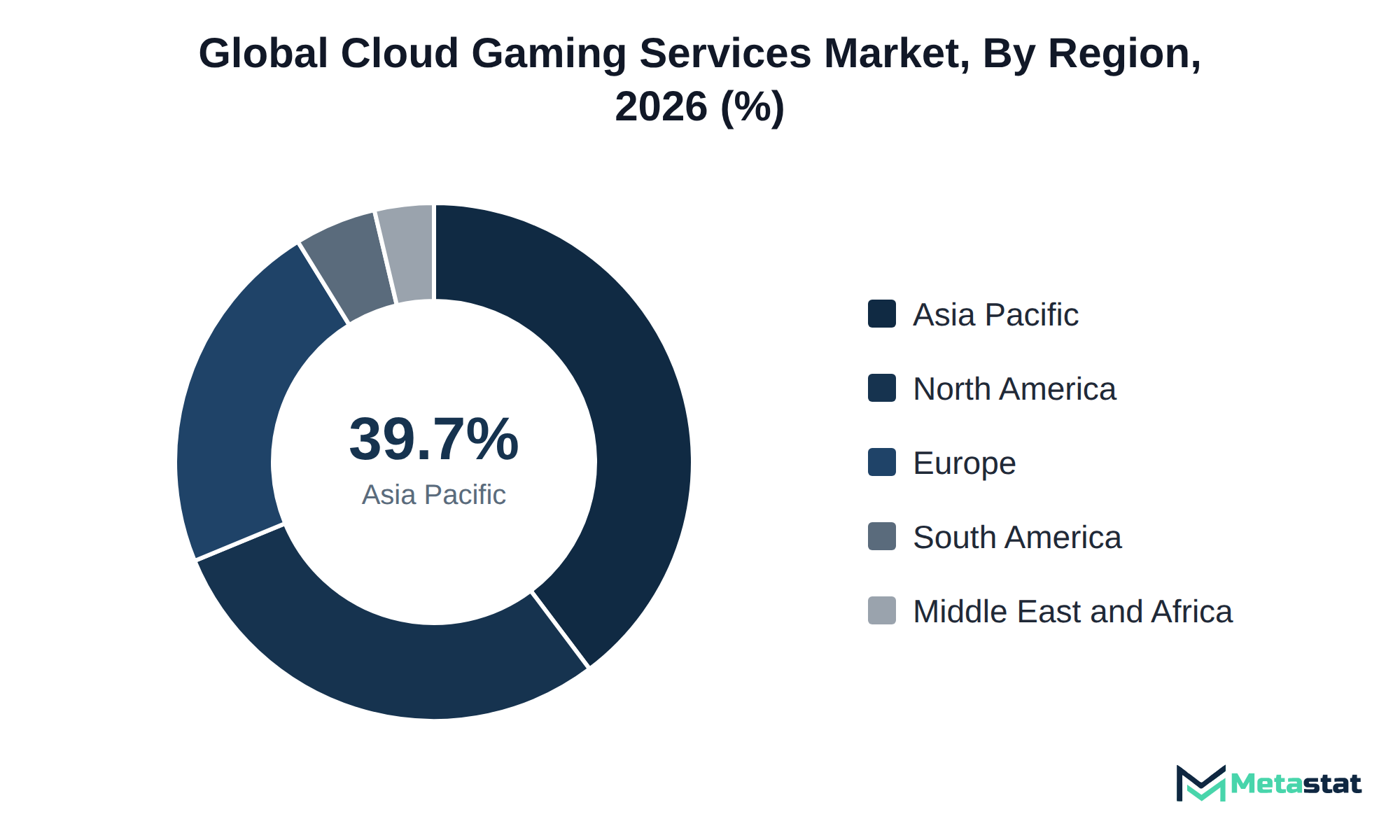
Geographic Lead: Asia Pacific holds the largest market share at 39.7%, fueled by a vast gamer population and advancing digital infrastructure.
What's Inside: The report provides a comprehensive analysis of market dynamics, competitive landscape, and forecasts from 2026 to 2033, covering various service types, device types, and gamer demographics.
High Growth in Smartphones Segment: The smartphones segment is projected to grow at a CAGR of 45.9%, reflecting the rising demand for mobile gaming solutions among casual gamers.
Pricing and Contract Models: Subscription-based models dominate the market, expected to reach USD 34.4 million by 2033, appealing to users seeking cost-effective access to extensive game libraries.
Choose Your License
Global Cloud Gaming Services Market
The global Cloud Gaming Services market was valued at USD 2.9 million in 2025 and is projected to reach USD 55.9 million by 2033, growing at a CAGR of 44.6% over the forecast period.
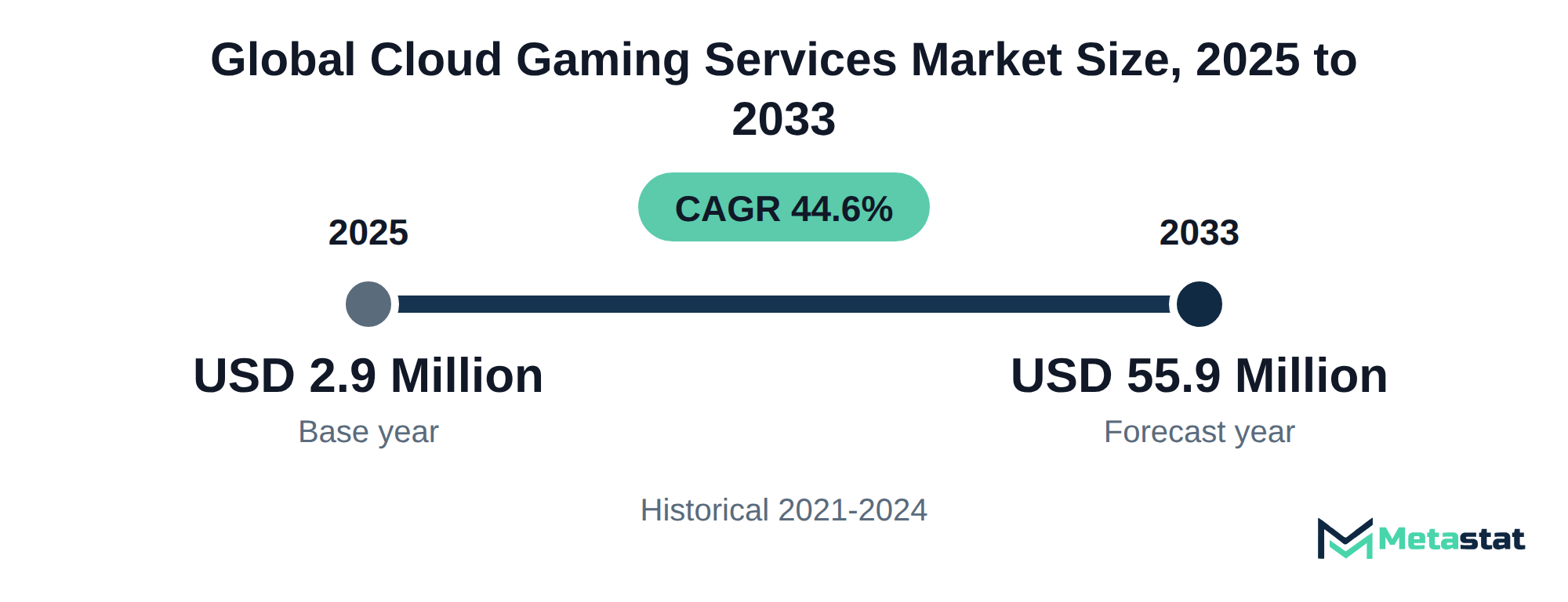
The Cloud Gaming Services market covers offerings that let users access and play video games over the internet without high-end hardware. Buyers invest in these services for various reasons, including increasing demand for convenience and flexibility in gaming experiences. The proliferation of high-speed internet services and advancements in cloud technology support user engagement by allowing access to a vast library of games, thus driving spending in this sector.
Growth in the market is propelled by several factors, with rising adoption of smartphones as a primary gaming device standing out significantly. This trend reflects a shift in consumer behavior, where gamers prioritize mobility and ease of access over traditional gaming setups. In terms of value, video streaming services dominate the market, accounting for a substantial portion of the overall revenue generated. North America holds 29.0% of the market in 2025, with the US leading in 2026.
Asia Pacific holds the highest regional share of the Cloud Gaming Services market, capturing 39.7%. This dominance is attributed to a large population of gamers and developing digital infrastructure. The combination of an expanding user base and increasing investments in cloud gaming technology positions the market for significant growth in the coming years.
Buyers invest in the Cloud Gaming Services market due to the increasing demand for flexible gaming options that eliminate the need for high-end hardware. Varied consumer preferences drive this investment, including the desire for convenience and access to a broad gaming library. The market includes various service types, including video streaming and professional services, each catering to specific gamer needs and preferences.
Growth in the market is propelled by advancements in internet connectivity and streaming technologies, which enhance user experience. Among the segments, video streaming holds the highest value and appeals to both casual and avid gamers. The Asia Pacific region represents 39.7% of the market share and demonstrates significant engagement from its gamer population.
The increasing popularity of smartphones as gaming devices significantly contributes to market expansion. This trend reflects the changing landscape of gaming consumption, with gamers seeking more accessible platforms. The Cloud Gaming Services market continues to evolve, adapting to these emerging consumer behaviors and technological innovations.
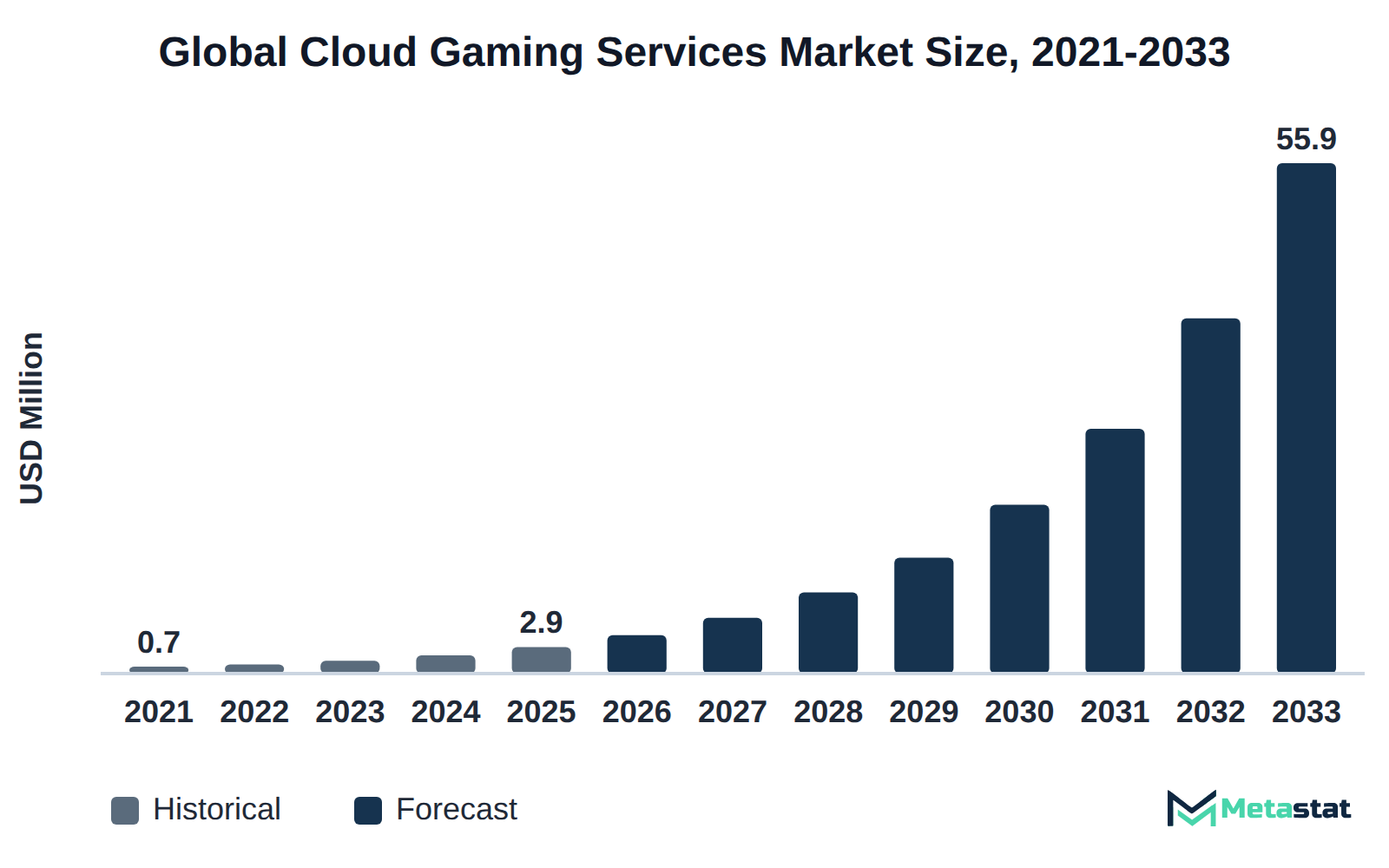
5G technology and edge computing significantly enhance low-latency game streaming within the Cloud Gaming Services market. With the rollout of 5G networks, latency reduces, allowing for smoother gameplay experiences that align with the demands of modern gamers. In 2025, the market reflects a growing interest in high-performance gaming solutions.
While edge infrastructure develops, game data processing occurs closer to the end user, further minimizing latency and enhancing responsiveness. This shift benefits gamers and helps service providers attract more customers. For instance, the segment of smartphones is projected to grow significantly, with a compound annual growth rate (CAGR) of 45.9%, highlighting the increasing importance of mobile gaming in the Cloud Gaming Services market.
These technological advancements change how providers compete for gamers. Gamers increasingly opt for platforms that offer low-latency experiences, leading to greater competition among providers to invest in 5G and edge technologies. Gaming and network optimization solutions target the same latency concerns. Such investments are expected to drive market growth, making it essential for companies to adopt these technologies to remain competitive and capture market share.
Cloud gaming subscriptions increasingly attract attention due to diverse pricing and contract models that cater to varying consumer preferences. Subscription-based models dominate the market, projected to achieve a value of USD 34.4 million by 2033. Such models provide users with access to extensive game libraries for a fixed monthly fee, appealing to casual gamers who seek cost-effective options. This pricing structure enhances user engagement and retention, driving revenue growth for service providers.
Pay-as-You-Play models offer flexibility to gamers who prefer to pay solely for the titles they play. This model enables consumers to access high-quality gaming experiences without long-term commitments, aligning with the growing trend of on-demand services across various sectors. The growth of this model, valued at USD 10.8 million by 2033, reflects its rising popularity among avid gamers seeking tailored experiences.
Overall, evolving pricing strategies within the Cloud Gaming Services market accommodate diverse consumer needs, contributing to market expansion and competitive differentiation. Understanding these models assists service providers in refining their offerings, ultimately enhancing customer satisfaction and loyalty.
The Cloud Gaming Services market relies heavily on strategic publisher licensing agreements and the availability of high-performance GPU capacity to shape platform economics. These factors directly influence operational efficiency and overall user experience. For example, in the segment of Video Streaming, projected revenue reaches USD 31.1 million by 2033, demonstrating demand for optimized performance that publisher agreements and robust GPU infrastructures provide.
Publishers require reliable partners that deliver high-quality gaming experiences, often favoring platforms that maintain strong relationships with GPU suppliers. This collaboration allows platforms to enhance their services while ensuring gamers experience minimal latency and high-quality graphics. With a CAGR of 44.6% from 2025 to 2033, the market demonstrates significant growth potential, driven by an increasing number of gamers seeking high-quality content.
For companies aiming to enter or expand within the market, establishing strong publisher licensing agreements alongside investing in GPU capacity presents a path to competitive advantage. Platforms that prioritize these aspects position themselves to capture market share and attract more users, ultimately contributing to overall market growth.
Cloud gaming services enhance access to AAA titles by eliminating the need for expensive hardware. Players enjoy high-quality gaming experiences on devices including smartphones and PCs, which traditionally lacked the capability to run resource-intensive games. A significant factor in this transformation is the growing trend towards subscription-based business models, projected to reach USD 34.4 million by 2033, reflecting a compound annual growth rate of 44%. This model lets players access many titles for a fixed monthly fee, lowering barriers to entry.
The market enables gaming enthusiasts to play popular AAA titles without investing in high-end consoles or gaming rigs. This democratization of gaming opens opportunities for casual gamers, who are expected to contribute significantly to the market, with their segment anticipated to expand to USD 28.3 million by 2033. Such developments enhance engagement and create a more inclusive gaming environment.
Cloud gaming services continue to evolve, allowing access to AAA titles anytime and anywhere. This shift affects user experience and encourages publishers to expand their reach, driving revenue growth in the cloud gaming services market.
Growth in the number of casual gamers significantly influences expenditure patterns within the market. This demographic shift emerges from the increasing accessibility of cloud gaming platforms, which allow users to engage with content on a variety of devices without the requirement for high-end hardware. Casual gamers seek flexible gaming options, driving demand for cloud gaming services. The market is expected to reach USD 55.9 million by 2033, reflecting a compound annual growth rate of 44.6%. Providers therefore need to understand how consumer preferences are changing. The surge in interest from casual gamers leads to higher revenue opportunities and competitive strategies among service providers.
Advancements in cloud infrastructure and data center virtualization technologies drive the evolution of gaming experiences. Enhanced graphics rendering capabilities and improved data processing efficiency enable developers to create more immersive gaming environments. This shift attracts various gamer demographics, including avid and lifestyle gamers, who seek high-quality visuals and interactive gameplay. The growing reliance on subscription-based models further encourages developers to invest in technology that enhances user engagement and retention. This transformation results in significant financial implications for developers and service providers, as increased investment in technology leads to improved service offerings and customer satisfaction. The Cloud Gaming Services market is projected to benefit from these technological shifts, creating a competitive environment among service providers striving to deliver superior gaming experiences. Providers must keep innovating to stay relevant.
High costs associated with cloud gaming services limit adoption among casual gamers. Many potential users view subscription fees and additional expenses for game purchases as barriers. This perception leads to slower uptake, especially in regions with lower disposable incomes. The discrepancy between traditional gaming expenses and the operational costs of cloud gaming services contributes to reluctance in transitioning from conventional gaming methods. Casual gamers prioritize budget-friendly alternatives, resulting in diminished orders and delayed replacements for gaming solutions. The lack of awareness regarding the long-term cost benefits of cloud gaming services exacerbates this constraint. Although the market is poised for growth, high costs persist as a significant factor restricting broader acceptance among this segment. Overcoming this obstacle necessitates strategic pricing models and targeted marketing efforts to convey the value proposition effectively.
High talent costs create significant challenges for suppliers in the Cloud Gaming Services market. A shortage of skilled professionals in cloud computing and gaming technology raises operational expenses, impacting profitability margins. Consequently, suppliers respond by investing in employee training programs to enhance workforce capabilities and adopting automation technologies to streamline processes. These strategies aim to mitigate rising personnel expenses while maintaining service quality.
Several companies explore partnerships with educational institutions to create talent pipelines, ensuring a steady flow of qualified individuals into the industry. This collaborative approach addresses immediate hiring challenges and encourages innovation through knowledge exchange. While the market continues to grow, effective management of talent costs remains a critical factor in sustaining competitive positioning and achieving long-term success.
Smartphones represent a significant growth opportunity within the Cloud Gaming Services market, with a projected compound annual growth rate (CAGR) of 45.9% through 2033. This segment is driven by increasing smartphone penetration and technological advancements enabling high-performance gaming experiences on mobile devices. Casual gamers, who favor the convenience of mobile gaming, contribute substantially to this growth. Revenue from smartphone-based gaming services is expected to reach USD 21.6 million by 2033, reflecting strong demand for accessible gaming solutions. The rising trend of subscription-based models further supports this segment's expansion, with providers focusing on enhancing user experiences and accessibility. This growth creates opportunities for increased competition among service providers focusing on mobile devices, ultimately benefiting consumers with diverse offerings and improved gaming experiences.
The Global Cloud Gaming Services market is segmented based on Service Type, Device Type, Gamer Type, and Business Model.
Professional Services segment is valued at USD 0.4 million in 2026 and is projected to reach USD 5.3 million by 2033, at a CAGR of 42.5% during the forecast period. This segment focuses on delivering specialized support, consulting, and maintenance services to gaming companies, enhancing their operational efficiency and user engagement. Key drivers include rising demand for enhanced gaming experiences and increasing complexity of cloud-based gaming infrastructures. Gaming companies expanding their offerings increases the need for tailored professional services. Compared to other segments, including Video Streaming, which holds significant market share, Professional Services exhibits faster growth due to its niche focus on optimizing game performance and user satisfaction. This segment plays a distinctive role in supporting the infrastructure that underpins the broader Cloud Gaming Services market.
Support and Maintenance segment is estimated to reach USD 4.2 million by 2033, at a CAGR of 42.1% during the forecast period. This segment focuses on providing essential assistance to users and maintaining the operational efficiency of cloud gaming platforms. It primarily serves game developers and players, ensuring smooth gameplay experiences. The rapid growth in demand for cloud gaming services drives the need for robust support and maintenance solutions, supporting the segment's expansion. Unlike other service types, including Video Streaming, which has a higher anticipated value of USD 31.1 million by 2033, the Support and Maintenance segment demonstrates a promising growth trajectory, appealing to a broader range of users. Continued investment in technology and infrastructure improvements, coupled with rising expectations of gamers, positions this segment as a key factor in the evolving environment of the Cloud Gaming Services market.
Video Streaming segment is expected to reach USD 31.1 million by 2033. This segment is for streaming video game content to players, allowing access to a wide range of games without the need for expensive hardware. Primarily targeted at casual and avid gamers, the segment benefits from the increasing popularity of gaming on mobile devices and PCs. A key driver of growth stems from the rise of subscription-based services, appealing to consumers who prefer flexible payment models. With a compound annual growth rate (CAGR) of 42.5%, Video Streaming enjoys faster growth compared to Support and Maintenance services. The segment distinguishes itself through its focus on content delivery rather than ongoing support, aligning with changing consumer preferences for immediate access to games, reflecting a broader trend in the Cloud Gaming Services market.
File Streaming segment is projected to grow at a CAGR of 45.6% during the forecast period. This segment facilitates the delivery of game files over the internet, allowing users to play games without the need for extensive local storage or high-performance hardware. Gamers seeking to experience a wide range of titles without investing in expensive gaming systems primarily access this service. The surge in demand for immediate access to games drives this segment’s growth, reflecting preferences for flexibility and convenience among users. Compared to Video Streaming and Support and Maintenance segments, File Streaming exhibits a higher growth rate, appealing to a distinct demographic that prioritizes instant gaming experiences without the burden of download times or storage limitations. The unique appeal of file streaming, combined with advancements in cloud technology, strengthens its position within the evolving dynamics of the Cloud Gaming Services market.
This segment focuses on Access and Identity Management and Usage Analytics, offering vital tools for managing user authentication and analyzing player behavior. Game developers and publishers rely on these services to enhance user experiences and improve engagement metrics. Demand for these services is rising due to the increasing need for robust security protocols and data-driven insights. The segment offers a different growth trajectory compared to Video Streaming and Professional Services, which experience higher revenue due to direct gaming experiences. This segment's focus on security and analytics differentiates it from other service types, catering more to developers and platform providers rather than end-users. The evolving landscape of data privacy regulations further emphasizes the significance of such services, encouraging increased investment in this area.
The smartphones segment is valued at USD 1.5 million in 2026 and is projected to reach USD 21.6 million by 2033, at a CAGR of 45.9% during the forecast period. This segment attracts users seeking flexibility and convenience, allowing gamers to access their favorite titles on the go. The rapid adoption of smartphones, coupled with increasing internet penetration, drives demand for mobile gaming solutions. Unique features of the smartphones segment include portability and accessibility compared to PCs and gaming consoles, which often necessitate more substantial investments in hardware. With a substantial CAGR, this segment outpaces others like PCs and laptops, driven by a surge in casual and avid gamers looking for gaming experiences that fit their busy lifestyles, emphasizing adaptability and user-friendly interfaces. The competitive landscape involves major players focusing on optimizing mobile gaming experiences through technological advancements and tailored services.
The PCs and Laptops segment is estimated to reach USD 12.2 million by 2033, at a CAGR of 42.8% during the forecast period. This segment primarily targets gamers who prefer a more traditional computing experience for gaming, making it a critical platform for both casual and avid gamers. Demand for this segment is driven by the growing preference for high-performance gaming experiences, which are increasingly achievable through cloud-based solutions. Unlike smartphones, which target mobile gamers, this segment appeals to users seeking an immersive experience with larger screens and superior processing capabilities. Competitive pricing and accessibility of cloud gaming services on PCs and laptops further enhance its appeal, contributing to a significant growth trajectory in the market. Gamers benefit from the flexibility and convenience of accessing a wide variety of games without the requirement for extensive hardware investments, thus promoting greater engagement with gaming platforms.
The Gaming Consoles segment is expected to reach USD 14 million by 2033. This segment primarily serves avid gamers, providing access to high-quality gaming experiences through cloud platforms. Adoption of cloud gaming on consoles responds to increasing demand for flexible gaming solutions that eliminate the need for expensive hardware upgrades. Key drivers include advancements in internet connectivity and the growing library of games available on cloud platforms. Compared to other device types, including smartphones and PCs, gaming consoles offer a unique blend of performance and immersive experiences, with a different buyer demographic that values high-fidelity graphics and exclusive titles. The segment's projected growth reflects a CAGR of 46.1%, positioning it as a crucial component in the broader Cloud Gaming Services market.
Smart TVs segment is projected to grow at a CAGR of 46.1% during the forecast period. This segment caters to consumers who prefer smart TV gaming on larger screens, delivering an immersive experience for both casual and avid gamers. Increased adoption of smart TVs, coupled with advancements in display technology, drives the segment’s expansion. The rising demand for high-quality graphics and reliable streaming experiences particularly influences this growth. Compared to other device types, including smartphones and PCs, which feature CAGRs of 45.9% and 42.8% respectively, the Smart TVs segment outpaces them due to its unique appeal for home entertainment. Consumers seeking enhanced visual experiences and social gaming interactions significantly contribute to the demand for smart TVs, differentiating it from the other segments in this group.
Tablets provide a versatile platform for gaming enthusiasts, catering to a range of users from casual gamers to those seeking immersive experiences. These devices allow access to diverse gaming content and are particularly favored for their portability and touch interface. The demand for cloud gaming services on tablets is primarily driven by the increasing number of casual gamers, who seek convenient gaming options. This segment differentiates itself from others, including smartphones and gaming consoles, by offering a middle ground in terms of screen size and functionality, appealing to users who desire more than a phone but less than a console setup. The market expands due to technological advancements and a growing emphasis on mobile gaming, positioning tablets as a significant player in the overall Cloud Gaming Services market.
Head-Mounted Displays provide a technology for immersive gaming experiences, primarily appealing to avid and lifestyle gamers who seek enhanced interaction with virtual environments. The segment appeals to a niche market that values virtual reality and augmented reality experiences, differing significantly from more traditional gaming devices including PCs and consoles. Demand for Head-Mounted Displays is driven by increasing consumer interest in virtual reality gaming and advancements in display technologies. The segment does not exhibit the same growth rate as smartphones or gaming consoles, presenting unique opportunities for specialized suppliers focusing on high-quality, immersive gaming applications. The overall market for Cloud Gaming Services continues to expand, with various device types adapting to meet evolving gamer preferences.
The Casual Gamers segment is valued at USD 2.3 million in 2026 and is projected to reach USD 28.3 million by 2033, at a CAGR of 43.6% during the forecast period. This segment caters to individuals who engage in gaming for leisure rather than competitive purposes, using cloud gaming services for accessible and flexible entertainment. A notable growth driver includes the increasing availability of affordable data plans, enabling greater access to cloud gaming. Compared to other gamer types, casual gamers prioritize convenience and lower investment, contributing to the segment's rapid growth rate. While avid gamers focus on performance and hardware, casual gamers lean towards ease of access, reflected in their distinct purchasing behaviors and preferences. The overall engagement of casual gamers significantly impacts the dynamics of the Cloud Gaming Services market, promoting innovative solutions tailored for a broader audience.
Avid Gamers segment is estimated to reach USD 17.8 million by 2033, at a CAGR of 45.9% during the forecast period. This category includes dedicated players who engage deeply with gaming content, often participating in competitive settings or online communities. The rising popularity of multiplayer online games and esports fuels demand for advanced gaming experiences, driving growth in this segment. Compared to Casual Gamers, Avid Gamers typically invest more in subscriptions and premium services, resulting in higher revenue potential for service providers. Technological advancements, including enhanced streaming quality and reduced latency, significantly impact their gaming experiences. Continued innovation in cloud gaming services directly influences the preferences of Avid Gamers, differentiating this segment from others with slower growth rates.
Lifestyle Gamers segment is expected to reach USD 9.8 million by 2033. This group consists of individuals who engage in gaming primarily for enjoyment and social interaction rather than competitive play. The growth of this segment is driven by the increasing availability of diverse gaming options that appeal to recreational users. Unlike Avid Gamers, Lifestyle Gamers show a different purchasing pattern, focusing on casual, accessible gaming experiences. With a projected CAGR of 45.9% for Avid Gamers, Lifestyle Gamers maintain a more moderate growth trajectory, reflecting consumer preferences for less intense gaming. The Cloud Gaming Services market benefits from this segment's expanding user base, with developers continuing to cater to their needs through innovative offerings and user-friendly platforms.
This segment caters to various user groups, providing flexible gaming options through monthly or yearly fees. The increasing adoption of subscription models by avid gamers, who seek extensive access to diverse game libraries, drives growth. Competitive pricing strategies enhance the appeal of subscription models, contrasting with the Pay-as-You-Play segment, which experiences a slower growth rate at a CAGR of 46.3%. The shift toward subscription models aligns with evolving consumer preferences, signaling strong market demand for predictable pricing and robust offerings in the Cloud Gaming Services market.
Pay-as-You-Play segment is estimated to reach USD 10.8 million by 2033, at a CAGR of 46.3% during the forecast period. This model allows gamers to pay for individual game sessions rather than committing to subscriptions, appealing to users who prefer flexibility in their gaming experiences. Casual and lifestyle gamers often favor this approach, which reduces upfront costs and provides access to a broader catalog of games. Demand for this segment is driven by increasing adoption of cloud gaming technologies that facilitate instant access to a variety of titles. Compared to the Subscription-Based segment, which targets avid gamers with a more consistent engagement strategy, Pay-as-You-Play offers a more adaptable and cost-effective alternative, contributing to its rapid growth in the market.
Free-to-Play and Ad-Supported segment is expected to reach USD 8.1 million by 2033. This segment caters to gamers seeking no-cost entry into gaming experiences, funded through digital advertising. This model appeals largely to casual and lifestyle gamers who prefer lower financial commitment. Growth in this segment is influenced by rising user engagement levels and increasing investments in ad-supported content. Compared to subscription-based models, which target avid gamers more directly and have an estimated reach of USD 34.4 million by 2033, the Free-to-Play and Ad-Supported option provides a broader market entry. The growth trajectory of this segment reflects unique opportunities for attracting diverse users, contributing to the overall dynamics of the Cloud Gaming Services market.
Others (Bundled and Transactional) segment is projected to grow at a CAGR of 42.3% during the forecast period. This segment includes various pricing models that offer bundled services or transactional options, catering to diverse gamer preferences. Casual and avid gamers frequently engage with such models to access a wider range of games without substantial upfront costs. An increase in digital content consumption drives the demand for this segment, reflecting a shift in consumer behavior toward flexible payment options. Compared to Subscription-Based and Pay-as-You-Play models, this segment focuses on providing a combination of bundled services, enhancing value for users while supporting revenue growth in the market. Subscription-Based focuses on recurring revenue, while Others (Bundled and Transactional) offers an alternative approach appealing to users seeking versatility in payment structures.
Based on geography, the Global Cloud Gaming Services market is divided into North America, Europe, Asia-Pacific, South America, Middle East, and Africa.
North America contributes a share of 29.0% in the Cloud Gaming Services market in 2025. The region includes key markets including the United States, Canada, and Mexico, where demand is driven by a combination of advanced technological infrastructure and a high concentration of gamers. The rapid adoption of smartphones and high-speed internet creates an environment conducive to cloud gaming growth. By the end of 2033, North America is projected to reach USD 15.4 million. The region benefits from a diverse range of gaming preferences, encompassing casual to avid gamers, which influences service offerings and business models within the market.
Demand in the European region for the Cloud Gaming Services market is driven by diverse user preferences, particularly among avid and lifestyle gamers. The presence of robust internet infrastructure supports streaming services, enhancing user experience across platforms. Countries including Germany, France, the UK, Italy, Spain, and Russia show significant engagement, highlighting an increasing shift towards digital gaming solutions. The market's share in Europe accounts for 22.4% in 2025, reflecting the region's growing adoption of gaming technologies. High-quality local content and partnerships with game developers strengthen market positioning, ensuring sustained interest from consumers. By 2033, Europe is expected to experience continued expansion in various service segments, indicating a positive trajectory for the market.
Asia-Pacific stands out in the Cloud Gaming Services market, holding a share of 39.7% in 2025. Rapid advancements in internet infrastructure and increased smartphone penetration drive substantial demand for cloud gaming in countries including China, Japan, and India. The growth of the gaming industry, particularly in South Korea and Australia, creates a robust ecosystem for casual and avid gamers alike. Business models including subscription-based and pay-as-you-play options appeal to different gamer demographics and increase market engagement. Local companies and international players actively invest in enhancing service offerings, further supporting market expansion. The emphasis on innovative technologies, including 5G networks, enables effective gaming experiences, influencing user adoption rates within the region.
In South America, the Cloud Gaming Services market experiences growth driven by a youthful demographic eager for innovative entertainment solutions. Brazil and Argentina lead the region's participation, with a growing interest in gaming experiences supported by improved internet connectivity. The cost of entry for cloud gaming remains a barrier; however, increasing smartphone penetration supports wider accessibility. The market's share in South America is projected at 5.1% in 2025, indicating significant potential for expansion while local gamers seek diverse gaming options. The regional market reflects a strong interest in subscription-based models, appealing to casual and avid gamers alike, while the overall environment encourages investment in gaming infrastructure.
In the Middle East and Africa, significant growth in the Cloud Gaming Services market arises from increasing smartphone penetration and internet accessibility. Countries like Saudi Arabia and the UAE show a growing interest in gaming, driven by a young population and expanding digital infrastructure. South Africa's diverse gaming community further enhances demand, reflecting a shift toward mobile and cloud-based gaming solutions. The regional market share stood at 3.7% in 2025, with expectations for growth due to rising disposable incomes and evolving consumer preferences. Innovative business models, including subscription-based services, are gaining traction, catering to various gamer types. Investment in technology and high-speed internet will play a crucial role in shaping the future of the market, encouraging greater engagement among casual and avid gamers.
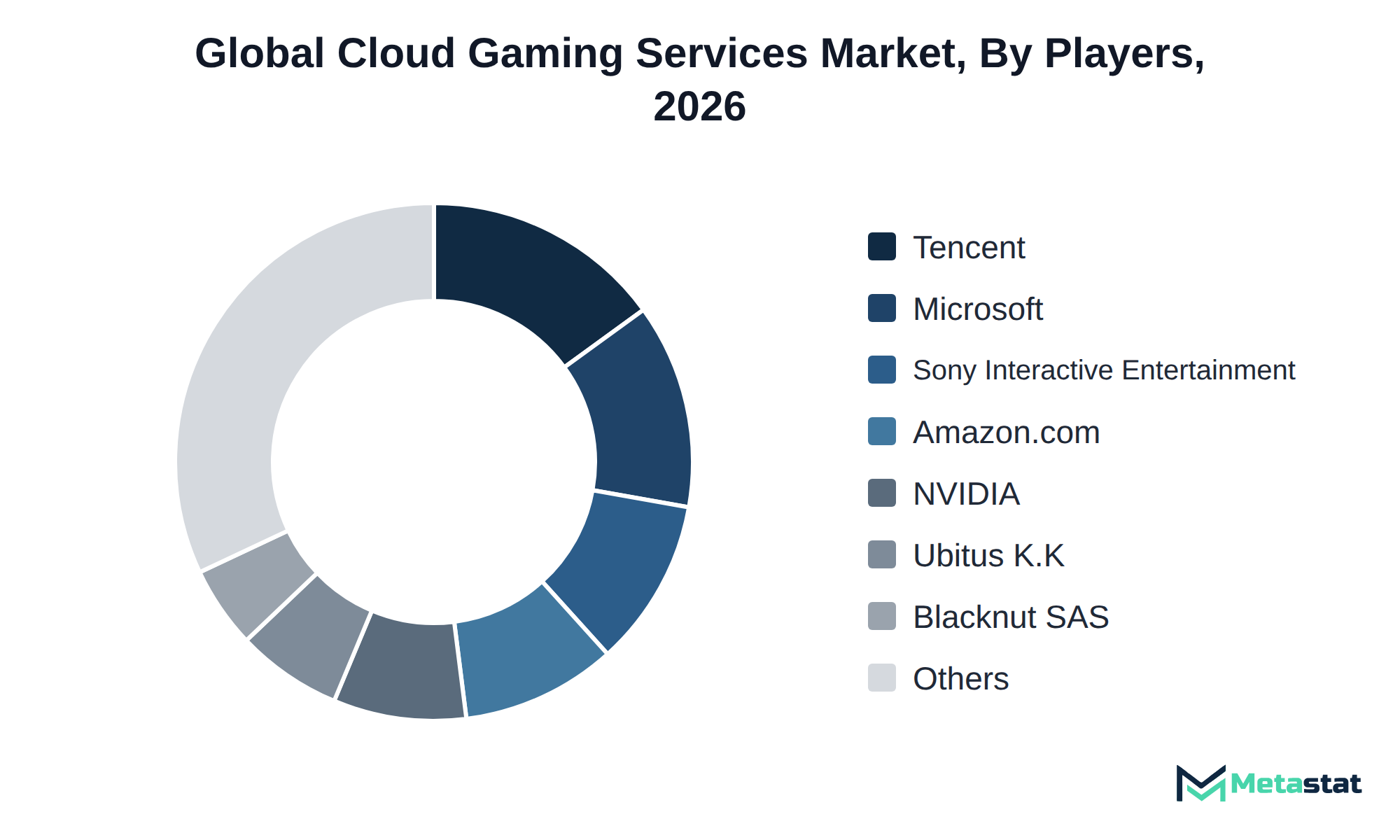
Competition in the Cloud Gaming Services market revolves around service types, device types, and business models. Companies differentiate themselves through pricing strategies, service quality, ecosystem integration, and customization options. For instance, subscription-based models attract a diverse customer base seeking continuous access to gaming content.
Microsoft Corporation emphasizes its gaming ecosystem and cloud infrastructure to provide a high-quality gaming experience to users. In contrast, Tencent Holdings Limited focuses on using its extensive content portfolio to enhance user engagement. Ubitus K.K. positions itself through innovative technology solutions that enable high-quality cloud gaming across various devices, catering to a broad spectrum of gamers.
Buyers in the market prioritize factors including value for money, the breadth of gaming offerings, and service reliability when making choices. This competitive environment drives an ongoing evolution of services and pricing, enabling companies to enhance their market presence while addressing consumer demands.
This growth depends on several key developments in the Cloud Gaming Services market. The increasing adoption of smartphones for gaming will drive significant growth, with revenue from this segment projected to rise from USD 1.5 million in 2026 to USD 21.6 million by 2033 at a CAGR of 45.9%. The expansion of subscription-based models is anticipated to contribute to market growth, increasing from USD 2.7 million in 2026 to USD 34.4 million by 2033 at a CAGR of 44%. Potential risks exist that could slow this growth. For instance, technological challenges related to internet bandwidth and latency could affect gamer experience, particularly in regions like South America, where infrastructure does not keep pace with demand. Overcoming these challenges will be essential for the market to reach its projected size.
By Service Type: Professional Services, Support and Maintenance, Video Streaming, File Streaming, Others (Access and Identity Management, Usage Analytics)
By Device Type: Smartphones, PCs and Laptops, Gaming Consoles, Smart TVs, Tablets, Others (Head-Mounted Displays)
By Gamer Type: Casual Gamers, Avid Gamers, Lifestyle Gamers
By Business Model: Subscription-Based, Pay-as-You-Play, Free-to-Play and Ad-Supported, Others (Bundled and Transactional)
The report strategically identifies and profiles the key market players and analyses their core competencies in each sub-segment of the Cloud Gaming Services market.
|
Report Attributes |
Details |
|
Study Period |
2021-2033 |
|
Base Year |
2025 |
|
Estimated Year |
2026 |
|
Forecast Period |
2026-2033 |
|
Historical Period |
2021-2025 |
|
Growth Rate |
CAGR 44.6% from 2026 to 2033 |
|
Revenue Unit |
USD million |
|
Segmentation |
By Service Type, Device Type, Gamer Type, Business Model, and Region |
|
By Region |
North America (By Service Type, Device Type, Gamer Type, Business Model, and Country)
|
|
Europe (By Service Type, Device Type, Gamer Type, Business Model, and Country)
|
|
|
Asia Pacific (By Service Type, Device Type, Gamer Type, Business Model, and Country)
|
|
|
South America (By Service Type, Device Type, Gamer Type, Business Model, and Country)
|
|
|
Middle East and Africa (By Service Type, Device Type, Gamer Type, Business Model, and Country)
|
Find answers to common questions about this report
The Cloud Gaming Services market size was valued at USD 2.9 million in 2025.
The market is projected to grow at a CAGR of 44.6% during the forecast period from 2026 to 2033.
The North America Cloud Gaming Services market size is estimated to reach USD 15.4 million by 2033.
Video Streaming leads the Cloud Gaming Services market with a projected value of USD 31.1 million by 2033. This segment surpasses others in terms of revenue generation within the market.
Growth in the number of casual gamers significantly influences expenditure patterns, driven by the increasing accessibility of cloud gaming platforms. Advancements in cloud infrastructure and virtualization technologies enhance gaming experiences, attracting various gamer demographics seeking high-quality visuals and interactive gameplay.
High costs associated with cloud gaming services limit adoption among casual gamers, as many potential users view subscription fees and additional expenses as barriers. A shortage of skilled professionals in cloud computing and gaming technology raises operational expenses, impacting profitability margins for suppliers.
Several factors favor adoption in the Cloud Gaming Services industry. Increasing smartphone penetration and advancements in technology enable high-performance gaming experiences, particularly appealing to casual gamers. The convenience of mobile gaming enhances accessibility, driving demand and competition among service providers, ultimately improving consumer offerings.
The Cloud Gaming Services market is estimated to reach a valuation of USD 55.9 million by 2033.
Key players operating in the Cloud Gaming Services market include Microsoft Corporation, NVIDIA Corporation, Sony Interactive Entertainment LLC, Amazon.com, Inc., Tencent Holdings Limited, and Ubitus K.K.
The revenue from smartphone-based gaming services is expected to reach USD 21.6 million by 2033, driven by increasing smartphone penetration and advancements in gaming technology.
The analysts below cover Information & Technology research at Metastat Insights.
LEAD ANALYST
Utkarsh Khirodkar is a Lead Market Research Analyst at MetaStat Insight, specializing in market intelligence, technology sector assessments, and competitive strategy.

PRINCIPAL CONSULTANT - ENTERPRISE AI & EMERGING TECHNOLOGIES
Banking & Finance · Electronics and Semiconductor · Energy and Power · Healthcare IT · Information & Technology · Professional Services
Vijay Gunti is a Principal Consultant at MetaStat Insight, bringing over two decades of experience across enterprise digital transformation, technology strategy, and intelligent systems.

LEAD CONSULTANT - COMMUNICATION, TELECOM, AND IT
Electronics and Semiconductor · Information & Technology · Machinery & Equipment · Professional Services
Ravindra Sathe Consultants for Communication, Telecom, and IT at MetaStat Insight. He leads the firm's industry research initiatives across telecommunications infrastructure, digital connectivity, enterprise networking, and emerging information technology domains.
Most industry reports on warehouse automation bundle autonomous mobile robots and fixed conveyor installations into the same top-level numbers, which complicates advisory work. This study split the market cleanly by payload tiers, navigation technology, and fleet management software layers. The regional forecast for Western Europe gave our team defensible adoption benchmarks when evaluating capital allocation for logistics clients, saving us days of secondary data scrubbing.
Standard industry briefs frequently blur the operational distinctions between isobaric pressure exchangers and centrifugal turbines. In this study, MetaStat Insight categorized mega-scale desalination tenders across the GCC and Mediterranean basins by membrane replacement frequencies and salinity tolerances. Their primary research helped us evaluate local content requirements in Saudi Arabia and the UAE without relying on marketing literature. We found the segment-level equipment replacement estimates grounded and well-reasoned throughout.
The technical breakdown of ISO 20022 migration readiness across correspondent banking corridors was remarkably thorough. Rather than treating cross-border corporate payments as a single block, the report drew a useful distinction between multilateral netting platforms and domestic instant payment rails across ASEAN economies. MetaStat Insight highlighted regulatory constraints on foreign exchange liquidity management that many publications gloss over. The research material offered practical clarity for our platform development roadmap.
Explore related market intelligence reports worth reading alongside this one.