
LEAD ANALYST
Utkarsh Khirodkar is a Lead Market Research Analyst at MetaStat Insight, specializing in market intelligence, technology sector assessments, and competitive strategy.

Global Telecom Service Assurance Market Size, Share, By Solution (Fault and Event Management, Performance Management, Quality and Service Management, Intelligent Assurance and Analytics), By Services (Planning and Consulting Services, Operation and Maintenance Services, System Integration Services), By Deployment Model (On-Premises, Cloud-Based and Hybrid), By Operator Type (Mobile Operator and Fixed Operator), Industry Analysis, Growth, Trends, and Forecast, 2026-2033
Report ID
MSI-5497
Published
October, 2026
Pages
257 Pages
Format
Historical
Base year
Forecast
Forecast period
Report Details
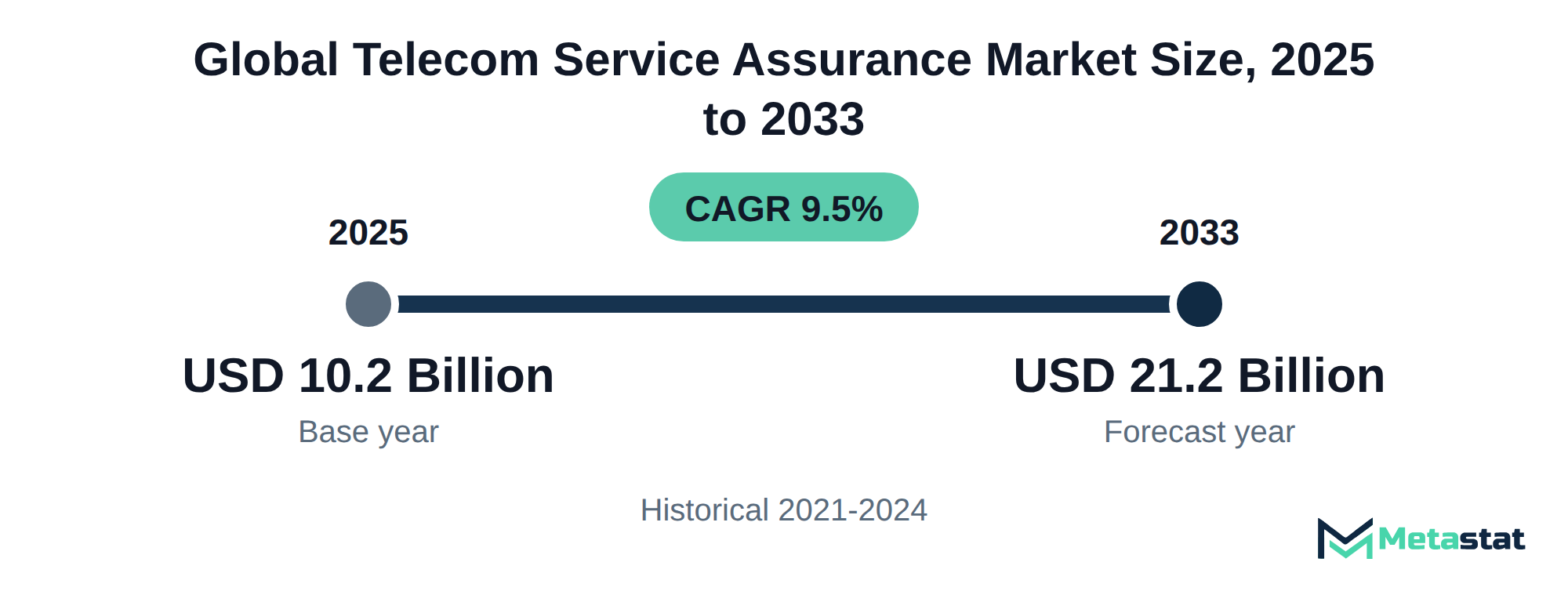
Market Valuation: Valued at $10.2 Billion in 2025, projected to reach $21.2 Billion by 2033 at a 9.5% CAGR.
Dominant Segment: Fault and Event Management leads the market, driven by the increasing emphasis on proactive network monitoring and incident management.
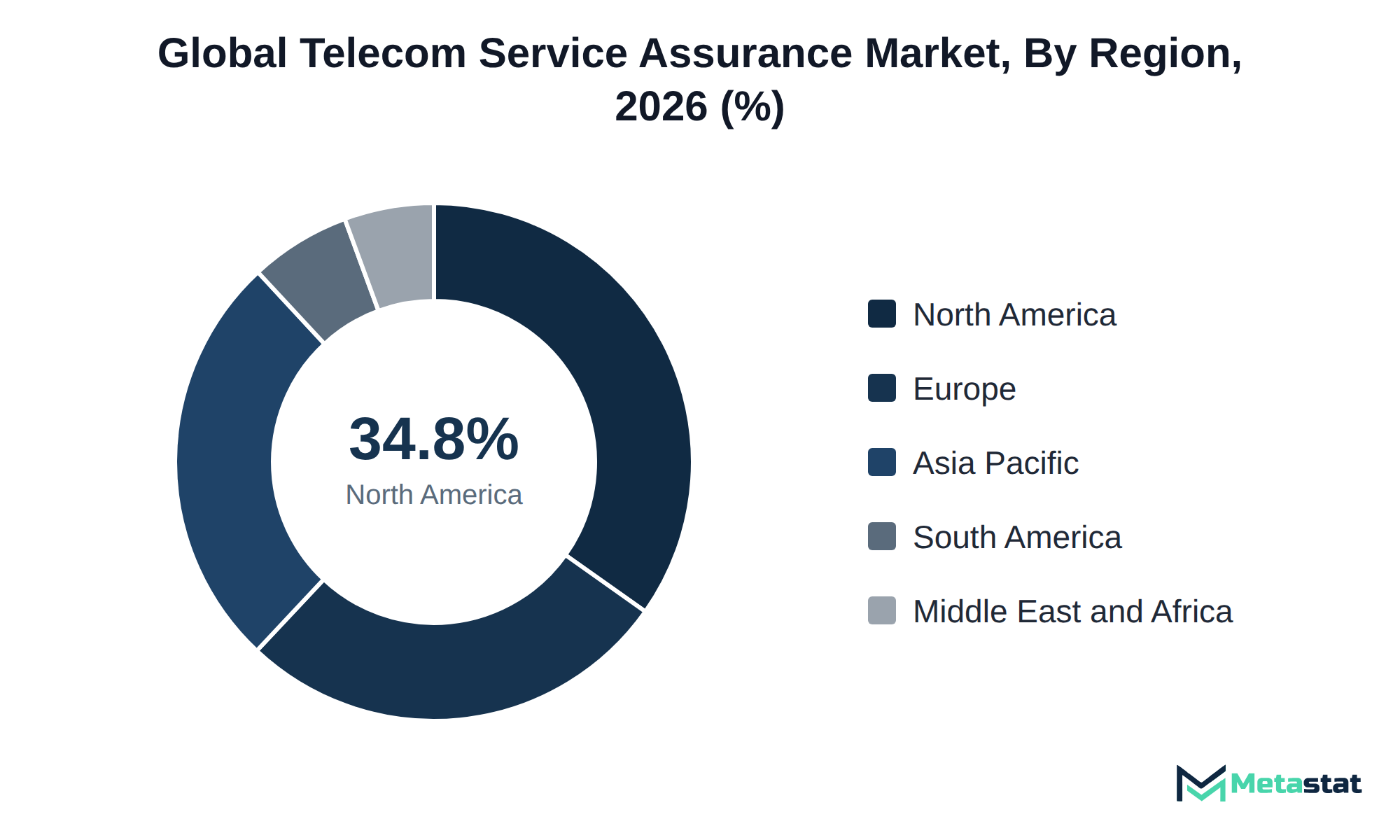
Geographic Lead: North America is the leading region, holding 34.8% of the market in 2025, supported by high adoption rates of innovative technologies and robust infrastructure investments.
What's Inside: The report provides comprehensive coverage of market segmentation by solution, services, deployment model, and operator type, along with competitive analysis and forecasts through 2033.
Growth Drivers: The market is primarily fueled by the rising demand for advanced analytics and performance management solutions, alongside the integration of cloud-based technologies.
Choose Your License
Global Telecom Service Assurance Market
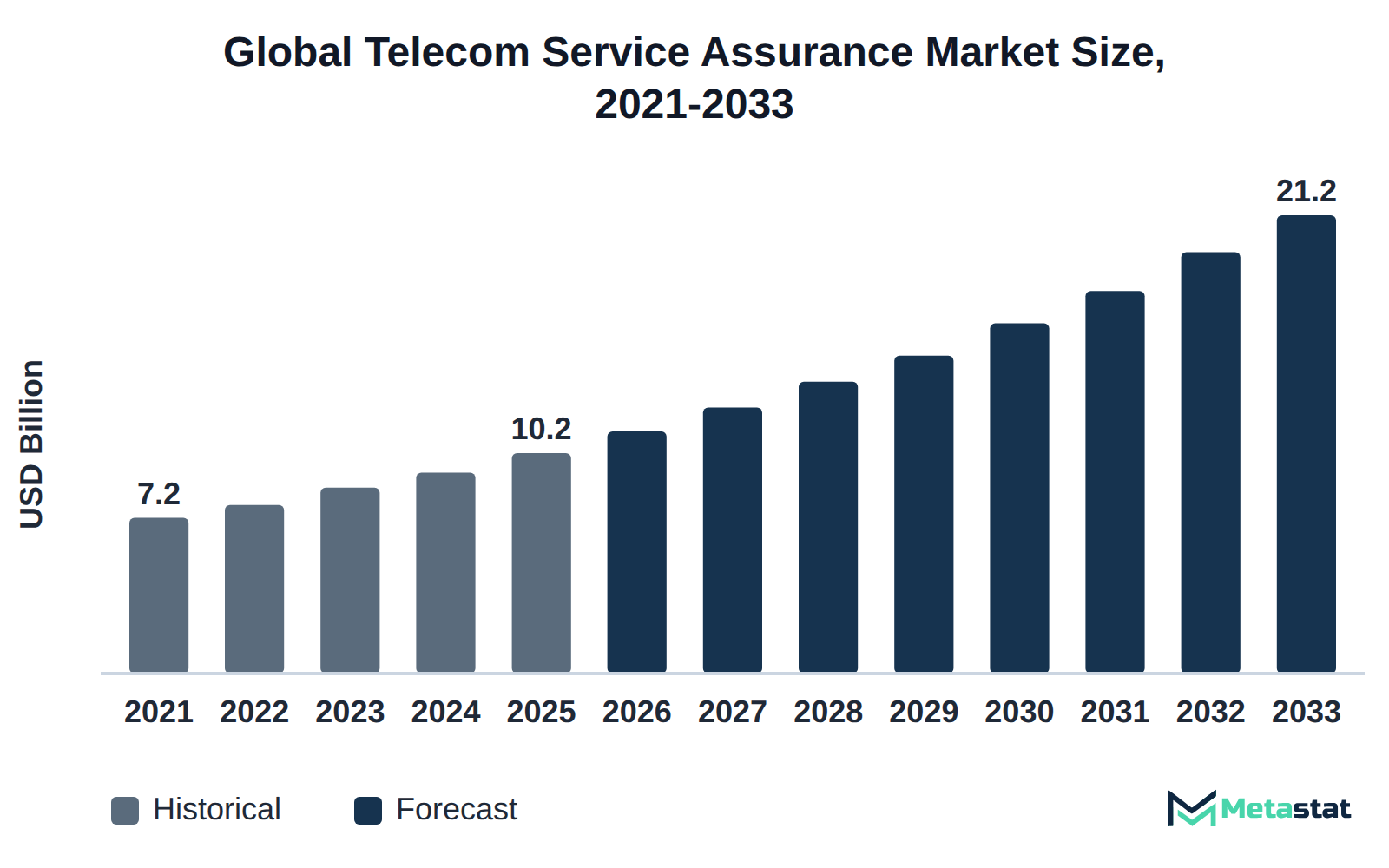
The global Telecom Service Assurance market was valued at USD 10.2 billion in 2025 and is projected to reach USD 21.2 billion by 2033, growing at a CAGR of 9.5% over the forecast period.
The Telecom Service Assurance market encompasses solutions and services designed to enhance the reliability and performance of telecommunications networks. Service assurance tools typically work alongside the operations support systems that operators use to manage network and service operations. Buyers invest in this market to address critical challenges related to network quality, service continuity, and operational efficiency. The need for effective communication and data transmission drives significant expenditure among mobile and fixed operators, ultimately impacting customer satisfaction and retention.
Growth in the market is primarily fueled by the increasing demand for advanced analytics and performance management solutions. Among the various segments, Fault and Event Management stands out with substantial value, reflecting the growing emphasis on proactive network monitoring and incident management. North America holds 34.8% of the market in 2025, with the US leading in 2026. This region benefits from high adoption rates of innovative technologies and robust infrastructure investments.
Telecommunications companies strive to meet the escalating expectations of consumers and businesses, focusing on enhancing service quality. The integration of cloud-based solutions further accelerates market expansion. The Telecom Service Assurance market is projected to experience significant advancements as organizations seek to leverage these capabilities for competitive advantage.
The market provides essential solutions for maintaining and enhancing the performance of telecommunications networks. Buyers invest in these services to ensure reliable connectivity, optimize network operations, and improve customer satisfaction. The focus on maintaining high-quality service levels drives expenditures, particularly among mobile operators and fixed operators who require reliable networks to support their customer base.
The segment of Performance Management stands out, reflecting the rising importance of real-time monitoring and optimization of network performance. The US is projected to lead the market in 2026, contributing significantly to the overall growth.
The cloud-based deployment model experiences significant uptake due to its scalability and flexibility. This model supports telecom operators in efficiently managing their resources while adapting to evolving market demands. The integration of intelligent assurance and analytics solutions further enhances operational efficiency, positioning the market for growth in the upcoming years.
The emergence of standalone 5G and network slicing architectures drives the need for autonomous service assurance solutions in the Telecom Service Assurance market. These innovations enable operators to optimize network performance and resource allocation by creating virtualized network slices that cater to specific applications and user demands. Operators transitioning to these advanced architectures shift focus toward integrating intelligent assurance and analytics capabilities that enhance service reliability and quality.
The Intelligent Assurance and Analytics segment is projected to grow at a compound annual growth rate (CAGR) of 11.4%, reflecting the increasing emphasis on automation in monitoring and managing network performance. This growth signifies a critical investment area where telecommunications providers seek to leverage AI and machine learning technologies for proactive fault detection and resolution. By ensuring a high level of service assurance, operators improve customer satisfaction and retention while minimizing operational costs.
The adoption of autonomous service assurance not only supports enhanced network efficiency but positions operators competitively within the evolving landscape of the Telecom Service Assurance market. Businesses leveraging these advanced capabilities experience significant potential for revenue growth and operational excellence.
The shift towards enterprise cloud-native solutions significantly influences purchasing strategies within the Telecom Service Assurance market. Buyers increasingly allocate budgets from traditional legacy probes towards modern technologies including OpenTelemetry and AIOps. This transition reflects a growing emphasis on integrating advanced analytics and agile operations that align with current business demands.
In the services segment, the Planning and Consulting Services segment demonstrates a substantial growth trajectory, expanding from USD 3.8 billion in 2026 to USD 6.7 billion by 2033, reflecting a compound annual growth rate (CAGR) of 8.4%. This trend indicates that buyers prioritize expert guidance and strategic planning to facilitate the transition to cloud-native architectures. The complexity of implementing these sophisticated solutions drives enterprises to seek tailored services that support their unique operational environments.
Organizations adopting cloud-based deployment models experience a noticeable shift in contract structures. Long-term contracts with fixed pricing models gradually give way to more flexible options, enabling buyers to scale services according to evolving needs. This flexibility creates a dynamic relationship between suppliers and clients, encouraging innovation and responsiveness in service delivery. Such changes in purchasing behavior are expected to affect competitive positioning within the Telecom Service Assurance market, creating opportunities for suppliers that offer adaptable solutions aligned with contemporary demands.
Automated Service Level Agreement (SLA) governance and edge assurance have become critical components for organizations deploying private cellular networks. These enterprises require robust mechanisms to ensure compliance with SLAs, especially in industries driven by stringent operational standards. The Telecom Service Assurance market is expected to see significant growth, with the Intelligent Assurance and Analytics segment projected to experience a compound annual growth rate (CAGR) of 11.4%. This rapid expansion reflects increasing demand for advanced solutions that address the specific needs of private cellular network operators.
Organizations leveraging private cellular networks, including private industrial 5G networks, face unique challenges, including the need for real-time monitoring and management of performance metrics. Automated SLA governance facilitates effective oversight of service commitments, helping companies avoid potential penalties for non-compliance. Implementing edge assurance strategies enhances service quality and minimizes downtime, ultimately improving customer satisfaction and loyalty. The growing focus on automation within the Telecom Service Assurance market aligns with the broader trend of digital transformation, prompting investment in technologies that support these operational enhancements.
With enterprises increasingly adopting private cellular deployments, the demand for automated solutions will continue to rise. This trend highlights the importance of integrating advanced governance frameworks that ensure alignment with business objectives. The adoption of such technologies streamlines operations and contributes to overall competitive advantage, positioning organizations favorably in their respective markets.
Closed-loop automation, a form of intelligent automation, significantly enhances the ability of communication service providers to monetize their operations through AI-driven Telecom Service Assurance. This approach allows for integration and optimization of various processes, leading to improved service quality and reduced operational costs. This growth is driven by advancements in AI technologies that facilitate real-time decision-making and proactive service management.
AI-driven solutions enable communication service providers to automate fault detection and performance management effectively. For instance, the Performance Management segment is anticipated to reach USD 5.3 billion by 2033, driven by enhanced analytics capabilities. These capabilities allow providers to identify issues before they impact customers, resulting in higher customer satisfaction and retention rates. The ability to analyze data in real time supports more accurate pricing strategies, aligning service offerings with customer expectations.
The strategic implementation of AI in closed-loop automation not only streamlines operations but creates new revenue streams. By leveraging intelligent assurance and analytics, operators develop innovative service packages tailored to market demands. This adaptability in offerings positions communication service providers to capitalize on emerging trends and consumer preferences within the Telecom Service Assurance market. Effective AI-driven automation leads to a more resilient and profitable operational framework.
Telecom operators prioritize enhanced network reliability due to escalating customer expectations and competitive pressures. The demand for reliable connectivity drives significant investment in assurance solutions, reflecting a shift in buyer behavior toward more proactive service management strategies. This transition leads to increased spending on performance management and fault management services. The adoption of intelligent assurance and analytics is anticipated to grow at a compound annual growth rate of 11.4% through 2033. This growth indicates a strong commitment from operators to improve service quality and customer experience in the Telecom Service Assurance market. Operators face challenges associated with emerging technologies, including 5G implementation, and the urgency for effective assurance mechanisms intensifies, prompting greater demand for innovative solutions.
Growth in the Telecom Service Assurance market is primarily driven by these factors, reflecting the evolving landscape of customer needs and operational challenges faced by service providers.
Advancements in big data analytics technology significantly influence the Telecom Service Assurance market. Enhanced analytical capabilities allow communication service providers to obtain insights from network performance data, improving operational efficiency and customer experience. The integration of artificial intelligence and machine learning into these analytics platforms enables providers to predict potential issues and automate responses, reducing downtime and service disruptions. Such tools facilitate proactive management of networks, enabling firms to optimize resource allocation and streamline operations. The increasing complexity of telecommunications infrastructure necessitates sophisticated analysis tools to maintain service quality. This trend attracts investment from various sectors, driving overall growth in the market. The commitment to using data analytics aligns with the market's trajectory towards intelligent assurance and analytics services, which are expected to gain market share and shape competitive strategies over the forecast period.
High costs associated with Telecom Service Assurance solutions hinder adoption among smaller operators. Limited budgets restrict these organizations from investing in comprehensive service assurance tools, resulting in slower uptake of essential technologies. Operators lacking sufficient financial resources face challenges in maintaining network reliability, leading to smaller orders and delayed replacements of outdated systems.
The market experiences increased demand pressure from large telecommunications companies that allocate substantial budgets for advanced solutions. This financial divide creates an imbalance in service assurance capabilities, with smaller operators at a disadvantage. Consequently, the market's growth rate is constrained due to these financial barriers, impacting overall investment in service assurance innovation.
Suppliers face significant margin pressure due to escalating operational costs in the Telecom Service Assurance market. Such costs arise from various factors, including the increasing need for highly skilled technical personnel and advanced technological infrastructure. Skilled labor shortages drive up talent acquisition and retention expenses. Investments in innovative technologies heighten operational expenditures. These influences lead to reduced profit margins, prompting suppliers to reassess their business models and cost structures.
In response, many suppliers pursue strategic partnerships and collaborations to optimize costs effectively. By leveraging shared resources and knowledge, suppliers enhance their competitive position while mitigating the impact of rising operational costs. Automation technologies and innovative service delivery models streamline operations and improve efficiency. These responses are expected to maintain profitability and support overall growth in a challenging economic environment.
The performance management segment presents significant growth potential within the Telecom Service Assurance market, with a compound annual growth rate (CAGR) of 8.8% projected through 2033. This segment focuses on enhancing the quality of service delivered by telecommunications networks, addressing the increasing demand from mobile and fixed operators who prioritize improved network performance and reliability. The rising complexity of network infrastructures, driven by technological advancements and customer expectations, necessitates robust performance management solutions that analyze and optimize network operations. The anticipated revenue for this segment is projected to reach USD 5.3 billion by 2033, reflecting its critical role in supporting operators in achieving efficiency and competitive differentiation. The emphasis on performance management aligns with the industry's broader trend toward automation and data-driven decision-making, driving the adoption of innovative solutions tailored to the evolving needs of operators.
The Global Telecom Service Assurance market is segmented based on Solution, Services, Deployment Model, and Operator Type.
Fault and Event Management segment is valued at USD 3.1 billion in 2026 and is projected to reach USD 5.3 billion by 2033, at a CAGR of 7.8% during the forecast period. This segment focuses on identifying, diagnosing, and resolving network faults and events, which is crucial for maintaining service quality. Telecommunications providers apply these solutions to enhance operational efficiency and minimize downtime. The demand for effective fault and event management is driven by the increasing complexity of telecom networks and the growing expectation for uninterrupted services. Compared to other segments, including Performance Management with a CAGR of 8.8%, Fault and Event Management represents a more stable growth trajectory, while remaining vital to overall service assurance strategies. The integration of advanced analytics and automation technologies fuels this segment's development, allowing operators to respond more rapidly to network issues.
Performance Management segment is estimated to reach USD 5.3 billion by 2033, at a CAGR of 8.8% during the forecast period. This segment focuses on optimizing the performance of telecommunications networks, providing tools and methodologies for monitoring, analyzing, and enhancing network efficiency, including through network performance monitoring. Primarily used by mobile and fixed operators, the need for efficient resource allocation and improved service delivery drives demand. Key factors influencing this segment include the increasing complexity of network architectures and the demand for real-time performance insights. Compared to other segments, Performance Management exhibits a faster growth trajectory, reflecting a heightened emphasis on data-driven decision-making, with a CAGR outpacing that of Quality and Service Management. The market's emphasis on enhancing operational performance highlights the growing reliance on advanced analytics and automated solutions to meet customer expectations.
Quality and Service Management segment is expected to reach USD 5.4 billion by 2033. This segment focuses on managing the quality and performance of telecom services, ensuring optimal user experience for consumers and businesses. Telecommunications operators rely on this segment to enhance service delivery and maintain competitive advantage. The increasing demand for high-quality services drives growth, with organizations investing in advanced analytics and performance monitoring tools. Compared to other segments including Fault and Event Management, which has a lower compound annual growth rate (CAGR) of 7.8%, Quality and Service Management benefits from a higher growth trajectory. Organizations pursuing high service quality fuel this segment's expansion, reflecting broader trends towards enhanced performance and customer satisfaction in the Telecom Service Assurance market.
Intelligent Assurance and Analytics segment is projected to grow at a CAGR of 11.4% during the forecast period. This segment focuses on applying advanced analytics and artificial intelligence to enhance service quality, reduce outages, and optimize overall network performance. Telecommunications companies apply these capabilities to make informed decisions based on data-driven insights, improving customer experience and operational efficiency. The pressing demand for real-time data analytics significantly influences growth, driven by the need for enhanced service delivery and network optimization. Differentiating itself from other segments, Intelligent Assurance and Analytics exhibits faster growth compared to Fault and Event Management, which holds a CAGR of 7.8%. This segment's emphasis on innovative analytics technology positions it uniquely within the market, appealing particularly to operators seeking competitive advantages through improved service assurance capabilities.
This segment provides strategic guidance and expert advice, such as business consulting services, to telecommunications operators, helping them optimize their service assurance processes. Demand for these services arises from the increasing complexity of network management and the necessity for operators to enhance service quality and customer satisfaction. The segment experiences growth driven by the need for effective implementation of advanced technologies, including AI and automation. Compared to other service segments, Planning and Consulting Services differentiates itself through higher service engagement and tailored solutions, appealing to network operators seeking specialized expertise to navigate evolving telecom landscapes. The market emphasizes aligning technology investments with operational goals to achieve better performance outcomes.
Operation and Maintenance Services segment is estimated to reach USD 7.3 billion by 2033, at a CAGR of 10.2% during the forecast period. This segment focuses on ensuring the smooth operation and upkeep of telecommunications networks through managed services, primarily used by telecom operators to maintain service reliability and performance. Key drivers for this segment include rising expectations for network uptime and the increasing complexity of telecom infrastructure. The segment stands out with a higher growth rate compared to System Integration Services, which has a slower growth trajectory. The demand for efficient and effective operational processes encourages investment in this segment, reflecting a significant shift towards automated solutions that enhance operational efficiency. With technology advancements, telecom stakeholders prioritize these services to optimize networks and improve overall customer satisfaction.
System Integration Services segment is expected to reach USD 7.2 billion by 2033. This segment focuses on providing essential integration of various systems and technologies to ensure effective communication and operational efficiency for telecom operators. Key users include mobile and fixed operators, who employ these services to enhance their network capabilities and improve customer experience. The growth of this segment is driven by increasing demand for interoperability and the need for upgraded infrastructure to support advanced services. Compared to other services, System Integration Services experience steady growth, evidenced by its projected CAGR of 8.4%. This segment stands out due to its critical role in enabling telecom operators to integrate diverse technologies and streamline processes, which enhances the overall effectiveness of the Telecom Service Assurance market.
On-Premises segment is valued at USD 5.1 billion in 2026 and is projected to reach USD 7.5 billion by 2033, at a CAGR of 5.9% during the forecast period. This segment serves organizations seeking to maintain control over their service assurance operations within their own IT infrastructure. Companies prefer this deployment model to ensure data security and compliance with regulatory requirements, particularly in sectors including finance and healthcare. Demand for On-Premises solutions is driven by the increasing focus on data privacy and security, prompting many operators to retain sensitive data within their own facilities. This segment exhibits slower growth compared to the cloud-based segment, which is projected to expand at a CAGR of 12.8%. Buyers in the On-Premises space prioritize investment in infrastructure and internal capabilities, contrasting with the more flexible, subscription-based pricing models favored by cloud-based solutions. Overall, the On-Premises segment reflects a strategic choice for organizations valuing control and security in their service assurance practices.
Cloud-Based segment is estimated to reach USD 8.6 billion by 2033, at a CAGR of 12.8% during the forecast period. This segment primarily supports organizations in deploying scalable and flexible Telecom Service Assurance solutions delivered through cloud services, which enhance operational efficiency and service quality. Demand for this segment is driven by the increasing need for real-time analytics and the ability to adapt to dynamic network environments. Cloud-Based solutions differ from On-Premises options, which grow at a slower rate of 5.9%, by offering more rapid deployment and lower upfront costs, making them appealing for both mobile and fixed operators. The emphasis on reducing operational costs and improving customer experience continues to drive investment in cloud technologies. Consequently, service providers prioritize cloud adoption to remain competitive in the evolving market.
Hybrid deployment models integrate both on-premises and cloud solutions, providing a flexible approach to Telecom Service Assurance. This segment is expected to reach USD 5 billion by 2033. Hybrid solutions primarily appeal to telecom operators seeking to optimize their infrastructure while balancing costs and performance. The demand for these models is driven by the need for scalability and the ability to leverage both existing and new technologies effectively. Unlike fully cloud-based solutions, which demonstrate a higher growth rate, the hybrid segment grows at a CAGR of 5.9%, indicating a slower progression relative to the cloud segment's anticipated 12.8% CAGR. Telecom operators increasingly adopt hybrid solutions to adapt to evolving market needs and maintain competitiveness while managing operational costs.
Mobile Operator segment is valued at USD 7.3 billion in 2026 and is projected to reach USD 13.3 billion by 2033, at a CAGR of 8.8% during the forecast period. This segment primarily serves mobile telecommunications companies, focusing on ensuring optimal network performance and reliability. Growth in mobile data traffic drives the demand for advanced service assurance solutions, enabling operators to enhance user experiences and maintain service quality. In comparison to other operator types, mobile operators exhibit a higher growth rate, driven by increasing smartphone penetration and expansive data services. Competitive pressures compel these operators to invest in innovative technologies to manage network complexities effectively. The market faces pressures from regulatory compliance and the need for effective integration of new technologies to meet evolving consumer demands.
Fixed Operator segment is estimated to reach USD 7.9 billion by 2033, at a CAGR of 10.6% during the forecast period. This segment caters to telecommunications companies providing fixed broadband services over fixed lines, including DSL, fiber-optic, and cable. These operators focus on guaranteeing network performance and service quality to maintain customer satisfaction and retain market share. Increasing demand for high-speed internet access drives growth in this segment. Fixed operators differ from mobile operators, which experience a CAGR of 8.8%, reflecting a higher growth rate in fixed services. The fixed operator segment incurs lower operational costs relative to mobile operations, allowing for competitive pricing strategies. Customers prioritize reliability and service quality when selecting fixed operators, influencing purchasing decisions and shaping market dynamics.
Based on geography, the Global Telecom Service Assurance market is divided into North America, Europe, Asia-Pacific, South America, Middle East, and Africa.
The North American market stands out due to strong demand from mobile operators, particularly in the United States, Canada, and Mexico. Technological advancements and increased data traffic drive investments in telecom service assurance solutions. Regional infrastructure improvements enhance network reliability and performance, directly impacting service quality and customer satisfaction. North America is projected to reach USD 6.7 billion by the end of 2033. This region shapes industry trends. The competitive landscape features major players focusing on innovative service assurance solutions tailored to meet evolving customer expectations.
European countries display a strong commitment to advancing network performance and reliability, driving demand for the Telecom Service Assurance market. Key industries, including telecommunications and IT, emphasize the need for robust service assurance solutions to enhance customer experience and optimize operational efficiency. Regulatory frameworks across Germany, France, the UK, Italy, Spain, and Russia focus on improving service quality and minimizing downtime, creating a competitive environment. Significant investments in digital infrastructure and the adoption of advanced technologies intensify the demand for intelligent assurance and analytics solutions. By 2025, Europe is expected to hold a 27.2% share of the global market, with organizations projected to increase revenue as they seek to modernize their service assurance capabilities.
Demand within the Asia-Pacific region for the Telecom Service Assurance market is driven primarily by the rapid expansion of telecommunications infrastructure in countries like China, India, and Japan. The emphasis on enhancing network performance and reliability requires robust service assurance solutions. The market benefits from the growing adoption of cloud-based models, with enterprises increasingly seeking scalable and flexible solutions. Southeast Asia shows significant growth potential, owing to rising mobile penetration and the increasing need for improved customer experiences. The region's market share stands at 26.1% in 2025, with expectations for continued expansion through 2033. Investments in intelligent assurance and analytics are crucial for telecommunications providers aiming to meet evolving customer demands while ensuring quality and efficiency in service delivery.
The South American market demonstrates significant opportunities within the Telecom Service Assurance market, driven by increasing demand for enhanced network reliability and performance. Key players in Brazil and Argentina focus on modernizing telecommunications infrastructure, reflecting a commitment to improving service quality. The region's market share is projected at 6.3% in 2025, indicating a growing recognition of the value of service assurance solutions. Investments in advanced technologies and analytics play a crucial role in supporting service providers in meeting customer expectations. The competitive landscape features various local and international players striving to enhance their service offerings to meet market demands. Ongoing digital transformation influences the market by encouraging operators to adopt innovative solutions that optimize network management and improve overall operational efficiency.
Saudi Arabia, UAE, and South Africa represent key markets driving the demand for the Telecom Service Assurance market within the Middle East and Africa region. Increasing investments in telecommunications infrastructure and the expansion of 5G networks are crucial factors influencing market growth. A significant push toward digital transformation in various industries, including banking and healthcare, further fuels this demand. The market benefits from regulatory initiatives aimed at enhancing service quality and operational efficiency across telecommunications. With a share of 5.6% in 2025, the region's unique challenges, including varying levels of technological adoption and infrastructural development, impact market dynamics. Growth opportunities exist, particularly in cloud-based solutions, which align with the region's modernization efforts.
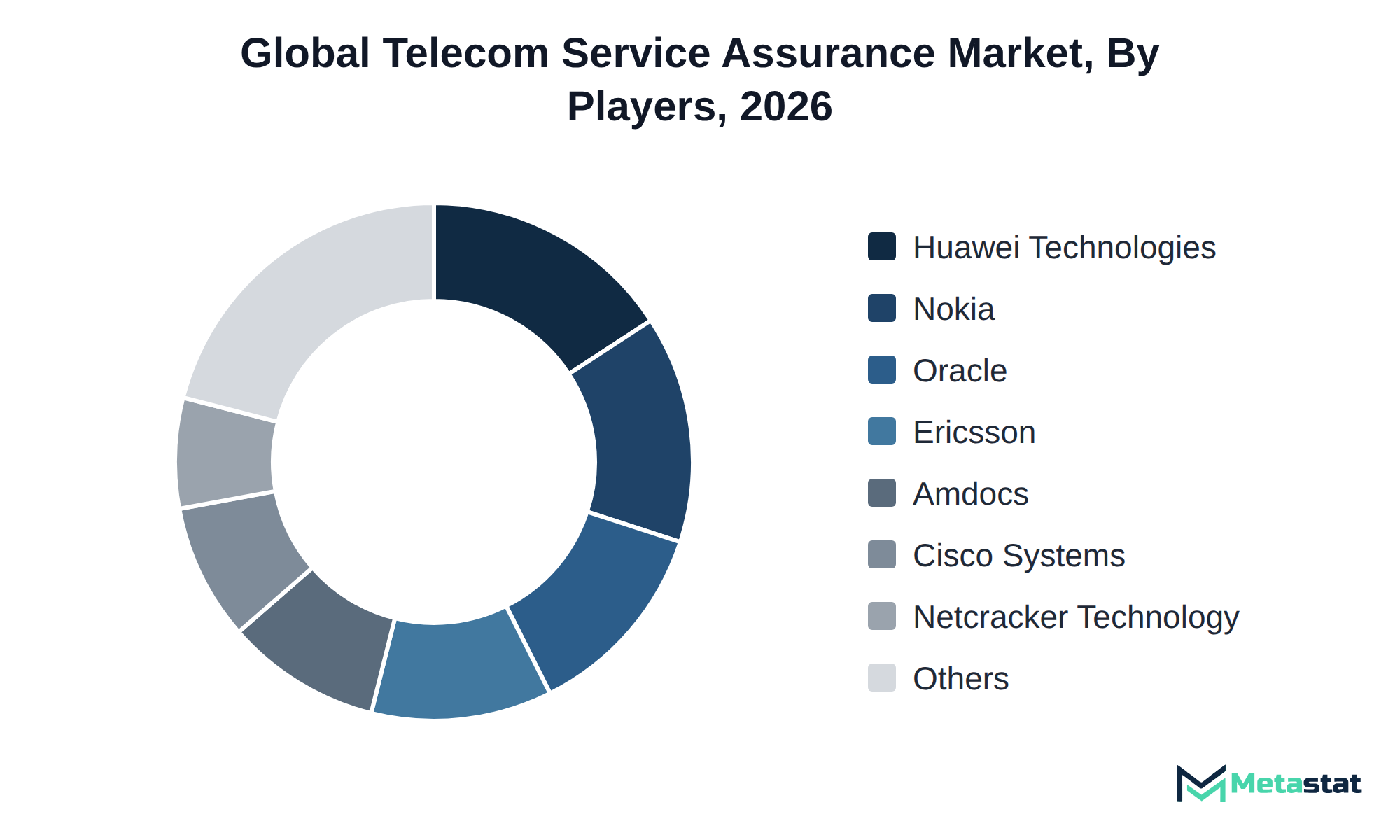
The Telecom Service Assurance market features a diverse range of companies competing across various segments, including solutions and services. Companies leverage their unique strengths, targeting specific buyer needs including price, certification, customization, and ecosystem compatibility.
Nokia Corporation and Ericsson focus on delivering advanced Fault and Event Management solutions, with Nokia Corporation aiming to enhance network reliability and operational efficiency. In contrast, Amdocs and Netcracker Technology emphasize Performance Management and Intelligent Assurance and Analytics, providing integrated platforms that enable service providers to optimize operations and improve customer experiences.
Companies including ServiceNow, Inc. and Huawei Technologies Co., Ltd. focus on Planning and Consulting Services, offering tailored strategies for telecom operators to enhance service quality. Meanwhile, Cisco Systems, Inc. and NETSCOUT Systems, Inc. highlight their expertise in Operation and Maintenance Services, ensuring reliable network performance.
This growth relies on several key developments within the Telecom Service Assurance market. First, the adoption of Cloud-Based deployment models, projected to reach USD 8.6 billion by 2033, will accelerate, driven by increasing demand for flexibility and scalability from operators. Second, Intelligent Assurance and Analytics solutions require significant investment to enhance network performance and customer experience, which will support growth. The increasing demand from Mobile Operators, projected to grow to USD 13.3 billion by 2033, further emphasizes the need for robust service assurance capabilities to manage complex network environments.
However, risks exist that could hinder this growth trajectory. Economic fluctuations impact telecom operators' budgets, slowing investments in new technologies and services. Regulatory changes in key regions, especially in North America and Europe, could impose constraints on market development and deployment strategies. The combination of these factors will significantly influence whether the market reaches the anticipated USD 21.2 billion benchmark by 2033.
By Solution: Fault and Event Management, Performance Management, Quality and Service Management, Intelligent Assurance and Analytics
By Services: Planning and Consulting Services, Operation and Maintenance Services, System Integration Services
By Deployment Model: On-Premises, Cloud-Based, Hybrid
By Operator Type: Mobile Operator, Fixed Operator
The report strategically identifies and profiles the key market players and analyses their core competencies in each sub-segment of the Telecom Service Assurance market.
Report Attributes | Details |
Study Period | 2021-2033 |
Base Year | 2025 |
Estimated Year | 2026 |
Forecast Period | 2026-2033 |
Historical Period | 2021-2025 |
Growth Rate | CAGR 9.5% from 2026 to 2033 |
Revenue Unit | USD billion |
Segmentation | By Solution, Services, Deployment Model, Operator Type, and Region |
By Region | North America (By Solution, Services, Deployment Model, Operator Type, and Country)
|
Europe (By Solution, Services, Deployment Model, Operator Type, and Country)
| |
Asia Pacific (By Solution, Services, Deployment Model, Operator Type, and Country)
| |
South America (By Solution, Services, Deployment Model, Operator Type, and Country)
| |
Middle East and Africa (By Solution, Services, Deployment Model, Operator Type, and Country)
|
Find answers to common questions about this report
The Telecom Service Assurance market size was valued at USD 10.2 billion in 2025.
The market is projected to grow at a CAGR of 9.5% during the forecast period from 2026 to 2033.
The North America Telecom Service Assurance market size is projected to reach USD 6.7 billion by 2033.
The leading segment in the Telecom Service Assurance market is Performance Management, projected to reach USD 5.3 billion by 2033. This segment surpasses others in terms of revenue potential within the forecast period.
Escalating customer expectations and competitive pressures drive telecom operators to prioritize enhanced network reliability. The increasing complexity of telecommunications infrastructure necessitates sophisticated analysis tools to maintain service quality.
North America holds the dominant share of the Telecom Service Assurance market, with a value of USD 6.7 billion in 2033, representing 34.8 percent of the total market.
High costs associated with service assurance solutions hinder adoption among smaller operators. Limited budgets restrict these organizations from investing in comprehensive tools, resulting in slower uptake of essential technologies.
The increasing complexity of telecommunications infrastructure and the demand for enhanced network reliability drive adoption in the Telecom Service Assurance market. Operators prioritize innovative solutions, particularly in performance management, to meet escalating customer expectations and maintain competitive differentiation.
The Telecom Service Assurance market is estimated to reach a valuation of USD 21.2 billion by 2033.
Key players operating in the Telecom Service Assurance market include Nokia Corporation, Oracle Corporation, Ericsson, Amdocs, Huawei Technologies Co., Ltd., Cisco Systems, Inc., and NETSCOUT Systems, Inc.
The analysts below cover Information & Technology research at Metastat Insights.
LEAD ANALYST
Utkarsh Khirodkar is a Lead Market Research Analyst at MetaStat Insight, specializing in market intelligence, technology sector assessments, and competitive strategy.

PRINCIPAL CONSULTANT - ENTERPRISE AI & EMERGING TECHNOLOGIES
Banking & Finance · Electronics and Semiconductor · Energy and Power · Healthcare IT · Information & Technology · Professional Services
Vijay Gunti is a Principal Consultant at MetaStat Insight, bringing over two decades of experience across enterprise digital transformation, technology strategy, and intelligent systems.

LEAD CONSULTANT - COMMUNICATION, TELECOM, AND IT
Electronics and Semiconductor · Information & Technology · Machinery & Equipment · Professional Services
Ravindra Sathe Consultants for Communication, Telecom, and IT at MetaStat Insight. He leads the firm's industry research initiatives across telecommunications infrastructure, digital connectivity, enterprise networking, and emerging information technology domains.
Replacing petrochemical surfactants with bio-based alternatives requires realistic timelines on industrial precision fermentation scaling. The market research broke down commercialization timelines, feedstock sugar price sensitivities, and regional cosmetic ingredient regulatory approvals in Europe and East Asia. That supplier readiness mapping gave our formulations team reliable context when comparing renewable chemical sourcing roadmaps.
Tracking ceramic matrix composite adoption in high-bypass aero engines requires strict attention to material qualification cycles and FAA airworthiness testing milestones. The MetaStat Insight team provided a detailed timeline of silicon carbide fiber manufacturing capacity and commercial foundry lead times. Having clear visibility into upstream thermal barrier coating supply helped us stress-test our long-term component procurement strategy.
Transitioning ultra-class mining haul trucks to alternative power requires concrete data on remote hydrogen refueling infrastructure economics. The report evaluated megawatt-scale electrolyzer installation expenses, onsite storage safety mandates, and heavy-duty fuel cell stack degradation under continuous duty cycles. That technical rigor helped our engineers benchmark realistic total operating cost horizons for off-highway fleet decarbonization.
Explore related market intelligence reports worth reading alongside this one.
Starting from
$2950