
LEAD ANALYST
Utkarsh Khirodkar is a Lead Market Research Analyst at MetaStat Insight, specializing in market intelligence, technology sector assessments, and competitive strategy.

Global AI Infrastructure Market Size, Share, By Deployment Model (On-premises, Cloud and Hybrid), By Technology (Machine Learning, Deep Learning and Others (Reinforcement Learning)), By Application (AI Training), By End-Use Industry (Banking, Financial Services and Insurance, Healthcare and Life Sciences, Information Technology and Telecommunications, Manufacturing, Retail and E-Commerce, Government and Defense, Media and Entertainment, Automotive and Transportation and Others (Energy and Utilities, Education and Agriculture)), Industry Analysis, Growth, Trends, and Forecast, 2026-2033
Report ID
MSI-5837
Published
November, 2026
Pages
293 Pages
Format
Historical
Base year
Forecast
Forecast period
Report Details
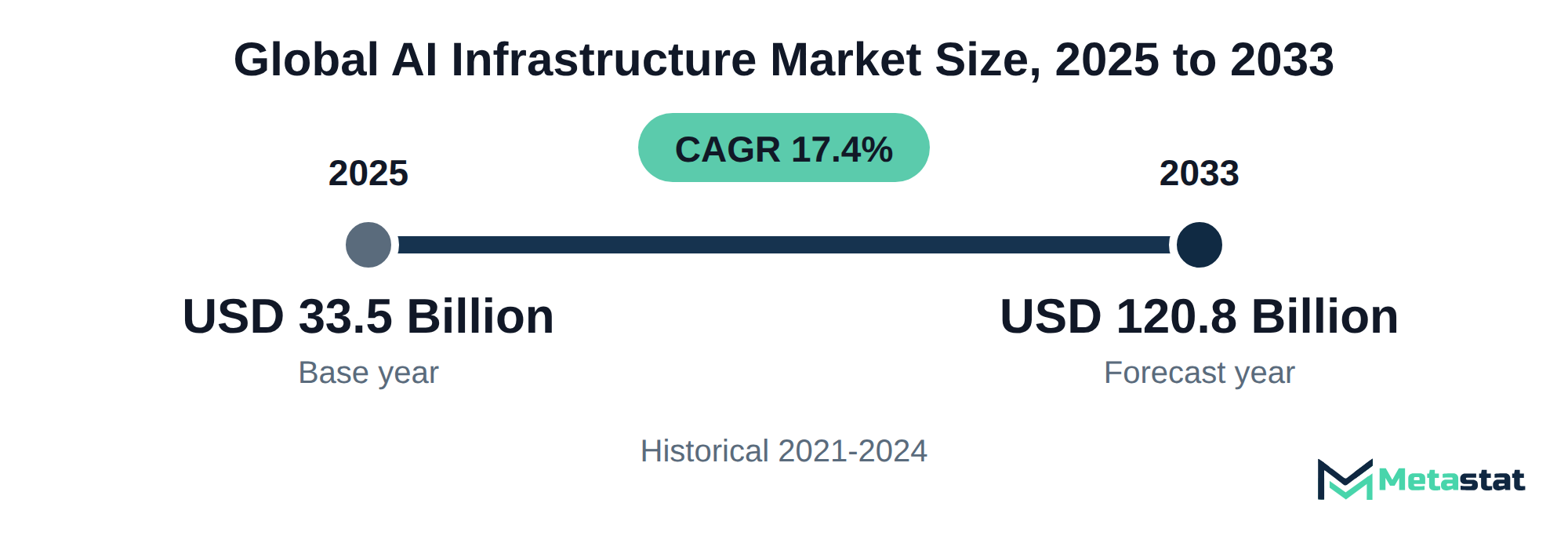
Market Valuation: Valued at $33.5 Billion in 2025, projected to reach $120.8 Billion by 2033 at a 17.4% CAGR.
Dominant Segment: The Cloud segment leads the market, driven by a significant shift towards scalable and flexible computing solutions that reduce the burden of on-premises infrastructure.
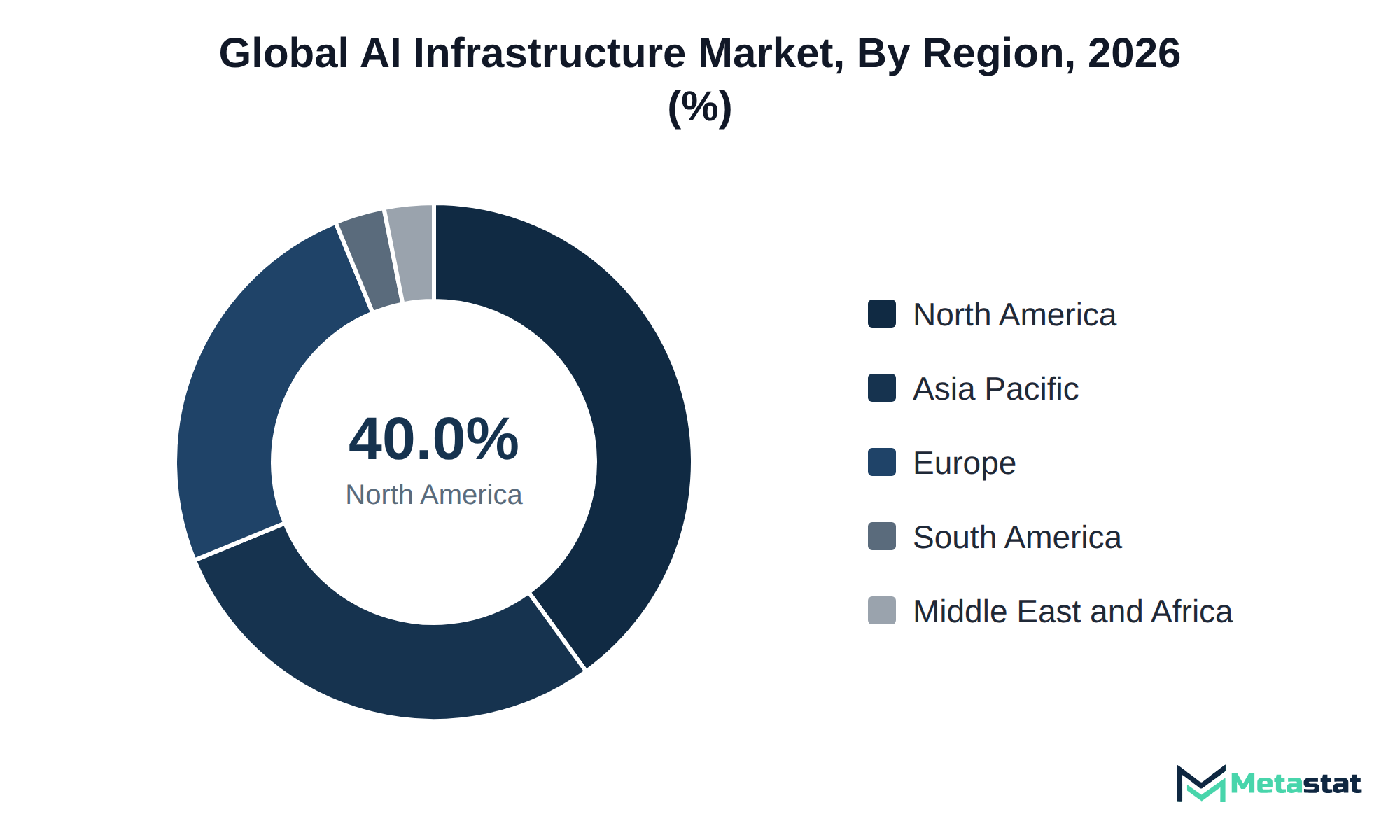
Geographic Lead: North America is the leading region, holding 40.0% of the market in 2025, with the US anticipated to continue its dominance due to robust technological investments.
What's Inside: The report provides comprehensive competitive coverage, detailed analyses of market dynamics, and forecasts extending to 2033, focusing on deployment models, technologies, applications, and end-use industries.
Investment Trends: Investment in AI training and inference is reshaping data center capacity, with a projected growth in AI training from USD 22.2 billion in 2026 to USD 63 billion by 2033, highlighting the increasing demand for advanced computing infrastructure.
Market Dynamics: Rising talent acquisition costs and price sensitivity are significant challenges, impacting buyer engagement and slowing the growth trajectory of the AI Infrastructure market.
Choose Your License
Global AI Infrastructure Market
The global AI Infrastructure market was valued at USD 33.5 billion in 2025 and is projected to reach USD 120.8 billion by 2033, growing at a CAGR of 17.4% over the forecast period.
The AI Infrastructure market encompasses the technologies, services, and solutions necessary for developing and deploying artificial intelligence applications. Buyers invest in this market to enhance operational efficiencies, improve decision-making processes, and drive innovation across various sectors. The growing reliance on data-driven strategies and AI-powered solutions has fueled demand, prompting organizations to allocate resources toward AI infrastructure.
Growth in the market is driven primarily by the increasing adoption of AI technologies across industries. The Cloud segment stands out as the most valuable, reflecting a significant shift toward scalable, flexible computing solutions. North America holds 40.0% of the market in 2025, with the US leading in 2026. North America's share gives the region a strong influence on how AI infrastructure develops.
Investment in AI infrastructure is anticipated to rise due to the urgent need for advanced analytics and machine learning capabilities. Organizations across sectors including banking, healthcare, and information technology seek to use AI to improve customer experiences and streamline operational processes. Continued advances in AI technologies drive competition and innovation, which adds to market growth.
The AI Infrastructure market serves a diverse range of industries, enabling businesses to leverage advanced technologies for artificial intelligence applications. Organizations invest in this market to enhance operational efficiency, drive innovation, and maintain a competitive edge. Technology firms, financial institutions, and healthcare organizations are the primary buyers. They integrate AI capabilities into their systems to improve decision-making and customer experiences.
Significant growth in the market is driven by increasing adoption of AI technologies across various sectors. Cloud deployment represents the segment with the most value, reflecting a shift towards scalable and flexible solutions that reduce the burden of on-premises infrastructure. The region's robust technological ecosystem and high investment in research and development contribute to its dominant position.
One main growth driver includes escalating demand for AI training and inference solutions, which facilitate the development and deployment of AI models. This demand emphasizes the importance of advanced computing infrastructure and specialized software, reinforcing the market's role in supporting emerging AI applications. Businesses committed to innovation increasingly look to AI technologies to drive future growth.
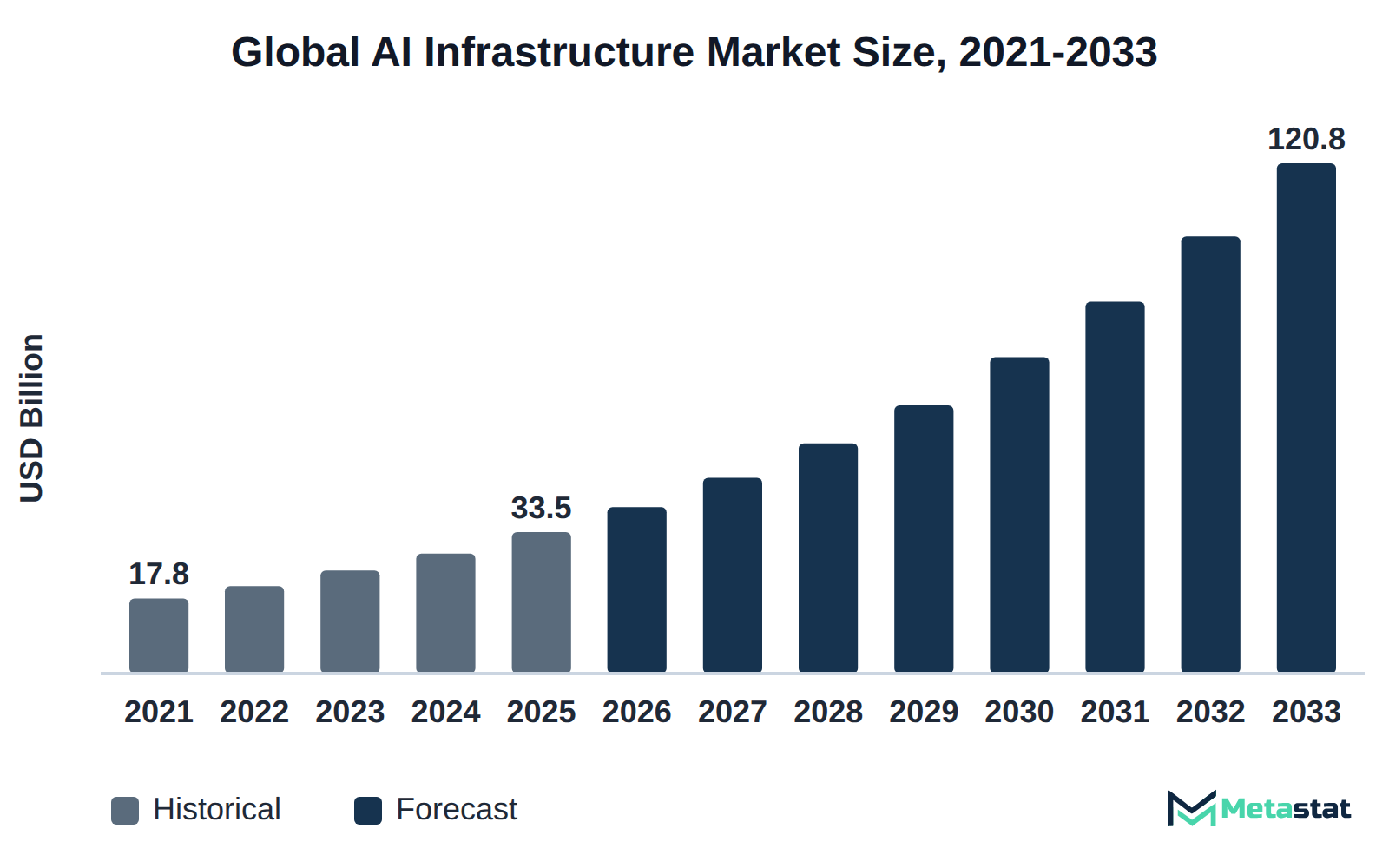
Investment in Graphics Processing Units (GPUs), accelerators, and high-performance computing (HPC) drives the evolution of the AI Infrastructure market. The global AI Infrastructure market is projected to reach USD 120.8 billion by 2033, reflecting significant growth in computing capabilities essential for handling increasingly complex AI workloads. The demand for GPUs and specialized accelerators is rising due to their efficiency in executing parallel tasks, enabling organizations to process vast datasets and perform AI training more effectively.
The deployment of GPU-based systems facilitates advancements in deep learning applications, with the technology segment for Deep Learning expected to achieve a valuation of USD 63.7 billion by 2033. This significant investment highlights the importance of high-performance computing resources in optimizing AI algorithms and enhancing model performance. Organizations across various industries, particularly in healthcare and financial services, prioritize investing in AI infrastructure to derive meaningful insights from their data, streamline operations, and maintain competitive advantages.
The rise of cloud computing has increased the need for effective AI infrastructure. Public cloud providers expand their offerings of GPU-accelerated services, enabling businesses to access advanced computing resources without the burden of substantial capital expenditures. This trend enables companies to launch AI-driven initiatives while minimizing financial risks. Organizations increasingly allocate budgets for GPUs and accelerators so they can apply AI technologies effectively.
Enterprises increasingly favor flexible contract models for Cloud and Hybrid AI Infrastructure, driven by the need for adaptability in changing technological environments. With a projected value of USD 58.9 billion for Cloud AI Infrastructure by 2033, organizations prioritize cost-effective solutions that align with their usage patterns. Subscription-based models dominate the market, allowing companies to scale resources according to immediate demands without significant upfront investments. This approach mitigates financial risk and enhances cash flow management, making it attractive across various industries.
In addition, enterprises often negotiate pay-as-you-go pricing arrangements, providing an added layer of financial flexibility. Such models enable organizations to pay solely for the resources they consume, supporting efficient budget allocation and reducing wastage in resource consumption. The AI Infrastructure market thrives on these payment structures, promoting increased adoption among companies that seek to integrate AI capabilities without incurring substantial initial costs. Overall, the shift towards flexible pricing models enhances competitive positioning and encourages widespread AI infrastructure integration across diverse sectors.
The increasing demand for AI training and inference significantly impacts data center capacity and power consumption. In particular, the application of AI training is projected to grow from USD 22.2 billion in 2026 to USD 63 billion by 2033, reflecting a compound annual growth rate (CAGR) of 16.1%. This substantial growth highlights the necessity for data centers to enhance their infrastructure to accommodate increased processing requirements.
AI training necessitates advanced hardware and optimized power solutions to manage intensive computational workloads. Companies in sectors including banking, financial services, and insurance, which are expected to increase their investment in AI infrastructure, face challenges related to power efficiency and overall capacity expansion. Data center power strategies streamline consumption while expanding capabilities to support AI workloads effectively.
Prioritizing improvements in energy efficiency and embracing innovations in cooling technologies enables data centers to meet the rising demands of AI training without incurring excessive operational costs. This alignment directly affects the competitiveness of firms in the AI Infrastructure market, and those that manage these resources well gain a significant advantage in delivering AI solutions.
Growing demand for AI training capabilities significantly influences enterprise investment in AI Infrastructure. Organizations increasingly recognize the value of enterprise AI for enhancing operational efficiency and decision-making processes. This surge in AI training investment highlights enterprises' commitment to developing sophisticated AI models that leverage large datasets for improved insights and predictions.
The urgency to adopt advanced technologies accelerates this trend, with enterprises striving to maintain competitiveness in dynamic markets. Companies across various sectors, particularly in banking, financial services, and healthcare, prioritize these investments to optimize processes and enhance customer experiences. By focusing resources on AI training infrastructure, organizations position themselves to capitalize on emerging AI applications, driving long-term growth in the market.
Investment in AI training has surged due to a growing emphasis on data-driven decision-making within enterprises. Companies across sectors, particularly in banking, financial services, and healthcare, prioritize AI training to enhance operational efficiency and offer innovative services. This shift reflects a broader recognition of AI's potential to transform business practices and improve customer engagement. Organizations are allocating resources toward building robust AI capabilities, driving demand for AI Infrastructure. This focus on advanced training solutions directly affects market growth and competitive positioning.
Adoption of cloud infrastructure supports the expansion of the AI Infrastructure market. Organizations increasingly favor cloud solutions for their scalability, flexibility, and cost efficiency, enhancing the ability to deploy artificial intelligence applications. Cloud providers invest in infrastructure enhancements that facilitate rapid access to processing power and storage resources, driving down operational costs for enterprises. Major industries, including banking and healthcare, use these advantages to implement AI solutions effectively and improve decision-making and operational efficiency.
This shift toward cloud infrastructure aligns with the growing demand for AI training and inference capabilities. By accessing cloud resources, businesses gain advanced technologies without the burden of managing on-premises solutions. The market experiences further growth as organizations embrace hybrid models that combine the benefits of on-premises resources and cloud services, catering to specific workload requirements. The migration to cloud infrastructure is central to how the AI Infrastructure market evolves, and it supports greater efficiency and innovation across sectors.
The high costs associated with AI infrastructure represent a significant barrier for many potential buyers, particularly in sectors including Healthcare and Life Sciences. These buyers face budget constraints, leading to slower uptake and smaller order sizes. The investment required for advanced technologies, including machine learning and deep learning systems, challenges organizations operating under tight financial constraints. Consequently, budget limitations result in delayed replacements for aging systems and infrastructure, hindering the ability to adopt the latest innovations. In the AI Infrastructure market, established players benefit from economies of scale and can offer more competitive pricing, while smaller companies struggle to match these price points. This disparity in pricing dynamics affects market penetration and slows the growth trajectory of the overall market. Buyers in price-sensitive industries remain cautious in their investment approaches, impacting the rapid evolution of the market and delaying broader adoption of AI technologies.
The AI Infrastructure market faces significant challenges related to rising talent acquisition costs. The demand for skilled professionals in AI and machine learning continues to outpace supply, leading to competitive hiring practices that drive up salaries and benefits. Companies operating in the market invest heavily in recruitment efforts and training programs to enhance their talent pools. This approach alleviates pressure but introduces further costs that impact overall profitability.
In response, many suppliers focus on developing strategic partnerships with educational institutions and training organizations to create a skilled workforce. These initiatives aim to build a sustainable talent pipeline that aligns with market needs. By doing so, suppliers enhance their capabilities while mitigating the financial burden associated with talent acquisition. Ongoing investment in workforce development shows how heavily competitive positioning in the market depends on human resources.
The healthcare and life sciences sector presents a significant opportunity for the AI Infrastructure market, driven by increasing investments in advanced technologies. Significant growth projected for this segment reflects a compound annual growth rate (CAGR) of 18.2%, with a market value expected to reach USD 15.9 billion by 2033. The demand for AI applications in diagnostics, patient care, and operational efficiency strengthens adoption rates among healthcare providers. Regulatory changes and a focus on improving patient outcomes enhance the urgency for organizations to invest in AI solutions. This growth trajectory highlights the need for scalable infrastructure that supports AI training and inference processes, allowing healthcare organizations to utilize data effectively. The expansion of AI capabilities in this sector emphasizes the vital role of infrastructure in developing innovative solutions, ultimately transforming patient care and operational practices.
The Global AI Infrastructure market is segmented based on Deployment Model, Technology, Application, and End-Use Industry.
On-premises AI infrastructure is valued at USD 13.1 billion in 2026 and is projected to reach USD 35.2 billion by 2033, at a CAGR of 15.2% during the forecast period. This segment primarily caters to organizations requiring localized control over their AI applications and data security, particularly in industries including banking and healthcare. A significant driver for this segment stems from evolving data privacy regulations, compelling enterprises to manage sensitive information on-site. This model contrasts with cloud and hybrid deployments, which experience faster growth due to their flexibility and lower upfront costs. However, the on-premises segment remains appealing for organizations requiring stringent compliance and reliability, prioritizing data sovereignty over considerations related to operational costs or maintenance complexity. Investment in on-premises infrastructure is anticipated to maintain momentum, reflecting a commitment to robust security and performance standards that are essential in critical applications.
Cloud AI infrastructure is estimated to reach USD 58.9 billion by 2033, at a CAGR of 19% during the forecast period. This deployment model supports businesses in leveraging scalable and flexible computing resources for various AI applications, enhancing efficiency in processing and storage. Major adopters include organizations across sectors including information technology, healthcare, and finance, which seek to optimize their operations through advanced analytics and machine learning. Growth in this segment is driven by increasing demand for on-demand resources and reduced upfront costs compared to on-premises solutions. Unlike on-premises infrastructure, which is projected to grow at a CAGR of 15.2%, cloud infrastructure offers a faster growth trajectory. The shift towards cloud-based solutions enables organizations to respond swiftly to changing market conditions, accommodating fluctuating workloads without significant capital investment. Investments in cloud AI infrastructure significantly contribute to the overall growth of the AI Infrastructure market, setting the stage for further advancements and applications.
Hybrid deployment in AI infrastructure is expected to reach USD 26.7 billion by 2033. This model integrates both on-premises and cloud solutions, allowing organizations to optimize their resources for various applications. Companies in sectors including banking, financial services, and healthcare adopt hybrid solutions to enhance data security while benefiting from the scalability of cloud resources. Demand for hybrid infrastructure accelerates due to the growing emphasis on flexibility and cost-effectiveness, enabling organizations to adapt to changing workloads. The hybrid model experiences faster growth, with a CAGR of 15.2%, reflecting the increasing preference for flexible deployment options. This growth trajectory differentiates it from the on-premises segment, which shows a lower CAGR compared to hybrid solutions. The combination of these technologies supports organizations in meeting diverse operational needs while managing costs and resource allocation effectively.
Machine Learning segment is valued at USD 14.9 billion in 2026 and is projected to reach USD 43.7 billion by 2033, at a CAGR of 16.6% during the forecast period. This segment serves various sectors, enabling businesses to optimize processes and enhance decision-making through predictive analytics and automation. The growing emphasis on data-driven strategies in industries including Banking, Financial Services, and Insurance drives investment in machine learning technologies. Compared to other segments, this segment exhibits a steady growth trajectory, with a focused application in AI training and inference, distinguishing it from other technologies including Deep Learning, which commands a larger share. The need for scalable solutions further fuels expansion, reflecting broad adoption across different sectors including healthcare and manufacturing. Investment in machine learning infrastructure positions organizations to adapt to evolving market demands.
Deep Learning AI infrastructure is estimated to reach USD 63.7 billion by 2033, at a CAGR of 18.3% during the forecast period. This technology focuses on training algorithms to recognize patterns in vast datasets, making it invaluable for sectors including healthcare, finance, and retail. Organizations leverage Deep Learning to enhance predictive analytics, image recognition, and natural language processing. Demand for this segment grows due to the increasing volume of data generated and advancements in computing power. Compared to the Machine Learning segment, which has a CAGR of 16.6%, Deep Learning demonstrates a faster growth trajectory. The segment's higher complexity and computational requirements often result in increased investment from firms seeking advanced solutions. In contrast to other segments within the Technology category, Deep Learning attracts buyers with significant funding capabilities, pushing the boundaries of what AI achieves.
Expected to reach USD 13.4 billion by 2033, this segment focuses on Reinforcement Learning technologies. Organizations apply these systems for advanced decision-making processes, particularly in fields including finance, robotics, and data analytics. The growing need for intelligent automation drives adoption, as enterprises seek to enhance efficiency and reduce operational costs. Compared to other technology segments, Reinforcement Learning experiences a slower growth trajectory due to the complexity and resource intensity associated with its implementation. While Machine Learning and Deep Learning show higher CAGRs, with figures of 16.6% and 18.3% respectively, the unique capabilities of Reinforcement Learning contribute to its application in specialized use cases. The market continues to evolve, responding to advancements in algorithms and computing power, ensuring sustained interest from various sectors.
This segment focuses on training models for artificial intelligence applications, primarily by technology companies, research institutions, and enterprises seeking to enhance decision-making through AI capabilities. Increasing investments in data analytics and machine learning drive demand for AI Training, highlighting its importance in developing advanced AI solutions. Compared to other segments, AI Training experiences significant growth, fueled by the continuous evolution of AI technologies and the escalating need for high-quality training datasets. While AI Inference contributes to the market, it does so at a slightly higher forecast CAGR of 18.9%, indicating a faster adoption rate for inference applications. The market is expected to continue expanding, reflecting the growing reliance on AI across various industry verticals.
AI Inference segment is estimated to reach USD 57.8 billion by 2033, at a CAGR of 18.9% during the forecast period. This segment is essential for processing and analyzing data generated by AI models, serving industries including finance, healthcare, and telecommunications. Demand for AI Inference is driven by the increasing necessity for real-time data analysis and decision-making capabilities, enhancing operational efficiency and customer experiences. Compared to the AI Training segment, which is projected to grow at a CAGR of 16.1%, AI Inference exhibits a faster growth trajectory, reflecting heightened investment in real-time applications and the adoption of AI technologies. Organizations across various sectors leverage AI Inference to streamline processes and improve predictive analytics, positioning it as a key component in the broader AI Infrastructure market.
Valued at USD 7 billion in 2026, this segment is projected to reach USD 22.3 billion by 2033, at a CAGR of 18.1% during the forecast period. Financial institutions leverage AI infrastructure for enhanced data analytics, risk management, and customer service optimization. The growing emphasis on data-driven decision-making drives investments in technologies that facilitate sophisticated financial modeling and predictive analysis. Increasing regulatory requirements for compliance and fraud detection create additional demand for AI solutions in banking, financial services, and insurance. Compared to other segments, this segment displays faster growth, reflecting a heightened focus on innovative applications for financial operations and customer engagement. The market continues to expand due to the necessity for secure and efficient transaction processing, positioning it uniquely among its peers.
Healthcare and Life Sciences segment is estimated to reach USD 15.9 billion by 2033, at a CAGR of 18.2% during the forecast period. This segment serves various stakeholders, including hospitals, pharmaceutical companies, and research institutions, focusing on integrating AI technologies for diagnostics, patient care, and drug development. A growing shift towards personalized medicine drives demand, offering the potential to enhance treatment outcomes. The segment's rapid expansion contrasts with others in the group, driven by healthcare's pressing requirement for innovative solutions addressing rising operational costs and patient expectations. Investment in AI technologies designed for improved healthcare delivery accelerates market growth, with advancements in machine learning and deep learning playing a significant role in the sector's evolution. The increasing focus on data analytics within life sciences fuels adoption, making this segment one of the most dynamic areas in the AI Infrastructure market.
The Information Technology and Telecommunications segment is expected to reach USD 24.4 billion by 2033. This segment serves various enterprises that rely on infrastructure for data storage, processing, and communication. Key drivers include increasing demand for advanced network capabilities and enhanced security features to protect sensitive data. The segment distinguishes itself from others by exhibiting higher growth potential, driven by technological advancements in AI and machine learning applications. The anticipated CAGR of 17.4% reflects robust investments in innovation and expansion initiatives. Enterprises prioritize this segment for mission-critical applications, enabling a competitive edge in the digital landscape. This focus on IT infrastructure directly influences the market, creating an environment conducive to ongoing development and strategic investment.
Manufacturing is projected to grow at a CAGR of 18% during the forecast period. This segment focuses on enhancing production efficiency, optimizing supply chain processes, and improving product quality through AI infrastructure. Key players in this segment include manufacturers across various industries, including automotive, electronics, and consumer goods, which employ AI-driven solutions to streamline operations. One primary force driving growth in this segment is the increasing demand for automation and smart manufacturing technologies, allowing organizations to reduce operational costs while improving productivity. Manufacturing's growth rate reflects strong adoption of AI technologies, highlighting the importance of AI infrastructure in driving operational excellence and competitive advantage.
Retail and E-Commerce involves the use of AI Infrastructure to enhance customer experiences, optimize supply chains, and streamline operations. Companies in this sector leverage AI to analyze consumer behavior and personalize shopping experiences. Demand for this segment is driven by increasing digital transformation initiatives and the urgency to adopt advanced technologies for competitive advantage. Retailers face challenges in integrating AI seamlessly into existing systems, which slows down adoption. Unlike other segments, this area focuses heavily on consumer engagement and operational efficiency, leading to a distinct set of requirements compared to sectors including Banking or Healthcare. The sector emphasizes real-time data analysis and personalized marketing strategies, setting it apart from slower-growing segments that prioritize stability over rapid consumer interaction.
Government and Defense applications focus on advanced technologies for national security, surveillance, and defense operations. Government agencies and defense contractors leverage AI infrastructure to enhance decision-making, improve operational efficiency, and analyze vast amounts of data. Key drivers of growth in this segment include increasing defense budgets worldwide and the growing importance of cybersecurity. Unlike other segments, including Banking, Financial Services, and Insurance, this segment experiences a unique set of regulations that govern procurement and technology adoption. The market emphasizes high security and compliance standards, which influence the selection of AI solutions and their deployment. This distinct environment creates steady demand for specialized infrastructure tailored to meet stringent operational requirements.
Media and Entertainment relies heavily on AI infrastructure for various applications, including content creation, video editing, and audience analysis. This segment serves television networks, film studios, and streaming services by enhancing user experiences and optimizing operations. Rapid advancements in machine learning and deep learning technologies drive the demand for sophisticated AI tools, enabling creators to produce high-quality content efficiently. The need for personalized content recommendations drives growth, pushing companies to invest in AI solutions that cater to specific viewer preferences. Compared to other segments, Media and Entertainment experiences unique challenges related to content licensing and regulatory compliance, which affect the pace of technological adoption. This sector emphasizes creativity and innovation, differentiating it from more technical or analytical industries where AI applications focus on data processing or operational efficiency. The AI Infrastructure market is expected to evolve, supporting diverse needs across the Media and Entertainment landscape.
Automotive and Transportation employs AI technologies to optimize operations, enhance safety, and improve efficiency in vehicle manufacturing and logistics management. Key players in these industries include automotive manufacturers and logistics companies, leveraging AI systems for predictive maintenance, autonomous driving features, and supply chain optimization. Increasing demand for smart transportation solutions drives growth in this segment, reflecting a broader trend toward digital transformation in the automotive sector. This sub-segment focuses on specific innovations, differentiating itself through its reliance on advanced technologies tailored for transportation needs. Factors including environmental regulations and the pursuit of greater fuel efficiency further drive investment in AI solutions, positioning this sub-segment as a critical area of development within the market.
This sub-segment encompasses various applications in energy and utilities, education, and agriculture. Users in these sectors leverage AI technologies to enhance operational efficiency, optimize resource management, and improve decision-making processes. In energy and utilities, AI supports predictive maintenance and demand forecasting, while educational institutions apply AI for personalized learning experiences. Agricultural applications include precision farming through data analytics and predictive models. Factors driving this sub-segment include the increasing demand for energy efficiency and sustainability, along with technological advancements in AI that enhance data processing capabilities. Compared to other segments, this sub-segment experiences moderate growth, attracting several buyers focused on long-term efficiency and sustainability initiatives. The AI Infrastructure market provides essential tools catering to these unique needs, setting this sub-segment apart from faster-growing counterparts focused exclusively on sectors including healthcare or finance.
Based on geography, the Global AI Infrastructure market is divided into North America, Europe, Asia-Pacific, South America, Middle East, and Africa.
North America holds a share of the AI Infrastructure market, with a projected value of USD 45.2 billion by the end of 2033. The region's strong demand stems from various industries, particularly in banking, financial services, and healthcare, where advanced analytics and machine learning applications enhance operational efficiency and decision-making. The presence of major technology companies in the United States and Canada drives innovation and investment in AI technologies. Infrastructure developments, including robust data centers and high-speed internet access, contribute to the region's leadership in AI adoption. The market in North America benefits from an ecosystem that supports collaborative research and development, resulting in advanced AI applications tailored to local needs. This dynamic environment positions North America as a key player in the global AI Infrastructure landscape.
The European market exhibits unique characteristics that influence demand dynamics. Industries including Banking, Financial Services, and Insurance, alongside Healthcare and Life Sciences, drive significant investment in AI infrastructure. The region benefits from strong regulatory frameworks that encourage technological adoption, particularly in data protection and privacy. Countries including Germany, France, and the UK stand out due to their advanced technological ecosystems and robust IT infrastructure. The market accounted for a 25% share of the global AI Infrastructure market in 2025. This solid foundation positions Europe for continued growth, with investments expected to rise steadily as organizations seek to enhance operational efficiency and drive innovation across various sectors.
With a market share of 28.8% in 2025, Asia-Pacific experiences robust demand for AI Infrastructure driven by rapid digital transformation across various sectors. China, Japan, and India emerge as leading countries, using AI technologies to enhance operational efficiency and customer engagement. In the healthcare sector, AI applications focus on improving diagnostics and patient care, while financial services leverage AI for fraud detection and customer service optimization. The presence of significant technology players in South Korea and Australia further supports growth, promoting innovation in AI applications. Infrastructure development, particularly in cloud computing, facilitates the expansion of AI capabilities in the region. The AI Infrastructure market thrives on increasing adoption of machine learning and deep learning technologies, catering to diverse end-use industries, including manufacturing and telecommunications.
Limited adoption of advanced technologies in Brazil and Argentina shapes the demand dynamics within the AI Infrastructure market. Growing interest in digital transformation across various sectors, including healthcare and financial services, drives investments in AI capabilities. Infrastructure challenges, including internet connectivity and access to advanced computing resources, hinder broader implementation of AI solutions. Despite these barriers, the market is projected to account for 3.1% of global shares by 2025, indicating a gradual shift towards increased capacity and innovation. Companies in the region are exploring opportunities in sectors including healthcare and manufacturing, where AI applications significantly enhance operational efficiency and customer experiences. Growth in South America aligns with global trends, reflecting a commitment to modernization and competitiveness in the digital age.
The Middle East and Africa represent a niche within the AI Infrastructure market, holding a 3.1% share in 2025. Factors including growing adoption of AI technologies in sectors including banking and healthcare drive demand for advanced infrastructure solutions. Investment in digital transformation initiatives in countries like Saudi Arabia and the UAE fuels this growth. South Africa's focus on technological innovation and infrastructure development enhances opportunities for AI deployment. The regional market is poised for expansion, supported by increasing government support for AI-driven initiatives. This momentum contributes to growing interest in AI infrastructure across various industries, reflecting a broader shift towards technology integration in business operations.
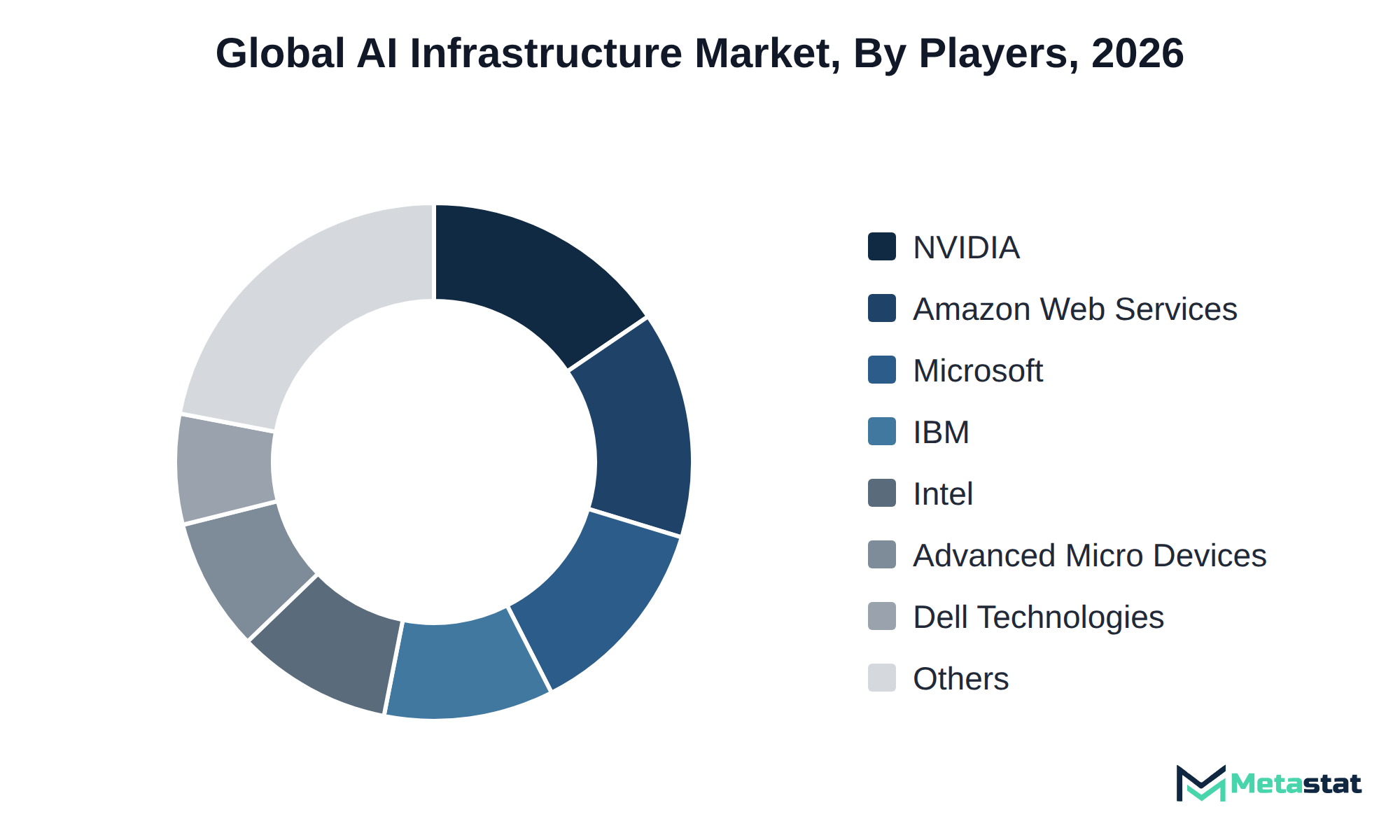
The competitive environment in the AI Infrastructure market features a diverse array of companies, each employing distinct strategies to capture market share. Companies divide primarily by deployment model, with players offering on-premises, cloud, and hybrid solutions. Pricing, service quality, and ecosystem integration are critical factors influencing buyer decisions.
NVIDIA Corporation focuses on delivering advanced graphics processing units and AI solutions, while Amazon Web Services, Inc. emphasizes scalable cloud infrastructure to support AI applications. IBM Corporation prioritizes enterprise solutions that integrate AI capabilities into existing business processes, enhancing operational efficiency for clients.
Customization and certification influence buyer preferences, with Google LLC providing tailored solutions for specific industries. Competitive dynamics continue to evolve, driven by technological advancements and shifting customer requirements in the market.
Achieving this level requires several developments within the AI Infrastructure market. Significant growth in the Cloud deployment model, expected to reach USD 58.9 billion by 2033, will drive demand. The adoption of Machine Learning technology is projected to contribute to market expansion, with a forecast value of USD 43.7 billion by the same year. The Banking, Financial Services and Insurance sector is anticipated to experience strong growth, increasing from USD 7 billion in 2026 to USD 22.3 billion by 2033, highlighting the demand for AI infrastructure in critical financial applications.
However, risks exist that could impede this growth trajectory. Challenges related to high implementation costs and data privacy concerns deter potential users, particularly in the Asia Pacific region, where rapid technological adoption is essential for market growth. Addressing these obstacles will influence overall market performance and impact the forecast for the AI Infrastructure market.
By Deployment Model: On-premises, Cloud, Hybrid
By Technology: Machine Learning, Deep Learning, Others (Reinforcement Learning)
By Application: AI Training, AI Inference
By End-Use Industry: Banking, Financial Services and Insurance, Healthcare and Life Sciences, Information Technology and Telecommunications, Manufacturing, Retail and E-Commerce, Government and Defense, Media and Entertainment, Automotive and Transportation, Others (Energy and Utilities, Education, Agriculture)
The report strategically identifies and profiles the key market players and analyses their core competencies in each sub-segment of the AI Infrastructure market.
Report Attributes | Details |
Study Period | 2021-2033 |
Base Year | 2025 |
Estimated Year | 2026 |
Forecast Period | 2026-2033 |
Historical Period | 2021-2025 |
Growth Rate | CAGR 17.4% from 2026 to 2033 |
Revenue Unit | USD billion |
Segmentation | By Deployment Model, Technology, Application, End-Use Industry, and Region |
By Region | North America (By Deployment Model, Technology, Application, End-Use Industry, and Country)
|
Europe (By Deployment Model, Technology, Application, End-Use Industry, and Country)
| |
Asia Pacific (By Deployment Model, Technology, Application, End-Use Industry, and Country)
| |
South America (By Deployment Model, Technology, Application, End-Use Industry, and Country)
| |
Middle East and Africa (By Deployment Model, Technology, Application, End-Use Industry, and Country)
|
Find answers to common questions about this report
The AI Infrastructure market size was valued at USD 33.5 billion in 2025.
The market is projected to grow at a CAGR of 17.4% during the forecast period from 2026 to 2033.
The North America AI Infrastructure market size is projected to reach USD 45.2 billion by 2033.
The Cloud segment leads the AI Infrastructure market with a projected value of USD 58.9 billion by 2033. This segment surpasses others in growth potential and overall market share.
Investment in AI training has surged due to a growing emphasis on data-driven decision-making within enterprises. The adoption of cloud infrastructure supports the expansion of the market by providing scalability, flexibility, and cost efficiency for deploying AI applications.
North America holds the dominant share of the AI Infrastructure market, accounting for 40 percent of the total market in 2025. This region is projected to reach USD 45.2 billion by 2033.
High costs associated with AI infrastructure represent a significant barrier for many potential buyers, particularly in healthcare and life sciences, leading to slower uptake and smaller order sizes. Rising talent acquisition costs further challenge market growth, as demand for skilled professionals in AI and machine learning continues to outpace supply, driving up salaries and benefits.
Increasing investments in advanced technologies within the healthcare and life sciences sector are favoring adoption of AI Infrastructure. A projected compound annual growth rate (CAGR) of 18.2% highlights the urgency for organizations to enhance operational efficiency and improve patient outcomes through AI solutions.
The AI Infrastructure market is estimated to reach a valuation of USD 120.8 billion by 2033.
Key players operating in the AI Infrastructure market include NVIDIA Corporation, Advanced Micro Devices, Inc., Intel Corporation, IBM Corporation, Dell Technologies Inc., Hewlett Packard Enterprise Company, Lenovo Group Limited, and Microsoft Corporation.
The analysts below cover Information & Technology research at Metastat Insights.
LEAD ANALYST
Utkarsh Khirodkar is a Lead Market Research Analyst at MetaStat Insight, specializing in market intelligence, technology sector assessments, and competitive strategy.

PRINCIPAL CONSULTANT - ENTERPRISE AI & EMERGING TECHNOLOGIES
Banking & Finance · Electronics and Semiconductor · Energy and Power · Healthcare IT · Information & Technology · Professional Services
Vijay Gunti is a Principal Consultant at MetaStat Insight, bringing over two decades of experience across enterprise digital transformation, technology strategy, and intelligent systems.

LEAD CONSULTANT - COMMUNICATION, TELECOM, AND IT
Electronics and Semiconductor · Information & Technology · Machinery & Equipment · Professional Services
Ravindra Sathe Consultants for Communication, Telecom, and IT at MetaStat Insight. He leads the firm's industry research initiatives across telecommunications infrastructure, digital connectivity, enterprise networking, and emerging information technology domains.
Transitioning ultra-class mining haul trucks to alternative power requires concrete data on remote hydrogen refueling infrastructure economics. The report evaluated megawatt-scale electrolyzer installation expenses, onsite storage safety mandates, and heavy-duty fuel cell stack degradation under continuous duty cycles. That technical rigor helped our engineers benchmark realistic total operating cost horizons for off-highway fleet decarbonization.
Enterprise zero-trust network rollouts are often slowed down by multi-cloud transit latency and proprietary hardware retirement schedules. This study provided realistic total cost of ownership models comparing cloud-delivered security edge solutions against traditional hardware refreshes. The analysis of contract renewal lengths and software maintenance fees gave us clear visibility into enterprise replacement cycles over the next three to five years.
Scaling antibody-drug conjugate manufacturing hinges on contract manufacturing availability for high-potency active ingredients. The MetaStat Insight analysis looked closely at global cleanroom slot constraints, bioconjugation batch failure rates, and supply chain redundancies between the US, Europe, and India. The supplier capability matrix proved genuinely useful for our team when mapping secondary source options across our clinical pipeline.
Explore related market intelligence reports worth reading alongside this one.