
LEAD ANALYST
Utkarsh Khirodkar is a Lead Market Research Analyst at MetaStat Insight, specializing in market intelligence, technology sector assessments, and competitive strategy.

Europe E-commerce Platform Market Size, Share, By Deployment Model (Vendor-Hosted Cloud and Customer-Managed Deployment), By Platform Architecture (Integrated Storefront Platforms and Headless Commerce Platforms), By Commerce Model (B2C, B2B, and Hybrid B2C and B2B), By Region (Germany, France, UK, Italy, Spain, Russia, and Rest of Europe), Industry Analysis, Growth, Trends, and Forecast, 2026-2033
Report ID
MSI-5828
Published
November, 2026
Pages
281 Pages
Format
Historical
Base year
Forecast
Forecast period
Report Details
Market Valuation: Valued at $1,917.4 Million in 2025, projected to reach $6,349.2 Million by 2033 at a 16.1% CAGR.
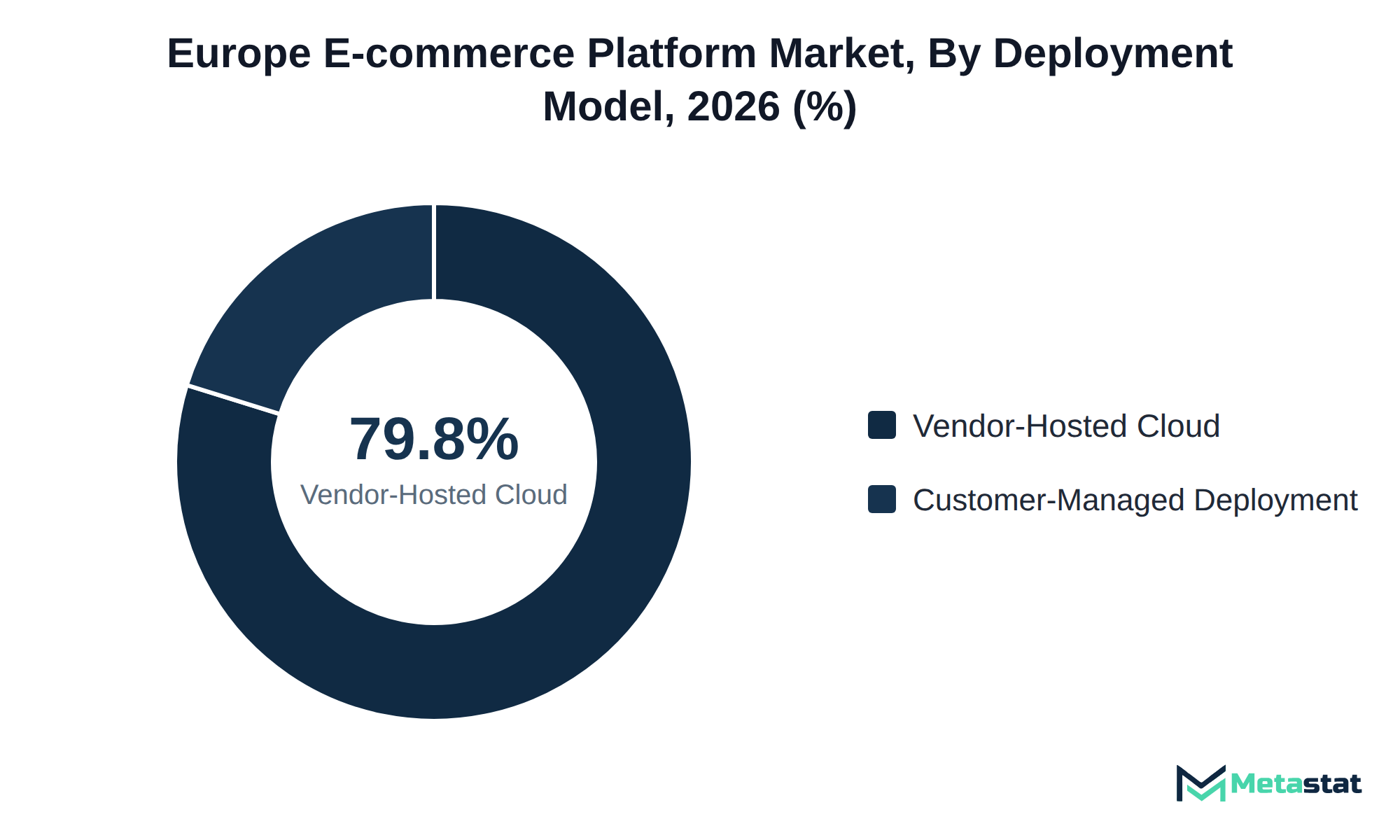
Dominant Segment: Vendor-Hosted Cloud deployments lead the market, driven by their flexibility, scalability, and lower upfront costs for businesses.
Geographic Lead: Germany is the leading region in the market, reflecting strong demand for e-commerce solutions and advanced digital infrastructure.
What's Inside: The report includes detailed competitive coverage, analyses of market dynamics, and forecasts for the period from 2026 to 2033.
Growth Drivers: The rapid adoption of digital shopping habits and the increasing demand for integrated storefront platforms are key factors propelling market growth.
B2B Growth Potential: The B2B commerce segment is projected to achieve significant growth, driven by the rising number of SMEs seeking efficient e-commerce solutions.
Choose Your License
Europe E-commerce Platform Market
The Europe E-commerce Platform market was valued at USD 1,917.4 million in 2025 and is projected to reach USD 6,349.2 million by 2033, growing at a CAGR of 16.1% over the forecast period.
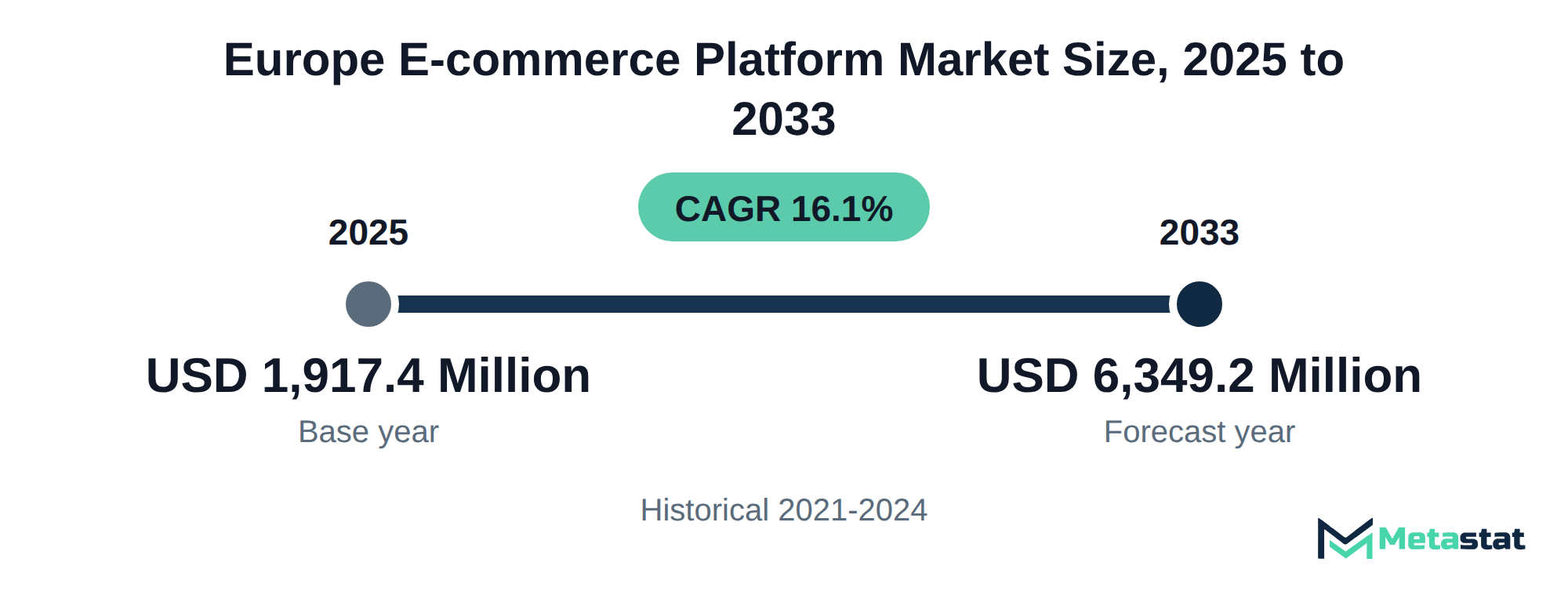
The Europe E-commerce Platform market encompasses digital solutions that facilitate online commerce. Businesses invest in these platforms to enhance operational efficiency, improve customer engagement, and drive sales growth. Key buyer groups include retail companies, service providers, and wholesalers, all of which prioritize robust and scalable e-commerce solutions to meet consumer demands and remain competitive in an increasingly digital marketplace.
Growth in the market is fueled by the rapid adoption of digital shopping habits among consumers, alongside the continuous evolution of technology. Among the various segments, Vendor-Hosted Cloud deployments account for the largest share of market value, driven by their ability to offer flexibility, scalability, and lower upfront costs for businesses. Germany leads regional contributions, reflecting strong demand for e-commerce solutions and advanced digital infrastructure.
One significant factor supporting market expansion involves the rising preference for integrated storefront platforms, which streamline the shopping experience and enhance customer satisfaction. These platforms provide businesses with the tools required to optimize their online presence and adapt to changing consumer behaviors. Companies increasingly recognize the value of specialized e-commerce solutions, and investments are projected to grow substantially over the forecast period.
The market features a diverse array of platforms that enable businesses to engage in online sales, providing tools for inventory management, payment processing, and customer engagement. Buyers invest in these solutions to enhance their online presence, streamline operations, and respond to increasing consumer demand for digital shopping experiences. Growth in online consumer spending drives platform adoption, as businesses adapt to a changing retail market.
Among the various segments, Vendor-Hosted Cloud platforms represent the largest share, benefiting from their scalability and minimal management burden for users. Germany is the leading region by market share, reflecting its e-commerce infrastructure and high consumer spending. This region's businesses increasingly adopt e-commerce solutions to remain competitive and meet evolving customer preferences.
One of the main growth drivers is the accelerated shift toward online shopping, influenced by changing consumer habits. Demand for personalized shopping experiences increases reliance on advanced e-commerce platforms. E-commerce personalization software is one tool that helps merchants tailor the storefront to individual shoppers. This transformation drives investments in technology and innovation, positioning the Europe E-commerce Platform market for sustained growth in the coming years.
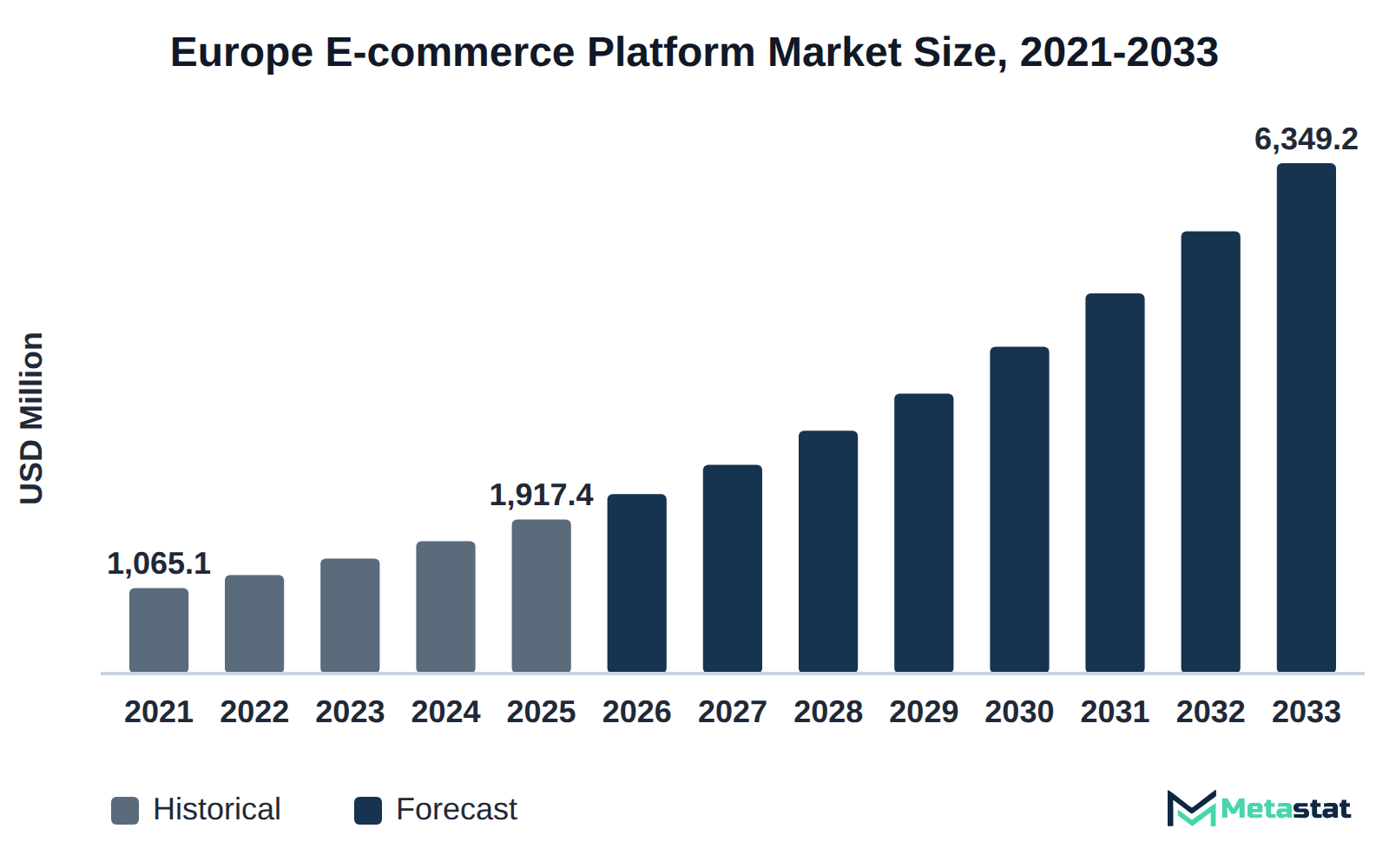
The shift towards integrated content management systems (CMS) and storefronts significantly transforms the Europe E-commerce Platform market. This integration streamlines operations and enhances the user experience, allowing merchants to manage product listings, inventory, and customer interactions from a single platform. In 2026, the value for integrated storefront platforms is projected to begin at USD 1,787.2 million, with an anticipated increase to USD 4,622.9 million by 2033, reflecting a compound annual growth rate of 14.5%. This growth indicates strong demand for solutions that simplify e-commerce management.
Merchants benefit from reduced operational complexities and improved efficiency through integrated systems. The ease of managing both content and transactions creates a more cohesive shopping experience, directly influencing customer satisfaction and retention. Customer loyalty and retention software offers merchants a further way to encourage repeat purchases. These platforms enable merchants to adapt quickly to changing consumer preferences, enhancing their competitive edge in a dynamic market.
In this competitive environment, the successful adoption of integrated CMS and storefronts positions merchants to capitalize on emerging trends, ultimately driving revenue growth within the Europe E-commerce Platform market. Strategic investment in these technologies is necessary for long-term viability in digital commerce.
Headless commerce platforms have gained traction among businesses operating multi-country storefronts, driven by the flexibility they offer in tailoring shopping experiences. These platforms enable brands to separate the front-end presentation layer from the back-end processes, allowing for effective integration across various regions. With a projected compound annual growth rate (CAGR) of 21.4%, the headless commerce segment is expected to reach USD 1,726.4 million by 2033, reflecting increasing demand for adaptable solutions.
Pricing structures for headless commerce vary, typically reflecting the complexity and scale of deployment. Many providers adopt subscription-based software-as-a-service models, aligning costs with usage and functionality. This approach enables businesses to scale operations without incurring excessive upfront expenditures. Companies benefit from this model, gaining access to advanced features and support while managing budgets effectively. Such financial strategies contribute to the overall growth trajectory of the Europe E-commerce Platform market.
The ability to customize payment options is essential in attracting international customers. By integrating multiple payment gateways, businesses enhance the shopping experience, catering to the preferences of diverse consumer bases. This flexibility encourages higher transaction volumes and strengthens customer loyalty, further supporting the market. The commercial implications of these strategies highlight the importance of adopting headless commerce solutions in a competitive marketplace.
Cloud migration represents a significant transition for B2B commerce platforms within the Europe E-commerce Platform market. This shift enables businesses to enhance operational efficiency and flexibility, addressing the distinct needs of B2B buyers who require scalable and customizable solutions. The adoption of vendor-hosted cloud solutions is projected to grow from USD 1,807.5 million in 2026 to USD 5,542.2 million by 2033, reflecting a compound annual growth rate of 17.4%. This trend highlights the increasing demand for platforms that facilitate streamlined integration and improved management of online transactions.
The migration to cloud services allows B2B companies to optimize their IT infrastructure, reducing overhead costs associated with traditional on-premises setups. Better accessibility and strong data security help B2B businesses meet compliance requirements and serve their customers better. Growth in cloud adoption within the B2B sector positions businesses to respond rapidly to market changes, which provides a competitive edge in the Europe E-commerce Platform market.
E-commerce platforms facilitate cross-border sales within the Europe E-commerce Platform market. These platforms enable businesses to streamline operations, allowing them to efficiently sell products across different European countries through cross-border e-commerce. In 2025, the market value reached USD 1,917.4 million, reflecting demand for solutions that simplify international transactions.
A significant aspect of these platforms involves supporting various commerce models, including B2C and B2B. The B2B segment is projected to achieve a market value of USD 1,419.1 million by 2033, reflecting the increasing number of businesses engaging in cross-border trading activities. This growth results from enhanced features that allow companies to adapt to different regulatory environments, currencies, and languages across Europe.
The ability to integrate multiple payment options, including cross-border payments, and provide localized customer experiences enhances the appeal of these platforms for businesses looking to expand internationally. Companies using these tools gain more revenue opportunities and a broader customer base, which drives overall market growth. Effective cross-border selling strategies depend on platform capabilities that help businesses manage international trade.
The shift toward online shopping has intensified demand for comprehensive digital commerce solutions. Retailers and service providers, particularly in the B2C segment, increasingly invest in platforms that enhance customer experience and streamline operations. This trend reflects changing consumer behavior, with a growing preference for convenience and accessibility in purchasing. The Europe E-commerce Platform market is projected to experience substantial growth, with a value of USD 2,232.6 million in 2026, rising to USD 6,349.2 million by 2033. This surge results from businesses expanding their online presence to meet evolving consumer expectations, ultimately driving volume and pricing dynamics in the market.
Investment in these platforms supports retailers in enhancing their digital offerings, creating a competitive advantage in a crowded marketplace. The strong emphasis on user experience and personalization further drives this trend, leading to greater market share for those adopting advanced e-commerce solutions. Technology continues to shape consumer buying habits across Europe.
Cloud integration significantly enhances the functionality of platforms within the Europe E-commerce Platform market. By using cloud technologies, platforms offer scalable solutions that support greater user engagement and operational efficiency. This technological shift enables businesses to streamline their processes, allowing for efficient inventory management, payment processing, and customer relationship management. The growth of cloud utilization directly correlates with rising demands from businesses seeking flexible and adaptable solutions.
The trend toward cloud integration facilitates improved data analytics capabilities, providing businesses with insights to optimize their offerings and meet customer expectations. This data-driven approach allows companies to make informed decisions, leading to increased competitiveness in the market. While companies recognize the advantages of cloud capabilities, investments in cloud-based solutions are projected to rise, further fueling growth in the Europe E-commerce Platform market.
Increasing operational costs significantly impact buyer investment in the Europe E-commerce Platform market. Many businesses, particularly small and medium enterprises, face challenges associated with escalating expenses related to technology adoption and maintenance. These financial pressures result in slower uptake of e-commerce solutions, leading to smaller order sizes and delayed platform upgrades. The necessity for substantial initial capital outlay further complicates the decision-making process for affected buyers. Firms often hesitate to invest in new technologies, prioritizing immediate operational stability over long-term digital transformation. Consequently, the market experiences constrained growth and slower advancements in e-commerce capabilities across various industries. This phenomenon limits the overall expansion of the e-commerce ecosystem and impacts competitive positioning among market participants.
Talent acquisition costs pose a significant challenge for suppliers within the Europe E-commerce Platform market. The increasing demand for skilled professionals in software development, data analysis, and digital marketing drives up recruitment and staffing expenses. This situation complicates efforts to maintain profit margins while delivering competitive services. Various suppliers respond by investing in training programs to upskill existing employees, enhancing workforce efficiency and reducing reliance on external hires. Companies pursue partnerships with educational institutions to create a talent pipeline, ensuring a more stable and cost-effective staffing solution. This proactive approach mitigates the financial strain associated with talent acquisition, allowing firms to focus on innovation and service enhancement. These strategies address immediate workforce challenges, while ongoing competition for skilled talent impacts operational budgets within the market. Suppliers must balance service quality with cost management.
Among the segments within the Europe E-commerce Platform market, B2B commerce platforms demonstrate a notable growth trajectory, projected to reach USD 1,419.1 million by 2033. This growth results from increasing demand from businesses seeking efficient solutions to streamline operations and improve customer engagement. The rising number of SMEs in Europe, coupled with a shift towards digital procurement processes, fuels this demand. Businesses prioritize integration capabilities that enhance operational efficiency and support multi-channel selling strategies. The ability to cater to both B2C and B2B segments positions B2B platforms as a versatile solution for various industries. While companies increasingly adopt digital solutions, this segment exhibits a compound annual growth rate of 18.4%, reflecting strong potential for expansion and investment opportunities.
The Europe E-commerce Platform market is segmented based on Deployment Model, Platform Architecture, Commerce Model, and Region.
This segment serves businesses seeking scalable and flexible e-commerce solutions, allowing them to use cloud infrastructure for their online operations. Rapid adoption of cloud technologies, driven by the need for operational efficiency, supports this segment's growth. Compared to other deployment models, including Customer-Managed Deployment, the Vendor-Hosted Cloud segment exhibits a higher growth rate, attributed to its ability to simplify maintenance and reduce overhead costs. The increasing focus on enhancing user experience and providing robust digital infrastructures aligns with trends in the wider Europe E-commerce Platform market, making it an attractive option for various industries looking to optimize their online sales capabilities.
Customer-Managed Deployment is estimated to reach USD 807 million by 2033, at a CAGR of 9.6% during the forecast period. This deployment model attracts businesses that prefer greater control over their e-commerce infrastructure, allowing them to customize and manage their platforms independently. Typically, small to medium-sized enterprises adopt this model to tailor their online presence without depending on external vendors. Factors influencing this segment include increasing demand for personalized customer experiences and the trend towards in-house management of digital assets. Compared to Vendor-Hosted Cloud solutions, this segment experiences slower growth, reflecting the gradual shift among organizations towards more autonomous deployment methods. The customer base prefers flexibility and control, which differentiates it from the faster-growing Vendor-Hosted Cloud segment. That segment is projected to reach USD 5,542.2 million by 2033, with a CAGR of 17.4% during the same period.
These platforms serve businesses seeking comprehensive solutions that integrate content management with online storefront functionalities. Retailers, particularly in the B2C space, leverage these platforms to enhance user experience and streamline operations. A primary driver for this segment involves increasing consumer preference for convenient online shopping experiences, contributing to its strong growth trajectory. Compared to other segments, including Headless Commerce Platforms, which exhibit a higher CAGR of 21.4%, Integrated Storefront Platforms demonstrate a stable but significant growth rate. This differentiation reflects varying buyer preferences, with Integrated Storefront Platforms appealing to businesses seeking a unified solution rather than the complexity of headless architectures.
These platforms allow businesses to create customized front-end experiences while decoupling the back-end functionalities, thereby enhancing flexibility and scalability. Retailers and service providers apply headless commerce to adapt quickly to changing consumer preferences and streamline operations. The growing demand for unique and personalized shopping experiences fuels this segment's expansion. Compared to Integrated Storefront Platforms, which have a CAGR of 14.5%, headless commerce exhibits faster growth due to its adaptability. This segment caters to tech-savvy enterprises seeking tailored solutions, distinguishing it from more traditional platform architectures.
B2C is valued at USD 1,480.6 million in 2026 and is projected to reach USD 3,839.4 million by 2033, at a CAGR of 14.6% during the forecast period. This segment serves businesses targeting individual consumers, making it a vital component of the overall digital commerce framework. Increased consumer spending and the growing shift toward online shopping drive demand in this segment, with retailers seeking to enhance their online presence and improve customer engagement. Compared to other segments, B2C experiences significant growth primarily due to the expansive market base, consisting of both established brands and emerging e-commerce startups. In contrast, B2B platforms, while growing at a CAGR of 18.4%, focus more on business transactions, which involve more complex purchasing processes and longer sales cycles. The differences in target audiences and sales dynamics highlight the distinctive market positioning of B2C within the Europe E-commerce Platform market.
B2B segment is estimated to reach USD 1,419.1 million by 2033, at a CAGR of 18.4% during the forecast period. This segment focuses on the sale of goods and services between businesses, facilitating online transactions for wholesalers, manufacturers, and distributors. Demand for effective integration of inventory management and order fulfillment systems drives growth. Advancing technologies and increasing digitalization among suppliers and buyers enhance operational efficiency. Compared to other segments, B2B exhibits a faster growth rate, surpassing the B2C segment's CAGR of 14.6%. The unique requirements of B2B transactions, particularly in terms of pricing structures and bulk purchasing, contribute to higher average order values, ultimately influencing supplier strategies in the Europe E-commerce Platform market.
This segment serves a diverse range of businesses that engage in both consumer and business-to-business transactions, facilitating streamlined operations across multiple commerce models. The growing preference for flexible purchasing options drives demand for this segment, attracting buyers seeking integrated solutions to optimize their sales channels. Hybrid solutions offer unique advantages, including the ability to cater to various customer needs, enhancing customer engagement. This versatility positions the Hybrid B2C and B2B segment as a crucial component of the Europe E-commerce Platform market, aligning with shifting dynamics in consumer behavior and business practices.
Germany segment is valued at USD 395.9 million in 2026 and is projected to reach USD 1,092.7 million by 2033, at a CAGR of 15.6% during the forecast period. This segment primarily serves businesses seeking robust e-commerce solutions to engage customers effectively. Increasing consumer preference for online shopping fuels this segment's growth, driving businesses to adapt to digital sales channels. The demand for enhanced user experience and efficient transaction processing drives investments in advanced e-commerce platforms. Compared to other segments, the Germany segment exhibits a moderate growth rate, lower than the Headless Commerce Platforms segment's CAGR of 21.4%. However, it remains crucial for both B2C and B2B commerce, providing tailored services to a diverse clientele. The evolving regulatory landscape in Germany influences platform adoption, pushing businesses to enhance compliance while optimizing their e-commerce operations.
France segment is estimated to reach USD 1,025.4 million by 2033, at a CAGR of 15.7% during the forecast period. The segment primarily caters to businesses seeking to enhance their online sales through e-commerce platforms. One significant driver influencing growth stems from the increasing shift of consumers toward online purchasing, leading retailers to invest in digital solutions. This segment differs from others, including Germany, which shows a CAGR of 15.6%. While both segments experience strong growth, the France segment benefits from a higher projected revenue figure. The competitive landscape in France includes a mix of established players and emerging startups, which encourages innovation. This dynamic environment drives constant enhancements in platform functionality and user experience, reinforcing its position within the Europe E-commerce Platform market.
The UK segment is expected to reach USD 1,293.3 million by 2033. This segment serves various businesses seeking to enhance their online presence and increase sales through digital platforms. Rapid growth in consumer digital engagement drives demand for e-commerce solutions in the UK, particularly among retailers expanding their online offerings. The strong preference for convenience and accessibility in shopping continues to influence consumer behavior, boosting adoption rates. Compared to the broader Europe E-commerce Platform market, the UK segment demonstrates a competitive growth trajectory, supported by a CAGR of 15.6% during the forecast period. This growth outpaces several other regional segments, highlighting the increasing significance of e-commerce in the UK's retail landscape.
Italy is projected to grow at a CAGR of 17.2% during the forecast period. This segment primarily serves small to medium-sized enterprises looking to establish online storefronts, leveraging local consumer behavior that favors e-commerce. The rapid digital transformation within the region drives growth, owing to increasing smartphone penetration and enhanced internet connectivity, facilitating easier access to online platforms. The demand for localized content and customer support strengthens the adoption of tailored solutions. Compared to other regions, Italy's emphasis on regional preferences sets it apart, creating opportunities for specialized services that connect with the local market, contributing to its growth in the Europe E-commerce Platform market.
Spain presents a unique opportunity in digital commerce, driven by an increasing number of businesses transitioning to online platforms. This segment serves various industries, including retail and services, seeking efficient ways to reach consumers and streamline operations. Expanding internet penetration and growing acceptance of online shopping contribute to a favorable environment for e-commerce solutions. In comparison to other European regions, Spain's e-commerce space demonstrates distinct characteristics, focusing on hybrid commerce models that cater to both B2B and B2C needs. This strategic approach allows businesses to adapt to diverse market requirements, thus differentiating itself from segments that emphasize singular commerce models. The Europe E-commerce Platform market reflects these trends, highlighting Spain's significant role in the overall growth narrative.
The Russian segment is characterized by a growing adoption of e-commerce solutions, driven by increasing internet penetration and a shift in consumer behavior towards online shopping. Businesses across various sectors leverage these platforms to enhance their market reach and facilitate digital transactions. A significant factor influencing growth in this segment stems from the rising demand for user-friendly online interfaces that engage consumers effectively. Differentiating this segment from others in the region, the Russian market reflects unique consumer preferences and spending habits, which lead to variations in platform performance and pricing strategies compared to neighboring countries. Understanding local market dynamics is critical for players aiming to capitalize on e-commerce opportunities, particularly in a landscape where demand is shaped by technological advancements and competitive pressures.
This sub-segment includes various countries within Europe that do not fall into more prominent markets including Germany, France, or the UK. Businesses in this area enhance their online presence through e-commerce platforms, facilitating sales and customer engagement. The growth of internet penetration and smartphone usage drives demand, enabling a broader range of businesses to adopt e-commerce solutions. Compared to other segments, the Rest of the Europe sub-segment experiences slower growth due to varying digital maturity levels across different countries. This results in regional players lagging in technology adoption. The focus on localized services and market-specific strategies is crucial for businesses operating in this area. Tailoring offerings to meet the unique demands and preferences of consumers contributes significantly to success in these regions. The Europe E-commerce Platform market encompasses a diverse range of players, ensuring that even smaller markets benefit from the expanding digital commerce ecosystem.
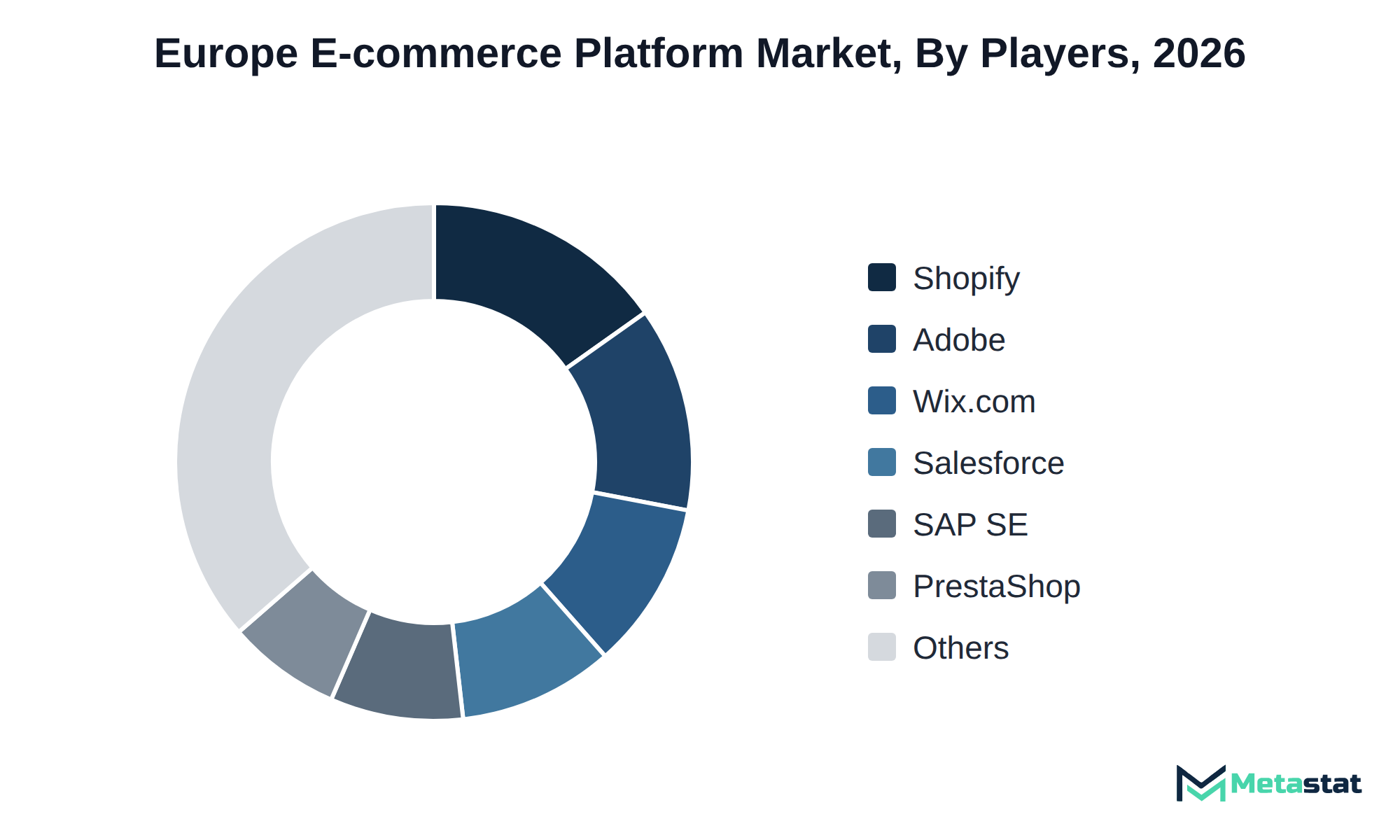
The Europe E-commerce Platform market features a diverse competitive landscape, primarily divided by service type and business model. Major companies including Shopify Inc. and Wix.com Ltd. focus on Integrated Storefront Platforms, while others like commercetools GmbH emphasize Headless Commerce Platforms. Buyers prioritize factors including price, customization, service quality, and integration within an ecosystem.
Shopify Inc. specializes in user-friendly solutions that cater to small and medium-sized businesses, enhancing their ability to establish an online presence efficiently. Adobe Inc. positions itself within a robust ecosystem, offering comprehensive digital marketing and e-commerce solutions that appeal to larger enterprises seeking extensive customization and branding capabilities. Meanwhile, PrestaShop S.A. targets budget-conscious users with flexible, open-source solutions suitable for diverse business needs, promoting accessibility in the e-commerce space.
The primary development driving this growth involves the increasing adoption of Vendor-Hosted Cloud solutions among various industries, significantly impacting the overall market. The rise of Integrated Storefront Platforms enhances the user experience for consumers, contributing to growth within the Europe E-commerce Platform market. A risk that could impede growth involves regulatory challenges faced by businesses in various regions, particularly in Germany and France. These challenges lead to increased operational costs and slow down market expansion, affecting overall investment and competition. The market needs these regulatory issues addressed to reach its projected size.
By Platform Architecture: Integrated Storefront Platforms, Headless Commerce Platforms
By Region: Germany, France, UK, Italy, Spain, Russia, Rest of the Europe
The report strategically identifies and profiles the key market players and analyses their core competencies in each sub-segment of the E-commerce Platform market.
Report Attributes | Details |
Study Period | 2021-2033 |
Base Year | 2025 |
Estimated Year | 2026 |
Forecast Period | 2026-2033 |
Historical Period | 2021-2025 |
Growth Rate | CAGR 16.1% from 2026 to 2033 |
Revenue Unit | USD million |
Segmentation | By Deployment Model, Platform Architecture, Commerce Model, Region, and Region |
Find answers to common questions about this report
The E-commerce Platform market size was valued at USD 1,917.4 million in 2025.
The market is projected to grow at a CAGR of 16.1% during the forecast period from 2026 to 2033.
The leading segment in the E-commerce Platform market is the Vendor-Hosted Cloud, with a projected value of USD 5,542.2 million by 2033. This segment outpaces the Customer-Managed Deployment segment, which is expected to reach USD 807 million in the same year.
The shift toward online shopping has intensified demand for comprehensive digital commerce solutions. Increasing operational costs significantly impact buyer investment in the market.
Increasing operational costs significantly impact buyer investment in the market, leading to slower uptake of e-commerce solutions and delayed platform upgrades. Talent acquisition costs further complicate efforts for suppliers, driving up recruitment expenses and straining operational budgets.
The increasing demand for efficient solutions to streamline operations and enhance customer engagement drives adoption in the Europe E-commerce Platform market. the rise of small and medium enterprises in Europe, along with a shift towards digital procurement processes, supports this trend.
The E-commerce Platform market is estimated to reach a valuation of USD 6,349.2 million by 2033.
Key players operating in the E-commerce Platform market include Shopify Inc., Automattic Inc., Wix.com Ltd., Adobe Inc., shopware AG, and Salesforce, Inc.
Germany exhibits a compound annual growth rate of 15.6%, projected to reach USD 1,092.7 million by 2033, highlighting its significant growth in the E-commerce Platform market.
The B2B segment is expected to reach USD 1,419.1 million by 2033, driven by increasing demand for efficient solutions to enhance customer engagement and streamline operations.
The analysts below cover Information & Technology research at Metastat Insights.
LEAD ANALYST
Utkarsh Khirodkar is a Lead Market Research Analyst at MetaStat Insight, specializing in market intelligence, technology sector assessments, and competitive strategy.

PRINCIPAL CONSULTANT - ENTERPRISE AI & EMERGING TECHNOLOGIES
Banking & Finance · Electronics and Semiconductor · Energy and Power · Healthcare IT · Information & Technology · Professional Services
Vijay Gunti is a Principal Consultant at MetaStat Insight, bringing over two decades of experience across enterprise digital transformation, technology strategy, and intelligent systems.

LEAD CONSULTANT - COMMUNICATION, TELECOM, AND IT
Electronics and Semiconductor · Information & Technology · Machinery & Equipment · Professional Services
Ravindra Sathe Consultants for Communication, Telecom, and IT at MetaStat Insight. He leads the firm's industry research initiatives across telecommunications infrastructure, digital connectivity, enterprise networking, and emerging information technology domains.
Integrating zero-trust access controls across legacy electronic health record systems involves complex compliance overhead. Team produced an analysis that clearly separated identity governance and administration tools from privileged access management platforms. Their evaluation of HIPAA and GDPR compliance features across cloud native solutions gave our architecture group clear baseline criteria. The custom data request regarding biometric authentication adoption in hospital networks was returned promptly with clear documentation.
Evaluating calorific value requirements and air permit compliance across municipal waste facilities requires localized data. Metastat Insight structured their analysis around operational throughput capacity and feedstock composition variations in Latin America and Eastern Europe. Their competitive mapping of sorting equipment vendors helped clarify technology differences between optical separators and heavy media systems. The study provided an objective baseline during our capital expenditure reviews.
Decarbonizing industrial thermal processes hinges on refrigerant regulations and compressor efficiency limits. Metastat Insights delivered a thorough market analysis that evaluated natural refrigerants like CO2 and hydrocarbons against synthetic low-GWP alternatives. The breakdown of utility incentives and grid capacity constraints across key European manufacturing hubs offered valuable perspective. The follow-up conversation with their sector analysts addressed our specific questions on mechanical vapor recompression systems efficiently.
Explore related market intelligence reports worth reading alongside this one.