
LEAD ANALYST
Utkarsh Khirodkar is a Lead Market Research Analyst at MetaStat Insight, specializing in market intelligence, technology sector assessments, and competitive strategy.

Global Online Survey Software Market Size, Share, By Deployment Model (Cloud-Based and On-Premise), By Organization Size (Large Enterprises and Small and Medium-Sized Enterprises), By Application (Customer Experience (CX) Surveys, Employee Experience (EX) and Engagement Surveys, Market and Brand Research Surveys, Product and User Experience (UX) Surveys, Academic and Educational Surveys, Public Sector and Community Surveys, Others (Healthcare Research and Event Feedback Surveys)), By Survey Distribution Channel (Email Surveys, Web-Based Surveys and Website Links, SMS Surveys, Messaging Application Surveys (WhatsApp and RCS), Social Media Distribution, Mobile Application and In-App Surveys, QR Code-Based Surveys, Kiosk-Based Surveys), Industry Analysis, Growth, Trends, and Forecast, 2026-2033
Report ID
MSI-5823
Published
November, 2026
Pages
259 Pages
Format
Historical
Base year
Forecast
Forecast period
Report Details
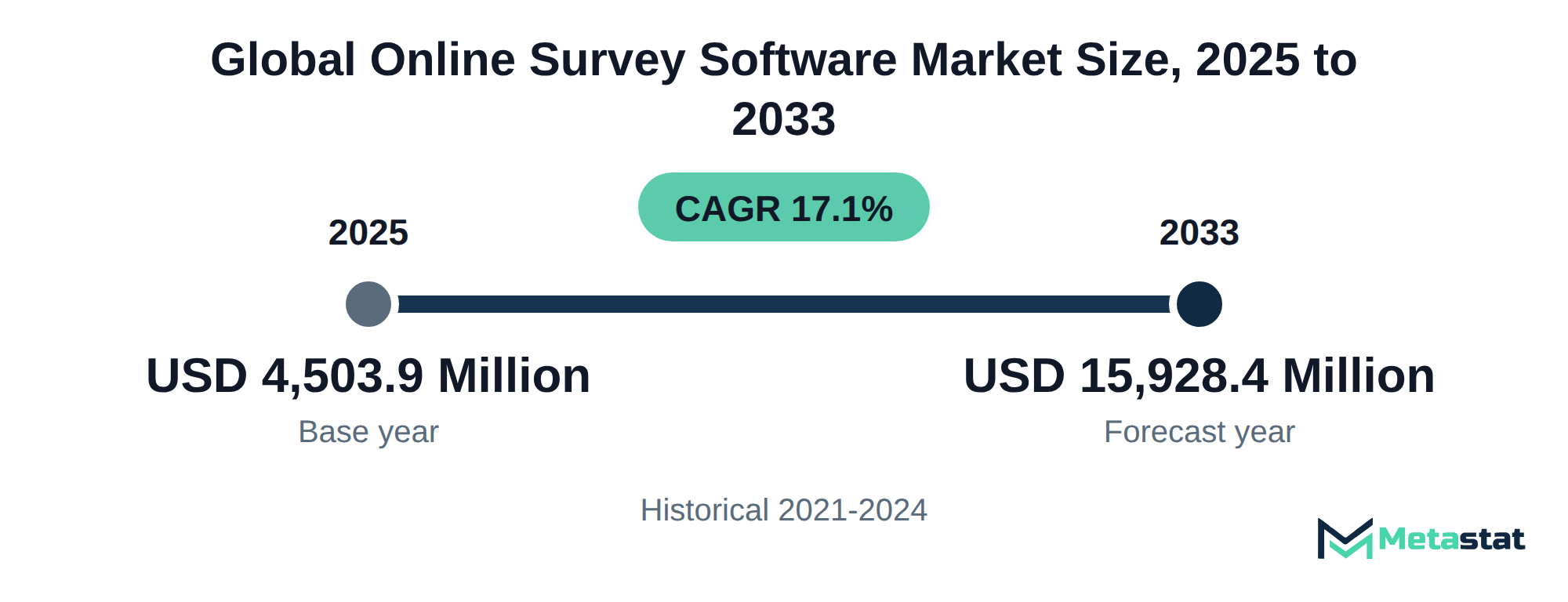
Market Valuation: Valued at $4,503.9 Million in 2025, projected to reach $15,928.4 Million by 2033 at a 17.1% CAGR.
Dominant Segment: Customer Experience (CX) Surveys lead the market, driven by the increasing importance of understanding customer perceptions and satisfaction levels.
Geographic Lead: North America holds the largest market share, with the US projected to continue leading due to its advanced technological infrastructure and high adoption of digital tools.
What's Inside: The report provides comprehensive competitive coverage, market analyses, and forecasts from 2026 to 2033, focusing on various deployment models, organization sizes, and application segments.
Growth Drivers: Key growth drivers include the rising demand for cloud-based solutions, increased emphasis on customer experience, and the shift towards data-driven decision-making across industries.
Choose Your License
Global Online Survey Software Market
The global Online Survey Software market was valued at USD 4,503.9 million in 2025 and is projected to reach USD 15,928.4 million by 2033, growing at a CAGR of 17.1% over the forecast period.
The Online Survey Software market covers tools and platforms that support the creation, distribution, and analysis of surveys. Buyers invest in these solutions to gather valuable insights into customer opinions, employee satisfaction, and market trends. This investment is motivated by the need for organizations to make data-driven decisions and enhance their strategic initiatives. The growing reliance on digital tools for data collection and analysis further increases spending in this sector.
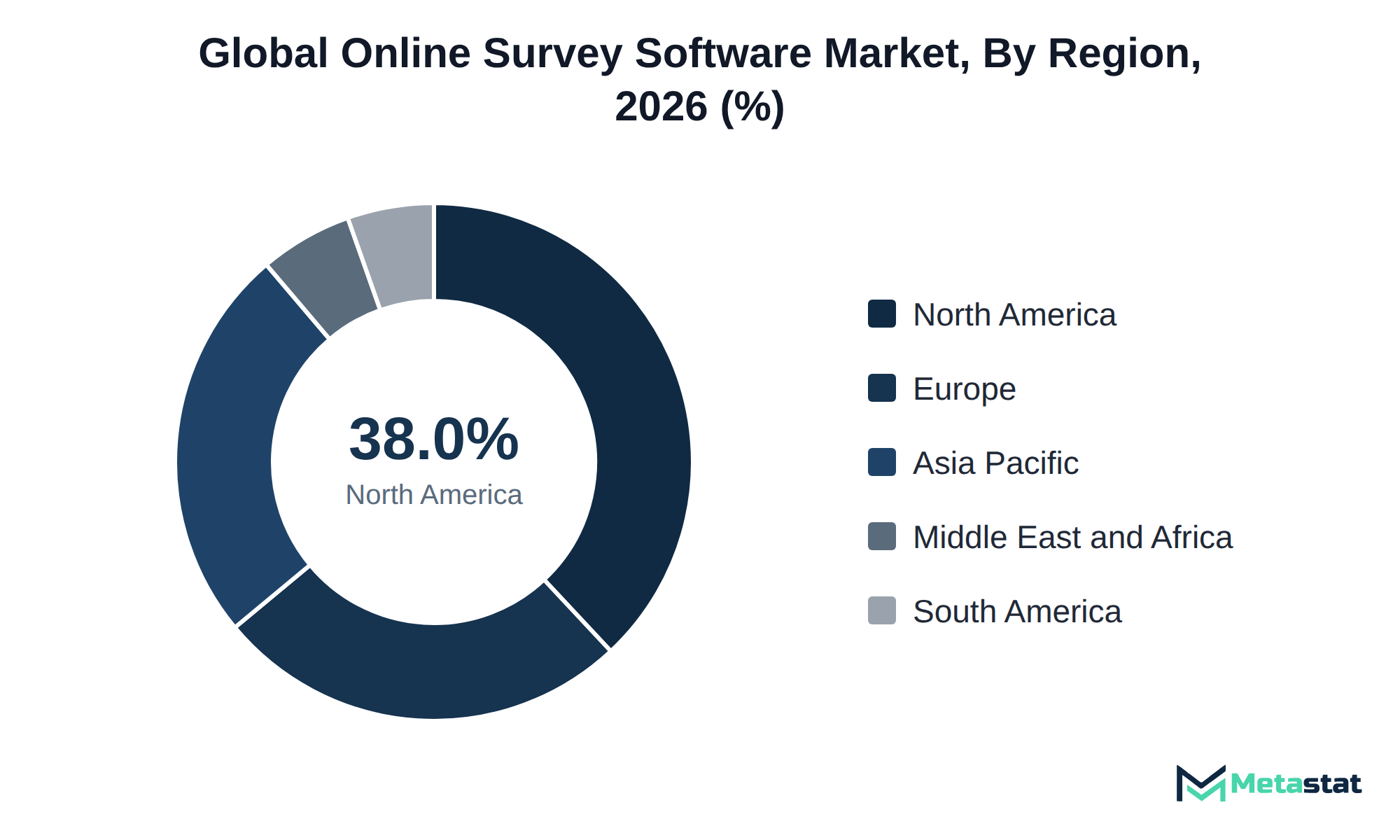
Growth in the market is driven by an increasing demand for cloud-based solutions that offer flexibility and scalability. Among the various segments, cloud-based deployment models represent the largest value, reflecting a significant shift towards online platforms. North America holds 38.0% of the market in 2025, with the US leading in 2026. This region's advanced technological infrastructure and high adoption rates of digital tools contribute to its substantial market presence.
One main growth driver is the rising emphasis on customer experience, prompting businesses to invest in customer feedback mechanisms. Organizations recognize the importance of understanding customer perceptions and preferences, enhancing product development and service delivery. This focus on customer experience is expected to stimulate demand for online survey solutions and sustain growth within the market.
Investment in the Online Survey Software market results from the growing emphasis on data-driven decision-making across various sectors. Industries including market research, education, and customer service prioritize efficient methods for gathering and analyzing feedback. The capability to derive insights from surveys enhances customer satisfaction and strengthens brand loyalty, prompting organizations to allocate resources to these tools.
Among the segments, Customer Experience (CX) Surveys currently represent the largest value, reflecting the heightened focus on understanding customer preferences and experiences. This region's robust technological infrastructure and high adoption rates drive significant investments in online survey tools.
The surge in remote work and digital interactions increases the relevance of online surveys for gathering insights. Organizations seek innovative approaches to engage their audiences effectively and adapt to evolving market conditions. Together, these factors support sustained growth in the Online Survey Software market.
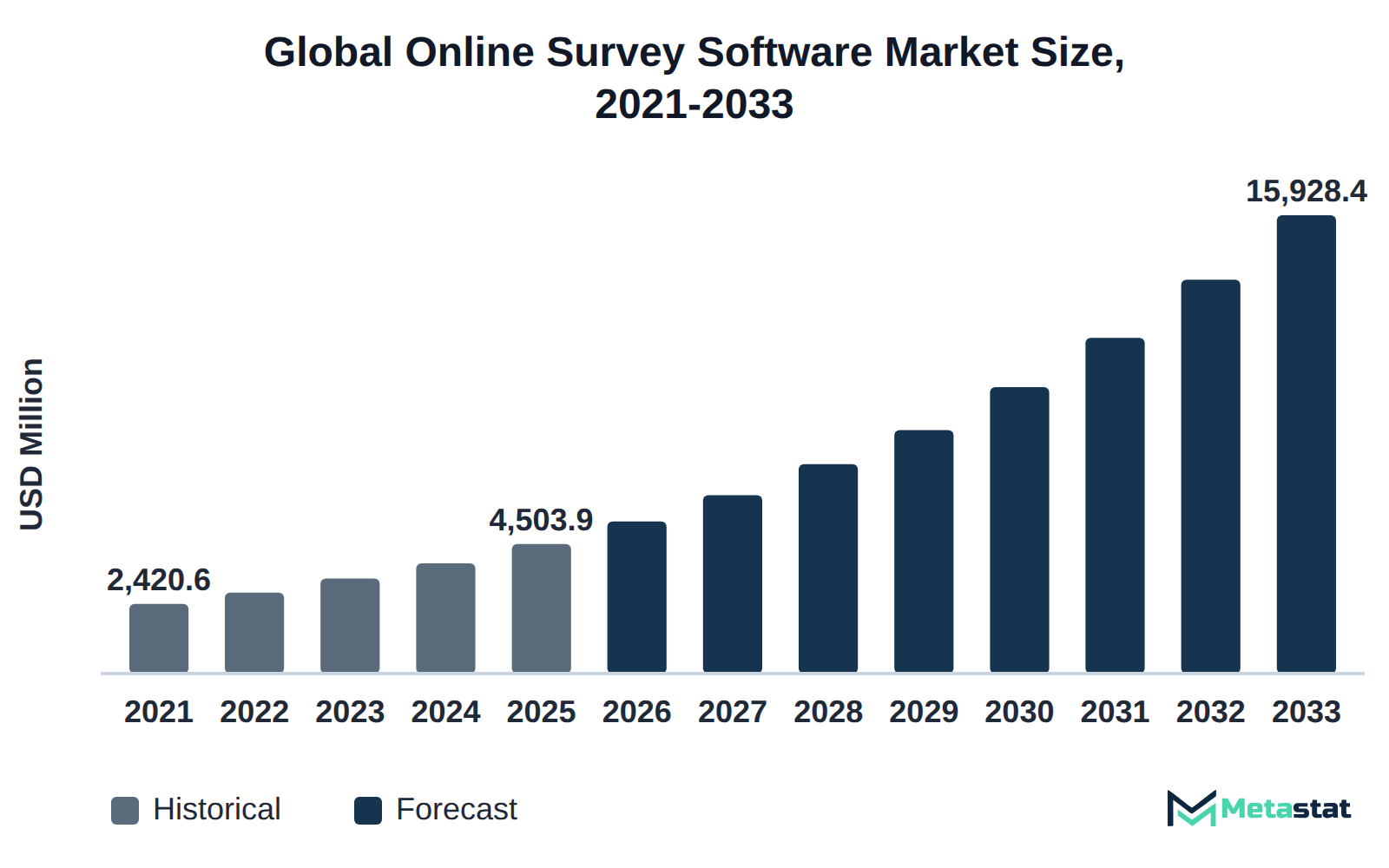
AI-powered survey automation has transformed the way organizations gather and analyze feedback from respondents. This technological shift enables businesses to streamline survey processes, enhancing efficiency and improving response rates. In the Online Survey Software market, cloud-based solutions dominate, with a projected value growth from USD 3,718 million in 2026 to USD 12,143.8 million by 2033. This trend signifies a growing preference for automation in capturing real-time data, allowing companies to make informed decisions swiftly.
Real-time response analytics further enriches the survey experience by providing immediate insights into respondent feedback. Organizations gain the ability to track engagement levels and sentiment through opinion analytics without delay, optimizing their strategies based on direct input from customers and employees. This capability proves particularly valuable in sectors where timely feedback influences customer experience and product development. The demand for rapid responses drives the market for AI-driven automation solutions in survey software, positioning providers to capitalize on this technological evolution.
Changing buyer habits highlight the importance of omnichannel survey distribution in the Online Survey Software market. Organizations increasingly prefer flexible survey distribution channels to maximize response rates and improve data quality. A notable shift involves integrating multiple channels for collecting feedback, including email surveys, web-based surveys, SMS surveys, and messaging applications such as WhatsApp. In 2026, email surveys are projected to generate revenues of USD 1,407.8 million, increasing to USD 3,736.8 million by 2033, illustrating the growing reliance on varied distribution methods.
The increasing demand for mobile-first feedback collection reflects the need for organizations to adapt to changing consumer preferences. With significant smartphone penetration, collecting feedback through mobile applications and in-app surveys becomes essential. The market for messaging application surveys is expected to expand, driven by higher engagement levels on these platforms. Such trends compel companies to adopt effective pricing and contract models that accommodate diverse distribution strategies while ensuring cost-effectiveness. The shift to omnichannel approaches enhances response rates and improves overall customer satisfaction, ultimately impacting revenue growth positively.
Large enterprises increasingly prioritize customer and employee experience surveys to enhance operational efficiency and drive decision-making. This focus aligns with a projected market value of USD 9,117.4 million for large enterprises by 2033, reflecting a compound annual growth rate (CAGR) of 15.9% from 2026. The integration of these survey platforms supports organizations in gathering valuable insights, directly influencing product development, employee engagement, and overall customer satisfaction.
Investing in customer experience (CX) and employee experience (EX) surveys allows enterprises to tailor their offerings and address specific needs within their target markets. For instance, the customer experience segment is projected to grow from USD 1,324.8 million in 2026 to USD 3,797.3 million by 2033, marking a CAGR of 16.2%. This growth shows that large organizations value feedback mechanisms to adapt to changing market demands.
The adoption of these platforms in the Online Survey Software market encourages a culture of continuous improvement, ultimately strengthening customer loyalty and employee retention. Utilizing data-driven insights positions large enterprises to remain competitive, enhancing their market presence and driving sustainable growth.
Cloud-based survey platforms significantly transform digital research and customer feedback processes. These platforms provide easy access to vast pools of respondents, enhancing the quality and speed of data collection. In 2026, the cloud-based deployment model is projected to generate USD 3,718 million in revenue, illustrating the growing adoption of this technology within the Online Survey Software market.
This deployment model reduces operational challenges associated with traditional on-premise solutions. Cloud-based platforms eliminate the need for extensive IT infrastructure and maintenance, allowing organizations to focus on analyzing data rather than managing systems. The ease of access supports diverse organizations, including small and medium-sized enterprises, which increasingly leverage cloud services to gather customer insights.
The shift towards cloud-based survey platforms leads to more efficient customer feedback mechanisms. Organizations that embrace these tools gain a competitive edge by rapidly adapting to consumer preferences and market trends. This adaptability drives growth in the market, with businesses prioritizing data-driven decision-making to enhance offerings and improve customer satisfaction.
Cloud-based survey platforms significantly drive investment in the market due to their flexibility and scalability. Large enterprises, particularly in sectors including technology and retail, increasingly migrate to these solutions for enhanced accessibility and improved data management. The shift towards remote work and digital operations accelerates this trend, prompting organizations to seek tools that facilitate real-time collaboration and data analysis. In 2026, cloud-based deployment is expected to generate USD 3,718 million, reflecting a compound annual growth rate (CAGR) of 18.4% by 2033, when it will reach USD 12,143.8 million. This transition supports higher volumes of survey distribution and response rates, ultimately leading to more robust data collection and insights. Enhanced cloud capabilities enable organizations to leverage analytics effectively, contributing to informed decision-making and improved customer engagement.
Expanded investment in cloud-based solutions positively influences the demand for online survey tools. Organizations increasingly recognize the advantages of integrating cloud technologies into their research processes.
Growing emphasis on user-friendly interfaces significantly influences software investment decisions. Organizations prioritize tools that enhance the user experience and simplify survey creation and analysis processes. This trend aligns with the broader market shift towards accessibility, attracting users with varying technical skills. Increased demand arises particularly from small and medium-sized enterprises seeking cost-effective solutions for gathering customer insights. Consequently, software providers focus on developing intuitive platforms that streamline survey design and implementation. Enhanced usability reduces training time, allowing organizations to deploy surveys more efficiently. The market benefits from this user-centric approach, leading to expanded adoption across diverse sectors. Businesses recognize the value of feedback, and the push for user-friendly online survey solutions strengthens, driving further growth and innovation.
Integration of advanced features, including customizable templates and drag-and-drop functionalities, improves the user experience. These enhancements create a competitive environment among providers, encouraging continuous improvement in software offerings. The Online Survey Software market increasingly reflects this shift, catering to evolving consumer preferences while remaining sensitive to technological advancements. Emphasis on usability ensures that organizations maximize the value derived from customer feedback, reinforcing their commitment to data-driven strategies.
High costs associated with implementing online survey software restrict adoption among small and medium-sized enterprises (SMEs). Budget constraints often lead to slower uptake of advanced features, limiting these businesses' ability to leverage data-driven insights effectively. Many SMEs operate with tight budgets, making them hesitant to invest in comprehensive software solutions when more affordable alternatives exist. This hesitation results in smaller order sizes and delayed decisions on replacing outdated systems. The market sees reduced penetration in this segment because SMEs focus on maintaining operational efficiency and avoid innovative survey tools that could enhance customer engagement or employee feedback mechanisms. Consequently, the overall growth trajectory of the market experiences a drag, particularly in the SME sector, where investment in the latest technologies remains constrained by financial limitations.
Recruitment and retention of skilled personnel present significant challenges within the Online Survey Software market. Suppliers face pressure from rising salaries and increasing operational costs. This challenge affects companies aiming to innovate and maintain competitive pricing strategies. Without a skilled workforce, the ability to enhance product offerings and customer support diminishes, potentially leading to reduced market share.
In response, suppliers implement strategies to attract and retain talent, including investing in employee training and development initiatives. By creating a strong organizational culture, companies enhance employee satisfaction and loyalty, which reduces turnover rates. Several firms use remote work opportunities to widen their talent pool, attracting skilled professionals from various regions. These proactive measures help maintain productivity levels while addressing operational constraints, ultimately supporting sustained growth in the market.
Cloud-based deployment models for online survey software demonstrate significant growth potential, particularly among small and medium-sized enterprises (SMEs). The segment is projected to achieve a compound annual growth rate (CAGR) of 18.7% through 2033, reflecting increasing adoption of flexible and scalable software solutions. SMEs prioritize accessibility and cost-effectiveness, which cloud-based models provide, facilitating wider survey distribution and enhanced data collection capabilities. This trend highlights a strategic shift in how organizations approach feedback mechanisms, with a growing focus on digital solutions. The online survey software market stands to benefit from this demand surge, driven by technological advancements and the need for real-time data analysis. Increased cloud adoption will enhance operational efficiencies, enabling SMEs to leverage insights for improved decision-making.
The rising interest in cloud-based solutions among smaller organizations drives increased competition in the market, prompting existing players to innovate in their offerings. Enhanced features, user-friendly interfaces, and competitive pricing structures will likely characterize this segment. Success within this segment will hinge on addressing specific customer needs while providing robust support and integration capabilities.
The Global Online Survey Software market is segmented based on Deployment Model, Organization Size, Application, and Survey Distribution Channel.
The Cloud-Based segment serves various industries, facilitating the design, distribution, and analysis of surveys via online platforms. Organizations prioritize cloud-based solutions for their scalability, user-friendly interfaces, and cost-effectiveness. Demand for real-time data collection and analysis drives growth in this segment, with businesses striving to enhance customer experience and engagement. Compared to on-premise solutions, cloud-based platforms offer faster deployment and lower upfront costs, appealing particularly to small and medium-sized enterprises. The projected CAGR of 18.4% indicates significant growth, reflecting the increasing acceptance of cloud technologies within the market.
On-Premise segment is estimated to reach USD 3,784.6 million by 2033, at a CAGR of 13.4% during the forecast period. This deployment model is mainly adopted by large enterprises that prioritize data security and control over their survey data. These organizations often require tailored solutions that fit their specific operational needs and compliance standards. A growing emphasis on regulatory compliance for data protection drives demand in this segment, particularly in industries including healthcare and finance, where sensitive information requires strict handling protocols. In contrast to the cloud-based segment, which grows at a faster rate of 18.4% CAGR, the On-Premise segment reflects a more cautious adoption approach, appealing to buyers who prefer to maintain data within their own infrastructure. This cautious strategy results in a slower growth trajectory compared to cloud-based alternatives, which benefit from scalability and flexibility.
The Large Enterprises segment serves organizations that require strong survey capabilities to gauge customer and employee feedback effectively. Large enterprises leverage these tools for complex market research, employee engagement, and customer experience assessments. The growing emphasis on data-driven strategies drives demand, with these organizations emphasizing insights to enhance operational performance. Compared to small and medium-sized enterprises, this segment exhibits slower growth due to higher initial investment costs. However, the significant budgets allocated by large enterprises to research and development create an environment conducive to adopting advanced survey technologies, differentiating this segment from the other segments in this group.
Small and Medium-Sized Enterprises segment is estimated to reach USD 6811 million by 2033, at a CAGR of 18.7% during the forecast period. This segment serves various organizations focusing on enhancing customer engagement and improving feedback collection processes. A significant demand driver involves the increasing recognition of the importance of customer insights for growth and competitiveness. Compared to other segments, this group experiences faster growth due to heightened digital transformation initiatives among SMEs. The relatively lower price points of available solutions contribute to increased adoption rates. By leveraging online survey tools, these enterprises efficiently gather data, optimize operations, and implement changes based on survey feedback. With the market evolving, the shift toward user-friendly platforms further supports the trend among SMEs to invest in online survey software.
Customer Experience (CX) Surveys assist organizations in understanding customer perceptions, satisfaction levels, and preferences, enabling targeted improvements in products and services. Key drivers for this segment include the increasing importance of customer feedback in shaping business strategies and enhancing customer retention. Compared to other applications, CX Surveys experience more rapid growth, driven by the heightened focus on personalized customer experiences. This segment stands out with its specific focus on customer engagement, distinguishing it from broader employee experience and brand research surveys, which do not exhibit the same intensity of demand. The market continues to evolve with advancements in digital technologies and analytics, further supporting the expansion of CX Survey solutions.
Employee Experience (EX) and Engagement Surveys segment is estimated to reach USD 3,203.2 million by 2033, at a CAGR of 17.6% during the forecast period. These surveys help organizations gauge employee satisfaction, engagement levels, and overall workplace culture. Human resources departments and organizational leaders typically use this segment, reflecting a growing emphasis on improving workplace environments and retaining talent. Factors driving this segment include the increasing demand for data-driven insights into employee experiences and the need for organizations to adapt to changing workforce expectations. Compared to other application segments, this segment demonstrates a strong growth trajectory, with a higher CAGR of 17.6%, surpassing rates observed in Market and Brand Research Surveys. Organizations prioritize employee well-being, leading to significant expansion in the demand for effective engagement tools, ensuring that feedback is captured and analyzed efficiently.
Market and Brand Research Surveys segment is expected to reach USD 2,765.2 million by 2033. This segment plays a critical role in helping organizations understand consumer perceptions and preferences, thereby enabling informed marketing decisions. Businesses, particularly in retail and consumer goods, use these surveys for brand management, including gauging brand performance and market positioning. The increasing emphasis on data-driven strategies drives demand for these surveys, reflecting a trend towards more sophisticated marketing techniques. Compared to other application segments, including Customer Experience (CX) Surveys which have a projected CAGR of 16.2%, Market and Brand Research Surveys are characterized by a slower growth rate. This slower growth aligns with their more focused nature, catering primarily to larger enterprises with established brands, contrasting with the broader appeal of CX surveys aimed at diverse organizational sizes in the market.
The Product and User Experience (UX) Surveys segment is projected to grow at a CAGR of 18% during the forecast period. This segment primarily focuses on gathering feedback regarding product usability, design, and user satisfaction, serving industries like technology, retail, and e-commerce. Organizations gather these surveys to refine product offerings and enhance customer engagement. The increasing demand for user-centric design and rapid technological advancements drive growth in this area. Compared to other applications, including Customer Experience and Employee Experience surveys, this segment experiences faster growth due to rising expectations for effective user experiences. Organizations prioritize investments in UX feedback to maintain competitive advantages in the market, reflecting a significant shift toward user-driven product development strategies.
Academic and Educational Surveys focus on gathering insights from students, educators, and academic institutions. These surveys serve various purposes, including assessing teaching effectiveness, understanding student satisfaction, and evaluating course content. Educational institutions and academic researchers employ these surveys to enhance educational quality and improve learning outcomes. A significant driver for this segment is the increasing emphasis on data-driven decision-making in education, promoting the adoption of survey software by institutions striving for improvement. This segment typically experiences slower growth compared to Customer Experience and Employee Experience surveys due to budget constraints in educational settings. However, the ongoing digitization of education encourages innovation and demand for online survey tools, allowing institutions to access real-time feedback and adapt quickly to changing educational needs. Adoption barriers remain, particularly regarding resource allocation and staff training, which hinder the full potential of these tools in educational settings.
Public Sector and Community Surveys focus on gathering insights from government entities, non-profit organizations, and community groups. These surveys facilitate understanding community needs, public opinions, and the effectiveness of governmental programs. Increased demand arises from the necessity for data-driven decision-making in public policy and community development. Regulatory requirements for public sector accountability and transparency further drive survey adoption. This segment differs from others within the Application category, with unique buyers primarily consisting of government agencies and non-profits, resulting in tailored survey solutions. Unlike more commercial segments, this segment emphasizes compliance and social impact over profitability.
Healthcare research and event feedback surveys focus on gathering data from patients, healthcare providers, and event participants to improve services and experiences. This segment serves various stakeholders, including healthcare institutions and event organizers, who rely on insights to enhance offerings or address specific needs. Demand for this segment derives from the growing emphasis on patient-centered care and the need for real-time feedback from event attendees. Compared to other applications, this segment experiences slower growth due to stringent regulations surrounding healthcare data privacy and security. However, the ongoing push for enhanced healthcare services and engaging event experiences supports its relevance in the broader online survey software market.
The Email Surveys segment primarily serves businesses aiming to gather feedback through email communications, facilitating direct engagement with respondents. Demand in this segment is driven by the increasing emphasis on data-driven decision-making and the need for timely feedback from customers and employees. The growth rate of Email Surveys is slower compared to Web-Based Surveys and Website Links, which are projected to grow at a CAGR of 16.3%, highlighting different buyer preferences and engagement strategies. Organizations that prioritize immediate feedback find Email Surveys particularly useful due to their effective reach and cost-efficiency within the Online Survey Software market.
Web-Based Surveys and Website Links segment is estimated to reach USD 3,214.3 million by 2033, at a CAGR of 16.3% during the forecast period. This distribution channel primarily serves organizations seeking to gather insights from various online platforms. Businesses employ this approach to collect data efficiently, reaching target audiences through website links and web-based survey tools. Growth in this segment is driven by increasing internet penetration and the rising preference for digital communication methods. Compared to traditional methods, including email surveys, web-based surveys offer quicker data collection and enhanced accessibility for respondents. The dynamic nature of consumer behavior and the need for real-time feedback fuel adoption in various sectors, including retail, education, and healthcare. This segment's growth trajectory stands out due to its strong engagement capabilities and the expanding digital landscape.
SMS Surveys segment is expected to reach USD 1,564.2 million by 2033. The SMS Surveys segment focuses on collecting feedback through text messages, appealing to businesses and organizations seeking immediate responses. The growth of mobile technology and the increasing reliance on smartphones drive demand for this survey method, making it a preferred choice for time-sensitive inquiries. Compared to other distribution channels, SMS Surveys exhibit a distinctive advantage in response rates due to their immediacy. The CAGR for the segment reflects its rising popularity; however, broader segments indicate that it experiences slower growth relative to others, emphasizing the unique position it holds within the Online Survey Software market.
Messaging Application Surveys (WhatsApp and RCS) segment is projected to grow at a CAGR of 22.6% during the forecast period. This segment focuses on collecting feedback through popular messaging platforms, allowing organizations to engage users in real-time. Businesses adopt this method to enhance customer satisfaction and gather valuable insights. The increasing smartphone penetration and widespread messaging app usage drive adoption in this channel. Messaging Application Surveys differentiate themselves by providing a direct and user-friendly approach compared to other channels, resulting in higher engagement rates. The anticipated growth surpasses that of traditional survey methods, reflecting a shift toward more modern and accessible communication channels. Specific to this segment, the rapid evolution of messaging technology drives innovative survey formats, making this approach particularly appealing to younger demographics. Overall, the sector's growth signifies a broader trend in the market, emphasizing the importance of adaptability in survey distribution strategies.
Social Media Distribution involves various social media platforms to distribute surveys and gather feedback from a wide audience. Organizations leverage this channel to engage with users directly, maximizing response rates and improving the quality of data collected. This approach appeals primarily to marketing and research teams looking to gain insights into consumer behavior and preferences. The growing trend of social media adoption among consumers drives demand for this distribution method, enabling companies to reach diverse demographics effectively. Compared to other channels, Social Media Distribution often leads to higher engagement levels, particularly among younger audiences. This segment benefits from innovative technologies and platforms that facilitate real-time feedback and analytics, differentiating it through dynamic interaction with respondents, unlike traditional methods including email or SMS. In the Online Survey Software market, this segment is critical to modern survey strategies, enhancing data collection efficiency.
Mobile Application and In-App Surveys involve collecting data directly through mobile applications and in-app prompts. This method engages users effectively, targeting demographics that regularly use mobile devices, including younger consumers and mobile-savvy professionals. Organizations apply this approach to gather timely and relevant feedback on products, services, and overall user experience. Rapid adoption of mobile technology drives growth in this segment, enhancing user participation rates compared to traditional survey methods. Competition from other distribution channels, including Email Surveys and Web-Based Surveys, influences pricing strategies. The focus on user experience in mobile applications necessitates that companies innovate continually to keep users engaged, differentiating this segment from others that do not emphasize mobile integration to the same extent. This environment encourages investment in mobile survey technology, driving growth within the Online Survey Software market.
QR Code-Based Surveys employ QR codes to facilitate survey distribution and data collection. Organizations use this method to gather feedback quickly from various audiences, allowing for instant engagement in various settings including events or retail environments. The rising adoption of smartphones and mobile internet access drives the segment's growth, enabling users to scan QR codes effortlessly. This segment stands apart from others due to its unique approach to engagement, leveraging technology that appeals to younger, tech-savvy demographics. Compared to traditional methods, QR Code-Based Surveys offer a more interactive experience, enhancing response rates and improving data quality. While this segment does not have specific market size figures, its innovative nature positions it favorably against conventional survey distribution channels within the Online Survey Software market.
Kiosk-Based Surveys employ physical kiosks for data collection in various environments, including retail locations, events, and public spaces. These surveys provide quick feedback opportunities for businesses and organizations looking to gather insights from customers and event attendees. Kiosk-Based Surveys engage users directly in high-traffic areas, capitalizing on impulse interactions. Demand for this survey method is driven by the increasing need for real-time feedback, allowing organizations to make swift decisions. This segment experiences slower growth compared to cloud-based alternatives, with traditional methods of data collection persisting alongside emerging technologies. Organizations with a strong focus on customer engagement, including retailers and event organizers, prominently use this survey distribution channel, distinguishing it from more digital-focused distribution methods. The Online Survey Software market continues to evolve, with kiosk solutions offering a unique approach to gathering practical insights.
Based on geography, the Global Online Survey Software market is divided into North America, Europe, Asia-Pacific, South America, Middle East, and Africa.
North America represents a significant portion of the Online Survey Software market, holding a share of 38.00% in 2025. The presence of established enterprises in the United States, Canada, and Mexico drives demand for advanced survey solutions, particularly in sectors focused on customer experience and employee engagement. Rising competition among companies compels investment in tools that enhance data collection and analysis capabilities. By the end of 2033, the region is projected to reach USD 5,595.6 million, reflecting a strong growth trajectory. Infrastructure advancements in digital technologies enable streamlined survey distribution, further enhancing market penetration. The emphasis on data-driven decision-making across various industries contributes to sustained demand for online survey solutions in this region.
The Online Survey Software market in Europe shows strong potential, driven by the region's diverse industries, including retail, technology, and healthcare. Countries including Germany and the UK prioritize customer insights, leading to increased adoption of advanced survey tools. Regulatory frameworks supporting data privacy and consumer protection enhance confidence among organizations, further fueling market growth. By 2025, the European market holds a notable share of 25.9% of the global total. Investment in cloud-based solutions reflects a strategic shift toward flexible and scalable survey platforms. The market's trajectory relies on continuous innovation and the need for organizations to gather effective insights.
The Asia-Pacific region accounts for a significant share of the Online Survey Software market. Rapid digital transformation across countries including China and India drives demand, particularly among large enterprises seeking to enhance customer engagement and experience through advanced survey methodologies. Infrastructure improvements, including increased internet penetration and mobile device usage, support the deployment of online survey tools. Companies focusing on customer experience surveys and employee engagement surveys have identified this region as a key growth area, with expectations of significant revenue generation through 2033. The market's growth trajectory reflects a strong inclination towards cloud-based solutions, aligning with the region's technological advancements and adoption trends.
Brazil and Argentina drive demand in the Online Survey Software market, with organizations increasingly relying on these tools for customer and employee feedback. The growing interest in digital transformation among businesses in these countries enhances the adoption of cloud-based survey solutions. Internet penetration improvements and mobile device accessibility further support the growth of survey distribution through various channels, including email and SMS. The market in South America is projected to reach USD 1,004.1 million in 2025, reflecting the region's evolving landscape for survey software. Efforts towards enhancing customer experiences and engagement will influence future market dynamics, leading to expanded opportunities in both customer experience and employee engagement surveys.
Growth in the Online Survey Software market within the Middle East and Africa primarily stems from the increasing adoption of digital transformation across various sectors. Countries including Saudi Arabia and the UAE invest significantly in technology initiatives, enhancing the demand for survey solutions that support customer insights and employee engagement. South Africa's diverse economy contributes, with industries seeking to understand market trends and consumer behavior through online surveys. The region's share in the global market reflects a growing presence in 2025. Infrastructure advancements, including improved internet connectivity, facilitate broader access to online survey tools, enabling faster and more efficient data collection. The market's trajectory reflects strong interest in leveraging data analytics to drive decision-making processes.
The competitive environment in the Online Survey Software market features various companies pursuing distinct strategies. Companies operate through different deployment models, emphasizing cloud-based solutions or on-premise installations. Cloud-based offerings dominate, highlighted by significant growth projections driven by demand for flexibility and scalability.
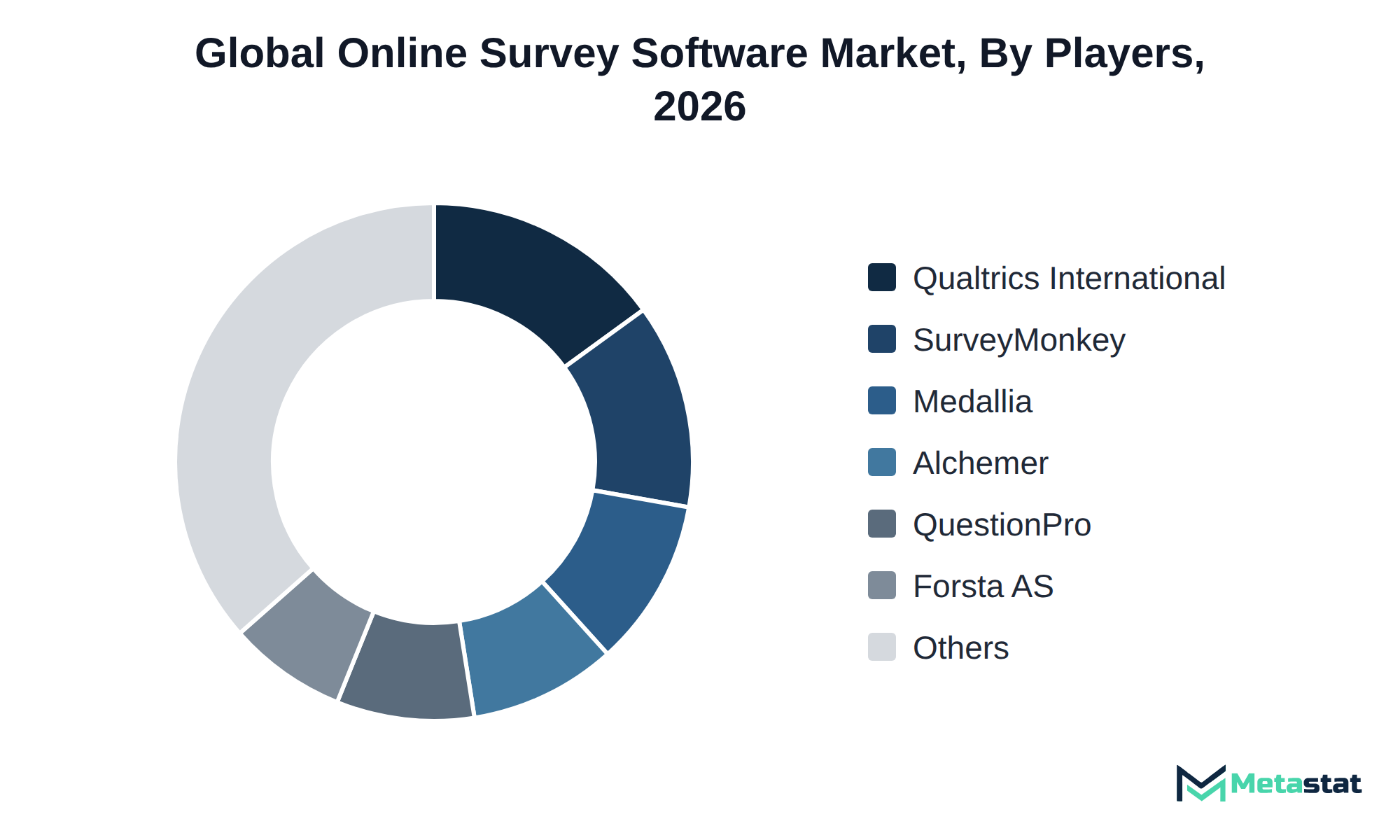
Buyers prioritize several factors when selecting software solutions, including price, customization options, and the overall service ecosystem. SurveyMonkey Inc. focuses on user-friendly interfaces and extensive survey customization features. Qualtrics International Inc. emphasizes advanced analytics capabilities, allowing users to derive insights from survey data. Medallia Inc. concentrates on customer experience solutions, enhancing engagement through tailored feedback mechanisms.
Achieving this growth relies on several key developments within the market. Large enterprises, projected to increase from USD 3,240.8 million in 2026 to USD 9,117.4 million in 2033, will contribute to overall growth, fueled by demand for advanced survey capabilities. The expansion of email surveys, anticipated to grow from USD 1,407.8 million in 2026 to USD 3,736.8 million by 2033, will strengthen market penetration across various sectors.
However, potential risks including data privacy regulations could impede growth. Compliance requirements create barriers for survey software providers, particularly in regions like Europe, where strict regulations govern data handling. If these challenges are not addressed, they could hinder the market’s ability to reach the forecasted USD 15,928.4 million by 2033, ultimately affecting investment and adoption rates across the Online Survey Software market.
By Deployment Model: Cloud-Based, On-Premise
By Organization Size: Large Enterprises, Small and Medium-Sized Enterprises
By Application: Customer Experience (CX) Surveys, Employee Experience (EX) and Engagement Surveys, Market and Brand Research Surveys, Product and User Experience (UX) Surveys, Academic and Educational Surveys, Public Sector and Community Surveys, Others (Healthcare Research and Event Feedback Surveys)
By Survey Distribution Channel: Email Surveys, Web-Based Surveys and Website Links, SMS Surveys, Messaging Application Surveys (WhatsApp and RCS), Social Media Distribution, Mobile Application and In-App Surveys, QR Code-Based Surveys, Kiosk-Based Surveys
The report strategically identifies and profiles the key market players and analyses their core competencies in each sub-segment of the Online Survey Software market.
Report Attributes | Details |
Study Period | 2021-2033 |
Base Year | 2025 |
Estimated Year | 2026 |
Forecast Period | 2026-2033 |
Historical Period | 2021-2025 |
Growth Rate | CAGR 17.1% from 2026 to 2033 |
Revenue Unit | USD million |
Segmentation | By Deployment Model, Organization Size, Application, Survey Distribution Channel, and Region |
By Region | North America (By Deployment Model, Organization Size, Application, Survey Distribution Channel, and Country)
|
Europe (By Deployment Model, Organization Size, Application, Survey Distribution Channel, and Country)
| |
Asia Pacific (By Deployment Model, Organization Size, Application, Survey Distribution Channel, and Country)
| |
South America (By Deployment Model, Organization Size, Application, Survey Distribution Channel, and Country)
| |
Middle East and Africa (By Deployment Model, Organization Size, Application, Survey Distribution Channel, and Country)
|
Find answers to common questions about this report
The Online Survey Software market size was valued at USD 4,503.9 million in 2025.
The market is projected to grow at a CAGR of 17.1% during the forecast period from 2026 to 2033.
The North America Online Survey Software market size is estimated to reach USD 5,595.6 million by 2033.
Cloud-Based deployment leads the Online Survey Software market, with a projected value of USD 12,143.8 million by 2033, reflecting a higher growth rate compared to On-Premise deployment.
Cloud-based survey platforms drive investment due to their flexibility and scalability. The rising emphasis on user-friendly interfaces influences software investment decisions, attracting small and medium-sized enterprises seeking cost-effective solutions.
North America holds the dominant share of the Online Survey Software market, with a value of USD 5,595.6 million projected for 2033. This region accounts for 38 percent of the overall market share.
High costs associated with implementing online survey software restrict adoption among small and medium-sized enterprises. Recruitment and retention of skilled personnel present significant challenges, increasing operational costs and affecting innovation capabilities.
Cloud-based survey platforms drive adoption due to their flexibility and scalability, particularly among small and medium-sized enterprises seeking cost-effective solutions. Enhanced user-friendly interfaces and advanced features facilitate broader survey distribution and improved data collection, encouraging organizations to integrate these tools into their research processes.
The Online Survey Software market is estimated to reach a valuation of USD 15,928.4 million by 2033.
Key players operating in the Online Survey Software market include SurveyMonkey Inc., Qualtrics International Inc., Medallia Inc., Alchemer LLC, QuestionPro Inc., and Typeform S.L.
The analysts below cover Information & Technology research at Metastat Insights.
LEAD ANALYST
Utkarsh Khirodkar is a Lead Market Research Analyst at MetaStat Insight, specializing in market intelligence, technology sector assessments, and competitive strategy.

PRINCIPAL CONSULTANT - ENTERPRISE AI & EMERGING TECHNOLOGIES
Banking & Finance · Electronics and Semiconductor · Energy and Power · Healthcare IT · Information & Technology · Professional Services
Vijay Gunti is a Principal Consultant at MetaStat Insight, bringing over two decades of experience across enterprise digital transformation, technology strategy, and intelligent systems.

LEAD CONSULTANT - COMMUNICATION, TELECOM, AND IT
Electronics and Semiconductor · Information & Technology · Machinery & Equipment · Professional Services
Ravindra Sathe Consultants for Communication, Telecom, and IT at MetaStat Insight. He leads the firm's industry research initiatives across telecommunications infrastructure, digital connectivity, enterprise networking, and emerging information technology domains.
Standard industry briefs frequently blur the operational distinctions between isobaric pressure exchangers and centrifugal turbines. In this study, MetaStat Insight categorized mega-scale desalination tenders across the GCC and Mediterranean basins by membrane replacement frequencies and salinity tolerances. Their primary research helped us evaluate local content requirements in Saudi Arabia and the UAE without relying on marketing literature. We found the segment-level equipment replacement estimates grounded and well-reasoned throughout.
The technical breakdown of ISO 20022 migration readiness across correspondent banking corridors was remarkably thorough. Rather than treating cross-border corporate payments as a single block, the report drew a useful distinction between multilateral netting platforms and domestic instant payment rails across ASEAN economies. MetaStat Insight highlighted regulatory constraints on foreign exchange liquidity management that many publications gloss over. The research material offered practical clarity for our platform development roadmap.
Our group needed clearer visibility into out-of-autoclave processing timelines for high-temperature thermoplastic composites. MetaStat Insight delivered an objective assessment that contrasted automated fiber placement scrap rates with traditional thermoset prepreg layup cycles. The supplier landscape mapped out primary resin suppliers and tape slitting capacity across France, Germany, and Japan with solid technical accuracy. Their analyst handled our questions on precursor supply risks during an unscheduled inquiry call, providing clear, unembellished context.
Explore related market intelligence reports worth reading alongside this one.