
LEAD ANALYST
Utkarsh Khirodkar is a Lead Market Research Analyst at MetaStat Insight, specializing in market intelligence, technology sector assessments, and competitive strategy.

Saudi Arabia Cybersecurity Market Size, Share, By Solution Type (Network Security, Endpoint Security, Cloud Security, Application Security, Data Security, Identity and Access Management, Security Information and Event Management, Security Orchestration, Automation and Response, Others), By Deployment Model (On-Premises, Cloud-Based, Hybrid), By Security Service (Managed Security Services, Managed Detection and Response, Security Consulting Services, Security Integration Services, Incident Response Services, Security Assessment and Testing Services, Cybersecurity Training Services), By End-Use Industry (Government and Public Sector, Banking, Financial Services and Insurance, Energy and Utilities, Telecommunications and IT, Healthcare, Manufacturing, Retail and E-Commerce, Transportation and Logistics, Others), Industry Analysis, Growth, Trends, and Forecast, 2026-2033
Report ID
MSI-5812
Published
November, 2026
Pages
266 Pages
Format
Historical
Base year
Forecast
Forecast period
Report Details
Market Valuation: Valued at $4,558.1 Million in 2025, projected to reach $12,207.3 Million by 2033 at a 13.1% CAGR.
Dominant Segment: Network security leads the Saudi Arabia Cybersecurity market, driven by increasing concerns over data protection and the rising frequency of cyberattacks. This segment's prominence reflects a critical focus on safeguarding sensitive information across various industries.
Geographic Lead: The Asia Pacific region exhibits the largest share of the market, propelled by rapid digital transformation and significant investments in cybersecurity technologies. This regional growth aligns with global trends in enhancing cybersecurity capabilities.
What's Inside: The report provides a comprehensive analysis of the Saudi Arabia Cybersecurity market, including detailed segmentation by solution type, deployment model, security service, and end-use industry. It covers competitive insights, market dynamics, and forecasts from 2026 to 2033.
Cloud-Based Growth: Cloud-based cybersecurity solutions are projected to experience the highest growth, with a CAGR of 15.1%. This trend reflects the increasing demand for scalable and flexible security options as organizations transition to cloud environments.
Investment Drivers: The escalating frequency of cyberattacks significantly drives investments in cybersecurity solutions across sectors, prompting organizations to enhance their defenses and comply with regulatory requirements.
Choose Your License
Saudi Arabia Cybersecurity Market
The Saudi Arabia Cybersecurity market was valued at USD 4,558.1 million in 2025 and is projected to reach USD 12,207.3 million by 2033, growing at a CAGR of 13.1% over the forecast period.
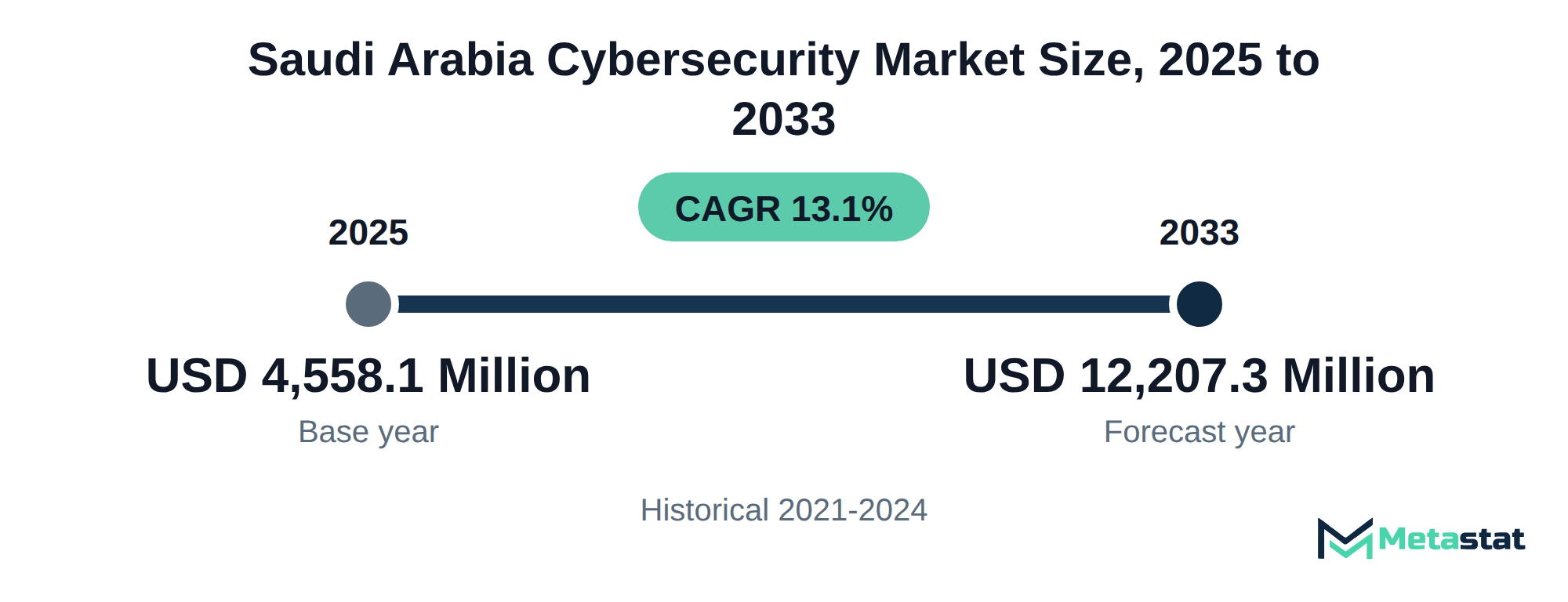
The Saudi Arabia Cybersecurity market encompasses solutions designed to protect digital assets, networks, and sensitive information from cyber threats. Buyers invest in these solutions to enhance security measures, comply with regulatory requirements, and mitigate risks associated with data breaches. This investment spans government, finance, and telecommunications, reflecting growing recognition that strong cybersecurity frameworks safeguard operations and maintain consumer trust.
Growth in the market is driven primarily by the increasing frequency and sophistication of cyberattacks targeting organizations. Demand for advanced security solutions, particularly in network security, reflects the need for proactive measures against evolving threats. Network security commands the largest share of total market value among the segments. This emphasis on safeguarding networks contributes to a broader strategy of enhancing overall cybersecurity readiness across industries.
The regional landscape for the market demonstrates unique characteristics, with Asia Pacific exhibiting the largest share due to rapid digital transformation and increased investments in technology. This region's commitment to advancing cybersecurity capabilities reflects a clear alignment with global trends in threat landscape management. Firms in the market prioritize innovation and adaptability to address emerging challenges and sustain growth.
Investment in cybersecurity solutions in Saudi Arabia reflects the pressing need to safeguard vital information and infrastructure from sophisticated cyber threats. The market includes a diverse array of services and products tailored to various industries, addressing issues including data breaches and system vulnerabilities. Organizations across sectors prioritize spending on cybersecurity to ensure compliance with regulations and to protect their operational integrity, which significantly influences market dynamics.
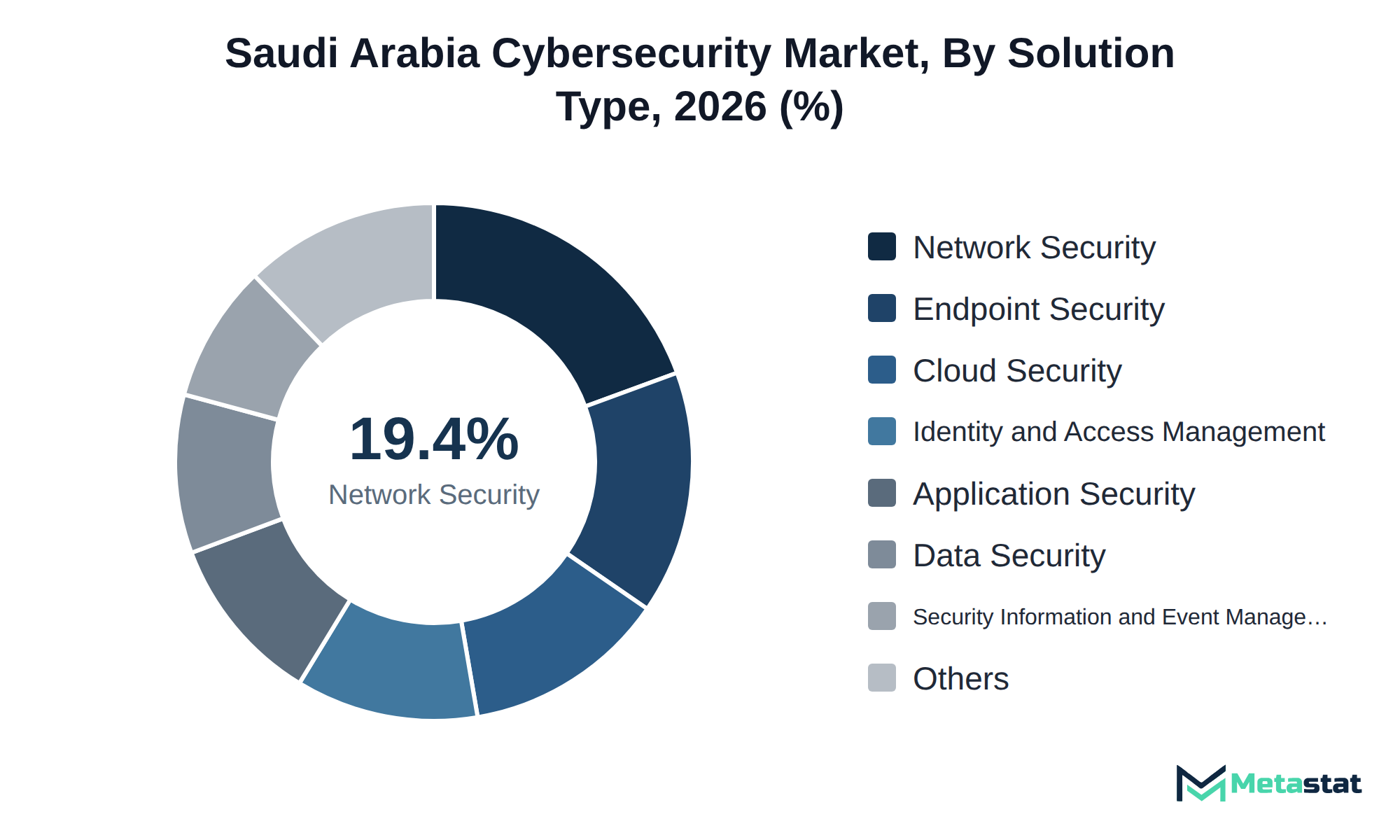
Among the segments, network security holds the largest share, driven by increasing concerns over data protection and frequent cyber incidents. The cloud-based deployment model is projected to experience the highest growth, aligning with the trend toward digital transformation and heightened cloud adoption. The government and public sector industry contributes substantial revenue, driven by ongoing initiatives to enhance national cybersecurity frameworks.
The escalating frequency of cyberattacks is a primary growth driver in the Saudi Arabia Cybersecurity market, prompting organizations to strengthen their defenses. This trend is evident across various sectors, leading to a strong demand for advanced security services. Businesses recognize the importance of robust cybersecurity measures, and investments are expected to increase, creating a competitive landscape that encourages innovation and development within the market.
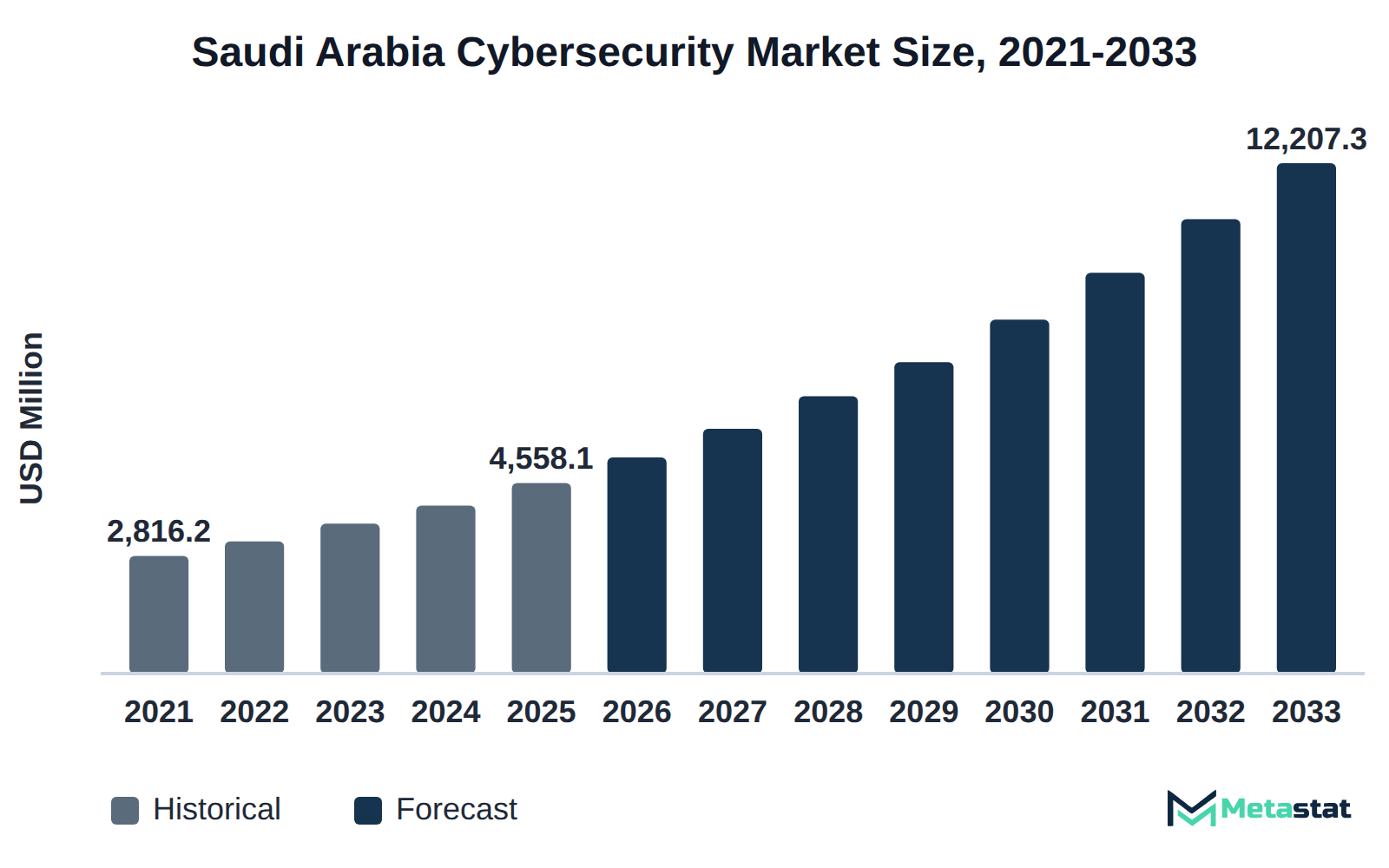
AI-driven threat detection systems are transforming cybersecurity within the Saudi Arabia Cybersecurity market. These advanced technologies enhance the ability to identify and mitigate threats in real-time, significantly improving the security posture of organizations. The adoption of AI in cybersecurity is projected to grow in alignment with the overall market growth, which is expected to reach USD 12,207.3 million by 2033, reflecting a compound annual growth rate of 13.1%. This strategic investment in AI solutions supports organizations in handling increasingly sophisticated cyber threats.
Specifically, the segment for Managed Detection and Response is anticipated to achieve a value of USD 2,664.9 million by 2033, highlighting the rising demand for AI capabilities in detecting and responding to cyber incidents. Organizations in sectors including Banking, Financial Services, and Insurance are particularly focused on enhancing their cybersecurity frameworks due to the sensitive nature of their operations. AI integration streamlines threat management and reduces operational costs associated with traditional security measures.
The incorporation of cloud security and zero-trust architecture is gaining traction among Saudi enterprises, driven by increasing concerns over data breaches and cyber threats. In the Saudi Arabia Cybersecurity market, cloud security is projected to reach USD 1,876.3 million by 2033, indicating strong demand for secure cloud solutions. Enterprises are transitioning towards subscription-based pricing models, which provide flexibility and scalability compared to traditional licensing agreements.
Subscription models allow organizations to align costs with their operational needs, enabling them to pay for only the services they require. This approach reduces upfront investments and promotes agility in responding to evolving cybersecurity requirements. The growing emphasis on managed detection and response services, projected to reach USD 2,664.9 million by 2033, highlights the shift towards outsourced security solutions, including SOC as a service, that offer continuous monitoring and incident response capabilities.
The shift towards cloud security and zero-trust architectures strengthens the resilience of Saudi enterprises against cyber threats while optimizing cybersecurity spending.
Investment in cybersecurity for critical infrastructure in Saudi Arabia is rapidly increasing, driven by rising awareness of cyber threats and the need for robust data protection. The government and public sector, accounting for USD 930.8 million in cybersecurity spending by 2026, are significant contributors to this trend. This sector aims to safeguard national security and maintain operational continuity in vital services. This aim leads to a projected increase to USD 2,089.9 million by 2033, a compound annual growth rate of 12.2%.
Organizations in critical infrastructure, including energy and utilities, telecommunications, and transportation, prioritize cybersecurity measures to protect sensitive data and operational integrity. The Saudi Arabia Cybersecurity market addresses these needs by offering tailored solutions, including managed security services and incident response services, which enhance resilience against potential attacks. With the increasing sophistication of cyber threats, companies operating in these sectors allocate substantial resources to upgrade their cybersecurity frameworks and ensure compliance with national regulations.
This shift results in heightened competition among cybersecurity providers to deliver innovative solutions that cater to the unique requirements of critical infrastructure sectors. Consequently, opportunities expand for market stakeholders, driving demand for advanced security technologies and services that strengthen data protection and operational safety.
Regulatory frameworks in Saudi Arabia significantly influence enterprise security investments, driving organizations to enhance their cybersecurity posture. The government's commitment to improving national security through robust cybersecurity regulations encourages businesses to allocate more resources toward cybersecurity solutions. The Saudi Arabia Cybersecurity market is projected to reach USD 12,207.3 million by 2033, reflecting a strong growth trajectory.
Companies across various sectors recognize the importance of compliance with cybersecurity regulations and standards. For instance, the Endpoint Security segment is anticipated to achieve a value of USD 1,821.3 million by 2033. This increase highlights the necessity for businesses to adopt advanced security measures to protect sensitive data and ensure compliance with regulatory requirements. Organizations experience enhanced protection against cyber threats while simultaneously meeting regulatory expectations.
The surge in cybersecurity awareness among enterprises in Saudi Arabia drives increased spending on cybersecurity solutions. Companies across sectors, particularly in banking, financial services, and insurance, recognize the importance of safeguarding sensitive data against potential breaches. This heightened awareness stems from growing incidents of cyberattacks and the escalating sophistication of threats. Organizations are investing more in robust security measures, leading to a significant increase in demand for solutions. This trend indicates a long-term commitment to enhancing cybersecurity capabilities, ensuring that enterprises remain resilient in the face of evolving cyber threats. This proactive approach to cybersecurity addresses immediate concerns and supports future growth and stability.
Rapid advancements in cybersecurity technologies drive significant investment within the Saudi Arabia Cybersecurity market. Emerging technologies, including artificial intelligence, machine learning, and advanced threat detection systems, enhance the capability of organizations to identify and mitigate cyber threats effectively. Increased integration of these technologies into existing cybersecurity frameworks improves overall security posture and reduces vulnerabilities. Enterprises across the banking, financial services, and insurance sectors, alongside government organizations, prioritize these technological solutions to safeguard sensitive data and maintain operational integrity. The ongoing evolution of cyber threats compels organizations to adopt sophisticated security measures that adapt to changing landscapes. The trend of technological enhancement in cybersecurity solutions supports market growth and encourages enterprises to allocate higher budgets for advanced protection mechanisms. Consequently, investment strategies focus on adopting advanced solutions, improving competitive advantage and resilience against potential cyber risks.
Infrastructure costs present a significant restraint on the growth of the Saudi Arabia Cybersecurity market. High expenses associated with deploying and maintaining advanced cybersecurity systems often discourage investment, particularly among smaller enterprises lacking sufficient budgets. This financial burden results in slower uptake of essential cybersecurity solutions, leading to delayed implementation across various sectors. Organizations in the Government and Public Sector struggle to allocate adequate funds for comprehensive cybersecurity upgrades, which hampers efforts to enhance overall security posture. Challenges related to infrastructure development and upgrades restrict the ability of firms to adopt state-of-the-art cybersecurity measures, ultimately impacting competitiveness and operational efficiency. The persistent issue of rising infrastructure costs influences decision-making processes, forcing buyers to weigh investments against immediate operational needs, thereby constraining demand within the market.
Challenges related to talent acquisition significantly affect service delivery within the Saudi Arabia Cybersecurity market. The rapid evolution of cybersecurity technologies demands skilled professionals who possess up-to-date expertise. Suppliers face pressure to compete for a limited pool of qualified talent, driving up labor costs and impacting profitability. This situation particularly affects cybersecurity service providers that rely on highly trained personnel to manage complex security systems and respond to threats effectively.
In response, many suppliers are investing in training and development programs to enhance their workforce's capabilities. Partnerships with educational institutions and cybersecurity training organizations are increasingly common, enabling firms to build a pipeline of skilled talent. Several companies explore automation and AI-driven tools to streamline operations and reduce reliance on human resources. These strategies help mitigate cost pressures and improve service delivery efficiency, positioning suppliers to better serve customers in a competitive environment.
Cloud-based cybersecurity solutions represent a significant growth opportunity within the Saudi Arabia Cybersecurity market, driven by increased demand for scalable and flexible protection against evolving threats. The market for cloud-based security is projected to reach USD 4,915.9 million by 2033, supported by a compound annual growth rate (CAGR) of 15.1%. Businesses across various sectors recognize the importance of transitioning to cloud environments, which facilitate advanced threat detection and rapid response capabilities.
Key industries including telecommunications and IT experience heightened adoption of cloud security due to the need for enhanced protection of sensitive data and infrastructure. This shift reflects a broader trend where organizations strive to align their cybersecurity strategies with digital transformation initiatives. Increased investment in cloud-based solutions is expected to improve overall market performance and help maintain operational integrity.
The Saudi Arabia Cybersecurity market is segmented based on Solution Type, Deployment Model, Security Service, and End-Use Industry.
Network Security segment is valued at USD 1,004.8 million in 2026 and is projected to reach USD 2,308.4 million by 2033, at a CAGR of 12.6% during the forecast period. This segment focuses on safeguarding networks from unauthorized access and cyber threats, serving a diverse range of industries including telecommunications, finance, and government. The increasing frequency of cyberattacks drives demand for comprehensive network security solutions, highlighting the critical importance of protecting sensitive data and infrastructure. The market experiences significant growth driven by heightened awareness regarding security vulnerabilities and regulatory requirements compelling organizations to invest in advanced protective measures. In comparison to other segments, network security exhibits a relatively steady growth rate, influenced by ongoing technological advancements and an expanding threat landscape, impacting overall cybersecurity strategies across sectors.
Endpoint Security segment is estimated to reach USD 1,821.3 million by 2033, at a CAGR of 12.8% during the forecast period. This segment encompasses security measures specifically designed to protect endpoints including computers, mobile devices, and servers from malicious activities. Organizations employ endpoint security solutions to safeguard sensitive data and ensure compliance with regulatory requirements. Increasing cyber threats targeting endpoint devices drive demand, particularly among industries including healthcare and finance that handle sensitive information. Compared to other segments, Endpoint Security experiences significant growth, supported by heightened awareness of cyber risks. The segment's growth rate exceeds that of certain other areas, including Cloud Security, which reflects a CAGR of 12.6%. The rising complexity of cyber threats necessitates advanced protection strategies, further emphasizing the importance of endpoint security within the Saudi Arabia Cybersecurity market.
Cloud Security segment is expected to reach USD 1,876.3 million by 2033. This segment focuses on protecting data and applications that reside in cloud environments, appealing to organizations transitioning to cloud-based infrastructures. Enterprises across various sectors, including healthcare, finance, and education, increasingly adopt cloud security solutions to safeguard their digital assets from cyber threats. The expected growth is driven by rising demand for flexible and scalable security measures, with a CAGR of 15.1% anticipated for the Cloud-Based deployment model, contrasting with the On-Premises model's CAGR of 10.7%. Urgency to comply with evolving regulatory requirements further drives investment in cloud security solutions. Organizations prioritize these solutions for their ability to adapt to the dynamic threat landscape while optimizing operational efficiency, establishing a distinct market trajectory compared to other segments.
Application Security segment is projected to grow at a CAGR of 12.9% during the forecast period. This segment focuses on protecting applications from security vulnerabilities through various strategies and technologies. Enterprises across multiple industries, including finance, healthcare, and technology, adopt these solutions to safeguard their applications from threats including data breaches and unauthorized access. A significant driver of growth in this segment is the increasing number of cyberattacks targeting software vulnerabilities, prompting organizations to enhance their application security measures. In contrast to Network Security and Endpoint Security, which address broader threats to network infrastructures and individual devices, Application Security provides specialized solutions tailored to securing application code and deployment environments. This focus on specialized protection distinguishes it within the Saudi Arabia Cybersecurity market, contributing to its strong growth trajectory.
Data security involves protecting sensitive data from unauthorized access, breaches, and other cyber threats. Organizations across various sectors apply data security solutions to safeguard critical information, ensuring compliance with data privacy regulations and maintaining customer trust. The demand for these solutions arises from increasing incidents of data breaches and regulatory pressures, compelling enterprises to invest heavily in data protection measures. Unique within the solution type segmentation, data security features advanced encryption methods and access controls that differ from other cybersecurity segments, which often focus on broader network or endpoint protections. The emphasis on data security grows, driven by enterprises' heightened awareness of the implications of data breaches, resulting in a stronger focus on comprehensive data management strategies. This segment's specific requirements and challenges set it apart, creating a distinct market trajectory that influences overall investment trends in the Saudi Arabia Cybersecurity market.
Identity and Access Management serves to ensure that only authorized individuals gain access to sensitive systems and data. Organizations, including government agencies and financial institutions, apply this segment to protect critical assets and reduce the risks of data breaches. The growing number of cyber threats, combined with regulatory compliance requirements, drives demand for robust identity and access management solutions. This segment distinguishes itself through its focus on user authentication and access rights, which are critical for enhancing overall cybersecurity posture. Compared to other solutions like network and endpoint security, identity and access management involves different buyer personas, including IT security teams specifically tasked with user access governance. The increasing emphasis on regulatory compliance further drives investments in this area, highlighting the essential role it plays in the overall security framework of enterprises in Saudi Arabia.
Security Information and Event Management (SIEM) encompasses technologies that aggregate and analyze security data from various sources across an organization. By providing real-time analysis of security alerts generated by applications and network hardware, SIEM plays a crucial role for enterprises, especially in regions like Saudi Arabia, where increased cyber threats necessitate heightened security measures. Organizations leverage SIEM solutions to enhance threat detection and response capabilities, thereby improving overall security posture.
This segment experiences growth driven by the increasing complexity of cyber threats, necessitating advanced analytical tools to manage and respond to incidents. The adoption of AI and machine learning technologies within SIEM enhances its functionality, offering predictive analytics and automated responses to potential threats. Compared to other segments including Network Security and Endpoint Security, SIEM solutions often feature higher pricing due to their complexity and the critical nature of their applications, positioning them as essential investments for organizations prioritizing cybersecurity in the Saudi Arabia Cybersecurity market.
Security Orchestration, Automation and Response focuses on integrating various security tools and processes to improve incident response and streamline security operations. This segment serves organizations requiring efficient management of security events and incidents, commonly employed by enterprises in sectors including finance, healthcare, and government. Increased complexity in cybersecurity threats drives demand for this segment, with organizations seeking to enhance their capabilities in threat detection and response. Compared to other segments like Cloud Security and Network Security, this segment experiences slower growth due to initial investment and integration challenges faced by enterprises. The need for sophisticated orchestration solutions remains significant, aligning with broader trends in the Saudi Arabia Cybersecurity market, where overall cybersecurity spending continues to rise.
Operational Technology Security encompasses solutions designed to protect critical industrial systems and infrastructure. Organizations in sectors including energy, utilities, and manufacturing apply these solutions to safeguard operational technology environments, which include control systems and communication networks. A key driver for this segment involves the increasing integration of IoT devices and smart technologies in industrial settings, raising the risk of cyber threats. This segment typically experiences distinct pressures compared to others, focusing on compliance and regulatory requirements that dictate specific security measures. The segment's growth trajectory differs from other cybersecurity solutions due to its specialized nature, targeting niche industries that require tailored security solutions for operational environments. The unique challenges associated with securing these systems often lead to higher investment levels, reflecting the critical importance of maintaining operational integrity.
The On-Premises segment is valued at USD 2,112 million in 2026 and is projected to reach USD 4,295.8 million by 2033, at a CAGR of 10.7% during the forecast period. This deployment model is widely adopted by organizations seeking to maintain control over their cybersecurity infrastructure and ensure compliance with regulatory requirements. Adoption is driven by the necessity for robust data protection and risk management, particularly in sectors including government and financial services. Compared to cloud-based solutions, which exhibit a higher growth rate of 15.1%, the On-Premises segment experiences slower growth due to higher upfront costs and the complexity of implementation. Organizations with existing legacy systems prefer this model, resulting in a differentiated buyer profile that favors stability and control in their operations.
This deployment model is particularly useful for organizations requiring scalable cybersecurity measures to protect data and assets stored in the cloud. The increasing adoption of cloud-based services by various industries, including telecommunications and financial services, drives this growth, reflecting a shift toward more flexible security options. Differentiating from other deployment models, cloud-based solutions typically offer faster scalability and lower upfront costs. This segment's growth outpaces the On-Premises model, which is projected to grow at a CAGR of 10.7%. The shift toward remote work and the need for continuous protection against evolving threats further influence demand for cloud-based cybersecurity solutions, establishing it as a prominent area of investment in the Saudi Arabia Cybersecurity market.
Hybrid deployment combines both on-premises and cloud-based solutions, creating a flexible cybersecurity infrastructure. This segment is expected to reach USD 2,995.7 million by 2033. Organizations across various industries adopt hybrid deployments to balance security needs with operational efficiency. Demand for this segment is driven by the increasing complexity of cyber threats that necessitate a comprehensive approach combining both deployment models. The hybrid segment distinguishes itself with a projected growth rate of 10.7%, lower than the cloud-based segment's 15.1% CAGR, highlighting a more cautious adoption approach by enterprises. Cost considerations associated with managing both on-premises and cloud solutions influence purchasing decisions, compelling organizations to evaluate their specific cybersecurity requirements closely. The use of hybrid models allows businesses to customize their security measures, catering to unique operational environments and regulatory obligations, which ultimately influences overall dynamics in the Saudi Arabia Cybersecurity market.
Managed Security Services segment is valued at USD 1,341.6 million in 2026 and is projected to reach USD 2,953 million by 2033, at a CAGR of 11.9% during the forecast period. This segment provides organizations with comprehensive security operations, including monitoring, threat detection, and incident response. Companies in various sectors, including finance and government, rely on these services to mitigate risks associated with cyber threats. The increasing sophistication of cyberattacks drives demand for enhanced security measures, contributing to growth in this segment. Managed Security Services offers a unique advantage over other security services by providing continuous monitoring and expertise without requiring significant in-house resources. Compared to other segments, this service is anticipated to grow at a slower rate, influenced by the higher costs associated with managed services, which limit adoption among smaller enterprises. The focus on compliance and regulatory pressures further reinforces the need for robust security solutions in a dynamic threat landscape.
Managed Detection and Response segment is estimated to reach USD 2,664.9 million by 2033, at a CAGR of 15.2% during the forecast period. This segment provides organizations with the capability to monitor, detect, and respond to cybersecurity threats in real-time, serving industries including finance, healthcare, and telecommunications. The increasing frequency and sophistication of cyberattacks drives demand for these services, compelling businesses to enhance their security posture. Compared to other segments, Managed Detection and Response exhibits a higher growth rate, reflecting a shift toward proactive threat management solutions. With organizations prioritizing advanced threat detection and response capabilities, investments in this segment are anticipated to grow, further reinforcing its significance in the Saudi Arabia Cybersecurity market.
Security Consulting Services segment is expected to reach USD 1,665.1 million by 2033. This segment focuses on providing expert guidance to organizations on managing cybersecurity risks and improving security postures. Demand primarily arises from various sectors, including government, finance, and healthcare, where compliance with regulations and the protection of sensitive data drive the need for consultancy. The growth of this segment is supported by increasing awareness of cybersecurity threats and a demand for tailored solutions. Compared to other segments, Security Consulting Services experiences slower growth, partly due to longer lead times associated with engaging expert services, which contrasts with the rapid expansion seen in Managed Detection and Response services, projected to reach USD 2,664.9 million by 2033 with a CAGR of 15.2%. These dynamics highlight the evolving landscape of the Saudi Arabia Cybersecurity market, where strategic consultation influences the shaping of effective cybersecurity frameworks.
Security Integration Services segment is projected to grow at a CAGR of 12.5% during the forecast period. This segment involves the consolidation of various security measures into a cohesive system, enabling organizations to enhance their cybersecurity posture. Enterprises across diverse sectors, including government, finance, and telecommunications, leverage these services to meet increasing security demands. The growing prevalence of cyber threats drives demand for sophisticated integration services that effectively address vulnerabilities. Ongoing regulatory pressures and the rising complexity of cyber threats necessitate more advanced integration solutions, distinguishing this segment within the overall Saudi Arabia Cybersecurity market.
Incident Response Services focuses on addressing and managing security incidents, including data breaches and cyber-attacks. Organizations rely on these services to minimize damage and recover quickly from incidents. The demand for Incident Response Services arises from increasing cyber threats and regulatory requirements for security compliance. Enterprises across various sectors, including government, financial services, and healthcare, invest in these services to enhance their security posture. Unlike other security service segments, including Managed Security Services, which combine ongoing monitoring and management, Incident Response Services emphasize immediate action and remediation. This differentiation highlights the urgent nature of incident response, making it crucial for organizations facing heightened cyber risks in the Saudi Arabia Cybersecurity market.
Security Assessment and Testing Services refers to comprehensive evaluations that identify vulnerabilities and weaknesses in an organization's cybersecurity posture. Organizations, including those in sectors including finance and government, apply these services to ensure compliance with regulatory standards and strengthen their defenses against potential cyber threats. The rising frequency of cyberattacks drives demand for these services, compelling businesses to prioritize their security strategies. This segment differs from others within the Security Service category, which focuses more on managed services or integrated responses, highlighting a targeted approach with specific methodologies for assessing security measures. The market for these services experiences significant interest due to the increasing complexity of cyber threats, emphasizing the importance of consistent testing and assessment in maintaining robust security protocols.
Cybersecurity Training Services encompass educational programs designed to enhance the skills and knowledge of individuals in the field of cybersecurity. Organizations across various sectors, including government, finance, and healthcare, employ these services to ensure their personnel are equipped to handle cybersecurity threats effectively. Growing awareness of the importance of cybersecurity has led to increased investments in training programs. This trend is driven by the demand for skilled cybersecurity professionals amid a rising number of cyber threats. Compared to other segments, this area experiences slower growth, focusing more on human resource development rather than technological solutions. The market's focus shifts toward ensuring employees are prepared to combat evolving cyber risks, distinguishing it from more technology-centric segments.
The Government and Public Sector segment is valued at USD 930.8 million in 2026 and is projected to reach USD 2,089.9 million by 2033, at a CAGR of 12.2% during the forecast period. This segment serves government agencies and public organizations focusing on safeguarding sensitive data and critical infrastructure from cyber threats. Increasing government investments in digital transformation drive demand for advanced cybersecurity solutions. The segment differs from others in the market due to its regulatory requirements and compliance standards, which impact procurement decisions. While sectors including Banking, Financial Services, and Insurance exhibit a similar growth trajectory, the Government and Public Sector segment's growth is influenced heavily by public policy and increased funding for cybersecurity initiatives, resulting in a robust market presence.
The Banking, Financial Services and Insurance segment is estimated to reach USD 2,081.4 million by 2033, at a CAGR of 12.8% during the forecast period. This segment consists of financial institutions, insurance companies, and investment firms that require robust cybersecurity solutions to protect sensitive financial data and maintain customer trust. Increasing cyber threats targeted at the financial sector drive demand for advanced security measures. Regulatory compliance and the need for reliable risk management tools further influence investment in cybersecurity solutions. Compared to other segments, including Government and Public Sector, which is projected to grow at a CAGR of 12.2%, the Banking, Financial Services and Insurance segment experiences higher growth rates due to the rising sophistication of cyber-attacks. Organizations within this sector prioritize cybersecurity to safeguard against potential data breaches and financial losses, significantly impacting revenue potential in the Saudi Arabia Cybersecurity market.
The Energy and Utilities segment is expected to reach USD 1,735.9 million by 2033. This segment primarily serves organizations involved in the production and distribution of energy, including electricity, gas, and water. The increasing frequency of cyber threats targeting critical infrastructure drives demand for robust energy cybersecurity measures in this sector. With a CAGR of 12.9%, it exhibits a growth rate comparable to other segments in the market. Investment in advanced technologies and regulatory compliance further influences adoption. Organizations in this sector face unique challenges, including protecting sensitive operational technology from cyber attacks while ensuring service continuity. The Energy and Utilities segment emphasizes security measures that differ from other sectors, addressing the specific vulnerabilities associated with energy supply chains and utility operations.
Telecommunications and IT is projected to grow at a CAGR of 13.3% during the forecast period. This segment encompasses solutions designed specifically for communication networks and information technology systems, which are critical for businesses across various sectors. Companies in this area employ cybersecurity solutions to safeguard sensitive data and ensure uninterrupted service delivery. Demand is driven by increasing cyber threats and the rapid digital transformation occurring in numerous industries. This segment experiences significant growth due to heightened awareness of cybersecurity risks and regulatory pressures. By 2033, revenue in this segment is expected to achieve USD 2,081.4 million, reflecting its essential role in the Saudi Arabia Cybersecurity market.
Healthcare encompasses a critical component of the Saudi Arabia Cybersecurity market, focusing on the protection of sensitive patient data and medical systems. This segment serves hospitals, clinics, and health organizations that prioritize safeguarding against cyber threats, ensuring compliance with regulations and maintaining patient trust. The increasing frequency of cyberattacks targeting healthcare institutions drives demand for advanced cybersecurity solutions. Regulations surrounding data protection drive this need, compelling organizations to adopt comprehensive security measures. Compared to other segments, the healthcare sector often experiences higher stakes due to the sensitive nature of its data and the regulatory scrutiny it faces. Cost considerations present unique challenges; healthcare organizations balance investment in cybersecurity with resource allocation for patient care and operational efficiency.
Manufacturing involves the production of goods using labor, machines, tools, and chemical or biological processing. This sector relies heavily on cybersecurity measures to protect sensitive information, intellectual property, and operational systems from cyber threats. Manufacturers employ various cybersecurity solutions to safeguard their production processes, data integrity, and supply chain management. Increasing digitization and the adoption of Industry 4.0 and smart manufacturing technologies drive the demand for robust cybersecurity in manufacturing. Rising instances of cyber-attacks targeting operational technology systems prompt manufacturers to invest in advanced security measures. Compared to other segments, this sector experiences a unique combination of challenges, including the need for specialized solutions tailored to industrial environments. Consequently, manufacturers seek to balance costs with the necessity of comprehensive protection against evolving cyber threats.
Retail and E-Commerce represents a vital component of the digital economy, focusing on securing online transactions and protecting customer data. Businesses in this sector prioritize cybersecurity solutions to safeguard against rising threats, including data breaches and payment fraud. Increased online shopping and digital payment adoption drive demand for robust cybersecurity measures. The sector faces pressure to implement comprehensive security protocols to maintain consumer trust and comply with regulatory standards. Compared to other segments, Retail and E-Commerce experiences faster growth due to the heightened frequency of cyber threats targeting online platforms. This segment's unique challenges, including transaction volume and the need for effective customer experiences, differentiate it from other industries, making effective cybersecurity strategies essential for operational success. The Saudi Arabia Cybersecurity market reflects growing investments in innovative security solutions tailored to this sector's evolving landscape.
Transportation and Logistics is an essential sub-segment, focusing on the secure movement and storage of goods and services. Clients in this area include shipping companies, freight forwarders, and logistics providers, all seeking robust cybersecurity solutions to protect sensitive data and maintain operational efficiency. Rapid growth in online shopping and increased reliance on automated logistics systems drive demand in this segment. Government regulations regarding data protection influence the adoption of cybersecurity measures, while high costs associated with advanced security solutions pose challenges for smaller logistics firms. Compared to other segments, this sub-segment experiences unique pressures related to compliance and operational continuity, contributing to its significance in the Saudi Arabia Cybersecurity market. Continued investment is expected, with organizations prioritizing the safeguarding of their digital infrastructure to mitigate threats.
This segment encompasses the education, media, and hospitality sectors, which play a significant role in the national economy. Institutions and businesses within these sectors require robust cybersecurity measures to safeguard sensitive data, protect intellectual property, and maintain customer trust. The demand for cybersecurity solutions in this sub-segment derives from increasing cyber threats targeting educational institutions and hospitality providers, where personal data of students and guests becomes a primary concern. Distinct from other segments, this area sees varied buyer profiles, including schools, universities, hotels, and media companies, each with unique security requirements. While regulations around data protection tighten, the importance of investing in comprehensive cybersecurity solutions in these sectors grows, prompting a surge in demand. While several segments exhibit higher growth rates, this area's unique challenges and security needs contribute to its steady integration of cybersecurity measures.
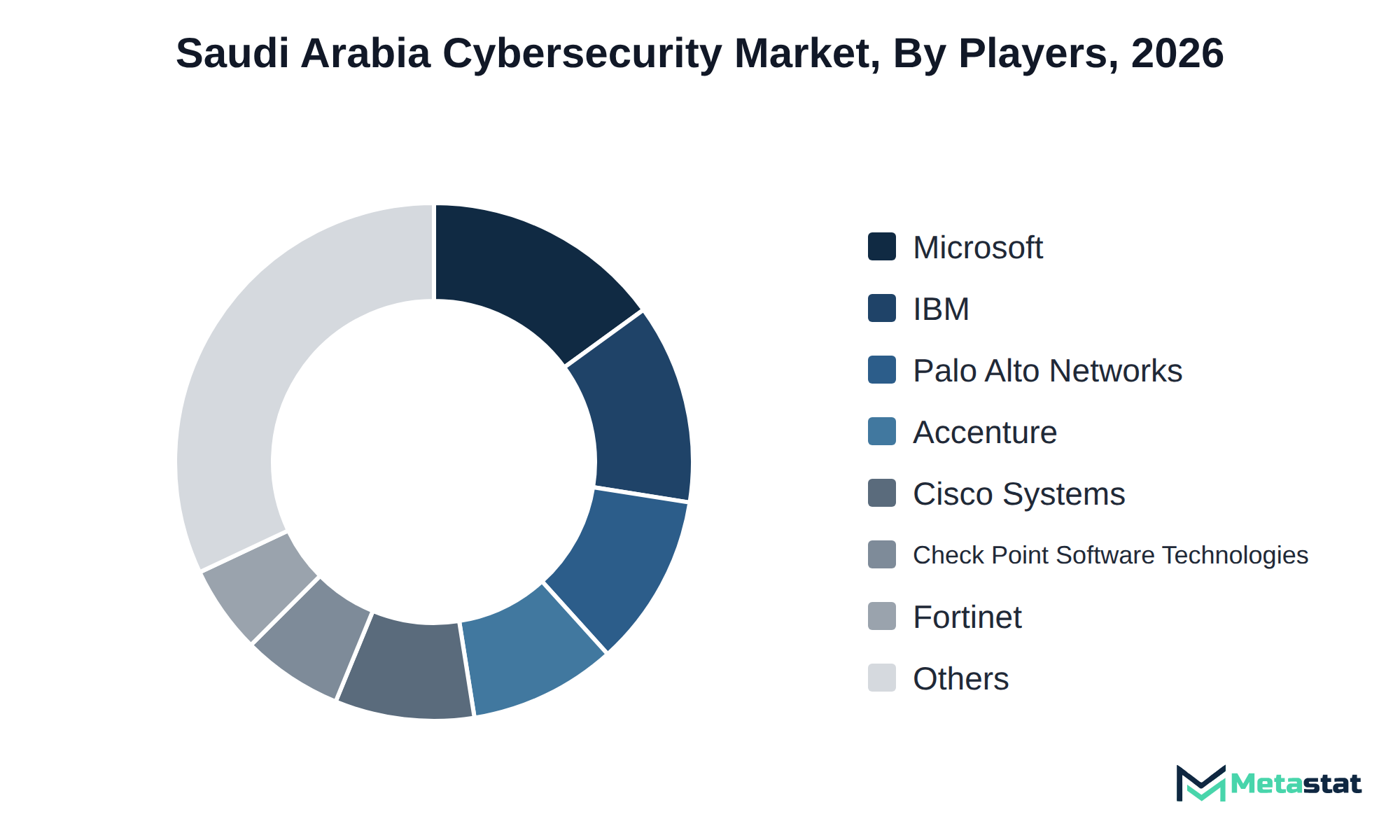
The competitive environment in the Saudi Arabia Cybersecurity market features multiple companies employing diverse strategies to capture market share. Firms differentiate themselves through service offerings, deployment models, and targeted client industries. Increasing demand for tailored solutions has led to buyers prioritizing factors including price, certification, customization, and service quality when selecting vendors.
Microsoft Corporation emphasizes cloud-based security services and integrated cybersecurity solutions. Palo Alto Networks focuses on advanced threat detection and response capabilities, appealing to organizations seeking robust protection. Accenture PLC offers security consulting services, enabling clients to enhance their cybersecurity posture through tailored recommendations and strategies. Other players, including IBM Corporation and Fortinet, Inc., operate in the market by providing specialized services and solutions that address specific sector needs.
Achieving this growth requires significant advancements in several key areas. First, the expansion of cloud-based solutions is crucial, with demand driven by organizations seeking scalable, flexible security options. This segment is projected to reach USD 4,915.9 million by 2033, reflecting a strong shift towards cloud technology across various industries. This trend highlights the increasing reliance on third-party expertise to mitigate evolving threats. Lastly, continuous investment in endpoint security and application security will play an important role, with each segment experiencing growth rates of 12.8% and 12.9%, respectively. However, the market faces challenges, particularly concerning regulatory compliance and the potential for cybersecurity breaches. Failure to address these issues could inhibit growth and impact overall market performance. Ensuring security measures align with regulations remains essential for stakeholders within the Saudi Arabia Cybersecurity market.
By Solution Type: Network Security, Endpoint Security, Cloud Security, Application Security, Data Security, Identity and Access Management, Security Information and Event Management, Security Orchestration, Automation and Response, Others (Operational Technology Security)
By Deployment Model: On-Premises, Cloud-Based, Hybrid
By Security Service: Managed Security Services, Managed Detection and Response, Security Consulting Services, Security Integration Services, Incident Response Services, Security Assessment and Testing Services, Cybersecurity Training Services
By End-Use Industry: Government and Public Sector, Banking, Financial Services and Insurance, Energy and Utilities, Telecommunications and IT, Healthcare, Manufacturing, Retail and E-Commerce, Transportation and Logistics, Others (Education, Media and Hospitality)
The report strategically identifies and profiles the key market players and analyses their core competencies in each sub-segment of the Cybersecurity market.
Report Attributes | Details |
Study Period | 2021-2033 |
Base Year | 2025 |
Estimated Year | 2026 |
Forecast Period | 2026-2033 |
Historical Period | 2021-2025 |
Growth Rate | CAGR 13.1% from 2026 to 2033 |
Revenue Unit | USD million |
Segmentation | By Solution Type, Deployment Model, Security Service, End-Use Industry, and Region |
Find answers to common questions about this report
The Cybersecurity market size was valued at USD 4,558.1 million in 2025.
The market is projected to grow at a CAGR of 13.1% during the forecast period from 2026 to 2033.
Network Security leads the Cybersecurity market with a projected value of USD 2,308.4 million by 2033, based on its growth trajectory compared to other segments.
Increased spending on cybersecurity solutions is driven by heightened awareness among enterprises, particularly in banking, financial services, and insurance, regarding the safeguard sensitive data. Rapid advancements in technologies including artificial intelligence and machine learning enhance organizations' capabilities to identify and mitigate cyber threats effectively.
Infrastructure costs restrain growth in the Cybersecurity market, as high expenses associated with deploying and maintaining advanced systems discourage investment, particularly among smaller enterprises. Challenges related to talent acquisition impact service delivery, with the demand for skilled professionals driving up labor costs and affecting profitability.
Several factors favor adoption within the Saudi Arabia Cybersecurity market. Increased awareness of cyber threats drives enterprises to invest in robust security solutions. the rapid evolution of cybersecurity technologies encourages organizations to upgrade their systems, ensuring protection against sophisticated attacks. The growth of cloud-based cybersecurity solutions further supports this trend, enhancing scalability and flexibility for businesses.
The Cybersecurity market is estimated to reach a valuation of USD 12,207.3 million by 2033.
Key players operating in the Cybersecurity market include Microsoft Corporation, Palo Alto Networks, Accenture PLC, IBM Corporation, AO Kaspersky Lab, Check Point Software Technologies Ltd., Cisco Systems, Inc., and Fortinet, Inc.
The cloud-based cybersecurity market is projected to reach USD 4,915.9 million by 2033, reflecting a compound annual growth rate of 15.1%.
The healthcare sector is projected to register the fastest growth, driven by the implementation of electronic health records and expanding telemedicine infrastructure.
The analysts below cover Information & Technology research at Metastat Insights.
LEAD ANALYST
Utkarsh Khirodkar is a Lead Market Research Analyst at MetaStat Insight, specializing in market intelligence, technology sector assessments, and competitive strategy.

PRINCIPAL CONSULTANT - ENTERPRISE AI & EMERGING TECHNOLOGIES
Banking & Finance · Electronics and Semiconductor · Energy and Power · Healthcare IT · Information & Technology · Professional Services
Vijay Gunti is a Principal Consultant at MetaStat Insight, bringing over two decades of experience across enterprise digital transformation, technology strategy, and intelligent systems.

LEAD CONSULTANT - COMMUNICATION, TELECOM, AND IT
Electronics and Semiconductor · Information & Technology · Machinery & Equipment · Professional Services
Ravindra Sathe Consultants for Communication, Telecom, and IT at MetaStat Insight. He leads the firm's industry research initiatives across telecommunications infrastructure, digital connectivity, enterprise networking, and emerging information technology domains.
Tracking ceramic matrix composite adoption in high-bypass aero engines requires strict attention to material qualification cycles and FAA airworthiness testing milestones. The MetaStat Insight team provided a detailed timeline of silicon carbide fiber manufacturing capacity and commercial foundry lead times. Having clear visibility into upstream thermal barrier coating supply helped us stress-test our long-term component procurement strategy.
Transitioning ultra-class mining haul trucks to alternative power requires concrete data on remote hydrogen refueling infrastructure economics. The report evaluated megawatt-scale electrolyzer installation expenses, onsite storage safety mandates, and heavy-duty fuel cell stack degradation under continuous duty cycles. That technical rigor helped our engineers benchmark realistic total operating cost horizons for off-highway fleet decarbonization.
Enterprise zero-trust network rollouts are often slowed down by multi-cloud transit latency and proprietary hardware retirement schedules. This study provided realistic total cost of ownership models comparing cloud-delivered security edge solutions against traditional hardware refreshes. The analysis of contract renewal lengths and software maintenance fees gave us clear visibility into enterprise replacement cycles over the next three to five years.
Explore related market intelligence reports worth reading alongside this one.
Starting from
$2950