
LEAD ANALYST
Utkarsh Khirodkar is a Lead Market Research Analyst at MetaStat Insight, specializing in market intelligence, technology sector assessments, and competitive strategy.

Global Computer Peripherals Market Size, Share, By Product Type (Standalone PC Monitors, Printers and Scanners, Keyboards, Mice and Pointing Devices, PC Audio Devices, PC Webcams, External Storage Devices, Docking Stations and USB Hubs), By Connectivity Type (Wired-Only, Wireless-Only, Wired and Wireless), By End User (Individual Consumers, Businesses, Government and Education Institutions), By Sales Channel (Direct Sales, Indirect Online Sales, Indirect Offline Sales), Industry Analysis, Growth, Trends, and Forecast, 2026-2033
Report ID
MSI-5817
Published
November, 2026
Pages
256 Pages
Format
Historical
Base year
Forecast
Forecast period
Report Details
Market Valuation: Valued at $106.8 Billion in 2025, projected to reach $147.6 Billion by 2033 at a 4.1% CAGR.
Dominant Segment: Standalone PC monitors lead the market, driven by increasing demand for high-resolution displays and enhanced user experiences, particularly in remote work and gaming.
Geographic Lead: North America is projected to hold a significant market share, with the US expected to lead in 2026, supported by a strong consumer base and technological advancements.
What's Inside: The report provides a comprehensive analysis of market dynamics, competitive landscape, and detailed forecasts across various segments, including product types and connectivity options.
Emerging Trends: The rise of wireless-only peripherals is reshaping consumer preferences, driven by the need for convenience and flexibility in both personal and professional environments.
Price Sensitivity: Price sensitivity among businesses is impacting peripheral purchases, leading to a shift towards more affordable alternatives and influencing overall market dynamics.
Choose Your License
Global Computer Peripherals Market
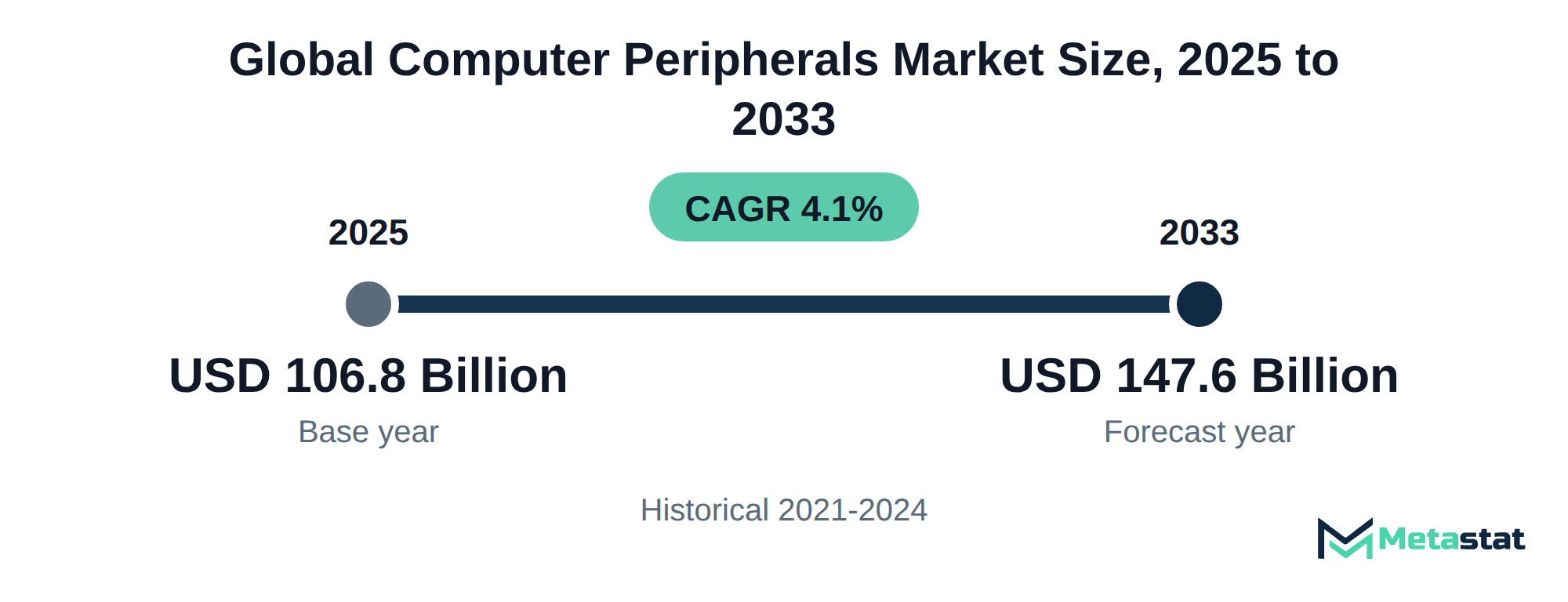
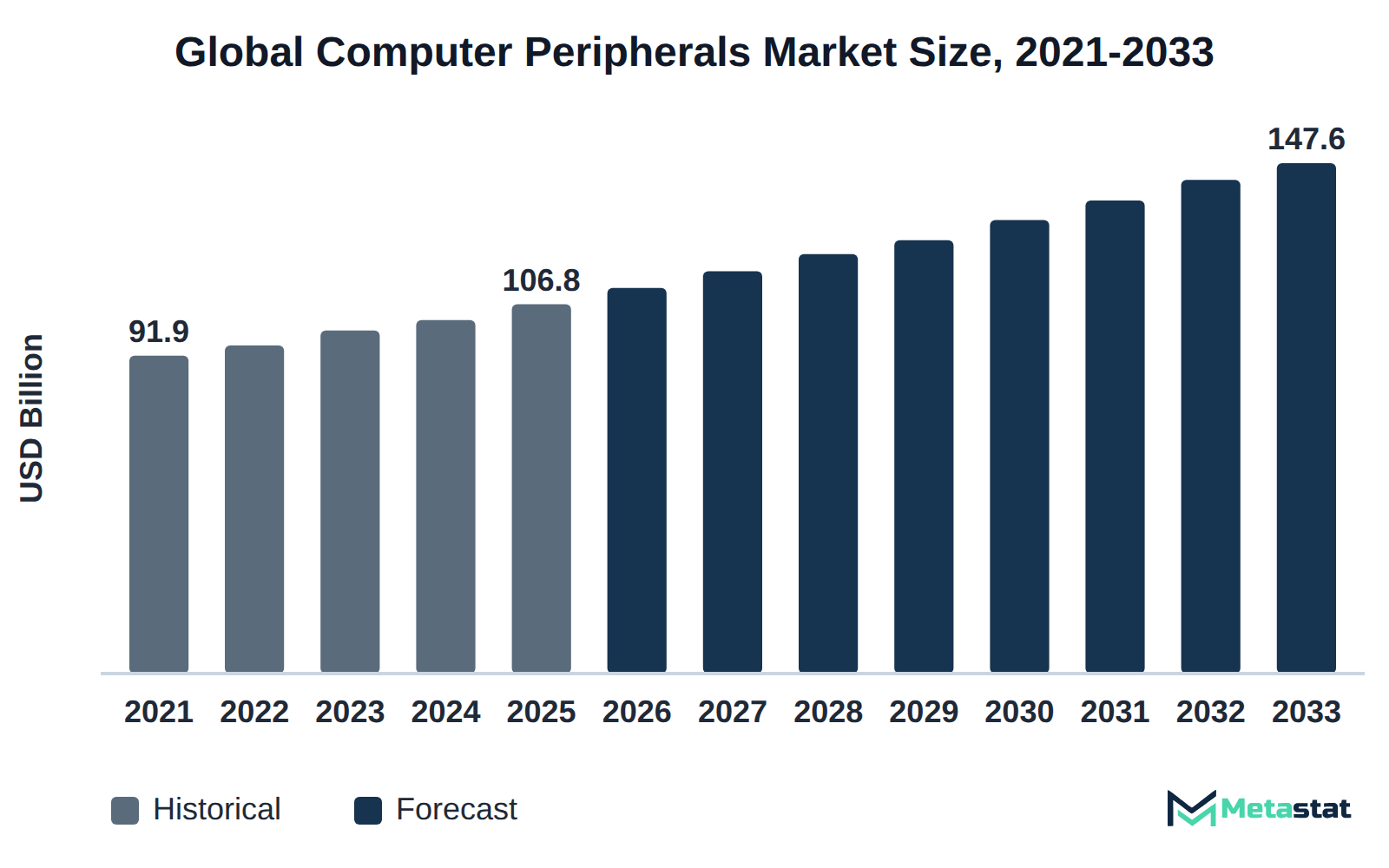
The global Computer Peripherals market was valued at USD 106.8 billion in 2025 and is projected to reach USD 147.6 billion by 2033, growing at a CAGR of 4.1% over the forecast period.
The Computer Peripherals market covers devices designed to enhance the functionality of computers. Buyers invest in these peripherals to improve productivity, connectivity, and user experience. Monitors, printers, and keyboards are used in both personal and professional settings, making them essential for individual consumers and businesses alike.
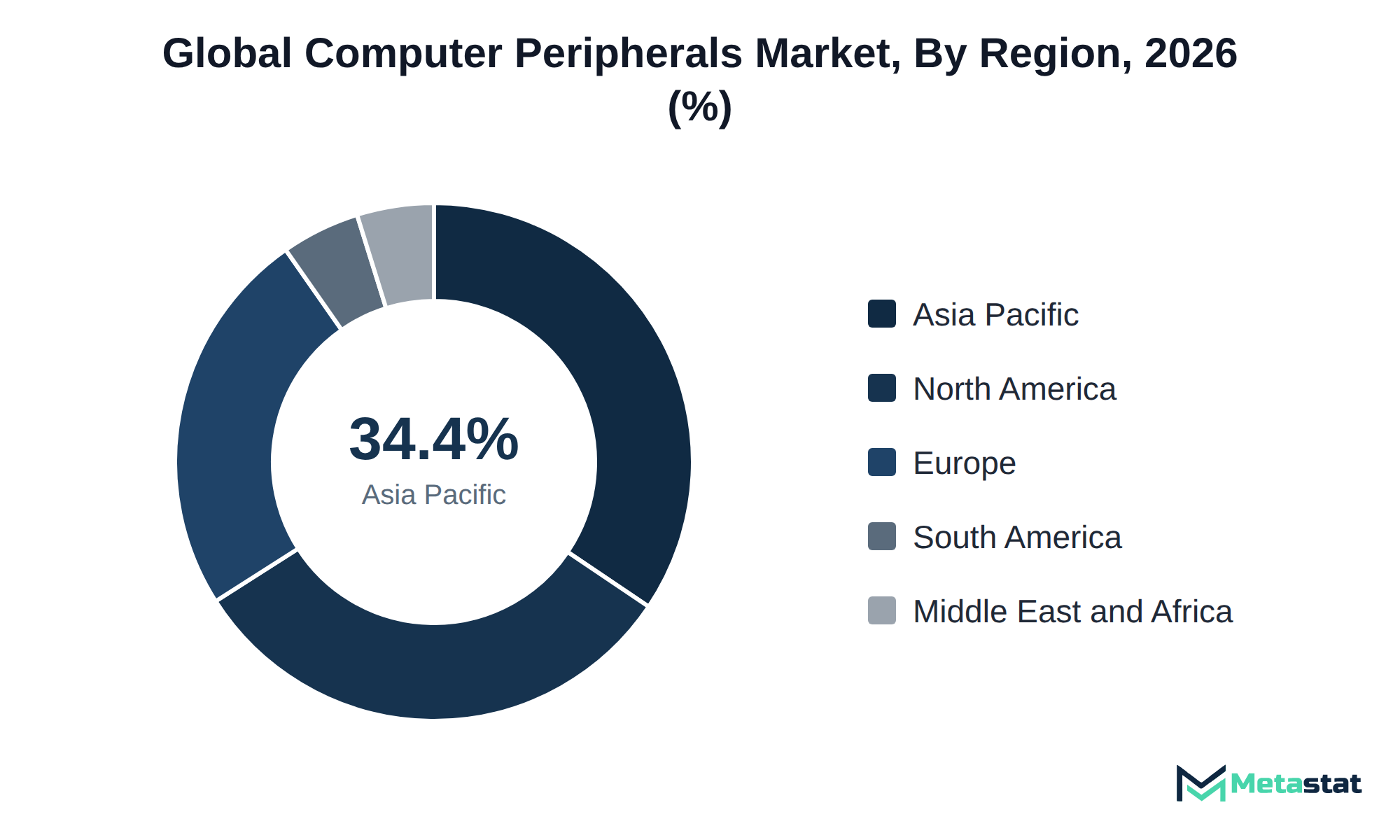
Growth in the Computer Peripherals market is driven by increasing demand for enhanced user interfaces and gaming experiences, alongside a rise in remote work trends. Standalone PC monitors represent the segment with the most value, reflecting a shift toward larger and higher-quality displays. North America holds 31.5% of the market in 2025, with the US leading in 2026. Asia Pacific follows closely, capturing 34.4% of the market, highlighting its significant role in the global landscape.
Technological advancements and innovations in connectivity options further contribute to market expansion. The demand for wireless-only peripherals rises significantly, driven by a preference for convenience and flexibility among users. This growing trend represents a key factor influencing future investments in the Computer Peripherals market.
The Computer Peripherals market includes products that enhance computer functionality and user experience, appealing to various buyer groups. Individual consumers, businesses, and government institutions invest in these devices to improve productivity, connectivity, and overall performance. Factors driving purchasing decisions include technological advancements, compatibility with existing systems, and the need for efficient solutions in both personal and professional environments.
Growth in the market is supported by the increasing demand for standalone PC monitors, which represent the segment with the highest value. Asia Pacific accounts for 34.4% of the market, reflecting its importance in driving global sales. The demand for wired and wireless connectivity solutions drives this segment forward, addressing consumer preferences for versatility and ease of use.
The ongoing transition to remote and hybrid work models influences market dynamics, leading to greater investments in computer peripherals. Businesses prioritize reliable and high-quality devices that enhance employee efficiency and collaboration. The expansion of e-commerce sales channels further supports this growth by giving consumers convenient access to products tailored to their needs.
The introduction of OLED and high-refresh monitors significantly transforms the market of PC gaming. These advanced display technologies enhance the gaming experience by delivering superior image quality and responsiveness, key factors for gamers seeking competitive advantages. Standalone PC monitors in the global Computer Peripherals market are projected to grow from USD 35.2 billion in 2026 to USD 49.4 billion by 2033, reflecting a compound annual growth rate of 5%. Such growth reflects rising demand for high-performance monitors among gaming enthusiasts.
High-refresh monitors provide smoother visuals, reducing motion blur during gameplay. This feature, combined with the rich colors and deeper blacks enabled by OLED technology, creates an immersive gaming environment that appeals to both casual and professional players. Manufacturers in the Computer Peripherals market prioritize the development of these technologies to meet evolving consumer preferences.
Investments in OLED and high-refresh monitor technologies are expected to enhance revenue streams for companies in this space. Improved product offerings differentiate brands in a competitive market, potentially increasing market share. Gamers willing to invest in advanced technology drive demand, establishing OLED and high-refresh monitors as essential components of the modern gaming setup.
USB-C monitor docks serve an essential role in hybrid workstations, facilitating connectivity for various devices. These docks enable users to connect multiple peripherals through a single USB-C port, enhancing efficiency in work environments. The increasing adoption of these monitor docks directly correlates with the growing number of individual consumers, projected to rise from USD 49.1 billion in 2026 to USD 67.6 billion in 2033, reflecting a compound annual growth rate of 4.7%.
Pricing models for USB-C monitor docks vary across different segments of the Computer Peripherals market. Many suppliers implement a tiered pricing structure based on features, including the number of ports, supported resolutions, and additional functionalities like power delivery. This tiered model allows buyers to select products that align with their budget while meeting their specific technical needs. Contract models have emerged, where businesses secure long-term agreements with suppliers for bulk purchases, ensuring consistent supply and potentially lower per-unit costs.
The competitive pricing landscape encourages manufacturers to innovate continuously, ensuring that docks maintain relevance amid changing technology. Strategic purchasing decisions by businesses and individual consumers directly influence market dynamics and drive demand for advanced, cost-effective USB-C monitor docks.
Creative professionals, including graphic designers and photographers, require color-accurate displays for their workflows. The need for precise color representation has grown significantly, driven by the increasing demand for high-quality visual content. In the Computer Peripherals market, standalone PC monitors have a projected value of USD 49.4 billion by 2033. These monitors provide the necessary color fidelity, contrast, and brightness levels essential for tasks including photo editing, video production, and digital art. Color grading monitors serve the same need in video production.
Professionals in creative industries prioritize features that enhance productivity, including high dynamic range (HDR), wide color gamuts, and consistent brightness. The market's growth in standalone PC monitors indicates that suppliers focus on developing displays that meet these specific needs. Investing in color-accurate monitors represents a strategic decision for creative professionals, ensuring their work meets industry standards while maximizing potential client satisfaction. This trend highlights the importance of specialized peripherals within the broader Computer Peripherals market.
The demand for high-performance computer peripherals significantly impacts the esports industry. Competitive gaming relies on precision and speed, making devices including high-speed gaming mice and mechanical keyboards essential for players. Manufacturers therefore need to develop advanced peripherals that enhance user experience and performance.
Mice and pointing devices are a key peripheral category in the esports market. The growing popularity of esports translates into higher expectations for these devices, driving innovation in design and functionality. With a compound annual growth rate of 5%, this segment is expected to cater to a broad spectrum of gamers seeking reliable and responsive equipment. The increasing distribution of esports tournaments and streaming platforms results in heightened awareness of the advantages offered by specialized peripherals, further stimulating demand within the market.
The rise in remote work and online activities drives increased spending on peripherals. Individual consumers, seeking to enhance their home office setups, purchase devices including monitors, keyboards, and mice at higher volumes. The necessity for quality equipment, which improves productivity and comfort, prompts this shift in consumer behavior. This change leads to higher demand across the market, resulting in increased sales and competition among suppliers to attract consumers. Manufacturers focus on offering innovative and ergonomic products to meet evolving consumer preferences.
Advancements in wireless technologies significantly influence the Computer Peripherals market, enhancing user experiences and providing greater flexibility in device usage. Innovations including low-latency wireless protocols and improved battery life support the growing preference for wireless peripherals among individual consumers and businesses. Enhanced connectivity options allow users to enjoy interactions without the restrictions of wired connections.
These technological developments cater to the increasing demand for versatile setups in diverse environments, including home offices and collaborative workspaces. The shift toward wireless peripherals directly impacts consumer purchasing behavior, with many opting for wireless keyboards and mice to streamline their workspaces.
Increased adoption of wireless solutions is expected to contribute to market growth, with manufacturers building devices around these advancements. The market benefits from a broader range of product offerings that meet the evolving needs of users, ultimately creating a more competitive environment for suppliers.
Price sensitivity among businesses significantly hampers the adoption of computer peripherals. Rising operating costs, particularly in small to medium-sized enterprises, lead to budget constraints that slow the uptake of new devices. Firms prioritize cost-effective solutions over premium models, resulting in smaller orders and delayed replacement cycles for aging equipment. The market experiences a shift toward more affordable alternatives, limiting demand for higher-priced products and impacting overall revenue growth. Individual consumers exhibit similar behavior, opting for budget-friendly peripherals in response to economic pressures. This trend highlights the importance of pricing strategies for suppliers aiming to capture market share in a competitive environment.
While the Computer Peripherals market continues to expand, the struggle with price sensitivity requires manufacturers to balance quality and affordability. Addressing these concerns through innovative pricing models enhances competitive positioning while meeting the evolving demands of various buyer segments.
Rising input costs create a significant challenge for suppliers in the Computer Peripherals market, affecting their ability to maintain profit margins. Increased prices of components, including semiconductors and raw materials, contribute to escalating production expenses. Suppliers face pressure to balance quality with affordability while addressing the demand for innovative products. This situation particularly affects manufacturers of high-demand items including standalone PC monitors and mice, which require advanced technology and materials. In response, several suppliers explore strategies to optimize their supply chains and implement cost-reduction initiatives. By strengthening partnerships with component manufacturers and investing in more efficient production methods, suppliers aim to mitigate cost increases while sustaining competitive pricing. These efforts are critical for maintaining market share and ensuring long-term viability in a sector that relies heavily on consumer engagement and loyalty.
Standalone PC monitors represent a significant opportunity within the Computer Peripherals market, projected to reach USD 49.4 billion by 2033. This segment exhibits a compound annual growth rate (CAGR) of 5% driven by increased remote work and gaming activities. The ongoing shift towards high-resolution displays enhances the appeal of standalone monitors among individual consumers and businesses alike, reinforcing their importance in various applications.
The rising need for large-screen setups in hybrid work environments and gaming has fueled interest in advanced monitor technologies, including OLED and high-refresh rates. Buyers prioritize features that improve productivity and enhance visual experiences. Companies focusing on this segment, particularly those targeting individual consumers, will benefit from this ongoing trend, strengthening market positions and promoting revenue growth.
The Global Computer Peripherals market is segmented based on Product Type, Connectivity Type, End User, and Sales Channel.
Standalone PC monitors serve various purposes, enhancing productivity in office environments and improving the viewing experience for individual consumers. The demand surge for high-definition displays and advanced features significantly drives this segment, particularly among individual consumers and businesses seeking superior performance. Compared to other segments in the product type category, standalone PC monitors exhibit a faster growth trajectory, reflecting a 5% CAGR, while segments including printers and scanners experience a slower growth rate of 1.8%. Continuous advancements in display technologies and increasing emphasis on visual quality further reinforce the attractiveness of standalone PC monitors, encouraging adoption across multiple user categories.
Printers and Scanners segment is estimated to reach USD 42.7 billion by 2033, at a CAGR of 1.8% during the forecast period. This segment primarily serves businesses and individual consumers, providing essential functionalities for document creation and management. Multifunctional printers, which combine printing and scanning in one device, are one example. The steady demand for printing in various sectors, including education and corporate environments, drives growth. An increase in remote work and digital documentation highlights the necessity for reliable printing solutions, supporting higher adoption rates. The slower growth stems from the mature nature of printing technology and the gradual shift toward digital alternatives, which limits expansion opportunities.
The keyboards segment is expected to reach USD 10.1 billion by 2033. These devices are essential for individual consumers and businesses, facilitating text input and command execution on computers. The increasing trend of remote work and online communication drives demand for keyboards, particularly those that offer enhanced ergonomics and customization options. In contrast to the Printers and Scanners segment, which is projected to grow at a CAGR of 1.8%, keyboards exhibit a stronger growth trajectory, with a CAGR of 4.7%. This growth is propelled by preferences for wireless and ergonomic designs, appealing to consumers seeking improved comfort during extended use. The evolving landscape of gaming peripherals further differentiates this segment, attracting buyers seeking high-performance devices tailored to gaming needs, setting it apart from other peripheral categories in the market.
The Mice and Pointing Devices segment is projected to grow at a CAGR of 5% during the forecast period. This segment comprises essential devices that facilitate user interaction with computers, appealing to individual consumers and businesses alike. The increasing demand for ergonomic mice and enhanced functionality drives growth in this segment, catering primarily to gaming enthusiasts and professionals who rely on precision and speed. Technological advancements, including improved wireless connectivity and battery efficiency, drive adoption, making wireless devices more attractive. Compared to other segments, Mice and Pointing Devices exhibit a faster growth rate, reflecting shifts in user preferences toward more versatile and innovative solutions. The segment is expected to maintain its competitive edge through continuous upgrades and new feature introductions that emphasize user comfort and performance.
PC audio devices enhance user experience through high-quality sound output, catering to various applications including gaming, multimedia, and video conferencing. Gaming headsets and headphones address the gaming application within this category. Individual consumers and businesses use these devices for entertainment and professional communication, respectively. The growing demand for immersive audio experiences drives this segment, reflecting the trend toward enhanced audio solutions for personal and work environments. Technological advancements in sound quality and wireless connectivity further drive adoption. Compared to other segments, PC audio devices exhibit significant growth potential, particularly in the consumer market, where the shift toward wireless options aligns with current user preferences. This segment stands out due to its focus on delivering superior sound quality and user engagement, differentiating it from products that prioritize functionality over audio performance.
PC webcams enable visual communication for both personal and professional use. These devices find applications among individual consumers, businesses, and educational institutions, enhancing video conferencing, streaming, and remote learning experiences. The growing demand for high-quality video interactions drives the popularity of PC Webcams. Increased adoption of remote work and online learning environments reinforces the need for reliable video solutions, particularly in business settings. This sub-segment stands out due to its focus on improving user engagement and connectivity, distinguishing it from other peripherals like printers and standalone monitors, which cater to different user needs. While growth projections for the entire market indicate a steady upward trend, advancements in webcam technology and rising consumer expectations regarding quality and performance shape the competitive landscape for PC Webcams.
External storage devices facilitate data transfer and data backup, offering users the ability to manage large volumes of information efficiently. Individual consumers and businesses use these devices to store files securely, enabling easy access for both personal and professional use. Growing data generation, driven by increasing digital content creation and consumption, is driving demand in this segment. Unlike standalone monitors and printers, external storage devices serve many types of buyers, so their growth dynamics differ. While the printers and scanners segment is expected to achieve modest expansion, the external storage devices segment experiences heightened demand due to ongoing advancements in data storage technologies. This trend emphasizes the importance of capacity and speed in enhancing user experience across various applications, including gaming and professional tasks. Higher demand for portability and flexibility in device usage distinguishes external storage devices from other segments, reinforcing their relevance in the Computer Peripherals market.
Docking stations and USB hubs provide essential connections for users, facilitating multiple device interfaces through a single port. Individual consumers and businesses use these products to enhance productivity and connectivity across their devices. Adoption within the segment experiences momentum due to the increasing prevalence of hybrid work environments, where efficient multitasking is critical. The surge in remote work drives demand for docking solutions that support various devices, enabling smooth transitions between workstations. Compared to other segments, docking stations and USB hubs often present higher pricing due to their multifunctional capabilities, differentiating them within the broader product category. This segment's growth trajectory reflects a strategic response to evolving workplace needs, emphasizing the importance of connectivity solutions in the market.
Others (Pen Tablets, PC Game Controllers) include various peripheral devices that cater to specific use cases in digital environments, enhancing user interaction and experience. These products are popular among individual consumers, particularly gamers and artists, who require precision tools for their activities. The segment experiences growth driven by the increasing popularity of gaming and digital art, with users seeking advanced capabilities. Compared to other segments, this sub-segment typically carries higher price points due to the specialized nature of the products, which limits broader adoption among less affluent consumers. However, ongoing advancements in technology help reduce barriers to entry over time, opening opportunities for greater integration into mainstream markets. Users increasingly prefer versatile and multifunctional devices, creating a competitive landscape with varied offerings that distinguish themselves from traditional peripherals in the market.
The Wired-Only segment is valued at USD 52.6 billion in 2026 and is projected to reach USD 62.8 billion by 2033, at a CAGR of 2.6% during the forecast period. This segment primarily serves individual consumers and businesses requiring reliable and stable connections for various devices, including keyboards, mice, and printers. The demand for wired connections is driven by users seeking lower latency and increased security, particularly in professional environments. Compared to the Wireless-Only segment, which experiences a higher growth rate of 5.7%, the Wired-Only segment presents a more stable yet slower growth trajectory due to the ongoing transition toward wireless technologies. Wired devices often come with a lower initial cost compared to their wireless counterparts, appealing to budget-conscious buyers who prioritize functionality over advanced features in the Computer Peripherals market.
Wireless-Only segment is estimated to reach USD 37.5 billion by 2033, at a CAGR of 5.7% during the forecast period. This segment primarily serves individual consumers and businesses seeking mobility and convenience in their peripheral devices. The growing trend of remote work and mobile computing drives demand for wireless peripherals, enhancing user flexibility and reducing clutter associated with wired connections. Compared to other connectivity types, Wireless-Only experiences faster growth due to its appeal among younger consumers who prioritize portability and ease of use. The shift toward wireless technology enables users to connect multiple devices seamlessly, creating an environment conducive to productivity. This segment stands out from Wired-Only, which is projected to have a CAGR of 2.6% during the same period, reflecting a slower adoption rate among users who prefer stable and uninterrupted connections.
The Wired and Wireless segment is expected to reach USD 47.4 billion by 2033. This segment encompasses devices that operate through both wired and wireless connections, providing flexibility and convenience for users across various applications. Individual consumers and businesses primarily engage with this segment for reliable connectivity in their computing environments. Increased demand for versatile devices, driven by the growth of remote work and the desire for more flexible workspace setups, fuels this segment's expansion. Compared to other connectivity types, including Wired-Only and Wireless-Only, the Wired and Wireless segment shows a balanced adoption pattern, targeting diverse user needs without being constrained by connectivity limitations. The market benefits from technological advancements that enhance the performance and reliability of both connectivity options, ensuring sustained interest and investment from consumers and businesses alike.
This segment caters to end-users seeking peripherals for personal computing, gaming, and general productivity. The rising trend of remote work and online education significantly drives demand, with consumers investing in high-quality peripherals to enhance their home office setups. Compared to other segments, including Businesses which are projected to reach USD 64.9 billion by 2033, the Individual Consumers segment exhibits a higher growth rate. Consumers prioritize affordability and multifunctionality, influencing purchasing decisions in this segment. Competition is strong, prompting suppliers to innovate with features and pricing strategies aimed at this consumer base.
Businesses segment is estimated to reach USD 64.9 billion by 2033, at a CAGR of 3.5% during the forecast period. This segment is primarily driven by organizations seeking reliable and efficient computing solutions, including peripherals including printers, monitors, and input devices. The growing demand for improved productivity and remote work setups drives this segment, particularly in the wake of recent shifts toward hybrid work environments. In addition, increasing investments in digital transformation initiatives among businesses contribute significantly to growth. Compared to individual consumers, the businesses segment experiences a slower growth rate, reflecting a more cautious approach to upgrading technology and managing budgets. The market exhibits diverse offerings tailored to specific organizational needs, enhancing operational efficiency and user experience.
The Government and Education Institutions segment is expected to reach USD 15.1 billion by 2033. This segment primarily serves public entities and academic institutions by providing essential computer peripherals necessary for various administrative and educational functions. Ongoing investments in digital infrastructure and technology upgrades drive demand in this segment, enhancing the operational capabilities of these organizations. Unlike other sectors, the Government and Education Institutions segment exhibits slower growth due to budget constraints and procurement protocols characteristic of public funding. The expected CAGR for this segment aligns with broader market trends, yet it remains lower than that of individual consumers and businesses, highlighting distinct procurement behaviors and financial limitations faced by these institutions.
Direct Sales segment is valued at USD 30.4 billion in 2026 and is projected to reach USD 43.1 billion by 2033, at a CAGR of 5.1% during the forecast period. This segment primarily serves individual consumers and businesses, facilitating direct transactions for computer peripherals. Increased online shopping and a shift toward direct-to-consumer models significantly drive growth in this segment. Direct Sales offers advantages including personalized customer engagement and streamlined purchasing processes. Compared to Indirect Online Sales and Indirect Offline Sales, which have broader reach, Direct Sales focuses on maintaining a closer relationship with customers. This segment's growth trajectory stands out with a CAGR of 5.1%, contrasting with other channels that exhibit different dynamics. By aligning closely with consumer demands and preferences, it positions itself effectively in the competitive landscape of the market.
Indirect Online Sales segment is estimated to reach USD 57.2 billion by 2033, at a CAGR of 5.9% during the forecast period. This segment serves a vital role in enabling consumers and businesses to purchase computer peripherals through digital platforms, enhancing convenience and accessibility. A significant driver in this segment includes the increasing trend of online shopping, facilitated by advancements in e-commerce technologies. Compared to other sales channels, the Indirect Online Sales segment exhibits higher growth potential, with a more substantial CAGR than traditional retail methods. The continued expansion of internet infrastructure and mobile device usage supports the segment's growth. Shifting consumer preferences toward online purchasing result in a notable increase in demand, shaping the overall landscape of the Computer Peripherals market.
Indirect Offline Sales segment is expected to reach USD 47.3 billion by 2033. This segment encompasses sales of computer peripherals through traditional retail outlets and physical stores. Users include individual consumers and businesses seeking hands-on experiences before making purchases. A significant driver for this segment involves tactile interaction with products, allowing customers to assess quality and compatibility firsthand. Compared to the Indirect Online Sales segment, which anticipates a CAGR of 5.9%, Indirect Offline Sales experiences a lower growth rate. The segment's growth reflects changing consumer preferences, with a shift toward online platforms for convenience. Retailers leverage this segment's strong customer engagement to provide personalized service, enhancing the shopping experience. Overall, Indirect Offline Sales serves a crucial function in the Computer Peripherals market by catering to buyers who prefer in-person transactions.
Based on geography, the Global Computer Peripherals market is divided into North America, Europe, Asia-Pacific, South America, Middle East, and Africa.
Demand for computer peripherals in North America stems from a diverse range of industries, including technology, education, and healthcare. The region's strong focus on innovation drives individual consumers and businesses to pursue advanced peripherals that enhance productivity and user experience. North America is projected to reach USD 44.9 billion by the end of 2033. The market benefits from a well-established retail infrastructure, with both direct and indirect sales channels providing wide accessibility to consumers. Regulatory conditions, including data privacy laws, influence the procurement of peripherals, particularly for businesses and educational institutions. This focus on compliance shapes purchasing decisions, ensuring that products meet specific standards. The steady growth trajectory of the market reflects ongoing commitment to quality and technological advancement.
The demand for the Computer Peripherals market in Europe is driven by a combination of individual consumers and businesses. Major economies, including Germany, France, the UK, Italy, Spain, and Russia, contribute significantly to this trend. The region benefits from advanced technological infrastructure and high purchasing power, encouraging the adoption of innovative peripheral devices. Increased remote work and digital learning initiatives further stimulate growth across the market. The rising need for reliable connectivity and high-quality devices remains a priority for consumers and enterprises alike. The market share in Europe stands at 24.3% in 2025, reflecting its prominent role in the global landscape. This dynamic environment promotes competition among key players, enhancing product offerings and driving advancements in technology.
The Asia-Pacific region holds a 34.4% share of the Computer Peripherals market in 2025. Demand in this region is driven by a growing technology sector, with individual consumers and businesses increasingly seeking advanced peripherals. Notable growth among individual consumers is noted, particularly in China and India, where rising disposable incomes fuel spending on technology. Infrastructure development in Japan and South Korea supports the adoption of innovative peripherals, enhancing connectivity and productivity. The market benefits from an expansive online retail landscape, with indirect online sales projected to grow significantly. This growth trajectory indicates increased competition among suppliers to meet the evolving needs of consumers and businesses across the region.
In South America, a notable share of the Computer Peripherals market is driven by individual consumers and small businesses. Countries like Brazil and Argentina exhibit increasing adoption of technology in daily activities, enhancing demand for peripherals. The market's growth reflects a rising trend in digitalization, supported by government initiatives promoting technological advancements. However, high import tariffs on electronic goods present challenges, impacting pricing strategies for suppliers. With a projected market share of 4.9% in 2025, the region's growth potential remains significant, driven by expanding access to digital solutions and infrastructure improvements. The Computer Peripherals market adapts to the evolving needs of users, presenting opportunities for suppliers and businesses alike.
In the Middle East and Africa, the Computer Peripherals market experiences growth driven by increasing demand from individual consumers and businesses. Countries like Saudi Arabia and the UAE show a rising adoption of technology in various sectors, enhancing the need for peripherals. South Africa's expanding digital landscape contributes to greater adoption of computer peripherals across both consumer and business segments. Infrastructure developments, including improved internet connectivity, support this demand by facilitating easier access to technology. The region's market share is projected at 4.8% in 2025, indicating a significant opportunity for growth within this emerging market. Investment in education and government initiatives further promotes the use of advanced peripherals, creating a favorable environment for market expansion.
Companies compete in the computer peripherals market through a variety of strategies that emphasize pricing, customization, and service quality. Buyers prioritize these factors when selecting products, seeking reliable and high-performing peripherals that align with their specific needs.
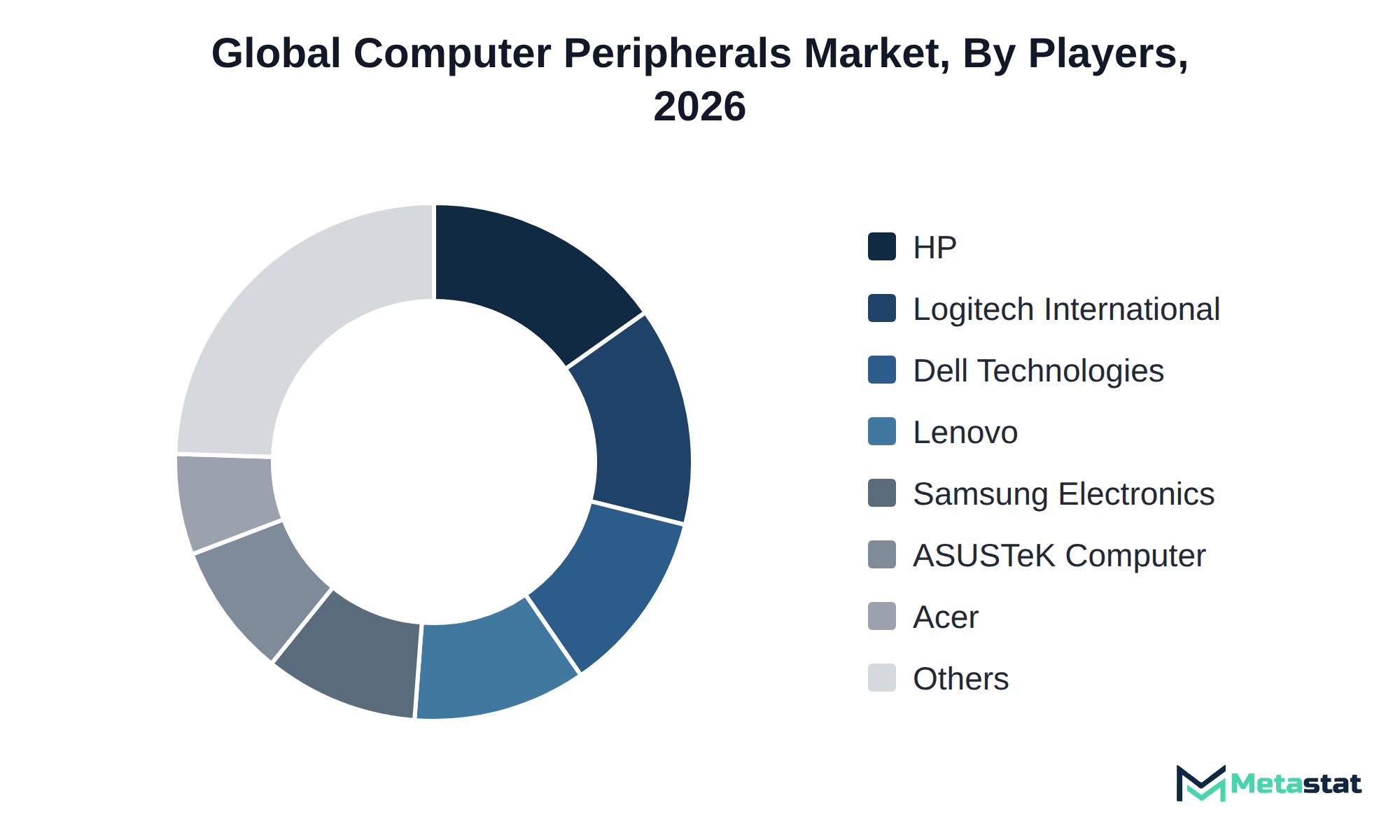
Logitech International S.A. focuses on innovative designs and a robust ecosystem of devices catering to gamers and professionals. Dell Technologies Inc. and HP Inc. emphasize reliability and customer support, offering tailored solutions for businesses and educational institutions. Lenovo Group Limited combines affordability with quality, appealing to individual consumers seeking cost-effective options.
Market segmentation occurs across product types, connectivity types, and end-user categories. Companies like BenQ Corporation and ASUS emphasize advanced display technologies for monitors, while Canon Inc. and Seiko Epson Corporation specialize in printers and scanners, targeting both businesses and individual consumers.
In the connectivity segment, Samsung Electronics Co., Ltd. and LG Electronics Inc. offer a diverse range of wired and wireless products, appealing to tech-savvy users looking for versatility. Emerging companies including Razer Inc. and Corsair Gaming, Inc. target gaming enthusiasts, providing customized peripherals that enhance user experience. These companies differentiate themselves through unique features and targeted marketing strategies.
This segment captures significant attention from individual consumers and businesses, reflecting a trend towards larger and more advanced displays. The rise of wireless-only connectivity options will contribute to the market's expansion, with anticipated growth to USD 37.5 billion by 2033 at a CAGR of 5.7%. This trend appeals to technologically savvy consumers seeking convenience and flexibility. Conversely, potential risks include economic downturns that could impact consumer spending and business investments in new peripherals. Such economic challenges could delay the adoption of the latest technologies, particularly in regions like Europe and South America, where purchasing power remains sensitive to market fluctuations. The ability of the Computer Peripherals market to reach USD 147.6 billion by 2033 hinges on these developments while navigating the complexities of global economic conditions.
By Product Type: Standalone PC Monitors, Printers and Scanners, Keyboards, Mice and Pointing Devices, PC Audio Devices, PC Webcams, External Storage Devices, Docking Stations and USB Hubs, Others (Pen Tablets, PC Game Controllers)
By End User: Individual Consumers, Businesses, Government and Education Institutions
The report strategically identifies and profiles the key market players and analyses their core competencies in each sub-segment of the Computer Peripherals market.
Report Attributes | Details |
Study Period | 2021-2033 |
Base Year | 2025 |
Estimated Year | 2026 |
Forecast Period | 2026-2033 |
Historical Period | 2021-2025 |
Growth Rate | CAGR 4.1% from 2026 to 2033 |
Revenue Unit | USD billion |
Segmentation | By Product Type, Connectivity Type, End User, Sales Channel, and Region |
By Region | North America (By Product Type, Connectivity Type, End User, Sales Channel, and Country)
|
Europe (By Product Type, Connectivity Type, End User, Sales Channel, and Country)
| |
Asia Pacific (By Product Type, Connectivity Type, End User, Sales Channel, and Country)
| |
South America (By Product Type, Connectivity Type, End User, Sales Channel, and Country)
| |
Middle East and Africa (By Product Type, Connectivity Type, End User, Sales Channel, and Country)
|
Find answers to common questions about this report
The Computer Peripherals market size was valued at USD 106.8 billion in 2025.
The market is projected to grow at a CAGR of 4.1% during the forecast period from 2026 to 2033.
The North America Computer Peripherals market size is estimated to reach USD 44.9 billion by 2033.
Standalone PC Monitors lead the Computer Peripherals market with a projected value of USD 49.4 billion in 2033. This segment shows the highest growth rate among product types, reflecting a compound annual growth rate of 5 percent.
The rise in remote work and online activities drives increased spending on peripherals. Price sensitivity among businesses significantly hampers the adoption of computer peripherals, leading to a preference for cost-effective solutions.
Price sensitivity among businesses hampers the adoption of computer peripherals, as budget constraints lead to slower uptake of new devices. Rising input costs create challenges for suppliers, affecting their ability to maintain profit margins while addressing demand for innovative products.
Factors favoring adoption in the Computer Peripherals industry include the projected growth of individual consumer spending from USD 49.1 billion in 2026 to USD 67.6 billion by 2033 and the significant opportunity presented by standalone PC monitors, expected to reach USD 49.4 billion by 2033. These trends reflect strong interest driven by remote work and gaming activities.
The Computer Peripherals market is estimated to reach a valuation of USD 147.6 billion by 2033.
Key players operating in the Computer Peripherals market include Logitech International S.A., Dell Technologies Inc., HP Inc., Lenovo Group Limited, Samsung Electronics Co., Ltd., Apple Inc., Microsoft Corporation, and Anker Innovations Limited.
The standalone PC monitors segment is projected to reach USD 49.4 billion by 2033, reflecting a compound annual growth rate of 5 percent.
The analysts below cover Information & Technology research at Metastat Insights.
LEAD ANALYST
Utkarsh Khirodkar is a Lead Market Research Analyst at MetaStat Insight, specializing in market intelligence, technology sector assessments, and competitive strategy.

PRINCIPAL CONSULTANT - ENTERPRISE AI & EMERGING TECHNOLOGIES
Banking & Finance · Electronics and Semiconductor · Energy and Power · Healthcare IT · Information & Technology · Professional Services
Vijay Gunti is a Principal Consultant at MetaStat Insight, bringing over two decades of experience across enterprise digital transformation, technology strategy, and intelligent systems.

LEAD CONSULTANT - COMMUNICATION, TELECOM, AND IT
Electronics and Semiconductor · Information & Technology · Machinery & Equipment · Professional Services
Ravindra Sathe Consultants for Communication, Telecom, and IT at MetaStat Insight. He leads the firm's industry research initiatives across telecommunications infrastructure, digital connectivity, enterprise networking, and emerging information technology domains.
Ambulatory surgical centers have very different purchasing cycles for robotic-assisted surgery platforms than major hospital networks. The MetaStat Insight study focused squarely on capital expenditure depreciation, procedural reimbursement pathways, and surgeon training overhead. That operational clarity made it much simpler to validate multi-year procedure growth forecasts against actual ambulatory center adoption patterns.
When planning edge sensor rollouts across refinery environments, generic IoT reports typically miss the harsh-environment certification bottlenecks. MetaStat Insight gave an objective evaluation of ATEX and Class 1 Division 2 hardware availability, along with realistic five-year maintenance cycle cost projections. The comparison of wireless mesh versus private cellular backhaul helped our team pressure-test network reliability models for remote processing facilities.
In the biological seed treatment space, registration timelines vary drastically between the European Union, Brazil, and North America. The MetaStat Insight research handled these cross-border regulatory barriers with genuine nuance, mapping commercialization pathways alongside historical field adoption rates. The segmentation between microbial strains and biochemical active ingredients was particularly well structured.
Explore related market intelligence reports worth reading alongside this one.