
LEAD ANALYST
Utkarsh Khirodkar is a Lead Market Research Analyst at MetaStat Insight, specializing in market intelligence, technology sector assessments, and competitive strategy.

Global Color Grading Monitor Market Size, Share, By Display Technology (OLED, Dual-Layer LCD, Conventional LED-Backlit LCD and Others (MicroLED and Emerging Emissive Display Technologies)), By Resolution (Full HD and WUXGA, QHD, DCI 2K, 4K/UHD and 5K and Above), By Screen Size (Up to 24 Inches, 25-32 Inches and Above 32 Inches), By End User (Post-Production Houses and Color Grading Studios, Broadcast Networks and Television Stations, Film and Television Production Companies, VFX, Animation and Virtual Production Studios, Independent Colorists, Editors and Content Creators, Advertising and Creative Agencies), Industry Analysis, Growth, Trends, and Forecast, 2026-2033
Report ID
MSI-5327
Published
September, 2026
Pages
289 Pages
Format
Historical
Base year
Forecast
Forecast period
Report Details
Market Valuation: Valued at $1,563.1 Million in 2025, projected to reach $2,872.7 Million by 2033 at a 7.9% CAGR.
Dominant Segment: The OLED segment leads the market, projected to grow from USD 774.4 million in 2026 to USD 1,427.1 million by 2033, driven by advancements in display technology that enhance color accuracy and visual fidelity.
Geographic Lead: The Asia-Pacific region shows significant growth potential, driven by increasing investments in media and entertainment industries and a shift towards advanced production capabilities.
What's Inside: This report provides a comprehensive analysis of the competitive landscape, market segmentation by display technology, resolution, screen size, and end user, along with detailed forecasts from 2026 to 2033.
Emerging Trends: The market is witnessing a shift towards higher resolution displays, particularly 4K and above, as content creators seek enhanced visual fidelity and color performance in their workflows.
Choose Your License
Global Color Grading Monitor Market
The global Color Grading Monitor market was valued at USD 1,563.1 million in 2025 and is projected to reach USD 2,872.7 million by 2033, growing at a CAGR of 7.9% over the forecast period.
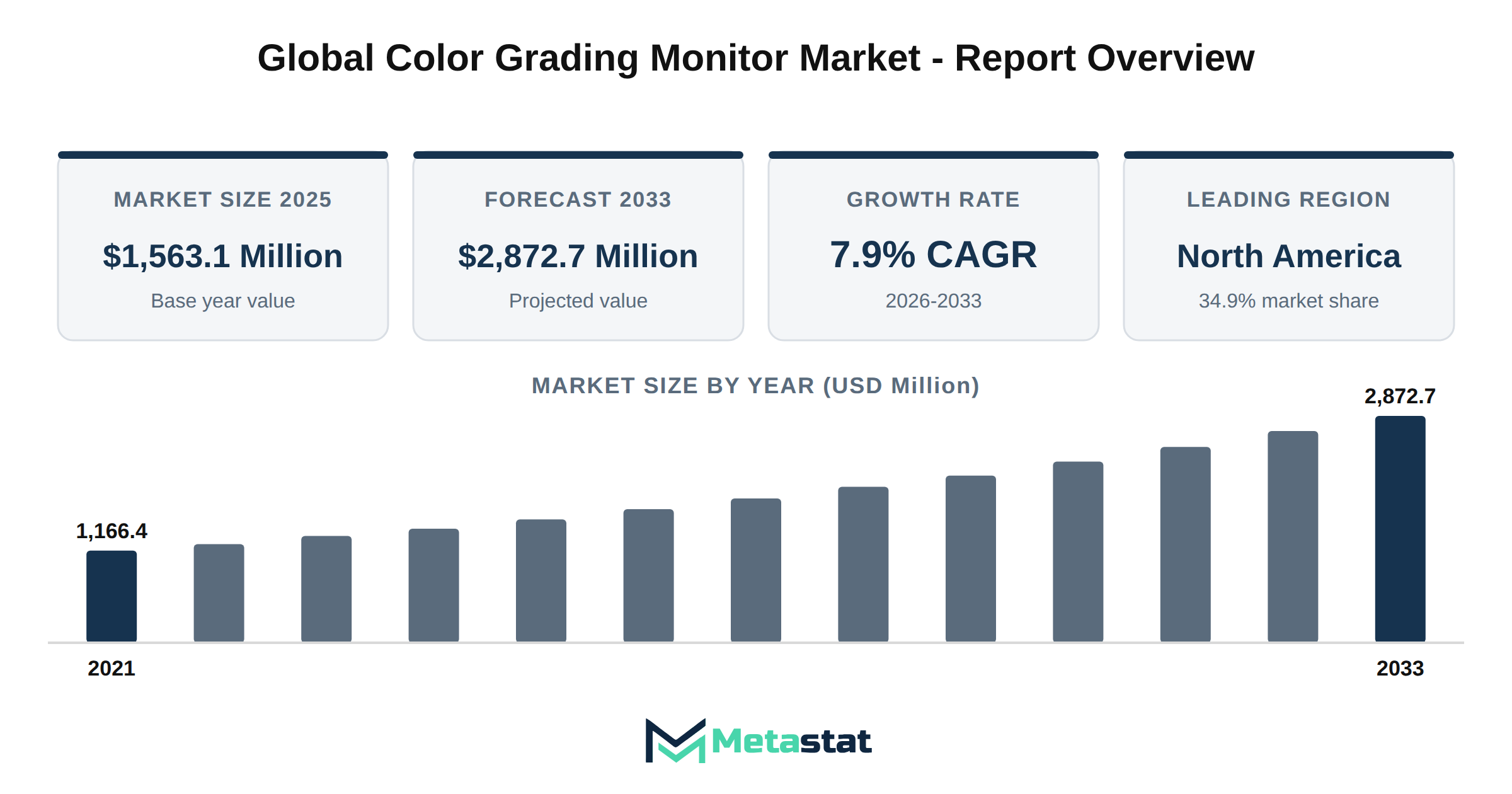
The Color Grading Monitor market reached a valuation of USD 1,563.1 million in 2025, with projections indicating growth to USD 2,872.7 million by 2033. This expansion represents a compound annual growth rate (CAGR) of 7.9% during the forecast period from 2026 to 2033. The market's growth trajectory reflects increasing demand across various sectors, including film production, broadcasting, and post-production studios.
Adoption of OLED technology significantly reshapes the Color Grading Monitor market. This display technology enhances color accuracy and contrast ratio, which aligns with the industry's need for high-quality visual standards. OLED displays are projected to grow from USD 774.4 million in 2026 to USD 1,427.1 million by 2033, reflecting a CAGR of 9.1%. The shift towards OLED technology highlights a trend towards premium offerings in color grading applications.
Demand for HDR mastering drives upgrades in professional reference monitors. HDR content creation necessitates advanced monitoring capabilities, compelling studios to invest in displays that support HDR workflows. This trend is particularly evident among post-production houses and color grading studios, which increasingly focus on high dynamic range capabilities to meet client expectations.
The market observes a notable shift toward 4K and higher resolution displays, which gain share in color-critical workflows. While content creators strive for enhanced visual fidelity, demand for 4K/UHD monitors rises, reinforcing the need for displays that deliver superior resolution and color performance. This trend aligns with the industry's broader push for high-resolution media production and consumption.
Expansion of dual-layer LCD technology supports high-brightness grading applications. This innovation allows for improved brightness levels and color accuracy, appealing to professionals who require reliable performance under various lighting conditions. The dual-layer technology is expected to gain traction, particularly in environments demanding precise color grading.
Color accuracy and hardware calibration emerge because key purchase criteria for professionals in the market. The increasing emphasis on precise color reproduction influences buyer decisions, leading manufacturers to incorporate advanced calibration features into their products. This focus on accuracy enhances the overall user experience and reinforces the role of quality in market dynamics.
Post-production studios are increasing investment in professional grading displays, reflecting a commitment to delivering high-quality content. This investment trend signifies a shift in resource allocation towards equipment that enhances the production process, ultimately resulting in improved final outputs.
Growth in virtual production accelerates demand for HDR reference monitors. The integration of virtual environments in filmmaking requires advanced monitoring solutions that support HDR workflows. This growth trend highlights the evolving landscape of content creation and the necessity for adaptable monitoring technologies.
Broadcast modernization supports replacement cycles for color grading monitors. While broadcasters upgrade their technology to meet contemporary standards, demand for high-performance monitors increases, ensuring that content quality aligns with audience expectations. This modernization trend creates opportunities for vendors to capture market share through innovative product offerings.
Adoption of OLED technology significantly reshapes the Color Grading Monitor market. This display technology offers superior color accuracy and contrast, making it a preferred choice for professionals in the post-production and broadcast industries. The growing preference for OLED displays among independent colorists highlights a shift toward high-performance monitors designed for color-critical workflows.
Demand for HDR mastering drives upgrades of professional reference monitors. While content creators and studios adopt HDR workflows, the need for high-quality displays that accurately reproduce HDR content becomes essential. This trend influences market growth because manufacturers enhance their offerings to meet these requirements.
4K and higher resolution displays gain share in color-critical workflows. The increasing resolution of content in film and television production increases the demand for monitors that deliver detailed clarity. This shift towards higher resolution displays aligns with the industry's focus on delivering high-quality visual experiences.
Expansion of dual-layer LCD technology facilitates high-brightness grading applications. This innovation provides enhanced brightness levels and contrast ratios, appealing to professionals working in diverse lighting conditions. The ability of dual-layer LCDs to maintain color accuracy under various settings supports market expansion.
Color accuracy and hardware calibration become key purchase criteria among professionals. Buyers prioritize monitors that offer reliable color reproduction and advanced calibration capabilities. This focus on precision influences purchasing decisions, leading to increased investment in high-quality displays.
Post-production studios increase investment in professional grading displays. The rising demand for high-quality content drives studios to upgrade their equipment, ensuring they possess the necessary tools for color grading. This trend drives growth within the market because studios seek to enhance their operational capabilities.
Growth in virtual production accelerates demand for HDR reference monitors. The integration of virtual production techniques in filmmaking necessitates high-performance displays that support HDR workflows. This development contributes to the overall expansion of the market because studios invest in advanced display technologies.
Broadcast modernization supports replacement cycles for color grading monitors. While broadcasters upgrade their infrastructure, the demand for state-of-the-art monitors increases. This trend promotes continual investment in professional displays, enhancing overall market dynamics.
Film and television production drives demand for wide-gamut displays. The need for monitors that accurately represent a broader color spectrum influences purchasing choices among production companies. This focus on wide-gamut capabilities aligns with industry standards for high-quality content production.
VFX and animation workflows expand high-end monitor requirements. Professionals in these fields require monitors that deliver precise color and detail, leading to increased demand for advanced displays. This trend influences growth in the market because technological advancements continue to evolve.
Independent colorists increasingly adopt professional OLED monitors. The superior performance of OLED technology appeals to colorists seeking the best tools for their work. This trend highlights the ongoing shift toward high-quality display solutions in the industry.
Dolby Vision and HDR10 workflows shape reference display demand. The adoption of these advanced HDR formats necessitates monitors capable of delivering the required performance. This trend influences manufacturers to enhance their product offerings to align with industry needs.
Professional monitor pricing trends across OLED and LCD technologies reflect changing market dynamics. Pricing strategies evolve due to intensified competition, influencing buyer decisions. This competitive environment drives innovation and improves overall market offerings.
Display panel innovation intensifies competition among color grading monitor vendors. Manufacturers invest in research and development to create innovative products that meet the evolving demands of professionals. This focus on innovation contributes to a dynamic market.
Built-in calibration and LUT support advance color management workflows. These features enable professionals to achieve optimal color accuracy with ease, enhancing the efficiency of grading processes. This development drives increased investment in monitors that incorporate these capabilities.
Mini-LED and emerging emissive displays create new grading monitor opportunities. These technologies offer distinct advantages in terms of performance and versatility. The introduction of innovative display solutions expands options for professionals and supports market growth.
Supply chain developments affect professional display panel availability. Disruptions in the supply chain impact production timelines and availability of key display technologies. This situation influences market dynamics because manufacturers navigate challenges to meet demand.
Asia Pacific emerges because a high-growth market for color grading monitors. Increasing investment in media production and post-production capabilities drives demand for advanced display solutions in the region. This growth potential attracts manufacturers looking to expand their presence in this lucrative market.
North America maintains strong demand from post-production and broadcast studios. The region's established media industry supports ongoing investment in professional displays. This sustained demand contributes to the overall health of the market.
Europe experiences expanding adoption of HDR and wide-color-gamut reference displays. While industry standards evolve, the need for high-performance monitors becomes increasingly important. This trend reinforces the market's growth trajectory.
Content streaming growth supports investment in professional color grading infrastructure. The rise of streaming platforms necessitates high-quality content, driving demand for advanced grading solutions. This development drives market expansion because studios invest in the necessary tools.
Cloud-based post-production increases demand for flexible color-critical monitoring solutions. The shift towards remote workflows requires monitors that adapt to various environments and user needs. This trend influences market offerings because manufacturers develop solutions tailored to these demands.
Color grading monitor manufacturers expand studio and virtual production portfolios. This strategic move positions companies to capture emerging market opportunities. Continuous innovation in product offerings enhances competitiveness within the market.
Future growth opportunities exist in high-brightness HDR and next-generation reference displays. While content creation evolves, the demand for advanced display technologies continues to rise. This trajectory presents potential for market participants.
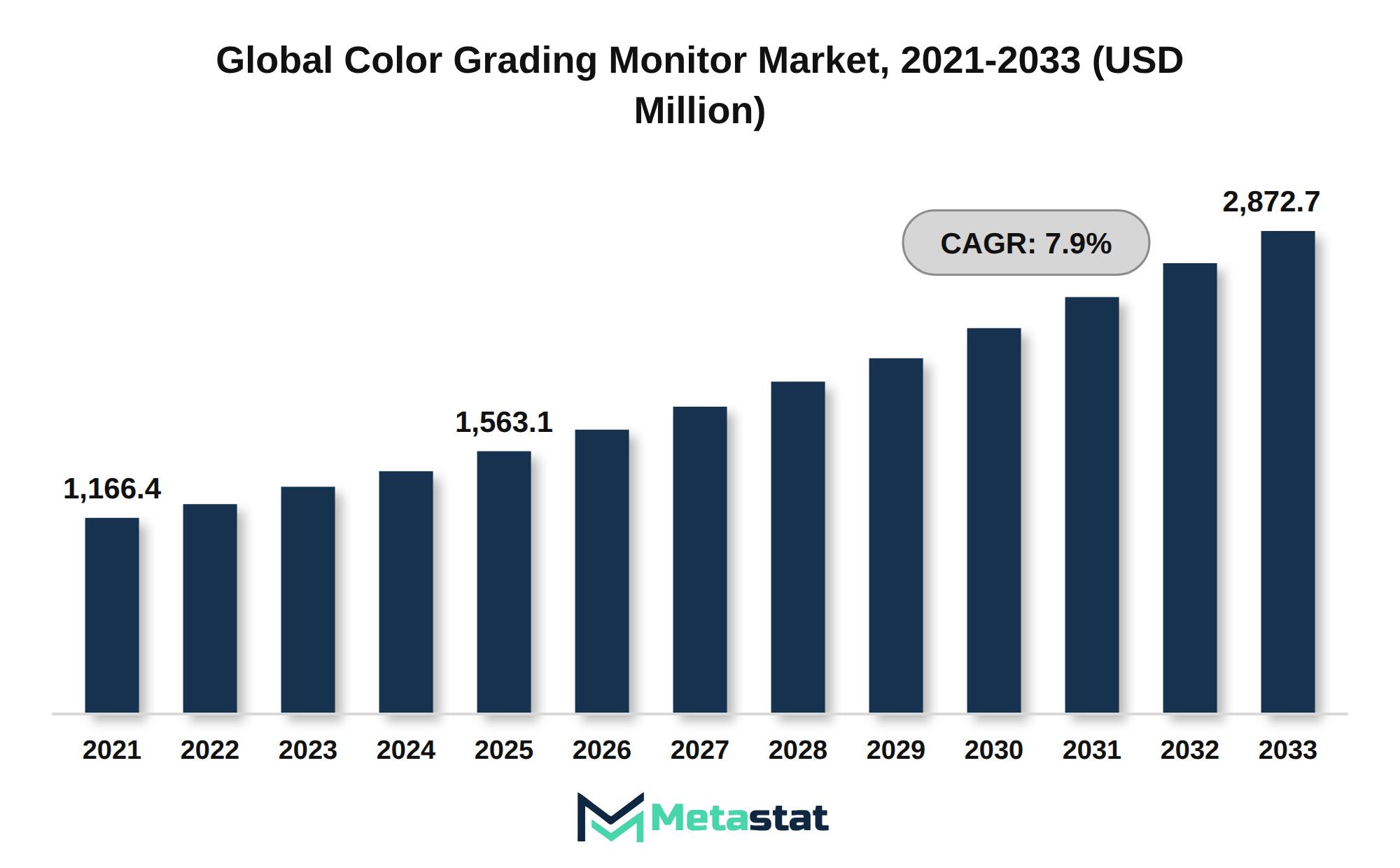
Increasing macro-economic factors significantly influence the Color Grading Monitor market. Positive trends in GDP growth and capital investments strengthen demand across various industries, including media, entertainment, and broadcast sectors. Enhanced consumer spending power contributes to higher investments in advanced technology, enabling businesses to adopt sophisticated color grading solutions.
The digital transformation phenomenon accelerates the integration of advanced technologies within production environments. Automation and the adoption of artificial intelligence reshape workflows, improving operational efficiencies and driving productivity. These enhancements increase the need for high-quality color grading monitors, driven by their facilitation of precise visual content creation, essential for the competitive environment.
The demand for color grading monitors aligns with the evolving consumer behaviors influenced by lifestyle changes and urbanization. The growing interest in high-definition content and visually appealing media fuels investments in professional-grade equipment, further expanding the market. Overall, robust macro-economic conditions and technological advancements present substantial growth opportunities within the Color Grading Monitor market.
Digital transformation plays a critical role in the growth of the Color Grading Monitor market. This transformation encompasses advancements in automation, artificial intelligence, and software adoption that streamline workflows in post-production and broadcasting sectors. Production companies prioritize these technologies to enhance operational efficiency and maintain high-quality output, resulting in increased demand for advanced color grading monitors.
Technological integration within production environments facilitates the digitization of legacy processes, enabling companies to adapt to modern workflow demands. Organizations embracing new technologies require monitors that support high-resolution formats and various display technologies. This integration promotes a shift toward displays including OLED and dual-layer LCD, which offer superior color accuracy and enhanced visual performance, crucial for color grading tasks.
The Color Grading Monitor market benefits significantly from the increasing adoption of these technologies, providing the necessary tools for creators and studios to deliver high-quality visual content. Investment in advanced display technologies results in improved productivity and streamlined operations, allowing companies to allocate resources effectively while meeting the rising expectations of consumers.
While digital transformation continues, the market is set for sustained growth. The emphasis on innovation and technological advancements supports the demand for color grading monitors that enable professionals to achieve precise color correction and grading results, essential in competitive industries including film, television, and commercial production.
Regulatory tightening and compliance hurdles present significant challenges within the Color Grading Monitor market. Manufacturers face increased scrutiny regarding product specifications and performance standards, raising operational costs. Compliance with evolving regulations requires substantial investments in research and development, creating barriers for new entrants and smaller players.
Macroeconomic headwinds, including inflationary pressures and supply chain disruptions, hinder market expansion. Rising costs of raw materials and components impact pricing strategies, making it challenging for suppliers to maintain competitive pricing. These factors contribute to an environment of capital stagnation, where investments in innovation and capacity expansion become increasingly difficult.
Geopolitical instability affects global supply chains, causing delays and increased expenses associated with procurement. This uncertainty discourages investment in the Color Grading Monitor market, limiting revenue growth opportunities for companies operating within the sector. Consequently, the combination of high capital investment requirements and escalating operating costs strains profitability, particularly for firms lacking sufficient financial resources.
Technological obsolescence poses another restraint. Rapid advancements in display technologies necessitate continuous upgrades. Manufacturers face substitution risks from alternative offerings that provide similar functionalities at lower costs. This dynamic environment demands ongoing adaptation and innovation, overwhelming companies struggling to keep pace with changes.
Infrastructure gaps and connectivity deficits complicate market penetration, particularly in emerging regions. Deployment bottlenecks arise from insufficient support systems, delaying product availability and limiting access for potential customers. Skilled labor deficiencies and talent gaps hinder operational efficiency, making it challenging for organizations to execute strategies effectively.
Data security vulnerabilities and privacy concerns increasingly influence consumer purchasing decisions, impacting the Color Grading Monitor market. Firms invest in robust cybersecurity measures to protect proprietary information and build customer trust. Market fragmentation and cultural barriers slow regional adoption, with varying preferences and needs across different demographics.
Finally, slowing downstream demand and industry cycle maturation lead to market saturation, challenging growth prospects. While competition intensifies, companies navigate these restraints to identify and capitalize on emerging opportunities within the Color Grading Monitor market.
The Color Grading Monitor market faces notable challenges due to geopolitical tensions and their impact on global supply chains. Ongoing trade deficits and tariff frictions disrupt the flow of materials and components necessary for production. Protectionist measures implemented by various countries increase procurement costs, affecting manufacturers' operational budgets and pricing strategies.
Technological disruptions further complicate market dynamics. Rapid advancements in display technologies necessitate significant investments in research and development. This requirement for complex integrations strains resources, leading to delays in product launches and market entry. Interoperability issues between different technologies exacerbate these challenges, hindering integration and increasing operational inefficiencies.
Rising input costs create margin pressures across the market. Fluctuations in raw material availability contribute to unpredictable pricing structures, complicating long-term planning and profitability. Workforce skill gaps in specialized areas, including color science and digital imaging, limit the industry's ability to innovate and adapt to evolving market demands.
Environmental concerns surrounding sustainability and decarbonization mandates impact operational practices. Companies face increased demands for eco-friendly solutions and reduced environmental footprints. Meeting these expectations often requires retrofitting existing products and processes, leading to implementation bottlenecks that delay market responsiveness.
The Color Grading Monitor market encounters significant challenges stemming from geopolitical fragmentation, technological disruptions, and rising costs. Addressing these issues is crucial for maintaining competitiveness and meeting evolving consumer expectations in a dynamic marketplace.
The Color Grading Monitor market experiences significant opportunities driven by emerging technological innovations. Advancements in display technologies, particularly OLED and MicroLED, enhance the quality of color reproduction and accuracy, attracting industries including film, broadcasting, and content creation. The increasing demand for high-definition content fuels the adoption of these monitors, leading to sustained growth in the segment.
Geographical expansion contributes to market opportunities. Regions including Asia Pacific and South America demonstrate increasing investments in media and entertainment industries, with an emphasis on upgrading infrastructures to support advanced production capabilities. This trend highlights the potential for manufacturers to establish a strong presence in these emerging markets, thereby enhancing revenue streams.
The market benefits from digital transformation initiatives across various sectors. Companies invest in integrated solutions that combine hardware with software for color grading, boosting operational efficiency and streamlining workflows. Content creation continues to evolve in a digital-first environment, and the integration of innovative technologies positions businesses to capitalize on new market demands.
Sustainability imperatives influence purchasing decisions. Organizations focus on eco-friendly practices, prompting manufacturers to develop energy-efficient products that align with these goals. This alignment attracts environmentally conscious buyers and enhances brand reputation in the competitive landscape.
Strategic consolidation among key players enhances competitive dynamics within the market. Mergers and acquisitions facilitate the creation of comprehensive product offerings, allowing companies to leverage combined expertise and broaden their market reach. This consolidation drives innovation, benefiting customers through improved product features and enhanced service delivery.
Lastly, evolving buying behaviors reflect a shift toward digital procurement. Buyers prioritize online channels for their purchasing needs, leading to the expansion of direct-to-consumer strategies among manufacturers. Such shifts in commercial models present opportunities for the market to adapt and capture the growing segment of tech-savvy consumers seeking high-quality color grading solutions.
The Global Color Grading Monitor market is segmented based on Display Technology, Resolution, Screen Size, and End User.
Valued at USD 774.4 million in 2026, the OLED segment is projected to reach USD 1,427.1 million by 2033, at a CAGR of 9.1% during the forecast period. This growth stems from advancements in display technology that improve color accuracy and visual fidelity, critical for professionals in the Color Grading Monitor market. The transition toward higher-resolution displays and increased demand for accurate color representation drives adoption among post-production houses and color grading studios.
Technological maturation in OLED technology facilitates significant upgrades in performance, enabling better contrast ratios and faster response times. These attributes appeal to film and television production companies seeking to improve post-production processes. While the market evolves, the integration of OLED panels into color grading monitors likely leads to increased operational efficiencies and improved end-user satisfaction.
Emerging trends indicate a shift in consumption patterns, with end-users gravitating toward monitors that offer superior color reproduction capabilities. This shift influences purchasing decisions across various sectors, including broadcast networks and television stations. The continuous evolution of OLED technology provides strategic opportunity windows for manufacturers to introduce innovative products that meet the specific needs of the market.
Pricing volatility in raw materials associated with OLED production presents potential margin pressures for suppliers. Strategic partnerships and investments in supply chain resilience mitigate these risks, ensuring a stable supply of essential components. By navigating these challenges effectively, players in the Color Grading Monitor market capitalize on the growing demand for high-performance display solutions.
Growing demand for advanced display technologies influences the expansion of the Dual-Layer LCD segment within the Color Grading Monitor market. This segment is estimated to reach USD 567.1 million by 2033, at a CAGR of 8.8% during the forecast period. Enhanced picture quality and improved color accuracy drive adoption among end-users including post-production houses and color grading studios. While these facilities increasingly seek high-performance monitors for precise color grading tasks, Dual-Layer LCDs emerge because a preferred choice due to their superior capabilities compared to traditional displays.
Technological maturation significantly impacts the segment. Continuous advancements in manufacturing processes and materials improve the performance attributes of Dual-Layer LCDs. Next-gen upgrades in display technology ensure that these monitors maintain relevance in a highly competitive landscape. Product evolution, characterized by enhanced resolution and color reproduction, positions Dual-Layer LCDs favorably against emerging alternatives within the market.
End-use dynamics play a crucial role in shaping demand patterns. Increased reliance on high-quality visual content across industries including film production and broadcasting heightens the necessity for reliable color grading tools. Consumption shifts towards more sophisticated display solutions reflect a broader trend toward quality and precision in media production, benefiting the Dual-Layer LCD segment specifically.
Regulatory compliance standards and certifications further contribute to segment growth. Adherence to industry standards for color accuracy ensures that Dual-Layer LCDs gain trust among professional users. Cost structures and pricing volatility represent challenges; however, the segment's competitive pricing solutions enhance its appeal among budget-conscious buyers. Overall, the Dual-Layer LCD segment stands to capitalize on strategic opportunity windows created by evolving market demands and technological advancements.
Technological advancements significantly impact the Conventional LED-Backlit LCD segment within the Color Grading Monitor market. Enhanced display quality and energy efficiency create strong demand from post-production houses and color grading studios. These facilities prioritize reliable and high-performance monitors for precise color grading tasks. Adoption of this display technology accelerates due to the industry's emphasis on improvements in picture accuracy and consistency.
Market dynamics indicate a growing preference for Conventional LED-Backlit LCD monitors among broadcasting networks and television stations. Emerging production techniques and increased content creation in high-definition formats require advanced monitoring equipment. These factors contribute to the segment's expansion, attracting investments and driving product evolution in design and functionality.
The segment is expected to reach USD 742 million by 2033. Increasing competition and pricing pressures influence market strategies. Manufacturers focus on cost-effective solutions and optimize supply chains to maintain profitability while meeting quality standards. Strategic opportunity windows arise from shifts in consumer preferences, encouraging innovation and the introduction of next-generation upgrades.
Emerging technologies including MicroLED are expected to drive significant growth in the Color Grading Monitor market. This segment is projected to grow at a CAGR of 11.7% during the forecast period. Demand for enhanced image quality and higher brightness levels fuels adoption among post-production houses and color grading studios. Next-gen upgrades to display technologies support industry players in capturing this growing interest.
The shift toward higher resolution displays influences consumer preferences and consumption patterns, leading to increased investments in advanced display solutions. Regulatory compliance standards related to color accuracy and image quality further increase demand for innovative technologies. With strategic opportunity windows emerging, companies focusing on product evolution effectively differentiate themselves in the market.
Capital investment in research and development focuses on delivering superior viewing experiences and maintaining a competitive edge. While the market evolves, manufacturers encounter various challenges, including cost structures and pricing volatility, impacting margins. Addressing these factors plays a crucial role in the sustainability and profitability of companies operating within this dynamic segment.
Valued at USD 295.8 million in 2026, the Full HD and WUXGA segment is projected to reach USD 328.1 million by 2033, reflecting a compound annual growth rate of 1.5% during the forecast period. Demand for Full HD and WUXGA displays arises from the growing need for high-quality visual experiences in various sectors, including film production and media broadcasting. This segment provides essential clarity and detail for color grading tasks.
Investment in next-generation technologies enhances the capabilities of Full HD and WUXGA monitors, facilitating improved precision in color grading workflows. The evolution of display technologies continues to create opportunities for manufacturers to innovate and address the specific preferences of end-users. Regulatory compliance standards surrounding display quality and performance influence purchasing decisions and drive market dynamics.
Filmmakers, editors, and content creators increasingly prioritize high-resolution displays, leading to expansion in the market for Full HD and WUXGA monitors. This shift in consumption patterns reflects broader trends in media consumption and the continuous demand for superior visual quality. Manufacturers that align their offerings with these evolving expectations capitalize on strategic opportunities within the segment.
Continued advancements in display technologies drive demand within the QHD segment of the Color Grading Monitor market. This enhanced resolution offers superior image quality, attracting professionals in post-production and film industries. With a market value projected to reach USD 298.2 million by 2033, the segment reflects a compound annual growth rate (CAGR) of 5% during the forecast period. Increasing adoption of high-definition content alongside the need for high-quality visual outputs supports this growth trajectory. The rising number of projects focusing on high-resolution media and the expansion of creative industries further drive demand for QHD monitors. While various end users prioritize precision and clarity, manufacturers align their product offerings with these evolving market expectations.
Continuous advancements in content production techniques drive demand for DCI 2K resolution monitors within the Color Grading Monitor market. The need for higher-quality images and precise color accuracy remains critical for post-production houses and film studios, resulting in a growing preference for DCI 2K solutions. The DCI 2K segment is expected to reach USD 197.4 million by 2033, reflecting increasing investment in this technology.
Emerging trends in visual effects and animation further enhance the demand for DCI 2K monitors. VFX and animation studios adopt these monitors for their projects, and the market experiences a notable shift toward higher resolution requirements. The enhancement of DCI 2K technology supports its integration into various applications, ensuring users achieve superior results in color grading and editing processes.
Regulatory standards regarding content quality push production companies to upgrade their equipment. Compliance with these standards leads to an uptick in investments in advanced display technologies, particularly DCI 2K monitors, which guarantee the necessary image quality. This shift strengthens the segment's presence in the broader Color Grading Monitor market.
Significant advancements in display technology drive interest in the 4K/UHD sub-segment of the Color Grading Monitor market. This evolution supports faster processing and clearer visuals, catering to various end-user segments, including film and television production companies, broadcast networks, and post-production houses. Valued at USD 197.4 million in 2026, the segment is projected to grow at a CAGR of 9.7% during the forecast period.
Increased consumer demand for high-resolution content drives the adoption of 4K/UHD monitors. While more content becomes available in ultra-high definition, production studios and broadcasting networks prioritize 4K/UHD technology to ensure they meet viewer expectations. Advancements in camera technology and editing software enable higher-quality outputs, further driving growth in this segment of the market.
Investment in 4K/UHD technology aligns with trends across streaming platforms and home entertainment systems, where high-quality visuals enhance the viewing experience. Companies that focus on developing innovative 4K/UHD monitors are well-positioned to capture a share of the growing demand within the Color Grading Monitor market. This trend reflects a broader shift toward higher resolution across various media formats, establishing 4K/UHD because a standard in content creation and consumption.
Advancements in display resolution significantly impact the Color Grading Monitor market, with increasing demand for clarity and detail in visual content driving interest in higher resolution options. The segment focusing on resolutions of 5K and above attracts professionals across various industries, particularly in realms where precision in color grading is essential, including film production, post-production houses, and VFX studios. Enhanced display capabilities enable creators to assess images with greater accuracy, leading to higher-quality outputs.
Technological maturation in image processing and display technology contributes to the expansion of this segment. Innovations in display materials and processing algorithms result in enhanced performance and efficiency, prompting industry players to invest in next-generation upgrades. The continued evolution of 5K displays aligns with heightened expectations from end users, who demand tools that facilitate superior color accuracy and detail in demanding applications.
End-use dynamics reflect a shift towards adopting displays that support advanced resolutions, driven by a growing focus on content quality. Professionals in the film and television production sectors prioritize high-resolution monitors to achieve the desired visual fidelity, further increasing the segment's relevance. While creators increasingly migrate towards high-definition formats, the appetite for 5K and above displays within the market continues to grow, presenting strategic opportunity windows for manufacturers and suppliers.
Disruptive alternatives, including emerging technologies in display fabrication, pose both a challenge and an opportunity. While traditional display technologies remain popular, innovations like MicroLED and other advanced materials threaten to change market standards. However, ongoing demand for 5K and above monitors highlights the necessity for suppliers to adapt and innovate, ensuring alignment with evolving consumer expectations and industry benchmarks.
Valued at USD 381.6 million in 2026, the Up to 24 Inches segment is projected to reach USD 514.8 million by 2033, at a CAGR of 4.4% during the forecast period. This segment experiences growth driven by increasing demand for compact and versatile display solutions among professionals in the film and broadcasting industries. Post-production houses and color grading studios increasingly adopt smaller monitors for their efficiency and space-saving attributes, influencing market dynamics.
Technological maturation in display technologies enhances product offerings within this segment. The transition to OLED and high-resolution displays significantly improves color accuracy and visual fidelity, attracting interest from independent colorists and content creators. These advancements result in a competitive pricing landscape, driving firms to innovate and differentiate their products. End-use dynamics reflect a shift toward higher quality standards, further increasing the segment's appeal in the Color Grading Monitor market.
Cost structures and pricing volatility impact market dynamics, compelling manufacturers to optimize production processes. This optimization enables more competitive pricing while maintaining quality, which directly supports consumer adoption. Strategic opportunities arise through partnerships and collaborations aimed at enhancing product capabilities, ensuring the segment remains resilient in the face of evolving market demands.
Market dynamics for the 25-32 Inches segment of the Color Grading Monitor market emphasize the increasing demand for medium-sized monitors in various applications, particularly in the film and broadcasting sectors. This growth stems from the surge in digital content creation and streaming services, prompting producers and content creators to invest in high-quality display solutions that enhance color accuracy and visual fidelity. The adaptation of advanced technologies, including OLED and Dual-Layer LCD, significantly contributes to this segment's expansion, providing superior performance and meeting the rigorous demands of professional users.
Valued at USD 1,603.2 million by 2033, the segment is projected to reach this figure at a CAGR of 8.6% during the forecast period. High-resolution capabilities and improved color grading features significantly influence end-user choices, especially among post-production houses and color grading studios. While the market evolves, competition among manufacturers intensifies, leading to further innovations and enhancements in product offerings, ensuring that professionals have access to advanced technology that aligns with their operational needs. This competitive landscape encourages strategic partnerships and collaborations, creating a robust ecosystem around the Color Grading Monitor market.
Increasing adoption of larger display sizes in professional environments fuels growth in the Above 32 Inches segment. This trend reflects the demand from film production companies and post-production houses, which require monitors that deliver high levels of detail and color accuracy. The segment is projected to reach USD 754.7 million by 2033, driven by the need for enhanced visual performance in color grading applications.
Development of advanced display technologies, including OLED and MicroLED, contributes to the segment's expansion by providing superior color reproduction and contrast ratios. The market for Color Grading Monitors benefits from ongoing technological advancements that enhance screen size options, enabling greater immersion and precision in visual editing tasks. While content creators continue to seek high-quality solutions, demand for larger monitors is expected to remain strong.
Valued at USD 462.5 million in 2026, the Post-Production Houses and Color Grading Studios segment is projected to reach USD 721.6 million by 2033, at a CAGR of 6.6% during the forecast period. Rising demand for high-quality color grading solutions in film, television, and digital media production significantly influences this segment. Increased investment in post-production technology, particularly in the area of high-definition and ultra-high-definition content, drives adoption among industry players. The transition toward cloud-based workflows and remote collaboration tools enhances operational efficiencies, further propelling market growth.
While post-production houses and color grading studios prioritize image quality and accuracy, the integration of advanced color grading monitors becomes vital. These monitors facilitate precise color representation, crucial for achieving the desired aesthetic in productions. The need for compliance with industry standards and regulations regarding color accuracy contributes to the segment's expansion, ensuring that professionals meet the expectations of clients and audiences alike.
Competition within the Color Grading Monitor market intensifies due to various manufacturers innovating to offer superior display technologies tailored for color grading applications. By focusing on next-generation upgrades, including improved calibration tools and HDR capabilities, suppliers enhance product value and appeal to a broader customer base. This dynamic environment creates strategic opportunities, enabling post-production houses and color grading studios to leverage advancements that align with their operational requirements.
Growing emphasis on high-quality content production fuels demand within the Broadcast Networks and Television Stations segment of the Color Grading Monitor market. This segment is estimated to reach USD 512.5 million by 2033, at a CAGR of 6.7% during the forecast period. Increasing competition among broadcasters for viewer engagement drives investments in advanced color grading monitors. Enhanced capabilities of these monitors enable broadcasters to deliver superior visual quality, which directly impacts audience retention and satisfaction.
Adoption of next-generation technologies including HDR (High Dynamic Range) further influences segment expansion. This technology allows for a wider color gamut and improved contrast, making it essential for broadcasters aiming to produce visually captivating content. The transition to 4K and higher resolutions necessitates the use of advanced color grading monitors, ensuring that color accuracy and detail meet industry standards.
Cost pressures related to high-quality production do exist; however, the potential for improved audience engagement and market share offsets these challenges. Regulatory compliance in content quality and broadcasting standards reinforces the necessity for these investments. The Color Grading Monitor market reflects these dynamics, driven by broadcasters adjusting to evolving viewer preferences and technological advancements.
Continued investment in film and television production fuels demand for advanced color grading monitors. Increasing competition among production companies compels them to adopt high-quality display technologies to enhance visual storytelling. The segment is expected to reach USD 460.5 million by 2033, reflecting a notable growth trajectory stemming from the need for precision in color grading and post-production processes.
Technological maturation in display capabilities drives the adoption of advanced monitors, enabling production companies to deliver superior visual quality. The shift towards high-definition content production, including 4K and beyond, contributes to the demand for high-performance monitors that support these resolutions. This evolution in content requirements encourages continuous upgrades in color grading technology.
End-use dynamics within the film and television production companies segment highlight the importance of accurate color representation. Regulatory compliance standards in broadcasting and streaming reinforce the necessity for reliable grading tools, further boosting market growth. Production companies prioritize color accuracy in their workflows, ensuring that visual elements align with creative intentions.
Strategic opportunity windows arise from emerging trends in virtual production and real-time rendering. The integration of advanced technologies into workflows opens avenues for innovative applications and enhances the creative capabilities of film and television production companies. This evolution drives investment in next-generation upgrades within the color grading monitor market.
Significant growth is anticipated within VFX, Animation and Virtual Production Studios, projected to expand at a CAGR of 10.7% during the forecast period. The demand for advanced color grading monitors in this segment is driven by increasing requirements for high-quality visual content and immersive experiences, particularly in gaming, film, and interactive media. Innovations in technology contribute to this growth, with studios investing in next-generation upgrades that enhance production capabilities and streamline workflows.
The evolution of creative processes in visual effects and animation continually influences consumption patterns. While content creators explore more sophisticated storytelling techniques, the need for precise color grading solutions becomes more pronounced. This trend aligns with broader shifts in the Color Grading Monitor market, where enhanced resolution and display technologies are essential for meeting industry standards.
Adoption of advanced display technologies, including OLED and emerging emissive displays, facilitates segment expansion. These technologies facilitate accurate color reproduction, essential for professionals aiming to deliver visually captivating content. The competitive landscape in the market intensifies because players strive to innovate and capture a larger share of the growing demand from VFX and animation studios.
Investment in this segment is expected to increase because studios prioritize high-performance equipment. With revenues projected to reach USD 460.5 million by 2033, VFX, Animation and Virtual Production Studios are positioned to significantly influence market dynamics. The commitment to creating high-quality content ensures a sustained demand for advanced color grading monitors, reinforcing their importance in the broader color grading ecosystem.
Demand for color grading monitors among independent colorists, editors, and content creators arises from the increasing need for high-quality visual content across various media. These professionals prioritize accurate color representation and calibration, which enhances production quality. Rapid technological advancements in display technologies contribute to the segment's growth, enabling users to access sophisticated tools for precise color grading. Adoption of next-generation display technologies, including OLED and MicroLED, further improves the performance standards expected within this end-user group.
The transition to higher visual standards within film and television production fuels market expansion. Independent colorists and editors require monitors that deliver high detail and color fidelity, which directly influences their creative output. Enhanced capabilities in digital content creation and editing have resulted in significant shifts in consumption patterns, with professionals increasingly opting for monitors that support advanced color grading workflows.
Regulatory compliance standards surrounding media production and broadcasting continue to impact purchasing decisions. Meeting these standards requires equipment that ensures reliable and accurate color representation, driving demand in the Color Grading Monitor market. Cost structures within this segment are influenced by the necessity of high-performance equipment, leading to pricing volatility based on technological advancements and market competition.
Strategic opportunities emerge from the increasing reliance on high-quality visual content in advertising and online platforms. Independent content creators seek tools that offer both performance and value, leading to a diverse range of products catering to varying budgets and needs. Investment in advanced color grading tools remains crucial for enhancing creativity and facilitating the production of visually compelling narratives.
Advertising and Creative Agencies increasingly rely on high-quality monitors for color grading tasks, driven by growing consumer demand for visually stunning content across various media. The push for superior visual experiences influences agencies to invest in advanced display technologies, enhancing their capabilities to produce compelling advertisements and creative projects that attract audiences.
Technological advancements in display capabilities allow these agencies to achieve precise color accuracy, vital for maintaining brand integrity and ensuring consistent visual messaging. The integration of next-generation upgrades, including OLED and MicroLED technologies, supports the shifting landscape of digital content creation and distribution, enabling agencies to stay competitive in the evolving market.
Competitive pressures create a focus on product evolution, with agencies seeking the latest innovations in color grading monitors to meet client expectations. These monitors facilitate efficient workflows and enhance collaboration on projects, directly impacting overall productivity and quality of deliverables.
Market dynamics reflect a shift in consumption patterns towards immersive and engaging visual content, prompting agencies to prioritize investments in color grading technologies. While the demand for high-quality content intensifies, agencies that adopt advanced color grading solutions strengthen their market position and enhance their service offerings within the Color Grading Monitor market.
Strategic opportunity windows emerge because agencies evaluate cost structures and pricing volatility associated with the latest display technologies. Balancing investments in high-performance color grading monitors against budgetary constraints becomes crucial in maintaining operational efficiency while maximizing the quality of creative output.
Increased focus on education and corporate media enhances demand for color grading monitors. Institutions strive for high-quality content delivery, driving the need for advanced display solutions that support professional-grade color accuracy. This emphasis on quality extends to government production, where the demand for visually compelling media content reflects the growing significance of effective communication.
Technological maturation within display technologies contributes to segment expansion. Continuous improvements in resolution, color reproduction, and overall performance align with consumer expectations in educational and corporate environments. Consequently, educational institutions and corporate media companies increasingly adopt advanced monitors to facilitate high-quality presentations and training materials.
End-use dynamics within the segment indicate a shift toward higher standards for visual media. Content creators in education and corporate sectors have begun to recognize the value of investing in superior color grading monitors to enhance production quality. This transition results in improved engagement and efficacy of audiovisual materials, which supports achieving organizational goals.
The Color Grading Monitor market experiences rising consumption shifts driven by digital media consumption trends. An increase in online learning and virtual corporate meetings demands effective visual communication tools. While organizations adapt to these trends, investments in state-of-the-art monitors become a priority to maintain competitiveness and relevance in the evolving landscape.
Regulatory compliance standards, particularly in governmental content production, further influence purchasing decisions. Adherence to guidelines surrounding accessibility and quality mandates the use of advanced display technologies. This focus on compliance creates an environment where high-performance color grading monitors are essential for fulfilling production requirements.
Strategic opportunity windows arise due to vendors introducing innovative solutions tailored to educational and corporate media needs. Companies investing in research and development for next-generation displays will likely capture substantial market share. The ongoing evolution of display technologies presents significant potential for growth within this sub-segment of the market.
Based on geography, the Global Color Grading Monitor market is divided into North America, Europe, Asia-Pacific, South America, Middle East, and Africa.
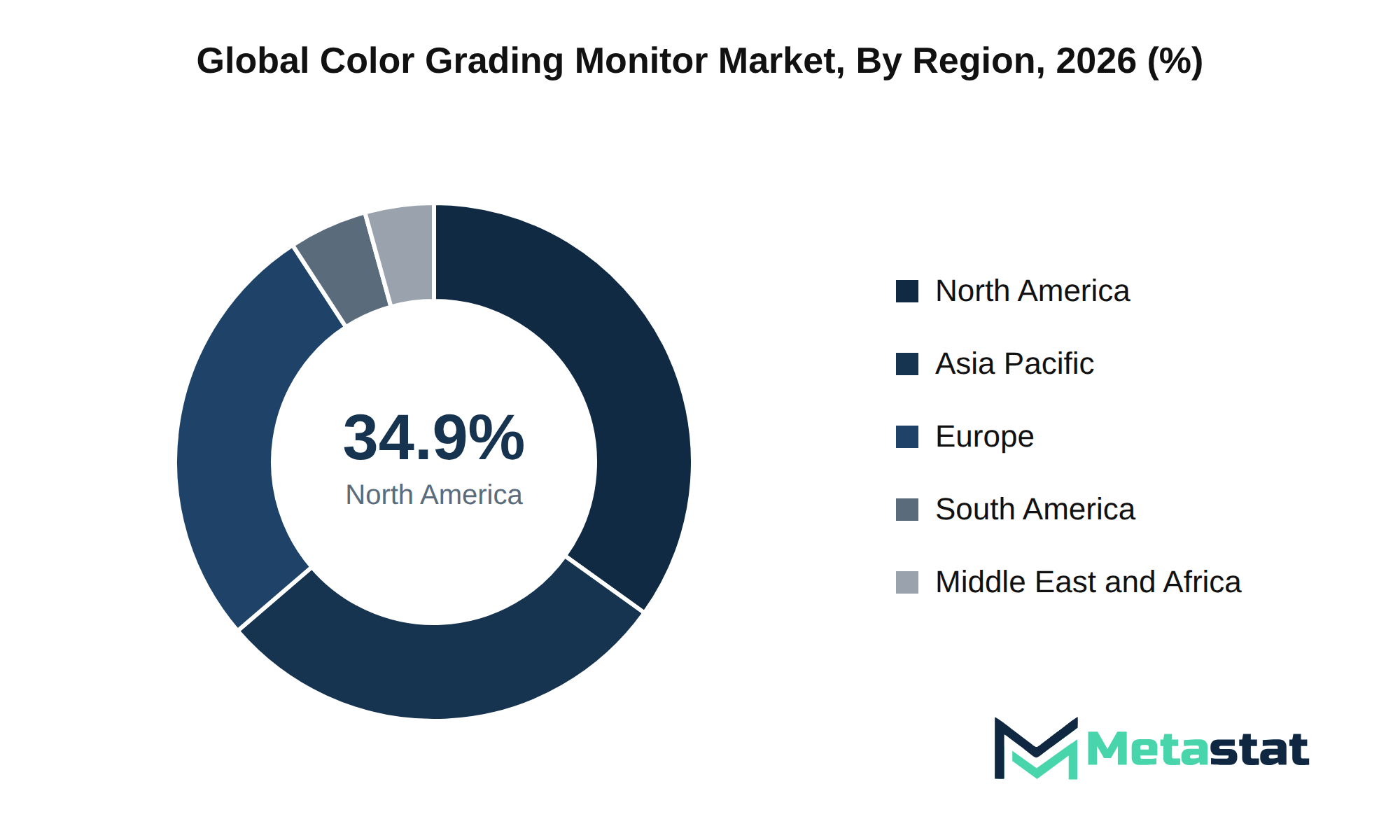
The Color Grading Monitor market in North America is positioned for significant growth, with a projected CAGR of 7.9% during the forecast period, culminating in a market size of USD 944.2 million by 2033. The region commands a substantial 34.9% share of the global market in 2025, highlighting its crucial role in the overall industry.
Primary demand drivers include the escalating need for high-quality visual content in various sectors including film, television, and advertising. Post-production houses and color grading studios show strong demand for advanced display technologies, enhancing their production capabilities. Infrastructure modernization, particularly in the United States, underpins the expansion of the Color Grading Monitor market, driven by studios upgrading to meet increasing quality standards.
Localized manufacturing densities contribute to competitive pricing and shorter lead times, further stimulating market growth. In Canada and Mexico, increased investment in creative industries creates a conducive environment for market expansion. The presence of multiple domestic market participants, including LG Electronics Inc. and Sony Corporation, strengthens the regional market, while cross-border trade corridors facilitate access to advanced technologies and supplies.
Emerging technologies, particularly OLED and dual-layer LCDs, demonstrate significant potential within the market. High-value replacement cycles drive upgrades in existing facilities, because industry players seek to leverage improved display resolutions and sizes. These factors collectively enhance competitive dynamics, positioning North America because a leader in the Color Grading Monitor market.
The Color Grading Monitor market in Europe benefits from various driving factors, including the region's strong focus on film and television production capabilities. Countries including Germany, France, and the UK experience increased investment in high-quality content creation, necessitating advanced color grading technologies. The presence of numerous post-production houses and broadcasting networks enhances market demand, supported by growing consumer expectations for superior visual experiences.
Regional dynamics reveal an extensive competitive landscape featuring established players, including LG Electronics Inc. and Sony Corporation, along with emerging firms contributing to innovation in display technology. The segment of OLED displays, projected to achieve a compound annual growth rate of 9.1%, illustrates the rising preference for advanced display solutions among end users.
While the market evolves, localized procurement dynamics influence purchasing decisions, with film and media production companies prioritizing suppliers offering tailored solutions. Cultural nuances, including distinct preferences in visual aesthetics among European consumers, shape the demand characteristics within this market.
Infrastructure readiness is vital, with significant advancements in energy grid resiliency supporting regional manufacturing capabilities. The alignment of supply chain regionalization strategies facilitates efficient distribution channels, enabling timely delivery of high-performance monitoring solutions to end users.
Overall, the Color Grading Monitor market in Europe stands poised for considerable growth, driven by an effective blend of technological advancements, competitive pressures, and regional market nuances. The region's strong emphasis on high-quality production creates a favorable environment for further market expansion.
The Asia-Pacific region plays a critical role in the Color Grading Monitor market, with a share of 28.8% in 2025. The rapid growth of the entertainment and media industries in countries including China, Japan, and India drives demand for advanced color grading solutions, particularly in post-production houses and broadcasting networks.
Infrastructure modernization across Asia-Pacific further supports the market, with investments in high-definition content production and broadcasting technology. Emerging market front-runners, including South Korea and Australia, experience increasing adoption rates driven by a growing pool of content creators and production studios seeking high-quality color grading monitors.
Localized manufacturing densities become prominent because companies recognize the benefits of nearshoring initiatives to meet regional demand. This approach enhances the availability of products tailored to local preferences, while increased foreign direct investment (FDI) flows into the region strengthen the supply chain.
Cultural nuances and regional B2B buying behaviors influence procurement dynamics, because buyers prioritize quality and performance when selecting color grading monitors. The market experiences incremental growth vectors, reflecting the rising importance of visual content across various sectors, including advertising, film, and digital media.
With domestic market leaders competing for market share, ongoing vendor consolidation trends further enhance competitiveness. The Asia-Pacific market for color grading monitors is expected to experience significant growth in the coming years, driven by a combination of technological advancements and evolving consumer needs.
In South America, the Color Grading Monitor market demonstrates growth potential, driven primarily by increasing demand for high-quality video content across various sectors. Brazil and Argentina emerge because key players, with expanding film and television production activities contributing significantly to market dynamics. The region's investment in creative industries supports the adoption of advanced monitoring technologies.
Despite accounting for 4.9% of the global market share in 2025, South America remains underpenetrated compared to other regions. This provides opportunities for vendors to capture market share through localized manufacturing and strategic partnerships. Emerging trends indicate a shift toward more sophisticated display technologies, enhancing overall market competitiveness.
Cultural preferences for local content further influence purchasing behaviors, prompting an increase in demand for monitoring solutions tailored to regional needs. The Color Grading Monitor market reflects a growing recognition of the necessity for precise color accuracy in post-production processes, ultimately contributing to the overall quality of visual media produced in South America.
The Color Grading Monitor market in the Middle East and Africa presents unique opportunities driven by the increasing demand for high-quality visual content across various sectors. Countries including Saudi Arabia and the UAE invest significantly in media production and entertainment, enhancing the market's growth. South Africa's film industry further increases demand for advanced color grading solutions. Infrastructure modernization initiatives support the development of local studios and broadcasting facilities, which increases adoption rates of advanced display technologies.
Emerging market front-runners focus on local procurement dynamics and vendor consolidation trends to enhance competitive positioning. The region's cultural nuances influence B2B buying behaviors, with buyers prioritizing high-performance monitors tailored to specific application needs. The market benefits from foreign direct investment flows, creating partnerships that enhance technology availability and production capabilities.
With a share of 4.3% of the global market in 2025, the Middle East and Africa will experience incremental growth vectors driven by technological advancements and increased content production. The Color Grading Monitor market is poised for expansion owing to local manufacturers and international players collaborating to meet rising customer expectations.
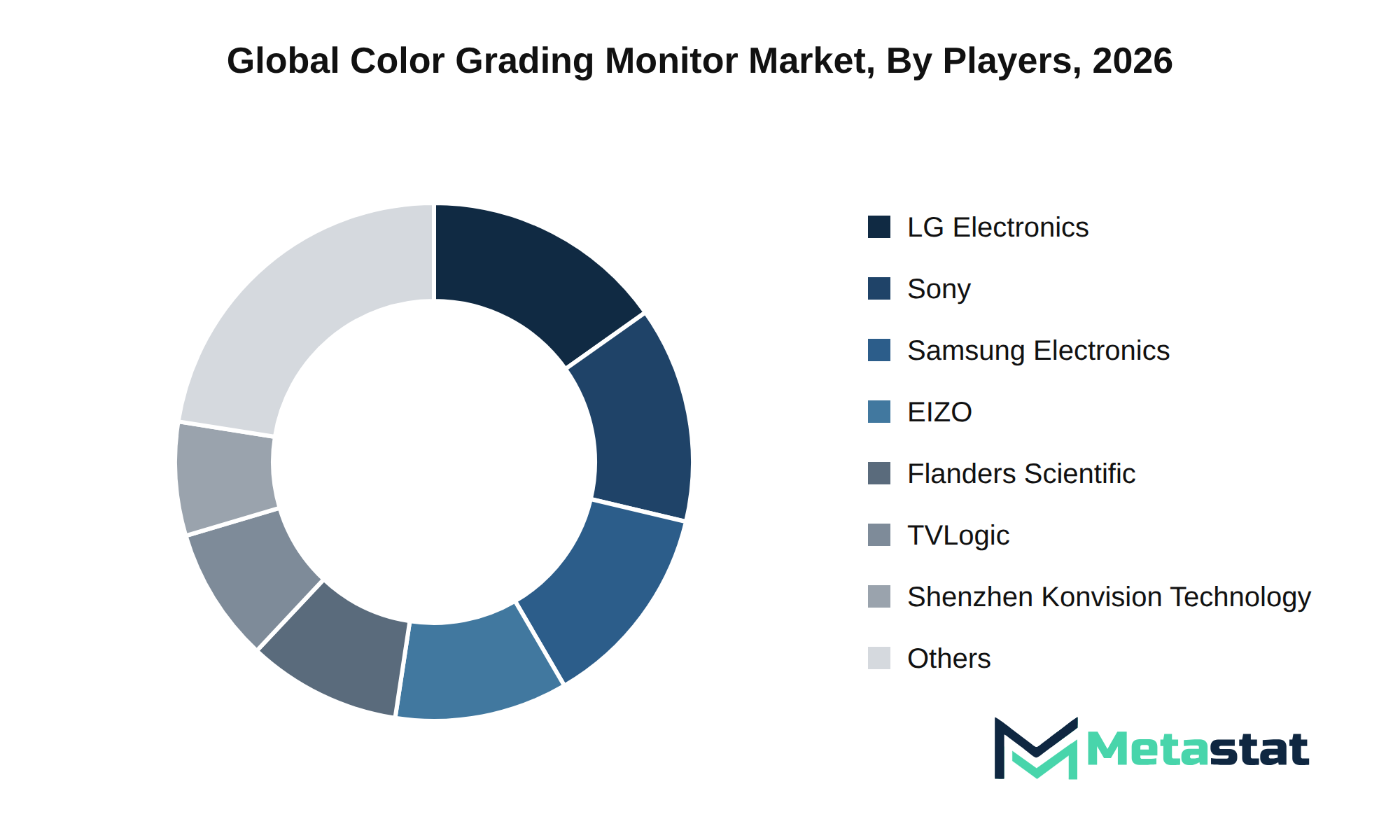
The Color Grading Monitor market exhibits a dynamic competitive environment driven by advancements in technology and product differentiation. Key players, including LG Electronics Inc., Sony Corporation, and EIZO Corporation, focus on enhancing display technologies and resolutions to meet the evolving demands of post-production houses and broadcasting networks. The emergence of OLED and dual-layer LCD technologies has created opportunities for differentiation, with companies like Flanders Scientific, Inc. and TVLogic Co., Ltd. leading in innovation.
Strategic alliances, joint ventures, and partnerships among firms including Samsung Electronics and Canon Inc. contribute to a robust ecosystem that promotes innovation and market penetration. Product portfolios are strengthened by investments in R&D, enabling players to establish proprietary technology moats that protect against new entrants. Companies like Blackmagic Design Pty Ltd. and Panasonic Corporation leverage their intellectual property portfolios to maintain competitive advantages and ensure technological defensibility.
Barriers to entry in the market include significant capital requirements and established brand equity, which create challenges for potential startups. The competitive outlook indicates a consolidation trend, where larger players seek to enhance their market positions through mergers and acquisitions. This strategy allows for greater procurement leverage and improved supply chain dynamics, further reinforcing their positions in the Color Grading Monitor market.
Market size is forecast to rise from USD 1,563.1 million in 2025 to over USD 2,872.7 million by 2033. The base case projects growth at a CAGR of 7.9%, reflecting robust demand across various sectors employing color grading monitors. Factors influencing this growth include advancements in display technologies, increasing content production requiring high-quality visual standards, and an expanding base of end users including post-production houses and VFX studios.
In a bullish scenario, heightened investment in next-generation technologies could accelerate adoption rates, leading to faster market expansion. Conversely, a bearish outlook stems from economic downturns impacting capital expenditures in creative industries, potentially slowing growth. Regardless of the scenario, the Color Grading Monitor market faces evolving challenges and opportunities influenced by macroeconomic conditions, regulatory changes, and shifts in consumer preferences.
Strategic capital allocation and infrastructure commitments from key industry players will significantly shape future market dynamics. Increased focus on research and development for innovative display solutions and the integration of emerging technologies will drive competition and differentiate products in the pipeline. Understanding structural consumption shifts and unmet enterprise needs remains crucial for stakeholders aiming to capitalize on high-growth pockets within the market.
The report strategically identifies and profiles the key market players and analyses their core competencies in each sub-segment of the Color Grading Monitor market.
Report Attributes | Details |
Study Period | 2021-2033 |
Base Year | 2025 |
Estimated Year | 2026 |
Forecast Period | 2026-2033 |
Historical Period | 2021-2025 |
Growth Rate | CAGR 7.9% from 2026 to 2033 |
Revenue Unit | USD million |
Segmentation | By Display Technology, Resolution, Screen Size, End User, and Region |
By Region | North America (By Display Technology, Resolution, Screen Size, End User, and Country)
|
Europe (By Display Technology, Resolution, Screen Size, End User, and Country)
| |
Asia Pacific (By Display Technology, Resolution, Screen Size, End User, and Country)
| |
South America (By Display Technology, Resolution, Screen Size, End User, and Country)
| |
Middle East and Africa (By Display Technology, Resolution, Screen Size, End User, and Country)
|
Find answers to common questions about this report
The Color Grading Monitor market size was valued at USD 1,563.1 million in 2025, according to the Metastat Insights study.
The Color Grading Monitor market is projected to grow at a CAGR of 7.9% during the forecast period from 2026 to 2033.
The North America Color Grading Monitor market size is estimated to reach USD 944.2 million by 2033.
The Display Technology segment leads the Color Grading Monitor market, with OLED technology projected to reach USD 1,427.1 million by 2033, reflecting a compound annual growth rate of 9.1%. This growth positions OLED because the dominant technology within the market.
Robust macro-economic conditions and technological advancements drive the Color Grading Monitor market. Increased consumer spending and digital transformation, including automation and artificial intelligence, improve operational efficiencies and boost demand for high-quality color grading solutions across various industries, particularly in media and entertainment.
North America holds the dominant share of the Color Grading Monitor market, with a value of USD 944.2 million projected for 2033, representing 34.9 percent of the total market.
Regulatory tightening and compliance hurdles restrain Color Grading Monitor market growth by raising operational costs for manufacturers and creating barriers for new entrants and smaller players. Macroeconomic headwinds, including inflationary pressures and supply chain disruptions, hinder market expansion by increasing raw material costs and impacting pricing strategies.
Robust macro-economic conditions and technological advancements favor product adoption in the Color Grading Monitor market. Increased consumer spending power drives investments in advanced technology, while digital transformation enhances operational efficiencies, raising the demand for high-quality monitors essential for precise visual content creation.
The Color Grading Monitor market is estimated to reach a valuation of USD 2,872.7 million by 2033.
Key players operating in the Color Grading Monitor market include LG Electronics Inc., EIZO Corporation, Flanders Scientific, Inc., Sony Corporation, TVLogic Co., Ltd., and Blackmagic Design Pty Ltd.
The analysts below cover Electronics and Semiconductor research at Metastat Insights.
LEAD ANALYST
Utkarsh Khirodkar is a Lead Market Research Analyst at MetaStat Insight, specializing in market intelligence, technology sector assessments, and competitive strategy.

PRINCIPAL CONSULTANT - ENTERPRISE AI & EMERGING TECHNOLOGIES
Banking & Finance · Electronics and Semiconductor · Energy and Power · Healthcare IT · Information & Technology · Professional Services
Vijay Gunti is a Principal Consultant at MetaStat Insight, bringing over two decades of experience across enterprise digital transformation, technology strategy, and intelligent systems.

PRINCIPAL CONSULTANT - QUALITY SYSTEMS & COMPLIANCE
Electronics and Semiconductor · Machinery & Equipment · Professional Services
Omkar Phadtare is an Industry Consultant at MetaStat Insight, specializing in quality systems, regulatory compliance, and standards benchmarking to drive data-driven market intelligence and strategic industry research.

ENERGY & INFRASTRUCTURE INDUSTRY CONSULTANT
Automotive and Transportation · Electronics and Semiconductor · Energy and Power · Machinery & Equipment
Saurabh Vasant Ganvir consults for Energy & Infrastructure Industry at MetaStat Insight, specializing in renewable energy, solar EPC, and electric vehicle (EV) infrastructure markets.

LEAD CONSULTANT - COMMUNICATION, TELECOM, AND IT
Electronics and Semiconductor · Information & Technology · Machinery & Equipment · Professional Services
Ravindra Sathe Consultants for Communication, Telecom, and IT at MetaStat Insight. He leads the firm's industry research initiatives across telecommunications infrastructure, digital connectivity, enterprise networking, and emerging information technology domains.
Our team was tracking whether regional recycling infrastructure could realistically absorb the growing volume of lithium iron phosphate batteries over the next decade. The report did a solid job separating announced hydrometallurgical plant capacity from active, permitted operational throughput. That distinction made the feedstock availability projections and regional recovery rate models far more credible than standard commercial overviews.
Tracking capacity expansion in single-use bioprocessing requires dependable data on raw material availability and cleanroom-grade polymer supply chains. The competitive landscape chapter gave a grounded evaluation of secondary component suppliers across North America and Asia-Pacific rather than simply reprinting press releases. Having that level of supplier benchmarking helped clarify dual-sourcing considerations for our clinical pipeline planning.
When evaluating distributed energy resource management systems, standard research summaries tend to gloss over the operational differences between front-of-the-meter utility deployments and behind-the-meter industrial sites. The MetaStat Insight report addressed those distinctions directly, especially regarding software interoperability standards and grid interconnection backlogs. The five-year market sizing across regional transmission organizations provided actionable context for our grid modernization strategy.
Explore related market intelligence reports worth reading alongside this one.