
LEAD ANALYST
Utkarsh Khirodkar is a Lead Market Research Analyst at MetaStat Insight, specializing in market intelligence, technology sector assessments, and competitive strategy.

Global Payment Processing Solutions Market Size, Share, By Payment Method (Credit Cards, Debit Cards, Digital Wallets, Bank Transfers and Direct Debits, Buy Now Pay Later), By Deployment Model (Cloud-Based, On-Premises, Hybrid), By Merchant Size (Large Enterprises and Small and Medium-Sized Enterprises), By End-Use Industry (Retail and E-Commerce, Travel and Hospitality, Utilities and Telecommunications, Healthcare, Media and Entertainment, Financial and Professional Services), Industry Analysis, Growth, Trends, and Forecast, 2026-2033
Report ID
MSI-5617
Published
October, 2026
Pages
304 Pages
Format
Historical
Base year
Forecast
Forecast period
Report Details
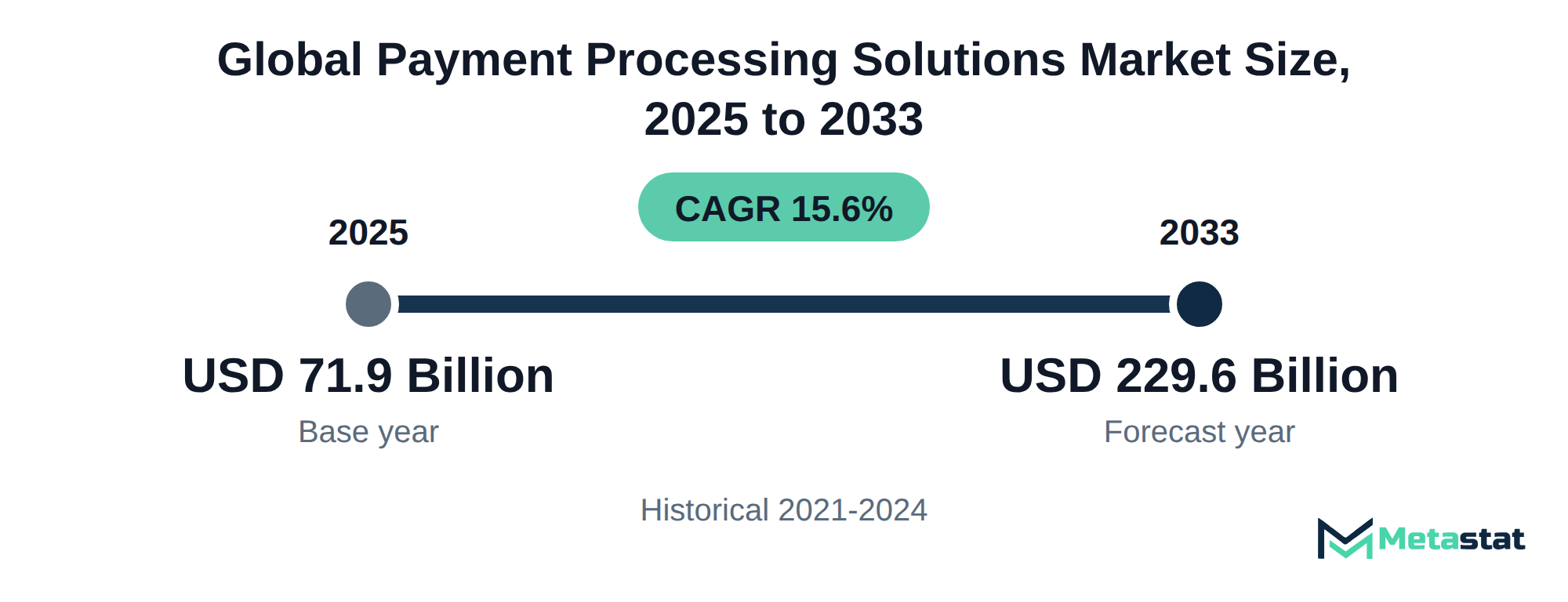
Market Valuation: Valued at $71.9 Billion in 2025, projected to reach $229.6 Billion by 2033 at a 15.6% CAGR.
Dominant Segment: Credit cards lead the Payment Processing Solutions market, driven by their widespread acceptance for both online and in-store transactions. This segment reflects ongoing consumer reliance on credit as a primary payment method.
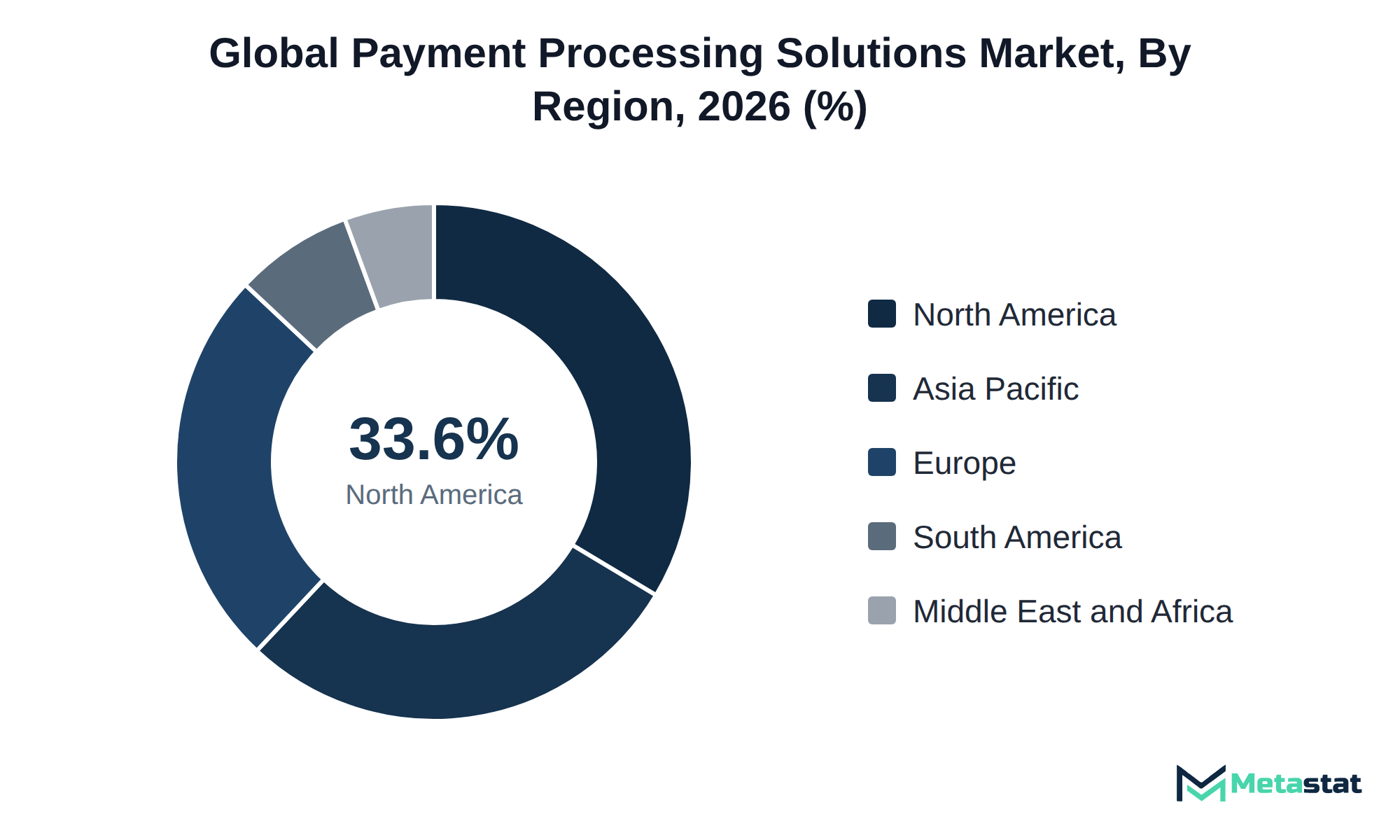
Geographic Lead: North America is the leading region in the Payment Processing Solutions market, holding 33.6% of the market share in 2025. The US is expected to maintain its dominance due to robust infrastructure and high consumer adoption of digital payment solutions.
What's Inside: The report provides a comprehensive analysis of the Payment Processing Solutions market, including segmentation by payment method, deployment model, merchant size, and end-use industry. It features competitive coverage, market dynamics, and forecasts through 2033.
Emerging Opportunities: Bank transfers and direct debits are projected to grow at a CAGR of 18.7%, driven by increasing demand for secure and efficient transaction methods. This segment is gaining traction among both consumers and businesses seeking cost-effective solutions.
Shift to Cloud-Based Models: The adoption of cloud-based deployment models is enhancing scalability and operational efficiency in the Payment Processing Solutions market. This trend is particularly appealing to SMEs due to its cost-effectiveness and adaptability to changing consumer preferences.
Choose Your License
Global Payment Processing Solutions Market
The global Payment Processing Solutions market was valued at USD 71.9 billion in 2025 and is projected to reach USD 229.6 billion by 2033, growing at a CAGR of 15.6% over the forecast period.
The Payment Processing Solutions market encompasses a range of services and software designed to facilitate electronic transactions between consumers and merchants. Buyers invest in these solutions to enhance payment efficiency, improve transaction security, and meet the increasing consumer preference for digital payment methods. The market's growth is driven by the expansion of e-commerce and the increasing demand for efficient transaction experiences across various platforms.
Credit cards represent the segment with the highest value within the market, reflecting the ongoing reliance on this payment method for both online and in-store purchases. North America holds 33.6% of the market in 2025, with the US leading in 2026. North America's strong infrastructure and high consumer adoption of digital payment solutions further contribute to its significant market share.
One main growth driver for the market involves the increasing adoption of cloud-based deployment models. Businesses of all sizes favor cloud solutions due to their scalability and cost-effectiveness, allowing for enhanced operational efficiency. This trend is expected to underpin sustained growth across multiple segments within the market.
The Payment Processing Solutions market supports various payment methods, offering flexibility and convenience to consumers and businesses. Buyers invest in these solutions to enhance transaction efficiency, reduce operational costs, and improve customer satisfaction. Digital payment adoption rises, prompting organizations to recognize the importance of reliable payment processing to remain competitive in an increasingly online marketplace.
Growth in the market is propelled by the increasing prevalence of e-commerce and mobile payments. Digital wallets, a leading segment in terms of value, attract significant consumer interest due to their ease of use and enhanced security features. This region's robust technological infrastructure and high consumer spending on digital solutions further contribute to its dominance in the market.
Investments in cloud-based deployment models drive operational efficiencies and scalability for merchants. The shift toward cloud solutions allows businesses to adapt quickly to changing consumer preferences, ensuring a smooth payment experience. Organizations gain a competitive edge, positioning themselves for sustained growth within the evolving Payment Processing Solutions market.
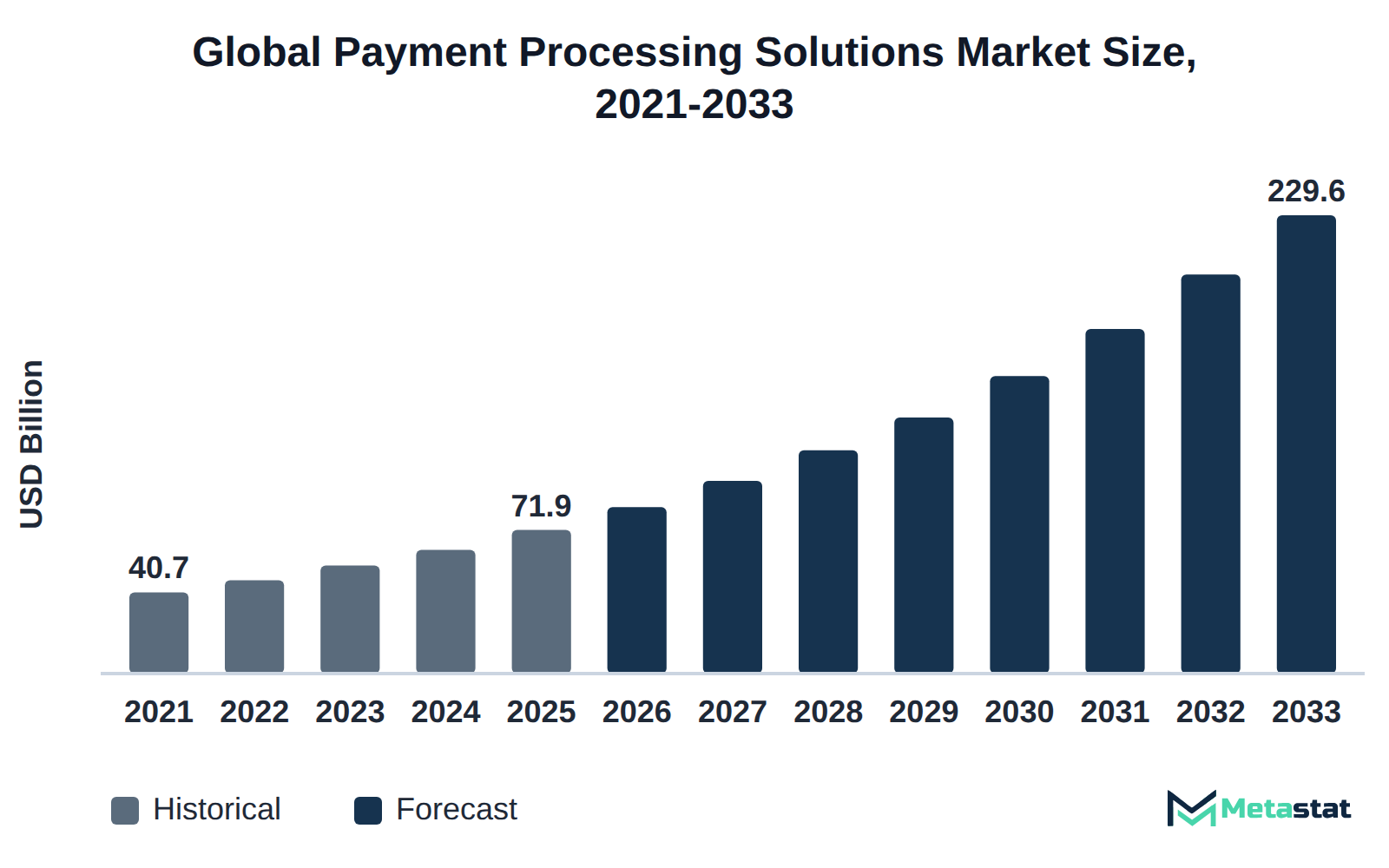
Unified payment acceptance has emerged as an important technology shaping both in-store and online product positioning, enhancing customer experience and operational efficiency. This approach integrates multiple payment methods, allowing consumers to transact through their preferred platforms, whether at in-store point-of-sale terminals or in digital stores. By 2033, digital wallets are projected to reach a value of USD 73.1 billion, indicating a significant shift towards diverse payment options in the market. This growth reflects changing consumer behaviours and preferences, driving retailers and service providers to adopt more flexible payment solutions.
Integrating various payment methods caters to consumer preferences and simplifies transaction processes, which reduces wait times and improves the shopping experience. Retailers focusing on unified payment systems increase customer satisfaction and loyalty through efficient transactions. This alignment with consumer expectations supports competitive positioning in a changing market. Businesses that adopt unified payment acceptance strategies are expected to benefit from improved sales volumes and customer engagement.
Cloud payment platforms enhance accessibility for small and medium-sized enterprises (SMEs), significantly simplifying the onboarding process. The integration of embedded onboarding technologies enables SMEs to initiate payment processing with minimal friction, allowing faster transitions from setup to operation. This approach aligns with the growing trend within the Payment Processing Solutions market, where ease of use has become a critical factor for SMEs seeking efficient financial tools.
In 2025, the market recorded a substantial value of USD 71.9 billion. SMEs adopting cloud-based solutions will drive robust growth for these platforms, with a compound annual growth rate (CAGR) of 17.6% through 2033. This growth indicates a shift in payment preferences, where SMEs increasingly favor cloud-based models for their flexibility and reduced upfront costs compared to traditional on-premises solutions.
Cost-effective pricing models, including pay-per-transaction or subscription-based fees, present attractive options for SMEs, allowing them to scale services according to their needs. By using these models, SMEs optimize their payment processing costs and remain competitive within their respective industries. The evolution of these payment options continues to influence the market, supporting higher adoption rates among SMEs in the market.
Rapid adoption of digital wallets and account-to-account rails is significantly transforming payment economics in the Asia Pacific region. Digital wallets are projected to grow, with an estimated transaction value reaching USD 73.1 billion by 2033. This escalation reflects a shift in consumer preferences toward more convenient and efficient payment methods. The rise in smartphone usage and internet penetration throughout the region has accelerated the acceptance of digital wallets, particularly among younger demographics who value efficient transactions and integrated financial services.
Small and medium-sized enterprises (SMEs) are increasingly using these digital solutions to strengthen their payment processing capabilities. SMEs often face challenges related to transaction costs and the complexity of traditional banking systems. Digital wallets provide an alternative that streamlines these processes, reducing overhead costs associated with payment processing. The ability to facilitate instant transfers through account-to-account rails allows SMEs to improve cash flow management, which is critical for operational efficiency.
Trends in the Asia Pacific payment landscape point to a shift toward digital solutions that is reshaping the Payment Processing Solutions market. With the continuous evolution of technology and consumer behavior, businesses that adapt to these changes are likely to position themselves for sustained growth and competitiveness in the increasingly digital economy.
Merchants planning to expand through cross-border payments should prioritize digital wallets to enhance customer convenience and accessibility. The demand for digital wallets has been significant, with projections indicating a total value of USD 73.1 billion by 2033. This growth reflects shifting consumer preferences toward faster, more secure payment options in an increasingly connected global economy.
Adopting digital wallets facilitates transactions across borders, appealing to tech-savvy consumers who prefer mobile payment methods. This approach gives merchants access to a broader customer base and improves the overall shopping experience, which can increase conversion rates. The Payment Processing Solutions market continues to evolve, and integrating digital wallets into payment strategies positions merchants to meet rising consumer expectations.
In addition to digital wallets, credit cards represent another vital payment method for cross-border transactions. The credit card segment is projected to grow from USD 27.6 billion in 2026 to USD 65.4 billion by 2033, driven by the increasing adoption of online shopping and cross-border e-commerce platforms. By accepting credit card payments, merchants cater to a diverse clientele while enhancing transaction security, thus building trust and loyalty in new markets.
Demand for digital wallets is rising among consumers, driven by an increase in online shopping and the need for convenient payment solutions. This shift in consumer behavior has led to a surge in transaction volumes, significantly benefiting merchants who adopt these payment methods. The growing preference for contactless transactions enhances the overall customer experience, promoting higher sales for businesses. From 2026 to 2033, digital wallets are expected to grow substantially, reaching a market value of USD 73.1 billion. This trend shows why advanced payment technologies are essential for businesses competing in the Payment Processing Solutions market.
Accelerating adoption of digital wallets improves consumer engagement and drives competition among payment service providers. Companies within the market invest in innovative features and security measures to attract users and retain their market share. Digital wallets gaining momentum strengthens the overall growth of the market, with more businesses recognizing the value of offering diverse payment options to meet consumer demands.
Increasing implementation of cloud-based deployment models enhances scalability and operational efficiency among payment processing providers. This trend arises from businesses’ desire for cost-effective solutions and the ability to rapidly adapt to changing consumer preferences. Organizations across various sectors, particularly retail and e-commerce, adopt these cloud solutions to streamline payment processes, ensuring quicker transaction times and improved security. The shift reduces the burden of on-premises infrastructure, allowing more resources to focus on core business activities. Companies in the Payment Processing Solutions market experience significant growth in customer acquisition and retention, driven by improved service delivery and user experience. This transition supports a competitive edge as firms meet the changing demands of digitally savvy consumers, positioning the market for future expansion.
Price sensitivity significantly influences the adoption of payment processing solutions, particularly among small and medium-sized enterprises (SMEs). Budget constraints often lead these businesses to delay investment in advanced payment systems, opting instead for lower-cost alternatives. This aversion to high initial costs results in slower uptake of more comprehensive solutions, which include advanced features and enhanced security measures. Consequently, SMEs tend to favor cheaper options, which limit their operational efficiency and competitiveness. The reluctance to invest in payment processing solutions creates barriers to fully capitalize on market opportunities, affecting the growth trajectory of the market. High transaction fees associated with certain payment methods further deter SMEs from making necessary upgrades, impacting their ability to serve customers effectively. While larger enterprises absorb such costs, SMEs face challenges that hinder their transition to more sophisticated payment solutions.
Suppliers face increasing talent costs, impacting margins across the payment processing sector. A growing demand for skilled professionals to develop and implement advanced payment solutions raises operational expenses. This situation affects companies striving to maintain competitive pricing while ensuring high-quality service delivery within the Payment Processing Solutions market. In response, firms invest in employee training and development programs to enhance skills and productivity, thereby mitigating the financial impacts of hiring challenges. Several suppliers pursue automation technologies to streamline processes and reduce reliance on manual labor. These strategies aim to sustain growth and enhance service offerings while navigating the increasing cost environment.
Bank transfers and direct debits represent a growing segment within the market, with a compound annual growth rate (CAGR) of 18.7%. This growth aligns with the increasing demand for secure and efficient transaction methods preferred by consumers and businesses. The shift towards digital transactions, along with the expansion of digital banking capabilities, drives the adoption of this payment method. Businesses seeking to streamline their payment processes and reduce transaction fees benefit from this trend. The anticipated rise in bank transfers caters to the needs of both large enterprises and small and medium-sized enterprises (SMEs), enhancing operational efficiency and customer satisfaction. Regional players focusing on this payment method capitalize on an under-penetrated market, driving growth and increasing revenue opportunities. The Payment Processing Solutions market is expected to experience further expansion in the coming years, with bank transfers gaining traction among diverse buyer groups seeking reliable and cost-effective solutions.
The Global Payment Processing Solutions market is segmented based on Payment Method, Deployment Model, Merchant Size, and End-Use Industry.
This payment method serves consumers and businesses by providing a convenient and widely accepted means of transaction for both online and offline purchases. Growing consumer confidence in credit card usage and the increasing shift toward cashless transactions drive this segment's expansion. Compared to other segments, including Debit Cards and Digital Wallets, the Credit Cards segment experiences a relatively moderate growth rate. Debit Cards exhibit a higher CAGR of 13.6%, while Digital Wallets are positioned for significant growth due to their rising popularity among younger demographics. Businesses seek to accommodate diverse payment preferences, and the need for robust card payment processing solutions remains a priority for stakeholders in the Payment Processing Solutions market.
Debit Cards segment is estimated to reach USD 39.9 billion by 2033, at a CAGR of 13.6% during the forecast period. This payment method provides a convenient option for consumers, allowing them to make purchases directly from their bank accounts. Increasing consumer preference for cashless transactions drives demand for debit cards, particularly among younger demographics who favor digital payment methods. Compared to credit cards, which face a higher cost of entry due to interest rates and fees, debit cards offer a more accessible solution for individuals and businesses alike. The Debit Cards segment enjoys a solid growth trajectory, distinguishing itself with a competitive CAGR relative to other payment methods, driven by a trend toward financial inclusion that encourages the adoption of banking products.
Digital Wallets segment is expected to reach USD 73.1 billion by 2033. This payment method facilitates transactions through mobile applications or online platforms, enabling users to make purchases using funds stored digitally. Retailers and e-commerce platforms primarily employ digital wallets, enhancing the customer experience with quick and efficient payment options. The increasing prevalence of online shopping and mobile payment solutions drives growth in this segment, with a compound annual growth rate (CAGR) of 13.1% expected through 2033. Digital wallets differ from other payment methods, including credit and debit cards, by providing enhanced convenience and security features that appeal to tech-savvy consumers. In comparison to bank transfers, which face an 18.7% CAGR, digital wallets offer faster transaction times and greater user engagement, positioning themselves strongly within the market.
Bank Transfers and Direct Debits segment is projected to grow at a CAGR of 18.7% during the forecast period. This segment facilitates the transfer of funds directly from one bank account to another, serving both consumers and businesses for recurring payments and transactions. Increased user preference for automated transactions drives adoption, particularly in sectors including utilities and subscriptions. The segment distinguishes itself from others due to its lower transaction costs compared to credit and debit cards, appealing to cost-sensitive users. While digital wallets and credit cards experience significant growth, Bank Transfers and Direct Debits offer a reliable alternative for users prioritizing security and lower fees.
Buy Now Pay Later enables consumers to make purchases and pay for them over time, attracting a diverse range of customers, particularly younger generations seeking flexible payment options. Retailers and e-commerce platforms apply this method to enhance conversion rates and reduce cart abandonment, creating a frictionless buying experience. The surge in online shopping fuels this segment, driven by consumer demand for more accessible payment options. Compared to other payment methods, Buy Now Pay Later stands out with its unique appeal to price-sensitive shoppers who prefer the ability to manage their budgets. This segment differs from others, including credit and debit cards, by focusing on a more customer-centric approach to financing, resulting in increased customer loyalty and higher average transaction values. The market is expected to evolve, reflecting shifting consumer behaviors and preferences.
This segment encompasses prepaid cards, cash vouchers, and cryptocurrency, offering diverse options for consumers and businesses seeking flexible payment solutions. Prepaid cards provide an alternative for those preferring not to link bank accounts, while cash vouchers appeal to various sectors including retail, gifting, and incentive programs. Cryptocurrency is increasingly adopted in e-commerce and investment markets, driven by a push for decentralized, secure transaction methods.
Adoption of prepaid cards and cash vouchers thrives due to their convenience and appeal to unbanked or underbanked populations, allowing these consumers to participate in the digital economy. Cryptocurrency's popularity is propelled by growing interest in blockchain technology and decentralized finance, attracting tech-savvy users. This segment's dynamics set it apart from others like credit and debit cards, which rely on traditional banking infrastructures, and digital wallets, which consolidate multiple transaction methods into one platform.
While prepaid cards and cash vouchers serve specific consumer segments, cryptocurrency offers a newer payment avenue within the Payment Processing Solutions market.
Cloud-Based segment is valued at USD 52.2 billion in 2026 and is projected to reach USD 162.6 billion by 2033, at a CAGR of 17.6% during the forecast period. This deployment model enables organizations to streamline payment processing while reducing the need for extensive on-premises infrastructure, appealing to businesses of all sizes. Rapid growth in the e-commerce sector drives increased demand for scalable and flexible payment solutions, particularly among small to medium-sized enterprises (SMEs). Compared to On-Premises and Hybrid models, Cloud-Based solutions exhibit a higher growth trajectory, supported by their ability to adapt quickly to customer demands. The increasing shift toward digitalization further enhances the attractiveness of Cloud-Based solutions, positioning them as a key player in the Payment Processing Solutions market. This segment is expected to attract significant investment, contributing to its expansion and the overall growth of the market.
The On-Premises segment is estimated to reach USD 39.9 billion by 2033, at a CAGR of 8.6% during the forecast period. This segment typically appeals to larger enterprises that prioritize data security and complete control over their payment processing. Several industries, especially those dealing with sensitive customer information, opt for this deployment model due to stringent regulatory requirements. The growing demand for customized payment solutions drives this segment, alongside concerns regarding data privacy and cybersecurity. In comparison to the Cloud-Based segment, which enjoys a higher CAGR of 17.6%, the On-Premises segment experiences slower growth but caters to a distinct market segment that values control over flexibility. The stability of this deployment model sustains investment from enterprises that require strong data protection and compliance with industry standards.
Hybrid deployment models are projected to reach USD 27.1 billion by 2033. This segment serves multiple industries, allowing businesses to combine on-premises infrastructure with cloud solutions to enhance flexibility and control. Rapid advancements in technology drive the adoption of hybrid models, particularly among large enterprises seeking tailored payment processing solutions. This segment features a compound annual growth rate (CAGR) of 17.6%, indicating faster expansion compared to the on-premises alternative, which has a CAGR of 8.6%. Hybrid solutions provide a balanced approach, enabling organizations to manage sensitive data securely on-site while using the scalability and efficiency of cloud-based systems for other operations. The Payment Processing Solutions market benefits from this trend, with businesses increasingly prioritizing flexibility in payment processing strategies. Demand for hybrid solutions continues to grow, reflecting broader shifts in operational preferences across various sectors.
Large Enterprises segment is valued at USD 56.2 billion in 2026 and is projected to reach USD 143.2 billion by 2033, at a CAGR of 14.3% during the forecast period. Large enterprises primarily apply payment processing solutions to manage high transaction volumes efficiently and securely. The demand for these solutions stems from the need for robust systems that facilitate customer transactions, thereby enhancing the user experience. This segment experiences stronger growth compared to Small and Medium-Sized Enterprises, driven by the increasing complexity of payment solutions required by larger organizations. The adoption of advanced technologies, including artificial intelligence and machine learning, significantly influences their decision-making process, enabling enhanced fraud detection and operational efficiency. With strong spending capacity, large enterprises invest in solutions that integrate multiple payment methods, setting them apart from smaller businesses that prioritize cost-efficiency over expansive functionality.
Small and Medium-Sized Enterprises segment is estimated to reach USD 86.4 billion by 2033, at a CAGR of 17.9% during the forecast period. This segment serves small and medium-sized businesses seeking cost-effective and flexible payment processing solutions to handle transactions efficiently. The rising adoption of digital payment methods among these enterprises is driven by increasing consumer preferences for convenience and speed in transactions. Compared to larger enterprises, this segment experiences faster growth due to the agile nature of SMEs in adapting to new technologies. The increasing reliance on e-commerce platforms enables small and medium-sized enterprises to enhance operational efficiency and customer reach. The market experiences significant competition in providing tailored payment solutions that meet the specific needs of SMEs, further influencing growth trajectories.
Retail and E-Commerce segment is valued at USD 34.9 billion in 2026 and is projected to reach USD 99.6 billion by 2033, at a CAGR of 16.2% during the forecast period. This segment caters to a wide range of businesses, including online retailers and e-commerce platforms, facilitating efficient transactions to enhance customer experience. A significant driver for this segment stems from the increasing shift towards online shopping, compelling retailers to adopt advanced payment processing solutions. This segment exhibits a faster growth trajectory compared to others, reflecting the rising consumer preference for digital transactions over traditional methods. The need for secure payment solutions in the e-commerce sector further increases market demand. Unlike other segments, which focus more on offline transactions or limited use cases, the Retail and E-Commerce segment emphasizes technological integration and customer convenience, positioning itself as a key driver in the Payment Processing Solutions market.
The Travel and Hospitality segment is estimated to reach USD 47.9 billion by 2033, at a CAGR of 14.7% during the forecast period. This segment primarily serves hotels, airlines, and travel agencies, facilitating efficient payment transactions for bookings and other services. A significant driver for this segment stems from increasing global travel demand, particularly post-pandemic, with consumers resuming travel activities. Compared to other segments, this sector experiences a relatively higher growth rate, driven by evolving consumer preferences for digital payment options. Unlike Retail and E-Commerce, which faces more competitive pressures, the Travel and Hospitality segment capitalizes on unique customer experiences that require integrated payment solutions, enhancing convenience and efficiency for users. The market adapts to technological advancements, ensuring secure and efficient transactions, which further supports growth in this dynamic segment.
The Utilities and Telecommunications segment is expected to reach USD 21.3 billion by 2033. This segment includes services from utility providers and telecommunications companies that rely on efficient payment processing for customer billing and transactions. The growing demand for digital payment solutions drives adoption among these sectors, facilitating quick and secure payments for essential services. The Utilities and Telecommunications sector experiences a compound annual growth rate (CAGR) of 18%, reflecting substantial demand for advanced payment technologies. Regulatory compliance in billing practices and the push for digital transformation influence the development and deployment of payment solutions in this area. Compared to other segments, this sector requires robust, reliable solutions due to the nature of its services, resulting in a unique buyer profile focused on long-term service agreements and high transaction volumes. Market expansion aligns closely with trends in customer experience improvement and operational efficiency.
The healthcare segment is projected to grow at a CAGR of 18% during the forecast period. This segment addresses payment needs within hospitals, clinics, and other medical facilities, enabling efficient transactions for services rendered. The increasing adoption of electronic medical records and payment systems drives demand for efficient payment processing solutions in healthcare. Regulatory requirements related to data security and patient privacy further influence the market, requiring advanced compliance measures. Compared to other segments, this segment emphasizes high reliability and security, resulting in higher costs for service providers. The emphasis on patient-centered care, coupled with rising healthcare costs, increases the need for innovative payment solutions that improve the overall patient experience. With a focus on improving operational efficiency, the healthcare sector's demand for tailored payment processing solutions continues to expand.
Media and Entertainment encompasses a wide range of services and platforms that enable consumers to access and enjoy content, including streaming services, video games, and music platforms. This segment attracts a diverse audience, from individual consumers to large content production companies, all seeking reliable payment processing solutions for transactions and subscriptions. The demand for efficient payment experiences drives growth in this sector, reflecting a trend toward digital consumption and subscription-based models. Consumer preferences for convenience and speed influence adoption rates, with digital wallets and mobile payment options gaining prominence. In comparison to other segments, Media and Entertainment often experiences faster growth, driven by rapid advancements in technology and an increasing number of content providers competing for market share. The Payment Processing Solutions market benefits significantly from this dynamic environment, presenting opportunities for service providers to innovate and enhance their offerings.
This segment is essential in supporting the financial transactions of corporations, investment firms, and consulting agencies. Financial and Professional Services leverage payment processing solutions for secure transactions, invoicing, and customer relationship management. Demand within this segment is driven by the increasing need for efficient financial operations and enhanced regulatory compliance. The growing complexity of financial products and services necessitates advanced payment solutions to facilitate smoother transactions and improve customer experiences. Compared to others in the group, this segment experiences a significant growth rate, with a higher value attached to services provided due to the specialized nature of the offerings. The differences in buyer profiles and the emphasis on security position this segment for substantial advancement within the Payment Processing Solutions market.
This segment includes payment processing solutions for sectors including education, government, and transportation, delivering essential services to various consumers and organizations. Educational institutions apply these solutions for tuition payments and course fees, while government entities manage public services and tax collections. Transportation providers implement these systems for ticket sales and fare transactions. Increased digitalization in these sectors drives demand for efficient payment methods, focusing on security and ease of use. Regulatory compliance and the need for robust cybersecurity measures present challenges unique to this segment. Compared to other segments, this group experiences slower growth, reflecting the conservative nature of public sector operations and budgetary constraints.
Based on geography, the Global Payment Processing Solutions market is divided into North America, Europe, Asia-Pacific, South America, Middle East, and Africa.
Demand for payment processing solutions in North America derives primarily from the retail and e-commerce sector. Higher consumer spending and the proliferation of online shopping platforms drive significant adoption. The regulatory environment further influences market dynamics, with initiatives aimed at enhancing digital transaction security. The United States, Canada, and Mexico each contribute to the regional market, characterized by advanced technological infrastructure and a growing preference for digital wallets. North America is projected to reach USD 69.9 billion by the end of 2033. This growth reflects a broader trend in the Payment Processing Solutions market, driven by increasing consumer expectations for efficient payment experiences. Companies continuously invest in innovative payment technologies to meet these demands, ensuring competitiveness and sustained market expansion.
Demand within the Payment Processing Solutions market in Europe stems from several key industries, including retail, travel, and healthcare. The region benefits from advanced digital infrastructure, facilitating a smooth transition to various payment methods. Countries like Germany, France, and the UK lead in adopting digital wallets, which are projected to reach USD 73.1 billion by 2033. Regulatory frameworks that emphasize consumer protection and data security create a conducive environment for service providers. Europe holds a share of 25.00% of the global market in 2025, demonstrating strong growth potential, particularly in cloud-based solutions. Continuous investments in technology and innovation drive competition, enhancing service offerings in the market.
Asia Pacific holds a share in the Payment Processing Solutions market, accounting for 28.4% in 2025. The rapid growth in e-commerce within countries including China and India drives demand for digital payment methods, including digital wallets and bank transfers. Increased smartphone penetration and improved internet connectivity further support this trend, facilitating online transactions across various sectors. Government initiatives promoting cashless payments enhance the attractiveness of digital solutions, particularly within the retail and hospitality industries. The region's diverse landscape features varying consumer preferences, necessitating tailored payment solutions to cater to unique market demands. Major players in the region strive to innovate and expand their offerings, ensuring competitive positioning in the evolving market.
Brazil and Argentina play significant roles in driving demand for the Payment Processing Solutions market in South America. The retail and e-commerce sectors serve as primary contributors, fueled by increasing online transactions and digital payment adoption. Infrastructure improvements, especially in urban areas, enhance accessibility to payment processing technologies. A growing middle class alongside rising smartphone penetration drives digital wallet adoption, which boosts transaction volumes. Cost efficiencies provided by cloud-based solutions attract small and medium-sized enterprises, contributing to market growth. The market share stood at 7.4% in 2025, reflecting strong interest in innovative payment solutions tailored to the region's unique economic landscape.
In the Middle East and Africa, the demand for the Payment Processing Solutions market shows significant growth potential, driven by increasing digital transactions and the adoption of e-commerce platforms. Countries including Saudi Arabia and the UAE are investing heavily in digital infrastructure, creating a conducive environment for payment processing advancements. South Africa benefits from a diverse consumer base and a growing inclination toward digital payment options. The region's market share accounts for 5.6% of the global market in 2025, highlighting its emerging role in the payment ecosystem. Regulatory support and the push for financial inclusivity further enhance market dynamics, leading to increased investment opportunities within the sector. The overall growth trajectory in this region is expected to contribute positively to the broader Payment Processing Solutions market.
Companies in the Payment Processing Solutions market compete through various strategic behaviors that reflect their service offerings and target markets. The field divides into segments based on payment methods, deployment models, and merchant sizes. Buyers typically choose providers based on criteria including price, customization options, customer service, and the ecosystem of services available.
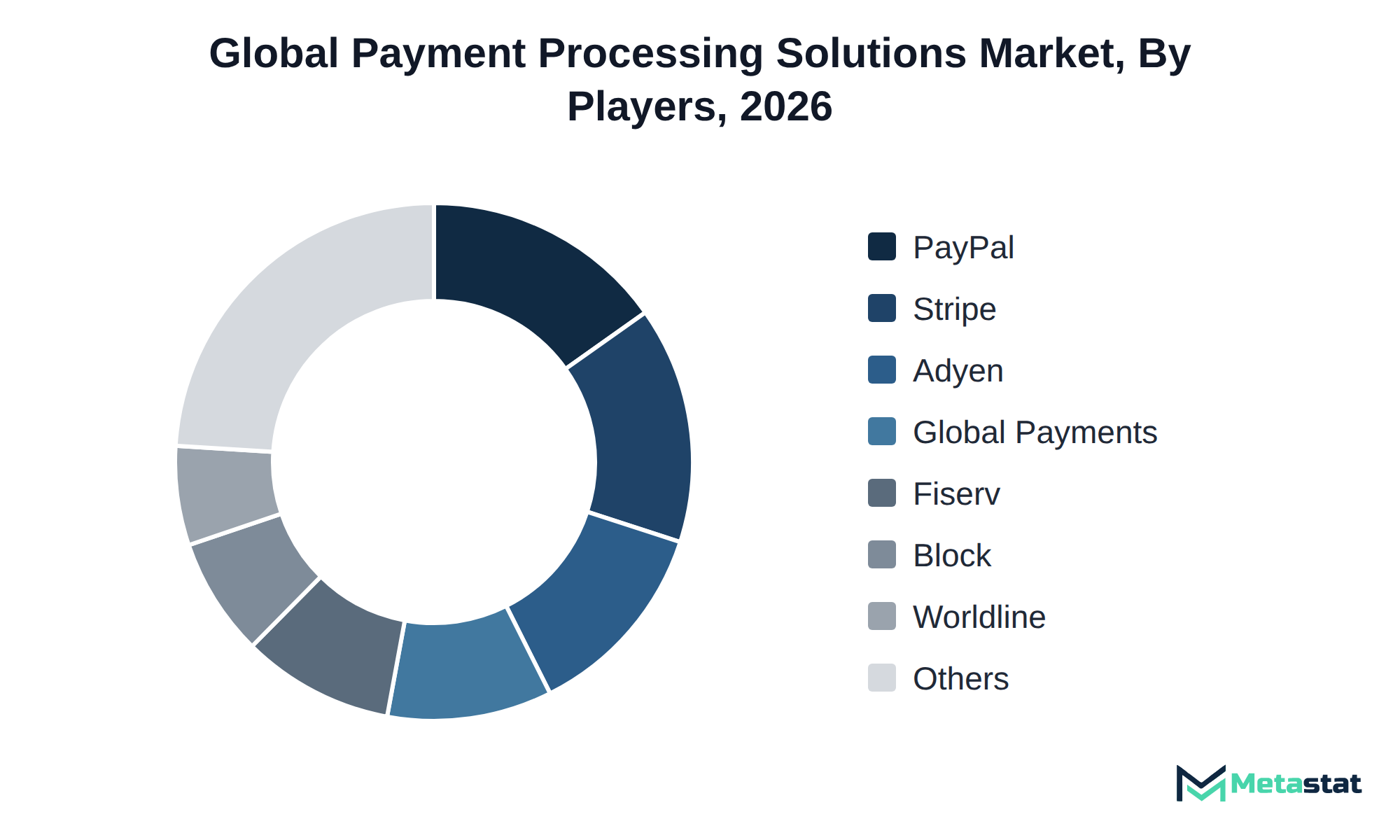
Stripe, Inc. focuses on providing solutions for online businesses, enabling a smooth payment experience through innovative technology and various integrations. PayPal Holdings, Inc. emphasizes its established brand and extensive user base, attracting customers with easy-to-use digital wallet services and strong buyer protection policies. In contrast, Adyen N.V. caters to enterprises by offering a unified commerce platform that supports multiple payment methods across various channels.
Global Payments Inc. and Fiserv, Inc. prioritize their services towards traditional and emerging retailers, offering tailored solutions that enhance the checkout experience. Companies like Block, Inc. and Checkout.com Ltd. use modern payment technology to target small and medium-sized enterprises, providing them with solutions that integrate easily with existing systems. This competitive landscape shows players adapting to buyer preferences and market demands within the Payment Processing Solutions market.
To achieve this growth, significant advancements in cloud-based deployment models and the adoption of digital wallets are essential. Cloud-based solutions are projected to grow at a 17.6% CAGR, expanding the operational capabilities for large enterprises and small to medium-sized enterprises alike. Digital wallets are anticipated to attract a rising consumer base, aiming for a value of USD 73.1 billion by 2033. Potential risks exist that could hinder this trajectory. Economic fluctuations within key regions, particularly in North America and Europe, pose challenges to spending in the payment processing industry. Regulatory constraints and competition from alternative payment methods could limit the market's growth. The Payment Processing Solutions market requires an adaptive approach to navigate these uncertainties while capitalizing on technological advancements. The relationship between these developments and risks will shape the market outlook through the forecast period.
By Payment Method: Credit Cards, Debit Cards, Digital Wallets, Bank Transfers and Direct Debits, Buy Now Pay Later, Others (Prepaid Cards, Cash Vouchers, Cryptocurrency)
By Deployment Model: Cloud-Based, On-Premises, Hybrid
By Merchant Size: Large Enterprises, Small and Medium-Sized Enterprises
By End-Use Industry: Retail and E-Commerce, Travel and Hospitality, Utilities and Telecommunications, Healthcare, Media and Entertainment, Financial and Professional Services, Others (Education, Government, Transportation)
The report strategically identifies and profiles the key market players and analyses their core competencies in each sub-segment of the Payment Processing Solutions market.
Report Attributes | Details |
Study Period | 2021-2033 |
Base Year | 2025 |
Estimated Year | 2026 |
Forecast Period | 2026-2033 |
Historical Period | 2021-2025 |
Growth Rate | CAGR 15.6% from 2026 to 2033 |
Revenue Unit | USD billion |
Segmentation | By Payment Method, Deployment Model, Merchant Size, End-Use Industry, and Region |
By Region | North America (By Payment Method, Deployment Model, Merchant Size, End-Use Industry, and Country)
|
Europe (By Payment Method, Deployment Model, Merchant Size, End-Use Industry, and Country)
| |
Asia Pacific (By Payment Method, Deployment Model, Merchant Size, End-Use Industry, and Country)
| |
South America (By Payment Method, Deployment Model, Merchant Size, End-Use Industry, and Country)
| |
Middle East and Africa (By Payment Method, Deployment Model, Merchant Size, End-Use Industry, and Country)
|
Find answers to common questions about this report
The Payment Processing Solutions market size was valued at USD 71.9 billion in 2025.
The market is projected to grow at a CAGR of 15.6% during the forecast period from 2026 to 2033.
The North America Payment Processing Solutions market size is estimated to reach USD 69.9 billion by 2033.
Digital Wallets lead the Payment Processing Solutions market with a projected value of USD 73.1 billion by 2033. This segment surpasses others in growth potential and adoption rates.
Rising demand for digital wallets is driven by increased online shopping and the need for convenient payment solutions. Price sensitivity among small and medium-sized enterprises (SMEs) significantly influences the adoption of payment processing solutions, leading to a preference for lower-cost alternatives.
North America holds the dominant share of the Payment Processing Solutions market, with a projected value of USD 69.9 billion in 2033, representing 33.6 percent of the total market. This figure surpasses the shares of other regions, including Europe and Asia Pacific.
Price sensitivity significantly influences the adoption of payment processing solutions, particularly among small and medium-sized enterprises (SMEs). Budget constraints lead these businesses to opt for lower-cost alternatives, resulting in slower uptake of advanced systems that limit operational efficiency and competitiveness.
Several factors favor adoption in the Payment Processing Solutions industry. Increasing demand for digital wallets and cloud-based deployment models enhances operational efficiency and scalability. the growing preference for secure and efficient transaction methods, including bank transfers and direct debits, drives businesses to adopt advanced payment solutions.
The Payment Processing Solutions market is estimated to reach a valuation of USD 229.6 billion by 2033.
Key players operating in the Payment Processing Solutions market include Stripe, Inc., Adyen N.V., Fiserv, Inc., PayPal Holdings, Inc., Global Payments Inc., Block, Inc., and Worldline SA.
The analysts below cover Banking & Finance research at Metastat Insights.
LEAD ANALYST
Utkarsh Khirodkar is a Lead Market Research Analyst at MetaStat Insight, specializing in market intelligence, technology sector assessments, and competitive strategy.

PRINCIPAL CONSULTANT - ENTERPRISE AI & EMERGING TECHNOLOGIES
Banking & Finance · Electronics and Semiconductor · Energy and Power · Healthcare IT · Information & Technology · Professional Services
Vijay Gunti is a Principal Consultant at MetaStat Insight, bringing over two decades of experience across enterprise digital transformation, technology strategy, and intelligent systems.
Tracking ceramic matrix composite adoption in high-bypass aero engines requires strict attention to material qualification cycles and FAA airworthiness testing milestones. The MetaStat Insight team provided a detailed timeline of silicon carbide fiber manufacturing capacity and commercial foundry lead times. Having clear visibility into upstream thermal barrier coating supply helped us stress-test our long-term component procurement strategy.
Transitioning ultra-class mining haul trucks to alternative power requires concrete data on remote hydrogen refueling infrastructure economics. The report evaluated megawatt-scale electrolyzer installation expenses, onsite storage safety mandates, and heavy-duty fuel cell stack degradation under continuous duty cycles. That technical rigor helped our engineers benchmark realistic total operating cost horizons for off-highway fleet decarbonization.
Enterprise zero-trust network rollouts are often slowed down by multi-cloud transit latency and proprietary hardware retirement schedules. This study provided realistic total cost of ownership models comparing cloud-delivered security edge solutions against traditional hardware refreshes. The analysis of contract renewal lengths and software maintenance fees gave us clear visibility into enterprise replacement cycles over the next three to five years.
Explore related market intelligence reports worth reading alongside this one.