
LEAD ANALYST
Utkarsh Khirodkar is a Lead Market Research Analyst at MetaStat Insight, specializing in market intelligence, technology sector assessments, and competitive strategy.

Global Family Office Market Size, Share, By Family Office Type (Single-Family Office and Multi-Family Office), By Service Type (Investment Management, Financial and Wealth Planning, Tax and Accounting Services, Estate and Succession Planning, Family Governance and Education, Administrative and Lifestyle Services), By Client Wealth (Below USD 100 Million, USD 100 Million to below USD 500 Million, USD 500 Million to below USD 1 Billion, USD 1 Billion and Above), By Operating Model (In-House, Hybrid and Outsourced), Industry Analysis, Growth, Trends, and Forecast, 2026-2033
Report ID
MSI-5709
Published
November, 2026
Pages
301 Pages
Format
Historical
Base year
Forecast
Forecast period
Report Details
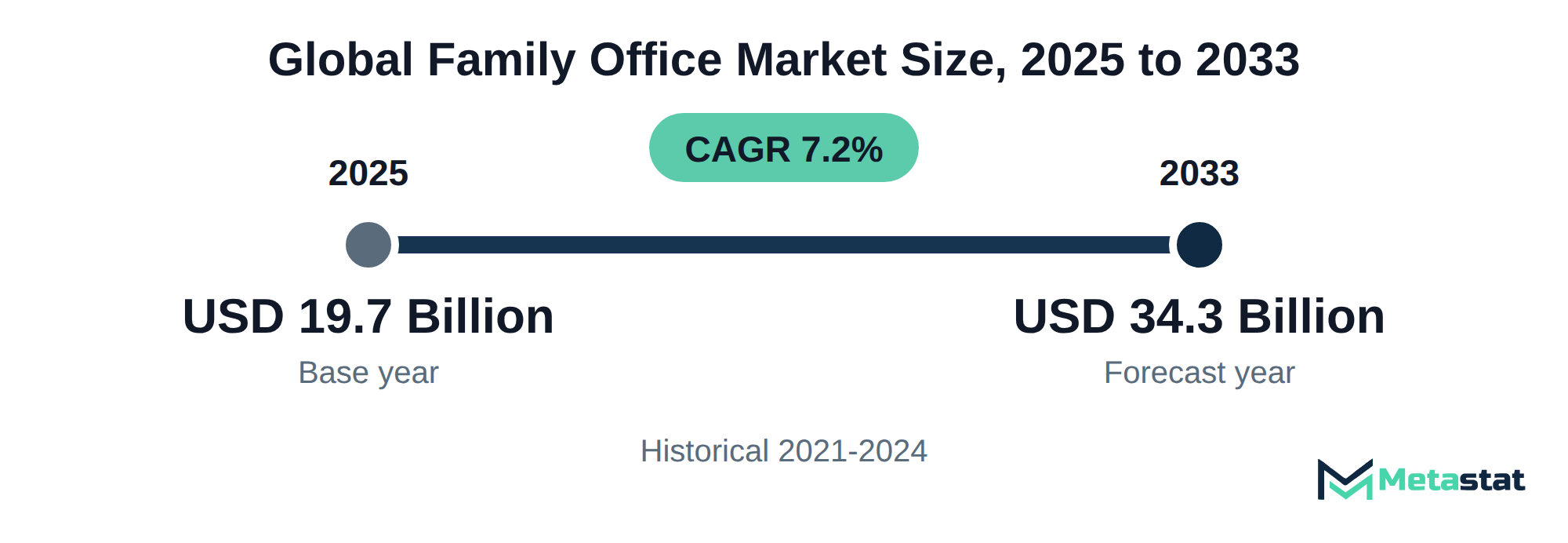
Market Valuation: Valued at $19.7 Billion in 2025, projected to reach $34.3 Billion by 2033 at a 7.2% CAGR.
Dominant Segment: The Single-Family Office segment leads the market, driven by a preference for bespoke financial services among high-net-worth individuals.
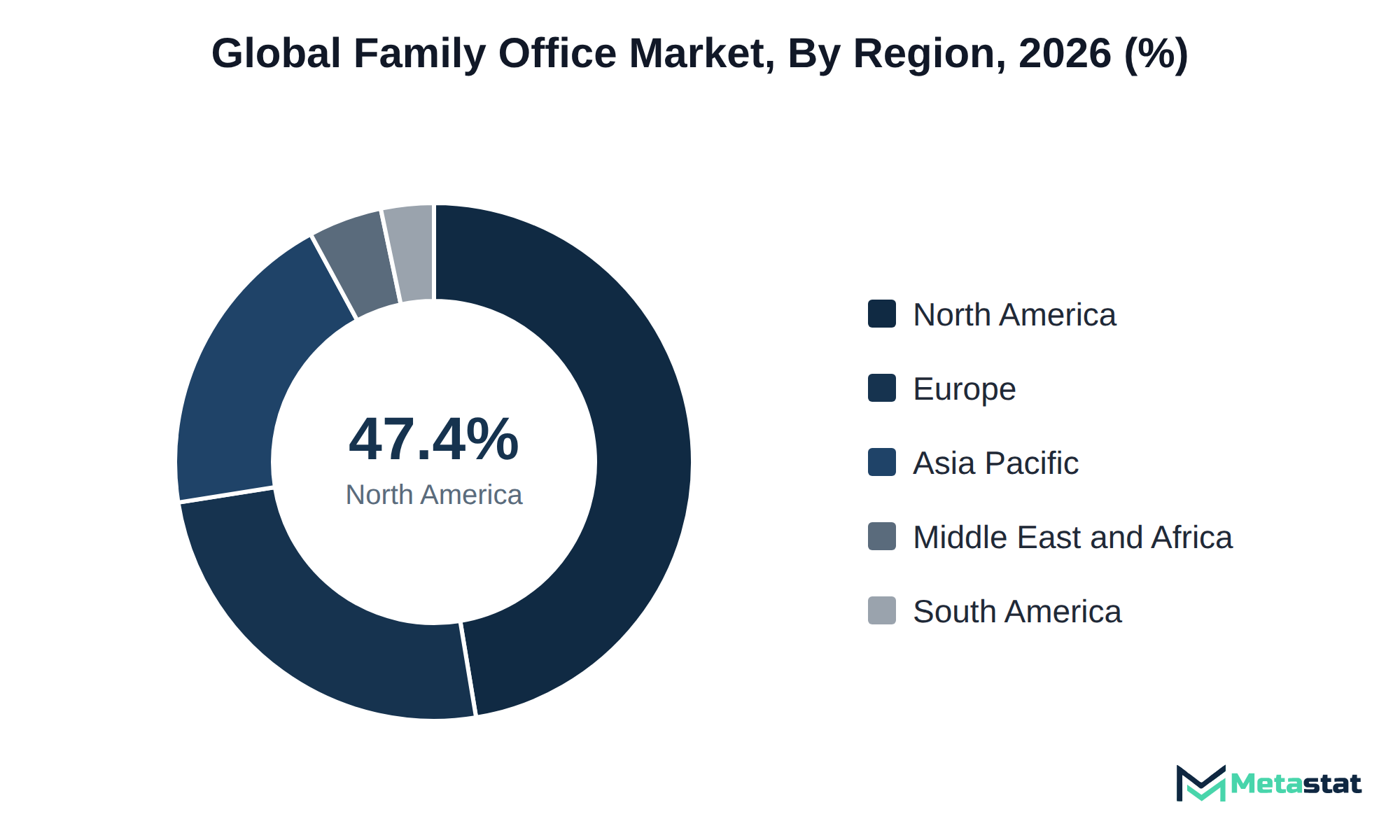
Geographic Lead: North America dominates the Family Office market, holding 47.4% in 2025, with the US expected to maintain its leadership in 2026 due to its robust infrastructure.
What's Inside: The report provides an in-depth analysis of market dynamics, competitive landscape, and detailed forecasts from 2026 to 2033 across various segments and service types.
Investment Management Growth: Investment management is a significant growth driver, projected to expand from USD 8.1 billion in 2026 to USD 12.8 billion by 2033, highlighting the demand for tailored investment strategies.
Multi-Family Office Expansion: The Multi-Family Office segment is set to grow at a CAGR of 8.8%, reaching USD 12.9 billion by 2033, reflecting an increasing preference for shared resources among affluent families.
Choose Your License
Global Family Office Market
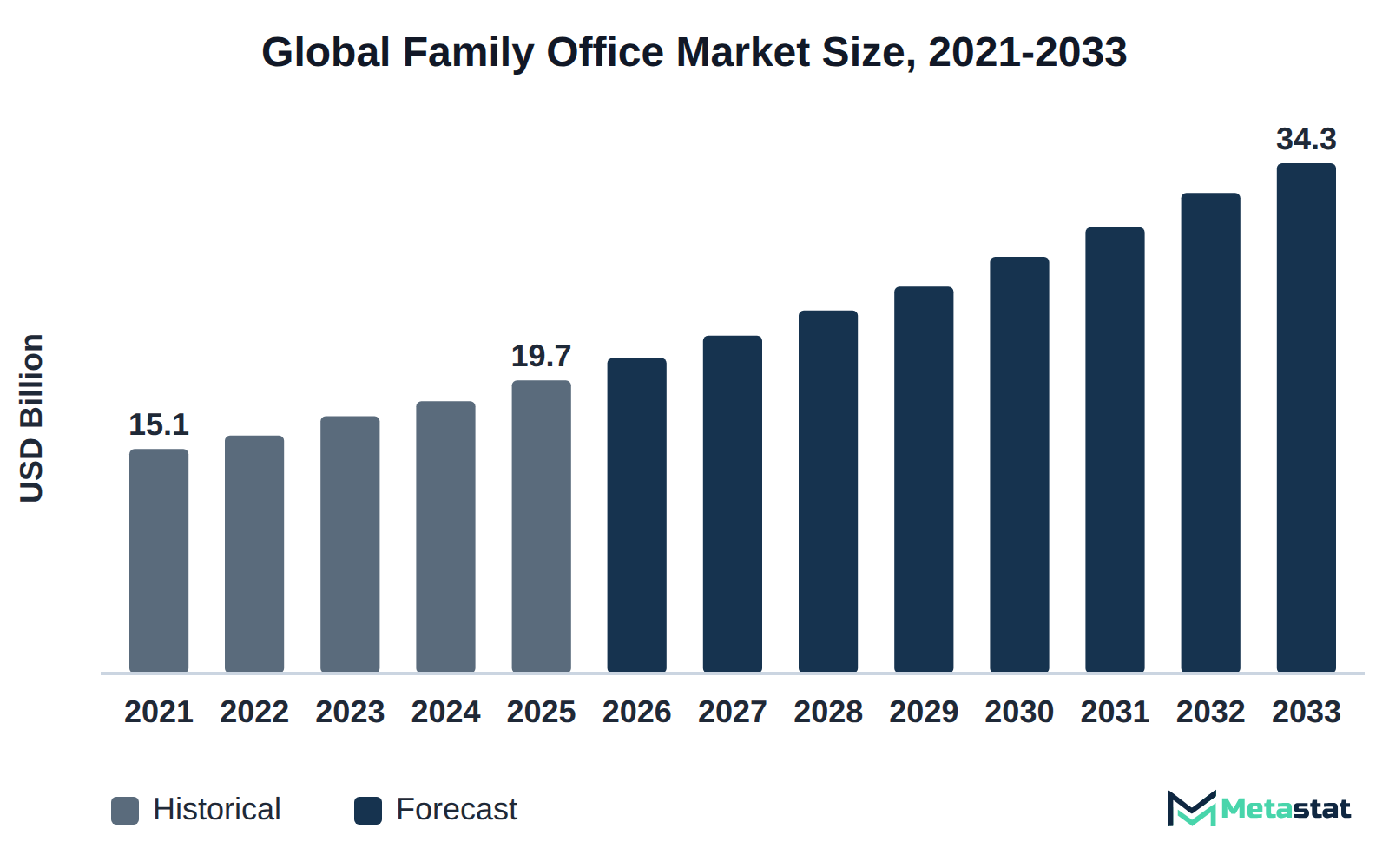
The global Family Office market was valued at USD 19.7 billion in 2025 and is projected to reach USD 34.3 billion by 2033, growing at a CAGR of 7.2% over the forecast period.
The Family Office market encompasses a range of services and structures designed to manage the wealth and investments of high-net-worth individuals and families. Buyers invest in these services to manage assets, plan finances, and mitigate risk, which sustains and grows wealth across generations. The market includes various service types, including investment management and estate planning, tailored to meet the unique needs of affluent families seeking personalized financial strategies.
Growth in the market is driven by increasing wealth among high-net-worth individuals, which fuels demand for comprehensive wealth management solutions. The Single-Family Office segment represents the largest share, reflecting a significant preference among wealthy families for bespoke financial services. North America holds 47.4% of the market in 2025, with the US leading in 2026. This regional lead reflects established infrastructure and practices that serve the needs of family offices.
In addition to regional strengths, the increasing complexity of wealth management drives the demand for specialized services. Families face unique challenges including tax planning, succession issues, and investment diversification, creating opportunities for service providers to enhance their offerings. The need for strategic advisory services aligns with the growing trend of families seeking long-term financial security and legacy planning.
The Family Office market includes various services that cater to the financial needs of affluent individuals and families. Buyers invest in this market to ensure effective management of wealth, investments, and estate planning. The focus on personalized financial strategies and comprehensive wealth management solutions drives significant spending among clients seeking to preserve and grow their assets.
Growth in the market is propelled by increasing wealth concentration among high-net-worth individuals, particularly in North America, which holds 47.4% of the market in 2025, with the US leading in 2026. The segment generating the highest value is the Single-Family Office, reflecting a trend toward tailored services that address unique family financial dynamics. This emphasis on personalized services enhances client satisfaction and strengthens long-term client relationships.
The demand for investment management solutions remains a primary growth driver, emphasizing the importance of strategic asset allocation and risk management. With evolving financial landscapes, clients seek expert guidance to navigate complexities in investing, ensuring the preservation and growth of their wealth in a competitive environment. The market's evolution reflects a broader shift toward sophisticated financial planning, aligning services with the needs of modern wealthy families.
Multi-family offices (MFOs) increasingly adopt shared cost structures to enhance service offerings and improve operational efficiency. By pooling resources, these offices lower expenses for multiple families while providing comprehensive services that meet diverse wealth management needs. The market for multi-family offices is projected to reach USD 12.9 billion by 2033, reflecting a compound annual growth rate (CAGR) of 8.8% during the forecast period. This growth is driven by rising demand for customized investment strategies and the desire for families to maintain wealth across generations.
Sharing resources allows MFOs to offer a wider range of services, including tax and accounting, estate planning, and investment management, without imposing excessive costs on individual families. The collaborative approach builds stronger client relationships and enhances access to specialized expertise for high-net-worth individuals seeking tailored solutions. The expansion of multi-family offices contributes to overall market growth, making them key players in the wealth management sector.
Succession planning and governance are key components for business families in the Family Office market. A significant segment of these families seeks tailored services to address unique governance challenges and ensure smooth transitions between generations. Investment management, projected to grow from USD 8.1 billion in 2026 to USD 12.8 billion by 2033, highlights the financial aspects of succession planning that often require careful attention.
Pricing models for succession planning services typically include fixed fees, hourly rates, or retainer arrangements, allowing families to choose a structure that aligns with their financial strategy. Financial and wealth planning services support this process, with a projected value of USD 5.6 billion by 2033. These services facilitate discussions around wealth transfer, family governance, and education, ensuring that family values and business objectives align over time.
Strong governance frameworks encompass family councils, governance charters, and regular family meetings, promoting communication and transparency. These elements enhance trust among family members while improving decision-making processes. The growing emphasis on succession planning and governance in the Family Office market highlights the value of proactive strategies for maintaining family legacies and optimizing wealth management.
Private investment strategies are central to the Family Office market, particularly for high-net-worth individuals seeking to diversify their portfolios beyond domestic assets. Families increasingly pursue cross-border wealth management solutions to capitalize on global investment opportunities. The prevalence of single-family offices, projected to grow from USD 14 billion in 2026 to USD 21.4 billion by 2033, highlights the demand for tailored investment strategies and individualized financial planning.
This growth results from rising awareness among affluent families to protect and grow their wealth through diversified approaches. Cross-border investments not only enhance returns but mitigate risks associated with economic fluctuations in any single market. The market reflects a distinctive shift toward hybrid operating models, where families choose to combine in-house and outsourced services. This strategy enables them to access specialized expertise while retaining control over their investments.
The increasing complexity of global financial markets drives families to seek advisors familiar with local regulations, cultural nuances, and investment landscapes. Family offices benefit significantly from this trend, as they enhance their service offerings to cater to the unique requirements of these wealthy clients. With a forecasted market growth rate of 7.2% from 2025 to 2033, the Family Office market is poised for expansion, driven by the evolving needs and preferences of affluent families engaged in private investment and cross-border wealth management.
Families frequently face the decision of whether to establish a Single-Family Office or a Multi-Family Office to manage their wealth. The choice often hinges on unique family dynamics, financial goals, and desired level of control. Data indicates that by 2033, Single-Family Offices are projected to reach a value of USD 21.4 billion, reflecting a compound annual growth rate (CAGR) of 6.2%. This growth signifies a trend among affluent families favoring dedicated offices that provide tailored services and maintain higher privacy.
Conversely, Multi-Family Offices are anticipated to attain a value of USD 12.9 billion within the same timeframe, growing at an impressive CAGR of 8.8%. Such offices offer pooled resources, shared expertise, and diversified investment opportunities, appealing to families that prioritize collaborative wealth management. The decision ultimately influences the level of personal attention, resource allocation, and investment strategies employed in the Family Office market.
Families opting for a Single-Family Office benefit from customized services and a stronger alignment with personal values, while those choosing a Multi-Family Office enjoy cost efficiencies and access to broader investment opportunities. Understanding these dynamics shapes families' approach to wealth management and long-term financial success.
The Family Office sector experiences heightened demand driven by the rising number of high-net-worth individuals (HNWIs) seeking comprehensive wealth management solutions. Changes in demographics, specifically the increasing concentration of wealth among affluent families, contribute significantly to this trend. Clients prioritize personalized investment strategies and financial planning to navigate complex financial landscapes, prompting growth in service adoption. This shift among buyers toward more sophisticated services leads to greater spending on wealth management solutions, ultimately enhancing service providers' revenues and operational scopes.
While the demand for tailored financial services intensifies, opportunities for investment management and estate planning services expand, further driving the market's growth. The market is set to benefit from this demand shift, encouraging innovation and competitive dynamics among service providers.
Rapid technological advancements influence operational efficiency within the market. Automation tools and data analytics platforms streamline investment management and client reporting processes, enhancing service delivery for high-net-worth individuals. Service providers increasingly adopt innovative technologies to improve client experiences and manage complex financial portfolios effectively. The integration of artificial intelligence and machine learning facilitates data-driven decision-making, leading to more personalized investment strategies.
Investment management services significantly benefit from these innovations, allowing firms to analyze market trends and client preferences promptly. Enhanced communication technologies improve relationships between service providers and families, promoting transparency and trust. These improvements support the growth of the Family Office market, with affluent clients increasingly seeking firms that leverage technology for superior service delivery. The focus on technological solutions directly contributes to market expansion, driving demand for firms that prioritize technological integration and operational excellence.
Increasing operational costs significantly impact the Family Office market, particularly for Single-Family Offices that often operate with tighter budgets. Rising expenses related to management, compliance, and investment strategies result in slower uptake of services, while wealthy families weigh the cost versus potential benefits. Higher fees associated with investment management and financial planning services discourage high-net-worth individuals from engaging with Family Offices, leading to smaller orders and delayed decisions regarding wealth management. This trend creates an environment where affluent families prioritize cost efficiency and seek alternative models, including Hybrid or Outsourced approaches, to mitigate expenses. Multi-Family Offices, facing similar pressures, adapt by enhancing service offerings or consolidating resources to provide more competitive pricing. Overall, the burden of rising operational costs presents a significant challenge for the market, affecting demand and stalling growth prospects.
Profitability challenges in the Family Office market stem from rising costs associated with talent acquisition and retention. Experienced professionals in wealth management command higher salaries, forcing firms to adjust their compensation structures. This trend impacts both Single-Family and Multi-Family Offices, where competitive compensation is essential to attract and retain qualified staff. Increased billing pressure squeezes margins, pushing firms to find new ways to add value while protecting profitability.
To navigate these challenges, firms implement various strategies, including investing in technology to automate routine tasks, thereby reallocating human resources to more value-added services. Several suppliers focus on training and development programs to enhance employee skills, ensuring that teams remain competitive and effective in delivering high-quality services. These adaptations are critical in maintaining operational efficiency and satisfying the demands of affluent clientele while addressing the overall margin pressure within the market.
Investment management represents a significant growth opportunity within the Family Office market, driven by an increasing demand for tailored investment strategies among high-net-worth individuals. This segment is projected to expand from USD 8.1 billion in 2026 to USD 12.8 billion by 2033, reflecting a compound annual growth rate of 6.8%. Investors seek personalized services that align with specific financial goals, prompting family offices to enhance their investment management offerings to capture this growing demand. Affluent clients increasingly prioritize expert guidance that optimizes asset allocation and risk management, driving family offices to invest in advanced analytics and technology solutions for improved service delivery. Effective investment management allows family offices to differentiate themselves in a competitive environment, ensuring a steady revenue stream while addressing diverse client needs.
The Global Family Office market is segmented based on Family Office Type, Service Type, Client Wealth, and Operating Model.
Single-family offices primarily serve ultra-high-net-worth individuals seeking tailored wealth management and investment solutions. This segment experiences growth due to rising demand for personalized services that address complex financial needs. High-net-worth individuals prioritize privacy and control over their wealth, pushing them towards single-family offices rather than multi-family alternatives. Compared to multi-family offices, which grow at a CAGR of 8.8%, single-family offices exhibit slower growth. However, their exclusive focus on individual family dynamics allows for more bespoke financial strategies, catering specifically to the distinct requirements of affluent families. The market reflects a shift towards personalized wealth management solutions that enhance family governance and succession planning.
This segment serves affluent families seeking shared resources and diversified investment strategies without the costs associated with establishing a Single-Family Office. Demand for Multi-Family Offices is driven by the increasing complexity of wealth management and the desire for tailored financial solutions. Compared to its counterpart, the Multi-Family Office segment exhibits a higher growth rate, reflecting a rising trend among families that prefer collaborative investment approaches. Its growth is supported by continued market interest in comprehensive financial services, including estate planning and tax advisory, which differ from Single-Family Offices that focus primarily on one family's unique needs. These dynamics contribute to the expansion of the market, establishing Multi-Family Offices as a viable option for several high-net-worth families.
This segment serves high-net-worth individuals and families seeking to optimize their investment portfolios and achieve wealth preservation. A significant demand driver involves the growing need for personalized investment strategies that align with the financial goals of affluent clients. Compared to other service types, including Financial and Wealth Planning, which is projected to reach USD 5.6 billion by 2033, the Investment Management segment exhibits faster growth, reflecting the increasing complexity of investment decisions in a diversified financial landscape. This segment's expansion reflects the shift towards sophisticated investment approaches, positioning it as a crucial service for family offices aiming to enhance financial outcomes.
Financial and Wealth Planning segment is estimated to reach USD 5.6 billion by 2033, at a CAGR of 7% during the forecast period. This segment focuses on providing strategic guidance and structured plans for individuals and families managing substantial wealth. High-net-worth individuals typically seek these services to optimize their asset allocation and ensure sustainable wealth transfer across generations. The increasing complexity of financial regulations and tax implications drives demand for expert planning services. Compared to the Investment Management segment, which has a CAGR of 6.8%, Financial and Wealth Planning demonstrates a slightly higher growth rate, reflecting increasing interest among clients prioritizing comprehensive financial strategies. This segment's emphasis on thorough planning differentiates it from others, targeting clients keen on both wealth preservation and growth.
Tax and Accounting Services segment is expected to reach USD 4.4 billion by 2033. This segment provides essential support for high-net-worth individuals and families in managing their tax obligations and financial reporting. Wealthy clients rely on these services to ensure compliance with regulations while optimizing tax strategies. Demand for tax and accounting services is influenced by the increasing complexity of tax laws and the need for sophisticated financial planning. Compared to other service types, this segment experiences steady growth, albeit at a slower rate than Investment Management, which is projected to reach USD 12.8 billion by 2033. The Tax and Accounting Services segment's focus on regulatory compliance and financial accuracy separates it from segments including Financial and Wealth Planning, which emphasize broader financial strategies.
Estate and Succession Planning segment is projected to grow at a CAGR of 7.8% during the forecast period. This segment assists families in preparing for wealth transfer and managing legacy issues. High-net-worth individuals often seek these services to ensure their wealth is preserved and effectively passed to future generations. Increased awareness of the complexities involved in estate planning and succession drives demand for these services. This segment exhibits a distinct growth trajectory compared to others in the market, including Investment Management, which grows at a CAGR of 6.8%. Differentiating factors include the specific focus on legacy management and the necessity for personalized solutions, influencing the pricing and engagement level required in Estate and Succession Planning compared to other service types.
Family governance and education play essential roles in enhancing decision-making processes and ensuring the continuity of family values across generations. This segment serves high-net-worth families seeking to align their wealth management strategies with their core principles and long-term objectives. A notable driver for this segment stems from the increasing complexity of family dynamics and the necessity for structured governance frameworks. Families prioritize educational programs aimed at improving financial literacy and responsibility among younger generations. Compared to other service types, governance and education typically experience slower growth, reflecting families' preference for tailored, in-depth solutions over standardized services. The segment's unique focus on family-centric education distinguishes it from more transactional services in the market, catering to a specific need for sustainable family legacy management.
Administrative and Lifestyle Services encompass a range of offerings designed to enhance the personal and operational aspects of high-net-worth individuals' lives. This segment caters to affluent families requiring assistance with daily administrative tasks, lifestyle management, and personalized services. Demand for these services arises from the increasing complexity of managing wealth and personal affairs, driven by a growing desire for tailored solutions that allow clients to focus on their core activities. Unlike other service types, including Investment Management or Financial and Wealth Planning, this segment places a stronger emphasis on personal service and lifestyle enhancement. Administrative and Lifestyle Services exhibit slower growth compared to segments focused on investment strategies. Overall, the segment ensures that clients receive comprehensive support in managing not just their financial assets but their personal lives.
Philanthropy advisory services focus on guiding families in their charitable giving and social impact strategies. These services typically engage high-net-worth individuals and families seeking to align their philanthropic activities with personal values and financial goals. The growing emphasis on social responsibility among wealthy individuals fuels demand for expertise in philanthropy, particularly in structuring charitable foundations and effective giving initiatives. Compared to other service types, philanthropy advisory often involves personalized consultations and long-term strategic planning, which carries different pricing structures. While other segments, including investment management, expand rapidly, philanthropy advisory services experience steady growth, supported by shifting priorities among affluent clients who increasingly value social contributions alongside financial returns. This shift influences service offerings and client engagement strategies within the market.
The In-House segment is valued at USD 10.4 billion in 2026 and is projected to reach USD 15.7 billion by 2033, at a CAGR of 6% during the forecast period. This segment serves high-net-worth individuals and families who prefer to manage their wealth internally, using their own teams for investment and financial services. The demand for customized solutions drives growth in this sector, with clients seeking personalized service and direct control over their financial decisions. In contrast to other segments, including Multi-Family Offices, which exhibit faster growth at a CAGR of 8.8%, the In-House model focuses on maintaining established client relationships and leveraging existing resources. The operational stability provided by an In-House structure appeals to clients prioritizing confidentiality and control over their wealth management strategies. This segment aligns closely with the overall trends seen in the Family Office market.
Hybrid operating models within the Family Office market are projected to reach USD 12.2 billion by 2033, at a CAGR of 8.2% during the forecast period. This model suits families seeking to maintain control over key financial decisions while leveraging external resources for specialized services. High-net-worth individuals and families increasingly adopt hybrid models to balance the flexibility of outsourcing with the familiarity of in-house management. The rising complexity of wealth management drives this trend, necessitating tailored solutions that hybrid models effectively provide. Compared to single-family offices, which experience slower growth at a CAGR of 6.2%, the hybrid segment attracts families seeking a blend of independence and support. This growing preference reflects evolving family governance and financial management.
Outsourced segment is expected to reach USD 6.5 billion by 2033. This segment appeals to high-net-worth individuals and families seeking specialized services without the overhead of maintaining an in-house team. Growth is driven by an increasing preference for flexibility and access to a broader range of expertise, which enhances the ability to tailor services to specific needs. Compared to the In-House and Hybrid models, the Outsourced segment exhibits a distinctive operational structure that often results in lower upfront costs, making it attractive to a broader range of clients. Financial and Wealth Planning services, for instance, experience heightened demand within this segment due to their adaptability and cost-effectiveness, influencing overall market dynamics. The market reflects a growing trend toward outsourcing, with families prioritizing efficiency and expertise in managing their wealth.
Based on geography, the Global Family Office market is divided into North America, Europe, Asia-Pacific, South America, Middle East, and Africa.
Demand for the market thrives in North America, primarily driven by high-net-worth individuals and families seeking comprehensive wealth management solutions. The presence of established financial institutions in the United States, Canada, and Mexico facilitates access to tailored services, enhancing appeal for affluent clients. Robust investment management offerings, coupled with specialized financial and wealth planning, significantly contribute to market expansion. By 2033, North America is projected to reach USD 15.5 billion, representing a 47.4% share of the global market in 2025. This growth correlates with ongoing trends in estate and succession planning, which prioritize intergenerational wealth transfer. Overall, market dynamics in the region reflect a strong alignment with the evolving needs of wealthy families, ensuring sustained demand for diverse services.
Among European nations, the Family Office market demonstrates considerable growth potential, driven by increasing wealth concentration among high-net-worth individuals. Countries including Germany, France, the UK, Italy, Spain, and Russia exhibit strong demand for diversified financial services. Regulatory frameworks encouraging transparent investment practices contribute to a favorable environment for family offices, ensuring compliance while optimizing wealth management strategies. Wealthy families increasingly focus on tailored investment management and estate planning to preserve their legacies, reflecting a shift in priorities toward long-term wealth sustainability. In 2025, Europe is expected to capture a share of 25.1% of the global market, highlighting its significance in the overall landscape. The market's projected growth presents opportunities for service providers to enhance their offerings and cater to the unique needs of affluent clients across the region.
Demand for family office services in Asia-Pacific centers on the growing number of high-net-worth individuals seeking tailored wealth management solutions. Countries including China and India experience increasing affluence, driving the market's expansion. The infrastructure in these nations supports advanced financial services, enhancing accessibility for affluent clients. Regulations focused on wealth management and investment strategies further influence growth. The market share in the region is projected at 19.6% in 2025, reflecting rising interest in personalized financial planning and investment management. Southeast Asia, particularly, presents a developing landscape of multi-family offices, catering to a diverse clientele with various investment needs. The family office market in this region is anticipated to experience growth, driven by a combination of rising wealth and evolving financial landscapes.
In South America, the Family Office market experiences growth driven by the increasing number of high-net-worth individuals, particularly in Brazil and Argentina. Wealth management services tailored to this demographic play a significant role in the adoption of family office structures. The market benefits from a particular focus on local investment opportunities and tax strategies that align with regional regulations. The market accounts for a notable share of the global landscape. Infrastructure improvements and a growing interest in succession planning further support market expansion in this region. The market's evolution is evident; families seek comprehensive solutions to manage and preserve their wealth.
In the Middle East and Africa, the market demonstrates specific growth opportunities driven by increasing wealth among high-net-worth individuals, particularly in Saudi Arabia and the UAE. Demand for dedicated wealth management services influences the adoption of family office solutions. The growing number of affluent families requires tailored investment strategies, estate planning, and succession services. This region accounts for a 4.6% share of the global market in 2025, reflecting its emerging status within the overall market. South Africa and the Rest of Middle East and Africa contribute to the rising interest in such services. The market's evolution aligns with broader economic trends and increasing investments in financial infrastructure.
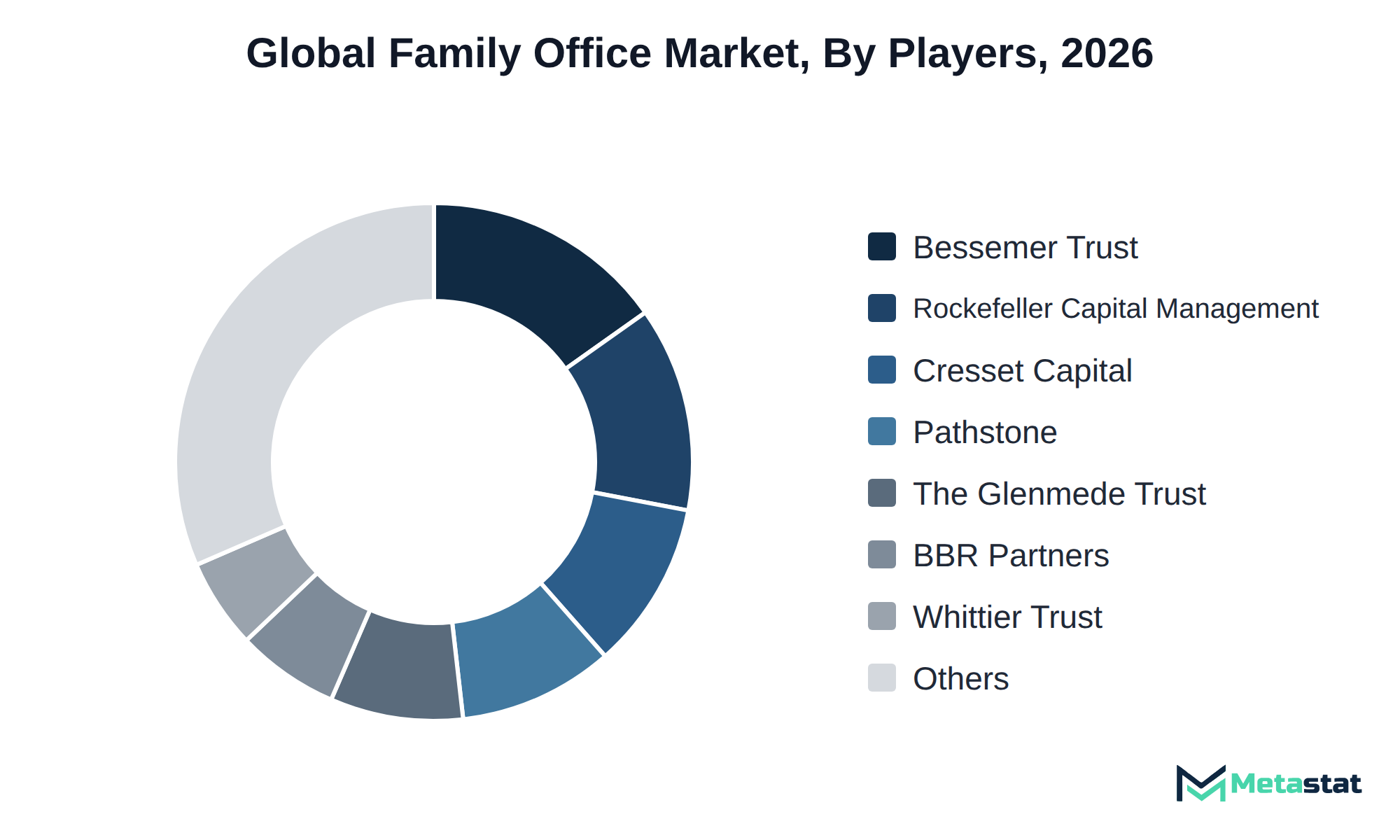
In the Family Office market, companies adopt various strategies based on service offerings and client needs. Investment management emerges as a key focus area, with firms like Bessemer Trust and Northern Trust Corporation prioritizing comprehensive asset management solutions to meet the demands of high-net-worth individuals and families. Financial and wealth planning services play a significant role, with firms including Pathstone and UBS Group AG offering tailored financial strategies aimed at long-term wealth preservation and growth.
The operating model further divides market participants, with firms operating in in-house, hybrid, or outsourced frameworks. For instance, Corient and Cresset Capital emphasize in-house models, providing personalized services while maintaining closer relationships with clients. In contrast, companies like Goldman Sachs Group, Inc. leverage a hybrid approach, combining internal capabilities with external resources to enhance service delivery. This strategic diversity allows clients to choose providers based on service customization, ecosystem strength, and pricing, influencing their decisions in the Family Office market.
Achieving this growth requires several key developments within the Family Office market. First, the increasing necessity for effective investment management will drive demand, particularly within Single-Family Offices, projected to grow at a CAGR of 6.2%. Second, the ongoing shift toward hybrid operating models is expected to enhance service delivery and efficiency, attracting more clients to Multi-Family Offices, which are anticipated to expand at a CAGR of 8.8%. Third, advancements in financial and wealth planning services will support client retention and attract new wealth, with the segment projected to reach USD 5.6 billion by 2033. However, potential risks exist that could impede growth. Economic downturns or increased market volatility challenge client confidence, particularly in regions including Europe, where the market share stands at 25.1%. Overall, while the Family Office market is positioned for substantial growth, external factors could introduce variability into these projections.
By Service Type: Investment Management, Financial and Wealth Planning, Tax and Accounting Services, Estate and Succession Planning, Family Governance and Education, Administrative and Lifestyle Services, Others (Philanthropy Advisory)
By Client Wealth: Below USD 100 Million, USD 100 Million to below USD 500 Million, USD 500 Million to below USD 1 Billion, USD 1 Billion and Above
By Operating Model: In-House, Hybrid, Outsourced
The report strategically identifies and profiles the key market players and analyses their core competencies in each sub-segment of the Family Office market.
Report Attributes | Details |
Study Period | 2021-2033 |
Base Year | 2025 |
Estimated Year | 2026 |
Forecast Period | 2026-2033 |
Historical Period | 2021-2025 |
Growth Rate | CAGR 7.2% from 2026 to 2033 |
Revenue Unit | USD billion |
Segmentation | By Family Office Type, Service Type, Client Wealth, Operating Model, and Region |
By Region | North America (By Family Office Type, Service Type, Operating Model, and Country)
|
Europe (By Family Office Type, Service Type, Operating Model, and Country)
| |
Asia Pacific (By Family Office Type, Service Type, Operating Model, and Country)
| |
South America (By Family Office Type, Service Type, Operating Model, and Country)
| |
Middle East and Africa (By Family Office Type, Service Type, Operating Model, and Country)
|
Find answers to common questions about this report
The Family Office market size was valued at USD 19.7 billion in 2025.
The market is projected to grow at a CAGR of 7.2% during the forecast period from 2026 to 2033.
The North America Family Office market size is estimated to reach USD 15.5 billion by 2033.
The Single-Family Office segment leads the Family Office market with a projected value of USD 21.4 billion by 2033, compared to the Multi-Family Office segment, which is expected to reach USD 12.9 billion in the same year.
The rising number of high-net-worth individuals seeking comprehensive wealth management solutions drives demand in the Family Office market. the increasing concentration of wealth among affluent families contributes significantly to this trend.
North America holds the dominant share of the Family Office market, with a value of USD 15.5 billion projected for 2033, representing 47.4 percent of the total market.
Increasing operational costs significantly impact the market, particularly for Single-Family Offices that operate with tighter budgets. Higher fees associated with investment management and financial planning services discourage some high-net-worth individuals from engaging with Family Offices, leading to smaller orders and delayed decisions regarding wealth management.
Increasing demand for tailored investment strategies among high-net-worth individuals supports adoption in the Family Office market. The segment is projected to expand significantly, driven by clients seeking personalized services that align with specific financial goals.
The Family Office market is estimated to reach a valuation of USD 34.3 billion by 2033.
Key players operating in the Family Office market include Bessemer Trust, Cresset Capital, Rockefeller Capital Management, Brown Brothers Harriman, Northern Trust Corporation, UBS Group AG, JPMorgan Chase & Co., and WE Family Offices.
The analysts below cover Banking & Finance research at Metastat Insights.
LEAD ANALYST
Utkarsh Khirodkar is a Lead Market Research Analyst at MetaStat Insight, specializing in market intelligence, technology sector assessments, and competitive strategy.

PRINCIPAL CONSULTANT - ENTERPRISE AI & EMERGING TECHNOLOGIES
Banking & Finance · Electronics and Semiconductor · Energy and Power · Healthcare IT · Information & Technology · Professional Services
Vijay Gunti is a Principal Consultant at MetaStat Insight, bringing over two decades of experience across enterprise digital transformation, technology strategy, and intelligent systems.
Tracking capacity expansion in single-use bioprocessing requires dependable data on raw material availability and cleanroom-grade polymer supply chains. The competitive landscape chapter gave a grounded evaluation of secondary component suppliers across North America and Asia-Pacific rather than simply reprinting press releases. Having that level of supplier benchmarking helped clarify dual-sourcing considerations for our clinical pipeline planning.
When evaluating distributed energy resource management systems, standard research summaries tend to gloss over the operational differences between front-of-the-meter utility deployments and behind-the-meter industrial sites. The MetaStat Insight report addressed those distinctions directly, especially regarding software interoperability standards and grid interconnection backlogs. The five-year market sizing across regional transmission organizations provided actionable context for our grid modernization strategy.
Most industry reports on warehouse automation bundle autonomous mobile robots and fixed conveyor installations into the same top-level numbers, which complicates advisory work. This study split the market cleanly by payload tiers, navigation technology, and fleet management software layers. The regional forecast for Western Europe gave our team defensible adoption benchmarks when evaluating capital allocation for logistics clients, saving us days of secondary data scrubbing.
Explore related market intelligence reports worth reading alongside this one.
Starting from
$2950
Starting from
$2950