
LEAD ANALYST
Utkarsh Khirodkar is a Lead Market Research Analyst at MetaStat Insight, specializing in market intelligence, technology sector assessments, and competitive strategy.

Debt Management Solutions Market Size, Share, By Deployment Mode (On‑Premises and Cloud), By Organization Size (Small Enterprises, Medium Enterprises, and Large Enterprises), By Service Type (Implementation Services, Consulting, Advisory, and Others), By End‑User (BFSI, Healthcare, Government, Retail, and Others), Industry Analysis, Growth, Trends, and Forecast, 2026-2033
Report ID
MSI-4739
Published
May, 2026
Pages
314 Pages
Format
Report Details
Choose Your License
Debt Management Solutions Market
Global Debt Management Solutions market size is valued at USD 41.8 billion in 2025 and projected to grow at a CAGR of 7.2% during the forecast period, reaching USD 72.8 billion by 2033.
Global Debt Management Solutions market valued at USD 41.8 billion in 2025, growing at a CAGR of 7.2% through 2033, with potential to exceed USD 72.8 billion.
North America holds 36.5% in 2025 with US leading the market share in 2025.
OnPremises segment account for a market share of 35.3% in 2025.
Key trends driving growth: Operational efficiency through automation and analytics improves recovery rates while lowering manual effort and operational costs, motivating adoption across industries, along with rising regulatory complexity and compliance requirements incentivize deployment of systems that ensure audit trails, reporting transparency, and adherence to legal standards.
Opportunities include integration of digital payment ecosystems and self-service portals that enable flexible repayment plans and real-time account updates presents avenues to expand solution uptake and differentiate vendor offerings.
Key insight: Rising consumer indebtedness and regulatory tightening accelerate structured adoption of digital debt management platforms across global financial ecosystems.
The Global Debt Management Solutions market within the financial technology and credit services industry is evolving beyond traditional collection systems and payment tracking tools. Over the coming years, the market will advance toward integrated financial ecosystems where analytics, behavioral intelligence, and regulatory technology work together to support efficient debt lifecycle management. Providers are shifting from isolated recovery tools toward unified digital platforms that connect creditors, collection agencies, legal entities, and credit bureaus through secure cloud-based frameworks.
Artificial intelligence will strengthen predictive engagement models that identify borrower behavior before delinquency escalates. Advanced machine learning systems will analyze transaction data, alternative credit signals, and communication history to support personalized repayment strategies. These platforms will move beyond automated reminders and enable adaptive collection approaches aligned with borrower financial patterns. Verification and payment authentication technologies will also improve transparency in dispute resolution and strengthen trust across stakeholders. 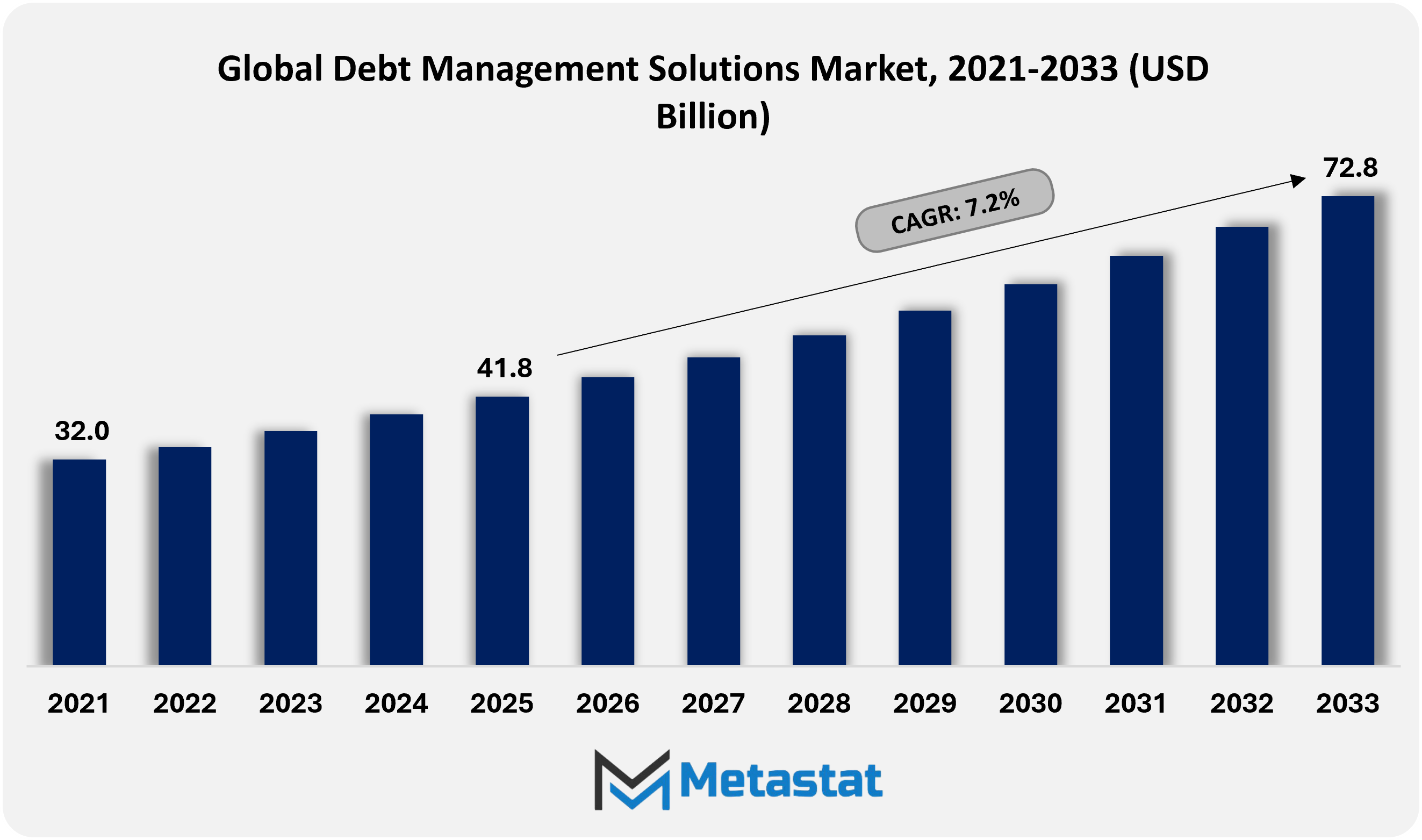
Operational efficiency through automation and analytics improves recovery rates while lowering manual effort and operational costs, motivating adoption across industries.
In the Global Debt Management Solutions market, automation and advanced analytics are improving collection workflows, reducing manual intervention, and enhancing decision accuracy. Predictive scoring models help prioritize high-value accounts, while automated reminders improve repayment cycles. Organizations are benefiting from lower operational costs, improved recovery performance, and more consistent collection outcomes through structured digital systems.
Rising regulatory complexity and compliance requirements incentivize deployment of systems that ensure audit trails, reporting transparency, and adherence to legal standards.
The Global Debt Management Solutions market is expanding in response to stricter financial regulations and growing reporting requirements. Structured audit trails, automated compliance checks, and standardized documentation help reduce legal and operational risk. Organizations are adopting centralized platforms to maintain consistent records, improve transparency, and meet supervisory expectations efficiently.
Security concerns related to the handling of sensitive financial and personal data slow adoption, especially where robust cybersecurity controls are costly or complex.
Data security concerns remain a major challenge in debt management solutions market. Financial records, identity information, and transaction histories require strong encryption, access controls, and continuous monitoring. High investment in cybersecurity infrastructure and skilled oversight can slow adoption, particularly among institutions concerned about breaches and reputational damage.
Limited IT infrastructure and specialist expertise in smaller organizations impede implementation of advanced debt management platforms.
Adoption across the Global Debt Management Solutions market will face limitations among smaller organizations with less developed IT infrastructure. Advanced platforms require integration capabilities, ongoing maintenance, and trained personnel. Budget constraints and limited technical expertise can delay implementation and restrict modernization efforts in resource-constrained environments.
Integration of digital payment ecosystems and self-service portals that enable flexible repayment plans and real-time account updates presents avenues to expand solution uptake and differentiate vendor offerings.
The Global Debt Management Solutions market will benefit from integration with digital payment ecosystems and self-service portals. Real-time balance visibility, automated installment scheduling, and multi-channel payment acceptance can improve borrower engagement and repayment convenience. Vendors offering flexible and personalized repayment options will strengthen adoption and improve long-term recovery performance.
The Global Debt Management Solutions market is classified based on Deployment Mode, Organization Size, Service Type, and End‑User.
On‑Premises segment is valued at USD 15.8 billion in 2026 and is projected to reach USD 21.5 billion by 2033, at a CAGR of 4.5% during the forecast period.
On-Premises deployment will remain relevant among organizations seeking full control over infrastructure, compliance processes, and internal data governance. Financial institutions with strict regulatory requirements will invest in in-house architectures to strengthen security, ensure data sovereignty, and maintain operational control in complex credit environments.
Cloud segment is valued at USD 28.9 billion in 2026 and is projected to reach USD 51.3 billion by 2033, at a CAGR of 8.5% during the forecast period.
Cloud deployment will expand through scalable infrastructure, faster updates, and remote accessibility. Vendors are integrating artificial intelligence, predictive analytics, and automation into cloud-based platforms to improve recovery rates, optimize portfolio monitoring, and reduce operating costs for geographically distributed organizations.
Small and Medium Enterprises segment is projected to reach USD 28.9 billion by 2033, at a CAGR of 8.4% during the forecast period.
Small and Medium Enterprises will adopt flexible platforms designed for cost efficiency and easier integration. Subscription-based pricing models, automated reporting dashboards, and digital communication tools help improve debtor engagement, strengthen cash flow visibility, and support financial stability for growing businesses managing credit risk.
Large Enterprises segment is projected to reach USD 43.9 billion by 2033, at a CAGR of 6.5% during the forecast period.
Large Enterprises will prioritize enterprise-grade platforms capable of handling high transaction volumes and complex debt portfolios. Advanced analytics, cross-border compliance monitoring, and integrated risk assessment modules support strategic financial planning, portfolio restructuring, and long-term capital optimization.
Implementation Services segment is projected to reach USD 27.5 billion by 2033.
Implementation Services will focus on system configuration, workflow customization, and integration with legacy banking platforms. Service providers work to improve onboarding speed, data migration accuracy, and regulatory alignment to ensure a smooth operational transition while minimizing disruption across credit management functions.
Consulting & Advisory segment is projected to reach USD 30.4 billion by 2033.
Consulting and Advisory services help organizations to develop data-driven debt recovery strategies and improve compliance readiness. Advisory firms provide portfolio diagnostics, risk forecasting models, and restructuring frameworks designed to strengthen repayment cycles and improve long-term financial resilience across industries.
Others segment is projected to reach USD 14.9 billion by 2033.
Other services include technical support, training programs, and performance optimization solutions. Continuous monitoring tools, cybersecurity audits, and compliance updates support operational reliability and help ensure sustainable debt lifecycle management across diverse institutional environments.
Banking, Financial Services and Insurance (BFSI) segment is projected to grow at a CAGR of 5.8% during the forecast period.
Banking, Financial Services and Insurance will remain the leading end-user segment in the Global Debt Management Solutions market owing to rising non-performing assets and tighter regulatory requirements. Advanced recovery automation, enhanced credit scoring, and portfolio analytics platforms support stronger asset quality monitoring and improved financial risk management.
Healthcare segment is projected to grow at a CAGR of 8.8% during the forecast period.
Healthcare organizations are adopting structured billing recovery systems to address delayed payments and insurance claim backlogs. Digital patient communication channels, automated reminder systems, and predictive payment modeling help improve revenue cycle efficiency and financial transparency.
Government segment is projected to grow at a CAGR of 9% during the forecast period.
Government organizations are modernizing public revenue recovery through centralized digital systems. Automated tax collection monitoring, structured repayment scheduling, and compliance reporting tools support improved accountability and stronger long-term public financial management.
Retail segment is projected to grow at a CAGR of 8.6% during the forecast period.
Retail participation is expanding with the growth of consumer credit transactions and installment-based purchasing models. Intelligent repayment tracking, behavioral analytics, and customer segmentation tools help retailers manage credit exposure while maintaining customer relationships and improving cash flow cycles.
Others segment is projected to grow at a CAGR of 6.2% during the forecast period.
Other end-users include utilities, education providers, and telecom operators seeking structured receivables management systems. Integrated dispute resolution workflows, automated notifications, and performance analytics dashboards help improve collection efficiency and operational sustainability across service-oriented industries.
Based on geography, the Global Debt Management Solutions market is divided into North America, Europe, Asia-Pacific, South America, Middle East, and Africa.
North America Debt Management Solutions Market is set to expand at a CAGR of 7.2% within the forecast period, reaching a market size (TAM) of USD 24.9 billion by the end of 2033.
In North America rising household debt levels across the United States and Canada are driving demand for structured and technology-enabled debt management solutions.
Europe will witness steady adoption of debt management solutions owing to strong regulatory oversight, high digital banking penetration, and increasing focus on consumer credit transparency. Financial institutions and collection agencies across Germany, the UK, France, and the Nordic countries are investing in compliant and analytics-driven platforms to improve recovery efficiency.
In Asia Pacific rapid digital banking expansion and growing middle-class borrowing in China and India are creating significant opportunities for scalable debt management solutions.
In Asia Pacific increasing SME credit penetration across Japan and Australia is opening avenues for integrated debt monitoring and restructuring tools.
Across the Middle East, Africa, and South America, growing financial inclusion initiatives and rising consumer credit usage are encouraging gradual uptake of digital debt management platforms despite uneven regulatory maturity.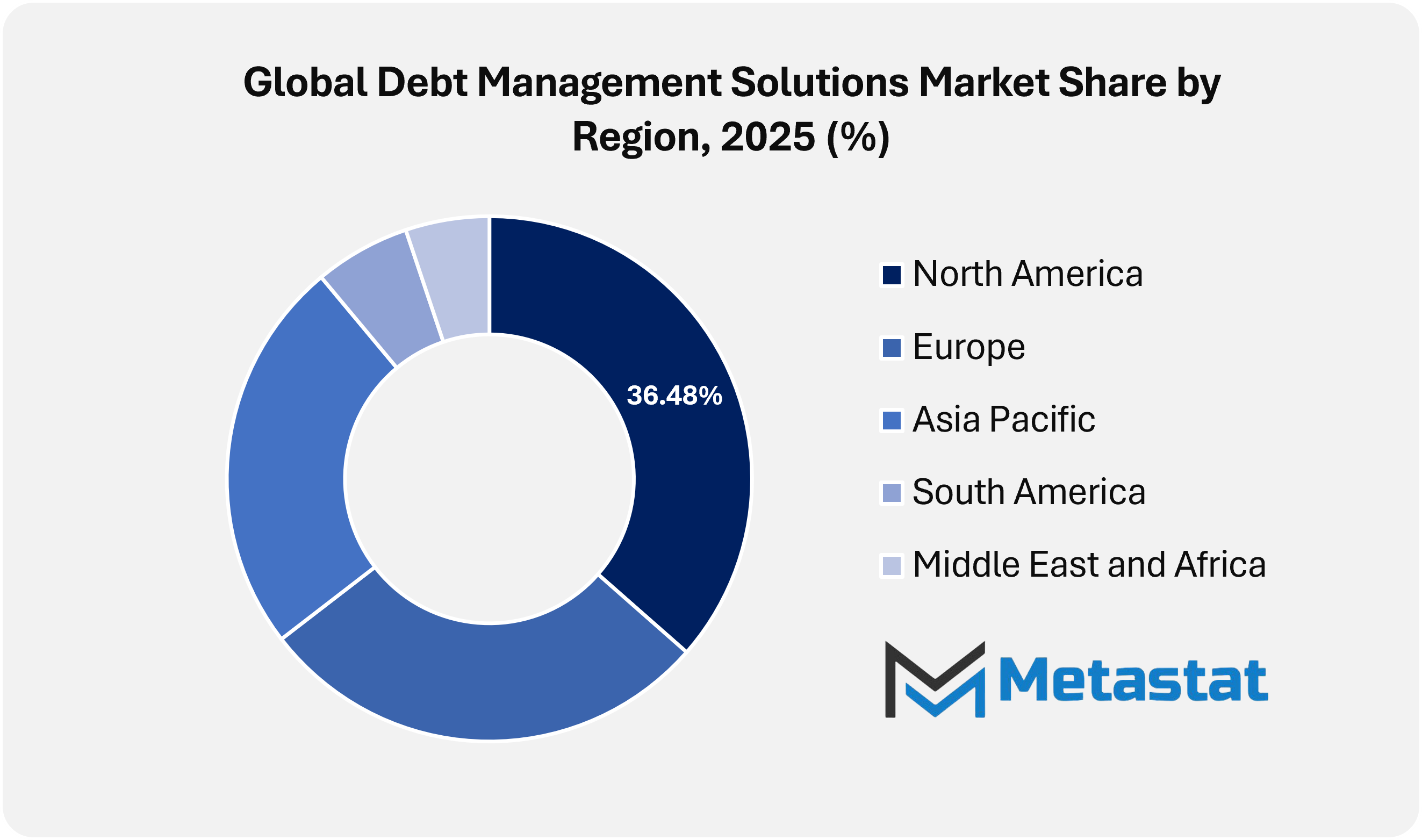
The global Debt Management Solutions market is gaining strong momentum as lenders, financial institutions, and collection agencies focus on improving recovery rates while preserving customer relationships. Rising consumer credit exposure, digital lending expansion, and tighter regulatory scrutiny are pushing organizations toward structured and technology-enabled debt resolution platforms. Companies are moving away from manual follow-ups and fragmented databases toward integrated systems that combine analytics, automation, and compliance monitoring.
Major technology providers such as Fair Isaac Corporation, Experian plc, and SAS Institute Inc. play a significant role in advancing credit risk modeling and collection analytics. Their platforms support predictive scoring, customer segmentation, and strategy optimization, helping lenders prioritize accounts and reduce default risk. At the same time, companies such as NICE Ltd., Genesys Telecommunications Laboratories, Inc., and Salesforce, Inc. are strengthening borrower engagement through communication tools integrated with workflow and case management systems.
Specialized vendors including Quantrax Corporation, Inc., C&R Software Inc., QUALCO S.A., Finvi Technologies Pvt. Ltd., and JST CollectMax focus on end-to-end debt recovery workflows. Their solutions support legal collections, payment tracking, compliance checks, and reporting. Digital-first firms such as TrueAccord Corporation, InDebted Pty Ltd., PAIR Finance Ltd., Credgenics Technologies Pvt. Ltd., and CollBox Technologies Pvt. Ltd. are expanding digital engagement through self-service portals, AI chatbots, and behavioral analytics.
Financial technology and enterprise software providers such as Temenos AG, Intellect Design Arena Ltd., Nucleus Software Exports Ltd., HighRadius Corporation, Chaser Ltd., Intrum AB, Encore Capital Group, Inc., EOS Holding GmbH, and Lowell Group Ltd. also contribute to the competitive structure of the market. Additional participants including Chetu Inc., LexisNexis Risk Solutions Group Inc., EbixCash Financial Technologies, and CDS Software Ltd. provide customized platforms, data intelligence, and payment solutions for both financial institutions and independent agencies. Competition will intensify through innovation in artificial intelligence, regulatory technology, and scalable cloud deployment.
Market size is forecast to rise from USD 41.8 billion in 2025 to over USD 72.8 billion by 2033.
The Global Debt Management Solutions market is expected to expand into embedded finance environments, where debt servicing capabilities are integrated directly into digital banking apps, fintech wallets, and buy now, pay later platforms. This will support smoother repayment experiences within everyday financial interfaces and reduce friction in collections processes. Improved cross-border interoperability will help multinational creditors manage diverse regulatory requirements through unified compliance and reporting systems.
This research report categorizes the Debt Management Solutions market based on key segments and regions, forecasts revenue growth, and analyses trends in each submarket. The report analyses the key growth drivers, opportunities, and challenges influencing the Debt Management Solutions market. Recent market developments and competitive strategies such as expansion, product launch, partnership, merger, and acquisition have been included to draw the competitive landscape in the market.
The report strategically identifies and profiles the key market players and analyses their core competencies in each sub-segment of the Debt Management Solutions market.
|
Report Attributes |
Details |
|
Study Period |
2021-2033 |
|
Base Year |
2025 |
|
Estimated Year |
2026 |
|
Forecast Period |
2026-2033 |
|
Historical Period |
2021-2025 |
|
Growth Rate |
CAGR 7.2% from 2026 to 2033 |
|
Revenue Unit |
USD billion |
|
Segmentation |
By Deployment Mode, Organization Size, Service Type, End‑User, and Region |
|
By Region |
North America (By Deployment Mode, Organization Size, Service Type, End‑User, and Country)
|
|
Europe (By Deployment Mode, Organization Size, Service Type, End‑User, and Country)
|
|
|
Asia Pacific (By Deployment Mode, Organization Size, Service Type, End‑User, and Country)
|
|
|
South America (By Deployment Mode, Organization Size, Service Type, End‑User, and Country)
|
|
|
Middle East and Africa (By Deployment Mode, Organization Size, Service Type, End‑User, and Country)
|
Find answers to common questions about this report
Top players operating in the Debt Management Solutions industry include Fair Isaac Corporation (FICO), Experian plc, SAS Institute Inc. (SAS), Chetu Inc., Nice Ltd., Genesys Telecommunications Laboratories, Inc., and Salesforce, Inc.
Global Debt Management Solutions market is estimated to reach USD 72.8 billion by 2033.
North America region dominates the market.
Operational efficiency through automation and analytics improves recovery rates while lowering manual effort and operational costs, motivating adoption across industries. and Rising regulatory complexity and compliance requirements incentivize deployment of systems that ensure audit trails, reporting transparency, and adherence to legal standards. are key driving factors, boosting the market.
Security concerns related to the handling of sensitive financial and personal data slow adoption, especially where robust cybersecurity controls are costly or complex. will hamper the market growth within the forecast period.
The Implementation Services is the leading type segment in the Global market.
The Metastat Insights analysis shows that the North America Debt Management Solutions market size is estimated to be USD 24.9 billion by 2033.
The Metastat Insights study shows that the Global Debt Management Solutions market size was USD 41.8 billion in 2025.
The Global Debt Management Solutions market is expected to grow at a CAGR of 7.2% over the forecast period (2026-2033).
The analysts below cover Banking & Finance research at Metastat Insights.
LEAD ANALYST
Utkarsh Khirodkar is a Lead Market Research Analyst at MetaStat Insight, specializing in market intelligence, technology sector assessments, and competitive strategy.

PRINCIPAL CONSULTANT - ENTERPRISE AI & EMERGING TECHNOLOGIES
Banking & Finance · Electronics and Semiconductor · Energy and Power · Healthcare IT · Information & Technology · Professional Services
Vijay Gunti is a Principal Consultant at MetaStat Insight, bringing over two decades of experience across enterprise digital transformation, technology strategy, and intelligent systems.
Decarbonizing industrial thermal processes hinges on refrigerant regulations and compressor efficiency limits. Metastat Insights delivered a thorough market analysis that evaluated natural refrigerants like CO2 and hydrocarbons against synthetic low-GWP alternatives. The breakdown of utility incentives and grid capacity constraints across key European manufacturing hubs offered valuable perspective. The follow-up conversation with their sector analysts addressed our specific questions on mechanical vapor recompression systems efficiently.
Assessing 200mm wafer transition schedules and substrate supply bottlenecks requires precise technical intelligence. MetaStat Insight supplied an actionable breakdown comparing planar and trench MOSFET architectures across automotive and industrial drive markets. The regional capacity estimates for Asia-Pacific foundries helped clarify lead-time uncertainties during our strategic planning session. When we needed additional clarification on high-purity raw material sourcing, their analyst team responded with helpful context within twenty-four hours.
Tracking maintenance cycle demand for secondary flight display units and terrain collision avoidance systems across regional jet fleets involves complex aftermarket dynamics. MetaStat Insight provided practical analysis separating airline retrofit programs from OEM forward-fit production schedules in North America and Southeast Asia. The supplier matrix highlighted component obsolescence timelines without resorting to vague generalizations. The dataset served as a dependable reference during our annual program review meetings.
Explore related market intelligence reports worth reading alongside this one.