
LEAD ANALYST
Utkarsh Khirodkar is a Lead Market Research Analyst at MetaStat Insight, specializing in market intelligence, technology sector assessments, and competitive strategy.

Global Anti-Money Laundering Software Market Size, Share, By Deployment Model (Cloud-Based, On-Premises, Hybrid), By Functionalities (Customer Due Diligence (CDD) & Know Your Customer (KYC), Transaction Monitoring, AML Risk Assessment and Analytics, Sanctions and Watchlist Screening, Regulatory Reporting, Others (Case Management, AML Data Integration)), By Organization Size (Large Enterprises, Small and Medium-Sized Enterprises), By End-Use Industry (Banking and Financial Institutions, Payments and Fintech, Insurance, Cryptocurrency and Virtual Asset Service Providers, Gaming and Gambling, Professional and Corporate Services, Others (Real Estate, Trade Finance, Nonprofit Organizations)), Industry Analysis, Growth, Trends, and Forecast, 2026-2033
Report ID
MSI-5803
Published
November, 2026
Pages
308 Pages
Format
Historical
Base year
Forecast
Forecast period
Report Details
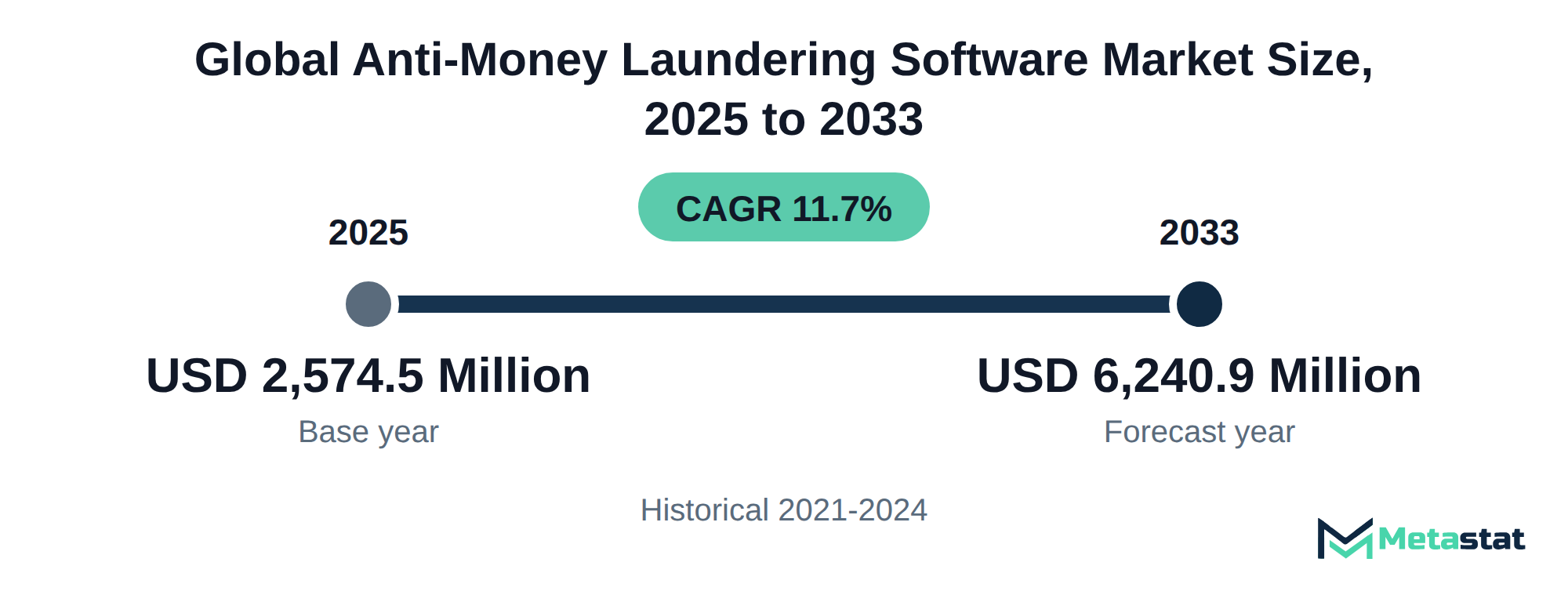
Market Valuation: Valued at $2,574.5 Million in 2025, projected to reach $6,240.9 Million by 2033 at a 11.7% CAGR.
Dominant Segment: The Customer Due Diligence (CDD) and Know Your Customer (KYC) segment leads the market, driven by increasing regulatory pressures and the need for effective risk management strategies.
Geographic Lead: North America holds the largest market share at 37.8% in 2025, with the US expected to maintain its leadership due to a robust regulatory framework and high adoption rates among financial institutions.
What's Inside: The report provides comprehensive coverage of the competitive landscape, detailed analyses of market dynamics, and forecasts extending to 2033, focusing on various deployment models and functionalities.
Emerging Trends: The shift towards cloud-based solutions is notable, with a projected CAGR of 13.3% from 2026 to 2033, as organizations seek scalable and cost-effective compliance technologies.
Market Dynamics: Key factors driving growth include increasing regulatory scrutiny, the rise of sophisticated financial crimes, and the demand for advanced analytics tools to enhance compliance efforts.
Choose Your License
Global Anti-Money Laundering Software Market
The global Anti-Money Laundering Software market was valued at USD 2,574.5 million in 2025 and is projected to reach USD 6,240.9 million by 2033, growing at a CAGR of 11.7% over the forecast period.
The Anti-Money Laundering Software market encompasses solutions designed to detect and prevent illicit financial activities, ensuring compliance with regulatory standards. Buyers invest in these software solutions primarily to mitigate risks associated with money laundering and fraud, leading to substantial financial losses and reputational damage. The demand for advanced analytics and real-time monitoring capabilities drives spending across various sectors, including banking, financial institutions, and fintech companies.
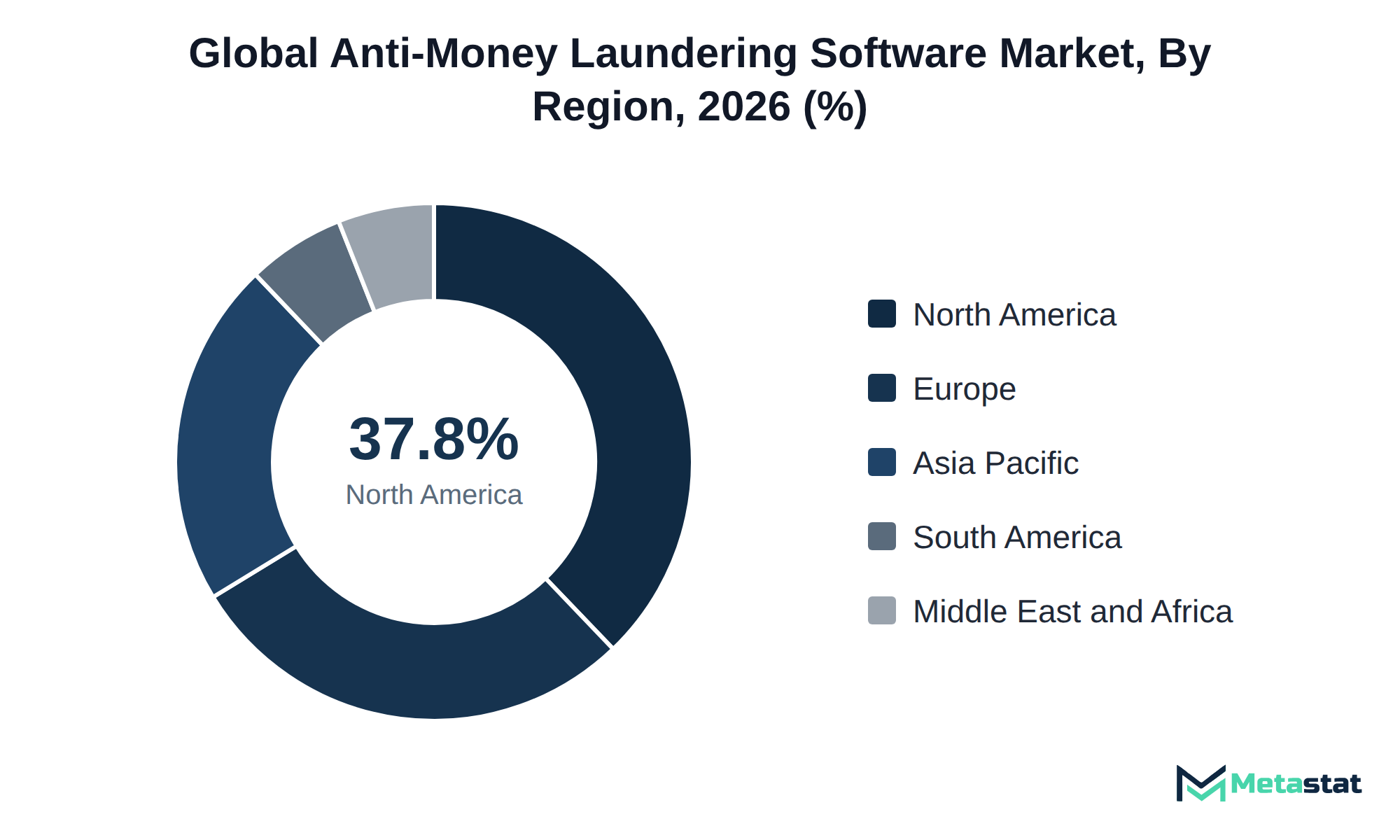
Growth in the market is fueled by increasing regulatory requirements and the rising complexity of financial crimes. The segment focused on Customer Due Diligence (CDD) and Know Your Customer (KYC) functionalities holds the highest value, reflecting a strong emphasis on compliance and risk management. North America holds 37.8% of the market in 2025, with the US leading in 2026. This region's robust regulatory framework and high adoption rates among financial institutions contribute to its market share.
Technological advancements, including enterprise artificial intelligence and machine learning, enhance the efficiency and effectiveness of anti-money laundering efforts. These innovations enable organizations to streamline compliance processes while reducing operational costs. The increasing sophistication of financial crimes necessitates continuous investment in anti-money laundering software, driving sustained demand in the market.
The market encompasses a variety of software solutions that facilitate compliance with anti-money laundering regulations. Buyers invest in these technologies to enhance their capabilities in risk assessment, transaction monitoring, and customer due diligence. The regulatory landscape intensifies the focus on maintaining compliance, driving organizations to adopt advanced solutions that streamline procedures and reduce the risk of financial crimes.
Growth in the Anti-Money Laundering Software market is largely driven by the increasing frequency of financial crimes and the stringent regulations imposed by governments and regulatory bodies worldwide. Among the segments, the cloud-based deployment model holds the largest share, reflecting a significant shift towards more scalable and flexible solutions. North America's dominance results from high investment in compliance technologies and a strong financial sector.
Organizations in various industries, particularly banking and financial institutions, prioritize investments in anti-money laundering software to safeguard against legal repercussions. The emphasis on security and compliance aligns with growing concerns over financial fraud, prompting firms to seek comprehensive solutions that enhance their defenses. This alignment between market demands and technological advancements supports the projected CAGR of 11.7% over the forecast period.
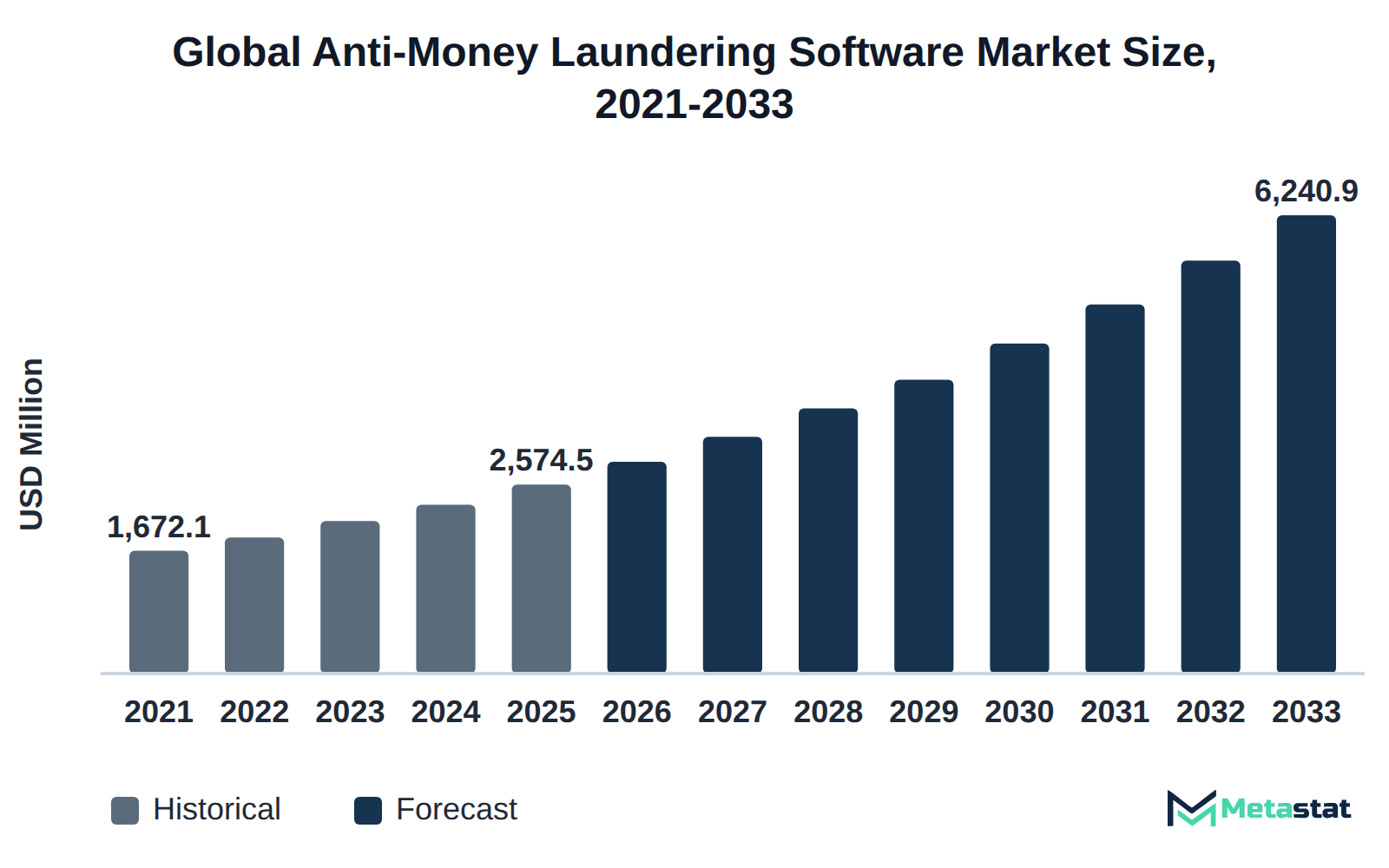
Artificial intelligence (AI) significantly enhances transaction monitoring systems in the Anti-Money Laundering Software market. By employing advanced algorithms, AI identifies suspicious activities in real-time, facilitating prompt response and reducing potential financial crimes. The market experiences a notable shift towards cloud-based solutions, projected to grow from USD 1,834 million in 2026 to USD 4,383 million by 2033, reflecting a compound annual growth rate (CAGR) of 13.3%. This shift enables financial institutions to access powerful analytics without substantial upfront hardware investments.
AI-driven solutions improve the accuracy of transaction monitoring, allowing firms to detect anomalies and patterns that traditional methods overlook. This technology aids organizations in meeting compliance requirements while minimizing operational costs. The integration of AI enhances the overall effectiveness of Anti-Money Laundering Software, ultimately leading to increased adoption among banking institutions and fintech companies. Firms that use AI in their transaction monitoring processes are better placed to mitigate risks associated with money laundering.
Buyers increasingly favor cloud-based Anti-Money Laundering Software due to its scalability and cost-effectiveness. These platforms typically operate on a subscription-based model, allowing organizations to align spending with actual usage. This model supports smaller firms in accessing sophisticated compliance tools that were previously cost-prohibitive. Strong adoption reflects demand for flexible solutions that enhance compliance efficiency.
The pricing structures for cloud-based platforms often include tiered options based on the number of users or volume of transactions processed. This flexibility enables organizations to select plans that match their operational needs and financial capabilities. For instance, several small and medium-sized enterprises opt for lower-tier plans while larger organizations invest in comprehensive packages. This alignment of costs with organizational size and usage patterns creates a competitive environment in the market.
The integration of compliance automation tools into cloud platforms is expected to streamline operations further. Such compliance automation tools sit within the broader RegTech category. This trend positions buyers to benefit from cohesive solutions that reduce the burden of regulatory requirements, ultimately enhancing their operational efficiency. The growth trajectory of cloud-based AML platforms illustrates a significant shift in how compliance is managed, marking an evolution in the Anti-Money Laundering Software market.
Regulatory screening and sanctions compliance represent critical components for organizations operating in the Anti-Money Laundering Software market. Companies, particularly those within the banking and financial sectors, face increasing scrutiny regarding compliance with various regulations aimed at preventing financial crimes. In 2023, the total market value for banking and financial institutions is projected to reach USD 1,203.7 million, reflecting the heightened focus on ensuring adherence to regulatory standards.
The need for robust solutions in regulatory screening is driven by evolving compliance requirements and the complex nature of cross-border payments. Organizations implement advanced technologies that enable efficient customer due diligence and ongoing monitoring of transactions to mitigate risks associated with financial crime. The growing trend toward digital transactions increases this challenge, necessitating sophisticated tools to enhance compliance capabilities.
Companies investing in effective regulatory screening solutions within the anti-money laundering software market position themselves strategically to reduce potential risks, avoid costly penalties, and build trust with stakeholders, including regulators and clients. This ongoing commitment to compliance ensures operational integrity and positively influences market reputation and long-term sustainability.
Banks and fintech companies increasingly adopt Anti-Money Laundering Software to enhance their compliance frameworks. This trend stems from escalating regulatory pressures and the necessity for robust risk management strategies. Financial institutions recognize that effective compliance measures significantly mitigate the risk of penalties associated with non-compliance.
In 2026, the segment for Banking and Financial Institutions is projected to reach USD 1,203.7 million, reflecting strong demand for solutions tailored to meet regulatory standards. This growth shows that these software solutions help institutions align with evolving regulations and maintain operational integrity. The increasing complexity of financial transactions necessitates sophisticated tools that enable comprehensive customer due diligence and transaction monitoring.
Investment in Anti-Money Laundering Software aids compliance and also enhances customer trust and operational efficiency. By implementing advanced systems, banks and fintech companies streamline their processes, identify potential risks proactively, and improve their overall performance in the highly regulated financial landscape. Enhanced compliance capabilities translate into reduced operational risks, creating a more secure environment for both institutions and their clients.
Financial institutions increasingly transition to cloud-based Anti-Money Laundering Software. This shift occurs due to heightened focus on scalability, flexibility, and cost efficiency. The preference for cloud solutions allows organizations to streamline operations and reduce overhead costs associated with on-premises systems. The demand for cloud-based solutions is expected to drive significant growth in the market, with a projected compound annual growth rate of 13.3% from 2026 to 2033. This trend reflects broader digital transformation initiatives within the banking and financial services sectors, propelling the adoption of cloud-based technology for compliance and regulatory purposes.
Large enterprises and small to medium-sized businesses are investing in these advanced solutions to enhance their compliance frameworks. This growing emphasis on cloud technology in the Anti-Money Laundering Software market aligns with the industry's shift towards integrated compliance automation, reinforcing operational efficiency and risk management capabilities.
Technological advancements in analytics significantly influence the Anti-Money Laundering Software market. The integration of machine learning and big data analytics enhances the detection of complex money laundering schemes, allowing organizations to process large volumes of transaction data efficiently. Analytics tools identify patterns and anomalies that traditional methods overlook, leading to improved risk assessment capabilities. Financial institutions, including banks and fintech companies, increasingly implement these tools to strengthen their compliance frameworks and reduce risks associated with financial crimes.
The continuous evolution of analytics technologies drives competition among software providers to offer innovative solutions. Vendors that deliver advanced functionalities, including predictive analytics and real-time reporting, position themselves favorably in the market. This trend improves operational efficiency and lowers compliance costs for companies that use these advanced analytics tools.
High costs associated with acquiring and implementing Anti-Money Laundering Software inhibit uptake among smaller financial institutions and startups. Many organizations face budget constraints, resulting in hesitant purchasing decisions and delayed implementations. This situation creates challenges for vendors targeting this segment, with potential buyers prioritizing essential expenditures over compliance tools. Consequently, the limited financial resources of these institutions lead to smaller order volumes and a slower transition to advanced software solutions. Large enterprises allocate significant budgets to compliance efforts, while smaller firms struggle to justify the investment. This disparity impacts overall growth potential within the market, with smaller players remaining underserved and unable to enhance their compliance capabilities effectively.
High demand for skilled professionals in the Anti-Money Laundering Software market creates significant recruitment challenges. Suppliers face rising talent costs due to competition for expertise in compliance, data analytics, and software development. This pressure affects profit margins, forcing companies to allocate larger budgets for recruitment and retention initiatives. In response, many suppliers invest in training programs to enhance the skills of existing employees, thereby reducing reliance on external hiring. Partnerships with educational institutions increasingly occur, creating a talent pipeline equipped with the necessary skills for the sector. These strategies help companies address workforce shortages. However, ongoing recruitment challenges continue to affect operational costs and profitability.
Rapid growth in the small and medium-sized enterprises segment highlights a significant market opportunity in the Anti-Money Laundering Software market. With a projected compound annual growth rate (CAGR) of 13% through 2033, this segment offers robust potential for software providers. Increasing regulatory scrutiny and the need for effective compliance solutions drive small and medium-sized enterprises to adopt advanced software solutions tailored to their unique needs.
These enterprises face challenges in resource allocation and budget constraints, creating a demand for cost-effective and scalable solutions. The transition towards cloud-based deployment models specifically addresses these challenges, enabling these businesses to integrate anti-money laundering functionalities without substantial upfront investments. Such trends are expected to enhance market penetration and revenue growth in the coming years.
The Global Anti-Money Laundering Software market is segmented based on Deployment Model, Functionalities, Organization Size, and End-Use Industry.
This segment primarily serves financial institutions seeking scalable, cost-effective anti-money laundering solutions, allowing for efficient monitoring and compliance. The growing emphasis on regulatory compliance drives demand for cloud-based options, especially among small and medium-sized enterprises. Compared to on-premises solutions, which are projected to reach USD 1,197 million by 2033 at a CAGR of 7.3%, cloud-based systems offer enhanced flexibility and quicker deployment. The increasing complexity of financial transactions and the need for agile responses to regulatory changes further support the rapid growth of this segment. Continuous advancements in cloud technology facilitate integration with other compliance tools, enhancing overall operational efficiency in the market.
This deployment model is primarily preferred by larger organizations that maintain control over their infrastructure and data security. On-Premises software provides enhanced customization and integration capabilities compared to other models. The demand for these solutions is driven by regulatory requirements that necessitate robust security protocols, particularly in sectors including banking and finance. Unlike cloud-based options that grow at a faster rate of 13.3%, the On-Premises segment faces slower growth, appealing to entities with specific security concerns and compliance needs. The On-Premises segment serves a distinct buyer profile of large enterprises that prioritize data sovereignty and are willing to invest in infrastructure for compliance with stringent regulations. This focus contributes to the segment's projected market value growth.
Hybrid deployment models integrate both cloud-based and on-premises solutions, providing flexibility for organizations that require a balance between accessibility and control. This segment is expected to reach USD 660.9 million by 2033. Hybrid models serve various buyers, including banking and financial institutions, which benefit from maintaining sensitive data on-premises while using cloud resources for scalability. The demand is driven by increasing regulatory requirements that necessitate robust compliance solutions. Compared to fully cloud-based models, hybrid solutions experience a slightly slower growth rate, reflecting a CAGR of 7.3%, while cloud-based counterparts exhibit a much faster CAGR of 13.3%. This distinction highlights a cautious adoption approach among organizations prioritizing data security and regulatory compliance, influencing purchasing decisions in this segment.
Customer Due Diligence (CDD) & Know Your Customer (KYC) segment is valued at USD 636.1 million in 2026 and is projected to reach USD 1,305 million by 2033, at a CAGR of 10.8% during the forecast period. This segment is critical for financial institutions, facilitating the verification of customer identities and assessing risks associated with money laundering activities. Increasing regulatory pressures drive adoption, compelling organizations to enhance compliance frameworks and implement robust identity verification processes. Compared to other functionalities, CDD & KYC shows a more substantial growth trajectory, reflecting focused investment in compliance efforts. The rising emphasis on data security and on fraud detection and prevention further supports this segment, distinguishing it from others that experience slower growth or face different challenges. Enhanced technological solutions in this area provide financial institutions with tools that effectively mitigate risks associated with illicit financial activities.
Transaction Monitoring segment is estimated to reach USD 1,671.3 million by 2033, at a CAGR of 12.3% during the forecast period. This functionality focuses on the continuous assessment of transactions for suspicious activities, critical for compliance in sectors like banking and fintech. Financial institutions apply transaction monitoring to identify and report potential money laundering activities, driven by increasing regulatory scrutiny. Compared to other functionalities, this segment demonstrates a stronger growth trajectory, supported by rising demand for real-time surveillance and analytics. The need for adaptive technology in monitoring evolving financial crimes positions it favorably against Customer Due Diligence and other compliance processes, which experience slower growth rates. As transactions grow more complex, the market is expected to focus more on integrating advanced analytics to improve detection.
AML Risk Assessment and Analytics segment is expected to reach USD 1,005.4 million by 2033. This functionality focuses on evaluating the risk associated with financial transactions, applying sophisticated algorithms and data analytics. Financial institutions, including banks and insurance companies, primarily implement these tools to ensure compliance with regulatory standards and to mitigate risks related to money laundering activities. A significant growth driver for this segment stems from increasing regulatory scrutiny and the demand for more effective risk management strategies. Compared to other functionalities, including Customer Due Diligence, which is anticipated to grow at a CAGR of 10.8%, the AML Risk Assessment and Analytics segment grows at a comparatively stable rate. The focus on advanced analytics distinguishes this segment, enabling organizations to enhance their risk mitigation processes while maintaining compliance within the market.
Sanctions and Watchlist Screening segment is projected to grow at a CAGR of 12.2% during the forecast period. This functionality is essential for enabling organizations to monitor transactions and assess the risks associated with sanctions compliance. Primarily used by financial institutions and regulatory bodies, it helps mitigate the risks of financial crime and ensures adherence to regulatory requirements. The increasing pressure from regulatory authorities to enforce strict sanctions compliance significantly influences this segment's growth. In contrast to other functionalities, including Customer Due Diligence, which holds a CAGR of 10.8%, Sanctions and Watchlist Screening stands out with a higher growth rate, reflecting the heightened importance of compliance in the current financial landscape. The market demonstrates strong demand for effective sanctions screening solutions, driven by the need for organizations to protect their reputations and avoid costly penalties.
Regulatory Reporting involves the systematic documentation and submission of information related to financial transactions to comply with legal standards. This functionality serves financial institutions, including banks and fintech companies, ensuring they adhere to evolving regulatory frameworks. The demand for compliance with stringent regulations drives this segment, with institutions facing increasing scrutiny from authorities. Regulatory Reporting differs from other functionalities, including Transaction Monitoring or Customer Due Diligence, due to its focus on formal reporting obligations rather than real-time transaction analysis. The emphasis on regulatory compliance signals ongoing investments in regulatory reporting platforms and other software solutions that enhance reporting capabilities. The Anti-Money Laundering Software market is expected to expand in response to these demands, reflecting a critical need for robust compliance mechanisms across various financial sectors.
Case management and AML data integration functionalities focus on streamlining the processes associated with monitoring, reporting, and managing compliance efforts related to anti-money laundering. Organizations including financial institutions and regulatory bodies implement these functionalities to ensure effective tracking and integration of critical data in real-time. Key drivers of this segment include the increasing complexity of regulations and the need for enhanced operational efficiencies, pushing organizations to seek comprehensive solutions that facilitate effective data management and case workflows. This segment differs from others by emphasizing specific use cases that address operational challenges, without offering a distinct market size or growth metric. Consequently, it provides a tailored solution that complements other functionalities, catering to organizations seeking integrated compliance strategies. The Anti-Money Laundering Software market continues to evolve, and functionalities like case management and data integration play a significant role in addressing the unique demands of compliance in the financial sector.
Large Enterprises segment is valued at USD 1,949.5 million in 2026 and is projected to reach USD 4,045.4 million by 2033, at a CAGR of 11% during the forecast period. This segment primarily serves large financial institutions and corporations that require robust compliance solutions to mitigate risks associated with financial crimes. The increasing regulatory scrutiny surrounding anti-money laundering practices drives adoption among these enterprises, reflecting the importance of maintaining compliance and protecting reputations. Compared to small and medium-sized enterprises, which exhibit a higher growth rate of 13%, this segment displays a more measured expansion, influenced by the complexity of the solutions implemented and the substantial investments required. The higher price point associated with large-scale implementations further differentiates this segment, positioning it as a vital component of the market committed to combating financial crime effectively.
Small and Medium-Sized Enterprises segment is estimated to reach USD 2,195.6 million by 2033, at a CAGR of 13% during the forecast period. This segment serves smaller businesses that require effective solutions for compliance and risk management. A significant driver for this segment stems from increasing regulatory requirements, compelling these enterprises to adopt robust Anti-Money Laundering Software to mitigate compliance risks. Compared to large enterprises, the small and medium-sized enterprises segment shows a higher growth rate due to greater agility in adopting new technologies. The anticipated market value reflects a growing recognition of the importance of AML solutions in enhancing operational resilience and maintaining regulatory compliance in a competitive environment. The market evolves, driven by the demand for accessible and cost-effective solutions tailored to the specific needs of smaller organizations.
Banking and Financial Institutions segment is valued at USD 1,203.7 million in 2026 and is projected to reach USD 2,441.4 million by 2033, at a CAGR of 10.6% during the forecast period. This segment primarily serves banks and other financial services companies, focusing on compliance with regulations including anti-money laundering. Increased scrutiny from regulatory bodies drives demand for robust solutions in this sector. Compared to other segments, Banking and Financial Institutions demonstrates a steady growth trajectory, fueled by the expanding need for enhanced compliance measures. The segment's performance contrasts with that of Payments and Fintech, which anticipates a higher CAGR of 13%. The rising threat of financial crimes further intensifies banks' investment in advanced anti-money laundering capabilities, ensuring compliance and safeguarding institutional integrity.
Payments and Fintech segment is estimated to reach USD 1,064.7 million by 2033, at a CAGR of 13% during the forecast period. This segment predominantly serves payment processing providers, digital wallets, and fintech companies, facilitating compliance with anti-money laundering regulations. A significant driver for this segment stems from the increasing volume of digital transactions, necessitating robust solutions to monitor and mitigate risks associated with financial crimes. Compared to other segments, this segment exhibits faster growth, primarily due to the rapid digital transformation within the financial services industry. Organizations in this space prioritize advanced technology solutions that enhance transaction monitoring capabilities, further distinguishing it from traditional banking and financial institutions that experience slower growth.
The Insurance segment is expected to reach USD 574.8 million by 2033. This segment serves insurance companies that require sophisticated tools to combat financial crimes, including money laundering and fraud. Demand for advanced compliance solutions arises from increasing regulatory scrutiny and the need for robust anti-money laundering practices in the finance industry. Unlike other segments, the Insurance segment faces unique challenges related to specific regulations and risk management practices. This distinction highlights the evolving nature of the Anti-Money Laundering Software market, where insurance providers seek tailored solutions that address their specific compliance needs.
Cryptocurrency and Virtual Asset Service Providers segment is projected to grow at a CAGR of 15.1% during the forecast period. This segment targets companies involved in digital currencies and blockchain technology, emphasizing compliance with regulations to mitigate risks associated with money laundering and fraud. The increase in cryptocurrency transactions drives demand for robust anti-money laundering solutions, with regulatory scrutiny intensifying in this emerging market. Unlike traditional financial institutions, these providers require specialized software that adapts to the unique challenges posed by digital assets. The specific focus on cryptocurrency and virtual assets distinguishes this segment, positioning it for faster growth compared to others, including Banking and Financial Institutions, which has a CAGR of 10.6%. The distinct nature of the buyers in this segment reflects a shift in regulatory compliance strategies and necessitates tailored solutions, further contributing to the expansion of the market.
Gaming and Gambling involves the activities surrounding betting and gaming services, which are increasingly adopting advanced compliance solutions. This segment is used by casinos, online gambling platforms, and sports betting companies to ensure adherence to anti-money laundering regulations. A significant driver of demand results from regulatory changes and heightened scrutiny in various jurisdictions, compelling organizations to invest in robust AML systems. Compared to other segments, this sector faces unique challenges, including the need for real-time transaction monitoring and risk assessments due to the rapid nature of gambling activities. The demand for specialized solutions in this segment reflects a focus on maintaining compliance while enhancing customer experience, distinguishing it from other segments within the Anti-Money Laundering Software market.
Professional and Corporate Services involve various firms providing specialized support, including legal, accounting, and business consulting services. These organizations apply anti-money laundering software to enhance compliance and risk management capabilities, ensuring adherence to regulatory requirements. Demand for effective solutions in this segment stems from increasing regulatory scrutiny and the complexity of compliance processes. Unlike industries with higher profit margins, including Banking and Financial Institutions, Professional and Corporate Services typically experience slower growth and more stringent pricing pressures, with clients seeking cost-effective compliance solutions. The segment’s focus on customer due diligence and transaction monitoring aligns with broader market trends aimed at improving compliance frameworks. The anti-money laundering software market is expected to evolve, driven by technological advancements that streamline operations and enhance transparency, benefiting the entire sector.
This segment focuses on sectors including real estate, trade finance, and nonprofit organizations. These industries employ anti-money laundering software to ensure compliance with regulatory standards, mitigate risks, and enhance operational efficiency. Growing scrutiny from regulators drives demand for sophisticated solutions that detect suspicious activities and provide transparency in financial transactions. The segment attracts a diverse clientele, with nonprofit organizations requiring tailored solutions that address specific compliance challenges unique to their operations. Compared to other segments, this category experiences slower growth, reflecting the cautious adoption of technology among smaller entities within these sectors. The market for anti-money laundering software continues to evolve, addressing the distinct requirements of these varied end-use industries.
Based on geography, the Global Anti-Money Laundering Software market is divided into North America, Europe, Asia-Pacific, South America, Middle East, and Africa.
With a projected market value of USD 2,143.8 million by the end of 2033, North America stands out as a critical hub for the Anti-Money Laundering Software market. The United States, Canada, and Mexico drive demand through their robust financial sectors, which face increasing regulatory scrutiny and compliance requirements. Regulatory frameworks in the region emphasize rigorous adherence to anti-money laundering practices, compelling organizations to adopt advanced solutions. The banking and financial institutions sector significantly influences market dynamics, supported by the growing prevalence of digital transactions across various industries. By 2025, North America holds 37.8% of the global market.
The Anti-Money Laundering Software market in Europe demonstrates significant growth potential driven by stringent regulatory requirements. Countries including Germany, France, and the UK experience heightened demand from banking and financial institutions striving to enhance compliance measures. The implementation of the 5th Anti-Money Laundering Directive across the region necessitates advanced software solutions to monitor financial transactions effectively and mitigate risks. In addition, Italy and Spain are experiencing an increase in adoption among fintech companies aiming to address evolving customer demands for secure payment solutions. By 2025, Europe holds a 28.4% share of the global market. Continuous advancements in technology and regulatory frameworks further contribute to the expansion of this market segment throughout Europe.
Growth in the Asia-Pacific region fuels demand for the Anti-Money Laundering Software market, primarily driven by increasing regulatory scrutiny and rising financial crimes. Countries like China and India experience a surge in banking and financial institutions adopting advanced compliance solutions. The rapid digital transformation within the financial sector promotes the need for robust AML systems. This region represents 21.6% of the global market share in 2025. Infrastructure developments in South Korea enhance the capability of organizations to implement AML solutions effectively. The rise of the fintech sector in Australia creates new opportunities for growth in the market, highlighting the significance of transaction monitoring functionalities. Increasing investment in compliance technology supports the regional expansion of the market, reflecting ongoing commitment to combating money laundering and fraud.
The Anti-Money Laundering Software market in South America experiences significant demand, primarily stemming from the banking and financial sectors. Countries including Brazil and Argentina face increasing pressures related to regulatory compliance and financial crime prevention. The market, valued at USD 2,574.5 million in 2025, represents a notable share of the global market. Adoption of cloud-based solutions remains prevalent, driven by the need for scalable and cost-effective compliance tools. Recent investments in digital infrastructure enhance the capacity of local institutions to implement advanced AML measures effectively. The focus on regulatory adherence among financial institutions contributes to the observed growth trajectory in the region.
The Middle East and Africa region represents a growing sphere for the Anti-Money Laundering Software market, primarily driven by increasing regulatory demands and the necessity for enhanced compliance mechanisms. Key industries, including banking and financial institutions, focus on sophisticated solutions to combat financial crimes and maintain compliance with evolving regulations. Countries including Saudi Arabia and the UAE make significant investments in financial technology to strengthen governance and transparency. The region is expected to reach a 6.0% share of the global market by 2025. South Africa serves as a key player, where regulatory frameworks are tightening, further increasing the demand for advanced anti-money laundering solutions. The local need for effective monitoring tools reflects broader trends within the market.
Competition within the Anti-Money Laundering Software market revolves around various strategies that companies employ to attract buyers. Key factors influencing buyer decisions include price, certification, customization, service offerings, and ecosystem compatibility.
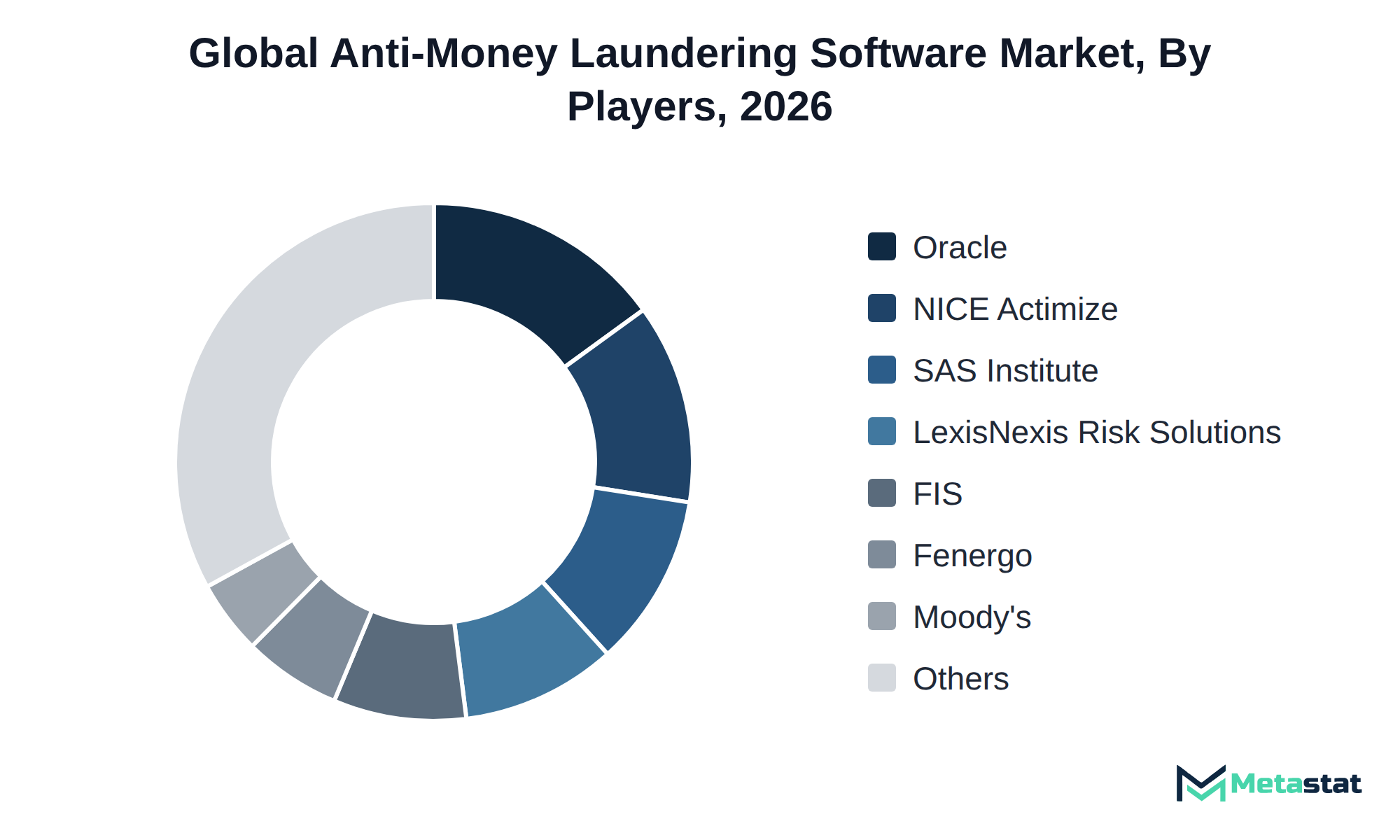
Companies including NICE Actimize and SAS Institute Inc. emphasize cloud-based deployment models, which demonstrate a strong growth trajectory. Cloud-based solutions allow for scalability and flexibility, appealing to large enterprises and small and medium-sized enterprises.
Functionalities like Customer Due Diligence (CDD) & Know Your Customer (KYC) and Transaction Monitoring are critical in meeting regulatory requirements. Providers like Oracle Corporation and FIS focus on advanced analytics capabilities to enhance these functionalities, helping buyers improve risk management and compliance.
Several players specifically target the banking and financial institutions sector. Companies including Moody's Corporation and LexisNexis Risk Solutions offer tailored solutions that address the unique challenges faced by financial institutions, including fraud detection and regulatory compliance.
Firms like Chainalysis Inc. focus on emerging sectors including cryptocurrency and virtual asset service providers. These companies use innovative technologies to address the distinct compliance needs of this industry, creating growth opportunities in the market.
Growth in the anti-money laundering software market relies on several key developments. The rise of cloud-based deployment models is expected to significantly drive adoption, targeting organizations seeking scalable solutions. With a projected CAGR of 13.3%, cloud-based systems will attract large enterprises and small to medium-sized businesses alike.
Transaction monitoring functionalities are anticipated to enhance operational efficiencies within banking and financial institutions, which represent a critical buyer group. Given that this segment is projected to reach USD 1,671.3 million by 2033, focusing on advanced analytics is essential for meeting regulatory requirements and improving compliance.
However, the market faces risks associated with regulatory changes and economic uncertainties. Increased scrutiny and evolving compliance frameworks impose additional costs on organizations, potentially hindering investment in Anti-Money Laundering Software. Overall, the market outlook remains optimistic, contingent on continued technological advancements and effective regulatory navigation.
By Deployment Model: Cloud-Based, On-Premises, Hybrid
By Functionalities: Customer Due Diligence (CDD) & Know Your Customer (KYC), Transaction Monitoring, AML Risk Assessment and Analytics, Sanctions and Watchlist Screening, Regulatory Reporting, Others (Case Management, AML Data Integration)
By Organization Size: Large Enterprises, Small and Medium-Sized Enterprises
By End-Use Industry: Banking and Financial Institutions, Payments and Fintech, Insurance, Cryptocurrency and Virtual Asset Service Providers, Gaming and Gambling, Professional and Corporate Services, Others (Real Estate, Trade Finance, Nonprofit Organizations)
The report strategically identifies and profiles the key market players and analyses their core competencies in each sub-segment of the Anti-Money Laundering Software market.
Report Attributes | Details |
Study Period | 2021-2033 |
Base Year | 2025 |
Estimated Year | 2026 |
Forecast Period | 2026-2033 |
Historical Period | 2021-2025 |
Growth Rate | CAGR 11.7% from 2026 to 2033 |
Revenue Unit | USD million |
Segmentation | By Deployment Model, Functionalities, Organization Size, End-Use Industry, and Region |
By Region | North America (By Deployment Model, Functionalities, Organization Size, End-Use Industry, and Country)
|
Europe (By Deployment Model, Functionalities, Organization Size, End-Use Industry, and Country)
| |
Asia Pacific (By Deployment Model, Functionalities, Organization Size, End-Use Industry, and Country)
| |
South America (By Deployment Model, Functionalities, Organization Size, End-Use Industry, and Country)
| |
Middle East and Africa (By Deployment Model, Functionalities, Organization Size, End-Use Industry, and Country)
|
Find answers to common questions about this report
The Anti-Money Laundering Software market size was valued at USD 2,574.5 million in 2025.
The market is projected to grow at a CAGR of 11.7% during the forecast period from 2026 to 2033.
The North America Anti-Money Laundering Software market size is estimated to reach USD 2,143.8 million by 2033.
The Cloud-Based segment leads the Anti-Money Laundering Software market with a projected value of USD 4,383 million by 2033, reflecting the highest growth rate among deployment models at a CAGR of 13.3%.
Key drivers for the Anti-Money Laundering Software market include the transition to cloud-based solutions, which enhances scalability, flexibility, and cost efficiency. Increasing regulatory scrutiny and the demand for effective compliance solutions encourage small and medium-sized enterprises to adopt advanced software tailored to their unique needs.
North America holds the dominant share of the Anti-Money Laundering Software market, with a value of USD 2,143.8 million in 2033, representing 37.8 percent of the total market.
High costs associated with acquiring and implementing software inhibit uptake among smaller financial institutions and startups. Budget constraints lead to hesitant purchasing decisions and delayed implementations, impacting overall growth potential.
Factors favoring adoption in the Anti-Money Laundering Software industry include increasing regulatory scrutiny and the demand for effective compliance solutions. The transition to cloud-based deployment models addresses challenges in resource allocation and budget constraints, enabling businesses to implement advanced software solutions.
The Anti-Money Laundering Software market is estimated to reach a valuation of USD 6,240.9 million by 2033.
Key players operating in the Anti-Money Laundering Software market include NICE Actimize, SAS Institute Inc., Oracle Corporation, FIS, Fenergo, Moody's Corporation, and LexisNexis Risk Solutions.
The analysts below cover Banking & Finance research at Metastat Insights.
LEAD ANALYST
Utkarsh Khirodkar is a Lead Market Research Analyst at MetaStat Insight, specializing in market intelligence, technology sector assessments, and competitive strategy.

PRINCIPAL CONSULTANT - ENTERPRISE AI & EMERGING TECHNOLOGIES
Banking & Finance · Electronics and Semiconductor · Energy and Power · Healthcare IT · Information & Technology · Professional Services
Vijay Gunti is a Principal Consultant at MetaStat Insight, bringing over two decades of experience across enterprise digital transformation, technology strategy, and intelligent systems.
Analyzing the transition from natural gas to green hydrogen in iron ore reduction requires realistic infrastructure timelines. Meta stat insight supplied a detailed regional assessment of DRI plant conversion costs and scrap metal availability in North America and Western Europe. Their report carefully examined pellet quality specs and electrical grid access constraints without making oversimplified market assumptions. The research material served as a practical reference during internal technology roadmap discussions.
Integrating zero-trust access controls across legacy electronic health record systems involves complex compliance overhead. Team produced an analysis that clearly separated identity governance and administration tools from privileged access management platforms. Their evaluation of HIPAA and GDPR compliance features across cloud native solutions gave our architecture group clear baseline criteria. The custom data request regarding biometric authentication adoption in hospital networks was returned promptly with clear documentation.
Evaluating calorific value requirements and air permit compliance across municipal waste facilities requires localized data. Metastat Insight structured their analysis around operational throughput capacity and feedstock composition variations in Latin America and Eastern Europe. Their competitive mapping of sorting equipment vendors helped clarify technology differences between optical separators and heavy media systems. The study provided an objective baseline during our capital expenditure reviews.
Explore related market intelligence reports worth reading alongside this one.