
LEAD ANALYST
Utkarsh Khirodkar is a Lead Market Research Analyst at MetaStat Insight, specializing in market intelligence, technology sector assessments, and competitive strategy.

Global Forensic Accounting Market Size, Share, By Service Type (Fraud and Financial Investigations, Litigation and Arbitration Accounting, Economic Damages and Contentious Valuation, Asset Tracing and Recovery Support, Insolvency and Bankruptcy Investigations, Forensic Compliance Reviews and Royalty Audits), By End-Use Industry (Banking and Financial Services, Insurance, Government and Public Sector, Manufacturing, Healthcare and Life Sciences, Energy and Utilities, IT and Telecommunications, Retail and Consumer Goods and Real Estate), By Client Type (Corporate Enterprises, Law Firms, Government and Regulatory Bodies, Insurance Companies, Insolvency Practitioners, Individuals and Family Offices and Nonprofits), By Provider Type (Big Four Accounting Firms, Other Accounting Firms and Networks and Specialist Forensic Accounting Firms), Industry Analysis, Growth, Trends, and Forecast, 2026-2033
Report ID
MSI-3452
Published
November, 2026
Pages
298 Pages
Format
Historical
Base year
Forecast
Forecast period
Report Details
Market Valuation: Valued at $6.3 Billion in 2025, projected to reach $11.2 Billion by 2033 at a 7.3% CAGR.
Dominant Segment: Fraud and Financial Investigations leads the market, driven by increasing regulatory scrutiny and the need for proactive risk management among corporate enterprises.
Geographic Lead: North America holds 40.0% of the market in 2025, with the US leading due to a robust financial infrastructure and heightened demand for forensic services.
What's Inside: The report provides a comprehensive analysis of service types, end-use industries, and client types, alongside competitive coverage and growth forecasts for 2026-2033.
Emerging Trends: The rise of digital payments and complex cross-border fund flows is intensifying demand for fraud investigations, projected to grow significantly in the coming years.
Client Focus: Corporate enterprises are the largest client type, with increasing investments in forensic accounting to navigate complex financial environments and ensure compliance.
Choose Your License
Global Forensic Accounting Market
The global Forensic Accounting market was valued at USD 6.3 billion in 2025 and is projected to reach USD 11.2 billion by 2033, growing at a CAGR of 7.3% over the forecast period.
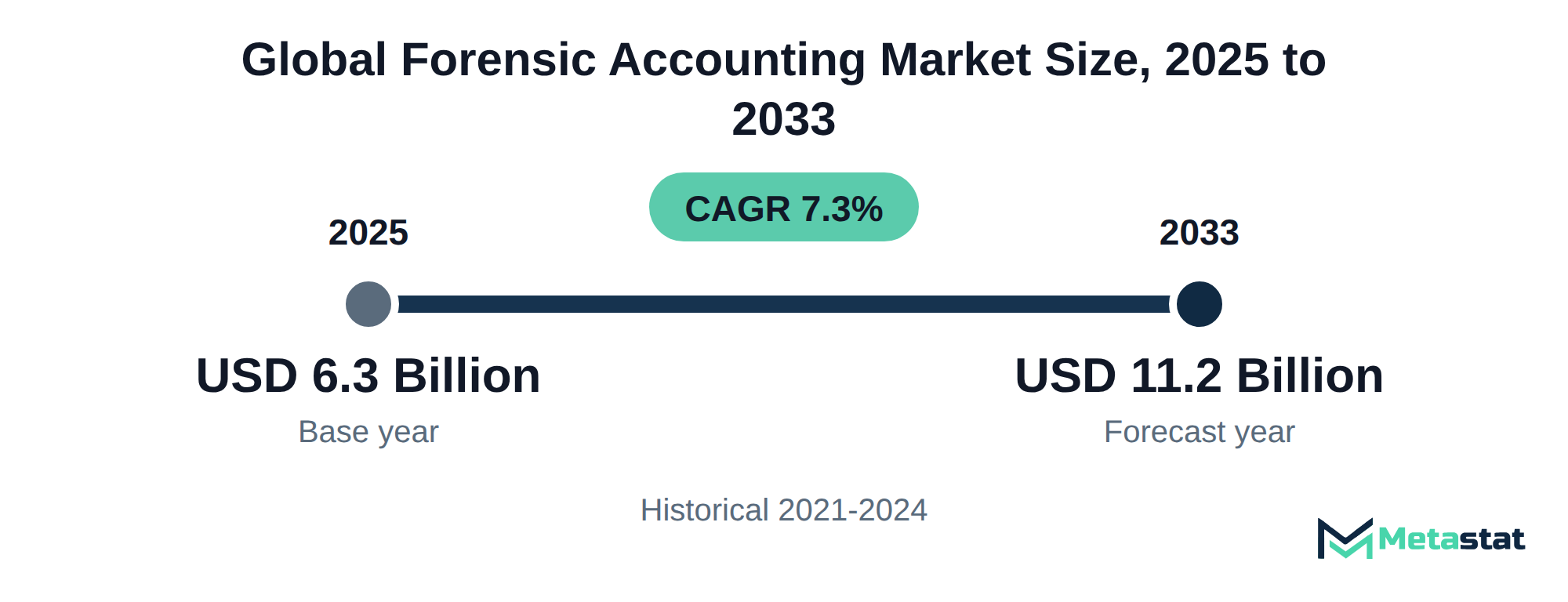
The Forensic Accounting market covers services that address financial discrepancies and legal disputes, supporting businesses and individuals facing complex financial challenges. Buyers invest in these services to mitigate risks associated with fraud, litigation, and valuation disputes, ensuring compliance with regulations and safeguarding their financial interests. The market serves various sectors, including financial services, government agencies, and corporate enterprises, reflecting the increasing demand for high-quality forensic analysis and investigation.
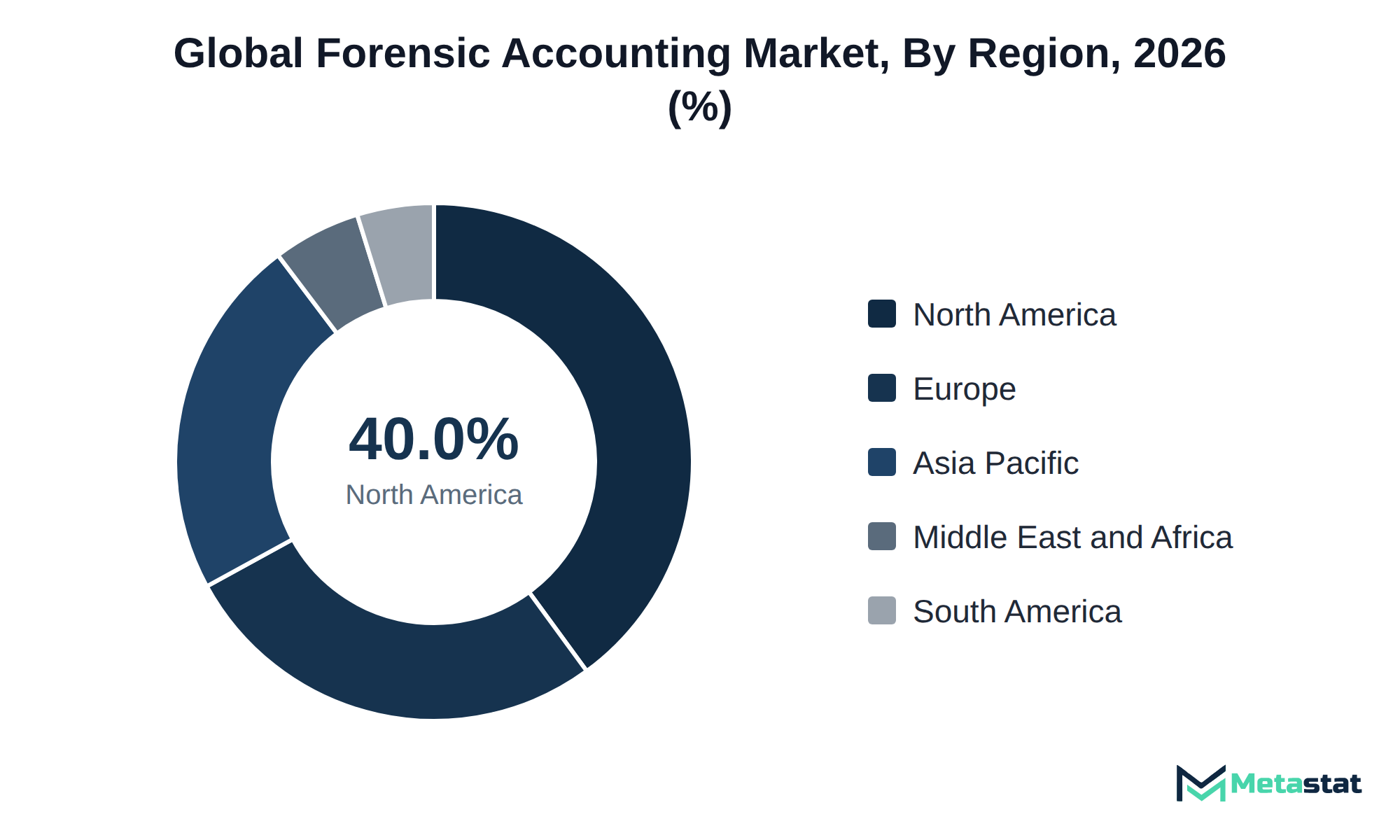
Growth in the market is driven by the rising incidence of financial fraud and the need for thorough investigations to maintain transparency and accountability. Fraud and Financial Investigations is the largest segment by market value, reflecting its central role in forensic accounting. North America holds 40.0% of the market in 2025, with the US leading in 2026. This regional dominance is supported by a well-established financial infrastructure and a robust legal framework that encourages the adoption of forensic accounting services.
Increasing awareness of financial compliance and regulatory standards contributes to the expansion of the market. Corporate enterprises, law firms, and government bodies actively seek forensic accounting services to manage complex financial environments and strengthen their operational integrity. The growing reliance on data analytics and technological advancements further supports the development and sophistication of forensic accounting methodologies, driving demand across various industries.
The forensic accounting market encompasses services that investigate financial misconduct, assess economic damages, and support legal processes. Buyers invest in these services to protect their financial interests, comply with regulations, and mitigate risks associated with fraud and litigation. The market is essential for various stakeholders, including corporate enterprises, law firms, and government entities, all of which require expert analysis and detailed reporting to navigate complex financial landscapes.
The forensic accounting market is growing as awareness of financial fraud and the need for transparency increase across industries. Corporate enterprises represent the segment with the most value, reflecting the growing reliance on forensic accounting to ensure compliance and protect assets. This significant share highlights strong demand for forensic services amid rising regulatory scrutiny and the increasing prevalence of financial crimes.
Investments in advanced technologies, including data analytics and artificial intelligence, enhance the capabilities of forensic accounting firms. These innovations enable more efficient investigations and improve accuracy in financial assessments. The growing complexity of financial transactions and the sophistication of fraud schemes heighten the demand for specialized expertise, positioning the market for continued expansion in the coming years.
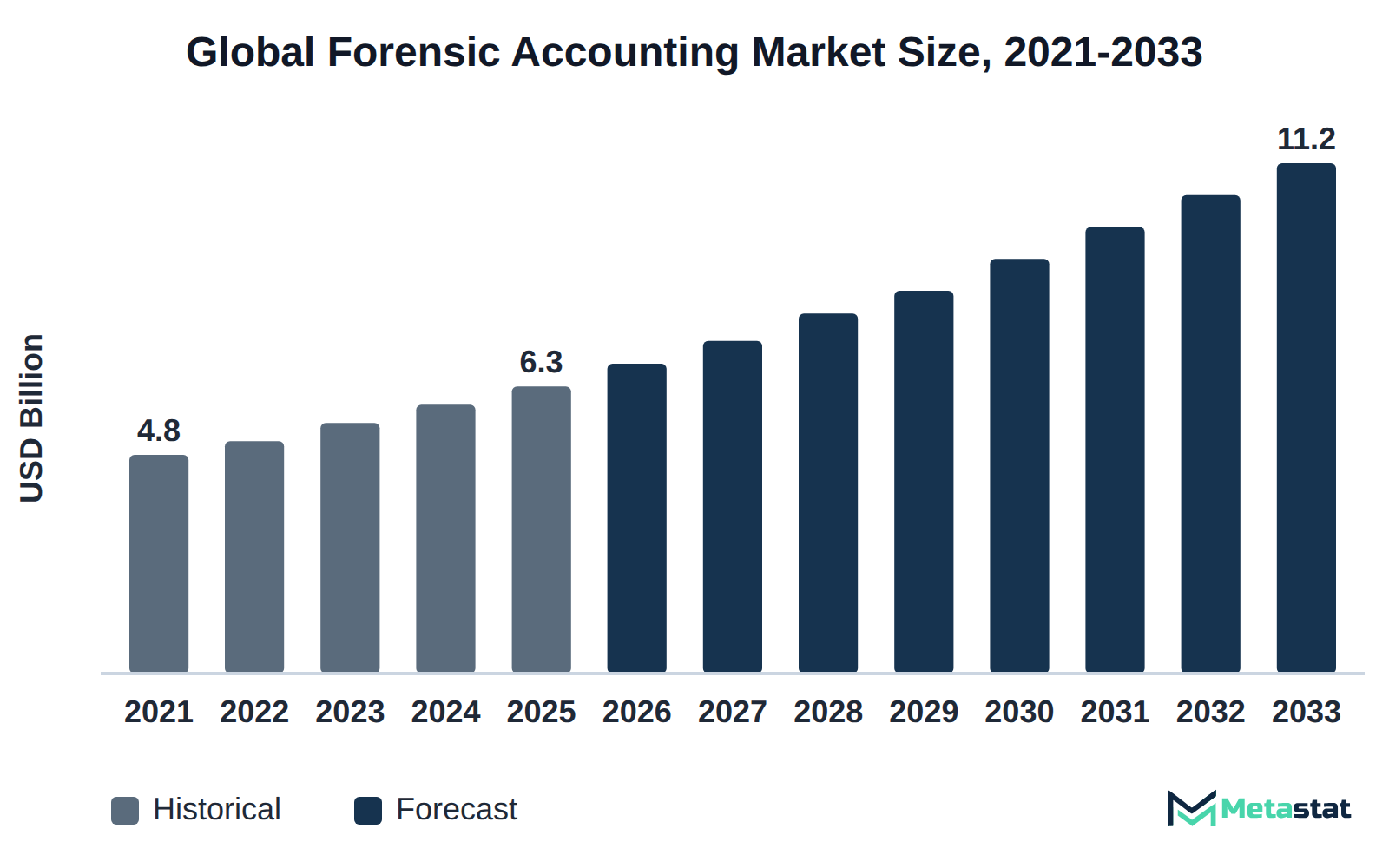
The rise of digital payments and complex cross-border fund flows has intensified the need for thorough financial investigations within the forensic accounting market. The increasing volume of transactions through digital platforms contributes to higher instances of fraud and financial discrepancies. This shift highlights the importance of specialized services like fraud and financial investigations. The segment is projected to grow from USD 2.4 billion in 2026 to USD 3.7 billion by 2033, a compound annual growth rate (CAGR) of 6.4%.
Financial institutions and companies involved in international trade face growing scrutiny regarding their transaction processes. Enhanced regulatory frameworks and customer demands for transparency drive the adoption of forensic accounting services during audits and investigations. The complexity of cross-border payments often obscures the flow of funds, making it challenging to detect illicit activities without sophisticated forensic techniques.
Investment in advanced technologies for tracking and analyzing digital transactions leads to improved detection of fraud and compliance issues. Forensic accounting in this domain mitigates risks and builds trust among stakeholders. This focus on digital financial investigations is expected to support market growth and help organizations keep pace with financial regulations and consumer expectations.
The pricing structure for expert services in the forensic accounting market reflects the complexity and specialization required in commercial arbitration cases. Many firms adopt a fee-for-service model, charging hourly rates that vary significantly based on the expert's experience and the case's specifics. For instance, leading firms with established reputations command higher rates, driven by their track record of successful testimonies and engagements.
In 2026, the litigation and arbitration accounting segment is projected to reach a value of USD 2.5 billion by 2033, driven by the rising need for expert evidence in legal disputes. This growth highlights the increasing recognition of the value experts provide in helping to substantiate claims regarding economic damages. Clients ranging from corporate enterprises to law firms invest in these services, understanding the potential returns from effectively presenting evidence in arbitration.
This investment in expert services significantly shapes outcomes in commercial disputes. By securing competent experts, clients improve their chances of favorable settlements or verdicts, thus enhancing their overall financial position in the market. Such strategic expenditures reflect a broader trend of increased reliance on forensic accounting expertise within the legal framework, indicating a shift toward more informed and data-driven decision-making processes in arbitration.
Asset tracing and insolvency investigations serve vital functions for creditor recovery in the Forensic Accounting market. The increasing complexity of financial transactions and the rising incidence of fraudulent activities heighten the demand for effective asset tracing solutions. In 2026, the segment focusing on asset tracing and recovery support is projected to expand significantly, driven by a compound annual growth rate (CAGR) of 9.2%. This growth reflects an urgent need among creditors to identify and recover assets from debtors who employ various tactics to conceal their financial position.
Creditor recovery strategies, including debt recovery and collection services, require specialized expertise in forensic accounting to navigate legal and financial complexities. Firms focusing on asset tracing and recovery support equip creditors with the tools needed to track down hidden assets, helping ensure that financial obligations are met. The broader economic environment affects this market, and creditors prioritize recovery efforts, particularly during periods of economic uncertainty. The anticipated expansion in the market highlights the increasing importance of tailored services in supporting creditor recovery initiatives.
The need for efficient asset tracing continues to grow, and the Forensic Accounting market will observe increasing investments in technology and training. These investments enhance the capability of firms to provide accurate and timely asset recovery solutions. A strong focus on asset tracing and insolvency investigations positions service providers to effectively meet the needs of creditors, supporting their financial recovery objectives.
Choosing the right forensic accountant for financial disputes significantly impacts the outcome of investigations and litigation. Companies typically prioritize expertise in fraud and financial investigations, a key service type in the forensic accounting market. Expertise in this area ensures that accountants possess the necessary skills and knowledge to handle complex financial matters, which influence the court's perception and the overall resolution of disputes.
Companies commonly assess the reputation and track record of potential forensic accountants. Working with firms recognized for their credibility in the market enhances a company's position when facing litigation. Big Four accounting firms, which are expected to grow from USD 2.9 billion in 2026 to USD 4.6 billion by 2033, often provide the assurance clients seek. Their established practices and resources contribute to a thorough and reliable investigation process, which is essential in high-stakes financial disputes.
Qualifications in forensic accounting, including certifications and specialized training, weigh heavily when selecting the right professional. Companies often seek accountants with credentials like Certified Fraud Examiner (CFE) or Certified Public Accountant (CPA), which indicate a significant level of expertise and adherence to industry standards. This demand aligns with the projected growth in client type segments, where corporate enterprises are expected to increase their spend from USD 2.7 billion in 2026 to USD 4.2 billion by 2033. This trend highlights the importance of investments in qualified professionals to navigate complex financial investigations.
Companies emphasize both expertise and proven qualifications when choosing forensic accountants for financial disputes. By focusing on recognized firms and qualified professionals, companies enhance their chances for successful outcomes in investigations and litigations, reinforcing their positions within the competitive environment of the forensic accounting market.
Corporate enterprises increasingly prioritize fraud and financial investigations to ensure compliance and mitigate risks related to financial misconduct. Heightened awareness of fraudulent activities, combined with the rising complexity of financial transactions, has intensified this demand. The banking and financial services sector, alongside insurance companies, significantly contributes to this trend, driven by regulatory pressures and an ongoing commitment to maintain transparency. This growth results from a shift in corporate behavior and an increased focus on accountability, ultimately boosting the overall market for forensic accounting services.
Government and regulatory bodies recognize the importance of thorough investigations, resulting in higher spending on forensic services across various sectors. The emphasis on risk management and compliance leads to increased volumes of investigations, supporting sustainable growth within the forensic accounting market.
Emerging technologies enhance the efficiency and effectiveness of forensic accounting services. Advanced data analytics and artificial intelligence significantly streamline the process of identifying financial discrepancies, effectively supporting investigations. Automation of routine tasks allows forensic accountants to focus on complex analyses, improving the quality and speed of investigations. These innovations drive increased demand for forensic services across various sectors, including banking, insurance, and government. Integration of these technologies leads to more accurate assessments and timely resolution of disputes, positioning the market for significant growth. Clients increasingly seek firms equipped with advanced tools, influencing competitiveness among service providers. The growing reliance on technology in forensic investigations is expected to remain a key driver in the forensic accounting market, shaping future service offerings and client expectations.
Investment in technology enhances operational capabilities and aligns with evolving client needs for transparency and accuracy. The ongoing shift towards digital platforms necessitates that firms adapt their service delivery models, ensuring they meet the demands of a digitally driven economy. This environment creates opportunities for firms that innovate and leverage technology to enhance their forensic capabilities, ultimately influencing market dynamics.
Price sensitivity among corporate enterprises impacts the adoption of forensic accounting services. Firms facing budget constraints often delay investments in financial investigations, litigation support, and other related services. High service costs, particularly from leading firms, create barriers for smaller organizations that require these essential services. The hesitation to allocate adequate budgets slows down the uptake of forensic services, resulting in smaller orders and prolonged decision-making processes. In sectors including insurance and government, where cost-effectiveness is critical, this restraint leads to reduced engagement with forensic accounting providers.
While the market evolves, competition among service providers influences pricing strategies. A shift towards more affordable alternatives arises from increased interest in forensic accounting, yet the current pricing structure remains a significant concern for many potential buyers. This dynamic continues to shape decisions, highlighting the importance of establishing cost-effective solutions in the forensic accounting market.
Talent cost represents a significant challenge for service providers within the forensic accounting market. The increasing demand for skilled forensic accountants has led to upward pressure on salaries and compensation packages. Firms attract and retain highly qualified professionals, which raises operational expenses. Consequently, many providers implement strategic hiring practices, invest in employee development programs, and explore partnerships with educational institutions to build a pipeline of talent. This proactive approach enables firms to mitigate the impact of rising talent costs while ensuring a consistent level of expertise in service delivery. Competition for skilled labor intensifies, compelling firms to differentiate their offerings to maintain a competitive edge in the market. The need for specialized skills in areas including fraud investigation, litigation support, and financial analysis underlines the importance of effective talent management strategies to sustain growth and profitability.
The segment of asset tracing and recovery support demonstrates significant growth potential within the market. This area aligns with increasing concerns over financial integrity, prompting corporate enterprises to seek services that trace and recover assets in instances of fraud or misappropriation. The projected compound annual growth rate (CAGR) for this segment stands at 9.2%, positioning it as one of the most dynamic components of the forensic accounting market. The growing complexity of financial transactions and evolving regulatory environments drive the demand for specialized services that efficiently track and recover assets. This trend reflects a broader recognition among organizations of the importance of safeguarding their financial interests. Investment in enhanced service offerings related to asset tracing and recovery yields substantial returns, supporting overall market expansion and addressing critical client needs for security and financial rectitude.
The Global Forensic Accounting market is segmented based on Service Type, End-Use Industry, Client Type, and Provider Type.
Within forensic accounting, this segment identifies and addresses financial misconduct across sectors, supported by corporate enterprises and law firms seeking resolution for complex financial disputes. Increasing regulatory scrutiny and the evolving nature of financial crimes drive demand for these services, with corporate clients particularly focusing on fraud detection and prevention. Compared to other segments, this area demonstrates a moderate growth trajectory, influenced by rising awareness of financial fraud's impact on business continuity. The unique challenges of fraud and financial investigations differentiate it from litigation and arbitration accounting, with a distinct emphasis on proactive risk management strategies tailored for corporate environments. The market's continuous evolution highlights the importance of specialized expertise in navigating intricate financial landscapes.
Litigation and Arbitration Accounting segment is estimated to reach USD 2.5 billion by 2033, at a CAGR of 7.6% during the forecast period. This segment is essential in resolving disputes by providing financial analysis and expert testimony for legal proceedings. Law firms and corporate legal departments rely on these services to substantiate claims and counterclaims in courtroom settings. The increasing complexity of legal cases and heightened scrutiny of financial practices drive demand for these services. Compared to other segments, this sub-segment experiences a higher growth rate, with its CAGR of 7.6% outpacing others, reflecting the rising need for expert financial insights in legal disputes. The focus on regulatory compliance and accurate representation of financial data further supports this segment's expansion in the market.
The Economic Damages and Contentious Valuation segment is expected to reach USD 1.8 billion by 2033. This segment serves critical functions in assessing economic damages resulting from disputes, often used by legal firms and corporate enterprises involved in litigation. Demand for these services is driven by an increasing emphasis on accurate financial assessments during legal proceedings, particularly in jurisdictions with stringent regulatory frameworks. Unlike other segments, the Economic Damages and Contentious Valuation segment experiences relatively stable growth, reflecting the ongoing need for precise financial evaluations. With a growth rate of 7.6%, the segment distinguishes itself from others, including Fraud and Financial Investigations, which has a CAGR of 6.4%. The rising complexity of financial transactions further heightens the demand for specialized valuation services, reinforcing its importance in the Forensic Accounting market.
Asset Tracing and Recovery Support is projected to grow at a CAGR of 9.2% during the forecast period. This segment involves identifying the location of assets that are hidden or unlawfully transferred, playing a critical role in legal proceedings and recovery efforts. Corporate clients, legal firms, and government agencies frequently seek these services to enhance recovery prospects in cases of fraud or financial misconduct. The increasing complexity of financial transactions and the rise of cross-border activities drive demand in this segment. Compared to other service types, Asset Tracing and Recovery Support is anticipated to experience faster growth, highlighting its importance in addressing evolving challenges in the market. This segment stands out due to its focus on asset recovery, distinguishing it from others that center on financial investigations or litigation support.
Insolvency and Bankruptcy Investigations focus on assessing financial situations of entities facing insolvency. Legal representatives and corporate clients engage these services to navigate complex financial landscapes, ensuring compliance with regulatory requirements. A surge in insolvency cases due to economic fluctuations drives demand for specialized investigations. This segment operates differently from others, reflecting a higher reliance on regulatory compliance and legal frameworks. The specific skills required for these investigations often result in higher pricing compared to other service types, including Fraud and Financial Investigations, which cater to broader corporate needs. The market adapts to evolving regulatory environments, influencing demand dynamics and pricing structures across various client segments.
Forensic compliance reviews evaluate an organization's adherence to regulatory standards, ensuring compliance with financial regulations and internal policies. This segment primarily serves corporate enterprises, law firms, and regulatory bodies seeking to mitigate risks associated with non-compliance. Key drivers influencing this segment include intensified regulatory scrutiny and an increasing emphasis on corporate governance, risk and compliance. Unlike other segments, forensic compliance reviews involve a more extensive review process and a greater focus on risk management, resulting in distinct pricing structures compared to services including fraud investigations. This focus on compliance and risk management reflects broader market trends toward increased accountability, driving demand in the forensic accounting market.
Royalty audits and matrimonial accounting facilitate essential services for individuals and entities navigating complex financial disputes. These services are provided by divorce courts, legal representatives, and individuals seeking equitable distribution of assets. The growing emphasis on transparency in matrimonial settlements drives demand for thorough audits, particularly in high-net-worth cases. Increasing awareness among clients regarding their rights and options promotes the necessity of forensic accounting expertise in these sensitive situations. Compared to other segments, including litigation and arbitration accounting, this segment often faces slower growth due to a narrower client base and the specialized nature of the services. Overall, the Royalty Audits and Matrimonial Accounting segment ensures fair outcomes in financial disputes.
Banking and Financial Services segment is valued at USD 1.8 billion in 2026 and is projected to reach USD 2.9 billion by 2033, at a CAGR of 6.6% during the forecast period. Forensic accounting in this segment supports commercial banks and other financial institutions in detecting fraud, ensuring compliance with regulations, and managing risk. The demand for these services is driven by increasing regulatory scrutiny in the financial sector and rising incidents of financial crime. This segment shows a slower growth rate compared to the Asset Tracing and Recovery Support segment, which is projected to grow at a CAGR of 9.2%. Financial institutions prioritize the need for expert forensic services to protect their assets and maintain their reputation in the market, highlighting the importance of specialized skills in this area.
Insurance segment is estimated to reach USD 1.4 billion by 2033, at a CAGR of 6.6% during the forecast period. This segment finds extensive application in assessing claims and minimizing losses related to fraudulent activities within the insurance industry. Insurance companies, seeking to maintain financial integrity, employ forensic accounting services to evaluate complex cases involving policyholder claims and potential fraud. The increasing incidence of insurance fraud drives demand for these specialized services. Compared to other segments, the insurance segment experiences slower growth rates due to heightened regulatory scrutiny and stringent compliance requirements, which delay the adoption of forensic accounting practices. In contrast to segments including Fraud and Financial Investigations that are projected to grow more rapidly, the insurance sector reflects a steady but crucial component of the market's overall landscape.
The Government and Public Sector segment is expected to reach USD 2.1 billion by 2033. This segment serves government entities and public organizations, focusing on fraud prevention, compliance evaluations, and financial investigations. Government bodies engage forensic accounting services to ensure transparency and accountability within operations. The increasing emphasis on regulatory compliance and governmental oversight drives demand for these services, particularly in light of rising public scrutiny over financial practices. The anticipated growth rate for this segment is slower compared to other segments, with a CAGR of 6.6% during the forecast period. Factors including budget constraints within government agencies influence the pace of adoption, impacting service uptake. In contrast to the corporate sectors, where growth is more robust due to larger available budgets, the government sector experiences different dynamics, reflecting financial limitations and varying priorities in fiscal management.
Manufacturing is projected to grow at a CAGR of 6.7% during the forecast period. This segment encompasses a range of services provided to manufacturing entities, including fraud detection, financial investigations, and compliance reviews. Corporate enterprises rely heavily on forensic accounting services to maintain operational integrity and safeguard against financial irregularities. The increasing complexity of regulations surrounding manufacturing activities drives demand, necessitating rigorous financial scrutiny. Unlike the banking and financial services segment, which is valued at USD 1.8 billion in 2026 and projected to reach USD 2.9 billion by 2033, the manufacturing segment focuses on unique challenges posed by production processes and supply chain dynamics. This distinct emphasis on compliance and risk management leads to a tailored approach, differentiating it within the broader market and highlighting the specific needs of manufacturing companies.
Healthcare and life sciences encompass a vital area within forensic accounting, focusing on complex financial investigations relevant to healthcare providers, pharmaceutical firms, and research institutions. This segment serves various organizations by addressing issues including fraud, compliance, and valuation disputes, ensuring adherence to regulatory requirements and operational integrity. Increasing scrutiny of healthcare spending drives demand for forensic accounting services, particularly in the wake of heightened regulations in the sector. Compared to other segments, this area experiences slower growth due to unique challenges faced by clients, including intricate regulatory frameworks. The forensic accounting market supports healthcare and life sciences by providing tailored solutions to manage financial risks and ensure accountability.
Energy and Utilities involve complex financial investigations that address the specific needs of energy companies and utility providers. This segment is used by organizations requiring detailed analyses related to regulatory compliance and operational efficiency. Increasing regulatory scrutiny drives demand, pushing companies to seek expert evaluations of their financial practices. Unlike other segments, the Energy and Utilities sector faces unique challenges due to the need for specialized knowledge about energy markets and compliance legislation. Therefore, service providers focusing on this sub-segment possess deep industry insights. Divergence in growth rates, influenced by these regulatory factors, differentiates Energy and Utilities from sectors with more general financial service needs. This dynamic environment significantly influences demand for forensic accounting services tailored to energy and utility firms, ensuring they remain compliant while optimizing their financial operations.
The IT and Telecommunications segment focuses on financial analysis and investigative services tailored for businesses within this evolving sector. Organizations in this field apply forensic accounting to address issues including fraud detection, regulatory compliance, and financial disputes. Growing reliance on digital infrastructure and increasing complexity of financial transactions drive demand for these services. Regulatory changes and heightened scrutiny regarding data security further accelerate the need for forensic accounting expertise. Compared to other segments, the IT and Telecommunications sector experiences unique challenges, including technological advancements that necessitate continual adaptation by service providers. This segment benefits from a specialized client base, including technology companies and telecom providers, seeking tailored solutions to navigate intricate financial landscapes.
The Retail and Consumer Goods segment serves various stakeholders, including retailers and consumer product companies, focusing on assessing financial integrity and identifying potential fraudulent activities. Companies operating in this sector seek forensic accounting services to manage risks associated with financial misrepresentation, which undermines consumer trust and leads to significant financial losses. Increased regulatory scrutiny and the rising complexity of retail operations drive demand for these services, resulting in a growing need for specialized expertise. This segment typically experiences slower growth compared to others in the market, with firms relying on established practices and frameworks to manage financial oversight. Heightened awareness of financial compliance and the necessity for transparency present opportunities for service providers to enhance offerings tailored to the unique demands of retail and consumer goods.
This sub-segment encompasses services related to Real Estate, Transportation, and Private Estates, focusing on financial investigations and asset management in these sectors. Clients in these areas include property management firms, transportation companies, and individual estate holders who require specialized financial analyses to address disputes, valuation, and compliance issues. Demand arises from increasing complexities in property transactions and transportation logistics, both of which require thorough financial scrutiny to mitigate risks. This sub-segment tends to exhibit slower growth compared to others, driven by unique market challenges including regulatory compliance and fluctuating property values. Unlike the Banking and Financial Services segment, which experiences more rapid expansion, the Real Estate, Transportation, and Private Estates sub-segment faces distinct financial dynamics that influence its operations.
This segment serves large businesses requiring forensic accounting services to investigate financial discrepancies, assess compliance with regulations, and support litigation efforts. Increasing scrutiny of corporate governance and heightened regulatory requirements drive demand for these services. In comparison to other segments, Corporate Enterprises exhibit a relatively higher growth rate, driven by rising complexity of financial transactions and the need for transparency. This segment focuses on large-scale litigation and arbitration accounting, unlike smaller client types, which focus on specific regulatory compliance or financial investigations. The market reflects significant opportunities for growth, particularly while organizations prioritize risk management and fraud prevention initiatives.
Law Firms segment is estimated to reach USD 3.1 billion by 2033, at a CAGR of 8% during the forecast period. This segment caters to legal professionals requiring specialized forensic accounting services for litigation, compliance, and investigative purposes. Clients in this domain engage forensic accounting to assess financial discrepancies, prepare litigation strategies, and support evidence in legal disputes. Increasing regulatory scrutiny and the rising complexity of financial transactions drive demand for these services. Unlike other segments, Law Firms exhibit a higher growth rate, reflecting the growing need for expert analysis in legal contexts. The forecasted CAGR of 8% outpaces several other client types, highlighting a robust demand trajectory driven by the intricacies of modern legal frameworks and financial regulations. The strong emphasis on compliance and detailed financial scrutiny positions this segment as a vital contributor to the overall growth of the forensic accounting market.
The Government and Regulatory Bodies segment is expected to reach USD 1.6 billion by 2033. This segment encompasses services provided by governmental entities and regulatory agencies to ensure compliance and investigate financial misconduct. The increasing emphasis on transparency and accountability within public sectors drives demand for forensic accounting services. Regulatory bodies rely on these services to conduct audits and investigate fraud, which enhances the integrity of public financial management. Growth in this segment occurs at a slower rate compared to others, with a projected CAGR reflecting stability rather than rapid expansion. The market differentiates itself from corporate client types, where the focus shifts toward meeting compliance requirements in the public domain rather than profit-driven motives typical of corporate enterprises. The forensic accounting market benefits from heightened scrutiny of public expenditure and rising compliance standards, influencing overall demand for services tailored to government and regulatory needs.
Insurance Companies segment is projected to grow at a CAGR of 6.8% during the forecast period. This segment is used by various insurance providers for financial investigations, claims analysis, and fraud detection. Demand in this segment is driven by the increasing complexity of insurance claims and the necessity for thorough investigations to maintain financial integrity. Regulatory pressures encouraging transparency in financial reporting further support growth in this sector. Compared to other segments, including Corporate Enterprises, which sees a higher CAGR of 6.9%, insurance companies face unique challenges related to claim verification and risk management. This specificity influences pricing strategies and service offerings tailored to meet the needs of insurance clients. The demand for forensic accounting services remains strong in the market, highlighting the critical role these services play in safeguarding the financial interests of insurance companies.
Insolvency Practitioners provide specialized services focused on the assessment and management of businesses facing financial distress. These practitioners include professionals who offer guidance through insolvency proceedings, financial assessments, and restructuring initiatives. Corporate clients primarily engage these services to navigate complex legal and financial challenges associated with insolvency. The increasing frequency of corporate bankruptcies and financial crises drives demand for such expertise, reflecting heightened awareness of the importance of effective financial management. This sub-segment differentiates itself from others in terms of pricing and service complexity, often commanding higher fees due to the specialized knowledge required. The unique requirements of insolvency scenarios contribute to a more tailored approach in service delivery, distinguishing it from broader forensic services. The overall growth of the market highlights the critical role played by insolvency practitioners in facilitating financial recovery and stability.
Individuals and Family Offices encompass clients who seek specialized financial investigative services to manage assets, resolve disputes, and ensure compliance with regulations. This segment serves private individuals, families, and their associated entities, such as family offices, focusing on matters including estate planning, asset tracing, and fraud detection. Demand for these services is driven by the increasing complexity of wealth management and the heightened risk of financial fraud. This segment typically experiences slower growth compared to corporate enterprises, which invest in broader forensic services. The financial scrutiny required in this sub-segment involves personalized and tailored approaches, differentiating it from others that cater to larger institutional clients. The Forensic Accounting market recognizes the importance of catering to this clientele, ensuring that specialized expertise meets their unique financial needs.
This sub-segment includes services tailored for nonprofits and trusts, focusing on specialized financial investigations and compliance assessments. Organizations including charitable foundations, educational institutions, and trust funds engage these services to ensure financial integrity and transparency in their operations. Demand for this segment is driven by increased scrutiny over financial practices, particularly in the nonprofit sector, where accountability is critical. Unlike other client types, nonprofits and trusts often face unique regulatory requirements, influencing their engagement with forensic accounting services. This sub-segment does not experience the same growth momentum as corporate enterprises or law firms, reflecting different financial complexities and lower transaction volumes. The forensic accounting market addresses the needs of various entities, including those in this sub-segment, promoting trust and compliance across sectors.
This segment provides vital forensic accounting services to corporate clients, law firms, and regulatory bodies, focusing on fraud investigation, litigation support, and compliance auditing. Demand for these services is driven by increasing regulatory scrutiny and the need for enhanced financial transparency, particularly among large organizations facing complex financial challenges. This segment exhibits a strong growth trajectory, differentiating itself from others by delivering specialized services tailored to high-stakes situations, which often command higher fees due to their complexity and urgency. The anticipated growth in the Big Four Accounting Firms segment indicates a robust outlook for the market, reflecting broader trends in financial accountability and risk management.
Other Accounting Firms and Networks segment is estimated to reach USD 2.7 billion by 2033, at a CAGR of 7.7% during the forecast period. This segment provides essential forensic accounting services to a variety of clients, including businesses and organizations requiring financial investigations and audits. The increasing incidence of corporate fraud and regulatory scrutiny drives demand for these services, particularly among corporate enterprises and law firms. This segment differentiates itself from others by its growth trajectory, reflecting a shifting focus towards specialized forensic services. The emphasis on compliance and the growing complexity of financial transactions contribute to its expansion, supporting significant revenue generation for firms operating in this space. The market benefits from these trends, creating opportunities for firms to enhance their service offerings and address evolving client needs.
Specialist Forensic Accounting Firms segment is expected to reach USD 1.7 billion by 2033. This segment focuses on providing deep expertise in financial investigations, fraud detection, and litigation support, attracting clients including corporate entities and legal practices seeking specialized services. The increasing complexity of financial fraud cases drives demand for these firms, along with heightened regulatory scrutiny across various industries. Compared to other providers, this segment experiences a competitive edge due to a higher level of specialization, which is evident in its projected CAGR of 7.7%. This growth reflects the increased reliance on expert forensic accounting services for resolving complex financial disputes, maintaining compliance, and ensuring accurate financial reporting. The market's evolution continues to be influenced by technological advancements, pushing firms to adopt innovative methodologies for investigation and analysis.
Multidisciplinary Advisory Firms segment is projected to grow at a CAGR of 7.7% during the forecast period. This segment delivers diverse services that cater to the specific needs of clients including corporations and government entities, focusing on financial investigations, compliance assessments, and strategic advisory. Growth is driven by increasing complexity in regulatory requirements and rising demand for comprehensive investigative services, appealing to a wide range of buyers. Compared to other segments, Multidisciplinary Advisory Firms typically command higher service fees due to the specialized expertise they offer. While segments like the Big Four Accounting Firms provide similar services, the unique approach of multidisciplinary firms often attracts clients seeking tailored solutions. This differentiation positions the segment favorably for ongoing growth, aligning closely with trends in the broader forensic accounting market.
Based on geography, the Global Forensic Accounting market is divided into North America, Europe, Asia-Pacific, South America, Middle East, and Africa.
Significant growth in the North American market is driven by corporate enterprises and banking and financial services. The demand for forensic accounting services stems from increasing regulatory scrutiny and the need for financial transparency within these sectors. The region is characterized by a strong legal framework supporting investigations, creating an environment for growth in litigation and arbitration accounting. North America is projected to reach USD 4.2 billion by the end of 2033. This market expansion correlates with rising complexity in financial transactions and the demand for expertise in fraud detection and financial investigations. The forensic accounting market is expected to evolve, influenced by advancements in technology and the increasing importance of data analytics in financial investigations.
Demand within the Forensic Accounting market in Europe relies heavily on industries including Banking and Financial Services and Government and Public Sector. The assessment of financial integrity in these sectors drives the need for specialized services. Regulatory frameworks across member states enhance scrutiny of financial practices, influencing the demand for forensic services. Germany, France, and the UK emerge as key contributors to market growth, reflecting the region's robust financial services sector. By 2025, Europe will account for 27.1% of the global market share, a significant position that supports continued investment in forensic accounting capabilities. The region's diverse economic landscape creates opportunities for firms to innovate and expand their service offerings, ensuring alignment with evolving regulatory conditions and market needs.
Growth in the Asia-Pacific region reflects increasing demand from industries including Banking and Financial Services, with a projected segment value of USD 2.9 billion by 2033. Regulatory scrutiny surrounding financial compliance drives enterprises to seek forensic accounting services, ensuring adherence to local and international standards. Countries like China, Japan, and India play a significant role in this expansion, supported by a wealth of corporate entities requiring thorough financial investigations. The market's share in the region is estimated at 22.7% in 2025, indicating a significant contribution to global trends. Rising economic activity in the region strengthens the forensic accounting market, enabling businesses to navigate complex financial landscapes and detect fraudulent activities efficiently.
The Forensic Accounting market in South America experiences unique dynamics shaped by economic conditions and regulatory environments. Brazil and Argentina represent the primary demand drivers, particularly in the Banking and Financial Services sector, which requires robust forensic investigation methods to combat financial misconduct. The market benefits from a growing emphasis on compliance and risk management, prompting corporate entities to invest in forensic accounting services. The region's share of the global market in 2025 highlights its emerging significance. A focus on sustainability and innovation in financial practices is expected to create additional opportunities for growth in this sector, leading to increased investment in forensic services across various industries. The evolving landscape necessitates adaptation by service providers to address the distinct challenges present in South America.
The increasing demand for forensic accounting services in the Middle East and Africa stems from growing financial complexities and regulatory requirements within various sectors. Countries including Saudi Arabia and the UAE experience heightened activity in industries like Banking and Financial Services, driving investments in fraud detection and financial investigations. South Africa presents significant opportunities due to its diverse economy and increasing focus on compliance and risk management. The market share for this region is expected to reach 5.5% in 2025, reflecting the rising importance of forensic accounting in maintaining financial integrity and addressing economic crimes. Local players and global firms actively engage in the market, stimulating growth and competition.
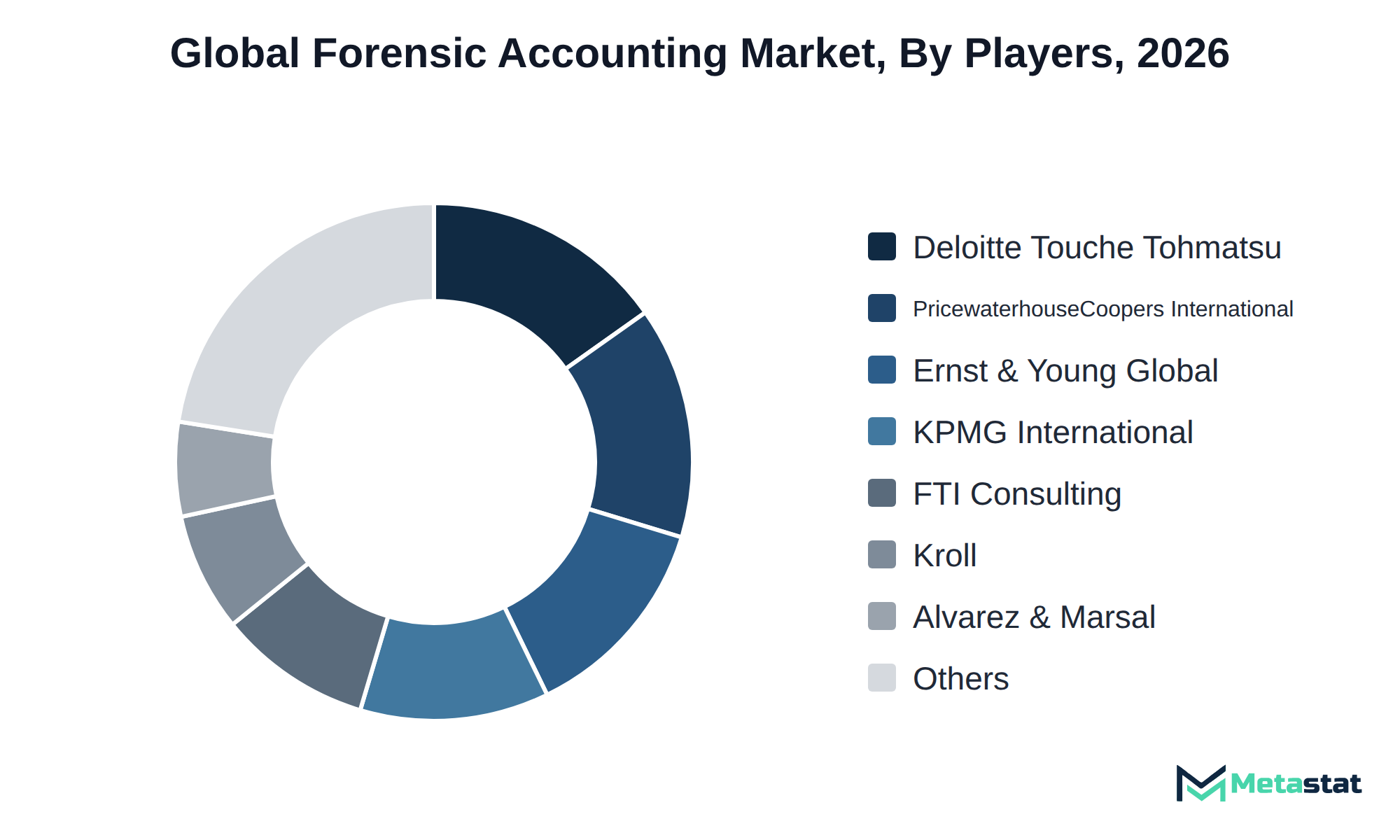
Competition in the Forensic Accounting market involves several firms focusing on different service types and client types. Major players include Deloitte Touche Tohmatsu Limited, PricewaterhouseCoopers International Limited, Ernst & Young Global Limited, and KPMG International Limited, collectively referred to as the Big Four Accounting Firms. These firms emphasize broad service offerings, serving primarily corporate enterprises and law firms.
Buyers prioritize factors including price, service quality, and customization when selecting forensic accounting providers. For example, FTI Consulting, Inc. and Kroll, LLC focus on fraud and financial investigations, appealing to corporate clients seeking specialized expertise. Companies including Alvarez & Marsal Holdings, LLC and AlixPartners, LLP emphasize litigation and arbitration accounting services, attracting law firms and regulatory bodies requiring tailored solutions within this sector.
Achieving this growth relies on several key developments within the forensic accounting market. First, an increase in fraud and financial investigations will drive demand, particularly in the banking and financial services sector, where the need for compliance and risk management rises significantly. Second, litigation and arbitration accounting services are expected to see heightened usage, especially among law firms, with legal disputes continuing to proliferate across various industries. Third, asset tracing and recovery support services will likely experience a surge, fueled by corporate enterprises seeking to recover lost assets due to fraud or misappropriation.
However, the market faces potential risks that could hinder reaching the projected USD 11.2 billion. Economic downturns slow investments in forensic accounting services, particularly in the government and public sectors, where budget constraints often impact service procurement. These developments and risks will shape the market's future trajectory despite its significant growth potential.
By Service Type: Fraud and Financial Investigations, Litigation and Arbitration Accounting, Economic Damages and Contentious Valuation, Asset Tracing and Recovery Support, Insolvency and Bankruptcy Investigations, Forensic Compliance Reviews, Others (Royalty Audits and Matrimonial Accounting)
By End-Use Industry: Banking and Financial Services, Insurance, Government and Public Sector, Manufacturing, Healthcare and Life Sciences, Energy and Utilities, IT and Telecommunications, Retail and Consumer Goods, Others (Real Estate, Transportation and Private Estates)
By Client Type: Corporate Enterprises, Law Firms, Government and Regulatory Bodies, Insurance Companies, Insolvency Practitioners, Individuals and Family Offices, Others (Nonprofits and Trusts)
By Provider Type: Big Four Accounting Firms, Other Accounting Firms and Networks, Specialist Forensic Accounting Firms, Multidisciplinary Advisory Firms
The report strategically identifies and profiles the key market players and analyses their core competencies in each sub-segment of the Forensic Accounting market.
|
Report Attributes |
Details |
|
Study Period |
2021-2033 |
|
Base Year |
2025 |
|
Estimated Year |
2026 |
|
Forecast Period |
2026-2033 |
|
Historical Period |
2021-2025 |
|
Growth Rate |
CAGR 7.3% from 2026 to 2033 |
|
Revenue Unit |
USD billion |
|
Segmentation |
By Service Type, End-Use Industry, Client Type, Provider Type, and Region |
|
By Region |
North America (By Service Type, End-Use Industry, Client Type, Provider Type, and Country)
|
|
Europe (By Service Type, End-Use Industry, Client Type, Provider Type, and Country)
|
|
|
Asia Pacific (By Service Type, End-Use Industry, Client Type, Provider Type, and Country)
|
|
|
South America (By Service Type, End-Use Industry, Client Type, Provider Type, and Country)
|
|
|
Middle East and Africa (By Service Type, End-Use Industry, Client Type, Provider Type, and Country)
|
Find answers to common questions about this report
The Forensic Accounting market size was valued at USD 6.3 billion in 2025.
The market is projected to grow at a CAGR of 7.3% during the forecast period from 2026 to 2033.
The North America Forensic Accounting market size is estimated to reach USD 4.2 billion by 2033.
Fraud and Financial Investigations leads the Forensic Accounting market, with a projected value of USD 3.7 billion by 2033. This segment demonstrates a compound annual growth rate of 6.4 percent from 2026 to 2033.
Heightened awareness of fraudulent activities and the rising complexity of financial transactions drive demand for forensic accounting services. The increasing focus on accountability and compliance among corporate enterprises further supports market growth.
North America holds the dominant share of the Forensic Accounting market, with a value of USD 4.2 billion projected for 2033, representing 40 percent of the total market.
Price sensitivity among corporate enterprises impacts the adoption of forensic accounting services. High service costs create barriers for smaller organizations, leading to reduced engagement with providers and prolonged decision-making processes.
The increasing complexity of financial transactions and evolving regulatory environments favor adoption of specialized services in forensic accounting. Corporate enterprises recognize the importance of safeguarding financial interests, leading to heightened investment in these services.
The Forensic Accounting market is estimated to reach a valuation of USD 11.2 billion by 2033.
Key players operating in the Forensic Accounting market include Deloitte Touche Tohmatsu Limited, PricewaterhouseCoopers International Limited, Ernst & Young Global Limited, KPMG International Limited, FTI Consulting, Inc., and Alvarez & Marsal Holdings, LLC.
The analysts below cover Banking & Finance research at Metastat Insights.
LEAD ANALYST
Utkarsh Khirodkar is a Lead Market Research Analyst at MetaStat Insight, specializing in market intelligence, technology sector assessments, and competitive strategy.

PRINCIPAL CONSULTANT - ENTERPRISE AI & EMERGING TECHNOLOGIES
Banking & Finance · Electronics and Semiconductor · Energy and Power · Healthcare IT · Information & Technology · Professional Services
Vijay Gunti is a Principal Consultant at MetaStat Insight, bringing over two decades of experience across enterprise digital transformation, technology strategy, and intelligent systems.
The technical breakdown of ISO 20022 migration readiness across correspondent banking corridors was remarkably thorough. Rather than treating cross-border corporate payments as a single block, the report drew a useful distinction between multilateral netting platforms and domestic instant payment rails across ASEAN economies. MetaStat Insight highlighted regulatory constraints on foreign exchange liquidity management that many publications gloss over. The research material offered practical clarity for our platform development roadmap.
Our group needed clearer visibility into out-of-autoclave processing timelines for high-temperature thermoplastic composites. MetaStat Insight delivered an objective assessment that contrasted automated fiber placement scrap rates with traditional thermoset prepreg layup cycles. The supplier landscape mapped out primary resin suppliers and tape slitting capacity across France, Germany, and Japan with solid technical accuracy. Their analyst handled our questions on precursor supply risks during an unscheduled inquiry call, providing clear, unembellished context.
Evaluating sensor fusion reliability across harsh operating environments can be tricky without field-validated data. The study on agricultural autonomous guidance systems clearly separated stereo vision setups from automotive-grade solid-state LiDAR. We appreciated the regional infrastructure analysis, specifically around RTK network density across North America and South America. During our follow-up consultation, the MetaStat Insight team walked through tier-two perception software partnerships, giving our engineering leads a practical basis for vendor shortlisting.
Explore related market intelligence reports worth reading alongside this one.
Starting from
$2950