
LEAD ANALYST
Utkarsh Khirodkar is a Lead Market Research Analyst at MetaStat Insight, specializing in market intelligence, technology sector assessments, and competitive strategy.

Global Commercial Banking Market Size, Share, By Service Type (Commercial Lending & Credit, Business Deposits & Operating Accounts, Payments & Cash Management, Trade & Supply Chain Finance, Treasury, Foreign Exchange & Risk Management, Commercial Cards, Merchant & Payment Acceptance Services, Equipment & Asset Finance, Others), By Enterprise Size (Micro & Small Enterprises, Medium Enterprises, Large Enterprises), By End-Use Industry (Financial Services, Manufacturing, Retail & Consumer Goods, Real Estate & Construction, Energy & Utilities, Healthcare & Life Sciences, Technology, Media & Telecommunications, Transportation & Logistics, Agriculture & Food, Others), Industry Analysis, Growth, Trends, and Forecast, 2026-2033
Report ID
MSI-5363
Published
September, 2026
Pages
273 Pages
Format
Historical
Base year
Forecast
Forecast period
Report Details
Market Valuation: Valued at $3,841.7 Billion in 2025, projected to reach $8,984.6 Billion by 2033 at a 11.2% CAGR.
Dominant Segment: The Commercial Lending & Credit segment leads the market, projected to grow from USD 1,452.3 billion in 2026 to USD 2,846.3 billion by 2033, driven by increased demand for credit solutions among businesses.
Geographic Lead: The Asia Pacific region is expected to experience the fastest growth, fueled by rapid economic development, urbanization, and a rising middle class seeking improved banking services.
What's Inside: This report provides a comprehensive analysis of the Global Commercial Banking market, including detailed segmentation by service type, enterprise size, and end-use industry, along with competitive coverage and forecasts through 2033.
Emerging Regional Demands: Emerging markets, particularly in Asia Pacific and South America, present significant opportunities as urbanization and middle-class growth drive demand for tailored banking services.
Choose Your License
Global Commercial Banking Market
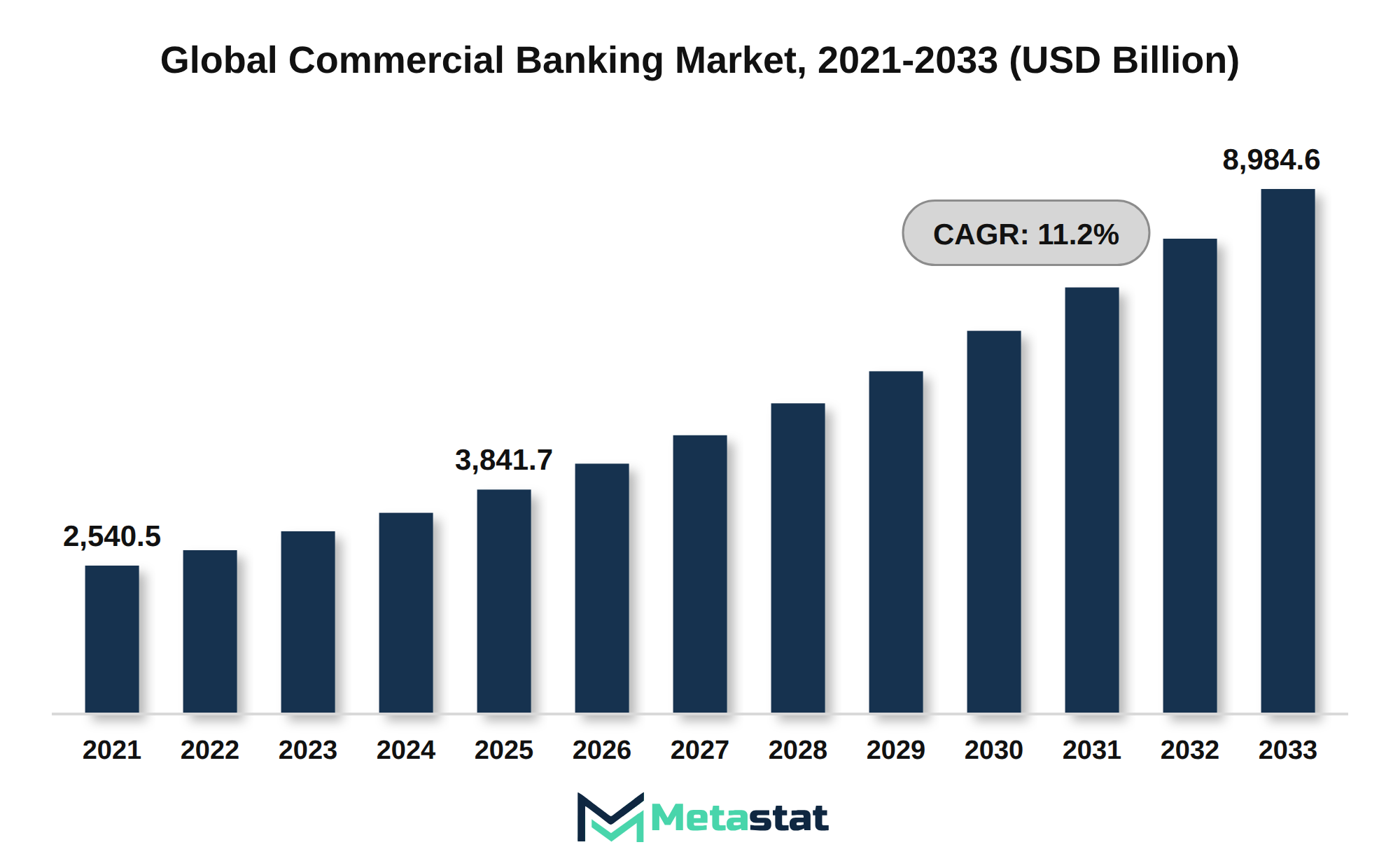
The global Commercial Banking market was valued at USD 3,841.7 billion in 2025 and is projected to reach USD 8,984.6 billion by 2033, growing at a CAGR of 11.2% over the forecast period.
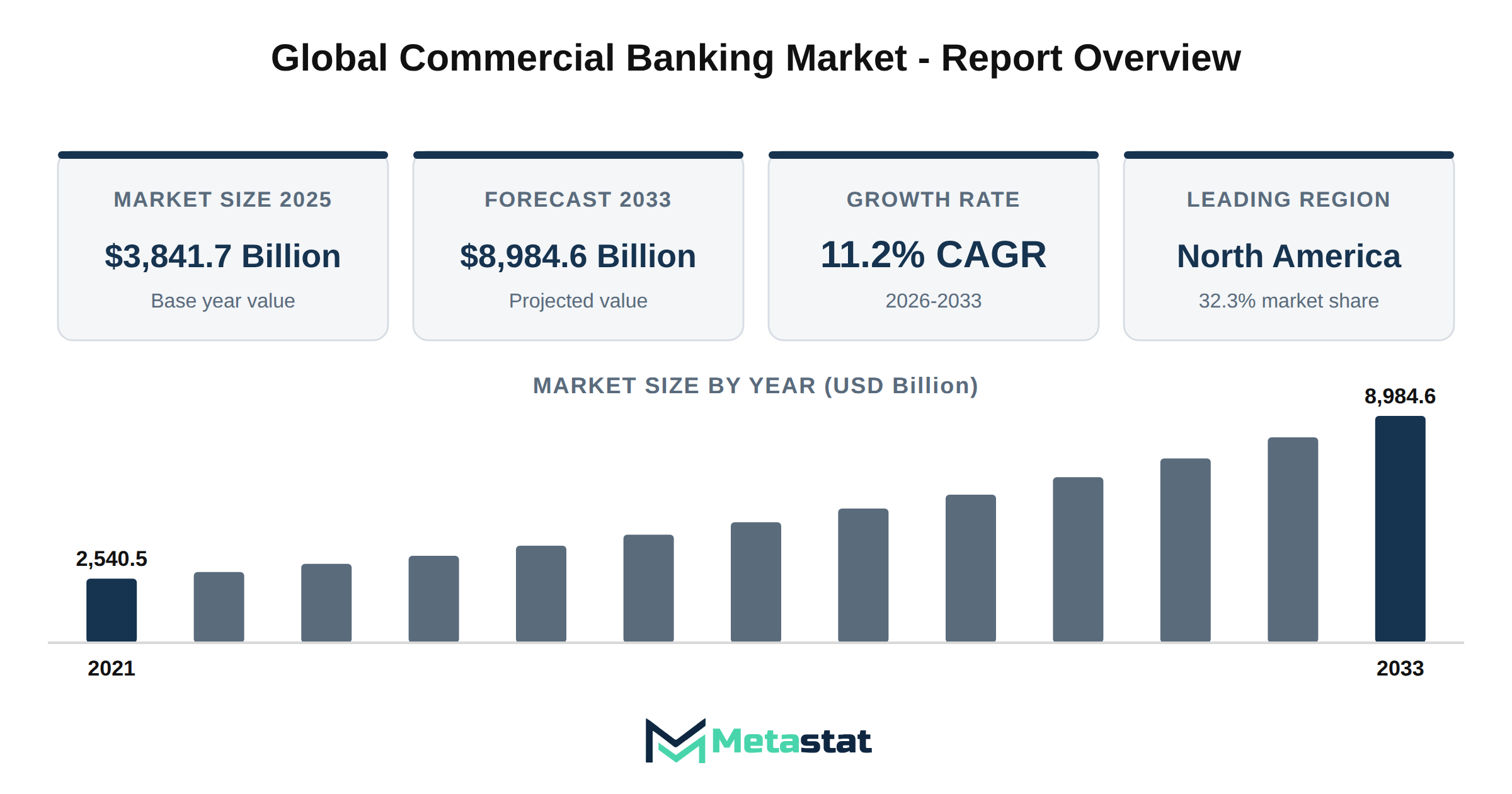
The global Commercial Banking market reached a valuation of USD 3,841.7 billion in 2025 and is projected to grow significantly, with an estimated value of USD 8,984.6 billion by 2033. This growth trajectory reflects a compound annual growth rate (CAGR) of 11.2% during the forecast period.
Several trends shape growth in the Commercial Banking sector. The rising demand for digital commercial banking services drives transformation, owing to customers increasingly seeking efficient and effective banking experiences. This trend influences banks to enhance their digital offerings, leading to improved customer satisfaction and retention.
Commercial lending experiences notable growth across small and mid-sized enterprises, which represent a significant segment of the market. This expansion results from increased access to credit and a favorable economic environment that encourages these enterprises to invest in growth and innovation.
The expansion of payments and cash management solutions is significant in the market's evolution. Businesses require efficient and secure methods for transaction processing, leading to increased investments in technology and services that enhance operational efficiency.
Trade and supply chain finance services witness growth due to globalization and the interconnectedness of markets. Companies seek financial solutions that facilitate cross-border trade, enhancing liquidity and reducing risks associated with international transactions.
Demand for treasury and foreign exchange services continues to rise, driven by corporations' need for effective risk management and currency exposure mitigation. These services support businesses in navigating complex financial landscapes, contributing to the overall health of the market.
Artificial intelligence (AI) and automation transform operations within commercial banking, enhancing efficiency and reducing operational costs. These technologies enable banks to streamline processes, improve decision-making, and deliver personalized services to clients.
Open banking and API integration present new opportunities for commercial banks to collaborate with fintech companies and enhance their offerings. This trend encourages innovation, allowing banks to expand their services and improve customer experiences through integrated solutions.
The Commercial Banking market experiences significant trends that shape its growth trajectory. The rising demand for digital services reflects a shift in customer preferences towards online banking solutions. This trend is driven by technological advancements and the increasing need for convenience among businesses and consumers.
Growth in commercial lending, particularly among small and mid-sized enterprises, highlights the market's evolving landscape. These enterprises seek financial support to expand operations, driving demand for tailored lending solutions. Financial institutions respond by developing innovative products aimed at this segment, which enhances competition and supports market expansion.
The expansion of payments and cash management solutions significantly influences the market's dynamics. Businesses seek efficient transaction methods and cash flow management, prompting banks to enhance their service offerings. This evolution in services strengthens client relationships and increases overall market revenue.
Trade and supply chain finance services experience notable growth due to rising global trade volumes. Businesses require reliable financing options to navigate supply chain complexities, leading banks to innovate and provide specialized financing solutions. This demand directly contributes to the market's robust expansion.
Treasury and foreign exchange services address the increasing complexity of global financial transactions. Businesses require effective risk management and currency exchange solutions, prompting banks to invest in advanced treasury capabilities. This trend aligns with the market's overall growth strategy, focusing on high-value services.
The integration of AI and automation significantly transforms commercial banking operations. Financial institutions leverage these technologies to enhance efficiency, improve customer experiences, and reduce operational costs. This transformation positions banks to adapt to emerging market demands and competitive pressures.
Open banking and API integration provide opportunities for enhanced customer experiences and innovation in service delivery. By creating collaborative platforms, banks offer more personalized solutions and streamline access to financial services. This trend supports market growth by attracting tech-savvy clients and improving service efficiency.
Embedded finance presents a promising opportunity for commercial banks. By integrating financial services into non-financial platforms, banks tap into new revenue streams and reach underserved markets. This strategy aligns with the ongoing digital transformation across the industry.
Real-time payments adoption in corporate banking reflects the increasing demand for instantaneous transaction capabilities. Businesses prioritize speed and efficiency, prompting banks to enhance their payment infrastructures. This shift enhances customer satisfaction and strengthens competitive positioning in the market.
Digital onboarding and Know Your Customer innovations streamline the customer acquisition process. Financial institutions implement advanced technologies to enhance compliance and improve customer experiences. This trend supports market growth by reducing friction in onboarding processes and attracting new clients.
Cybersecurity and fraud prevention trends gain prominence because digital transactions increase. Banks invest in advanced security measures to protect customer data and maintain trust. This focus on security is essential to sustain growth in the commercial banking sector.
Regulatory developments reshape the landscape of commercial banking services. Compliance with evolving regulations impacts lending practices and product development strategies. Banks adapt by enhancing their compliance frameworks, ensuring they meet regulatory standards while remaining competitive.
Basel capital requirements influence commercial lending strategies. Banks adjust their lending practices to meet capital adequacy standards while providing necessary financing to businesses. This balance between regulation and lending capacity remains a critical factor in market dynamics.
Interest rate trends significantly impact commercial bank profitability. Fluctuating rates influence lending margins and customer borrowing behavior, prompting banks to strategically manage their interest rate exposure. This trend directly affects profitability and overall market performance.
Deposit competition and corporate liquidity management trends shape the market's operational strategies. Banks seek to attract deposits through competitive interest rates and innovative products. This competition enhances market dynamics and drives customer engagement.
Fee income and revenue diversification become increasingly important for commercial banks. Financial institutions explore additional revenue streams beyond traditional lending, enhancing their overall financial resilience. This strategy directly contributes to sustained growth in the market.
The adoption of cloud technologies and core banking modernization enables banks to enhance operational efficiency. By leveraging cloud solutions, banks streamline processes, reduce costs, and improve service delivery. This modernization aligns with the digital transformation goals of the market.
Partnerships with fintech companies drive innovation and expand service offerings within the commercial banking sector. Collaborations enable banks to enhance customer experiences and adopt advanced technologies. This trend positions banks competitively in an evolving marketplace.
Sustainable finance and green commercial lending growth reflect an increasing focus on environmental responsibility. Banks develop financing solutions aimed at supporting sustainable initiatives, aligning with global sustainability goals. This trend enhances the market's appeal to socially conscious clients.
Cross-border commercial banking and international expansion opportunities present avenues for growth. Banks seek to establish a global presence, offering services tailored to diverse markets. This strategic expansion enhances competitiveness and revenue potential within the market.
SME banking digitization and financial inclusion opportunities highlight the need for accessible banking services. Financial institutions focus on providing tailored solutions for underserved segments, enhancing financial inclusion. This strategy enhances the market's growth potential and addresses significant social needs.
Industry-specific commercial banking solutions gain traction because businesses seek tailored financial services. Banks develop expertise in various sectors, allowing for customized solutions that meet unique industry demands. This specialization strengthens client relationships and supports market growth.
North America presents substantial growth opportunities within the commercial banking sector. The region's robust economic environment and technological advancements drive demand for innovative banking solutions. Financial institutions focus on enhancing service offerings to capture market share.
Asia Pacific experiences rapid commercial banking expansion and digital adoption. The region's increasing urbanization and technological integration create fertile ground for banking innovation. This growth trajectory positions Asia Pacific because a key player in the global market.
Europe's regulatory and competitive landscape influences commercial banking strategies. Banks adapt to stringent regulations while striving to maintain competitiveness in a dynamic marketplace. This ongoing adjustment shapes the region's market outlook and growth potential.
Emerging market opportunities in commercial banking present avenues for growth. Financial institutions seek to penetrate underserved markets, enhancing access to banking services. This strategy supports overall market expansion and addresses significant financial gaps.
Competitive strategies of leading commercial banks focus on innovation, customer experience, and operational efficiency. Banks invest in technology and partnerships to enhance their service offerings and improve market positioning. This focus on strategic initiatives drives market dynamics.
Mergers, acquisitions, and investment activity in commercial banking reflect a trend towards consolidation and growth. Financial institutions seek to enhance their capabilities and market presence through strategic partnerships. This activity shapes the competitive landscape and influences market evolution.
Future growth prospects for the global Commercial Banking market remain positive. The ongoing digital transformation, coupled with evolving customer needs, positions the market for sustained expansion. Financial institutions adapt and thrive with changing market conditions.
The Commercial Banking market experiences significant growth driven by favorable macro-economic factors. Increased capital investment environments, including rising GDP growth and stable interest rates, have enhanced the lending capacity of banks. These conditions create opportunities for businesses to invest in expansion and operational improvements, resulting in heightened demand for commercial lending and credit services.
The expansion of venture funding and public-private spending power further stimulates the market. Access to capital enables businesses across various sectors to innovate and modernize, thereby increasing their reliance on commercial banking services. This trend drives the growth of key segments, including commercial lending and payments, leading to stronger financial performance within the banking sector.
Heightened consumer behavior driven by lifestyle changes and urbanization influences investment patterns. Businesses seek financial services that facilitate their adaptability to evolving market conditions, reinforcing the importance of banking institutions in providing tailored solutions. Overall, the convergence of these factors creates significant growth opportunities within the Commercial Banking market.
The Commercial Banking market experiences accelerated growth through the integration of advanced technologies. Automation, artificial intelligence, and software adoption streamline banking operations, enhancing customer experiences and reducing processing times. Financial institutions prioritize digitizing legacy processes, which improves service delivery and operational resiliency. The shift towards digital platforms responds to changing consumer behaviors, particularly among younger demographics who prefer online transactions.
Investment in technology enhances data analytics capabilities, allowing for improved risk assessment and personalized offerings. This technological integration reduces operational costs and encourages innovation-led product and service diversification. Financial institutions leveraging these advancements expand their market reach, resulting in a competitive advantage. Such developments contribute significantly to the overall growth trajectory of the market, positioning it favorably for future expansion.
Regulatory compliance presents a significant restraint for the Commercial Banking market. Increasingly stringent regulations demand substantial investments in compliance infrastructure and ongoing operational adjustments. These requirements create challenges for banks, particularly smaller institutions that lack the resources to meet evolving legal mandates. Consequently, capital allocation shifts toward compliance efforts, limiting funds available for innovation and expansion initiatives.
Macroeconomic headwinds further complicate the market landscape. Inflationary pressures affect operational costs and erode profit margins, compelling banks to tighten lending practices. Tightened lending practices result in decreased credit availability for consumers and businesses, contributing to sluggish demand in the market. Geopolitical instability introduces uncertainty, impacting cross-border banking operations and creating risks around currency fluctuations and regulatory discrepancies.
Talent gaps within the banking sector exacerbate operational challenges. The need for skilled labor in compliance, data security, and technological integration grows, yet the supply of qualified professionals remains limited. This deficiency leads to heightened hiring costs and potential delays in implementing necessary systems, further constraining the market's growth potential.
Infrastructure gaps and connectivity deficits hinder the efficient delivery of banking services. Many regions experience inadequate technological infrastructure, resulting in deployment bottlenecks for digital banking solutions. This limitation impacts customer satisfaction and slows the adoption of innovative financial products, ultimately affecting market competitiveness.
Geopolitical fragmentation significantly impacts the Commercial Banking market by creating uncertainty and instability in global financial systems. Nations pursuing protectionist policies increase trade deficits alongside tariff friction, affecting cross-border transactions and investments. This fragmentation complicates market dynamics and raises operational costs for financial institutions navigating evolving international trade regulations.
Technological disruptions challenge the market by demanding rapid adaptations to new digital solutions while integrating complex research and development initiatives. Financial institutions face interoperability friction, complicating system integrations and increasing costs while striving to maintain competitive advantages. Such disruptions hinder operational efficiency and slow market growth.
Pricing compression and margin pressures create additional challenges within the Commercial Banking market. Rising input costs, driven by inflation and supply chain instability, exert downward pressure on profit margins. Financial institutions balance operational costs with competitive pricing strategies, contributing to a challenging market environment.
Talent retention pressures arise from a competitive job market that necessitates specialized skill sets in technology and finance. Workforce skill gaps complicate recruitment efforts, particularly for institutions seeking to enhance digital capabilities. The struggle to attract and retain talent influences operational performance and market competitiveness.
Cybersecurity risks and data vulnerabilities remain critical challenges for the Commercial Banking market. Financial institutions face increasing threats from cyberattacks, necessitating substantial investments in security infrastructure to protect sensitive customer data. Such challenges incur additional costs and impact customer trust and market reputation.
Environmental sustainability demands impose additional complexities on the market, with increasing pressure to adopt eco-friendly practices and reduce carbon footprints. Institutions failing to address these demands risk reputational damage and potential loss of market share. The need for sustainable practices influences operational strategies and investment decisions across the sector.
The commercial banking market experiences considerable opportunities from emerging regional demands, particularly within Asia Pacific and South America. Rapid economic development in these regions enhances the demand for banking services, driven by increased urbanization and a growing middle class. This growth translates into a need for improved financial products, including commercial lending and credit services tailored to local enterprises.
Infrastructure modernization significantly influences the market, particularly in developing economies. Investments in digital banking infrastructure and payment systems facilitate easier access to banking services, enabling a diverse range of customers, including micro and small enterprises, to benefit from enhanced financial solutions. This modernization supports the development of new products and services that align with evolving consumer needs.
Technological disruptions, including the rise of fintech companies, create competitive pressures on traditional banks, urging them to innovate and expand their service offerings. The integration of advanced technologies, including artificial intelligence and blockchain, enhances operational efficiencies, allowing banks to offer customized solutions while minimizing costs. This shift further motivates the commercial banking market to adapt quickly to changing consumer preferences and expectations.
Digital transformation remains a critical element driving growth within the market. The increasing adoption of online banking and mobile applications enhances customer experience and expands market reach. Banks developing user-friendly digital platforms enable efficient transactions and improve customer engagement, building loyalty and attracting new clients.
Next-generation innovations in financial services, including sustainability imperatives and ESG-driven alignments, respond to heightened consumer awareness regarding environmental and social responsibility. Banks tapping into green financing opportunities position themselves favorably in the evolving market, driving growth while aligning with the values of today's consumers.
Strategic consolidation through mergers and acquisitions allows key players to expand their geographical presence and diversify service offerings. This trend enhances competitive advantage and strengthens market stability by aggregating resources and expertise across regions. Through such strategic maneuvers, the commercial banking market strengthens its position to meet diverse consumer demands effectively.
The commercial banking market capitalizes on emerging regional demands, innovative technologies, and strategic initiatives to drive growth. The combination of these factors positions the market for significant expansion through 2033, ultimately benefiting a broad array of stakeholders within the financial ecosystem.
The Global Commercial Banking market is segmented based on Service Type, Enterprise Size, and End-Use Industry.
Valued at USD 1,452.3 billion in 2026, the Commercial Lending & Credit segment is projected to reach USD 2,846.3 billion by 2033, reflecting a CAGR of 10.1% during the forecast period. This growth stems from increased demand for credit solutions among businesses seeking financing for operations, expansions, and capital investments. Escalating economic activities across various sectors drive the need for tailored lending products, enabling businesses to maintain liquidity and manage cash flow effectively.
Technological advancements play a crucial role in the segment's expansion. The integration of digital banking platforms allows for streamlined loan application processes and improved customer experiences. Enhanced data analytics capabilities enable financial institutions to assess creditworthiness more accurately, reducing risk and promoting lending to diverse enterprise sizes, including micro, small, medium, and large enterprises. The evolution of fintech solutions increases competition, leading to better pricing and service offerings that attract more clients.
Regulatory compliance remains a critical aspect influencing market dynamics. Banks and financial institutions face stringent regulations around lending practices, necessitating investments in compliance management systems and processes. These regulations ensure responsible lending while mitigating risks associated with defaults and financial crises. Compliance costs affect pricing strategies for lenders, impacting profit margins.
Downstream applications of commercial lending extend across various industries, including manufacturing, retail, and services. Companies in these sectors leverage financing to invest in technology upgrades, expand production capacities, and improve supply chain efficiencies. The connection between lending and end-use dynamics highlights the significant role that access to credit plays in driving industry growth and innovation.
The Commercial Banking market shows a clear trajectory of growth influenced by rising demand for commercial lending solutions, technological maturation, and evolving regulatory landscapes. With robust drivers, the segment is well positioned to capitalize on emerging opportunities, facilitating continued investment and expansion.
Growing adoption of digital banking solutions significantly drives the Business Deposits & Operating Accounts segment. Businesses prioritize efficiency and convenience, prompting banks to enhance their digital services. This shift results in increased demand for versatile deposit and operating accounts that offer efficient transactions, integrated cash management solutions, and enhanced customer support.
Technological advancements play a central role in the segment's expansion. Innovations including automated deposits, real-time transaction monitoring, and advanced security features enhance user experience and operational efficiency. Financial institutions investing in next-generation technologies differentiate themselves, gaining a competitive edge in the market.
Regulatory compliance adds complexity but creates opportunities for growth. Financial institutions adapt to evolving regulations governing deposits and cash management. Institutions that navigate compliance challenges and implement robust systems gain customer trust and market share.
The Business Deposits & Operating Accounts segment is projected to reach USD 1,389.9 billion by 2033, at a CAGR of 9.8% during the forecast period. This growth reflects the increasing necessity for businesses to manage their finances efficiently and the rise of innovative banking solutions tailored to meet these needs.
Transformation within payment systems drives significant growth in the Payments & Cash Management segment. Increased digitalization and demand for efficient cash management solutions drive this trend. Businesses prioritize efficient transaction processes, enhancing the operational efficiency of financial operations. The integration of advanced technologies, including artificial intelligence and blockchain, supports the market's evolution by streamlining payments, reducing costs, and mitigating risks associated with fraud. Regional players invest heavily in innovation, enhancing service offerings that cater to diverse customer needs.
Commercial Banking market participants recognize the importance of adapting to evolving consumer behaviors and preferences. The rise of e-commerce and mobile payment solutions influences consumption patterns, leading to an increased focus on mobile payment platforms. Regulatory compliance remains a critical factor, requiring institutions to maintain robust systems that meet evolving standards. This environment encourages investment in next-generation upgrades and technological maturation, ultimately enhancing service delivery and customer satisfaction.
Payments & Cash Management segment is projected to reach USD 1,403.4 billion by 2033. This anticipated growth reflects strong demand across various sectors, including retail, financial services, and manufacturing. Strategies that focus on enhancing customer experiences through innovative payment solutions are likely to yield competitive advantages. The market's trajectory indicates a shift towards greater efficiency and transparency, positioning firms for sustained growth and profitability in the coming years.
Growth within the Trade & Supply Chain Finance segment benefits from increased demand for optimized logistics and supply chain solutions. Businesses prioritize efficiency in procurement and distribution processes, prompting financial institutions to enhance their offerings. This segment is projected to grow at a CAGR of 12.3% during the forecast period, reflecting a shift towards integrated financing solutions that streamline operations and reduce costs.
Adoption of digital platforms facilitates real-time tracking and management of funds, which enhances transparency and reduces transaction times. While the retail and manufacturing sectors expand, demand for trade and supply chain financing from these industries escalates. Banks focus on providing tailored solutions to meet the evolving needs of businesses, aligning their services with the market's requirements.
Investment in technology supports the development of innovative financing products that respond to market trends. Financial institutions enhance their technological infrastructure to improve service delivery, which attracts a broader client base. The commercial banking market experiences this technological maturation, enabling banks to address the unique challenges faced by different enterprise sizes.
Regulatory compliance significantly influences the Trade & Supply Chain Finance segment. Stricter regulations related to international trade and risk management compel banks to adapt their financing solutions accordingly. This regulatory environment influences cost structures and pricing volatility, impacting profitability across the market.
Overall, the dynamic nature of this segment highlights its importance within the broader commercial banking market, emphasizing the need for strategic investments and adaptability in service offerings to capture growth opportunities.
Demand for Treasury, Foreign Exchange & Risk Management services within the Commercial Banking market sees an upward trajectory driven by the increasing complexity of global financial transactions and the need for effective risk mitigation strategies. Financial institutions recognize the importance of managing currency fluctuations and interest rate shifts, driving demand for comprehensive treasury services that enhance financial stability and operational efficiency.
Expansion catalysts for this segment include advancements in technology, particularly fintech innovations that streamline processes and enhance the customer experience. Financial institutions invest in digital platforms to offer real-time data and insights, facilitating informed decision-making in foreign exchange operations. Regulatory changes prompt banks to enhance their risk management frameworks, integrating more sophisticated solutions to remain compliant while optimizing their operations.
End-use dynamics reflect the growing reliance on treasury management services across various industries, including manufacturing and retail sectors, which require effective cash management and foreign exchange strategies to operate successfully in competitive markets. Consumption shifts towards automated solutions highlight a trend where businesses seek to reduce manual processes, leading to increased interest in integrated treasury systems.
Regulatory compliance standards continuously evolve, necessitating robust risk management practices. Financial institutions adapt to these changes, ensuring that their services align with current regulations to avoid penalties and maintain market credibility. This regulatory environment enhances the attractiveness of treasury, foreign exchange, and risk management services, positioning them because essential components for financial institutions aiming to thrive in the Commercial Banking market.
Cost structures within this segment experience pressure from pricing volatility and margin constraints. Financial institutions face challenges in maintaining profitability while investing in new technologies and meeting regulatory requirements. Strategic investment in advanced risk management solutions creates opportunities for efficiency improvements, helping to counterbalance these pressures and support sustainable growth within the market.
Significant demand drivers for the Commercial Cards sub-segment arise from the increasing need for efficient expense management and streamlined payment processes among businesses. Organizations adopt commercial cards to facilitate cash flow management, improve reporting capabilities, and enhance transaction control, ultimately leading to operational efficiencies.
Segment expansion is driven by advancements in technology, including mobile payment solutions and enhanced security features, which promote user adoption. Businesses recognize the value of integrating commercial cards into their financial systems, thereby improving reconciliation processes and providing better visibility over spending patterns.
There exists a clear trend towards digital transformation within the Commercial Banking market, influencing the evolution of commercial card offerings. This transformation leads to innovative product features, including virtual cards and enhanced rewards programs, appealing to a broader audience of enterprises seeking to optimize their financial operations.
End-use dynamics reflect shifts in spending behavior, with industries increasingly relying on commercial cards for both operational expenses and procurement activities. This reliance highlights the importance of maintaining compliance with evolving regulatory standards and ensuring that card offerings align with best practices in financial management.
Pricing volatility and margin pressures specific to this sub-segment necessitate strategic management of card issuance and associated fees. Financial institutions actively adjust their pricing models to remain competitive while delivering value-added services that enhance customer loyalty and satisfaction.
Opportunities arise from organizations prioritizing supply chain resilience, leading to greater reliance on commercial cards for supplier payments. This reliance strengthens relationships between businesses and their vendors while mitigating risks associated with traditional payment methods.
Increasing consumer reliance on digital and contactless payment methods drives demand for Merchant & Payment Acceptance Services within the Commercial Banking market. The rise of e-commerce and the proliferation of mobile payment solutions enhance the segment's appeal, attracting diverse consumer demographics. Rapid technological advancements ensure continuous enhancement of payment solutions, enabling financial institutions to offer efficient and secure transactions.
Technological maturation drives innovation in payment acceptance, embracing next-generation upgrades that include integrated payment systems and advanced fraud detection measures. These improvements not only streamline operations for businesses but improve customer experiences, reinforcing user loyalty. Various end-use industries, including retail and hospitality, increasingly adopt these solutions, acknowledging the necessity of efficient transaction processing to maintain competitiveness.
Regulatory compliance standards significantly influence Merchant & Payment Acceptance Services, because institutions prioritize adherence to data security regulations, including the Payment Card Industry Data Security Standard (PCI DSS). This focus on compliance necessitates investment in secure infrastructure, impacting cost structures for providers. Companies that effectively navigate these regulations position themselves favorably, gaining trust from consumers and merchants alike.
The segment presents strategic opportunities for innovation, with many financial institutions investing in advanced analytics and artificial intelligence to enhance payment processing capabilities. This emphasis on data-driven insights supports better decision-making for both banks and their clients, optimizing transaction management and reducing risks. Overall, the evolving environment of Merchant & Payment Acceptance Services within the market reflects the convergence of technological advancements, regulatory requirements, and shifting consumer behaviors.
Growth in Equipment & Asset Finance aligns with evolving demand for financing solutions within sectors that require significant capital investment. Industries including manufacturing and construction increasingly adopt these financial services to facilitate the acquisition of essential equipment, improving operational efficiency and productivity. While companies transition toward automation and advanced technologies, the appetite for financing options that enable these upgrades is expected to expand, supporting long-term growth in the segment.
Technological maturation influences the Equipment & Asset Finance segment. Providers leverage digital platforms to streamline the financing process, offering clients enhanced accessibility and quicker decision-making. Next-generation upgrades and innovations in risk assessment tools further support the effective underwriting of asset-based loans, improving overall service delivery and enhancing competitive positioning in the market.
Downstream applications of Equipment & Asset Finance extend across various end-use industries, impacting sectors including retail, healthcare, and logistics. Organizations seeking to modernize their operations increasingly turn to asset financing solutions, reflecting a broader trend toward efficient capital utilization. Consumption shifts toward greener technologies and sustainable practices further increase the demand for financing options tailored to environmentally friendly assets, driving market expansion.
Regulatory compliance standards in the financial sector create ongoing challenges for Equipment & Asset Finance. Institutions navigating these requirements invest in strong compliance frameworks to mitigate risks associated with lending activities. Cost structures associated with compliance raise operational expenses, necessitating pricing strategies that balance competitive offerings with sustainable margins, influencing overall profitability.
Supply chain resilience remains a focal point for organizations leveraging Equipment & Asset Finance. Ensuring access to reliable financing options mitigates the impact of potential disruptions while facilitating efficient operations. Strategic opportunity windows arise from increasing collaboration among financial institutions and enterprises, creating innovative solutions that address the unique financing needs of diverse industries, enhancing market dynamics.
The capital investment outlook for Equipment & Asset Finance signals strong growth potential within the Commercial Banking market. While industries continue to prioritize efficiency and modernization, financial institutions positioning themselves to offer tailored financing solutions will likely enhance their competitive edge. Emphasizing strategic partnerships and technological advancements will further strengthen market presence and drive sustained growth, reinforcing the segment's position in the financial ecosystem.
Escrow, agency, and specialized banking services represent a unique aspect of the Commercial Banking market, catering to a diverse range of financial needs. Increased demand for tailored financial solutions drives growth in this sub-segment, particularly owing to businesses seeking enhanced flexibility and security in their transactions. Factors including regulatory compliance, evolving consumer preferences, and the need for efficient capital management contribute to the expansion of these services.
Technological maturation drives innovation in the provision of escrow and specialized banking services, with digital platforms enhancing accessibility and efficiency. Banks invest in next-gen upgrades to streamline service delivery, thereby improving client experiences. The evolution of products within this sub-segment often reflects changes in consumer behavior, highlighting the importance of adaptability in a changing financial environment.
End-use dynamics influence the demand for these services, particularly in sectors requiring specialized financial management, including real estate and high-value transactions. Regulatory compliance standards significantly shape operational frameworks, compelling banks to enhance their service offerings. Challenges including pricing volatility and margin pressures affect profitability, prompting financial institutions to refine their strategies and optimize cost structures.
Strategic opportunity windows arise from the need for alternative solutions in a landscape marked by technological obsolescence and disruptive alternatives. Continuous investment in infrastructure and technology strengthens the resilience of the supply chain within this sub-segment. The commercial banking market's adaptability to evolving consumer demands and regulatory landscapes positions it for sustained growth in the coming years.
Valued at USD 1,232.5 billion in 2026, the Micro & Small Enterprises segment is projected to reach USD 2,706.1 billion by 2033, at a CAGR of 11.9% during the forecast period. Driving factors include the increasing focus on providing tailored financial products that address the unique requirements of smaller enterprises. Enhanced digital banking solutions support this segment by offering improved access to financial services, enabling small businesses to compete effectively in a rapidly changing market environment.
Adoption of innovative financing options is essential for segment expansion, allowing micro and small enterprises to manage cash flow more efficiently. Financial institutions are evolving their offerings with a focus on flexibility and speed in loan approval processes, catering specifically to this demographic. Ongoing technological maturation within financial services enhances operational efficiency, driving demand for banking solutions that align with the operational realities of smaller businesses.
Increased investment in digital platforms facilitates transactions and builds consumer trust, benefiting the overall Commercial Banking market. The growing trend of incorporating artificial intelligence and data analytics into banking services enhances customer experience and provides insights for businesses, further strengthening market competitiveness. Evolving regulatory compliance requires institutions to prioritize adaptability to successfully navigate the changing landscape while offering compliant services to micro and small enterprises.
Cost structures and pricing volatility present significant challenges for financial institutions serving this segment. Financial players strategically manage these pressures to enhance profit margins while providing affordable services. Ongoing investment in next-generation upgrades and technological advancements creates strategic opportunity windows that allow banks to capitalize on emerging market needs, ensuring sustained growth in the Micro & Small Enterprises segment.
Forecasts indicate that the Medium Enterprises segment is estimated to reach USD 2,891.2 billion by 2033, at a CAGR of 11.4% during the forecast period. This growth stems from robust demand for tailored financial solutions, which align with the operational requirements of medium-sized businesses. Enhanced access to commercial lending and credit facilitates the expansion of working capital, essential for sustaining operational growth.
Technological maturation plays a critical role in adopting innovative banking solutions among medium enterprises. Enhanced digital platforms and mobile banking applications streamline transactions and improve customer engagement, creating a more efficient banking experience. Increased reliance on data analytics enables banks to offer personalized services, addressing the specific needs of medium enterprises.
Investment in product evolution remains significant in the medium enterprises sub-segment, with banks developing specialized financial products designed to meet unique industry demands. These innovations enhance competitive advantage, allowing financial institutions to better serve this segment within the broader Commercial Banking market. Integration of advanced payment solutions supports the efficiency of cash management, improving overall financial health for medium enterprises.
End-use dynamics shift owing to medium enterprises increasingly seeking to diversify funding sources and optimize asset management. The market's focus on strategic opportunity windows allows banks to develop relationships with emerging businesses, supporting long-term growth potential. This focus on collaboration enhances resilience against economic fluctuations, ensuring medium enterprises maintain competitiveness within the market.
Demand from large enterprises significantly shapes the Commercial Banking market. These enterprises require comprehensive financial solutions to support their complex operations, driving growth in various banking services. By 2033, the Large Enterprises segment is expected to reach USD 3,387.2 billion, reflecting a robust adoption of commercial banking products tailored to meet the specific needs of larger corporations.
Technological maturation supports this segment's expansion. Large enterprises increasingly adopt advanced banking technologies including artificial intelligence and machine learning to enhance their financial management capabilities. This trend enhances operational efficiency while improving risk management practices. The focus on next-gen upgrades further enhances the value proposition of commercial banking services, enabling these enterprises to apply data analytics for strategic decision-making.
End-use dynamics within the Large Enterprises segment contribute to market growth. Industries including manufacturing, retail, and real estate increasingly rely on tailored banking solutions to manage their financial risks and optimize cash flow. Regulatory compliance standards impose additional requirements, compelling large enterprises to seek banking partners capable of providing compliant and innovative financial solutions.
Cost structures and pricing volatility present challenges for large enterprises. Fluctuations in interest rates and market conditions impact the cost of borrowing, influencing the financial planning of these organizations. However, the strategic opportunity windows created by evolving market conditions allow commercial banking players to develop customized products that address the unique needs of large enterprises.
Investment in capital markets and infrastructure continues to strengthen the resilience of the segment. Large enterprises increasingly invest in sustainable practices and technologies, aligning their financial strategies with broader economic goals. This alignment creates significant opportunities for growth within the Commercial Banking market, driven by the continuous evolution of client expectations and market dynamics.
Valued at USD 756.6 billion in 2026, the Financial Services segment is projected to reach USD 1,519.3 billion by 2033, at a CAGR of 10.5% during the forecast period. Demand for financial services continuously escalates due to various factors, including advancements in technology, regulatory changes, and evolving customer expectations. The sector experiences an increasing reliance on digital solutions and platforms, driving banks to enhance service offerings and improve customer experience.
Technological maturation plays a critical role in this segment, with institutions investing in next-generation upgrades to streamline operations and improve service delivery. The evolution of financial products, including online banking and mobile payment solutions, aligns with shifts in consumer behavior, leading to increased adoption rates. Regulatory compliance standards influence strategies within the market, demanding higher transparency and security measures, which raise operational costs for financial institutions.
Strategic opportunity windows present themselves through innovative financial solutions aimed at underserved customer segments. This expansion potential is further supported by investments in technology that enhance service delivery, ultimately driving growth within the Commercial Banking market. Overall, the Financial Services segment reflects a dynamic relationship between demand drivers and market challenges, contributing significantly to the overall expansion of the market.
In the Commercial Banking market, the manufacturing industry is a key driver of demand. This sector has shifted towards technological advancements and automation, necessitating substantial financial support for equipment purchases and process optimizations. Financial institutions have increasingly tailored their offerings to meet these needs, providing customized lending solutions that enhance production capabilities. Investment in technology adoption serves because a primary catalyst for growth, positioning firms to improve operational efficiency and reduce costs.
Manufacturing segment is estimated to reach USD 1,326.1 billion by 2033, at a CAGR of 10.6% during the forecast period. The evolution of product offerings within commercial banking, coupled with strategic investments in innovative financial solutions, supports this upward trajectory. While manufacturers expand their operations, a robust banking framework enables effective cash management and operational financing, creating an environment conducive to growth.
Increased regulatory compliance requirements influence the financial products available to manufacturers. Financial institutions are adapting their services to align with these standards while maintaining competitive pricing structures that mitigate margin pressures. The landscape is further shaped by fluctuating raw material costs and supply chain dynamics, driving manufacturers to seek flexible financial arrangements that safeguard against market volatility.
This segment's growth reflects broader trends in the commercial banking market, highlighting the interconnectedness of financial services and industrial development. While manufacturers pursue new opportunities in emerging markets, the demand for tailored banking solutions is expected to strengthen, reinforcing the sector's significance within the overall market framework.
Consumer preferences play a critical role in shaping demand within the Retail & Consumer Goods segment. With a heightened focus on convenience and effective experiences, financial institutions are enhancing their service offerings to cater to evolving consumer behaviors. This shift encourages investment in digital banking platforms, facilitating quick transactions and improving customer engagement.
Technological innovations significantly influence the retail banking landscape. The integration of advanced analytics and artificial intelligence enhances customer experience through personalized services and targeted marketing strategies. Retailers increasingly seek partnerships with banks to streamline payment processes and improve cash flow management, contributing to the segment's expansion.
Regulatory compliance and evolving standards present both challenges and opportunities within the market. Financial institutions face pressures to adapt their offerings in line with new regulations while ensuring robust risk management practices. This dynamic environment encourages banks to develop innovative products that align with regulatory frameworks while satisfying customer needs.
Valued at USD 1,193.1 billion by 2033, the Retail & Consumer Goods segment reflects the expanding influence of consumer preferences on the Commercial Banking market. Continuous investment in technological infrastructure and customer-centric services is essential for capturing market opportunities and maintaining competitive advantage.
Cost structures within the segment are impacted by pricing volatility and margin pressures, requiring banks to optimize their operational efficiency. Strategic partnerships with retail players enable banks to expand their service offerings and enhance profitability, reinforcing their position in the market. The outlook for capital investment remains strong, driven by the need for technological upgrades and innovation.
Demand for financial services within the Real Estate & Construction segment is projected to grow at a CAGR of 10.4% during the forecast period. This growth reflects increased capital investment in housing and commercial structures, driven by urbanization and ongoing population growth. Builders and developers increasingly seek financing solutions to support infrastructure projects, residential real estate development, and construction ventures. The market experiences heightened activity in the residential sector, where low-interest rates and favorable mortgage conditions encourage home buying and construction.
Investment in commercial properties thrives due to rising demand for office spaces, retail establishments, and warehouses. The push for sustainability in construction enhances demand for loans tied to green building initiatives, creating strategic opportunities within the market. Regulatory frameworks promoting energy efficiency and environmental standards further drive investment in sustainable projects, aligning with the industry's evolution towards eco-friendly practices.
Adoption of advanced technologies in construction, including Building Information Modeling (BIM) and prefabrication, enhances efficiency and reduces costs. Financial institutions providing tailored banking solutions to support these technologies capture significant market share. Risk management services related to construction financing are crucial, enabling firms to navigate economic fluctuations and project uncertainties.
Overall, the Real Estate & Construction segment represents a critical component of the Commercial Banking market, with strong growth prospects fueled by evolving consumer trends and investments in infrastructure. Continued focus on technology integration and sustainable practices positions financial institutions favorably, enhancing their service offerings and competitive advantage in this dynamic marketplace.
Investment in the Energy & Utilities sector drives demand for tailored financial solutions, creating an environment conducive to growth within the Commercial Banking market. Financial institutions focus on providing specialized lending options, enhancing cash management services, and developing innovative products to meet the unique challenges faced by this industry. The transition towards sustainable energy sources introduces additional complexities, prompting banks to refine their risk assessment frameworks and offer solutions that align with regulatory compliance standards.
Market dynamics reflect a shift towards renewable energy initiatives, necessitating strategic partnerships between banks and energy companies. These partnerships enable the creation of financing structures that promote sustainability while ensuring profitability. Increasing regulatory pressures related to environmental standards influence operational practices in the sector, compelling banks to adapt their service offerings to align with compliance requirements.
Technological advancements in the energy landscape create opportunities for banks to leverage next-generation upgrades. Investment in digital platforms enhances customer accessibility and streamlines transaction processing, ultimately improving service delivery. The market experiences shifts in consumer preferences towards sustainable energy options, impacting the demand for financing solutions tailored to these emerging trends.
The evolution of the market reflects heightened competition among financial institutions striving to capture a greater share of the Energy & Utilities segment. Strategic investments in technology and infrastructure development enhance banks' capabilities to serve this vital industry. While the market expands, banks positioned to offer innovative financing mechanisms are likely to secure a competitive edge, further strengthening their presence within the Commercial Banking market.
Healthcare and life sciences represent a significant segment within the Commercial Banking market, driven by the increasing complexity of healthcare financing and investment needs. Adoption of innovative financial products, including specialized lending and cash management solutions, positions banks to meet the requirements of healthcare providers and pharmaceutical companies. Segment expansion is fueled by rising healthcare expenditures and the demand for advanced medical technologies, prompting institutions to seek tailored banking services.
Technological maturation within healthcare systems enhances opportunities for banks to provide integrated solutions that support operational efficiencies. Continued investment in next-generation upgrades allows banks to offer advanced analytics and risk management services, further appealing to stakeholders within this sector. Product evolution in financing options for medical devices and biotechnology firms aligns with the industry's growth trajectory, ensuring that financial services remain relevant during ongoing changes.
End-use dynamics within healthcare and life sciences create unique consumption shifts, driven by financial institutions adapting to the evolving landscape. Regulatory compliance standards necessitate a careful approach to financial management, compelling banks to implement robust frameworks that align with industry mandates. Pricing volatility linked to the healthcare sector places margin pressures on financial products, requiring banks to develop competitive offerings that balance risk and profitability.
Supply chain resilience has emerged because a critical factor for healthcare providers, influencing their banking needs and financial strategies. Raw material sourcing challenges and logistical vulnerabilities within the sector demand that banks offer solutions tailored to mitigate risks associated with supply disruptions. The quest for strategic opportunity windows prompts banks to consider disruptive alternatives and innovative financing methods that address the unique challenges faced by enterprises in healthcare and life sciences.
Technological obsolescence highlights the need for ongoing investment in modern banking solutions, ensuring that financial institutions maintain relevance. Capital investment outlooks signal a focus on enhancing service offerings that cater specifically to the healthcare sector, further emphasizing the significance of this sub-segment within the broader Commercial Banking market. By aligning their strategies with the needs of healthcare and life sciences, banks position themselves to capture growth opportunities and reinforce their market presence.
Technological advancements significantly influence the Technology, Media & Telecommunications segment within the Commercial Banking market. Increasing adoption of digital banking solutions aligns with growing demand for customer-centric services. Enhanced automation and data analytics capabilities support banks in streamlining operations and improving customer engagement, creating a competitive edge.
Investment in next-generation upgrades, including artificial intelligence and blockchain technology, drives transformation in banking services. Financial institutions leverage these advancements to enhance security, optimize transaction processes, and provide personalized offerings that meet consumer needs. The evolving landscape emphasizes the importance of innovation in maintaining relevance and driving growth within the market.
Regulatory compliance standards pose challenges that banks navigate effectively. Meeting evolving regulations surrounding data privacy and security creates additional operational costs, influencing pricing structures and margin pressures. Adherence to these standards builds trust and reliability, encouraging customer loyalty and ultimately benefiting the overall market.
Strategic opportunity windows arise from shifts in consumer behavior, with increasing preferences for mobile and online banking services. This trend compels banks to adapt their product offerings, prioritizing digital solutions to meet customer expectations. Continuous investment in technology ensures that financial institutions remain responsive to these changes, facilitating long-term growth in the segment.
Investment in the Transportation & Logistics sector influences demand for services within the Commercial Banking market. This sector experiences growth due to increasing global trade, which raises the need for efficient financing solutions. Technological advancements enhance operational capabilities, encouraging banks to offer innovative products tailored to this industry. Regulatory compliance standards are critical, ensuring that financial institutions align with safety and operational protocols.
Shifts in consumer preferences towards faster delivery times drive logistics companies to seek flexible financing options. Cost structures in this sector require attention, driven by fluctuating fuel prices impacting operational expenses. Financial institutions address margin pressures resulting from competitive pricing while maintaining service quality. Strategic opportunities arise for banks that provide customized solutions to meet the evolving needs of the Transportation & Logistics sector.
Investment in next-generation upgrades, including digitization and automation, transforms service delivery within the sector. Enhanced supply chain resilience strengthens relationships between financial institutions and logistics providers, resulting in mutually beneficial partnerships. These dynamics position the Commercial Banking market favorably, aligning financial services with the strategic objectives of the Transportation & Logistics industry.
Investment in the Agriculture & Food sector influences demand for commercial banking services, driven by the necessity for financing solutions to support production and operations. Increasing focus on sustainable practices prompts agricultural businesses to seek innovative financing options tailored to environmental standards. The ongoing evolution of food supply chains creates a demand for financing solutions that emphasize efficiency and traceability, compelling banks to adapt their product offerings. Regulatory compliance, particularly around food safety and environmental impact, necessitates robust financial instruments, which further shapes the need for specialized banking services.
The market benefits from the shift towards technological maturation, where advancements in fintech and digital banking provide agriculture and food businesses with access to financial services. Enhanced data analytics capabilities enable banks to offer tailored credit products that align with the unique cash flow patterns of agricultural enterprises. The relationship between global food demand and local supply capabilities creates strategic opportunity windows for banks to innovate and customize their service offerings, reinforcing their relevance in this vital sector.
Capital investment within the Agriculture & Food segment continues to expand, driven by the need for modernization in production techniques and supply chain logistics. This increasing investment highlights the importance of resilient supply chains that withstand market fluctuations and environmental challenges. Strategic partnerships between banks and agricultural firms lead to improved financial solutions, catering to evolving needs and supporting the overall growth trajectory of the commercial banking market.
Growth in the Others (Professional Services, Hospitality, Education & Public/Nonprofit Organizations) segment stems from increasing demand for tailored financial solutions that address the unique needs of these sectors. Factors influencing this demand include a growing emphasis on specialized services, which require adaptable banking products to support operations. The integration of technology into traditional banking systems enhances service delivery, making it more efficient and accessible for organizations within these industries.
Investment in digital banking solutions facilitates the development of innovative financial products that cater to the specific requirements of various professional services. Enhanced regulatory compliance standards increase the necessity for reliable banking partners, driving organizations to seek out those that provide robust support and expertise in navigating complex financial environments. Consumer engagement within these sectors expands the need for banking services, encouraging financial institutions to adapt their offerings accordingly.
Pricing volatility remains a challenge in this segment, impacting budget allocations for financial services among organizations. Margin pressures from rising operational costs restrict the ability of these entities to invest in higher-end banking solutions. Understanding these dynamics allows financial institutions to refine their offerings and identify strategic opportunities for growth, reinforcing the role of the Others segment within the broader Commercial Banking market.
The resilience of the supply chain within professional services influences banking operations. Financial institutions align their strategies to support clients facing logistical vulnerabilities. Continuous technological advancements promote efficiencies, encouraging organizations to invest in next-gen banking solutions to remain competitive. These developments position the Others segment because a critical component of the expanding Commercial Banking market.
Based on geography, the Global Commercial Banking market is divided into North America, Europe, Asia-Pacific, South America, Middle East, and Africa.
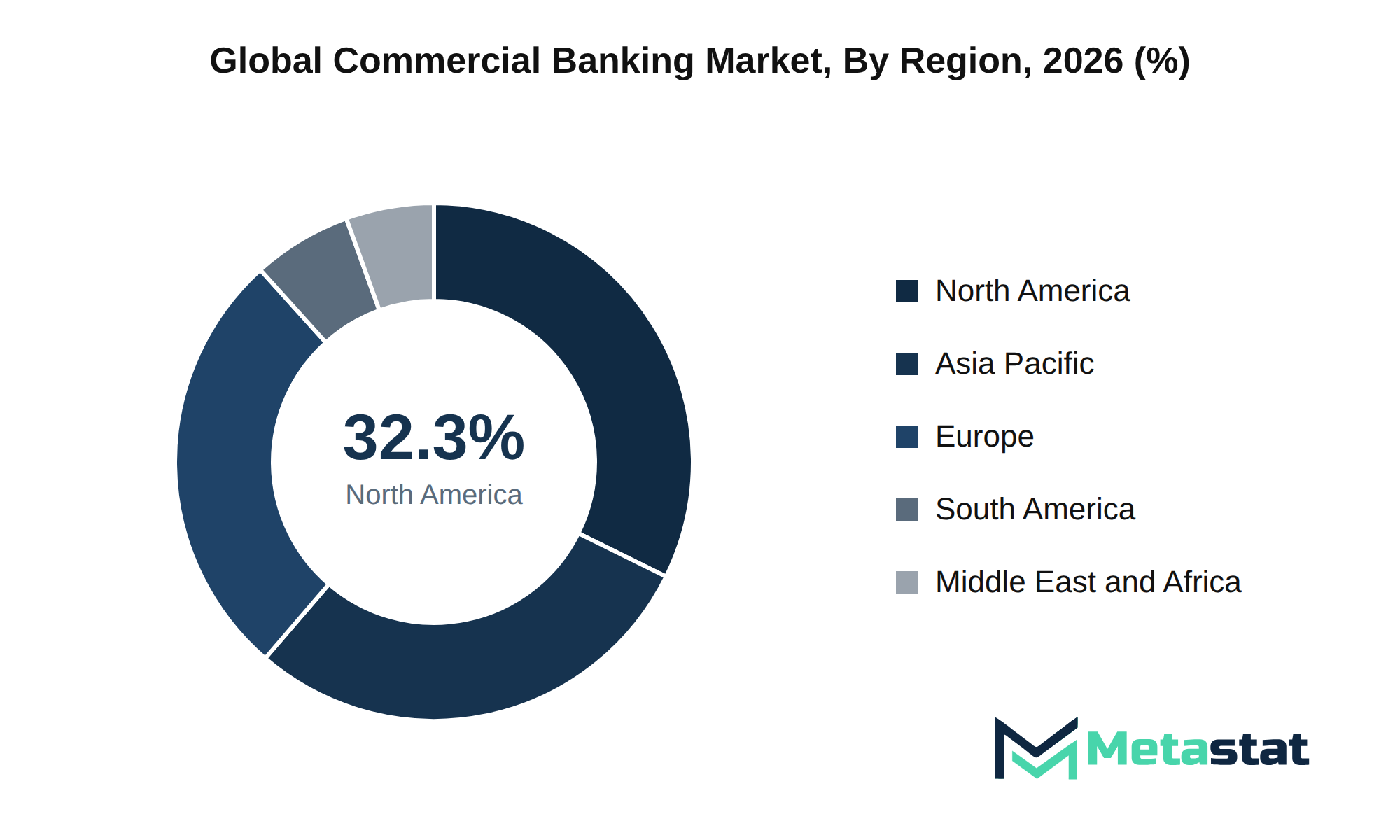
North America Commercial Banking market is set to expand at a CAGR of 11.2% within the forecast period, reaching a market size (TAM) of USD 2,772.6 billion by the end of 2033. This region accounts for 32.3% of the global commercial banking market in 2025, highlighting its significant contribution to overall sector growth.
The United States, Canada, and Mexico represent key players in this market. The demand for commercial banking services in North America stems from a robust economic environment, characterized by strong consumer spending and business investments. High adoption rates of digital banking services drive growth, supported by consumers and enterprises increasingly turning to online platforms for transactions and financial management.
Segment expansion driven by the need for commercial lending and credit services aligns with the growth trajectory of micro and small enterprises, particularly in the United States. These entities increasingly seek financing options to manage cash flow and invest in growth opportunities. Business deposits and operating accounts experience substantial demand, driven by the rise of local businesses and increasing economic activity across various sectors.
Infrastructure modernization initiatives play a role in enhancing the services offered within the market. Enhanced connectivity and technological upgrades to banking systems enable financial institutions to improve customer experience and streamline operations. Local compliance mandates and regulatory frameworks further shape the competitive landscape, compelling banks to innovate and align their services with evolving standards.
Geographic regulatory frameworks impact the operational strategies of domestic market leaders, who adapt to maintain compliance and cater to local requirements. Cultural nuances and regional B2B buying behaviors influence how commercial banking services are marketed and delivered, ensuring alignment with customer expectations. The North American commercial banking market exhibits strong potential for sustained growth, driven by a combination of economic vitality, technological advancements, and evolving consumer preferences.
With a market share of 27.0% in the Commercial Banking market, Europe represents a significant component of the global financial services landscape. Countries like Germany, France, the UK, Italy, Spain, and Russia contribute to a diversified banking environment characterized by strong regulatory frameworks and established financial institutions. The region benefits from a mature market dynamic, where a blend of traditional banks and fintech innovations drives competition and enhances service offerings.
Increased investment in technology and infrastructure modernization advances the market, allowing banks to streamline operations and improve customer experience. Adoption of digital banking solutions continues to gain traction, driven by evolving customer expectations and changing regulatory requirements. This growing demand for innovative financial services creates an environment conducive to the expansion of various service types, including commercial lending and credit, along with payments and cash management solutions.
Europe demonstrates an inclination towards localized procurement dynamics, reflecting cultural nuances in B2B buying behaviors. Strengthening regional competitive landscapes drive domestic market participants to adapt their strategies, ensuring they remain relevant in the evolving financial ecosystem. Continued focus on cross-border trade corridors and geopolitical factors shapes the environment, with banks navigating complexities inherent in international finance.
The Commercial Banking market in Europe faces high-value replacement cycles and incremental growth vectors, highlighting the potential for emerging market front-runners to capitalize on underpenetrated territories. This strategic positioning encourages foreign direct investment (FDI) flows, providing opportunities for geographic expansion and the establishment of new market participants. While the region evolves, banks will align their strategies with the changing demands of the market and the expectations of their clients.
Asia-Pacific represents a significant portion of the Commercial Banking market, holding a share of 29.0% in 2025. The region benefits from a rapidly expanding economy, driven by substantial investments in technology and infrastructure. Major countries in this region, including China, Japan, India, South Korea, and Australia, exhibit increasing demand for various banking services, particularly in commercial lending and credit.
Growth in micro and small enterprises, especially in countries including India and China, drives the market forward, with these demographics seeking enhanced financial services. Technological advancements, particularly in digital banking and cash management, attract investment and enable banks to better serve their clients. The growing middle class and urbanization in major cities across Asia-Pacific enhance the demand for banking services, contributing to an expected compound annual growth rate (CAGR) of 11.2% through 2033.
Infrastructure modernization and local compliance frameworks play crucial roles in shaping operational dynamics within the market. Expansion of cross-border trade corridors facilitates financial service adoption, while geopolitical factors prompt domestic banks to enhance their competitive edge. Regional market participants, including Agricultural Bank of China Limited and Bank of America Corporation, respond to evolving consumer needs by refining their offerings and increasing their presence in underpenetrated territories.
Overall, the Commercial Banking market in Asia-Pacific is poised for substantial growth, driven by a combination of economic development, technological innovation, and shifts in consumer behavior. The region's ability to adapt to these changes while addressing local compliance mandates positions it favorably for future expansion.
The Commercial Banking market in South America shows significant potential for growth, driven by various economic factors and evolving financial needs. Brazil and Argentina serve because the primary markets, contributing to the overall 6.2% share of the global market in 2025. Economic stability and investment in infrastructure modernization enhance the demand for commercial banking services within these countries.
Emerging market front-runners exhibit growth characteristics influenced by localized procurement dynamics and cultural nuances impacting regional B2B buying behaviors. The focus on financial services in Brazil and Argentina continues to evolve, leading to opportunities for segment expansion, particularly in commercial lending and credit, and business deposits and operating accounts.
Geographic regulatory frameworks and local compliance mandates significantly shape the operational landscape. Domestic market leaders in Brazil and Argentina engage in strategic initiatives to optimize their service offerings, catering to the distinct needs of clients in the region. Continued foreign direct investment flows aim to enhance the overall market positioning.
Incremental growth vectors arise from the ongoing modernization of banking infrastructure and the increasing adoption of digital financial solutions. This modernization supports improved customer experiences and higher transaction efficiencies, creating a more competitive environment within the market.
The Middle East and Africa region significantly influences the Commercial Banking market, representing a share of only 5.5% in 2025. This portion indicates growth potential driven by several factors, including increasing foreign direct investment (FDI) flows and a rise in localized manufacturing densities, particularly in countries like Saudi Arabia and the UAE. Emerging players drive competition and offer innovative financial solutions tailored to regional needs.
Economic diversification efforts, especially in Saudi Arabia and the UAE, facilitate infrastructure modernization and enhance the readiness of local markets. These initiatives contribute to higher adoption rates of commercial banking services. In South Africa, a mature banking sector provides stability, yet opportunities for further growth exist through high-value replacement cycles and incremental growth vectors. The presence of domestic market participants enhances competition, encouraging investment in technology and service innovation.
Regional compliance mandates and trade policy shifts impact how financial institutions operate, influencing procurement dynamics and creating strategic entry barriers for new entrants. Cultural nuances in the region affect B2B buying behaviors, requiring banks to adapt their offerings to align with local customer expectations. Overall, the Commercial Banking market in the Middle East and Africa is positioned for growth, driven by a combination of local and international factors that favor investment and expansion.
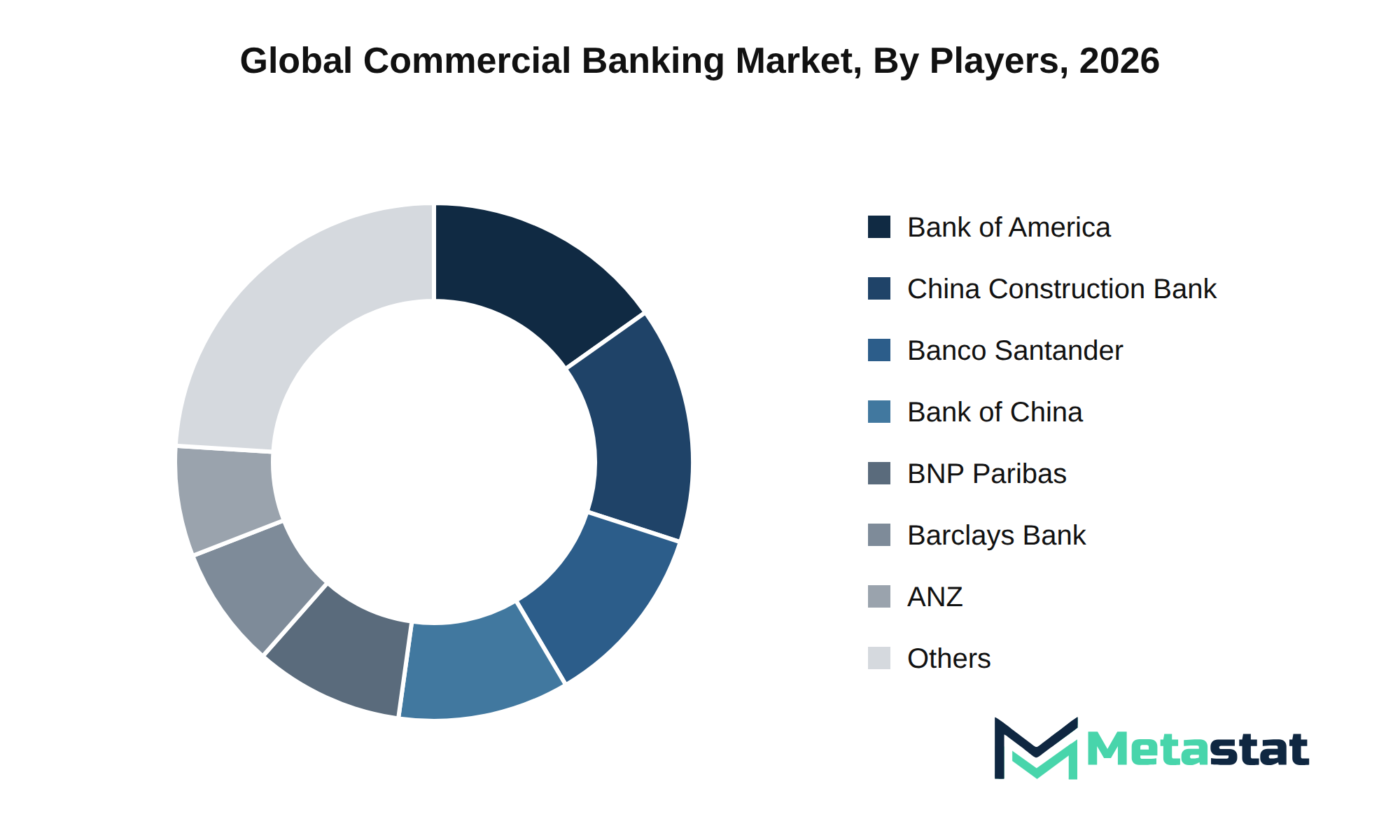
The Commercial Banking market encounters dynamic competition driven by active mergers and acquisitions, strategic consolidations, and industry restructuring. Major players including Bank of America Corporation, Citigroup Inc., and JPMorgan Chase & Co. continuously seek growth opportunities through strategic mergers and partnerships, enhancing their market presence and operational capabilities.
Product differentiation is essential in shaping competitive strategies. Banks like HSBC Holdings plc and BNP Paribas S.A. leverage proprietary technology and innovative solutions to enhance customer satisfaction and retention. A focus on customer-centric services and cross-industry partnerships strengthens brand equity and creates barriers to entry for potential newcomers.
Intellectual property portfolios and technological defensibility serve because critical components in maintaining competitive advantages within the market. The emphasis on research and development among players, including Agricultural Bank of China Limited and Deutsche Bank AG, enables the creation of unique banking products and services, further enhancing their positions in the Commercial Banking market.
Market size is forecast to rise from USD 3,841.7 billion in 2025 to over USD 8,984.6 billion by 2033. This growth trajectory represents a robust 11.2% CAGR, driven by evolving economic conditions and increasing demand for banking services. The base case presents a steady progression, but potential bull and bear scenarios exist. In a bull case, heightened investment in financial technology could accelerate growth beyond current projections, while a bear case influenced by regulatory challenges or economic downturns could temper expansion.
Several macroeconomic factors will influence the Commercial Banking market. Economic cycles will impact downstream demand, with fluctuations in interest rates and consumer confidence affecting borrowing and savings behaviors. Core industries are maturing, pushing banks to innovate offerings and enhance customer experiences. Structural consumption shifts towards digital and remote banking solutions will change traditional service models.
Next-generation technology integration will play a critical role in shaping the landscape. Innovations in artificial intelligence, machine learning, and blockchain technology offer new opportunities for efficiency and customer engagement. R&D commercialization timelines will be essential in determining how quickly these technologies become mainstream, influencing competitive dynamics within the market.
Regulatory evolution will impose new compliance requirements, necessitating agile responses from financial institutions. Imminent compliance milestones will drive operational changes, impacting strategic planning. Geopolitical realignments and evolving trade corridors will further challenge banks to adapt to changing economic relationships and supply chain dynamics.
Strategic capital allocation directives and infrastructure commitments will guide investment decisions within the sector. CapEx investment vectors focusing on technology upgrades and branch optimization will enhance operational capabilities. Emerging white-space opportunities will allow banks to capture unmet enterprise needs, particularly in underserved markets and demographic segments.
Identifying high-growth pockets within the market will be vital for sustained success. Executive-level strategic imperatives will shape organizational priorities, guiding investment and growth strategies. Defensibility roadmaps will provide frameworks for navigating competitive pressures and ensuring long-term viability in an increasingly complex financial environment.
The report strategically identifies and profiles the key market players and analyses their core competencies in each sub-segment of the Commercial Banking market.
Report Attributes | Details |
Study Period | 2021-2033 |
Base Year | 2025 |
Estimated Year | 2026 |
Forecast Period | 2026-2033 |
Historical Period | 2021-2025 |
Growth Rate | CAGR 11.2% from 2026 to 2033 |
Revenue Unit | USD billion |
Segmentation | By Service Type, Enterprise Size, End-Use Industry, and Region |
By Region | North America (By Service Type, Enterprise Size, End-Use Industry, and Country)
|
Europe (By Service Type, Enterprise Size, End-Use Industry, and Country)
| |
Asia Pacific (By Service Type, Enterprise Size, End-Use Industry, and Country)
| |
South America (By Service Type, Enterprise Size, End-Use Industry, and Country)
| |
Middle East and Africa (By Service Type, Enterprise Size, End-Use Industry, and Country)
|
Find answers to common questions about this report
The Commercial Banking market size was valued at USD 3,841.7 billion in 2025.
The Commercial Banking market is projected to grow at a CAGR of 11.2% during the forecast period from 2026 to 2033.
The North America Commercial Banking market size is estimated to reach USD 2,772.6 billion by 2033.
The segment leading the Commercial Banking market is Commercial Lending & Credit, with a projected value of USD 2,846.3 billion by 2033. This segment demonstrates significant growth potential compared to other service types.
The Commercial Banking market experiences growth driven by favorable macro-economic factors, including increased capital investment, rising GDP growth, and stable interest rates. Enhanced lending capacity enables businesses to invest in expansion, while advancements in technology streamline operations and improve customer experiences, further stimulating demand for banking services.
North America holds the dominant share of the Commercial Banking market, with a value of USD 2,772.6 billion in 2033, representing 32.3% of the total market.
Regulatory compliance presents a significant restraint for the Commercial Banking market, because increasingly stringent regulations require substantial investments in compliance infrastructure. inflationary pressures affect operational costs, leading banks to tighten lending practices and resulting in decreased credit availability, which contributes to sluggish demand.
Favorable macro-economic factors, including rising GDP growth and stable interest rates, enhance the lending capacity of banks, driving demand for commercial lending and credit services. the integration of advanced technologies streamlines operations and improves customer experiences, further supporting product adoption in the Commercial Banking market.
The Commercial Banking market is estimated to reach a valuation of USD 8,984.6 billion by 2033.
Key players operating in the Commercial Banking market include Agricultural Bank of China Limited, Bank of America Corporation, Citigroup Inc., Deutsche Bank AG, HSBC Holdings plc, JPMorgan Chase & Co., and BNP Paribas S.A.
The analysts below cover Banking & Finance research at Metastat Insights.
LEAD ANALYST
Utkarsh Khirodkar is a Lead Market Research Analyst at MetaStat Insight, specializing in market intelligence, technology sector assessments, and competitive strategy.

PRINCIPAL CONSULTANT - ENTERPRISE AI & EMERGING TECHNOLOGIES
Banking & Finance · Electronics and Semiconductor · Energy and Power · Healthcare IT · Information & Technology · Professional Services
Vijay Gunti is a Principal Consultant at MetaStat Insight, bringing over two decades of experience across enterprise digital transformation, technology strategy, and intelligent systems.
Enterprise zero-trust network rollouts are often slowed down by multi-cloud transit latency and proprietary hardware retirement schedules. This study provided realistic total cost of ownership models comparing cloud-delivered security edge solutions against traditional hardware refreshes. The analysis of contract renewal lengths and software maintenance fees gave us clear visibility into enterprise replacement cycles over the next three to five years.
Scaling antibody-drug conjugate manufacturing hinges on contract manufacturing availability for high-potency active ingredients. The MetaStat Insight analysis looked closely at global cleanroom slot constraints, bioconjugation batch failure rates, and supply chain redundancies between the US, Europe, and India. The supplier capability matrix proved genuinely useful for our team when mapping secondary source options across our clinical pipeline.
Floating offshore wind feasibility relies heavily on specialized installation vessel availability and port crane limits, which most broad renewable energy forecasts ignore. The report delivered a thorough analysis of dry dock capacity, mooring chain supply constraints, and raw material pricing trends for deepwater anchor installations. It served as a solid independent sanity check for our offshore project capital expenditure assumptions.
Explore related market intelligence reports worth reading alongside this one.