
LEAD ANALYST
Utkarsh Khirodkar is a Lead Market Research Analyst at MetaStat Insight, specializing in market intelligence, technology sector assessments, and competitive strategy.

Global Insurance, Reinsurance and Insurance Brokerage Market Size, Share, By Service Type (Primary Insurance, Reinsurance, and Insurance Brokerage and Agency Services), By Insurance Line (Life and Annuity, Health, Motor, Property, Liability, Marine, Aviation and Transport, and Others), By Customer Type (Individuals and Households, Non-Insurance Businesses, Insurance and Reinsurance Companies, and Government and Public Institutions), By Transaction Mode (Online and Offline), Industry Analysis, Growth, Trends, and Forecast, 2026-2033
Report ID
MSI-5686
Published
November, 2026
Pages
259 Pages
Format
Historical
Base year
Forecast
Forecast period
Report Details
Market Valuation: Valued at $10.1 Billion in 2025, projected to reach $17.3 Billion by 2033 at a 6.9% CAGR.
Dominant Segment: Primary insurance leads the market, driven by rising demand for life and annuity products that provide financial security for individuals and businesses.
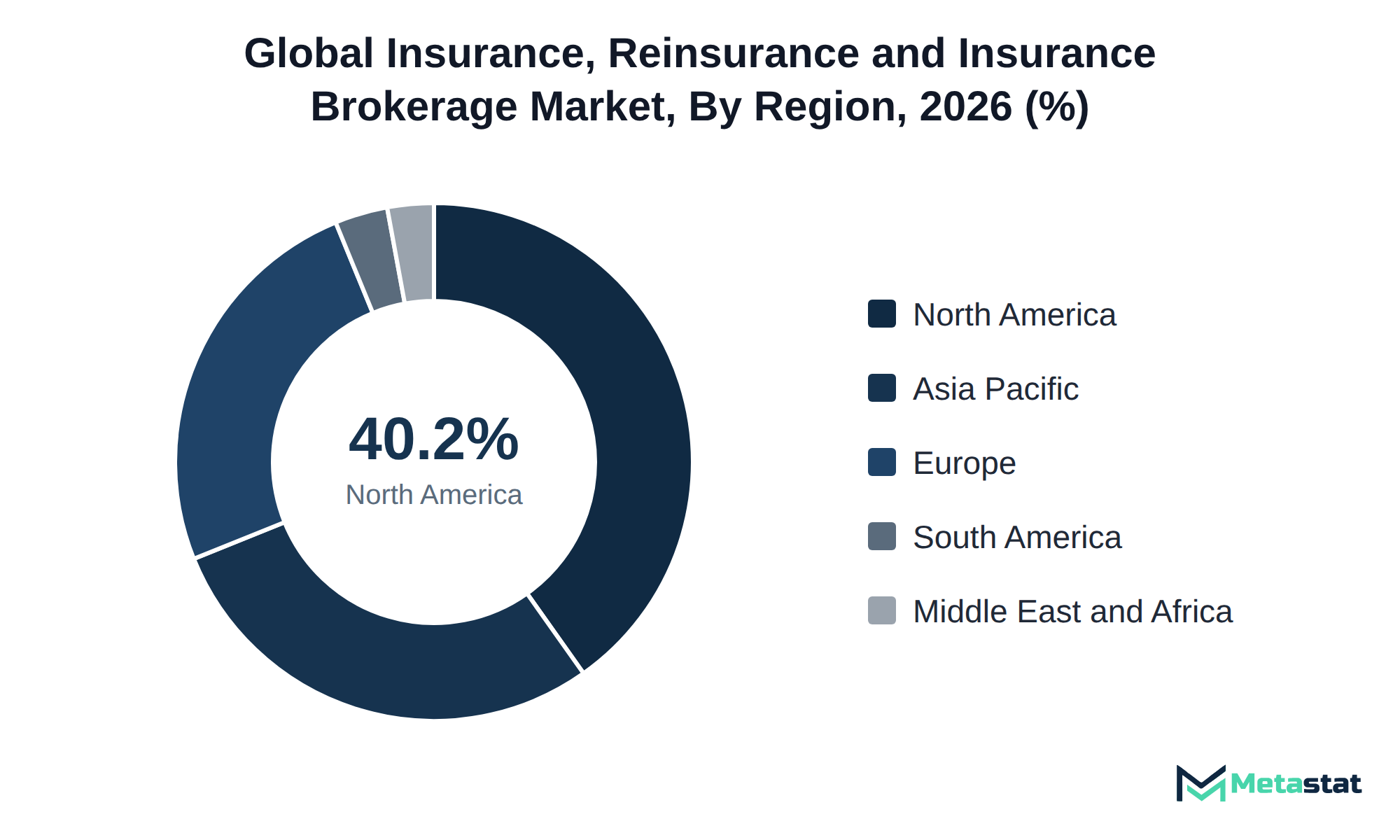
Geographic Lead: North America is the leading region, holding 40.2% of the market in 2025, bolstered by a robust economic environment and high purchasing power.
What's Inside: The report provides comprehensive coverage of market dynamics, competitive analysis, and forecasts through 2033, focusing on various service types and customer segments.
Growing Demand for Health Insurance: Health insurance is a high-growth segment with a CAGR of 7.9%, fueled by increasing public awareness of health issues and rising healthcare costs.
Emerging Technologies Enhance Risk Asses: The integration of AI and machine learning into risk assessment processes improves underwriting efficiency and attracts diverse customer types seeking tailored solutions.
Choose Your License
Global Insurance, Reinsurance and Insurance Brokerage Market
The global Insurance, Reinsurance and Insurance Brokerage market was valued at USD 10.1 billion in 2025 and is projected to reach USD 17.3 billion by 2033, growing at a CAGR of 6.9% over the forecast period.
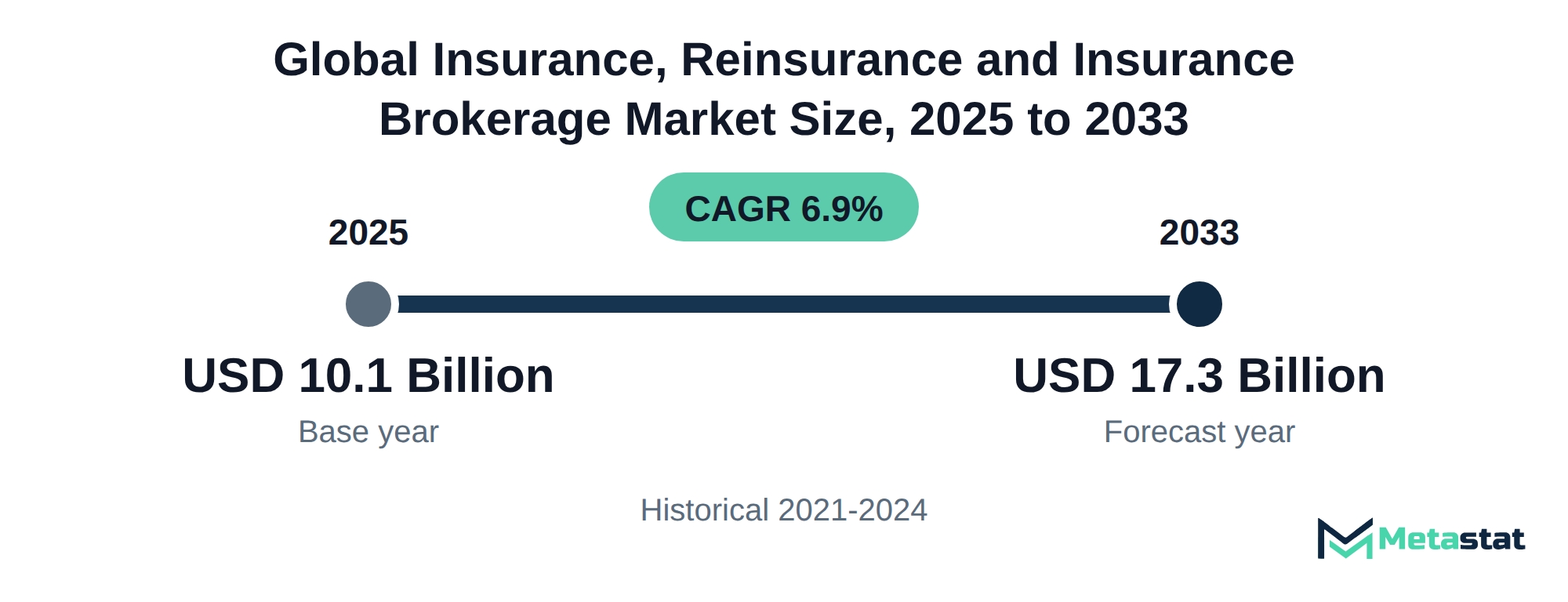
The Insurance, Reinsurance and Insurance Brokerage market encompasses services and products that provide financial protection and risk management solutions for individuals and organizations. Buyers invest in this market to safeguard their assets, ensure business continuity, and comply with regulatory requirements. The market caters to various customer segments, including individuals, businesses, and government entities, reflecting the diverse needs for coverage across different sectors.
Growth in the market is driven by increasing awareness of risk management strategies and the growing complexity of global financial landscapes. Primary insurance represents the segment with the most significant value within the market, supported by rising demand for life and annuity products. North America holds 40.2% of the market in 2025, with the US leading in 2026. This region's strong economic environment and high purchasing power contribute to its dominant position in the market.
Technological advancements drive market expansion by making service delivery more efficient and improving customer experience. The shift towards online transaction modes significantly influences consumer behavior, with a notable increase in online insurance purchases. This trend reflects the market's adaptation to changing consumer preferences and the ongoing digital transformation across industries.
The Insurance, Reinsurance and Insurance Brokerage market features various segments, primarily focusing on the protection of individuals and businesses against financial losses. Buyers invest in this market to mitigate risks associated with uncertainties in life, health, property, and assets. The demand for comprehensive insurance solutions has heightened, driven by increasing awareness of risk management strategies among consumers and businesses alike.
Projected growth in the market stems from several factors, with technological advancements playing a significant role. The primary insurance segment stands out, contributing the largest share of revenue within the market. The region's mature infrastructure and high purchasing power further support this dominance, creating opportunities for market expansion.
In the coming years, the market is expected to experience significant growth, fueled by the rising need for innovative insurance products and services. Shifting consumer preferences towards online transaction modes enhance accessibility and convenience, driving increased adoption rates. Overall, ongoing developments in the market signal strong potential for future growth across various segments.
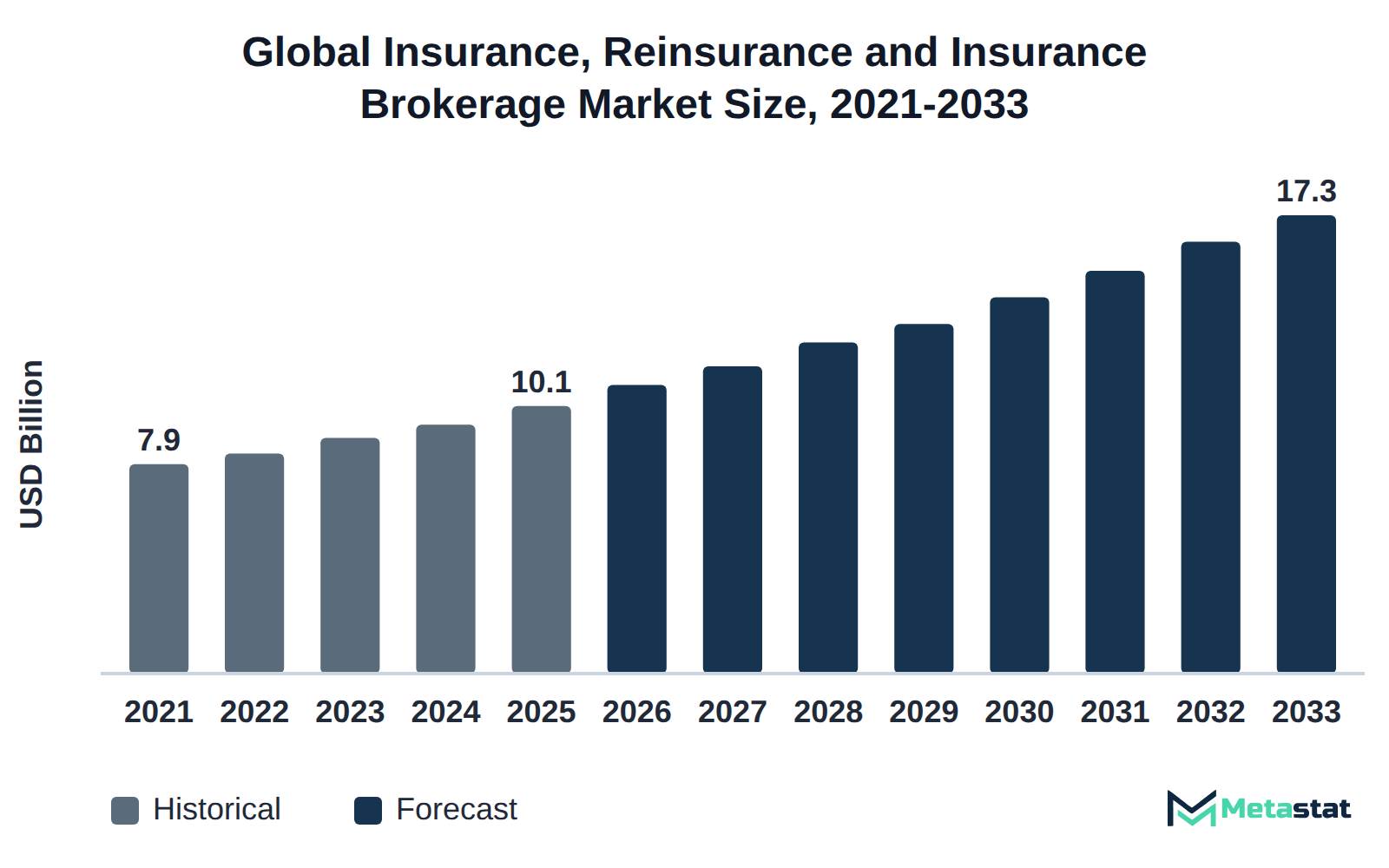
The integration of telemedicine technologies into health insurance offerings transforms the landscape for retail and corporate buyers. This shift enables insurers to provide more accessible healthcare services, enhancing policy attractiveness. In 2026, health insurance is projected to reach a total value of USD 4.4 billion by 2033, reflecting a compound annual growth rate of 7.9%. This growth signifies a strong uptake of telemedicine solutions, which facilitate remote consultations, diagnostics, and ongoing patient monitoring, aligning with consumer preferences for convenience and efficiency.
Retail buyers, including individuals and households, benefit significantly from cost savings and improved access to medical services through telemedicine. For corporate clients, adopting these technologies enhances employee wellness programs, ultimately leading to reduced absenteeism and increased productivity. The Insurance, Reinsurance and Insurance Brokerage market adapts to this demand shift, highlighting the necessity for insurers to innovate and refine their service offerings.
In the motor insurance segment, advancements in telematics and vehicle monitoring technologies significantly impact policy structures and pricing. By 2033, the motor insurance line is expected to reach USD 2 billion, reflecting the growing importance of data-driven underwriting processes. Insurers that incorporate real-time data from connected vehicles offer personalized premiums and tailored coverage solutions, increasing customer satisfaction and loyalty.
Both retail and corporate buyers increasingly expect these innovations, driving competitive differentiation in the market. The adoption of telematics not only improves risk assessments but encourages safer driving behaviors, leading to lower claims costs. This shift towards technology-enabled solutions within the Insurance, Reinsurance and Insurance Brokerage market presents considerable opportunities for growth and profitability.
Contract structures in the Insurance, Reinsurance and Insurance Brokerage market vary significantly, influencing pricing strategies for catastrophe risk transfer. Buyers typically engage in treaty reinsurance, where insurers secure coverage for a defined class of risks, or facultative reinsurance, allowing them to negotiate terms on a case-by-case basis. This flexibility in contract models allows insurers to adapt to the unique risk profiles presented by different circumstances and clients.
The anticipated value of the reinsurance segment is projected to reach USD 2.3 billion by 2033, reflecting a compound annual growth rate (CAGR) of 7.7%. This growth indicates an increasing reliance on reinsurance solutions to mitigate risks from climate-related events and other unforeseen disasters. The selection between treaty and facultative reinsurance depends on the volume of risk, the insurer's capacity, and specific coverage needs. Each model presents distinct pricing strategies, with treaty reinsurance often offering more predictable costs, while facultative arrangements yield higher premiums due to the bespoke nature of the coverage.
Using these contract models effectively helps insurers strengthen their competitive position in the market. Strong knowledge of pricing structures enables better negotiation and risk assessment, ultimately strengthening relationships with clients and partners. Aligning risk transfer strategies with business objectives is essential for maintaining profitability and ensuring long-term sustainability in the Insurance, Reinsurance and Insurance Brokerage market.
Digital brokerage platforms have transformed the specialty insurance placement process, addressing the unique needs of non-insurance businesses. These platforms streamline the process of obtaining insurance coverage tailored to specific risks, offering a more efficient and user-friendly experience. The market for non-insurance businesses is projected to reach USD 4.9 billion by 2033, reflecting an anticipated compound annual growth rate (CAGR) of 7.1%.
The integration of digital tools enhances accessibility and transparency, allowing businesses to compare various insurance options easily. Online transaction modes facilitate quicker decision-making, which is crucial for companies seeking to mitigate risks associated with rapidly changing market conditions. Consequently, advancements in digital brokerage platforms drive the growth of the overall market by attracting non-insurance businesses that require specialized coverage.
The shift toward digital brokerage satisfies the distinct requirements of non-insurance businesses and contributes to the overall expansion of the Insurance, Reinsurance and Insurance Brokerage market, creating a more competitive environment.
Insurers prioritize several criteria when selecting reinsurance capacity and brokerage partners to optimize their risk management strategies. Critical factors include financial strength, reputation, and expertise in specific lines of business. The insurance brokerage and agency services segment is projected to reach USD 1 billion by 2033, reflecting the increasing reliance on specialized brokers to navigate complex reinsurance markets.
Financial strength remains essential. Insurers often evaluate the credit ratings and solvency ratios of potential partners. This assessment ensures that the chosen reinsurers meet their obligations during adverse conditions, supporting long-term stability. The expertise of brokers in niche markets allows insurers to identify tailored solutions that align with their risk appetite.
Collaboration between insurers and brokers creates a deeper understanding of market dynamics. This collaboration enables insurers to leverage the insights and analytics provided by brokers, enhancing their decision-making process. As the market evolves, choosing the right partners becomes more important for insurers seeking stronger market positions and operational efficiency.
The shift towards online purchasing significantly influences demand for insurance products among individuals and households. Increased internet accessibility and smartphone adoption prompted consumers to seek convenient insurance solutions through digital platforms. This transformation results in a surge in online insurance transactions, enhancing competition among service providers. The online transaction mode is projected to grow from USD 3 billion in 2026 to USD 6.6 billion by 2033, reflecting a compound annual growth rate of 11.9%. The Insurance, Reinsurance and Insurance Brokerage market benefits from this trend, with buyers increasingly prioritizing accessibility and efficiency in their purchasing processes.
Growth in the online segment encourages insurance providers to enhance their digital offerings, leading to improved customer experiences and streamlined operations. This competitive landscape creates opportunities for market players to innovate and differentiate their services, contributing to overall market growth.
The integration of artificial intelligence (AI) and machine learning technologies into risk assessment processes significantly impacts underwriting efficiency within the market. Insurers leverage these technologies to analyze vast amounts of data, enabling more accurate pricing models and improved risk evaluation. Enhanced risk assessment attracts various customer types, including individuals, households, and non-insurance businesses, by offering tailored solutions that align with specific needs and risk profiles. This shift contributes to a more competitive landscape, where companies differentiate themselves through superior pricing and coverage options.
In addition, the utilization of insurance analytics allows insurers to identify emerging risks and trends that influence policy development. By staying ahead of potential market shifts, companies enhance their ability to respond to customer demands effectively. This adaptability supports growth in the Insurance, Reinsurance and Insurance Brokerage market and drives demand for innovative insurance solutions that address changing risks.
Increasing operational costs represent a significant restraint in the Insurance, Reinsurance and Insurance Brokerage market, particularly affecting individuals and households. Escalating premiums and fees connected to various insurance products challenge affordability, leading to slower uptake of new policies. This situation results in smaller orders and delayed replacements, with consumers prioritizing essential expenditures over additional insurance coverage. The pressure of rising costs deters potential buyers from pursuing optimal coverage, ultimately impacting market growth and limiting revenue potential for insurers. Buyers in lower-income brackets face the most pronounced challenges, with the rising cost of living increasingly constraining disposable income available for insurance purchases. In response, insurers reevaluate pricing strategies or enhance value propositions to attract these segments, ensuring broader access to coverage in a competitive marketplace.
Increasing talent costs present a challenge for suppliers within the Insurance, Reinsurance and Insurance Brokerage market. The demand for skilled professionals in areas including underwriting, claims management, and data analytics contributes to rising labor expenses. Companies face pressure to retain experienced workers while managing operational budgets. This financial strain affects profit margins and limits investments in technology and innovation.
In response to these challenges, suppliers implement various strategies to optimize workforce efficiency and reduce dependency on high-cost talent. Companies increasingly invest in employee training and development programs to enhance skills internally. The integration of automation and digital tools allows firms to streamline processes and minimize the need for extensive human resources. These efforts help maintain competitive pricing while managing rising talent costs.
Health insurance represents a high-growth segment within the Insurance, Reinsurance and Insurance Brokerage market, driven by increasing public awareness of health issues and rising healthcare costs. The expected growth rate for this segment stands at a compound annual growth rate (CAGR) of 7.9% through 2033, highlighting its importance among various insurance lines. Rising healthcare expenditure, coupled with an aging population, generates higher demand from individuals and households seeking comprehensive health coverage. Non-insurance businesses increasingly recognize the value of health insurance in employee benefits packages, further driving demand.
This shift towards health insurance emphasizes the need for innovative insurance products that cater to diverse consumer needs. Insurers focusing on developing tailored health insurance solutions are likely to capture a larger share of the market. The market expansion trajectory for health insurance suggests an opportunity for growth in both premium offerings and customer engagement strategies, enhancing the overall competitive landscape.
The Global Insurance, Reinsurance and Insurance Brokerage market is segmented based on Service Type, Insurance Line, Customer Type, and Transaction Mode.
Primary Insurance segment is valued at USD 8.9 billion in 2026 and is projected to reach USD 14 billion by 2033, at a CAGR of 6.7% during the forecast period. This segment includes various insurance products that provide financial protection against various risks for individuals and businesses. The increasing awareness of the need for financial security drives demand for primary insurance among individuals and households. This segment stands out with a moderate growth rate compared to other segments, including Reinsurance, which exhibits a higher CAGR of 7.7%. The integration of digital platforms influences pricing strategies and expands access to insurance products, providing a competitive advantage for providers. The market benefits from a growing emphasis on customized solutions that cater to specific client needs, fueling market expansion and increasing consumer confidence.
This segment provides essential risk management strategies for insurance companies, safeguarding them against significant losses arising from catastrophic events. Insurance and reinsurance companies apply reinsurance to mitigate exposure and maintain financial stability. Demand growth in this segment is primarily driven by increasing natural disasters and climate-related risks, prompting insurers to seek reliable reinsurance partners. Compared to the primary insurance segment, which is projected to grow at a CAGR of 6.7%, reinsurance demonstrates faster expansion. Reliance on reinsurance reflects the broader industry's adaptation to evolving risks and regulatory pressures, enhancing operational resilience across the market.
This segment provides intermediary services between insurance providers and clients, facilitating the purchase of various insurance policies. Individuals, households, and businesses access these services to navigate coverage options effectively. The growth of this segment is primarily driven by the increasing adoption of online transaction modes, with online brokerage expected to grow significantly, showing a compound annual growth rate (CAGR) of 11.9% from 2026 to 2033. Compared to primary insurance and reinsurance, which post CAGRs of 6.7% and 7.7%, respectively, this segment exhibits faster growth dynamics. Increased digital engagement allows clients to access tailored insurance solutions efficiently, distinguishing it from other segments in the market. The trend toward digitalization enhances competitiveness, drawing more consumers toward brokerage services.
Life and Annuity segment is valued at USD 3.7 billion in 2026 and is projected to reach USD 5.7 billion by 2033, at a CAGR of 6.5% during the forecast period. This segment provides financial security for individuals and families by meeting their long-term savings and retirement needs. The demand for life insurance and annuities is driven by increasing awareness of financial planning and the desire for stable income in retirement. Compared to other segments, including Health and Motor Insurance, the Life and Annuity segment experiences a slower growth rate, reflecting its nature as a long-term investment rather than a reactive purchase. While Health Insurance shows a CAGR of 7.9%, the Life and Annuity segment's growth indicates steady, but less rapid expansion. This distinction highlights varying buyer behaviors, with Life and Annuity appealing to those prioritizing future financial stability over immediate risk coverage.
This segment primarily serves individuals and households seeking financial protection against medical expenses. A significant demand driver includes increasing public awareness of health issues, which encourages consumers to secure comprehensive coverage. Rising healthcare costs further motivate buyers to invest in health insurance. Compared to other segments, the Health insurance segment demonstrates a relatively faster growth rate, supported by a CAGR of 7.9%, in contrast to the Life and Annuity segment, which has a CAGR of 6.5%. Competitive dynamics intensify due to the increasing number of players offering innovative health insurance products, enhancing accessibility and affordability for consumers.
This segment provides coverage for vehicle accidents and related damages, primarily serving individuals and businesses with vehicles. Growth in this segment arises from increasing vehicle ownership and demand for personal and commercial auto insurance. Rising awareness of the need for comprehensive insurance solutions significantly influences demand. Compared to other segments, including Life and Annuity, the Motor segment exhibits a slower growth rate, with a projected CAGR aligning with market conditions. The need for regulatory compliance and the impact of evolving vehicle technology further shape this segment, ensuring it remains distinct within the Insurance, Reinsurance and Insurance Brokerage market.
Property segment is projected to grow at a CAGR of 7% during the forecast period. This segment offers coverage against risks associated with physical assets, appealing to both individuals and businesses. Increasing urbanization and rising property values drive demand, with property owners seeking protection against potential losses. This segment's growth outpaces other segments, including Motor and Health, due to high property market valuations and the need for comprehensive risk management. Unlike insurance for vehicles, which primarily serves individual consumers, the property segment caters to a broader audience, including corporations and real estate investors. The market landscape remains competitive, with insurers enhancing their offerings to meet the evolving needs of customers in the market.
Liability insurance provides protection against claims resulting from injuries and damage to other people or property. Businesses, individuals, and public institutions apply this coverage to safeguard against lawsuits and other legal claims. The growing awareness of liability risks among businesses drives demand for comprehensive insurance solutions. Regulatory compliance requirements further enhance this segment, ensuring businesses adequately protect themselves against potential liabilities. This segment experiences different dynamics compared to others in the market, with emphasis on legal safeguards and risk management strategies that differ from personal lines including health or motor insurance. Litigation and risk exposure in today’s environment make strong liability coverage necessary, shaping purchasing decisions across sectors.
Marine, Aviation and Transport insurance provides coverage for risks associated with maritime and aviation operations, including cargo, vessels, and aircraft. Businesses involved in shipping, logistics, and travel rely on this insurance to mitigate financial losses from various hazards, including accidents, damages, and liability claims. Increasing global trade and air travel have heightened demand for this segment, driven by the expansion of international supply chains. A significant force shaping this segment includes regulatory compliance, where businesses navigate complex legal and safety requirements, influencing their insurance decisions. Compared to other segments, Marine, Aviation and Transport insurance typically involves higher premiums due to specialized risks and the potential for significant financial losses. This segment differs from traditional property and casualty insurance by focusing on unique operational challenges faced by industries reliant on transportation and logistics.
This segment includes specialized insurance for risks associated with credit, surety bonds, and agricultural operations. Credit insurance protects businesses against potential losses from customer defaults, while surety bonds ensure fulfillment of contractual obligations. Agricultural insurance covers farmers against losses from natural disasters and crop failures. Key buyers include agricultural producers and businesses seeking to mitigate financial risks. Demand for this segment primarily stems from economic uncertainty and weather-related challenges faced by the agricultural sector. Compared to other segments, this area experiences slower growth, driven by fluctuating agricultural markets and regulatory changes impacting risk management practices. The Insurance, Reinsurance and Insurance Brokerage market reflects diverse customer needs across its various segments, while tailored solutions in this category appeal to specific industries facing unique challenges.
Individuals and Households segment is valued at USD 5.9 billion in 2026 and is projected to reach USD 9.1 billion by 2033, at a CAGR of 6.5% during the forecast period. This segment primarily serves individuals and families seeking coverage for personal risks, including health, life, and property. Key drivers include increasing awareness of the importance of insurance products and the growing need for financial security among consumers. Compared to other customer types, including Non-Insurance Businesses, the Individuals and Households segment exhibits a distinct growth trajectory, supported by higher demand for personal insurance solutions. The sector's growth rate of 6.5% aligns with a favorable environment for insurance adoption driven by rising disposable incomes and evolving consumer preferences. This dynamic reflects the broader trends shaping the Insurance, Reinsurance and Insurance Brokerage market.
This segment serves industries such as manufacturing, retail, and technology that need risk management solutions tailored to their operating environments. Increasing awareness of risk exposure drives demand for insurance products, compelling these businesses to seek comprehensive coverage options. Compared to individuals and households, who have different insurance needs, Non-Insurance Businesses often require more complex policies that address specific operational risks, resulting in a higher average premium. Technological advancements in underwriting and claims processing streamline service delivery, contributing to customer satisfaction. The growth trajectory of this segment positions it as a key player in overall market dynamics, reflecting the evolving insurance landscape driven by business needs and innovations.
Insurance and Reinsurance Companies segment is expected to reach USD 2.5 billion by 2033. This segment includes companies that provide insurance coverage and reinsurance services, playing a critical role in managing risk and providing financial protection to various entities, including individuals, businesses, and government institutions. Growth within this segment is primarily driven by increasing demand for risk management solutions across diverse industries. The segment's growth rate of 7.1% contrasts with other customer types, with segments like Individuals and Households exhibiting a CAGR of 6.5%. Market dynamics reflect the need for robust risk assessment and mitigation strategies, prompting a shift towards innovative insurance products tailored to specific needs. Market participants continuously adapt their offerings to address emerging risks and regulatory requirements, contributing to the segment's expanding role in the Insurance, Reinsurance and Insurance Brokerage market.
The Government and Public Institutions segment is projected to grow at a CAGR of 7.2% during the forecast period. This segment primarily serves governmental entities and public institutions seeking comprehensive insurance solutions to mitigate risks associated with their operations. Factors driving this segment include increasing regulatory requirements for risk management and the rising need for financial protection against unforeseen events. Compared to other segments, this one experiences relatively faster growth, reflecting a growing recognition among public entities of the value of robust insurance coverage. With an increasing focus on community health, public safety, and infrastructure resilience, demand for insurance products tailored to government needs is expected to rise significantly. This segment contributes to overall stability and risk management in public sector operations.
This segment primarily serves consumers seeking convenience and efficiency in purchasing insurance products. Rapid digital transformation and increased internet penetration significantly drive adoption among individuals and businesses. Compared to offline transaction modes, which exhibit a lower CAGR of 4.5%, the online segment demonstrates a stronger growth trajectory, appealing to tech-savvy customers who prioritize ease of access and speed. The growing demand for personalized digital experiences enhances competition among providers, prompting investments in technology that streamline customer interactions and reduce operational costs. Growth in the online segment contributes to the overall expansion of the Insurance, Reinsurance and Insurance Brokerage market, reflecting shifting consumer preferences towards digital solutions.
Offline segment is estimated to reach USD 10.6 billion by 2033, at a CAGR of 4.5% during the forecast period. This segment primarily serves individuals and businesses seeking traditional face-to-face interactions for their insurance needs. The human element in offline transactions builds trust and comfort, particularly for clients unfamiliar with insurance products. A significant driver of this segment is the preference for personal consultations, which remains strong, especially among older demographics. In comparison, the online segment experiences faster growth, supported by technological advancements and shifting consumer behaviors, particularly among younger buyers. The offline segment's slower growth reflects challenges posed by digital adoption while maintaining its role in providing personalized service that appeals to certain customer segments. The Insurance, Reinsurance and Insurance Brokerage market presents a diverse approach to reaching clients through both offline and online transactions.
Based on geography, the Global Insurance, Reinsurance and Insurance Brokerage market is divided into North America, Europe, Asia-Pacific, South America, Middle East, and Africa.
The insurance sector in North America benefits from a mature and diverse market, driven primarily by the United States, Canada, and Mexico. This region, representing 40.2% of the global market in 2025, is characterized by strong demand for both primary insurance and reinsurance services. The regulatory environment supports competition and encourages innovation and customer-centric approaches. Infrastructure developments, particularly in technology adoption, enhance the efficiency of service delivery, catering to evolving customer preferences. The market is projected to reach USD 6.6 billion by the end of 2033, reflecting growth driven by increasing awareness of insurance products among consumers and businesses alike. Growth in the healthcare sector significantly influences overall market dynamics, leading to higher investments and expanding service offerings.
Key drivers include robust demand from individuals and households, particularly for life and health insurance products. The regulatory environment in countries like Germany and France supports comprehensive consumer protection laws, creating a trustworthy atmosphere for buyers. Infrastructure development, alongside digital transformation, supports the growth of online transaction modes, enhancing customer engagement and access. The presence of numerous established insurers, including Allianz SE and AXA SA, intensifies competition, ensuring a diverse range of offerings. This competition supports sustained growth in the Insurance, Reinsurance and Insurance Brokerage market through the forecast period.
Asia-Pacific accounted for 28.7% of the Insurance, Reinsurance and Insurance Brokerage market in 2025. China, Japan, and India drive demand, with increasing middle-class populations seeking insurance solutions to protect assets and health. Regulatory environments are evolving, with governments enhancing frameworks to enable greater insurance penetration. The rapid digital transformation in this region supports the growth of online transaction modes, allowing consumers to access various insurance products conveniently. Countries including South Korea and Australia continue to innovate, contributing to advancements in product offerings. Technology use will shape competitive positioning among market players in Asia-Pacific, improving customer experiences and operational efficiency.
In South America, the Insurance, Reinsurance and Insurance Brokerage market exhibits unique characteristics driven by local economic factors. Brazil and Argentina represent significant markets, where demand arises from both individuals and businesses seeking comprehensive coverage. Infrastructure and regulatory conditions in these countries influence market dynamics, particularly regarding health and property insurance, which have seen increased uptake due to rising awareness of risk management. By 2025, South America is projected to account for 3.3% of the global market share. This regional focus on improving insurance penetration reflects ongoing efforts to enhance financial inclusion and protect against unforeseen risks. The market is expected to benefit from digital advancements, which facilitate easier access to insurance products for consumers and businesses alike.
The Middle East and Africa region represents a growing segment within the Insurance, Reinsurance and Insurance Brokerage market, accounting for 2.9% of the global market share in 2025. Key demand drivers in this region include the increasing need for risk management solutions among industries including construction, energy, and healthcare. Urbanization and infrastructural development initiatives in countries like Saudi Arabia and the UAE increase demand for various insurance products. Regulatory advancements aimed at enhancing insurance penetration and consumer protection further support market growth. South Africa, with its robust financial services sector, influences the insurance landscape in this region, offering diverse products and services to meet the evolving needs of consumers. Overall, investments in technology and digital solutions enhance service delivery, enabling better accessibility and efficiency in the market.
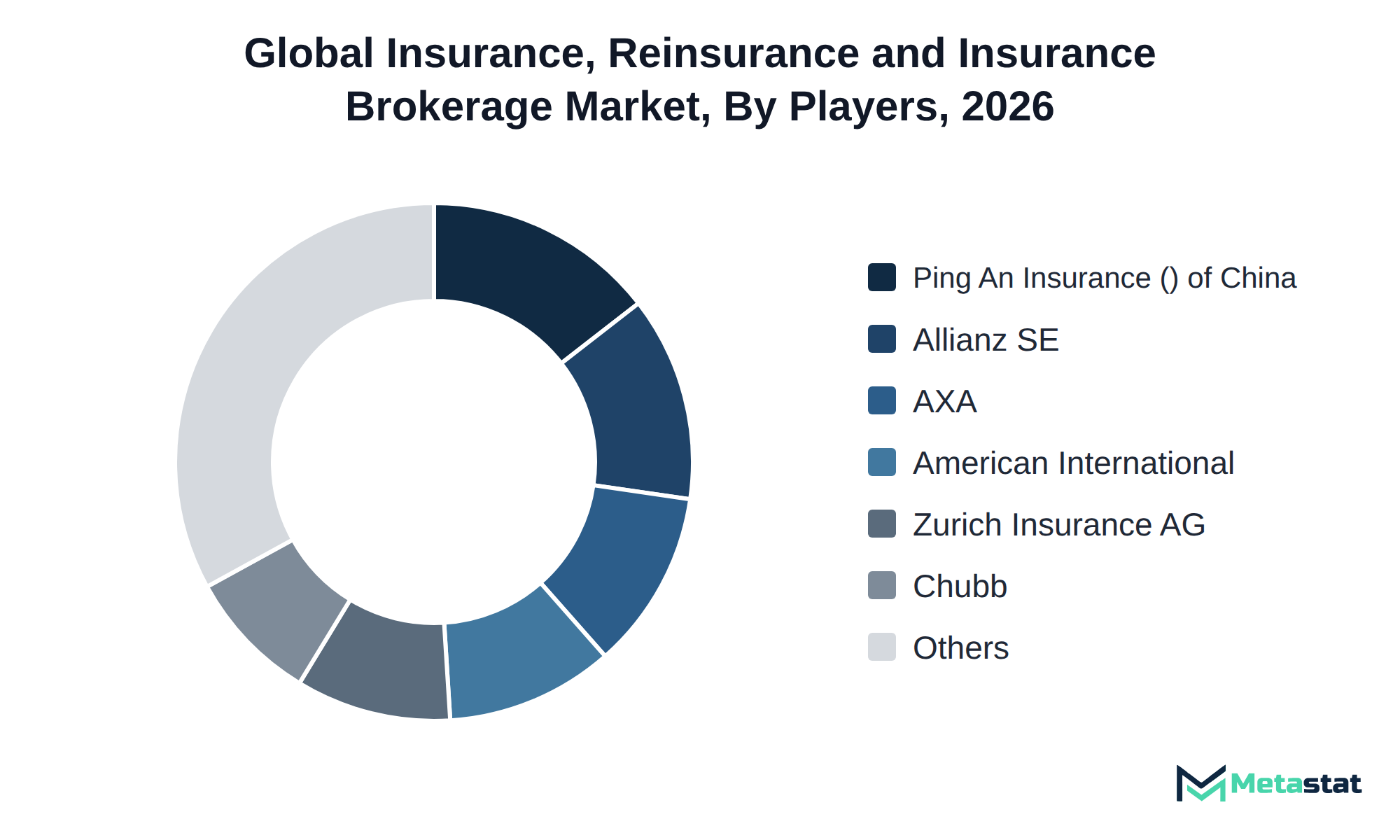
In the Insurance, Reinsurance and Insurance Brokerage market, companies compete through various strategic approaches, including service type and customer focus. The market demonstrates a division between primary insurance, reinsurance, and insurance brokerage services, with companies specializing in different areas to meet diverse consumer demands.
Buyers select providers based on factors including price, service quality, and customization options. For instance, Allianz SE focuses on a comprehensive portfolio across multiple insurance lines, emphasizing customer service and innovative solutions. In contrast, AXA SA dedicates efforts to digital transformation, enhancing customer engagement through online services. Zurich Insurance Group AG prioritizes sustainability, positioning itself to cater to eco-conscious consumers.
These strategic behaviors highlight how firms differentiate themselves in the market while addressing specific customer needs and preferences.
The growth of the Insurance, Reinsurance and Insurance Brokerage market relies on several developments. An increase in online transactions, projected to expand from USD 3 billion in 2026 to USD 6.6 billion by 2033 at a CAGR of 11.9%, will drive adoption among individuals and households. The primary insurance segment is anticipated to grow from USD 8.9 billion in 2026 to USD 14 billion by 2033, supported by rising demand for life and annuity products, which will increase from USD 3.7 billion to USD 5.7 billion during the forecast period.
However, the market faces risks that could impede progress, particularly in the reinsurance sector, which is projected to reach USD 2.3 billion by 2033 at a CAGR of 7.7%. Economic volatility and regulatory changes in key regions, including North America and Europe, could challenge growth trajectories. Managing these factors well will determine whether the market reaches its forecast value.
By Service Type: Primary Insurance, Reinsurance, Insurance Brokerage and Agency Services
By Insurance Line: Life and Annuity, Health, Motor, Property, Liability, Marine, Aviation and Transport, Others (Credit, Surety and Agricultural)
By Customer Type: Individuals and Households, Non-Insurance Businesses, Insurance and Reinsurance Companies, Government and Public Institutions
By Transaction Mode: Online, Offline
The report strategically identifies and profiles the key market players and analyses their core competencies in each sub-segment of the Insurance, Reinsurance and Insurance Brokerage market.
Report Attributes | Details |
Study Period | 2021-2033 |
Base Year | 2025 |
Estimated Year | 2026 |
Forecast Period | 2026-2033 |
Historical Period | 2021-2025 |
Growth Rate | CAGR 6.9% from 2026 to 2033 |
Revenue Unit | USD billion |
Segmentation | By Service Type, Insurance Line, Customer Type, Transaction Mode, and Region |
By Region | North America (By Service Type, Insurance Line, Customer Type, Transaction Mode, and Country)
|
Europe (By Service Type, Insurance Line, Customer Type, Transaction Mode, and Country)
| |
Asia Pacific (By Service Type, Insurance Line, Customer Type, Transaction Mode, and Country)
| |
South America (By Service Type, Insurance Line, Customer Type, Transaction Mode, and Country)
| |
Middle East and Africa (By Service Type, Insurance Line, Customer Type, Transaction Mode, and Country)
|
Find answers to common questions about this report
The Insurance, Reinsurance and Insurance Brokerage market size was valued at USD 10.1 billion in 2025.
The market is projected to grow at a CAGR of 6.9% during the forecast period from 2026 to 2033.
The North America Insurance, Reinsurance and Insurance Brokerage market size is estimated to reach USD 6.6 billion by 2033.
Primary Insurance leads the Insurance, Reinsurance and Insurance Brokerage market with a projected value of USD 14 billion by 2033. This segment outpaces others in growth, reflecting a compound annual growth rate of 6.7 percent.
The shift towards online purchasing significantly influences demand, driven by increased internet accessibility and smartphone adoption. Health insurance represents a high-growth segment, propelled by rising healthcare costs and increasing public awareness of health issues.
North America holds the dominant share of the Insurance, Reinsurance and Insurance Brokerage market, with a value of USD 6.6 billion projected for 2033, representing 40.2 percent of the total market.
Increasing operational costs restrain growth in the Insurance, Reinsurance and Insurance Brokerage market, particularly for individuals and households due to escalating premiums and fees. Rising talent costs challenge suppliers, driving up labor expenses and impacting profit margins.
Increasing internet accessibility and smartphone adoption favor the adoption of insurance products through digital platforms, enhancing convenience for consumers. the integration of artificial intelligence and data analytics into risk assessment processes enables insurers to offer tailored solutions, attracting a diverse range of customers.
The Insurance, Reinsurance and Insurance Brokerage market is estimated to reach a valuation of USD 17.3 billion by 2033.
Key players operating in the Insurance, Reinsurance and Insurance Brokerage market include Allianz SE, AXA SA, Zurich Insurance Group AG, Chubb Limited, American International Group, Inc., and Willis Towers Watson Public Limited Company.
The analysts below cover Banking & Finance research at Metastat Insights.
LEAD ANALYST
Utkarsh Khirodkar is a Lead Market Research Analyst at MetaStat Insight, specializing in market intelligence, technology sector assessments, and competitive strategy.

PRINCIPAL CONSULTANT - ENTERPRISE AI & EMERGING TECHNOLOGIES
Banking & Finance · Electronics and Semiconductor · Energy and Power · Healthcare IT · Information & Technology · Professional Services
Vijay Gunti is a Principal Consultant at MetaStat Insight, bringing over two decades of experience across enterprise digital transformation, technology strategy, and intelligent systems.
When evaluating distributed energy resource management systems, standard research summaries tend to gloss over the operational differences between front-of-the-meter utility deployments and behind-the-meter industrial sites. The MetaStat Insight report addressed those distinctions directly, especially regarding software interoperability standards and grid interconnection backlogs. The five-year market sizing across regional transmission organizations provided actionable context for our grid modernization strategy.
Most industry reports on warehouse automation bundle autonomous mobile robots and fixed conveyor installations into the same top-level numbers, which complicates advisory work. This study split the market cleanly by payload tiers, navigation technology, and fleet management software layers. The regional forecast for Western Europe gave our team defensible adoption benchmarks when evaluating capital allocation for logistics clients, saving us days of secondary data scrubbing.
Standard industry briefs frequently blur the operational distinctions between isobaric pressure exchangers and centrifugal turbines. In this study, MetaStat Insight categorized mega-scale desalination tenders across the GCC and Mediterranean basins by membrane replacement frequencies and salinity tolerances. Their primary research helped us evaluate local content requirements in Saudi Arabia and the UAE without relying on marketing literature. We found the segment-level equipment replacement estimates grounded and well-reasoned throughout.
Explore related market intelligence reports worth reading alongside this one.
Starting from
$2950