
LEAD ANALYST
Utkarsh Khirodkar is a Lead Market Research Analyst at MetaStat Insight, specializing in market intelligence, technology sector assessments, and competitive strategy.

Global Auto Insurance Market Size, Share, By Coverage (Third-Party Liability Coverage, Partial Comprehensive Coverage, Full Comprehensive Coverage and Others), By Vehicle Type (Passenger Cars, Light Commercial Vehicles and Vans, Medium and Heavy Commercial Vehicles, Buses and Coaches, Agricultural Vehicles and Tractors, Special-Purpose and Utility Vehicles and Others), By Distribution Channel (Insurance Agents and Brokers, Direct Sales, Bancassurance, Online / Digital Platforms and Others), By Customer Type (Personal and Commercial), Industry Analysis, Growth, Trends, and Forecast, 2026-2033
Report ID
MSI-5032
Published
August, 2026
Pages
306 Pages
Format
Historical
Base year
Forecast
Forecast period
Report Details
Choose Your License
Global Auto Insurance Market
The global Auto Insurance market was valued at USD 1,090.9 billion in 2025 and is projected to reach USD 2,222.6 billion by 2033, growing at a CAGR of 9.3% over the forecast period.
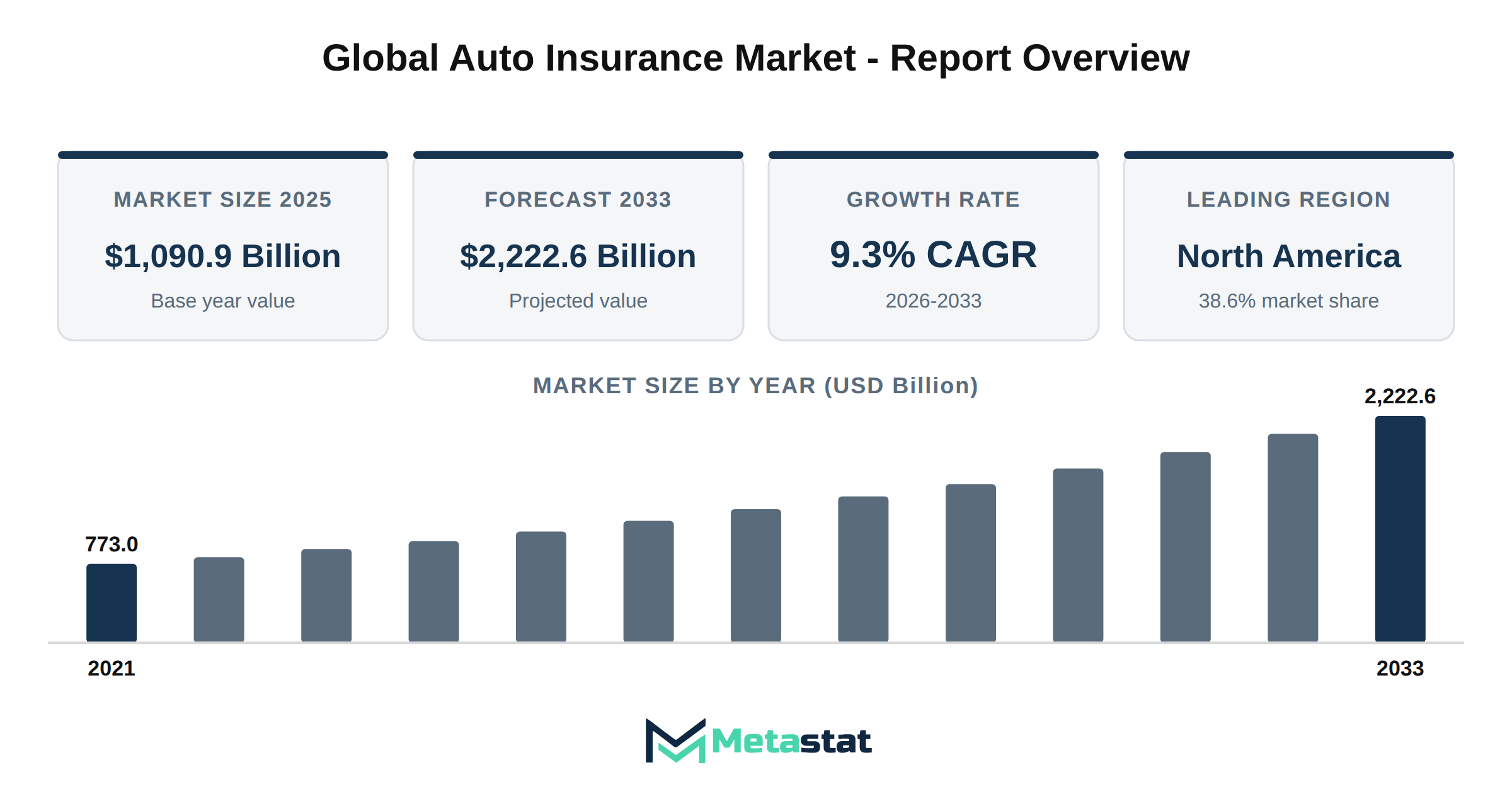
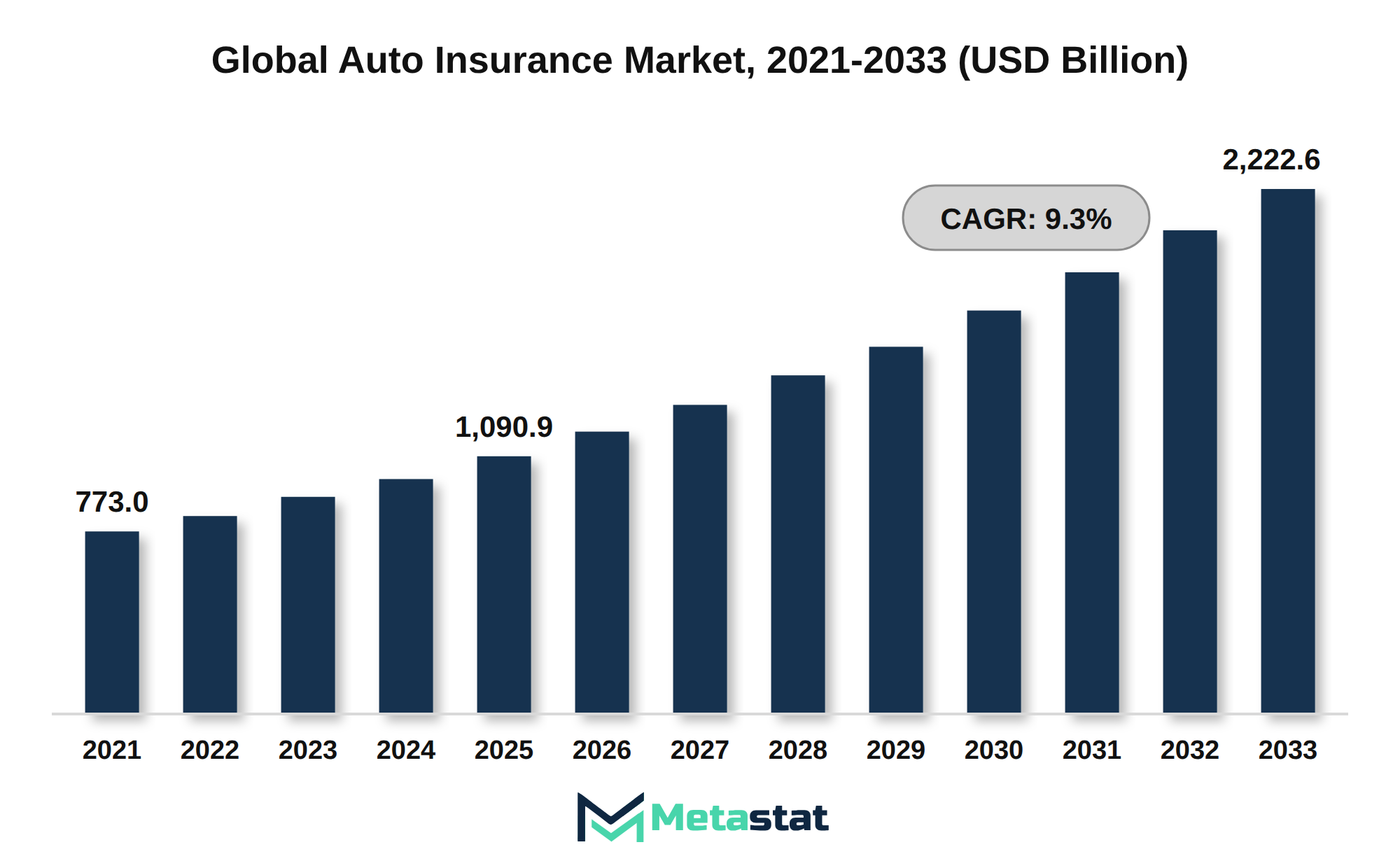
The global Auto Insurance market reached a valuation of USD 1,090.9 billion in 2025, reflecting significant growth from USD 773 billion in 2021. This expansion illustrates a compound annual growth rate (CAGR) of 9.3%, driven by increasing consumer demand for comprehensive coverage and enhanced digital platforms for insurance services.
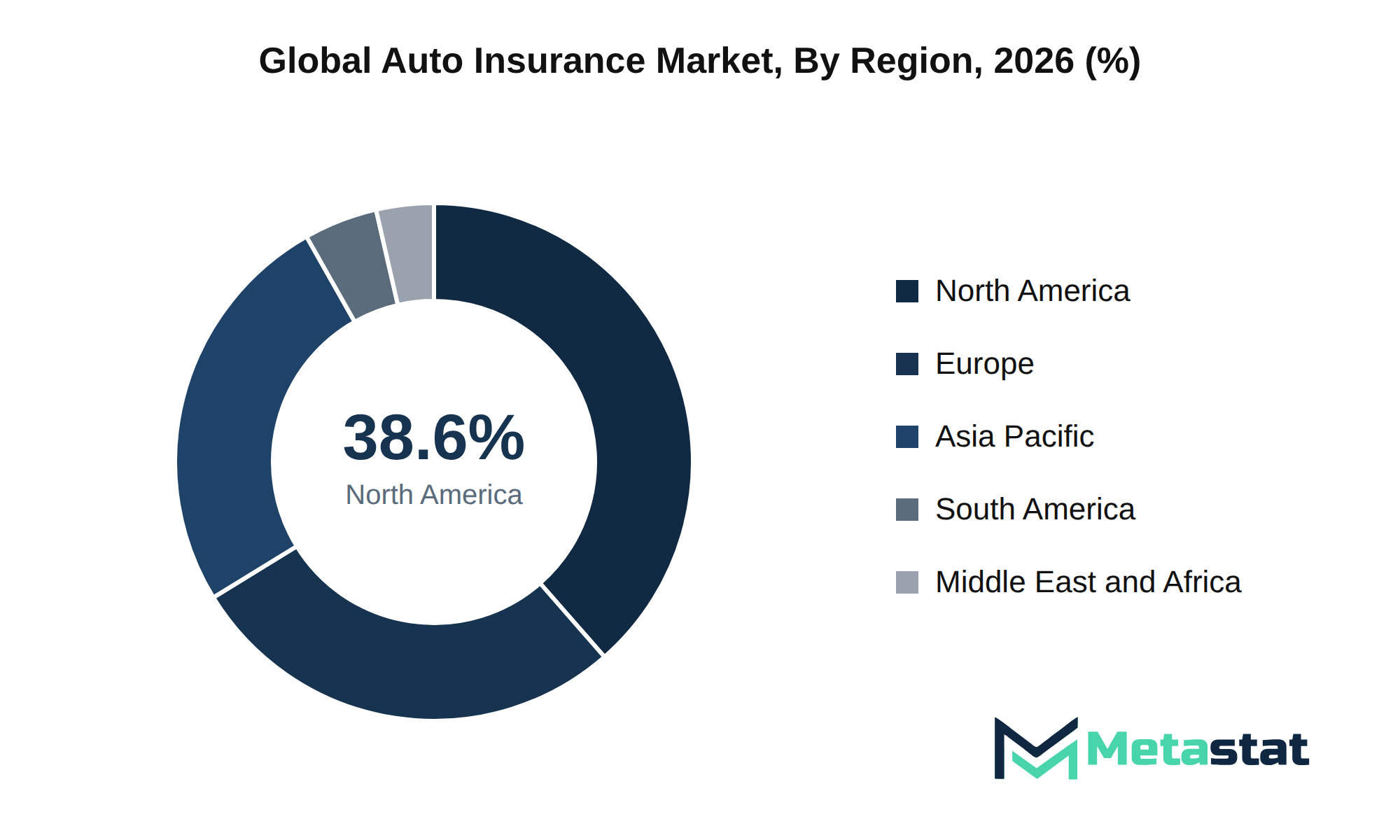
By 2033, the market is projected to reach USD 2,222.6 billion, highlighting the ongoing transformation within the industry. Regions including North America, Europe, and Asia Pacific contribute significantly to this growth, accounting for 38.6%, 27.7%, and 25.6% of the total market share, respectively.
In terms of coverage, Third-Party Liability Coverage leads with a projected value increase from USD 508.8 billion in 2026 to USD 911.1 billion by 2033. Partial Comprehensive Coverage follows closely, reaching USD 401 billion by the same year. Full Comprehensive Coverage is anticipated to achieve a value of USD 775.5 billion, while specialized and statutory coverages continue to experience substantial growth.
Vehicle type segmentation reveals that Passenger Cars represent a significant portion, with values expected to rise from USD 720.9 billion in 2026 to USD 1,281.8 billion in 2033. Light Commercial Vehicles and Vans show strong growth potential, with a target value of USD 335.8 billion by 2033. Medium & Heavy Commercial Vehicles and Buses & Coaches will contribute to this growth.
The distribution channels exhibit diverse pathways for customer engagement, including Insurance Agents & Brokers, Direct Sales, and Online/Digital Platforms. The latter is anticipated to grow at a CAGR of 15.1%, indicating a shift towards digitalization in customer interactions and service delivery.
The Auto Insurance market operates within a complex ecosystem influenced by various factors including regulatory compliance and geopolitical risks. Agencies and companies in different regions navigate diverse regulations that impact market operations and compliance costs. Variations in regulatory frameworks across jurisdictions create challenges and opportunities for market players, influencing pricing and service offerings. Adapting to these frameworks remains crucial for maintaining competitiveness and ensuring sustainable growth.
Disruptions in the market arise from technological advancements and changing consumer preferences. The shift towards digital platforms enhances customer engagement and streamlines service delivery, contributing to increased operational efficiencies. Innovations in artificial intelligence and data analytics facilitate improved risk assessment and underwriting processes. The integration of next-generation technologies is projected to drive significant transformation within the market.
Sustainable transformation and decarbonization are becoming integral to the strategies of key players. The industry increasingly focuses on reducing carbon footprints and promoting environmentally-friendly practices. Implementing circular economy dynamics within the value chain not only addresses sustainability goals but enhances brand reputation among environmentally-conscious consumers.
The supply chain landscape faces pressures from inflationary trends and currency volatility. Fluctuations in raw material costs and foreign exchange rates impact procurement strategies and operational margins. Companies are reallocating capital to enhance resilience and adapt to these macroeconomic headwinds, prioritizing investments in technology and infrastructure to mitigate risks.
Market fragmentation is evident, with numerous players competing for market share. Mergers and acquisitions are often employed strategies to consolidate resources and expand market presence. The diverse customer journey dynamics, influenced by personalized marketing and tailored services, are essential for engaging both personal and commercial clients effectively.
In the evolving Auto Insurance market, strategic foresight and proactive measures are necessary for addressing emerging challenges. High-value recommendations for stakeholders include investing in R&D trajectories and leveraging innovative technologies. Continuous assessment of market trends and consumer behaviors will support informed decision-making and long-term success.
The Auto Insurance market experiences growth driven by macro-economic factors, primarily GDP growth and capital investment environments. Economic expansion leads to higher disposable incomes, resulting in increased vehicle ownership and demand for insurance coverage. Rising interest rates impact consumer financing options, affecting auto purchases and subsequently the need for insurance products. Enhanced public-private spending power further supports infrastructure development, which correlates with higher vehicle registrations and insurance requirements.
Shifting demographic patterns, including urbanization and an aging population, contribute to market dynamics. Urban environments exhibit higher vehicle density, resulting in increased demand for auto insurance policies. Evolving consumer behaviors, focusing on convenience and digital solutions, drive the adoption of innovative insurance products. The market experiences a transition towards digital platforms, enabling consumers to access tailored insurance solutions efficiently.
The combination of these macro-economic factors drives growth within the Auto Insurance market, with continuous capital investments and shifts in consumer preferences shaping its trajectory.
The ongoing investment in infrastructure development and asset modernization significantly contributes to the growth of the Auto Insurance market. Upgrading physical and digital capabilities enhances service delivery and operational efficiency, aligning with evolving consumer expectations. The transition toward smart technologies in vehicles leads to a substantial increase in premium coverage, driving demand for various insurance products.
Investment in advanced technologies, including automation and artificial intelligence, enables insurers to streamline operations and improve customer interactions. This shift reduces overhead costs and enhances profitability for insurance providers. Consequently, the market experiences an upward trajectory in value, projected to reach USD 2,222.6 billion by 2033, reflecting a compound annual growth rate (CAGR) of 9.3 percent during the forecast period.
The emphasis on digital transformation facilitates the adoption of innovative solutions that cater to consumer preferences. The ability to offer customized policies and real-time pricing models attracts a broader customer base, further propelling growth in the Auto Insurance market. Enhanced data analytics capabilities enable insurers to assess risks more accurately, increasing competitiveness in a rapidly changing environment.
The expansion of infrastructure and modernization initiatives creates opportunities for insurers and supports regulatory compliance through improved risk management practices. This alignment with safety standards and legislative changes reinforces consumer confidence, ultimately driving demand for auto insurance products across various demographics.
Regulatory compliance presents significant challenges for the Auto Insurance market. Stricter regulations impose higher compliance costs on insurers, prompting them to allocate substantial resources toward meeting legal requirements. This situation restricts profitability, particularly for smaller firms that struggle to absorb the costs associated with compliance. The increasing complexity of these regulations leads to delays in product development and hinders market entry for new players.
Economic pressures further constrain growth in the market. Inflationary trends raise operational costs for insurers, impacting their ability to offer competitive premiums. Rising expenses associated with claims handling and administration create additional financial burdens, deterring expansion efforts. Macroeconomic headwinds, including fluctuating interest rates and economic downturns, dampen consumer spending on auto insurance, resulting in slower market growth.
Supply chain disruptions experienced in recent years have impacted the availability of vehicles and spare parts, which indirectly affects the auto insurance landscape. Limited vehicle supply leads to heightened demand for insurance products; however, this surge does not translate into immediate revenue growth for insurers facing operational challenges. Geopolitical instability introduces unpredictability into the market environment, complicating risk assessment and pricing strategies for insurers.
Resource scarcity and infrastructure gaps further contribute to market constraints. Insufficient investment in technology and data security heightens vulnerabilities for insurers, leading to concerns over data privacy and potential breaches. The increasing importance of digital platforms in the auto insurance market demands ongoing investment in cybersecurity measures. Failure to address these concerns adequately erodes consumer trust, impacting overall market performance.
Geopolitical fragmentation significantly impacts the Auto Insurance market, creating complexities in cross-border operations and increasing regulatory variances. Trade deficits and tariff friction contribute to an unpredictable economic environment, affecting how insurers price their products and manage risks. Fluctuating import costs arising from tariffs influence the pricing strategies of insurance firms, adding pressure to profit margins.
Technological disruptions pose another challenge. Companies seek to integrate advanced technologies into their operations while managing interoperability friction among different systems. This complexity complicates the development of cohesive insurance solutions, leading to delays in product rollout and increased costs. Supply chain instability exacerbates these issues, where disruptions in component availability hinder operational efficiency and lead to service gaps.
Tightening global regulatory standards further complicate market dynamics. Compliance overhead increases, and insurers face evolving legal liabilities that require continual adjustment to policy frameworks, straining resources and affecting competitiveness. Rising input costs from advanced technologies and regulatory compliance efforts pressure profitability, limiting investment in innovation.
Workforce skill gaps represent a critical barrier to advancement, particularly in a landscape that demands expertise in emerging technologies and cybersecurity measures. Talent retention pressures grow owing to companies competing for skilled professionals, driving up operational costs. The Auto Insurance market navigates these challenges to maintain growth and adapt to shifting consumer demands.
The Auto Insurance market experiences significant opportunities driven by emerging digital trends, which facilitate enhanced customer engagement and streamlined processes. Digital transformation initiatives open avenues for insurers to integrate advanced technologies including artificial intelligence and machine learning. These technologies enable personalized insurance solutions, improve risk assessment, and enhance operational efficiency. The shift towards online and digital platforms facilitates faster policy issuance and claims processing, appealing to tech-savvy consumers.
Geographical expansion presents another opportunity for growth in the market. Regions with developing economies exhibit increasing vehicle ownership, translating into heightened demand for auto insurance products. Companies that strategically expand into these regions capture emerging customer bases, thereby enhancing their market share. In tandem, evolving buying behaviors shift towards online purchasing, compelling insurers to refine their digital sales strategies.
Sustainability imperatives influence the market landscape. Growing awareness of environmental issues drives demand for eco-friendly insurance products, prompting insurers to align their offerings with sustainability goals. By integrating green transformations and environmentally sustainable practices, companies strengthen their brand reputation while attracting environmentally conscious consumers.
Strategic consolidation through mergers and acquisitions enhances competitive positioning within the market. Companies pursuing strategic partnerships or acquisitions optimize resources and broaden service offerings, consolidating their market presence. This trend facilitates the development of comprehensive insurance solutions tailored to diverse customer needs.
The digital procurement shift reflects a significant phase for the market, enabling insurers to streamline operations and reduce costs. Emphasis on process automation and value-chain optimization allows for improved service delivery, reinforcing customer satisfaction. This shift positions insurers competitively and meets the evolving expectations of consumers within the Auto Insurance market.
The Global Auto Insurance market is segmented based on Coverage, Vehicle Type, Distribution Channel, and Customer Type.
Valued at USD 508.8 billion in 2026, the Third-Party Liability Coverage segment is projected to reach USD 911.1 billion by 2033, with a CAGR of 8.7% during the forecast period. This growth stems from increasing regulatory requirements mandating liability coverage for vehicle owners, protecting third parties from damages incurred during accidents. The surge in vehicle ownership, particularly in emerging economies, has heightened demand for comprehensive liability insurance solutions.
Significant adoption catalysts drive the market, influenced by evolving consumer awareness regarding the financial repercussions of accidents. Enhanced digital platforms facilitate the purchasing process, allowing consumers to access competitive rates and policies tailored to their specific needs. The increasing complexity of traffic scenarios and vehicle technology further spurs demand for robust liability coverage, ensuring adequate protection against unforeseen incidents.
Regulatory compliance standards shape the dynamics of this segment. Governments across various regions impose stringent requirements to enhance public safety and reduce the financial burden on healthcare systems. These policies encourage vehicle owners to invest in adequate liability insurance, driving market growth. The segment benefits from technological advancements that streamline claims processing and enhance customer experiences, thereby improving retention rates.
Price volatility in the insurance market remains a challenge, influenced by factors including loss ratios and claims frequency. Insurers face margin pressures due to increasing competition and the necessity to optimize operational costs while providing comprehensive coverage. Strategic investments in technology and data analytics mitigate these challenges, enabling insurers to refine risk assessment and pricing strategies effectively.
Consumer preferences shift toward personalized and flexible insurance products, positioning this segment for future growth opportunities. Insurers focusing on innovative solutions and customer-centric approaches will capture a larger market share. The Third-Party Liability Coverage segment is anticipated to evolve, adapting to the changing landscape of vehicle ownership and regulatory frameworks within the broader Auto Insurance market.
Growing interest in efficient and cost-effective insurance solutions has led to a notable rise in the Partial Comprehensive Coverage segment of the Auto Insurance market. This segment is estimated to reach USD 401 billion by 2033, at a CAGR of 10% during the forecast period. Increased consumer awareness regarding vehicle protection and rising accident rates contribute to heightened demand for such coverage. The segment benefits from a shift in consumer preferences towards flexible and customizable insurance products that align with individual risk appetites.
Technological advancements play a crucial role in enhancing product offerings within the segment. Insurers leverage data analytics and telematics to provide personalized coverage options, driving consumer adoption. The integration of technology in underwriting processes streamlines risk assessment and pricing, allowing insurers to offer more competitive rates. This technological maturation encourages segment expansion, enabling companies to attract a broader customer base while maintaining profitability.
Cost structures and pricing volatility remain critical considerations for market players. Insurers face challenges in balancing competitive pricing with the potential liabilities of coverage. Regulatory compliance standards further influence pricing strategies, necessitating constant adaptation to local and regional regulations. Strategic opportunity windows arise from the ongoing digital transformation in the insurance sector, facilitating the development of innovative distribution channels and enhancing customer engagement.
The Partial Comprehensive Coverage segment is expected to experience significant growth. Investment in technology-driven solutions, coupled with evolving consumer expectations, positions this segment favorably within the larger Auto Insurance market.
In the Auto Insurance market, the Full Comprehensive Coverage segment is expected to reach USD 775.5 billion by 2033. This growth aligns with increasing consumer demand for comprehensive protection against a wide range of risks. Factors contributing to this demand include a rise in vehicle ownership, heightened awareness of insurance benefits, and evolving consumer preferences toward more extensive coverage options.
Technological maturation enhances the expansion of this segment. Advancements in vehicle technology, including increased connectivity and safety features, improve the perceived value of comprehensive policies. Insurers are adapting by integrating telematics and data analytics, which allow for more personalized and flexible pricing models based on individual driving behavior. This approach attracts customers seeking better value and promotes safer driving practices.
Economic trends, including fluctuations in disposable income and consumer spending patterns, influence the Full Comprehensive Coverage segment. A growing middle class in various regions expands the customer base for comprehensive insurance products, driving market growth. Regulatory compliance standards increasingly focus on consumer protection, prompting insurers to enhance their coverage offerings while ensuring adherence to local laws.
Certain challenges persist within the segment, including cost structures and pricing volatility. Insurers face pressure to balance profitability while offering competitive rates, particularly in light of rising claims costs and increasing repair expenses associated with advanced vehicle technologies. Strategic opportunity windows arise for insurers who effectively manage these pressures while developing innovative products that meet consumer expectations.
Overall, the Full Comprehensive Coverage segment in the Auto Insurance market exhibits strong growth potential, driven by evolving consumer needs, technological advancements, and favorable economic conditions. Continued investments in product evolution and customer engagement will be essential for capturing market share and enhancing competitive positioning within this market.
Significant growth is anticipated in the Others (Specialized & Statutory Coverages) segment of the Auto Insurance market, projected to achieve a compound annual growth rate (CAGR) of 9.4% during the forecast period. This growth is primarily driven by the increasing demand for tailored insurance solutions that cater to specific regulatory and legal requirements. Enhanced awareness of specialized coverages among businesses and individuals fuels the adoption of these products, addressing unique risks associated with various sectors.
Regulatory compliance stands because a critical driver, compelling businesses to secure specialized insurance solutions that fulfill statutory obligations. This trend reflects a broader shift towards ensuring adequate coverage against specific liabilities, which enhances the appeal of this segment. The rise in regulatory frameworks across different regions necessitates a strategic response from insurers to provide compliant products while remaining competitively priced.
Technological advancements contribute significantly to the growth of this segment, with next-generation digital platforms facilitating efficient quote comparisons and policy management. Increased access to information encourages consumers, promoting informed decisions regarding specialized coverage options. Investment in user-friendly digital tools streamlines the customer experience, driving demand for specialized insurance products.
Overall, the Others (Specialized & Statutory Coverages) segment presents a compelling opportunity for insurers aiming to expand their portfolios within the Auto Insurance market. Continued emphasis on regulatory compliance, tailored solutions, and digital transformation positions this segment for growth in the upcoming years.
Valued at USD 720.9 billion in 2026, the Passenger Cars segment is projected to reach USD 1,281.8 billion by 2033, at a CAGR of 8.6% during the forecast period. This segment benefits from increasing ownership rates of passenger vehicles, driven by urbanization and rising disposable incomes. Technological advancements, including the integration of telematics and enhanced safety features, are driving demand for comprehensive insurance coverage, aligning with consumer expectations for better protection.
Consumer preferences are shifting towards digital platforms for purchasing auto insurance, resulting in growth in online and direct sales channels. This trend enhances convenience and accessibility for customers, reflecting broader changes in purchasing behavior across sectors. Regulatory compliance standards emphasize customer protection and transparency, influencing market dynamics for passenger car insurance.
Increased competition among insurance providers leads to innovation in product offerings, with companies developing tailored solutions to meet diverse consumer needs. The focus on customer-centric approaches and flexible pricing structures supports market expansion, positioning the Passenger Cars segment favorably within the broader Auto Insurance market.
Driving factors in the Light Commercial Vehicles & Vans segment stem from increasing demand for efficient delivery solutions in urban environments and the rise of e-commerce. Businesses require reliable transport for goods, which boosts insurance demand for this vehicle type. The push toward sustainability supports a transition toward electric and hybrid vehicles, influencing insurance offerings tailored to these advancements.
Technological maturation in vehicle safety features directly impacts the market, enhancing customer confidence and driving policy uptake. Insurers responding to these advancements attract more customers through competitive pricing strategies aligned with improved safety ratings. The integration of telematics allows insurers to offer personalized policies based on driving behavior, further stimulating market growth.
Consumer preferences shift toward coverage solutions that encompass a broader range of services, including roadside assistance and flexible payment options. The evolution of customer expectations influences product offerings, prompting insurers to innovate continuously. Regulatory compliance regarding environmental standards introduces additional coverage requirements, ensuring all vehicles meet safety and emissions regulations.
Cost structures in the market reflect pressures from rising vehicle prices and increased repair costs, driving insurance premiums upward. Competitive dynamics encourage insurers to develop cost-effective solutions, balancing profitability with customer retention. Looking forward, the Light Commercial Vehicles & Vans segment is projected to reach USD 335.8 billion by 2033, with a CAGR of 10.2% during the forecast period.
Growth in the Medium & Heavy Commercial Vehicles segment aligns with increasing demand for freight and logistics services, driven by global trade expansion and e-commerce growth. Suppliers in the logistics sector prioritize insurance solutions that mitigate risks associated with vehicle operation and cargo transport. Demand for efficient coverage options supports the segment's evolution, enhancing protection against accidents and operational disruptions.
Technological advancements heighten the importance of comprehensive insurance policies tailored for these vehicles. The integration of telematics and data analytics facilitates risk assessment and management, allowing insurers to offer customized plans. This shift in technology leads to improved pricing models and enhances the customer experience through more transparent and efficient processes.
Regulatory compliance shapes insurance offerings for Medium & Heavy Commercial Vehicles. Stricter safety regulations compel suppliers to adopt higher coverage standards, ensuring they meet legal requirements while protecting their investments. This focus on compliance increases operational costs but simultaneously creates a more reliable insurance environment.
The Medium & Heavy Commercial Vehicles segment is expected to reach USD 243.8 billion by 2033. The anticipated growth reflects ongoing investment in fleet modernization and sustainability initiatives. Companies evolve their operations to include electric and hybrid vehicles, driving demand for insurance solutions that accommodate these technological shifts.
Understanding consumption shifts becomes vital for insurers aiming to capture market share in this segment. Consumers increasingly favor coverage that addresses evolving vehicle technologies and associated risks. While buyers seek insurance that protects against losses from emerging threats, increased competition among insurers prompts innovative product offerings.
The Medium & Heavy Commercial Vehicles segment within the Auto Insurance market demonstrates significant potential for growth, driven by advancements in technology, regulatory pressures, and changing consumer preferences. The environment increasingly favors insurers that adapt to these dynamics, creating strategic opportunity windows for business expansion.
Growing demand for public transportation solutions fuels the Buses & Coaches segment within the Auto Insurance market. Increased urbanization and rising traffic congestion lead to a greater reliance on buses and coaches for passenger transit. This environment encourages operators to seek comprehensive insurance coverage to protect their assets against liabilities and risks associated with accidents.
Insurance products tailored to the specific needs of this segment enhance operational efficiency while managing risks. The segment is projected to grow at a CAGR of 9.6% during the forecast period. This growth reflects an increasing focus on safety standards and regulatory compliance in transportation, propelling demand for comprehensive insurance options.
Investment in next-generation technology, including telematics and advanced safety features, improves vehicle management and reduces accident rates. These advancements promote lower premiums due to decreased risk exposure. Consequently, the evolving nature of the Auto Insurance market necessitates ongoing adaptation to technological advancements and regulatory changes that affect pricing and coverage options.
Growing demand for agricultural vehicles and tractors in farming and agribusiness sectors significantly influences the Auto Insurance market. The need for efficient and effective coverage options stems from the rising value of agricultural machinery and the associated risks of operations. Farmers and agricultural operators increasingly recognize the importance of safeguarding their investments through comprehensive insurance solutions.
The expansion of this segment is fueled by advancements in agricultural technology, leading to enhanced efficiency and productivity. Modern tractors and vehicles often incorporate sophisticated technology, which raises their value and necessitates adequate coverage. Increased automation within agriculture drives demand for specialized insurance products tailored to protect against potential losses and damages.
Regulatory compliance plays a critical role in shaping the insurance requirements for agricultural vehicles. Stricter safety and environmental regulations create a need for insurance products that align with new standards. Insurers are adapting their offerings to provide coverage that meets these evolving compliance demands. This trend influences the market by ensuring that agricultural operators maintain compliance while safeguarding their assets.
The cost structures associated with agricultural vehicle insurance are influenced by various factors, including the type of coverage selected and the specific risks associated with different agricultural operations. Pricing volatility in the insurance market impacts the affordability of these products for farmers and agribusinesses. Strategic opportunities exist for insurers to develop innovative solutions that address the unique challenges faced by this segment while remaining competitive.
The agricultural vehicles and tractors segment within the Auto Insurance market demonstrates significant growth potential driven by technological advancements, regulatory changes, and increasing awareness of risk management among agricultural stakeholders.
The presence of Special-Purpose & Utility Vehicles in the Auto Insurance market stems from their critical role in various sectors, including construction, agriculture, and logistics. These vehicles require tailored insurance products to cover unique risks associated with specialized applications, thereby driving demand within the segment. Technological advancements in this vehicle category contribute positively to the insurance landscape. Enhanced safety features and improved vehicle performance reduce the likelihood of accidents, influencing insurance premiums and policy structures. Regulatory compliance standards pertaining to safety and emissions impact how insurers assess risks and develop coverage options. Adapting to these evolving regulations remains crucial for insurers aiming to maintain competitiveness in this segment. Market dynamics indicate a shift towards digital platforms for policy distribution and management among consumers of Special-Purpose & Utility Vehicles. The growing trend of online insurance solutions enhances customer experience while increasing transparency in pricing and coverage options. Strategic investment in product evolution and customer education around specialized insurance coverage creates new opportunities within the segment. Continuous improvements in risk assessment methodologies enable insurers to align their offerings with consumer needs, ultimately supporting growth in the market.
Consumer interest in motorcycles, trikes, and quads continues to rise, driven by the growing popularity of recreational activities and the increasing demand for alternative transportation solutions. This segment of the Auto Insurance market presents unique characteristics, focusing on covering specific risks associated with these vehicles. Factors including urban mobility trends and the shift towards environmentally friendly transport solutions further influence adoption rates.
Adoption of insurance products tailored for motorcycles, trikes, and quads experiences acceleration due to advancements in technology and safety features. Enhanced vehicle designs and the introduction of smart technology increase consumers' willingness to invest in comprehensive insurance coverage. These developments enhance the appeal of riding experiences while ensuring that policyholders receive effective protection against potential road hazards.
Regulatory compliance shapes the insurance landscape. Governments enact stricter policies regarding motorcycle safety and emissions, prompting insurers to adapt their offerings to meet these evolving standards. Such adjustments ensure alignment with regulatory frameworks, reinforcing consumer confidence in available insurance products while supporting sustained growth in the market.
Cost structures within this segment reflect the specialized nature of insurance for motorcycles, trikes, and quads. Pricing volatility is influenced by factors including seasonal demand fluctuations and variations in risk assessment. Insurers focus on maintaining competitive pricing while addressing margin pressures stemming from longer claims processing times and potential increases in repair costs.
The emergence of disruptive alternatives, including ride-sharing and electric vehicle platforms, presents both challenges and opportunities for the market. Insurers evaluate their product offerings to accommodate changing consumer preferences, aiming to capture new segments of riders seeking flexible coverage options tailored to their unique needs.
Strategic opportunity windows exist for growth in the motorcycle, trike, and quad insurance space. By enhancing customer engagement through digital platforms and tailored marketing strategies, insurers expand their reach and appeal to a broader audience. These approaches ensure that the market remains dynamic and responsive to shifts in consumer behavior.
Insurance Agents & Brokers segment is valued at USD 487.8 billion in 2026 and is projected to reach USD 778.1 billion by 2033, at a CAGR of 6.9% during the forecast period. Primary demand drivers within the market stem from an increasing focus on personalized insurance solutions, leveraging advanced data analytics to enhance customer experience and risk assessment. Adoption of digital platforms further supports segment expansion, enabling agents and brokers to reach a broader customer base efficiently.
Technological maturation plays a critical role, with the integration of artificial intelligence and machine learning enabling agents to provide tailored products that align with consumer needs. This evolution supports product innovation, ensuring offerings remain relevant in a competitive environment. Downstream applications reflect a shift towards comprehensive risk management solutions, enhancing value propositions for consumers.
Regulatory compliance standards exert influence on operations, necessitating that agents and brokers adapt to evolving requirements while maintaining service quality. Pricing volatility in the market affects competitiveness, with agents needing to navigate cost structures effectively to sustain margins. Strategic opportunity windows arise from technological advancements, presenting avenues for investment and growth within the segment.
The Insurance Agents & Brokers segment experiences robust competition, prompting firms to enhance service delivery and expand their portfolios. Increasing consumer demand for transparency and accessibility positions this segment for continued growth, reinforcing its significance in the broader Auto Insurance market.
Growth in the Direct Sales segment reflects a shift towards more personalized insurance purchasing experiences, driven by consumer preferences for convenience and transparency. This segment is estimated to reach USD 531 billion by 2033, at a CAGR of 8.7% during the forecast period. The rise of digital platforms enhances accessibility and efficiency, enabling customers to compare policies and prices easily, thereby influencing purchasing decisions. The trend towards online transactions aligns with broader consumer behavior, where technology facilitates immediate access to information and services. Increased competition among insurance providers encourages innovation in product offerings and pricing strategies, contributing to overall market expansion.
Adoption of technology within the Auto Insurance market, particularly through mobile applications and user-friendly websites, promotes customer engagement and streamlines the purchasing process. These advancements cater to an evolving demographic that favors direct interactions with insurers, reducing reliance on traditional intermediaries. Insurers investing in technology and digital marketing strategies position themselves favorably to capture a larger share of the market. Overall, the Direct Sales segment significantly shapes the future of the Auto Insurance market, driven by technological advancements and changing consumer expectations.
Growth in the Bancassurance segment is driven by increasing collaboration between banks and insurance providers, creating a streamlined distribution channel for auto insurance products. This collaboration enhances customer access to insurance options, encouraging policy adoption among individuals and businesses. The segment benefits from the integration of financial services, allowing customers to manage both banking and insurance needs under one roof, promoting convenience and efficiency.
Valued at USD 268.3 billion by 2033, the segment reflects strong consumer confidence in combined financial services. Regulatory compliance standards influence growth by ensuring that partnerships between banks and insurers adhere to strict guidelines, building trust and security among consumers. Enhanced digital platforms enable banks to offer insurance products through online channels, significantly boosting market penetration and customer engagement.
Continued technological advancements facilitate efficient transactions and customer service in the Bancassurance sector. Innovations in data analytics enable institutions to assess customer needs more accurately, leading to tailored product offerings. While the market evolves, increasing demand for personalized insurance solutions drives the segment's development, reinforcing its position within the broader auto insurance market.
Technological advancements drive the increasing adoption of Online / Digital Platforms for Auto Insurance solutions, enabling customers to access policies and manage claims conveniently. The segment grows at a CAGR of 15.1% during the forecast period, indicating robust demand for digital offerings. Enhanced user experiences and the ability to compare policies online contribute significantly to this growth, attracting a wider customer base. The preference for self-service options aligns with consumer trends towards greater digital engagement, particularly among younger demographics.
Investments in digital infrastructure and user-friendly applications facilitate streamlined transactions and enhance customer satisfaction. Insurers focusing on these platforms benefit from reduced operational costs and increased efficiency in policy management. The market experiences this shift, where traditional distribution methods face challenges from the convenience and accessibility of online channels. Regulatory compliance and digital security standards remain critical factors influencing the segment's growth trajectory.
Distribution through automobile dealers and original equipment manufacturers (OEMs) presents unique dynamics within the Auto Insurance market. Collaboration between insurers and automobile dealers creates a streamlined process for customers, enhancing accessibility to insurance products. This channel leverages the existing customer relationships that dealers maintain, allowing for tailored insurance solutions that meet specific consumer needs.
Changes in consumer behavior towards integrated purchasing experiences influence adoption rates. Customers increasingly prefer bundled services, where insurance is offered alongside vehicle purchases. This trend encourages dealers to collaborate with insurance providers, aiming to enhance customer satisfaction while increasing sales. The growing preference for convenience among consumers drives demand for insurance products available at the point of sale.
Technological advancements play a critical role in the efficiency of this distribution channel. Digital platforms enable effective communication between insurers and dealers, facilitating the quick exchange of information related to policies and claims. Enhanced data analytics capabilities allow insurers to assess risks more accurately, resulting in competitive pricing for consumers. Innovations in automation and customer relationship management systems further streamline processes, improving overall customer engagement.
Regulatory compliance standards specifically impact the operations of automobile dealers and OEMs in the insurance domain. Adherence to local regulations surrounding vehicle insurance and consumer protection laws shapes the offerings available through this channel. Continuous monitoring of regulatory changes ensures that dealers and insurers adapt their strategies efficiently, maintaining compliance while meeting market demands.
Ultimately, the Others (Automobile Dealers/OEMs) segment presents strategic opportunities within the broader Auto Insurance market. Heightened collaboration between dealers and insurers, combined with technological advancements, positions this channel favorably for growth. By leveraging existing consumer relationships and enhancing service offerings, the market is prepared for sustained expansion.
Valued at USD 877.2 billion in 2026, the segment is projected to reach USD 1,579.6 billion by 2033, at a CAGR of 8.8% during the forecast period. Increasing disposable incomes and a growing population contribute to the rising demand for personal auto insurance. Rising demand for financial protection against potential vehicle-related risks expands the market. Consumer preferences for comprehensive coverage options further enhance the segment's attractiveness, leading to increased adoption among individuals. Regulatory changes aimed at enhancing consumer protection and safety influence segment growth, prompting more customers to secure insurance policies. Competitive pricing strategies and innovations from insurance providers present significant opportunities for market expansion. The integration of digital platforms facilitates smoother purchasing experiences, improving accessibility for consumers. Overall, the auto insurance market experiences significant growth in the personal segment, aligning with broader economic trends.
Commercial insurance within the Auto Insurance market exhibits significant growth dynamics. An increasing number of businesses prioritize risk management strategies, driving demand for comprehensive coverage solutions. The segment is estimated to reach USD 643 billion by 2033, at a CAGR of 10.6% during the forecast period. Businesses increasingly recognize the value of auto insurance in safeguarding assets against potential liabilities and operational risks.
Technological advancements play a vital role in enhancing product offerings, with the integration of data analytics and telematics facilitating personalized insurance solutions. Enhanced risk assessment models contribute to more competitive pricing structures, thus attracting a broader customer base. In addition, the evolving regulatory landscape mandates higher compliance standards, compelling commercial entities to secure adequate insurance coverage and boosting market demand.
Economic growth across various sectors, including logistics, e-commerce, and transportation, creates a substantial need for auto insurance policies tailored to commercial operations. Organizations seek to mitigate risks associated with fleet management, employee safety, and cargo protection. Expanding operational footprints among businesses drive the demand for significant insurance coverage, positioning the commercial segment because a critical driver in the overall Auto Insurance market.
Based on geography, the Global Auto Insurance market is divided into North America, Europe, Asia-Pacific, South America, Middle East, and Africa.
North America exhibits substantial growth potential in the Auto Insurance market, driven by rising vehicle ownership and an increasing focus on road safety. The region encompasses three primary countries: the United States, Canada, and Mexico, each contributing significantly to the overall market dynamics. With a projected market size of USD 772.1 billion by the end of 2033, the market is set to expand at a CAGR of 9.3% throughout the forecast period. In 2025, North America holds a share of 38.6% of the global market, highlighting its significance in the overall landscape.
Adoption of advanced technologies and innovative insurance solutions accelerates market growth. The integration of digital platforms for policy management and claims processing enhances customer experience, attracting a broader consumer base. Increasing awareness of insurance products and their benefits significantly influences demand, particularly among personal and commercial customers. The market’s growth trajectory is supported by evolving customer behaviors, with a notable shift towards online purchasing and direct sales channels.
Infrastructure modernizations, including improved road networks and enhanced safety measures, underpin the market expansion. The regulatory environment in North America mandates compliance with stringent safety standards, thereby promoting a culture of responsible driving and insurance uptake. High-value replacement cycles in vehicle ownership contribute to increased premium volumes, further enhancing the market's growth potential.
Local compliance mandates and trade policy shifts shape the competitive landscape, allowing domestic and international players to thrive. Market participants leverage localized procurement strategies to optimize supply chains, enhancing operational efficiency. This environment encourages collaboration among various stakeholders, including insurers, regulators, and consumers, to address emerging risks and opportunities within the market.
Overall, the North America Auto Insurance market stands poised for significant advancements through 2033, driven by technological innovations, regulatory frameworks, and evolving customer preferences. The focus on localized manufacturing densities and strategic entry barriers further enhances the region's competitive position, cementing its status because a front-runner in the global auto insurance landscape.
Europe represents a significant portion of the global Auto Insurance market, accounting for 27.7% of the share in 2025. The region encompasses various countries, including Germany, France, the UK, Italy, Spain, Russia, and the rest of Europe. Increasing vehicle ownership and an expanding middle class contribute to the rising demand for auto insurance products across these markets.
Germany stands out due to a mature market characterized by extensive regulatory frameworks and high customer awareness regarding insurance options. The presence of numerous domestic market participants facilitates competition and innovation in policy offerings. France and the UK follow closely behind, with both countries exhibiting strong growth in the adoption of comprehensive coverage options. Infrastructure modernization and a growing focus on sustainability drive the need for updated insurance products, particularly in urban areas.
Emerging trends including localized procurement dynamics and increased consumer awareness create opportunities for new entrants and existing players to capture market share. The market experiences continuous growth driven by a high-value replacement cycle, particularly for passenger cars and light commercial vehicles. Cross-border trade corridors and geopolitical stability facilitate the flow of goods and services, allowing for better insurance coverage options and competitive pricing.
Investment in regional competitive landscapes enhances consolidation trends among insurance providers, enhancing their capabilities and market reach. The focus on localized manufacturing densities and nearshoring initiatives supports operational efficiencies and reduces costs, further stimulating the market. Cultural nuances and regional B2B buying behaviors influence customer preferences, prompting insurers to tailor their offerings to meet diverse needs.
Overall, the European Auto Insurance market exhibits robust potential for expansion, driven by demographic shifts, technological advancements, and evolving customer expectations. Strategic entry barriers for new players continue to lower owing to established companies investing in innovative solutions and enhancing customer engagement, sustaining growth in both personal and commercial insurance segments.
The Asia-Pacific region is significant in the Auto Insurance market, representing 25.6% of the global market share in 2025. Strong economic growth across China, India, and Southeast Asia contributes to increasing vehicle ownership and higher insurance penetration rates. Urbanization in major cities drives demand for comprehensive and specialized coverage options, reflecting changing consumer preferences and risk profiles.
Diverse vehicle types, including passenger cars and light commercial vehicles, require tailored insurance solutions. Insurers focus on enhancing digital platforms to streamline processes and improve customer engagement. The shift towards online sales channels highlights a trend in consumer behavior within the market.
Infrastructure modernization initiatives in countries like India and China enhance transportation networks, leading to increased mobility. Consequently, this results in higher demand for auto insurance products. Evolving regulatory frameworks in the region drive compliance and encourage insurers to innovate in response to dynamic market conditions.
Domestic players and multinational companies compete vigorously, employing localized strategies that cater to cultural nuances and regional buying behaviors. Investment in technology and data analytics enables insurers to offer personalized products, driving customer satisfaction and retention throughout the market.
South America holds a market share of 4.6% in the global Auto Insurance market at 2025. The region's growth is influenced by economic conditions and increasing vehicle ownership rates, particularly in Brazil and Argentina. Infrastructure modernization efforts contribute to improved risk assessment and premium pricing, enhancing market penetration. Regional players focus on expanding their product offerings to meet the evolving needs of consumers.
Localized manufacturing density and emerging market front-runners shape the competitive landscape. Domestic market participants invest in technology and partnerships to streamline operations and enhance service delivery. Cultural nuances impact B2B buying behaviors, leading to tailored marketing strategies that connect with local consumers.
Strategic entry barriers and foreign direct investment (FDI) flows drive market dynamics, presenting opportunities for growth. Incremental growth vectors emerge from high-value replacement cycles in the commercial sector. The relationship between domestic players and international vendors creates a competitive environment that promotes innovation and service diversification in the Auto Insurance market.
In the Middle East and Africa, the Auto Insurance market experiences gradual growth driven by increasing vehicle ownership and rising awareness of the importance of insurance. The region's share of the global market is expected to grow in 2025. Countries including Saudi Arabia, the UAE, and South Africa feature a growing middle class, which enhances demand for personal and commercial insurance products. Emerging markets within this region demonstrate strong potential for growth, supported by infrastructure modernization and an increasing number of vehicles on the road.
Incremental growth vectors, including localized manufacturing and supply chain regionalization, play a significant role in shaping market dynamics. Ongoing regional competitive landscapes involve domestic market participants leveraging their positions to capture a larger share of the insurance market. Cultural nuances and regional B2B buying behaviors influence purchasing decisions, driving demand for tailored insurance solutions. Continued investment in foreign direct investment (FDI) flows facilitates market entry for new players, enhancing competition and service offerings.
The market benefits from regulatory frameworks that establish compliance mandates, promoting customer confidence. In South Africa, regulatory advancements contribute to a more organized insurance environment, while the UAE and Saudi Arabia implement measures to enhance consumer protection and service quality. Geopolitical factors introduce uncertainties, impacting cross-border trade and overall market stability. Nonetheless, the evolving landscape presents opportunities for growth, creating a robust competitive environment in the Auto Insurance market.
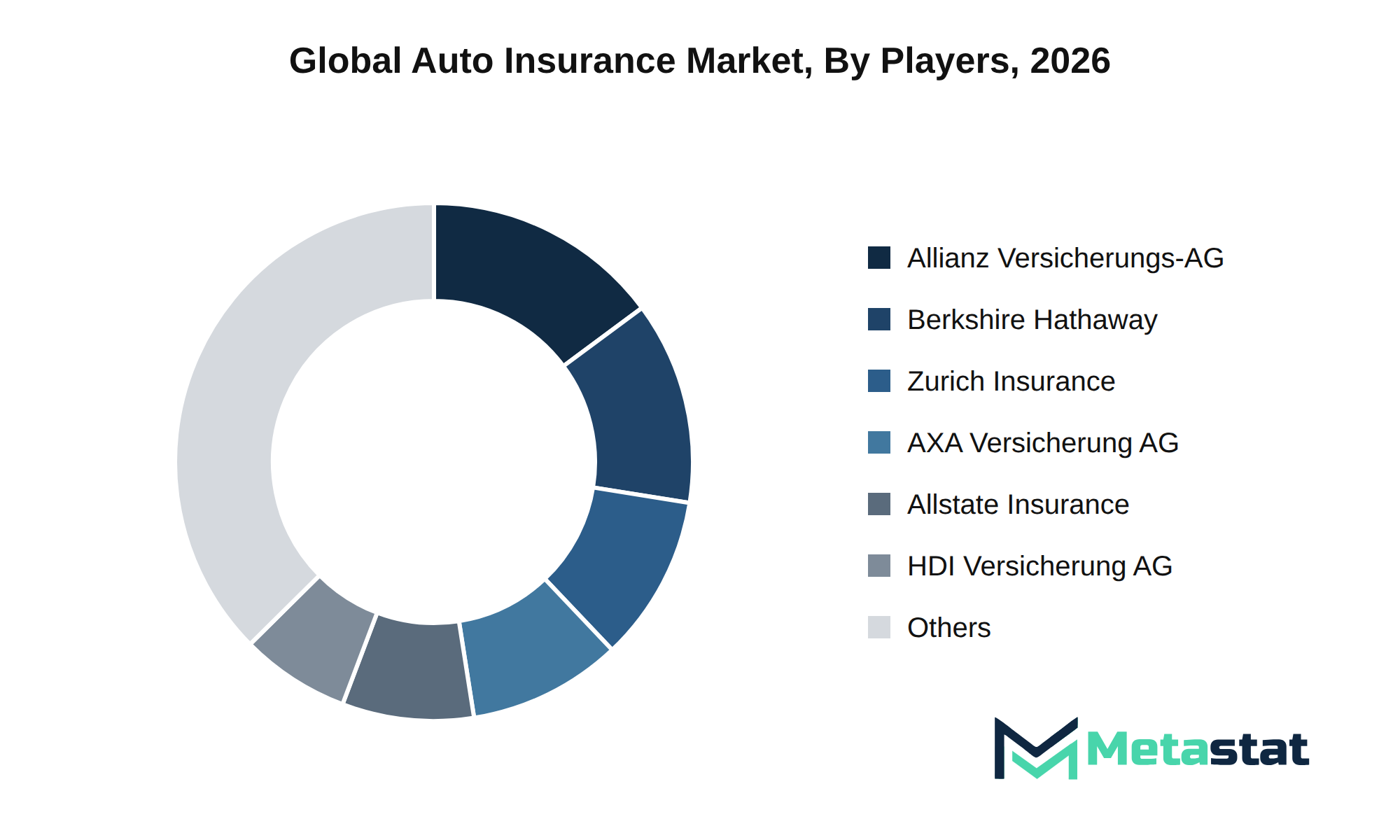
Competitive dynamics within the Auto Insurance market reflect a scenario where companies engage in strategic consolidation and mergers to enhance market presence. Companies including Allianz Versicherungs-AG, Berkshire Hathaway Inc., and Zurich Insurance position themselves through comprehensive product differentiation and customer retention strategies. These firms leverage brand equity and technological advancements to maintain competitive advantages, which supports long-term demand.
Strategic alliances and joint ventures represent vital tactics for growth among key players including Liberty Mutual Insurance and State Farm Mutual Automobile Insurance Company. The market is projected to emphasize technological defensibility, driven by R&D pipelines focusing on proprietary technologies. This environment creates barriers to entry for new entrants and startup disruptors, reinforcing the competitive landscape's resilience and limiting adoption among price-sensitive buyers.
Market size is forecast to rise from USD 1,090.9 billion in 2025 to over USD 2,222.6 billion by 2033. This growth trajectory reflects a compound annual growth rate (CAGR) of 9.3%. The base case indicates substantial expansion driven by increasing vehicle ownership, enhanced safety features, and rising consumer awareness regarding auto insurance policies.
Potential bull cases suggest accelerated growth stemming from technological advancements and heightened demand for digital insurance solutions. Enhanced integration of next-generation technologies, including artificial intelligence and machine learning, could refine risk assessment and policy customization, leading to increased market penetration.
Conversely, bear cases could arise from economic downturns or regulatory changes that impact consumer spending behavior and insurance costs. A contraction in disposable income could lead to reduced uptake of comprehensive coverage options, thereby affecting overall market dynamics.
The evolution of regulatory frameworks will play a crucial role in shaping the market landscape. Anticipated compliance milestones and policy enforcement horizons will necessitate strategic investments and adaptations by industry players. Firms engaging in proactive regulatory alignment strengthen their competitive positioning in the market.
Geopolitical factors and evolving trade corridors will impact supply chain dynamics, affecting material costs and accessibility. Strategic capital allocation directives focusing on infrastructure commitments and capital expenditure investments will be vital in addressing emerging white-space opportunities within the market.
Overall, the future outlook for the Auto Insurance market indicates significant growth supported by technological integration, evolving consumer preferences, and regulatory adaptations. The convergence of these factors will shape the competitive landscape and influence strategic imperatives for industry participants.
The report strategically identifies and profiles the key market players and analyses their core competencies in each sub-segment of the Auto Insurance market.
Report Attributes | Details |
Study Period | 2021-2033 |
Base Year | 2025 |
Estimated Year | 2026 |
Forecast Period | 2026-2033 |
Historical Period | 2021-2025 |
Growth Rate | CAGR 9.3% from 2026 to 2033 |
Revenue Unit | USD billion |
Segmentation | By Coverage, Vehicle Type, Distribution Channel, Customer Type, and Region |
By Region | North America (By Coverage, Vehicle Type, Distribution Channel, Customer Type, and Country)
|
Europe (By Coverage, Vehicle Type, Distribution Channel, Customer Type, and Country)
| |
Asia Pacific (By Coverage, Vehicle Type, Distribution Channel, Customer Type, and Country)
| |
South America (By Coverage, Vehicle Type, Distribution Channel, Customer Type, and Country)
| |
Middle East and Africa (By Coverage, Vehicle Type, Distribution Channel, Customer Type, and Country)
|
Find answers to common questions about this report
The Auto Insurance market size was valued at USD 1,090.9 billion in 2025.
The Auto Insurance market is projected to grow at a CAGR of 9.3% during the forecast period from 2026 to 2033.
The North America Auto Insurance market size is estimated to reach USD 772.1 billion by 2033.
The segment leading the Auto Insurance market is Third-Party Liability Coverage, with a projected value of USD 911.1 billion by 2033. This segment demonstrates significant growth potential, with a compound annual growth rate of 8.7 percent.
Key drivers for the Auto Insurance market include GDP growth, rising disposable incomes, and increased vehicle ownership. Enhanced public-private spending supports infrastructure development, correlating with higher vehicle registrations and insurance demand. evolving consumer behaviors and digital transformation facilitate the adoption of innovative insurance products, further propelling market growth.
North America holds the dominant share of the Auto Insurance market, with a value of USD 772.1 billion projected for 2033, representing 38.6 percent of the total market.
Regulatory compliance challenges impose higher costs on insurers, restricting profitability, particularly for smaller firms. Economic pressures, including inflation and rising operational costs, deter expansion efforts. Supply chain disruptions and geopolitical instability complicate risk assessment and pricing strategies, negatively impacting Auto Insurance market growth.
Enhanced public-private spending power supports infrastructure development, correlating with higher vehicle registrations and insurance requirements. Evolving consumer behaviors focusing on convenience and digital solutions drive the adoption of innovative insurance products, enabling access to tailored solutions efficiently.
The Auto Insurance market is estimated to reach a valuation of USD 2,222.6 billion by 2033.
Key players in the Auto Insurance market include Allianz Versicherungs-AG, AXA Versicherung AG, Berkshire Hathaway Inc., Allstate Insurance Company, State Farm Mutual Automobile Insurance Company, Progressive Casualty Insurance Company, GEICO, and Zurich Insurance.
The analysts below cover Automotive and Transportation research at Metastat Insights.
LEAD ANALYST
Utkarsh Khirodkar is a Lead Market Research Analyst at MetaStat Insight, specializing in market intelligence, technology sector assessments, and competitive strategy.

ENERGY & INFRASTRUCTURE INDUSTRY CONSULTANT
Automotive and Transportation · Electronics and Semiconductor · Energy and Power · Machinery & Equipment
Saurabh Vasant Ganvir consults for Energy & Infrastructure Industry at MetaStat Insight, specializing in renewable energy, solar EPC, and electric vehicle (EV) infrastructure markets.
Ambulatory surgical centers have very different purchasing cycles for robotic-assisted surgery platforms than major hospital networks. The MetaStat Insight study focused squarely on capital expenditure depreciation, procedural reimbursement pathways, and surgeon training overhead. That operational clarity made it much simpler to validate multi-year procedure growth forecasts against actual ambulatory center adoption patterns.
When planning edge sensor rollouts across refinery environments, generic IoT reports typically miss the harsh-environment certification bottlenecks. MetaStat Insight gave an objective evaluation of ATEX and Class 1 Division 2 hardware availability, along with realistic five-year maintenance cycle cost projections. The comparison of wireless mesh versus private cellular backhaul helped our team pressure-test network reliability models for remote processing facilities.
In the biological seed treatment space, registration timelines vary drastically between the European Union, Brazil, and North America. The MetaStat Insight research handled these cross-border regulatory barriers with genuine nuance, mapping commercialization pathways alongside historical field adoption rates. The segmentation between microbial strains and biochemical active ingredients was particularly well structured.
Explore related market intelligence reports worth reading alongside this one.
Starting from
$2950