
LEAD ANALYST
Utkarsh Khirodkar is a Lead Market Research Analyst at MetaStat Insight, specializing in market intelligence, technology sector assessments, and competitive strategy.

Global Insurance Analytics Market Size, Share, By Deployment Model (Cloud-Based and On-Premises), By Component (Solution and Services), By Application (Pricing and Rating Analytics, Risk and Underwriting Analytics, Claims Analytics, Fraud Detection and Financial Crime Analytics, Customer and Personalization Analytics, Sales and Distribution Analytics, Actuarial and Financial Analytics, Regulatory and Compliance Analytics), By End-use (Insurance Companies, Government Agencies, Third-party Administrators, Brokers and Consultancies), Industry Analysis, Growth, Trends, and Forecast, 2026-2033
Report ID
MSI-5394
Published
September, 2026
Pages
276 Pages
Format
Historical
Base year
Forecast
Forecast period
Report Details
Market Valuation: Valued at $15.8 Billion in 2025, projected to reach $48.8 Billion by 2033 at a 15.1% CAGR.
Dominant Segment: The Cloud-Based segment leads the market, driven by a rapid shift toward digital transformation among insurance companies seeking enhanced operational efficiency and data analytics capabilities.
Geographic Lead: North America maintains its leadership in Insurance Analytics adoption due to a high concentration of technology-driven insurers and strong regulatory support, while the Asia Pacific region shows significant growth opportunities propelled by increasing digitalization.
What's Inside: The report delivers in-depth analysis of market dynamics, competitive landscape, and comprehensive segmentation across deployment models, components, applications, and end-users, along with a forecast extending to 2033.
Choose Your License
Global Insurance Analytics Market
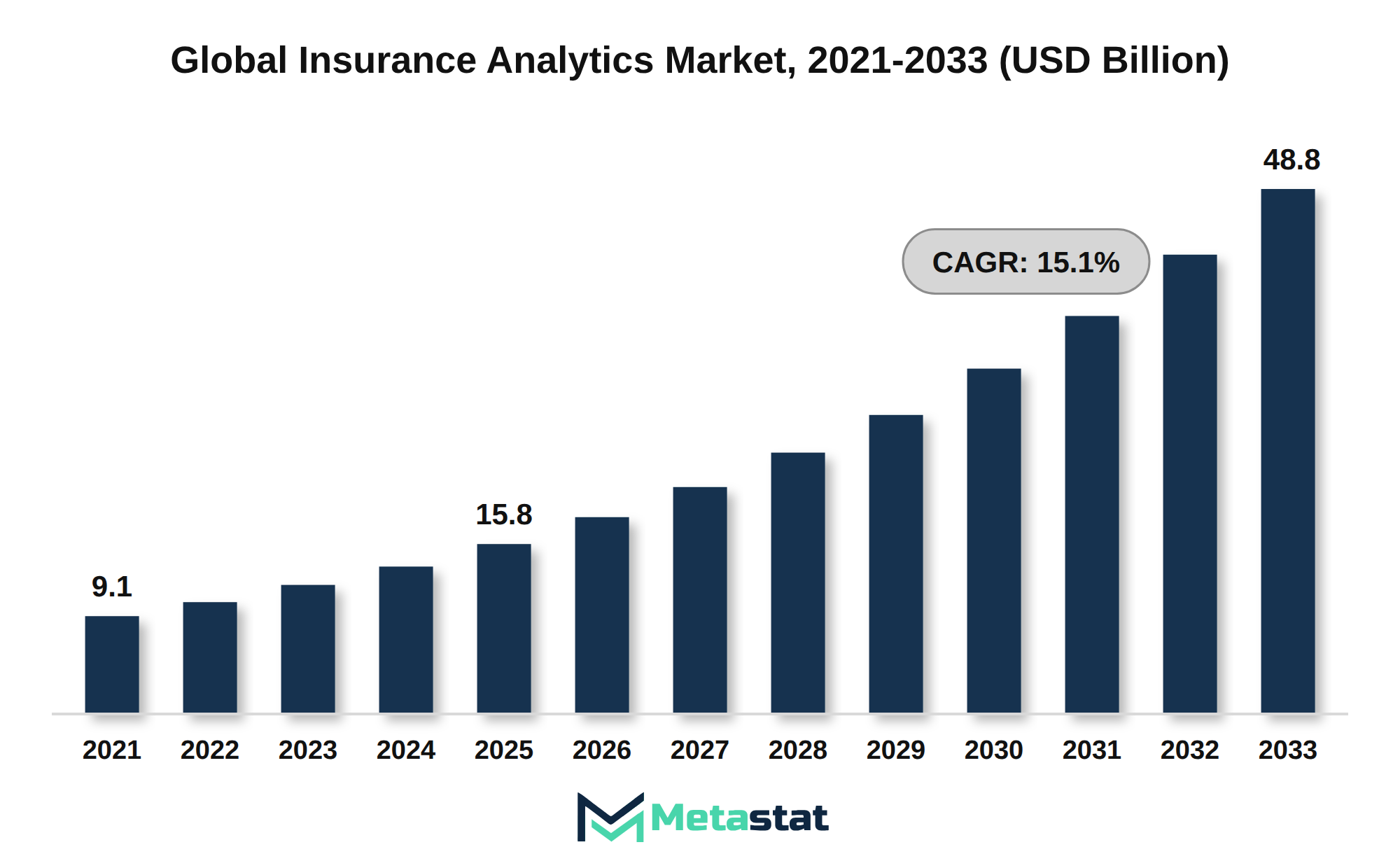
The global Insurance Analytics market was valued at USD 15.8 billion in 2025 and is projected to reach USD 48.8 billion by 2033, growing at a CAGR of 15.1% over the forecast period.
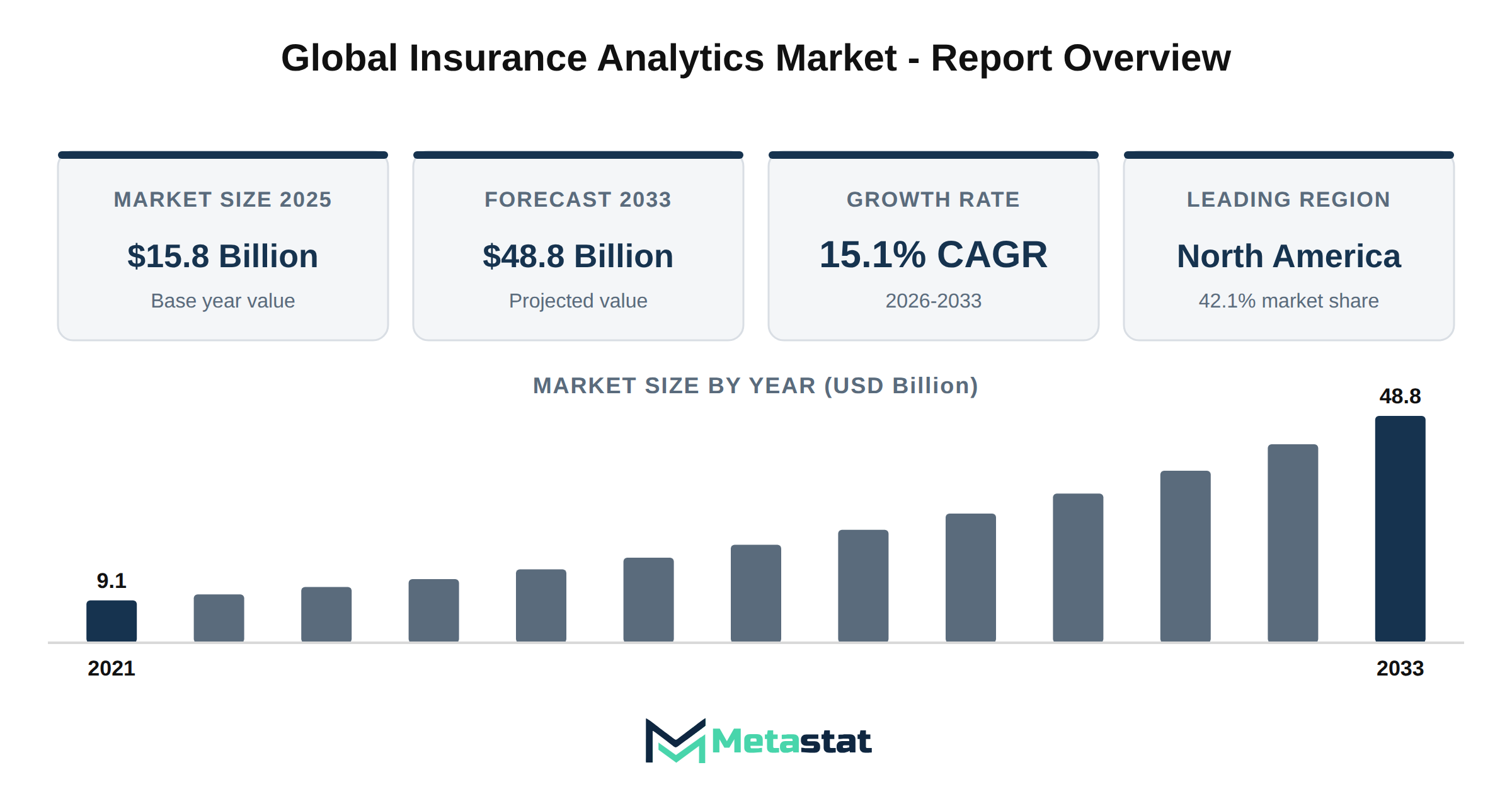
The global Insurance Analytics market experienced a significant growth trajectory, expanding from USD 9.1 billion in 2021 to USD 15.8 billion in 2025. Projections indicate an increase, with the market expected to reach USD 48.8 billion by 2033, reflecting a compound annual growth rate (CAGR) of 15.1% during the forecast period from 2026 to 2033.
AI adoption within the Insurance Analytics market drives advancements in predictive decision-making, allowing insurers to enhance operational efficiency and improve customer experiences. The integration of predictive analytics reshapes insurance pricing and risk assessment, allowing companies to use data to make informed decisions that align with market demands.
Insurance workflow automation streamlines processes, reducing manual intervention and enhancing accuracy in decision-making. Real-time decision intelligence has emerged because a critical component, providing organizations with the ability to respond swiftly to market changes and customer needs, thereby boosting overall competitiveness.
Explainable AI and model governance play a vital role in ensuring transparency and compliance within the insurance sector. While regulatory frameworks evolve, organizations prioritize the development of robust governance structures to manage AI models effectively, minimizing risks associated with algorithmic bias and ensuring ethical frameworks are upheld.
Emerging opportunities in the market include the application of generative AI across various insurance analytics workflows. This technology supports innovation by automating data analysis and enhancing predictive capabilities, ultimately improving operational efficiencies.
The cloud-based insurance analytics platform adoption continues to gain traction, enabling organizations to leverage scalable solutions that enhance data integration and accessibility. This trend facilitates the modernization of insurance analytics, allowing companies to use advanced analytics for actuarial and portfolio risk management.
Investment in Insurance Analytics reflects a growing emphasis on insurtech innovation trends, with players in the market intensifying efforts to develop advanced solutions that cater to evolving consumer demands. The competitive dynamics among insurance analytics platform providers further shape the landscape, driving differentiation and innovation across offerings.
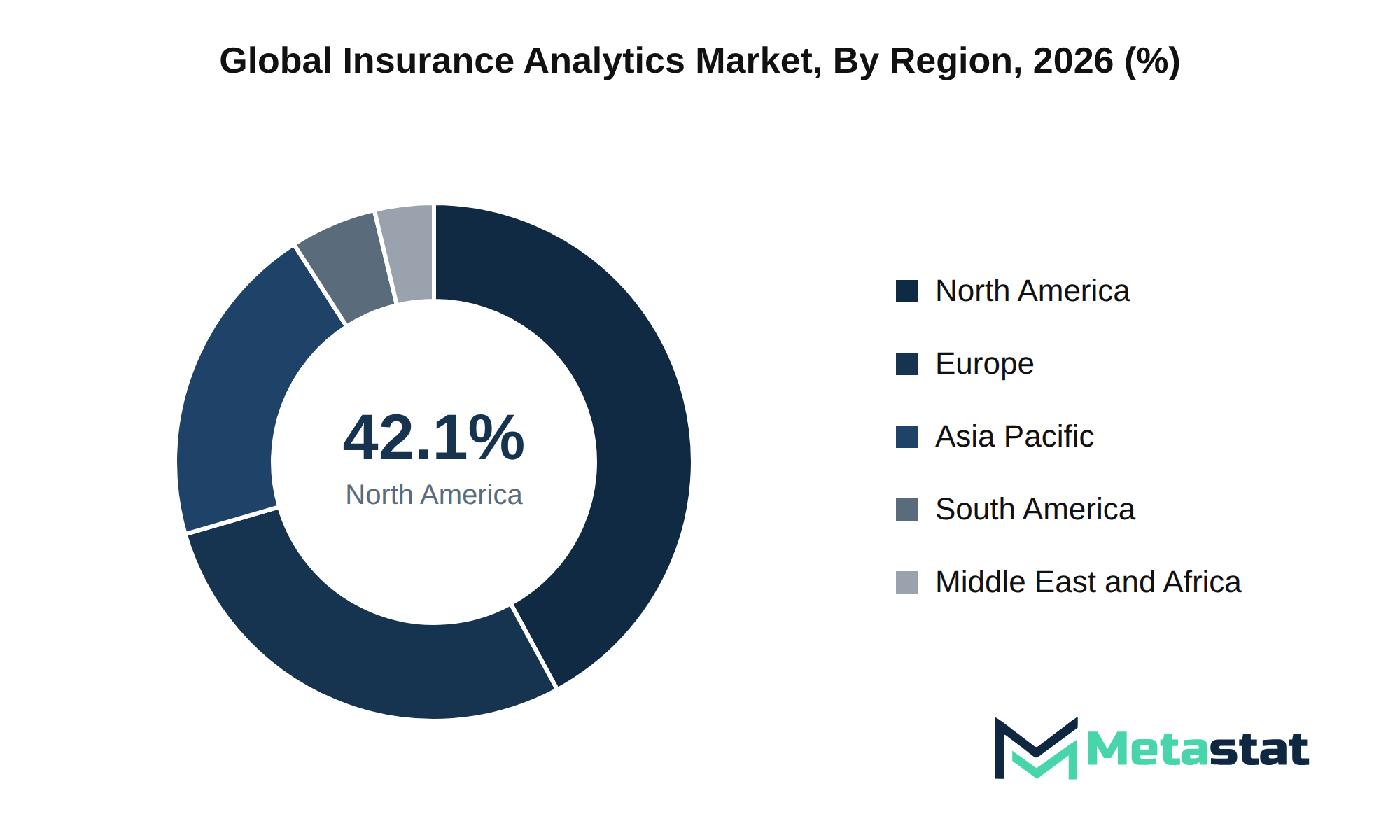
North America maintains its leadership in Insurance Analytics adoption, characterized by a high concentration of technology-driven insurers and regulatory support. Meanwhile, the Asia Pacific region presents significant growth opportunities, propelled by digitalization efforts and an increasing focus on data-driven decision-making in the insurance industry.
The increasing adoption of AI and generative AI technologies within the Insurance Analytics market enables insurers to enhance operational efficiency and customer engagement. Advanced algorithms analyze vast amounts of data, allowing companies to streamline processes and improve service delivery. This technological shift supports a more responsive insurance environment, where real-time insights guide decision-making.
Predictive decisioning has gained traction, providing insurers with tools to anticipate customer needs and market trends. By using historical data and advanced modeling techniques, companies create tailored products, optimize pricing strategies, and enhance risk assessment capabilities. This trend significantly influences revenue generation and customer retention efforts.
Automation of insurance workflows demonstrates a strong potential for reducing administrative burdens and accelerating claims processing. Insurers implementing automated systems experience faster turnaround times and improved accuracy in decision-making, driving customer satisfaction and operational cost savings.
Real-time decision intelligence transforms insurance operations by integrating data analytics into everyday processes. This capability supports insurers in making informed decisions quickly, responding to emerging risks and market shifts with agility. Enhanced decision-making promotes a proactive approach to risk management.
Explainable AI and model governance have emerged because crucial components in building trust and transparency in insurance analytics. Ensuring that AI-driven models are understandable and accountable enhances regulatory compliance and allows stakeholders to navigate complex data-driven landscapes effectively.
Emerging opportunities within the Insurance Analytics market revolve around innovative applications of AI. Companies are exploring ways to apply analytics for enhanced underwriting processes and automated risk selection, significantly impacting pricing accuracy and risk mitigation strategies.
Predictive analytics is reshaping insurance pricing and risk assessment methodologies. By using sophisticated algorithms, insurers evaluate risk profiles more accurately, leading to competitive pricing strategies that attract and retain customers.
AI-powered underwriting trends indicate a shift toward more efficient risk selection processes. Insurers increasingly rely on automated systems to evaluate applications, reducing the potential for human error and improving the consistency of underwriting decisions.
Insurance pricing analytics and real-time rate optimization play critical roles in ensuring competitive positioning within the market. Insurers equipped with advanced analytics capabilities adjust rates dynamically, responding to market conditions and customer behaviors with precision.
Claims analytics continues to drive faster and more accurate decision-making. By analyzing claims data, insurers identify patterns and trends, leading to improved fraud detection capabilities and enhanced loss prevention measures.
Fraud detection analytics strengthens insurance loss prevention efforts by using advanced machine learning techniques. Insurers identify suspicious activities in real-time, mitigating potential losses and enhancing overall operational resilience.
Customer personalization through insurance data and behavioral analytics promotes deeper relationships with clients. By understanding individual customer needs and preferences, insurers tailor offerings, enhancing customer loyalty and driving sustained growth.
Generative AI applications across insurance analytics workflows present opportunities for innovation. These technologies facilitate the creation of new models and simulations, enhancing predictive capabilities and supporting informed business decisions.
Cloud-based insurance analytics platform adoption enhances scalability and flexibility for insurers. The transition to cloud solutions enables companies to apply advanced analytics without significant upfront investments in infrastructure, promoting innovation and agility in operations.
Real-time decision intelligence is increasingly integrated across insurance operations, enabling swift reactions to market changes and customer inquiries. This integration supports a competitive edge, allowing insurers to respond promptly to emerging challenges.
Explainable AI and model governance in insurance analytics remain vital for ensuring compliance with regulatory standards. Insurers focusing on transparency in their AI-driven processes enhance stakeholder confidence and promote a culture of accountability.
Regulatory compliance significantly shapes insurance AI and analytics deployment strategies. Insurers prioritize adherence to evolving regulations, ensuring that their analytics frameworks meet necessary standards while driving operational efficiency.
Advanced analytics support actuarial and portfolio risk management by providing deeper insights into risk exposure. Insurers using these tools better evaluate potential losses and make informed decisions regarding risk mitigation.
Data integration and insurance analytics modernization efforts enhance the overall effectiveness of analytical frameworks. Streamlining data sources and ensuring compatibility among systems allow insurers to leverage insights more effectively, driving informed decision-making.
Investment in insurance analytics and insurtech innovation trends continues to accelerate, reflecting a growing recognition of the value derived from advanced analytics. Companies committing resources to these areas position themselves for future growth and enhanced market competitiveness.
Competitive dynamics among insurance analytics platform providers emphasize the importance of innovation and customer-centric solutions. Companies focusing on delivering comprehensive, user-friendly platforms gain a significant advantage in attracting and retaining clients.
North America maintains leadership in insurance analytics adoption, driven by robust technological infrastructure and a competitive insurance landscape. This region's focus on innovation positions it favorably for sustained growth in the coming years.
Asia Pacific experiences significant growth and digitalization opportunities within the Insurance Analytics market. Countries in this region increasingly invest in advanced analytics technologies, enhancing their capabilities and promoting a more competitive environment.
Emerging opportunities in automated insurance decisioning reflect a shift toward innovative practices that enhance operational efficiency. Companies embracing these technologies position themselves strategically for future growth in a changing market.
The future growth of AI-driven insurance analytics platforms hinges on continuous innovation and adaptation to changing market dynamics. Insurers prioritizing investment in advanced analytics will likely gain a competitive edge in the evolving landscape.
The Insurance Analytics market experiences significant growth due to ongoing digital transformation across various sectors. Organizations increasingly prioritize data-driven decision-making, leading to heightened investments in analytics solutions. This transformation is driven by the emergence of advanced technologies, including artificial intelligence (AI) and automation, which enable businesses to optimize operations and enhance customer experiences.
Insurance companies leverage these technologies to analyze vast amounts of data, improving risk assessment and underwriting processes. The integration of analytics enhances operational efficiency, allowing firms to streamline workflows and reduce costs. Improved insights derived from analytics contribute to better pricing strategies and tailored offerings, which drive customer satisfaction and loyalty.
While the market expands, organizations recognize the importance of adapting to evolving consumer behaviors and demographic trends. The shift towards a tech-savvy customer base accelerates the adoption of analytics tools that provide actionable insights. Consequently, the Insurance Analytics market is projected to continue its upward trajectory, driven by the need for organizations to remain competitive in an increasingly data-centric environment.
Investment in infrastructure development significantly influences the Insurance Analytics market. Modernization of digital and physical infrastructures supports enhanced data analytics capabilities, leading to improved decision-making and operational efficiency within the insurance sector. Upgrading existing systems and integrating advanced technologies, including artificial intelligence and automation, creates an environment conducive to robust data collection and analysis.
Increased capital investment environments, driven by GDP growth and favorable interest rates, promote the adoption of innovative solutions among insurance companies. This investment enhances the market's capacity, enabling insurers to leverage analytics in assessing risks, optimizing pricing strategies, and improving customer engagement. The market experiences an accelerated growth trajectory, projected to reach USD 48.8 billion by 2033.
Evolving consumer behaviors associated with urbanization and demographic shifts place additional demands on insurance providers. Companies increasingly rely on analytics to personalize services and streamline operations, allowing them to remain competitive in a fast-changing environment. The Insurance Analytics market thrives on these trends, with a tangible impact on revenue growth and market penetration.
The Insurance Analytics market faces challenges stemming from stringent regulatory compliance and legal mandates, which impose significant operational burdens on industry participants. These requirements necessitate extensive documentation, reporting, and adherence to specific standards, leading to increased operational costs. Insurance companies, in particular, bear the brunt of these compliance hurdles, diverting resources from core business functions to meet regulatory obligations. This diversion stifles innovation and limits capital allocation towards new technologies and analytics solutions.
Macroeconomic headwinds contribute to a constrained environment for investment and growth within the market. Inflationary pressures increase costs across various operational aspects, including technology procurement and talent acquisition, diminishing profit margins for firms. Geopolitical instability in certain regions disrupts supply chains and hinders cross-border data flow, which is critical for effective analytics. These factors collectively restrict the ability of insurance providers to invest in advanced analytics capabilities, slowing the overall growth of the market.
Technological obsolescence presents another significant restraint, driven by rapid advancements in analytics solutions that create pressure for ongoing investment in the latest tools and technologies. Organizations that fail to keep pace risk falling behind competitors that leverage innovative solutions. The market experiences challenges from substitution risks and alternative offerings, attributed to new entrants and technologies emerging, potentially reshaping consumer preferences and market dynamics.
Lastly, the presence of data security vulnerabilities and privacy concerns acts because a barrier to widespread adoption of analytics solutions. Organizations in the Insurance Analytics market navigate these risks, often leading to reluctance in fully implementing data-driven strategies. Consequently, these combined forces contribute to a complex environment where growth is hindered by multifaceted restraints, impacting the overall trajectory of the Insurance Analytics market.
The Insurance Analytics market encounters challenges linked to geopolitical fragmentation, resulting in trade deficits and tariff frictions. Such disruptions create uncertainty in supply chains, leading to increased costs for firms operating within the market. These conditions compel companies to navigate complex international regulations while adapting to shifting trade policies that impact market dynamics.
Technological disruptions contribute to market instability. Rapid advancements in technology require firms to integrate new solutions effectively, presenting ongoing challenges in research and development. Interoperability issues arise when integrating diverse systems, causing delays in product deployment and limiting operational efficiency. These integration challenges hinder overall market growth by restricting access to innovative analytics tools that enhance decision-making capabilities for insurers.
Rising input costs and pricing compression create pressures within the market. While operational expenses increase, companies experience margin pressures that lead to reduced investments in analytics capabilities. Price competition among service providers intensifies, potentially compromising the quality of solutions offered. This situation negatively impacts innovation and ultimately affects the market's growth trajectory.
Talent retention pressures emerge due to organizations striving to maintain a skilled workforce amid evolving demands in the Insurance Analytics market. The need for advanced analytics skills intensifies, leading to competition for specialized talent. Workforce skill gaps create barriers to effective implementation of analytics solutions, limiting a company's ability to leverage data for strategic advantage.
The Insurance Analytics market is influenced by environmental and sustainability demands. Companies face increasing pressure to reduce their environmental footprint and adhere to decarbonization mandates. Meeting these requirements necessitates additional investments in technology and processes, which strain resources and divert attention from core analytics initiatives.
The Insurance Analytics market experiences substantial opportunities driven by emerging regional demands and technological disruptions. Increased focus on digital transformation within various industries accelerates investment in analytics solutions, enhancing operational efficiency and decision-making capabilities. Adoption of cloud-based deployment models facilitates access to advanced analytics tools, promoting scalability and responsiveness in organizations.
Geographical expansion remains a significant factor, particularly in regions including Asia Pacific and Latin America, where rising insurance penetration and growing consumer awareness of analytics benefits contribute to market growth. Strategic consolidation efforts among key players enhance product offerings, allowing for the integration of diverse analytics services tailored to specific regional needs.
Sustainability imperatives shape market dynamics. Organizations align their analytics strategies with environmental, social, and governance objectives. Firms prioritize green transformations, emphasizing eco-friendly practices in their operations. This shift in focus drives demand for innovative analytics solutions designed to facilitate compliance with sustainability goals.
The evolving buying behaviors of insurance companies, government agencies, and third-party administrators influence market trends. Digital procurement shifts reflect a preference for streamlined purchasing processes, encouraging suppliers to offer more integrated solutions. Increasing emphasis on customer personalization analytics drives growth opportunities for niche applications within the broader market.
The Insurance Analytics market stands poised for growth, propelled by a combination of emerging regional demands, technological advancements, and the pursuit of sustainability. These trends collectively create a fertile environment for innovation and expansion, positioning the market to capture additional value through targeted solutions and strategic collaborations.
The Global Insurance Analytics market is segmented based on Deployment Model, Component, Application, and End-use.
Significant growth characterizes the Cloud-Based segment of the Insurance Analytics market, valued at USD 12.9 billion in 2026 and projected to reach USD 37.9 billion by 2033, reflecting a CAGR of 16.6% during the forecast period. This expansion results from a rapid shift toward digital transformation among insurance companies, driven by the need for enhanced operational efficiency and the ability to leverage data analytics for decision-making.
Technological maturation serves because a catalyst for this segment, with advancements in cloud computing facilitating increased adoption. Organizations benefit from scalable solutions and reduced infrastructure costs, allowing them to enhance their analytics capabilities without significant upfront investments. The market sees a growing preference for cloud-based solutions among insurance companies seeking flexibility and the ability to adapt to changing consumer demands.
Increased demand from end-users, including insurance companies and third-party administrators, significantly impacts the Cloud-Based segment. Companies recognize the advantages of cloud solutions, including real-time data access and improved collaboration between departments. This shift in consumption patterns reflects a broader trend toward digitalization within the insurance industry, emphasizing the importance of agile and data-driven approaches.
Regulatory compliance standards play a vital role in shaping the landscape of the Insurance Analytics market. Cloud-based solutions offer enhanced security features that help organizations meet these requirements effectively. Regulatory scrutiny intensifies, leading insurance companies to rely on cloud technologies to ensure compliance while optimizing their operations.
Strategic investment in cloud infrastructure positions companies for long-term success. Organizations that prioritize digital transformation and adopt cloud-based analytics solutions strengthen their competitive edge. With ongoing advancements in technology and a continuous focus on data-driven decision-making, the Cloud-Based segment is set to expand further, aligning with evolving industry needs and consumer expectations.
Growth in the On-Premises segment within the Insurance Analytics market results from increasing demand for security and control over data management. Organizations prioritize maintaining sensitive information in-house for compliance and regulatory reasons. This trend particularly benefits larger enterprises that possess the necessary resources to implement and maintain on-premises solutions effectively, ensuring robust data governance.
Investment in advanced software and hardware technologies facilitates the evolution of on-premises solutions, enhancing their performance and scalability. While businesses recognize the value of tailored analytics capabilities, the segment experiences significant expansion. The On-Premises segment is estimated to reach USD 10.9 billion by 2033, at a CAGR of 10.7% during the forecast period. The growing necessity for integration with existing systems drives organizations to adopt these solutions, which ultimately leads to increased operational efficiency.
Regulatory compliance standards exert influence on the adoption of on-premises analytics solutions. Organizations operating in highly regulated industries prioritize data privacy and security, leading them to favor on-premises deployments. This trend particularly impacts sectors including insurance, finance, and healthcare, where the protection of sensitive data remains critical.
Technological advancements enhance the capabilities of on-premises solutions, encouraging organizations to transition from legacy systems. This technological maturation contributes to overall market growth, driven by firms seeking innovative ways to leverage their data. The convergence of advanced analytics and traditional systems allows for improved insights and decision-making processes.
Valued at USD 13.1 billion in 2026, the Solution segment is projected to reach USD 33.8 billion by 2033, reflecting a CAGR of 14.5% during the forecast period. With the rapid penetration of advanced analytics into the insurance sector, there exists a growing demand for sophisticated solutions that enhance operational efficiency and improve decision-making processes. This trend results from the increasing complexity of insurance products and the need for precise risk assessment and management.
Technological maturation further drives the adoption of innovative solutions within the Insurance Analytics market. Enhanced capabilities in data processing and machine learning facilitate the development of next-generation analytical tools that provide deeper insights into consumer behavior and market trends. Stakeholders prioritize investments in these technologies to gain a competitive edge, ultimately influencing their market positioning and growth potential.
End-use dynamics play a crucial role in shaping the demand for solutions. Insurance companies increasingly leverage analytics to refine pricing strategies, optimize claims processing, and enhance customer experiences. Regulatory compliance standards push firms to adopt comprehensive analytical solutions, ensuring adherence to evolving legislation. While organizations navigate these challenges, the ability to apply data-driven solutions emerges because a critical factor for success.
Pricing volatility and margin pressures remain significant considerations for firms within this segment. The competition among solution providers intensifies, prompting price adjustments while maintaining service quality. Strategic opportunities arise for companies delivering innovative products that address these challenges, enhancing their appeal in the market. The Solution segment stands poised for substantial growth, driven by these evolving dynamics and market forces.
A strong upward trend defines the Services segment within the Insurance Analytics market. Valued at USD 15 billion by 2033, this segment exhibits a CAGR of 16.5% during the forecast period. The growing focus on data-driven decision-making in insurance organizations drives demand for analytics services. Companies increasingly seek strategies that leverage advanced analytics to optimize risk management and enhance customer engagement.
The rapid technological maturation of analytics solutions drives service adoption across various insurance operations, including claims processing, underwriting, and fraud detection. Increased investment in cloud-based solutions significantly influences service delivery models, enabling insurers to access real-time data and insights. This shift enhances operational efficiency and strengthens the competitive edge of insurers in a highly dynamic market.
In addition, regulatory compliance standards impact the demand for specialized analytics services. Insurers require assistance in navigating complex compliance requirements, driving engagement with service providers that offer tailored solutions. The evolution of products within the segment aligns with a broader industry trend toward personalization and customer-centric strategies.
Investment in capabilities including fraud detection and financial crime analytics is vital for insurance companies aiming to mitigate risks effectively. The anticipated growth in this area further emphasizes the importance of services in shaping the future of the Insurance Analytics market.
Projected growth in the Pricing and Rating Analytics segment reflects a strong demand for advanced analytic solutions within the Insurance Analytics market. Valued at USD 3.4 billion in 2026, this segment is anticipated to reach USD 8.4 billion by 2033, achieving a compound annual growth rate (CAGR) of 13.9% during the forecast period. Factors driving this growth include the increasing necessity for precise pricing strategies and enhanced risk assessment capabilities across insurance providers. The segment evolution relies on technological maturation and next-generation upgrades, enabling insurers to apply data insights for better decision-making in pricing and underwriting processes.
Insurance companies represent the primary end-users, pushing demand for solutions that optimize pricing accuracy and enhance customer satisfaction. Increasing competition in the insurance sector necessitates the adoption of sophisticated analytics to maintain profitability and market share. Regulatory compliance standards and shifting consumption patterns further influence the segment’s dynamics, compelling firms to integrate robust analytics frameworks that facilitate adherence to industry regulations while accommodating evolving consumer expectations.
Cost structures remain a critical concern within this segment, driven by pricing volatility and margin pressures that exert influence on operational strategies. Success in the Pricing and Rating Analytics segment requires continuous innovation and adaptability to disruptive alternatives, ensuring that solutions remain relevant and effective during rapid market changes. Strategic opportunity windows arise from advancements in artificial intelligence and machine learning, which enhance the precision and efficiency of pricing models. These developments reinforce the segment's role in the broader Insurance Analytics market, positioning it for sustained growth in the coming years.
Growing interest in risk assessment and management strategies drives the adoption of Risk and Underwriting Analytics. This segment leverages advanced analytics to optimize underwriting processes, enhance risk selection, and improve pricing accuracy. Insurers increasingly recognize the value of data-driven insights for effective decision-making. Enhanced data accessibility and integration improve collaboration among stakeholders, driving demand across various market segments.
Investment in technology solutions facilitates the maturation of analytics capabilities, allowing for real-time data processing and predictive analytics. Insurers actively pursue next-generation upgrades to enhance their competitive edge. The integration of artificial intelligence and machine learning enhances the accuracy of risk assessments and underwriting decisions, emphasizing the segment's importance within the Insurance Analytics market.
The Risk and Underwriting Analytics segment is projected to reach USD 9.1 billion by 2033, at a CAGR of 15.9% during the forecast period. This growth reflects the increasing complexity of risk landscapes and the demand for tailored insurance products. Regulatory compliance and evolving risk factors necessitate the utilization of advanced analytics to stay ahead of market trends.
Strategic investments in technology and data management systems create opportunities for firms to differentiate themselves through innovative underwriting practices. Heightened focus on customer-centricity encourages insurers to adopt personalized underwriting models, further stimulating demand for analytics solutions. The market's trajectory indicates a sustained focus on enhancing operational efficiency and customer satisfaction through data-driven insights in risk and underwriting processes.
Growing emphasis on timely and accurate claims processing fuels demand for Claims Analytics in the Insurance Analytics market. The need for insurers to enhance efficiency and minimize fraud drives the adoption of advanced analytics solutions. Technological maturation supports innovations that improve accuracy in claims assessments, helping organizations reduce operational costs. End-use dynamics reflect the integration of analytics across various insurance sectors, including health, auto, and property insurance. Regulatory compliance requirements heighten the focus on transparent claims handling, pushing businesses toward more sophisticated analytics tools. Valued at USD 8.5 billion by 2033, this segment represents a significant contribution to the overall market, with a compound annual growth rate of 15.9% projected during the forecast period.
Demand for advanced fraud detection and financial crime analytics drives significant growth in the Insurance Analytics market. Organizations increasingly recognize the need for robust solutions to combat fraudulent activities and enhance financial security. While regulatory compliance standards evolve, institutions adopt sophisticated analytics to identify, assess, and mitigate risks associated with financial crimes. The segment is projected to grow at a CAGR of 15.9% during the forecast period, reflecting a strong commitment to improving risk management and operational efficiency.
Technological maturation plays a critical role in segment expansion, with advancements in machine learning and artificial intelligence facilitating real-time data analysis and predictive modeling. These innovations enable firms to streamline their processes and optimize resource allocation while enhancing their ability to detect anomalies and fraudulent patterns. End-use dynamics indicate that insurance companies are increasingly investing in these analytics solutions, aiming for higher accuracy in underwriting and claims processing.
Consumption shifts towards data-driven decision-making further contribute to market growth. Organizations prioritize analytics that offer clear insights for strategic planning and operational improvements. The market's evolution sees heightened investments in next-generation upgrades, including cloud-based solutions that provide scalability and flexibility for analytics deployment.
Strategic opportunity windows emerge owing to the evolving landscape, presenting firms with the potential to differentiate their offerings through advanced analytics capabilities. Capital investment outlooks remain positive, driven by a growing awareness of the financial and reputational impacts of fraud. The Insurance Analytics market anticipates continued momentum because organizations leverage innovative solutions to enhance their fraud detection and prevention strategies.
Growing importance of personalized customer experiences drives demand for Customer and Personalization Analytics within the Insurance Analytics market. Financial institutions prioritize consumer insights to enhance customer engagement, tailoring offerings to distinct needs and preferences. The reliance on data analytics for effective customer segmentation and targeted marketing strategies supports adoption among insurance companies, enabling precision in product development and service delivery. Regulatory compliance standards surrounding data protection and privacy further shape the development of these analytics solutions, prompting firms to invest in innovative technologies that align with legal requirements.
Technological maturation in data analytics tools creates new opportunities for firms. Enhanced machine learning algorithms and artificial intelligence applications facilitate deeper insights into consumer behavior, allowing for proactive adjustments in sales and service strategies. The segment stands to benefit from increased capital investment in technology infrastructure, positioning companies to leverage advanced analytics for competitive advantage. These developments reflect an ongoing evolution in product offerings, with strong implications for downstream applications across various insurance sectors.
End-use dynamics highlight a shift towards comprehensive solutions that integrate customer feedback into the decision-making process. A focus on consumer-centric models influences the direction of product evolution, leading to refined risk assessment frameworks and improved overall customer satisfaction. Competition within the market intensifies due to firms pursuing differentiation through personalized analytics, with strategic opportunity windows arising for innovators and early adopters. This environment emphasizes the critical role of Customer and Personalization Analytics in shaping the future of the Insurance Analytics market.
Increasing focus on data-driven decision-making within the Insurance Analytics market enhances demand for Sales and Distribution Analytics. Insurers leverage this analytical capability to better understand customer behavior, optimize sales channels, and improve distribution strategies. This shift towards data utilization aligns with broader trends in digital transformation across various industries. Companies seek to enhance operational efficiency and customer engagement, resulting in strengthened long-term demand for analytical solutions.
Technological advancements, including the integration of artificial intelligence and machine learning, facilitate more accurate forecasting and better insights into sales performance. These innovations enable insurers to tailor their offerings to specific market segments, increasing competitiveness and profitability. Adoption of next-generation analytics tools accelerates segment expansion, allowing companies to respond swiftly to changing market dynamics and enhance their operational efficiency.
End-use dynamics play a crucial role in shaping the Sales and Distribution Analytics segment. Insurance companies prioritize customer acquisition and retention strategies, driving demand for insights that inform product positioning and marketing efforts. Regulatory compliance standards influence the development of analytical solutions, ensuring that insurers adhere to necessary guidelines while optimizing their sales approaches, which reinforces the segment's position in the market.
Cost structures and pricing volatility create additional considerations for firms operating within this segment. Developing scalable solutions that address these challenges determines competitive positioning and profitability. Investment in Sales and Distribution Analytics represents a strategic opportunity, encouraging firms to enhance their analytical capabilities and improve overall market performance, thereby expanding the addressable base.
Growing reliance on data analytics in the Insurance Analytics market drives demand for Actuarial and Financial Analytics. This sub-segment optimizes pricing strategies and manages financial risk, enhancing overall profitability for insurers. Increased regulatory scrutiny accelerates the adoption of robust analytics solutions, ensuring compliance with evolving standards while mitigating risks associated with underwriting and claims processing.
Technological advancements enable innovations in data processing and predictive modeling, allowing insurers to leverage vast datasets for more accurate financial forecasts. Demand for real-time analytics enhances the ability of insurance companies to respond dynamically to market changes, providing a competitive edge. Increased investments in next-generation technologies, including artificial intelligence and machine learning, create opportunities for significant enhancements in actuarial practices and financial analytics.
End-use dynamics reflect a shift toward more sophisticated risk assessment tools. Insurance companies prioritize advanced analytics capabilities to improve decision-making processes related to underwriting, claims management, and overall financial performance. This shift encourages firms to invest strategically in technologies that deliver clear insights, ultimately strengthening long-term demand in the sector.
Regulatory and Compliance Analytics has gained prominence within the Insurance Analytics market due to increasing regulatory scrutiny across various sectors. Escalating compliance requirements prompt organizations to invest significantly in analytics solutions that ensure adherence to regulations. This environment stimulates demand from insurance companies, government agencies, and third-party administrators that require robust analytics for regulatory reporting and risk management.
Investment in advanced analytics technologies facilitates the automation of compliance processes, improving efficiency and accuracy. Downstream applications of these analytics include risk assessment, fraud detection, and reporting, which enhance decision-making capabilities. The segment's expansion aligns with the growing need for organizations to adapt to evolving regulations, thereby driving continuous innovation in analytics solutions.
Technological maturation within the sector supports the development of next-generation upgrades, including artificial intelligence and machine learning, which further enhance compliance analytics capabilities. These advancements reduce operational costs associated with manual compliance processes while increasing analytical accuracy. Consequently, the market demonstrates a clear trajectory toward integrating more sophisticated compliance solutions that respond to changing regulatory landscapes.
Strategic opportunity windows arise for solution providers focused on delivering regulatory compliance analytics that align with industry standards and certifications. Organizations prioritizing compliance analytics experience improved operational resilience, allowing them to navigate complex regulatory environments effectively. This segment attracts significant capital investment, driving growth and innovation within the Insurance Analytics market.
Insurance Companies hold a share in the Insurance Analytics market, valued at USD 11.8 billion in 2026 and projected to reach USD 30.3 billion by 2033, at a CAGR of 14.4% during the forecast period. This growth derives from increasing demand for data-driven insights that improve underwriting accuracy, pricing strategies, and risk management. The integration of advanced analytics into insurance processes enhances operational efficiency and offers a competitive edge in a changing market.
Several factors contribute to this segment's expansion. Evolving regulatory standards necessitate sophisticated compliance solutions, pushing insurance companies to adopt analytics tools that ensure adherence while optimizing their operations. Continuous technological advancements facilitate the development of next-generation analytics platforms, enabling better data visualization and real-time decision-making. Such capabilities directly influence the insurers' ability to assess risk and streamline claims processing.
Increased competition within the market prompts insurance companies to invest in innovative analytics solutions, driving product evolution. Insurers recognize the importance of enhancing customer experience through personalized offerings, driving the demand for customer and personalization analytics. Strategic partnerships with technology providers enhance the adaptability of insurance companies to market changes, allowing for improved service delivery and operational resilience.
The Insurance Analytics market is expected to experience substantial growth, fueled by the ongoing digital transformation in the insurance sector. Investment in analytics capabilities will enable insurers to respond swiftly to market dynamics and shifts in consumer behavior, positioning themselves favorably for long-term success.
Investment in data analytics by government agencies strengthens the demand for solutions within the Insurance Analytics market. Regulatory compliance, risk assessment, and operational efficiency drive primary demand for agencies adopting advanced analytics. Increased focus on data-driven decision-making enhances the ability of these organizations to streamline processes and improve service delivery. The evolution of next-gen analytics tools facilitates better insights through predictive modeling and risk management strategies.
Government Agencies segment is estimated to reach USD 4.5 billion by 2033, at a CAGR of 13.5% during the forecast period. Various agencies seek to enhance their analytical capabilities to address challenges related to fraud detection, resource allocation, and regulatory reporting. Cost structures associated with traditional methods, combined with pricing volatility in conventional services, drive a shift toward more efficient analytical solutions. This transition contributes to the growth of the segment, driven by agencies capitalizing on technology to modernize operations.
The strategic opportunity window for this segment lies in integrating analytics into existing frameworks, enabling agencies to respond promptly to emerging threats and compliance requirements. Investments in advanced analytics platforms enhance supply chain resilience and improve overall operational effectiveness, aligning with the broader trends observed in the market.
With increasing reliance on data for decision-making, the Third-party Administrators, Brokers, & Consultancies segment is positioned for substantial growth. This segment's expansion reflects the ongoing transformation within the Insurance Analytics market, driven by demand for streamlined operations and enhanced customer service capabilities. Investment in technology and analytics solutions improves operational efficiency and supports data-driven strategies, providing a competitive edge for stakeholders.
Technological maturation is significant in this growth trajectory, particularly through next-generation upgrades that improve service delivery and operational performance. The segment's projected value is anticipated to reach USD 14 billion by 2033, indicating strong adoption rates among key players seeking innovative solutions. Regulatory compliance standards and policy adherence further compel organizations in this segment to invest in analytics tools that enhance their offerings.
The influence of analytics on downstream applications increases the relevance of Third-party Administrators, Brokers, & Consultancies, because these entities leverage insights to optimize resource allocation and risk management. Overall, this segment's growth aligns with broader trends in the Insurance Analytics market, characterized by increased consumer expectations and the demand for personalized and efficient services.
Based on geography, the Global Insurance Analytics market is divided into North America, Europe, Asia-Pacific, South America, Middle East, and Africa.
Strong growth in the North America Insurance Analytics market reflects the region's technological advancements and increased adoption of data analytics. The market is projected to expand at a CAGR of 15.1% during the forecast period, reaching a market size of USD 19.4 billion by the end of 2033. This growth is driven by a surge in demand for enhanced risk assessment and management tools, which are crucial for insurance companies seeking to optimize operations and improve customer engagement.
The United States, Canada, and Mexico represent significant contributors to the regional market. The high value of replacement cycles and ongoing infrastructure modernization initiatives facilitate the adoption of innovative analytics solutions. Government agencies, along with private insurance firms, prioritize the integration of advanced analytics to better manage risks and improve decision-making processes.
Regional competitive dynamics feature strong domestic market participants and a trend toward vendor consolidation. Companies in the North American market focus on localized procurement dynamics, enhancing responsiveness to customer requirements. Cultural nuances influence B2B buying behaviors, affecting how insurance analytics solutions are positioned and marketed to various customer segments.
Investment in technology and a supportive regulatory environment drive the growth of the Insurance Analytics market in North America. Increased foreign direct investment (FDI) flows and favorable geographic expansion windows create additional opportunities for suppliers. The market's trajectory reflects a commitment to leveraging data analytics for strategic advantage, ensuring that North American firms remain competitive in a changing environment.
Europe's Insurance Analytics market exhibits substantial growth potential, driven by increasing digitization and the adoption of advanced analytics solutions across the region. Countries including Germany, France, the UK, Italy, Spain, and Russia prioritize data-driven strategies to enhance operational efficiency and customer engagement. High penetration of cloud-based solutions contributes to the region's competitive landscape.
The regional dynamics highlight a strong focus on regulatory compliance and risk management, particularly among insurance companies. Enhanced scrutiny on data privacy and protection has prompted organizations to invest in robust analytics solutions that align with local mandates. This trend is expected to reinforce market growth and strengthen Europe's position in the Insurance Analytics market.
Localized procurement dynamics and cultural nuances influence B2B buying behaviors, shaping the selection of analytics solutions. An increase in partnerships between domestic market participants and technology providers facilitates innovation and enhances service offerings. Consequently, the region is well-positioned to leverage its advanced infrastructure, creating an environment conducive to the expansion of the Insurance Analytics market.
In the Asia-Pacific region, the Insurance Analytics market experiences growth driven by increasing digitalization and data utilization among insurance firms. Major markets including China, Japan, and India exhibit significant demand for advanced analytics solutions owing to their expanding insurance sectors and heightened competition. Enhanced data analytics capabilities enable these countries to improve risk assessment, underwriting processes, and claims management, resulting in greater operational efficiency.
The region's growth is further supported by ongoing infrastructure modernization efforts, especially in technology and data management systems. Countries like South Korea and Australia invest in state-of-the-art analytics tools, allowing insurance companies in these markets to gain a competitive edge. Southeast Asia and the Rest of Asia Pacific represent emerging markets, characterized by underpenetrated segments where demand for insurance analytics solutions is increasing rapidly.
Local compliance mandates and regulatory frameworks drive insurance companies to adopt advanced analytics technologies to meet evolving standards. Domestic market leaders focus on strategic partnerships to enhance their service offerings and consolidate their presence. This trend cultivates a competitive environment that encourages innovation and investment in the market.
Regional resource availability influences the deployment of analytics solutions, with a growing emphasis on localized procurement dynamics. Cultural nuances and distinct B2B buying behaviors shape how companies in the Asia-Pacific region approach their analytics needs. The Insurance Analytics market in this region is poised for continued expansion driven by firms embracing data-driven strategies to enhance decision-making processes and customer experiences.
The Insurance Analytics market in South America demonstrates unique growth dynamics, influenced by several regional factors. A strong emphasis on enhancing operational efficiency and risk management among insurance companies in Brazil and Argentina drives demand for analytics solutions. Growth is notable in the deployment of cloud-based services, reflecting a shift toward digital transformation within the sector.
Infrastructure modernization remains critical, with investments in technology aimed at improving service delivery. The overall market share stands at 5.4% in 2025 compared to other regions, with potential for expansion in underpenetrated territories. Increased focus on customer insights and personalization analytics supports this growth trajectory.
Localized procurement dynamics and cultural nuances shape buying behaviors, necessitating tailored solutions that align with specific regional needs. Domestic market participants leverage their understanding of local compliance mandates to gain a competitive edge, enhancing their offerings in the Insurance Analytics market.
The Insurance Analytics market in the Middle East and Africa faces several unique challenges and opportunities. Regulatory frameworks within countries including Saudi Arabia and the UAE encourage investment in technology and modernization, which increases adoption of analytics solutions among insurance entities. South Africa, attributed to a mature market, shows significant potential for growth through high-value replacement cycles and incremental enhancement of existing systems.
Emerging markets within the region present underpenetrated territories where localized procurement dynamics and cultural nuances influence B2B buying behaviors. Investments in infrastructure modernization are essential for enabling local companies to compete effectively while meeting regulatory compliance mandates. The ongoing trend towards supply chain regionalization and nearshoring initiatives supports local manufacturing densities. This trend positively impacts the market.
Competitive landscapes in the region reflect a mix of domestic market leaders and international players, creating a dynamic environment for innovation and collaboration. This competition drives improvement in service offerings, particularly in fraud detection and financial crime analytics, which are high priorities for insurance companies across the region. Overall, the Insurance Analytics market in the Middle East and Africa is poised for steady growth, supported by favorable market conditions.
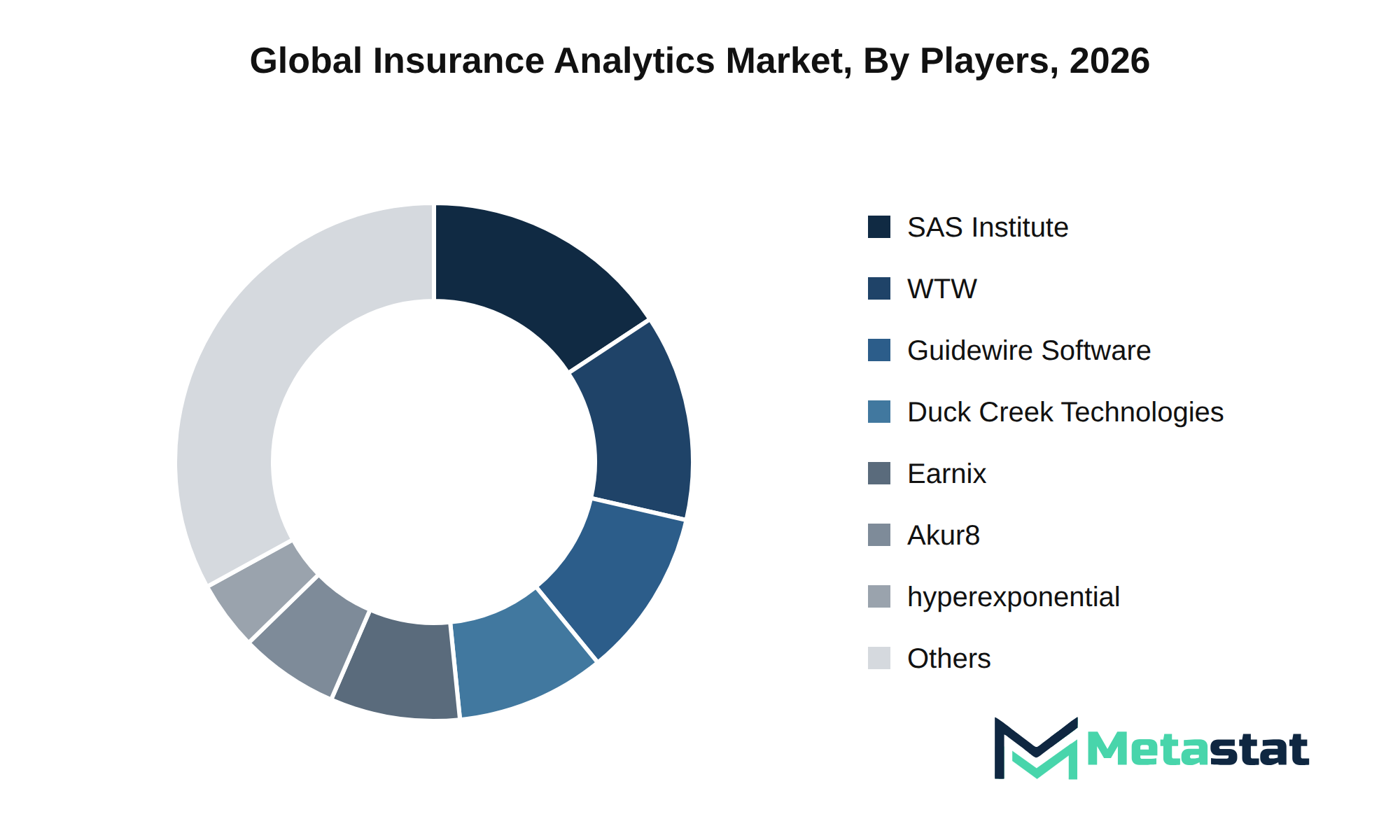
Competitive dynamics within the Insurance Analytics market reflect active engagement among key players through various strategies. Mergers and acquisitions have become a notable strategy, with firms seeking to enhance their market position and expand their technological capabilities. Companies including Earnix Ltd. and SAS Institute Inc. focus on product differentiation, leveraging proprietary technologies to improve service offerings and maintain competitive advantages.
Strategic alliances and partnerships characterize the market. Collaborations between firms like Guidewire Software, Inc. and Duck Creek Technologies enable enhanced service integration, facilitating comprehensive solutions that address evolving customer needs. This approach strengthens market presence and promotes innovation through shared resources and expertise.
Pricing architectures remain significant, influencing customer retention strategies and brand equity dynamics. Companies including WTW and Akur8 adopt innovative pricing models to attract and retain customers, creating a competitive edge in the market. Firms like Gradient AI and hyperexponential emphasize research and development pipelines, continuously advancing technology to meet industry demands.
Barriers to entry remain high, with established players relying on intellectual property portfolios and technological defensibility to deter new entrants. The market experiences a trend toward supply chain dominance, with firms like Oracle Corporation and Verisk Analytics, Inc. leveraging procurement leverage to optimize operational efficiency. This strategic posture enhances capacity to respond to market fluctuations and customer demands.
The future competitive outlook for the Insurance Analytics market indicates a landscape where ongoing strategic growth vectors are essential. Firms will adapt to emerging trends and potential disruptions from startups, ensuring a proactive stance in maintaining market relevance. Competitive strategies that prioritize innovation, customer-centric approaches, and collaborative ecosystems will play a crucial role in shaping future growth trajectories.
Market size is forecast to rise from USD 15.8 billion in 2025 to over USD 48.8 billion by 2033. The base case anticipates a growth trajectory supported by macroeconomic stability and increasing reliance on data-driven decision-making across industries. Downstream demand changes, primarily driven by insurance companies seeking enhanced analytical capabilities, significantly influence market dynamics.
In the bull case, rapid technological advancements in next-generation analytics and integration of artificial intelligence accelerate adoption rates among enterprises, driving competition and innovation. Conversely, the bear case highlights potential setbacks due to economic downturns, regulatory challenges, and geopolitical tensions, which hinder growth in specific regions or market segments.
The market observes structural consumption shifts attributed to organizations investing in comprehensive analytics solutions to address unmet enterprise needs. Enhanced focus on regulatory compliance and evolving policy enforcement horizons contributes to the market's development. Strategic capital allocation directives provide additional impetus for investment in infrastructure and analytics capabilities, ensuring readiness for future demands.
Emerging white-space opportunities exist within specific applications, including fraud detection and risk analytics, aligning with executive-level strategic imperatives for improved operational efficiency. The integration of robust analytics solutions positions firms to address the complexities of evolving trade corridors and global supply chain shifts, driving sustained growth in the insurance analytics market.
The report strategically identifies and profiles the key market players and analyses their core competencies in each sub-segment of the Insurance Analytics market.
Report Attributes | Details |
Study Period | 2021-2033 |
Base Year | 2025 |
Estimated Year | 2026 |
Forecast Period | 2026-2033 |
Historical Period | 2021-2025 |
Growth Rate | CAGR 15.1% from 2026 to 2033 |
Revenue Unit | USD billion |
Segmentation | By Deployment Model, Component, Application, End-use, and Region |
By Region | North America (By Deployment Model, Component, Application, End-use, and Country)
|
Europe (By Deployment Model, Component, Application, End-use, and Country)
| |
Asia Pacific (By Deployment Model, Component, Application, End-use, and Country)
| |
South America (By Deployment Model, Component, Application, End-use, and Country)
| |
Middle East and Africa (By Deployment Model, Component, Application, End-use, and Country)
|
Find answers to common questions about this report
The Insurance Analytics market size was valued at USD 15.8 billion in 2025.
The Insurance Analytics market is projected to grow at a CAGR of 15.1% during the forecast period from 2026 to 2033.
The North America Insurance Analytics market size is estimated to reach USD 19.4 billion by 2033.
The Cloud-Based segment leads the Insurance Analytics market, with a projected value of USD 37.9 billion by 2033, compared to the On-Premises segment, which is expected to reach USD 10.9 billion in the same year.
The Insurance Analytics market experiences growth driven by digital transformation, prioritization of data-driven decision-making, and the adoption of advanced technologies like artificial intelligence and automation. These factors enhance operational efficiency, improve risk assessment, and improve customer engagement, positioning organizations to remain competitive in a data-centric environment.
North America holds the dominant share of the Insurance Analytics market, with a projected value of USD 19.4 billion in 2033, representing 42.1 percent of the total market.
The Insurance Analytics market growth is restrained by stringent regulatory compliance, which imposes operational burdens and increases costs. macroeconomic headwinds, inflationary pressures, and geopolitical instability disrupt supply chains and hinder investment in advanced analytics capabilities. These factors collectively limit the market's ability to expand effectively.
The Insurance Analytics market benefits from significant growth driven by digital transformation and the increasing emphasis on data-driven decision-making. Advanced technologies, including artificial intelligence and automation, enhance operational efficiency and customer experiences, further promoting the adoption of analytics solutions among insurance providers.
The Insurance Analytics market is estimated to reach a valuation of USD 48.8 billion by 2033.
Key players in the Insurance Analytics market include Earnix Ltd., SAS Institute Inc., Guidewire Software, Inc., Duck Creek Technologies, WTW, and Oracle Corporation.
The analysts below cover Banking & Finance research at Metastat Insights.
LEAD ANALYST
Utkarsh Khirodkar is a Lead Market Research Analyst at MetaStat Insight, specializing in market intelligence, technology sector assessments, and competitive strategy.

PRINCIPAL CONSULTANT - ENTERPRISE AI & EMERGING TECHNOLOGIES
Banking & Finance · Electronics and Semiconductor · Energy and Power · Healthcare IT · Information & Technology · Professional Services
Vijay Gunti is a Principal Consultant at MetaStat Insight, bringing over two decades of experience across enterprise digital transformation, technology strategy, and intelligent systems.
Most industry reports on warehouse automation bundle autonomous mobile robots and fixed conveyor installations into the same top-level numbers, which complicates advisory work. This study split the market cleanly by payload tiers, navigation technology, and fleet management software layers. The regional forecast for Western Europe gave our team defensible adoption benchmarks when evaluating capital allocation for logistics clients, saving us days of secondary data scrubbing.
Analyzing the transition from natural gas to green hydrogen in iron ore reduction requires realistic infrastructure timelines. Meta stat insight supplied a detailed regional assessment of DRI plant conversion costs and scrap metal availability in North America and Western Europe. Their report carefully examined pellet quality specs and electrical grid access constraints without making oversimplified market assumptions. The research material served as a practical reference during internal technology roadmap discussions.
Integrating zero-trust access controls across legacy electronic health record systems involves complex compliance overhead. Team produced an analysis that clearly separated identity governance and administration tools from privileged access management platforms. Their evaluation of HIPAA and GDPR compliance features across cloud native solutions gave our architecture group clear baseline criteria. The custom data request regarding biometric authentication adoption in hospital networks was returned promptly with clear documentation.
Explore related market intelligence reports worth reading alongside this one.
Starting from
$2950