
LEAD ANALYST
Utkarsh Khirodkar is a Lead Market Research Analyst at MetaStat Insight, specializing in market intelligence, technology sector assessments, and competitive strategy.

Canada Marketing Analytics Market Size, Share, By Application (Social Media Marketing, E-Mail Marketing, Search Engine Marketing, Content Marketing and Others), By Deployment (On-Premise and Cloud), By Organization Size (Large Enterprises and Small & Medium Enterprises), By Industry Vertical (Retail, Consumer Goods, Industrial, BFSI, Media & Communication, Healthcare and Others), Industry Analysis, Growth, Trends, and Forecast, 2026-2033
MSI-5283
September, 2026
303 Pages
Historical
Base year
Forecast
Forecast period
Report Details
Comprehensive Market Analysis And Insights
Market Valuation: Valued at $320.3 Million in 2025, projected to reach $1,043.5 Million by 2033 at a 15.7% CAGR.
Dominant Segment: Social media marketing is the leading segment, projected to capture 28.5% of total revenue by 2033, driven by increasing adoption among businesses for targeted marketing strategies.
Geographic Lead: The Canada Marketing Analytics market is primarily driven by advancements in digital marketing strategies, with significant growth anticipated across various sectors, particularly retail and consumer goods.
What's Inside: This report provides a comprehensive analysis of the Canada Marketing Analytics market, covering competitive landscapes, market segmentation by application, deployment, organization size, and industry vertical, along with detailed forecasts through 2033.
Market Dynamics: Key growth drivers include digital transformation initiatives and increased investment in technological integration, while regulatory hurdles and geopolitical tensions pose challenges to market stability.
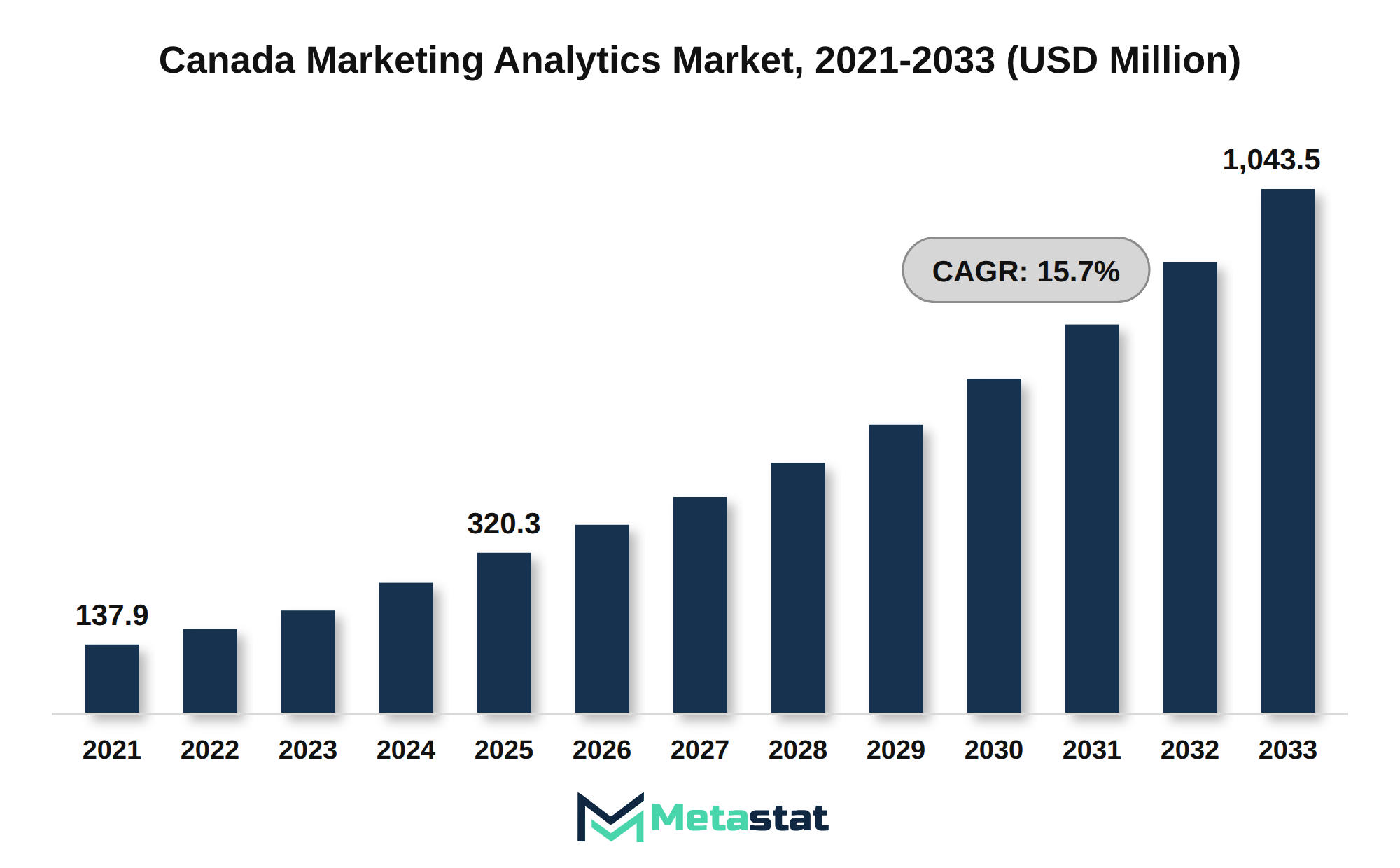
The Canada Marketing Analytics market was valued at USD 320.3 million in 2025 and is projected to reach USD 1,043.5 million by 2033, growing at a CAGR of 15.7% over the forecast period.
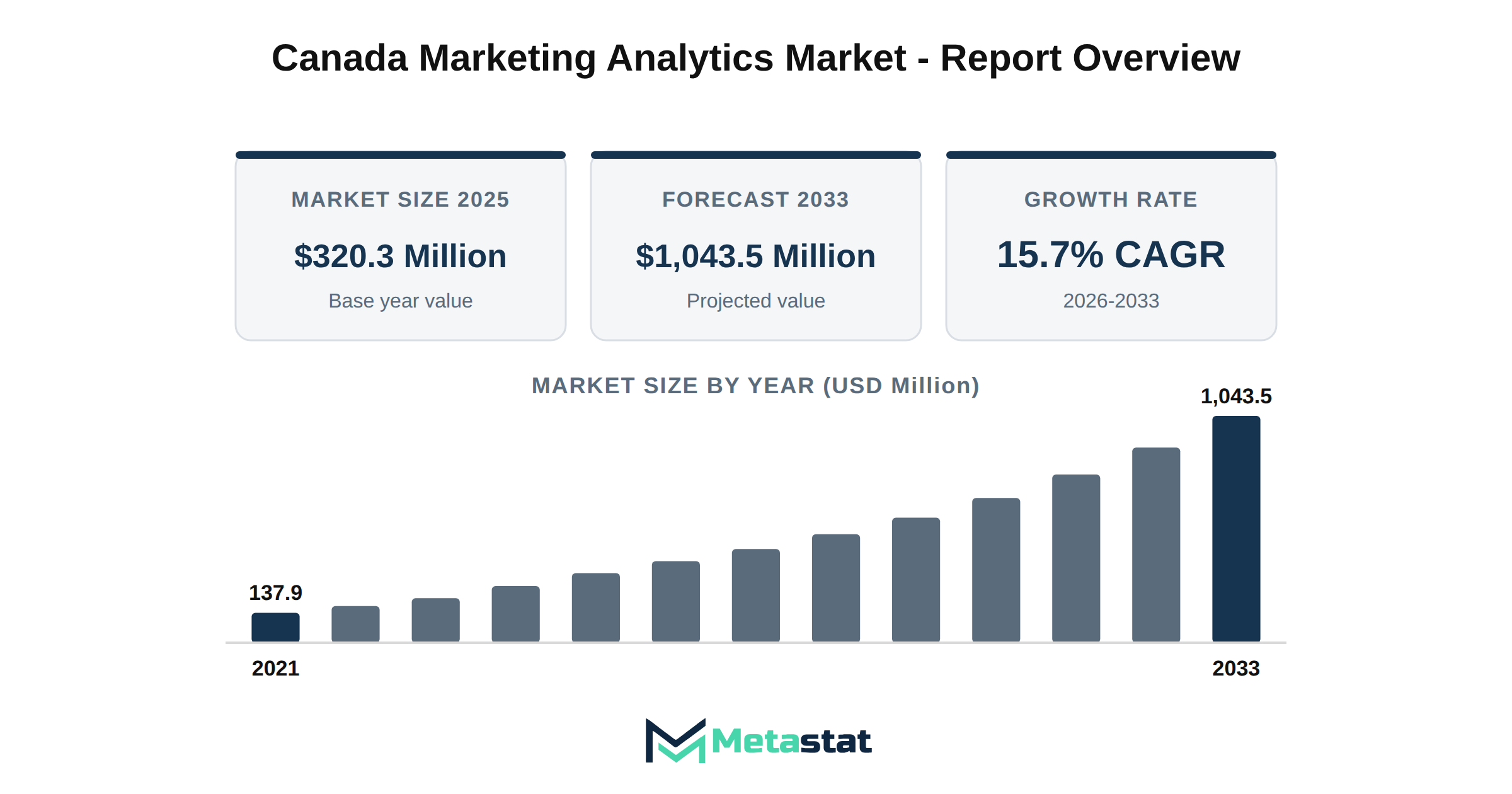
The Canada Marketing Analytics market reached a value of USD 320.3 million in 2025, reflecting growth from USD 137.9 million in 2021. This upward trajectory illustrates a compound annual growth rate (CAGR) of 15.7%, with projections suggesting the market will attain USD 1,043.5 million by 2033.
In 2026, the market is expected to generate USD 375.9 million, with subsequent years showing steady increases. By 2033, the market is projected to experience robust demand, particularly driven by the expansion of social media marketing, e-mail marketing, and search engine marketing segments.
Social media marketing is expected to capture 28.5% of total revenue. E-mail marketing follows closely, accounting for 23.3%, while search engine marketing comprises 17.7%. These figures indicate a strategic focus on digital channels, aligning with changing consumer behaviors and preferences.
The market consists of a diverse range of applications, including content marketing, which holds a substantial position, alongside other emerging strategies. Organizations across various industries, including retail and consumer goods, increasingly leverage marketing analytics to enhance decision-making processes and improve customer engagement.
The Canada Marketing Analytics market demonstrates a significant trajectory of growth, driven by advancements in digital marketing strategies and the increasing adoption of data-driven decision-making. Organizations across various sectors focus on leveraging analytics to optimize marketing efforts, enhance customer engagement, and improve overall return on investment.
In the area of applications, social media marketing stands out, projected to reach USD 277.9 million by 2033, reflecting a compound annual growth rate (CAGR) of 14.7% from its 2026 value of USD 106.1 million. E-mail marketing follows closely, anticipated to achieve a value of USD 239 million by 2033, with a CAGR of 15.5%. Search engine marketing and content marketing exhibit strong growth, contributing significantly to market expansion.
Deployment strategies in the market show a strong shift towards cloud-based solutions, expected to dominate with a value of USD 803.4 million by 2033 and a CAGR of 16.2%. Conversely, on-premise solutions, while growing, project a value of USD 240 million by the same year, indicating a CAGR of 14.1%. This shift toward cloud deployment reflects changing dynamics in marketing analytics, where flexibility and scalability become essential for organizations.
Organization size further impacts market dynamics, with large enterprises projected to reach USD 661.2 million by 2033, reflecting a CAGR of 14.6%. Small and medium enterprises are anticipated to achieve a value of USD 382.3 million during the same period, with a notable CAGR of 17.8%. This growth illustrates increasing recognition among smaller organizations of the value that marketing analytics brings to enhancing competitive advantage.
The industry verticals participating in the Canada Marketing Analytics market demonstrate diverse growth patterns. Retail, for instance, is projected to grow from USD 80.7 million in 2026 to USD 221.6 million by 2033, achieving a CAGR of 15.5%. The BFSI sector exhibits the highest CAGR at 18%, reflecting the critical importance of marketing analytics in driving customer acquisition and retention strategies. Consumer goods and industrial sectors signify substantial contributions to market growth, indicating a broadening scope for marketing analytics across industries.
The Canada Marketing Analytics market experiences significant growth driven by digital transformation initiatives across various sectors. Organizations increasingly recognize the importance of data-driven decision-making, which fuels demand for advanced analytics solutions. The shift towards automation, artificial intelligence, and software adoption enhances operational efficiency and enables companies to gain valuable insights from vast amounts of data.
Industries including retail and consumer goods heavily invest in marketing analytics to better understand customer behaviors and preferences. This investment aligns with broader macro-economic factors, including GDP growth and increased public-private spending power. While companies digitize legacy processes, the need for comprehensive analytics tools rises, facilitating improved market access and competitive positioning.
The market's expansion reflects significant capital investment environments, particularly in technology infrastructure. Businesses leverage analytics to optimize operations and drive cost-efficiency initiatives, effectively addressing margin pressures. These dynamics contribute to the overall growth trajectory of the Canada Marketing Analytics market, positioning it because a vital component of contemporary business strategies.
The Canada Marketing Analytics market benefits significantly from rising investments in technological integration, particularly in automation and artificial intelligence. Many organizations prioritize adopting these technologies to digitize legacy processes, enhancing operational productivity and ensuring competitive advantage. The transition towards cloud-based solutions and advanced analytics tools facilitates real-time decision-making, enabling companies to respond rapidly to evolving market conditions.
Investment in technology directly influences operational efficiency, driven by businesses streamlining processes and reducing overhead costs. This trend is observed across various industries, including retail and consumer goods, where companies leverage data analytics to optimize marketing strategies and improve customer engagement. The shift towards a more data-driven approach attracts further capital investment, supporting the expansion of the Canada Marketing Analytics market.
Companies that embrace technological advancements position themselves favorably during shifting consumer behaviors and demographic patterns. Enhanced data integration leads to better insights into customer preferences, enabling tailored marketing efforts that connect with target audiences. This alignment with contemporary consumer expectations drives demand within the market, propelling growth and attracting additional investment.
Regulatory tightening creates significant challenges for the Canada Marketing Analytics market. Compliance hurdles associated with data security and privacy regulations raise operational costs, deterring investment in analytics solutions. Organizations face high capital investment requirements to ensure compliance, limiting budget allocation for innovations and growth initiatives.
Macroeconomic headwinds, including inflationary pressures and supply chain disruptions, strain resources. These factors lead to increased operational costs, reducing overall profitability and hindering market expansion. Uncertainty in the economic landscape affects organizational spending on marketing analytics, resulting in a cautious approach toward investments.
Technological obsolescence presents another restraint. Businesses struggle to keep up with rapid advancements in analytics tools. The continuous evolution of technology demands ongoing investments, which do not align with budget constraints amid economic instability. Skilled labor deficiencies restrict the ability of organizations to leverage advanced analytics effectively.
Concerns over data security and privacy vulnerabilities create reluctance among organizations to fully adopt marketing analytics solutions. Fear of intellectual property theft and compliance breaches influences decision-making, leading to fragmented market adoption across various sectors. In this context, the Canada Marketing Analytics market confronts several challenges that impede growth.
The Canada Marketing Analytics market faces significant challenges stemming from geopolitical fragmentation. These tensions disrupt trade relationships, leading to trade deficits and tariff friction that influence pricing strategies and market access. Such fragmentation creates uncertainty that affects investment decisions across various sectors.
Technological disruptions contribute to the complexities within the market. Rapid advancements in analytics technology require constant adaptation and integration, presenting challenges for organizations attempting to maintain competitive advantages. Companies experience interoperability friction when integrating new technologies with existing systems, complicating data analysis processes.
R&D integration presents additional difficulties for organizations. The complexity of developing new analytics solutions requires extensive collaboration among teams, which strains resources and impacts timelines. Organizations encounter rising input costs and margin pressures, affecting profitability and limiting their ability to invest in new capabilities.
Workforce skill gaps represent another critical challenge within the Canada Marketing Analytics market. The evolving landscape demands specialized knowledge in data analytics and technology, while talent retention pressures hinder growth. Organizations face competition for skilled personnel, complicating their operational capabilities.
Environmental sustainability demands increase expectations around corporate responsibility. Companies address decarbonization mandates and environmental lifecycle footprints, requiring investment in sustainable practices. These factors impact operational costs and influence consumer perceptions, affecting market dynamics.
Overall, the combination of geopolitical tensions, technological disruptions, and workforce challenges creates a complex environment for the Canada Marketing Analytics market. Effectively addressing these challenges determines the ability of organizations to innovate and sustain growth in an increasingly competitive environment.
The Canada Marketing Analytics market experiences notable potential stemming from evolving buying behaviors and digital procurement shifts. Businesses increasingly adopt analytics solutions to enhance decision-making processes and optimize procurement strategies. This shift enables organizations to access real-time insights, streamline supply chains, and improve operational efficiencies, strengthening long-term demand.
Modernization of infrastructure supports the integration of advanced marketing analytics tools. Organizations invest in technology upgrades to facilitate data-driven decision-making, resulting in improved marketing effectiveness. The anticipated growth in infrastructure development increases the demand for sophisticated analytics, creating opportunities for service providers in the market, enhancing overall competitiveness.
Technological disruptions play a critical role in reshaping the Canada Marketing Analytics market. Innovations in artificial intelligence and machine learning drive the capabilities of analytics platforms, allowing businesses to derive insights from vast datasets. Companies leveraging these technologies position themselves to better understand customer preferences and market trends, enhancing their competitive advantage and supporting market growth.
Sustainability imperatives increasingly influence marketing strategies, leading to a focus on eco-friendly practices and products. Companies aligning their marketing analytics approaches with environmental, social, and governance (ESG) criteria seek to engage environmentally conscious consumers effectively. This trend creates demand for analytics solutions that support sustainability efforts, thus expanding market opportunities and reinforcing the segment's position.
The growth potential in the Canada Marketing Analytics market reflects a convergence of these factors, including digital transformation initiatives and strategic consolidation within the industry. Businesses pursuing cross-industry mergers and acquisitions enhance their service offerings, positioning themselves to capture emerging market segments. Companies striving for niche application growth capitalize on tailored analytics solutions, further driving market expansion and increasing investment across the value chain.
The Canada Marketing Analytics market is segmented based on Application, Deployment, Organization Size, and Industry Vertical.
Valued at USD 106.1 million in 2026, the Social Media Marketing segment experiences significant growth, projected to reach USD 277.9 million by 2033, at a CAGR of 14.7% during the forecast period. This growth arises from increasing social media adoption among businesses, allowing for targeted marketing strategies that enhance customer engagement and brand visibility. The demand for analytics tools tailored specifically for social media campaigns contributes to the rapid expansion of this segment.
Technological advancements play a vital role in shaping market dynamics. Enhanced algorithms and data analytics capabilities enable marketers to derive clear insights from user interactions on social media platforms. These insights facilitate personalized marketing strategies, driving higher conversion rates and customer loyalty.
Increased investment in social media advertising and content creation further fuels market growth. Enterprises across various industries recognize the importance of establishing a strong online presence, leading to heightened demand for sophisticated analytics that inform strategy decisions and campaign effectiveness.
Challenges related to data privacy and compliance impact market operations. Stricter regulations concerning user data collection and utilization necessitate a focus on transparent marketing practices. Adapting to these regulations requires ongoing investment in compliance measures, influencing overall operational costs across the sector.
While businesses continue to prioritize social media because a core component of their marketing strategies, the Canada Marketing Analytics market will likely see sustained investment and innovation within the Social Media Marketing segment. This emphasis on analytics-driven decision-making positions companies to capitalize on emerging opportunities and enhance their competitive advantage in the evolving digital environment.
Growing demand for E-Mail Marketing stems from its effectiveness in reaching targeted audiences and generating measurable results. This segment is estimated to reach USD 239 million by 2033, at a CAGR of 15.5% during the forecast period. Increased adoption of advanced analytics tools supports businesses in crafting personalized messaging and optimizing campaign strategies, enhancing customer engagement and retention rates.
Technological maturation plays a critical role in segment expansion, with innovations in automation and artificial intelligence enabling more efficient campaign management and real-time performance tracking. Integration with other marketing channels further enhances the value proposition of E-Mail Marketing, allowing businesses to create cohesive multi-channel strategies that drive higher conversion rates.
Regulatory compliance standards, while presenting challenges, encourage businesses to adopt best practices in data privacy and consumer protection. Awareness of these regulations influences market dynamics, because organizations seek to implement secure and compliant marketing strategies. This focus on compliance builds customer trust and loyalty, translating into long-term revenue growth.
Cost structures and pricing volatility impact the profitability of E-Mail Marketing campaigns. Businesses leverage efficiency gains from automation to reduce operational costs while maintaining competitive pricing for their services. These factors contribute to a favorable capital investment outlook, encouraging stakeholders to explore opportunities within the Canada Marketing Analytics market.
Growth in the Search Engine Marketing segment aligns with increasing digital advertising investments, with companies seeking to enhance their online visibility and engagement. Businesses recognize the value of optimizing search engine presence, driving demand for advanced analytics solutions tailored to this application. The trend towards data-driven decision-making supports the adoption of sophisticated marketing analytics tools that measure performance, track user behavior, and optimize campaigns.
Technological advancements in artificial intelligence and machine learning contribute to the evolution of Search Engine Marketing, enabling more personalized and effective ad targeting strategies. Enhanced algorithms and data analytics capabilities allow marketers to refine their approaches, increasing conversion rates and improving return on investment. The influence of mobile technology and changing consumer behavior shifts marketing strategies, encouraging companies to invest in responsive and adaptive marketing solutions.
The Search Engine Marketing segment is projected to reach USD 198.1 million by 2033. While businesses strive to stay competitive, those investing in innovative marketing solutions capture a larger share of the growing demand. Companies across various industries recognize the importance of integrating search engine marketing into their overall strategies, ensuring continued growth and market relevance within the broader Canada Marketing Analytics market.
Strong interest in content marketing fuels significant growth within the Canada Marketing Analytics market. Brands increasingly recognize the necessity of establishing an engaging online presence, prompting investment in comprehensive content strategies that enhance visibility and audience interaction. This heightened focus on content effectiveness increases demand for analytics that measure performance and engagement metrics.
Content Marketing segment is projected to grow at a CAGR of 15.3% during the forecast period. Organizations increasingly prioritize data-driven insights to refine their content strategies, leading to increased spending on analytics tools. The shift towards personalized and targeted content further drives adoption, driven by businesses seeking to connect with consumers on a more intimate level.
Growing competition across various industries compels businesses to adopt advanced content marketing techniques. Retail and consumer goods sectors heavily invest in analytics solutions to optimize content performance, driving segment growth. Enhanced storytelling capabilities supported by analytics create opportunities for brands to connect with their audiences, significantly impacting market dynamics.
Technological advancements contribute to the evolution of content marketing. The integration of artificial intelligence and machine learning in analytics tools enhances the ability to predict consumer behavior and preferences. While organizations adopt these technologies, the market continues to experience robust expansion, positioning content marketing because a crucial element in marketing strategies.
The content marketing segment represents a vital component of the Canada Marketing Analytics market, characterized by its potential for growth and innovation. Demand for sophisticated analytics tools and data-driven insights reflects the broader trend of digital transformation, establishing content marketing because a key driver of competitive advantage for businesses across various sectors.
Emerging trends in the Others sub-segment of the Canada Marketing Analytics market reflect a growing interest in unique marketing strategies that do not fit traditional categorizations. Demand for innovative marketing solutions among businesses arises from the need for tailored approaches that enhance customer engagement and strengthen brand identity. This sub-segment emphasizes personalized marketing efforts that leverage customer data for targeted communications, maximizing effectiveness.
The expansion of digital platforms contributes to the rising interest in diverse marketing applications. Businesses increasingly use various channels and technologies to connect with consumers, leading to a shift toward more flexible and adaptable marketing strategies. Companies focusing on this sub-segment explore advanced analytics to gain insights into consumer behavior and preferences, resulting in more effective marketing campaigns.
Technological advancements significantly influence the development of marketing analytics. Tools that enable real-time data analysis and customer segmentation enhance the effectiveness of marketing efforts. Strategic investment in next-generation technologies allows businesses to innovate their marketing approaches, driving adoption in the Others sub-segment.
Consumer preferences continue to evolve, reflecting a trend toward integrated marketing solutions. Businesses recognize the importance of adapting strategies to align with changing consumer expectations. This responsiveness creates a competitive edge in the market, highlighting the significance of staying ahead in marketing analytics trends.
The Canada Marketing Analytics market is expected to benefit from ongoing investments in diverse marketing solutions. Companies that prioritize innovation and adaptability position themselves favorably to capture emerging opportunities in this evolving environment.
Valued at USD 95.3 million in 2026, the On-Premise segment is projected to reach USD 240 million by 2033, at a CAGR of 14.1% during the forecast period. This growth results from increasing demand for advanced data analytics solutions that improve marketing strategies and customer engagement. Businesses increasingly focus on implementing on-premise solutions to maintain control over their data security and compliance, particularly in regulated industries. The trend toward heightened data privacy concerns drives organizations to invest in robust on-premise solutions capable of meeting regulatory requirements.
Technological maturation within the analytics space encourages companies to upgrade their existing systems to align with evolving consumer expectations and digital trends. The shift toward personalized marketing strategies increases the demand for analytics solutions that provide useful insights. Organizations adopting these systems experience improved operational efficiency and targeted marketing efforts, leading to better customer retention rates and, ultimately, revenue growth. The Canada Marketing Analytics market reflects these dynamics, driven by firms prioritizing investments in on-premise technologies to gain a competitive advantage.
Shifts in end-use dynamics highlight the increasing importance of data-driven decision-making across various industry verticals. Retail and consumer goods sectors particularly contribute to the demand for on-premise solutions, because they seek to optimize inventory management and enhance customer experiences. While businesses continue to recognize the value of data analytics, the On-Premise segment positions itself because a critical component of the broader Canada Marketing Analytics market.
Cloud deployment within the Canada Marketing Analytics market represents a significant growth opportunity, projected to reach USD 803.4 million by 2033, at a CAGR of 16.2% during the forecast period. Several factors drive this rapid expansion, including the increasing adoption of digital marketing strategies and the need for scalable solutions that support diverse marketing activities.
The shift towards cloud-based marketing analytics reflects a broader technological maturation, enabling organizations to leverage advanced data analytics without the constraints of traditional on-premise systems. This transition enhances operational efficiency, allowing businesses to respond swiftly to market dynamics and consumer preferences.
Organizations increasingly recognize the benefits of cloud deployment, including reduced infrastructure costs and improved access to real-time analytics. This shift influences various industry verticals, from retail to financial services, creating a dynamic ecosystem that requires continuous investment in next-generation upgrades and innovative product evolution.
This context sees significant consumption shifts arising from businesses prioritizing flexibility and adaptability in their marketing strategies. Regulatory compliance standards in data security and privacy further emphasize the importance of reliable cloud solutions, compelling organizations to integrate cloud-based analytics into their operational frameworks.
This growing trend not only captures the attention of large enterprises, but small and medium enterprises, which seek to enhance their marketing effectiveness without substantial upfront investments. The anticipated growth in the cloud segment reflects a significant trend within the Canada Marketing Analytics market, highlighting the vital role of cloud solutions in shaping the future of marketing strategies.
Valued at USD 254.7 million in 2026, the Large Enterprises segment is projected to reach USD 661.2 million by 2033, at a CAGR of 14.6% during the forecast period. This growth results from significant investments in advanced marketing analytics solutions, which enable large enterprises to use data-driven insights for enhanced decision-making. The increasing complexity of consumer engagement drives demand for sophisticated analytical tools that allow organizations to optimize their marketing strategies and improve customer targeting.
Technological advancements in artificial intelligence and machine learning play a crucial role in the expansion of the segment, allowing large enterprises to analyze vast amounts of data efficiently. Integration with cloud-based platforms enhances accessibility and scalability, enabling organizations to implement analytics solutions without extensive infrastructure investments. This trend is particularly beneficial for large enterprises, which face unique challenges related to data volume and integration across diverse marketing channels.
Changing consumer behaviors necessitate a robust approach to marketing analytics. Enterprises increasingly focus on personalizing customer experiences to build brand loyalty, driving further adoption of analytics tools. The demand for real-time data access and reporting capabilities strengthens the market's growth potential, driven by organizations seeking to adapt quickly to market changes and consumer preferences.
Investment in regulatory compliance analytics presents additional opportunities. Large enterprises prioritize adherence to data privacy laws and regulations, prompting increased spending on analytics solutions that facilitate compliance tracking and reporting. This heightened focus on regulatory standards influences purchasing decisions, guiding organizations toward analytics platforms that support compliance and mitigate risks.
Overall, the Large Enterprises segment within the Canada Marketing Analytics market reflects a dynamic environment driven by technological maturation, evolving consumer preferences, and regulatory pressures. These factors collectively contribute to sustained growth, positioning large enterprises for continued investment in marketing analytics capabilities.
Significant growth in the Small & Medium Enterprises segment reflects increasing adoption of marketing analytics tools among smaller businesses, which face unique challenges and opportunities compared to larger enterprises. This segment is expected to reach USD 382.3 million by 2033, at a CAGR of 17.8% during the forecast period. Enhanced accessibility of scalable marketing solutions positions smaller enterprises to utilize analytics for targeted customer engagement and improved decision-making processes. The drive towards digital transformation in marketing supports this demand, with smaller firms recognizing the importance of data-driven strategies to remain competitive.
Increased competition within various industries compels small and medium enterprises to adopt innovative marketing analytics solutions. Optimizing marketing budgets through data insights leads to improved ROI for these businesses. Advancements in technology, particularly in cloud-based solutions, enable smaller players to access sophisticated tools previously available only to larger organizations. This shift creates a more level playing field, encouraging more small and medium enterprises to invest in marketing analytics capabilities.
The regulatory landscape surrounding data usage and consumer privacy continues to evolve, impacting marketing strategies. Compliance with these regulations enhances trust and engagement with customers, driving the need for effective analytics solutions. While the Canada Marketing Analytics market expands, small and medium enterprises will prioritize investments in tools that facilitate compliance while optimizing their marketing efforts. Consequently, this segment significantly influences the overall trajectory of the market, highlighting the need for tailored solutions that address the specific demands of smaller organizations.
Valued at USD 80.7 million in 2026, the retail segment is projected to reach USD 221.6 million by 2033, at a CAGR of 15.5% during the forecast period. This growth reflects key demand drivers including the increasing focus on customer experience and the need for personalized marketing strategies. Retailers leverage data analytics to inform decision-making, resulting in more effective targeting and improved customer engagement.
Technological advancements in marketing analytics facilitate deeper insights into consumer behavior, fueling the adoption of data-driven marketing solutions within the retail sector. The integration of next-generation analytics platforms enables retailers to optimize their marketing campaigns across various channels, enhancing overall effectiveness. Retailers adopting these technologies experience improved return on investment from their marketing efforts.
Changes in consumer preferences toward online shopping lead to significant shifts in marketing strategies, with retail businesses investing more in digital marketing avenues. This trend drives demand for marketing analytics solutions, which provide insights into online consumer behavior and campaign performance. The retail industry's ability to adapt to these consumption shifts determines its competitive positioning in the broader Canada Marketing Analytics market.
Regulatory compliance standards influence marketing practices within the retail sector, requiring businesses to implement data privacy measures while leveraging customer data for analytics. Adherence to these regulations mitigates risk and enhances consumer trust, which is critical in the competitive retail landscape. Retailers investing in compliance strategies enhance their market presence and ensure long-term sustainability.
The retail segment's growth within the Canada Marketing Analytics market highlights the importance of technology adoption, customer-centric strategies, and regulatory compliance. Retailers that successfully navigate these dynamics position themselves for sustained growth and enhanced market share in the coming years.
Strong growth in the Consumer Goods segment reflects evolving market dynamics within the Canada Marketing Analytics market. This segment is expected to reach USD 192.5 million by 2033, at a CAGR of 14.3% during the forecast period. Increasing consumer awareness and demand for personalized marketing strategies drive substantial investment in analytics technologies. Brands strive to enhance customer engagement, focusing on data-driven decision-making, optimizing marketing spend, and improving return on investment.
Adoption of advanced analytics tools facilitates deeper insights into consumer behavior, enabling companies within the consumer goods sector to tailor their marketing efforts effectively. Enhanced data collection methods and sophisticated analytics capabilities support brands in understanding market trends and consumer preferences. The competitive landscape encourages companies to utilize these insights, leading to improved product offerings and strategic marketing initiatives.
Technological maturation within analytics platforms contributes to the expansion of this segment. Innovations in artificial intelligence and machine learning enhance the capability of brands to analyze vast amounts of data rapidly. These developments enable real-time tracking of consumer interactions, resulting in more effective marketing campaigns and higher conversion rates.
Cost structures within the segment reflect the need for ongoing investment in technology and skilled personnel. Pricing volatility associated with analytics solutions influences budget allocations, prompting brands to evaluate their marketing strategies continuously. The relationship between these factors shapes the overall growth trajectory of the Consumer Goods segment within the Canada Marketing Analytics market.
Continuous investment in technology and data analytics drives growth within the Industrial segment of the Canada Marketing Analytics market. This segment is projected to reach USD 145.9 million by 2033, reflecting a robust increase in adoption across various industrial applications. Increasing reliance on data-driven decision-making among industrial firms supports demand for advanced marketing analytics solutions that optimize customer engagement and enhance operational efficiency.
The emergence of next-generation upgrades significantly reshapes marketing strategies within the industry. Innovations in automation and data integration tools enable organizations to streamline their marketing efforts, enhancing customization and targeting of campaigns. The transition towards cloud-based solutions facilitates greater flexibility and scalability, catering to the dynamic needs of industrial enterprises.
Consumption shifts towards data-centric marketing approaches drive a reevaluation of traditional marketing practices. Organizations in the industrial sector increasingly leverage analytics to gain insights into customer behavior and preferences, resulting in improved product positioning and brand loyalty. Regulatory compliance standards influence marketing strategies, pushing firms to adopt analytics solutions that align with industry-specific regulations.
The Industrial segment within the Canada Marketing Analytics market benefits from a strong focus on technological maturation, strategic investments, and evolving consumer expectations. These factors collectively contribute to a favorable growth trajectory, positioning the segment for sustained expansion during the forecast period.
Strong growth in the BFSI segment reflects its increasing reliance on advanced analytics for decision-making and customer engagement. Financial institutions prioritize data-driven strategies to enhance customer experiences, optimize risk management, and ensure regulatory compliance. The deployment of sophisticated marketing analytics tools brings significant benefits, including improved targeting and personalization, which align with evolving consumer expectations.
The BFSI segment is projected to grow at a CAGR of 18% during the forecast period. This growth results from heightened competition among financial service providers and the continuous evolution of technology in marketing analytics. Institutions actively invest in cloud-based solutions to facilitate data integration and enable real-time insights, enhancing operational efficiency.
Investment in next-generation upgrades and technological maturation significantly contributes to this segment’s expansion. The market demonstrates a strong shift towards automation and artificial intelligence, allowing for predictive modeling and advanced analytics capabilities. Financial institutions leverage these advancements to make informed decisions that drive customer retention and acquisition.
Regulatory compliance standards require BFSI organizations to adopt robust marketing analytics solutions to ensure data privacy and security. By adhering to these standards, firms mitigate risks and enhance their reputation among customers. Consequently, the demand for compliant and secure marketing analytics solutions within the Canada Marketing Analytics market continues to grow.
Strategic opportunity windows arise from increasing consumer shifts towards digital banking services, necessitating an emphasis on data analytics to understand and respond to customer behaviors. This adaptability enhances marketing effectiveness, ultimately leading to better market penetration and revenue generation.
Investment in innovative marketing strategies drives demand within the Media & Communication sub-segment. The rapid evolution of digital platforms and technologies creates expanding customer engagement opportunities, allowing businesses to tailor content effectively. Increased competition in the sector compels organizations to leverage advanced analytics for enhanced decision-making processes, resulting in improved operational efficiency and competitive advantage.
Strategic partnerships and collaborations among key players in the Canada Marketing Analytics market facilitate access to effective tools and expertise. These synergies contribute to the development of next-generation marketing solutions, aligning with shifting consumer preferences and technological advancements. Enhanced data privacy regulations influence marketing strategies, prompting businesses to adapt their approaches to comply with these standards while maintaining customer trust.
Dynamic shifts in consumer behavior, influenced by digital consumption patterns, encourage organizations in the Media & Communication sector to enhance their engagement strategies. Companies invest in sophisticated analytics to track and analyze customer interactions across multiple channels, optimizing their campaigns accordingly. This commitment to data-driven decision-making positions businesses for sustained growth within the market, reinforcing their ability to meet evolving consumer expectations.
Advancements in healthcare technology and increasing patient engagement significantly influence the growth of the healthcare sub-segment within the Canada Marketing Analytics market. Enhanced focus on personalized patient experiences requires organizations to apply analytics to optimize marketing strategies and improve outreach effectiveness, resulting in stronger patient relationships and improved health outcomes.
Regulatory compliance standards, including data privacy regulations, drive healthcare organizations to adopt marketing analytics solutions. These solutions ensure adherence to regulations while enhancing communication with patients through targeted campaigns, ultimately improving patient trust and engagement.
Investment in next-generation technologies, including artificial intelligence and machine learning, supports the evolution of marketing strategies in the healthcare sector. Organizations apply these technologies to analyze patient data and identify trends, leading to more effective marketing initiatives that enhance patient satisfaction and retention.
Growing competition among healthcare providers compels organizations to employ marketing analytics to differentiate their services and enhance their market presence. By deploying sophisticated analytics tools, providers gain insights into patient preferences, ultimately improving service delivery and increasing market share.
Health systems seek to align their marketing efforts with broader business objectives, ensuring that marketing strategies effectively support revenue growth and patient acquisition. This alignment creates a more integrated approach to healthcare marketing, enhancing overall organizational performance and driving sustainable growth.
Demand drivers within the Others sub-segment of the Canada Marketing Analytics market stem from diverse marketing strategies and the increasing utilization of digital channels. Companies seek to optimize their marketing efforts through data-driven approaches that enhance customer engagement and improve conversion rates. The sector experiences notable adoption among firms aiming to leverage analytics for competitive advantage.
Expansion catalysts include technological maturation, enabling businesses to integrate advanced analytics tools into their operations effectively. Organizations prioritize next-gen upgrades to maintain relevance in a fast-evolving digital landscape, driving growth in this sub-segment. Continuous evolution of marketing products aligns with evolving consumer preferences, significantly impacting downstream applications.
End-use dynamics reflect a shift toward personalized marketing strategies, emphasizing the need for robust analytics that drive targeted campaigns. Regulatory compliance standards influence marketing practices, compelling companies to adopt analytics solutions that ensure adherence to legal requirements. Pricing volatility in technology procurement influences overall margins, impacting operational costs.
Investment in supply chain resilience enhances the ability of businesses to respond to market changes. Raw material sourcing strategies impact operational efficiency and cost management. Disruptive alternatives present both challenges and opportunities, urging organizations to remain agile in their marketing approaches. Strategic opportunity windows arise from technological advancements, prompting companies in the Others segment to capitalize on innovative solutions.
This dynamic framework positions the Others sub-segment for continued relevance within the Canada Marketing Analytics market, with firms increasingly investing in analytics capabilities to stay competitive. The focus on technology-driven solutions will define the trajectory of this segment in the coming years.
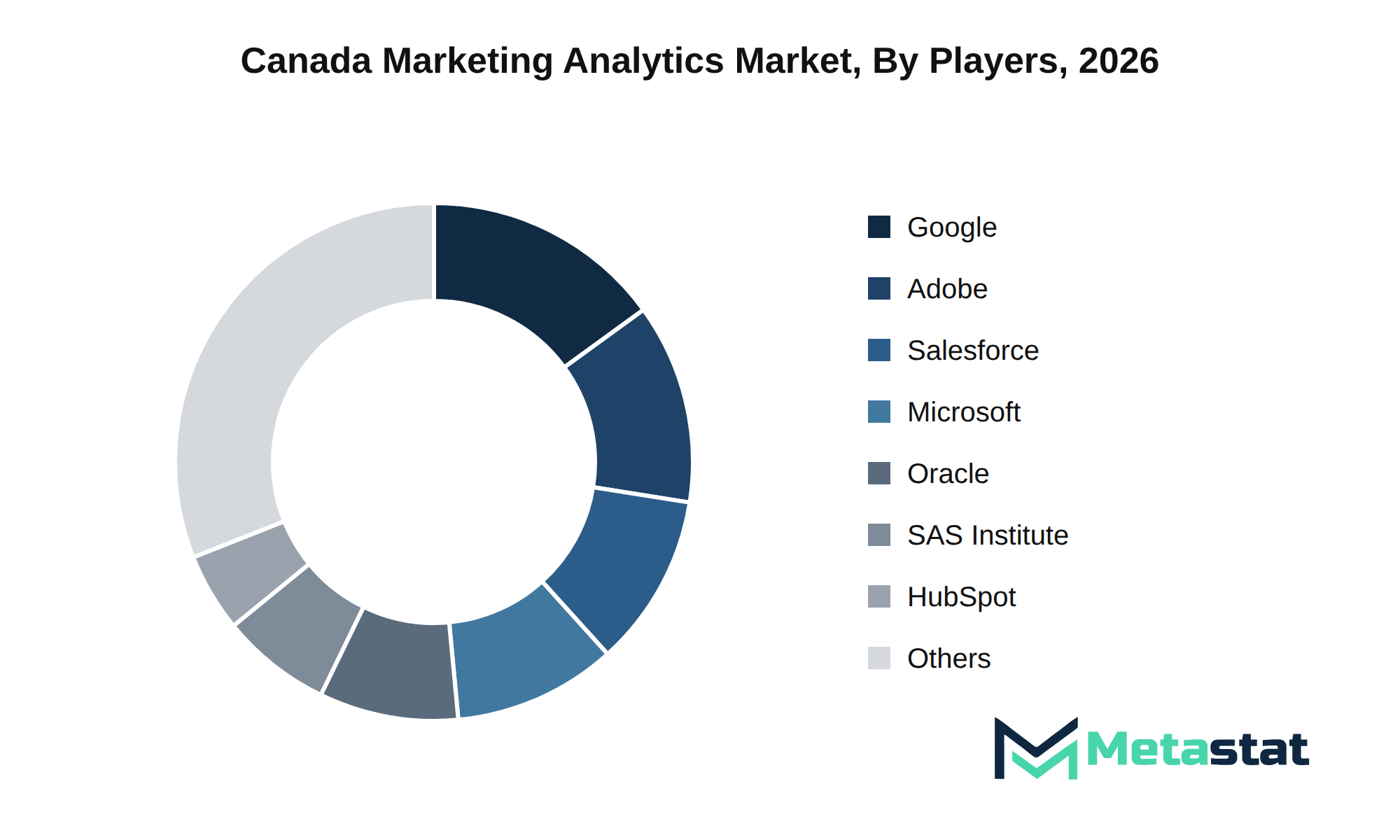
The Canada Marketing Analytics market features a diverse array of players competing across multiple dimensions. Companies including Adobe Inc., Google LLC, and Salesforce, Inc. leverage their extensive portfolios to enhance product differentiation and technological capabilities. These organizations invest significantly in research and development, resulting in proprietary technology advantages that strengthen their market positions.
Strategic alliances and partnerships play a critical role in shaping the competitive dynamics within the market. Firms like Microsoft Corporation and Oracle Corporation seek collaborative opportunities to expand their reach and enhance service offerings. These partnerships enable access to new customer segments and the integration of complementary technologies, creating robust solutions that address market needs.
Pricing architectures remain varied, with players adopting different approaches based on their target audiences and competitive strategies. For example, HubSpot, Inc. and Hootsuite Inc. offer scalable solutions aimed at small and medium enterprises, while larger organizations including SAP SE cater to the needs of large enterprises. This segmentation allows for tailored commercial models that align with customer expectations and maximize revenue potential.
Overall, the competitive landscape indicates an ongoing trend toward consolidation and strategic growth initiatives. Companies actively pursue mergers and acquisitions to enhance operational efficiencies and expand their market presence. The future outlook for the Canada Marketing Analytics market anticipates continued investment in technology, partnerships, and innovative strategies to maintain competitive advantages amid a changing environment.
Market size is forecast to rise from USD 320.3 million in 2025 to over USD 1,043.5 million by 2033. The base case scenario projects growth at a compound annual growth rate (CAGR) of 15.7%. This trajectory reflects several intersecting factors influencing the Canada Marketing Analytics market.
Economic conditions continue to shape demand across various sectors, driving the adoption of marketing analytics solutions. Industries including retail and consumer goods exhibit increasing reliance on data analysis to enhance customer engagement and optimize marketing strategies. Rising competition and the need for efficient resource allocation drive businesses to invest in advanced analytics tools.
Technological advancements play a critical role in this growth. Integration of next-generation technologies, including artificial intelligence and machine learning, enhances the capabilities of marketing analytics platforms. Companies committed to research and development realize quicker commercialization of innovative solutions, adapting to evolving market demands.
Regulatory frameworks are evolving, prompting organizations to align their strategies with compliance milestones. Adapting to these regulations incentivizes investment in analytics tools that support data governance and reporting requirements. This necessity influences strategic capital allocation directives within organizations across numerous sectors.
Challenges including geopolitical changes and regional supply chain shifts introduce uncertainties. Firms that strategically navigate these obstacles position themselves to capture emerging opportunities within the market. Unmet enterprise needs present high-growth pockets that innovative companies actively target to gain competitive advantages.
Overall, the Canada Marketing Analytics market demonstrates significant growth potential driven by economic developments, technological integration, and strategic imperatives established by organizations seeking to enhance operational effectiveness.
The report strategically identifies and profiles the key market players and analyses their core competencies in each sub-segment of the Marketing Analytics market.
Report Attributes | Details |
Study Period | 2021-2033 |
Base Year | 2025 |
Estimated Year | 2026 |
Forecast Period | 2026-2033 |
Historical Period | 2021-2025 |
Growth Rate | CAGR 15.7% from 2026 to 2033 |
Revenue Unit | USD million |
Segmentation | By Application, Deployment, Organization Size, Industry Vertical, and Region |
Find answers to common questions about this report
The Marketing Analytics market size in Canada was valued at USD 320.3 million in 2025.
The Marketing Analytics market is projected to grow at a CAGR of 15.7% during the forecast period from 2026 to 2033.
Social Media Marketing leads the Canada Marketing Analytics market with a projected value of USD 277.9 million by 2033, representing the highest share among application segments.
Key drivers for the Canada Marketing Analytics market include digital transformation initiatives and the increasing importance of data-driven decision-making. Significant investments in automation, artificial intelligence, and advanced analytics tools enhance operational efficiency, enabling organizations to better understand customer behaviors and preferences, particularly in the retail and consumer goods sectors.
Regulatory challenges related to data security and privacy raise operational costs and deter investment in analytics solutions. geopolitical fragmentation and technological disruptions complicate market dynamics, while workforce skill gaps hinder organizations' ability to leverage advanced analytics effectively. These factors collectively restrain the growth of the Canada Marketing Analytics market.
Rising investments in technological integration, particularly in automation and artificial intelligence, significantly favor product adoption in the Canada Marketing Analytics market. Organizations prioritize these technologies to enhance operational productivity, streamline processes, and respond rapidly to evolving market conditions, ultimately driving demand for advanced analytics solutions.
The Marketing Analytics market is estimated to reach a valuation of USD 1,043.5 million by 2033.
Key players operating in the Canada Marketing Analytics market include Adobe Inc., Google LLC, Salesforce, Inc., Microsoft Corporation, SAS Institute Inc., and Oracle Corporation.
The Canada Marketing Analytics market experiences a compound annual growth rate (CAGR) of 15.7% from 2026 to 2033.
Cloud deployment is gaining traction, with a projected value of USD 803.4 million by 2033.
Choose Your License
Canada Marketing Analytics Market
The analysts below cover Information & Technology research at Metastat Insights.
LEAD ANALYST
Utkarsh Khirodkar is a Lead Market Research Analyst at MetaStat Insight, specializing in market intelligence, technology sector assessments, and competitive strategy.

PRINCIPAL CONSULTANT - ENTERPRISE AI & EMERGING TECHNOLOGIES
Banking & Finance · Electronics and Semiconductor · Energy and Power · Healthcare IT · Information & Technology · Professional Services
Vijay Gunti is a Principal Consultant at MetaStat Insight, bringing over two decades of experience across enterprise digital transformation, technology strategy, and intelligent systems.

LEAD CONSULTANT - COMMUNICATION, TELECOM, AND IT
Electronics and Semiconductor · Information & Technology · Machinery & Equipment · Professional Services
Ravindra Sathe Consultants for Communication, Telecom, and IT at MetaStat Insight. He leads the firm's industry research initiatives across telecommunications infrastructure, digital connectivity, enterprise networking, and emerging information technology domains.
Ambulatory surgical centers have very different purchasing cycles for robotic-assisted surgery platforms than major hospital networks. The MetaStat Insight study focused squarely on capital expenditure depreciation, procedural reimbursement pathways, and surgeon training overhead. That operational clarity made it much simpler to validate multi-year procedure growth forecasts against actual ambulatory center adoption patterns.
When planning edge sensor rollouts across refinery environments, generic IoT reports typically miss the harsh-environment certification bottlenecks. MetaStat Insight gave an objective evaluation of ATEX and Class 1 Division 2 hardware availability, along with realistic five-year maintenance cycle cost projections. The comparison of wireless mesh versus private cellular backhaul helped our team pressure-test network reliability models for remote processing facilities.
In the biological seed treatment space, registration timelines vary drastically between the European Union, Brazil, and North America. The MetaStat Insight research handled these cross-border regulatory barriers with genuine nuance, mapping commercialization pathways alongside historical field adoption rates. The segmentation between microbial strains and biochemical active ingredients was particularly well structured.
Explore related market intelligence reports worth reading alongside this one.