
LEAD ANALYST
Utkarsh Khirodkar is a Lead Market Research Analyst at MetaStat Insight, specializing in market intelligence, technology sector assessments, and competitive strategy.

Global Industrial AI Software Market Size, Share, By Deployment Model (Cloud-based, On-premises and Hybrid), By Technology (Machine Learning, Computer Vision, Natural Language Processing, Robotic Process Automation and Others (Reinforcement Learning and Emerging AI Models)), By Application (Predictive Maintenance, Quality Inspection and Vision, Process Optimization, Supply-chain and Asset Tracking and Safety and Compliance Analytics), By End-Use Industry (Automotive and Transportation Equipment, Electronics and Semiconductors, Chemicals and Petrochemicals, Food and Beverage, Pharmaceuticals and Life Sciences, Industrial Machinery and Equipment, Energy Technology and Clean-Tech Manufacturing and Others (Building Materials and Textiles and Specialty Manufacturing)), Industry Analysis, Growth, Trends, and Forecast, 2026-2033
Report ID
MSI-5175
Published
September, 2026
Pages
298 Pages
Format
Historical
Base year
Forecast
Forecast period
Report Details
Choose Your License
Global Industrial AI Software Market
The global Industrial AI Software market was valued at USD 23.7 billion in 2025 and is projected to reach USD 85.5 billion by 2033, growing at a CAGR of 17.4% over the forecast period.
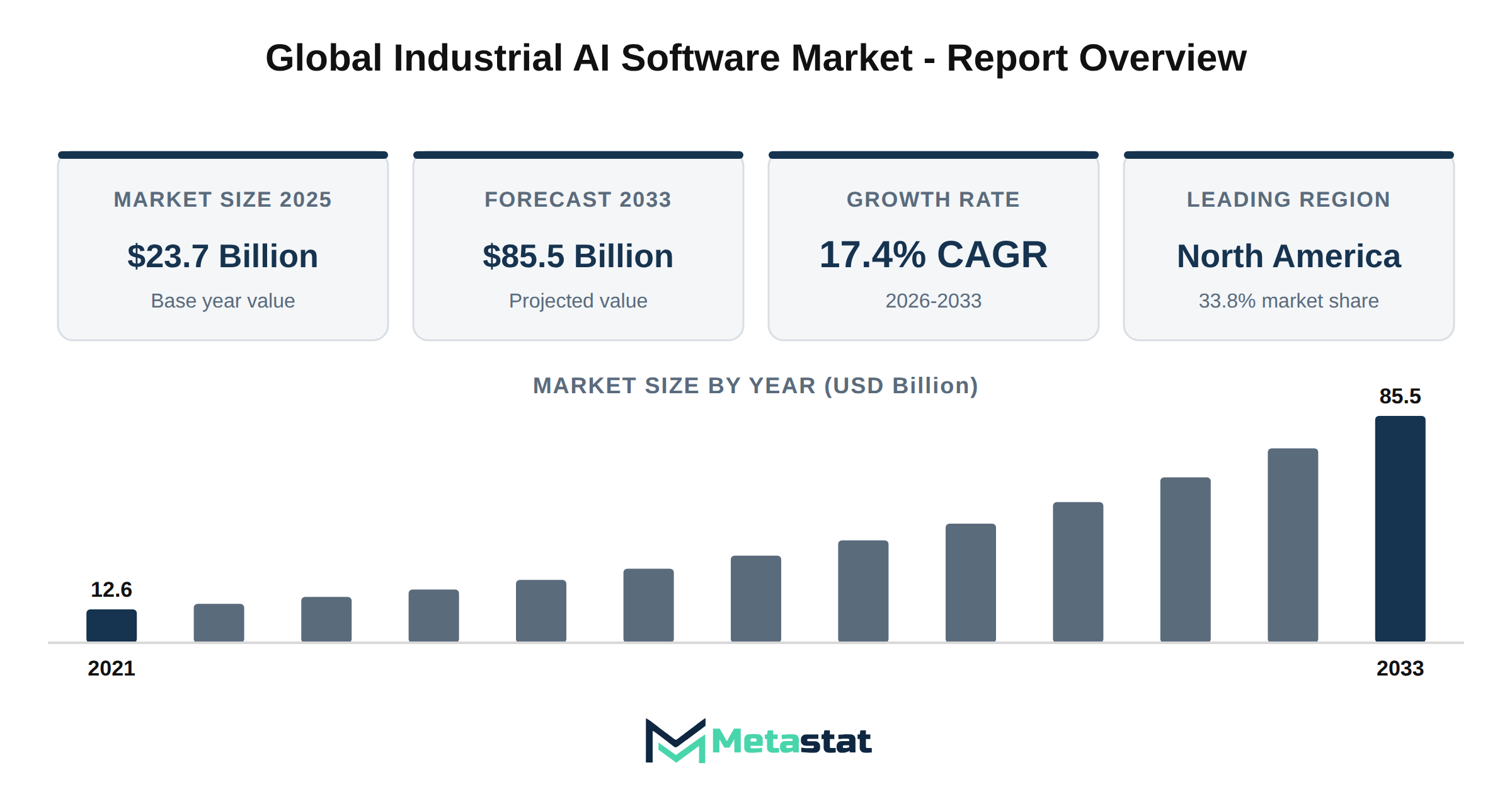
The Industrial AI Software market reached a value of USD 23.7 billion in 2025, demonstrating significant growth from USD 12.6 billion in 2021. This upward trend reflects increasing demand for advanced technologies that enhance operational efficiency and productivity across various sectors. The market is projected to expand to USD 85.5 billion by 2033, achieving a compound annual growth rate (CAGR) of 17.4% during the forecast period from 2026 to 2033.
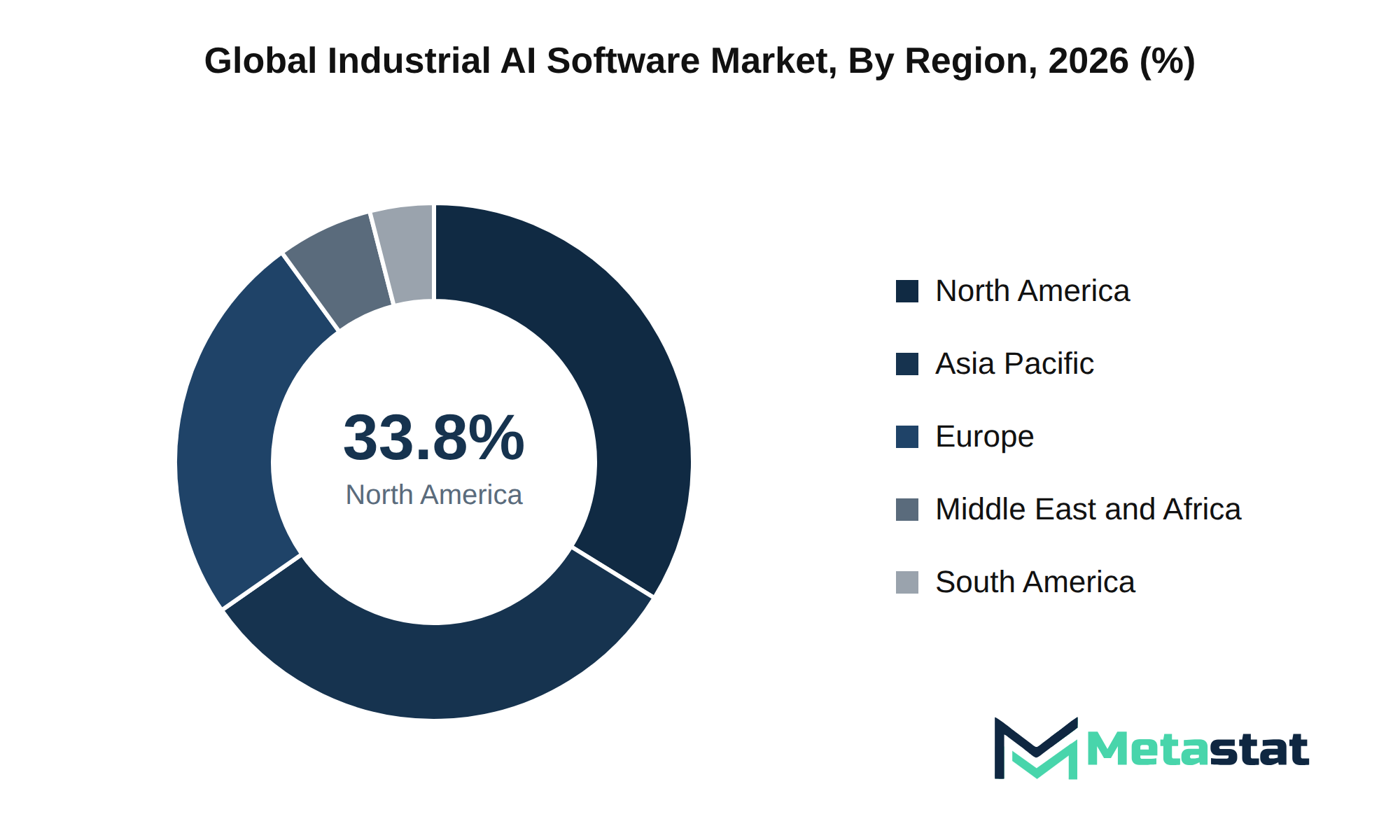
North America holds the largest share of the market at 33.8%, followed closely by Asia Pacific at 31.5%. Europe accounts for 24.7% of the market share, while South America and the Middle East and Africa represent smaller portions at 4% and 6%, respectively. The regional dynamics highlight varying levels of adoption and investment in industrial AI technologies across different geographies, influenced by factors including technological infrastructure, workforce readiness, and regulatory environments.
Cloud-based deployment models are expected to dominate the market, with growth from USD 13.8 billion in 2026 to USD 46 billion by 2033, reflecting a CAGR of 18.8%. On-premises solutions will see substantial growth, reaching USD 23.9 billion by 2033, with a CAGR of 14.8%. Hybrid models, while not dominant, will contribute to the market's expansion owing to organizations seeking flexibility in their AI implementations.
Technological advancements in machine learning, computer vision, natural language processing, and robotic process automation drive growth in the Industrial AI Software market. Machine learning is anticipated to grow from USD 13 billion in 2026 to USD 41.8 billion by 2033, with a CAGR of 18.1%. Computer vision will reach USD 20.6 billion by 2033, supported by wide-ranging applications in quality inspection and automation processes.
The evolution of manufacturing AI adoption demonstrates varying levels of sophistication across industries. Organizations in sectors including automotive and electronics exhibit advanced integration of AI technologies, particularly in predictive maintenance and quality inspection applications. The increasing reliance on data-driven decision-making enhances operational efficiency and product quality. This trend generates demand for robust AI solutions capable of addressing complex manufacturing challenges.
Industrial generative AI experiences rapid development, significantly impacting design processes and production workflows. Generative models allow companies to create optimized designs and streamline product development cycles. This innovation drives organizations to explore advanced AI applications, creating competitive advantages in the market.
Deployment trends indicate a growing preference for cloud-based solutions in the industrial AI software market. The flexibility and scalability offered by cloud infrastructure attract businesses seeking to enhance their operational capabilities while reducing costs associated with on-premises deployments. This shift aligns with ongoing digital transformation initiatives across various industries.
AI model accuracy and explainability remain critical for user adoption and trust. Organizations prioritize transparency in AI-driven processes to ensure compliance with regulatory frameworks and enhance stakeholder confidence. As AI technologies advance, improving model interpretability becomes essential for addressing ethical concerns and ensuring responsible AI usage.
Integration of IT, OT, and AI systems evolves, facilitating data exchange and collaboration across organizational silos. This convergence enhances decision-making processes and operational efficiencies, leading to improved overall performance. Investments in infrastructure that supports integration will likely increase, positioning organizations to capitalize on emerging opportunities.
Investment priorities in the industrial AI software market reflect a strategic focus on enhancing capabilities and driving innovation. Companies allocate resources towards developing advanced technologies, building partnerships, and pursuing acquisitions to strengthen their market position. This trend highlights the competitive landscape's dynamic nature, where organizations continuously seek to enhance their offerings.
Competitive platform benchmarking reveals a diverse array of players operating in the industrial AI software market. Leading companies leverage technological advancements and strategic partnerships to differentiate their solutions. This competitive positioning influences market dynamics, driving innovation and enhancing customer value.
Emerging partnerships within the industrial AI ecosystem facilitate knowledge sharing and resource optimization. Collaborations between technology providers and industry stakeholders enhance the development of tailored solutions that address specific market needs. These partnerships strengthen the overall value chain and contribute to the market's growth trajectory.
Regulatory compliance and standards play a significant role in shaping market dynamics. Organizations prioritize adherence to industry regulations to mitigate risks and ensure responsible AI deployment. This focus on compliance influences investment decisions and operational strategies, further driving the demand for robust industrial AI solutions.
Disruption from technological advancements and evolving market demands compels organizations to adapt and innovate continuously. R&D trajectories emphasize the development of next-generation AI models and applications, driving sustainable transformation in various industries. This focus on innovation aligns with broader trends in decarbonization and circular economy dynamics, driving organizations towards more environmentally responsible practices.
The supply chain landscape undergoes significant changes owing to organizations embracing AI-driven solutions for logistics and sourcing. Enhanced visibility and efficiency in supply chain operations contribute to improved customer satisfaction and reduced operational costs. While businesses adapt, capital allocation becomes increasingly strategic, focusing on infrastructure investments that support growth and innovation.
Future strategic outlooks highlight the need for organizations to align their corporate imperatives with evolving market conditions. High-value recommendations emphasize the importance of agility and responsiveness in navigating market challenges. By prioritizing innovation and collaboration, businesses position themselves for long-term success in the industrial AI software market.
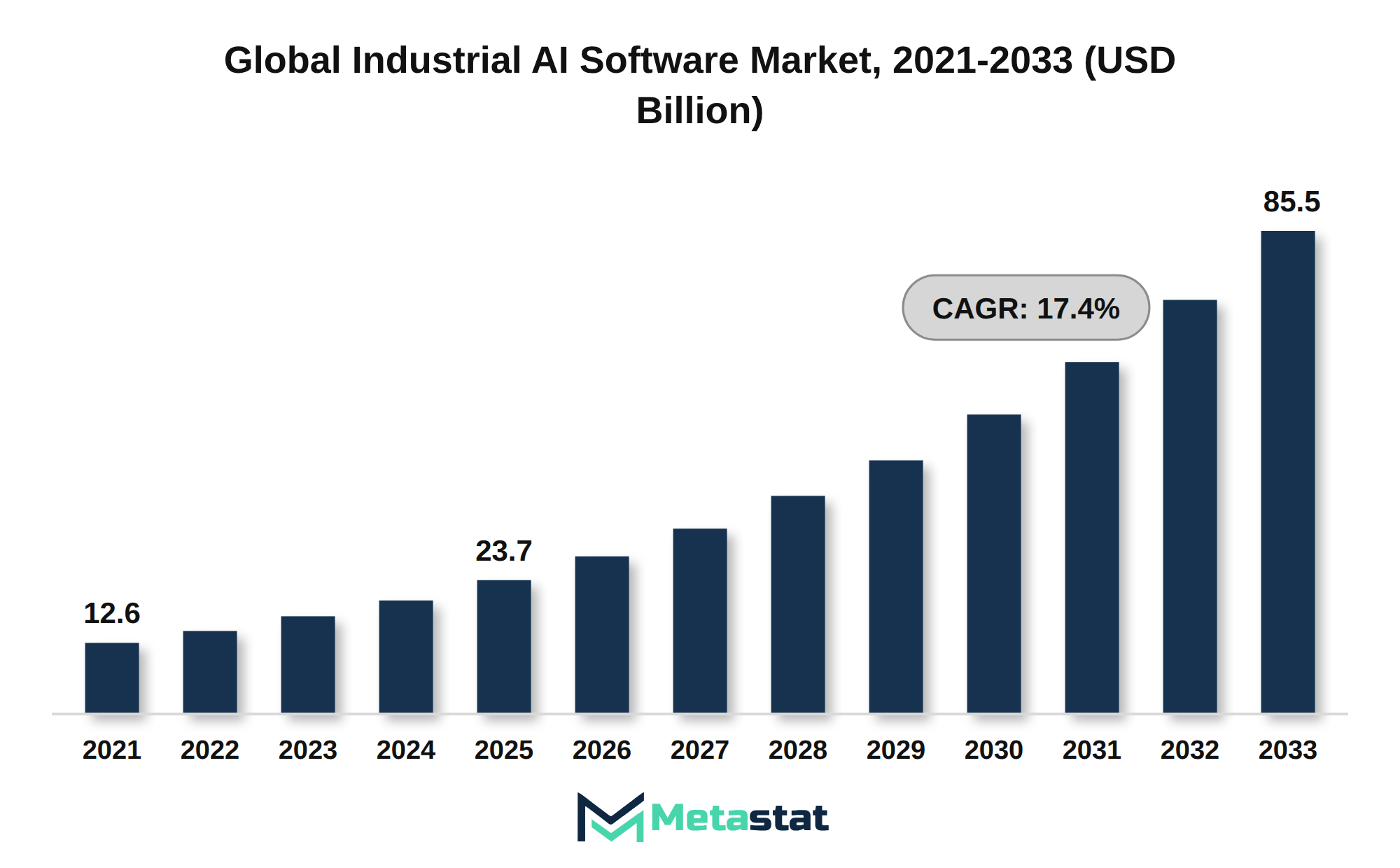
Capital investment environments significantly influence the growth of the Industrial AI Software market. Increasing interest rates and GDP growth create favorable conditions for businesses to invest in advanced technologies, enhancing operational efficiency and productivity. Organizations invest in digital transformation initiatives, focusing on automation and software adoption to streamline existing processes and reduce costs.
Venture funding and public-private spending power play crucial roles in propelling technological integration across various sectors. Companies seek to modernize their operations by incorporating industrial AI software, which drives innovation and enhances competitive advantage. This trend is particularly evident in industries including automotive, electronics, and manufacturing, where operational productivity and cost-efficiency initiatives remain top priorities.
While investment in technology rises, businesses recognize the potential of industrial AI solutions to optimize processes and improve decision-making. The demand for scalable and efficient software aligns with the market's growth trajectory, contributing to a projected value of USD 85.5 billion by 2033. Overall, the relationship between capital investment and technological adoption drives significant growth in the Industrial AI Software market.
Infrastructure development plays a critical role in advancing the Industrial AI Software market. Governments and private entities increasingly allocate resources towards upgrading physical and digital capacities, enhancing facilities, and expanding network capabilities. This commitment to modernization creates an environment where technological integration becomes essential for operational efficiency and competitiveness.
Investment in infrastructure directly influences capital flow into the market, facilitating the adoption of advanced technologies including automation and artificial intelligence. While facilities modernize, businesses align legacy processes with current technological standards, improving overall productivity. Industries prioritizing infrastructure development experience heightened demand for AI software solutions that streamline processes, optimize resource allocation, and enhance productivity.
Technological investment stemming from infrastructure upgrades supports businesses in reducing operational costs and enhancing service delivery. The emergence of smart factories and connected supply chains exemplifies how infrastructure evolution transforms industrial operations, driving significant advancements in the market. These developments create opportunities for companies specializing in Industrial AI Software to expand product offerings and enhance revenue streams.
In the Industrial AI Software market, regulatory compliance imposes significant challenges on implementation and adoption rates. Stricter regulations and standards create hurdles for organizations, particularly in heavily regulated sectors including automotive and pharmaceuticals. Compliance with these regulations demands considerable investments in both technology and workforce training, leading to increased operational costs and impacting profitability.
Organizations face difficulties in navigating the complex compliance landscape, resulting in delayed project timelines and increased expenditures. High capital investment requirements, driven by compliance challenges, restrict smaller firms from competing effectively. This scenario leads to market fragmentation, where only larger companies with the resources to meet compliance standards secure significant market share.
Regulatory environments differ significantly across regions, complicating global operations and increasing the burden on companies to adapt to varying legal requirements. This disparity discourages companies from pursuing innovation or expansion in regions with stringent compliance demands. Consequently, the overall growth potential of the Industrial AI Software market experiences limitations attributed to businesses grappling with compliance-related uncertainties and escalating costs.
Geopolitical fragmentation significantly increases operational risks for the Industrial AI Software market. Trade deficits and tariff friction disrupt the flow of goods, creating challenges for market participants reliant on global supply chains. These disruptions lead to increased costs, owing to firms absorbing tariff-related expenses, which in turn compress pricing structures and impact profit margins. Technological disruptions stemming from geopolitical tensions create uncertainty in R&D investments, complicating the ability of firms to innovate and maintain competitive positions.
Interoperability friction arises from diverse regulatory environments across regions, hindering technology integration. This complexity becomes evident in sectors where firms struggle to unify systems, leading to inefficiencies and increased operational costs. Market saturation intensifies competition, compelling firms to differentiate their offerings while facing downward pressure on pricing. Evolving downstream demands for sustainability and decarbonization further complicate compliance efforts, adding layers of regulatory overhead that challenge profitability.
Logistics disruptions and supply chain instability heighten vulnerability to fluctuations in feedstock and component costs. This volatility creates challenges for firms aiming to stabilize their operational expenses. Talent retention pressures and workforce skill gaps exacerbate the situation, resulting from organizations facing difficulties in finding qualified personnel capable of leveraging advanced technologies in the Industrial AI Software market. The combined effect of these challenges hinders growth prospects, necessitating strategic adjustments to navigate the evolving landscape effectively.
Rapid digital transformation across industries creates substantial opportunities within the Industrial AI Software market. Organizations increasingly recognize the value of advanced data analytics and automation technologies to streamline operations and enhance competitiveness. Emerging regional demands, particularly in Asia Pacific and North America, drive investments in AI-driven solutions, reflecting a shift toward more efficient and sustainable practices.
Modernizing infrastructure supports the adoption of industrial AI software. Companies invest in next-generation innovations to address evolving consumer expectations and achieve operational excellence. This transition involves leveraging technologies including machine learning, computer vision, and natural language processing, which significantly enhance productivity across sectors including automotive, electronics, and food and beverage.
Cross-industry mergers and acquisitions contribute to market expansion by enabling firms to diversify their service offerings and geographic reach. Strategic consolidation allows organizations to pool resources, share expertise, and enhance their technological capabilities. This positioning enables firms to capitalize on new market opportunities. Evolving buying behaviors, including a shift toward digital procurement, influence the competitive landscape, encouraging suppliers to adapt their commercial models to meet changing customer preferences.
Sustainability imperatives play a crucial role in shaping the Industrial AI Software market. Increasing pressure to adopt eco-friendly practices aligns with companies' goals for efficient resource management and waste reduction. This trend supports the integration of AI solutions, allowing businesses to optimize processes and advance their sustainability objectives. Value-chain optimization and operational yield maximization become critical components of corporate strategies, enabling organizations to maintain profitability while advancing environmental initiatives.
The Global Industrial AI Software market is segmented based on Deployment Model, Technology, Application, and End-Use Industry.
Valued at USD 13.8 billion in 2026, the cloud-based segment is projected to reach USD 46 billion by 2033, at a CAGR of 18.8% during the forecast period. The increasing demand for flexible and scalable solutions drives the adoption of cloud-based offerings in the Industrial AI Software market. Organizations benefit from enhanced accessibility, enabling real-time data analysis and improved decision-making across various industries.
Technological advancements in cloud infrastructure and services continue to support the growth of the cloud-based segment. These improvements provide businesses with opportunities to leverage artificial intelligence without the burden of extensive on-premises hardware. Such factors make cloud solutions attractive to industries focused on optimizing operations and reducing costs.
End-use dynamics indicate that sectors including automotive, electronics, and food and beverage significantly contribute to the demand for cloud-based AI applications. These industries increasingly rely on predictive maintenance, quality inspection, and process optimization, which cloud-based solutions effectively address. Consequently, market participants expect significant growth driven by these applications, enhancing overall operational efficiency.
Regulatory compliance standards shape the landscape for cloud-based solutions. Companies that adhere to stringent data protection regulations find that cloud services often meet these requirements while offering competitive advantages in terms of cost effectiveness and flexibility. This compliance not only builds trust among customers but strengthens the market's overall growth trajectory.
Investment in cloud technology represents a critical strategic opportunity for stakeholders. Businesses prioritize capital allocation to cloud-based solutions, recognizing the long-term benefits of integrating advanced AI functionalities into their operations. This growing trend positions the cloud-based segment because a vital component in the overall expansion of the Industrial AI Software market.
Growth in the On-premises segment of the Industrial AI Software market reflects strong demand from industries requiring stringent data security and control over their IT environments. Enterprises prioritize the installation of software within their own infrastructure to mitigate cybersecurity risks associated with cloud reliance. This preference drives substantial adoption across sectors like automotive, electronics, and manufacturing, where sensitive data management remains critical.
The On-premises segment is estimated to reach USD 23.9 billion by 2033, at a CAGR of 14.8% during the forecast period. Continuous technological maturation, alongside advancements in AI capabilities, fuels interest in on-premises solutions. Companies seek next-generation upgrades to enhance operational efficiency and integrate seamlessly with existing systems, influencing overall market dynamics.
Increased regulatory compliance requirements compel organizations to adopt on-premises solutions to meet specific industry mandates surrounding data privacy and integrity. Such compliance standards, particularly in regulated environments like pharmaceuticals and finance, support the segment's growth trajectory. While businesses navigate evolving regulations, investments in on-premises configurations become strategically significant, ensuring sustained compliance while optimizing performance.
Cost structures and pricing volatility further impact the On-premises segment. Organizations assess upfront capital expenditures against the long-term operational benefits of on-premises implementations, weighing them carefully against cloud alternatives. These financial considerations frequently dictate IT budgeting and investment strategies, affecting overall consumption patterns within the Industrial AI Software market.
Strategic opportunity windows emerge for vendors demonstrating resilience and reliability within the supply chain. The ability to deliver robust on-premises solutions aligns with the growing need for secure and efficient AI-driven processes across various industries. Companies position themselves to capitalize on these trends, ensuring alignment with market demands while navigating the complexities of technological obsolescence and disruptive alternatives.
The increasing complexity of data management and the need for flexibility in deployment drive growth in the Hybrid segment within the Industrial AI Software market. Companies recognize the advantages of combining both cloud-based and on-premises solutions, allowing for enhanced customization and integration with existing systems. This adaptability supports diverse operational requirements across various industries, including manufacturing and logistics.
Technological advancements facilitate the development of hybrid solutions, enabling organizations to leverage machine learning and data analytics effectively. Organizations increasingly adopt these tools for predictive maintenance, quality inspection, and process optimization, enhancing overall operational efficiency. The transition toward hybrid models opens strategic opportunity windows for software providers, encouraging innovation and product evolution in the market.
In the near term, investments in hybrid deployment models are expected to yield significant returns. The Hybrid segment is projected to reach USD 15.6 billion by 2033. This growth reflects rising demand for scalable and secure AI solutions that align with regulatory compliance standards. The market's trajectory emphasizes the importance of balancing cost structures and pricing strategies to maintain competitive advantage and drive further adoption.
Valued at USD 13 billion in 2026, the Machine Learning segment is projected to reach USD 41.8 billion by 2033, reflecting a CAGR of 18.1% during the forecast period. Rapid advancements in data processing capabilities drive demand for machine learning solutions across various industries. The increasing reliance on data-driven decision-making encourages organizations to integrate machine learning technologies into their operations, enhancing efficiency and effectiveness. Adoption spans sectors including automotive, healthcare, and finance, where predictive analytics and automation significantly improve operational outcomes.
Technological maturation contributes to the expanding application of machine learning. Enhanced algorithms and computational power facilitate the development of sophisticated models that address complex challenges in real-time. Organizations adopt these advancements to optimize processes, improve product quality, and enhance customer experiences. The need for next-gen upgrades fuels continuous investment in machine learning solutions, with companies exploring innovative applications that extend beyond traditional boundaries.
End-use dynamics influence the market landscape significantly. Industries including electronics and semiconductors demonstrate increasing adoption of machine learning for quality inspection and predictive maintenance. Consumer preferences shift towards personalized experiences, driving businesses to apply machine learning in tailoring products and services to meet individual needs. Consequently, firms focusing on enhancing customer engagement through targeted solutions position themselves competitively within the industrial AI software market.
Regulatory compliance standards further impact market dynamics. While industries face stringent regulations regarding data security and privacy, implementing machine learning technologies aids organizations in achieving compliance while streamlining processes. The ability to analyze vast amounts of data efficiently and accurately aligns with regulatory demands, establishing machine learning because a crucial component in maintaining operational integrity.
Investment outlook remains strong, with stakeholders recognizing the potential of machine learning in driving operational excellence. Capital allocation towards research and development encourages innovation, resulting in new product offerings that address emerging market needs. The combination of technological advancements and strategic investments drives sustained growth in the machine learning segment within the broader industrial AI software market.
Increasing demand for advanced visual recognition capabilities drives the growth of the Computer Vision sub-segment within the Industrial AI Software market. Industries including manufacturing, automotive, and healthcare significantly rely on computer vision for automation, enhancing quality control, and optimizing operational efficiency. The ability to analyze images and videos in real time enables organizations to identify defects, streamline processes, and improve product quality.
The Computer Vision segment is estimated to reach USD 20.6 billion by 2033, at a CAGR of 18.5% during the forecast period. Adoption of machine learning techniques further enhances the capabilities of computer vision systems, allowing for improved accuracy and efficiency. This technological maturation increases demand across various applications, including quality inspection, safety compliance, and predictive maintenance.
End-use dynamics reflect a growing emphasis on automation and smart manufacturing, prompting organizations to invest in advanced computer vision solutions. Regulatory compliance standards regarding product quality and safety standards compel industries to integrate these technologies into their operations. Overall, the market experiences substantial expansion driven by organizations recognizing the strategic opportunities presented by computer vision technologies.
Significant advancements in technology drive the growth of the Natural Language Processing segment within the Industrial AI Software market. The rise in demand for automated customer interactions and data analysis accelerates the adoption of Natural Language Processing solutions across various industries. Organizations increasingly focus on enhancing user experiences, and Natural Language Processing enables efficient communication and analysis of vast data sets, reducing operational costs and improving decision-making processes.
Technological maturation in Natural Language Processing enhances capabilities, making it more accessible to businesses of all sizes. The segment's expansion is fueled by innovations in machine learning and deep learning techniques that improve language understanding and generation. These advancements allow manufacturers to integrate Natural Language Processing into their existing systems, supporting applications including sentiment analysis, chatbots, and automated reporting.
In terms of market value, the Natural Language Processing segment is expected to reach USD 11.1 billion by 2033. This growth highlights the increasing importance of data-driven insights and automated communication solutions in a competitive landscape. End-use dynamics, particularly in sectors like customer service and marketing, significantly influence demand, driven by organizations seeking to leverage Natural Language Processing for better customer engagement and operational efficiency.
Robotic Process Automation (RPA) emerges because a key technology within the Industrial AI Software market, optimizing repetitive tasks and enhancing efficiency across various sectors. Organizations increasingly adopt RPA to streamline operations, reduce errors, and lower costs associated with manual processes. The growing emphasis on operational efficiency drives demand, particularly in industries including manufacturing, finance, and healthcare, where automation significantly improves productivity.
Investment in RPA technologies reflects a broader trend towards digital transformation, with firms seeking innovative solutions to remain competitive. The segment is projected to grow at a CAGR of 12.9% during the forecast period. While companies recognize the benefits of automating processes including data entry, customer support, and compliance reporting, the appetite for RPA solutions expands. This trend encourages collaboration between tech providers and businesses, enabling tailored solutions that meet specific operational requirements.
Technological maturation significantly influences the advancement of RPA. Improvements in machine learning and artificial intelligence enhance the capabilities of robotic automation, allowing for more sophisticated process handling and decision-making. This evolution prompts businesses to invest in next-generation upgrades, further driving growth within the market.
Regulatory compliance increasingly influences the adoption of RPA, especially in highly regulated sectors where adherence to standards is critical. RPA solutions assist organizations in maintaining compliance by automating processes that require accuracy and thorough documentation. While a result, RPA becomes an integral component of businesses' compliance strategies, reinforcing its value proposition in the Industrial AI Software market.
Overall, the shift towards automation, driven by cost-efficiency and regulatory demands, positions RPA because a vital player in the ongoing transformation of industries. The segment's growth trajectory highlights its potential to reshape operational frameworks, making it a focal point for investment and innovation in the coming years.
Developments in reinforcement learning and emerging AI models in the Industrial AI Software market reflect their growing significance across various applications. These technologies enhance machine learning capabilities, enabling organizations to derive insights from complex datasets, ultimately improving operational efficiency.
Adoption trends indicate a shift towards integrating advanced AI models into existing systems. Industries recognizing the potential of these technologies prioritize investments in infrastructure to enable smooth integration, boosting overall effectiveness. Competitive pressure encourages organizations to adopt next-generation AI solutions, which drive innovation and strategic differentiation.
End-use dynamics illustrate a rising demand for reinforcement learning applications in sectors like automotive and electronics, where adaptive learning systems optimize processes and enhance product quality. This shift towards data-driven decision-making aligns with the broader trend of digital transformation across industries, prompting investments in advanced AI capabilities.
Regulatory compliance standards increasingly emphasize the importance of data security and ethical considerations in AI deployment. Companies navigating these regulations prioritize solutions that ensure compliance while maximizing operational performance, creating a resilient approach to technology implementation.
Pricing volatility in the technology sector influences investment decisions, compelling organizations to evaluate the cost structures associated with deploying emerging AI models. Striking a balance between innovation and cost-effectiveness remains essential for achieving sustainable growth within the market.
Technological obsolescence poses a challenge, driven by organizations consistently upgrading their systems to stay competitive. This rapid pace of change presents strategic opportunity windows for software developers, enabling them to offer innovative solutions tailored to evolving market demands.
Overall, the integration of reinforcement learning and emerging AI models into the Industrial AI Software market represents a critical pathway for enhancing operational capabilities and driving competitive advantage. This commitment to innovation strengthens the market's potential for significant growth in the upcoming years.
Valued at USD 8.2 billion in 2026, the Predictive Maintenance segment is projected to reach USD 26.4 billion by 2033, at a CAGR of 18.1% during the forecast period. Significant demand for predictive maintenance arises from the minimize downtime and enhance operational efficiency in various industries. Organizations increasingly adopt AI-driven predictive maintenance solutions to reduce costs associated with unexpected equipment failures and maintenance activities.
This segment expands due to the technological maturation of AI algorithms, which enable more accurate predictions of equipment failures. Next-gen upgrades in sensor technology further enhance data collection, leading to improved predictive analytics capabilities. End-use industries, particularly manufacturing, automotive, and energy, leverage predictive maintenance applications to streamline operations and optimize asset performance.
Shifts in consumption patterns reflect a growing preference for proactive maintenance strategies over traditional reactive approaches. Regulatory compliance standards in sectors including energy and automotive emphasize the importance of operational reliability and safety, driving investments in predictive maintenance solutions. The market anticipates sustained growth, supported by ongoing advancements in AI technologies and a commitment to improving asset management practices across diverse sectors.
Innovations in automated visual inspection and quality control systems drive growth within the Quality Inspection and Vision segment of the Industrial AI Software market. Increased focus on product quality and operational efficiencies influences manufacturers to adopt advanced technologies for defect detection and prevention. Industries including automotive, electronics, and food processing prioritize high-quality standards, resulting in significant demand for AI-driven quality inspection systems.
The Quality Inspection and Vision segment is projected to reach USD 18.8 billion by 2033, at a CAGR of 17.9% during the forecast period. This growth is driven by the integration of machine learning algorithms and computer vision technologies that enhance accuracy and speed in quality assessments. Evolving regulatory compliance standards and consumer expectations further accelerate the implementation of these solutions across various manufacturing settings.
Investment in next-generation upgrades, including real-time data analytics and predictive maintenance, drives a shift toward more resilient and efficient manufacturing processes. This trend indicates a strategic opportunity for suppliers to innovate and expand their product offerings. While competition intensifies, maintaining operational excellence through advanced quality inspection solutions becomes essential, ensuring that businesses meet market demands effectively.
Process optimization represents a critical application within the Industrial AI Software market, supporting organizations in refining operational efficiency and reducing costs. Increasing pressure on businesses to enhance productivity while minimizing waste drives the demand for advanced software solutions. Industries including manufacturing and energy leverage process optimization technologies to streamline workflows and improve overall output. Data analytics and machine learning algorithms play significant roles in identifying inefficiencies, enabling organizations to make informed decisions that enhance performance.
Technological advancements further enhance the market, with next-generation AI models offering capabilities for real-time monitoring and predictive analytics. Organizations invest in process optimization tools to respond swiftly to changing market conditions, improving their competitive stance. The segment is expected to reach USD 24.8 billion by 2033, reflecting a strong growth trajectory fueled by the increasing adoption of automation technologies across various end-use industries.
Compliance with regulatory standards and sustainability initiatives prompts organizations to incorporate process optimization solutions, aligning operational goals with environmental and safety considerations. This alignment enhances product quality and reduces risks associated with non-compliance, contributing to overall market growth. While industries navigate the complexities of modern production environments, process optimization emerges because a key focus, driving investment in advanced Industrial AI solutions.
Growth in the Supply-chain and Asset Tracking segment aligns with the increasing focus on operational efficiency and transparency in supply chains. Companies across diverse industries prioritize real-time data access and predictive analytics to enhance decision-making capabilities. The integration of advanced industrial AI tools facilitates tracking of assets, inventory levels, and overall supply chain performance, driving significant efficiency improvements.
The Supply-chain and Asset Tracking segment is projected to grow at a CAGR of 14.3% during the forecast period. This growth stems from heightened demand for enhanced visibility into supply chain operations, enabling companies to respond swiftly to market fluctuations. Industries including automotive, electronics, and food and beverage benefit substantially from adopting these technologies to streamline operations.
Technological maturation in AI and data analytics creates opportunities for innovation within the segment. Advanced algorithms and machine learning models enhance predictive capabilities, transforming traditional supply chain management into proactive systems. Organizations investing in these technologies experience improved forecasting accuracy and reduced operational risks, contributing to a more resilient supply chain.
Cost structures within the segment reflect a trend toward investment in AI-driven solutions. Organizations allocate resources to procure advanced software that integrates seamlessly with existing infrastructure. Initial investment is substantial, but long-term savings and operational improvements justify the expenditure, reinforcing the segment's growth prospects within the Industrial AI Software market.
Growing focus on regulatory compliance and risk management significantly drives demand for safety and compliance analytics within the Industrial AI Software market. Industries including manufacturing and pharmaceuticals prioritize adherence to safety regulations, requiring advanced analytical solutions to monitor compliance effectively.
Technological maturation in analytics tools enhances data processing capabilities, allowing businesses to implement real-time monitoring and reporting systems. These capabilities prove essential for organizations striving to maintain operational integrity while complying with stringent industry standards.
The evolution of products within this segment emphasizes integration with existing systems, ensuring efficient workflows and effective data utilization. Organizations increasingly recognize the importance of proactive measures in compliance management, leading to higher adoption rates of safety and compliance analytics solutions.
Increasing emphasis on end-use dynamics and consumption shifts influences the market landscape. Companies prioritize data-driven decision-making processes, resulting in a growing need for tools that streamline compliance activities and minimize risk exposure.
Regulatory compliance standards continue to evolve, creating new challenges for organizations. Companies that invest in safety and compliance analytics position themselves strategically to navigate complex regulatory environments effectively.
Capital investment outlook in this segment highlights the potential for growth through technological advancements and the integration of next-generation upgrades. The focus on developing resilient supply chains and addressing logistics vulnerabilities further positions safety and compliance analytics because a vital component in the broader Industrial AI Software market.
Valued at USD 5.5 billion in 2026, the Automotive & Transportation Equipment segment is projected to reach USD 15.9 billion by 2033, at a CAGR of 16.4% during the forecast period. Primary demand drivers include the growing emphasis on automation and efficiency in manufacturing processes. Enhanced vehicle safety standards and environmental regulations push manufacturers to adopt advanced technologies, which directly influences market growth. Adoption of Industrial AI Software in this sector facilitates predictive maintenance, improving operational efficiency and reducing downtime.
Investment in next-gen upgrades and product evolution supports the Automotive & Transportation Equipment segment's expansion. Manufacturers increasingly integrate AI technologies to optimize processes and enhance supply chain resilience. Regulatory compliance standards regarding emissions and safety drive companies to invest in AI solutions, further increasing market demand. The shift towards electric and autonomous vehicles accelerates the need for advanced AI applications, enabling real-time data analysis and decision-making in production and logistics.
Technological maturation increases competition within the market, with established players and new entrants striving to offer innovative solutions. Cost structures associated with implementing AI systems remain a consideration, but long-term operational savings and competitive advantages justify the investments. Pricing volatility in raw materials impacts manufacturers, influencing their strategies regarding the adoption of AI technologies. Overall, the Automotive & Transportation Equipment segment demonstrates significant growth potential within the Industrial AI Software market, driven by technological advancements and evolving market dynamics.
Demand for advanced applications in the electronics and semiconductors industry fuels growth within the Industrial AI Software market. Innovations in automation and analytics create opportunities for manufacturers to enhance operational efficiency and product quality. Strong investment in research and development initiatives further drives adoption, owing to companies seeking to leverage AI technologies for improved productivity and competitive advantage.
Electronics and semiconductors are undergoing significant technological maturation, with next-gen upgrades becoming essential for maintaining market relevance. The shift toward smart manufacturing and Industry 4.0 initiatives encourages the incorporation of AI solutions, leading to enhanced precision in production processes and data-driven decision-making. This trend influences the segment's growth, projected to reach USD 17.9 billion by 2033, at a CAGR of 19.3% during the forecast period.
Regulatory compliance standards significantly influence operations within the electronics and semiconductors sector, necessitating robust quality assurance measures. Companies increasingly invest in AI-driven solutions to ensure adherence to these standards, which in turn drives demand for Industrial AI Software. The need for effective supply chain management and logistics resilience shapes market dynamics.
The Electronics and Semiconductors segment illustrates a strategic opportunity window, with heightened focus on emerging AI models and sophisticated data processing technologies. These advancements enhance utilities in predictive maintenance, quality inspection, and process optimization, ultimately improving overall operational efficacy. The strong outlook for this sub-segment reflects the integration of AI because a key factor in the electronics and semiconductors industry.
Demand for Industrial AI Software within the Chemicals & Petrochemicals sector stems from the increasing complexity in production processes and the necessity for enhanced operational efficiency. A focus on predictive maintenance and quality assurance significantly influences investments in advanced software solutions that streamline production while reducing costs. The integration of machine learning and data analytics allows companies to optimize resource allocation and improve decision-making capabilities, leading to more sustainable practices across the industry.
Technological maturation plays a significant role in the evolution of software applications tailored for chemicals and petrochemicals. Innovations in AI technology enable enhanced predictive analytics, which improves supply chain resilience by identifying potential disruptions before they impact production. The growing recognition of the importance of regulatory compliance further drives adoption, resulting from companies seeking solutions that ensure adherence to environmental standards and safety regulations.
Pricing volatility remains a challenge for this segment, impacting profit margins and influencing investment decisions. Companies increasingly leverage AI to mitigate these pressures by optimizing production schedules and improving inventory management. The Chemicals & Petrochemicals segment is expected to reach USD 10.3 billion by 2033, reflecting the sector's growth within the Industrial AI Software market.
Valued at USD 10.3 billion in 2033, the Food & Beverage segment benefits from numerous primary demand drivers, including a heightened focus on food safety and quality assurance. These requirements compel manufacturers to implement advanced technologies for compliance with stringent regulatory standards, ensuring product integrity throughout production processes. Increased automation in manufacturing, driven by the need for efficiency and cost-saving measures, drives the adoption of Industrial AI software, particularly in predictive maintenance and quality inspection applications.
The Food & Beverage segment is projected to grow at a CAGR of 16.2% during the forecast period. This growth results from the evolution of smart manufacturing practices, allowing businesses to leverage data analytics and machine learning for enhanced decision-making. Strategic investment in next-generation technologies facilitates real-time monitoring and traceability, addressing consumer demands for transparency and sustainability in food sourcing and production.
Distribution challenges and market dynamics create opportunities for advanced AI solutions, enabling manufacturers to optimize supply chain resilience. Companies responding proactively to disruptions in raw material sourcing and logistics vulnerabilities find strategic advantage through the implementation of AI-driven predictive analytics. This approach enhances operational efficiency and mitigates risks associated with fluctuating prices and supply chain uncertainties.
Through continuous product evolution and technological maturation, the market transforms, reflecting shifts in consumption patterns. Growing consumer preference for healthy and sustainable food options influences the need for innovations in processing techniques. AI technologies improve product formulations and enhance overall production workflows, resulting in more agile responses to market fluctuations.
Regulatory compliance and the need for enhanced operational efficiencies drive significant adoption of Industrial AI Software within the Pharmaceuticals & Life Sciences segment. This sector experiences growing pressure to improve drug development processes and streamline production, encouraging investment in advanced AI capabilities.
Technological maturation within AI tools increases confidence among stakeholders in the pharmaceutical industry. Innovations in machine learning and data analytics enhance capabilities for predictive maintenance, enabling organizations to minimize downtime and reduce operational costs.
Strategic partnerships between pharmaceutical firms and AI software providers streamline the integration of advanced technologies into existing processes. This collaboration supports the evolution of products tailored to manage complex data sets, ensuring compliance with stringent regulatory requirements.
End-use dynamics indicate a shift towards personalized medicine, with AI solutions offering insights into patient outcomes. Consumers increasingly demand tailored therapies, pushing pharmaceutical companies to adopt AI-driven strategies for efficiency and effectiveness.
Cost structures specific to the segment include significant investments in AI infrastructure. Organizations face pressure from pricing volatility in raw materials, which impacts overall profitability, emphasizing the importance of strategic budget allocation and resource management.
Capital investment outlooks remain positive, with firms recognizing the potential return on investment from adopting AI technologies. This focus on innovation ensures sustained growth within the market, creating opportunities for new entrants and established players to enhance their offerings.
Adoption of Industrial AI Software in the Industrial Machinery & Equipment sector is driven by the need for enhanced efficiency and productivity. Manufacturers increasingly seek automation solutions that streamline operations and reduce downtime. The integration of advanced technologies, including machine learning and computer vision, plays a crucial role in optimizing machinery performance and predictive maintenance.
Technological maturation facilitates the deployment of next-generation upgrades that improve equipment reliability and operational efficiency. Innovations in software capabilities enable real-time monitoring and analysis of machinery, allowing for proactive decision-making and maintenance strategies. This trend results in substantial reductions in operational costs and enhances overall productivity.
Demand dynamics indicate a shift towards solutions that support sustainability goals. Companies within the sector prioritize energy-efficient machinery and processes, aligning with global sustainability initiatives. Regulatory compliance standards further influence investment decisions, compelling manufacturers to adopt AI solutions that ensure adherence to environmental regulations.
Strategic opportunity windows exist for suppliers that offer integrated Industrial AI Software solutions tailored to the unique challenges faced by the Industrial Machinery & Equipment sector. With the potential for significant capital investments in innovation and technology, this segment is anticipated to experience growth within the broader Industrial AI Software market.
End-use dynamics highlight the increasing importance of operational resilience and supply chain stability. Manufacturers prioritize robust software solutions that enhance visibility and control over their operations. This focus on resilience strengthens competitive positioning and promotes long-term sustainability in an evolving industrial environment.
Investments in sustainable energy solutions drive significant interest in the Energy Technology & Clean-Tech Manufacturing segment within the Industrial AI Software market. This segment experiences growth due to the increasing demand for efficient energy management and optimization strategies. Enhanced operational efficiencies emerge owing to organizations seeking to reduce their environmental footprint and comply with regulatory standards.
Technological maturation supports segment expansion, with advancements in AI algorithms enabling more accurate forecasting and predictive analysis of energy usage patterns. Adoption of next-gen upgrades, including smart grids and decentralized energy systems, enhances operational resilience and drives innovation in energy production and consumption.
End-use dynamics within this segment are influenced by shifts toward renewable resources and the integration of AI solutions for monitoring and managing energy distribution. Regulatory compliance standards and certifications related to carbon emissions and energy efficiency drive investments and demand for AI technologies tailored to this sector.
Pricing volatility and margin pressures remain critical considerations, with suppliers facing challenges related to raw material sourcing and logistics vulnerabilities. Strategic opportunity windows arise because firms leverage AI to streamline operations and reduce costs while navigating the complexities of the energy landscape. The evolving market environment encourages competition and continuous improvement in product evolution to meet emerging demands.
Growth within the "Others" segment, encompassing building materials, textiles, and specialty manufacturing, reflects a strong demand for tailored Industrial AI Software solutions. Factors driving adoption include the search for operational efficiency and the need for innovative production methodologies. The emergence of advanced analytics and machine learning techniques supports businesses in optimizing processes and enhancing product quality.
Technological maturation plays a critical role, with next-generation upgrades enabling companies to leverage data-driven insights for better decision-making. The shift toward sustainable practices within end-use dynamics creates an environment conducive to investment in AI solutions. Companies face ongoing pressures related to pricing volatility and cost structures, prompting them to seek technologies that deliver substantial long-term returns on investment.
Regulatory compliance standards increasingly influence purchasing decisions, driven by manufacturers striving to meet evolving safety and environmental guidelines. Supply chain resilience remains a critical consideration, particularly in the face of global disruptions, compelling firms to adopt solutions that enhance visibility and responsiveness. Strategic opportunity windows open for providers that deliver innovative, reliable, and scalable AI solutions tailored to the unique challenges of the building materials, textiles, and specialty manufacturing sectors.
Based on geography, the Global Industrial AI Software market is divided into North America, Europe, Asia-Pacific, South America, Middle East, and Africa.
Demand for Industrial AI Software in North America experiences significant growth driven by a focus on technological advancements and increased operational efficiency among industries. The market benefits from the presence of major players, including the United States, Canada, and Mexico, creating an environment conducive to innovation and adoption. Key factors fuelling this expansion include the ongoing modernization of infrastructure and the rise of localized manufacturing, which enhance access to advanced solutions.
North America Industrial AI Software market is set to expand at a CAGR of 17.4% within the forecast period, reaching a market size (TAM) of USD 27.1 billion by the end of 2033. Companies prioritize predictive maintenance and quality inspection applications, which yield significant operational advantages, leading to increased investment in these areas. The electronics and semiconductors sector, in particular, experiences an accelerated uptake of AI technologies, resulting in a projected market size of USD 17.9 billion by 2033.
Geopolitical factors and regional trade dynamics contribute to market shifts, influencing procurement strategies and vendor consolidation trends. Companies utilize foreign direct investment flows to capitalize on growth opportunities, which enhances competitive positioning across the market. The adoption rates reflect a strategic emphasis on enhancing supply chain resilience and process optimization within the manufacturing landscape, positioning North America because a leader in the Industrial AI Software market.
The Industrial AI Software market in Europe demonstrates significant growth potential, driven by the increasing adoption of advanced technologies across various end-use industries. Countries like Germany and France lead in implementation rates, supported by strong investments in digital transformation and a skilled workforce. The automotive and manufacturing sectors in these countries heavily integrate AI tools to enhance process efficiency and reduce operational costs.
Emerging market front-runners, including the UK and Spain, achieve significant advancements in localized manufacturing and supply chain optimization, aligning with broader trends of nearshoring initiatives. These developments enable more responsive production capabilities and reduce reliance on distant supply chains, contributing to market expansion. The region's aging infrastructure presents both challenges and opportunities, requiring replacement cycles that fuel demand for innovative industrial solutions.
Regulatory frameworks across Europe encourage the transition to AI technologies, emphasizing compliance and environmental sustainability. Local compliance mandates incentivize businesses to adopt Industrial AI Software, ensuring adherence to stringent regulations while optimizing operations. While the competitive landscape evolves, domestic market participants, including Siemens AG and Rockwell Automation, strengthen their positions through strategic partnerships and technological innovations.
Investment in research and development remains a critical factor, with countries like Germany allocating substantial resources to support innovation in AI applications. Cultural nuances in B2B buying behaviors influence purchasing decisions, with businesses increasingly prioritizing AI solutions that offer measurable ROI. Overall, the Industrial AI Software market in Europe is projected to grow, driven by a combination of technological advancements, regulatory support, and evolving industry needs.
The Asia-Pacific region represents 31.5% of the Industrial AI Software market, accounting for USD 1,004.1 million of the global market in 2025. Rapid industrialization, coupled with advancements in technology, drives the adoption of AI solutions across various sectors. Countries including China, Japan, and India emerge because frontrunners in this transition, driven by investments in manufacturing technologies that enhance productivity and operational efficiency.
Infrastructure modernization is essential in expanding the market, with governments in this region prioritizing the development of smart factories and connected systems. Localized manufacturing densities, particularly in China and India, create opportunities for AI integration into existing processes, allowing businesses to utilize data analytics for improved decision-making. The growing trend toward nearshoring initiatives further supports the demand for localized AI solutions, enabling companies to optimize their supply chains and reduce operational risks.
Cultural nuances within the Asia-Pacific region influence B2B buying behaviors, with organizations preferring solutions that cater to specific regional requirements. Domestic market participants, including Siemens AG and Rockwell Automation, shape the competitive landscape, leveraging their expertise to meet the unique demands of various industries. This dynamic creates an environment conducive to innovation and collaboration, driving incremental growth in the market.
Investment in research and development remains a priority for regional players, enhancing their ability to deliver tailored solutions that address emerging challenges. The Industrial AI Software market in Asia-Pacific is positioned for significant growth, supported by a combination of technological advancements, strategic partnerships, and a commitment to sustainability.
The Industrial AI Software market in South America is characterized by its emerging demand, driven primarily by technological advancements and increased investment in digital transformation initiatives. Countries including Brazil and Argentina exhibit a growing interest in automation, predictive analytics, and machine learning solutions, which enhances operational efficiency and productivity across various sectors.
The region's infrastructure modernization supports market growth. The focus on enhancing local manufacturing capacities and developing smart factories encourages greater adoption of industrial AI solutions. Penetration remains lower compared to more mature markets, presenting significant opportunities for growth because companies seek to optimize their operations.
Challenges including economic fluctuations and regulatory environments influence purchasing decisions. Local compliance mandates shape the landscape, impacting how businesses implement AI technologies. The ongoing trend of nearshoring initiatives and localized manufacturing densities creates a favorable environment for the uptake of industrial AI software.
Domestic market leaders and vendors are increasingly consolidating their positions, enhancing competitive dynamics. The market is expected to experience incremental growth vectors, with cross-border trade corridors facilitating the exchange of knowledge and technology, further contributing to the development of the industrial AI landscape.
The Industrial AI Software market in the Middle East and Africa faces unique dynamics influenced by regional demand drivers and technological adoption rates. Countries including Saudi Arabia, UAE, and South Africa lead in adopting advanced analytics and automation technologies. These nations emphasize infrastructure modernization to support industrial efficiency and competitive positioning.
Economic diversification efforts in the region fuel interest in Industrial AI Software. Governments prioritize initiatives that enhance productivity across sectors including manufacturing and energy. The market exhibits potential in underpenetrated territories. Opportunities for localized manufacturing and supply chain regionalization are increasingly relevant.
Investment in technological capabilities and digital transformation initiatives strengthens the market outlook. Domestic vendors and international players actively engage in developing customized solutions that align with local compliance mandates and regulatory frameworks. This localized approach enhances procurement dynamics and creates a competitive landscape tailored to regional nuances.
While the market evolves, the strategic entry of foreign direct investment flows into the region supports the growth of the Industrial AI Software market. Increased collaboration among stakeholders, driven by geopolitical factors, influences the competitive landscape, laying the groundwork for sustainable market expansion.
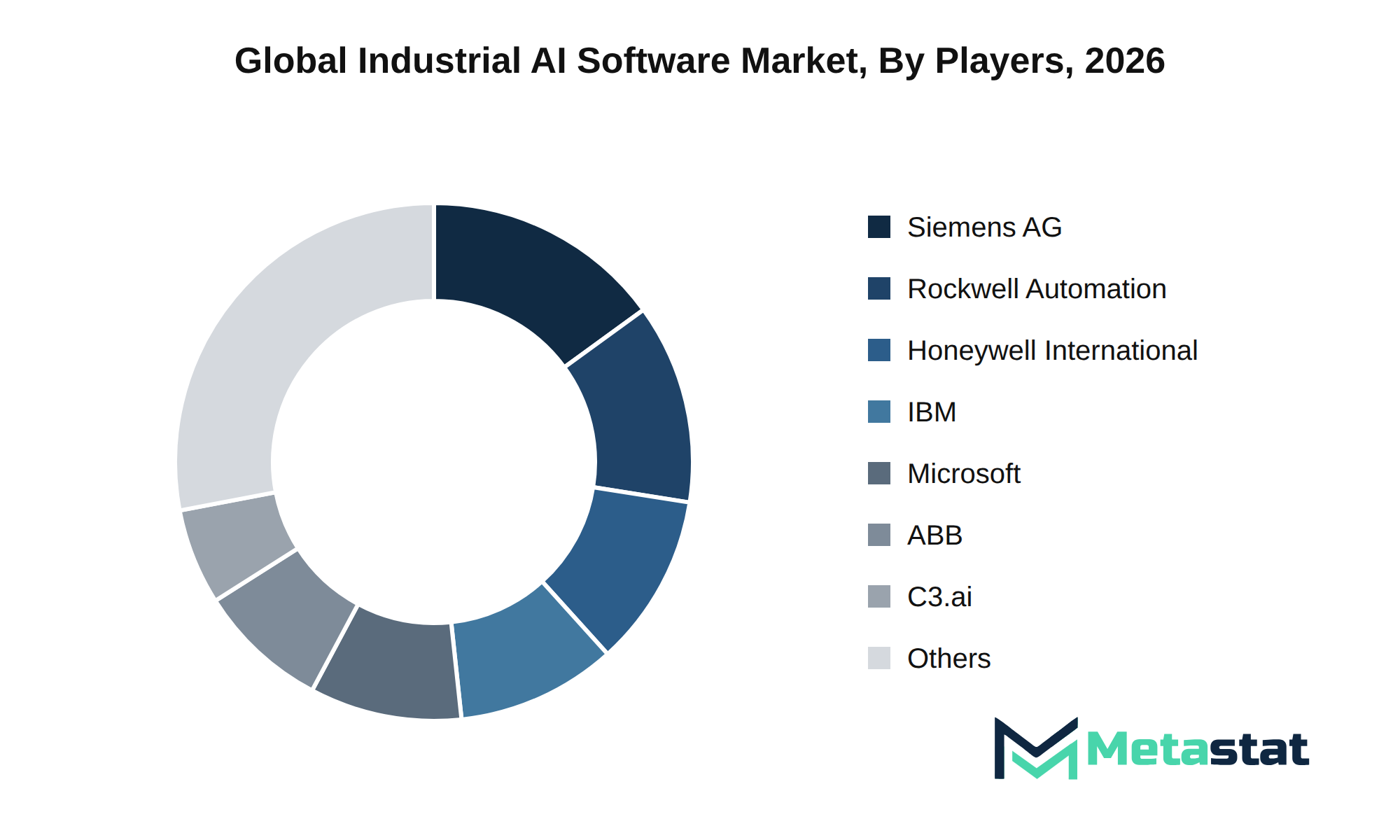
The Industrial AI Software market features a diverse array of prominent players engaging in various strategic behaviors. Key activities include mergers, acquisitions, and strategic consolidations, which enhance competitive positioning and technological capabilities. Companies including Siemens AG, Rockwell Automation, Inc., and Honeywell International Inc. focus on product differentiation through proprietary technology and robust R&D pipelines. This enables them to address changing customer needs and establish strong market presence.
Strategic alliances and joint ventures play a critical role in the market, allowing firms to leverage complementary strengths and expand their reach. For instance, partnerships between tech giants like Microsoft Corporation and Amazon Web Services, Inc. drive innovation and improve service offerings. These collaborations enhance customer retention strategies and create barriers to entry for potential new entrants.
The dynamics of the Industrial AI Software market reflect significant customer retention strategies, with companies prioritizing brand equity and switching costs. Players like IBM Corporation and SAP SE emphasize customer loyalty through tailored solutions and ongoing support. Intellectual property portfolios and patent landscapes serve because defensive imperatives, ensuring technological defensibility amid increasing competition.
Overall, the future competitive outlook for the market indicates continued growth vectors driven by advancements in technology and strategic positioning. Companies navigate the complexities of supply chain dominance and procurement leverage to maintain market leadership. The ability to innovate and adapt will determine success in this changing environment.
Market size is forecast to rise from USD 23.7 billion in 2025 to over USD 85.5 billion by 2033. The base case predicts growth at a 17.4% CAGR, driven by increasing demand for advanced automation and data-driven decision-making across various industries.
In a bull case scenario, accelerated technological advancements and widespread adoption of next-generation AI technologies could result in even higher growth rates, significantly enhancing operational efficiencies and enabling organizations to utilize vast amounts of data. Conversely, the bear case highlights potential challenges including economic downturns, regulatory hurdles, and geopolitical tensions that constrain market expansion and hinder investment in new technologies.
Factors influencing this market trajectory include macroeconomic factors, structural shifts in consumption patterns, and evolving regulatory frameworks. These elements contribute to shaping the competitive landscape and dictate capital allocation strategies among key industry players. Continuous investment in research and development will likely play an important role in determining the pace of innovation and the commercialization of emerging technologies.
While market dynamics evolve, organizations focus on aligning their strategies with executive-level imperatives to drive growth and enhance competitive positioning. The Industrial AI Software market presents opportunities for enterprises to address unmet needs, particularly in sectors experiencing rapid digital transformation and increasing demand for automation solutions.
The report strategically identifies and profiles the key market players and analyses their core competencies in each sub-segment of the Industrial AI Software market.
Report Attributes | Details |
Study Period | 2021-2033 |
Base Year | 2025 |
Estimated Year | 2026 |
Forecast Period | 2026-2033 |
Historical Period | 2021-2025 |
Growth Rate | CAGR 17.4% from 2026 to 2033 |
Revenue Unit | USD billion |
Segmentation | By Deployment Model, Technology, Application, End-Use Industry, and Region |
By Region | North America (By Deployment Model, Technology, Application, End-Use Industry, and Country)
|
Europe (By Deployment Model, Technology, Application, End-Use Industry, and Country)
| |
Asia Pacific (By Deployment Model, Technology, Application, End-Use Industry, and Country)
| |
South America (By Deployment Model, Technology, Application, End-Use Industry, and Country)
| |
Middle East and Africa (By Deployment Model, Technology, Application, End-Use Industry, and Country)
|
Find answers to common questions about this report
The Industrial AI Software market size was valued at USD 23.7 billion in 2025, according to the Metastat Insights study.
The Industrial AI Software market is projected to grow at a CAGR of 17.4% during the forecast period from 2026 to 2033.
The North America Industrial AI Software market size is estimated to reach USD 27.1 billion by 2033.
The Cloud-based deployment model leads the Industrial AI Software market, projected to reach USD 46 billion by 2033, compared to USD 23.9 billion for On-premises and USD 15.6 billion for Hybrid models.
Key drivers for the Industrial AI Software market include increasing capital investment environments, which enhance operational efficiency, and the growing emphasis on digital transformation initiatives. infrastructure development and the need for regulatory compliance influence adoption rates, while technological integration supports productivity across various industries.
North America holds the dominant share of the Industrial AI Software market, with a projected value of USD 27.1 billion in 2033, representing 33.8 percent of the total market.
Regulatory compliance presents significant challenges for the Industrial AI Software market, particularly in heavily regulated sectors like automotive and pharmaceuticals. Stricter regulations increase operational costs and complicate project timelines, leading to market fragmentation where only larger firms secure substantial market share. These compliance-related uncertainties limit overall growth potential.
Capital investment environments and infrastructure development significantly favor product adoption in the Industrial AI Software market. Increasing interest rates and GDP growth create favorable conditions for businesses to invest in advanced technologies, while investments in infrastructure enhance operational efficiency and competitiveness, driving demand for AI software solutions across various sectors.
The Industrial AI Software market is estimated to reach a valuation of USD 85.5 billion by 2033.
Key players in the Industrial AI Software market include Siemens AG, Rockwell Automation, Inc., Honeywell International Inc., IBM Corporation, Microsoft Corporation, and NVIDIA Corporation.
The analysts below cover Information & Technology research at Metastat Insights.
LEAD ANALYST
Utkarsh Khirodkar is a Lead Market Research Analyst at MetaStat Insight, specializing in market intelligence, technology sector assessments, and competitive strategy.

PRINCIPAL CONSULTANT - ENTERPRISE AI & EMERGING TECHNOLOGIES
Banking & Finance · Electronics and Semiconductor · Energy and Power · Healthcare IT · Information & Technology · Professional Services
Vijay Gunti is a Principal Consultant at MetaStat Insight, bringing over two decades of experience across enterprise digital transformation, technology strategy, and intelligent systems.

LEAD CONSULTANT - COMMUNICATION, TELECOM, AND IT
Electronics and Semiconductor · Information & Technology · Machinery & Equipment · Professional Services
Ravindra Sathe Consultants for Communication, Telecom, and IT at MetaStat Insight. He leads the firm's industry research initiatives across telecommunications infrastructure, digital connectivity, enterprise networking, and emerging information technology domains.
When planning edge sensor rollouts across refinery environments, generic IoT reports typically miss the harsh-environment certification bottlenecks. MetaStat Insight gave an objective evaluation of ATEX and Class 1 Division 2 hardware availability, along with realistic five-year maintenance cycle cost projections. The comparison of wireless mesh versus private cellular backhaul helped our team pressure-test network reliability models for remote processing facilities.
In the biological seed treatment space, registration timelines vary drastically between the European Union, Brazil, and North America. The MetaStat Insight research handled these cross-border regulatory barriers with genuine nuance, mapping commercialization pathways alongside historical field adoption rates. The segmentation between microbial strains and biochemical active ingredients was particularly well structured.
Our team was tracking whether regional recycling infrastructure could realistically absorb the growing volume of lithium iron phosphate batteries over the next decade. The report did a solid job separating announced hydrometallurgical plant capacity from active, permitted operational throughput. That distinction made the feedstock availability projections and regional recovery rate models far more credible than standard commercial overviews.
Explore related market intelligence reports worth reading alongside this one.
Starting from
$2950
Starting from
$2950