
LEAD ANALYST
Utkarsh Khirodkar is a Lead Market Research Analyst at MetaStat Insight, specializing in market intelligence, technology sector assessments, and competitive strategy.

China Factoring Services Market Size, Share, By Transaction Category (Domestic Factoring and International Factoring), By Recourse Type (Recourse Factoring and Non-Recourse Factoring), By Provider Type (Banks and Non-Bank Commercial Factors), By End-Use Industry (Manufacturing, Wholesale and Retail Trade, Construction, Transportation and Logistics, Information Technology and Telecommunications, Healthcare and Others), Industry Analysis, Growth, Trends, and Forecast, 2026-2033
Report ID
MSI-5761
Published
November, 2026
Pages
304 Pages
Format
Historical
Base year
Forecast
Forecast period
Report Details
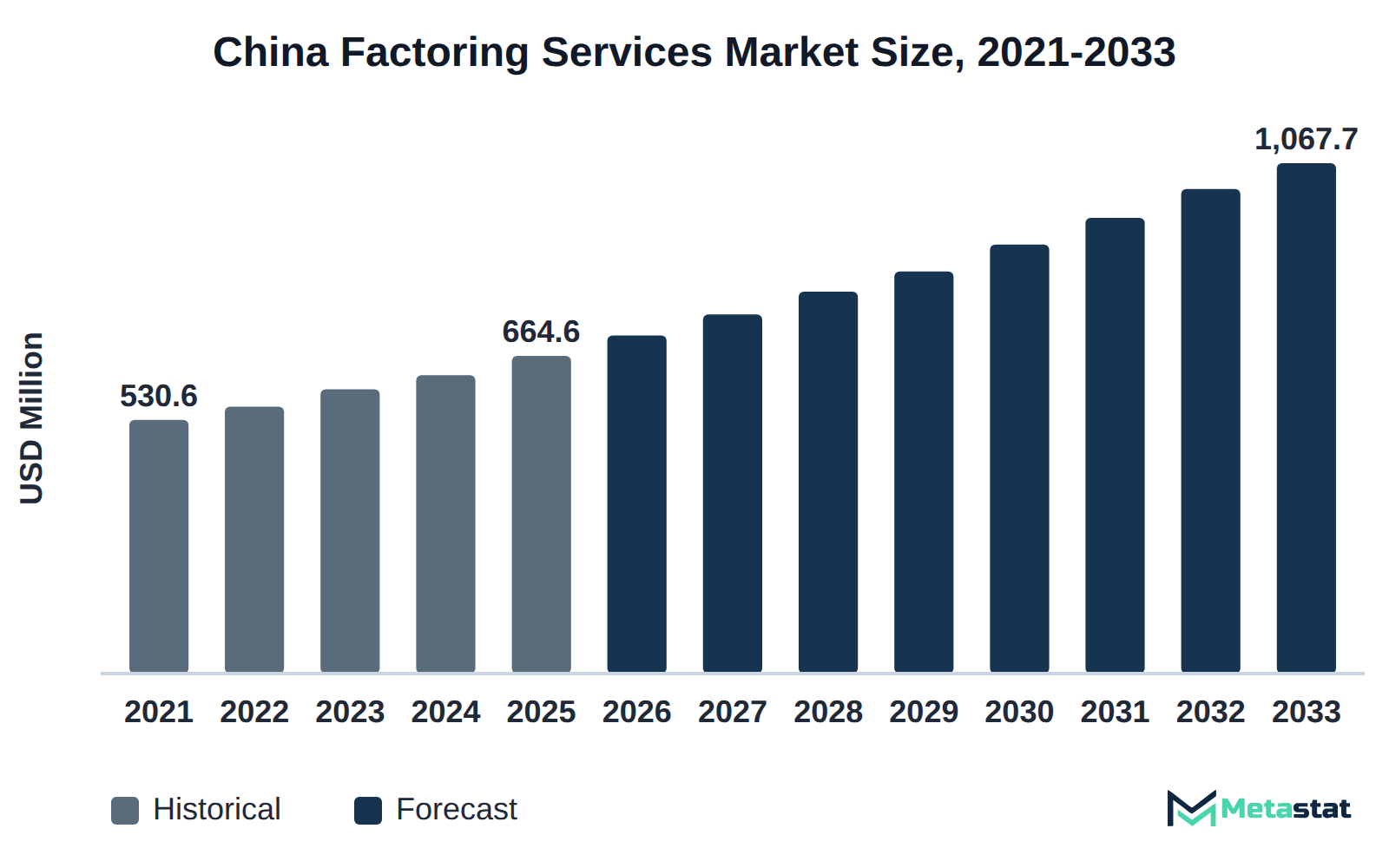
Market Valuation: Valued at $664.6 Million in 2025, projected to reach $1,067.7 Million by 2033 at a 6.1% CAGR.
Dominant Segment: Domestic factoring services lead the market, driven by the increasing demand from small and medium-sized enterprises (SMEs) seeking efficient cash flow solutions.
Geographic Lead: China stands out as the leading region in the factoring services market, benefiting from robust economic activities and a growing awareness of factoring benefits among businesses.
What's Inside: The report provides a comprehensive analysis of the China Factoring Services market, including competitive coverage, segment breakdowns, and forecasts extending from 2026 to 2033.
Emerging Trends: The international factoring segment is projected to grow at a CAGR of 7%, fueled by globalization and the need for businesses to manage cross-border receivables effectively.
Market Dynamics: The increasing adoption of non-recourse factoring is notable as businesses seek to mitigate risks associated with receivables, reflecting a broader trend towards risk-averse financial practices.
Choose Your License
China Factoring Services Market
The China Factoring Services market was valued at USD 664.6 million in 2025 and is projected to reach USD 1,067.7 million by 2033, growing at a CAGR of 6.1% over the forecast period.
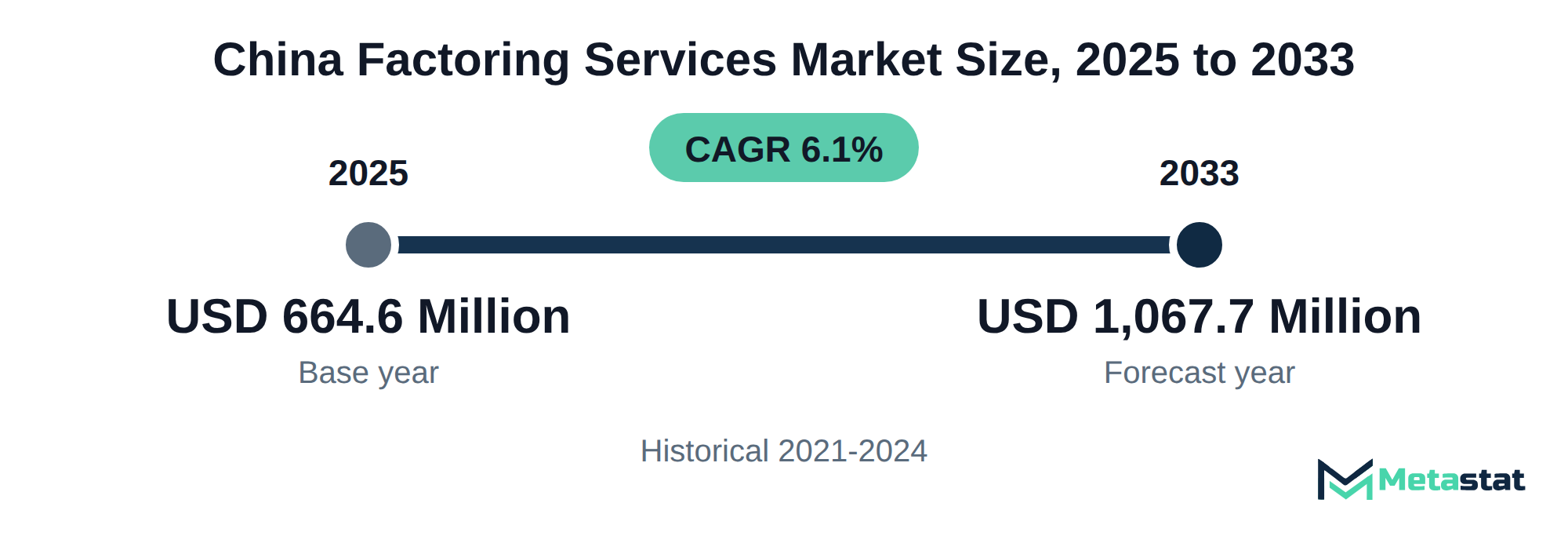
The China Factoring Services market encompasses financing solutions that improve cash flow for businesses by allowing them to sell their receivables. Companies invest in these services to enhance working capital and manage cash flow effectively, which supports broader corporate liquidity management. This need for immediate liquidity drives buyers, including enterprises in manufacturing, wholesale, and retail sectors, to seek factoring services to optimize their financial positions and operational capabilities.
Growth in the market is propelled by the increasing demand for domestic factoring services, which currently represents the largest segment in terms of value. The domestic factoring segment caters to various industries, with manufacturers leading in adoption, given their requirement for steady cash flow to maintain production and meet market demands. The market experiences considerable expansion opportunities driven by the rise in small and medium-sized enterprises that require accessible financing solutions to support their growth strategies.
China holds a significant market share compared to other regions, reflecting the country's strong economic activity and the role that factoring services play within its financial system. The combination of increasing international trade and the growing awareness of factoring benefits supports the market's trajectory. The anticipated growth rate is projected to position the China Factoring Services market for continued expansion, driven by evolving business needs and the push for more accessible financial solutions. Readers comparing national markets can also review the US factoring services market.
The growth of the China Factoring Services market stems from various economic dynamics that influence buyer behavior. Companies across multiple sectors seek these financial solutions to enhance liquidity, reduce credit risk, and improve operational efficiency. This sector appeals particularly to small and medium enterprises (SMEs) facing challenges securing traditional financing. Such businesses frequently rely on factoring services to maintain cash flow and sustain growth. The increasing demand for flexible financial solutions in a competitive landscape drives this reliance.
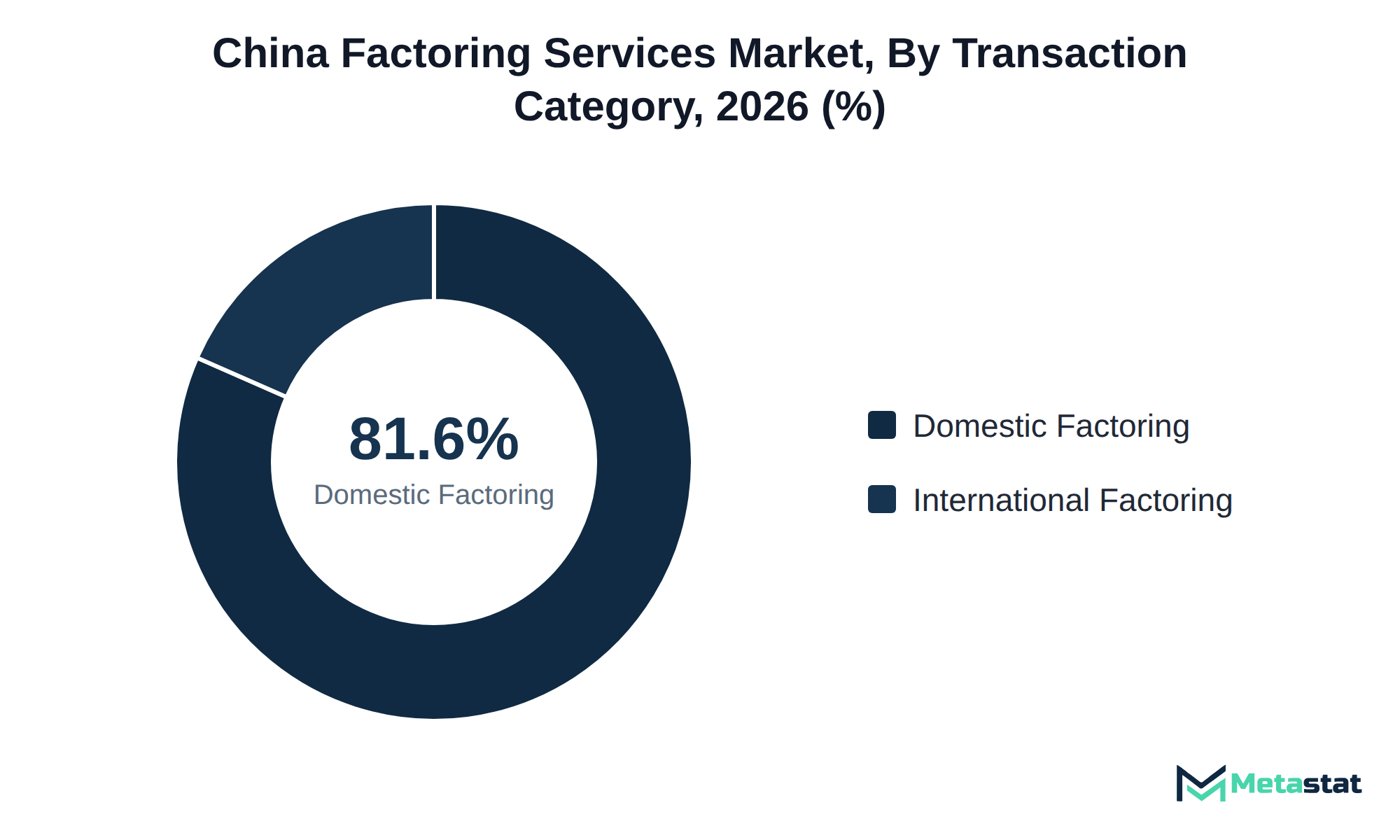
Domestic factoring represents the segment with the highest value in the market, reflecting the preference for local financial relationships and support. International factoring shows promise, driven by globalization and the need for businesses to manage cross-border transactions effectively. One region stands out due to its robust economic activity and increasing trade volume, reinforcing the demand for factoring services.
The primary growth driver in the market is the increasing adoption of factoring services by businesses looking to optimize cash management. This trend reflects a broader shift toward financial strategies that enhance liquidity and mitigate risks associated with accounts receivable. The China Factoring Services market continues to evolve, adapting to the changing needs of enterprises seeking reliable financing options.
Digital invoice verification in the China Factoring Services market improves operational efficiency and reduces fraud risk. This technology streamlines the verification process, allowing factors to confirm the authenticity of invoices swiftly and supporting fraud detection and prevention. In 2026, the domestic factoring segment is projected to reach USD 707.1 million, reflecting a growing demand for efficient services. Adoption of digital invoice verification supports this segment's expansion by providing accurate, real-time data for financial transactions, thus increasing trust among stakeholders.
This shift toward digital solutions offers substantial commercial benefits. By minimizing manual errors and fraud, companies expect lower operational costs and improved cash flow management. Digital invoice verification lets businesses apply technology effectively, improving customer satisfaction while driving market growth. Digital solutions are becoming integral to factoring services, and firms that invest in these technologies are likely to gain a competitive edge and contribute to market growth in the coming years.
Effective currency management is essential in cross-border receivables for participants in the China Factoring Services market. Buyers engaging in international factoring transactions face unique challenges involving currency fluctuations and cross-border payment processes. With international factoring projected to grow at a compound annual growth rate (CAGR) of 7% through 2033, demand for streamlined currency management solutions is rising. This trend reflects the necessity for buyers to adopt flexible pricing models that accommodate varying currency risks and provide protection against adverse exchange rate movements.
Pricing structures in international factoring often include fees based on transaction volumes and risk assessments related to the buyer's profile. Buyers typically negotiate terms that align with their cash flow requirements and the specifics of their international transactions. Payments in different currencies require efficient handling to ensure timely remittances, which reinforces the importance of choosing a factor that specializes in managing currency risks and offers transparent pricing. The ability to manage currency effectively contributes to operational efficiency and financial stability for businesses involved in cross-border transactions within the market.
In China, non-recourse factoring supports manufacturing supply chains. This financial solution allows manufacturers to sell their receivables without retaining credit risk, thus providing an essential safety net. Manufacturers benefit from increased cash flow and reduced exposure to client defaults, which is particularly important in markets characterized by tight margins and fluctuating demand. In the China Factoring Services market, the non-recourse factoring segment is projected to reach USD 445.9 million by 2033, demonstrating a compound annual growth rate of 7.3%. This growth reflects the increasing recognition of the financial security that non-recourse factoring offers.
Manufacturers often face substantial capital requirements to maintain operations and invest in growth opportunities. Access to immediate funds through non-recourse factoring enables these businesses to respond swiftly to market changes without the burden of debt. The rising preference for non-recourse solutions among manufacturers contributes to a more resilient supply chain. As a form of supply chain finance, non-recourse factoring reduces interruptions caused by financial uncertainties. As more manufacturers add non-recourse factoring to their financial strategies, the market for these services is expected to expand.
Factoring services provide working capital for SMEs in China. By providing immediate access to cash against outstanding invoices, these services significantly enhance liquidity, allowing businesses to invest in growth opportunities without waiting for client payments. In 2026, the domestic factoring segment is projected to generate USD 575.6 million, reflecting steady demand from SMEs looking to stabilize their cash flow.
The process of factoring enables SMEs to convert receivables into cash quickly, thereby addressing short-term financial needs. With increasing competition in the market, SMEs utilize these services to maintain operations and invest in innovation. The projected growth of 5.8% CAGR for the domestic factoring segment from 2026 to 2033 indicates a strong trend in employing these financial solutions.
Accessing working capital through factoring supports day-to-day operations and positions SMEs to take advantage of market opportunities. Such financial strategies become essential in a dynamic economic environment where maintaining agility defines success. The China Factoring Services market continues to evolve, reflecting the increasing relevance of factoring services for businesses aiming for sustained growth.
Increasing reliance on domestic factoring services arises from the evolving financial needs of small and medium-sized enterprises (SMEs) in China. These businesses seek efficient cash flow solutions to manage their operations and ensure timely payments to suppliers. The shift towards domestic factoring is driven by heightened competition and the necessity for improved liquidity in a challenging economic environment. Domestic factoring transactions are projected to expand from USD 575.6 million in 2026 to USD 855.9 million by 2033, a compound annual growth rate of 5.8%. This upward trend shows how the market supports SMEs with financing that improves their operational efficiency and competitiveness.
The increasing importance of domestic factoring services directly contributes to the overall growth of the market. While more SMEs turn to these services for their financing needs, the demand for effective cash flow solutions strengthens, creating further opportunities for service providers.
Non-recourse factoring services gain traction among businesses seeking to mitigate risks associated with receivables. This approach allows firms to offload the responsibility of non-payment to the factor, enhancing financial security in uncertain market conditions. The increasing frequency of defaults in various sectors drives companies to prioritize non-recourse solutions to protect their cash flow. Industries including manufacturing and wholesale trade particularly favor this model, where the financial implications of defaults are substantial.
This trend reflects a broader shift toward risk-averse financial practices among enterprises. While these businesses recognize the benefits of transferring credit risk, demand for non-recourse options increases. Evolving market dynamics and greater awareness of financial risk management make non-recourse factoring a key driver of the market's expected expansion.
The high cost of factoring services limits adoption among small and medium-sized enterprises (SMEs) in China. The expense associated with these services deters SMEs from using them, influencing their decision-making processes regarding financing alternatives. Increased competition from other financing methods, including bank loans or alternative lending solutions, exacerbates this issue. SMEs often weigh the costs of factoring against the benefits of immediate cash flow, leading to slower uptake in the market. Businesses in sectors with lower profit margins, including wholesale and retail trade, experience more pronounced effects from these constraints. Many SMEs delay seeking factoring services due to perceived high costs, which affects their ability to improve cash flow and operational flexibility. Addressing these cost-related concerns is essential to enhance market penetration and stimulate demand among potential users of factoring services.
Rising operational costs create significant margin pressure for suppliers in the China Factoring Services market. Increased competition drives prices down, limiting the profitability of service offerings. The growing costs associated with technology integration and compliance requirements further strain margins. Suppliers respond by optimizing service delivery and exploring cost-reduction strategies. Many adopt advanced technologies, including intelligent automation and artificial intelligence, to streamline operations and enhance efficiency. These measures help reduce operational expenses and improve service scalability. In parallel, several suppliers focus on niche markets and customized services to differentiate themselves, ultimately targeting sectors with higher margins. This strategic shift aims to maintain profitability amid competitive pricing pressures and evolving market dynamics.
The International Factoring segment within the China Factoring Services market reflects significant growth potential. This segment is estimated to reach USD 211.8 million by 2033, a compound annual growth rate (CAGR) of 7%. The increasing globalization of trade drives businesses toward international factoring solutions, allowing them to manage cross-border receivables effectively. Various industries, including manufacturing and trade, adopt these services to enhance cash flow while mitigating risks associated with foreign transactions. The growing need for financial flexibility among exporters contributes to this upward trend, with more companies seeking ways to optimize their working capital. Enhanced service offerings, focusing on international transactions, will further support revenue growth in this segment.
While more businesses engage in cross-border trade, the International Factoring segment stands out, providing essential financing options. Growth in this area aligns with broader trends in the factoring market, which is projected to reach USD 1,067.7 million by 2033. Investment in international factoring solutions is expected to increase as companies recognize the advantages of improved liquidity and reduced credit risk in a competitive global environment.
The China Factoring Services market is segmented based on Transaction Category, Recourse Type, Provider Type, and End-Use Industry.
In China, domestic factoring gives businesses immediate liquidity through the sale of receivables, enabling firms to manage cash flow effectively. The demand for domestic factoring is primarily driven by small and medium-sized enterprises (SMEs) seeking to improve working capital, reflecting a growing trend among these entities. Unlike International Factoring, which caters to cross-border transactions, domestic factoring focuses on local businesses, allowing for quicker processing and lower costs. In comparison, the International Factoring segment demonstrates a higher projected CAGR of 7%, indicating a more significant growth pattern driven by globalization and foreign trade expansion. This distinction highlights the varying dynamics and needs of businesses engaging in domestic versus international factoring services.
International Factoring is estimated to reach USD 211.8 million by 2033, at a CAGR of 7% during the forecast period. This segment provides essential financing solutions for businesses engaging in international trade, enabling them to manage cross-border receivables efficiently. Companies involved in sectors like manufacturing and wholesale trade use international factoring to mitigate risks and enhance liquidity. Growing global trade and increasing demand for efficient payment collection are significant forces driving this segment. Compared to domestic factoring, which has a CAGR of 5.8%, international factoring exhibits faster growth due to its strategic importance in global supply chains. The ability to finance international transactions while minimizing risks differentiates this segment from others, making it an attractive option for traders and exporters seeking to optimize working capital. In the China Factoring Services market, this segment enhances financial stability for businesses operating in competitive international environments.
Recourse Factoring segment is valued at USD 434.8 million in 2026 and is projected to reach USD 621.8 million by 2033, at a CAGR of 5.2% during the forecast period. This segment serves businesses seeking to improve cash flow by selling their receivables while retaining the risk of non-payment. Manufacturers and trade businesses engage in recourse factoring to manage their working capital while enhancing liquidity. One driving force of this segment is the increasing demand for financing options that accommodate varying cash flow needs, particularly in sectors including manufacturing. Unlike non-recourse factoring, which transfers the risk of non-payment to the factor, recourse factoring allows businesses to retain this risk, potentially leading to lower costs for companies willing to handle credit risks. The growth rate of 5.2% reflects moderate expansion compared to other segments, illustrating steady but cautious adoption among businesses toward managing their receivables.
Non-recourse factoring allows businesses to transfer the risk of customer non-payment to the factor, making it particularly attractive to companies seeking to minimize financial exposure. Industries including manufacturing and wholesale trade frequently benefit from non-recourse factoring, gaining improved cash flow without the burden of risk associated with uncollectible receivables. Increasing demand for this segment is driven by businesses prioritizing liquidity and stability in uncertain economic conditions. Compared to recourse factoring, which grows at a slower CAGR of 5.2%, non-recourse factoring appeals to a broader range of buyers who prioritize risk mitigation over cost efficiency. The growth of non-recourse factoring reflects a significant shift in buyer preferences within the evolving environment of the China Factoring Services market.
Banks provide essential financing solutions valued at USD 520.3 million in 2026, projected to reach USD 756.6 million by 2033, at a CAGR of 5.5% during the forecast period. These services support businesses, allowing them to enhance cash flow by selling receivables. Larger enterprises frequently engage banks due to established commercial banking relationships and reliability, while SMEs often turn to non-bank commercial factors for more flexible terms. Growth in this segment is driven by increasing demand for liquidity among businesses, influenced by economic fluctuations and rising needs for efficient cash management. Compared with non-bank commercial factors, banks offer lower pricing and stronger regulatory compliance, attracting larger buyers seeking stability. The banks segment stands out with steady growth, positioning it favorably within the broader market.
Non-Bank Commercial Factors segment is estimated to reach USD 311.1 million by 2033, at a CAGR of 7.6% during the forecast period. This segment serves businesses seeking alternative financing options outside traditional banking channels, appealing to small and medium-sized enterprises (SMEs) that require quicker access to capital. Strong demand for flexible financing solutions drives growth in this segment, particularly as these factors provide services tailored to specific industries. Compared to banks, which are projected to grow at a CAGR of 5.5%, non-bank commercial factors offer faster growth, reflecting a shift in preference among clients. This segment ultimately provides a vital resource for companies seeking to manage cash flow and finance operational needs efficiently.
Manufacturing is valued at USD 226.3 million in 2026 and is projected to reach USD 333.5 million by 2033, at a CAGR of 5.7% during the forecast period. This segment serves industries that rely heavily on the conversion of raw materials into finished products, where timely access to working capital is crucial. Factors driving growth in this segment include increasing demand for financial solutions that enhance liquidity and efficiency in production processes. The manufacturing segment differs from others in the market due to its relatively lower growth rate compared to sectors including international factoring, which exhibits a CAGR of 7%. Manufacturers often seek strong financing options to handle operational costs and maintain competitiveness, emphasizing the importance of factoring services in managing cash flow and extending credit to clients.
Wholesale and Retail Trade segment is estimated to reach USD 225.9 million by 2033, at a CAGR of 5.4% during the forecast period. This segment primarily serves retailers and wholesalers looking to enhance cash flow and manage receivables efficiently. Factors driving this segment include the growing volume of transactions and the increasing demand for liquidity to support inventory purchases, particularly in a competitive retail environment. Unlike other segments, including Manufacturing, which has a CAGR of 5.7%, the Wholesale and Retail Trade segment experiences slightly slower growth, reflecting tighter margins and pricing pressures. This nuanced landscape presents unique challenges, particularly related to fluctuating demand and pricing, differentiating it from faster-growing areas within the China Factoring Services market.
Construction segment is expected to reach USD 154.1 million by 2033. This segment primarily serves construction firms seeking financing solutions for project execution and cash flow management. Demand for factoring services in this segment stems from the industry's ongoing projects that require steady cash flow to meet operational needs, including labor and materials costs. Factors including fluctuating material costs and regulatory approvals influence financing needs for construction firms. Compared to segments like Manufacturing, which is projected to grow at a CAGR of 5.7%, the Construction segment shows a unique dynamic driven by its reliance on timely project funding. This distinctiveness positions construction factoring services within the China Factoring Services market as essential for ensuring project continuity and financial stability.
Transportation and Logistics segment is projected to grow at a CAGR of 7% during the forecast period. This segment supports supply chain financing for businesses engaged in the movement of goods, ensuring timely payment for services rendered. Companies within this sector, including freight forwarding and logistics service providers, apply factoring solutions to manage cash flow and address working capital constraints. Demand in this segment is driven by the increasing need for efficient cash flow management among logistics firms, which face pressure from fluctuating operational costs. Compared to other end-use industries, this segment exhibits a higher growth rate, reflecting the evolving dynamics of global trade and the necessity for streamlined financial solutions. In 2026, the contribution of this segment to the China Factoring Services market reflects its importance in facilitating commercial transactions and enhancing liquidity for firms in the transportation sector.
The Information Technology and Telecommunications segment encompasses businesses engaged in software, hardware, and telecommunications services. Companies in this sector apply factoring services to manage cash flow and maintain operational efficiency. Rapid technological advancements drive demand, leading firms to seek financial solutions that accommodate evolving needs. Unlike sectors including Manufacturing or Construction, this segment exhibits unique characteristics, including potentially higher transaction values and a diverse array of buyer profiles. Increased focus on digital transformation and the integration of advanced technologies contribute to the segment's dynamics, distinguishing it from others in the market. Companies operating in this field require flexible financing options to support ongoing innovation and competition.
Healthcare services involve a range of medical and health-related activities, which require reliable financial solutions to manage cash flow effectively. Hospitals, clinics, and other healthcare providers rely on factoring services to address delayed payments from insurance companies or government programs. The increasing demand for healthcare, driven by an aging population and rising prevalence of chronic diseases, significantly influences the growth trajectory of this segment. Strict regulations and reimbursement challenges present notable barriers; however, innovative payment models and advancements in healthcare technology create new opportunities. Unlike segments including Manufacturing or Wholesale and Retail Trade, which focus on tangible goods, the healthcare segment emphasizes timely service delivery and financial management, highlighting its unique position within the China Factoring Services market.
The Others (Staffing, Business Services, Leasing) segment encompasses a diverse set of services that cater to various operational needs across industries. This segment provides businesses with financial solutions that enhance cash flow management and support operational flexibility. Demand for these services is influenced by the increasing reliance on temporary staffing and outsourcing, which allows companies to reduce costs while maintaining operational efficiency. Compared to other segments, this category experiences slower growth, primarily due to clients' cautious approach toward financial commitments in uncertain economic conditions. Organizations require efficient funding solutions to navigate fluctuating market demands, establishing a unique position within the China Factoring Services market. Interest in enhancing the quality of service delivery within this segment continues to drive its evolution, presenting opportunities for growth while businesses seek to optimize their financial operations.
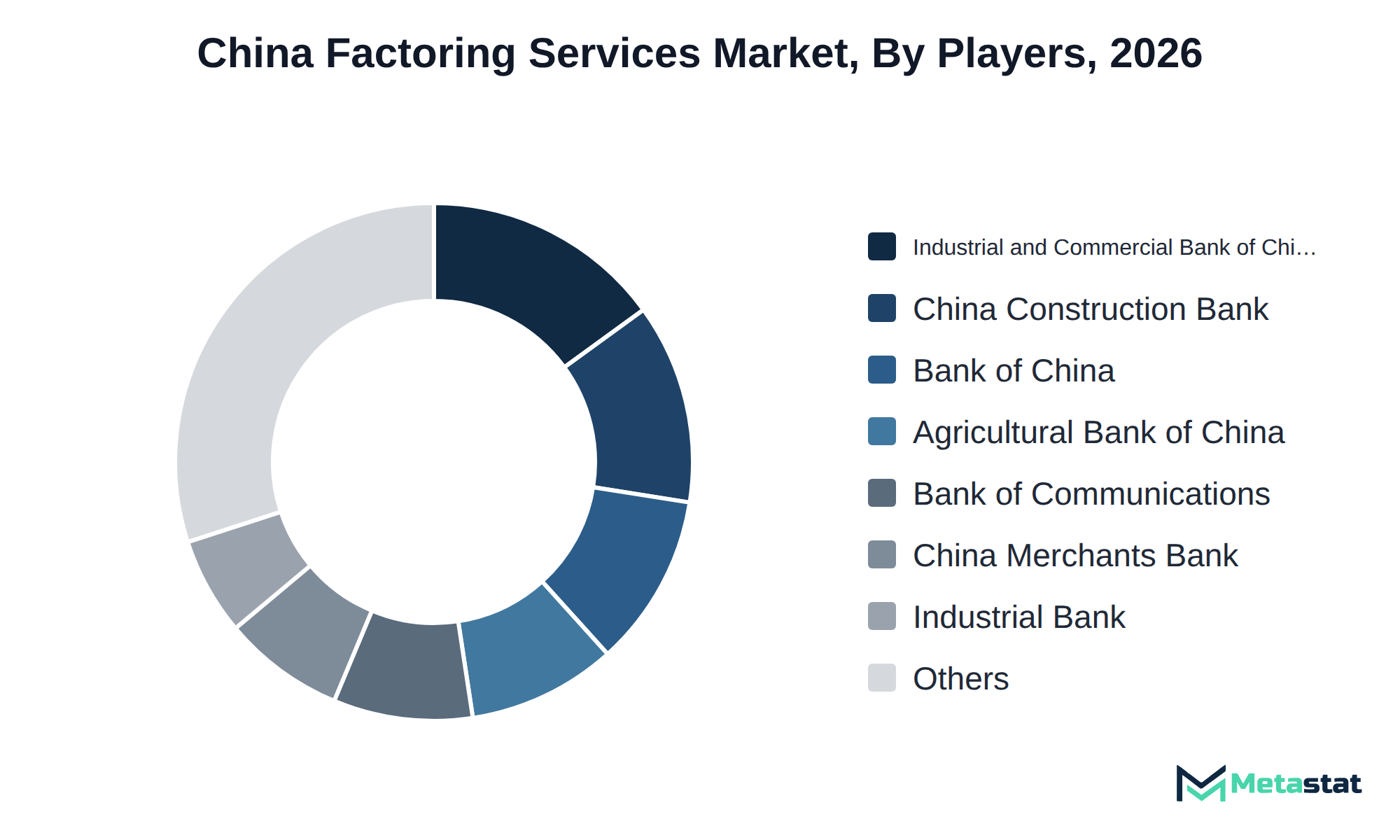
In the China Factoring Services market, competition divides primarily by provider type and transaction category. Banks dominate the market, with significant players like Industrial and Commercial Bank of China Limited, China Construction Bank Corporation, and Bank of China Limited focusing on traditional factoring services. Meanwhile, non-bank commercial factors including Sinochem Holdings Corporation Ltd. and Poly Commercial Factoring Co., Ltd. emphasize specialized services to attract clients across various sectors.
Buyers select factoring services based on factors including price, service quality, and customization options. For instance, Agricultural Bank of China Limited offers competitive pricing aimed at small to medium enterprises, while China Merchants Bank Co., Ltd. highlights personalized service packages designed to meet diverse client needs. HSBC Bank (China) Company Limited focuses on integrating factoring services into broader financial solutions, enhancing the overall value proposition for businesses seeking comprehensive support.
Growth in the China Factoring Services market stems from several key developments, especially in the Domestic Factoring segment, projected to expand at a CAGR of 5.8% over the forecast period. Enhanced demand from the manufacturing sector will drive this increase, reflecting the industry's reliance on factoring services for improved cash flow management. Growth in non-recourse factoring, anticipated to reach USD 445.9 million by 2033, presents another significant opportunity for the market, appealing to businesses seeking risk mitigation in their financial transactions.
Challenges exist that could impede this trajectory. Regulatory hurdles and market volatility pose risks that could slow adoption rates across various industries. Uncertainty in global trade dynamics could particularly impact international factoring services, which currently aim for a CAGR of 7%. Overall, the China Factoring Services market stands to benefit from these developments while remaining vigilant to external factors that could influence growth potential.
By Transaction Category: Domestic Factoring, International Factoring
By Recourse Type: Recourse Factoring, Non-Recourse Factoring
By Provider Type: Banks, Non-Bank Commercial Factors
By End-Use Industry: Manufacturing, Wholesale and Retail Trade, Construction, Transportation and Logistics, Information Technology and Telecommunications, Healthcare, Others (Staffing, Business Services, Leasing)
The report strategically identifies and profiles the key market players and analyses their core competencies in each sub-segment of the Factoring Services market.
Report Attributes | Details |
Study Period | 2021-2033 |
Base Year | 2025 |
Estimated Year | 2026 |
Forecast Period | 2026-2033 |
Historical Period | 2021-2025 |
Growth Rate | CAGR 6.1% from 2026 to 2033 |
Revenue Unit | USD million |
Segmentation | By Transaction Category, Recourse Type, Provider Type, End-Use Industry, and Region |
Find answers to common questions about this report
The Factoring Services market size was valued at USD 664.6 million in 2025.
The market is projected to grow at a CAGR of 6.1% during the forecast period from 2026 to 2033.
Domestic Factoring leads the Factoring Services market with a projected value of USD 855.9 million by 2033, surpassing International Factoring.
Increasing reliance on domestic factoring services stems from the evolving financial needs of small and medium-sized enterprises (SMEs) seeking efficient cash flow solutions. The growing demand for non-recourse factoring services arises from companies aiming to mitigate risks associated with receivables, particularly in sectors like manufacturing and wholesale trade.
The high cost of factoring services limits adoption among small and medium-sized enterprises in China. Rising operational costs create significant margin pressure for suppliers, influencing their pricing strategies and profitability.
The increasing reliance on domestic factoring services among small and medium-sized enterprises (SMEs) highlights a growing demand for efficient cash flow solutions. the rising importance of non-recourse factoring services reflects a shift toward risk-averse financial practices, enhancing financial security for businesses amid uncertain market conditions.
The Factoring Services market is estimated to reach a valuation of USD 1,067.7 million by 2033.
Key players operating in the Factoring Services market include Industrial and Commercial Bank of China Limited, China Construction Bank Corporation, Bank of China Limited, Agricultural Bank of China Limited, Bank of Communications Co., Ltd., China Merchants Bank Co., Ltd., and Sinochem Holdings Corporation Ltd.
Domestic factoring services are projected to reach USD 855.9 million by 2033, reflecting a compound annual growth rate of 5.8%.
Industries including manufacturing and wholesale trade drive demand for non-recourse factoring, where companies seek to mitigate risks associated with receivables.
The analysts below cover Banking & Finance research at Metastat Insights.
LEAD ANALYST
Utkarsh Khirodkar is a Lead Market Research Analyst at MetaStat Insight, specializing in market intelligence, technology sector assessments, and competitive strategy.

PRINCIPAL CONSULTANT - ENTERPRISE AI & EMERGING TECHNOLOGIES
Banking & Finance · Electronics and Semiconductor · Energy and Power · Healthcare IT · Information & Technology · Professional Services
Vijay Gunti is a Principal Consultant at MetaStat Insight, bringing over two decades of experience across enterprise digital transformation, technology strategy, and intelligent systems.
Most industry reports on warehouse automation bundle autonomous mobile robots and fixed conveyor installations into the same top-level numbers, which complicates advisory work. This study split the market cleanly by payload tiers, navigation technology, and fleet management software layers. The regional forecast for Western Europe gave our team defensible adoption benchmarks when evaluating capital allocation for logistics clients, saving us days of secondary data scrubbing.
Standard industry briefs frequently blur the operational distinctions between isobaric pressure exchangers and centrifugal turbines. In this study, MetaStat Insight categorized mega-scale desalination tenders across the GCC and Mediterranean basins by membrane replacement frequencies and salinity tolerances. Their primary research helped us evaluate local content requirements in Saudi Arabia and the UAE without relying on marketing literature. We found the segment-level equipment replacement estimates grounded and well-reasoned throughout.
The technical breakdown of ISO 20022 migration readiness across correspondent banking corridors was remarkably thorough. Rather than treating cross-border corporate payments as a single block, the report drew a useful distinction between multilateral netting platforms and domestic instant payment rails across ASEAN economies. MetaStat Insight highlighted regulatory constraints on foreign exchange liquidity management that many publications gloss over. The research material offered practical clarity for our platform development roadmap.
Explore related market intelligence reports worth reading alongside this one.