
LEAD ANALYST
Utkarsh Khirodkar is a Lead Market Research Analyst at MetaStat Insight, specializing in market intelligence, technology sector assessments, and competitive strategy.

Global Asset Allocation Market Size, Share, By Product Type (Asset Allocation Mutual Funds and Unit Trusts, Asset Allocation Exchange-Traded Funds, Asset Allocation Collective Investment Trusts, Multi-Asset Separately Managed Accounts, Asset Allocation Model Portfolios, Multi-Asset Insurance Pooled Portfolios), By Asset Class (Equities, Fixed Income, Cash and Money Market Instruments, Real Estate, Private Equity, Infrastructure, Hedge Funds, Commodities, Others (Digital Assets and Collectibles)), By Investment Management Approach (Active Management, Passive Management, Blended Active and Passive Management), By End User (Individual Investors, Insurance Companies, Sovereign Wealth Funds, Endowments and Foundations, Family Offices, Corporations, Others (Banks and Public-Sector Reserve Funds)), Industry Analysis, Growth, Trends, and Forecast, 2026-2033
Report ID
MSI-5468
Published
October, 2026
Pages
280 Pages
Format
Historical
Base year
Forecast
Forecast period
Report Details
Market Valuation: Valued at $49.3 Billion in 2025, projected to reach $77.4 Billion by 2033 at a 5.8% CAGR.
Dominant Segment: Asset Allocation Mutual Funds and Unit Trusts lead the market, driven by increasing interest in passive investment approaches and the demand for diversified strategies that manage risk and enhance returns.
Geographic Lead: North America is the dominant region, holding 47.6% of the market in 2025, with the US expected to maintain its leadership due to a robust financial infrastructure and higher disposable income.
What's Inside: The report provides comprehensive coverage of market dynamics, including competitive analyses, growth trends, and a forecast window from 2026 to 2033, focusing on various product types and asset classes.
Emerging Demand: There is significant growth potential in the Asset Allocation Exchange-Traded Funds segment, projected to achieve a CAGR of 10.4%, reflecting a shift towards more accessible investment products favored by individual investors.
Market Constraints: High fees associated with investment products pose challenges to broader adoption among individual investors, potentially limiting market growth and engagement.
Choose Your License
Global Asset Allocation Market
The global Asset Allocation market was valued at USD 49.3 billion in 2025 and is projected to reach USD 77.4 billion by 2033, growing at a CAGR of 5.8% over the forecast period.
The Asset Allocation market encompasses various investment strategies aimed at optimizing asset distribution across different financial instruments. Buyers invest in this market to achieve diversified portfolios that balance risk and return, meeting the increasing demand for effective investment management solutions. Factors including changing economic conditions, regulatory frameworks, and evolving investor preferences drive spending in this sector.
Growth in the market is primarily fueled by the increasing adoption of technology-driven investment management tools and strategies. Among the different segments, Asset Allocation Mutual Funds and Unit Trusts represent the most significant value. North America holds 47.6% of the market in 2025, with the US leading in 2026. This region's robust financial infrastructure and higher disposable income contribute to its prominent position in asset allocation activities.
Investors increasingly focus on strategies that enhance portfolio performance, addressing the demand for tailored investment solutions. The shift towards multi-asset strategies reflects a broader trend toward risk-adjusted returns, allowing investors to navigate market volatility effectively. This evolving landscape highlights the market's potential for sustained expansion in the coming years.
The Asset Allocation market provides a range of investment vehicles, enabling investors to diversify their portfolios effectively. This market attracts individual investors, insurance companies, and sovereign wealth funds, driven by the need for strategic asset distribution to manage risk and enhance returns. By allocating resources across various asset classes, buyers aim to optimize their financial performance while mitigating potential losses related to market volatility.
Growth within the market is primarily fueled by increasing demand for asset allocation mutual funds and unit trusts, which represent the largest segment in terms of value. European investors contribute significantly, accounting for 29.3% of the overall market share. The shift towards passive and blended investment management approaches further supports market expansion, reflecting a broader trend in investment strategies.
Investment in asset allocation strategies becomes essential in a changing financial landscape. The need for effective risk management drives the adoption of diverse asset classes, including equities and fixed income. Investors seek to enhance their portfolio resilience, positioning the Asset Allocation market for sustained growth, driven by evolving market dynamics and investor preferences.
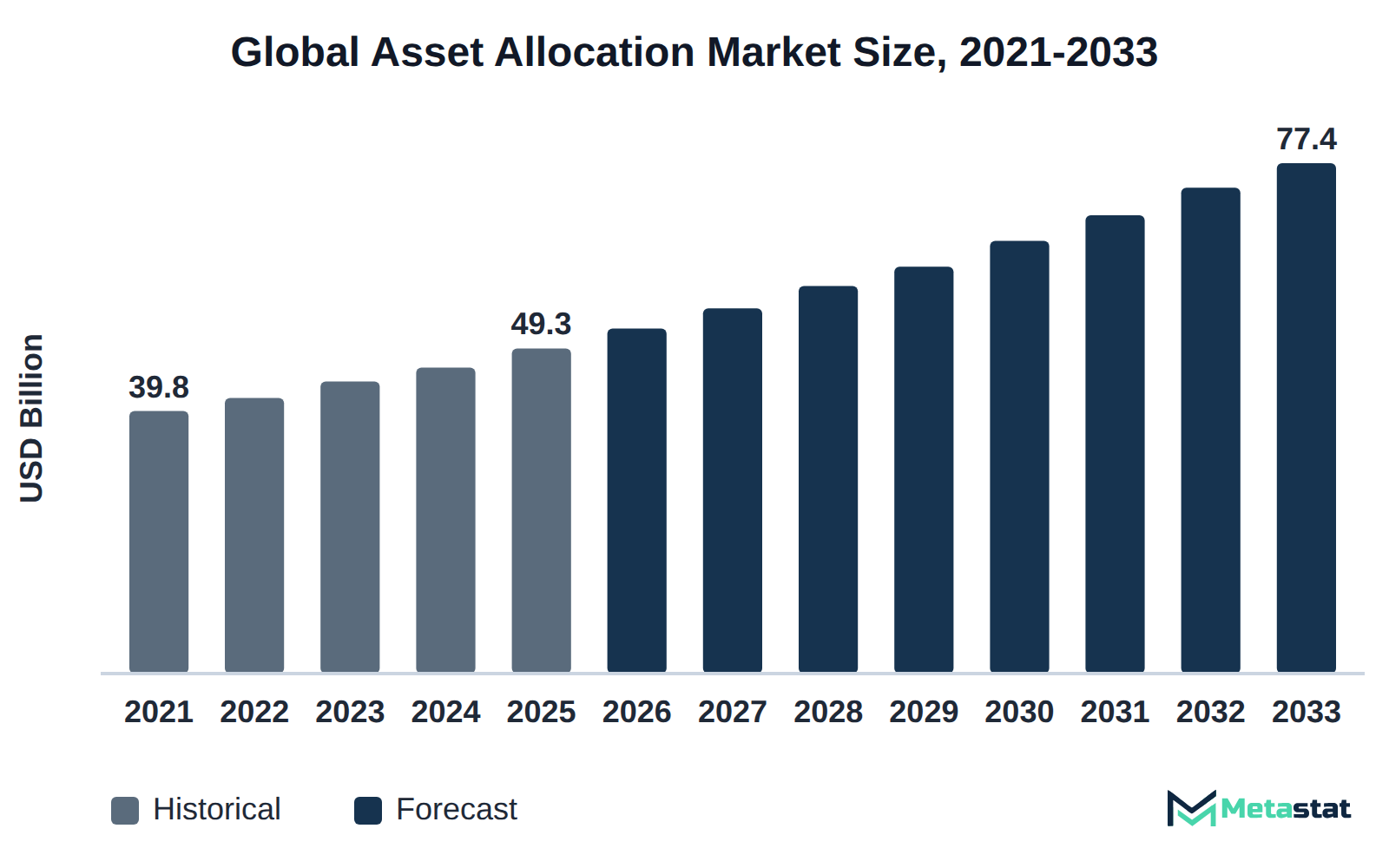
ETF model portfolios have transformed the Asset Allocation market, providing investors with streamlined and cost-effective investment solutions. This shift towards exchange-traded funds highlights the growing preference for passive management strategies, which are projected to reach a valuation of USD 15.1 billion by 2033. The rapid growth of ETF model portfolios is attributed to their inherent advantages, including lower fees and increased liquidity, attracting a wider audience comprising both individual investors and institutional buyers.
The demand for these products stems from various factors, including the desire for diversification and risk management, along with the need for simplifying investment decisions. ETF model portfolios allow investors to gain exposure to multiple asset classes while minimizing the complexities associated with investment management. This simplicity is particularly appealing for individual investors, with the segment expected to grow from USD 20.4 billion in 2026 to USD 31.6 billion by 2033. Such growth signifies a shift towards more accessible investment solutions that cater to a broader demographic.
The evolution towards ETF model portfolios not only enhances the investment landscape but influences the competitive dynamics within the market. While more investment firms enter this space, competition intensifies, driving innovation and lowering costs for consumers. This competitive environment is likely to encourage greater adoption of asset allocation strategies, further propelling growth in the market.
Private credit and infrastructure investments play a significant role in multi-asset portfolio construction, attracting attention from various institutional investors. The Asset Allocation market has seen a notable emphasis on these asset classes, driven by the search for yield and diversification. In 2026, private credit is anticipated to enhance portfolio returns, particularly among individual investors, who are expected to increase their allocation to this asset class substantially.
Pricing mechanisms for private credit typically involve negotiated contract terms that reflect the risk profile of the investment. Investors often expect higher yields due to the illiquidity associated with private credit compared to traditional fixed income investments. Infrastructure investments achieve premium pricing, supported by stable cash flows and long-term growth potential. The evolution of the Asset Allocation market toward integrating these assets results in diversified risk management strategies for investors.
The trend of incorporating private credit and infrastructure into multi-asset portfolios exemplifies a shift in investment strategies, with significant implications for future performance and capital flows. Institutional investors, including insurance companies and sovereign wealth funds, actively seek these opportunities, enhancing the overall robustness of their portfolios. This strategic pivot positions investors to capitalize on emerging trends within the market.
Outsourced Chief Investment Officer (CIO) mandates represent a significant trend among institutional investors seeking to enhance their asset allocation strategies. This trend arises from the increasing complexity of financial markets and the desire for specialized expertise. Institutions including pension funds and endowments, often with substantial funds under management, require tailored investment solutions that align with their specific objectives and risk tolerances.
The Asset Allocation market is projected to grow, with individual investors contributing to the rising demand for sophisticated investment strategies. Individual investors are expected to increase their allocation from USD 20.4 billion in 2026 to USD 31.6 billion by 2033, reflecting a compound annual growth rate of 6.4%. This growth highlights the shift toward a more structured approach to asset management that emphasizes strategic outsourcing.
Outsourced CIO services provide institutional clients with access to advanced investment capabilities and diversified portfolios. By leveraging the expertise of external managers, these institutions enhance operational efficiency, reduce costs, and achieve better risk-adjusted returns. Consequently, the adoption of outsourced CIO mandates is expected to reshape the competitive landscape of the asset allocation space, driving innovation and creating value for clients.
Strategic asset allocation focuses on long-term investment goals, establishing a baseline portfolio allocation across various asset classes. This method emphasizes a stable investment strategy, aiming to optimize returns over a longer period. In the context of the Asset Allocation market, the strategic approach encompasses several asset types, including equities, fixed income, and real estate. For instance, equities alone are projected to grow from USD 21.7 billion in 2026 to USD 30.8 billion by 2033, reflecting a compound annual growth rate of 5.1%. This growth highlights the increasing emphasis on long-term strategic allocation by institutional and individual investors.
Tactical asset allocation, conversely, involves making short-term adjustments to capitalize on perceived market inefficiencies or opportunities. This approach allows investors to shift asset allocation in response to market conditions, potentially enhancing returns in the short run. However, the inherent risks associated with tactical strategies often lead to increased volatility in investment performance. Understanding the differences between these two approaches enables investors to align their portfolios with their financial objectives, ultimately influencing their long-term financial health within the market.
Interest among individual investors in diversified asset management strategies drives significant growth in the market. A notable demographic shift occurs with younger investors increasingly seeking to build wealth through informed investment choices. This trend leads to an uptick in demand for asset allocation products designed to provide comprehensive portfolio management, reflecting a growing preference for tailored solutions. While these investors prioritize long-term financial goals, they allocate more funds towards diversified assets, enhancing overall market activity. The growing interest in various investment vehicles supports both volume and pricing dynamics within the asset allocation landscape, contributing to broader market expansion. Investment firms responding to this shift enhance their offerings to cater to evolving preferences.
Advancements in data analytics and artificial intelligence significantly influence asset allocation strategies. These technologies enhance the ability of investors to analyze vast amounts of financial data, identifying trends and market opportunities efficiently. The integration of machine learning algorithms facilitates predictive modeling, enabling investment managers to optimize portfolio performance based on real-time market conditions.
Investment firms leverage these technologies to refine their approaches toward risk management and asset selection. Enhanced data processing capabilities allow for better assessment of market volatility and asset correlations, leading to informed decision-making. This increased sophistication attracts institutional investors seeking competitive advantages in portfolio construction.
In the Asset Allocation market, the shift toward technology-driven investment strategies results in more personalized and dynamic investment solutions. Firms that adopt these innovations position themselves favorably to capture greater market share, responding swiftly to changing economic environments and investor preferences. The ongoing technological evolution supports significant growth within the market, reflecting an industry increasingly reliant on advanced analytics and automated processes.
High fees associated with investment products in the Asset Allocation market hinder broader adoption among individual investors. High management and transaction costs create barriers, resulting in slower uptake and reduced engagement. These financial constraints particularly affect new investors who seek affordable and accessible investment options. A significant portion of potential clients remains hesitant to commit capital to higher-cost vehicles, opting instead for cheaper alternatives. This trend restricts the growth trajectory of the market, limiting the ability of various investment firms to attract and retain customers. The lack of competitive pricing options diminishes the overall appeal of asset allocation strategies, leading to smaller orders and delayed portfolio diversification efforts. Investors pursue substitutes that offer lower fees, reducing the potential market share for traditional asset managers. Cost sensitivity creates challenges for asset managers aiming to increase market penetration and enhance client loyalty.
Suppliers encounter significant challenges related to compliance costs within the investment landscape. Regulatory requirements increase operational expenses, creating pressure on margins for firms in the Asset Allocation market. Compliance with these demands necessitates investment in technology and personnel, which diverts resources from core investment activities. Suppliers respond by leveraging technology solutions to streamline compliance processes and reduce associated costs. Many firms focus on automating reporting and monitoring efforts, enabling them to allocate resources more efficiently.
Despite these strategies, the increasing regulatory burden continues to challenge suppliers' ability to maintain profitability. Organizations that excel in compliance management achieve a competitive edge, allowing them to enhance service offerings while minimizing additional costs. Successful adaptation strategies are expected to result in improved market positioning, supporting sustainable growth within the industry. The evolving regulatory landscape will require continuous adjustments, ensuring firms remain compliant while optimizing their investment approaches.
Significant growth opportunities exist in the asset allocation market, particularly in the sector of Asset Allocation Exchange-Traded Funds (ETFs). With a projected compound annual growth rate (CAGR) of 10.4%, this segment demonstrates considerable potential for expansion. The increase in individual investors seeking efficient and diversified investment options drives this trend, reflecting a shift toward more accessible financial products. Investors increasingly favor ETFs due to lower fees and ease of trading, positioning them as a preferred choice over traditional mutual funds.
The rise of digital investment platforms enhances access to these products, allowing more individuals to participate in asset allocation strategies. The product's flexibility and liquidity cater to a diverse range of investment objectives, further fueling its adoption. The asset allocation market is expected to experience growth in this segment, influenced by rising demand and technological advancements that simplify investment processes.
The Global Asset Allocation market is segmented based on Product Type, Asset Class, Investment Management Approach, and End User.
Asset Allocation Mutual Funds and Unit Trusts is valued at USD 21.6 billion in 2026 and is projected to reach USD 28.5 billion by 2033, at a CAGR of 4% during the forecast period. This segment serves individual investors and institutional clients who seek diversified investment strategies to manage risk and enhance returns. Increased interest in passive investment approaches contributes to segment growth, while ongoing shifts in investor preferences towards lower-cost solutions drive demand. Compared to other product types, this segment is characterized by a slower growth rate, with the CAGR lower than that of Asset Allocation Exchange-Traded Funds, which is projected at 10.4%. The increased adoption of technology-driven platforms facilitates access to these funds, positioning the segment to capture a growing share of the broader market.
Asset Allocation Exchange-Traded Funds segment is estimated to reach USD 9.9 billion by 2033, at a CAGR of 10.4% during the forecast period. This segment offers investors a liquid and cost-effective way to achieve diversification through a single investment vehicle. Individual investors and institutional buyers employ these ETFs to achieve specific asset allocation targets and to respond to market changes swiftly. The rapid growth reflects an increasing shift toward passive investment strategies, driven by lower expense ratios compared to traditional mutual funds. This segment outpaces other types within the product type grouping, supported by rising demand for flexible investment options. In contrast to Asset Allocation Mutual Funds, which exhibit a CAGR of 4%, the accelerated uptake of Exchange-Traded Funds highlights the market's evolving dynamics.
Asset Allocation Collective Investment Trusts segment is expected to reach USD 11.9 billion by 2033. These investment vehicles serve individual investors, insurance companies, and institutional clients seeking diversified investment exposure. Growth in this segment is driven by increasing demand for cost-effective investment solutions and the trend towards collective investment strategies. Unlike Asset Allocation Mutual Funds and Unit Trusts, which show a CAGR of 4% from 2026 to 2033, this segment benefits from higher growth potential, particularly appealing to investors targeting lower fees. The shift towards passive investment strategies significantly influences investor preferences, creating opportunities for collective investment trusts to capture market share. The collective investment structure provides an attractive alternative, promoting broader participation among various buyer groups.
Multi-Asset Separately Managed Accounts segment is projected to grow at a CAGR of 5.4% during the forecast period. This segment serves individual investors and institutional clients seeking tailored investment strategies that align with specific financial goals. Demand for such accounts stems from a growing preference for personalized asset management solutions, driven by enhanced performance and risk mitigation. Compared to other product types, Multi-Asset Separately Managed Accounts typically command higher fees due to their bespoke nature and active management approach. This segment's growth contrasts with Asset Allocation Exchange-Traded Funds, which exhibit a faster growth trajectory at a CAGR of 10.4%. Increased awareness of the benefits of customized investment strategies supports the demand for Multi-Asset Separately Managed Accounts, marking a distinct trend in the market.
Asset Allocation Model Portfolios consist of predefined investment strategies that allocate assets across various classes to achieve specific financial goals. These portfolios cater to individual investors, insurance companies, and institutional clients seeking diversification and risk management. Factors influencing this segment include growing demand for tailored investment solutions and increased adoption of technology for portfolio management. Differentiating itself from other product types, Model Portfolios feature automated rebalancing and risk assessments, enhancing user experience and performance tracking. This segment typically appeals to a more tech-savvy audience, reflecting changing investor preferences for accessibility and efficiency. The Asset Allocation market evolves, with Model Portfolios playing a critical role in shaping investment approaches and strategies.
Multi-Asset Insurance Pooled Portfolios serve an investment solution designed for risk pooling among multiple investors while maintaining diversified asset exposure. This segment primarily caters to institutional investors, insurance companies, and pension funds seeking to optimize their asset allocation strategies. Demand for these portfolios stems from the increasing focus on risk management and the quest for stable returns in fluctuating markets. Compared to other product types, including Asset Allocation Mutual Funds or Exchange-Traded Funds, Multi-Asset Insurance Pooled Portfolios typically feature lower fees and provide tailored investment strategies that align with the specific risk profiles of institutional investors. This customization enhances their appeal, particularly in an environment where regulatory demands and the pursuit of higher efficiency in investment management continue to grow. The emphasis on collaborative investment opportunities distinguishes this segment from its counterparts, further shaping the dynamics of the market.
This segment attracts individual investors and institutional clients seeking growth potential and portfolio diversification. Factors influencing this segment include increased investor confidence and favorable economic conditions, driving demand for equity-based investments. Compared to other asset classes, equities exhibit a moderate growth rate, reflecting a more stable adoption path than higher-growth segments like Asset Allocation Exchange-Traded Funds, which is projected to achieve a CAGR of 10.4%. With equities remaining a core component of investment strategies, their performance impacts overall market dynamics, contributing to the broader market's growth trajectory.
Fixed Income segment is estimated to reach USD 22 billion by 2033, at a CAGR of 5% during the forecast period. This segment serves individual investors, insurance companies, and sovereign wealth funds, focusing on the stability and income generation of their investment portfolios. Factors including rising interest rates and the need for diversification drive demand in this segment. Compared to other asset classes including equities and real estate, which exhibit higher growth rates, Fixed Income offers more stability, appealing to risk-averse investors. The anticipated growth rate of 5% aligns with increasing investor focus on fixed income strategies, driven by the pursuit of reliable returns within the overall asset allocation market.
Cash and Money Market Instruments segment is expected to reach USD 5.2 billion by 2033. This segment provides a safe investment option for individual and institutional investors seeking liquidity and capital preservation. Demand for cash and money market instruments arises from investor preferences for low-risk assets, particularly during periods of economic uncertainty. Factors influencing this segment include interest rate fluctuations that affect the yields on money market funds, impacting the attractiveness of these instruments compared to equities and fixed income. The segment experiences slower growth compared to others, including equities, which are projected to reach USD 30.8 billion by 2033 at a CAGR of 5.1%. The market reflects a trend toward optimizing asset allocation strategies for risk-averse investors prioritizing capital stability.
Real Estate segment is projected to grow at a CAGR of 6.4% during the forecast period. This segment represents a critical investment avenue for individual investors and institutional buyers, including insurance companies and sovereign wealth funds. The increasing demand for diversified investment portfolios drives interest in real estate for generating steady income and capital appreciation. The relatively lower correlation of real estate returns with equities and fixed income enhances its attractiveness, especially during periods of market volatility. Compared to other asset classes, real estate exhibits slower growth than equities, which have a CAGR of 5.1%. However, the stable income streams associated with real estate investments attract a different buyer profile, often favoring long-term investment strategies. Such dynamics contribute to the overall development of the asset allocation market.
Private equity encompasses investments in private companies, which are not listed on public exchanges. This segment acts as a tool for institutional investors and accredited individuals seeking higher returns and diversification. This segment attracts significant interest due to its potential for substantial capital appreciation over time. Factors including the increasing involvement of institutional investors and a wave of new capital flowing into private equity funds drive its expansion. Unlike other asset classes, private equity typically involves longer investment horizons and higher fees, which deter certain investors. The market exhibits a distinct profile, focusing on less liquid investments that often yield higher returns compared to more traditional asset classes. Competition intensifies among private equity firms, making differentiation through specialized strategies vital for capturing investor interest and maximizing returns.
Infrastructure investment encompasses a range of projects including transportation, energy, and utilities. This asset class attracts various institutional investors, including pension funds and sovereign wealth funds, seeking long-term stable returns. The increasing global focus on sustainable infrastructure development drives demand for these investment opportunities, reflecting a shift towards green energy and efficient transport systems. Factors including government initiatives aimed at enhancing infrastructure resilience and addressing climate change shape this segment. Compared to other asset classes, infrastructure investments generally offer lower liquidity, distinguishing them from equities and fixed income. This segment supports broader objectives of diversification and risk management within the asset allocation market.
Hedge funds represent a sophisticated investment vehicle allowing investors access to a diverse range of assets and strategies. Typically used by high-net-worth individuals, institutional investors, and family offices, hedge funds employ advanced techniques, including leveraging and short selling, to pursue higher returns. Increasing demand for alternative investments and enhanced portfolio diversification drives interest in hedge funds. This segment stands out in the asset allocation market due to its potential for higher returns, driven by a higher risk profile compared to traditional investments. Institutional investors often view hedge funds as a means to achieve specific financial goals while mitigating risks associated with market volatility. In contrast to other asset classes, hedge funds entail higher fees and more complex investment structures, reflecting a tailored approach to asset management.
Commodities encompass physical goods including metals, energy, and agricultural products traded in markets. Investors engage with commodities to hedge against inflation and diversify portfolios, drawing interest from various entities, including individual investors and institutional buyers. Price fluctuations in commodities often result from geopolitical events, supply chain disruptions, and changes in demand driven by economic conditions. This segment differentiates itself from others in the asset class category with lower entry costs and unique market dynamics. While the equities segment offers higher growth prospects, commodities provide a distinct risk management tool, attracting those seeking stability in volatile markets. The asset allocation market reflects ongoing interest in commodities, with investors increasingly recognizing their role in achieving balanced and resilient portfolios.
This segment encompasses a diverse range of investments, including digital assets and collectibles. Individual investors and institutional buyers engage with these assets for portfolio diversification and alternative investment opportunities. Growing interest in cryptocurrencies and non-fungible tokens (NFTs) significantly influences this segment, attracting new investors seeking high returns and unique assets. The dynamic nature of digital assets contrasts with traditional asset classes, often leading to higher volatility and different risk profiles. This sub-segment frequently experiences faster growth rates compared to conventional investments, appealing to tech-savvy investors. Regulatory developments and evolving market infrastructures continue to shape the landscape, promoting increased adoption and investment in this emerging segment. The Asset Allocation market recognizes the rising demand for innovative investment options that digital assets and collectibles provide, reflecting changing investor preferences and behaviors.
Active Management segment is valued at USD 29.8 billion in 2026 and is projected to reach USD 40.1 billion by 2033, at a CAGR of 4.3% during the forecast period. This investment strategy involves selecting individual securities with the aim of outperforming relevant benchmarks. Individual investors, insurance companies, and sovereign wealth funds apply this approach for a greater level of control over their asset allocation. A key driver of this segment stems from increasing demand for personalized investment strategies tailored to specific risk profiles and investment goals. Compared to passive management, which seeks to replicate market indices, Active Management offers the potential for higher returns, appealing to those willing to engage with market dynamics and security selection. The focus on this segment indicates a robust commitment to active oversight and strategy adjustment, creating significant opportunities for growth in the Asset Allocation market.
Passive Management segment is estimated to reach USD 15.1 billion by 2033, at a CAGR of 7.9% during the forecast period. This approach primarily involves tracking market indices rather than attempting to outperform them through active trading strategies. Individual investors and institutional investors frequently apply passive management strategies for their cost efficiency and simplicity. The increasing interest in low-cost investment options drives this segment, resulting in a competitive advantage over actively managed portfolios. Growing demand for index funds and exchange-traded funds (ETFs) reflects a shift towards passive strategies among various buyer groups, contributing to the overall growth of the Asset Allocation market.
Blended Active and Passive Management segment is expected to reach USD 22.3 billion by 2033. This approach combines strategies from both active and passive management, providing a diversified investment solution for individual investors and institutional clients. The segment attracts a diverse clientele, including insurance companies and sovereign wealth funds, seeking flexibility and potential for enhanced returns. Growth in this segment is driven by increasing demand for cost-effective investment strategies that balance risk and return. The CAGR of 7.9% distinguishes it from other investment management approaches, making it a faster-growing option compared to traditional active management, which has a CAGR of 4.3%. This segment's adaptability to market conditions places it in a favorable position within the Asset Allocation market, appealing to those seeking a hybrid investment approach that leverages the strengths of both management styles.
This segment primarily serves retail investors seeking diversified investment opportunities for wealth accumulation and retirement planning. A significant driver behind growth stems from increasing financial literacy among individuals, guiding them towards structured investment products. This segment exhibits faster growth compared to others in its group, reflecting a greater willingness among individual investors to engage with asset allocation strategies. The market expansion aligns with the rising trend of self-directed investing platforms and robo-advisors, which appeal to tech-savvy retail clients. Investment approaches tailored to individual needs differentiate this segment, encouraging greater participation in the market.
Insurance Companies segment is estimated to reach USD 17.1 billion by 2033, at a CAGR of 4.5% during the forecast period. This segment is employed by insurance firms seeking to optimize their asset management strategies while ensuring liquidity and solvency in a competitive landscape. Demand is driven by regulations requiring insurers to maintain certain capital reserves, creating an ongoing need for effective investment strategies. Compared to individual investors, who exhibit a higher growth rate of 6.4%, this segment demonstrates slower growth due to more stringent regulatory frameworks and risk management protocols. Insurance Companies prioritize stability over aggressive growth, influencing their investment decisions and portfolio compositions. The shift towards more diversified investment options reflects broader trends in the market, with firms increasingly adopting multi-asset strategies to mitigate risks and enhance returns.
Sovereign Wealth Funds segment is expected to reach USD 10.7 billion by 2033. These funds function as investment vehicles for national governments, enabling them to manage surplus revenues, stabilize the economy, and diversify investments. The demand for Sovereign Wealth Funds is driven by the need for liquidity and the pursuit of long-term capital growth, influenced by global economic conditions. Compared to other end-user segments, this segment experiences slower growth, with a CAGR of 4.5%. The distinct nature of these funds allows for more strategic investment choices, focusing on global opportunities that differ from individual investors who prioritize shorter-term results. This focus on long-term stability positions Sovereign Wealth Funds uniquely within the market, reflecting a different risk profile and investment strategy than other types of end users.
Endowments and Foundations segment is projected to grow at a CAGR of 4.5% during the forecast period. These entities primarily focus on long-term financial stability and funding for specific causes, including education and research. Endowments and foundations employ diverse investment strategies to generate returns that support their mission, often employing asset allocation techniques to balance risk and reward. Demand for specific investment options drives growth in this segment, particularly among individual investors and non-profit organizations seeking stable returns. Compared to other segments, this segment exhibits slower growth, differing from Individual Investors, which is expected to grow at a CAGR of 6.4%. The need for portfolio diversification represents a significant driver for these entities as they strive to achieve their financial objectives while funding essential initiatives. The market continues to adapt to the evolving needs of endowments and foundations, ensuring alignment with their long-term goals.
Family Offices encompass private wealth management firms that serve ultra-high-net-worth individuals and families. These entities focus on investment strategies tailored to preserve and grow family wealth across generations. Family Offices employ a diverse range of asset classes, including equities and fixed income, to achieve their investment objectives. This segment is driven by increasing demand for personalized investment management and estate planning services. Family Offices differ from other end-user segments due to their unique needs for bespoke solutions, often resulting in higher fees for specialized services. Unlike Individual Investors or Insurance Companies, Family Offices prioritize long-term wealth sustainability over short-term gains, positioning them distinctly within the market. The Asset Allocation market is expected to evolve, with family-centric investment approaches gaining traction among affluent clients.
Corporations apply asset allocation strategies to optimize their investment portfolios, focusing on balancing risk and return. These entities invest in a variety of asset classes, including equities, fixed income, and real estate, to achieve their financial objectives. Demand for effective asset management solutions drives this segment, particularly as corporations seek to enhance profitability and manage volatility in uncertain economic conditions. Distinct from other end-user segments, corporations typically engage in larger-scale investments, leading to a more robust approach in choosing asset classes and management strategies. In addition, the increasing complexity of market dynamics highlights the necessity for sophisticated asset allocation frameworks tailored to corporate goals, differentiating this segment from individual investors and insurance companies. The asset allocation market is evolving to align with these changing demands, ensuring corporations remain competitive in their investment strategies.
Banks and public-sector reserve funds employ diverse investment strategies to manage assets effectively, focusing on risk management and liquidity. These entities engage in asset allocation to enhance returns while ensuring compliance with regulatory requirements. Drivers for this segment include increasing demand for stable, low-risk investments amid market volatility and the necessity for liquidity, which influences portfolio composition. This sub-segment typically exhibits a slower growth trajectory compared to individual investors and insurance companies due to more stringent regulatory oversight and risk-averse strategies. The Asset Allocation market benefits from the distinct investment behaviors of this segment, which prioritize stability and regulatory compliance over aggressive growth, further shaping competitive dynamics and offerings in the broader market.
Based on geography, the Global Asset Allocation market is divided into North America, Europe, Asia-Pacific, South America, Middle East, and Africa.
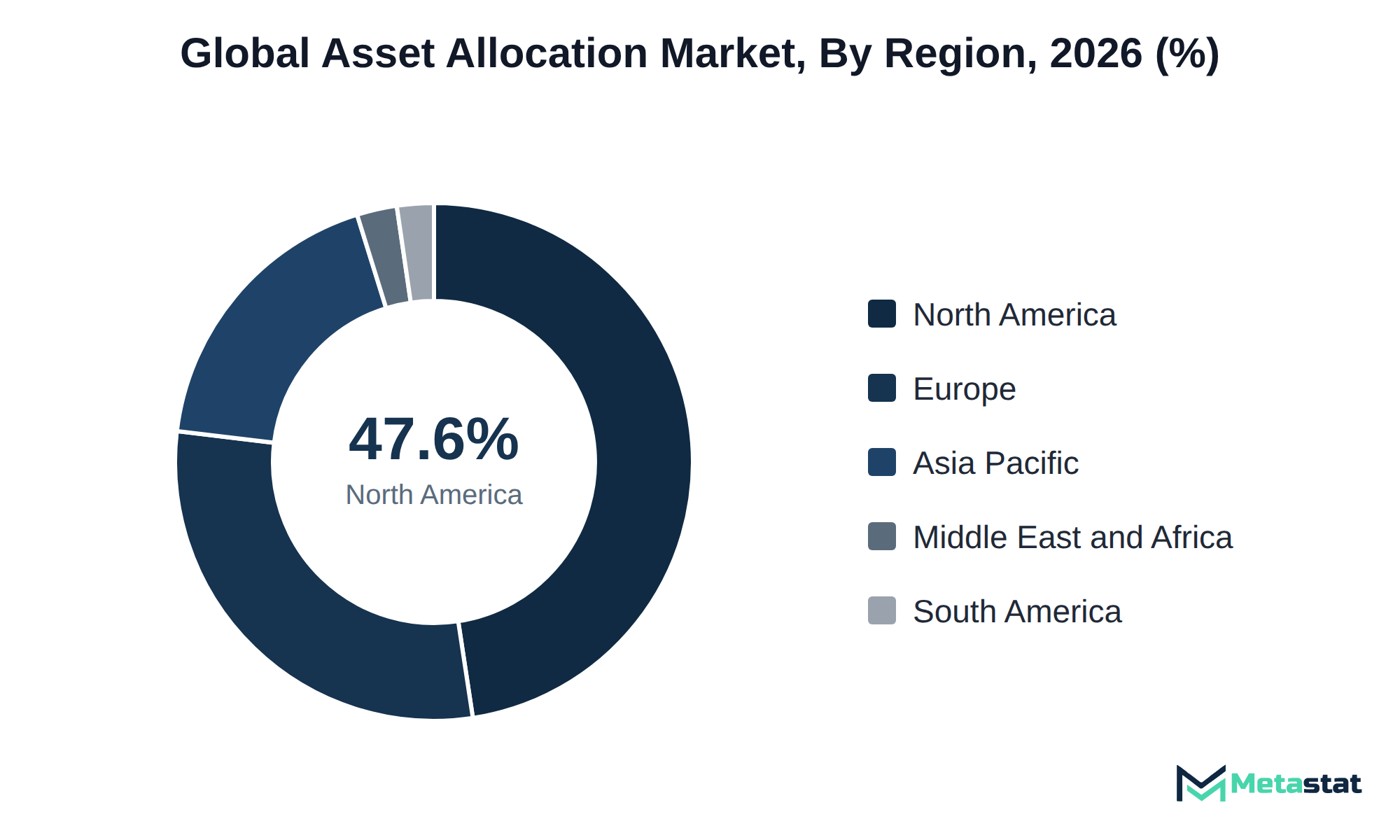
North America accounts for 47.6% in 2025. The region's asset allocation landscape is primarily driven by individual investors seeking diversified portfolios and insurance companies managing risk effectively. Infrastructure investments in financial technology enhance access to advanced asset management tools, thereby improving efficiency in investment strategies. North America remains a focal point for innovation in financial products, influencing trends in the Asset Allocation market. Regulatory frameworks in the United States, Canada, and Mexico encourage transparency and investor protection, creating a stable environment for investment growth. North America is projected to reach USD 35 billion by the end of 2033, reinforcing its position in the market.
Investment strategies in Europe focus on balancing risk and return, driven by individual investors, insurance companies, and sovereign wealth funds. The region accounts for 29.3% of the market in 2025. Countries like Germany, France, the UK, Italy, and Spain lead in investment activity, influenced by local economic conditions and regulatory frameworks. The demand for asset allocation mutual funds and exchange-traded funds continues to grow, reflecting changing investor preferences towards diversified portfolios. Investment management approaches, particularly active management, gain traction among financial institutions seeking to enhance returns. Overall, the asset allocation market in Europe is positioned for steady growth, supported by a robust financial sector and a strong presence of investment firms.
In the Asia-Pacific region, the Asset Allocation market benefits from a growing middle class and increasing investment awareness. Countries including China, India, and Australia drive demand through rising disposable incomes and a shift toward long-term wealth management strategies. The presence of a growing technology sector enables innovative financial solutions, enhancing market accessibility for both individual investors and institutions. Regulatory changes in this region focus on improving transparency and governance, increasing investor confidence. By 2025, the region holds an 18.3% share of the global market, reflecting its significant role in the overall growth of the asset allocation landscape. Japan and South Korea are notable contributors, with established financial markets and a robust investment culture.
In South America, the Asset Allocation market is characterized by a focus on local economic conditions and investment opportunities. Brazil and Argentina represent the primary countries driving demand within this region. The relatively small share of the global market, projected at 2.3% in 2025, highlights the potential for growth. Individual investors in these countries increasingly seek diversified financial products to manage risk and optimize returns. The market benefits from rising awareness of investment strategies among the population, driven by the expansion of financial education programs. Regional demand reflects distinct economic structures and investment behaviors, setting it apart from other markets. The Asset Allocation market in South America continues to evolve, with local firms actively seeking to capture new investor segments.
The Asset Allocation market in the Middle East and Africa reflects a growing interest among investors within Saudi Arabia, the UAE, and South Africa. Rapid economic development and a rising number of high-net-worth individuals drive demand for investment strategies that promote wealth growth. Regulatory frameworks in these nations support investment diversification, creating a favorable environment for asset allocation products. The presence of sovereign wealth funds in the region highlights the increasing adoption of innovative investment strategies. With a market share of 2.5% in 2025, the region is projected to expand, driven by a combination of individual investors and institutional demand. Emerging opportunities in the market align with the global trend towards increased asset diversification.
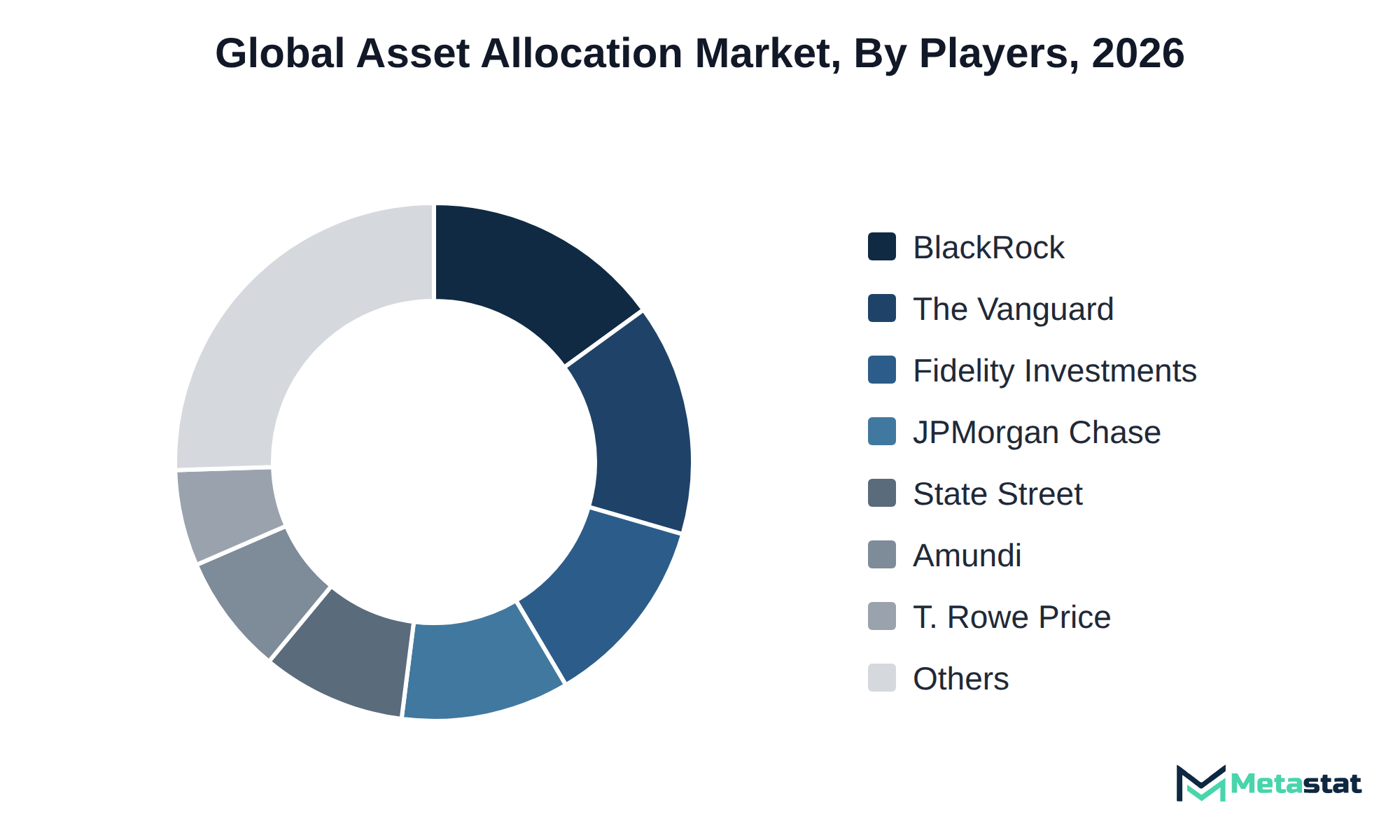
The Asset Allocation market features competition among several key players that emphasize distinct strategies to attract buyers. Companies differentiate themselves through various product offerings and investment management approaches. For instance, BlackRock, Inc. focuses on a comprehensive suite of mutual funds and exchange-traded funds, while Fidelity Investments emphasizes active management strategies with a strong presence in individual investor markets.
Price positioning remains critical, with buyers seeking competitive fees and performance. The Vanguard Group, Inc. leverages its reputation for low-cost investment options, appealing to cost-conscious investors. In contrast, firms including JPMorgan Chase & Co. and Amundi S.A. provide tailored solutions, enhancing client relationships through personalized service and robust investment strategies. This strategic division among firms shapes buyer preferences and influences market dynamics.
This growth relies on several important developments within the Asset Allocation market. The transition towards higher demand for Asset Allocation Exchange-Traded Funds, projected to reach USD 9.9 billion by 2033, reflects a shift in investor preference favoring lower costs and greater flexibility. The adoption of Active Management strategies, anticipated to grow from USD 29.8 billion in 2026 to USD 40.1 billion by 2033, aligns with an increasing focus on tailored investment solutions among Individual Investors. The expansion of the North American region, expected to contribute USD 35 billion by 2033, highlights significant market activity in this area, driven by rising disposable incomes and a receptive investment climate.
However, potential economic downturns pose a risk to achieving these targets. A slowdown in economic growth could dampen investor confidence, leading to reduced allocations towards both traditional and innovative asset classes. Such a scenario affects overall market dynamics, limiting the pace of growth and impacting various segments, including Equities and Fixed Income. Maintaining a robust investment environment will be crucial for the market to reach its full potential by 2033.
By Product Type: Asset Allocation Mutual Funds and Unit Trusts, Asset Allocation Exchange-Traded Funds, Asset Allocation Collective Investment Trusts, Multi-Asset Separately Managed Accounts, Asset Allocation Model Portfolios, Multi-Asset Insurance Pooled Portfolios
By Asset Class: Equities, Fixed Income, Cash and Money Market Instruments, Real Estate, Private Equity, Infrastructure, Hedge Funds, Commodities, Others (Digital Assets, Collectibles)
By End User: Individual Investors, Insurance Companies, Sovereign Wealth Funds, Endowments and Foundations, Family Offices, Corporations, Others (Banks, Public-Sector Reserve Funds)
The report strategically identifies and profiles the key market players and analyses their core competencies in each sub-segment of the Asset Allocation market.
Report Attributes | Details |
Study Period | 2021-2033 |
Base Year | 2025 |
Estimated Year | 2026 |
Forecast Period | 2026-2033 |
Historical Period | 2021-2025 |
Growth Rate | CAGR 5.8% from 2026 to 2033 |
Revenue Unit | USD billion |
Segmentation | By Product Type, Asset Class, Investment Management Approach, End User, and Region |
By Region | North America (By Product Type, Asset Class, Investment Management Approach, End User, and Country)
|
Europe (By Product Type, Asset Class, Investment Management Approach, End User, and Country)
| |
Asia Pacific (By Product Type, Asset Class, Investment Management Approach, End User, and Country)
| |
South America (By Product Type, Asset Class, Investment Management Approach, End User, and Country)
| |
Middle East and Africa (By Product Type, Asset Class, Investment Management Approach, End User, and Country)
|
Find answers to common questions about this report
The Asset Allocation market size was valued at USD 49.3 billion in 2025.
The market is projected to grow at a CAGR of 5.8% during the forecast period from 2026 to 2033.
The North America Asset Allocation market size is estimated to reach USD 35 billion by 2033.
Asset Allocation Mutual Funds and Unit Trusts lead the market with a projected value of USD 28.5 billion by 2033, based on the figures for product type segments.
Interest among individual investors in diversified asset management strategies drives significant growth in the market. The rise of technology-driven investment strategies enhances the ability of investment firms to optimize portfolio performance and attract institutional investors.
North America holds the dominant share of the Asset Allocation market, accounting for USD 35 billion in 2033, representing 47.6 percent of the total market. This region significantly surpasses others in market share.
Significant growth opportunities in the asset allocation market arise from the expansion of Asset Allocation Exchange-Traded Funds (ETFs), which are projected to achieve a compound annual growth rate of 10.4 percent. The increasing preference for lower fees and ease of trading among individual investors enhances the appeal of ETFs, driving broader adoption of asset allocation strategies.
The Asset Allocation market is estimated to reach a valuation of USD 77.4 billion by 2033.
Key players operating in the Asset Allocation market include BlackRock, Inc., The Vanguard Group, Inc., Fidelity Investments, JPMorgan Chase & Co., Amundi S.A., State Street Corporation, T. Rowe Price Group, Inc., Invesco Ltd., and Franklin Resources, Inc.
The Asset Allocation Exchange-Traded Funds segment is projected to achieve a compound annual growth rate of 10.4% by 2033, reflecting strong demand for efficient and diversified investment options.
The analysts below cover Banking & Finance research at Metastat Insights.
LEAD ANALYST
Utkarsh Khirodkar is a Lead Market Research Analyst at MetaStat Insight, specializing in market intelligence, technology sector assessments, and competitive strategy.

PRINCIPAL CONSULTANT - ENTERPRISE AI & EMERGING TECHNOLOGIES
Banking & Finance · Electronics and Semiconductor · Energy and Power · Healthcare IT · Information & Technology · Professional Services
Vijay Gunti is a Principal Consultant at MetaStat Insight, bringing over two decades of experience across enterprise digital transformation, technology strategy, and intelligent systems.
Analyzing the transition from natural gas to green hydrogen in iron ore reduction requires realistic infrastructure timelines. Meta stat insight supplied a detailed regional assessment of DRI plant conversion costs and scrap metal availability in North America and Western Europe. Their report carefully examined pellet quality specs and electrical grid access constraints without making oversimplified market assumptions. The research material served as a practical reference during internal technology roadmap discussions.
Integrating zero-trust access controls across legacy electronic health record systems involves complex compliance overhead. Team produced an analysis that clearly separated identity governance and administration tools from privileged access management platforms. Their evaluation of HIPAA and GDPR compliance features across cloud native solutions gave our architecture group clear baseline criteria. The custom data request regarding biometric authentication adoption in hospital networks was returned promptly with clear documentation.
Evaluating calorific value requirements and air permit compliance across municipal waste facilities requires localized data. Metastat Insight structured their analysis around operational throughput capacity and feedstock composition variations in Latin America and Eastern Europe. Their competitive mapping of sorting equipment vendors helped clarify technology differences between optical separators and heavy media systems. The study provided an objective baseline during our capital expenditure reviews.
Explore related market intelligence reports worth reading alongside this one.