
LEAD ANALYST
Utkarsh Khirodkar is a Lead Market Research Analyst at MetaStat Insight, specializing in market intelligence, technology sector assessments, and competitive strategy.

U.S. Property and Casualty Insurance TPA Market Size, Share, By End-user (Self-Insured Employers, Insurance Carriers, Public Entities and Government Risk Pools, Captive Insurance Companies and Risk Retention Groups, Self-Insured Groups and Association Pools, Managing General Agents and Program Administrators), By Insurance Line (Workers' Compensation, General Liability, Commercial Auto, Commercial Property, Personal Auto, Personal Property, Professional and Management Liability, Cyber Liability, Marine and Inland Marine), By Service Type (Claims Administration and Settlement, Medical Management and Cost Containment, Litigation and Defense Management, Subrogation and Recovery Services, Risk Control and Loss Prevention, Policy and Program Administration, Fraud Investigation and Special Investigation Services, Claims Auditing and Compliance Reporting), By Region (Northeast US, Midwest US, South US, West US), Industry Analysis, Growth, Trends, and Forecast, 2026-2033
Report ID
MSI-5469
Published
October, 2026
Pages
307 Pages
Format
Historical
Base year
Forecast
Forecast period
Report Details
Market Valuation: Valued at $42.4 Billion in 2025, projected to reach $80 Billion by 2033 at a 8.2% CAGR.
Dominant Segment: The workers' compensation segment leads the U.S. Property and Casualty Insurance TPA market, driven by the critical need for efficient claims management related to workplace injuries.
Geographic Lead: The South region holds the largest market share, benefiting from a diverse economic landscape and a growing population that increases insurance demand.
What's Inside: The report includes a comprehensive analysis of market dynamics, competitive landscape, and forecasts for various segments and service types, covering the period from 2026 to 2033.
Self-Insured Employer Demand: Self-insured employers are increasingly investing in TPAs to enhance claims management efficiency, reflecting a growing trend towards specialized service utilization.
Captive Insurance Growth: The captive insurance companies and risk retention groups segment is projected to grow at a CAGR of 9.6%, driven by demand for customized risk management solutions.
Choose Your License
U.S. Property and Casualty Insurance TPA Market
The U.S. Property and Casualty Insurance TPA market was valued at USD 42.4 billion in 2025 and is projected to reach USD 80 billion by 2033, growing at a CAGR of 8.2% over the forecast period.
The U.S. Property and Casualty Insurance TPA market encompasses third-party administration services that facilitate claims processing and management for various insurance lines. Buyers invest in these services to streamline operations, enhance efficiency, and improve customer satisfaction. Key customer segments include self-insured employers, insurance carriers, and public entities, all seeking reliable solutions to manage risk and claims effectively.
Growth in the market is driven by increasing demand for efficient claims management solutions, particularly within the workers' compensation segment. This segment holds the highest market value, reflecting its critical role in managing workplace-related injuries. The South region represents the largest share of the market, benefiting from a diverse range of industries and a growing population that contributes to higher insurance demand.
Technological advancements support market expansion, enabling providers to offer innovative solutions that enhance claims processing speed and accuracy. The need for comprehensive risk management strategies further drives adoption among various buyers, highlighting the ongoing evolution of service offerings within the U.S. Property and Casualty Insurance TPA market.
The market encompasses a range of services related to claims administration, medical management, litigation management, and subrogation services. Buyers invest in these services to enhance operational efficiency, reduce costs associated with claims handling, and improve overall risk management. This focus on efficiency drives demand among self-insured employers, insurance carriers, and public entities, ensuring that organizations effectively manage their insurance needs while maintaining compliance with regulatory requirements.
Growth within the U.S. Property and Casualty Insurance TPA market is fueled by rising claims complexity and increasing awareness of the benefits of third-party administration. Among the various segments, self-insured employers represent the most significant value, with their spending projected to increase substantially through 2033. The South region holds the largest market share, reflecting robust demand for TPA services in areas with high economic activity and diverse industries.
One primary driver of growth stems from the increasing emphasis on cost containment strategies by organizations across multiple sectors. Businesses seek to mitigate risks and control expenses, leading to rising demand for comprehensive TPA services. This trend positions the market for sustained expansion, supported by evolving customer needs and an increasingly competitive landscape.
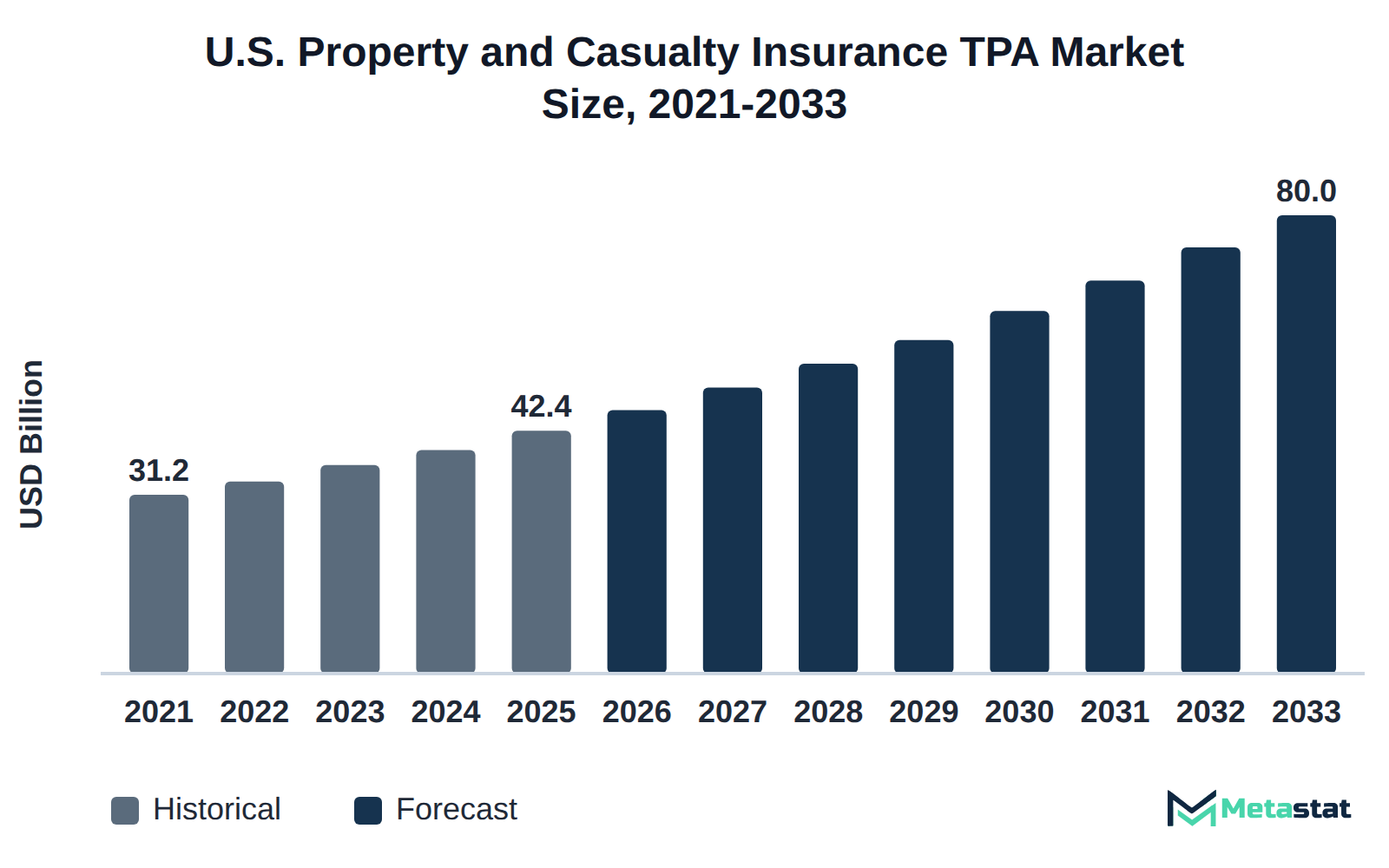
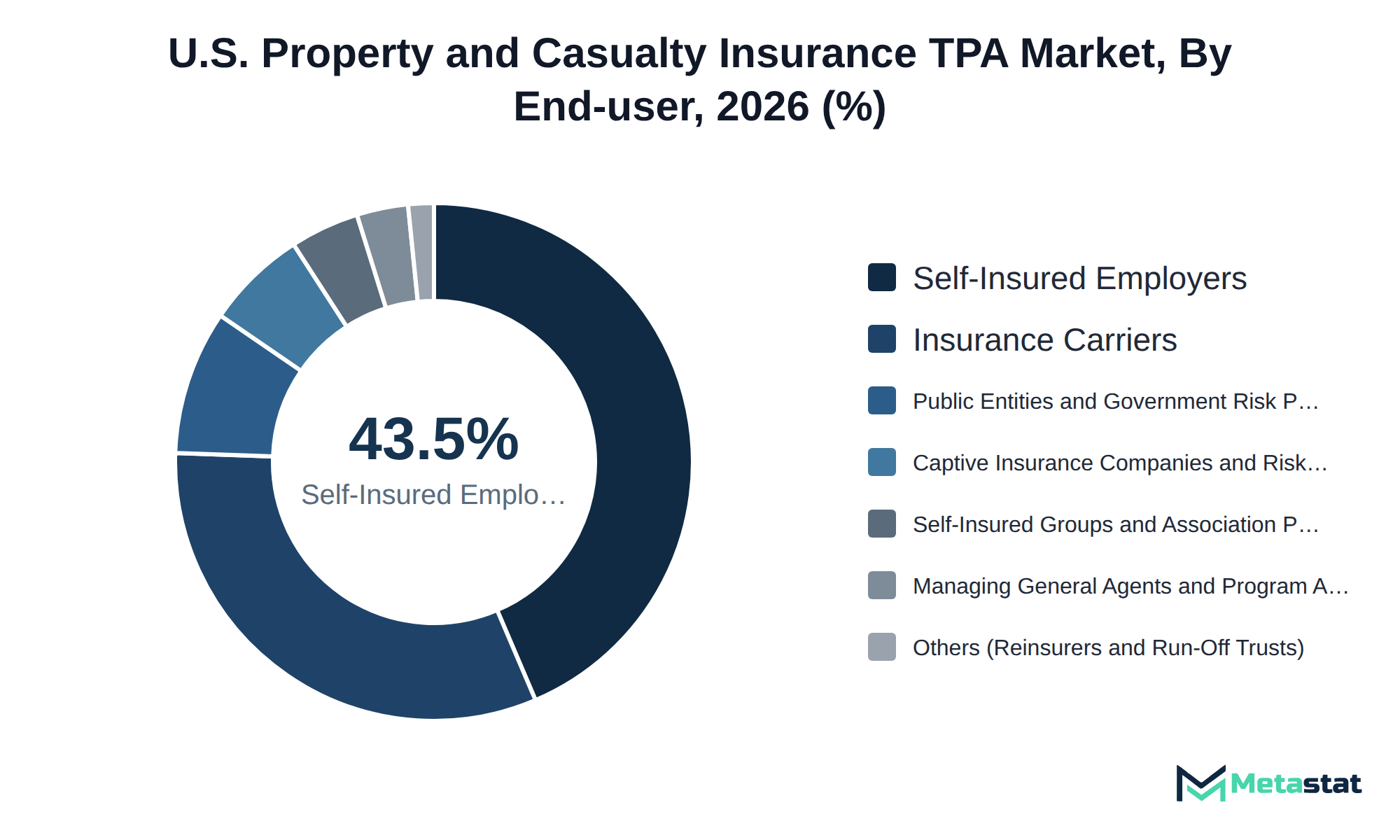
Self-insured employers increasingly rely on advanced technology solutions to manage their claims processes efficiently. These employers aim to reduce operational costs while maximizing the effectiveness of their risk management strategies. In the U.S. Property and Casualty Insurance TPA market, self-insured employers represent a significant segment, projected to expand from USD 20 billion in 2026 to USD 33.7 billion by 2033, reflecting a compound annual growth rate (CAGR) of 7.8%. This shift highlights the importance of technological integration in enhancing claims administration and settlement services.
Insurance carriers are responding to this demand by outsourcing their claims management processes to technology-driven third-party administrators (TPAs). This strategy allows carriers to focus on core insurance activities while benefiting from the specialized expertise of TPAs. By applying innovative technology, including artificial intelligence and machine learning, TPAs streamline operations and improve decision-making processes. The anticipated growth of the TPA market further emphasizes the necessity for insurance carriers to adopt these outsourcing strategies effectively.
This transformation within the U.S. Property and Casualty Insurance TPA market positions self-insured employers and insurance carriers to optimize their resources and enhance service delivery. The increasing demand for technology-enabled solutions is expected to drive further investment and collaboration within the industry.
Pricing strategies for medical cost containment within the U.S. Property and Casualty Insurance TPA market increasingly reflect the demands of self-insured employers. These employers require tailored services that address both cost management and efficient claims processing. The average expenditure for workers' compensation in this segment is expected to surge from USD 20.4 billion in 2026 to USD 33.4 billion by 2033, indicating a growing investment in medical management services.
Competitive pricing models play a crucial role in how buyers engage with TPA services. Many organizations opt for fee-for-service contracts or capitation models, where they agree to fixed rates for the management of certain medical services. This flexibility allows employers to control costs while ensuring access to vital medical resources. The trend towards value-based pricing emphasizes the importance of service quality alongside cost, compelling TPAs to demonstrate their efficiency and effectiveness in managing claims.
The pricing dynamics influence overall market growth and adoption rates. While companies seek to optimize their budgets, transparency in pricing becomes essential. Enhanced service offerings, coupled with competitive pricing models, contribute to improved client retention and satisfaction within the market. This environment creates a scenario where TPAs that adapt to these pricing strategies secure a stronger market position and drive demand for their services.
AI-driven claims automation significantly enhances operational efficiency for self-insured employers in the U.S. Property and Casualty Insurance TPA market. This technology enables faster claims processing and reduces administrative burdens. Such growth reflects the commitment of these organizations to leverage advanced technologies for improved claims management.
Automating claims processes streamlines workflows, minimizes human error, and improves customer satisfaction by accelerating response times. In a competitive environment, self-insured employers who implement AI tools position themselves favorably against rivals. Enhanced efficiency in claims handling ultimately translates into significant cost savings and resource reallocation towards strategic initiatives, driving growth and profitability.
Fraud detection technologies represent a critical investment for insurance carriers operating in the U.S. Property and Casualty Insurance TPA market. With fraud consistently affecting bottom lines, insurance carriers are pushing for innovative solutions to protect their interests. By 2033, insurance carriers will increase their investments in fraud detection capabilities, reaching USD 26.1 billion. This commitment reflects an expected growth rate of 8.5%, driven by the increasing complexity and prevalence of fraudulent activities.
Advanced AI algorithms analyze vast data sets, identify irregularities, and flag potentially fraudulent claims for further investigation. Implementing these technologies not only mitigates financial losses but enhances the insurer's reputation. The ability to effectively combat fraud supports long-term sustainability in a highly competitive environment, ensuring insurers maintain both profitability and consumer trust.
Reducing litigation costs represents a priority for public entities and government risk pools within the U.S. Property and Casualty Insurance TPA market. These organizations face unique challenges, including stringent regulatory requirements and the need for cost-effective risk management solutions. By 2033, public entities and government risk pools will allocate a substantial portion of their budgets towards litigation management, with expected expenditures reaching USD 6.5 billion.
Implementing effective litigation cost reduction strategies enables these entities to redirect resources towards essential public services. Adopting comprehensive risk management frameworks minimizes exposure to costly legal disputes. Such proactive measures enhance operational efficiency, allowing for improved governance and accountability while ensuring the effective use of taxpayer resources.
The U.S. Property and Casualty Insurance TPA market exhibits significant revenue differences between self-insured employers and insurance carriers. This trend highlights the increasing reliance on third-party administrators for managing claims and associated costs.
In contrast, insurance carriers are expected to achieve revenue of USD 26.1 billion by 2033, driven by a CAGR of 8.5%. Growth in this segment is attributed to the expanding range of insurance products and services, enhancing partnerships with TPAs to improve operational efficiencies. The distinct requirements of both self-insured employers and insurance carriers create unique opportunities within the market, allowing TPAs to tailor their services to meet specific needs.
Differences in revenue trajectories emphasize the necessity for stakeholders to consider their strategic options. Self-insured employers focus on cost control and risk management, while insurance carriers emphasize scaling operations and optimizing service offerings. Understanding these dynamics is essential for stakeholders aiming to capture growth opportunities in the U.S. Property and Casualty Insurance TPA market.
Self-insured employers increasingly invest in third-party administrators (TPAs) to enhance their claims management processes. This shift stems from a heightened focus on improving operational efficiency and reducing costs associated with claims handling. The rising complexity of claims management, influenced by evolving medical treatment protocols and regulatory requirements, prompts these employers to seek specialized services. Consequently, the demand for TPAs strengthens, contributing to higher volumes and upward pressure on prices. This trend reflects the ongoing transformation within the U.S. Property and Casualty Insurance TPA market, indicating a robust appetite for enhanced claims administration solutions.
Technological advancements drive efficiency in claims management processes within the U.S. Property and Casualty Insurance TPA market. The integration of innovative platforms enables third-party administrators to streamline operations, reduce errors, and improve customer satisfaction. These technological solutions include automation tools that allow faster claims processing, enabling TPAs to address the evolving demands of self-insured employers and insurance carriers effectively.
The growing emphasis on data analytics equips TPAs with insights to optimize decision-making and resource allocation. Such capabilities support the identification of trends and potential risks, resulting in proactive strategies that mitigate claim costs. The implementation of advanced communication channels allows for effective interaction between stakeholders, improving transparency and responsiveness.
Investment in these technologies is expected to drive significant growth for the market, with entities increasingly recognizing the value of enhanced operational capabilities. A shift towards more sophisticated claims management tools aligns with the ongoing transformation of the insurance landscape, positioning the market for sustained expansion through 2033.
Rising costs associated with third-party administrator (TPA) services present a significant challenge for self-insured employers and insurance carriers in the U.S. Property and Casualty Insurance TPA market. The upward trend in service pricing results in reduced budgets for many employers and insurance providers, leading to smaller orders or delayed service engagements. Organizations experiencing tighter financial constraints often prioritize cost-cutting measures, impacting their willingness to invest in comprehensive TPA services. This hesitation affects the procurement of essential services including claims administration and medical management, ultimately leading to slower uptake of innovative solutions. Insufficient allocation of funds restricts the ability of self-insured employers and insurers to enhance their claims processes effectively. The market's growth potential encounters limitations due to these pricing dynamics, which influence operational strategies and service accessibility across various buyer groups within the industry.
Talent costs present a significant challenge for suppliers within the U.S. Property and Casualty Insurance TPA market. The increasing demand for qualified professionals in claims management and medical cost containment drives competition for skilled labor, resulting in higher wage levels. Suppliers face challenges in attracting and retaining experienced personnel capable of navigating complex claims processes efficiently. This pressure leads to increased operational costs, impacting profit margins.
To address these challenges, companies implement various strategies, including investing in training programs to enhance the skills of existing employees. Several suppliers explore partnerships with educational institutions to create specialized training programs tailored to industry needs. Utilizing automation and technology solutions helps streamline processes, reducing reliance on manual labor. These initiatives aim to mitigate the impact of rising talent costs, ensuring competitive positioning in the market while sustaining service quality.
Growth in captive insurance companies and risk retention groups presents a significant opportunity within the U.S. Property and Casualty Insurance TPA market. This segment is projected to experience a compound annual growth rate (CAGR) of 9.6%, driven by increasing demand for customized insurance solutions that address specific industry risks. Captive insurance clients often seek specialized TPA services to enhance claims administration efficiency and improve risk management strategies. This trend highlights the need for TPAs to develop tailored offerings that cater to the unique needs of this buyer group.
Investment in innovative technologies, including data analytics and automated claims processing, enables captive insurance companies to streamline operations and enhance customer satisfaction. These advancements contribute to the overall growth trajectory of the market, driven by their ability to allow TPAs to deliver services that align with the evolving demands of their clients. The combination of rising interest in captive insurance models and the increasing complexity of risks encourages further engagement with TPAs, reinforcing their role in facilitating effective risk solutions.
The U.S. Property and Casualty Insurance TPA market is segmented based on End-user, Insurance Line, Service Type, and Region.
This segment involves organizations that retain financial risk for their employees' claims, managing their own insurance and often engaging third-party administrators (TPAs) to streamline claims processing and reduce costs. A significant factor driving growth within this segment is heightened demand for efficient claims management, particularly in workers' compensation. Self-insured employers differ from insurance carriers in their operational approach, facing unique challenges related to risk management and regulatory compliance. The increasing need for specialized services distinguishes this segment, leading to more robust expansion relative to others, including public entities and government risk pools, which experience slower growth due to stricter budget constraints and regulatory hurdles.
This segment plays a critical role in providing coverage for various risks associated with businesses and individuals, catering to a diverse clientele that includes corporations, small businesses, and non-profit organizations. A strong growth driver stems from increasing demand for specialized insurance products and services, reflecting heightened awareness of risk management among businesses. Compared to other segments, Insurance Carriers experience faster growth, attributed to their ability to offer customized solutions and adapt to market trends. The anticipated expansion of this segment is supported by advancements in technology, enhancing underwriting processes and claims management capabilities. In contrast, segments like Self-Insured Employers face different dynamics, resulting in varying growth rates and pricing strategies. The U.S. Property and Casualty Insurance TPA market continues to evolve, influenced by these distinct factors.
The Public Entities and Government Risk Pools segment is expected to reach USD 6.5 billion by 2033. This segment serves local and state governments, public schools, and other entities that require risk management solutions. Growth in this segment is driven by an increased focus on risk mitigation and financial sustainability among public entities. Demand for efficient and cost-effective insurance solutions influences spending within this group. Unlike Insurance Carriers, which are projected to reach USD 26.1 billion by 2033, the Public Entities and Government Risk Pools segment exhibits slower growth, with a more stable customer base that prioritizes risk management over profit maximization. Regulatory requirements become more stringent, prompting public entities to seek comprehensive risk management services, enhancing the adoption of third-party administrators. This strategic shift leads to a more robust investment in TPA services tailored to address the unique needs of government and public sector clients.
Captive Insurance Companies and Risk Retention Groups segment is projected to grow at a CAGR of 9.6% during the forecast period. These entities provide insurance coverage for their owners, focusing on risk management strategies tailored to specific organizational needs. Clients include businesses that seek more control over their insurance programs, leading to enhanced financial efficiencies and reduced costs. Demand for these services increases due to the rising emphasis on customized risk management solutions. This group experiences faster growth driven by strong demand for risk retention strategies and alternative insurance solutions. The anticipated growth contrasts with the more moderate expansion seen in segments including Insurance Carriers, which is projected to grow at a CAGR of 8.5%. This differentiation highlights the unique positioning of Captive Insurance Companies and Risk Retention Groups within the U.S. Property and Casualty Insurance TPA market.
Self-Insured Groups and Association Pools involve collective arrangements for managing risks among various members, often including smaller entities that lack the resources to self-insure independently. These pools serve multiple industries, allowing participants to share the financial burden of claims and enhance their risk management capabilities. Factors driving this segment include the increasing need for cost-effective solutions among smaller organizations and the growing emphasis on risk-sharing strategies. This segment exhibits a different growth trajectory compared to larger entities, focusing on collaborative risk management rather than individual large-scale self-insurance. It attracts participants seeking a more affordable alternative to traditional insurance while leveraging the shared expertise of the pool participants.
Managing General Agents and Program Administrators play a vital role in the insurance ecosystem by facilitating the distribution of insurance products and managing underwriting processes. These entities serve various clients, including insurers and self-insured employers, providing tailored programs that meet specific risk management needs. The segment experiences growth driven by an increasing emphasis on specialized insurance solutions and evolving regulatory requirements. Enhanced operational efficiency and risk assessment technologies further support demand within this segment. Compared to other sub-segments, including Insurance Carriers, which experience a projected CAGR of 8.5%, this segment's growth trajectory appears slower due to unique operational challenges and its specific client base. The U.S. Property and Casualty Insurance TPA market shows a diverse landscape, highlighting the importance of specialized service providers in meeting the complex needs of clients.
Others (Reinsurers and Run-Off Trusts) serve specific functions in the insurance ecosystem, focusing on risk management for entities seeking to transfer or mitigate exposure. These organizations provide essential services to self-insured entities, government risk pools, and insurance carriers. The growth of this segment is driven by increasing demand for risk transfer solutions, with companies seeking to manage liabilities effectively. Compared to other segments, this category operates under a different pricing structure, which often leads to higher costs due to the specialized expertise required for risk assessments and management. While other segments experience stable growth rates, the dynamics of this segment contribute to a more complex market landscape, influencing overall trends in the U.S. Property and Casualty Insurance TPA market.
This segment addresses the costs associated with workplace injuries and illnesses, serving employers who seek to manage their liability effectively while ensuring employee wellbeing. A significant driver of growth stems from increased regulatory requirements surrounding workplace safety and employee protection, compelling employers to invest in comprehensive coverage solutions. Unlike segments including General Liability, which exhibits a CAGR of 8.5%, Workers' Compensation growth reflects a more moderate pace, emphasizing specific employer needs in managing risks and claims. The demand for effective claims management and cost containment strategies continues to influence this segment, differentiating it from other segments in the insurance line spectrum.
General Liability segment is estimated to reach USD 16.5 billion by 2033, at a CAGR of 8.5% during the forecast period. This segment primarily covers legal liabilities arising from bodily injury and property damage to third parties, serving businesses and organizations across various industries, including manufacturing, retail, and services. Increased awareness regarding liability risks and the rising number of lawsuits drive demand for General Liability coverage. Compared to other segments, including Workers' Compensation, this segment experiences a faster growth trajectory, with a higher CAGR of 8.5%. General Liability differs in its focus on protecting businesses against claims of negligence, while Workers' Compensation focuses on employee-related injuries. The ongoing evolution of regulations and the complex legal landscape further contribute to the increasing interest in robust General Liability solutions in the U.S. Property and Casualty Insurance TPA market.
Commercial Auto segment is expected to reach USD 8 billion by 2033. This segment encompasses insurance coverage designed for vehicles used for business purposes, catering to a diverse range of industries reliant on transportation. Businesses using commercial vehicles require tailored solutions to mitigate risks associated with accidents, liability, and property damage. Primary growth drivers include increasing demand for transportation services and rising vehicle ownership among businesses. The Commercial Auto segment experiences a higher growth rate compared to certain other insurance lines, supported by a CAGR of 8.7%. The U.S. Property and Casualty Insurance TPA market reflects this dynamic, with insurers focusing on competitive pricing and enhanced service offerings to attract clients in this segment.
Commercial Property segment is projected to grow at a CAGR of 8.5% during the forecast period. This segment covers insurance products for physical properties, including buildings and equipment, primarily used by businesses and organizations to manage risks associated with property damage. Demand increases due to rising property values and greater awareness of potential risks, prompting businesses to secure adequate coverage. Compared to other insurance lines, Commercial Property experiences significant growth, driven by the increasing need for protection against natural disasters and other unforeseen events. The segment faces unique challenges, including fluctuating property prices and regulatory changes that impact coverage terms. This segment distinguishes itself from others, including Workers' Compensation and General Liability, through its specific focus on tangible property risks and associated costs in the U.S. Property and Casualty Insurance TPA market.
Personal Auto insurance covers vehicles owned by individuals, providing protection against various risks associated with car ownership. This segment caters to private car owners who seek financial security in the event of accidents, theft, or damage. Key drivers of this segment include rising vehicle ownership rates and increasing awareness of the importance of auto insurance. Changes in regulatory policies, aimed at enhancing consumer protection, influence demand for Personal Auto insurance products. Compared to other insurance lines, Personal Auto often sees different pricing dynamics, reflecting regional differences in accident rates and personal driving habits. This segment stands out with a unique buyer demographic, focusing primarily on individual consumers rather than businesses, which typically engage in Commercial Auto insurance. The U.S. Property and Casualty Insurance TPA market is expected to evolve, responding to these shifts in consumer behavior and regulatory frameworks.
Personal Property insurance focuses on protecting individuals' possessions, including homes and personal belongings, from risks including theft, fire, and natural disasters. This segment serves homeowners and renters seeking coverage to safeguard their assets. A growing awareness of the importance of safeguarding personal assets drives demand within this segment. The rise in the frequency of natural disasters has prompted more consumers to seek adequate protection, thereby supporting market expansion. Compared to other insurance lines, Personal Property experiences slower growth due to established market players and competitive pricing pressures. The regulatory environment influences the segment, impacting pricing strategies and coverage options. In this context, the U.S. Property and Casualty Insurance TPA market adapts, responding to evolving consumer needs and market dynamics.
Professional and Management Liability encompasses insurance products that protect professionals and businesses against claims of negligence, errors, or omissions in their professional duties. This segment primarily serves industries including healthcare, finance, and legal services, where the potential for liability claims is significant. A driving force behind this segment includes the increasing litigious environment, prompting businesses to seek adequate protection from potential lawsuits. Compared to other sub-segments like General Liability, Professional and Management Liability often carries higher premiums due to the specialized nature of coverage and the increased risks faced by professionals. This segment, distinct in its focus on professional services, demonstrates a growing trend in organizations recognizing the importance of safeguarding against professional liability risks in the evolving landscape of the U.S. Property and Casualty Insurance TPA market.
Cyber Liability encompasses insurance coverage aimed at protecting businesses against risks associated with cyber threats, including data breaches and cyberattacks. Organizations across various sectors apply this coverage to safeguard sensitive information and maintain operational integrity. The increasing prevalence of cyber threats significantly drives the demand for this segment, pushing organizations to invest in protective measures. This segment typically experiences higher growth compared to other insurance lines, driven by the necessity for enhanced digital security. The distinct challenges posed by evolving cyber threats differentiate it from segments including General Liability, which address more traditional risk factors. While the scope of cyber threats continues to expand, organizations increasingly prioritize cyber liability coverage to mitigate potential losses and protect their reputations.
Marine and Inland Marine insurance provides coverage for the transportation of goods and marine activities, catering to businesses involved in shipping, logistics, and related sectors. Coverage includes risks associated with marine vessels, cargo, and various inland transportation methods. Demand for this segment is driven by growth in global trade and increasing shipping activities. Companies involved in logistics, freight forwarding, and maritime commerce are significant users of Marine and Inland Marine insurance, seeking to mitigate risks associated with cargo loss or damage during transit. This segment typically experiences different dynamics compared to other insurance lines, with its growth influenced by factors including maritime regulations and fluctuating freight rates, which impact overall pricing structures. The U.S. Property and Casualty Insurance TPA market reflects a diverse array of buyer needs, further highlighting the importance of tailored insurance solutions for marine activities and inland logistics.
This segment encompasses specialized insurance products related to environmental liability, surety bonds, and aviation insurance. Environmental liability insurance protects businesses against claims resulting from environmental damage, while surety bonds ensure contractual obligations are fulfilled. Aviation insurance caters to the unique risks associated with aircraft operations and related activities. These products are used by various industries, including construction, manufacturing, and transportation, while they address specific risk exposures that general insurance lines do not cover. Demand drivers for this segment include increasing regulatory scrutiny on environmental practices and a growing emphasis on corporate responsibility. This segment typically experiences different dynamics compared to other insurance lines, potentially offering higher premiums due to specialized coverage and risk assessment requirements. The U.S. Property and Casualty Insurance TPA market reflects diverse needs, with this segment playing a critical role in addressing niche insurance requirements for businesses facing unique operational challenges.
Claims Administration and Settlement segment is valued at USD 23.8 billion in 2026 and is projected to reach USD 39.3 billion by 2033, at a CAGR of 7.4% during the forecast period. This segment focuses on managing and resolving claims efficiently, with a broad range of clients including insurance carriers and self-insured employers. An increasing demand for streamlined claims processing and effective settlement methods drives growth in this segment. Compared to other service types, Claims Administration and Settlement exhibits steady growth, influenced by the rising complexity of claims and the necessity for accurate management. With a CAGR of 7.4%, it experiences moderate growth relative to Medical Management and Cost Containment, which is forecasted to grow at a higher CAGR of 9.2%. The growth trajectory in the U.S. Property and Casualty Insurance TPA market highlights the critical role that efficient claims administration plays in the overall insurance ecosystem.
Medical Management and Cost Containment segment is estimated to reach USD 13.8 billion by 2033, at a CAGR of 9.2% during the forecast period. This segment provides services aimed at optimizing the management of healthcare costs associated with insurance claims. Primarily used by insurers, employers, and healthcare providers, it mitigates expenses while ensuring the appropriate care for claimants. Strong demand for cost-effective healthcare solutions drives growth in this segment, reflecting an industry-wide focus on lowering medical costs. Compared to Claims Administration and Settlement, which is projected to grow at a CAGR of 7.4%, the Medical Management and Cost Containment segment exhibits faster growth, indicating a rising preference for efficient healthcare solutions. The market identifies this trend as essential for improving operational efficiency and enhancing client satisfaction.
The Litigation and Defense Management segment is expected to reach USD 7.7 billion by 2033. This service type involves the management of legal claims and defense strategies related to insurance liability and coverage disputes. Insurance carriers and self-insured employers frequently engage these services to navigate complex legal environments and mitigate costs associated with litigation. The segment experiences significant growth, driven by increasing legal claims and a focus on cost containment. With a CAGR of 8.9%, it differentiates itself from other service types, including Medical Management and Cost Containment, which has a lower growth rate of 9.2%. The significant growth in this segment reflects heightened demand for legal expertise in the insurance industry, highlighting its critical role in the U.S. Property and Casualty Insurance TPA market.
Subrogation and Recovery Services segment is projected to grow at a CAGR of 8.9% during the forecast period. This segment focuses on recovering funds from third parties responsible for losses incurred by insurers, thereby reducing overall claims expenses for insurance carriers. Insurance companies and self-insured employers primarily use these services to enhance their financial recovery strategies. The increasing emphasis on cost containment within the U.S. Property and Casualty Insurance TPA market drives demand for these services. Unlike other service types, including Claims Administration and Settlement, which grow at a CAGR of 7.4%, Subrogation and Recovery Services exhibit a more significant growth trajectory. The focus on efficiency in recovering losses distinguishes this segment, making it particularly attractive during periods of rising claims costs.
Risk Control and Loss Prevention involves strategies and measures implemented to identify, mitigate, and manage risks before they result in losses. This segment serves a diverse range of clients, including businesses, government entities, and self-insured organizations, focusing on reducing potential liability and enhancing safety protocols. Increasing regulatory demands drive growth in this segment, compelling organizations to prioritize risk management in response to potential financial impacts. The emphasis on proactive measures differentiates this segment from others, including Claims Administration and Settlement, which primarily address issues post-incident. The U.S. Property and Casualty Insurance TPA market supports these initiatives, creating an environment where enhanced risk control methodologies are essential for sustainability and competitive advantage.
Policy and Program Administration encompasses the management and oversight of insurance policies and programs, ensuring compliance and efficiency in operations. This service is used by a range of entities, including self-insured employers and insurance carriers, who rely on it to streamline administrative tasks and enhance operational effectiveness. Factors including increasing regulatory requirements drive demand for this segment, compelling businesses to invest in comprehensive administration services. Compared to other service types, this segment experiences slower growth due to the established nature of administrative processes, which often rely on traditional methods. The U.S. Property and Casualty Insurance TPA market benefits from advancements in technology that facilitate improved policy management; however, several companies face challenges in fully integrating these innovations into their operations.
Fraud Investigation and Special Investigation Services focuses on identifying and mitigating fraudulent claims within the insurance industry. This service caters primarily to insurance carriers and self-insured employers, who seek to protect their financial interests against fraudulent activities. Increasing instances of insurance fraud drive the demand for these specialized services, emphasizing the need for robust investigative measures. Enhanced technology and analytics play a significant role in improving fraud detection capabilities, promoting adoption among firms aiming to minimize losses. Compared to other service types, this segment often entails higher operational costs due to the expertise and resources required for thorough investigations. While segments including Claims Administration and Settlement experience considerable growth rates, Fraud Investigation and Special Investigation Services remains critical for maintaining the integrity of the U.S. Property and Casualty Insurance TPA market.
Claims Auditing and Compliance Reporting involves the evaluation and verification of claims processes, ensuring adherence to regulations and standards. This service is used by insurance companies and third-party administrators (TPAs) to maintain accuracy and compliance in claims handling. Demand for these services arises from increasing regulatory scrutiny and the necessity for risk management in insurance operations. Compared to other segments, this segment displays different dynamics, characterized by a focus on compliance rather than claims processing speed. The growth trajectory for Claims Auditing and Compliance Reporting aligns with broader trends in regulatory requirements, which influence how effectively organizations interact with their clients and manage claims. The U.S. Property and Casualty Insurance TPA market continues to evolve, with segments like this one adapting to the changing landscape driven by digital transformation and regulatory changes.
Standalone Claims Data Services encompass specialized offerings that focus on the collection, analysis, and reporting of claims data. This segment serves various stakeholders, including insurers and self-insured entities, seeking to enhance their claims processing efficiency and decision-making capabilities. The segment experiences growth driven by increasing demand for data analytics in insurance operations, enabling firms to leverage insights for improving claims outcomes. This segment typically features lower pricing compared to broader services like Claims Administration and Settlement, reflecting its narrower focus. The U.S. Property and Casualty Insurance TPA market shows a preference among organizations for data-driven solutions, highlighting a shift toward more analytical approaches in managing claims. This shift aligns with broader trends emphasizing efficiency and transparency in the insurance process.
Northeast US segment is valued at USD 9.4 billion in 2026 and is projected to reach USD 15.6 billion by 2033, at a CAGR of 7.4% during the forecast period. This segment serves self-insured employers and insurance carriers, which engage third-party administration for managing claims and processing settlements efficiently. A key growth driver involves increasing demand for efficient claims processing and management services, reflecting broader trends in cost containment among organizations. This segment distinguishes itself by its growth rate compared to Public Entities and Government Risk Pools, which reflects a slower adoption rate. The focus on innovative claims management solutions positions the Northeast US segment as a competitive force within the U.S. Property and Casualty Insurance TPA market, supporting ongoing investment and operational enhancements.
Midwest US segment is estimated to reach USD 17.2 billion by 2033, at a CAGR of 7.7% during the forecast period. This segment serves self-insured employers and insurance carriers, focusing on the effective management of claims and risk processes. A significant driver for growth in this region stems from an increasing emphasis on efficient risk management practices among businesses. Organizations seek to optimize their insurance expenditures and improve operational efficiencies, leading to rising demand for third-party administration services. Compared to regions including the Northeast, the Midwest experiences a slightly lower growth rate; however, it remains an essential market for service providers, reflecting strong regional demand for property and casualty insurance solutions. The market continues to evolve, adapting to regulatory changes and technological advancements that enhance service delivery and operational effectiveness.
South US segment is expected to reach USD 28.9 billion by 2033. This market segment serves self-insured employers, insurance carriers, and public entities, providing essential services including claims administration and medical management. A growing population in the South and increasing business activities drive demand, reflecting a regional expansion in the insurance industry. The South's 8.7% CAGR outpaces other regions, driven by diverse industries including manufacturing and retail. Compared to the Northeast US segment, which has a lower growth potential, the South offers broader market opportunities due to its larger demographic. This dynamic environment enhances competition among service providers, improving overall service quality and pricing strategies in the U.S. Property and Casualty Insurance TPA market.
USD 28.9 billion is the projected value for the West US segment by 2033. This segment serves a variety of users including self-insured employers and insurance carriers, who rely on third-party administrators for claims management and risk mitigation. Growth is driven by increasing demand for streamlined claims processing and effective risk management strategies. West US stands out with a projected CAGR of 8.7% during the forecast period, positioning it for significant growth compared to other regions. The region's unique regulatory environment and higher risk exposure in certain industries, including technology and entertainment, further contribute to the demand dynamics. Users in this segment prioritize innovative service offerings, reflecting differing needs and operational challenges compared to other segments in the U.S. Property and Casualty Insurance TPA market.
Competition in the U.S. Property and Casualty Insurance TPA market involves various strategic approaches, with companies differentiating themselves based on service type, pricing, and customization. Providers focus on specific segments, including claims administration, medical management, and litigation management, to meet the distinct needs of their clientele.
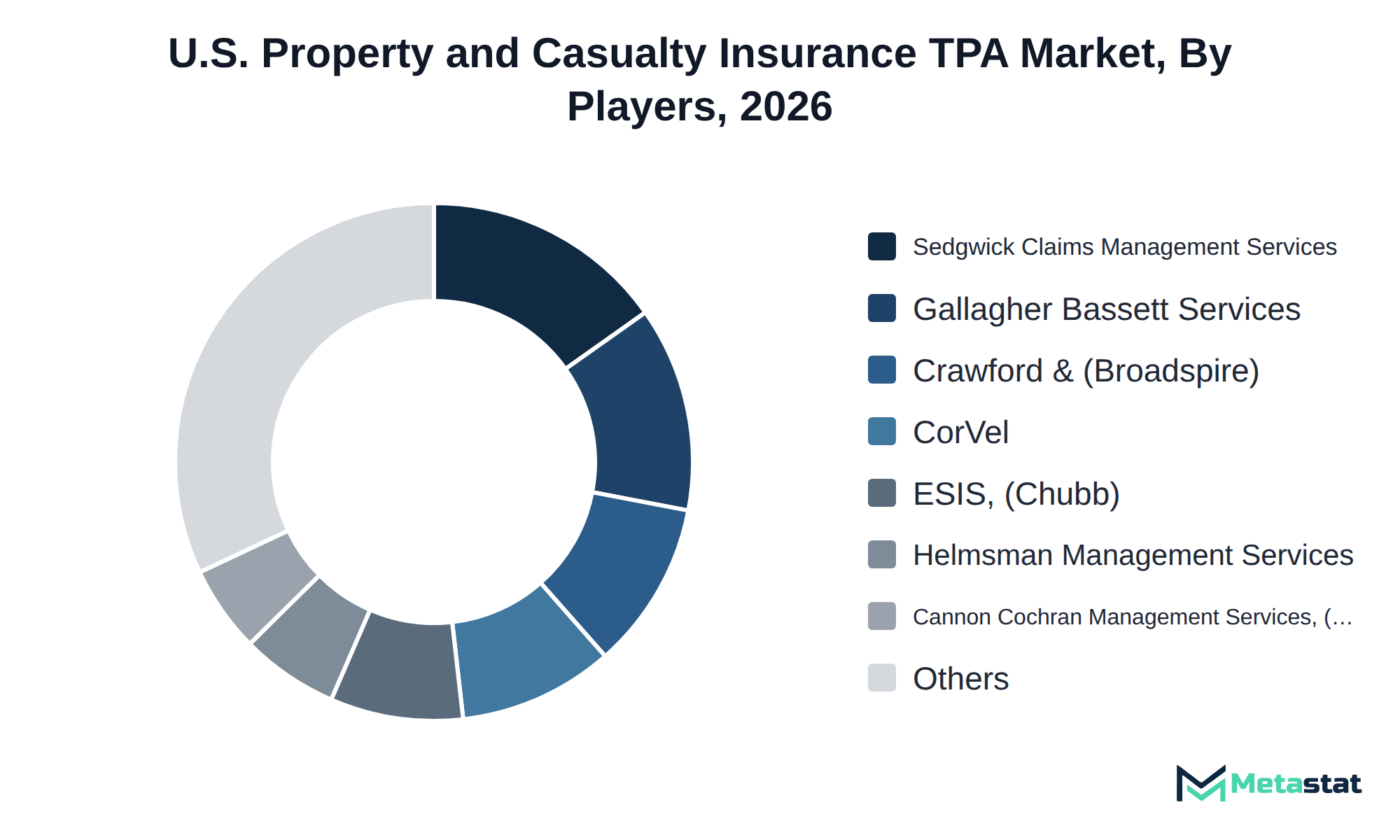
Sedgwick Claims Management Services, Inc. emphasizes claims administration and settlement services, catering to clients seeking comprehensive claims solutions. Gallagher Bassett Services, Inc. targets claims administration while enhancing its offerings with medical management and cost containment services, appealing to organizations seeking integrated solutions. In contrast, Crawford & Company (Broadspire) specializes in litigation and defense management, focusing on clients needing specialized legal support within the broader claims process.
Price competitiveness influences buyer decisions, with many clients opting for services that balance cost with quality. CorVel Corporation prioritizes customization, tailoring its services to meet the unique demands of its clients, facilitating a tailored approach that enhances client satisfaction. Other players, including PMA Management Corp., leverage their expertise to provide cost-effective solutions while maintaining service quality, appealing to budget-conscious buyers.
Achieving this growth relies on several key developments within the U.S. Property and Casualty Insurance TPA market. Second, the need for medical management and cost containment services is expected to drive demand, with growth anticipated in this service type due to an increasing focus on healthcare costs. Third, the growth of workers' compensation lines from USD 20.4 billion in 2026 to USD 33.4 billion by 2033 represents a significant opportunity for market expansion, driven by regulatory changes and evolving workforce dynamics. However, the main risk to this growth remains the potential for economic downturns, which could reduce spending on insurance services, impacting overall demand. A slowdown in the economy could hinder the financial capacity of public entities and government risk pools, limiting their investments in necessary insurance services. Thus, while the outlook remains positive, careful monitoring of economic conditions will be essential for sustaining growth in the market.
By End-user: Self-Insured Employers, Insurance Carriers, Public Entities and Government Risk Pools, Captive Insurance Companies and Risk Retention Groups, Self-Insured Groups and Association Pools, Managing General Agents and Program Administrators, Others (Reinsurers and Run-Off Trusts)
By Insurance Line: Workers' Compensation, General Liability, Commercial Auto, Commercial Property, Personal Auto, Personal Property, Professional and Management Liability, Cyber Liability, Marine and Inland Marine, Others (Environmental Liability, Surety, Aviation)
By Service Type: Claims Administration and Settlement, Medical Management and Cost Containment, Litigation and Defense Management, Subrogation and Recovery Services, Risk Control and Loss Prevention, Policy and Program Administration, Fraud Investigation and Special Investigation Services, Claims Auditing and Compliance Reporting, Others (Standalone Claims Data Services)
By Region: Northeast US, Midwest US, South US, West US
The report strategically identifies and profiles the key market players and analyses their core competencies in each sub-segment of the Property and Casualty Insurance TPA market.
Report Attributes | Details |
Study Period | 2021-2033 |
Base Year | 2025 |
Estimated Year | 2026 |
Forecast Period | 2026-2033 |
Historical Period | 2021-2025 |
Growth Rate | CAGR 8.2% from 2026 to 2033 |
Revenue Unit | USD billion |
Segmentation | By End-user, Insurance Line, Service Type, Region, and Region |
Find answers to common questions about this report
The Property and Casualty Insurance TPA market size was valued at USD 42.4 billion in 2025.
The market is projected to grow at a CAGR of 8.2% during the forecast period from 2026 to 2033.
Self-Insured Employers lead the Property and Casualty Insurance TPA market with a projected value of USD 33.7 billion by 2033, reflecting a compound annual growth rate of 7.8 percent.
Self-insured employers increasingly invest in third-party administrators to enhance claims management processes, driven by a focus on operational efficiency and cost reduction. Growth in captive insurance companies and risk retention groups presents opportunities for tailored TPA services that address specific industry risks.
Rising costs associated with TPA services present a significant challenge, leading to reduced budgets for employers and insurance providers. Talent costs drive competition for skilled labor, resulting in higher wage levels that increase operational expenses and impact profit margins.
Growth in captive insurance companies and risk retention groups supports adoption within the U.S. Property and Casualty Insurance TPA market. This segment is projected to expand at a compound annual growth rate of 9.6%, driven by the demand for customized insurance solutions that enhance claims administration and risk management strategies.
The Property and Casualty Insurance TPA market is estimated to reach a valuation of USD 80 billion by 2033.
Key players operating in the Property and Casualty Insurance TPA market include Sedgwick Claims Management Services, Inc., Gallagher Bassett Services, Inc., Crawford & Company (Broadspire), CorVel Corporation, ESIS, Inc. (Chubb), Helmsman Management Services, LLC, and Cannon Cochran Management Services, Inc. (CCMSI).
Spending by self-insured employers is projected to grow from USD 20 billion in 2026 to USD 33.7 billion by 2033, reflecting a compound annual growth rate (CAGR) of 7.8%.
The Medical Management and Cost Containment service type segment is expected to grow at a compound annual growth rate (CAGR) of 9.2% through 2033.
The analysts below cover Banking & Finance research at Metastat Insights.
LEAD ANALYST
Utkarsh Khirodkar is a Lead Market Research Analyst at MetaStat Insight, specializing in market intelligence, technology sector assessments, and competitive strategy.

PRINCIPAL CONSULTANT - ENTERPRISE AI & EMERGING TECHNOLOGIES
Banking & Finance · Electronics and Semiconductor · Energy and Power · Healthcare IT · Information & Technology · Professional Services
Vijay Gunti is a Principal Consultant at MetaStat Insight, bringing over two decades of experience across enterprise digital transformation, technology strategy, and intelligent systems.
Integrating zero-trust access controls across legacy electronic health record systems involves complex compliance overhead. Team produced an analysis that clearly separated identity governance and administration tools from privileged access management platforms. Their evaluation of HIPAA and GDPR compliance features across cloud native solutions gave our architecture group clear baseline criteria. The custom data request regarding biometric authentication adoption in hospital networks was returned promptly with clear documentation.
Evaluating calorific value requirements and air permit compliance across municipal waste facilities requires localized data. Metastat Insight structured their analysis around operational throughput capacity and feedstock composition variations in Latin America and Eastern Europe. Their competitive mapping of sorting equipment vendors helped clarify technology differences between optical separators and heavy media systems. The study provided an objective baseline during our capital expenditure reviews.
Decarbonizing industrial thermal processes hinges on refrigerant regulations and compressor efficiency limits. Metastat Insights delivered a thorough market analysis that evaluated natural refrigerants like CO2 and hydrocarbons against synthetic low-GWP alternatives. The breakdown of utility incentives and grid capacity constraints across key European manufacturing hubs offered valuable perspective. The follow-up conversation with their sector analysts addressed our specific questions on mechanical vapor recompression systems efficiently.
Explore related market intelligence reports worth reading alongside this one.