
LEAD ANALYST
Utkarsh Khirodkar is a Lead Market Research Analyst at MetaStat Insight, specializing in market intelligence, technology sector assessments, and competitive strategy.

Global 999.9 Fine Gold Bars Market Size, Share, By Product Type (Cast Gold Bars and Minted Gold Bars), By Weight (Below 10 g, 10 g to Below 50 g, 50 g to Below 100 g, 100 g to Below 500 g, 500 g to Below 1 kg, 1 kg, Above 1 kg to 5 kg and Above 5 kg), By End User (Individual Buyers, Commercial Banks, Non-Bank Institutional Investors, Central Banks, Jewellery and Watch Manufacturers, Electronics and Electrical Manufacturers and Others (Dental Laboratories, Medical Device Manufacturers, Aerospace Manufacturers)), Industry Analysis, Growth, Trends, and Forecast, 2026-2033
MSI-5446
October, 2026
264 Pages
Historical
Base year
Forecast
Forecast period
Report Details
Comprehensive Market Analysis And Insights
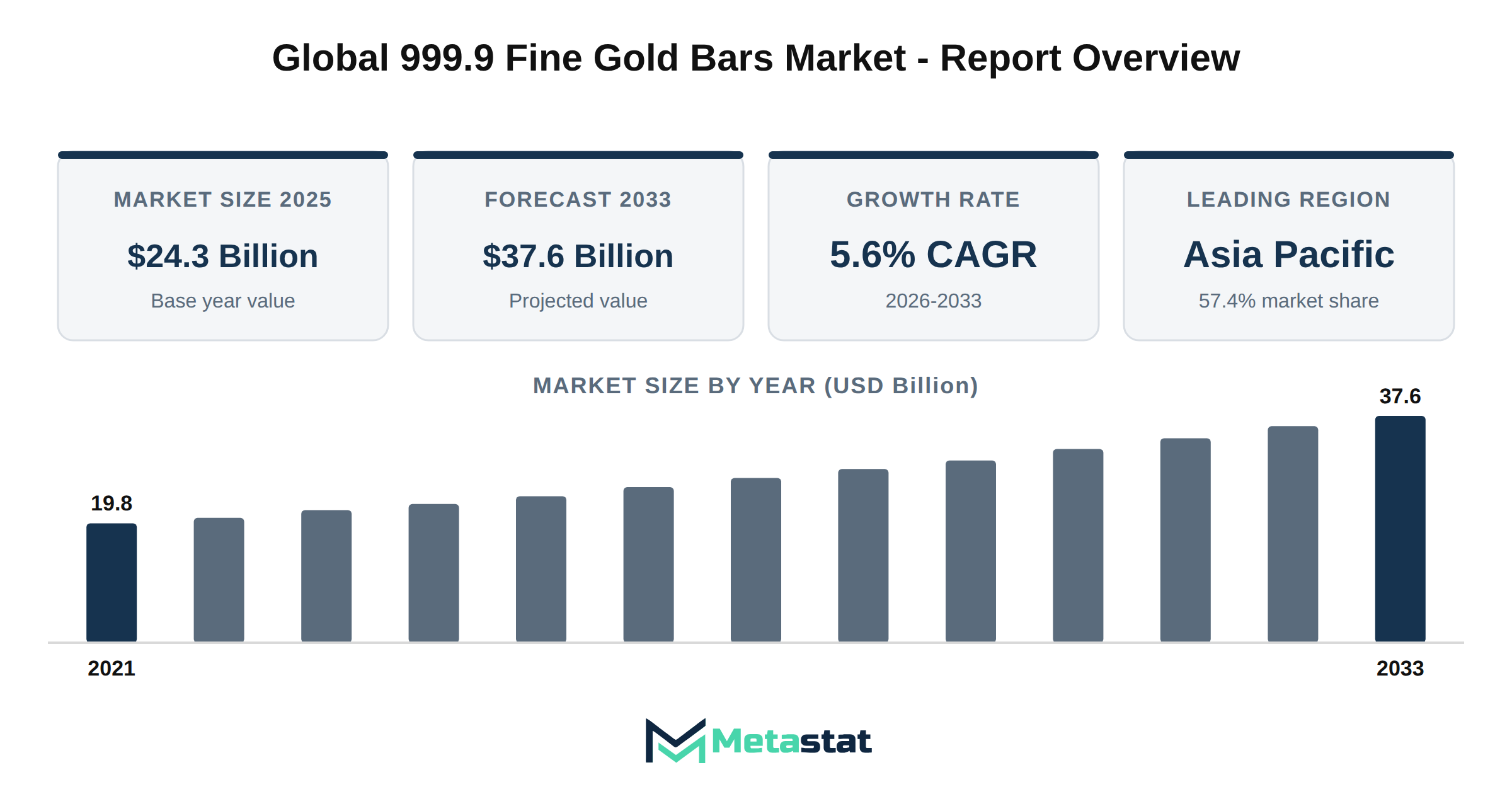
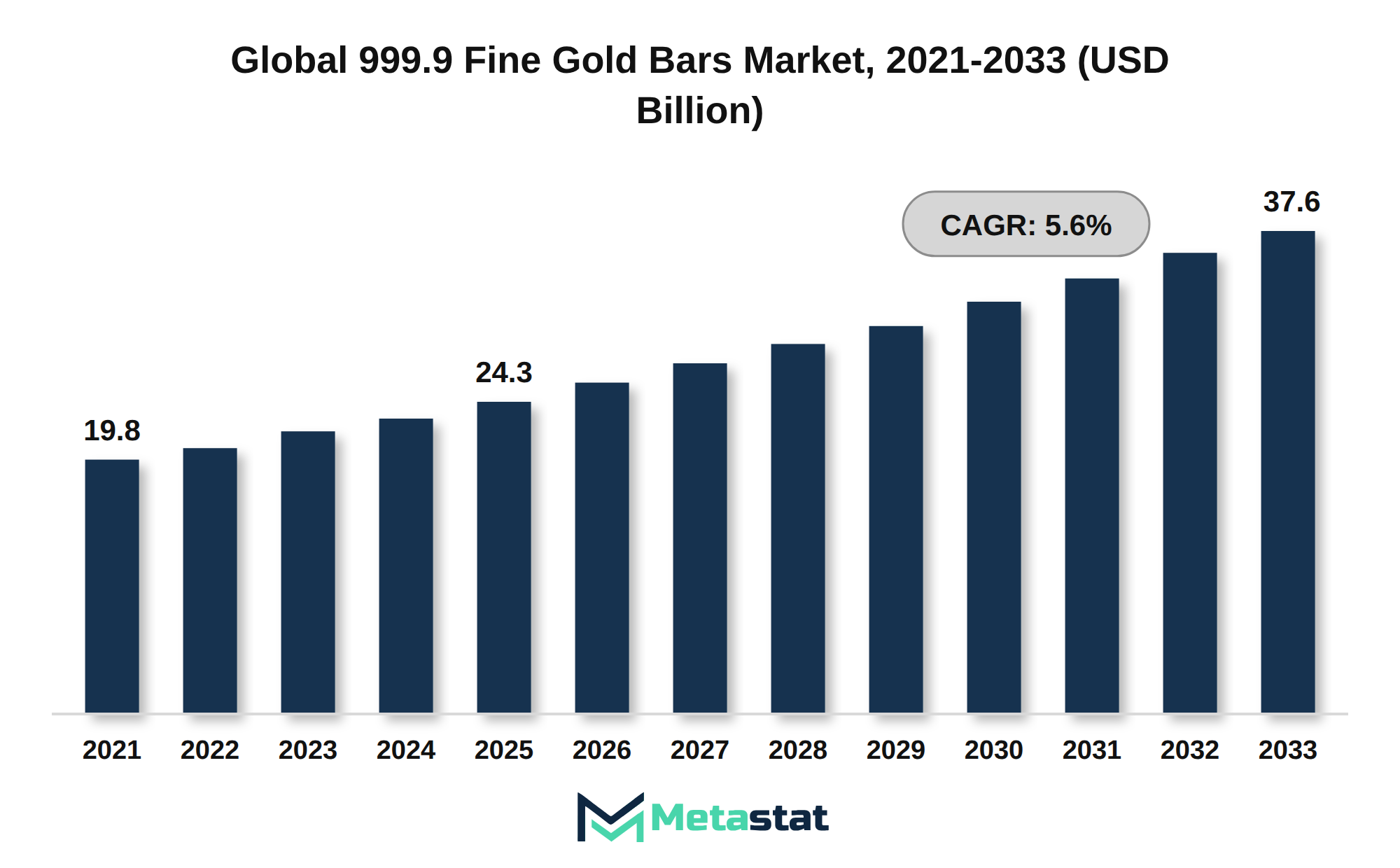
Market Valuation: Valued at $24.3 Billion in 2025, projected to reach $37.6 Billion by 2033 at a 5.6% CAGR.
Dominant Segment: Cast gold bars hold the largest product share by value, driven by broad acceptance among private and institutional buyers seeking cost efficiency and liquidity.
Fastest-Growing Segment: The 'Below 10 g' weight category is projected to achieve the highest CAGR of 6.4% through 2033, reflecting rising demand from retail investors prioritizing affordability and accessibility.
Geographic Lead: Asia Pacific accounts for 57.4% of the global market, led by strong consumer demand in China and India where gold’s cultural and investment significance supports dominant growth.
End User Trends: Individual buyers are projected to generate USD 13.2 billion in demand by 2033, as growing interest in wealth preservation and portfolio diversification drives sustained purchasing activity.
What's Inside: The report provides detailed segmentation by product type, weight, and end user, regional market shares, growth trends through 2033, and analysis of key drivers and challenges.
The global 999.9 Fine Gold Bars market was valued at USD 24.3 billion in 2025 and is projected to reach USD 37.6 billion by 2033, growing at a CAGR of 5.6% over the forecast period.
The 999.9 Fine Gold Bars market covers the production, distribution, and purchase of ultra-high purity gold bars used by individuals, institutions, and manufacturers. Buyers include individual investors who prioritize asset preservation, commercial and central banks that manage reserves, and non-bank institutional investors seeking portfolio diversification. These buyers allocate capital to this segment to hedge against currency fluctuation and inflation, and to fulfill regulatory or portfolio requirements. Cast gold bars represent the segment with the most value. Broad acceptance among private and institutional buyers drives this position.
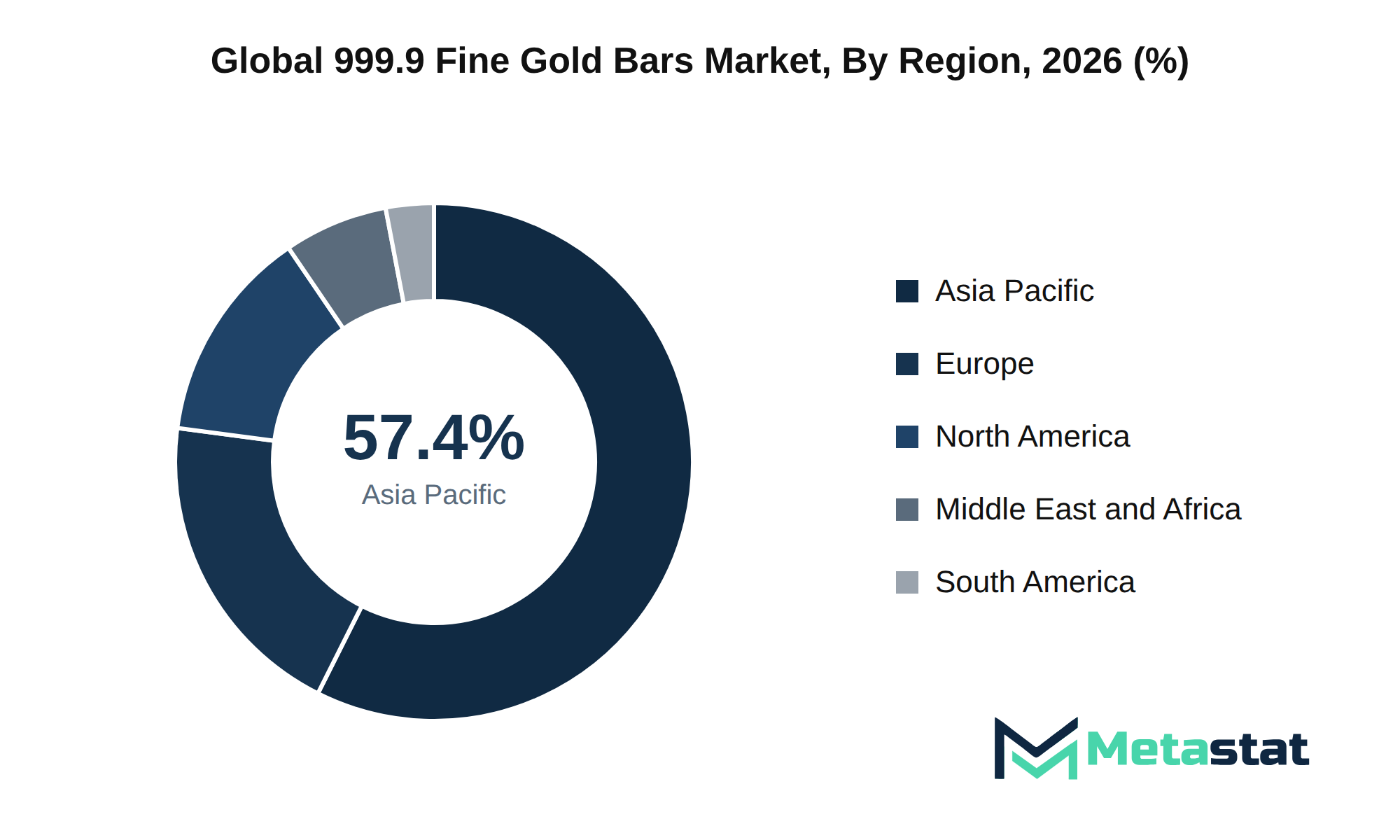
Asia Pacific holds the largest share, accounting for 57.4% of the global market. High consumer demand in countries including China and India drives this region’s dominance. Gold’s cultural and investment significance in these markets supports steady volume growth. North America holds 13.4% of the market in 2025. The US leads in 2026. Europe follows with a 19.7% share, while South America and the Middle East and Africa collectively account for less than 10%.
Growing demand for wealth preservation and risk management among retail and institutional buyers drives the main growth trend. This supports volume growth and sustained pricing, reinforcing the product’s role in portfolios and reserves worldwide.
Investment security and liquidity drive purchasing behavior within the 999.9 Fine Gold Bars market. Buyers prioritize assets with proven value retention and global acceptance. Individual buyers, commercial banks, and institutional investors remain the main consumer segments, each motivated by portfolio diversification and wealth protection. The market includes a broad spectrum of products differentiated by manufacturing method. Cast gold bars take the largest value share among product types. Weight-based segmentation further tailors offerings to investor preferences, from sub-10 gram units favored for retail accessibility to larger bars suited for institutional storage strategies.
Asia Pacific stands out with the largest share, accounting for 57.4% of the global total. Robust demand from both private and institutional buyers supports this position. Cultural affinity for gold serving a store of value and ongoing economic expansion in key markets including China and India reinforce this dominance. North America holds 13.4% of the market in 2025, with the US leading in 2026. Regional variations in demand reflect differences in investment culture, regulatory environment, and access to retail and institutional gold products.
Growth in the 999.9 Fine Gold Bars market is driven primarily by increasing demand among individual buyers seeking safe-haven assets amid global financial uncertainty. Investors shift allocations toward physical gold, favoring products with the highest purity grades for their liquidity and ease of resale. This behavior supports sustained expansion in both volume and value, particularly in segments aligned with retail and high-net-worth buyers. The market’s structure responds to evolving investment patterns and rising consumer awareness of gold’s role in wealth preservation.
Retail and institutional demand within the 999.9 Fine Gold Bars market is undergoing a significant transformation, driven by changing buyer profiles and investment rationales across both individual and institutional segments. Individual buyers continue to form the largest end user group, with segment value projected to reach USD 13.2 billion by 2033. This shift reflects intensified interest in physical gold for hedging currency volatility and macroeconomic uncertainty, which has attracted younger, digitally enabled retail investors entering the market in high numbers. In parallel, institutional channels have demonstrated robust appetite, particularly among central banks, which are projected to expand their holdings at a compound annual growth rate of 6.6% through 2033. Commercial banks and non-bank institutional investors are expected to maintain steady growth, with forecast segment values of USD 4 billion and USD 4.5 billion respectively by 2033.
This dual-channel dynamic has influenced the product mix and packaging specifications suppliers prioritize, including smaller denominations that cater to retail accumulation and larger bars suited for institutional vaulting. The market now sees increased product differentiation, with suppliers investing in packaging, digital authentication, and traceability to satisfy the requirements of both individual and institutional buyers. The competitive environment is shifting toward suppliers capable of balancing volume efficiency with customisation, supporting higher margins and sustained demand in both channels.
Premiums on cast and minted gold bars display notable variation across key bullion hubs, shaped by differences in production cost structures, local demand intensity, and distribution networks. Cast gold bars, produced using traditional pouring methods, hold the largest product share by value, with USD 16.5 billion in sales projected for 2026 in this market. These bars often command lower premiums over spot prices compared to minted bars, due to their simpler fabrication process and lower branding or packaging costs. Minted gold bars, by contrast, offer higher levels of finish and security features, supporting a different premium structure that targets buyers seeking both investment and presentation value. Their growth rate, with a 6.3% CAGR to 2033, signals increasing willingness among buyers to pay higher acquisition costs for brand assurance and perceived liquidity in secondary markets.
In major bullion hubs across Asia Pacific, Europe, and North America, premiums fluctuate within and between these product types based on regional consumer preferences and the competitive actions of local refiners and distributors. For example, in Asia Pacific, the largest regional market with a 57.4% share, heightened retail activity and strong gifting culture contribute to robust demand for smaller, minted bars, influencing premium levels. Buyers in these hubs weigh the balance between upfront premium and resale flexibility, which shapes procurement strategies and volume decisions. Variation in gold bar premiums directly impacts investment flows and purchase timing, encouraging both buyers and refiners to adapt their offerings to shifting expectations and price sensitivities.
Institutional buyers in the 999.9 Fine Gold Bars market, including commercial banks and non-bank institutional investors, prioritize rigorous standards for refining capacity, trustworthy assay certification, and verified responsible sourcing. These requirements reflect the maintain asset quality and reputation among stakeholders. The market’s supply base is shaped by the presence of large-scale refineries with extensive assay capabilities, supporting buyers’ insistence on consistent purity of 999.9 fine gold and traceable origins. Products supplied to institutional investors undergo stringent assay procedures, often conducted by internationally recognized entities, to minimize risk in custody and transfer. This focus on certified purity and responsible sourcing is particularly strong in regions including Europe, which accounts for 19.7% of the global market by value, where regulatory frameworks and investor scrutiny drive adoption of bars with verifiable provenance and sustainability credentials.
Institutional buyers have distinct requirements compared to individual purchasers, seeking detailed documentation on sourcing and refining processes to comply with internal compliance and external regulatory expectations. Refiners that invest in capacity enhancements and third-party certifications meet these expectations and strengthen their position in the 999.9 Fine Gold Bars market. The outcome is a premium on products carrying proof of responsible sourcing and internationally recognized assay marks, which influences procurement decisions and underpins pricing differentials for institutional-grade bars. This dynamic supports growth for suppliers who align operations with evolving standards around transparency and supply chain integrity.
Asia Pacific leads global demand in the 999.9 Fine Gold Bars market, driven by concentrated consumption patterns among both retail investors and institutional buyers across China, India, and Southeast Asia. The region accounts for 57.4% of total share, the largest by a wide margin among all regions. This high level of demand reflects a deep-rooted cultural preference for gold ownership and gifting, particularly in India and China, where gold bars function both as a store of value and a form of portable wealth. Regulatory frameworks in several Asia Pacific countries facilitate gold transactions for individual buyers, supporting robust retail participation. Demand from commercial banks and non-bank institutional investors further strengthens overall purchasing activity, particularly during periods of economic volatility when gold is regarded as a safe-haven asset.
Suppliers address this scale of regional demand through local production and distribution networks, which reduce import costs and streamline delivery. The supply chain in Asia Pacific benefits from a network of major refiners and mints capable of meeting diverse weight and product-type preferences in the 999.9 Fine Gold Bars market. Market participants operating within this region secure higher transaction volumes and more stable revenue compared to less gold-centric geographies, reinforcing Asia Pacific’s position as the largest and most commercially consequential buyer group globally.
Accelerating urbanization and increasing middle-class affluence in key geographies are shifting investment flows towards tangible assets, driving growth in the 999.9 Fine Gold Bars market. Rising incomes in rapidly developing urban centers, particularly within Asia Pacific, have expanded the pool of buyers seeking wealth preservation through physical bullion. This shift has resulted in stronger volume demand from individual buyers and family offices that prioritize high-purity bars for portfolio diversification and generational wealth transfer. Individual buyers are projected to generate USD 13.2 billion in demand by 2033. The resulting increase in new retail investors supports both primary sales channels and secondary market activity, reinforcing premium pricing and encouraging further innovation in product offerings tailored to urban wealth holders.
High acquisition costs restrict broader participation in the 999.9 Fine Gold Bars market, particularly among first-time individual buyers and small-scale investors. High-purity gold bars require significant upfront expenditure, which discourages new entrants and drives smaller transactions. Individual buyers in emerging economies show a preference for lighter-weight bars, yet the price per gram often remains prohibitive relative to local income levels, creating a barrier to market expansion. Commercial banks and non-bank institutional investors generate a large share of volume, but their purchasing cycles lengthen during periods of price volatility, reflecting a cautious approach to asset allocation. This tendency reduces frequency and scale of purchases across these buyer segments. The result is a slower pace of adoption and a concentration of ownership among established investors with higher capital reserves, limiting the breadth of demand growth in the 999.9 Fine Gold Bars market.
Unpredictable fluctuations in gold prices introduce persistent margin pressure for suppliers in the 999.9 Fine Gold Bars market. Global spot prices for gold respond rapidly to changes in monetary policy, shifts in geopolitical risk, and currency volatility. Refiners and fabricators often face narrow windows for securing raw gold at favorable prices, while fixed-cost commitments for labor, energy, and compliance remain constant. Periods of price spikes compress margins on pre-negotiated contracts, and sudden declines lock in losses on inventory purchased at higher levels. The 999.9 Fine Gold Bars market has seen suppliers employ real-time hedging and dynamic sourcing strategies to offset these risks, yet thin profit margins remain a structural challenge. Pressure intensifies for smaller refiners lacking significant capital reserves or access to diversified supply streams, leading to greater consolidation among established players with the scale to weather input volatility.
Smaller bar weights are emerging as a high-growth pocket within the 999.9 Fine Gold Bars market, attracting a broader range of buyers seeking flexibility and incremental investment options. The “Below 10 g” segment is projected to advance from USD 2.1 billion in 2026 to USD 3.2 billion by 2033, with a CAGR of 6.4 percent - the highest among the weight categories. This trend reflects growing demand from individual investors who prioritize affordability and liquidity, supported by expanding product offerings from manufacturers. Producers addressing this segment with scalable minting and packaging solutions stand out in a market where larger bars have traditionally dominated. The market, therefore, experiences diversification in its customer base, with smaller denominations facilitating first-time purchases and repeat transactions for retail investors. This shift is expected to strengthen volume growth and create new distribution partnerships for suppliers targeting evolving buyer preferences.
The Global 999.9 Fine Gold Bars market is segmented based on Product Type, Weight, and End User.
Cast Gold Bars segment is valued at USD 16.5 billion in 2026 and is projected to reach USD 23.4 billion by 2033, at a CAGR of 5.2% during the forecast period. High-volume institutional buyers and individual investors prioritizing lower fabrication premiums and efficient bulk acquisition favor cast gold bars. These bars provide a practical investment vehicle, offering liquidity and trusted weight assurance for commercial banks, non-bank institutional investors, and central banks. The segment’s growth pace of 5.2% trails the Minted Gold Bars segment, which is projected at 6.3% CAGR, reflecting cast bars’ appeal to buyers focused on cost efficiency rather than collectible or branding value. Cast products respond more acutely to shifts in global bullion demand and commodity price fluctuations, while minted bars often attract premium-seeking retail investors. The segment’s consistent adoption supports stable demand in regions with robust gold acquisition programs and established bullion infrastructures, especially where transaction scale and purity assurance take precedence over ornate finishes. Buyers in this segment commonly participate during periods of heightened economic uncertainty, seeking tangible asset preservation through physical gold holdings.
Minted Gold Bars segment is estimated to reach USD 14.2 billion by 2033, at a CAGR of 6.3% during the forecast period. These bars appeal strongly to individual buyers and gift purchasers seeking visually distinctive investment options, with their polished finish and secure packaging promoting collector interest and brand recognition. The segment benefits from rising interest among younger retail investors who prioritize recognizable brands, tamper-evident packaging, and authenticity assurances over simple bullion weight. Their higher unit price, driven by greater fabrication and design costs, positions them as the preferred choice in markets where presentation and resale premium influence buyer decisions. Shifts in consumer behavior, including increased discretionary spending on investment-grade products that function as luxury gifts, reinforce the segment’s performance.
This sub-segment draws significant interest from individual buyers seeking accessible entry points into physical gold investment, supporting its rapid expansion. The ability to purchase smaller denominations aligns with rising demand for portfolio diversification among retail investors and first-time participants, especially during periods of economic uncertainty. Compared to heavier bar segments, “Below 10 g” bars attract higher volumes of transactional buyers and gift purchasers, reflecting a distinct demographic and behavioral profile. The segment’s pace is faster than the “10 g to Below 50 g” category, supported by its 6.4% CAGR versus the latter’s 6.1%. Affordability and convenience position this segment as the preferred choice for consumers with lower capital outlays, reinforcing its role as a growth engine. Stronger adoption by new and younger buyers continues to distinguish this segment from larger denominations in the 999.9 Fine Gold Bars market.
Estimated to reach USD 6.1 billion by 2033 at a CAGR of 6.1%, bars weighing from 10 g to below 50 g appeal to value-focused individual investors seeking a balance between accessibility and tangible asset size. This segment addresses buyers aiming for portfolio diversification or gift purchases, supported by its lower price point compared to higher-weight categories. Demand for this range advances on its suitability for periodic acquisition and liquidity management, particularly among retail buyers who view the size optimal for secure storage and resale flexibility. The 10 g to below 50 g segment outpaces the growth of larger bar categories, with its 6.1% CAGR exceeding that of cast bars at 5.2%, underlining a faster adoption rate among cost-sensitive buyers. Growth in this segment reflects buyers’ preference for units that combine manageable investment increments with recognizability and ease of transaction.
Expected to reach USD 4.2 billion by 2033, gold bars in the 50 g to below 100 g weight segment address a specific demand profile. These bars appeal to buyers seeking a balance between affordability and appreciable asset value, including individual investors building mid-sized portfolios and commercial entities requiring moderate-sized liquid holdings. The market sees this segment gaining traction with buyers who find smaller denominations too incremental for portfolio allocation and larger bars less flexible for periodic liquidation. While segments including "Below 10 g" forecast a higher CAGR of 6.4%, the 50 g to below 100 g category attracts steady demand from wealth management clients and smaller institutional investors. This segment stands out by offering lower transactional barriers than high-weight bars while retaining greater value density than entry-level options. Regulatory clarity on gold ownership and transparent pricing further support adoption, reinforcing its role bridging entry-level and institutional-grade holdings.
Projected to grow at a CAGR of 5.4% during the forecast period, the 100 g to Below 500 g segment serves the requirements of both private wealth holders and institutional buyers seeking a balance between liquidity and efficient storage. Buyers within this segment favor it for portfolio diversification and ease of transport, especially in regions where physical gold remains a preferred store of value. The segment appeals to those with greater purchasing power than typical retail investors, but who seek more flexibility than the 1 kg or larger bars, which often require specialized storage solutions and command higher absolute costs. Pricing within the 100 g to Below 500 g range is influenced by moderate premiums, reflecting both manufacturing economies of scale and sustained demand from well-capitalized buyers. Product authentication technologies gain higher adoption in this range, supporting confidence among larger private buyers and institutions.
Gold bars weighing from 500 g to below 1 kg serve both institutional and high-net-worth retail buyers seeking efficient storage with a moderate balance between divisibility and value. These bars are frequently purchased by private banks and wealth managers who prioritize liquidity for clients while maintaining manageable premiums per gram in the 999.9 Fine Gold Bars market. Adoption in this segment is shaped by the need for rapid asset realization, particularly during periods of financial volatility when flexibility and rapid liquidation become critical. Compared to lighter bars, this weight bracket attracts a narrower buyer group, often with higher purchasing power and more sophisticated asset allocation strategies. In this segment, bars in this range typically command lower per-gram premiums than lighter bars, while remaining accessible for buyers unwilling to commit to the scale of 1 kg or larger units. Demand trends in this segment are less sensitive to entry-level gold buyers and more aligned with portfolio diversification objectives among established investors.
Weighing precisely 1 kg, this bar is a benchmark format among institutional clients and high-net-worth individuals seeking direct allocation to physical gold. In the 999.9 Fine Gold Bars market, 1 kg bars function as a standard trading unit for wholesale transactions and offer economies of scale in storage and transport, making them prevalent across vaulting services and bullion banking. Commercial banks, non-bank institutional investors, and central banks often favor this size for portfolio diversification and liquidity management, given its balance between manageability and value density. Compared to lighter categories including Below 10 g or 10 g to Below 50 g, the 1 kg bar typically requires a larger capital outlay per unit, attracting buyers with established investment mandates rather than first-time retail participants. This segment sees stable institutional demand, while price sensitivity limits wider retail uptake, reflecting the broader bifurcation in the 999.9 Fine Gold Bars market between high-volume professional buyers and cost-conscious individual investors.
Gold bars weighing above 1 kg to 5 kg are primarily acquired by non-bank institutional investors, commercial banks, and central banks for large-scale asset allocation, reserve management, and liquidity operations. These larger weights appeal to professional buyers seeking to optimize storage efficiency and reduce per-ounce premiums, which tend to be lower than those attached to smaller units in the 999.9 Fine Gold Bars market. Demand in this segment aligns closely with institutional portfolio strategies, where regulatory clarity and capital adequacy requirements reinforce allocation decisions. Compared with lighter segments including below 10 g or 10 g to below 50 g, purchases in the above 1 kg to 5 kg range reflect a focus on bulk acquisition rather than flexibility or accessibility. Higher unit value in this range creates a barrier for retail buyers, concentrating demand among entities with significant capital reserves. In periods of currency volatility, these bars are preferred by major buyers for rapid deployment of funds into physical assets, supporting stability objectives.
Gold bars above 5 kg serve a niche segment in the 999.9 Fine Gold Bars market, catering almost exclusively to central banks, sovereign wealth funds, and major institutional investors focused on strategic reserve accumulation or large-scale liquidity management. The primary buyers opt for this format to minimize handling costs and streamline bulk transfers, a practice less relevant to retail and commercial banking buyers. Compared with smaller weight categories that attract individual investors and jewelry manufacturers, the above 5 kg segment is distinguished by infrequent but high-value transactions. Regulatory scrutiny surrounds these high-capacity purchases, reflecting national-level priorities for reserve security and anti-money laundering compliance. In the 999.9 Fine Gold Bars market, this segment commands a premium on unit price, reflecting both fabrication scale and security logistics. Unlike segments below 1 kg, where price flexibility and liquidity appeal to a broader audience, demand within the above 5 kg category is concentrated among entities with mandates for physical gold allocation to support a store of value or geopolitical hedge.
Individual buyers are projected to drive USD 9.4 billion in 2026, with demand reaching USD 13.2 billion by 2033 at a CAGR of 5%. This segment consists of retail investors, high-net-worth individuals, and households purchasing 999.9 Fine Gold Bars for portfolio diversification, wealth preservation, and gifting. Buyers pursue direct ownership of physical assets when confidence in financial markets wanes and inflationary pressures intensify. Distinct from commercial banks and institutional investors, individual buyers favor smaller denominations, prioritizing liquidity and accessibility over bulk volume pricing. Growth in this segment reflects rising consumer awareness about gold’s role in hedging macroeconomic volatility. Compared to commercial banks, which achieve the same 5% CAGR but with lower absolute forecast value, individual buyers sustain higher aggregate demand. Digital channels and online trading platforms further influence this segment, simplifying access for first-time buyers and experienced investors and supporting steady retail participation.
Estimated to reach USD 4 billion by 2033 at a CAGR of 5%, this segment involves commercial banks acquiring 999.9 Fine Gold Bars to diversify holdings and increase liquidity buffers. Within the 999.9 Fine Gold Bars market, commercial banks primarily use these bars to strengthen balance sheets, support gold-backed financial products, and respond to regulatory guidelines focused on asset quality and risk management. Unlike individual buyers, who are driven by personal investment and hedging strategies, commercial banks allocate capital to physical gold in response to macroeconomic shifts and evolving capital adequacy standards. This segment expands at a similar pace to individual buyers, but remains distinct in transaction size and regulatory motivations. Heightened regulatory scrutiny on reserve composition and increased volatility in currency and sovereign debt markets influence adoption, reinforcing commercial banks' interest in the 999.9 Fine Gold Bars market for risk management and portfolio diversification.
Portfolio managers, pension funds, and asset management firms primarily acquire 999.9 Fine Gold Bars market products to diversify holdings and hedge macroeconomic risk. Demand in this segment grows on the back of institutional strategies favoring physical assets for risk management, particularly during periods of inflation or currency volatility. Compared to individual buyers and commercial banks, which each exhibit a CAGR of 5%, the growth trajectory for non-bank institutional investors reflects a more specialized risk profile and focus on direct physical ownership, rather than transactional inventory or retail allocation. This segment’s adoption pattern differs from central banks, which are forecast to grow at a faster 6.6% CAGR, indicating a more aggressive accumulation approach by sovereign entities. Within the 999.9 Fine Gold Bars market, regulatory compliance and custodial transparency drive procurement decisions for non-bank institutions, influencing both the volume and frequency of large-scale acquisitions.
Projected to grow at a CAGR of 6.6% during the forecast period, this segment includes institutions acquiring bullion to diversify reserves and reinforce monetary stability. Central banks purchase 999.9 Fine Gold Bars market products primarily to hedge against currency risk and support liquidity buffers amid shifting global monetary policies. Recent regulatory trends and heightened concern over geopolitical instability have encouraged greater gold allocation, increasing the frequency and volume of state-level purchases. Compared to other end user segments in the market, central banks display the fastest expansion rate, outpacing individual buyers and commercial banks, which are each forecast at 5% CAGR. These buyers typically transact in larger denominations, favoring direct allocations that reinforce portfolio certainty over speculative trading seen in retail. Their demand is less price sensitive, prioritizing macroeconomic security over short-term yield, which positions them to stabilize demand even during periods of heightened price volatility.
Gold bars supplied to jewellery and watch manufacturers are a critical input for luxury goods production, with demand concentrated among firms seeking high-purity material to ensure precise alloying and consistent product quality. This segment sources 999.9 Fine Gold Bars to meet design requirements for both high-end and mass-market collections, supporting a steady flow of raw material into fabrication facilities across Europe and Asia Pacific. For these buyers, the 999.9 Fine Gold Bars market delivers consistent purity and traceability, two priorities driven by end-customer expectations and regulatory frameworks on responsible sourcing. Demand in this segment responds to jewellery retail cycles, evolving consumer tastes, and innovation in manufacturing techniques including micro-casting and automated finishing. Compared to individual buyers or institutional investors in the 999.9 Fine Gold Bars market, jewellery and watch manufacturers focus less on asset preservation and more on material properties, driving distinct procurement patterns and sensitivity to fabrication premiums. This differentiates their purchasing decisions from those of commercial banks and central banks, which favour larger bar formats and longer holding periods.
Electronics and electrical manufacturers rely on 999.9 Fine Gold Bars for applications requiring high-conductivity materials, including precision connectors, semiconductors, and advanced circuitry. These buyers typically include multinational electronics firms and component suppliers serving high-specification segments, where reliability and minimal impurity thresholds drive strict sourcing requirements. Demand in this segment responds directly to shifts in consumer electronics production, electrification trends in automotive, and adoption of emerging technologies including 5G infrastructure. Buyers in this segment prioritize quality and provenance assurance, distinguishing it from others like jewellery or institutional investors, where branding or financial hedging is more prominent. Supply constraints impact this segment more sharply due to the technical specifications required, and alternative materials including advanced alloys or plated components provide only partial substitutes, reinforcing sustained demand for high-purity bars. Long-term growth in demand from this segment is shaped by continual miniaturization in electronics and global shifts in manufacturing geographies.
Specialist users including dental laboratories, medical device manufacturers, and aerospace manufacturers require 999.9 Fine Gold Bars for technical processes where material purity and traceability are critical. In these industries, gold is an essential input for components subject to strict regulatory and performance standards, including dental crowns, surgical implants, contact points, and precision-engineered aerospace parts. Adoption in this segment is driven by the requirement for high-purity gold to meet industry-specific certifications and biocompatibility standards, which do not apply to general investment or jewellery use. Compared with other end-user groups in the 999.9 Fine Gold Bars market, buyers in this category operate in low-volume, high-value environments and focus on reliability of supply rather than price or liquidity. Demand patterns depend on technological advancement in medical and aerospace applications and regulatory mandates for traceable materials, distinguishing this segment from those influenced by consumer trends or institutional allocation. Suppliers in the 999.9 Fine Gold Bars market serving these industries prioritize consistent purity and documented provenance in their offerings.
Based on geography, the Global 999.9 Fine Gold Bars market is divided into North America, Europe, Asia-Pacific, South America, Middle East, and Africa.
With regional demand projected to reach USD 4.9 billion by 2033, North America accounts for 13.4% of global value in 2025 within the 999.9 Fine Gold Bars market. United States buyers in particular drive significant volume, reflecting both the scale of private investment portfolios and institutional allocations. Individual investors in the region show sustained interest in physical assets, especially during periods of economic uncertainty, which increases transaction values and supports premium pricing. Regulatory environments in the United States and Canada facilitate transparent bullion trading and storage, supporting institutional trust and retail participation. Meanwhile, Mexico contributes through local refining and retail investment channels, though its share remains modest compared to its northern neighbors. Market growth in North America is reinforced by strong distribution networks and secure storage infrastructure, enabling efficient delivery and custody of bullion products. These conditions encourage a broad base of participation, covering private wealth, family offices, and institutional clients seeking diversification and risk mitigation.
Across Europe, the 999.9 Fine Gold Bars market is shaped by a sophisticated investor base and a well-established tradition of physical gold ownership. With a 19.7% share of global value in 2025, the region reflects strong participation from private wealth managers and institutional investors, particularly in Germany and Switzerland, who seek portfolio diversification and inflation hedging. Demand for 999.9 Fine Gold Bars market products is further supported by culturally embedded practices in Italy and France, where gold is favored for its role in storing value and as a means of wealth transfer. Regulatory clarity on precious metals classification and transparent tax policies in countries including the UK and Germany streamline bullion acquisition for both retail and professional buyers, reducing the barriers to entry compared to less harmonized markets. London’s role in global bullion trading underpins liquidity for investors and enhances the region’s status, with direct implications for both pricing and physical delivery within the 999.9 Fine Gold Bars market.
Asia-Pacific holds a commanding position with 57.4% of global demand in 2025, reflecting the influence of China, India, and Southeast Asia, where cultural traditions and established saving habits drive high-volume purchases throughout the year. The market in this region benefits from a mix of retail investment and jewelry demand, supported by a broad base of individual buyers and small-scale investors who view physical gold as a secure store of value during periods of currency volatility. Regional mints and refineries have expanded capacity to address this persistent demand, encouraging competitive pricing and frequent product innovation. In addition, cyclical surges during festival and wedding seasons increase both trading activity and price sensitivity among distributors and traders. This unique combination of cultural, economic, and institutional factors positions Asia-Pacific as the largest and most dynamic contributor to global growth.
Brazil and Argentina anchor regional demand for investment-grade bullion in South America, where buyers frequently pursue physical gold holdings in response to currency volatility and macroeconomic uncertainty. Regional share stood at 3.00% of the global 999.9 Fine Gold Bars market in 2025, reflecting a sizeable cohort of high-net-worth individuals and family offices converting liquid assets into tangible stores of value. In Brazil, private wealth managers and retail investors increasingly allocate to physical gold to hedge against domestic inflation, supporting steady purchase volumes for cast and minted bars. Argentina’s financial sector, affected by foreign exchange controls, contributes to stable demand from both institutional investors and affluent private clients. These dynamics sustain a margin-sensitive market structure where premiums track global spot prices, and local distribution networks enable access for both commercial and retail buyers. Defensive investment strategies and a pronounced preference for physical delivery over paper derivatives distinguish the region, setting it apart from peers with more developed gold-backed financial instruments.
Distinct investment patterns in the Middle East and Africa set the region apart, with a 6.5% share of the global market in 2025 reflecting robust interest from both state institutions and affluent private buyers. In Saudi Arabia and the UAE, demand for the highest purity bullion is reinforced by policies supporting portfolio diversification and long-term wealth preservation. South Africa, with its established precious metals sector, sustains a steady flow of bullion for both domestic allocation and re-export. The market in this region is shaped by a mix of reserve accumulation and private asset strategies, with local refiners supplying bars that meet international standards. Regional buyers prioritize traceability and security, ensuring that the market serves both sovereign and private capital preservation objectives amid shifting global financial conditions.
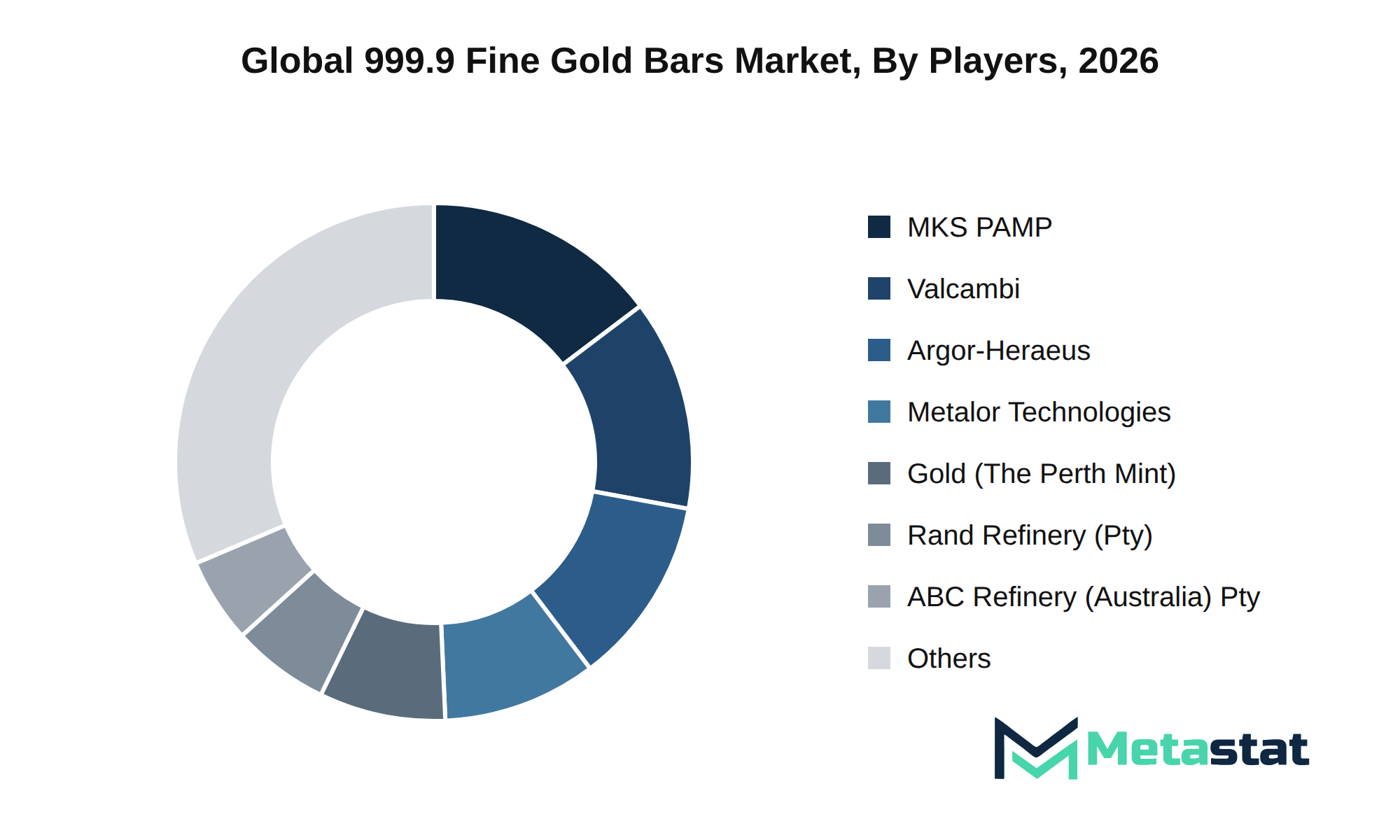
The 999.9 Fine Gold Bars market features a broad supplier field spanning multinational refiners, national mints, and established private players. Competition focuses on product purity, recognized certification, and reputation for reliability. Buyers - primarily individual investors, commercial banks, and institutional investors - prioritize bars that carry trusted assay certificates and are accepted by major exchanges, reflecting the importance of authenticity and liquidity in purchase decisions. Pricing remains a key consideration, but brand trust and the ability to supply across a range of bar weights reinforce supplier loyalty.
Refiners including MKS PAMP SA and Valcambi SA focus on internationally recognized bar certification and a comprehensive weight portfolio, serving institutional and retail buyers with an emphasis on product traceability. Gold Corporation (The Perth Mint) leverages its state-backed credentials and a global brand reputation, catering to buyers seeking sovereign assurance and consistent product quality. ABC Refinery (Australia) Pty Ltd differentiates by targeting both international and domestic segments and by maintaining compliance with industry standards. Supplier ability to meet certification requirements, offer customization in format and packaging, and maintain transparent sourcing strengthens buyer confidence and supports premium pricing for established brands.
Achieving this outlook depends first on sustained investment demand from individual buyers and institutional investors, particularly in Asia Pacific, which holds the largest regional share at 57.4 percent. Growing preference for gold for value preservation and a hedge against currency volatility supports consistent inflows, with individual buyers projected to drive the highest end-user segment value through 2033. Product innovation in minted gold bars, which are forecast to expand at a 6.3 percent CAGR, strengthens appeal for retail investors seeking smaller, branded formats, widening the market’s reach.
Further momentum in the 999.9 Fine Gold Bars market is supported by regulatory clarity and infrastructure improvements in major hubs including India and China. Streamlined import frameworks and increased transparency in gold trading facilitate increased participation from commercial banks and non-bank institutional investors, broadening distribution channels. However, the main risk to this growth trajectory lies in potential disruptions to global gold supply chains, including new trade restrictions or geopolitical tensions that restrict cross-border movement of bullion. Such interruptions would disproportionately impact Asia Pacific and Europe, both of which drive high volumes and depend on stable flows to maintain price competitiveness in the 999.9 Fine Gold Bars market.
By Product Type: Cast Gold Bars, Minted Gold Bars
By End User: Individual Buyers, Commercial Banks, Non-Bank Institutional Investors, Central Banks, Jewellery and Watch Manufacturers, Electronics and Electrical Manufacturers, Others (Dental Laboratories, Medical Device Manufacturers, Aerospace Manufacturers)
The report strategically identifies and profiles the key market players and analyses their core competencies in each sub-segment of the 999.9 Fine Gold Bars market.
Report Attributes | Details |
Study Period | 2021-2033 |
Base Year | 2025 |
Estimated Year | 2026 |
Forecast Period | 2026-2033 |
Historical Period | 2021-2025 |
Growth Rate | CAGR 5.6% from 2026 to 2033 |
Revenue Unit | USD billion |
Segmentation | By Product Type, Weight, End User, and Region |
By Region | North America (By Product Type, Weight, End User, and Country)
|
Europe (By Product Type, Weight, End User, and Country)
| |
Asia Pacific (By Product Type, Weight, End User, and Country)
| |
| |
Middle East and Africa (By Product Type, Weight, End User, and Country)
|
Find answers to common questions about this report
The 999.9 Fine Gold Bars market size was valued at USD 24.3 billion in 2025.
The market is projected to grow at a CAGR of 5.6% during the forecast period from 2026 to 2033.
The North America 999.9 Fine Gold Bars market size is estimated to reach USD 4.9 billion by 2033.
Cast Gold Bars lead by value, reaching USD 23.4 billion in 2033, ahead of Minted Gold Bars at USD 14.2 billion on the same basis.
Accelerating urbanization and rising middle-class affluence in key regions are increasing demand for high-purity gold bars as a preferred vehicle for wealth preservation. Expanding product offerings in smaller bar weights are attracting new retail investors by improving affordability and investment flexibility.
Asia Pacific holds the dominant share with 57.4 percent of the total, leading all other regions by a substantial margin. Europe follows at 19.7 percent, while North America accounts for 13.4 percent.
High acquisition costs limit participation among first-time individual buyers and small-scale investors. Fluctuating gold prices create persistent margin pressure for suppliers, reducing profitability and encouraging consolidation among established refiners.
Accelerating urbanization, rising middle-class affluence, and the introduction of smaller bar weights are driving adoption by expanding the pool of buyers and lowering financial barriers for first-time and retail investors. Growing demand from individual buyers is projected to reach USD 13.2 billion by 2033.
The 999.9 Fine Gold Bars market is estimated to reach a valuation of USD 37.6 billion by 2033.
Key players in this industry include MKS PAMP SA, Valcambi SA, Argor-Heraeus SA, Metalor Technologies SA, Gold Corporation (The Perth Mint), ABC Refinery (Australia) Pty Ltd, Asahi Refining USA Inc., and Rand Refinery (Pty) Limited.
Choose Your License
Global 999.9 Fine Gold Bars Market
The analysts below cover Banking & Finance research at Metastat Insights.
LEAD ANALYST
Utkarsh Khirodkar is a Lead Market Research Analyst at MetaStat Insight, specializing in market intelligence, technology sector assessments, and competitive strategy.

PRINCIPAL CONSULTANT - ENTERPRISE AI & EMERGING TECHNOLOGIES
Banking & Finance · Electronics and Semiconductor · Energy and Power · Healthcare IT · Information & Technology · Professional Services
Vijay Gunti is a Principal Consultant at MetaStat Insight, bringing over two decades of experience across enterprise digital transformation, technology strategy, and intelligent systems.
When evaluating distributed energy resource management systems, standard research summaries tend to gloss over the operational differences between front-of-the-meter utility deployments and behind-the-meter industrial sites. The MetaStat Insight report addressed those distinctions directly, especially regarding software interoperability standards and grid interconnection backlogs. The five-year market sizing across regional transmission organizations provided actionable context for our grid modernization strategy.
Most industry reports on warehouse automation bundle autonomous mobile robots and fixed conveyor installations into the same top-level numbers, which complicates advisory work. This study split the market cleanly by payload tiers, navigation technology, and fleet management software layers. The regional forecast for Western Europe gave our team defensible adoption benchmarks when evaluating capital allocation for logistics clients, saving us days of secondary data scrubbing.
Analyzing the transition from natural gas to green hydrogen in iron ore reduction requires realistic infrastructure timelines. Meta stat insight supplied a detailed regional assessment of DRI plant conversion costs and scrap metal availability in North America and Western Europe. Their report carefully examined pellet quality specs and electrical grid access constraints without making oversimplified market assumptions. The research material served as a practical reference during internal technology roadmap discussions.
Explore related market intelligence reports worth reading alongside this one.